
CDC to Lose Nearly Half Its Funding in 2026 Budget Proposal

By Pat Anson

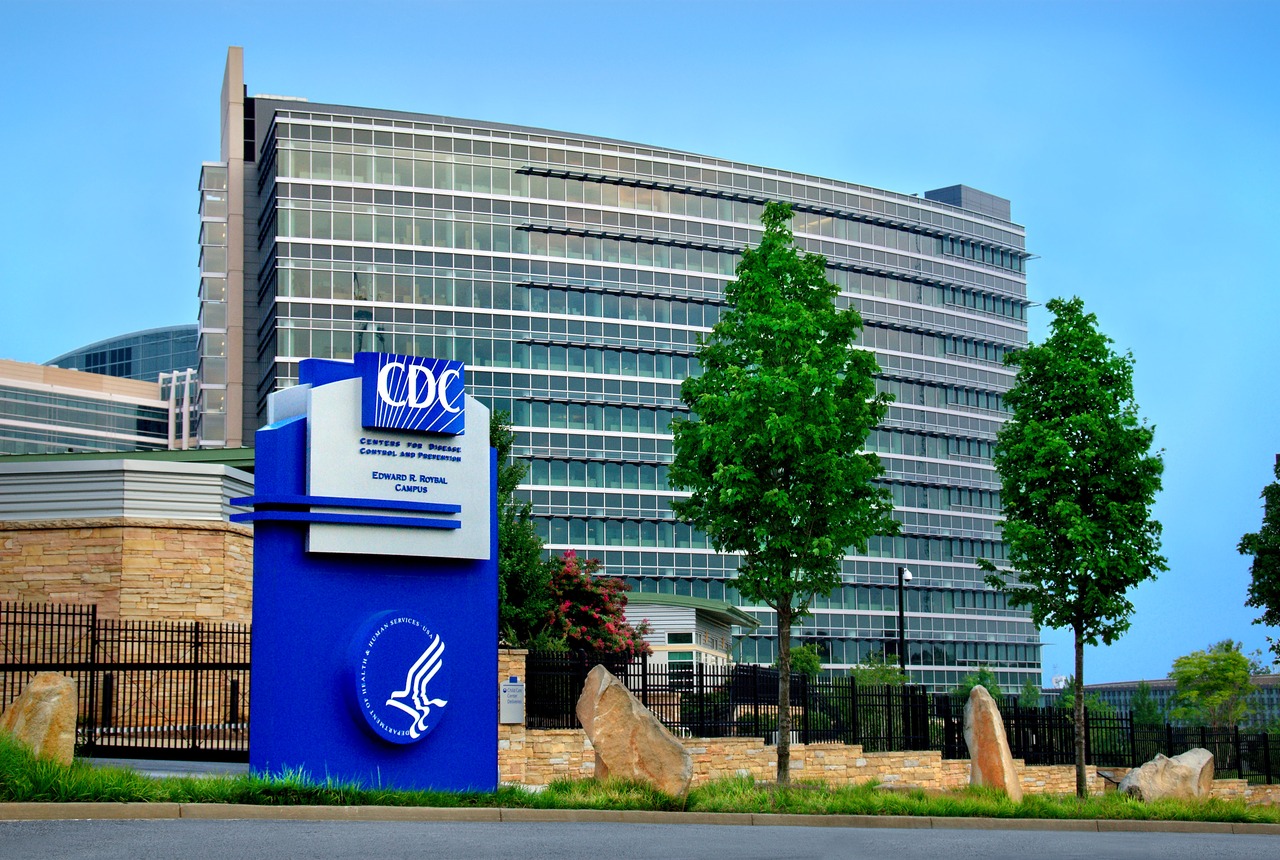
The Centers for Disease Control and Prevention and other federal health programs face severe cuts under a 2026 budget proposal drafted by the White House Office of Management and Budget (OMB).

The Department of Health and Human Services (HHS) could lose about a third of its funding for discretionary programs outside of Medicare and Medicaid. Among the dozens of programs being eliminated or downsized is the CDC’s National Center for Injury Prevention and Control, which developed the agency’s controversial opioid prescribing guideline.

Under the OMB’s budget proposal – known as a “passback” -- the CDC’s funding would be cut by about 44 percent, from $9.2 billion to nearly $5.2 billion.

“President Trump has committed to balancing the budget,” the leaked OMB document states. “Reaching balance requires resetting the proper balance between federal and state responsibilities with a renewed emphasis on federalism; eliminating the federal government’s support of woke ideology; protecting the American people by deconstructing a wasteful and weaponized bureaucracy; and identifying and eliminating wasteful spending.

“Passback levels reflect the reforms necessary to enable agencies to fulfill their statutory responsibilities in the most cost-effective manner possible. Many difficult decisions were necessary to reach the funding levels provided in this Passback.”   

The OMB budget for the CDC is intended to refocus the agency on its original core mission of monitoring public health and fighting infectious diseases, a long-sought goal of conservative activists.

Project 2025, a wish-list for the Trump Administration written by the Heritage Foundation, calls the CDC “perhaps the most incompetent and arrogant agency in the federal government.” The conservative think tank wants the CDC’s ability to set public health policy “severely confined” — a goal that the OMB budget would largely achieve if it is implemented in its current form.    

“The Budget reforms the Centers for Disease Control and Prevention to refocus CDC on emerging and infectious disease surveillance, outbreak investigations, preparedness and response, and maintaining the Nation’s public health infrastructure,” the OMB said.         

The CDC Injury Center was initially created in 1993 to improve workplace safety, but its duties have expanded over the years to include other public health issues outside of its original mission, such as drug overdoses, opioid prescribing, suicides, child abuse, and community violence. The Center’s budget for fiscal year 2024 was over $761 million.

Dr. Debra Houry, a former director of the Injury Center who is currently the CDC’s chief medical officer, advised staff last week to begin planning for the splintering of the agency.

It’s unclear what would happen to the CDC opioid guideline if the Injury Center is abolished. Although voluntary, the guideline’s recommendation to reduce the use of opioid pain medication was widely adopted by states, insurers, doctors and law enforcement, causing millions of patients to be taken off opioids or tapered to lower doses.

Patients and their advocates have long called for the guideline to be revoked. In a 2022 PNN survey of patients, providers and caregivers, 84% said the CDC overstepped its authority and shouldn’t be involved in opioid prescribing or pain management.

The CDC has already seen its workforce reduced by as many as 4,000 positions due to layoffs and early retirements in the second Trump administration. Many of those who were fired have formed an advocacy group called Fired But Fighting to get their jobs back and to demand more transparency from the administration on the downsizing of the CDC.

In addition to the Injury Center, other federal health programs targeted for elimination include the Substance Abuse and Mental Health Services Administration (SAMHSA) and the Agency for Healthcare Research and Quality (AHRQ). Some of the core functions of those agencies, such as those involved in overdose and suicide prevention, are being transferred to the Administration for a Healthy America (AHA), a new centralized agency in HHS under the direct control of Secretary Robert F. Kennedy Jr.

Under the Biden administration, the HHS budget increased by 38% and its staffing increased by 17%. The Trump administration plans to reduce the HHS workforce from 82,000 full-time employees to 62,000.

“We aren’t just reducing bureaucratic sprawl. We are realigning the organization with its core mission and our new priorities in reversing the chronic disease epidemic,” Kennedy said in a statement last month. "This Department will do more — a lot more — at a lower cost to the taxpayer."

The OMB budget proposal has not been finalized and needs the approval of Congress to be implemented. 
An Open Letter to the CDC Center for Injury Prevention

By Richard “Red” Lawhern, Guest Columnist

Dear Dr. Robert Redfield and Dr. Debra Houry,

By its passive refusal to conduct a thorough review of the impact and outcomes of its 2016 opioid prescribing guideline, the CDC’s National Center for Injury Prevention and Control is actively causing harm to hundreds of thousands of pain patients.   

Deserted by their doctors in a hostile regulatory environment, many are going into the streets seeking pain relief.  Possibly hundreds may already be dead of illegal fentanyl poisoning or suicide.  Military veterans, in particular, face draconian restrictions on the availability of safe and effective opioid medication therapy.   

And all for no good reason!

I suggest with every intention of professional and personal courtesy, that government organizations can no longer stand aside from this centrally important issue.  Such a stance will make you and other federal agencies accessories to state-sanctioned torture and negligent homicide.  That is unacceptable.   

As a former military officer, I respect a well-tried motto that I urge each of our regulators to take on as their own:   

      Lead, follow, or get out of the way! 

It has become clear that the CDC guideline must be immediately withdrawn for a major rewrite.  In its present form, the guideline is unjustifiably biased against opioid pain relievers, factually incomplete, in error on basic science, and founded on untested assumptions that do not hold up under any degree of careful scrutiny.   

The guideline is directly responsible for a vast regulatory over-reach by DEA and state authorities that is driving doctors out of pain management and denying safe and effective pain treatment for hundreds of thousands of patients.  

The CDC guideline has been publicly repudiated by no less an authority than the American Medical Association. Over 300 medical professionals have called for a rewrite of the guideline from the ground up. And a recent draft report by a federal task force calls for a reorientation of the guideline towards individualized patient-centered care, not the one-size-fits-all approach of the CDC. 

Multiple published papers have conclusively invalidated the guideline’s contention that there is a maximum dose threshold of risk for opioid addiction and overdose.   

Likewise, contrary to assertions in the guideline, there are presently no validated long-term studies to support the use of non-opioid analgesics and NSAIDs, or the off-label prescribing of anti-seizure and anti-depressant drugs to treat pain. No Phase II or Phase III trials have been published on "alternative" techniques such as acupuncture, massage or meditation.  And there are no trials which directly compare these techniques to opioid therapy under documented protocols.  Alternative treatments can at best be regarded as adjuncts to be added to analgesic or anti-inflammatory treatment.  

Published papers also demonstrate that criteria used by CDC and other federal agencies to identify risk of opioid abuse or overdose have very limited predictive accuracy. These faulty criteria are now being used by Prescription Drug Monitoring Programs (PDMP’s) to "flag" patients presumed to be at risk, who are in fact not at risk but are being denied pain treatment due to false alarms.  

Opioids, Overdoses and Demographics 

We can now take this narrative a step further.  I have compiled overdose data directly from the CDC Wonder database and from the Agency for Healthcare Research and Quality Data. This data focuses specifically on deaths directly attributable to opioid-related overdoses or suicide. The chart below shows rates of mortality by age group from 1999 to 2017.

GRAPHICS BY RED LAWHERN

Note that the highest rates of opioid-related mortality are among youth and young adults, while the lowest rates are among people over age 55.  Moreover, mortality in youth has skyrocketed by 1,800% over 17 years, while remaining relatively stable in people 55 and older.

The chart below documents the contrast in opioid prescribing by age group in 2016.  Unsurprisingly, older adults and seniors are much more likely to experience chronic pain and are prescribed opioids at a rate nearly double that of young adults. These two demographic trends contradict the idea that opioid overdoses are linked to prescribing.  They’re not and the evidence proves it. 

An updated analysis report further summarizes major themes we found in the overdose data.  The report reveals that “over-prescribing” of medical opioids was never a significant driver in opioid overdoses. There is no cause-and-effect relationship between rates of opioid prescribing versus rates of opioid overdose. In fact, it can be argued that in states where prescribing rates are highest, the trend may be in the opposite direction. 

The downward sloping red line in the chart below is called a "regression" line.  This is the trend line for the overdose and prescribing data from all 50 states in 2016. If there were a connection between high rates of opioid prescribing and overdoses, we’d expect the regression line to be pointing upward, not downward.

Overdose mortality rates are actually lower in high-prescribing states! 

One plausible explanation for the downward sloping line is that in states where prescribing has been more suppressed, patients are being driven into unsafe street markets or are committing suicide when overwhelmed by pain.   

These findings have previously been published in the blog of Dr. Lynn Webster, former President of the American Academy of Pain Medicine and author of "The Painful Truth." 

The implications of this analysis are glaring: the National Center for Injury Prevention and Control has created a fatally flawed guideline which actively increases injury rather than reducing it.   

Taken in sum, the evidence reveals that key assumptions on which the CDC guideline is based are simply and conclusively wrong.  Continued refusal to reevaluate the guideline is morally, ethically, medically and legally wrong. The 2016 CDC guideline on opioids must be retracted.  NOW! 

(Editor’s note: Dr. Redfield is CDC Director and Dr. Houry is Director of the CDC National Center for Injury Prevention and Control. A longer version of this open letter has been sent by email to other federal agencies and officials.)

Richard “Red” Lawhern, PhD, has for over 20 years volunteered as a patient advocate in online pain communities and a subject matter expert on public policy for medical opioids.  Red is co-founder and Director of Research for The Alliance for the Treatment of Intractable Pain.

The information in this column should not be considered as professional medical advice, diagnosis or treatment. It is for informational purposes only and represents the author’s opinions alone. It does not inherently express or reflect the views, opinions and/or positions of Pain News Network.