
First Cannabis-Based Medication for Chronic Pain to Launch in Europe 

By Pat Anson

The world’s first cannabis-based medication for chronic pain is expected to launch in Germany and Austria next month after getting marketing authorization from regulators.

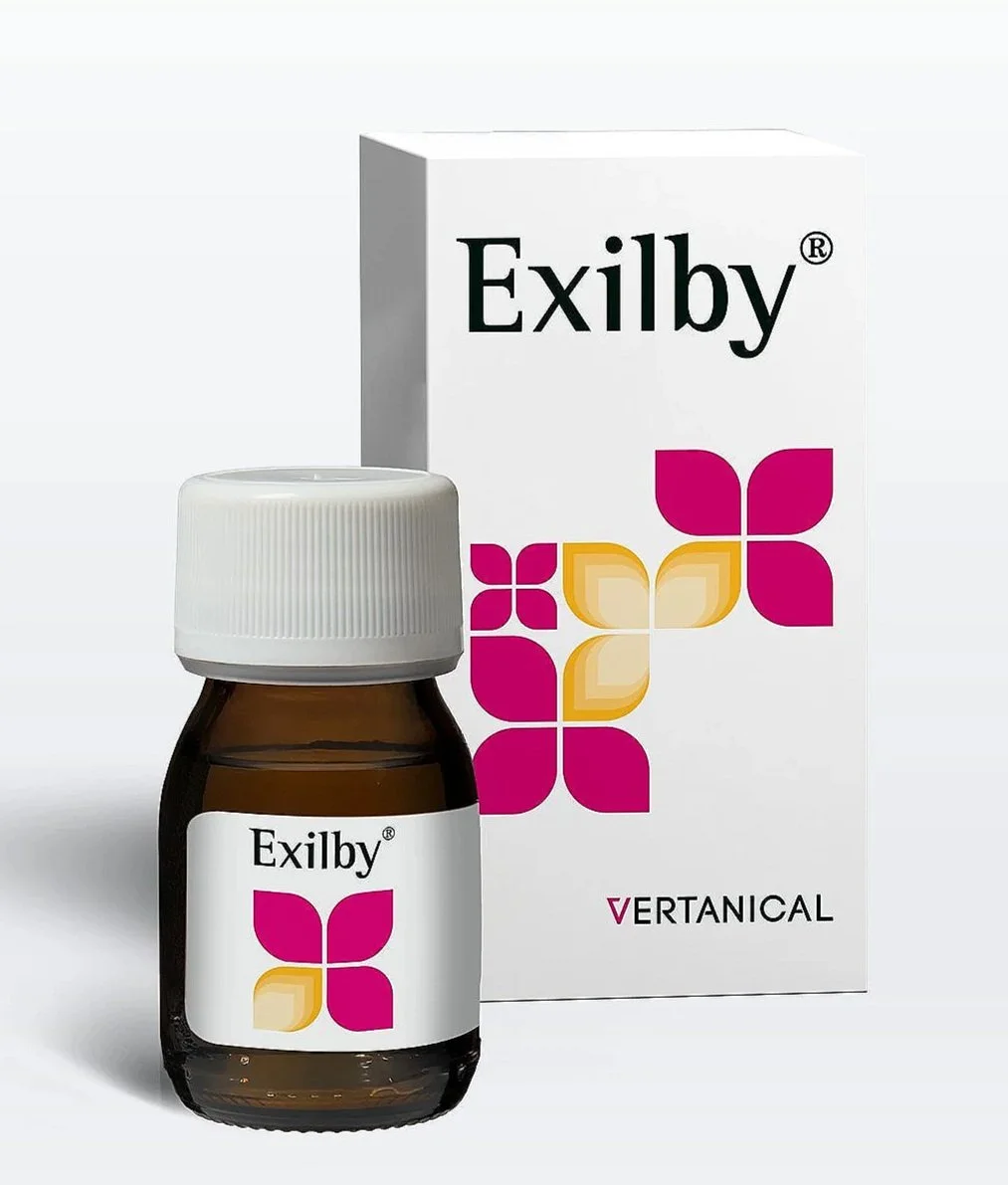
Exilby is a full spectrum extract derived from THC, CBD and terpenes found in cannabis sativa, a strain of cannabis that has pain relieving properties. Exilby was approved for treatment of chronic lower back pain, although it’s likely to be prescribed for other chronic pain conditions.

“There is an extra or additional law in Germany, which says for all patients who do not have any adequate treatment left, our drug can be prescribed as well, whether they have low back pain or any other chronic pain condition,” said Dr. Clemens Fischer, founder of Vertanical, which makes Exilby. “We launch at the end of August in Germany and Austria, and then we go to Europe step by step.”

In the United States, Exilby recently received a Breakthrough Therapy designation from the FDA, which will speed up its development and review. But even with that designation, Exilby is not expected to get full FDA approval until 2028 or 2029, due to the slow regulatory process in the U.S.

Much of it hinges on the outcome of a Phase 3 placebo-controlled clinical trial that will evaluate Exilby as a treatment for chronic back pain caused by lumbosacral radiculopathy (sciatica).

Recruitment of 810 patients at various locations in the U.S. is expected to begin in the next few weeks, with the estimated completion date for the study in 2028. If the results are positive, then Vertancal will submit a new drug application to the FDA.
VERTANICAL IMAGE

The recent legalization of medical marijuana in the U.S. creates a faster potential pathway for Exilby. Medical cannabis products already approved at the state level are being reclassified by the DEA as Schedule 3 controlled substances, which allows for some medical use.   

If Exilby were available in state-licensed marijuana dispensaries, it could enter the U.S. market much sooner and without FDA approval. Fischer says he’s tempted, but unlikely to take that approach. 

“We really want to go to the track of having a pharmaceutical and an FDA-approved drug, so this is actually the track we are following. But I think about it. Why not, right? It might be easier,” Fischer told PNN.

In addition to chronic low back pain, Vertanical hopes to eventually get FDA approval for Exilby as a treatment for osteoarthritis and peripheral neuropathy.

In two completed Phase 3 studies in Europe, Exilby was more effective than moderate doses of opioids (27-32 MME) in treating chronic low back pain. Patients taking Exilby also had better sleep quality and were less likely to be constipated. Each dose contains a modest 2.5 mg of THC, but patients did not become “high” or intoxicated.

Experimental Cannabis Extract Has ‘Potential to Replace Opiates’

By Pat Anson

A German biotech company says it is seeking regulatory approval in Europe and the United States for an experimental cannabis extract that could be an alternative to opioid pain medication.

Vertanical recently completed two Phase 3 studies of its new drug – called VER-01 – on over 1,000 patients with chronic low back pain who didn’t get sufficient relief from non-opioid analgesics.

One study compared VER-01 to a placebo, while the second trial compared the drug’s safety and tolerability to patients treated with opioids. The company told The Times it was awaiting publication of the studies’ findings in The Lancet before making them public.

“VER-01 reduces pain without creating dependency or having an abuse potential,” said Clemens Fischer, MD, Vertanical’s CEO. “It has the full potential to replace opiates as it’s more effective. It’s a real alternative for chronic patients — the first one.

“Pain patients around the world are trapped in a vicious cycle of pain, insomnia, limited mobility, and depression. VER-01 has the potential to successfully break this cycle.”

VER-01 is a “full-spectrum” extract derived from cannabis sativa leaves and flowers. Although it contains THC, the main psychoactive substance in cannabis, Fischer says patients enrolled in the studies didn’t become high or intoxicated. About 25 percent did “feel a bit dizzy” for two weeks after they started taking it.

Participants also didn’t get “the munchies” or gain weight, a well-known side effect of cannabis.

“We were looking very carefully, because that’s what we hear from cannabis smokers — that the appetite increases as well their weight. But we haven’t seen any increase in weight,” Fischer told The Times.

Vertanical is seeking regulatory approval of VER-01 in Europe and with the UK’s Medicines and Healthcare Products Regulatory Agency. If granted, VER-01 would be the first cannabis-based medicine approved for chronic pain. It would be sold under the brand name Exilby and be taken orally in drops.

The timeline for approval in Europe may be as soon as this summer, but it’s likely to take longer in the U.S.

“We are seeking regulatory approval in the US and are in talks with the FDA. For approval in the US, a further phase 3 study with US patients in the indication of chronic low back pain will start in Q2 2025,” Merit Renner, Senior Manager of Business Development at Vertanical, told PNN in an email. “This, together with the phase 3 study successfully conducted in Europe, will form the basis for approval in the US.”

Vertanical also plans further studies of VER-01 on patients with osteoarthritis and peripheral neuropathy.

Research into the pain-relieving properties of cannabis has been slow in the U.S., in large part because of marijuana’s status as a Schedule 1 Controlled Substance, the same classification as LSD and heroin. The DEA recently allowed more marijuana to be used for research purposes, but has dragged its feet about reclassifying marijuana as a Schedule 3 substance that could be used for medical purposes. Until marijuana is rescheduled, VER-01 is unlikely to get FDA approval.

Some recent studies have shown that certain cannabinoids found in marijuana -- cannabidiol (CBD), cannabigerol (CBG), and cannabinol (CBN) – block pain signals in the peripheral nervous system, not the brain, and don’t have a psychoactive effect that could lead to abuse.

“These findings open new avenues for the development of cannabinoid-based therapies,” said Mohammad-Reza Ghovanloo, PhD, lead author of a study published in PNAS and a research scientist at Yale School of Medicine. “Our results show that CBG in particular has the strongest potential to provide effective pain relief without the risks associated with traditional treatments.”

The cannabinoids in the Yale study interact with a protein in cell membranes called Nav1.8, which blocks peripheral nerves from transmitting pain signals. Inhibiting Nav1.8 is the same method used by Journavx (suzetrigine), a non-opioid analgesic recently approved by the FDA for relieving moderate to severe acute pain in adults.