Wearable Device Predicts Migraines With Over 90% Accuracy

By Pat Anson

Imagine what it would be like to know – with over 90% accuracy – that you’re going to have a migraine tomorrow.

You’d be able to plan ahead. Change your schedule. Get extra sleep. Stay hydrated. Avoid stress. And make a point of taking that migraine prevention drug that you often forget to take.

You may not be able to prevent tomorrow’s migraine, but you could reduce its severity.

A wearable neuromodulation device called Nerivio makes that advance warning possible, according to a new study published in the journal Neurology. Sponsored by Theranica, the maker of Nerivio, the study is based on an analysis of data from over 53,000 people who used the device for nearly five years. 

Nerivio is worn on the upper arm and controlled by a smartphone app that uses mild electrical pulses during 45-minute treatments to disrupt migraine pain in the brain. The device also collects a lot of data about users, such as the frequency and severity of their migraines, aura and other symptoms, demographic data, and even the weather where they live.

Using machine learning and artificial intelligence, Nerivio’s Your Day Ahead feature uses data from the app to predict the likelihood of a migraine over the next 24 hours with 91.2% accuracy. The app doesn’t diagnose migraine, but it does help patients take control of their lives by enabling them to plan ahead for a migraine attack.

Migraine experts have known for decades that patients have certain tendencies that can signal a migraine may be coming. They might have an aura, mood changes, yawn more frequently, or have muscle stiffness. These are known as “prodromal” symptoms. 

But Theranica researchers found that those early warning signs contribute just 11% of Nerivio’s predictive performance. The stronger signal is the rolling average of a patient's headache severity over the preceding 30 days. It turns out those long-term headache patterns are more of a tell than the prodromal cues.

"What this analysis suggests, in the largest dataset reported to date, is that the strongest predictive signal isn't in that narrow pre-attack window. Instead, a patient's own recorded pattern of headache severity over the preceding month turns out to be the most informative signal in the model," said Chia-Chun Chiang, MD, Associate Professor of Neurology and a Headache Specialist at the Mayo Clinic. 

"That's a meaningful shift in how we think about forecasting migraine risk, and it matters for patients. Consistent, longitudinal patient-reported data isn't just a record of what's happened — it may be a window into what's likely to come next.”

Migraine affects about 39 million people in the United States and 1.1 billion worldwide. In addition to headache pain, migraine can cause nausea, blurriness, and sensitivity to light or sound. Women are three times more likely to suffer from migraines than men.   

The Nerivio device is FDA-approved for acute and/or preventive treatment of migraine in patients 8 years of age or older. Controlled by the user through the app, Nerivio provides relief during attacks and, when used regularly, helps reduce migraine frequency. The Your Day Ahead feature comes with the Nerivio app.

Nerivio is only available by prescription and is covered by many insurers. Commercially insured patients usually pay $49 for their first device, with refills and replacement units capped at $89. Each device or refill kit provides 18 separate 45-minute treatments. Without insurance, the cost ranges from $600 to $800. 

Chronic Pain? There’s an App for That

By Pat Anson, Editor

Smartphones have revolutionized the way we communicate. And they are fast becoming a tool in the treatment of chronic pain.

Wearable medical devices linked to smartphones can not only do simple things like track your pulse and blood pressure, they can help relieve some types of chronic pain without the use of drugs. Several of these new medical devices are being showcased next month at the 2016 International Consumer Electronics Show (CES) January 6-9 in Las Vegas.

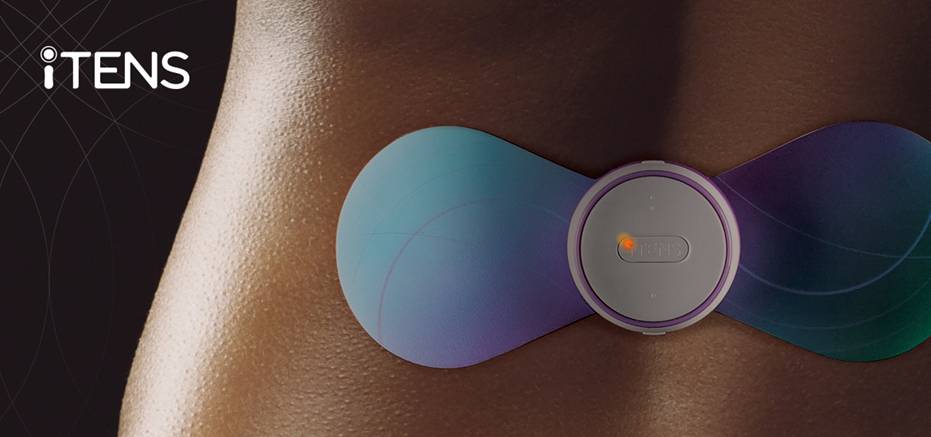
One device making its debut at the trade show is the iTens, the first FDA-cleared wireless TENS device that works via an iPhone or Android based app.

Transcutaneous Electrical Nerve Stimulation (TENS) has been used for decades to relieve pain by using electrical stimulation to block or mask pain signals. But the old TENS units typically come with many wires, are anything but portable, and could only be used for limited 30-minute periods.

images courtesy of itens

images courtesy of itens

“The iTENS device was created for people who are in need of a portable, convenient method of pain management that doesn't involve taking prescription medication,” says iTENS CEO Joshua Lefkovitz. “We designed the iTENS to be thin, flexible, discreet, and easy to operate with the push of a button from the iTENS app.”

The iTens uses peel ‘n’ stick gel pads that can be directly applied to painful areas. The pads are powered by a lithium-ion rechargeable battery that can provides relief for up to 24 hours.  During that time, the iTENS app measures a user’s pain scale, tracks their results, and charts their progress.

“We’ve got the first clearance from the FDA that has a Bluetooth enabled app,” Lefkowitz told Pain News Network. “There are other wireless TENS devices out there, but none of them are app-enabled.

“It’s really cool, because with an app you can roll in new settings. We’ve got body part settings, condition-specific settings, and you’ve got manual settings so you can pre-program whatever settings you want.”

The iTens device will become commercially available in March for $89.95. No prescription is needed and the device is “FDA-cleared” – meaning the Food and Drug Administration has approved iTens’ safety, but not necessarily its efficacy.

Device makers have a huge advantage over pharmaceutical companies because they are held to a lower regulatory standard and often can get fast track approval from the FDA without any clinical studies – as long as the new device is substantially the same as an old device already on the market.

One disadvantage to that approach is that without full FDA approval, few insurance companies are likely to offer reimbursement for a wearable medical device and physicians are less likely to recommend them.

That conundrum will be addressed at the CES trade show in a panel discussion titled “Roadmap to FDA Approval.” One of the speakers is Shai Gozani, President and CEO of NeuroMetrix Inc., maker of the Quell pain relief device, a neurostimulator worn below the knee

“If wearable technology is going to achieve its tremendous potential it must move beyond wellness to tackling fundamental health problems such as chronic pain, diabetes, and heart disease. This necessarily implies regulation by the FDA,” said Gozani. “I hope this panel will start to demystify the regulatory process and encourage technology companies to embrace the opportunity of consumer medical technology.”

The FDA issued guidance earlier this year on the types of apps that would be subject to regulatory review. The agency said it was not trying to stifle innovation and the regulations would only apply to a  “small subset of mobile apps that are medical devices and present a greater risk to patients if they do not work as intended."

The goal is not to regulate “wellness” apps that keep track of things like fitness and nutrition, but apps that make specific claims about diseases and conditions.

According to industry estimates, by 2018 over half of the world’s 3.4 billion smartphone and tablet users will have downloaded mobile health applications