
Could PEMF Therapy Recharge Your Health?
/By Madora Pennington
I tend to be skeptical of any health treatment that sounds a bit “woo-woo.” After all, I don’t want to waste my resources on something that doesn’t work or might only be placebo.
But after experiencing so much benefit from stimulating my vagus nerve with a neuromodulation device, I wondered what other bioelectric medicine I could benefit from.
Perhaps you have heard of PEMF. It stands for pulsed electromagnetic field therapy. Like a TENS, ultrasound, or vagus nerve stimulator, it seeks to treat the body using electric currents.
Most PEMF devices are a mat for laying on, or sometimes a metal coil that is held or placed on an area of the body. A PEMF sends magnetic energy through the body or part of it.
Similarly, the depression treatment Transcranial Magnetic Stimulation (TMS) uses high intensity magnetic pulses to penetrate the skull to shift the brain out of states like depression, anxiety, or pain.
PEMF technology has been around since at least the 1970s. It’s first FDA approval came in 1979 for the treatment of non-healing bone fractures.
PEMF therapy works because the body responds to external forces. For example, bones get stronger from stress (think tennis or running), which triggers an electrical charge in the body that causes bone remodeling.
The pulsating low magnetic frequency of PEMF has a positive effect on cellular and biophysical systems, beyond just bones. A damaged or unhealthy cell may have its electrical charge disrupted. PEMF treatment increases cellular energy and improves blood flow, accelerating cell regeneration and tissue repair, acting as a sort of battery charger to cells.
Because collagen responds to forces like bones do, PEMF therapy helps tendons, ligaments, and wounds heal. It can also reduce low back pain and pain from osteoarthritis. Sessions on a PEMF can even increase cartilage, the cushioning tissue in joints.
I purchased the Hoolest MiniMax PEMF because I liked their vagus nerve stimulator. This is the only PEMF device I have tried, so I can’t compare it to others.
The Hoolest PEMF aims to be a clinical level device for the home user. Unfortunately, the MiniMax is not inexpensive, and costs thousands of dollars.
The founder of Hoolest says it takes powerful machinery to put energy through the entire body.
“A PEMF can activate and strengthen the entire network of the nervous system at once, while a vagus nerve stimulator takes smaller areas, just one section,” Nick Hool told me.
Hool advises using it frequently. Like exercise, it takes consistent application to get the most benefit.
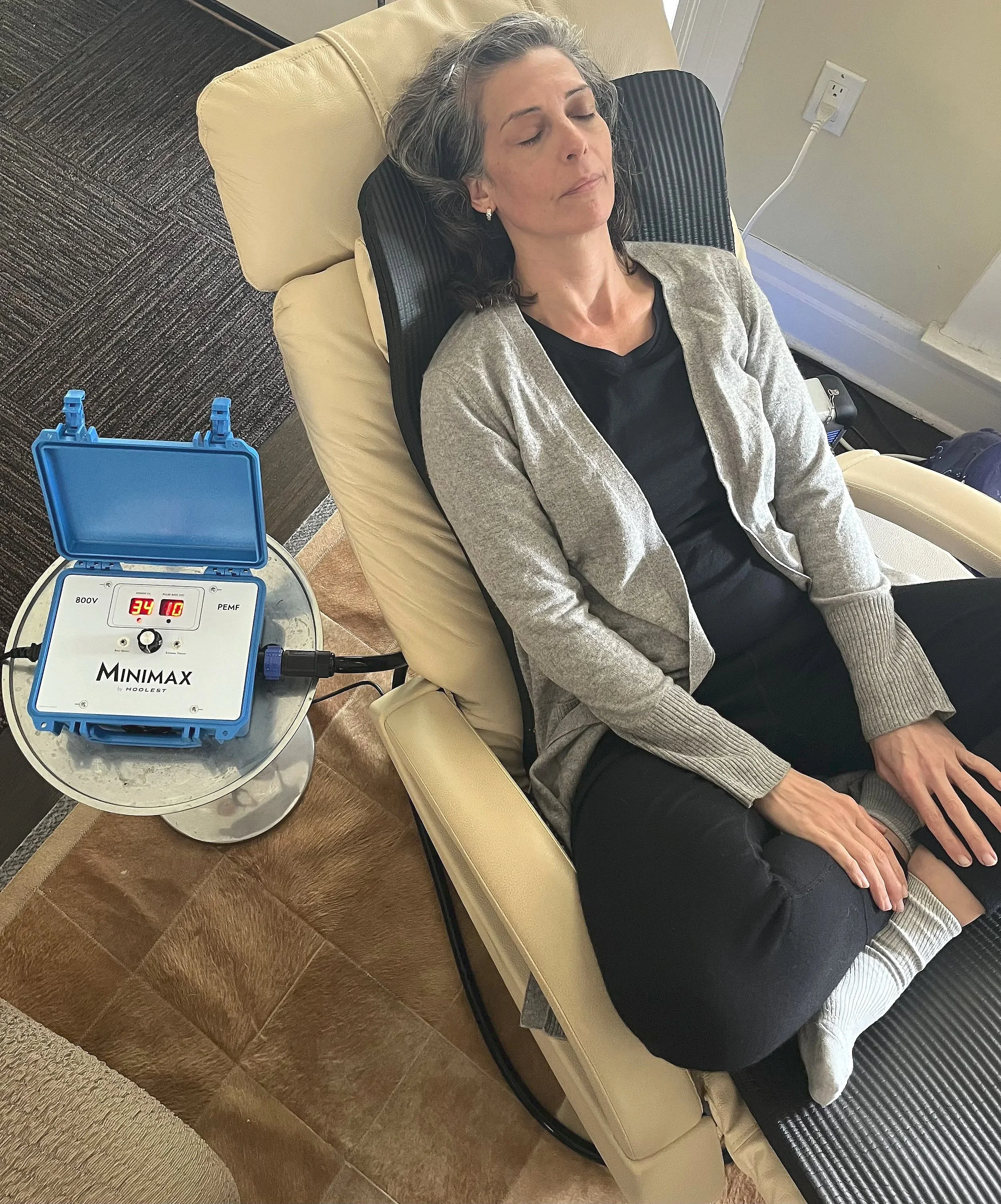
My PEMF is bulky and noisy, making weird sounds like an MRI, another magnetic technology. Nonetheless, it is deeply soothing and relaxing and quickly became part of my daily routine.
Placing the coil on old injuries feels just wonderful. After some weeks of using it, my tolerance for exercise increased because the PEMF reduced post-exercise aches and soreness. I noticed I was sleeping very deeply. Overall, my mood was consistently optimistic and relaxed.
On Thanksgiving, a few of my guests took turns spending a half hour on my PEMF mat, after I jokingly promised it would cure anything. All said they felt deeply relaxed from it into the next day.
For the chronically ill, stimulating the body with magnetic pulses may be particularly helpful in ways that medications or surgeries are not. The pulsating magnetic frequencies of a PEMF promote homeostasis, the ideal state of balance in the body.
In the aftermath of severe illness or injury, symptoms can linger when the body is not properly regulating inflammatory processes. Immune cells can become inappropriately activated. All of this prevents tissue healing, which can result in chronic pain.
Time spent on a good PEMF device can re-regulate these off-kilter inflammatory and immune responses. This may clear up brain fog and alleviate chronic fatigue.
In the case of chronic pain, a PEMF may improve faulty signals that are transmitting too many pain messages to the brain. A PEMF device can also stimulate deeper branches of the vagus nerve that external stimulators applied to the skin cannot reach.
PEMF devices vary wildly in their specifications and so does their effectiveness. Studies often comment on the lack of uniformity in PEMF devices, which makes studying their results less consistent. Standard PEMF protocols would make studies more reliable.
Most insurers do not cover PEMF therapy, and consider it “experimental, investigational, or uproven,” although some specific FDA-approved uses, such as bone healing, might be exceptions.
Pregnant women and growing children should not use a PEMF. People with implanted devices like pacemakers should not use a PEMF, as it may make them malfunction.