
A Beginner’s Guide to Using Kratom for Pain Relief

By Crystal Lindell

Whenever I meet someone who’s having trouble managing their chronic pain, I always suggest that they look into kratom. However, many soon realize that there’s not much trustworthy information out there about what kratom is and how to use it. 

I’ve been taking kratom for my own chronic pain since 2018, and I have found that it’s the only thing sold over the counter that actually helps me. 

Below is a look at my experiences with it, and some tips to help if you’re new to the idea of taking kratom for chronic pain. 

Also, I want to make clear that this column is not sponsored, and you’ll notice that there are no links to any specific kratom products or companies. There is a lot of spammy content in articles about kratom, but this isn’t one of them.

What Is Kratom?

The formal name for kratom is “Mitragyna speciosa.” It’s a tropical tree that’s native to southeast Asia, and belongs to the same botanical family as coffee. 

Kratom has been used for centuries in Asia as a natural stimulant and pain reliever, but only in the past decade has it become widely available in the United States

To create the powder that’s usually sold in smoke shops, gas stations and online, kratom leaves are dried and ground up into a fine powder. 

There are three basic strains of kratom, and each one has different effects. 

There is a white strain, which I have found acts as a stimulant or energy booster. The red strain seems more like a mood booster that helps with pain. And then there’s a green strain, which is seen as more of the middle point between the two. 

You’ll also find products labeled as “gold” and “black” and those claim to be stronger versions of kratom, although I haven’t always found that to be the case. 

I personally use a mix of the strains, which is commonly referred to as a "trainwreck" mix. 

Is Kratom Legal?

Laws vary by state, county, and even cities in the United States. So it’s best to check your local laws before purchasing kratom. 

In June, the FDA sent warning letters to 7 kratom vendors about illegally marketing their products as dietary supplements. The letters were specifically in regards to an alkaloid in kratom called 7-hydroxymitragynine -- known as 7-OH -- which relieves pain and increases energy.

The FDA said it would try to get 7-OH classified as an illegal controlled substance, falsely claiming it was an opioid. While 7-OH occurs naturally in kratom, it is present only trace amounts.

To boost its potency, some vendors are selling gummies, tablets and extracts with concentrated levels of 7-OH, which the FDA says “may be dangerous.” For more information about 7-OH, check out this recent column I wrote about that product.

Although some states and cities have already banned 7-OH, the natural leaf powder is widely available (and still legal) in most U.S. states, as long as no medical claims are made about it. 

Is Kratom Dangerous?

It’s rare for someone to have an adverse reaction to natural kratom leaf, which is the form I take. However, people who consumed the concentrated extracts have been hospitalized or experienced overdoses. In most cases, they also consumed alcohol and other substances.

Recently, former CDC Commissioner Robert Redfield, MD, talked about a 2024 FDA-funded study, the final results of which have never been published. He said they found that kratom has low abuse potential.

“In 2024, the FDA completed a single ascending-dose clinical trial examining ground kratom leaf in experienced users. The results were illuminating: participants experienced no serious adverse events at doses up to 12 grams, with side effects limited to mild nausea and pupil constriction. Crucially, subjective ‘drug liking’ scores never reached statistical significance compared to placebo, indicating low abuse potential for natural leaf.”

According to the American Kratom Association, FDA researchers were "profoundly disappointed” at the lack of adverse events associated with kratom, as its contradicts the agency’s long-standing opposition to it. That’s supposedly why the study’s findings have not been formally released.

Does Kratom Relieve Pain?

I think kratom really works, at least it does for my chronic pain. I can tell there’s a difference in my pain level shortly after I take a dose. My partner also swears by kratom as an effective treatment for chronic pain.

A 2016 PNN survey of over 6,000 kratom users found that 97% thought it was very or somewhat effective in treating their pain, depression, anxiety and other medical conditions. Over 98% said that kratom wasn’t harmful or dangerous.  

I always say that the best way to know that kratom actually works is when people try to regulate or ban it.

How Do You Take Kratom?

I mostly use the powder form of kratom. It comes in a bag, and it’s usually sold by weight.

I take half a spoonful of the powder, put it under my tongue, and then wash it down with a non-carbonated flavored beverage like juice or Gatorade. The powder is gritty and tastes bad, so you’ll probably need something to wash it down quickly with. To improve the taste, the powder can be mixed into a beverage directly.

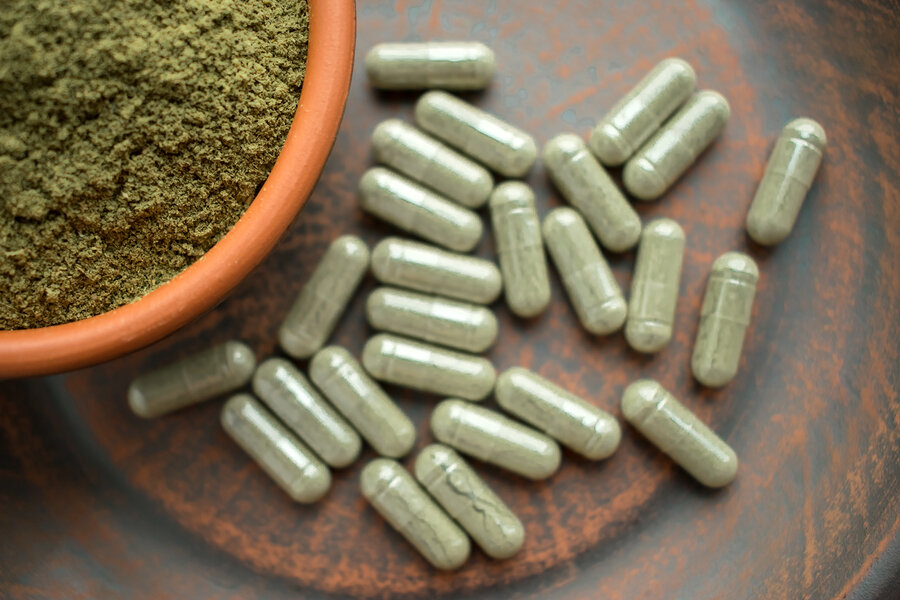
You can also buy the powder in capsules, which are easier to consume. I personally find that capsules give me heartburn, so I tend to avoid them. 

There are also edible versions of kratom on the market, such as gummies, chocolates and even seltzers. I find those take longer to kick in, but they tend to offer a more even effect. However, they are more expensive than the raw powder, so I don’t buy them very often. 

If you do try kratom, I recommend using an extremely small dose to start with and, if possible, purchasing it from a smoke shop where employees can help you navigate your options. 

Overall, kratom has the potential to help a lot of people. But everyone is different, so your experience with the substance may vary. My hope is that people who could benefit from using kratom will feel more confident about trying it after learning more about it. 
Balancing the Risks and Benefits of Kratom

By David Kroll

David Bregger had never heard of kratom before his son, Daniel, 33, died in Denver in 2021 from using what he thought was a natural and safe remedy for anxiety.

By his father’s account, Daniel didn’t know that the herbal product could kill him. The product listed no ingredients or safe-dosing information on the label. And it had no warning that it should not be combined with other sedating drugs, such as the over-the-counter antihistamine diphenhydramine, which is the active ingredient in Benadryl and other sleep aids.

As the fourth anniversary of Daniel’s death approaches, a recently enacted Colorado law aims to prevent other families from experiencing the heartbreak shared by the Bregger family. Colorado Senate Bill 25-072, known as the Daniel Bregger Act, addresses what the state legislature calls the deceptive trade practices around the sale of concentrated kratom products artificially enriched with a chemical called 7-OH.

7-OH, known as 7-hydroxymitragynine, has also garnered national attention. On July 29, 2025, the U.S. Food and Drug Administration issued a warning that products containing 7-OH are potent opioids that can pose significant health risks and even death.

As kratom and its constituents are studied in greater detail, the Centers for Disease Control and Prevention and university researchers have documented hundreds of deaths where kratom-derived chemicals were present in postmortem blood tests. But rarely is kratom deadly by itself. In a study of 551 kratom-related deaths in Florida, 93.5% involved other substances such as opioids like fentanyl.

I study pharmaceutical sciences, have taught for over 30 years about herbal supplements like kratom, and I’ve written about kratom’s effects and controversy.

One Name, Many Products

Kratom is a broad term used to describe products made from the leaves of a Southeast Asian tree known scientifically as Mitragyna speciosa. The Latin name derives from the shape of its leaves, which resemble a bishop’s miter, the ceremonial, pointed headdress worn by bishops and other church leaders.

Kratom is made from dried and powdered leaves that can be chewed or made into a tea. Used by rice field workers and farmers in Thailand to increase stamina and productivity, kratom initially alleviates fatigue with an effect like that of caffeine. In larger amounts, it imparts a sense of well-being similar to opioids.

In fact, mitragynine, which is found in small amounts in kratom, partially stimulates opioid receptors in the central nervous system. These are the same type of opioid receptors that trigger the effects of drugs such as morphine and oxycodone. They are also the same receptors that can slow or stop breathing when overstimulated.

In the body, the small amount of mitragynine in kratom powder is converted to 7-OH by liver enzymes, hence the opioid-like effects in the body. 7-OH can also be made in a lab and is used to increase the potency of certain kratom products, including the ones found in gas stations or liquor stores.

And therein lies the controversy over the risks and benefits of kratom.

‘No Currently Accepted Medical Use’

Because kratom is a plant-derived product, it has fallen into a murky enforcement area. It is sold as an herbal supplement, normally by the kilogram from online retailers overseas.

In 2016, I wrote a series of articles for Forbes as the Drug Enforcement Administration proposed to list kratom constituents on the most restrictive Schedule 1 of the Controlled Substances Act. This classification is reserved for drugs the DEA determines to possess “no currently accepted medical use and a high potential for abuse,” such as heroin and LSD.

But readers countered the DEA’s stance and sent me more than 200 messages that primarily documented their use of kratom as an alternative to opioids for pain.

Others described how kratom assisted them in recovery from addiction to alcohol or opioids themselves. Similar stories also flooded the official comments requested by the DEA, and the public pressure presumably led the agency to drop its plan to regulate kratom as a controlled substance.

But not all of the stories pointed to kratom’s benefits. Instead, some people pointed out a major risk: becoming addicted to kratom itself. I learned it is a double-edged sword – remedy to some, recreational risk to others. A national survey of kratom users was consistent with my nonscientific sampling, showing more than half were using the supplement to relieve pain, stress, anxiety or a combination of these.

Natural Leaf Powder vs Concentrated Extracts

After the DEA dropped its 2016 plan to ban the leaf powder, marketers in the U.S. began isolating mitragynine and concentrating it into small bottles that could be taken like those energy shots of caffeine often sold in gas stations and convenience stores.

This formula made it easier to ingest more kratom. Slowly, sellers learned they could make the more potent 7-OH from mitragynine and give their products an extra punch. And an extra dose of risk.

People who use kratom in the powder form describe taking 3 to 5 grams, the size of a generous tablespoon. They put the powder in capsules or made it into a tea several times a day to ward off pain, the craving for alcohol or the withdrawal symptoms from long-term prescription opioid use.

Since this form of kratom does not contain very much mitragynine – it is only about 1% of the powdered leaf – overdosing on the powder alone does not typically happen.

That, along with pushback from consumers, is why the Food and Drug Administration is proposing to restrict only the availability of 7-OH and not mitragynine or kratom powder. The new Colorado law limits the concentration of kratom ingredients in products and restricts their sales and marketing to consumers over 21.

Even David Bregger supports this distinction. “I’m not anti-kratom, I’m pro-regulation. What I’m after is getting nothing but leaf product,” he told WPRI in Rhode Island last year while demonstrating at a conference of the education and advocacy trade group the American Kratom Association.

Such lobbying with the trade group last year led the American Kratom Association to concur that 7-OH should be regulated as a Schedule 1 controlled substance. The association acknowledges that such regulation is reasonable and based in science.

Potential Use as Medicine

Despite the local and national debate over 7-OH, scientists are continuing to explore kratom compounds for their legitimate medical use.

A $3.5 million NIH grant is one of several that is increasing understanding of kratom as a source for new drugs.

Researchers have identified numerous other chemicals called alkaloids from kratom leaf specimens and commercial products. These researchers show that some types of kratom trees make unique chemicals, possibly opening the door to other painkillers.

Researchers have also found that compounds from kratom, such as 7-OH, bind to opioid receptors in unique ways. The compounds seem to have an effect more toward pain management and away from potentially deadly suppression of breathing. Of course, this is when the compounds are used alone and not together with other sedating drugs.

Rather than contributing to the opioid crisis, researchers suspect that isolated and safely purified drugs made from kratom could be potential treatments for opioid addiction. In fact, some kratom chemicals such as mitragynine have multiple actions and could potentially replace both medication-assisted therapy, like buprenorphine, in treating opioid addiction and drugs like clonidine for opioid withdrawal symptoms.

Rigorous scientific study has led to this more reasonable juncture in the understanding of kratom and its sensible regulation. Sadly, we cannot bring back Daniel Bregger. But researchers can advance the potential for new and beneficial drugs while legislators help prevent such tragedies from befalling other families.

David Kroll, PhD, is a Professor of Natural Products Pharmacology & Toxicology in the Department of Pharmaceutical Sciences at the University of Colorado Anschutz Medical Campus.

This article originally appeared in The Conversation and is republished with permission.

Is Kratom Right for You?

By Forest Tennant, PNN Columnist

The answer to the headline on this column depends upon whether you can get enough prescription opioids to control Intractable Pain Syndrome (IPS).

In many locales in the country, doctors — for multiple reasons — will not prescribe enough opioids to control IPS and its cardiovascular, endocrine and autoimmune manifestations. If you can’t get enough prescription opioids to keep your pain under control, you should give kratom a try.

What Is Kratom?  

Kratom is a compound found in the tree leaves of the mitragyna speciosa plant that grows in southeast Asia.

It is an herb and not an opioid, but it produces pain relief like an opioid. Biologically, it attaches to the opioid receptors (pain relief sites) in the brain and spinal cord, and relieves pain just like an opioid. 

Kratom is legal in most of the United States and is widely advertised and promoted on the Internet. It is available as a pill, capsule or powdered extract.

bigstock-Supplement-Kratom-Green-Capsul-227871193.jpg

It can be used by itself for pain relief or taken simultaneously with a prescription opioid. Most persons with IPS who report kratom use take it between opioid dosages or use it just for flares.

How Do I Know How Much to Take? 

There are several formulations and many brands of kratom. In fact, we have received so many different reports that we can’t really say that one form, color or source is better than another. Our recommendation is that you acquaint yourself with someone who already takes kratom for pain relief. This person is in the best position to “show you the ropes” relative to dosage, types and sources. 

As with any new drug, start at a low dose and work up over time to maximize its effectiveness and prevent any severe side effects. Kratom is available without a prescription, but check with your state laws first. It is currently illegal in a few states and some communities.

Do not let today’s opioid restrictions ruin your health and life by leaving you in severe pain. Kratom may be just right for you. 

Forest Tennant is retired from clinical practice but continues his research on intractable pain and arachnoiditis. This column is adapted from newsletters recently issued by the IPS Research and Education Project of the Tennant Foundation. Readers interested in subscribing to the newsletter can sign up by clicking here.

The Tennant Foundation gives financial support to Pain News Network and sponsors PNN’s Patient Resources section.