
Congress Needs to Fund Solutions to America's Most Neglected Disease

By Dr. Ilene Ruhoy 

Twelve years ago, I got sick — and no one believed me. Doctor after doctor dismissed my symptoms, writing them off as everything from chronic sinus infections to perimenopause. 

Even as a neurologist, I couldn't get anyone to listen. It took far too long to find the truth: a 7-centimeter tumor was growing in my brain. 

I have never forgotten what it felt like to be dismissed by the very people who were supposed to help me — so now I listen to the patients everyone else has stopped listening to.

That's what brings people from across the country to my office, many carrying the same disease and the same exhaustion of not being believed: Myalgic Encephalomyelitis/Chronic Fatigue Syndrome, or ME/CFS.

The CDC estimates that up to 3.3 million people in the United States suffer from ME/CFS, yet there has been almost nothing done for them, until now.  

The National Institutes of Health approved a clear plan for how to help these patients in 2024: The ME/CFS Research Roadmap. After the November midterm elections, Congress will finish writing the appropriations bills that would fund it. All it takes is $50 million to get started.

ME/CFS is a chronic, multi-system neuroimmune disease. Its hallmark is post-exertional malaise — a severe worsening of symptoms after even minimal physical or cognitive effort — accompanied by autonomic dysfunction, cognitive impairment, chronic pain, fatigue, and immune dysregulation.

There is no FDA-approved treatment and no diagnostic test for ME/CFS. Standard labs and imaging come back normal. For decades, these patients have been written off just like I was, and told the problem is anxiety, stress, or something in their heads.

By the time these people reach me, most have already seen upward of twenty doctors. They arrive expecting to be dismissed, but I refuse to let that happen.

In spending thousands of hours with more than one hundred people living with ME/CFS, I noticed something no one could explain away: these people who had been brushed aside by the medical system were all describing the same disease. They had the same crashes. The same triggers. The same collapse of careers, families, and social lives.

These were strangers scattered across the country. They couldn’t all be imagining the same illness. They are not a mystery to me anymore, but they remain one to the government agencies that fund medical research.

An additional devastating component to ME/CFS is that it completely debilitates some people’s lives without shortening them. People living with the disease can remain bedbound for decades.

But I don’t see this as a tragedy. It’s an opportunity. If we find effective treatments, the people who suffer from this disease today can still be helped.

One thing I’ve come to learn is that their defining symptom is not "fatigue." What these patients experience is an energy mismatch: the body's demand for energy outstrips its supply, and the supply cannot catch up.

My most severely affected patients cannot type for thirty seconds without triggering a crash that sets them back for days. Anyone who has not lived it cannot fathom it — and that understanding gap is part of why the disease has been underfunded.

The research community is ready. I work alongside groups across the country investigating the causes of this disease, and I can tell you what holds them back. It is not a lack of ideas.

Teams are pursuing genuinely novel science. What stops them is money. I know researchers with promising findings who cannot complete their studies because the funds ran out mid-stream. That is the quiet scandal of ME/CFS research: discoveries stall not because the science fails, but because the funding does.

The NIH Roadmap lays out a path forward. The scientific community helped build it. What the Roadmap lacks is an appropriation to match its ambition. Fifty million dollars is a lifeline for millions of Americans, but in the context of the funding bill, it’s simply a rounding error.

The science is ready. The researchers are willing. The patients have waited long enough. It’s time to fund the roadmap. 
Dr. Ilene Ruhoy is a board-certified neurologist trained in environmental toxicology and integrative medicine who has special expertise in chronic and complex illnesses. She has worked with around 100 people living with ME/CFS over her career and has given talks to spread more awareness on the disease. 

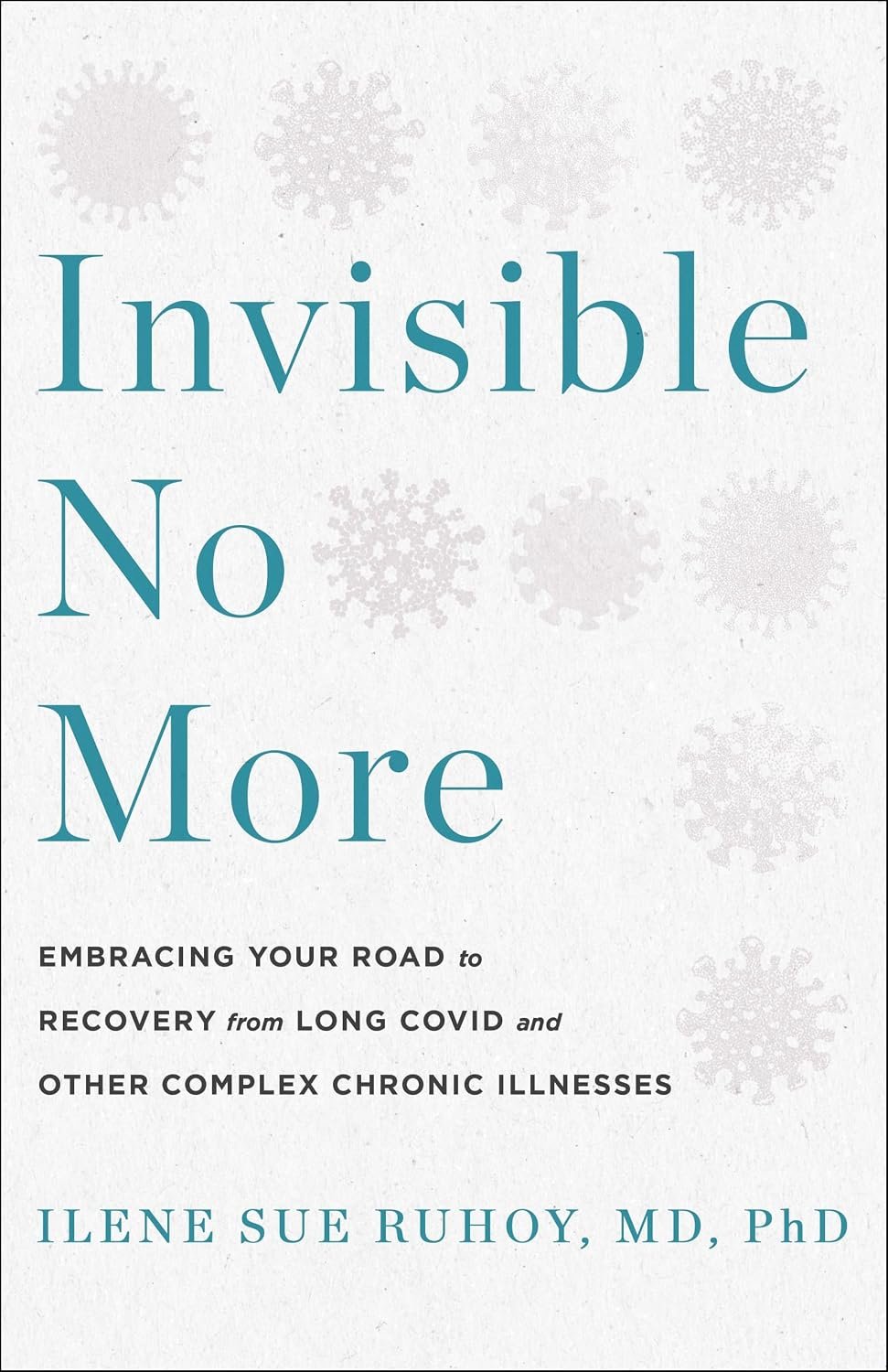
Dr. Ruhoy is the author of “Invisible No More” – a practical guide to recovery for patients living with Long Covid and other complex chronic illnesses.


Long-Haul Covid Shedding New Light on Chronic Fatigue Illness

By Kevin Cool, Kaiser Health News

Four weeks after San Diego pediatric nurse Jennifer Minhas fell ill with covid-19 last March, her cough and fever had resolved, but new symptoms had emerged: chest pain, an elevated heart rate and crushing fatigue.

Her primary care physician told her she was just anxious, and that none of her other covid patients had those issues. “That wasn’t what I needed to hear,” Minhas said.

At times, she’s been too exhausted to hold up her head. “I was kind of a zombie for months, shuffling around unable to do much of anything.”

The clinical term for the flattening fatigue Minhas describes is “post-exertional malaise.” It is a common symptom among patients who have not recovered from covid. It is also consistent with a standard feature of another chronic illness: myalgic encephalomyelitis, also known as chronic fatigue syndrome, or ME/CFS.

ME/CFS patients also report cognitive impairment — “brain fog” — and orthostatic intolerance, in which standing upright produces a racing heart rate and lightheadedness. Minhas has experienced these symptoms, as have many other “long-haulers,” the tens of thousands of post-covid patients who haven’t recovered.

The percentage of covid patients who become long haulers is hard to pin down — in part because many early covid patients were not tested in time to detect the virus. But “long covid” is potentially an enormous problem. A recent study of 1,733 covid patients in Wuhan, China, found three-quarters of them still had symptoms six months after being released from the hospital.

As of January, doctors had documented more than 21 million cases of covid in the United States. “If just 5 percent develop lingering symptoms,’’ — about 1 million cases — “and if most of those with symptoms have ME/CFS, we would double the number of Americans suffering from ME/CFS in the next two years,” Harvard Medical School professor Dr. Anthony Komaroff wrote recently in the Harvard Health Letter.

ME/CFS Linked to Viral Infections

The cause of ME/CFS is unknown, but multiple studies have found it follows acute infections with viruses — everything from the 1918 Spanish flu to Ebola. “A certain percentage of people don’t recover,” said Leonard Jason, a researcher at DePaul University.

Scientists are trying to figure out the mechanisms of the disease and why it develops in certain people and not others. According to the Centers for Disease Control and Prevention, ME/CFS shares certain characteristics with autoimmune diseases, in which the immune system attacks healthy tissue in the body. Multiple studies are underway to explore this and other potential causes.

Doctors who specialize in treating ME/CFS are beginning to pivot to long-covid patients. Dr. Peter Rowe, whose clinic at Johns Hopkins is one of the country’s leading centers for ME, has so far seen four long haulers at his practice. “All of them meet the criteria for ME/CFS,” he said.

Despite years of research, there is no biomarker for ME/CFS, so blood tests are ineffective as a diagnostic tool. Rowe’s approach is to tease apart which symptoms may have identifiable causes and treatments, and address those.

One example: A 15-year-old boy Rowe was treating for ME/CFS was so sick that even sitting upright a few hours a day exhausted him and made schoolwork virtually impossible. The boy’s heart rate while lying down was 63; when he stood up it skyrocketed to 113. This effect is known as postural orthostatic tachycardia syndrome, or POTS.

Rowe knew from interviews with the boy’s mother that he had an extraordinary appetite for salt. So much so that he kept a shaker at his bedside and would regularly sprinkle salt on his hand and lick it off.

Rowe hypothesized that he was dealing with a sodium retention problem. To counter it, he prescribed the steroid fludrocortisone, which promotes sodium resorption in the kidneys. Three weeks later, the boy had recovered so dramatically he was helping a neighbor with a landscaping project, pushing rocks around in a wheelbarrow. “He was a different kid,” Rowe said.

Such a course of treatment would not be applicable in a typical case, Rowe said, “but it does emphasize the potential for patients to get a substantial improvement in their CFS symptoms if we address the orthostatic intolerance.”

ME/CFS Usually Misdiagnosed

Beginning in the 1980s, many doctors treating ME/CFS prescribed a combination of cognitive behavioral therapy and an exercise regimen based on a now discredited assertion that the illness had no biomedical origin. That approach proved ineffective — patients often got demonstrably worse after pushing beyond their physical limits. It also contributed to a belief within the medical establishment that ME/CFS was all in your head, a narrative that has largely been refuted.

“ME/CFS was never a mostly behavioral problem, although it has been cast as that,” Rowe said.

Answers have been slow to arrive, but attitudes about the illness are beginning to change. Advocates of patients point to a 2015 report by the Institute of Medicine that called ME/CFS “a serious, chronic, complex, systemic disease” and acknowledged that many doctors are poorly trained to identify and treat it. The CDC says as many as 90% of the estimated 1 million U.S. patients with ME/CFS may be undiagnosed or misdiagnosed.

The problem is exacerbated by a reluctance to provide health care coverage to patients whose illnesses aren’t easily diagnosed, said Joe Dumit, a medical anthropologist at the University of California-Davis.

“Making patients prove they are not just suffering, but suffering from a documented illness, saves money. So, I worry about the way in which covid long haulers will be treated as the numbers rise.” The best treatment in many cases may be rest or reduced workload, “which translates into some form of disability coverage,” he said.

But since long haulers typically sicken immediately after having had a testable viral infection, perhaps they won’t be disbelieved, Rowe said — after all, their illness “starts as a ‘real’ illness.’’

Long haulers may also help researchers better understand the onset of the illness because they are being studied as their symptoms emerge, while ME/CFS patients often aren’t seen until they’ve been ill for two or more years, he said.

“There’s no question that this legitimizes in many ways the experience of people with ME/CFS who have felt they weren’t believed,” DePaul’s Jason said.

In July, the nonprofit Solve ME/CFS launched an initiative aimed at understanding similarities between long haulers and patients with ME/CFS. Dubbed You+ME and underwritten by the National Institutes of Health, it includes an app that enables registrants to record their symptoms and their effects over time.

Such efforts may further diminish the tendency of doctors to ignore patients’ complaints of symptoms that seem to have no evident cause, said Lauren Nichols, 32, a long hauler with a long list of miseries — everything from severe gastrointestinal problems to shingles in her left eye.

“I was one of those people who falsely believed that if you can’t see the illness it’s psychosomatic,” said Nichols, who helps administer Body Politic, a support group for long-covid patients that has found common cause with the ME/CFS community.

“Now I’m living it,” she said. “If I have one message for doctors, it’s ‘Believe your patients.’”

Kaiser Health News is a national health policy news service. It is an editorially independent program of the Kaiser Family Foundation, which is not affiliated with Kaiser Permanente.