Study Finds ‘Moderate' Evidence Marijuana Treats Pain

By Pat Anson, Editor

The American Medical Association, the nation’s largest medical group, still officially considers medical marijuana “a dangerous drug and as such is a public health concern."

But studies being published this week in JAMA, the AMA’s official journal, highlight the slim but growing body of evidence that cannabis can be used to treat pain – as well as the lack of standards regulating medical marijuana in states where it is legal.

In a review of nearly 80 clinical trials involving over 6,400 patients, researchers found “moderate-quality evidence” that cannabinoids –  chemically active compounds in marijuana – are effective in treating chronic neuropathic pain and cancer pain, as well as muscle spasms and stiffness caused by multiple sclerosis.

There was “low-quality evidence” suggesting that cannabinoids are effective in treating sleep disorders, weight loss, Tourette syndrome, and symptoms of nausea and vomiting caused by chemotherapy; and “very low-quality evidence” for treating anxiety.

Some of the side-effects associated with medical marijuana were dizziness, dry mouth, nausea, fatigue, somnolence, euphoria, vomiting, disorientation, drowsiness, confusion, loss of balance, and hallucination.

"Further large, robust, randomized clinical trials are needed to confirm the effects of cannabinoids, particularly on weight gain in patients with HIV/AIDS, depression, sleep disorders, anxiety disorders, psychosis, glaucoma, and Tourette syndrome are required. Further studies evaluating cannabis itself are also required because there is very little evidence on the effects and AEs (adverse events) of cannabis," the authors write.

An accompanying editorial in JAMA also called for more research and lamented the lack of evidence supporting the legalization of medical marijuana in 23 U.S. states and the District of Columbia.

"If the states' initiative to legalize medical marijuana is merely a veiled step toward allowing access to recreational marijuana, then the medical community should be left out of the process, and instead marijuana should be decriminalized," wrote Deepak Cyril D'Souza, MD, and Mohini Ranganathan, MD, of the Yale University School of Medicine.

"Conversely, if the goal is to make marijuana available for medical purposes, then it is unclear why the approval process should be different from that used for other medications… Since medical marijuana is not a life-saving intervention, it may be prudent to wait before widely adopting its use until high-quality evidence is available to guide the development of a rational approval process."

The Trouble with Edibles

A second study published in JAMA looked at marijuana edibles – cookies, brownies, candies and other foods containing cannabis – that are being sold at dispensaries in Los Angeles, San Francisco and Seattle.

An estimated 16% to 26% of cannabis patients consume edibles. Many are essentially homemade products that vary from dispensary to dispensary.

Researchers found that many of the edibles had lower amounts of THC (tetrahydrocannabinol) – the active ingredient in marijuana that makes people “high” – than their labels indicated. Over half had significantly higher amounts of THC, putting patients at risk of unintended side-effects.

Of the 75 edible products that were analyzed in a laboratory, only 17% were accurately labeled with THC, 23% were “overlabeled” and 60% were “underlabeled.” The greatest likelihood of obtaining an underlabeled edible was in Seattle.

A little over half (59%) of the edibles tested had detectable levels of cannabinoids.

"Edible cannabis products from 3 major metropolitan areas, though unregulated, failed to meet basic label accuracy standards for pharmaceuticals," the authors write. "Because medical cannabis is recommended for specific health conditions, regulation and quality assurance are needed."

The lack of regulation was highlighted last year in Colorado – where both medical and recreational use of marijuana is legal. A brand of brownie mix, Rice Krispy treats and candy made with cannabis was recalled after inspectors found the edibles contained marijuana that had been “cleaned” in a washing machine.

All Forms of Medical Marijuana Now Legal in Canada

By Pat Anson, Editor

Medical marijuana advocates are cheering – and some health officials are jeering – a landmark ruling by the Supreme Court of Canada allowing patients to use cannabis in any form they choose.

The unanimous decision greatly expands the use of medical marijuana in Canada beyond the traditional means of smoking it – to include everything from cookies and teas to ointments and tinctures that are laced with THC and cannabinoids, marijuana’s active ingredients.

Many users believe smoking marijuana is harmful to their health. But under Canada’s Controlled Drug and Substances Act, use of marijuana outside of its “dried” form could result in possession and drug trafficking charges.

That’s what happened to Owen Smith, a baker for the Victoria Cannabis Buyers Club, who was arrested in 2009 for making over 200 cookies containing marijuana, as well as various oils and lotions.

The Supreme Court upheld two lower court decisions that acquitted Smith, saying the government’s marijuana law violated his right to liberty and security "in a manner that is arbitrary and hence is not in accord with the principles of fundamental justice." 

The court declared the marijuana section of the law “null and void” immediately, rather than give Parliament a chance to rewrite it. To do otherwise, the court said, would "leave patients without lawful medical treatment.”

"I'm proud and really happy today for all those people who are going to benefit from this ruling," Smith said at a press conference in Victoria, British Columbia. “Across the country there will be a lot more smiles and a lot less pain.”

“How exciting is this! I am thrilled with this decision,” said Ellen Lenox Smith, a medical marijuana advocate and columnist for Pain New Network. 

Smith, who is not able to smoke marijuana because of a medical condition, wrote a column earlier this month about ways to consume marijuana for pain relief without smoking itShe prefers a nightly dose of a marijuana oil that she makes herself.

“It all depends on the patient, condition, type of medicine used and how your body reacts. This is a wonderful alternative. We all have to find the magical way to administer,” she said. “I applaud them for having the courage to understand the reality of this medication. One size does not fit all and allowing for the variety is wonderful and something I hope we will always be allowed to turn to for help.”

Canadian health officials are angry about the court’s decision.

"Frankly, I'm outraged by the Supreme Court," said Health Minister Rona Ambrose, according to CBC News.

"Let's remember, there's only one authority in Canada that has the authority and the expertise to make a drug into a medicine and that's Health Canada," she said. "Marijuana has never gone through the regulatory approval process at Health Canada, which of course, requires a rigorous safety review and clinical trials with scientific evidence."

Ambrose said the government would fight against the court's "normalization" of marijuana with a public relations campaign outside the courtroom.

"We will continue to combat it. We will continue our anti-drug strategy, we will target youth with the message that marijuana pot is bad for them," the minister said. "We'll continue to work with medical authorities across the country to make sure they're involved in the message."

British Columbia’s chief medical health officer says edible marijuana products should come with labels listing the strains used and their potency, to help ensure that users don’t accidentally overdose and get sick.

“Quality control, certainly for medical use, should be labelled and analyzed,” Dr. Perry Kendall told the Vancouver Sun. “It would be better for people, if they’re taking an illegal product by mouth, to know how much and what, is in it.

“It can take a half an hour to an hour to absorb through the stomach.  If you’re a naive young user you might go on eating and eating because you don’t feel anything and then you take more than you want to.”

Medical marijuana – in all its various forms -- is legal in 23 U.S. states and the District of Columbia. However, there are no regulations governing its quality, dosage or labeling.  

“Evidence in the U.S. is that wider availability of these products is causing increased poisonings in children, and we want to prevent this from occurring here in Vancouver,” the city of Vancouver warned in a news release after the Supreme Court’s ruling. “Unregulated edible products also pose a greater risk to adults than other forms of marijuana.”

How to Use Medical Marijuana Without Smoking

By Ellen Lenox Smith, Columnist

It can be overwhelming to try anything new, especially something like medical marijuana. Many people are afraid to try it – not only because of the stigma associated with cannabis – but the smell that comes from smoking it.  

There are many different ways besides smoking that I have learned to administer medical marijuana. But remember, I am not an expert, just a woman who was desperately trying to find a solution as to how to address her pain. I have been learning this slowly, through reading, help from others, and trial and error.  

Due to having sarcoidosis in my chest, smoking anything could be fatal. I had to find an alternative method that I could use to safely administer medical marijuana. Acting on the advice of a friend, I started my journey utilizing this medicine in an oil form. 

Oils             

ELLEN LENOX SMITH

ELLEN LENOX SMITH

I start by grinding up dried marijuana buds in a simple coffee grinder, always being careful to use only an indica strain of cannabis. Indica plants give you pain relief and allow you to rest. I take my oil at night to help me to sleep. If I ever took this same oil during the day, I would be sleepy and groggy.

Next, I heat up oil (I use extra virgin olive oil, but you can use other types you prefer) and when it gets hot, but not to a boil, I sprinkle the ground product over the oil. When you get it just right, there is a sound similar to putting an Alka Seltzer tablet in water, and you can hear the THC and CBD being released into the oil. 

You then allow the oil to cool, strain it, and store it away from the sun. It lasts for a long time.

At night, one hour before I want to go to sleep, I take my medication. I presently use one teaspoon of the oil mixed with some applesauce or something I enjoy eating. You do not want to take this on an empty stomach. 

You should start slowly with a small amount, and gradually introduce the medication to your body. If you need to increase the dose, you can add a quarter of a teaspoon until you have reached an appropriate level. When you can sleep through the night, and awake relatively clear headed and not groggy --then you know your dose is appropriate.  

Keep in mind that by utilizing this method the medication takes time to kick in because it is being ingested. Plan your evening carefully and be sure to be ready for bed once you have medicated. It usually takes 30-60 minutes. We all react differently, so be safe.

If you want to make this oil even easier, then purchase a machine called Magical Butter, and it will do all the work for you after you grind, measure and plug it in. It costs about $175.

Vaporizers

Most days, I do not need any medication after having had a good night’s sleep. But on the days I need something else for help, I find vaporizing simple and easy. 

I have found two portable vaporizers that I love. One is called the Vape-or-Smoke and the other is named PAX. They require a small amount of marijuana, are small enough to fit in a purse, and are simple to use. 

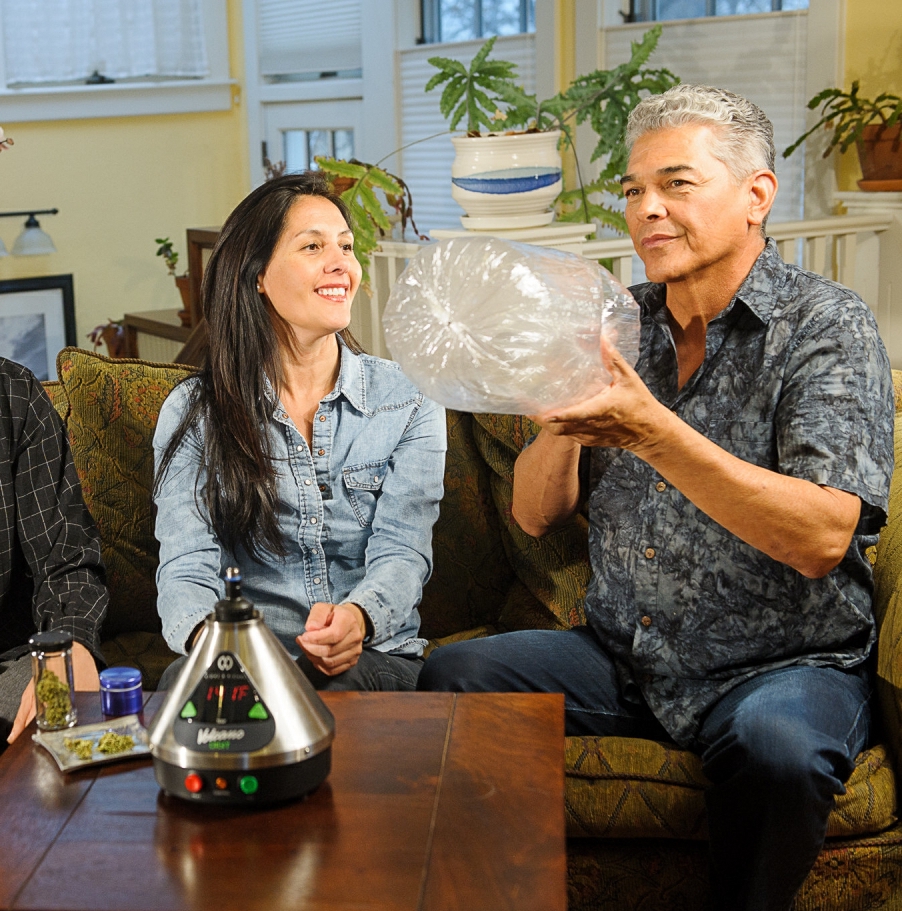
Many people use the Volcano, which is a larger, table top model seen in the picture to the right. There are so many types; you just have to decide what you are willing to spend. Some vaporizers cost several hundred dollars.

Now be careful, for you want to vaporize the correct type of cannabis. I could list all fifteen strains we grow, but I can tell you that there would be no guarantee they would be your magic.

The main thing to remember is if you are going to vaporize during the day, then you need to use a sativa strain of cannabis. This type of plant allows you to gain pain relief and also helps to stimulate you and keep you awake, not sleep like the indica plant does. If I vaporized an indica during the day, I would want to sleep. So be careful you have selected the correct type of plant.

Use a grinder to prepare the marijuana and follow the directions on the vaporizer. You will notice when you first use a vaporizer that it looks like you are blowing out smoke. However, what you are observing is actually a vapor. 

I have permission from my pulmonologist to vaporize because it is safe to use. Take a simple hit, see how you feel in a few minutes, and if you need more to help with the pain, just use it one puff at a time to find your needed dose. This method should provide you with short, yet quick relief, unlike the oil that takes awhile to kick in, but last so much longer.

Tinctures

Sometimes I also use a tincture during the day.  As with vaporizing, it is fast acting and also fast to leave the system. We have recipes for a few types. One is made with alcohol, such as lemon schnapps and it takes two months to cure. The other is made with glycerin and can be made in less than an hour in a crock pot or using the Magical Butter machine. 

When making a tincture, you again have to be careful you are using the correct strain. I make day tincture, so I only use a sativa plant. Alcohol based tinctures require the product to be put into a jar, the alcohol of choice poured over it, and then covered tightly. 

Twice a day, take a moment to shake the jar. After two months, the THC and CBD are released, and you should strain and store the liquid away from the sun.

The tincture can be taken one teaspoon at a time or with an eye-dropper, putting a few drops under the tongue or in the side of the cheek. You hold it there for about 20 seconds and then swallow. Feel free to repeat this every half hour. Remember, this is made with the plant that stimulates, so do not take at night!

The glycerin recipe is easy and can be made in an hour using a crock pot. You administer it the same way as above. The difference with this method is it has no alcohol and tastes sweet -- even though a diabetic can use it for it is not sugar based. 

It’s just a matter of preference of which type you prefer and how long you want to wait for the finished product to use.

Topical Ointments

We have had good success using topical ointments. The recipes are simple and the results are amazing. I know people with Complex Regional Pain Syndrome who have turned their lives around with topicals. 

All it requires is the tincture (not the oil), some bees wax, and then we add essential oils to mask any marijuana odor. Peppermint extract seems to be the favorite additive -- it provides a tingling sensation as it absorbs into the skin along with the cannabis.

Recipes for topicals, tinctures, and oils can all be found on our website at the end of this article.

As stated in the beginning, I am not an expert on all the various way to administer medical marijuana. Many people love using edibles, such as brownies and cookies, but I live with so many food allergies that I have no interest in even trying them. 

It also concerns me, being so drug reactive, how much I should eat or not eat because I don’t feel the effects immediately. Like the oil, edibles are slow to activate and sometimes people eat more than they should -- and suddenly they’re shocked at how strange they feel. 

Go slowly and give it time to kick in before deciding you need to eat more!

We try to steer people away from smoking to keep the lungs as safe as possible. However, if that is the only way that works for you and the smell is not an issue for you, then smoking is one of the faster ways to get pain relief from marijuana.

Ellen Lenox Smith suffers from Ehlers Danlos syndrome and sarcoidosis. Ellen and her husband Stuart are co-directors for medical marijuana advocacy for the U.S. Pain Foundation and serve as board members for the Rhode Island Patient Advocacy Coalition. For more information about medical marijuana, visit their website. 

The information in this column should not be considered as professional medical advice, diagnosis or treatment. It is for informational purposes only and represents the author’s opinions alone. It does not inherently express or reflect the views, opinions and/or positions of Pain News Network.

Why Doctors Are Slow to Embrace Medical Marijuana

By Pat Anson, Editor

Public attitudes toward marijuana have changed considerably in recent years. Voters and legislators in 23 states and the District of Columbia have legalized medical marijuana, and nationwide polls show that most Americans now support legalization.

But the nation’s medical organizations – while intrigued about the potential for marijuana to treat conditions like chronic pain – have been slow to embrace cannabis. And most doctors still refuse to prescribe it, even in states where marijuana is legal.

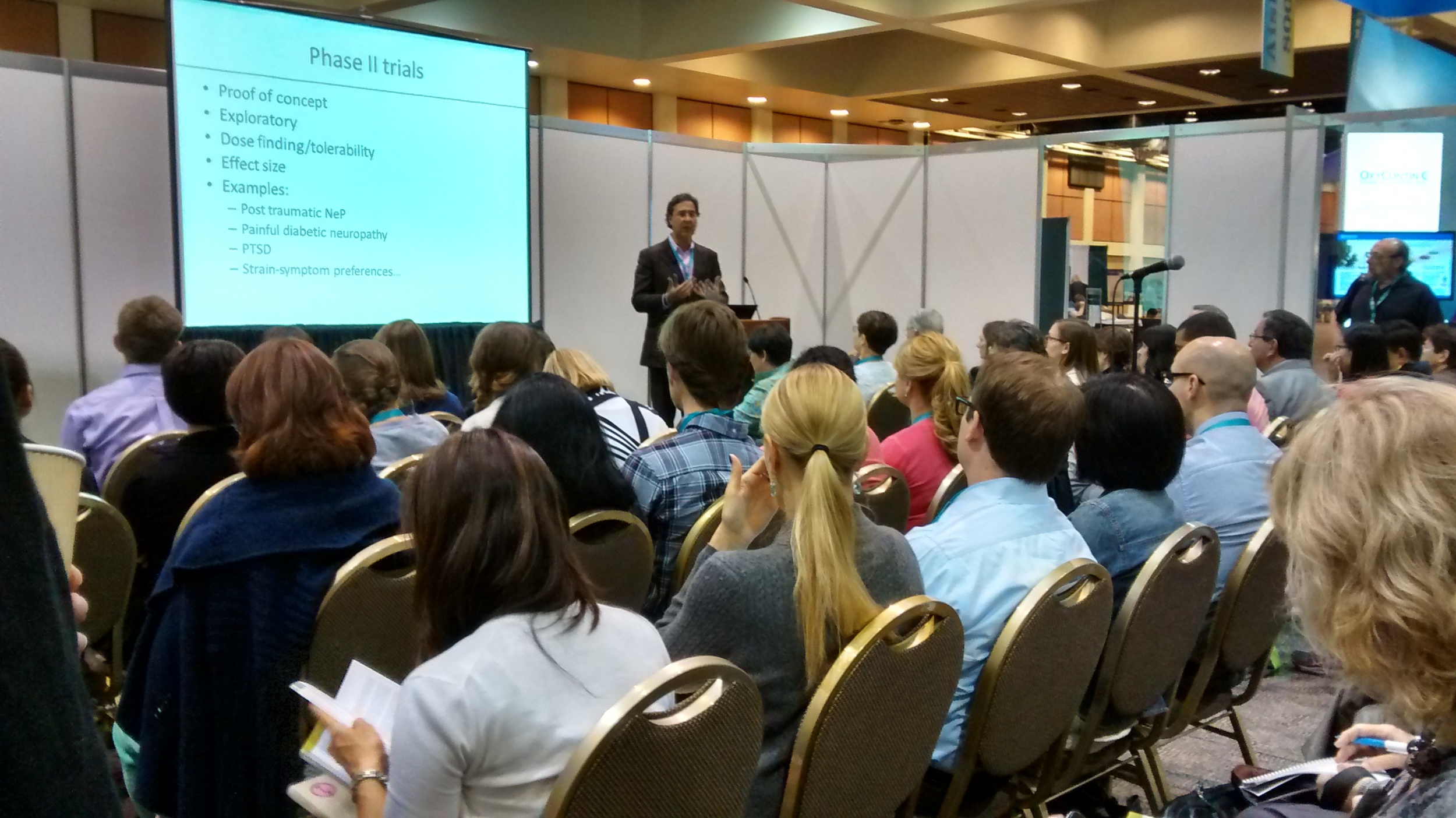
Those conflicting attitudes were on display last week at the annual meeting of the American Pain Society (APS) in Palm Springs, California – a conference focused on pain research. Although the APS has no stated policy on marijuana, the organization chose as its keynote speaker one of the most prominent medical marijuana researchers in the world, Dr. Mark Ware.

“I’ve done presentations and sessions, and it always surprises people how much interest there is,” said Ware, who is a family physician and associate professor in Family Medicine and Anesthesia at McGill University in Montreal.

“Cannabis gives people a window to come and learn, and while they’re learning about medical cannabis they can be learning about pain management and other things. It’s a very useful magnet to get people interested in a topic that’s obviously of enormous public importance.”

DR. MARK WARE SPEAKING AT THE APS CONFERENCE

DR. MARK WARE SPEAKING AT THE APS CONFERENCE

Ware’s two presentations at the APS conference were well-attended, but it was mostly researchers – not practicing physicians – who were listening.

“A lot of doctors are afraid to authorize it (marijuana) because they’re afraid of losing their licenses and their practices. So there’s a lot of fear and a lot of stigma,” Ware told Pain News Network.

“I think the researchers themselves are seeing opportunities, with changing state laws and increasing evidence of efficacy, that suddenly this is becoming a drug that can be taken a bit more seriously. And I think that’s giving rise to the opportunity that maybe there’s some work we can be doing here.”

Federal laws making marijuana illegal – which are still in effect – have stymied serious research into its medical benefits. Most of the evidence so far is anecdotal or the result of small academic studies – not the in-depth and expensive clinical research that pharmaceutical companies have to conduct to get FDA approval for their drugs.

“There’s still work to be done on the safety and efficacy of these cannabinoid compounds,” says Gregory Terman, MD, an anesthesiologist who is president of the APS.  “They’re very interesting molecules. But they’re not approved for people and we don’t want to pretend they’re anywhere near ready for prime time.”

The APS currently has a committee working on a policy statement about medical marijuana.

“I think people are opening their eyes to the possibility,” said Terman. “Marijuana’s already out there, and that’s why we felt like it was important to work on a policy statement.”

The American Academy of Pain Management (AAPM) also doesn’t have a formal position on marijuana – although some members are urging the organization to take one.

“I think there’s no doubt there are substances in there that can be beneficial to some people with pain. It’s just a question of figuring out what they are and how do you get them extracted in a way so that we know what we’re giving people,” said Bob Twillman, PhD, executive director of the AAPM. “We haven’t settled on a policy because there are so many different variables and so much is up in the air that coming up with a good policy is hard to do.”

Twillman says he is being lobbied by some AAPM members to advocate for the rescheduling of marijuana from an illegal Schedule I controlled substance – the same classification the DEA has for heroin and LSD – to a Schedule II medication that can be prescribed to patients.

“I don’t think you can do that with a product like this because every batch is different. How do you standardize the dose that a patient is given? I think in a regulatory scheme of things it’s more like an herbal supplement than it is a drug,” Twillman told Pain News Network.

The American Medical Association, the nation’s largest medical group, has moderated its position on marijuana – from one of strict opposition to a grudging call for more research.

Our AMA calls for further adequate and well-controlled studies of marijuana and related cannabinoids in patients who have serious conditions for which preclinical, anecdotal, or controlled evidence suggests possible efficacy,” the AMA says in a policy statement.

“This should not be viewed as an endorsement of state-based medical cannabis programs, the legalization of marijuana, or that scientific evidence on the therapeutic use of cannabis meets the current standards for a prescription drug product.”

Until that research is done and federal laws change – which could take years – many practicing physicians are unlikely to endorse or prescribe a drug that is still technically illegal.

“I think there’s still this stigma and the lack of data and concerns about safety that will always plague that discussion as long as we don’t have it,” says Mark Ware.  “So I think there will be clinicians who will be early adopters who take this a bit more seriously and there will be others who will be almost religiously opposed to the idea. And I hope that starts to breakdown.”

Using Marijuana and Opioids Doesn't Raise Risk of Abuse

By Pat Anson, Editor

As more and more states legalize medical marijuana, many chronic pain patients are turning to cannabis for pain relief. Some are also continuing to use opioid pain medication – raising concern that the combination could increase their risk of substance abuse.

But a new study at the University of Michigan found that patients who use marijuana and opioids are not at higher risk for alcohol and drug abuse. Researchers studied 273 patients at a marijuana clinic in Michigan and found that more than 60% were also using prescription opioids.

"We expected that persons receiving both cannabis and prescription opioids would have greater levels of involvement with alcohol and other drugs," said Brian Perron, PhD, of the School of Social Work at the University of Michigan.

"However, that wasn't the case -- although persons who were receiving both medical cannabis and prescription opioids reported higher levels of pain, they showed very few differences in their use of alcohol and other drugs compared to those receiving medical cannabis only."

Participants in the study, which is being published in the Journal of Studies on Alcohol and Drugs, did report higher rates of drug use than the general population. But their use of other drugs -- including alcohol, cocaine, sedatives, heroin, and amphetamines – was similar whether they used opioids or not.

“I am thrilled this research is now happening so others will also gain the confidence in trying medical marijuana,” said Ellen Lenox Smith, a medical marijuana advocate and columnist for Pain News Network.

“People who have addictive personalities will have issues weather it is alcohol, marijuana, smoking, or opioids. Those of us without that tendency do not have to be concerned. We have patients that have been using both medications successfully, but most of them have eventually chosen to wean away from the opioids due to the annoying side effects. But while using both, they have seemed to cope fine and metabolize both.”

A noted medical marijuana researcher says cannabis may actually make opioids more effective – enabling some patients to take lower doses.

“We’ve seen it in patients who started using cannabis successfully and they were able to reduce their other medications,” said Mark Ware, MD, an associate professor in Family Medicine and Anesthesia at McGill University in Montreal.

“In some cases they find that the dose of opioids that they were taking, they can lower it and get a similar effect at much lower doses. In others, they don’t need the opioids any longer and they’re able to taper off and stop it completely.”

Ware and other researchers believe medical marijuana may be a safer alternative to opioids, which have a higher risk of addiction and overdose. But they stress that communication between doctors and patients is important – since some doctors may have no idea if a patient is using marijuana.

"Physicians do not actually 'prescribe' medical cannabis -- they only certify whether the patient has a qualifying condition, which allows the patient to gain access to medical cannabis,” said Perron.

“The system of dispensing medical cannabis is completely separate from prescription medications, so physicians may not know whether a given patient is using medical cannabis, how much, and in what form."

Why You Should Consider Medical Marijuana

(Editor’s note: Pain News Network is pleased to welcome Ellen Lenox Smith as our newest columnist. Ellen has suffered from chronic pain all of her life, but it wasn’t until a few years ago that she discovered the pain relieving benefits of medical marijuana. In future columns, Ellen will focus on marijuana and how it can be used as pain medication. Medical marijuana is legal in 23 U.S. states and the District of Columbia. But even in states where it is legal, doctors may frown upon marijuana and drop patients from their practice for using it.)

By Ellen Lenox Smith, Columnist

Why -- at the age of 57 -- would one ever consider turning to medical marijuana? 

I wondered the same thing after being sent to a pain doctor just before another surgery in 2006. After reviewing my records and seeing that I was unresponsive to pain medication, the doctor clearly had no idea what to suggest, except trying medical marijuana. 

I was born with Ehlers Danlos syndrome and later also added sarcoidosis to my life. I was living with chronic pain that was preventing me from sleeping, thinking straight, and functioning.

From birth, I had one issue after another reacting to medications. And after 22 surgeries, you can imagine the horror of all I had to endure and the added pain of never knowing the proper relief my body could have from pain medication. Eventually, a DNA drug sensitivity test was ordered and it confirmed I could not metabolize most drugs. This meant no aspirin, Tylenol, or any opiates. 

I took the advice to try medical marijuana with tremendous trepidation. At that time in Rhode Island, you either had to grow your own or buy it on the black market.  Since growing takes about three months, I decided the only way to find out what marijuana would do for me was to find a source and give it a try. 

ELLEN LENOX SMITH

ELLEN LENOX SMITH

When I was able to find some marijuana, I ground it up, heated up some olive oil and let it release the medicine into the oil. I had no choice, since I was told by a pulmonologist that smoking marijuana with sarcoidosis in the chest would be fatal. I wanted to try a different way to administer it.

That night, I measured out one teaspoon of the infused oil. I mixed it with some applesauce and one hour before bedtime, I swallowed it down. I remember being scared -- for I am not one that likes to be out of control of my body. Having smoked marijuana once in college, I hated that sensation. 

As soon as I took the dose, I went to my husband and warned him that I had taken marijuana and to keep an eye out for me. I was convinced this was a stupid thing to be doing and I would be stoned all night.

One hour later, we got in bed, I closed my eyes and before I knew it, it was morning. I had slept the whole night, never waking up once!

I woke up refreshed, not groggy, and ready to take on life again. I had no “high” or stoned sensation like you would guess would happen. 

I learned quickly that someone in pain does not react the same way to cannabis as someone who uses it for recreational reasons. The brain receptors connect with the THC and cannabinoids (the active ingredients in marijuana), and provide safe and gentle pain relief.

I was shocked and thrilled with the result. My husband and I quickly got to work setting up a legal way to grow marijuana. I realized that life was directing us to new topic we just had to advocate for. 

If I was scared to try marijuana, there is no question that others felt the same way -- and we had to let them know how amazing it really is. Society brought us up to be negative about marijuana, yet it was used in our country many years ago and even sold in pharmacies. The success of this medication was squashed, and we were all led to believe that it was bad and dangerous.

What we learned is that no one dies from using marijuana, no one develops organ damage, and with a body in chronic pain -- you can regain your life back. 

Are my conditions cured? No, they are both incurable. But I have been able to advocate, think, feel and live again thanks to using medical marijuana. 

Don’t be scared. Consider how much safer this medication is than all the other pain relief choices out there. Turn your body and your life with pain around. You won’t regret it.

Ellen Lenox Smith and her husband Stuart live in Rhode Island. They are co-directors for medical marijuana advocacy for the U.S. Pain Foundation and serve as board members for the Rhode Island Patient Advocacy Coalition. For more information about medical marijuana, visit their website. 

If you have a question for Ellen about medical marijuana, leave a comment below or send it to editor@PainNewsNetwork.org.

The information in this column should not be considered as professional medical advice, diagnosis or treatment. It is for informational purposes only and represents the author’s opinions alone. It does not inherently express or reflect the views, opinions and/or positions of Pain News Network.

Americans Recognize Medical Value of Marijuana

By Pat Anson, Editor

The perception of marijuana users as pot heads and lazy stoners may finally be changing to a new one: Patient.

According to a new survey by the Pew Research Center, the medicinal value of marijuana is the #1 reason why a majority of Americans now favor its legalization.

The survey of 1,500 adults found that 53% favor legalization, a dramatic shift from a decade earlier when only 32%  favored legalization.

When asked what was the main reason they support legalization now, 41% cited its medicinal benefits. Another 36% said marijuana was no worse than other drugs such as alcohol and cigarettes.

Nearly half of U.S. states have legalized medical marijuana and four states -- Colorado, Washington, Oregon and Alaska -- and the District of Columbia have passed measures to legalize its recreational use. The federal government still classifies marijuana as a Schedule I controlled substance with no accepted medical use, but in recent years has stepped back enforcement efforts in states where it is legal.

But the stigma long associated with marijuana has discouraged physicians from prescribing it and kept pharmaceutical companies from doing extensive research about its medical benefits.

Only two prescription drugs based on cannabinoids – the active ingredients in marijuana — have been approved by the Food and Drug Administration. Nabilone is a synthetic cannabinoid approved for treating nausea in cancer patients. Marinol is also used to treat nausea, and as an appetite stimulant. Both drugs can still be  prescribed “off label” by physicians to treat other conditions.

Some limited studies have found that marijuana is effective in relieving chronic pain and some of the symptoms of HIV/AIDS, cancer, glaucoma, and multiple sclerosis.

"Scientific data indicate the potential therapeutic value of cannabinoid drugs, primarily THC, for pain relief, control of nausea and vomiting, and appetite stimulation," the Institute of Medicine said in a report.

"Smoked marijuana, however, is a crude THC delivery system that also delivers harmful substances. The psychological effects of cannabinoids, such as anxiety reduction, sedation, and euphoria can influence their potential therapeutic value. Those effects are potentially undesirable for certain patients and situations and beneficial for others." 

Efforts to get a medical marijuana spray approved as a drug to treat cancer pain suffered a setback early this year when GW Pharmaceuticals (NASDAQ: GWPH) reported the results of a clinical trial showing that Sativex worked no better than a placebo in relieving cancer pain.

Sativex is getting a "fast track review" from the FDA to treat cancer pain. It is estimated that 420,000 cancer patients in the U.S. suffer from pain that is not well controlled by opioid pain medications.

Time for a More Rational Cannabis Policy

By Lynn R. Webster, MD, Guest Columnist

Individuals who suffer from severe chronic pain are caught in a double bind. Opioids contribute to the enormous societal harms of unintentional overdose, diversion and addiction, and data on their long-term effectiveness are conflicting and inadequate. But for patients who are helped by opioids, policies and regulations to address societal harms are, in some cases, impeding access to treatment, making it difficult even to find a knowledgeable physician. The need for safer and more effective analgesics has never been greater.

Answers do not lie in pitting one serious disease (i.e., chronic pain) against another (i.e., addiction) but in seeking scientific breakthroughs that lead to serious analgesic benefits without addictive properties or risk for respiratory depression. Rigorous research of cannabinoids has the potential to unlock a medicinal benefit on a societal scale. But committing to the necessary research requires rethinking how we classify cannabinoids as a controlled substance.

Inching Toward Safer Pain Treatments

Tetrahydrocannabinol (THC) produces the “high” effect associated with marijuana. On its own, cannabidiol (CBD) displays a plethora of actions including anticonvulsive, sedative, hypnotic, antipsychotic, anti-inflammatory and neuroprotective properties, and is believed to have fewer undesirable psychoactive effects than THC. Practically speaking, harnessing the potential medicinal benefits of marijuana without these unwanted effects would be a long-awaited breakthrough for science. Despite many strictures, scientists -- largely from other countries -- are inching closer to the finish line with products that could replace opioids in some instances.

On this point, we must speak cautiously and with a clear understanding: The current literature is weak at best. For example, Sativex, an oral spray composed of CBD and delta-9-THC currently on the market in Europe, Canada and Mexico, did not meet its primary end point of statistical difference from placebo for relief of cancer pain in an initial Phase III trial. Research in this area is in a nascent stage, and the ultimate conclusions are uncertain. But conclusive evidence requires rigorous study at a far faster pace and greater volume than is currently possible. Therein lies the problem.

Sadly, research is stymied due, in large part, to a federal and state regulatory structure that hamstrings researchers from gaining access to legal supplies of THC/CBD for scientific purposes. To study cannabis in the United States, scientists must comply with the Controlled Substances Act of 1970, which classifies cannabinoids as a Schedule I drug. Scheduling is controlled by the Drug Enforcement Administration (DEA), and Schedule I drugs are deemed to have no medicinal value and a high potential for abuse. 

Because of this, a researcher must pass through a gauntlet of onerous and time-intensive requirements to gain access to cannabinoids. The requirements to secure a license with the DEA, to register with the FDA, and to comply with a long checklist of rules from the National Institute on Drug Abuse to obtain research-grade cannabis all conspire to make the process protracted and costly.

Yet the patchwork of public policy on marijuana is anything but consistent: 23 states and the District of Columbia have now legalized marijuana use in some form. Furthermore, public opinion is evolving to erase some of the historical stigma surrounding marijuana use.

Marathon runners have recently been using marijuana-infused balms and edible marijuana to treat pain and swelling. In a climate where it is now possible to ask in the pages of “Men’s Fitness,” “Does pot make you a better athlete?” the current classification of marijuana under Schedule I doesn’t make sense. Why define a substance as having no medical value when the evidence and the laws of many states now say otherwise? Reclassifying cannabinoids to Schedule II could help expand research opportunities and determine appropriate indications.

More importantly, rescheduling cannabinoids will not necessarily open the floodgates to irresponsible use. The American Society of Addiction Medicine warns that marijuana is not benign but a psychoactive drug with risks for abuse and addiction and subject to a risk–benefit profile discussion with patients in clinical settings. Rightly, Schedule II drugs are recognized as having a high potential for abuse and dependence and are heavily regulated. Thus, rescheduling would still recognize risks associated with cannabinoids in recreational use, while accepting that the potential medicinal benefits could help people suffering from a variety of diseases, including chronic pain. Given that opioids have significant risks as a medical treatment, including life-threatening respiratory depression, and have fueled a nationwide prescription drug abuse crisis, research to explore new pathways to analgesia-like cannabis would point us in a new and, we hope, better direction.

We cannot afford to wait. With more than 100 million Americans suffering from chronic pain annually—affecting more people than diabetes, heart disease, stroke and cancer combined, according to the Institute of Medicine—public policymakers must recognize and reschedule this potentially therapeutic modality.

Lynn R. Webster, MD, is Past President of the American Academy of Pain Medicine, and vice president of scientific affairs at PRA Health Sciences. He is a Pain Medicine News editorial board member and author of a forthcoming book, “The Painful Truth.” His blog can be found at lynnwebstermd.com. He lives in Salt Lake City. Follow him on Twitter @LynnRWebsterMD, Facebook and LinkedIn.

This column is republished with permission of Pain Medicine News.

The information in this column should not be considered as professional medical advice, diagnosis or treatment. It is for informational purposes only and represent the author’s opinions alone. It does not inherently express or reflect the views, opinions and/or positions of Pain News Network.