Doctor Faces Backlash After Claiming Four Chronic Illnesses Are Overdiagnosed

By Crystal Lindell

This week, a doctor on X (formerly Twitter) decided it was a good time to infuriate a bunch of patients with chronic illnesses.

Adam Gaffney, MD, a pulmonary and critical care doctor at Cambridge Health Alliance and Assistant Professor at Harvard Medical School, wrote this:

“Over-diagnosis / misdiagnosis / self-diagnosis of EDS, MCAS, POTS & Lyme is a real problem, and it would appear that there is little appetite by medical professionals to discuss this issue publicly.”

For those of you unfamiliar with the acronyms, EDS stands for Ehlers-Danlos syndrome,  MACS is Mast Cell Activation Syndrome, POTS is Postural Orthostatic Tachycardia Syndrome, and Lyme refers to Lyme disease. All four are serious chronic illnesses that are painful, can last a lifetime, and are difficult to diagnose and treat. 

I would link to Gaffney’s post itself, but amidst the backlash, he made his entire X account private. 

As of April 8 though, Gaffney had more than 20,000 followers, which is to say that this wasn’t some random provocateur on X/Twitter trying to stir up controversy by sharing his flawed viewpoint. Rather, it was a highly accomplished doctor with real influence. He teaches at Harvard!

Gaffney is not alone in his thinking. Indeed, any chronic illness patient will tell you that a lot of doctors feel this way. But those doctors are wrong, and I think it’s worth taking some time to discuss it, especially since I have EDS myself.

Gaffney’s post almost instantly went viral in the chronic illness community, and not in a good way. My X feed, which admittedly tends to include an outsized number of chronic illness patients, was filled with people pushing back.
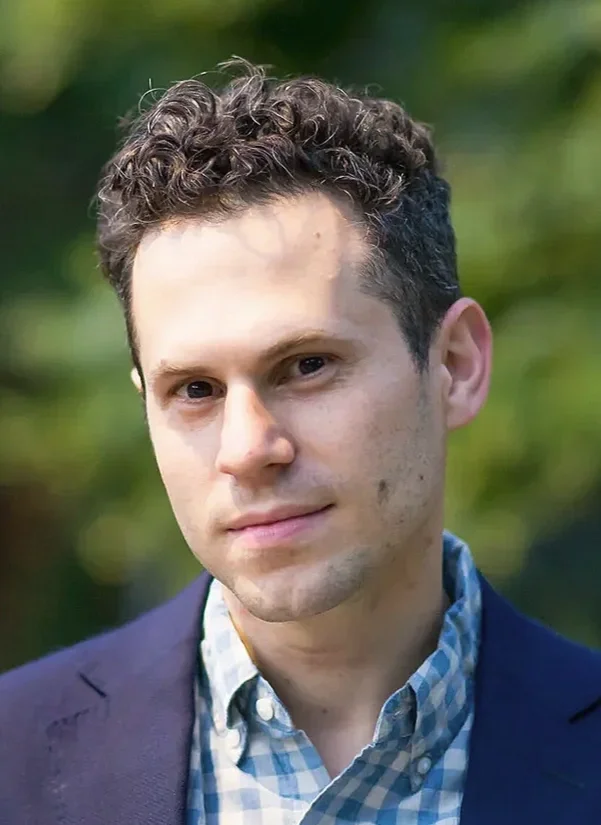
DR. ADAM GAFFNEY / cha

Lorelei Lee (@MissLoreleiLee) wrote

“This is disgusting to say at a time when so many sick people are suffering because of the constant dismissal by doctors undertrained in these types of illness, overworked by a dysfunctional healthcare system, & seeing increased numbers in the wake of a debilitating pandemic.” 

While Barry Hunt (@BarryHunt008) wrote:

“Dear Adam,

When medicine takes a decade to name what’s destroying your life 

And calls you hysterical in the interim

"Self-diagnosis" isn’t the problem

It’s the solution.”

Of course, most patients with chronic illness already know the truth: the four ailments that Gaffney thinks are overdiagnosed actually tend to be under-diagnosed.  

Here is a 2025 study showing that of 429 patients who were eventually clinically diagnosed with hypermobile EDS, 405 of them experienced misdiagnosis in at least one of the five evaluated categories. They were told their symptoms were all in their head; that they were making it up; seeking attention; or labeled with Munchausen syndrome by proxy or some other factitious, made-up disorder.

Meanwhile, Dysautonomia International reports that – on average – it takes nearly six years for a patient to be correctly diagnosed with POTS.  And since COVID causes POTS, that means cases are rising and doctors need to adjust their thinking on how common it is. 

As for MCAS, the Mayo Clinic says that because MCAS has so many symptoms similar to other diseases, patients “can experience lengthy diagnostic delays while seeing various specialists to try to find answers."

And when it comes to Lyme disease, John Hopkins says many patients with Lyme are initially misdiagnosed because “early symptoms of fever, severe fatigue, and achiness are also common in many other illnesses."

Personally, it took me five years to get an EDS diagnosis after I first started suffering from chronic pain. And that 5-year span included two long trips to the Mayo Clinic, where it was missed both times.

All this despite the fact that one look at my over-extending elbows should have immediately put EDS on the radar of any doctor who saw me.

In the end, it was not a doctor, but PNN readers who led me down the right path, after multiple people emailed to encourage me to look into EDS.

EDS is also a dominant genetic gene, which means it runs rampant in my family. I’m sure that at least seven relatives on my mom’s side have it, but only one has been officially diagnosed besides me.

The ailments that Gaffney mentions also tend to be more likely to affect women, so it’s impossible to ignore the underlying misogyny in his assertions. Afterall, women are never sick, only hysterical and anxious.   

I also think part of this current hysteria about overdiagnosing illnesses is related to the fact that opioids and other controlled substances have been severely restricted in the last decade. The medications help people with EDS and chronic illnesses in general, and in the past patients may have just treated their symptoms and gone about their lives.  

Now though, people are forced to get an official diagnosis if they want any hope of using a controlled substance to help them get through the day.

In the end, I feel deep sorrow for Gaffney’s patients. 

My hope is that this whole ordeal will inspire him to reflect on where his thinking may be wrong. But I fear that instead, all the push-back will just make him double down. And he will just go on dismissing his patients and encouraging other doctors to do the same.  
Long-Haul Covid Draws Needed Attention to Dysautonomia

By Cindy Loose, Kaiser Health News

The day Dr. Elizabeth Dawson was diagnosed with covid-19 in October, she awoke feeling as if she had a bad hangover. Four months later she tested negative for the virus, but her symptoms have only worsened.

Dawson is among what one doctor called “waves and waves” of long-haul covid patients who remain sick long after retesting negative for the virus. A significant percentage are suffering from syndromes that few doctors understand or treat. In fact, a yearlong wait to see a specialist for these syndromes was common even before the ranks of patients were swelled by post-covid newcomers. For some, the consequences are life altering.

Before fall, Dawson, 44, a dermatologist from Portland, Oregon, routinely saw 25 to 30 patients a day, cared for her 3-year-old daughter and ran long distances.

Today, her heart races when she tries to stand. She has severe headaches, constant nausea and brain fog so extreme that, she said, it “feels like I have dementia.” Her fatigue is severe: “It’s as if all the energy has been sucked from my soul and my bones.” She can’t stand for more than 10 minutes without feeling dizzy.

Through her own research, Dawson recognized she had typical symptoms of postural orthostatic tachycardia syndrome, or POTS. It is a disorder of the autonomic nervous system, which controls involuntary functions such as heart rate, blood pressure and vein contractions that assist blood flow.

It is a serious condition which affects many patients who have been confined to bed a long time with illnesses like covid as their nervous system readjusts to greater activity. POTS sometimes overlaps with autoimmune problems, which involve the immune system attacking healthy cells. Before covid, an estimated 3 million Americans had POTS.

Few Doctors Treat Autonomic Disorders

Many POTS patients report it took them years to even find a diagnosis. With her own suspected diagnosis in hand, Dawson soon discovered there were no specialists in autonomic disorders in Portland — in fact, there are only 75 board-certified autonomic disorder doctors in the U.S.

In January, Dawson called a neurologist at a Portland medical center where her father had worked and was given an appointment for September. She then called Stanford University Medical Center’s autonomic clinic in California, and again was offered an appointment nine months later.

Using contacts in the medical community, Dawson wrangled an appointment with the Portland neurologist within a week and was diagnosed with POTS and chronic fatigue syndrome (CFS). The two syndromes have overlapping symptoms, often including severe fatigue.

Dr. Peter Rowe of Johns Hopkins in Baltimore, a prominent researcher who has treated POTS and CFS patients for 25 years, said every doctor with expertise in POTS is seeing long-haul covid patients with POTS, and every long-covid patient he has seen with CFS also had POTS. He expects the lack of medical treatment to worsen.

“Decades of neglect of POTS and CFS have set us up to fail miserably,” said Rowe, one of the authors of a recent paper on CFS triggered by covid.

The prevalence of POTS was documented in an international survey of 3,762 long-covid patients, leading researchers to conclude that all covid patients who have rapid heartbeat, dizziness, brain fog or fatigue “should be screened for POTS.”

A “significant infusion of health care resources and a significant additional research investment” will be needed to address the growing caseload, the American Autonomic Society said in a recent statement.

Lauren Stiles, who founded the nonprofit Dysautonomia International in 2012 after being diagnosed with POTS, said patients who have suffered for decades worry about “the growth of people who need testing and treating but the lack of growth in doctors skilled in autonomic nervous system disorders.”

On the other hand, she hopes increasing awareness among physicians will at least get patients with dysautonomia diagnosed quickly, rather than years later. Dysautonomia International provides a list of a handful of clinics and about 150 U.S. doctors who have been recommended by patients.

Congress has allocated $1.5 billion to the National Institutes of Health over the next four years to study post-covid conditions. Requests for proposals have already been issued.

“There is hope that this miserable experience with covid will be valuable,” said Dr. David Goldstein, head of NIH’s Autonomic Medicine Section.

A unique opportunity for advances in treatment, he said, exists because researchers can study a large sample of people who got the same virus at roughly the same time, yet some recovered and some did not.

‘Huge Influx of Patients’

Long-term symptoms are common. A University of Washington study published in February in the Journal of the American Medical Association’s Network Open found that 27% of covid survivors ages 18-39 had persistent symptoms three to nine months after testing negative for covid. The percentage was slightly higher for middle-aged patients, and 43% for patients 65 and over.

The most common complaint: persistent fatigue. A Mayo Clinic study published last month found that 80% of long-haulers complained of fatigue and nearly half of “brain fog.” Less common symptoms are inflamed heart muscles, lung function abnormalities and acute kidney problems.

Larger studies remain to be conducted. However, “even if only a tiny percentage of the millions who contracted covid suffer long-term consequences,” said Rowe, “we’re talking a huge influx of patients, and we don’t have the clinical capacity to take care of them.”

Symptoms of autonomic dysfunction are showing up in patients who had mild, moderate or severe covid symptoms.

Yet even today, some physicians discount conditions like POTS and CFS, both much more common in women than men. With no biomarkers, these syndromes are sometimes considered psychological.

The experience of POTS patient Jaclyn Cinnamon, 31, is typical. She became ill in college 13 years ago. The Illinois resident, now on the patient advisory board of Dysautonomia International, saw dozens of doctors seeking an explanation for her racing heart, severe fatigue, frequent vomiting, fever and other symptoms.

For years, without results, she saw specialists in infectious disease, cardiology, allergies, rheumatoid arthritis, endocrinology and alternative medicine — and a psychiatrist, “because some doctors clearly thought I was simply a hysterical woman.”

It took three years for her to be diagnosed with POTS. The test is simple: Patients lie down for five minutes and have their blood pressure and heart rate taken. They then either stand or are tilted to 70-80 degrees and their vital signs are retaken. The heart rate of those with POTS will increase by at least 30 beats per minute, and often as much as 120 beats per minute within 10 minutes. POTS and CFS symptoms range from mild to debilitating.

The doctor who diagnosed Cinnamon told her he didn’t have the expertise to treat POTS. Nine years after the onset of the illness, she finally received treatment that alleviated her symptoms. Although there are no federally approved drugs for POTS or CFS, experienced physicians use a variety of medicines including fludrocortisone, commonly prescribed for Addison’s disease, that can improve symptoms.

Some patients are also helped by specialized physical therapy that first involves a therapist assisting with exercises while the patient is lying down, then later the use of machines that don’t require standing, such as rowing machines and recumbent exercise bicycles. Some recover over time; some do not.

Dawson said she can’t imagine the “darkness” experienced by patients who lack her access to a network of health care professionals. A retired endocrinologist urged her to have her adrenal function checked. Dawson discovered that her glands were barely producing cortisol, a hormone critical to vital body functions.

Medical progress, she added, is everyone’s best hope.

Stiles, whose organization funds research and provides physician and patient resources, is optimistic.

“Never in history has every major medical center in the world been studying the same disease at the same time with such urgency and collaboration,” she said. “I’m hoping we’ll understand covid and post-covid syndrome in record time.”

Kaiser Health News is a national newsroom that produces in-depth journalism about health issues.

Tips on Living with POTS

By Ellen Lenox Smith, Columnist

I suddenly had my life come to a halt when “POTS” hit me in my sixties. Some of you may not be familiar with what that is.

Postural Orthostatic Tachycardia Syndrome (POTS) is a form of dysautonomia, a condition that affects the nervous system, causing light-headedness, fainting, unstable blood pressure, abnormal heart rates, malnutrition, and sometimes even death.

According to Dysautonomia International,  between as many as three million Americans have some form of dysautonomia, and over 70 million around the world.

I had always lived with low blood pressure, but as the instability of my neck, due to Ehlers-Danlos syndrome progressed, I suddenly felt that standing or even just sitting up in bed might cause me to faint.

I reported the symptoms to my cardiologist, who worked with me on finding treatments, but that journey was not a simple one.

The first thing he encouraged me to do was to salt my food, to keep my blood pressure elevated. When that was not enough, he prescribed salt tablets.

Suddenly, I started gaining weight. There was no evidence of swelling in the extremities, the weight retention for me landed in my chest. However, I continued to faint and feel horrible.  

I reported back to the doctor and was encouraged to add more salt. I got scared when I gained another nine pounds and decided to stop taking salt, assuming that was the culprit. Soon after, I passed out, was sent to the hospital, and diagnosed with congestive heart failure.

I came home after three days in the hospital and proceeded to melt out of my husband’s arms, hearing both legs snap as I fell to the ground. I woke up with terrible leg pain and now had to face two micro-fractures from the fall.  

When my cardiologist was contacted, he mentioned a medication that he thought he had prescribed for me, but I was certain he not ordered anything besides the salt. I admired his honesty in when he later admitted his mistake. He had confused me with another patient. Once I started the medication he intended for me to take, life started to return to me.

I wanted to share my story in hopes that a reader with POTS might find these tips helpful. It’s such a debilitating condition that I hate to think of anyone else suffering unnecessarily.

Here is what has helped to get my life back and blood pressure to almost normal:

1)  Sleep elevated at a 30 degree angle. You want to elevate the head of your bed under the frame, not just sleep with pillows to elevate. If you need to travel, you can take plastic containers often used by college students to elevate their beds to create storage. I use two containers on each side of the head.

2)  Keep hydrated. Drink plenty of water daily.

3)  Exercise to keep your circulation strong.

4)  My magic medication turned out to be Midodrine HCL, 5 MG tablets. Once I started taking them three times a day, I started to live with normal blood pressure! This specific medication may not be suitable for you, but there are other medications that may help. You should consult with a doctor before trying any of them.

I hope this might provide you with useful strategies to cope with POTS.  Don’t settle with being stuck in bed. Although finding the correct combination of medication takes time, I hope that it will bring some normalcy to your life.

Ellen Lenox Smith suffers from Ehlers Danlos syndrome and sarcoidosis. Ellen and her husband Stuart live in Rhode Island. They are co-directors for medical marijuana advocacy for the U.S. Pain Foundation and serve as board members for the Rhode Island Patient Advocacy Coalition.

For more information about medical marijuana, visit their website.

The information in this column should not be considered as professional medical advice, diagnosis or treatment. It is for informational purposes only and represents the author’s opinions alone. It does not inherently express or reflect the views, opinions and/or positions of Pain News Network.