
Is Dry Needling Effective for Muscle Pain?

By The Conversation

Physiotherapists, chiropractors and osteopaths commonly use dry needling to treat neck, shoulder, back and other types of muscle pain.

It involves inserting thin needles into sensitive parts of a person’s muscle, often termed “myofascial trigger points”. The needles remain in the muscle for a few minutes and can be gently moved to create a twitch response in the muscle.

This therapy is thought to relax the muscle, reduce inflammation, promote healing and reduce pain. But does it actually work? And what are the risks?

Similar to Acupuncture

Dry needling is similar to acupuncture: they’re both applied to reduce pain.

Both treatments use solid, single use needles. They’re commonly 30–75mm long and 0.2–0.3mm thick, although longer needles may be used for deeper muscles. Unlike injection needles, they aren’t hollow and don’t inject medication.

A key difference is how the needle locations are chosen. Traditional acupuncture selects points based on symptoms and Chinese medicine concepts, including balancing qi as it flows through pathways called meridians. Dry needling is applied directly to tissue that’s thought to be the cause of symptoms.

Gaining Popularity

People seeing a physiotherapist for aches and pains are increasingly being offered dry needling. A 2023 survey of 203 Australian physiotherapists found 64% use dry needling on their patients.

The surveyed physiotherapists believed dry needling was an effective pain reliever and thought it was particularly effective alongside treatments such as exercise or manual therapy (which encompasses massage and manipulation or “joint cracking”).

In Australia, registered physiotherapists, chiropractors and osteopaths meet the safety standards required to use dry needling if they have completed training. The training usually involves a short (weekend) course.

Does Dry Needling Work?

Several research studies have collated the available evidence on dry needling. Most conclude it provides short-term pain relief for conditions such as neck pain, shoulder pain and low back pain, but is no better than other common treatments such as exercise.

Clinical practice guidelines are what health-care providers should use to dictate which treatments to provide and not provide. However, few clinical practice guidelines recommend dry needling.

There are two main reasons why.

Nearly all studies investigating the benefits of dry needling have serious concerns about how they’re conducted. This includes not being able to determine whether the benefits of dry needling are genuine or simply reflect placebo effects – when your health improves after receiving a fake treatment.

So it remains unclear whether dry needling provides benefits beyond a placebo.

Another reason is the potential risks of dry needling.

What Are the Risks?

Inserting thin and extremely sharp needles into the body requires an excellent understanding of anatomy.

Health-care providers need to be extremely careful to avoid major arteries, veins and nerves when dry needling around the neck and avoid puncturing the lungs when dry needling around the “traps” (trapezius muscles) and torso.

There have been cases of providers puncturing their patients’ lungs during dry needling, prompting a medical emergency.

In June, it was revealed that a Western Australian physiotherapist had her registration suspended for three months after puncturing a patient’s lungs, causing bilateral pneumothoraxes – the collapse of both lungs.

In November, Pittsburgh Steelers NFL player TJ Watts had to undergo emergency surgery after a similar injury caused a partial lung collapse.

Despite the risks, half of the studies on dry needling don’t mention if any adverse events occurred.

The studies that do report risks suggest serious risks such as a collapsed lung, infection or broken needle that gets stuck in a person’s body are very rare.

But we don’t know exactly how rare this is. Data from a large study on acupuncture suggests these adverse events occur in approximately one in 100,000 patients. But it’s unclear if the risk is the same for dry needling.

Less-serious side effects such as minor bleeding, bruising, soreness at the needling site or temporary symptom aggravation seem to be common.

Some factors also increase some risks, such as taking blood thinning medication or having an immune disorder.

Talk to Your Provider

Because the evidence on dry needling is uncertain and risks have not been adequately reported in the research, it’s important to discuss the benefits, risks and practicalities of dry needling with your health-care provider.

If your goal is short-term pain relief, consider asking your provider if there are other options that could provide similar relief.

If you have a fear of needles or have fainted when undergoing a needling procedure previously, such as a blood test, then dry needling might not be the best treatment for you.

Before undergoing dry needling, it’s important you have had a chance to ask questions and been given sufficient information about the treatment before providing informed consent.

Questions you might ask your health-care provider include:

  1. What are my treatment options?

  2. What are the potential benefits and risks of these options?

  3. How likely is it that those benefits and risks could happen to me?

Although other treatments are as effective or more effective with fewer potential side effects, dry needling might be useful for some people. But a discussion of risks and benefits should always be transparent and ongoing.

Luke Jenkins, PhD, is Lecturer in Physiotherapy at Western Sydney University.

Giovanni Ferreira, PhD, is a Research Fellow, Institute of Musculoskeletal Health, at the University of Sydney.

Joshua Zadro, PhD, is an Associate Professor of Physiotherapy at the University of Sydney.

Peter Stubbs, PhD, is an Associate Professor of Physiotherapy at the University of Technology Sydney.

This article originally appeared in The Conversation and is republished with permission.  
Scientists May Finally Know Why Statins Cause Muscle Pain

By Pat Anson

Many people stop taking cholesterol-lowering statins because they experience painful muscle cramps, weakness, and fatigue. I know, because I was one of them.

I started taking statins in my 40’s on the advice of our family physician, because of mildly elevated cholesterol and a family history of coronary artery disease. Soon I was having stinging cramps in my legs overnight, which were painful enough to wake me up. 

My doctor was skeptical that statins were the cause, but switched me from Lipitor to Vytorin and finally to Crestor. The muscle cramps continued. Only when I stopped taking statins did the symptoms disappear.

“I’ve had patients who’ve been prescribed statins, and they refused to take them because of the side effects. It’s the most common reason patients quit statins, and it’s a very real problem that needs a solution,” says Andrew Marks, MD, Professor and Chair of the Department of Physiology and Cellular Biophysics at Columbia University.

To find a solution, first you need to identify the cause, and Marks and his colleagues have finally discovered why about 10% of people on statins experience those muscular side effects.

Their research, recently published in The Journal of Clinical Investigation, found that a widely-used statin called simvastatin (Zocor) binds to a protein in muscle cells, which causes a leak of calcium ions inside the cells.

Using an electron microscope, researchers watched simvastatin molecules bind to two locations in a muscle protein called the ryanodine receptor, which opened a channel in the receptor that allowed calcium to flow through. 

Marks says the calcium leak could be weakening the muscle directly or by activating enzymes that degrade muscle tissue.

“It is unlikely that this explanation applies to everyone who experiences muscular side effects with statins, but even if it explains a small subset, that’s a lot of people we could help if we can resolve the issue,” Marks said in a press release.

The electron images suggest that statins could be redesigned so they don’t bind to the ryanodine receptor, but retain their cholesterol-lowering ability. 

Marks is now collaborating with chemists to create such a statin. He owns stock in RyCarma Therapeutics, a company developing compounds that target the ryanodine receptor.

Plugging the calcium leak could be another option: Statin-induced calcium leaks in laboratory mice can be closed with an experimental drug developed by Marks for other muscle conditions involving calcium leaks.

“These drugs are currently being tested in people with rare muscle diseases. If it shows efficacy in those patients, we can test it in statin-induced myopathies,” Marks says.

The first statin was approved by the FDA in 1987, but it took the agency nearly three decades to listen to patients like me and update warning labels on statins in 2014, cautioning that statins can cause myopathy. In rare instances, the FDA says statins can also cause liver injury, diabetes and memory loss.   

Lyme Disease Cases Soar in U.S.  

By Pat Anson, PNN Editor

Diagnoses of Lyme disease in the United States have soared over the past 15 years, primarily in rural areas in the Northeast, according to a new analysis of private insurance claims by FAIR Health, a nonprofit that tracks healthcare costs and insurance trends.   

Lyme disease is a bacterial illness spread by ticks. Left untreated, it can lead to chronic fatigue, muscle and joint pain, cognitive issues and other long-term symptoms that are often misdiagnosed as fibromyalgia, neuropathy or autoimmune disorders.

In its analysis of over 36 billion insurance claims from 2007 to 2021, FAIR Health said that claims with a Lyme disease diagnosis rose 357 percent in rural areas and 65 percent in urban areas. The highest rates of Lyme disease were in New Jersey, Vermont, Maine, Rhode Island and Connecticut.

“Lyme disease remains a growing public health concern. FAIR Health will continue to use its repository of claims data to provide actionable and relevant insights to healthcare stakeholders seeking to better understand the ongoing rise of Lyme disease cases,” FAIR Health President Robin Gelburd said in a press release.

The FAIR Health study found that malaise, fatigue and soft-tissue-related symptoms were significantly more common in Lyme patients than in the overall patient population.

Other early symptoms of Lyme disease include fever, chills, headache, and swollen lymph nodes. A delayed rash often appears at the site of the tick bite. The rash grows in size and sometimes resembles a bulls-eye.

Although Lyme disease is treatable with antibiotics, some patients develop long-term symptoms known as Lyme disease syndrome or chronic Lyme disease.

About 30,000 Lyme cases are reported annually by state health departments. The CDC estimates the actual number of cases is probably much higher and that about 300,000 Americans may become infected every year.

Most reported cases of Lyme disease occur in the Northeast, mid-Atlantic and upper Midwest, especially during the summer months when more people spend time outdoors. Recent studies show Lyme is spreading to neighboring states and is no longer just a seasonal disease, possibly due to the effects of climate change.

Study Finds Low Risk of Muscle Pain From Statins

By Pat Anson, PNN Editor

Have you experienced muscle pain, memory loss or other side effects from statins? If so, you’re not alone. A many as one in two patients stop taking the cholesterol-lowering drugs because they don’t like the side-effects.

But the authors of a large new study say statin intolerance is over-estimated and over-diagnosed, resulting in too many patients raising their risk of heart disease because they refuse to take the drugs.

An international team of researchers conducted a meta-analysis of 176 clinical studies involving over 4 million statin users and found that only about 9 percent have statin intolerance. Their findings are published in the journal European Heart Journal.

“I believe the size of our study, which is the largest in the world to investigate this question, means we are able to finally and effectively answer the question about the true prevalence of statin intolerance,” said lead author Maciej Banach, MD, a cardiologist and professor at Medical University of Lodz and the University of Zielona Góra in Poland.

“Patients need to know that statins may prolong their life, and in cases where side effects appear, we have enough knowledge to manage these effectively. The most important message to patients as a result of this study is that they should keep on taking statins according to the prescribed dose, and discuss any side effects with their doctor, rather than discontinuing the medication.”

The research team found that patients who are older, female, obese, diabetic, or suffering from an under-active thyroid or chronic liver or kidney failure were more likely to be statin intolerant.

Patients taking drugs used to control an irregular heartbeat or calcium channel blockers for chest pain and high blood pressure were also more likely to have side effects, as did those with high alcohol consumption.

“It is critically important to know about these risk factors so that we can predict effectively that a particular patient is at higher risk of statin intolerance. Then we can consider upfront other ways to treat them in order to reduce the risk and improve adherence to treatment. This could include lower statin doses, combination therapy and use of innovative new drugs,” said Banach. 

“Most cases of statin intolerance observed in clinical practice are associated with effects caused by patients’ misconceptions about the side effects of statins or may be due to other reasons. Therefore, we should carefully evaluate symptoms, assessing in detail patients’ medical histories, when the symptoms appeared, specific details of pain, other medications the patients are taking, and other conditions and risk factors. Then we will see that statins can be used safely in most patients.”

Previous research on side effects from statins have had mixed results. A 2017 study found that only about 2 percent of patients on Lipitor (atorvastatin) had muscle pain. That finding is in marked contrast to a Cleveland Clinic study, which found that 42% of patients taking Lipitor reported muscle pain and weakness.

In 2014, the Food and Drug Administration required warning labels on statins, cautioning that statins can cause a muscle injury called myopathy, which is characterized by muscle pain or weakness. In rare instances, the FDA says statins can also cause liver injury, diabetes and memory loss.

Wear, Tear & Care: Rating Omron's Avail TENS Unit

By Jennifer Kilgore, Columnist

I don’t use TENS units very often. Since I wear the Quell on a daily basis, it usually seems superfluous -- unless I’m having a very bad day.

Then my TENS unit makes an appearance, wires snaking under my shirt and sticky pads placed wherever I can get them. The power pack is latched to my pants, and the result is that I feel like a moron. Even if there is nobody at home to witness my treatment, I become self-conscious. My cat has an opinion, I’m sure.

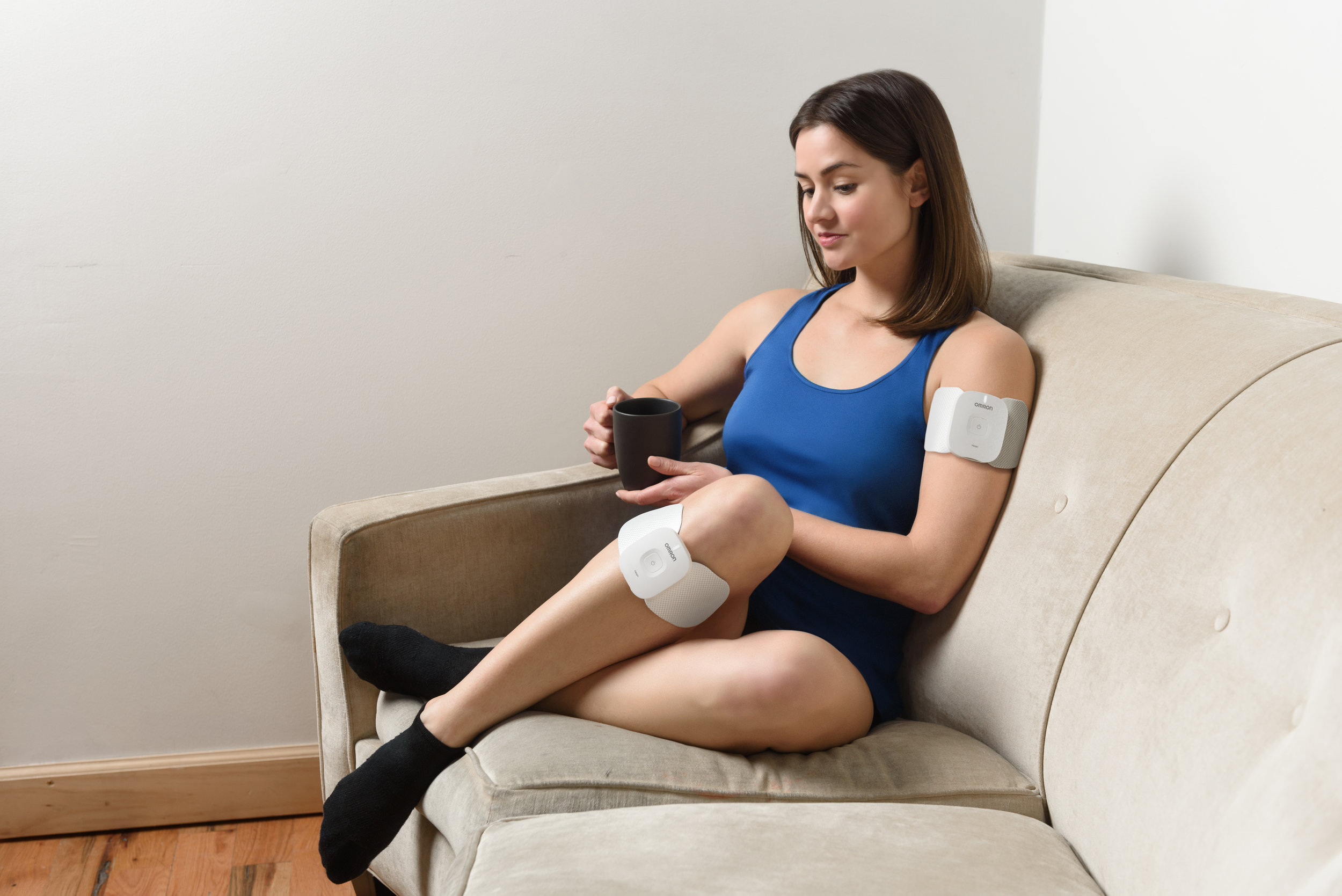
That’s why I was excited to try the Omron Avail TENS device. It’s wireless, has two large pads, and can be controlled from my phone. There’s no bulky battery pack to wear on my belt, no wires tangling me, and the pads themselves are larger than the unit I currently have. The coverage of more bodily real estate is always a winner for me.

The Avail TENS is a wearable electrotherapy device that is designed to alleviate chronic muscle and joint pain. It has various pre-programmed settings designed for the shoulder, arm, back or leg; as well as modes that include both TENS and microcurrent, the latter of which applies electrical stimulation that one can hardly feel. The TENS modes are much stronger in sensation.

IMAGE COURTESY OF OMRON

I actually didn’t know that microcurrents were used in pain relief -- I thought they only applied to anti-aging treatments at spas. However, this therapy mimics the body’s natural currents, which are believed to restore normal frequencies within cells.

I don’t know how well the microcurrent mode works yet, because I still experienced pain when I tried it.  I imagine it takes some getting used to and that benefits accrue over time. However, the TENS mode works wonderfully, and having such large pads means that I can get more coverage.

Treatment sessions run between 30 and 60 minutes, depending on the mode chosen. You can also set sessions to run indefinitely. To charge the sensors, they must be placed on a special charging box that comes with the device. I’ve managed to use it multiple times now after the initial charge.

IMAGE COURTESY OF OMRON

It is very easy to set up and use, as most of it is intuitive for a chronic pain patient. The device must be paired with your smartphone, and the app is fairly straightforward. The only thing that kept happening to me was that the pads would unlink with the app because I kept pressing the power button on the pads by mistake -- for instance, when I leaned back on a couch.

The pads stay on well. The "help” section of the app states I can use them up to 30 times, and replacement pads range from $12.75 to $19.99. I might resort to using athletic tape to keep them on longer, as I do with normal TENS pads. I know that isn’t advised, but I want these pads to last as long as possible.

So far, my only complaint is the slight bulkiness of the pad itself. Having a wireless device means that a sensor must be placed on the pad, which ties it to the app. These blink in orange or green lights, which are even visible from underneath two shirts. Granted, clothing manufacturers have been making clothing thinner and thinner so you are required to buy more clothes, so maybe that’s not Omron’s fault. There’s even a name for this clothing phenomenon: “planned obsolescence.”

Additionally, since my problem areas are on my back, sitting in a chair can be awkward. The pads stick out and rub against the seat, which turned them off once or twice. I don’t think the unit is meant to be worn all day, though, unless one plans to use microcurrents alone. The company only recommends that three TENS treatment sessions be completed on a daily basis.

My overall impression is a good one. I like the device, and I think it works well. It controls my pain when I use the TENS settings. I just wish the sensors on the pads were thinner -- that would help my back-pained compatriots (and me) when leaning back into a chair. That seems like a small complaint for such a device, though.

The Omron Avail is currently on sale for $159.99 (normally retails at $199.99). 

Jennifer Kain Kilgore is an attorney editor for both Enjuris.com and the Association of International Law Firm Networks. She has chronic back and neck pain after two car accidents.

Jennifer receives products or services mentioned in her reviews for free from the manufacturer. She only mentions those that she uses personally and believes will be good for readers. You can read more about Jennifer on her blog, Wear, Tear, & Care.  

The information in this column should not be considered as professional medical advice, diagnosis or treatment. It is for informational purposes only and represents the author’s opinions alone. It does not inherently express or reflect the views, opinions and/or positions of Pain News Network.

The Good and Bad About a Pain-Free Statin

By Pat Anson, Editor

New research has confirmed what a lot of us already know about statins: the cholesterol fighting drugs may lower your risk of heart disease, but they can also cause painful muscle cramps, memory loss and other side effects.

In the first major trial of its kind, researchers at the Cleveland Clinic gave atorvastatin (Lipitor) or a placebo to nearly 500 patients with very high cholesterol levels, many of whom had a history of muscle related statin intolerance. Over 42 percent of the patients reported muscle pain or weakness on atorvastatin.  

Those patients were then enrolled in another phase of the study and given a non-statin drug called evolocumab, which inhibits a protein in the liver (PCSK9) that helps produce cholesterol.  

The good news? Evolocumab was very effective in lowering cholesterol and rarely produced muscle problems.

The bad news? Evolocumab would cost about $14,000 a year and is self-administered monthly by injection only. Double ouch.

ucm293331.jpg

"Statin intolerance has been a very challenging clinical problem," said Steven Nissen, MD, chairman of Cardiovascular Medicine at Cleveland Clinic. "The study showed that PCSK9 inhibitors can significantly lower cholesterol in patients with documented statin intolerance, providing an effective treatment for these difficult to manage patients."

While the study findings, published in JAMA, were mainly meant to test the efficacy of evolocumab, it’s nice to see the medical community acknowledge that statins have painful side-effects and that drug makers are trying to find alternatives.

I started taking statins over a decade ago on the recommendation of a family physician, because of mildly elevated cholesterol and a scary family history of coronary artery disease. Right away I started having painful leg cramps at night, and during the day I felt lethargic and less alert.  My doctor was a bit skeptical and switched me from one statin to another (Lipitor, Vytorin and finally Crestor), but the cramps and brain “fogginess” continued. When I stopped taking statins, the symptoms disappeared.

I’m certainly not alone. Muscle pain is reported by an estimated 5% to 29% of statin users, but there are no blood or diagnostic tests to document muscle-related statin intolerance. It’s also hard to fight conventional thinking (and extensive advertising) that statins are good for you, so a lot of patients are encouraged to keep on taking them, even if they do cause pain.

Only in 2014 did the Food and Drug Administration require warning labels on statins, cautioning that some statins can cause a muscle injury called myopathy, which is characterized by muscle pain or weakness. In rare instances, the FDA says statins can also cause liver injury, diabetes and memory loss.   

The first statin, lovastatin, was approved by the FDA in 1987 – meaning it took the agency nearly three decades to start warning about these side effects. It’s only through patient complaints that the FDA even learned about them, a concept that the American College of Emergency Physicians (ACEP) should probably brush up on.

As Pain News Network has reported, ACEP wants Medicare to stop requiring hospitals to ask patients about the quality of their pain care. That's not a good idea. And the painful history of statins is proof of that.