
Illicit Fentanyl Use Twice as Common as Medical Use

By Pat Anson

Fentanyl has long played an essential role as a potent analgesic that can treat the most severe types of pain. But illicit versions of the synthetic opioid have been a scourge on the U.S. black market for over a decade, making it one of the leading causes of fatal overdoses.

The largest study to date has quantified how far those dual roles have gone, showing that illicit use of fentanyl is more than twice as common as medical use.

Analyzing urine drug tests for nearly 300,000 people who tested positive for fentanyl, researchers at The Ohio State University say 71.1% of them did not have a prescription for fentanyl, compared to 28.9% who had a legitimate medical reason for taking it.

“Fentanyl is a big problem, but we don’t actually know how serious illicit drug use is compared to medical use,” co-lead author Ping Zhang, PhD, a Professor in the College of Pharmacy at Ohio State said in a news release.

“Finding that illicit use has reached 70% among all fentanyl users is a surprise. And this is also a contribution of this paper. To make something that’s been a black hole visible to the healthcare system is significant.” 

Zhang and his colleagues, who published their study in the journal eClinicalMedicine, also found that illicit fentanyl users were three times more likely to suffer an overdose than patients who were given fentanyl in a hospital or were prescribed the drug. 

In 2023, over 105,000 people in the U.S. died from a drug overdose, with nearly 73,000 of those deaths involved synthetic opioids, primarily illicit fentanyl. That represents about 92% of all opioid-related deaths.

Until about a decade ago, the CDC counted all fentanyl overdoses as prescription drug deaths, a mistake that significantly inflated the number of overdoses attributed to prescription opioids. 

The misclassification of those deaths affected public policy. A CDC public awareness campaign, for example, focused entirely on the risks associated with prescription opioids, rather than the dangers posed by illicit fentanyl. When asked why it wasn’t warning people about fentanyl, a CDC spokesperson said the agency didn't want to risk “diluting” the primary message of its advertising campaign.

The Ohio State analysis found that illicit fentanyl users were younger, less likely to be married, had a higher concentration of fentanyl detected in their urine, and were more likely to have a mental health or substance use disorder.

Medical users of fentanyl were more likely to have a chronic health condition, such as cancer, cardiovascular disease, hypertension, and diabetes. They were also significantly less likely to overdose, abuse or become dependent on fentanyl compared to illicit users.

Geographically, Ohio had the highest proportion of illicit fentanyl users – 12.2% – followed by Massachusetts (10.5%) and California (8.8%). 

The number of fatal overdoses involving synthetic opioids like fentanyl peaked in 2022 at nearly 74,000 deaths and have since declined significantly. By 2025, the number of fentanyl-related overdoses was estimated at 38,084 deaths.
Do You Have Dormant Butt Syndrome?

By Pat Anson, Editor

It’s probably not a condition or therapy they’ll be teaching in medical schools anytime soon.

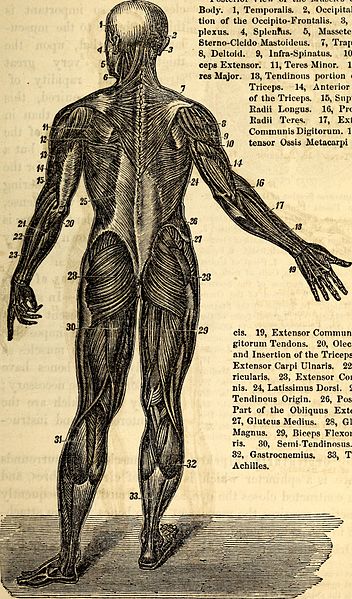
But if Chris Kolba has his way, millions of Americans will get off their rear ends and start exercising their gluteus maximus, gluteus medius and gluteus minimus.

Those are the three muscles that make up the buttocks and sitting on them all day long can lead to back pain, hip pain and knee injuries -- what Kolba calls “dormant butt syndrome.”

“The entire body works as a linked system, and a lot of times when people come in with knee or hip injuries, it’s actually because their butt isn’t strong enough,” says Kolba, who is a physical therapist at Ohio State Wexner Medical Center.

“The rear end should act as support for the entire body and as a shock absorber for stress during exercise. But if it’s too weak, other parts of the body take up the slack and often results in injury.”   

Dormant butt syndrome (DBS) refers to the tightness of the hip flexors and weakness of the gluteal muscles.

When gluteal muscles are weak, muscles and joints in the hip, legs and knees  absorb more strain during exercise, sometimes leading to injuries so severe they need surgery.

But it’s not just weekend athletes who should worry about DBS. Even people who live sedentary lives due to illness or inclination can suffer from it.

“It’s actually caused quite often by inactivity and the way we sleep,” Kolba said. “Sitting for periods throughout the day weakens the gluteal muscles and puts strain on other parts of our core, as does sleeping in the fetal position.”

Kolba says making an effort to stand and walk around as much as possible can help strengthen the gluteal muscles and avoid pain and injury in other parts of the body.

In this video news release, Kolba offers tips to a marathon runner who suffered a severe knee injury he blames on DBS: 

Does Excedrin Reduce Empathy?

By Pat Anson, Editor

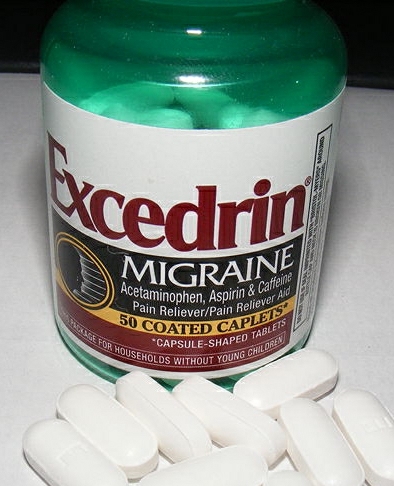
A popular over-the-counter pain reliever may do more than just relieve minor aches and pains. Ohio State researchers say acetaminophen -- the active ingredient in Excedrin and hundreds of other pain medications -- can also make us feel less empathy for the physical and emotional pain of others.

"We don't know why acetaminophen is having these effects, but it is concerning," says Baldwin Way, an assistant professor of psychology at Ohio State’s Wexner Medical Center's Institute for Behavioral Medicine Research.

“Empathy is important. If you are having an argument with your spouse and you just took acetaminophen, this research suggests you might be less understanding of what you did to hurt your spouse's feelings."

Acetaminophen -- also known as paracetamol – is the world’s most widely used over-the-counter pain reliever. The study findings were published in the journal Social Cognitive and Affective Neuroscience.

Way and his colleagues divided 80 college students into two groups, giving half of them a liquid containing 1,000 mg of acetaminophen, while the other half drank a placebo solution that contained no drug. The students didn't know which group they were in.

After waiting an hour for the drug to take effect, the students read eight short scenarios in which someone suffered some sort of physical or emotional pain. For example, one scenario was about a person who suffered a knife wound and another was about a person whose father died. Participants were then asked to rate the pain of each person on a scale ranging from 1 (no pain at all) to 5 (worst possible pain).

Students who took acetaminophen rated the pain of the people in the scenarios to be less severe than those who took the placebo.

"These findings suggest other people's pain doesn't seem as big of a deal to you when you've taken acetaminophen," said Dominik Mischkowski, co-author of the study and a former PhD. student at Ohio State, who is now at the National Institutes of Health.

In a second experiment, students met and socialized with each other briefly. Each participant then watched, alone, an online game that purportedly involved three of the people they just met. In the game, two of the students excluded the third person from the activity.

Participants were then asked to rate how much pain and hurt feelings the students in the game felt, including the one who was excluded.

Results showed that people who took acetaminophen rated the pain and hurt feelings of the excluded student as less severe than the participants who took the placebo.

"Participants had the chance to empathize with the suffering of someone who they thought was going through a socially painful experience," Way said. "Still, those who took acetaminophen showed a reduction in empathy. They weren't as concerned about the rejected person's hurt feelings.

“Because empathy regulates pro-social and anti-social behavior, these drug-induced reductions in empathy raise concerns about the broader social side effects of acetaminophen, which is taken by almost a quarter of U.S. adults each week.”

An earlier Ohio State study found that acetaminophen also dulls emotions.

The pain reliever has long been associated with liver injury and allergic reactions such as skin rash. In the U.S. over 50,000 emergency room visits each year are caused by acetaminophen, including 25,000 hospitalizations and 450 deaths.