
How the Healthcare System Makes Pain Worse
/By Pat Anson
Do you ever find yourself doing everything right, but never feeling better?
You take your meds, see your doctors regularly, and focus on good nutrition and healthy habits.
Despite all your efforts, your pain and fatigue never go away. On some days, just getting out of bed or taking a shower is a challenge. You become anxious, depressed. And your mind fills with dark thoughts.
Will I ever get better? Why am I failing? What is wrong with me?
Millions of people with chronic pain and chronic illness have those same thoughts, and Tamera Lynn Stewart has a message for them: “It’s Not All In Your Head… or Your Body”
That’s the title of Stewart’s new book, which was inspired by her own experiences as a young girl dealing with chronic pain.
“I had a lot of different infections, and was in and out of the hospital when I was young and real little. At three years old, I told my mom that the pain was so bad I just wanted Jesus to take me home. So pain is like nothing new in my life. It has been 24/7 my whole life,” Stewart says.
Now 45, Stewart has lived through dozens of surgeries and estimates that she’s seen 30 medical specialists. Only in the past decade did they realize that her pain was caused by autoimmune disorders, such as lupus, rheumatoid arthritis, and mixed connective tissue disease.
Toss in a diagnosis of cervical cancer at age 29 and you have someone who has more than her share of health problems. And a patient who recognized that the U.S. healthcare system often fails the very people it is supposed to help.
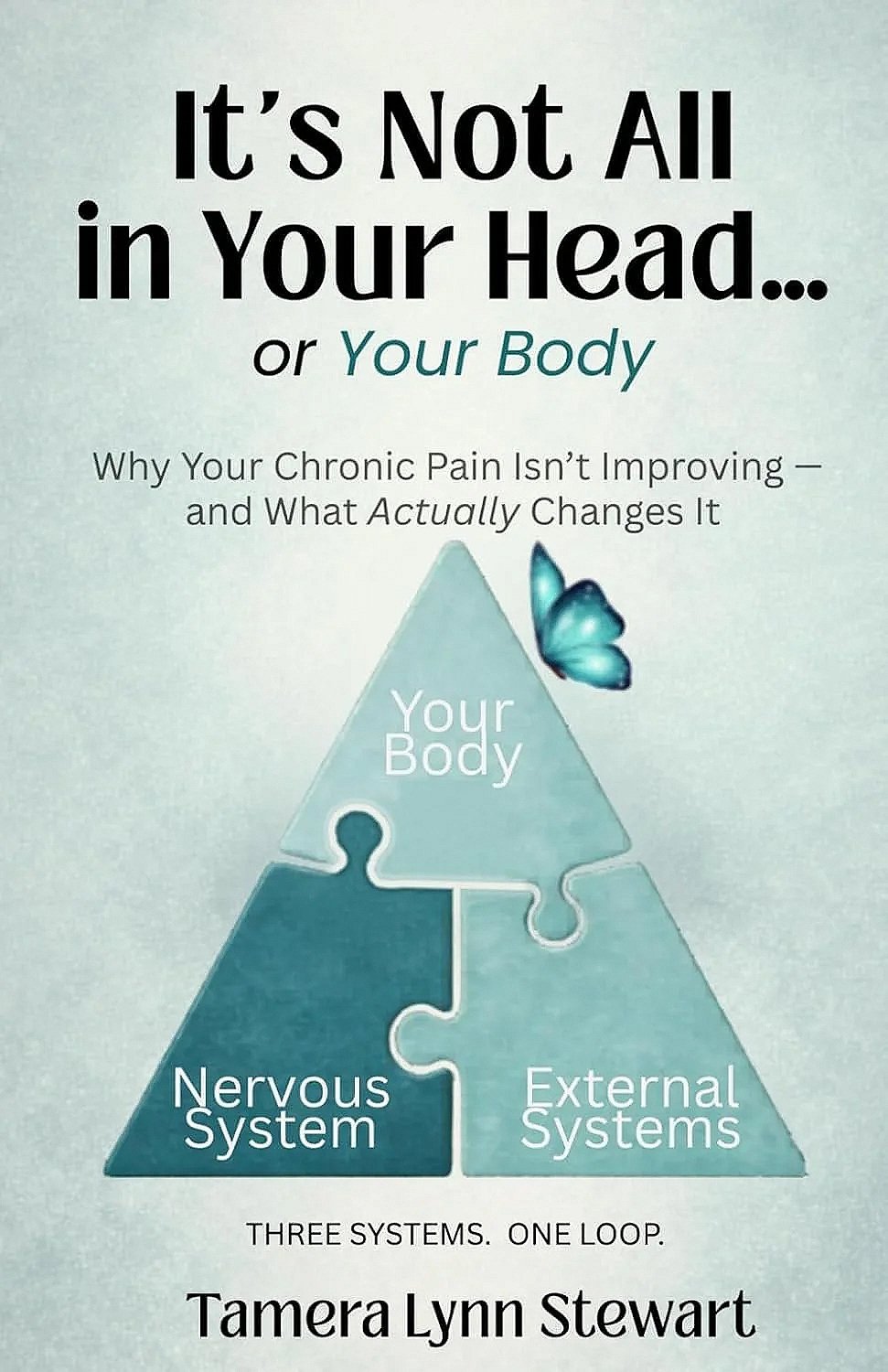
“The premise of the book is more about understanding that the systems we deal with, whether it's policy or insurance or the doctors themselves, that they contribute to our pain just as much as our own body. And as much as patients don't like to admit it, sometimes our minds,” Stewart told PNN.
“The gaslighting that we get from medical providers, insurance companies, whatever, from all of them, that gaslighting turns into depression, second guessing yourself, giving up possibly, or at least slowing down on seeking care. Which then translates into letting our bodies maybe not get the care they need because we quit seeking it, or the depression again keeps us from maybe eating real well, or doing all the other things we know to do. And then you finally go back to a doctor, and they gaslight you again and it starts over again. That's not a way to heal.”
Stewart likens health to a loop, with your body, nervous system and external systems (insurance, doctors, hospitals, etc.) so connected to each other that you can’t address one without helping or hurting the others.
‘And we get stuck in those loops. I myself am very guilty of that. Got stuck in a ‘I'm never gonna get better’ loop. And then something has to happen to break me out of that. That's where the brain comes in, the mind comes in. For me, spirituality comes in. And until that loop gets broken, it just keeps getting worse. It's like an up-spiral of pain instead of an up-spiral of life,” she explained.
Asked what advice she would give to patients, Stewart has a simple answer: Be direct with doctors. And keep it simple.
Don’t overwhelm doctors with everything that’s happened to you since the age of 12 (especially on your first visit) and don’t tell them what the Internet diagnosed you with yesterday. Overwhelm a doctor with too many problems, and you’ll be gaslit or sent to a specialist, which means more expenses and more delays in getting treatment.
“In general, it sounds good that if you have 60 different problems, maybe they'll take you seriously. But I think it's the other way around. I think if you have two or three very significant problems you focus on, I think maybe they're less overwhelmed,” says Stewart.
Stewart took the lessons she learned as a patient and put them into advocacy. She helped found the P3 Alliance, a patient advocacy group that was influential in getting a law changed in her home state of Oklahoma to better protect patients from opioid deprescribing. The law also gave patients access to their prescription drug monitoring (PDMP) records and strengthened the exemption for treating cancer pain with opioids.
In an age when political parties squabble about nearly everything, Stewart and her fellow advocates were able to get the changes in state law passed unanimously by the Oklahoma House and Senate, and then signed into law by the Governor.
It wasn’t easy, but Stewart says persistence and hard work can be effective in getting government policy changed. And she’s hopeful more patients will get involved in advocacy.
“There's so much more to do. Everywhere, there's so much more to do,” she says.