
Feline Good: A Sense of Purpose Helps Me Manage Chronic Illness
/By Crystal Lindell
Every morning, at around 5 a.m., my very fat orange cat Goose starts his daily routine: Screaming at the top of his lungs in an effort to wake up me and my partner.
He’s hungry and he doesn’t care if we’re asleep – it’s time for cat breakfast.
Trust me when I tell you that we have tried a number of workarounds to help avoid this daily cat alarm clock.
We have attempted to ignore his screams. We have tried feeding him a bigger meal later at night before bed. And we have left dry food out overnight.
We even gave him a late-night catnip snack in hopes that it would help him sleep later into the morning.
Goose doesn’t give a shit about any of that. He still gets up at 5 a.m. every single morning so that we can feed him.
Turns out, though, this daily ordeal may actually be helping me manage my chronic pain from Ehler-Danlos syndrome.
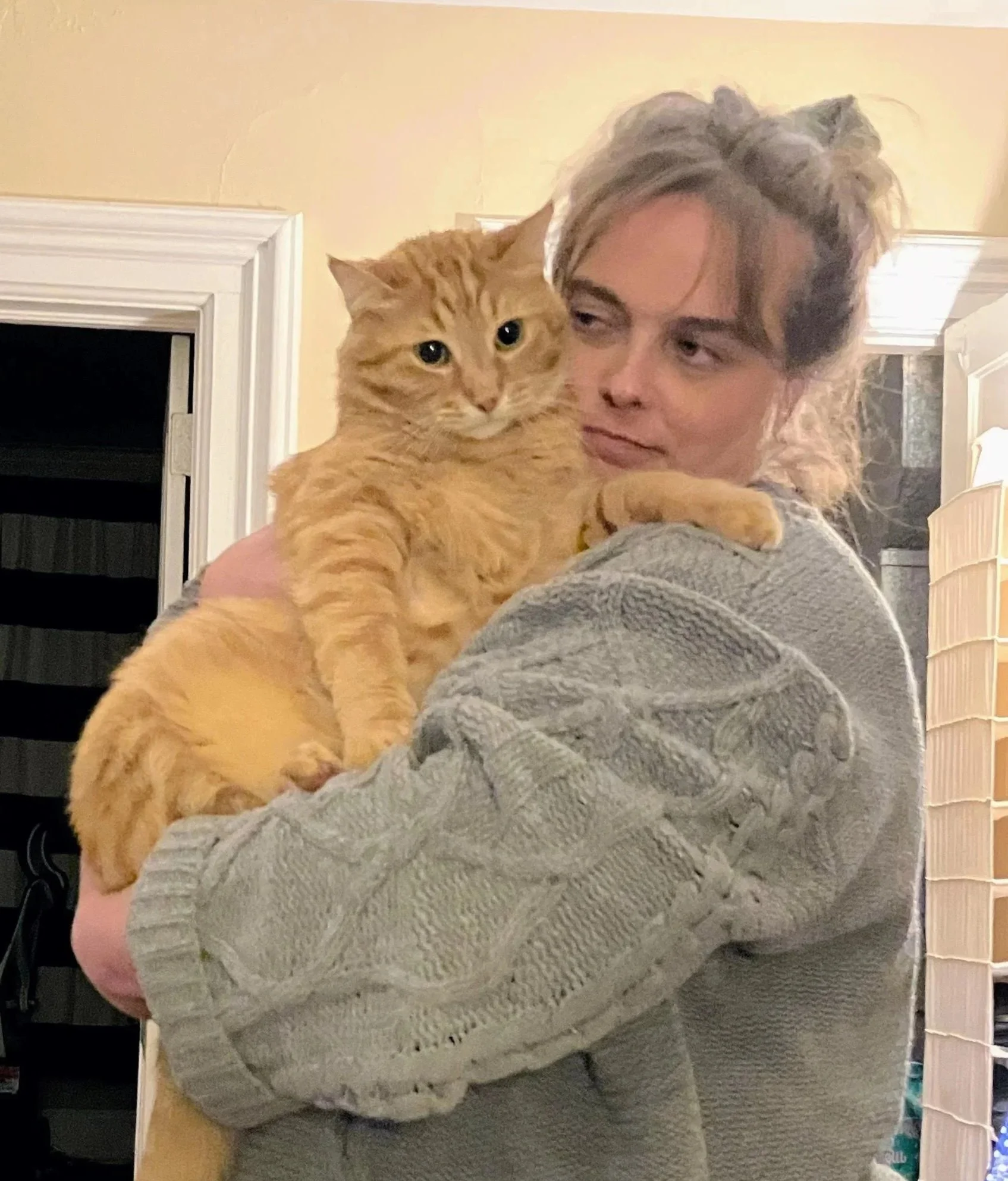
GOOSE AND CRYSTAL
New research from Cigna shows that having a strong sense of purpose can help offset the effects of chronic disease. And every single morning, Goose makes sure that I know that my purpose is to take care of him.
Cigna researchers found that while adults with chronic conditions usually have much lower vitality scores than those who are not sick, the same does not hold true when they also have a strong sense of purpose.
Adults with chronic conditions and a strong sense of purpose actually have a significantly higher vitality score — nearly matching the scores of people without health issues. Cigna defines vitality as the ability to pursue life with health, strength and energy.
People with a strong sense of purpose are significantly more likely to have vitality than those who do not (89% vs. 61%). They are also five times more likely to say they feel energized (63% vs. 13%) and nearly three times as likely to look forward to each new day (86% vs. 31%).
Notably, having a strong sense of purpose is linked to greater ownership of physical health — 84% of adults with strong purpose say they feel in control of their health vs. 55% of those without strong purpose. People with a strong purpose are also more likely to get regular exercise, sleep better, and to see their doctors for regular checkups. They also have less anxiety and depression.
“Having a sense of purpose gives people energy and helps them feel happier and healthier,” says Stuart Lustig, MD, National Medical Executive for Behavioral Health at Cigna. “When you know what matters to you, you’re more likely to bounce back from tough times, build strong friendships, and take care of yourself, which impacts your overall physical health.”
It can be easy to shrink into yourself when you’re dealing with chronic health problems, especially when it comes to chronic pain. And truth be told, one of the reasons I resisted my fiancé’s pleas to get a cat in the first place is that I was worried I wouldn’t be able to take care of the cat on bad pain days.
But as fate would have it, having Goose actually helps me get through the bad pain days — especially when he is waking me from a deep sleep by screaming for breakfast. In fact, Goose and his cat sisters give my life meaning and make me feel needed every morning, even on the days when I don’t feel like I have much to give.
Of course, you don’t have to get a cat to have a sense of purpose. You don’t even need to have a constant level of activity. Small, gentle acts of generosity can go a long way.
There are many things in my own life beyond my cats that help me see the world outside of myself and my chronic pain. I also care for my elderly grandma, babysit my niece, volunteer at a local animal shelter, and cook for my family on a regular basis. I also write these columns, which gives me a very direct connection between my pain and my purpose.
Finding purpose can happen in a million small ways, throughout the days and years. As the old saying goes, it’s better to give than to receive. And ultimately, when you give, you do, in fact, receive.