
Lupus May Be Caused by Common Virus

By Graham Taylor and Heather Long

Around 5 million people worldwide live with the autoimmune condition lupus. This condition can cause a range of symptoms, including tiredness, fever, joint pain and a characteristic butterfly-shaped rash across the cheeks and nose.

For some people, these symptoms are mild and only flare-up occassionally. But for others, the disease is more severe – with constant symptoms

Although researchers know that lupus is caused by the immune system mistakenly attacking the body’s own tissues and organs, it isn’t entirely clear what triggers this response. But a new study suggests a common virus may play a key role in lupus.

There are two main forms of lupus. Discoid lupus primarily affects the skin, while systemic lupus erythematosus – the most common form of lupus – is more severe and affects the organs.

The immune system’s B cells play a key role in systemic lupus. B cells normally produce proteins called antibodies to target pathogens such as viruses and bacteria. But in people with systemic lupus, some B cells produce antibodies, called autoantibodies, that instead bind to and damage their own organs.

What causes B cells to produce autoantibodies in people with systemic lupus is poorly understood. But this recent study suggests that the trigger may be a common virus.

EBV Infection

Epstein-Barr virus (EBV) infects most people worldwide. Infection with EBV most commonly occurs in childhood, when it usually goes unnoticed. But if a person becomes infected by EBV in adolescence, it can cause infectious mononucleosis (better known as glandular fever).

EBV is a type of herpes virus. These are complex viruses that are able to escape the body’s immune response by hiding inside certain cells.

In these cells, herpes viruses switch off their genes and go silent – like submarines diving beneath the waves to hide from the enemy. This allows herpes viruses to persist throughout a person’s lifetime – occasionally reawakening to spread to new people.

Interestingly, EBV has evolved to hide within the immune system itself, infecting and persisting in a very small number of B cells.

This strategy has proven highly successful for EBV. Over 90% of adults around the world are infected with EBV – meaning the virus is hiding in their immune system’s B cells.
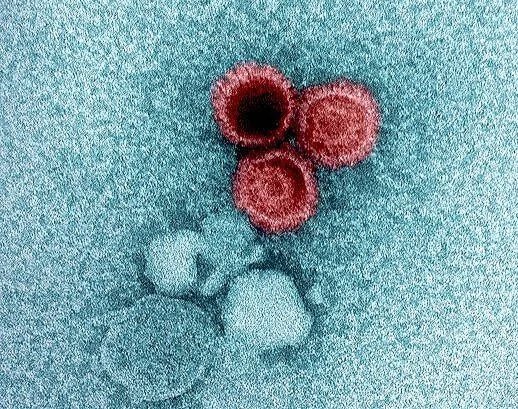
EPSTEIN-BARR (ebv) VIRUS

While most people experience no adverse consequences from their infection, EBV has been linked to certain diseases.

For instance, EBV was the first virus shown to cause cancer. Subsequent research has linked EBV to several different types of cancer – including certain lymphomas and 10% of stomach cancers. Each year, about 200,000 people develop an EBV-associated cancer.

More recently, large epidemiological studies have linked EBV with multiple sclerosis, which is an autoimmune condition. Studies have shown that people with multiple sclerosis are almost always infected with EBV.

Previous research has also suggested that EBV may be involved in systemic lupus. But this new study provides insight into the specific mechanism involved.

To conduct their study, the researchers developed a sensitive test to analyse the genetic material in thousands of B cells isolated from the blood of people with systemic lupus and healthy donors as a control.

They found that EBV was present in around 25 times more B cells in systemic lupus patients compared to participants who didn’t have the condition. In systemic lupus patients, EBV was present in around one in 400 B cells – while in healthy controls it was only present in around one in 10,000 B cells.

This is an interesting finding – though the researchers acknowledge it could potentially be caused by the medicines patients with systemic lupus take to control their illness. These decrease the activity of the immune system which reduces the symptoms of systemic lupus. But these medicines also reduce the immune system’s ability to control EBV infection.

How EBV Causes Autoimmunity

The most important finding from the research was that many of the EBV-infected B cells from systemic lupus patients made autoantibodies that bound to specific proteins. These same proteins are often targeted by autoantibodies in people with systemic lupus. In contrast, EBV-infected B cells from healthy donors did not make these autoantibodies.

To understand the mechanisms involved, the researchers then studied the expression of EBV genes in the infected B cells. Although EBV was generally shown to be in its silent state, some EBV-infected B cells from systemic lupus patients produced the viral protein EBNA2, which reprogrammed the B cells to become more inflammatory. These activated B cells were better able to stimulate responses from other immune cells, including non-EBV infected B cells and T cells.

Together, these observations suggest that EBV may initiate systemic lupus by infecting and reprogramming dormant B cells to become activated. These cells produce autoantibodies that could potentially contribute to the development of systemic lupus. They also appear to recruit additional immune cells able to produce stronger autoimmune responses that are more likely to play a role in systemic lupus development.

These new findings raise the possibility that targeting EBV could form the basis of a new therapy to treat people with systemic lupus. But given these infected B cells also recruit additional immune cells, a broader therapeutic strategy may be needed.

Additional research will also be needed to confirm whether EBV is indeed an essential trigger for the development of systemic lupus. If this is confirmed, preventing EBV infections through vaccination could prevent systemic lupus developing.

Currently there are a number of potential EBV vaccines in development – and two candidates are being tested in large clinical trials. A key requirement for any effective EBV vaccine will be its ability to generate long-term protection against infection. This is because EBV is already widespread in the population. If vaccination only delays infection until later in life, then this could lead to many cases of glandular fever.

The results of these trials are eagerly anticipated, given the potential impact an effective vaccine could have to reduce the numbers of people worldwide that develop lupus, other autoimmune conditions, or cancers caused by EBV.

Graham Taylor, PhD, is an Associate Professor in Viral and Tumour Immunology at the University of Birmingham. The main focus of Graham’s work is to increase our knowledge of the immune system in health and disease and how best to harness the immune system to treat cancer. His research helped lead to a therapeutic cancer vaccine that has undergone testing in several clinical trials. 

Heather Long, PhD, is an Associate Professor in the Department of Immunology and Immunotherapy, at the University of Birmingham. She leads a research team in the fields of viral and cancer immunology, with a long-term focus on understanding T cell control of viruses and virus-associated cancers.

This article originally appeared in The Conversation and is republished with permission.

Epstein-Barr Virus Linked to Autoimmune Conditions

By Dr. Forest Tennant, PNN Columnist 

The Epstein-Barr virus (EBV) is a herpes virus that normally resides after infection as an organism in the epithelial tissues of the throat and lymphocytes. Most humans carry the virus and blood tests will often show low levels of EBV antibodies.  

Recent research has determined that in some people, for unknown reasons, the virus will reactivate and/or produce antibodies that carry toxic elements to tissues in the body such as the spinal cord. EBV infected lymphocytes can then cross the blood brain barrier and enter the brain, spinal cord and spinal fluid.  

This situation is now referred to as “EBV autoimmunity” and is reported by multiple medical institutions and researchers to be a major, causative factor in multiple sclerosis, systemic lupus, rheumatoid arthritis, and about 2% of the world’s cancer cases.  

Autoimmunity and Arachnoiditis 

Adhesive Arachnoiditis (AA) has long been known to be an inflammatory disease in which cauda equina nerve roots become adhered by adhesions to the arachnoid lining of the spinal canal. We have also long suspected that autoimmunity was a factor in AA, but until now there has been no compelling reason for this belief. 

In our review of over 800 confirmed cases of AA by magnetic resonance imaging (MRI), along with medical history and symptoms, a single fact emerged. Almost all cases had multiple herniated or protruding intervertebral discs prior to the development of AA. These discs were often in both the cervical and lumbar-sacral regions of the spine.  

Epidural injections, spinal taps or surgery often appeared to accelerate the development of AA. But further research revealed that most persons with MRI-documented AA had other medical conditions known to be common in persons with autoimmune disease. These included: burning mouth or feet, small fiber neuropathies, fibromyalgia, carpal tunnel, Hashimoto’s thyroiditis, Sjogren’s (dry eyes), Raynaud’s, irritable bowel, migraine, temporal mandibular joint pain (TMJ), chronic fatigue, arthritis, Tarlov cysts, mast cell conditions, and POTS. Persons with a genetic connective tissue disease of the Ehlers-Danlos Syndrome type were also significantly affected.  

From this we concluded that AA is usually a late-stage component of a multisystem, autoimmune, inflammatory disease. 

Between our realization that AA is associated with multiple medical conditions and the discovery that EBV causes significant autoimmunity, we began EBV testing in persons with MRI-documented AA. Essentially every case showed very high (sometimes above laboratory testing ability) antibody levels. Some showed evidence of EBV reactivation. Another finding has been that some persons with AA have high levels of cytomegalovirus, other strains of herpes, and/or Lyme. 

EBV is now known to cause a multitude of autoimmune conditions. Our studies indicate that AA is a late-stage development of an autoimmune disorder at least partially caused by EBV. This discovery leaves us little option but to recommend that each person with AA determines if they have multiple autoimmune manifestations including herniated discs and, if so, seek EBV antibody testing and become knowledgeable about control measures. 

Forest Tennant, MD, DrPH, is retired from clinical practice but continues his research on the treatment of intractable pain and arachnoiditis. This column is adapted from an updated bulletin recently issued by the Arachnoiditis Research and Education Project. Readers interested in subscribing to the bulletins should click here.

The Tennant Foundation gives financial support to Pain News Network and sponsors PNN’s Patient Resources section.  

How to Recognize and Treat Intractable Pain Syndrome

By Forest Tennant, PNN Columnist

About one year ago we launched our Intractable Pain Syndrome (IPS) Research and Education Project to bring awareness, diagnosis and treatments to persons who have this merciless condition. Much has been learned in the past year. 

Our original impetus and investigation of chronic pain revealed that some rare patients transform from a state of periodic pain to constant, never-ending pain. Once this constant intractable pain begins, patients often deteriorate, become reclusive, have a shortened life, and some may even commit suicide. Why and how this transformation occurs remained a mystery for many years. 

A major research advance in the past year is the role of autoimmunity, which is the presence of antibodies in the blood that attack one’s own tissues. Autoimmunity is so universal in IPS that we now believe that autoimmunity, plus excess electrostimulation from a disease or injury,  to be the root cause of transformation from simple chronic pain to IPS.  

Recognition of IPS 

The number one challenge in managing and controlling chronic pain is to determine if a person has transformed from simple chronic pain to IPS. Although the scientific documentation is quite sound, there is some resistance in the medical community to the discovery that chronic pain can cause a profound biologic change in multiple bodily systems. These changes may be called “alterations” or “complications,” but the fact is that a chronic pain condition can morph into IPS with cardiovascular, endocrine, and autoimmune manifestations.

The table below shows some of the differences between IPS and simple chronic pain:

The Importance of an IPS Diagnosis

The most common complaint that we receive from persons with IPS is that they can’t get enough opioid and other pain relief medications. The federal government, state medical boards, malpractice insurance carriers, and other health insurers often restrict the number of pills and dosages that can be prescribed and dispensed. As a result, many pain clinics and specialists will only do interventional procedures such as injections or implant stimulators, and will only prescribe limited amounts of opioids, if any.

In order to obtain opioids and some other drugs, particularly benzodiazepines, persons with IPS will need diagnostic tests and a specific, causative diagnosis to prove they have a legitimate medical disorder that will permit their physician to prescribe limited amounts of opioids and benzodiazepines. The major causes of IPS are:

  • Adhesive Arachnoiditis

  • Connective tissue or collagen disorder (Ehlers Danlos Syndrome)

  • Stroke or traumatic brain injury

  • Arthritis due to a specific cause

  • Neuropathy due to a specific cause (CRPS, cervical, autoimmunity)

Less prevalent, but serious causes of IPS are sickle cell disease, porphyria, pancreatitis, abdominal adhesions, interstitial cystitis, and lupus. 

Your primary diagnosis will have to be validated by MRI, X-ray, biopsy, and/or photographs. Medical records must document the diagnosis. You should have a hard copy and hand-carry a set of your records to all medical appointments.

These diagnoses will not usually be acceptable to obtain opioids because they are too “non-specific” or general:

  • Failed back syndrome

  • Degenerative spine

  • Fibromyalgia

  • Central pain

  • Headache

  • Neuropathy.

How to Cope with Opioid Restrictions

Most local physicians are still able to prescribe two weak opioids: tramadol and codeine-acetaminophen combinations. While weak, they are better than nothing, and you may be able to build a pain control program with one or both medications.

If you have good medical records that document the causes and complications of your IPS, some medical practitioners will prescribe these opioids: 

  1. Hydrocodone-acetaminophen (Vicodin, Norco) 3-4 a day 

  2. Oxycodone-acetaminophen (Percocet) 3-4 a day 

  3. Oxycodone alone, 2 to 3 a day

You may be able to boost the potency of opioids with what is called potentiators and surrogates. These drugs and supplements have opioid-like effects known in pharmacology as “opioid activity.” They can be taken separately between opioid dosages, or they can be taken at the same time, to make your opioid stronger and last longer.

  • Kratom

  • Palmitoyethanolamide (PEA)

  • Cannabis/CBD

  • Taurine

  • Amphetamine Salts (Adderal)

  • Tizanidine

  • Methylphenidate (Ritalin) 

  • Clonidine

  • Diazepam 

  • Carisoprodol

  • Ketamine

  • Oxytocin

Although the restrictions on opioids and benzodiazepines are perhaps unfair and an over-reach for legitimate persons with IPS, there are steps you can take to function with these restrictions.

One is to build a comprehensive, healing, and tailor-made program that will allow you to cope with fewer opioids and benzodiazepines. We’ve written previously about the importance of an IPS nutrition program. Pain relief medications are not very effective unless you have good nutrition.

There are also exercises and physical measures you can take that enhance pain control, such as walking, arm and leg stretching, water soaking, deep breathing, rocking, and gentle bouncing. Supplements can also be taken to help suppress inflammation and autoimmunity, regenerate nerve tissue and provide some pain relief.

Forest Tennant is retired from clinical practice but continues his research on intractable pain and arachnoiditis. This column is adapted from newsletters recently issued by the IPS Research and Education Project of the Tennant Foundation. Readers interested in subscribing to the newsletter can sign up by clicking here.

The Tennant Foundation gives financial support to Pain News Network and sponsors PNN’s Patient Resources section.   

How Chronic Pain Can Lead to Autoimmunity Problems

By Forest Tennant, PNN Columnist

Every chronic pain patient must know and understand autoimmunity and how to combat it. Research on chronic pain has unequivocally determined that the chronic inflammation and tissue destruction caused by a painful disease or injury will produce autoimmunity.

Autoimmunity is a biologic phenomenon in which certain antibodies in the blood -- called autoantibodies -- turn against the body and attack one’s own tissues. Autoantibody means “self-attack.” This is in stark contrast to “immunity” which means antibodies only attack an invading virus, bacteria, poison or contaminant to protect the body.

Chronic pain that causes inflammation and tissue degeneration generates cellular destruction that can shed tissue particles into the blood stream. These tissue particles are considered foreign and unwanted by the body’s immune system, so it makes autoantibodies against them. Unfortunately, these autoantibodies may then attack normal tissue, giving the patient unexpected symptoms and more pain.

The symptoms and sequelae of autoimmunity can be mysterious and overwhelming. Such disorders as traumatic brain injury, Ehlers-Danlos Syndrome, adhesive arachnoiditis, post-viral, and stroke are particularly prone to the development of autoimmunity.

Although antibodies may attack any tissue in the body, autoantibodies seem to attack the soft tissues such as membranes around organs, ligaments, cartilage, small nerves and intervertebral discs. Another common target is the body’s natural immune protection system, including lymph nodes, thymus gland, mast cells and spleen.

The complications of autoimmunity usually begin without warning. Common clinical manifestations of autoimmunity and the presence of autoantibodies include allergies, skin rash, fibromyalgia, psoriasis, thyroiditis, carpal tunnel syndrome, and arthritis of the joints including the temporal mandibular, elbow and hand joints.

Serious painful and life-threatening autoimmune conditions may also occur, which include the kidney (glomerulonephritis), liver (hepatitis), nerves (neuropathy), spinal canal (arachnoiditis), adrenal gland and the pituitary gland. We now believe that autoimmunity, along with excess neuroelectric stimulation, to be the cause of Intractable Pain Syndrome (IPS).

How To Tell If You Have Autoimmunity

Every chronic pain patient needs to do a self-assessment to determine if their basic pain problem has caused autoimmunity. A failure to control autoimmunity will likely result in progressive complications, misery and probably an early death. As with most other medical conditions, the earlier the recognition, the better the control, suppression and outcome.

Patients should review the following list of some common autoimmune symptoms or conditions. If you have two or more, an assumption can be made that you have autoimmunity and must take actions to control and suppress it:

  • Joint pain

  • Carpal tunnel

  • Histamine episodes or mast cell stimulation

  • Cold hands (Raynaud’s)

  • Allergies

  • Mild recurring fever

  • Neuropathy

  • Medications stop working

  • Irritable Bowel Syndrome (IBS)

  • Food or Medication Sensitivity

  • Hashimotos Thyroiditis

  • Brain Fog

  • Fibromyalgia

  • Diarrhea, gastric upset, heartburn

  • Periodic flushing and itching

  • Herniated disc

  • Constipation

  • Psoriasis

  • Exhaustion and Weakness

If you have two or more of these conditions, a laboratory blood test can help confirm it. Autoimmunity and its close association with chronic inflammation, immune suppression and allergy will almost always result in elevations of one or more of the following blood tests:

  • C-reactive protein (CRP)

  • Lymphocytes or eosinophiles

  • Anti-nuclear antibody (ANA)

  • Erythrocyte sedimentation rate (ESR)

  • Interleukins-cytokines       

  • Thyroid peroxidase antibodies (TPO)

  • ASO Titer

  • Tumor necrosis factor

Automimmunity may also result in decreased immunoglobulins and an altered albumin-globulin ratio.

At this time there is no specific, published treatment for chronic pain-induced autoimmunity. Based on our early investigations, we recommend patients take vitamins, supplements, low dose corticosteroids, low dose naltrexone (LDN) and hormone therapy to control and suppress autoimmunity. Further details can be found here.  

Forest Tennant is retired from clinical practice but continues his research on intractable pain and arachnoiditis. This column is adapted from newsletters recently issued by the IPS Research and Education Project of the Tennant Foundation. Readers interested in subscribing to the newsletter can sign up here.

The Tennant Foundation gives financial support to Pain News Network and sponsors PNN’s Patient Resources section.
