Microcurrent Therapy: The Healing Electrical Stimulation You’ve Never Heard Of

By Madora Pennington

If you suffer from chronic muscle or soft tissue pain, a physical therapist or doctor may have recommended you get a TENS unit.

A traditional TENS (Transcutaneous Electrical Nerve Stimulation) device sends a low-voltage current through an injured area of the body, attempting to disrupt pain signals and stimulate endorphins, the body’s natural painkillers. The reviews of TENS are mixed. Some people experience relief from TENS, but many do not. 

There is another kind of TENS that few patients and providers know about called microcurrent therapy (MCT). These devices deliver an electric current so small, the user might not feel anything. That’s because the current approximates the body’s own energy flows. The goal of MCT therapy is not to block pain sensation, but to encourage actual healing.

The human body itself is a complex electrochemical machine. Your cells generate low levels of electricity through chemical reactions called “biocurrents” -- which power bodily functions, regulate nerve signaling, boost cellular growth and energy, reduce inflammation, and so on. When body tissue is damaged, it produces an altered current that doesn’t work as well. 

Stimulating the body with an external microcurrent accelerates tissue repair, wound healing, and muscle recovery. In short, it speeds healing by assisting with energy at the cellular level. The current from a traditional TENS, while low, is still much higher than the electrical currents the body runs on, so it does not improve the electrical functioning of cells. 

For me, I never felt much benefit from a traditional TENS. So when I read articles about microcurrent therapy, I wanted to try it. I asked my physical therapist, and she had never heard of anything but a traditional TENS current, even though she is a recent graduate of a doctoral program, and an excellent PT. 

I checked the various TENS units I already own, and none had the capacity to produce a microcurrent.

John Hubacher, President and CEO of Pantheon Research, a biomedical instrument manufacturing company, thinks microcurrent therapy may have gotten left behind because it was unclear why it worked so well. Without a clear mechanism for physiological action, it’s hard to get studies done. But now research is emerging that shows that MCT has the potential to change a cell's physiological processes.

Microcurrents have been shown to improve skin ulcers, varicose veins, and wound healing. It is also being used for cosmetic purposes as a “natural facelift” to tighten and tone skin, stimulate facial muscles, and boost collagen and elastin production. There are practically no side-effects, and it can be safely used in elderly populations.

Combining microcurrent therapy with exercise can be very helpful. Microcurrent used before and after a workout improves fat breakdown and reduces muscle soreness. Mice with atrophied muscles experienced muscle regrowth from the application of microcurrent therapy.

A 2025 paper remarked that this low-risk, powerfully therapeutic and inexpensive technology is grossly underutilized due to lack of awareness, even though studies support that it improves pain and function in many musculoskeletal conditions.

“Despite a growing body of evidence highlighting its therapeutic potential, MIC (MTC) therapy remains underutilized across many areas of medicine. Its subsensory, low-intensity electrical currents offers a non-invasive, pain-free alternative to traditional electrotherapies like TENS, without triggering muscle contraction or discomfort,” wrote lead author Sarahrose Jonik, MD, a Resident of Internal Medicine at Penn State College of Medicine.

“MIC therapy shows promise as an adjunctive modality capable of supporting tissue repair, reducing inflammation, and modulating pain, particularly in complex, chronic, or refractory conditions.” .

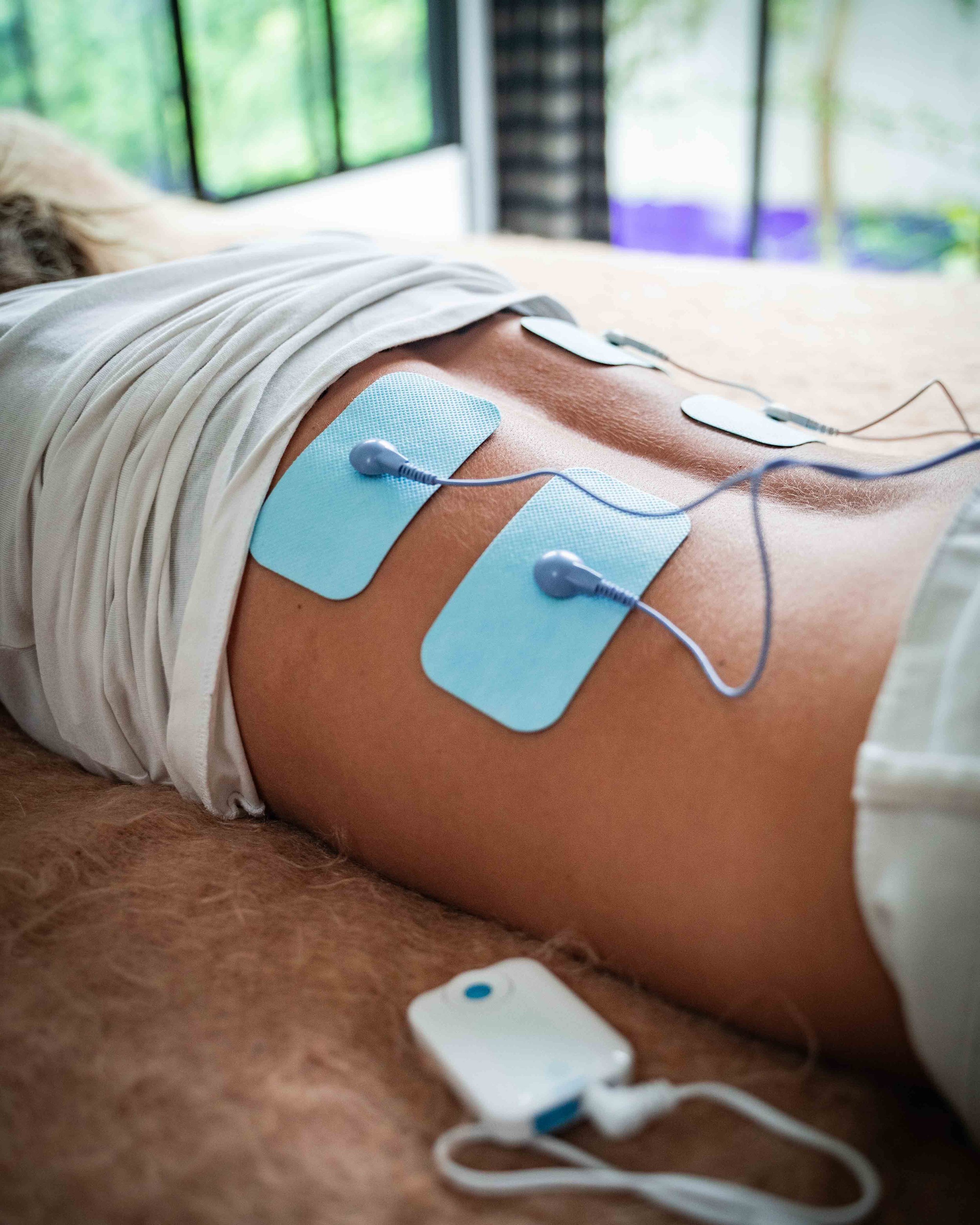
After an internet search, I bought the InTENSity 12 made by Compass Health. It looks and operates like a typical TENS and costs about the same, but produces a microcurrent. Like a TENS device, it has sticky pads that you attach to the skin near the area you want to work on. 

I first used the InTENSity 12 on an area around my hip that is constantly tight. There, my muscles overwork to compensate for an old knee injury. It is an area I always have to work on and have had much physical therapy for.

The microcurrent absolutely melted the tension like no stretching, heat, massage, or trigger point release ever came close to doing. I did some stretching afterwards. The area released even more deeply and completely. My formerly hyperactive muscles stayed soft and easy to stretch for days. 

Using the microcurrent TENS on other painful areas caused by other old injuries and a neuropathy flare, I felt relief that lasted for days. It left me wondering if this extra power, when delivered at the same level at which my cells operate, caused healing that my body was not doing on its own. 

FDA Clears New Prescription-Only TENS Device

By Pat Anson

Transcutaneous electrical nerve stimulation – more commonly known as TENS – uses mild electric currents to temporarily relieve pain in sore muscles and tissues. Some TENS units are elaborate wearable devices that cost hundreds of dollars, while others are simple gadgets that can be purchased online or over-the-counter for about $30.

Due to lingering questions about their effectiveness, many health insurers don’t cover TENS devices, while others make patients jump through hoops to get reimbursed for them.

Medical device maker Zynex Medical is hoping to bridge the gap in insurance coverage with a new TENS device called TensWave, which is only available by prescription. The company says the FDA has “cleared” TensWave for marketing, allowing sales to begin immediately.

"The introduction of TensWave aligns perfectly with our commitment to providing comprehensive pain management solutions," Thomas Sandgaard, CEO of Zynex, said in a press release.

"We recognized a gap in the market for a high-quality TENS device that meets the specific criteria for insurance reimbursement, and TensWave is our answer to that demand. It complements our flagship multi-modality device, the NexWave, where Interferential current is the main modality and driver of obtaining prescriptions. This device broadens our product portfolio and enhances our support to patients."

ZYNEX IMAGE

Unlike NexWave, which has three different electrical stimulation modalities, TensWave only uses TENS technology, which Zynex believes will make it easier to get insurance coverage. The company currently has no estimate of TensWave’s cost if a patient has to buy it out-of-pocket.   

In its press release, Zynex said TensWave “has been clinically proven to reduce chronic and acute pain,” which is a bit of an exaggeration, because the device did not go through the FDA’s lengthy review and approval process. However, because TensWave has “substantial equivalence” to other TENS units already on the market, it was cleared for sale without ever undergoing a clinical trial to prove its safety and efficacy. This is a common practice allowed by the FDA when new medical devices are introduced.

The World Health Organization takes a dim view of TENS, saying the evidence of its effectiveness in relieving chronic lower back pain is “very low” due to a limited number of clinical trials. In some trials, TENS worked no better than a placebo.

The UK’s National Health Service (NHS) has a similar view of TENS, saying there is not enough good-quality evidence to recommend its use as a reliable method of pain relief.

“Healthcare professionals have reported that it seems to help some people, although how well it works depends on the individual and the condition being treated,” the NHS states. “TENS is not a cure for pain and often only provides short-term relief while the TENS machine is being used.”

Electromedical Treatments for Arachnoiditis

By Dr. Forest Tennant, PNN Columnist  

Adhesive Arachnoiditis (AA) is an inflammatory, nerve root entrapment disease in which cauda equina nerve roots are glued by adhesions to the arachnoid-dural covering of the spinal canal. An inflamed tumor-like mass is formed inside the spinal canal that blocks spinal fluid flow, allows seepage of fluid into tissue outside the spinal canal and shuts off electrical impulses that activate the legs, feet, bladder, intestine and sex organs. Autoimmunity is produced and/or magnified by AA. 

We highly recommend a three-component protocol for AA to reduce inflammation and autoimmunity, regenerate damaged tissue and to provide pain control. Recent advances in electromedical therapies can help achieve these three goals. 

There are two basic types of electromedical devices available for AA treatment: electric current therapy (EC) and electromagnetic therapy (EM). 

Electric Current Therapy 

Almost everyone is familiar with “TENS” units, which stands for “transcutaneous electrical nerve stimulation.” These devices were the first electromedical therapies to relieve pain and promote healing.

TENS units deliver a single electric current into tissues to produce an anesthetic, pain relieving effect.  

Today, more advanced EC devices administer micro-currents and/or a combination of multiple currents with different frequencies. 

Electromagnetic Therapy 

There is a form of energy that is half electricity and half magnetism, which can be divided into wave lengths. The very shortest wave of electromagnetic energy is “atomic” and the longest is “radio.” The shortest wave used in medicine is “laser.” Other electromagnetic energy waves used for medical purposes include infrared, light and microwave. 

EC and EM devices, when placed over the lower back, deliver electric current or electromagnetic energy to the lumbar-sacral spinal canal and the spine’s surrounding tissue.

Modern devices use intermittent pulsation of electric currents or electromagnetic energy to penetrate the skin and subcutaneous tissue to reach the AA site, which is usually about 2-3 inches below the skin.  

Some devices use the label PEMF, which stands for “pulsed electromagnetic frequency.” We believe that the newer EC and EM devices can deliver electric currents or electromagnetic energy that, when pulsed, penetrate deep enough to reach the AA disease site. 

Although not totally curative, these devices usually bring about pain reduction in the 20 to 30% range. Within an individual’s financial capability, we recommend that an EC and/or EM device be used 2 to 3 times a week (not daily). EC and EM therapy are not substitutes for a medical protocol. 

EM and EC devices often produce some initial healing, but later seem to stop working. In this situation the device may have done its maximal healing. The devices can still be used periodically to prevent relapses and treat flares. 

Forest Tennant, MD, DrPH, is retired from clinical practice but continues his research on the treatment of intractable pain and arachnoiditis. This column is adapted from a bulletin recently issued by the Arachnoiditis Research and Education Project. Readers interested in subscribing to the bulletins should click here.

Dr. Tennant’s new book, "Clinical Diagnosis and Treatment of Adhesive Arachnoiditis” is available on Amazon. 

The Tennant Foundation gives financial support to Pain News Network and sponsors PNN’s Patient Resources section.