
Study Claims 10% of Pain Patients Addicted to Opioids

By Pat Anson, Editor

Estimating rates of opioid abuse and addiction has never been easy. Dozens of different studies have come to startling different conclusions, and there is even disagreement over the definition of abuse and addiction.

Now a professor at the University of New Mexico is weighing in on the subject -- and his conclusions are likely to stir even more debate.

In a systematic review of 38 research reports (a study of studies) published in the journal PAIN, lead author Kevin Vowles and his colleagues estimate that up to 30 percent of the opioids prescribed for pain are misused and that about 10 percent of pain patients are addicted to them.

They also question whether opioids should be prescribed at all for chronic pain.

“It is not clear whether the risks of opioid use outweigh the potential for benefit. The efficacy of opioids and their suitability for the long-term management of chronic pain still remain very much in question and while this uncertainty in effectiveness is well established, it stands in somewhat stark contrast to the clinical reality of chronic pain treatment, where rates of prescriptions have skyrocketed such that opioids are now among the most frequently prescribed medications,” wrote Vowles.

“We are not certain whether the benefits derived from opioids, which are rather unclear based on the extant literature, compensate for this additional burden to patients and health care systems.”

The researchers noted there was extremely wide variation in the rates of opioid misuse and addiction in the studies they analyzed. Rates of “problematic use” ranged from less than 1% all the way up to 81%.

One study -- a review of 25 research reports – left the barn door wide open by broadly estimating the “prevalence of problematic opioid use behavior” at 0% to 50% of pain patients.

“The vagueness inherent in these definitions, areas of overlap among them, and their sometimes interchangeable use have made it difficult to determine exact rates and types of problematic opioid use,” conceded Vowles.

Exactly what constitutes opioid misuse is also debatable.

Vowles defined misuse as “opioid use contrary to the directed or prescribed pattern of use, regardless of the presence or absence of harm or adverse effects.” Such a definition means a patient who has stopped using a prescribed opioid – even if they no longer have pain – is misusing the medication.

(Several years ago this writer was sent home from the hospital after surgery with a two week supply of Vicodin. Fortunately, the surgery was successful and the pain subsided after a few days. A half empty bottle of Vicodin sat unused in my medicine cabinet for years before I had sense enough to throw it out. Under Vowles’ definition, I had “misused” the Vicodin.)

Studies by some of the nation’s largest drug screening companies consistently show that many Americans don’t take the drugs that are prescribed for them. A large study by Quest Diagnostics found that 60% of Americans failed to take a medication as prescribed by their physicians and that 42% had no drugs in their system. Should they be included in estimates of misuse?

Rates of addiction in the studies analyzed by Vowles also varied greatly – from 0.7% of pain patients up to 34.1%.

An adjusted analysis by Vowles estimated the average rate of addiction at 8% to 12% -- a figure nearly double the estimate of the National Institutes of Health (NIH). According to the NIH, only about 5% of patients taking opioids as directed for a year end up with an addiction problem.

“Misuse, abuse and addiction mean different things to different researchers,” said Lynn Webster, MD, past president of the American Academy of Pain Medicine and vice president of scientific affairs at PRA Health Sciences.

“We must keep in mind that behaviors determine the diagnoses of misuse, abuse and addiction and these behaviors are subjective interpretations. Subjective interpretations are influenced by one's biases and perspective.  Misuse to one researcher can be addiction to another. Unfortunately there has not been a standard interpretation of behaviors and I doubt there ever will be due to personal beliefs about opioids and addiction.”  

While Webster doesn’t take issue with the design of the study – he does dispute the overall conclusion that the risks of opioid abuse outweigh the benefits.  

“It is undoubtedly true that some people should not be prescribed opioids.  But even using their reported averages for abuse and addiction, a majority of people do not abuse or become addicted and therefore shouldn't necessarily be denied treatment particularly if there is no other option,” Webster wrote in an email to Pain News Network

Ironically, only one study analyzed by Vowles even looked at the recreational abuse of opioids – perhaps the biggest contributor to the so-called “epidemic” of prescription drug abuse in the U.S.  That study estimated the rate of abuse by pain patients at just 8% -- far below their estimated rates of misuse.

Vowles admits there are several limitations to his study.

The most obvious is the degree of variability within this literature. In spite of our attempts to minimize the impact of this variability, the range of misuse and addiction was incredibly broad,” he wrote.

“These sources of variability will likely continue to cloud our ability to make precise estimates. There is clearly room here for a series of carefully controlled studies where sources of variability are held constant, or as constant as possible, to more clearly illuminate prevalence rates of problematic opioid use in individuals with chronic pain.”
 

DEA Issues Fentanyl Alert

By Pat Anson, Editor

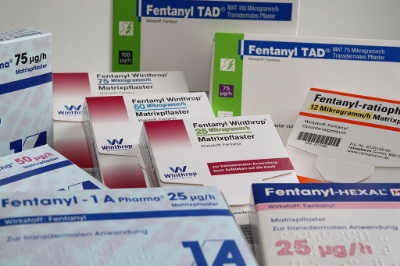
The U.S. Drug Enforcement Administration has issued a nationwide alert about the abuse and diversion of fentanyl – a potent opioid analgesic that recreational drug users are increasingly combining with heroin.

“Drug incidents and overdoses related to fentanyl are occurring at an alarming rate throughout the United States and represent a significant threat to public health and safety,” said DEA Administrator Michele M. Leonhart. “Often laced in heroin, fentanyl and fentanyl analogues produced in illicit clandestine labs are up to 100 times more powerful than morphine and 30-50 times more powerful than heroin.”

In the last two years, the DEA has seen a significant increase in fentanyl-related drug seizures, particularly in the northeast and California. While most of the seized fentanyl appears to be coming from illegal drug labs run by Mexican drug cartels, some of it is being diverted.

Over 6.5 million legal prescriptions for fentanyl were written in the U.S. in 2014, often in the form of transdermal patches used to treat chronic pain.

“Fentanyl patches are abused by removing the gel contents from the patches and then injecting or ingesting these contents. Patches have also been frozen, cut into pieces and placed under the tongue or in the cheek cavity for drug absorption through the oral mucosa. Used patches are attractive to abusers as a large percentage of fentanyl remains in these patches even after a 3-day use,” the DEA said in a statement. 

The DEA warning comes on the heels of another government report warning about a surge in heroin related deaths. This month the Centers for Disease Control and Prevention reported the death rate from heroin overdoses in the U.S. nearly tripled between 2010 and 2013. Over 8,200 Americans died of heroin overdoses in 2013.

The sharp increase in heroin deaths coincided with a crackdown on prescription drug abuse and pill mills dispensing painkillers. Some health officials have called opioids a “gateway drug” to heroin, and claimed pain patients are switching to heroin because it is now cheaper and easier to get – even though there is scant evidence to support that claim.

According to the National Institutes of Health, only about 5% of patients taking opioids as directed for a year end up with an addiction problem. And in a 2014 study of urine drug screens collected from over 171,000 chronic pain patients, Ameritox says it detected heroin in just 1.3% of the samples.

“The initial entry of heroin was no doubt in response to the over-use of prescription opioids. Now it is occurring because of the influx of cheap heroin,” said Percy Menzies, president of Assisted Recovery Centers of America, which operates four addiction treatment clinics in the St. Louis, Missouri area.

“The two strongest factors contributing to addiction are price and access. Mexican farmers have lost their marijuana market in the U.S. and have switched to growing the poppies and these poppies are being converted into heroin by the drug cartels. This is immensely profitable and we are going to see a steep increase in heroin addiction as more and more heroin is smuggled into the U.S.

“The U.S. has to curb its appetite for prescription opioids and we have to find better treatments for chronic pain,” Menzies wrote in an email to Pain News Network. “To add insult to injury, the new avenue for using heroin is coming from the medications used to treatment opioid addiction - methadone and buprenorphine. The sale of buprenorphine formulations is around $2 billion and patients are using these medications to sustain their heroin addiction.

“Our addiction to opioids comes from three sources - prescription opioids, heroin and prescription opioids to treat opioid addiction. Until we drastically curtail these three sources, the addiction is going to be alive, well and thriving.


Survey: Two-Thirds of Patients Unable to Get Hydrocodone

By Pat Anson, Editor

About two-thirds of pain patients say they were no longer able to obtain hydrocodone after the opioid painkiller was reclassified by the U.S. government from a Schedule III medication to a more restrictive Schedule II drug, according to the results of a new survey.

Many patients who had been taking hydrocodone at the same dose for years said their doctor would no longer prescribe the painkiller. Over a quarter (27%) said they had suicidal thoughts after being denied a prescription for hydrocodone.

The survey of over 3,000 patients was conducted online by the National Fibromyalgia & Chronic Pain Association (NFMCPA) and the findings presented this week at the annual meeting of the American Academy of Pain Medicine. An abstract of “Hydrocodone Rescheduling: The First 100 Days” can be found here.

Hydrocodone was rescheduled by the Drug Enforcement Administration in October of last year to combat an “epidemic” of prescription drug abuse. The rescheduling limits patients to an initial 90-day supply and requires them to see a doctor for a new prescription each time they need a refill. Prescriptions for Schedule II drugs also cannot be phoned or faxed in by physicians.

The reclassification quickly made a drug that was once the most widely prescribed pain medication in the country – at nearly 130 million prescriptions each year – to one of the hardest to get.

Other key findings of the survey:

  • 88% of respondents believe the change to Schedule II denies pain patients the right to adequate pain care.
  • 75% believe the change will not prevent prescription drug abuse.
  • 72% believe the change is harmful to pain patients.
  • 18% said it led to a "worsened relationship" with their doctor.
  • 30% reported "issues" with their pharmacy filling prescriptions.

Patients also reported higher expenses due to increased doctor’s visits, higher co-pays, greater transportation costs to visit the doctor and multiple pharmacies, and lost income due to inability to work because of pain.

The survey is believed to be the first to report on the experiences of pain patients treated with hydrocodone since the rescheduling took effect. The respondents were overwhelmingly female, which reflects the demographics of fibromyalgia and many other chronic pain conditions.

Hydrocodone isn’t the first pain medication to be in short supply. A report released last month by the Government Accountability Office (GAO) faults the DEA for poor management and “weak internal controls” of the quota system under which controlled substances are produced and distributed.

Between 2001 and 2013, the GAO said there were 87 “critical” shortages of drugs containing controlled substances, over half of them pain relievers. The vast majority of drug shortages lasted over a month and some dragged on for years. An oral solution of oxycodone was difficult to obtain for eight and a half years.

“The shortcomings we have identified prevent DEA from having reasonable assurance that it is prepared to help ensure an adequate and uninterrupted supply of these drugs for legitimate medical need, and to avert or address future shortages. This approach to the management of an important process is untenable and poses a risk to public health,” the report states.

OxyContin Still Being Abused by Addicts

By Pat Anson, Editor

Drug addicts are still finding ways to snort and inject OxyContin, five years after the painkiller was reintroduced in an abuse deterrent formula.

Researchers at Washington University School of Medicine in St. Louis surveyed almost 11,000 opioid abusers at 150 drug-treatment facilities and found that over a quarter of them still abused the painkiller, even though the new formulation of OxyContin is harder to crush or liquefy. Their study is being published in JAMA Psychiatry.

The abuse-deterrent formulation of OxyContin was introduced by Purdue Pharma in 2010, at a time when the painkiller was widely being abused. Nearly half of patients entering drug treatment facilities that year for opioid abuse said they had used OxyContin to get high at least once in the previous 30 days.

Two years later, after the abuse-deterrent formulation was introduced, the percentage of opioid abusers entering rehab who used OxyContin had fallen to 26 percent.

"We found that the abuse-deterrent formulation was useful as a first line of defense. OxyContin abuse in people seeking treatment declined, but that decline slowed after a while," said senior investigator Theodore J. Cicero, PhD, a professor of neuropharmacology in psychiatry.

"The newer formulations are less attractive to abusers, but the reality is -- and our data demonstrate this quite clearly -- it's naïve to think that by making an abuse-deterrent pill we can eliminate drug abuse. There are people who will continue to use, no matter what the drug makers do, and until we focus more on why people use these drugs, we won't be able to solve this problem."

The findings are not unexpected, according to a prominent pain physician.

“No one should expect that ADF's (abuse deterrent formulations) are not going to be abused.  They will.  Some ADF's will be more effective in deterring certain methods of abuse like injecting or snorting.  People who want to abuse can just take more orally or with enough effort can overcome the ADF technology,” said Lynn R. Webster, MD, a past president of the American Academy of Pain Medicine and vice president of scientific affairs at PRA Health Sciences.

“As long as an opioid has rewarding properties a certain part of society will seek them out for abuse.  This is why we need to be realistic about what an ADF can accomplish.  We need to decrease the demand and eventually replace the type of opioids that produce liking with drugs that are not as rewarding but more effective.”   

Researchers say about a third of the addicts who still abused OxyContin had found a way to inhale or inject it. The rest took the painkiller orally. Even more worrisome, almost half of the drug abusers surveyed in 2014 reported they had used heroin in the 30 days before they entered treatment.

"Some people found ways to get around the abuse-deterrent formulation so that they could snort or inject it, and others simply swallowed the pills," Cicero explained. "But many people switched to heroin, and that's a major concern."

Cicero says 70% of the addicts who stopped using OxyContin and switched to other drugs were using heroin.

“Abuse-deterrent formulations can have the intended purpose of curtailing abuse, but the extent of their effectiveness has clear limits, resulting in a significant level of residual abuse. Consequently, although drug abuse policy should focus on limiting supplies of prescription analgesics for abuse, including ADF technology, efforts to reduce supply alone will not mitigate the opioid abuse problem in this country,” Cicero wrote in the study.

“We agree with Dr. Cicero that abuse-deterrent formulations are a valuable public health tool that must be part of any comprehensive approach to combatting prescription drug abuse. The report parallels other studies that show reformulated OxyContin is associated with a reduction in abuse,” said David Haddox, MD, V.P. of health policy at Purdue Pharma.  

“The product’s label states that OxyContin has physical and chemical properties expected to make abuse via injection difficult and to reduce abuse via snorting. The label also states that abuse of OxyContin by these routes, as well as the oral route, is still possible.

Many pain patients with legitimate prescriptions for OxyContin say the abuse deterrent formulation is not as effective at providing pain relief as the old one. Others complain about side effects such as gastrointestinal problems.

Abuse deterrent technology is a key part of the Food and Drug Administration’s efforts at combatting the so-called epidemic of prescription drug abuse. Over 16,500 deaths in the U.S. were linked to opioids in 2010.

According to the National Institutes of Health, only about 5% of patients taking opioids as directed for a year end up with an addiction problem.


Time for a More Rational Cannabis Policy

By Lynn R. Webster, MD, Guest Columnist

Individuals who suffer from severe chronic pain are caught in a double bind. Opioids contribute to the enormous societal harms of unintentional overdose, diversion and addiction, and data on their long-term effectiveness are conflicting and inadequate. But for patients who are helped by opioids, policies and regulations to address societal harms are, in some cases, impeding access to treatment, making it difficult even to find a knowledgeable physician. The need for safer and more effective analgesics has never been greater.

Answers do not lie in pitting one serious disease (i.e., chronic pain) against another (i.e., addiction) but in seeking scientific breakthroughs that lead to serious analgesic benefits without addictive properties or risk for respiratory depression. Rigorous research of cannabinoids has the potential to unlock a medicinal benefit on a societal scale. But committing to the necessary research requires rethinking how we classify cannabinoids as a controlled substance.

Inching Toward Safer Pain Treatments

Tetrahydrocannabinol (THC) produces the “high” effect associated with marijuana. On its own, cannabidiol (CBD) displays a plethora of actions including anticonvulsive, sedative, hypnotic, antipsychotic, anti-inflammatory and neuroprotective properties, and is believed to have fewer undesirable psychoactive effects than THC. Practically speaking, harnessing the potential medicinal benefits of marijuana without these unwanted effects would be a long-awaited breakthrough for science. Despite many strictures, scientists -- largely from other countries -- are inching closer to the finish line with products that could replace opioids in some instances.

On this point, we must speak cautiously and with a clear understanding: The current literature is weak at best. For example, Sativex, an oral spray composed of CBD and delta-9-THC currently on the market in Europe, Canada and Mexico, did not meet its primary end point of statistical difference from placebo for relief of cancer pain in an initial Phase III trial. Research in this area is in a nascent stage, and the ultimate conclusions are uncertain. But conclusive evidence requires rigorous study at a far faster pace and greater volume than is currently possible. Therein lies the problem.

Sadly, research is stymied due, in large part, to a federal and state regulatory structure that hamstrings researchers from gaining access to legal supplies of THC/CBD for scientific purposes. To study cannabis in the United States, scientists must comply with the Controlled Substances Act of 1970, which classifies cannabinoids as a Schedule I drug. Scheduling is controlled by the Drug Enforcement Administration (DEA), and Schedule I drugs are deemed to have no medicinal value and a high potential for abuse. 

Because of this, a researcher must pass through a gauntlet of onerous and time-intensive requirements to gain access to cannabinoids. The requirements to secure a license with the DEA, to register with the FDA, and to comply with a long checklist of rules from the National Institute on Drug Abuse to obtain research-grade cannabis all conspire to make the process protracted and costly.

Yet the patchwork of public policy on marijuana is anything but consistent: 23 states and the District of Columbia have now legalized marijuana use in some form. Furthermore, public opinion is evolving to erase some of the historical stigma surrounding marijuana use.

Marathon runners have recently been using marijuana-infused balms and edible marijuana to treat pain and swelling. In a climate where it is now possible to ask in the pages of “Men’s Fitness,” “Does pot make you a better athlete?” the current classification of marijuana under Schedule I doesn’t make sense. Why define a substance as having no medical value when the evidence and the laws of many states now say otherwise? Reclassifying cannabinoids to Schedule II could help expand research opportunities and determine appropriate indications.

More importantly, rescheduling cannabinoids will not necessarily open the floodgates to irresponsible use. The American Society of Addiction Medicine warns that marijuana is not benign but a psychoactive drug with risks for abuse and addiction and subject to a risk–benefit profile discussion with patients in clinical settings. Rightly, Schedule II drugs are recognized as having a high potential for abuse and dependence and are heavily regulated. Thus, rescheduling would still recognize risks associated with cannabinoids in recreational use, while accepting that the potential medicinal benefits could help people suffering from a variety of diseases, including chronic pain. Given that opioids have significant risks as a medical treatment, including life-threatening respiratory depression, and have fueled a nationwide prescription drug abuse crisis, research to explore new pathways to analgesia-like cannabis would point us in a new and, we hope, better direction.

We cannot afford to wait. With more than 100 million Americans suffering from chronic pain annually—affecting more people than diabetes, heart disease, stroke and cancer combined, according to the Institute of Medicine—public policymakers must recognize and reschedule this potentially therapeutic modality.

Lynn R. Webster, MD, is Past President of the American Academy of Pain Medicine, and vice president of scientific affairs at PRA Health Sciences. He is a Pain Medicine News editorial board member and author of a forthcoming book, “The Painful Truth.” His blog can be found at lynnwebstermd.com. He lives in Salt Lake City. Follow him on Twitter @LynnRWebsterMD, Facebook and LinkedIn.

This column is republished with permission of Pain Medicine News.

The information in this column should not be considered as professional medical advice, diagnosis or treatment. It is for informational purposes only and represent the author’s opinions alone. It does not inherently express or reflect the views, opinions and/or positions of Pain News Network.