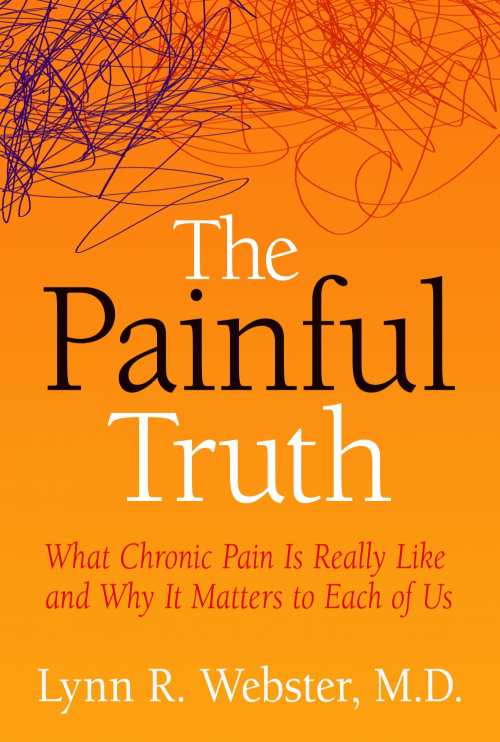
Too many people are separated and too few have the structure of the support system that Alison had. Our healthcare system is abominable. It shamelessly abandons them with limited resources, limited access and actually a labeling of the individual as if they’re a leper; they have a disease that is contagious.
Anson: Is the average physician in U.S. prepared to treat chronic pain?
Webster: No. I think it’s been reported that medical schools average less than 10 hours of education on pain and even less for addiction. Yet this is the number one public health problem in America and it’s not recognized by the CDC like many other disease states have been.
And so very few physicians understand what pain is. In fact, many think that it’s just a symptom and you never die from pain which is categorically wrong. As I write in my book, pain can be as malignant as any cancer and it can be just as devastating. It can take the soul but it also takes the life of some individuals when we ignore it and when we’re unable to provide them the relief that they deserve.
Anson: If you were a young man again in medical school and trying to decide what specialty to go into, knowing what you know today, would you go into pain medicine?
Webster: Without a doubt, there is no hesitancy in this response; I love the field that I’ve been in. As an anesthesiologist I could’ve stayed in the operating room and honestly the compensation of doing that would have been far better than the path that I chose. But the rewards I’ve received from trying to make a difference and the thank you’s that I’ve received will never be matched by any kind of financial or professional recognition in any other areas.
The most rewarding part of life is really to be able to make a difference in someone else’s life. And I think I’ve been able to do that with hundreds, if not thousands of individuals. That actually is the reason for the book. I’m hoping the book is going to make a difference for more people than I could physically touch in my clinic.
Most of the people that I saw as patients were already experiencing a large amount of pain, they’ve been through the mill and many had their chronic pain for years before they came to see me. We are basically going to be taking care of them the rest of their life. We do get to know them, much like a primary care person does to a family they’ve been caring for, and so we get to know them well. They get to know us. We also begin to see the struggles that they have in the system and with the rejection of their families sometimes, their friends, the isolation. And we become the only source that’s grounded, that gives them potential hope. I took that very seriously and I think that’s why it was so rewarding for me.
Anson: You wrote that you’re neither pro-opioid or anti-opioid. What do you mean by that?
Webster: My focus has never been about making opioids available or that they should be used. In fact ten years ago I started the first national campaign about the risk of opioids. My campaign was called Zero Unintentional Overdose Deaths and you can still find that on the Internet. I did a lot of work at trying to understand the potential risks and mitigate those risks so we can prevent people from harm because I knew one day that if we couldn’t prevent people from being harmed from opioids that there would be political response to this that could be very harmful to a large number of people who are not harmed by opioids.
I think the focus should always be about what’s best for a patient and not about whether a drug or a certain treatment is good or bad. All treatments have potential risks and complications, and we need to evaluate whether or not the potential benefit outweighs the potential risk or harm and it has to be patient centered. So my focus has never been about really any treatment, but it’s always been about what’s best for the patient. I’m more anti-pain than I am pro or anti-opioid.
Anson: You prefer a multi-disciplinary approach to pain treatment?
Webster: Yes, it’s been demonstrated that for people with moderate to severe chronic pain, the type that’s not likely to be resolved, it is best managed in a multi-disciplinary, integrative approach. I see the need for more cognitive behavioral therapy. We should always tap into the different treatments that have low risk associated with them before we ever tap into something that has more risk, for example opioids or even interventional treatments we as anesthesiologists and some of the other pain specialists can provide.
Much about pain is really learning how to cope, how to deal with it from day to day and how to manage the stress that’s associated with it because stress augments all pain. And so it’s really important that we use all of the resources that we have to manage the pain and not just a single modality, certainly not opioids or spinal cord stimulators, but look at how we can manage this in a more mindful way, even as clinicians. I use that word intentionally because mindfulness is really what the doctor needs to use as much as the patient in order to optimize the treatment with the lowest risk.
Anson: Has the pendulum swung too far against use of opioids?
Webster: I think there’s too much focus on opioids by almost everyone. And what it has done is it’s forgotten about people. Opioids can cause a great deal of harm, we see way too many people harmed from opioids. But certainly a vast majority of people who have been exposed to opioids are not harmed by them and there are countless number of people, a huge number of individuals who have been on opioids for decades, that believe very strongly that they’ve improved their lives and they could not live without them.
I think the focus is in the wrong place. Our focus should not be on opioids and whether they should or should not be prescribed, but what is the best treatment for the patient? And if opioids are inappropriate as a pain treatment, then I say all of the anti-opioid people as well as the individuals who are interested in helping people with pain should come together and demand that we have more money invested in research so we can replace opioids entirely.
We cannot always know who’s going to have an addiction triggered by exposure. As I pointed out in my book, Rachel just went in for an appendectomy and that initial opioid that she received lead her down a serious, dreadful path because she didn’t have the social support to keep her from taking that path.
I think that the anti-opioid people and those of us who are interested in bringing some dignity and humanity to a large population of people in pain need to come together and insist that we have a Manhattan Project basically and to discover safer and more effective therapies that are not addictive.
Anson: The final version of National Pain Strategy will soon be released, with the goal of advancing pain research, healthcare and education in the U.S. From what you’ve seen and heard so far about it, are they on the right track?
Webster: Yes, I think it’s an important step forward. I think that it brings most importantly the government into the picture, recognizing the need that we do something on a national scale and that alone is a big step forward.