Opioid Abuse Takes Back Seat to Cost at Medicare

By Pat Anson, Editor

The U.S. Food and Drug Administration calls the development of abuse deterrent opioids a “priority” in combatting the so-called epidemic of prescription painkiller overdoses.

But when it comes to Medicare coverage of opioids, new research shows that lowering the cost of painkillers is a bigger priority for the federal government than discouraging abuse.

The study by Avalere, a health analytics research firm, found that Medicare Part D coverage of abuse deterrent OxyContin is falling rapidly. From 2012 to 2015, OxyContin coverage fell from 61% to 33% of Medicare Part D plans. In addition, one quarter of Part D plans now require prior authorization for OxyContin. 

In contrast, a generic version of OxyContin (oxycodone hydrochloride) that has no abuse-deterrent properties is covered by all Medicare Part D plans – and prior approval for it is only needed in 0.3% of Part D plans.

“While prescription opioid abuse continues to be a priority for public health experts and lawmakers, coverage for these products by Part D plans is limited and plans are increasingly favoring lower-cost generic products on their formularies,” said Caroline Pearson, senior vice president at Avalere.

“Policymakers seeking to limit opioid abuse will have to balance the desire for greater access to abuse-deterrent opioids with the increased costs of such medications to public programs and private payers.”

OxyConin was reformulated by Purdue Pharma in 2010 to make it harder for addicts to crush or liquefy for snorting and injecting. In 2014, the FDA approved three other opioids with abuse deterrent properties and in April of this year issued guidance to drug makers strongly encouraging them to develop more.  

“The science of abuse-deterrent medication is rapidly evolving, and the FDA is eager to engage with manufacturers to help make these medications available to patients who need them,” said FDA Commissioner Margaret Hamburg, MD. “We feel this is a key part of combating opioid abuse.”

But combating opioid abuse apparently takes a back seat to price, not only for Medicare but private insurers and the drug makers that developed abuse deterrent formulations.

According to the Healthcare Bluebook, a website that estimates the market price of medications, the “fair price” for a 60-day supply of OxyContin 20mg is $316.

A 60-day generic version of oxycodone -- without abuse deterrence -- retails for just $78.

“It will be important for policymakers to monitor and consider the implications of these trends,” the Avalere study says, warning that abuse-deterrence formulations may be pricing themselves out of the market.

“The potential increase in costs due to new innovations may be a barrier to policies that increase the coverage of abuse-deterrent opioids, especially in public programs, despite potential long-term public health savings associated with lower levels of opioid abuse. While the greater number and quality of abuse-deterrent options—both brand and generic—can support competition, reduce cost, and increase plan coverage, the potential of abuse-deterrent technologies may not be fully realized as long as non–abuse deterrent alternatives have less restrictive insurance coverage.”

Funding for the Avalere study came from Pfizer. Avalere says it maintained “full editorial control” over its content.

Over 16,500 deaths in the U.S. were linked to opioid overdoses in 2010, according to the CDC. The government estimates that over 400,000 seniors are  “misusing” pain medication.

According to the National Institutes of Health, only about 5% of patients taking opioids as directed for a year end up with an addiction problem.

Doctors Prescribing Opioids for Migraine Despite Risks

By Pat Anson, Editor

Physicians are still prescribing opioid painkillers or barbiturates to treat migraine, even though frequent use of the drugs can make headaches worse and raise the risk of addiction.

Over half the patients who visited a headache center in New York City said they had been prescribed opioids and/or barbiturates, according to a new study presented at the annual scientific meeting of the American Headache Society. About 20 percent of the 218 patients surveyed, most of whom had a migraine diagnosis, said they were still taking the drugs.

"Headache specialists are often in a difficult position when patients request opioids or increasing quantities of barbiturates," said lead author Mia Minen, MD, Director of Headache Services at NYU's Langone Medical Center. "Although many patients find these effective, they are known to contribute to headaches related to medication overuse."

Minen and her research team identified which physicians were prescribing the drugs and found the most frequent first prescribers of opioids were emergency room physicians, while general neurologists were the most frequent first prescribers of barbiturates. Primary care physicians were also identified as first prescribers.

"Taken as a whole, these data provide a useful snapshot of the wide variety of physician specialties that might benefit from additional education on the appropriate use of opioids and barbiturate-containing medications in patients with headaches," said Minen.

Opioids and barbiturates should only be used as a last resort to treat migraine, according to the American Board of Internal Medicine's "Choosing Wisely" campaign. The campaign recommends the first medications for migraine should be either over-the-counter pain relievers or a class of prescription drugs called triptans that are made specifically for migraine.

"This study underscores the fact that prescribers may not be aware of best practices in migraine care,” said Beth Darnall, PhD, a pain psychologist, clinical associate professor at Stanford University and author of Less Pain, Fewer Pills.

“Problems arise when ‘crisis solutions’ are applied as the de facto treatment for daily management of pain. Patients may believe that opioids are beneficial but they lead to worse migraine and headache pain, and are not considered appropriate first-line treatment for these conditions. If possible, patients should seek a specialized evaluation with a board certified specialist to ensure they receive medications that will help them in the long run.”

Darnall called opioids and benzodiazepines “a dangerous combination of medications,” and said they should be avoided or combined only under close medical supervision.

The problem extends far beyond the borders of the United States. According to the recently released Global Burden of Disease Study, the number of headaches caused by medication overuse has risen by 120% since 1990. Medication overuse headache is the 18th leading cause of disability worldwide.

New “Landmark” Class of Migraine Drugs Being Developed

Meanwhile, clinicians and researchers at the American Headache Society’s annual meeting are reportedly excited about a new class of drugs called Calcitonin Gene-Related Peptide (CGRP) monoclonal antibodies, which are showing promise in treating high-frequency episodic migraine and chronic migraine. Research studies on CGRP are being presented at the meeting, which draws more than 1,000 migraine specialists from around the world.

"This development is a transformative moment in migraine treatment," said Peter Goadsby, MD, who is chief of the UC San Francisco Headache Center and one of the world's leading headache treatment experts. "Up till now, migraine patients have had limited choices for preventive treatment. Now four pharmaceutical companies are showing positive results in human trials targeting CGRP mechanisms."

The new drugs appear to reduce elevated levels of the peptide known as calcitonin gene-related peptide, which is a key driver of migraine pain. Versions of anti-CGRP therapies are being tested by Alder Pharmaceuticals, Amgen, Eli Lilly and Teva Pharmaceuticals.

Teva reported that in a Phase II clinical study its CGRP therapy achieved a significant reduction in the number of headache hours after one week, with more than half of patients experiencing a 50% or greater reduction in headache frequency.

Amgen’s research showed showed that its anti-CGRP product also reduced the number of migraine days by 50% in about half the treated patients after 12 weeks.

"The potential of these new compounds is enormous and gives us real hope that effective specific treatments for migraine may be on the near horizon," said Goadsby. "The development of CGRP antibodies offers the simple, yet elegant and long awaited option for migraine patients to finally be treated with migraine preventives; it's a truly landmark development."

There has not been a new class of anti-migraine drugs since the development of triptans in the early 1990s.

Migraine is thought to affect a billion people and about 36 million adults in the United States, according to the American Migraine Foundation. It affects three times as many women as men. In addition to headache pain and nausea, migraine can also cause vomiting, blurriness or visual disturbances, and sensitivity to light and sound. About half of people living with migraine are undiagnosed.

The month of June is Migraine Awareness Month.

Nasal Spray Approved for Migraine in Children

By Pat Anson, Editor

The U.S. Food and Drug Administration has approved a nasal spray for the treatment of migraine in pediatric patients, the second migraine drug the agency has approved in the last month for patients 12 years of age and older.

About one in five teens suffer from migraine, but treatment options for them have been very limited compared to adults.

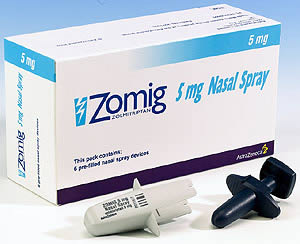
Zomig nasal spray was first approved by the FDA in 2003 for the treatment of migraine in adults. It provides pain relief in as little as 15 minutes, with most patients obtaining some relief in about two hours.

The FDA’s approval came after the agency reviewed safety and efficacy data from clinical trials demonstrating that Zomig was significantly more effective than placebo in relieving headache pain and other migraine symptoms in pediatric patients. It also had a safety profile similar to that in adults.

Zonig is the first prescription nasal spray approved for migraine in children. The most common adverse reaction to Zomig in pediatric patients during clinical trials was an unusual taste.

"Treatment options have been limited for pediatric patients and we are pleased with FDA's decision and look forward to bringing migraine relief to pediatric patients by making Zomig Nasal Spray available to this 'school age' patient population," said Fred Wilkinson, President and CEO of Impax Laboratories, which obtained the U.S. commercial rights to Zomig products from AstraZeneca in 2012. Impax has since lost exclusive rights to Zonig tablets and is focused on the nasal spray.

The recommended starting dose for Zomig in pediatric patients is 2.5 mg. The dosage can be adjusted on an individual basis, but should not exceed 5 mg in a single dose or a maximum daily dose of 10 mg in any 24 hour period.

Last month the FDA approved the migraine drug Treximet for pediatric patients 12 years of age and older.. Treximet is the first approved combination drug for migraine to contain sumatriptan and naproxen, a non-steroidal anti-inflammatory drug (NSAID). Sumatriptan is a triptan that works in the brain by reducing vascular inflammation. 

Like Zomig, Treximet had already been on the market for several years to treat migraine in adults.

Migraine is thought to affect a billion people worldwide and about 36 million adults in the United States, according to the American Migraine Foundation. It affects three times as many women as men. In addition to headache pain and nausea, migraine can also cause vomiting, blurriness or visual disturbances, and sensitivity to light and sound. About half of people living with migraine are undiagnosed.

The month of June is Migraine Awareness Month.

Aleve & Other Pain Relievers Reduce Fertility in Women

By Pat Anson, Editor

Health experts have warned for years about the side effects of over-the-counter pain relievers – everything from liver failure to heart disease to hearing loss.

Now researchers are saying that Aleve and some other non-steroidal anti-inflammatory drugs (NSAIDs) reduce the fertility of women so significantly they could potentially be used as an emergency form of contraception.

The results of a small study presented at the European League Against Rheumatism Annual Congress show that three NSAIDs --  naproxen, diclofenac, and etoricoxib -- inhibited ovulation in women after just a few days of treatment.

Naproxen, diclofenac, and etoricoxib are the active ingredients in several brand name drugs sold around the world, including Aleve, Voltaren, and Arcoxia, respectively. Etoricoxib is not approved for use in the United States.

Thirty nine Iraqi women of childbearing age who suffered from back pain took part in the study; receiving diclofenac (100mg once daily), naproxen (500mg twice daily), etoricoxib (90mg once daily), or a placebo.

Treatment was given for 10 days from day 10 of the onset of their menstrual cycle, with their progesterone levels and follicle diameter analyzed via blood sample and sonography.

“After just ten days of treatment we saw a significant decrease in progesterone, a hormone essential for ovulation, across all treatment groups, as well as functional cysts in one third of patients,” said study investigator Professor Sami Salman, Department of Rheumatology, University of Baghdad.

“These findings show that even short-term use of these popular, over-the-counter drugs could have a significant impact on a woman's ability to have children. This needs to be better communicated to patients with rheumatic diseases, who may take these drugs on a regular basis with little awareness of the impact.”

Of the women receiving NSAIDs, only 6.3% taking diclofenac, 25% taking naproxen, and 27.3% taking etoricoxib ovulated, compared with 100% of the control group that was not taking a pain reliever.

The dominant follicle remained unruptured in 75% of the women taking diclofenac, 25% taking naproxen and 33% of the patients receiving etoricoxib. Rupturing of the dominant follicle and the subsequent release of an oocyte (unfertilized egg), is essential for ovulation to occur.

“These findings highlight the harmful effects NSAIDs may have on fertility, and could open the door for research into a new emergency contraception with a more favorable safety profile than those currently in use,” said Salman.

NSAIDs are among the most common pain relief medicines in the world. Every day more than 30 million Americans use them to relieve pain, lower fever and reduce inflammation.

How Chronic Pain Changes Mood and Motivation

By Pat Anson, Editor

Researchers in California have found the first biological evidence that chronic pain alters regions in the brain that regulate mood and motivation -- raising the risk of depression, anxiety and substance abuse.

In animal studies at UCLA and UC Irvine, researchers found that brain inflammation in rodents that was caused by chronic nerve pain led to accelerated growth and activation of immune cells called microglia. Those cells trigger chemical signals within the brain that restrict the release of dopamine, a neurotransmitter that helps control the brain's reward and pleasure centers.

"For over 20 years, scientists have been trying to unlock the mechanisms at work that connect opioid use, pain relief, depression and addiction," said Catherine Cahill, associate professor of anesthesiology & perioperative care at UCI, Christopher Evans of UCLA's Brain Research Institute. "Our findings represent a paradigm shift which has broad implications that are not restricted to the problem of pain and may translate to other disorders."

The study also revealed why opioid drugs such as morphine and cocaine may lose their effectiveness as animals transition from acute pain to chronic pain. Cahill and her colleagues learned that opioids fail to stimulate a dopamine response in mice and rats, resulting in impaired reward-motivated behavior.

Treating the rodents with a long-acting antibiotic called minocycline inhibited microglial activation, and restored dopamine release and reward-motivated behavior. That finding suggests that a similar approach could be used in treating chronic pain in humans.

"Our findings demonstrate that a peripheral nerve injury causes activated microglia within reward circuitry that result in disruption of dopaminergic signaling and reward behavior. These results have broad implications that are not restricted to the problem of pain, but are also relevant to affective disorders associated with disruption of reward circuitry," the study found.

The results of the five-year study appear online in the Journal of Neuroscience.

Cahill and her research team are now trying to establish that pain-derived changes in human brain circuitry can account for mood disorders.

"We have a drug compound that has the potential to normalize reward-like behavior," she said, "and subsequent clinical research could then employ imaging studies to identify how the same disruption in reward circuitry found in rodents occurs in chronic pain patients."

Five Ways TIME Gets Pain Pills So Wrong

By Crystal Lindell, Columnist

Access to pain pills is not a cause I chose. I didn’t wake up one day and think, “Gee, more people need opioids.”

No, access to pain pills is a cause that chose me. Because I really did wake up one day two and half years ago, and say, “What is wrong with me? Why do I suddenly have insane pain in my ribs?”

It’s a pain that never went away. And for months, the doctors didn’t take me seriously. They gave me prescription-strength Advil, Lidoderm patches, and told me to wear looser bras.

None of that worked.

So, for weeks on end, the pain got worse and worse, while I tried multiple doctors, trying to find someone who could help.

I was in so much pain that I would often lay down on the ground mid-sentence because I didn’t have it in me to keep standing. The pain was just that overwhelming.

And at night, after trying to survive the day, I would lay in bed and plan ways to commit suicide. I wish I was exaggerating.

Finally, I found a pain specialist who put me on hydrocodone. At the time I had no idea that opioids were controversial. I was just happy to finally have found something that gave me relief.

The problem with hydrocodone though is that it comes with these crazy spikes. So you take a pill, it relieves the pain and then it completely wears off within a couple hours — and you to wait six hours for your next dose. It’s a horrible way to live.

I’m also on a time-released morphine that lasts about 8 hours. I take it three times a day — so I am always on an opioid, 24 hours a day. And then, on top of that, I also take hydrocodone as needed.

I pretty much always need it.

The pain still gets bad. But now, because of the pain pills, I have times when I am nearly pain free. Times when I can catch my breath and remember that life is worth living.

Opioids have literally saved my life.

Which is why I’m so upset about TIME magazine’s cover story about the “worst addiction crisis America has ever seen.” 

I realized when I read the article that I am spoiled by my Facebook news feed. I tend to follow chronic pain groups, so most of the information I see is about how chronic pain patients need access to these drugs. As a result, I’ve been lulled into thinking that the chronic pain community is actually making progress on this issue.

Apparently, we aren’t.

And it is articles like this that make it that much harder for pain patients like me to get the relief they need.

Let’s break down what it gets so wrong, with some quotes from the report:

1.    It implies time-released morphine is basically heroin.

“The longer patients stay on the drugs, which are chemically related to heroin and trigger a similar biological response, including euphoria, the higher the chances users will become addicted.”

Aside from the excessive number of commas, there are so many infuriating things about this sentence. 

While the drugs can give you a “high” feeling when you first start taking them, I can promise you — after being on morphine all day, every day for over a year — that the “high” is only a short-term side effect.

Also, comparing the drugs I take to heroin is like saying that both TIME and US Weekly are similar because they both require reading. Yes, that’s true. But that’s about all they have in common.

2. The article focuses on how much the drug companies are supposedly making on these meds.

“The total annual sales for opioids in the U.S. has grown over 20 years to more than $8 billion.”

While there have been some new meds on the market, like Zohydro, the pills that I take and the pills most of the people I know take, are generic. Morphine isn’t exactly a brand name.

Giving people relief from horrific, daily pain is not part of some drug company conspiracy. It’s called compassion.

3. It devalues how horrible pain can be.

“The standard-setting Joint Commission on Accreditation of Health Care Organizations in 1999 required doctors to measure pain as part of their basic assessment of a patient’s health, which had the effect of elevating pain the same level of importance as objective measurements like temperature and heart rate.”

The author writes that like it’s a bad thing. I’m here to tell you, it’s not. Pain is such a huge part of your health. And managing it is just as important as managing your blood pressure or your insulin level.

Having too much pain will ruin your life and your body just like any other health issue.

Living with chronic pain is like living every day of your life with the same amount of pain you would wake up with after an extensive surgery, or a horrific car accident, or a stabbing.

Anyone in those situations would be given adequate pain relief. And, just because people with chronic pain have that same pain every day, all day, doesn’t mean they don’t deserve the same relief.

4. It implies that anyone on long-term pain medications is an “addict.”

“With America awash in opioids for the foreseeable future, health care providers and public officials are searching for ways to help addicts get clean.”

I don’t need to “get clean.” I need a cure, but there isn’t one for what I have. The next best thing is daily pain relief. Going off all my meds would be catastrophic for me, not because I’m addicted, but because I would end up stuck on the couch for the rest of my life in too much pain to shower.

Also, we need to take a second to talk about the word “addicted.” It is very different from what’s actually happening for most people, which is “dependence.”

Dependence is what happens when you take lots of different types of drugs long-term. Your body becomes dependent, so going off them cold turkey would be hell. However, if you taper off it, you’re good. Just like anti-depressants. And nobody ever says people are “addicted to anti-depressants.”

Addiction is when you start to crave that high feeling you get the first few times you take the drug, so you start taking higher and higher doses seeking it out. Sort of like how all of us are dependent on food, while a select few are addicted.

5. The authors don’t mention any alternatives.

For those enduring chronic pain, the real-life alternative to not having adequate pain pills is suicide.

Articles like this just make it that much harder for people with chronic pain to get the medications they need. If you want to see the suicide rate jump, just take away the medications that so many people rely on to do even simple things, like make dinner or do a load of laundry.

Look, I’m not saying everyone with a cold should get a prescription for morphine. I’m just saying that there are millions of people out there who need these drugs. And more regulation just gets in the way of decisions that doctors and patients should make together to help those who are suffering cope with their pain. The government should never be in anyone’s doctor’s appointment.

At the end of the day, I guess I just wish that TIME had talked to even one chronic pain patient for the article. There are millions of us out here, responsibly using opioids long-term, and we would have loved to chat with TIME.

If only they had asked.

Crystal Lindell is a journalist who lives in Illinois. She loves Taco Bell, watching "Burn Notice" episodes on Netflix and Snicker's Bites. She has had intercostal neuralgia since February 2013.

Crystal writes about it on her blog, “The Only Certainty is Bad Grammar.”

The information in this column should not be considered as professional medical advice, diagnosis or treatment. It is for informational purposes only and represent the author’s opinions alone. It does not inherently express or reflect the views, opinions and/or positions of Pain News Network.

Many Doctors Not Confident Prescribing Opioids

By Pat Anson, Editor

Nearly two-thirds of physicians who prescribe opioids say they are not confident or only somewhat confident about managing patients on opioid painkillers, according to the results of a new survey that found widespread gaps in education about opioid safety.

"This indicates a critical need for provider education addressing this issue. It is important our medical community is given the training it needs to confidently manage chronic pain while significantly reducing prescription opioid misuse, overdose and diversion," said Daniel Alford, MD, of Boston University School of Medicine.

Boston University and Haymarket Medical Education conducted an online survey of nearly 800 physicians who are registered with the Drug Enforcement Administration to prescribe Schedule II and III controlled substances.

Over a quarter (28%) said they had not completed certified medical education (CME) in safe opioid prescribing. Many also said they lacked the time or staff to implement an opioid monitoring system for patients, such as drug testing and pill counts.

"It's troubling that so many physicians say implementing safe opioid prescribing systems is not a priority, even though this is an acute issue. We've created a situation where some physicians are comfortable not doing anything about it,” said Alford.

Only a quarter of the doctors surveyed said they were very confident about their ability to safely manage chronic pain with opioid pain medication. Four out of ten said they don’t even prescribe opioids.

 “Lack of knowledge regarding some narcotics. Concerns of dealing with patients who appear to be drug seeking. Lack of time to follow some of these patients closely,” said one doctor who was not confident about prescribing opioids.

“Lack of training. Fear of providing access to patients who might abuse opioids,” said another.

Pain education for doctors – or the lack of it – is such a concern that the recently released National Pain Strategy considers it a top priority.

“Many health professionals, especially physicians, are not adequately prepared and require greater knowledge and skills to contribute to the cultural transformation in the perception and treatment of people with pain,” a draft version of the report states. “Core competencies in pain care are not fully developed and generally do not inform undergraduate curricula in health professions schools or graduate training programs, even those in pain medicine.”

A 2012 study published in the Journal of Pain  called pain education in the U.S. and Canada “lackluster” and warned that unless steps were taken to improve the training of pain physicians, “the crisis in pain care and resultant deaths from opioid abuse will only spiral upwards.”

The study of 117 U.S. and Canadian medical schools found that less than 4% required a course in pain education and only one in six schools offered a pain elective. A large number of U.S. medical schools do not have any pain courses and many of those that do have less than five hours of classes.

Study Links Painkillers to Homicides

By Pat Anson, Editor

You can add the term “homicidal” to the list of stigmas faced by chronic pain patients.

A new study in the journal World Psychiatry has found that certain drugs that affect the central nervous system – particularly opioid painkillers – significantly increase the risk of committing murder.

The Swedish and Finnish researchers behind the study wanted to know if there was any scientific basis for the claim that anti-depressants and other psychotropic drugs can cause violent behavior. It’s an issue that was debated after massacres committed by young people in schools and other public places in Finland and around the world.

"It has been repeatedly claimed that it was the anti-depressants used by the persons who committed these massacres that triggered their violent behavior. It is possible that the massive publicity around the subject has already affected drug prescription practices," said lead author Jari Tiihonen of the Karolinska Institute in Sweden.

In one of the first studies of its kind, researchers analyzed a database of 959 people convicted of homicide in Finland between 2003 and 2011 to see what medications they were taking before their crimes.  

They found that anti-psychotic medication was not associated with a significantly increased risk of homicide, and there was only a slightly elevated risk for most people taking anti-depressants and benzodiazepines – drugs used to treat anxiety and insomnia.

But the study did find, rather surprisingly, that there was a significantly higher risk of committing a homicide associated with opioid pain medications like oxycodone and tramadol (93% higher) and anti-inflammatory pain relievers such as acetaminophen (206% higher).

The risk was even more elevated for young people. For someone under the age of 26, there was a 223% greater chance of them killing someone if they were taking opioids. Young people taking benzodiazepines had a 95% greater risk.

"Benzodiazepines can weaken impulse control, and earlier research has found that painkillers affect emotional processing. Caution in prescribing benzodiazepines and strong painkillers to people with a history of substance abuse is advisable," Tiihonen concluded.

Although alcohol and other intoxicants were also involved in a majority of the homicides, the researchers said their use did not explain the differences between the drug groups.

In 2007, an 18-year old Finnish high school student named Pekka-Eric Auvinen fatally shot eight people at his school before taking his own life. He had been taking anti-depressants for a year prior to the massacre.

The Citizens Commission on Human Rights UK has a list of several other massacres around the world linked to the use of anti-depressants. Opioids are not mentioned in any of the examples.

New Software Helps Doctors See Kids' Pain Levels

By Pat Anson, Editor

Accurately assessing pain levels in a patient is difficult because pain is so subjective. No one really knows how much pain a patient is in – except the patient.

It gets even harder when the patient is a young child who can’t verbally express their feelings the same way an adult can. For decades doctors have relied on low-tech diagnostic tools like the Wong Baker Pain Scale – a series of sad and smiling faces the child chooses from to help the doctor understand how much pain they are in.

Thankfully, that era may be coming to an end with the development of a high-tech approach at the University of California, San Diego School of Medicine.

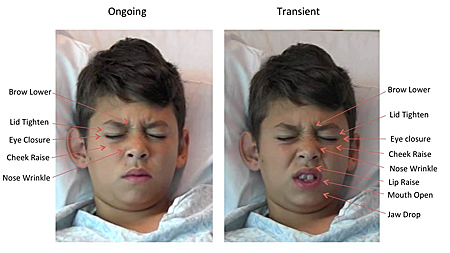
Researchers there have demonstrated the validity of new software that measures pediatric pain by recognizing facial patterns in each patient. Their study is published online in the journal Pediatrics.

“The current methods by which we analyze pain in kids are suboptimal,” said senior author Jeannie Huang, MD, a professor in the UC San Diego School of Medicine Department of Pediatrics and a gastroenterologist at Rady Children's Hospital-San Diego.

COURTESY UC SAN DIEGO SCHOOL OF MEDICINE

COURTESY UC SAN DIEGO SCHOOL OF MEDICINE

“In this study, we developed and tested a new instrument, which allowed us to automatically assess pain in children in a clinical setting. We believe this technology, which enables continuous pain monitoring, can lead to better and more timely pain management.”

The researchers used the software to analyze pain-related facial expressions from video taken of 50 youths, ages five to 18 years old, who had laparoscopic appendectomies.

Researchers filmed the patients during three different post-surgery visits: within 24 hours of their appendectomy; one calendar day after the first visit and at a follow-up visit two to four weeks after surgery. Facial video recordings and self-reported pain ratings by each patient, along with pain ratings by parents and nurses were collected.

“The software demonstrated good-to-excellent accuracy in assessing pain conditions,” said Huang. “Overall, this technology performed equivalent to parents and better than nurses. It also showed strong correlations with patient self-reported pain ratings.”

Huang says the software also did not demonstrate bias in pain assessment by ethnicity, race, gender, or age – an important consideration given how subjective current pain scales can be.

Because the software operates in real-time, doctors can be alerted to pain when it occurs instead of during scheduled assessments. The technology could also advocate for children when their parents are not around to notify medical staff about their child's pain level.

Huang said the software needs further study with more children and other types of pain in a clinical setting.

“It still needs to be determined whether such a tool can be easily integrated into clinical workflow and thus add benefit to current clinical pain assessment methods and ultimately treatment paradigms,” she said.

Huang says controlling pain is important, not only for the child's comfort, but also for their recovery since studies have shown that under-treatment of pain is associated with poor surgical outcomes.

Tramadol ER Visits Soar as Prescriptions Rise

By Pat Anson, Editor

Emergency room visits in the U.S. involving tramadol have nearly tripled in the last decade, coinciding with a sharp increase in the number of prescriptions for the opioid pain reliever.

According to a report by the Substance Abuse and Mental Health Services Administration (SAMHSA), emergency room visits involving adverse reactions to tramadol rose from 10,901 visits in 2005 to 27,421 visits in 2011. A second SAMHSA report  found a similar increase in the number of ER visits related to the abuse or misuse of tramadol. The vast majority of patients were treated and released.

Ironically, tramadol is considered less risky than other opioid painkillers and doctors have been increasingly prescribing it. The IMS Institute recently reported the number of tramadol prescriptions in the U.S. nearly doubled from 28 million in 2010 to over 44.2 million in 2014.

Tramadol is the active ingredient in brand name pain relievers such as Ultram, Ultracet, Ryzolt and Rybix.

“Tramadol is not abused as much as most pain medication, but it is often overtaken in an effort to obtain additional pain relief.  Like with all pain medication, excessive amounts can cause serious harm,” said Lynn Webster, MD, past president of the American Academy of Pain Medicine and vice president of scientific affairs at PRA Health Sciences.

50mgtramadolhclakyma.jpg

Webster predicted that tramadol would be prescribed even more often when hydrocodone was reclassified in 2014 by the Drug Enforcement Administration from a Schedule III drug to a more restrictive Schedule II medication. Tramadol is a Schedule IV drug, meaning it has less potential for abuse than other narcotic pain relievers.

“In the past several years there has been tremendous pressure to reduce prescribing strong opioids. Tramadol has been used in place of other opioids. But it is not without risks as well,” said Webster in an email to Pain News Network.

“The rise in problems associated with tramadol underscores the larger problem of an unmet need to effectively treat pain. Most people, including policymakers, don't realize how many people are desperate to have their pain treated.”

About two-thirds of the ER visits related to misuse or abuse involved tramadol that was taken with other opioid pain relievers or anti-anxiety drugs (benzodiazepines). When tramadol is combined with other drugs that depress the central nervous system its sedative effects can be enhanced, causing seizures and a potentially fatal drug reaction known as serotonin syndrome.

Women were far more likely to have a tramadol-related trip to the ER than men, according to SAMHSA.

The greatest increase in tramadol-related misuse or abuse occurred in patients aged 55 and older. A SAMHSA spokesman said the higher number of older adults was not surprising because seniors are more likely to combine tramadol with other medication.

"Tramadol and other pain relievers can help to alleviate pain, but they must be used carefully and in close consultation with a physician," said SAMHSA Chief Medical Officer Elinore McCance-Katz, MD. "Like all medications tramadol can cause adverse reactions, which can be even more severe if the drug is misused. We must all work to lower the risks of taking prescription drugs.”

'Robust Response' to National Pain Strategy

By Pat Anson, Editor

Public reaction to the National Pain Strategy has been “very robust” according to the co-chair of the government committee that released a draft version of the report in early April.

Today marks the deadline for public comments on the 72-page report, a long awaited study that calls chronic pain a threat to public health, and identifies several areas where physicians and the healthcare system are failing pain sufferers.

“I think it’s safe to say that there was a very robust response,” said Linda Porter, PhD, co-chair of the National Institutes of Health’s Interagency Pain Research Coordinating Committee (IPRCC).

“I feel  like we really got the word out widely and the comments are coming in from a very broad range of the community, ranging from the professional societies, individual patients, coalitions of patients that have come together, and patient advocacy. So yes, I’m comfortable with it. We’ve gotten a good range of comments from a really broad set of folks.”

Some pain patients and advocates have complained that the IPRCC was dominated by academic researchers, physicians and government bureaucrats – and not enough input was sought from pain sufferers during the drafting of the National Pain Strategy (NPS).

“The NPS is essentially an underpowered, unrealistic, and undemocratic occupational strategy of some pain experts and professionalized lay experts, who were chosen because of their ideology and rank in certain organizations and government,” wrote patient advocate David Becker in his public comment on the NPS.

“There is no evidence that a survey or needs assessment of what Americans want from pain care was done or considered by the NPS and the NPS fails to make a case for their ‘evidence based, high quality, interdisciplinary, integrated multimodal biopsychosocial model’ as being what people in pain actually want out of pain care -- and especially those Americans in pain who will be forced to live with a plan they had no say in developing.”

Porter said she could not release the number of comments that have come in during the public comment period, but she was satisfied patients had a voice in drafting the National Pain Strategy.

“We felt very strongly that their voice had to be heard,” Porter told Pain News Network. “We had patients and patient advocates on every single one of the work groups, on the oversight panel, and on the IPRCC. There was actually a large group of patient advocates and we made sure that each of the working groups had at least a voice on it and some of them had several.”

A list of members on the IPRCC’s oversight committee can be found here. Two of the panel’s 14 members are pain sufferers and/or patient advocates. The rest are longtime experts in the field of pain management, including several who helped write the 2011 Institute of Medicine report, “Relieving Pain in America,” which estimated that 100 million Americans suffer from chronic pain.

Implementing the Plan

One member of the oversight committee said he found it “really exciting in terms of changing the culture of pain,” but admitted there were “minor things” about the NPS that bothered him.

“There is nothing in it about pediatric pain. There’s not as much emphasis on research as we would always like, particularly basic science is left out of it,” said Greg Terman, MD, an anesthesiologist and professor at the University of Washington who is president of the American Pain Society.

“The general problem that I had as a member of the oversight committee is how are we going to implement any of the recommendations? And the answer is I don’t think anyone knows yet, it’s not even final. But I am optimistic.”

The NPS calls for significant improvement in pain management practices, including better education in pain care for physicians, more collaboration between primary care physicians and pain specialists, broader insurance coverage of pain treatments, and more research. But nowhere in the report is the cost for any of the recommendations even discussed.

“That was not our responsibility nor did we have the ability to estimate what these would cost,” says Linda Porter. “It was really out of our scope and we were not asked to do that. It will certainly come up in the planning stage.”

Porter said cost estimates will be handled by the federal Department of Health and Human Services, which is still in the “discussion and planning stage” of deciding which recommendations to implement first. She expects a plan to be announced in late summer or early fall of this year.

“Things move slowly in government I hear,” says Terman. “It’s there, at least in writing, what needs to be done from our expert opinion. Having it gathered all in one area has never been done before and maybe if we can’t make it happen in the next year, maybe in a few more years. If it’s still sitting there waiting to be implemented, sadly there will still be patients waiting to be helped.”

Why Doctors Are Slow to Embrace Medical Marijuana

By Pat Anson, Editor

Public attitudes toward marijuana have changed considerably in recent years. Voters and legislators in 23 states and the District of Columbia have legalized medical marijuana, and nationwide polls show that most Americans now support legalization.

But the nation’s medical organizations – while intrigued about the potential for marijuana to treat conditions like chronic pain – have been slow to embrace cannabis. And most doctors still refuse to prescribe it, even in states where marijuana is legal.

Those conflicting attitudes were on display last week at the annual meeting of the American Pain Society (APS) in Palm Springs, California – a conference focused on pain research. Although the APS has no stated policy on marijuana, the organization chose as its keynote speaker one of the most prominent medical marijuana researchers in the world, Dr. Mark Ware.

“I’ve done presentations and sessions, and it always surprises people how much interest there is,” said Ware, who is a family physician and associate professor in Family Medicine and Anesthesia at McGill University in Montreal.

“Cannabis gives people a window to come and learn, and while they’re learning about medical cannabis they can be learning about pain management and other things. It’s a very useful magnet to get people interested in a topic that’s obviously of enormous public importance.”

DR. MARK WARE SPEAKING AT THE APS CONFERENCE

DR. MARK WARE SPEAKING AT THE APS CONFERENCE

Ware’s two presentations at the APS conference were well-attended, but it was mostly researchers – not practicing physicians – who were listening.

“A lot of doctors are afraid to authorize it (marijuana) because they’re afraid of losing their licenses and their practices. So there’s a lot of fear and a lot of stigma,” Ware told Pain News Network.

“I think the researchers themselves are seeing opportunities, with changing state laws and increasing evidence of efficacy, that suddenly this is becoming a drug that can be taken a bit more seriously. And I think that’s giving rise to the opportunity that maybe there’s some work we can be doing here.”

Federal laws making marijuana illegal – which are still in effect – have stymied serious research into its medical benefits. Most of the evidence so far is anecdotal or the result of small academic studies – not the in-depth and expensive clinical research that pharmaceutical companies have to conduct to get FDA approval for their drugs.

“There’s still work to be done on the safety and efficacy of these cannabinoid compounds,” says Gregory Terman, MD, an anesthesiologist who is president of the APS.  “They’re very interesting molecules. But they’re not approved for people and we don’t want to pretend they’re anywhere near ready for prime time.”

The APS currently has a committee working on a policy statement about medical marijuana.

“I think people are opening their eyes to the possibility,” said Terman. “Marijuana’s already out there, and that’s why we felt like it was important to work on a policy statement.”

The American Academy of Pain Management (AAPM) also doesn’t have a formal position on marijuana – although some members are urging the organization to take one.

“I think there’s no doubt there are substances in there that can be beneficial to some people with pain. It’s just a question of figuring out what they are and how do you get them extracted in a way so that we know what we’re giving people,” said Bob Twillman, PhD, executive director of the AAPM. “We haven’t settled on a policy because there are so many different variables and so much is up in the air that coming up with a good policy is hard to do.”

Twillman says he is being lobbied by some AAPM members to advocate for the rescheduling of marijuana from an illegal Schedule I controlled substance – the same classification the DEA has for heroin and LSD – to a Schedule II medication that can be prescribed to patients.

“I don’t think you can do that with a product like this because every batch is different. How do you standardize the dose that a patient is given? I think in a regulatory scheme of things it’s more like an herbal supplement than it is a drug,” Twillman told Pain News Network.

The American Medical Association, the nation’s largest medical group, has moderated its position on marijuana – from one of strict opposition to a grudging call for more research.

Our AMA calls for further adequate and well-controlled studies of marijuana and related cannabinoids in patients who have serious conditions for which preclinical, anecdotal, or controlled evidence suggests possible efficacy,” the AMA says in a policy statement.

“This should not be viewed as an endorsement of state-based medical cannabis programs, the legalization of marijuana, or that scientific evidence on the therapeutic use of cannabis meets the current standards for a prescription drug product.”

Until that research is done and federal laws change – which could take years – many practicing physicians are unlikely to endorse or prescribe a drug that is still technically illegal.

“I think there’s still this stigma and the lack of data and concerns about safety that will always plague that discussion as long as we don’t have it,” says Mark Ware.  “So I think there will be clinicians who will be early adopters who take this a bit more seriously and there will be others who will be almost religiously opposed to the idea. And I hope that starts to breakdown.”

Using Marijuana and Opioids Doesn't Raise Risk of Abuse

By Pat Anson, Editor

As more and more states legalize medical marijuana, many chronic pain patients are turning to cannabis for pain relief. Some are also continuing to use opioid pain medication – raising concern that the combination could increase their risk of substance abuse.

But a new study at the University of Michigan found that patients who use marijuana and opioids are not at higher risk for alcohol and drug abuse. Researchers studied 273 patients at a marijuana clinic in Michigan and found that more than 60% were also using prescription opioids.

"We expected that persons receiving both cannabis and prescription opioids would have greater levels of involvement with alcohol and other drugs," said Brian Perron, PhD, of the School of Social Work at the University of Michigan.

"However, that wasn't the case -- although persons who were receiving both medical cannabis and prescription opioids reported higher levels of pain, they showed very few differences in their use of alcohol and other drugs compared to those receiving medical cannabis only."

Participants in the study, which is being published in the Journal of Studies on Alcohol and Drugs, did report higher rates of drug use than the general population. But their use of other drugs -- including alcohol, cocaine, sedatives, heroin, and amphetamines – was similar whether they used opioids or not.

“I am thrilled this research is now happening so others will also gain the confidence in trying medical marijuana,” said Ellen Lenox Smith, a medical marijuana advocate and columnist for Pain News Network.

“People who have addictive personalities will have issues weather it is alcohol, marijuana, smoking, or opioids. Those of us without that tendency do not have to be concerned. We have patients that have been using both medications successfully, but most of them have eventually chosen to wean away from the opioids due to the annoying side effects. But while using both, they have seemed to cope fine and metabolize both.”

A noted medical marijuana researcher says cannabis may actually make opioids more effective – enabling some patients to take lower doses.

“We’ve seen it in patients who started using cannabis successfully and they were able to reduce their other medications,” said Mark Ware, MD, an associate professor in Family Medicine and Anesthesia at McGill University in Montreal.

“In some cases they find that the dose of opioids that they were taking, they can lower it and get a similar effect at much lower doses. In others, they don’t need the opioids any longer and they’re able to taper off and stop it completely.”

Ware and other researchers believe medical marijuana may be a safer alternative to opioids, which have a higher risk of addiction and overdose. But they stress that communication between doctors and patients is important – since some doctors may have no idea if a patient is using marijuana.

"Physicians do not actually 'prescribe' medical cannabis -- they only certify whether the patient has a qualifying condition, which allows the patient to gain access to medical cannabis,” said Perron.

“The system of dispensing medical cannabis is completely separate from prescription medications, so physicians may not know whether a given patient is using medical cannabis, how much, and in what form."

FDA Approves Migraine Drug for Children

By Pat Anson, Editor 

Millions of children who suffer from migraine headaches have a new treatment option -- an old drug that's already available to adults. 

The Food and Drug Administration approved Treximet for pediatric patients 12 years of age and older for the treatment of migraine with or without aura. Treximet is the first approved combination prescription drug for migraine to contain sumatriptan and naproxen, a non-steroidal anti-inflammatory drug (NSAID). Sumatriptan is a triptan that works in the brain by reducing vascular inflammation. 

About 20 percent of all pediatric patients 11 years and older suffer from migraine, but treatment options have been limited, compared to adults. 

“Until now, pediatric migraine sufferers have not had the same number of treatment options compared to adults to manage the potentially debilitating effects of acute migraine,” said Merle Lea Diamond, MD, president and managing director of the Diamond Headache Clinic and a consultant to Pernix Therapeutics (NASDAQ: PTX), which developed Treximet. Pernix expects Treximet to be available for pediatric patients in the third quarter of 2015.  

“As many as one out of five teens suffers from migraines, and their burden goes well beyond the pain, as migraines can also adversely affect their social growth and their efforts in school,” said Diamond. 

FDA approval came after a Phase III safety and efficacy study that found Treximet was significantly more effective than placebo in treating migraine in pediatric patients and has a safety profile similar to that of Treximet for adults. It comes with a black box warning of cardiovascular and gastrointestinal risks. 

The FDA approved Treximet for adults in 2008. The FDA set a priority review of Treximet for pediatric patients, in part, on the need for more treatment options for younger migraine sufferers.  

Amgen Migraine Drug 

Meanwhile, Amgen (NASDAQ: AMGN) announced the first results from a Phase II study evaluating the efficacy and safety of AMG 334 for the prevention of episodic migraine.

The  company said the study met its primary goal of reducing monthly mean migraine days compared with placebo.  The data were presented at the International Headache Society in Valencia, Spain.

AMG 334 is a fully human monoclonal antibody under investigation for the prevention of migraine by inhibiting a peptide receptor that is believed to transmit signals that can cause incapacitating pain.  

In the trial, 483 patients who averaged 8.7 migraine days per month prior to the study had their number of migraine days nearly cut in half by taking AMG 334.

"Migraine is a complicated, underdiagnosed neurological condition that has significant impact on the everyday activities of those who live with it, and for the millions of people around the world who are affected by this disease, significant unmet therapeutic need persists," said Sean Harper, MD, executive vice president, Research and Development at Amgen. "We are encouraged by these Phase 2 data, which further validate AMG 334 as a potential preventive treatment for episodic migraine."

Migraine is thought to affect a billion people worldwide and about 31 million Americans adults. It affects three times as many women as men. In addition to headache pain and nausea, migraine can also cause vomiting, blurriness or visual disturbances, and sensitivity to light and sound. About half of people living with migraine are undiagnosed.

CDC Social Media Campaign Backfires

By Pat Anson, Editor

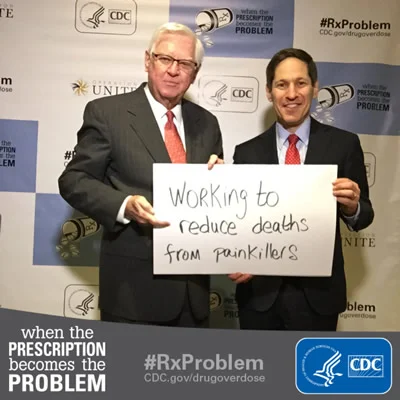
A social media campaign by the Centers for Disease Control aimed at raising awareness about the  "epidemic" of painkiller abuse had the unintended effect of launching another campaign about the "pandemic" of untreated chronic pain -- and how the agency was failing to address it.

Last month the CDC encouraged people to "help us tell stories of the many people whose lives have been affected by prescription painkiller addiction or the death of a loved one."

The agency, which estimates that over 16,000 Americans die annually from painkiller overdoses, asked for stories to be posted on Facebook, Instagram and Twitter with the hashtag #RxProblem.

“Prescription drug overdose devastates individuals, families and communities,” said Erin Connelly, associate director for Communication at the CDC. “We’d like to get everyone talking and thinking about the risks involved with opioid painkillers.”

While painkiller addiction and overdoses are undoubtedly a public health issue, the #RxProblem campaign rubbed some activists in the pain community the wrong way.

"There are really two problems with prescription drugs. One is the problem of abuse. But the other problem is patients who have pain and have a legitimate medical need for these drugs and can't access them," said Bob Twillman, PhD, Executive Director of the American Academy of Pain Management.

"I think they (the CDC) know what the problems are, but for some reason they don't want to deal with the chronic pain problem. I've criticized them for calling the problem of prescription drug overdoses and prescription drug abuse an 'epidemic' and taking a much, much bigger problem like chronic pain and not saying anything about it.  Because to me, if 16,000 people a year dying from overdoses is an epidemic, then 100  million people with chronic pain must be a pandemic."

It was Twillman's idea to launch a rival social media campaign to draw more attention to the chronic pain problem.

"What we came up with was the idea of the hashtag #AnotherRxProblem, and have people who have trouble getting their medications write in about that experience and the impact that's had on them," Twillman told Pain News Network.

Write in they did, with hundreds of people complaining about the one-sided approach the CDC was taking to prescription pain medication.

"We need to live a quality life. Don't punish us. Find better pain control," posted Teri Daniel on Twitter.

"When will we take untreated pain seriously?" asked Melissa VanHouten.

"We have 2 public health crises: RxDrugAbuse & UnrelievedPain. Stop blaming. Work together," wrote Barby Ingle.

"We got a tremendous response. If you look at the Twitter feed for #RxProblem, about half of the posts are #AnotherRxProblem posts. We started another campaign on Facebook and the Facebook response absolutely blew up," said Twillman.

Dozens of pain patients also shared their stories on Dr. Jeffrey Fudin's blog.

"I’m going to get right to the point. PAIN AND OPIOIDS. They do help us. Yes, they’re in every group abusers and non-abusers. Those that it helps for medical necessity should not have to be punished, denied, etc. for those who choose to disregard the contract they signed," wrote Gina. "CDC there are alternatives, to wean out drug abusers. Utilize the resources you have vs. taking the easy way and punishing all."

The CDC's #RxProblem campaign officially ended May 15th. Did they get the message from #AnotherRxProblem get through?

"I'm not optimistic that it's going to make a change in what they're doing. But if it raises someone's awareness, then it was worth it," said Twillman.