The High Cost of Anxiety Drugs Gives Me Anxiety

By Crystal Lindell, Columnist

I recently got a new prescription for a drug that’s supposed to help with my anxiety — which is a debilitating mix caused by opioid withdrawal and what I would call a base level of anxiety that runs through my bones.

The ironic thing about what happened is that when I went to pick up the anxiety medication, the cost of the prescription nearly gave me an anxiety attack — right there at the pharmacy.

The co-pay was $65.

It gets worse. My doctor wanted to gradually move me up on the dose, so he had ordered some 10 mg pills and some 20 mg pills. The insurance company wanted me to pay $65 for EACH dose! That’s $130. 

We need to talk about co-pays. There’s this misconception in America that if you have health insurance, then you don’t have to really worry about medical bills.

But that’s so incredibly not true. 

Listen, I wish a $65 co-pay for medication was no big deal for me. I wish I could just whip out some hundos every time I stopped in the pharmacy and throw them around like confetti, but alas, I am not a rapper or a Kardashian. 

So when my insurance company tells me that the medication I am taking is “not preferred” and thus comes with a $65 co-pay, I cry a little inside. Especially since it’s a monthly prescription.

Add in a couple other meds ($25/month) and I’m looking at $90 a month for prescriptions. That’s literally an electric bill, or four tanks of gas, or about 10 percent of my rent. 

I asked the insurance company if I could appeal the fact that it’s not their preferred medication, seeing as how I had what I thought were very valid reasons. 

1)  I had a horrific reaction to the one that is preferred, and ended up in the ER.

2)  As a response to the horrific reaction to the other drug, my doctor ran genetic testing to see which meds would work best for me, and after a lot of consideration we decided on this one.

3)  This is the medication my doctor chose.

But the insurance company was basically like, “Umm, yeah, no you can’t appeal.” Something about how they do technically cover it, so there’s nothing to appeal.

They literally tried to tell me that my doctor should just prescribe one of the preferred meds, completely ignoring the fact that my psychiatrist had literally spent hours with me talking about all the pros and cons before he decided on this one.

And then they had the audacity to act like it was no big deal. But if it’s no big deal, why don’t they pay the $65 then?

My $65 co-pay is just one small example of all the ways people with insurance can still find themselves with mountains of medical bills. There’s also the $30 co-pay for every single doctor’s appointment, and the $2,500 deductibles you run into every time you’re in the ER.

I live paycheck to paycheck, and all the medicals bills can make it hard to breathe. In fact, it’s enough to give a girl an anxiety attack.

Crystal Lindell is a journalist who lives in Illinois. She loves Taco Bell, watching "Burn Notice" episodes on Netflix and Snicker's Bites. She has had intercostal neuralgia since February 2013.

Crystal writes about it on her blog, “The Only Certainty is Bad Grammar.”

The information in this column should not be considered as professional medical advice, diagnosis or treatment. It is for informational purposes only and represent the author’s opinions alone. It does not inherently express or reflect the views, opinions and/or positions of Pain News Network.

Rheumatoid Arthritis Drug Linked to Overdoses

Pat Anson, Editor

A drug that’s long been used to treat rheumatoid arthritis and other autoimmune diseases has been linked to dozens of deaths in the U.S. and Australia, mainly because patients have taken it daily rather than the recommended weekly dose, according to a new study published in the Medical Journal of Australia.

Methotrexate was originally developed and is still used for chemotherapy because of its ability to stop the growth and spread of tumors. Because it is also effective as an immune system inhibitor, low doses of methotrexate became a front line therapy for rheumatoid arthritis in the 1950’s. It is also used to treat psoriasis, lupus, sarcoidosis, and inflammatory bowel diseases such as Crohn’s.

Researchers say methotrexate is safe when taken once or twice a week, but the drug is so potent that accidental daily dosing can be lethal.

“The unusual dosing schedule of low dose methotrexate is associated with a risk that it will be prescribed, dispensed or administered daily instead of weekly,” said lead author Rose Cairns, PhD, of the NSW Poisons Information Centre in Australia.

“Used appropriately, methotrexate is considered safe and efficacious; accidental daily dosing, however, can potentially be lethal. Higher or more frequent doses can result in gastro-intestinal mucosal ulceration, hepatotoxicity, myelosuppression, sepsis and death.”

In a review of medication errors in Australia from 2004 to 2014, researchers linked methotrexate to 22 deaths, including seven cases in which erroneous daily dosing was documented. One patient took methotrexate for 10 consecutive days. Reasons for the errors included patient misunderstanding and incorrect packaging of the drug by pharmacists.

A similar study of medication errors in the U.S. over a 4 year period identified over 100 methotrexate dosing errors that resulted in 25 deaths. Over a third (37%) of the errors were attributed to the prescriber, 20% to the patient, 19% to pharmacists, and 18% to administration by a health care professional.

The researchers also found a “worrying increase” in the number of medication errors just in the past year.

“It is difficult to explain this increase, but the risk of methotrexate medication error may be increasing as the population ages. Older people may be at increased risk because of a range of problems that includes confusion, memory difficulties, and age-related decline in visual acuity,” said Cairns.

Cairns and her colleagues say more needs to be done by drug makers and health professionals to reduce the risk of methotrexate overdosing, such as clearer labeling, smaller sized packages, and distinctly colored tablets.

"Methotrexate use is likely to continue increasing as Australia's population ages, so that additional measures are needed to prevent these errors," the authors concluded.

Living My Retirement in Pain

By Marleina Hampton, Guest Columnist

At the age of 66, I never thought I would be living my retirement life in pain.

At age 13 I was diagnosed with scoliosis, a curvature of the spine. The choice was made that I would wear a cast from my collarbone to my pelvis in order to "hold" the spine straight. Surgery was not an option.

During my late 20's, my back started to bother me and by the time my 30's arrived, I was in pain after standing or sitting. When I moved to California in 1990, I started looking for ways to treat this pain that was getting steadily worse. I did physical therapy, epidurals, prolotherapy and every other office procedure known to man, without success.

In 2003 when the pain was so bad I wanted to die, I had my first back surgery, which gave me some relief. But it wasn't long before I was suffering again.

Fast forward to 2012, I relented and had spinal fusion surgery at Cedars-Sinai Medical Center. My back is now fused from T10 to S1, with two titanium rods and 20 screws.

My doctor told me that I would be on some type of pain medication for the remainder of my life. I saw several pain management doctors and finally asked my primary care provider if he would take over my pain management.

MARLEINA HAMPTON

In 2015, my husband retired and we moved to Prescott, Arizona. Little did I know that my nightmare was just beginning! I couldn't find a doctor who would accept me as a patient!  Prescott has a high number of addiction recovery homes and the pain management doctors refuse to accept appointments without a referral.

I spent weeks trying to find a doctor and was told by medical professionals that they are not comfortable having me as a patient! Just recently, I drove almost 2 hours through rain, ice, and snow to see a pain management doctor in Phoenix. I thought I would receive a higher level of care in a larger city. But when he found out that I was not a candidate for epidurals, he said he wasn't comfortable having me as a patient. That his practice did not prescribe drugs!

In tears, I called my doctors in California and they too were appalled that I was being treated this way. Never in my life did I have a problem receiving medication.

I finally found a doctor who agreed to prescribe pain medication for me. Now I go in every month to pick up my prescriptions. I was told that my doctor continues to receive emails asking him to cut down on the number of opioid prescriptions he writes. He knows what my life would be like with pain medication and said he would fight for me.

If I should be denied pain medication, I will probably join the ranks of many before me who have taken their lives because they no longer can cope with the pain. Every month I wonder if this is the month that my doctor will get tired of the battle. This is not the retirement life I had imagined.

Marleina Hampton lives in Prescott, Arizona.

Pain News Network invites other readers to share their stories with us.  Send them to:  editor@PainNewsNetwork.org

The information in this column should not be considered as professional medical advice, diagnosis or treatment. It is for informational purposes only and represent the author’s opinions alone. It does not inherently express or reflect the views, opinions and/or positions of Pain News Network.

Canadian Province Adopts CDC Guidelines

By Pat Anson, Editor

Less than three months after their adoption in the United States, the CDC’s opioid prescribing guidelines are now being implemented in Canada.

The College of Physicians and Surgeons of British Columbia has released new professional standards and guidelines that are closely modeled after the CDC’s guidelines.

One key difference is that while the CDC’s guidelines are “voluntary” and intended only for primary care physicians, British Columbia’s standards of care are legally enforceable for all opioid prescribers because they set a “minimum standard of professional behaviour and ethical conduct.”

“The public health crisis of prescription drug misuse has developed in part due to the prescribing of physicians. The profession has a collective ethical responsibility to mitigate its contribution to the problem of prescription drug misuse, particularly the over-prescribing of opioids, sedatives and stimulants,” the college said.

"Every physician is professionally responsible for the prescription that they provide to a patient."

Like the CDC guidelines, the college discourages the prescribing of opioids for chronic pain, but goes even further by saying they should not be used to treat three specific health conditions: headaches, fibromyalgia and low back pain.

Opioids for acute pain should be limited to three to seven days’ supply, and when prescribed for chronic pain should be limited to only a month’s supply at a time. British Columbia physicians are also warned not to prescribe opioids concurrently with benzodiazepines and other anxiety medication.

Doctors are also cautioned to carefully document their reasons for increasing doses over 50 morphine milligram equivalents (MME) per day and to avoid increasing the dose to over 90 MME per day.

The British Columbia standards are more strict than Canada’s national guidelines, which have not been revised since 2010, “leaving them out of date with current research associated with taking painkillers,” according to The Globe and Mail.

“While Canada’s guidelines for opioid-prescription are expected to be updated in January, the death toll is mounting too quickly to wait,” said the Toronto Star in an editorial urging Ontario’s College of Physicians and Surgeons to adopt guidelines similar to British Columbia’s.

“B.C. has shown the way for other provincial regulatory bodies. Colleges across the country, including Ontario’s, should follow its example and set informed rules now. Injudicious prescriptions have already destroyed the lives of too many Canadians.”

Like the United States, Canada is one of the top opioid prescribing countries in the world and is struggling with an “epidemic” of addiction and overdoses. A growing number of deaths, however, can be attributed to illegal opioids such as fentanyl and heroin, and it remains in doubt whether restricting access to prescription opioids will lessen the problem or only make it worse by forcing legitimate patients to turn to the streets for pain relief.

As Pain News Network has reported, Canadian drug dealers are now selling counterfeit painkillers laced with fentanyl, an opioid that is more potent and dangerous than most pain medications.

The Star sees the problem differently, blaming doctors for Canada's opioid problem.

“It’s hard to believe that a large part of the blame for Canada’s latest drug-addiction crisis lies not with dealers, but with doctors. That is the conclusion of a growing number of health experts across the country who say our ballooning opioid problem can’t be solved until physicians stem the flow of prescriptions for the highly addictive painkillers,” the newspaper said in its editorial.

Pain Patients Sound Off on ‘Barbaric’ Treatment

By Pat Anson, Editor

We received a lot of feedback from this month’s PNN newsletter, which looked at the impact the CDC’s opioid prescribing guidelines are having on pain patients.

The guidelines – which discourage the use of opioids to treat chronic pain -- are voluntary and recommended only for primary care providers, yet pain patients say they are being widely implemented by physicians regardless of specialty. Many wrote to tell us they were being cutoff or weaned off opioids. Some were having trouble just finding a doctor willing to treat them.

I thought I’d share some of the comments with you, as well as some tips on what to do if your doctor drops you from their practice.

"My pain medications were reduced the very first appointment I had with my doctor after the CDC guidelines came down,” said Kathleen, who suffers from neck and shoulder pain.

“I have not had an increase in my pain medications in over 4 years and yet I was told that I may have hyperalgesia. I was told that the guidelines are going to cause insurance companies to reject payment for pain meds and that I was going to be weaned off, slowly, but weaned off.” 

“Do I believe suicide rates will increase due to these new guidelines? Absolutely.  ABSOLUTELY!”  wrote Karen, who suffers from Chronic Regional Pain Syndrome and other chronic conditions.

“For myself, I'd choose quality of life over quantity. And I think that's true for most people in chronic pain.  When the pain becomes too great, goes untreated and there's no hope in sight, I imagine death would be a welcome end.”

“All I know is they are trying to take my wife’s pain meds away because of a bunch of junkies is insane,” said one man. “They are forcing a lot of people in pain to turn to the streets. If we had an animal that we allowed to live in pain we would be fined or jailed for cruelty to an animal but according to our government it’s ok to do it to people. My wife said she won’t live like that. Wrong. So wrong.”

“I too have been told from my doctor that I'll no longer be receiving Rx narcotics from him. He said as a group they've decided not to prescribe to anyone but cancer patients,” wrote Peggy, who’s been taking opioids for almost 20 years. “There will come a time when I'm bed bound once again, not able to even cook, shower, care for myself because opioids are the only thing that work for me.”

Even some cancer patients are being weaned off opioids, as we learned from 64-year old Dan Hartsgrove, who was diagnosed with throat cancer last year.

“I suffer every day. Cannot eat or sleep due to the pain,” Dan wrote. “I have enough to deal with and no way in the world should be suffering in this manner. No one should. This whole opioid war is a failure and aimed at the wrong people.” 

Dan’s pain management doctor said he was taking “too much medication” and discharged him after Dan refused to have a pain pump installed. Even his chemotherapy doctor has lowered his dosage.

“It was fine for me to be allowed the poison of chemo and radiation, however I am allowed no relief from suffering daily,” said Dan.  “Where is the compassion? My wife had a friend who was 49 and had throat cancer, he was in so much pain he would put his head through his wall at night when he was trying to sleep. The doctors would not help control his pain and he committed suicide 2 years ago. This is barbaric.  I am slowly slipping away from this pain. I need to eat and just can't. Everybody thinks cancer patients are excluded from this war on opioids. NOT TRUE.”

A Florida woman who has been taking opioids for years for an autoimmune disease also says her doctor is trying to talk her into a pain pump.

“I currently have a kind and understanding pain management doctor who knows this is helping me but his office was raided last year by DEA agents and ever since then he has been afraid to prescribe,” she wrote.  “I feel I have been given a choice to get the pump or else. I shouldn't have to get something I don't want just to please the DEA and CDC. My doctor feels that by years end opioids will become less available at the pharmacy.”

“Now every snake oil salesman is pushing something to take the pain away. It’s all garbage. Opioids as a whole have been the gold standard for thousands of years when it comes to pain relief,” said Michael. “Take away the only thing that legitimately reduces our pain, then just kill us now, put us in jail or a psychiatric hospital. This is where we will ALL end up if this continues.”

“The last thing chronic pain patients need is to take less medication than they should because they're afraid of either being labelled addicts or even worse, having their medicine taken away without any notice,” said Doreen, who suffers from fibromyalgia and autoimmune diseases.

“My rheumatologist has told me I cannot ever stop taking the pain patches I'm on. I don't enjoy taking them, but it scares the hell out of me wondering what will happen when I get to that point! Please consider chronic pain patients when talking about cancelling the prescribing of opioids!! Where does this leave us?”

Tips for Dealing with Patient Abandonment

Patient advocate and fibromyalgia sufferer Celeste Cooper says she’s been “deluged” with complaints from patients who have been abandoned by their doctors.

It’s important to understand what is happening. Physicians are caught in a quagmire of discontent. They are put in harm’s way by the DEA and other government agencies if they do prescribe opioids, and yet they run the risk of losing their license if they don’t treat their patient’s pain and it causes harm,” Celeste wrote on her website.

“When a patient is fired, the physician has an ethical obligation to ensure a patient’s care is uninterrupted or they are subject to the repercussions of patient abandonment. If a patient is harmed because they are abandoned, there may be grounds for a lawsuit.”

Celeste says it’s important to gather factual evidence to protect your legal rights, such as getting a written letter from the doctor stating their reasons for stopping your pain care. The physician is also obligated to provide copies of all relevant medical records.

If you have been harmed due to patient abandonment or changes in pain care, you could file a complaint against your doctor under the Ensuring Patient Access and Effective Drug Enforcement Act of 2016, which was signed into law in April.

Flood Congress with Phone Calls

Connie Raterink suggests another way pain patients can get their voices heard. In 1994 she was homeschooling her children when Congress was considering legislation that would have basically made home schools illegal. When attempts to amend the bill failed, home school advocates flooded their congressional representatives with phone calls.

“We literally shut down Congress that day. They couldn't make outgoing calls, and the only ones getting through were home schoolers. They couldn't even call their own staff within Congress!” Connie said. “They got the message, and immediately amended the bill. Over the few days involved with this, there were over one million phone calls made.”

Connie, who suffers from a severe form of osteoporosis, thinks the same approach could be used by pain patients.

“So, pick a date... get the message out.... there are 600 people in my Church alone that would call just on MY behalf,” she wrote. “Congress again needs to hear from us individually, but en masse. We need to tell them to get their noses out of our medical records, and let our doctors make the decisions for their patients, not Congress.”

To learn more about the home schoolers’ campaign, click here.

To sign up for our free monthly newsletter, click here.

Belbuca Effective in Treating Pain Long Term

By Pat Anson, Editor

A new opioid film designed to be taken orally twice a day significantly reduces pain and the need for breakthrough pain medication in patients with moderate to severe pain, according to a new clinical study by Endo International (NASDAQ: ENDP). The results of the Phase III study were released this weekend at the International Conference on Opioids in Boston.

Belbuca is the only analgesic formulation of buprenorphine in a sublingual film that is dissolved in the mouth and absorbed through the inner lining of the cheek.

Buprenorphine is an opioid classified as a Schedule III controlled substance, which means it has lower abuse potential than Schedule II drugs, a category that includes opioids such as hydrocodone. Buprenorphine is also used to treat addiction when combined with naloxone.

Over 400 patients with moderate to severe pain took Belbuca for 48 weeks after being titrated to find the most effective dose. During long term treatment, the average daily pain score was about 3 on a scale of 0 (no pain) to 10 (worst pain imaginable).

The need for daily rescue medication to relieve breakthrough pain decreased from an average of 3 tablets to 1.1 tablets.

"Many patients living with chronic pain require long-term treatment to control their suffering, so it is important that patients have options to manage their pain," said Martin Hale, MD, Medical Director of Gold Coast Research, one of the study's investigators. "These new findings support the safety and tolerability of treatment with Belbuca across a broad range of dosage strengths.”

About half of the patients (54%) experienced some type of side effect, including nausea, constipation, headache, vomiting and upper respiratory tract infection.

Belbuca was approved by the U.S. Food and Drug Administration in October 2015 for use in patients with pain severe enough to require daily, around-the-clock, long-term opioid treatment and for which alternative treatments are inadequate.

Belbuca utilizes a drug delivery system developed by BioDelivery Sciences (NASDAQ: BDSI). Because the oral film delivers buprenorphine into the bloodstream faster than pills or skin patches, lower doses are needed to treat pain. The film contains one-tenth to one-twentieth the amount of buprenorphine as Suboxone and other products that are used to treat opioid addiction.

Belbuca is available in seven different dosages, allowing physicians to titrate Belbuca to a tolerable dose that provides pain relief with fewer side effects. According to the Healthcare Bluebook, a 75mcg, 60-day supply of Belbuca should cost about $265.

5 Tips on Leaving Your Career Due to Health Issues

By Ellen Lenox Smith, Columnist

Leaving your career due to chronic pain and illness can be heartbreaking, but for some of us it’s a necessary step.

There was never a day in my life as a teacher that I didn’t love getting up and going to work, yet that career had to end due to the progression of Ehlers Danlos syndrome and sarcoidosis. I felt so lost and not sure who I would be without the career I had.

So, one day before retiring, I went for a walk at the Scituate Reservoir in Rhode Island with my dogs at the time, Corey and Carmel. I made the decision to not think about all the emotions entering my mind -- trying to push those negative thoughts away so I could de-stress. I only allowed myself to look and listen to nature.

Within minutes, I started to have words and thoughts come into my head. Before I knew it, I had to come home, sit at the computer and start writing. The first of what turned out to be over a hundred poems poured out of me. I always laugh when I share this experience, for I am not particularly into poetry.

This was the first of my eventual one hundred poems, which helped cleanse my emotions and prepare for announcing my need for retirement and a life with two progressive conditions:    

ELLEN LENOX SMITH

I Attended a Concert This Morning

It was that time to escape, to go for an adventure. We were attending a concert. All ten of our legs got into the car to begin the trip. No clues had been provided to us to prepare for what an impact this performance would have on the rest of our day.

We arrived, opened the door and got out, some of us more easily than others, and then shut the door off from life as we knew it…

It seems that we were late for the concert. It was already in progression. We knew when we arrived that we would have to follow the rules. We had to turn off everything from our lives; the cell, the TV, the radio, computer and most importantly, “the mind”.

We began to walk and quickly heard the concert. It felt loud and overwhelming at first. It felt crowded listening to it despite a lot of space provided. It was too much to hear, too much to absorb. And “the mind”, it wanted to come on, even though it knew it wasn’t invited. But it seemed to finally learn how to respect the rule.

As it cooperated, the concert began to take on a new dimension of sounds and feelings. It became soft, clearer, calmer and incredibly comforting. This concert became exceptional, being absorbed in every space of the mind and body.

And all that was needed to feel this was to just turn off everything else.

The concert never came to a close, but it was time we return to the car and journey back to home as we know and love it. But, we knew we had had an experience that gave us strength and renewal to our lives.

Corey, Carmel and Mom all took a moment to enjoy nature and listen to the truth of life. It was a concert that will never be forgotten. A lesson was learned, “turn it all off”, attend the concert of nature. It’s there for us all and is open at all times.

Looking back, I learned that writing about my emotions helped me face the changes that were happening to my life. It was a very cleansing process that I entered and I continue to do it.

Here are some tips if you are also dealing with the loss of your career:

  1. Try writing down emotions that are swirling in your head. You will gain more than you might realize with this process. Many write to the US Pain Foundation for help and I respond to them, but often I do not hear back from them. I believe this is because they’ve cleansed their emotions by just writing down their story and frustrations.
  2. Accept that you will have to redefine who you are. I was a teacher by profession, but have discovered I am still teaching, just in a different way.
  3. Remember you are not alone for many have also had to face the loss of their career. Try to find comfort in knowing this. I talk to myself and say that if they can do this, so can I!
  4. Mourn your losses. You are human and allowed to do this, but remember to move on from this loss too. You are more than your career. There are others things in life that will make you feel worthwhile and productive. It will take work to figure out what you will do next, but it is a worthwhile effort.
  5. Try to not get stuck on “Why me?” Instead, try to find a way to move on with acceptance and grace for others to learn from. I always remind myself that although my four sons are now adults, they are still observing how I handle my life, including this process of letting go and redefining. I want to be remembered by them for trying, fighting and not giving up.

I know it is heartbreaking to have to step away from a career, especially if it is one you love. But you also have to remind yourself that you have one life to live, and you need to redefine yourself and find things that will bring meaning, joy and happiness back, despite the loss.

I know this is hard to do, but the effort will pay off in the end. Despite illness, you can discover new things about yourself and have a positive impact in life. Be strong, reach out for support and may you, too, discover there is life despite your huge loss.

Ellen Lenox Smith and her husband Stuart live in Rhode Island. They are co-directors for medical marijuana advocacy for the U.S. Pain Foundation and serve as board members for the Rhode Island Patient Advocacy Coalition. For more information about medical marijuana, visit their website.

Ellen recently published her new book, It Hurts Like Hell!: I live with pain -- and have a good life, anyway.”

The information in this column should not be considered as professional medical advice, diagnosis or treatment. It is for informational purposes only and represents the author’s opinions alone. It does not inherently express or reflect the views, opinions and/or positions of Pain News Network.

Fentanyl Blamed in Prince Overdose

By Pat Anson, Editor

A medical examiner has confirmed widespread speculation that opioids were involved in the accidental death of pop star Prince. The surprise was the type of opioid that was found in the singer's system.

“The decedent self-administered fentanyl,” Dr. A. Quinn Strobl, chief medical examiner for the Midwest Medical Examiner’s Office, wrote in his widely awaited report, which you can see by clicking here.

The report was released six weeks after Prince's death and only covered the manner and cause of death. All other information is considered private under Minnesota law.

The medical examiner’s report is likely to focus new attention on the so-called opioid abuse epidemic, which is routinely blamed on prescription opioids. Fentanyl is a potent opioid more powerful than morphine, and when prescribed the drug is generally only given to people in severe pain.

However, the report does not state whether the fentanyl that killed Prince was from a prescription or if it was illicit fentanyl obtained through other means.

Illicit fentanyl is an odorless white powder that is typically combined with heroin or cocaine to boost their potency. In recent months it has increasingly been found in counterfeit pain medication sold on the streets.  

Thousands of people have died from fentanyl overdoses in the U.S. and Canada, but because of the nature of the drug it’s impossible to tell whether it was prescribed legally and used for medical reasons or manufactured illegally and sold as a street drug.

“Toxicology tests used by coroners and medical examiners are unable to distinguish between prescription and illicit fentanyl. Based on reports from states and drug seizure data, however, a substantial portion of the increase in synthetic opioid deaths appears to be related to increased availability of illicit fentanyl,” said a recent report from the Centers for Disease Control and Prevention, which nevertheless still classifies all fentanyl overdoses as prescription drug deaths.

Massachusetts and Rhode Island recently reported a “significant increase” in fentanyl-related overdoses, with nearly 60% of the fatal overdoses in those states now attributed to fentanyl. Rhode Island health officials say the shift to fentanyl worsened when “more focused efforts were undertaken nationally to reduce the supply of prescription drugs.”  

Prince’s body was found in an elevator at his Paisley Park estate near Minneapolis on April 21. There was immediate speculation the singer was addicted to pain medication that he took for hip pain, but the only opioid ever mentioned was Percocet.  In the days before his death, Prince reportedly sought help from an addiction specialist in California.

The singer’s use of painkillers and how he obtained them are now the focus of a criminal investigation. No charges have been filed and a judge has sealed all records in the case.

According to search warrant that was accidentally released and obtained by the Los Angeles Times, Dr. Michael Todd Schulenberg, a family medicine practitioner, treated Prince on April 7 and 20, the day before his death.

Senators Propose Tax on Opioid Pain Meds

By Pat Anson, Editor

A group of U.S. Senators has introduced legislation that would establish a federal tax on all opioid pain medication. If approved, it would be the first federal tax on a prescription drug levied directly on consumers.

The bill, called the Budgeting for Opioid Addiction Treatment Act, would create a one cent fee on each milligram of an active opioid ingredient in pain medication. Money from this “permanent funding stream” would be used to provide and expand access to addiction treatment.  

“A major barrier that those suffering from opioid addiction face is insufficient access to substance abuse treatment,” said Sen. Joe Manchin (D) of West Virginia. “This legislation will bridge that gap and make sure that we can provide treatment to everyone who makes the decision to get help. I look forward to working with my colleagues to get this bill passed so we can take another step forward in the fight against opioid abuse.”

Sens. Amy Klobuchar (D-MN), Jeanne Shaheen (D-NH), Angus King (I-ME), Heidi Heitkamp (D-ND), Tammy Baldwin (D-WI) and Bill Nelson (D-FL) are co-sponsoring the bill, which has been dubbed the “LifeBOAT” Act.

“By establishing a reliable stream of funding, this bill will bolster treatment facilities across the country, increase the amount of services available, and support people as they fight back against addiction – all while doing so in a cost-effective way,” said Sen. King.

The opioid tax would raise an estimated $1.5 billion to $2 billion per year. In an interview with the Portland Press Herald, King said the fee would range between 75 cents and $3 for a 30-day prescription, depending on the dose. He claimed many patients wouldn’t have to pay the additional cost because their insurance would cover it.

King said treatment programs need funding, and tacking the cost onto the price of the drug is a fair way to do it, much like automakers are required to install seat belts and air bags in vehicles.

“The obvious way to fund this is to build it into the price of the drug,” said King. “The cost of the drug should reflect the danger of the drug.”

Although most of the press releases and public statements from the senators avoid using the word “tax” and refer to it as a fee, the bill itself doesn’t hide behind semantics. The legislation would apply to the sale of “any taxable active opioid” and would amend the Internal Revenue (IRS) Code to make it possible.

The federal government and the vast majority of states do not levy a sales tax on prescription drugs. Only two states, Illinois and Georgia, currently have a sales tax on prescription medication.

"I don't understand how, in a world where we are getting upset about the 'tampon tax' we find it perfectly socially acceptable to tax chronic pain patients to pay for addiction treatment," said Amanda Siebe, who suffers from Chronic Regional Pain Syndrome (CRPS) and is a founder of the advocacy group #PatientsNotAddicts.

"With less than 5% of chronic pain patients becoming addicted to opiates, this leave the other 95%, who are often some of the poorest in America and have nothing to do with addiction or addiction treatment, to pick up the tab for addiction treatment. I find myself truly disappointed and ashamed of our government. This tax is discriminatory and we are going to fight it."

The LifeBOAT Act would exempt buprenorphine, an opioid used to treat addiction, from taxation, as well as all over-the-counter pain relievers such as acetaminophen. Cancer and hospice patients would be exempted from the opioid tax, although they would have to apply for a rebate to get their money back.

The discount or rebate mechanism shall be determined by the Secretary of Health and Human Services with input from relevant stakeholders, including patient advocacy groups. The discount or rebate shall be designed to ensure that the patient or family does not face an economic burden from the tax,” a fact sheet on the bill states.

Sen. Manchin told to his colleagues that there would be little or no opposition to the bill.

“There’s not one person who will lose a vote over this. Not one person. You won’t be accused of voting for a tax,” Sen. Manchin said during a news conference announcing the bill.  He noted that no Republican senators have signed on as co-sponsors.   

“This is something that’s much needed, overdue and they all recognize it, but they’re scared to death. They’ve taken the (no tax) pledge. They’re scared to death somebody will use it against them. I’ll be standing beside my Republican colleagues if any Democrat tried to attack them and said they tried to vote for a tax,” Manchin said.

To read the full text of the bill, click here.

To watch a video of the press conference, click here.

Canada Fights Wave of Fake Pain Pills

By Pat Anson, Editor

Canada’s Healthy Ministry today added a dangerous synthetic opioid – known as W-18 -- to a list of illegal controlled substances after the drug was found in counterfeit pain medication sold on the street.

W-18 has been used recreationally in Europe and Canada over the past two years. Recently, Canadian law enforcement have found W-18 disguised to look like legitimate prescription pain medication, such as oxycodone. W-18 is believed to be manufactured in China. It is blamed for one overdose death in Calgary.

"Substances like W-18 are dangerous and have a significant negative impact on some of the most vulnerable people in our society,” said Jane Philpott, Canada’s Minister of Health.

Classifying W-18 as a Schedule I controlled substance – the same class as heroin and cocaine -- makes its production, possession, importation and trafficking illegal in Canada. W-18 was originally developed in the 1980’s as a pain reliever at the University of Alberta, but was never marketed commercially. It is 100 times stronger than fentanyl, another synthetic opioid that is also increasingly being disguised as pain medication and sold on the street.

A Health Canada analysis of counterfeit oxycodone and Percocet pills confirmed the presence of W-18 last month, according to The Globe and Mail.

“Of particular concern is a green coloured oxycodone tablet marked CDN80,” said Corporal Eric Boechler of the Royal Canadian Mounted Police. "It was discontinued as a prescription tablet in 2012, so virtually any encountered on the street today are counterfeit and will contain fentanyl and/or other potent synthetic opioids such as W-18.”

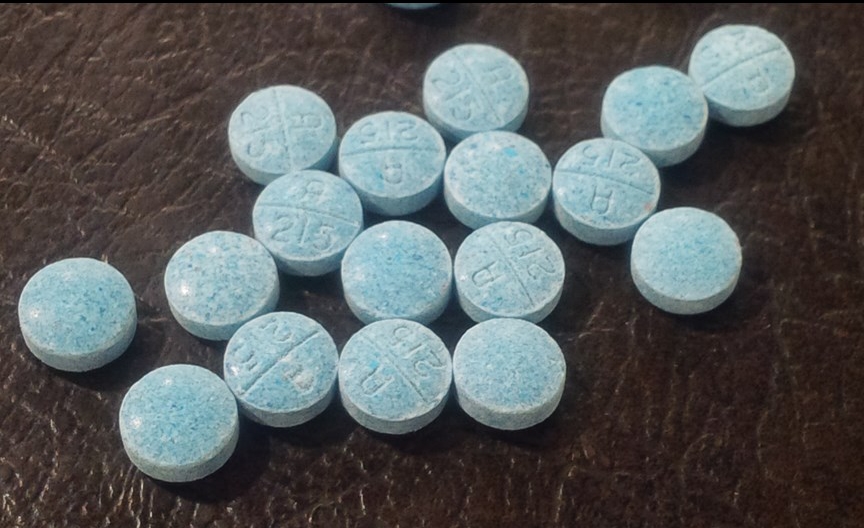
Last week police in North Bay, Ontario seized hundreds of fake fentanyl pills that were disguised to look like 30 mg oxycodone prescription pills. The pills are blue and imprinted with “A 215.”

Counterfeit fentanyl pills have previously been found in western Canada, where they are blamed for dozens of overdose deaths. This was the first time they were found in North Bay, according to BayToday.

“I don’t think these illicit pills coming in from China are aimed at pain patients," said Barry Ulmer, Executive Director of the Chronic Pain Association of Canada.

NORTH BAY POLICE PHOTO

"They appear to be aimed at those who are willing to try ‘new’ things and the usual addiction population. I don’t know what possesses the younger groups to try this stuff from the street as they know full well what could happen.”

As Pain News Network has reported, fake fentanyl pills have also been appearing in the United States, where they are blamed for at least 14 deaths in California and 9 in Florida.  Some pills were purchased off the street by pain patients who were unable to get prescription medication through a doctor.

Massachusetts and Rhode Island have both reported an “alarming” rise in fentanyl overdoses. Over half the opioid overdose deaths in those states are now blamed on illicit fentanyl, not prescription pain medication.

Lasers Work for Fibromyalgia, But Why So Pricey?

By Ryan Baker, Guest Columnist

I’ve had severe fibromyalgia for 14 years, and I’ve been disabled as long. Without a doubt, the pain is certainly a central issue, along with the severe fatigue, flare ups, and crashes.

It’s an absolutely miserable disease that’s intrusive and destructive. I broke commitments that really shouldn’t be broken, which put a strain on personal relationships. The pain is a level of suffering that can easily push one to insanity or worse.

I found laser therapy last October at my chiropractor’s office, where they have a $25,000 K-Laser. While it worked great, I could not get enough coverage all over my body as often as I needed, and it was just too expensive for office visits.

I was getting good results, so I dove into trying to find a laser I could use at home, and settled on a very effective unit for $2,500. Pricey, but worth the convenience of having one I could use whenever I wanted.

Since receiving the TQ Solo laser in late January, I have not taken any prescription pain pills. My hydrocodone, methocarbamol, and Klonopin, which I had whittled down long before the laser to “emergency use only” (once every 3-7 days), have gone untouched since I’ve had the laser.

I have taken 2 ibuprofens for a dehydration headache, but no other OTC meds, aside from vitamins. I take a sleep aide and blood pressure medication, that’s it.  

TQ SOLO LASER

It still astonishes me how well laser therapy works. I still suffer from fibro fog, low energy, and all of the other problems associated with fibromyalgia, but my pain levels have dropped from a constant 7-9 out of 10, to a much more tolerable 2-4. I use the laser between 20 minutes to an hour or more a day, and rather than become resistant, my body seems to respond better after getting used to treatment.

Some areas are completely free of pain at times, which hasn’t happened in 14 years, but if I stop treatment the pain returns. It’s not a cure, my fibro is still terribly limiting, but it’s an amazing treatment for the pain. The decrease in my personal suffering has been outstanding.

The laser is like an alarm clock for under active mitochondria, only stimulating the cells in need. Properly functioning tissue (not in pain) have little to no response, while damaged or inflamed tissue “wake up” and begin healing. Some areas need daily treatment, like my calves and back, while other areas can go days between treatments.

If you’re a fan of science fiction, this is the coolest thing since the smartphone made Captain Kirk’s communicator look silly.

I find the 5 hertz setting, the deepest setting, to be the most beneficial. It’s like a massage, but deeper, and there’s no pain from working tender tissue. In fact, there is very little sensation during treatment. If I can feel the treatment at all, it’s usually a mild tingle or twitch, which I consider a signal to treat more intensely.

The laser does not hurt or burn. It’s very comfortable and soothing, and treating before bed is fantastic for sleep. I don’t wake up with that stiff, poisonous feeling ache anymore.  

I began researching all sorts of red light therapy. I’ve tried several, along with some LED only therapies. I even tried a heat lamp. While the heat lamp and LED therapies felt okay, they were no match for the laser.

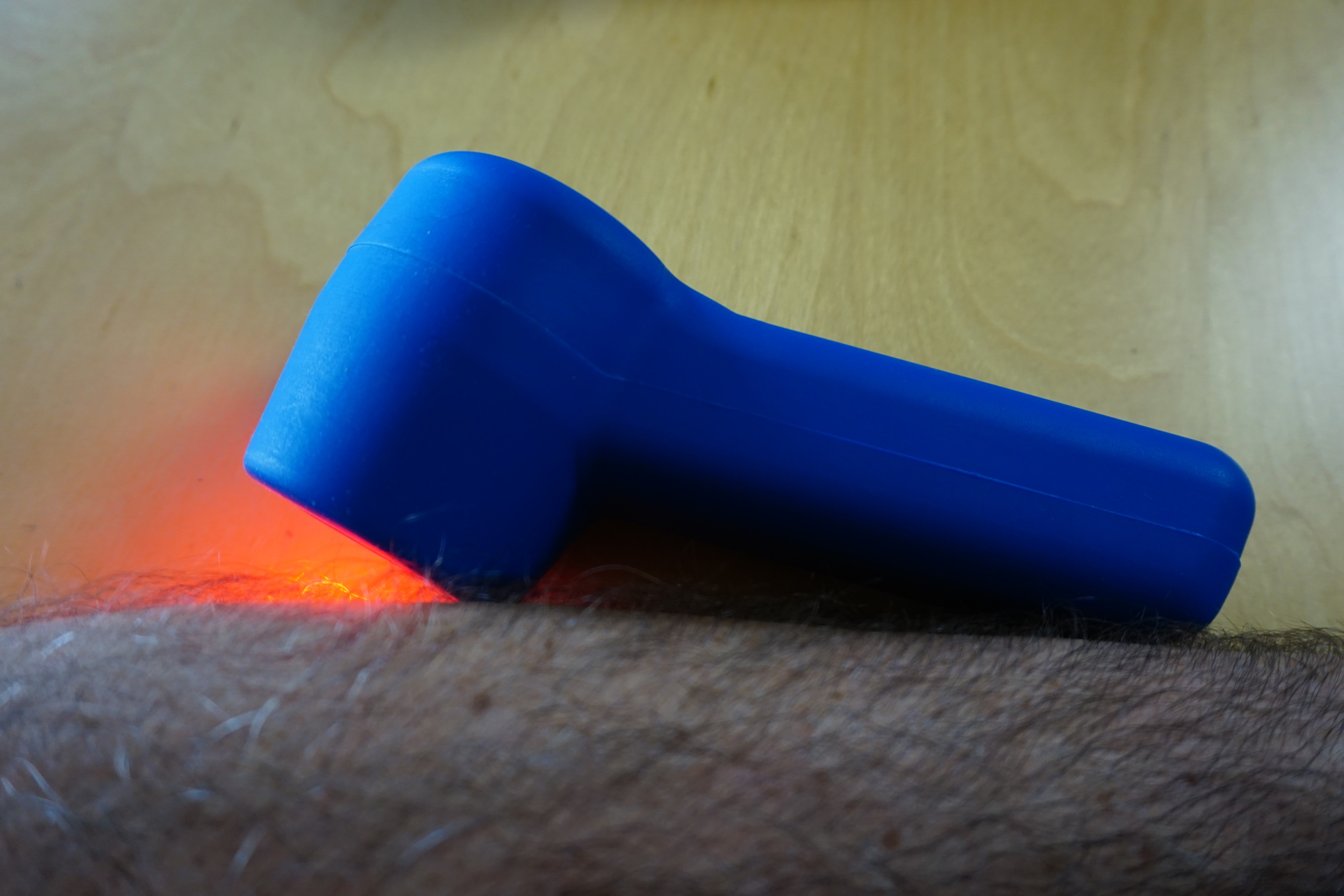
While searching for other light therapy devices, I found the Handy Cure. It has a striking resemblance to the TQ Solo I had purchased, but it was selling for under $600. Same frequency settings, same power, same everything. Only the handle was different, as far as I could tell.

I looked it up, and it was made by the same company that makes the TQ Solo. But why so much cheaper? Was it a knock off? Was it less potent, or somehow lower quality? I put an order in.

After using the Handy Cure side by side for weeks with the TQ Solo laser, I can’t tell any difference. It’s just as effective. I’d overpaid by $2,000. I’m not wealthy, and I assume most fibro patients aren’t either, so that hurt.

I started looking into other lasers and found the Game Day laser. It looks exactly like the Handy Cure, no doubt about it, only the labels were different. Instead of variable, 50 hertz, and 5 hertz, the menu is a simple 1, 2, and 3. It appears to me that the Game Day is simply a rebadged Handy Cure.

handy cure laser (left) and TQ solo laser(right)

You’d think the Game Day would be priced more like the Handy Cure, but it’s listed for $2,995! My jaw dropped when I saw that, but the picture became crystal clear. All of these lasers had the same manufacturer and, except for subtle differences, appear to be essentially the same products.

But one sells for under $600 and the other is marked up to nearly $3,000. Why?

I’m not against the profit motive, but I am when people are suffering and treatment is unnecessarily kept out of reach.   

One month later, I have become a distributor for the Handy Cure, making YouTube videos to bring laser therapy to the attention of fellow fibromyalgia patients. It’s been a big adjustment, but a meaningful one. I have no idea what I’m doing, I just know lasers work, and they take some of the “crazy” out of fibromyalgia.

Fibromyalgia pain is real and physical, not some form of hypochondria or mental illness. If it was, the laser would have no physical effect. But it works reliably for my pain, even when I’m particularly depressed.  

I feel vindicated, because something finally works for the pain when powerful opiates barely made a dent. It’s not in my head. 

(Editor's note: Since this article was first published, Pain News Network has been contacted by Max Kanarsky, President and CEO of Multi Radiance Medical, the maker of the Handy Cure laser. Mr. Kanarsky maintains that the "Handy Cure" featured in this article is a counterfeit reproduction of his product, is not FDA cleared, and "might present a hazard to users.")

Ryan Baker lives near Sacramento, California. You can learn more about laser therapy by visiting his website, Chronic Pain Laser.

Pain News Network invites other readers to share their stories with us.  Send them to:  editor@PainNewsNetwork.org

The information in this column should not be considered as professional medical advice, diagnosis or treatment. It is for informational purposes only and represent the author’s opinions alone. It does not inherently express or reflect the views, opinions and/or positions of Pain News Network.

Teenage Marijuana Problems Declining

By Pat Anson, Editor

A large survey of nearly a quarter of a million adolescents indicates the number of American teenagers with marijuana related problems is declining – despite the fact that nearly half the states have legalized medical marijuana or decriminalized it.

Researchers at Washington University School of Medicine in St. Louis studied a national database on drug use by over 216,000 young people, ages 12 to 17, and found that the number dependent on marijuana or having trouble in school and in relationships declined by 24 percent from 2002 to 2013.

During the same period, the number of kids who said they used marijuana in the previous 12 months fell by 10 percent. The drops were accompanied by reductions in behavioral problems, such as fighting, shoplifting and selling drugs.

Researchers believe the two trends are connected -- as kids became less likely to engage in problem behavior, they are also less likely to have problems with marijuana.

"We were surprised to see substantial declines in marijuana use and abuse," said lead author Richard Grucza, PhD, an associate professor of psychiatry at Washington University School of Medicine

"We don't know how legalization is affecting young marijuana users, but it could be that many kids with behavioral problems are more likely to get treatment earlier in childhood, making them less likely to turn to pot during adolescence. But whatever is happening with these behavioral issues, it seems to be outweighing any effects of marijuana decriminalization."

The new study is published in the Journal of the American Academy of Child & Adolescent Psychiatry. The data was gathered as part on ongoing study called the National Survey on Drug Use and Health, which surveys young people in all 50 states about their drug use, abuse and dependence.

In 2002, just over 16% reported using marijuana during the previous year. That number fell to below 14% by 2013. Meanwhile, the percentage of young people with marijuana-use disorders declined from around 4% to about 3%.

"Other research shows that psychiatric disorders earlier in childhood are strong predictors of marijuana use later on," Grucza said. "So it's likely that if these disruptive behaviors are recognized earlier in life, we may be able to deliver therapies that will help prevent marijuana problems -- and possibly problems with alcohol and other drugs, too."

A similar survey, the University of Michigan's Monitoring the Future Study, found that marijuana use by teens has leveled off since 2010, but was still at stubbornly high rates. In 2015, about 35% of 12th­ graders reported using marijuana at least once in the past year.

The same survey found that teenage abuse of prescription opioids declined for the fifth year in a row. Only about 5% of 12th graders reported using an opioid pain medication in the last year, and the number reporting that prescription opioids were “fairly easy” or “very easy” to get also continues to drop.

Medical marijuana is legal or decriminalized in 24 states and the District of Columbia, and several states are considering legalization. Opponents have long maintained that legalization would have harmful effects on young people.

“Perhaps the biggest public health concern around medical marijuana liberalization and legalization concerns the potential impact on teenagers, who could have greater access to it as a drug of abuse and who may increasingly see marijuana as a ‘safe, natural’ medicine rather than a harmful intoxicant,” wrote Nora Volkow, MD, director of the National Institute on Drug Abuse, in Alcoholism & Drug Abuse Weekly.

“Although there is still much to learn about marijuana’s impact on the developing brain, the existing science paints a picture of lasting adverse consequences when the drug is used heavily prior to the completion of brain maturation in young adulthood. In teens, marijuana appears to impair cognitive development, may lower IQ and may precipitate psychosis in individuals with a genetic vulnerability.”

According to a recent report from the Colorado Department of Public Safety, where marijuana has been fully legalized since 2013, nearly a third (31%) of young adults, ages 18 to 25, have used in marijuana in the last 30 days, up from 21% in 2006. The number of juveniles on probation testing positive for THC has also increased since legalization.  

Painkillers Cause Chronic Pain? Rats!!!

By Pat Anson, Editor

A provocative new study is likely to stir fresh debate about the risks associated with opioid pain medication. It’s not another study about addiction or overdose, but whether opioids actually increase chronic pain, a condition known as hyperalgesia. 

An international team of researchers found that even just a few days of morphine can make chronic pain last for several months by intensifying the release of pain signals in the spinal cord.

But there’s a catch. The research was conducted on laboratory rats.

"We are showing for the first time that even a brief exposure to opioids can have long-term negative effects on pain," said Peter Grace, PhD, an assistant research professor at the University of Colorado-Boulder's Department of Psychology and Neuroscience. "We found the treatment was contributing to the problem."

Grace and his colleagues found that damaged nerve cells in rats send a message to spinal cord immune cells known as glial cells, which normally act as "housekeepers" to clear out unwanted debris and microorganisms. The first signal of nerve pain sends glial cells into alert mode, priming them for further action.

"I look at it like turning up a dimmer switch on the spinal cord," said Grace.

Nerve pain was induced in the rats by slicing open their thighs. A fine thread was then tied around a major nerve. Over the next three months, researchers poked the rats' paws with stiff nylon hairs to see how sensitive they were to pain.

Injured rats that were not treated with morphine eventually recovered and did not show pain, but those that were treated with morphine for five days remained sensitive to pain. Researchers believe the morphine stimulated their glial cells and sent them into overdrive. They liken the effect to being slapped in the face twice.

"You might get away with the first slap, but not the second," said co-author Linda Watkins, a Distinguished Professor at CU Boulder. "This one-two hit causes the glial cells to explode into action, making pain neurons go wild."

"The implications for people taking opioids like morphine, oxycodone and methadone are great, since we show the short-term decision to take such opioids can have devastating consequences of making pain worse and longer lasting," said Watkins. "This is a very ugly side to opioids that had not been recognized before."

Patient advocates had a mixed reaction to the study.

“Linda Watkins is doing some awesome work. We know that glial cells are the key to pain generation. Exactly how is still poorly understood,” said Terri Lewis, PhD, a rehabilitation specialist who teaches in the field of Allied Health. We know that 'something' triggers inflammation and maintains it. When that trigger is turned up high, glial cells are activated."

“Generalizing from rats to humans is not okay. But if the same results are found in pigs, there is probably something to talk about,” added Lewis.

“There is enough evidence in humans that opioids work and do not make pain worse,” said Janice Reynolds, a retired nurse and patient advocate.  “Even the work in hyperalgesia has not, contrary to claims by opiophobics, translated well from rats to humans. The write up is extremely negative and tends to lead one to believe the results may be slanted or even poorly interpreted. The fact they are singling ‘chronic pain’ out is a warning sign.”

The CU-Boulder study, which is published online in the Proceedings of the National Academy of Sciences, does have an impressive pedigree, including researchers at the University of Adelaide in Australia, the University of North Carolina, the Chinese Academy of Sciences, the National Institute on Drug Abuse, the National Institute on Alcohol Abuse and Alcoholism, and Tsinghua University in Beijing.

The study was funded in part by the American Pain Society, Australia's National Health and Medical Research Council, the National Natural Science Foundation in China, the National Institute on Drug Abuse, the National Institute of Dental and Craniofacial Research and the National Institute of Alcohol Abuse and Alcoholism.

Let’s Go Crazy: Lessons Learned From Prince

By Emily Ullrich, Columnist

As many call for Prince’s death to be a “wake up call” to America about the dangers of prescription drugs, I propose a different wake up call.

If the allegations are true, and Prince did die of an overdose, I propose that we use the messages that Prince preached and lived: messages of understanding and compassion. America needs to “wake up” to the oppression and depression that keep many chronic pain patients quiet about their conditions, and the reprehensible stigma with which this country punishes pain patients.

By now, many of us have read Lorraine Berry’s insightful piece, “Prince did not die from pain pills -- he died from chronic pain.” Perhaps the most poignant statement Berry made was, “Chronic pain kills. It killed Prince. It’s time to talk about it.”

We love to find flaws in celebrities, particularly those of a scandalous nature. Instead of finding compassion for a beloved icon, we are quick to turn our backs and make the pain of loss easier by falling prey to the judgmental “celebrity druggie” stereotype.

I propose that we pay tribute to Prince in a way I think he would have appreciated, by using this tragedy to start a conversation about the differences between addiction and dependence, about the commonality of chronic pain, and the deeply rooted prejudice associated with the disease of chronic pain.

But, I also propose we take it one step further, and affect change. We need not complain to each other endlessly about “us” (those who suffer chronic pain) and “them” (the healthy), and the great rift between. We have been doing that for years, and although it’s nice to know that someone else “gets it,” it is not other chronic pain sufferers who we need to understand our plight.

As much as we may not like to admit it, there are some similarities between addicts and chronic pain patients -- neither of us get the treatment or respect we need and deserve. We tend to be equally as judgmental of addicts, deeming them lower on the social hierarchy than us, in the same way as healthy people think of us to them.

I am not suggesting we continue to blur the lines between addiction and dependence, but I am suggesting we consider fighting this battle together.

There was a time when white people who sympathized with black civil rights activists were considered “almost as bad” as the “uppity blacks,” who demanded their well-deserved, long overdue rights to equality. Eventually, most people began to understand that treating people differently, as though they were not entitled to the same liberties, was intrinsically wrong. Many didn’t like it, but they had to abide by it. Understanding would only came later.

The same can be said about the lesbian, gay, bisexual and transgender community, and other groups that differ from what society considers “normal.” On many levels, these groups still struggle with inequities, just as we do, but they are making strides. And we must, too.

As it stands, the current political and social climate surrounding pain medication and chronic pain itself, not to mention addiction, have become civil rights issues. We no longer need to worry about gaining understanding, as much as we do defending our basic human rights. Although understanding is a part of the answer and a desirable outcome, sometimes people must be pressed to follow rules against discrimination. 

I was an outsider long before I was a chronic pain patient. I am a long–time artist, activist, outspoken woman, and all-around “weirdo” in many circles. But, I’ve never been ashamed of that. In fact, I’ve always taken pride in my one-of-a-kindness, having been voted “Most Unique” in my class of ‘93 at a conservative, rural high school.

To me, Prince always seemed a kindred spirit—emotional, passionate, creative, misunderstood. Now that I know he suffered chronic pain, and that he may have had double hip replacement, I find myself even more drawn to his spirit of individuality and strength. I find myself respecting him and relating to him on an entirely different level now.

His elusive, gentle, humane, kind, pained soul was not merely the cliché tortured soul of an artist, but also the tortured soul of a human being who must present a strong face, while holding back the physical and emotional pain, loneliness, and often hopelessness that all chronic pain patients can relate to.

In the name of Prince, I propose a revolution. The play on words is not accidental. Prince revolutionized music, fashion, art, gender and sexual perceptions, and more. He was for many of us the embodiment of our coming of age and understanding. Let us memorialize him in a way he would appreciate—by standing up for who we are, and by not being afraid or embarrassed of what people will think or say.

And like his band, The Revolution, let us stand with him, and make the world see that we will not be shamed, shunned, or disenfranchised, and that we will stand up for our rights and be prepared to explain and defend our cause -- life.

“Dearly beloved: We are gathered here today to get through this thing called life. Electric word, life. It means forever and that's a mighty long time.”

In Prince’s honor, let’s go crazy and do something unheard of. Understand each other and learn from this.

Emily Ullrich suffers from Complex Regional Pain Syndrome (CRPS), Sphincter of Oddi Dysfunction, Carpal Tunnel Syndrome, endometriosis,  Interstitial Cystitis, migraines, fibromyalgia, osteoarthritis, anxiety, insomnia, bursitis, depression, multiple chemical sensitivity, and chronic pancreatitis

Emily is a writer, artist, filmmaker, and has even been an occasional stand-up comedian. She now focuses on patient advocacy for the International Pain Foundation, as she is able.

The information in this column should not be considered as professional medical advice, diagnosis or treatment. It is for informational purposes only and represents the author’s opinions alone. It does not inherently express or reflect the views, opinions and/or positions of Pain News Network.

Most Patients Don’t Think Opioids Are Risky

By Pat Anson, Editor

A small survey of chronic pain sufferers may give physicians a better understanding  of why many patients are reluctant to reduce or discontinue their use of opioids. Most patients simply don’t see themselves at risk of abuse and addiction, and think they can manage their opioid use safely.

Researchers at the University of Colorado School of Medicine and the VA Eastern Colorado Health Care System conducted in-depth interviews with 24 patients who were on long-term opioid therapy for chronic non-cancer pain. Six of the patients were still taking their regular opioid dose, 12 were tapering, and 6 had discontinued the use of opioids.

When asked about specific concerns related to opioid medications, patients were generally aware of opioid overdose as a potential complication but did not perceive themselves to be at risk,” said lead author Joseph Frank, MD, assistant professor of medicine and a primary care physician at the VA Medical Center in Denver.

The majority of patients described a long history of opioid medication use without prior overdose and cited this as evidence of their ability to safely take opioid medications. Patients attributed overdoses to others using opioids in risky ways or overdosing intentionally rather than accidentally.”

The survey findings, published in the journal Pain Medicine, include comments from some of the patients.

“Overdose? No. I’m very mature, very conscious, very intelligent as far as adhering,” said a 52-year old man who was still taking his regular opioid dose.

“The concern is that if they increase my opioid dosage, I could stop breathing. It’s ridiculous,” said another patient who was also taking his normal dose.

Even patients who were tapering or had discontinued opioids said that overdose risk was not their primary motive for cutting back. Others said they were so focused on pain relief they were willing to overlook the side effects of opioids.

“I like to research everything, but the pain was so severe I didn’t care about anything else... I don’t think that people actually consider the side effects and what not when it comes to something like that. I think that they just want the pain to go away,” said a 46-year old woman who was tapering.

“I don’t think people in chronic pain think about long term. We are basically, how do I get through today? I just gotta get through today,” said another woman who was still taking her regular dose.

Many patients said they had extensive experience with non-opioid therapies and found they weren’t effective. That led to pessimism about their ability to manage pain without opioids.

“I needed help desperately by the time [hydrocodone] was prescribed for me... I had taken ibuprofen, Aleve, everything over the counter, and it did nothing to help me at all. So I knew I needed more help, stronger help,” said a 73-year old woman who was tapering.

"Throughout my life, the doctors have done everything, trying to get me to exercise, to stretch, things that shocked my muscles,” said a 58-year old man. “In the ‘70s, they put some kind of body cast on me that I wore for months... Gosh, I’ve had everything. I’ve went through all the minor ones like Tylenols and aspirins and stuff, you know... I’ve went through a few years on Morphine. I’ve went to a time on Oxycodone and OxyContin, Vicodin, Tramadol. Now I’m on Fentanyl patches.”

Several patients said they eventually decided to taper when they realized that opioids weren’t helping as much or reduced their quality of life.

“The pills turned out horribly for me... I wasn’t caring for myself. I wasn’t bathing. I was sleeping all the time... Everything in my life was such a mess, and my husband was, you know, really worried about me... My husband [told me] that this is bad. This is really bad. You’re not doing well,” said a woman who was tapering.

“I didn’t stop under doctor’s orders or discussion or anything. I just got up one day and I’m done,” said a 60-year old male patient. “Instead of taking four, I took three and I did that for a couple of weeks and then I took two and then I took one. I never felt any discomfort or anxiety or anything so... it worked for me.”

Patients who tapered successfully emphasized the support they received from family, friends and healthcare providers in helping them make the transition.

“My doctor is very conscientious, and I respect her very much... It wasn’t her idea to take me off OxyContin,” said a 73-year old woman. “I just quit cold turkey, which was difficult... She was overjoyed. She thought it was just great that I didn’t need it anymore."

“It’s not much worse without the medication as it is with it. After you’ve taken it for a while, it doesn’t do any good. That’s what I’ve found,” said a 61-year old woman. “But that’s hard to convince people of it. They look at me like I’m nuts, but it’s true... I mean my pain is not any more severe than it was when I was taking all that stuff.”

“I am more alert since I stopped taking [OxyContin], and I need less sleep, which is a blessing. So I’m able to do more things with my life,” said a 72-year-old female patient.

The researchers admit their study was small and may not be representative of the pain community. But they think there are important lessons to learn from it, because tapering “may become an increasingly common patient experience.”

"To achieve goals of improving quality of life and preventing opioid-related harms, we need better evidence and more resources to support patients both during and after this challenging transition," Frank said.  It will be important to ensure that patients' voices are heard in the national conversation about these medications."