Should Johns Hopkins be Policing the Nanny State?

By Terri Lewis, Guest Columnist

I was copied a response to the recently issued document, "The Prescription Opioid Epidemic: An Evidence-Based Approach" published by Johns Hopkins Bloomberg School of Public Health. 

The 46-page document is full of pronouncements about what the proper course of action should be to rein in the abuse of opioids by people who experience unrelenting chronic pain on a daily basis.  The document is replete with terms like addict, addiction, surveillance, monitoring,  intervention, adherence, and conformance distributed across seven topical areas, all claiming to address the current evidence for the need to ramp up the nanny state:

#1: Prescribing Guidelines
#2: Prescription Drug Monitoring Programs
#3: Pharmacy Benefit Managers and Pharmacies
#4: Engineering Strategies
#5: Overdose Education and Naloxone Distribution
#6: Addiction Treatment
#7: Community-Based Prevention

Nowhere, does this document even remotely address the fact that the onset of chronic pain is often an iatrogenic event that occurs as the result of medical harm or insufficiently delivered medical care. 

Nowhere, does this document address the financial and practical impact of these pronouncements on the ability of persons who have lost everything to illness to conform to protocols that turn healthcare delivery into a policing activity.

Everywhere, these protocols engender the further victimization, the institutionalization of marginalization, and stigmatization of the chronically ill as unworthy, incapable of protecting themselves, and potentially harmful to themselves and others because of the characteristics of their illness imposed disabilities. 

Every dollar that is proposed for expenditure in this document should be going to research designed to prevent and minimize the impact of chronic pain -- not punish it.  But this document, from a major public health training institution, completely fails to address the prevention and reduction of chronic pain as a public health issue of significant importance, and is focused instead on counting adherence, conformance and compliance activities that will (a) not lead to improved personal outcomes for consumers who live with chronic pain and (b) rob consumers of precious resources with which to live. 

These pronouncements reflect an ignorance of astounding proportion in understanding who persons with chronic pain actually are and the conditions under which they are forced to live.  Who does this document serve?  Who are we trying to protect?  

I am outraged.

And then this.  Into my email came a response to this smug, sanctimonious document from a woman in California who suffers from interstitial cystitis -- acquired through medications she received after treatment for shoulder and spinal injuries at the hands of her medical provider.  It's too good not to share:

To the misguided folk at Johns Hopkins Bloomberg School of Public Health:

This is my contribution to your little Town Hall hand-wringing session.

So, I guess you are jumping on the anti-opiate frenzy bandwagon.  Just another organization that feels compelled to point at anyone who takes opiates, and call us all "addicts" and not even considering those of us who suffer from severe CHRONIC PAIN (the kind That Never Ends) due to circumstances totally beyond our control.  My pain is not caused by any flaw in my character.  People like myself who see our doctors religiously and always take our medication responsibly.  What, are you being financially rewarded by punishing us?  What did we ever do to you?  Or are you just trying to Thin the Herd?  I guess Chronic Pain Patients' Lives DON'T Matter.

I'm talking to you.  I'm one of those people, who suffer from illnesses and or injuries that have already stolen our quality of life away from us, and pain that causes as much, and sometimes more, pain than cancer.  People who suffer from pain that only opiate prescription medication can dull.  And people like you, whom I will never meet, want to take that away from me.  A patient who has NEVER EVER ABUSED HER MEDICATION.  Not ONCE.  I am a 60 year old lady who worked her entire adult life and never once did anything to invite nor cause the condition that causes me terrible TERRIBLE pain.

My pain saga started with chronic tears to both my rotator cuffs, and a herniated cervical spine.  All from a desk job involving typing and mousing and staring at a computer monitor for years and years and years.  This activity has destroyed the tendons in both my shoulders and neck and herniated my spine.  And while that pain was bad enough, I figured it would eventually end.  I never envisioned that the pain would remain after my shoulders were carved up and stitched back together.  It was during my recovery from this surgery, that I began to experience the horrors of an incurable illness known as Interstitial Cystitis.

On bad days it feels like someone is taking a blowtorch to my genitalia.   In fact, Interstitial Cystitis is considered the Third Worst Pain in all of medicine.  Imagine, if you will, the sensation of hot lava being blasted through your bladder, vagina, colon and pelvic parts.  All the time.  Having the urge to urinate every 15 minutes -- or more often than that -- on bad days.  I am basically chained to a toilet.  And because the pain is ALWAYS much worse at night, I suffer from severe insomnia.  It is impossible to fall asleep or stay asleep with pain this bad.  My urologist opined that I would be better off if I suffered from Bladder Cancer, because there is at least a chance of recovery from that illness.

The only FDA authorized treatment for this condition is Elmiron, and it doesn't work on every patient.  In fact, it only works on maybe 25% of patients who suffer from this horrible condition.  It did nothing to help me with any of my symptoms but cause my hair to fall out and raise my liver enzymes to a dangerous level.  That's all our modern medical machine could do for me medically.  They sure as hell cannot cure this illness yet.  The only thing that medicine CAN offer is pain relief.  The only chance in hell I have of ever having a life without this horrible, searing, burning, aching, stabbing pain is if The Good Lord decides to send me into remission.  All a doctor can really do for me to help me is provide me with pain relief.

The only medication I take that takes the edge off of this pain is Norco.  I tried the Fentanyl patch, but it caused me to develop an intestinal blockage.  For obvious reasons, I had to discontinue that medication.  And while I intensely dislike taking ANY medication, I dislike the awful pain worse.  I have NEVER abused my medication.  I never take more than I am prescribed.  I do everything and anything that is asked of me, whether it involves blood tests and/or pissing into a cup.

So why am I going to be punished?  Answer me that question.  I just found out that my pain medication is going to be cut drastically OR terminated at my next visit to my pain doctor, which is this Friday.  It is not being taken away because I have ever abused my medication, or lied, or deceived, or stolen, or sold it.  I can only assume that my pain doctor is just too afraid of the DEA and the paperwork headache.  It will be easier for him to just dump me as a patient, and limit his practice to injections which make him more money anyway.  Well, guess what?  Injections have never done a thing to help my pain, and I have had quite a few.  I have had TENS units, Physical Therapy, Massage and Ultrasound.  I have tried just about everything that exists to reduce the horrendous pain I experience 24/7.  The only medicine with the fewest side effects that helps reduce pain is Norco.

We are a vulnerable part of the population who are being deprived of compassionate and adequate care to help us live our lives with a semblance of normalcy.  We are being punished for the irresponsible actions of people who would be addicted whether or not it was via opioids or anything else.  All of this noise is just that:  NOISE.  Mark my words:  all this brouhaha will not make one iota of difference in the epidemic you speak of.  People who are addicts will always find a way to get high.  That is what addicts do.  However, what your actions WILL do is cause an increase in suicides of people suffering from terrible TERRIBLE pain, who can no longer get medication that enables them to have something resembling a quality of life, and be semi-productive citizens. 

Yes.  The pain of illnesses like mine can and does drive good people to commit suicide if they can't get pain relief.  Or maybe these same people turn to other drugs they would never EVER consider if they received the compassionate care we are all entitled to.  That is what you will see start to happen.  I am sure that some of this surge in heroin use is by people who are in such terrible pain that they are desperate, and their doctors will not help them because of fear of the DEA and organizations like yours.  And then what will happen?  More "meetings" and "studies" and "head-scratching" about the spike in suicides?  How can you be so obtuse?

No one is speaking up about us. No one is helping us.  Chronic pain patients are being marginalized and treated like addicts, when we are not.  We can barely function because pain robs us of the ability to function, and we are already exhausted from this daily fight.  I guess we are easy targets.  Few of us possess the strength to march on numbers in Washington or anywhere else.  I know I couldn't.  I am so ill that I can barely leave my house.

I know what happens to me when I don't take my pain medication:  I experience much more severe pain.  I don't drool, or hallucinate, or stumble, or vomit, or shiver, or do anything but just cry buckets and buckets of tears, and huddle in a corner of my bed in the fetal position with bags of ice stuffed into my underwear to try and numb the horrible, searing pain of this illness.  And I guarantee that if any of you people making these horribly unjust decisions suffered from the condition I suffer from, that you would be begging for drugs to take the pain away.  I'm willing to stake what few dollars I still possess on that fact, because guess what?  This illness has also rendered me destitute and incapable of working at my job.  I can't even sit in a chair very long because of the pain.

So, in summary, what you are doing is KILLING US.  You, and 60 Minutes, and the CDC and the DEA and every other soulless agency that is carping about this.  If I weren't so sick from this horrible illness, and what it has done to my life, I would be laughing because of the incredible stupidity being displayed by a bunch of suits I will never meet.  Dumping every single person who takes opiates into a category you call "addiction" and shoving us off in the same leaky boat.  Yes.  You are killing us.

Name withheld to protect her privacy

For the record, this person also found out last week that her beloved husband of 20 years is in the throes of stage 4 kidney failure as a result of 5 years of treatment from a physician for arthritis -- resulting in an unidentified drug-drug interaction that has, unbeknownst to the physician, destroyed his patient's kidneys because he failed to monitor his patient or pay attention to known drug-drug interactions.

So who needs to be monitoring and surveilling here?  Who?  Does the public really need protection from persons with chronic pain who can barely leave their homes?  Or do persons in pain need protection from the public purveyors of unsound, impractical, and misguided policies? 

God spare us from the nanny state.

Terri Lewis, PhD, is a specialist in Rehabilitation practice and teaches in the field of Allied Health.  She is the daughter and mother of persons who have lived with chronic pain.

This column was reprinted with permission from the author.

The information in this column should not be considered as professional medical advice, diagnosis or treatment. It is for informational purposes only and represents the author’s opinions alone. It does not inherently express or reflect the views, opinions and/or positions of Pain News Network.
CDC Accused of ‘Blatant Violations’ of Federal Law

By Pat Anson, Editor

A pro-business legal foundation with a history of taking government agencies to court is asking the Centers for Disease Control and Prevention (CDC) to withdraw plans to release new guidelines for the prescribing of opioid pain medications.

In a letter to CDC Director Tom Frieden, the Washington Legal Foundation accused the agency of “blatant violations” of the Federal Advisory Committee Act (FACA), which requires federal agencies to identify members of advisory committees and hold committee meetings in public. As Pain News Network has reported, the CDC has refused to publicly disclose the identities of the “Core Expert Group” that initially drafted the guidelines.

“The overly secretive manner in which CDC has been developing the Guideline serves the interests of neither the healthcare community nor consumers,” wrote Washington Legal Foundation (WLF) chief counsel Richard Samp in his letter to Frieden.

“More importantly, CDC’s repeated violations of the Federal Advisory Committee Act call into question the viability of the entire enterprise and dictate that any guidelines adopted as a result of the current administration process could not withstand judicial scrutiny. We call on CDC to withdraw the Draft Guideline and to generate reliable data on ways to ensure adequate treatment of patients while preventing opioid abuse before renewing efforts to write a guideline.”

The CDC’s draft guidelines for primary care physicians recommend “non-pharmacological therapy” as the preferred treatment for chronic non-cancer pain. Smaller doses and quantities of opioids are recommended when the drugs are prescribed for acute or chronic pain. Many pain sufferers fear they will lose access to opioids when the CDC plans to adopt the guidelines in January 2016. A complete list of the guidelines can be found here.

The identities of the CDC’s Core Expert Group (CEG) were leaked soon after the draft guidelines were released in September.  The group includes Jane Ballantyne, MD, President of Physicians for Responsible Opioid Prescribing (PROP), an advocacy group that seeks to end the overprescribing of opioids. PROP Vice President Gary Franklin, MD, is also part of CEG. Critics say Ballantyne, Franklin and several others who advised the CDC have a conflict of interest and never should have served as consultants on the guidelines.

The CDC says it withheld the identities of the Core Expert Group so its members could “provide honest and independent comment and feedback.” The agency also maintains that CEG does not qualify as a FACA advisory committee.

“CDC’s secrecy, and its apparent indifference to conflicts of interest by those likely to support news restrictions on opioids, have led many to conclude that CDC is uninterested in conducting administrative proceedings that give all interested stakeholders an equal opportunity to attempt to influence the agency’s decision making. If CDC is to overcome its tarnished image, it must immediately eliminate its culture of secrecy and apply its conflict-of-interest rules in an even handed manner,” Ramp wrote in his letter to Frieden and Debra Houry, director of the CDC’s National Center for Injury Prevention and Control, which oversaw development of the guidelines.

A spokesman for the Washington Legal Foundation told Pain News Network the CDC had not yet responded to the group’s complaint. He also declined to say how the foundation would respond if the guidelines were not withdrawn.

WLF describes itself as a public interest law firm “that regularly litigates to ensure that federal administrative agencies comply with statutes designed to ensure procedural fairness.”  The non-profit foundation generally supports business groups and companies in litigation against  government agencies, and has represented or acted in behalf of pharmaceutical companies such as Johnson & Johnson and Purdue Pharma, the maker of OxyContin. 

"We’re long-standing supporters of WLF, in addition to several other business and legal organizations. We’ve provided them with unrestricted grants," a spokesman for Purdue Pharma told Pain News Network.

WLF does not disclose the names of its donors. According to Greenpeace, WLF has accepted over $1 million in donations from foundations representing Charles and David Koch, two billionaire brothers who actively support conservative causes.

Senators Support CDC

With the CDC under fire from pain patients and advocacy groups, eight U.S. Senators have written a letter to Frieden expressing their support for the CDC’s guidelines.

“We are committed to doing everything in our power to bring this (opioid) epidemic under control because our communities are hurting. The problem will only grow worse if we fail to act,” the letter says. “We applaud the CDC for developing prescribing guidelines and for your efforts in the fight to end prescription drug abuse. We strongly urge you to maintain this commonsense approach when you release the final guidelines early next year.”

The letter is signed by Sens. Joe Manchin (WVa), Ed Markey (Mass), Tammy Baldwin (Wisc), Dianne Feinstein (Calif),  Jeanne Shaheen (NH), Bill Nelson (Fla), Richard Blumenthal (Conn) and Angus King (Maine).

Study Calls for End to ‘Permissive’ Opioid Prescribing

By Pat Anson, Editor

A major study released by the Johns Hopkins Bloomberg School of Public Health is calling for new guidelines in the prescribing of opioid pain medication, including the repeal of “permissive and lax prescription laws and rules.”

The report also calls for sweeping changes in the way opioid prescriptions are dispensed and monitored, and would encourage insurance companies to provide information to federal regulators about “suspicious” pharmacies, prescribers and patients.

The Johns Hopkins report (which can be seen here) grew out of discussions that began last year at a town hall meeting on prescription opioid abuse hosted by the Bloomberg School and the Clinton Foundation. It was prepared primarily by a group of public health researchers, physicians, law enforcement officials and addiction treatment specialists.  

“A public health response to this crisis must focus on preventing new cases of opioid addiction, early identification of opioid-addicted individuals, and ensuring access to effective opioid addiction treatment, while at the same time continuing to safely meet the needs of patients experiencing pain,” wrote G. Caleb Alexander, MD, co-director of the Johns Hopkins Center for Drug Safety and Effectiveness at the Bloomberg School.

It is widely recognized that a multi-pronged approach is needed to address the prescription opioid epidemic. A successful response to this problem will target the points along the spectrum of prescription drug production, distribution, prescribing, dispensing, use and treatment that can contribute to abuse; and offer opportunities to intervene for the purpose of preventing and treating misuse, abuse and overdose.”

The report calls on federal and state agencies, state medical boards and medical societies to require "mandatory tracking of pain, mood and function" at every patient visit, as well as patient contracts and urine drug tests.  Patients prescribed high doses of opioids would be required to consult with a pain management specialist.

“It sounds like an aggressive government intrusion into the practice of medicine and is punitive towards providers willing to help people in pain. It certainly is a threat.  Every physician in America should be concerned if these recommendations are adopted,” said Lynn Webster, MD, past President of the American Academy of Pain Medicine.

“I am amazed that one of our finest educational institutions in America failed to address the source of the prescription drug abuse problem in their report.  Not once did the report discuss the lack of safe effective treatments for pain.  They almost totally ignored the needs of people in pain.  Yet it is number one public health problem in America. Their focus was myopic and represents a narrow and prejudicial view of people in pain.”

One of the more controversial recommendations in the report would expand access to prescription drug monitoring programs (PDMPs) to private insurance companies and pharmacy benefit managers (PBMs). Access to those databases, which track prescriptions for opioids and other controlled substances, are currently restricted to regulators, law enforcement and physicians.

"It is a very bad idea to allow law enforcement or even payers to have access to PDMPs without a cause approved by a judge.  This is personal medical information that should be protected," said Webster in an email to Pain News Network.  

Under the Johns Hopkins plan, insurers would be encouraged to report suspicious prescribing activity to federal regulators and the Center for Medicare and Medicaid Services (CMS).

“Allowing managed care plans and PBMs access to PDMP data will improve upon their current controlled substances interventions that have been shown to positively influence controlled substances utilization,” the report states. “All PBMs should provide a list of suspicious pharmacies, prescribers and beneficiaries to the National Benefit Integrity Medicare Drug Integrity Contractor (MEDICs). Using the actionable PBM data they are receiving, MEDICs should be reporting potential providers for removal to the CMS.” 

The report also calls for mandatory use of PDMPs by prescribers and pharmacies, more training for medical students in pain management, expanded federal funding of addiction treatment, and greater access to naloxone, a drug that can reverse the effect of an opioid overdose.

“What’s important about these recommendations is that they cover the entire supply chain, from training doctors to working with pharmacies and the pharmaceuticals themselves, as well as reducing demand by mobilizing communities and treating people addicted to opioids,” said Andrea Gielen, director of the Johns Hopkins Center for Injury Research and Policy at the Bloomberg School and one of the report’s signatories.

“Not only are the recommendations comprehensive, they were developed with input from a wide range of stakeholders, and wherever possible draw from evidence-based research.”

One of the ”stakeholders” and a signatory of the Johns Hopkins report is Andrew Kolodny, MD, founder of Physicians for Responsible Opioid Prescribing (PROP), an advocacy group that seeks to end the overprescribing of opioids. Kolodny, who has collaborated with Dr. Alexander on other prescribing studies, is chief medical officer of Phoenix House, a non-profit that operates a chain of addiction treatment centers. According to a note on PROP's website, "PROP is a program of Phoenix House Foundation."

Kolodny has referred to opioid pain medication as “heroin pills” and has called for expanded access to buprenorphine, a weaker opioid widely used to treat both addiction and pain.

The Johns Hopkins report would greatly expand the use of buprenorphine by ending the 100 patient limit on the number of people that DEA licensed physicians can treat with buprenorphine at any one time. It would also require federally funded addiction treatment programs, such as those offered by Phoenix House, to allow patients access to buprenorphine.

Although praised by Kolodny and many addiction treatment specialists as a tool to wean addicts off opioids, some are fearful buprenorphine is already overprescribed and misused. Addicts have learned they can use buprenorphine to ease their withdrawal symptoms and some consider it more valuable than heroin as a street drug.

"The 100 patient limit is going to be lifted. It is going to create buprenorphine pill mills and increase the abuse of heroin. You will have more doctors getting the DEA exemption as they would not be subject to visit by DEA inspectors checking on the patient limit," said Percy Menzes, president of Assisted Recovery Centers of America, which operates four addiction treatment clinics in the St. Louis, Missouri area.

Over three million Americans with opioid addiction have been treated with buprenorphine. According to one estimate, about half of the buprenorphine obtained through legitimate prescriptions is either being diverted or used illicitly.

Women More Likely to Get Addicted to Pain Meds

Pat Anson, Editor

Over half the women being treated for addiction at methadone clinics in Canada say their first experience with opioids was a pain medication prescribed by a doctor, according to a new study.

Researchers at McMaster University in Hamilton recruited over 500 men and women being treated for opioid dependence at 13 clinics in Ontario. The aim of the study, which is published online in the journal Biology of Sex Differences, was to identify any significant gender differences between men and women attending the clinics. Participants provided researchers with detailed information about their health and lifestyle, as well as urine tests to measure their use of illicit and legal drugs.

Compared to men, women were found to have more physical and psychological health problems, more childcare responsibilities, and were more likely to have a family history of psychiatric illness.

While over half the women (52%) and about a third (38%) of the men reported doctor-prescribed painkillers as their first contact with opioids, only 35% of participants said they suffered from chronic pain during the study period.

"It's not clear why women are disproportionately affected by opioid dependence originating from prescription painkillers - it could be because they're prescribed painkillers more often due to a lower pain threshold, or it might simply be because they're more likely than men to seek medical care,” said lead author Monica Bawor of McMaster University.

“Whatever the reasons, it's clear that this is a growing problem in Canada and in other countries, such as the U.S., and addiction treatment programmes need to adapt to the changing profile of opioid addiction."

Only about a third (36%) of the study participants were employed or had completed a high school education (28%).

Men were more likely than women to be employed, and were more likely to smoke cigarettes. Men were also more likely to report having smoked marijuana, although rates of marijuana use were relatively high among both men and women, Nearly half (47%) said they had used marijuana in the month prior to the study.

"Most of what we currently know about methadone treatment is based on studies that included few or no women at all. Our results show that men and women who are addicted to opioids have very different demographics and health needs, and we need to better reflect this in the treatment options that are available,” Bawor said.

"A rising number of women are seeking treatment for opioid addiction in Canada and other countries yet, in many cases, treatment is still geared towards a patient profile that is decades out of date - predominantly young, male injecting heroin, and with few family or employment responsibilities."

Compared to studies from the 1990s, the average age of patients being treated for opioid addiction is older (38 vs. 25 years of age), and patients also started using opioids at a later age (25 vs. 21 years). There was a 30% increase in the number of patients becoming addicted to opioids through doctor-prescribed painkillers.

The number of opioid painkiller prescriptions has doubled in Canada over the last two decades. According to the World Health Organization, Canada consumes more opioid painkillers per capita than any other country.

CDC: We Need Safer, More Effective Pain Relief

(Editor’s Note: Debra Houry is director of the CDC's National Center for Injury Prevention and Control, which is developing new opioid prescribing guidelines that the agency plans to adopt in January 2016. We have many questions about the guidelines and the manner in which they are being drafted, and asked for an interview with Dr. Houry. She declined, as did CDC Director Tom Frieden. Dr. Houry did offer to write a column about the guidelines for our readers and we agreed to publish it.)

By Debra Houry, MD, Guest Columnist

At CDC I see the numbers.  The numbers of people dying from an overdose of opioid pain medications.  And, many of these unintentional deaths were in patients taking medications for chronic pain.

But to me, it’s not about numbers.  It’s about the people.  I’m concerned about stories we’ve heard at CDC from people like Vanessa and Carl, who were both prescribed opioid pain medications after car crashes. Vanessa was 17 years old when she was prescribed opioids the first time, and within several years, she was abusing IV drugs and was afraid she was going to die with a needle sticking out of her arm. Carl became addicted quickly and suffered from withdrawal when he tried to stop. He became a drug dealer to get access to the drugs that would prevent the unbearable withdrawal symptoms caused by his opioid addiction. Thankfully both Vanessa and Carl got into treatment and have been in recovery for several years now.

As an ER doctor I’ve cared for people like Carl and Vanessa suffering from traumatic injuries or in chronic pain. I’ve also had to be the one to tell families that they lost a loved one to an overdose of prescription opioids.  I see the risks. It worries me when patients return because their opioid medications are no longer effective at relieving their pain, and they need larger and larger doses.  Although opioids are powerful drugs that are important to manage pain, they have serious risks, with multiple side effects and potential complications, some of which are deadly.

But I want patients for whom the benefits outweigh the risks, to be able to get these important pain medications. And, I need to be able to treat pain more safely and effectively so that people can have relief without the risk of abuse, overdose or death.

Since 1999, we’ve seen a dramatic increase in the amount of opioid pain medications prescribed in the U.S. and at the same time overdose deaths from these medications have quadrupled.  The evidence is becoming clearer that overprescribing these medications leads to more abuse and more overdose deaths. Guidelines that help doctors and other health care providers work with their patients to determine if and when opioid medications should be given as part of their overall pain management strategy need to be updated.  

Most of the existing guidelines have focused safety precautions on high-risk patients, and have recommended use of screening tools to identity patients who are at low risk for opioid abuse. However, opioids pose a risk to all patients, and currently available tools cannot rule out risk for abuse or other serious harm outside of end-of-life settings.  

We must find a better way to treat pain so that diseases, injuries or pain treatments themselves don’t stop people from leading full and active lives. That is why CDC is working with doctors, other health care providers, partners, and patients on urgently needed guidelines based on the most current facts about safer and effective pain treatment. In a national health crisis like this one, our priorities are clear. First, take swift action to protect and save lives. Second, use world class science and proven processes to determine further improvements. And third, use the facts to prevent this situation from happening in the future.

The upcoming CDC guidelines will provide recommendations on providing safer care for all patients, not just high-risk patients. The guidelines will also incorporate recent evidence about risks related to medication dose and encourage use of recent technological advances, such as state prescription drug monitoring programs.

The guidelines are intended to help providers choose the most effective treatment options for their patients and improve their patients’ quality of life. Currently, 44 Americans die each day as a result of prescription opioid overdose. By providing the tools to help physicians make informed prescribing decisions, we can improve prescribing and help prevent deaths from prescription opioid overdose.

Thank you to the many Pain News Network readers who took the time to share your thoughts with us.  As we move forward, we will continue to look for opportunities to work with you on the critical issue of safer, effective pain management.

Debra Houry, MD, is a former emergency room physician and professor at Emory University School of Medicine in Atlanta. In 2014, she was named director of the National Center for Injury Prevention and Control at the Centers for Disease Control and Prevention.

Dr. Houry can be emailed at vjz7@cdc.gov and reached on Twitter at @DebHouryCDC.

The information in this column should not be considered as professional medical advice, diagnosis or treatment. It is for informational purposes only and represents the author’s opinions alone. It does not inherently express or reflect the views, opinions and/or positions of Pain News Network.

For a look at the first draft of the CDC’s opioid prescribing guidelines, click here.

Millennium Wins FDA Contract Despite Fraud Charges

By Pat Anson, Editor

Just days after agreeing to pay $256 million to the federal government to settle fraud and kickback charges, Millennium Health has been selected to provide urine drug tests to the Food and Drug Administration for a clinical trial.

The trial will assess the development of opioid tolerance in patients taking pain medication with an abuse deterrent formula. Millennium could potentially make $1.6 million under the FDA contract.

"Long term opioid treatment can produce positive outcomes when prescribed and used appropriately, but they also carry risks that must be managed. UDT (urine drug testing) plays a critical role in aiding the clinician in evaluating patient safety. Millennium's selection as a service partner in this important initiative reflects our advanced technical and analytic capabilities and commitment to excellence," said Millennium CEO Brock Hardaway.

Millennium -- the nation’s largest drug testing company -- won the contract soon after it agreed to settle fraud charges under the Federal False Claims Act. Millennium was accused of bilking Medicare, Medicaid and other federal health care programs for a large number of medically unnecessary urine drug and genetic tests. The San Diego based firm was also accused of violating federal kickback laws by providing physicians with free urine “point of care” (POC) test cups if they referred more expensive laboratory testing to Millennium.  

“Millennium allegedly promoted indiscriminate and unnecessary testing that increased medical costs without serving patients’ real medical needs,” said U.S. Attorney Carmen M. Ortiz of the District of Massachusetts.  “A laboratory that promotes and knowingly conducts medically unnecessary drug testing operates unlawfully and squanders our precious federal health care resources.”

Under terms of its settlement with the Department of Justice (DOJ), Millennium will pay $237 million to settle claims for unnecessary urine and genetic tests. Millennium also entered into a corporate integrity agreement with the Department of Health and Human Services, and will pay $19.2 million to the Centers for Medicare and Medicaid Services to resolve issues over its billing practices. The government, in turn, will pay whistleblowers over $30 million for their help in building the case against Millennium.

“Millennium used a variety of schemes to cause physicians, including many of its biggest referrers, to routinely order excessive amounts of UDT (urine drug tests) for all patients (including Medicare and Medicaid patients) regardless of individual patient assessment or need. Millennium’s abusive practices included the use of physician standing order forms to encourage routine, excessive UDT, and the dissemination of false and misleading statements about drug abuse rates and the value of its testing,” the original government complaint said.

"While Millennium may debate some of the merits of the DOJ's allegations, we respect the government's role in health care oversight and enforcement,” said Millennium's Hardaway. “At the end of the day, it was time to bring closure to an investigation that began nearly four years ago. Millennium Health is currently a very different organization than we were in the past. We fully embrace our obligation to both commercial and publicly funded health plans to provide value to the health care system overall and ensure that doctors who order our testing solutions adequately demonstrate that those solutions are clinically necessary.”

After the settlement was reached, Moody's Investors Service downgraded Millennium's Health's corporate debt rating and said its rating outlook was negative.

"The downgrade reflects Moody's expectation that Millennium will complete a distressed debt exchange or file for Chapter 11 bankruptcy in the near term. Moody's is estimating that lenders will suffer material losses in the event of a default," Moody's said in a statement.

Millennium is not the first drug testing company to face fraud and kickback charges. Competitors Amertiox, Calloway Labs, Quest Diagnostics, and LabCorp have all faced similar charges and paid millions of dollars in fines.As a result of these cases, Medicare has proposed lowering its billing rates for diagnostic testing as early as 2016, moving to a flat-rate fee structure to prevent drug-testing companies from charging more by testing for more substances.

As Pain News Network has reported, urine drug testing grew into a lucrative $4 billion industry – what some call “liquid gold” – largely because so many doctors who treat addicts and chronic pain patients require them to submit to urine drug screens. In many cases, point-of-care tests are used, even though many experts consider them unreliable.

Feds Unveil Opioid Mapping Tool

By Pat Anson, Editor

Big Brother is watching your doctor. And now you can watch too.

In a graphic display of just how closely the government is tracking the prescribing of opioid pain medication, the Centers for Medicare & Medicaid Services (CMS) has released an interactive online map that allows ordinary citizens to follow opioid prescribing trends across the United States.

The map not only permits users to see the number and percentage of opioid prescription claims for each state filed under Medicare Part D – but to drill down on the data to counties, ZIP codes and even prescribers. Over 31 million people are enrolled in Medicare Part D, which subsidizes the cost of prescription drugs for Medicare beneficiaries.

“The opioid epidemic impacts every state, county and municipality. To address this epidemic, while ensuring that individuals with pain receive effective treatment, we need accurate, timely information about where the problems are and to what extent they exist,” said CMS Acting Administrator Andy Slavitt. 

“This new mapping tool gives providers, local health officials, and others the data to become knowledgeable about their community’s Medicare opioid prescription rate.”

The data used in the mapping tool is from Medicare Part D prescription drug claims in 2013, when over 80 million claims for opioids were filed at a cost of $3.7 billion.

The names of Medicare patients are not included in the online map, but prescribers can be looked up by name.

“By openly sharing data in a secure, broad, and interactive way, CMS and the U.S. Department of Health and Human Services (HHS) believe that this level of transparency will inform community awareness among providers and local public health officials,” the CMS said in a statement.

That kind of easy access to prescribing data -- without any context -- is chilling to Mark Ibsen, a Montana doctor who stopped prescribing opioid pain medication to patients because he feared prosecution or losing his medical license.

"Let's keep threatening data bases on car dealers and the crashes that happen, or pharmacies and who dies from their meds, or oncologists and what they prescribe, or police officers and who they have shot, or people we have dated and where they live," Ibsen said in an email to Pain News Network.

"Whatever useless data we can, thinking because it may be useful, using it, regardless of ANY forethought about harm, unintended consequences, or impact on prescribers, patients, business or law enforcement. This has gotten so carried away. I'm done. Whatever evil idea is going on, whoever thought this up, needs to be reeled in."

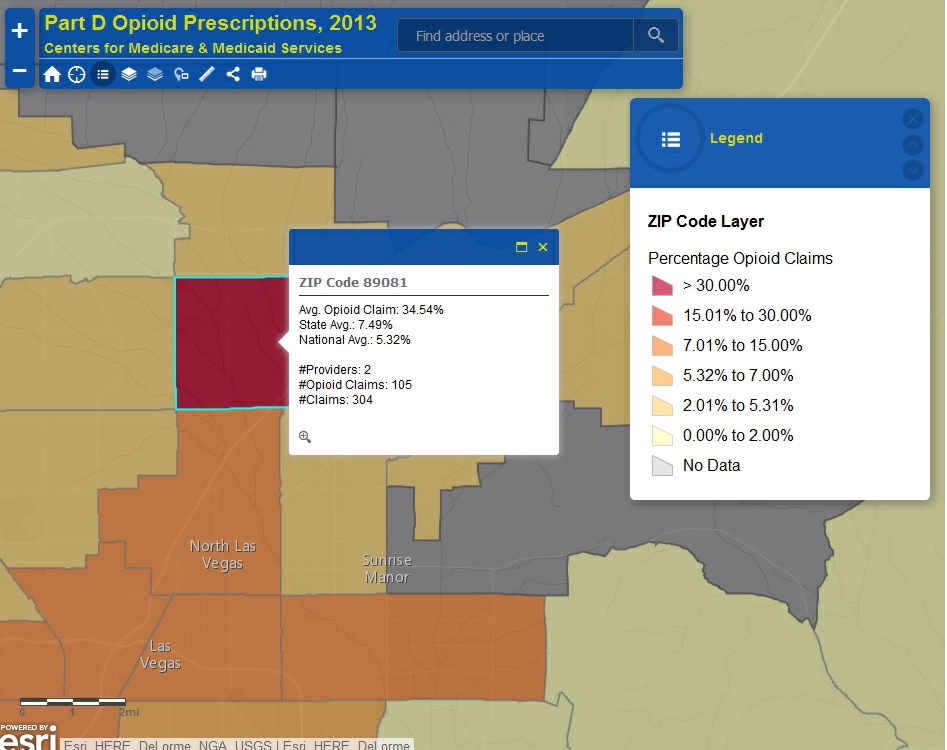
A look at the national map shows that Alabama, Oklahoma and Nevada have the highest rates of opioid prescribing for Medicare Part D beneficiaries. Over 7 percent of the claims in those states were filed for opioid pain medication, compared to a national average of 5 percent.

Counties and ZIP Codes can have much higher rates, as the map below shows. ZIP code 89081 is north of Las Vegas, near Nellis Air Force Base. Over 34% of the Medicare claims filed by two prescribers in that ZIP code were for opioids.

“The opioid abuse and overdose epidemic continues to devastate American families,” said CDC Director Tom Frieden, MD. “This mapping tool will help doctors, nurses, and other health care providers assess opioid-prescribing habits while continuing to ensure patients have access to the most effective pain treatment. Informing prescribers can help reduce opioid use disorder among patients.”

The CDC is trying to rein in opioid prescribing by issuing guidelines for primary care physicians, who prescribe most of the nation’s opioids. Those guidelines, which are expected to be released in January, encourage doctors to prescribe non-opioid pain relievers and “non-pharmacological” treatments for chronic non-cancer pain.

A recent survey of over 2,000 pain patients by Pain News Network and the Power of Pain Foundation found that 90 percent are worried they will lose access to opioid pain medication if the guidelines are adopted. Many also believe the guidelines will lead to more addiction and overdoses, not less.

Opioid Use Stabilized in U.S. Decade Ago

By Pat Anson, Editor

The use of prescription drugs has soared in the United States since the turn of the century, with nearly six out of ten adults taking a prescribed medication at least once in the last 30 days, according to a new survey.

But while the use of blood pressure medication, statins and anti-depressants rose sharply from 1999 to 2012 -- the use of opioid pain medication appears to have stabilized and gone into decline over a decade ago.

“Although increased use of narcotic analgesics may raise concern about their potential misuse or abuse, it should be noted that use stabilized after 2003-2004. This flattening trend may reflect increased awareness of prescription opioid drug misuse or abuse, although underreporting of these drugs may have increased with awareness regarding their potential for abuse,” wrote lead author Elizabeth Kantor, PhD, formerly of the Harvard T.H. Chan School of Public Health, who is now with the Memorial Sloan Kettering Cancer Center.

The study findings are published in JAMA, the official journal of the American Medical Association.

The use of opioids rose from 3.8% of adults in 1999 to 5.7% in 2004, according to the study. Since then they have begun to decline slightly. The use of non-opioid pain relievers also appears to have leveled off. 

The data for the survey was compiled differently than most other studies of prescription drugs, which rely on pharmacy databases and insurance claims, not on actual use of the drugs.

The survey involved nearly 38,000 adults across the U.S. and was collected during household interviews.  Participants were asked if they had taken a prescription drug during the last 30 days. If they responded “yes” they were asked to name the medication or to show the drug’s container.

Although other studies have indicated that opioid prescribing is in decline, the Centers for Disease Control and Prevention (CDC) claims there is an “urgent need for improved prescribing practices.” It plans to issue new prescribing guidelines for primary care physicians in January that would limit the quantities and doses of opioids for both acute and chronic pain.  A complete list of the guidelines can be found here.

The opioid hydrocodone was once the most widely prescribed medication in the U.S. But hydrocodone does not appear in the list of top ten drugs used by participants in the survey, nor does any other opioid. The most commonly used prescribed medication in 2011-2012 was simvastatin, followed by lisinopril, levothyroxine, metoprolol, metformin, hydrochlorothiazide, omeprazole, amlodipine, atorvastatin, and albuterol.

“Eight of the 10 most commonly used drugs in 2011-2012 are used to treat components of the cardiometabolic syndrome, including hypertension, diabetes, and dyslipidemia. Another is a proton-pump inhibitor used for gastroesophageal reflux, a condition more prevalent among individuals who are overweight or obese. Thus, the increase in use of some agents may reflect the growing need for treatment of complications associated with the increase in overweight and obesity,” said Kantor.

The researchers found that prescription drug use increased from 51% of adults in 1999-2000 to 59% in 2011-2012. The prevalence of polypharmacy (use of five or more prescription drugs) nearly doubled, from 8% to 15% of those surveyed.

Study Finds ‘Notable Downturn’ in Opioid Abuse

By Pat Anson, Editor

A “notable downturn” in the abuse of opioid pain medication in the United States is being overshadowed by a sharp rise in heroin use, according to a large new study outlined in a letter to the New England Journal of Medicine.

In the nationwide study of over 15,000 patients being treated for addiction, the number of addicts who abused opioids alone fell from 70% in 2010 to less than 50% in 2014.

At the same time, however, researchers at Washington University School of Medicine in St. Louis found that many addicts were using heroin and opioids concurrently. Forty-two percent said they had taken heroin and prescription opioids within a month of entering treatment, up from nearly 24 percent in 2008.

"We see very few people transition completely from prescription opioids to heroin; rather, they use both drugs," said lead author Theodore J. Cicero, PhD. "There's not a total transition to heroin, I think, because of concerns about becoming a stereotypical drug addict."

The use of heroin alone – although still relatively low -- more than doubled from 2008 to 2014, from 4.3% to 9% of the addicts under treatment.

Heroin has spread beyond inner cities into suburban and rural areas, according to Cicero. His research also found regional variations in the use of heroin and prescription opioids.

"On the East and West coasts, combined heroin and prescription drug use has surpassed the exclusive use of prescription opioids," Cicero said. “This trend is less apparent in the Midwest, and in the Deep South, (where) we saw a persistent use of prescription drugs -- but not much heroin.”

The study did not make clear how many of the addicts were legitimate pain patients who took opioids to relieve their pain or whether they were recreational users who started taking opioids to get high.

Cicero says a crackdown on "pill mills" and doctors overprescribing opioids has made it harder to get the drugs. For those who are addicted, heroin has become the new drug of choice.

"If users can't get a prescription drug, they might take whatever else is there, and if that's heroin, they use heroin," he said.

Heroin is more accessible and cheaper today, said Percy Menzies, president of Assisted Recovery Centers of America, which operates four addiction treatment clinics in the St. Louis area.

“Political events triggered the present heroin problem. 90% of the world's heroin comes from just three countries - Afghanistan, Burma and Mexico. The Afghan and Burmese heroin was a perfect cash crop for insurgency groups and the heroin addiction spread rapidly in countries bordering Afghanistan and Burma. Mexico is a bigger problem for us because farmers in that country have switched to growing the poppy,” said Menzies in an email to Pain News Network.

Opioids aren’t the only “gateway” drug to heroin, according to Menzies. He believes the increasing use of buprenorphine (Suboxone) to treat addiction is fueling the heroin epidemic because addicts have found they can use the drug to ease systems of withdrawal.

“We are seeing more and more patients getting exposed to heroin and it is going to get worse. Sadly, the heroin addiction is being sustained by buprenorphine preparations,” Menzies said.

Menzies has more to say about buprenorphine, marijuana legalization, and "the coming tsunami" in heroin use in this guest column.

FDA Approves New Opioid Film Patch

By Pat Anson, Editor

The U.S. Food and Drug Administration has approved a new delivery system for the treatment of chronic pain – the first of its kind to use an oral film patch containing buprenorphine.

The film patch – which will be sold under the brand name Belbuca -- was jointly developed by Endo International (NASDAQ: ENDP) and BioDelivery Sciences (NASDAQ: BDSI). It’s expected to become available early next year.

image courtesy biodelivery sciences

image courtesy biodelivery sciences

Belbuca is designed to dissolve in the mouth, delivering buprenorphine through the inside lining of the cheek and into the bloodstream faster than conventional pills or skin patches. Buprenorphine is a weaker acting opioid that has long been used to treat both addiction and chronic pain.

“Belbuca provides a unique approach for chronic pain management, combining the proven efficacy and established safety of buprenorphine with a novel buccal film delivery system that adds convenience and flexibility," said Richard Rauck, MD, Director of Carolinas Pain Institute in Winston Salem, NC.

"For both opioid-naïve and opioid-experienced patients who require around-the-clock treatment and for whom alternative treatment options are inadequate, Belbuca offers appropriate, consistent pain relief and a low incidence of typical opioid-like side effects.”

Because the film delivers buprenorphine into the bloodstream faster than conventional methods, lower doses are needed to treat pain. Belbuca will be available in seven different dosage strengths, allowing for flexible dosing every 12 hours.

FDA approval of Belbuca was based on two Phase III studies involving over 1,500 patients with moderate to severe chronic low back pain. Patients who used Belbuca reported “statistically significant improvement” in pain relief over a 12-week period, compared to a placebo. The most common adverse reactions to Belbuca were nausea, constipation, headache, vomiting, fatigue, dizziness, somnolence, diarrhea, dry mouth, and upper respiratory tract infection.

Buprenorphine is a Schedule III controlled substance, which means it has a lower abuse potential than many other opioids. It may also be easier to get a prescription for than Schedule II drugs such as hydrocodone.

“If you’re going to use an opioid, I think based on its classification, Belbuca really does offer some significant benefits,” said Dr. Mark Sirgo, President and CEO of BioDeliversy Sciences.

“There are two areas this product will be used for. Those that are stepping up from a Motrin-like drug, a non-steroidal anti-inflammatory, that no longer controls their chronic pain. Those are good candidates for Belbuca. And in those that may already be on a Schedule II product such as Vicodon, one of the oxycodone products or morphine products, where a physician may feel more comfortable using a buprenorphine product than a Schedule II opioid."

Sirgo says Belbuca is also less likely to abused than a pill, because the film patches are difficult to grind or liquefy for snorting or injecting.

PROP Founder Calls Opioids ‘Heroin Pills’

By Pat Anson, Editor

The founder of an advocacy group that seeks to reduce the prescribing of opioid pain medication is calling the drugs “heroin pills” and says patients may not be able to trust doctors who prescribe them.

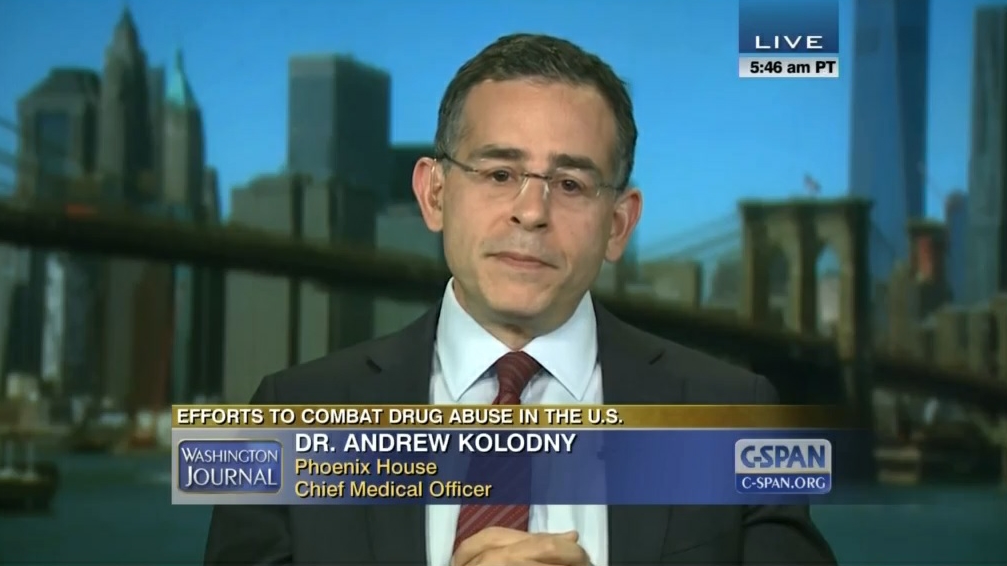
Andrew Kolodny, MD, Executive Director of Physicians for Responsible Opioid Prescribing, appeared on C-SPAN this weekend to speak about the Obama administration’s efforts to combat prescription drug abuse and the increasing use of heroin. He also answered calls from viewers, including one woman who recently started taking a pain medication for arthritis and was worried about becoming addicted.

“In general, if someone’s calling me and asking me about this medication, as a physician my inclination would be to tell you to listen to your doctor and to trust your doctor,” Kolodny told the woman.

“Unfortunately when it comes to opioids, we’re in a situation where many of the prescribers have very bad information about these drugs, they’re really underestimating how addictive and how risky they are and overestimating how helpful they can be.  So I wish I could tell you that you should trust your doctor and talk to your doctor about this, but that may not be the case. This is a really difficult situation. We have doctors even prescribing to teenagers and parents not recognizing that the doctor has just essentially prescribed the teenager the equivalent of a heroin pill.”

Kolodny also compared opioid pain medication to heroin during an addiction conference Friday at the University of Richmond.

“When we talk about opioid painkillers we are essentially talking about heroin pills,” Kolodny said, according to a story in the Richmond Times Dispatch.

He told the conference opioids were “very important medications” to ease suffering at the end of life or after major surgery, but were often not appropriate for chronic pain.

“The bulk of the U.S. opioid consumption is not for end-of-life care or acute pain. The bulk is for common chronic conditions where leading experts who study them say opioids are more likely to harm patients than help them.”

On C-SPAN, Kolodny said many patients taking opioids for chronic pain mistakenly believe the drugs are helping them, when “the vast majority of them are not doing well.”

“What may be happening for many of them is that the opioid is actually treating withdrawal pain. They may not really be getting pain relief when you’re on a consistent dose over a very long period of time,” Kolodny said.

Kolodny and Physicians for Responsible Opioid Prescribing (PROP) are drawing new attention because of a significant role the organization appears to be playing in the drafting of opioid prescribing guidelines by the Centers for Disease Control and Prevention (CDC). As Pain News Network has reported, at least five PROP board members, including Kolodny, are on CDC advisory panels that are developing the guidelines. A link to PROP literature recommending “cautious, evidence-based opioid prescribing” can also be found -- unedited -- on the CDC’s website.

PROP President Jane Ballantyne, MD, and Vice-President Gary Franklin, MD, are both members of the CDC’s Core Expert Group, and board member David Tauben, MD, is on the CDC’s peer review panel. All three were heavily involved in developing restrictive opioid prescribing guidelines in Washington state.

Kolodny and PROP board member David Juurlink, MD, are members of a “Stakeholder Review Group” that is also providing input on the CDC guidelines.

Those guidelines recommend that “non-pharmacological therapy” and non-opioid pain relievers be used to treat chronic pain. Lower doses and quantities of opioids are recommended for acute pain. A complete list of the guidelines can be found here.

The CDC is currently revising the guidelines to meet a January deadline, using "rapid reviews" of clinical evidence “to address an urgent public health need.” The agency blames opioid pain medication for the overdose deaths of over 16,000 Americans annually.

Many pain patients are worried they won’t be able to obtain opioids if the guidelines are adopted. In an online survey of over 2,000 patients by Pain News Network and the Power of Pain Foundation, 95 percent said the guidelines and other government regulations discriminate against them. Most patients also said non-opioid pain relievers didn’t work for them and that their insurance usually didn’t cover therapies like acupuncture, massage and chiropractic care.  

In a conference call last week with stakeholders, CDC officials said the guidelines are being modified to emphasize that they are mostly intended for new patients and that patients currently taking opioids will still have access to the drugs.

“We do need a better answer for these 10 to 12 million Americans who are already on opioids,” Kolodny said on C-SPAN. “We’ll need a compassionate way of helping that population. I think what might be a little easier to do is to prevent what I would call ‘new starts.’ We need to get the medical community to understand that for most patients with chronic pain, long term opioids may not be safe or effective. And let’s avoid getting patients stuck on these medications, medications that are highly addictive.”

Kolodny said existing patients should have easier access to addiction treatment.

“One of the most effective medications for opioid addiction is a drug called buprenorphine or Suboxone,” said Kolodny, who is chief medical officer for Phoenix House, a non-profit that operates addiction treatment clinics.

“Unfortunately there are federal limits on the number of patients a doctor can treat with this medicine. And what we’re seeing is in parts of the country, like West Virginia and Appalachia, and in communities that have been hit very hard, you have doctors who have maxed out on the number of patients they can treat, which is a maximum of one hundred. And there are patients on waiting lists for this medication who are actually dying of overdoses while waiting on this list to be able to get buprenorphine.”

Ironically, buprenorphine is an opioid that is used to treat both addiction and pain. Although praised by Kolodny and other addiction specialists as a tool to wean addicts off opioids, some are fearful the drug is overprescribed and misused. Many addicts have learned they can use buprenorphine to ease their withdrawal symptoms and some consider it more valuable than heroin as a street drug.

Over three million Americans with opioid addiction have been treated with buprenorphine.  According to one estimate, about half of the buprenorphine obtained through legitimate prescriptions is either being diverted or used illicitly.

CDC Updates Opioid Prescribing Guidelines

By Pat Anson, Editor

The U.S. Centers for Disease Control and Prevention (CDC) is “still revising and making lots of changes” to its controversial draft guidelines for opioid prescribers, according to a source who listened to a CDC conference call today updating “stakeholders” about the guidelines.

But CDC officials gave few specifics on what modification have been made, and said the dozen guidelines will remain under a strict embargo until they are released in January.

“Overall, they tried hard to give the sense that they really listened and responded to our comments. But, of course, all they did was talk in generalities about changes that have been made, and we won’t see it again until it’s published,” the source told Pain News Network.

The draft guidelines ignited a storm of controversy in the pain community when they were released last month. The CDC is recommending “non-pharmacological therapy” and non-opioid pain relievers as preferred treatments for chronic non-cancer pain. Smaller doses and quantities of opioids are recommended for patients in acute or chronic pain.  A complete list of the guidelines can be found here.

A survey of over 2,000 pain patients by Pain News Network and the Power of Pain Foundation found that many are worried about losing access to opioid pain medications if the guidelines are adopted. Nearly 93 percent believe the guidelines would be more harmful than helpful to pain patients. Many also believe they will not decrease the use of illegal drugs but actually increase them, causing even more addiction and overdoses.

On today’s call, CDC officials said their most important goal was to maintain access to opioids for pain patients. They also emphasized that the guidelines are voluntary for primary care physicians, who treat the vast majority of pain patients. Language such as “usually” and “whenever possible” are being added to a number of guidelines to give prescribers more flexibility, according to the source.

One guideline that has raised serious concern would put an upper limit on opioid prescribing to a daily dose of 90 mg of morphine equivalent. One stakeholder during the call said that threshold was “arbitrary” and “perhaps dangerous.” CDC officials said the language in that guideline was modified extensively to emphasize that is intended for new patients, not patients who are already taking opioids at or above that dosage level.

The CDC said it received over 1,200 comments on the guidelines during a 48 hour window when it accepted comments from stakeholders and the public last month.  Although as many as 11.5 million Americans are on long term opioid therapy, public participation has been minimal in the guidelines development. Only two patient advocacy groups were included among the dozens of stakeholders and special interests invited to listen to today's conference call. A complete list of the stakeholders will be listed at the end of this article.

The CDC’s update came as the Obama Administration announced new efforts aimed at addressing prescription drug abuse. Over 40 organizations representing doctors, dentists, nurses, physical therapists and educators announced that over half a million of their members would  complete opioid prescriber training in the next two years. In addition, several media outlets, the National Basketball Association, Major League Baseball and other companies said they would donate millions of dollars for public service announcements about the risks of prescription drug misuse.

Call for Congressional Investigation

Meanwhile, the American Academy of Pain Management (AAPM) is urging the House Energy and Commerce Committee to look into how the CDC developed the opioid guidelines. In a letter to committee chairman Rep. Fred Upton (R-MI), the AAPM said the process used in developing the guidelines was “deeply flawed” by secrecy and a lack of transparency, as well as potential conflicts of interest with many of the outside advisers the CDC consulted with.  

“We urge you to strongly encourage CDC to withdraw this draft guideline and, should they decide to start over, to engage in a process that is more transparent and inclusive of the needs and views of all clinicians and patients—both those with pain and those who misuse opioid pain relievers,” wrote Bob Twillman, PhD, Executive Director of AAPM.

“Unless these questions are adequately addressed, the organizations with clinicians who strive to treat chronic pain, and in fact do so with opioids, will not support them but will, by necessity, be forced to actively oppose them.”

Washington Post Calls Guidelines “Promising”

Secrecy surrounding the CDC guidelines has been one reason they haven’t gotten much coverage in the mainstream news media. One example is the Washington Post, which has yet to run a story on the guidelines or the controversy surrounding their development.

But that oversight didn’t stop the Post’s editorial board from weighing in on the issue. In an editorial headlined “The CDC’s promising plan to curb America’s opioid dependence,” the Post said the guidelines would turn opioid prescribing “in an appropriately more cautious direction.”

The editorial also dismissed a letter from the American Cancer Society opposing the guidelines, saying its concerns about cancer patients being denied pain relief were “overstated.”

“It’s true, as the cancer society letter notes, that the CDC guidelines are more than mere suggestions and will influence ‘state health departments, professional licensing bodies or insurers.’ That is precisely why they can be so beneficial,” the Post said.

“Until now, government, medicine and the private sector have too often underestimated the risks, individual and societal, of widespread opioid prescription. The CDC has the prestige and authority to correct the balance. After incorporating valid comments from the cancer society and other interested parties, the CDC plans to publish in early 2016, and we see no reason to delay.”

CDC's Stakeholder Review Group:

American Academy of Neurology; John Markman, MD
American Academy of Pain Medicine; Edward C. Covington, MD
American Academy of Pain Management; Bob Twillman, PhD
American Academy of Pediatrics; Roger F. Suchyta, MD, FAAP
American Academy of Physical Medicine and Rehabilitation; Christina Hielsberg
American Cancer Society; Mark Fleury, PhD
American Chronic Pain Association; Penney Cowan
American College of Medical Toxicology, David Juurlink, BPharm, MD, PhD
American College of Obstetrics and Gynecology; Gerald “Jerry” F. Joseph, Jr, M.D.
American Geriatrics Society; Mary Jordan Samuel
American Hospital Association; Ashley Thompson
American Medical Association; Barry D. Dickinson, PhD
American Pain Society; Gregory Terman MD, PhD
American Society of Anesthesiologists; Asokumar Buvanendran, M.D.
American Society of Addiction Medicine; Beth Haynes, MPPA
American Society of Hematology; Robert M. Plovnick, MD, MS
American Society of Interventional Pain Physicians; Sanford M. Silverman, MD
Physicians for Responsible Opioid Prescribing; Andrew Kolodny, MD

1 in 10 College Students Misusing Pain Meds

By Pat Anson, Editor

One out of 10 college students are misusing prescription pain medications, according to a new survey conducted on eight U.S. college campuses. About a third of students said it was easy or very easy to obtain pain medications.

Nearly 4,000 graduate and undergraduate students were surveyed in the 2015 College Prescription Drug Study (CPDS) by Ohio State’s Center for the Study of Student Life. 

The anonymous survey of students at six public and two private colleges and universities in five states is believed to be the most comprehensive study of prescription drug misuse on multiple campuses.

Stimulants such as Adderall and Ritalin are the most widely misused prescription drug. About 18% of undergraduates reported misusing stimulants. The great majority (83%) received them from friends and most said they used the drug to help them study or improve their grades.

“At one time, college students most commonly misused drugs to get high,” said Kenneth Hale, a clinical professor of pharmacy at Ohio State. “But today, students also use medications to self-medicate, to manage their lives. They are using drugs to control pain, to go to sleep, to relieve anxiety and to study.”

For example, 55% of students who misused pain medications said they did it to relieve pain, while 46% said they did it to get high. More than half who misused sedatives said their aim was to get to sleep, while 85% who misused stimulants wanted to improve their grades or studying.

About 9% of undergrads used sedatives, with nearly half saying it was easy or very easy to find them on campus.

The misuse of prescription drugs often came with side effects. About 20% of those who used pain medications said they were depressed and 17% said they experienced memory loss.

Students may overestimate the value they get from using prescription drugs, particularly stimulants. About two-thirds of the students said stimulants had a positive effect on their academics, but researchers say that’s probably not true.

“Studies have shown that students who misuse stimulants tend to have lower GPAs,” Hale said. “Some students think of them as cognitive enhancers, but they are really cognitive compensators for students who didn’t go to class, didn’t study and then have to stay up all night to cram for an exam.”

Misuse of prescriptions drugs often led to illegal drugs. More than half of the undergraduates who misused prescribed meds had used illegal drugs in their place at some point. Marijuana was used by half of undergrads who misused controlled drugs, followed by cocaine and hallucinogens at 19 percent. Nearly 2% moved on to heroin.

“Research shows that the misuse of prescription pain medications can be a stepping stone to heroin, and the average age for starting the misuse of these medications falls within the traditional college years,” Hale said.

A 2012 survey found that one in four American teenagers has misused or abused a prescription drug at least once in their lifetime. The survey by The Partnership at Drugfree.org found that teenage abuse of opioids like Vicodin and OxyContin had leveled off but remains high. Over 2.1 million teens admitted misusing narcotic painkillers in the past year.

CDC Should Listen to Pain Patients

By Shaina Smith, Guest Columnist

In the wake of the release of the Centers for Disease Control and Prevention's opioid prescriber guidelines, patient advocacy groups and chronic pain patients have been anything but silent. For U.S. Pain Foundation, the process by which the guidelines were crafted seems to have left out a significant part of the equation: chronic pain patients.

When it comes to patient care, we are not alone in this battle to advocate on behalf of those who cannot speak. There are like-minded organizations working diligently to ensure the basic rights of the chronically ill. What we are finding within the nonprofit realm, however, is that higher commanding entities, formed to support the health and well-being of patients, are creating additional hurdles for those they should be helping.

Closed door conversations without consideration of the impact such discussions and decisions can have do not create improved methods that will be embraced by pain warriors. On the contrary, they work against the patient and will cause potential harm.

Working alongside U.S. Pain Foundation volunteers known as Pain Ambassadors, I hear too often chilling and heart-wrenching stories about insurance companies bickering over who will cover what prescription (if they have insurance at all), along with state laws that create additional roadblocks to fair treatment and access.

When I learned of these guidelines, I immediately thought of all those individuals who have already messaged me, begging that we come up with a plan to provide fair access to the treatment they were seeking. After reading the survey results generated by Pain News Network and the Power of Pain Foundation, it is clear that the window for providing fair access and treatment for chronic pain patients is closing.

But there is always hope and ways we can unite our voices to gain back a sense of balance in the way patients are treated by healthcare providers, regulators and lawmakers.

Perhaps the most alarming statement made by over 2,000 participants who completed the survey was that the vast majority feel the CDC guidelines would be more harmful to patients than helpful. This statement is supported throughout the survey results; many fear there will be a rise in pain patients committing suicide, and believe the guidelines will not resolve the misuse and abuse issue at all.

The results are not surprising. While the war on drugs has taken the media’s attention by the horns, patient advocacy organizations like U.S. Pain Foundation have been fighting their own battles on behalf of the brave pain survivor; seeking fair and timely treatment, access to integrative and prescription therapies (not exclusive to opioids) and fighting societal stigmas.

Although we are grateful for lawmakers taking a stance to promote easier access to treatment through the elimination of unjust practices such as step therapy and specialty tiers; there are still many proposals written with good intentions that will potentially cause negative impacts to the 100 million Americans living with chronic pain.

Sadly, the CDC guideline for opioid prescribers is one such proposal. It aims to alleviate misuse and abuse, and attempts to be an educational tool for healthcare providers, but also attempts to take the place of a patient’s treatment plan crafted by that patient and their doctor.

U.S. Pain Foundation has for years prided itself in becoming involved in proposed legislation to ensure the patient-doctor relationship is not hindered by regulations that second-guess the doctor’s initial findings, diagnosis and treatment plan for each patient. We will champion for similar models as the CDC continues revising its prescriber guidelines.

In reading the survey results, it is clear that there are many variables which were not considered in the guidelines. One such variable would include insurance coverage for additional treatments if a patient’s doctor follows the guidelines and decides to no longer prescribe opioid medications.

When asked if their health insurance covered non-pharmacological treatments such as acupuncture, massage and chiropractic therapy, 54% of survey participants stated their insurance did not cover such treatment. I shake my head while reading these answers as I find it hard to believe that in this day and age we are still fighting for basic patient rights to access modalities that may lessen a person’s suffering.

Patients Worried What Their Doctors Will Do

Where are pain patients to turn if these guidelines are put in place and they are not even given alternative means to offset their discomfort?

It is inevitable that many primary care physicians or pain specialists will become fearful if they decided to continue prescribing opioids once the guidelines are in full effect. The survey results clearly reflect a large group of worried pain sufferers whose gut reaction is telling them that their doctors will prescribe opioids less often or not at all if the guidelines are implemented.

Moving forward, the nation can learn from the failed attempt at including the voices of those who would be directly impacted by guidelines. When I say failed, I am speaking of the lack of communication between the CDC and organizations that are fighting access issues on a daily basis. I am speaking of the pain patient who was not privy to join in the CDC’s webinar and has not been given a clear understanding of the CDC’s intent.

The CDC should see the concerns spelled out in the survey and the impact the prescriber guidelines could have on patients. Had the chronic pain community been more involved with the development of the guidelines, less concern would be shared among advocacy groups and patient-centered organizations within the United States.

How each proposed guideline may impact a person’s mother, father, chronically ill child, grandmother, sister, husband or friend should have been expressed and explored further. The CDC should have included patient advocates and pain survivors to lend their expertise during the development stages of the prescriber guidelines.

After reviewing the survey results, U.S. Pain Foundation’s National Director of Policy and Advocacy Cindy Steinberg said, “The overwhelming feeling of survey respondents appears to be that the CDC is discriminating against people with pain.”

“Chronic pain sufferers are very worried that if these CDC guidelines go forward, they will not be able to access a treatment that they can rely on,” she added. “They are concerned that these guidelines will be very harmful for them and that they will lead to a lot more suffering for people with pain.”

U.S. Pain Foundation supports all treatment options that will lessen a person’s suffering. Reducing options, which will be the case as healthcare professionals will likely follow guidelines implemented by the CDC, only exacerbates an already existing battle for chronic pain patients.

Pain warriors are unfortunately made to feel that their pain is not real, their attempt at finding relief makes them drug seekers, and they should fail first at other options before receiving the care agreed upon by their doctors. Everyday obstacles faced by chronic pain patients, including me, cause added stress and hardships.

The CDC should consider the already struggling pain survivors before moving forward with guidelines that would impose additional adversity on the pain patient.

Shaina Smith is Director of State Policy & Advocacy and Director of Alliance Development for U.S. Pain Foundation Inc.

The information in this column should not be considered as professional medical advice, diagnosis or treatment. It is for informational purposes only and represents the author’s opinions alone. It does not inherently express or reflect the views, opinions and/or positions of Pain News Network.


CDC Cites ‘Urgent Need’ for Prescribing Guidelines

By Pat Anson, Editor

In the wake of growing criticism over its draft guidance for opioid prescribing, the Centers for Disease Control and Prevention (CDC) has released a new study it claims is proof of an “urgent need for improved prescribing practices.”

The agency released its first multi-state report from a federal surveillance system that analyzes data from eight states’ prescription drug monitoring programs (PDMP).

The report, published in the Morbidity and Mortality Weekly Report (MMWR) Surveillance Summary,  tracked prescribing patterns during 2013 in California, Delaware, Florida, Idaho, Louisiana, Maine, Ohio and West Virginia -- about a quarter of the U.S. population.

The report found that prescribing patterns varied widely by state, not just for opioid pain medications, but for stimulants and benzodiazepines, a class of anti-anxiety drugs.

Louisiana ranked first in opioid prescribing, and Delaware and Maine had relatively high rates of prescribing extended-release (ER) opioids. Delaware and Maine also ranked highest in opioid dosage and in the percentage of opioid prescriptions written. California had the lowest prescribing rates for both opioids and benzodiazepines.

In most states, only a small minority of prescribers are responsible for most opioid prescriptions. The report also found that people who obtained opioid prescriptions often received benzodiazepine prescriptions as well, despite the risk for adverse drug interactions.

The wide variance between states was cited as a reason to bring more uniformity to prescribing practices.

“A more comprehensive approach is needed to address the prescription opioid overdose epidemic, including guidance to providers on the risks and benefits of these medications,” said Debra Houry, MD, director of CDC’s National Center for Injury Prevention and Control.

“Every day, 44 people die in American communities from an overdose of prescription opioids and many more become addicted,” said CDC director Tom Frieden, MD. "States are on the frontline of witnessing these overdose deaths.  This research can help inform their prescription overdose prevention efforts and save lives.”

Last month the CDC unveiled a dozen draft guidelines for primary care physicians who prescribe opioids. The guidelines recommend “non-pharmacological therapy” and non-opioid pain relievers as preferred treatments for chronic non-cancer pain. Smaller doses and quantities of opioids are recommended for acute or chronic pain.  A complete list of the guidelines can be found here.

Critics faulted the CDC for developing the guidelines in secret and with little input from patients or pain management experts.

Earlier this month, the California Medical Association sent a highly critical letter to Frieden and Houry saying it had “significant concern” about the secretive nature the agency used in developing the guidelines, which it said were “not appropriate nor transparent.”

“It is deeply concerning that the details behind the 12 recommendations are being made available to some unknown organizations and individuals for review and comment, but not to the general public. The information available to the public was so limited and the time to comment so brief, that it created the perception that the end result has already been determined,” wrote Luther Cobb, MD, President of the California Medical Association, which represents over 40,000 healthcare providers.

“The public must also be able to assess the potential biases and the opioid prescribing expertise for those involved in the creation of the guidelines. The public needs to know who was involved as well as their qualifications and conflicts.”

Cobb called on the CDC to publicly release all materials and recommendations used to develop the guidelines and to allow for a public comment period of 90 days.

The CDC accepted public comments for just 48 hours after releasing the guidelines during an online webinar last month.  As Pain News Network has reported, over 50 invitations to the webinar were sent to groups representing physicians, insurance companies, pharmacists, anti-addiction advocacy groups and other special interests. Only two patient advocacy groups – the American Cancer Society and the American Chronic Pain Association (ACPA) – were invited.