Quell Device Relieves Variety of Pain Conditions

By Pat Anson, Editor

A new medical device that uses electrical nerve stimulation was effective in managing chronic pain in patients suffering from arthritis, neuropathy, fibromyalgia and other conditions, according to a small clinical study conducted by NeuroMetrix (NASDAQ: NURO), the device’s manufacturer.

Pain News Network recently featured the Quell Wearable Pain Relief device in a column by J.W. Kain, who reported that Quell “worked brilliantly” in relieving her chronic neck and back pain.

Eighty eight people were enrolled in a 60-day trial of Quell. All had chronic pain for at least year and nearly a quarter had more than 15 years of pain. Participants had “complex medical histories” with arthritis (61%), diabetic nerve pain (40%), sciatica (27%), and fibromyalgia (26%) as the most common conditions.

Over 80 percent of the participants said Quell relieved their chronic pain and improved their overall health. The largest measured changes were in pain relief, along with improved sleep, general activity, and walking ability.

Over two-thirds of the patients said Quell also reduced the amount of pain medication they were taking

image courtesy of neurometrix

image courtesy of neurometrix

"We are pleased with these results. They represent the first formal evaluation of self-administered wearable intensive nerve stimulation. Quell provided substantial pain relief and improvement in quality of life measures,” said Shai N. Gozani, MD, President and CEO of NeuroMetrix.

“We were not surprised that two-thirds of the subjects reduced their use of pain medications, as we have consistently received this anecdotal feedback from Quell users over the past several months.”

Quell is available over-the-counter and does not require a prescription. It relieves pain by using electric stimulation to “mask” pain signals before they reach brain, much like a TENS unit.  The device, which costs $249, is lightweight and designed to be worn over the upper calf during the day or night.

The marketing of Quell for the treatment of chronic pain was approved by the Food and Drug Administration in 2014, but NeuroMatrix did not begin shipping the device to healthcare providers until this summer. It is also available through the company’s website.

A study abstract, “Treatment of Chronic Pain with a Novel Wearable Transcutaneous Electrical Nerve Stimulator,” has been accepted for poster presentation at the annual PAINWeek conference next month in Las Vegas.

Pain Education Improves Opioid Prescribing

By Pat Anson, Editor

A safe opioid prescribing course --- aimed at filling in gaps in pain education at many medical schools -- can help reduce the abuse and misuse of opioids, according to a new study published in the journal Pain Medicine.

Boston University School of Medicine launched its Safe and Competent Opioid Prescribing Education (SCOPE) program in 2013, offering live or online courses in chronic pain and safe opioid prescribing practices.

A survey of over 10,000 doctors who took the SCOPE program found that two months after the training about two-thirds of participants reported greater confidence in their prescribing practices, and 86 percent improved how they prescribed opioids and monitored patients.

"Our program improved knowledge, attitudes, confidence and clinical practice in safe opioid prescribing," said corresponding author Daniel Alford, MD, associate professor of medicine at Boston University School of Medicine and course director of the SCOPE of Pain program.

SCOPE was the first program to receive funding from the Food and Drug Administration’s Risk Evaluation and Mitigation Strategy (REMS), which requires opioid manufacturers to fund continuing education programs in pain management.

"While education cannot be the only strategy to combat this national crisis, it can help improve clinician behaviors and be a major part of the solution,” said Alford.

An earlier survey of physicians by Boston University found that many lacked confidence in managing patients on opioids. Over a quarter (28%) said they had not completed certified medical education (CME) in safe opioid prescribing. Many also said they lacked the time or staff to implement an opioid monitoring system for patients, such as drug testing and pill counts.

Only a quarter of the doctors surveyed said they were very confident about their ability to safely manage chronic pain with opioids.

Pain education for doctors – or the lack of it – is such a concern that the National Pain Strategy considers it a top priority.

“Many health professionals, especially physicians, are not adequately prepared and require greater knowledge and skills to contribute to the cultural transformation in the perception and treatment of people with pain,” a draft version of the report states. “Core competencies in pain care are not fully developed and generally do not inform undergraduate curricula in health professions schools or graduate training programs, even those in pain medicine.”

A 2012 study published in the Journal of Pain  called pain education in the U.S. and Canada “lackluster” and warned that unless steps were taken to improve the training of pain physicians, “the crisis in pain care and resultant deaths from opioid abuse will only spiral upwards.”

The study of 117 U.S. and Canadian medical schools found that less than 4% required a course in pain education and only one in six schools offered a pain elective. A large number of U.S. medical schools do not have any pain courses and many of those that do have less than five hours of classes.

Migraine Device Reduces Headache Pain

By Pat Anson, Editor

A device that looks like a space age tiara not only helps prevent migraine attacks, but also relieves headache pain once a migraine starts, according to the results of a small clinical trial.

In a study of 20 migraine sufferers, published in The Journal of Headache and Pain, the Cefaly device provided "statistically significant" pain relief, as well as an 81 percent reduction in the number of migraine attacks. Patients in the study also said they used less migraine medication.

Cefaly was approved last year by the U.S. Food and Drug Administration as the first transcutaneous electrical nerve stimulation device specifically authorized for use prior to the onset of migraine pain.  Previous studies of the device only focused on migraine prevention.

"This is great confirmation on what we thought about the high efficacy of Cefaly," said Dr. Pierre Rigaux, chief executive officer of Cefaly Technology, a company based in Belgium. "We knew Cefaly to be very safe and with minimal side effects, but now we learn that it's not just the frequency of migraine days that's reduced for every four out of five patients, but the intensity of pain during a migraine attack is reduced as well."

IMAGE COURTESY OF CEFALY TECHNOLOGY

IMAGE COURTESY OF CEFALY TECHNOLOGY

The battery-powered device, which is worn over the forehead like a headband, uses tiny electrical impulses to stimulate the trigeminal nerve, which has been associated with migraine headaches. Cefaly requires a prescription and costs about $349. The device is only available through the company’s website and is not covered by insurance. It’s been available in Europe and Canada for several years.

It was on a trip to Canada that Maria Coder learned about Cefaly and – at the urging of her boyfriend Jay– reluctantly agreed to buy one.

“At the time my boyfriend and I got into a big fight because he wanted me to use it right away and I didn’t really like the idea. I’d never heard of it and I was nervous about using it,” said Coder, who has suffered from migraine for nearly two decades.  

The device sat in its box for about a week before she finally tried it.

“I was alone in the apartment and put on the headband and loved it. I fell in love with it. I started to feel better, but I thought beginner’s luck,” Coder told Pain News Network. “I tried it a few more times and then it took on a life of its own. Now I feel like a wimp when I get a migraine because I don’t get them hardly ever compared to before. It’s down to maybe 3 to 5 a month, whereas for almost ten years it was chronic, almost daily.”

Coder, who works in public relations, wrote a letter to Cefaly Technology that eventually turned into a job as a publicist for the company. She also recently married her boyfriend – wearing the Cefaly device for her daily 20-minute session during a break after the ceremony and before her reception.

“I really love and I really believe in it. I didn’t believe in it at first, when I got it. And then the more that I used it, the more I couldn’t deny the results,” she said.

Migraine is thought to affect a billion people worldwide and about 36 million adults in the United States, according to the American Migraine Foundation. It affects three times as many women as men. In addition to headache pain and nausea, migraine can also cause vomiting, blurriness or visual disturbances, and sensitivity to light and sound.

maria coder

maria coder

In 2013, the FDA approved the marketing of another device -- the first transcranial magnetic stimulation (TMS) device approved for the relief of migraine pain. The Cerena TMS is placed at the back of the head to release a pulse of magnetic energy to the brain’s occipital cortex, which may stop or lessen pain caused by migraine headaches.

The Painful Truth: How Patients Are Treated Shamefully

Lynn Webster, MD, is past President of the American Academy of Pain Medicine, vice president of scientific affairs at PRA Health Sciences, and one the world’s leading experts on pain management. He treated people with chronic pain for more than 30 years in the Salt Lake City, Utah area.

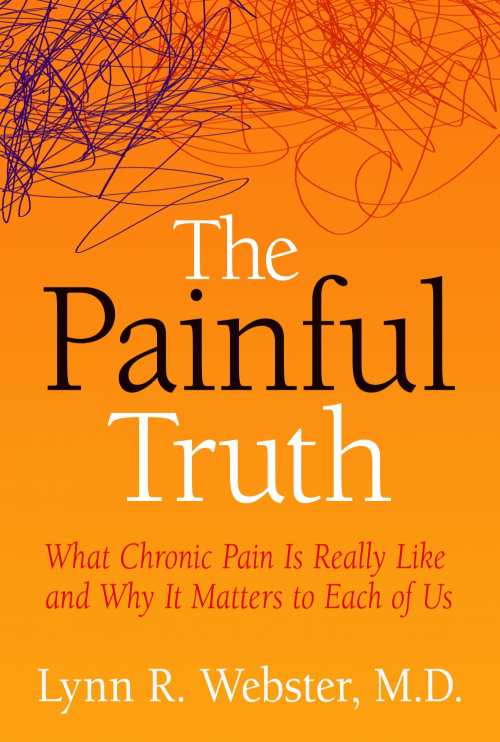
Dr. Webster’s new book, “The Painful Truth,” is a collection of stories involving several of his former patients, who struggled with the physical, emotional and financial toll that many chronic pain sufferers experience.  

Pain News Network editor Pat Anson recently spoke with Dr. Webster about his book.

The interview has been edited for content and clarity.

Dr. Lynn webster

Dr. Lynn webster

Anson: Dr. Webster, you’re no longer practicing medicine, but you’re still very involved in the pain community and in research. Why write this book now at this stage of your career?

Webster: It takes a lot of time to write a book, as you can imagine, and it’s taken me four years to get to this point.  I think that at this stage in my career I can look back and put together a story about the people who I’ve taken care of for most of my career that I’m not sure I could’ve done in the middle of it. I think that’s given me the ability to look back and reflect and feel the heartache that patients have, and my inability to deliver to them everything that I wanted to deliver to them, because of all of the barriers and obstacles in healthcare.

I’m hoping that my book is going to be a seed that will contribute to a cultural change, a social movement that will bring some dignity and humanity to a large population of our country.

Anson: In your book you said the painful truth is that people in pain are treated shamefully. What did you mean by that?

Webster: When I was growing up on a farm I observed something as a young boy that always puzzled me and that was watching the injured or sick animals. We had all sorts of animals; cows, pigs, sheep, and chickens, and I could see that the injured somehow were always separated from the healthy ones. It wasn’t that the sick separated themselves from the healthy, but the healthy separated themselves from the injured or the ill.

I see that to some degree in people and I wonder if this hasn’t been a biological aspect of survival for man from the beginning. We as humans are better than that; we’re better than we may have been thousands of years ago.

Today, I think that it is shameful that people are stigmatized because they have pain, they’re isolated, and they’re denigrated often. Because of our healthcare system, at least in this country, they’re viewed as addicts, lowlife’s, and druggies. That’s rarely true and it absolutely prevents, it really contributes to the harm that pain sufferers feel towards themselves and their inability to get the type of care they need. I think that it hurts our society in so many different ways, but most importantly the people in pain.

Anson: A lot of your book is dedicated to telling the stories of some of the pain patients that you treated. Virtually every one went through what you just described, where they had trouble getting proper treatment, they had trouble with their jobs, with their families, and with their friends. Is that why you write the book in this way, so that their stories get across the point you’re trying to make?

Webster: Absolutely. It’s less important that a physician tells a story than a patient tells their story. I wanted this book to be felt by the readers, to understand what people in pain experience and the struggles they have.

Anson: You wrote that, “People in pain need to be both treated by medical professionals and supported by all the important people in their lives.” Is that happening?

Webster: No, of course not. There are some patients that have pain who have great support structures in their personal life. For example Alison, she is an individual who had what I thought was the quintessential family support. Were it not for her mother, father and sister, she could’ve gone down the path that too many others take, which would be resignation rather than resilience. It’s one where drugs are used to cope and to escape the pain, physical but also the emotional.

Too many people are separated and too few have the structure of the support system that Alison had.  Our healthcare system is abominable. It shamelessly abandons them with limited resources, limited access and actually a labeling of the individual as if they’re a leper; they have a disease that is contagious.

Anson: Is the average physician in U.S. prepared to treat chronic pain?

Webster: No. I think it’s been reported that medical schools average less than 10 hours of education on pain and even less for addiction. Yet this is the number one public health problem in America and it’s not recognized by the CDC like many other disease states have been.

And so very few physicians understand what pain is. In fact, many think that it’s just a symptom and you never die from pain which is categorically wrong. As I write in my book, pain can be as malignant as any cancer and it can be just as devastating. It can take the soul but it also takes the life of some individuals when we ignore it and when we’re unable to provide them the relief that they deserve.

Anson: If you were a young man again in medical school and trying to decide what specialty to go into, knowing what you know today, would you go into pain medicine?

Webster: Without a doubt, there is no hesitancy in this response; I love the field that I’ve been in. As an anesthesiologist I could’ve stayed in the operating room and honestly the compensation of doing that would have been far better than the path that I chose. But the rewards I’ve received from trying to make a difference and the thank you’s that I’ve received will never be matched by any kind of financial or professional recognition in any other areas.

The most rewarding part of life is really to be able to make a difference in someone else’s life. And I think I’ve been able to do that with hundreds, if not thousands of individuals. That actually is the reason for the book. I’m hoping the book is going to make a difference for more people than I could physically touch in my clinic.

Most of the people that I saw as patients were already experiencing a large amount of pain, they’ve been through the mill and many had their chronic pain for years before they came to see me. We are basically going to be taking care of them the rest of their life. We do get to know them, much like a primary care person does to a family they’ve been caring for, and so we get to know them well. They get to know us. We also begin to see the struggles that they have in the system and with the rejection of their families sometimes, their friends, the isolation. And we become the only source that’s grounded, that gives them potential hope. I took that very seriously and I think that’s why it was so rewarding for me.

Anson: You wrote that you’re neither pro-opioid or anti-opioid. What do you mean by that?

Webster: My focus has never been about making opioids available or that they should be used. In fact ten years ago I started the first national campaign about the risk of opioids. My campaign was called Zero Unintentional Overdose Deaths and you can still find that on the Internet. I did a lot of work at trying to understand the potential risks and mitigate those risks so we can prevent people from harm because I knew one day that if we couldn’t prevent people from being harmed from opioids that there would be political response to this that could be very harmful to a large number of people who are not harmed by opioids.

I think the focus should always be about what’s best for a patient and not about whether a drug or a certain treatment is good or bad. All treatments have potential risks and complications, and we need to evaluate whether or not the potential benefit outweighs the potential risk or harm and it has to be patient centered. So my focus has never been about really any treatment, but it’s always been about what’s best for the patient. I’m more anti-pain than I am pro or anti-opioid.

Anson: You prefer a multi-disciplinary approach to pain treatment?

Webster: Yes, it’s been demonstrated that for people with moderate to severe chronic pain, the type that’s not likely to be resolved, it is best managed in a multi-disciplinary, integrative approach. I see the need for more cognitive behavioral therapy. We should always tap into the different treatments that have low risk associated with them before we ever tap into something that has more risk, for example opioids or even interventional treatments we as anesthesiologists and some of the other pain specialists can provide.

Much about pain is really learning how to cope, how to deal with it from day to day and how to manage the stress that’s associated with it because stress augments all pain. And so it’s really important that we use all of the resources that we have to manage the pain and not just a single modality, certainly not opioids or spinal cord stimulators, but look at how we can manage this in a more mindful way, even as clinicians. I use that word intentionally because mindfulness is really what the doctor needs to use as much as the patient in order to optimize the treatment with the lowest risk.

Anson: Has the pendulum swung too far against use of opioids?

Webster: I think there’s too much focus on opioids by almost everyone. And what it has done is it’s forgotten about people. Opioids can cause a great deal of harm, we see way too many people harmed from opioids. But certainly a vast majority of people who have been exposed to opioids are not harmed by them and there are countless number of people, a huge number of individuals who have been on opioids for decades, that believe very strongly that they’ve improved their lives and they could not live without them.

I think the focus is in the wrong place. Our focus should not be on opioids and whether they should or should not be prescribed, but what is the best treatment for the patient? And if opioids are inappropriate as a pain treatment, then I say all of the anti-opioid people as well as the individuals who are interested in helping people with pain should come together and demand that we have more money invested in research so we can replace opioids entirely.

We cannot always know who’s going to have an addiction triggered by exposure. As I pointed out in my book, Rachel just went in for an appendectomy and that initial opioid that she received lead her down a serious, dreadful path because she didn’t have the social support to keep her from taking that path.

I think that the anti-opioid people and those of us who are interested in bringing some dignity and humanity to a large population of people in pain need to come together and insist that we have a Manhattan Project basically and to discover safer and more effective therapies that are not addictive.

Anson: The final version of National Pain Strategy will soon be released, with the goal of advancing pain research, healthcare and education in the U.S.  From what you’ve seen and heard so far about it, are they on the right track?

Webster: Yes, I think it’s an important step forward. I think that it brings most importantly the government into the picture, recognizing the need that we do something on a national scale and that alone is a big step forward.

It’s kind of like in my book there are three important words, “I believe you.” This is really the way the government can say, “I believe you.”  There is a problem in this country with the way in which we treat pain and the National Pain Strategy is about how they’re going to address that. Having the federal government say I believe you, there is a problem, let’s see if we can change the way pain is treated in this country is a huge step forward.

Anson: Thank you, Doctor Webster.

You can follow Dr. Webster on his blog, and on Twitter @LynnRWebsterMD, Facebook and LinkedIn.

Life in the Waiting Room

By Pat Akerberg, Columnist

I wonder how much of our lives we spend standing in lines or sitting in rooms waiting.  Thanks to the intractable pain of trigeminal neuralgia and severe surgical complications, it seems that my life has morphed into one big waiting room.  

For the last few years I’ve had lots of cause and reason to speculate about what purpose waiting might serve, besides trying ones’ patience in a world where everything is measured by speed, action, progress and the like. 

Usually waiting brings those things to a halt temporarily.  In fact, Webster describes waiting as a form of being “temporarily undone.”  We consider that kind of short interruption typical.   However, when being temporarily undone turns into becoming permanently undone, how one lives and copes presents a major challenge.

Normally, when we wait we stay in a place of readiness or anticipation until something expected happens or someone arrives.  Things that fit this kind of waiting are sitting in doctor’s offices waiting to be seen, waiting for our reservation at a restaurant, or waiting to advance to the front of a line.  

So expectation, anticipation, and hopefulness are typically attached to our investment in waiting. But those very hopes also have the capacity to backfire if the outcomes we desire have been thwarted or become unattainable.     

It occurs to me that the combination of chronic pain and waiting then becomes a form of “endurance” training.  Note the root word “endure." Much like the “blue plate special,” it involves accepting everything on your plate with no substitutions.  You get what you get; or as those of us who have been physically compromised phrase it, “It is what it is.” 

I wait and hope for sleep to come, real sleep without pain strikes.  I wait for my next Rx to be filled, wait for my medication to take hold, and wait to be able to speak or get nutrition in me without triggering facial pain.  I wait to schedule an appointment or test, and then wait until the day comes.  Then there’s waiting to actually see the doctor and get the test results.

Always I wait in the hopes of discovering something that might provide relief, give some encouragement, or suggest a possible new option.  

There are extra long waits for the neuropathy in my arms to calm down enough for me to type.  It takes days of waiting to be well enough to leave the house for a medical appointment or have a friend visit, along with artful calendar management. Afterwards, I often wait until the high price that those exacted subsides.   

It seems I’m always waiting, watching, and wondering all the while how I will continue to carry out this vigil of unrelenting pain day after day, after week, after month.   Scary thoughts like that can produce anxiety in even the most peaceful person.  And just like riding a wave, I wait for those thoughts to recede.

Some say that life is a school full of learning lessons.  Deep down I’ve always disliked that theory.  Having to experience what didn’t go well so you can learn more for “later” seems so backwards in benefit at times. 

That’s because in retrospect I’m aware that some things we learn don’t always offer a mulligan, a do-over, or an apparent way to benefit from the learning.  But despite that hard reality, I still suspect that our pain and waiting must have something to offer or teach us.

Time spent waiting can be repurposed into a personal workout regimen that involves active, conscious heavy lifting of a different kind.  Let’s face it – self care doesn’t just happen; it takes work!

We can learn to make our lessons learned work for us, instead of lying in wait feeling frustrated and held captive by them.  We can resolve to better prepare and focus on what we need from appointments, figure out how to better advocate for our needs, establish some boundaries, and take the hard actions that will best serve us going forward.

Remember the old question, “So, what are you waiting for?”  That question implied a sense of urgency to act and get on with it, whatever “it” represented.  Maybe our particular “getting on with it” is about learning how to step up and master a new set of skills that will strengthen our internal core to better cope with waiting in pain. 

Instead of being permanently undone by waiting, we can turn that time into honoring non-action as a selective way to wisely conserve energy.  Occasional pity parties can be replaced with reflection about what really matters to us.  We can tenderize the resistance that keeps us blocked and willingly open up, allowing ourselves to be nudged toward flexibility and tolerance.  Or use deep breaths and time-outs to relax enough to go with what is for now.     

We can apply all of this while still fervently holding on and searching for better pain relief, waiting for something hopeful to make itself known. 

In the meantime, to quote the famous Austrian poet, Rainer Maria Rilke: “The point is to live everything. Live the questions now.  Perhaps you will, gradually, without noticing it, live along some distant day into the answer.”    

Pat Akerberg suffers from trigeminal neuralgia, a rare facial pain disorder. Pat is a member of the TNA Facial Pain Association and serves as a moderator for their online support forum. She is also a supporter of the Trigeminal Neuralgia Research Foundation.

The information in this column should not be considered as professional medical advice, diagnosis or treatment. It is for informational purposes only and represents the author’s opinions alone. It does not inherently express or reflect the views, opinions and/or positions of Pain News Network.

Debate Grows over Spinal Injections

By Pat Anson, Editor

A controversial government funded study critical of epidural steroid injections has been republished in the Annals of Internal Medicine, fueling a growing debate over the effectiveness and safety of spinal injections.

A prominent pain specialist called the study’s publication in a peer-reviewed journal “an insult to thousands of physicians across the world."

In a systematic review of 30 placebo controlled trials, researchers found that epidural steroid injections (ESI’s) offer limited or no relief from radiculopathy and spinal stenosis, two conditions that cause low back pain. The study was funded by the Agency for Healthcare Research and Quality (AHRQ) and conducted at the request of the Centers for Medicare and Medicaid Services.

“Epidural corticosteroid injections for radiculopathy were associated with early improvements in some outcomes versus placebo interventions, but effects were small and unsustained, and epidural corticosteroid injections had no clear effects in patients with spinal stenosis,” wrote lead author Roger Chou, MD, a Professor at Oregon Health & Science University (OHSU) School of Medicine and a staff physician in the Internal Medicine Clinic at OHSU.

Epidural injections using analgesics have long been used to relieve pain during childbirth, but spinal injections with steroids are also widely used for back pain. Although the Food and Drug Administration has never approved the use of steroids to treat back pain, several million ESI’s are performed “off label” in the U.S. annually.

The shots have become a common and sometimes lucrative procedure at many hospitals and pain management clinics. Costs vary from a few hundred dollars to over $2,000 per injection.

“Evidence on the effects of using different approaches, corticosteroids, or doses on effectiveness of epidural corticosteroid injections was limited, but indicated no clear effects,” said Chou, who was the principal investigator and author of several other studies published in peer reviewed journals.

“It is a travesty that Chou et al continue to publish these types of manuscripts. It is an insult to thousands of physicians across the world who perform these procedures and millions of patients who have received relief from them,” said Laxmaiah Manchikanti, MD, chairman and CEO of the American Society of Interventional Pain Physicians.

Manchikanti, who is medical director of a pain clinic in Paducah, Kentucky, conducted several of the studies reviewed by Chou and his colleagues.

“Consumers need to understand that the design of their systematic review is flawed and that significant bias exists in the reporting of the results,” Manchikanti wrote in an email to Pain News Network. “It is like eating 2 bananas from different countries and saying both are equally sweet, so neither is sweet. They also are looking for the differences in improvement between both groups rather than how a patient has improved from before the treatment to after the treatment."

Chou’s study also came under fire when it was released by the AHRQ. The Multisociety Pain Workgroup (MPW), a coalition of 14 different societies representing anesthesiologists, surgeons and pain management doctors, sent a lengthy letter to the AHRQ, calling the report's analysis on the effectiveness of ESI's "flawed” and “absurd.”  .

"I don't think its surprising that people who do these injections might disagree or not be happy with the results. Some of the comments seem to demonstrate a poor understanding of how to look at interventions in scientific research," Chou told Pain News Network. "I think people are afraid that they're not going to get paid for doing these types of things. It's not surprising, when people's pocketbooks are threatened, this how they respond."

Chou and his colleagues found the only significant benefit of ESI’s was temporary relief from back pain that usually lasts for only a few days. He attributes much of the pain relief to a placebo effect.

"It's clear that interventions for back pain have a very high placebo effect. We've known that for decades and its been demonstrated over and over again," said Chou.

Manchikanti says most of his patients get pain relief that lasts for several weeks.

“Each patient should be selected individually. They should understand the risks and the off-label nature of these drugs in the epidural space,” he said. “Epidural corticosteroids have been shown to be risky, come with a warning from the FDA, and are an off-label use of these powerful anti-inflammatories.

“For a patient, if they choose to have the procedures done with local anesthetic alone, or with local anesthetic and steroids, they should measure their progress. If they do not improve with the first procedure, they should carefully think about the second procedure; however, there is no reason to have any more than 2 procedures if they do not improve.”

The Choosing Wisely campaign of the ABIM Foundation, which seeks to reduce or eliminate unnecessary medical procedures, also recommends that doctors do not to repeat the injection if a patient shows no sign of improvement.

A number of prominent pain doctors have told Pain News Network the shots are overused, with some patients getting dozens of injections.  

Terri Anderson says repeated shots gave her temporary pain relief from a bulging disc in her back.

“I did receive immediate and short-term benefits over a 3 year time frame. However, I am here to tell you that the injections did not save me from surgery as the disc ultimately failed,” she said.

Anderson now suffers from arachnoiditis, a chronic and painful inflammation of the spinal column that has left her permanently disabled. The Hamilton, Montana woman believes the condition was brought on by too many injections.

“If I had the opportunity to go back in time, I would have stayed away from intervention and lived with the pain I had which was chronic, but it was manageable,” Anderson said.

“The government and professional medical societies have been keeping chemically induced adhesive arachnoiditis hidden from public awareness. Why is that? There is too much profit at stake for hospitals and pain clinics throughout the country. If a physician were to provide their patients with true informed consent (and explain the horrors of arachnoiditis), then no one in their right mind would undergo an epidural steroid injection.”

Purdue Pharma's 'Misleading' Websites

By Pat Anson, Editor

Days after launching a new website promoting abuse deterrent technology, drug maker Purdue Pharma has reached a settlement with New York’s Attorney General in which the company agreed to be more transparent about how it promotes itself in “unbranded” websites.

The maker of OxyContin also admitted its sales representatives contacted doctors who were on a “No Call List” -- even after they were red flagged for possible abuse and diversion of opioids.

“Over the past two decades, New York has experienced a sharp increase in opioid addiction,” said Attorney General Eric Scheiderman. My office will work to ensure that prescription drugs are marketed and prescribed responsibly.”

The Attorney General’s investigation found that one of Purdue’s websites, In the Face of Pain, could “mislead consumers” by suggesting that its content was neutral and unbiased, when in fact nearly a dozen “advocates” who appeared on the site and in YouTube videos were paid nearly a quarter of a million dollars by Purdue.

“The website failed to disclose that from 2008 to 2013, Purdue made payments totaling almost $231,000, for speaker programs, advisory meetings and travel costs, to 11 of the Advocates whose testimonials appeared on the site. The videos on YouTube also fail to disclose Purdue’s payments to the Advocates. Purdue’s failure to disclose its financial connections with certain Advocates has the potential to mislead consumers by failing to disclose the potential bias of these individuals,” the settlement states.

The agreement calls on Purdue to disclose financial relationships with any individuals, including doctors and other healthcare professionals, that endorse the benefits of pain treatment.

Purdue removed the profiles of the paid “Advocates” from In the Face of Pain in April 2015, after the attorney general’s investigation was well underway.

The settlement also takes Purdue to task for its sales practices. Purdue admits that its sales representatives on at least three occasions contacted doctors on a “No Call List” of 103 physicians in New York state who the company suspected may have been involved in the abuse and diversion of opioids. The calls were made to promote OxyContin.

Purdue sales representatives, who amazingly were not required to check the company's No Call List, made about 1,800 sales calls to doctors on the list over a six year period, “some quite extensively,” even buying meals for about a third of them.  It's not clear if the sales calls were made before or after the doctors were added to the list. Some of those doctors were later arrested or convicted for illegal prescribing of opioids.

A company spokesman told Pain News Network that sales calls could have also been made to doctors on No Call Lists outside of New York.

Under the terms of the settlement, Purdue agreed to adopt more “red flags” to identify doctors who may be prescribing opioids inappropriately or illegally. Sales representatives will also be required to check the No Call List before contacting a provider and will be disciplined if they don’t

As part of the settlement, Purdue Pharma will also pay $75,000 in fines and costs.

“Rather than pursuing an expensive, lengthy and uncertain litigation-based approach, the Attorney General’s initiatives will yield immediate and improved efforts to address issues designed to enhance public health,” said Robin Abrams, Vice President and Associate General Counsel for Purdue Pharma.

“For more than a decade we’ve implemented industry-leading programs designed to reduce the abuse and diversion of prescription medicine. We’ve relied on the input and encouragement of law enforcement officials, like the Attorney General, to continually upgrade and improve our programs.”

Purdue’s New Website

Early this week, Purdue introduced Team Against Opioid Abuse, a new website designed to help healthcare providers and laypeople learn about different abuse-deterrent technologies that make opioid medications harder to misuse and abuse.

Like In the Face of Pain, Team Against Opioid Abuse is not clearly identified as a Purdue Pharma website, except by a small copyright notice at the bottom.

“Using clear graphics and easy to understand language, the website features sections about why it's critical to deter abuse and how all the members on the healthcare team can make a difference,” Purdue said in a press release announcing its newest website.

In the wake of the New York settlement, the company said it would review the website, listen to feedback and incorporate any necessary modifications. 

Purdue was also in the news recently after the U.S. Food and Drug Administration quietly approved OxyContin for use by children aged 11 to 16 who suffer from chronic pain and who are already being treated with opioids.

The FDA’s move angered many anti-addiction advocates because the agency did not consult with an outside advisory panel or hold any public hearings before making its decision.

“We've known for a long time how immoral this company is.  As far as Purdue's role, this comes as no surprise; they have had this idea for some time now, as it represents a very lucrative market for them.  We've also known for a long time how unethical the FDA is.  This brings both truths out in the open,” said Pete Jackson, president of Advocates for the Reform of Prescription Opioids, who lost his 18-year-old daughter Emily to a single dose of OxyContin in 2006.

OxyContin was introduced to the U.S. in 1996 and soon became a blockbuster drug for Purdue,  reportedly generating profits in excess of $10 billion. Many believe it also helped fuel an “epidemic” of opioid addiction and overdoses, leading to the deaths of thousands of people.

In 2007, a class action lawsuit against Purdue for deceptive marketing ended when several company executives pleaded guilty to a felony count of misbranding OxyContin, by playing down its addictive and abusive side effects. The company and its executives were fined $634 million.

Power of Pain: Check Your Medical Bills for Errors

By Barby Ingle, Columnist

According to a study from The American Journal of Medicine, nearly two out of three bankruptcies stem from some sort of medical debt. How much of this debt is due to errors in medical bills?

According to a recent report by ABC News, one expert claimed to be finding errors on between 80–85% of the medical bills they reviewed. The Joint Commission on Accreditation of Healthcare Organizations and Medical Billing Advocates of America, national associations that check bills for consumers, say 8 out of 10 hospital bills its members scrutinize contain errors.

We tend to budget and work to slash our grocery, clothing, entertainment, and other spending, but forget to cut out-of-pocket medical costs. You can start saving money by checking your medical bills for errors and correct overcharges. Overcharges are fairly common, and correcting them can save you thousands of dollars.

While you may have no control over increases in premiums, co-payments, and deductibles, there's no reason to pay more than you should because of billing errors. Bills from doctors' offices and labs tend to have fewer mistakes, but they do happen. Mistakes can result from typos or deliberate overcharges. 

The National Health Care Anti-Fraud Association, a Washington, D.C.-based group of health insurers and state and federal law-enforcement officials, estimates that at least 3 percent of all health-care spending -- or $68 billion – is lost to fraud.

With a little time and perseverance, you may be able uncover overcharges by keeping a treatment log and reviewing bills as they arrive. Create a log of every test, treatment, and medication you receive. If you don't feel well enough to keep your own record, ask a relative or friend to do it. Even a limited list will make it easier to decipher your billing statements. 

There's no single list of fees you can check as to what your share of the cost is for insurance coverage. Insurers have a separate contract with each of your providers that determines how much they will pay. Therefore, after you schedule a procedure, test, or lab work, phone the providers to ask what they will charge and which Common Procedural Terminology (CPT) codes they will be submitting to your insurer.  

The next step is to call your insurance company to ask for an estimate of the amount your plan will cover and what you'll be responsible for paying. It’s good to get it in writing as verification or, at the minimum, ask the name of the representative and note the date and time of the phone call.  

The first statement you are likely to get is an explanation of benefits (EOB) from your insurance company or Medicare. The EOB statement will tell you the total amount being charged for your procedures, the amount your insurer is paying, and the amount you owe in deductibles and co-payments.

When bills begin to arrive from your doctors, compare the list of procedures with your notes. If you have a question about an item on a bill, phone that provider's office directly for an explanation. If charges are grouped together in broad categories—for example, all lab tests are lumped under one charge -- ask for an itemized bill if further clarification is needed.

If you find a mistake, first call your provider, explain the error, and ask someone in the billing department to make the correction. For each call you make, keep a record of the time, the name of the person you spoke with, and what you were told.

Those may be the only steps you have to take to get the matter settled. If that doesn't work, call an account representative or the fraud department of your insurance company. Next, I would suggest based on personal experience an appeal to your state consumer-protection agency or your state attorney general's office.  

If you can't get the problem resolved before the bill is due, you should pay the part of the bill not in dispute. If you find the disputed bills on your reports as unpaid accounts, write to the credit bureaus to explain the ongoing dispute. Also provide them copies of the EOB, doctor statement and any payments you did make on non-disputed charges. The bureaus must review your complaint and correct your report when proper documentation is provided.

Help protect yourself and your pocketbook so that you can help prevent the dreaded medical bankruptcy situation. So many times people just don’t get the treatment they need because they do not understand our medical billing system, or they get the treatment and overpay or get swamped with medical bills leading to bankruptcy.

Take the steps to protect yourself. A little work today will give you a more stable financial tomorrow and help you get proper and timely access to care as needed.

Barby Ingle suffers from Reflex Sympathetic Dystrophy (RSD) and endometriosis. She is a chronic pain educator, patient advocate, motivational speaker, best-selling author, and president of the Power of Pain Foundation.

More information about Barby can be found by clicking here.

The information in this column should not be considered as professional medical advice, diagnosis or treatment. It is for informational purposes only and represents the author’s opinions alone. It does not inherently express or reflect the views, opinions and/or positions of Pain News Network.

Experts Say Epidural Steroid Injections Overused

By Pat Anson, Editor

Epidural steroid injections are being used too often to treat back pain, in part because of an insurance compensation system that encourages doctors to generate more income by using the procedure, several leading experts in pain management have told Pain News Network.

An estimated 9 million epidural steroid injections (ESI’s) are performed annually in the U.S. Epidural shots with an analgesic have long been used to relieve pain during child birth, but in recent years injections of a corticosteroid into the epidural space around the spinal cord have become an increasingly common procedure to treat back pain.

Critics say epidural injections are overused and patients risk permanent damage to their spinal cords if they get the shots too often.

“Have they been overused? Yes. And I’ve seen the complications. They happen when people have done far too many. I’ve seen people who’ve had two to three dozen epidurals in a given year,” said Forest Tennant, MD, a prominent pain management specialist in West Covina, California.

“It’s like a cumulative trauma. You just can’t keep doing epidurals on somebody or you’re going to get damage to the outer layer of the spinal cord. It’s amazing to me the number of people who’ve had epidurals and they can’t count how many they’ve had. I’ve had patients who say, ‘I’ve had a hundred.’ I mean, are you kidding me?”

One of Tennant’s patients compares epidurals to a game of Russian roulette.

“A doctor puts one bullet in the cylinder, gives it a spin, points it at your head, and pulls the trigger. Five of the six chambers are empty or ‘safe’ but the 6th chamber carries risk of a negative outcome that is so catastrophic that no one in his right mind would take the risks,” said Gary Snook, a Montana man who developed Arachnoiditis, a chronic and painful inflammation of the spinal cord, after getting a series of epidurals for back pain.

“These injections are expensive. Please take your limited health care dollars and spend them where they will do you some good. Join a gym, do pool exercises, swim, or learn and do Pilates. I know it is a lot of work, but you will not end up like me."

ESI’s can be a lucrative procedure for physicians, depending on insurance payments and where the epidurals are performed. Payments can vary widely, from a few hundred dollars to over $2,000 per injection.

The debate over the safety of ESI’s often pits surgeons and anesthesiologists, known as “interventionalists,” against traditional pain management doctors, who usually rely on opioids, physical therapy and other less invasive procedures to control pain.

“We have far too many interventionalists, compared to people who do medical management. I’m on the medical management side and I wish there were a lot more of us. I mean, I’m swamped,” Tennant told Pain News Network. “But on the other hand, you’ve got plenty of interventionalists who will do an epidural any day of the week. We have an imbalance of those people who want to do epidurals.

“Let’s face it. The money motive is there. And this money motive is not just the anesthesiologists. It’s the surgery centers, it’s the hospitals. And it has caused problems.”

Lobbying the Feds

Epidurals are drawing more scrutiny from federal agencies like the Food and Drug Administration, which has never approved the use of steroids in spinal injections. But steroids can still be used “off label” to treat back pain, which prompted the agency last year to warn that injectable steroids “may result in rare but serious adverse events, including loss of vision, stroke, paralysis, and death.”

That prompted an outcry from the Multisociety Pain Workgroup (MPW), a coalition of 14 different societies representing anesthesiologists, surgeons and pain management doctors. The group sent a letter to the FDA defending the use of epidurals and asked the agency to revise its warning.

“While complications with epidural steroid injections have been reported, and are likely underreported, serious complications are limited to isolated case reports,” the MPW letter states.

The FDA hasn’t changed its warning, but the MPW has stepped up its lobbying campaign with the federal government, recently asking the Agency for Healthcare Research and Quality (AHRQ), which is part of the Department of Health and Human Services, to tone down another report which said there was little evidence that ESI’s were effective in treating low back pain.

“We are fully cognizant of the issues of overutilization and inappropriate utilization,” the MPW said in a lengthy letter to the AHRQ, which called the report's analysis on the effectiveness of epidurals "flawed” and “absurd.”  The letter makes no mention of how to address the overuse of epidurals.

The MPW’s lobbying campaign has drawn criticism from Laxmaiah Manchikanti, MD, chairman and CEO of the American Society of Interventional Pain Physicians, which is not part of the MPW coalition.

DR. LAXMAIAH MANCHIKANTI

DR. LAXMAIAH MANCHIKANTI

“There is no question that epidural steroid injections are over-utilized,” said Manchikanti, who is medical director of a pain clinic in Paducah, Kentucky.  “Unfortunately, MPW has been contributing to over-utilization of transforaminal epidural injections because of their own interest in this.”

Instead of addressing the overuse of epidurals, Manchikanti says the MPW is actually making the problem worse.

“They may be even promoting them. Multiple MPW signatories have numerous conflicts of interest of their own and each one is looking out for themselves,” he wrote in an email to Pain News Network.

Manchikanti has done some lobbying of his own, and is heading an effort to get the Centers for Medicare and Medicaid Services (CMS) to change its compensation system for epidural procedures.

Medicare currently pays about $132 to doctors who perform epidurals in their own offices, while physicians who do the same injections in a hospital, pain clinic or surgical center will get about $670. That “remarkable discrepancy,” according to Manchikanti, contributes to over-utilization by encouraging hospitals and other large facilities to do more epidurals.

“Office-based practices are increasingly being purchased by hospitals and in this well-documented circumstance, the ownership has the potential to change the payment dramatically,” Manchikanti wrote in a letter to the journal Pain Physician. “These patterns increase expenses by paying a much higher rate for HOPDs  (hospital outpatient services), even though they are just physician offices. This issue also favors inappropriate performance of the procedures with bundling." 

Repeated requests to the CMS for comment on this story went unanswered.

Solutions to Overuse

What can be done to reduce or eliminate the overuse of epidurals? One approach is to stop paying high reimbursement rates for the procedure.

“Site-neutral payment is the solution,” says Manchikanti. “We have been working on this issue where a hospital’s pay should be reduced to the level of ambulatory surgery centers (ASCs) or about 10% higher, and office reimbursement should be at least 60% of ASC payment.” 

“Probably everything that gets compensated well is over-utilized because it’s the compensation system. It’s a reimbursement system that pays more for treatment procedures than outcomes,” said Lynn Webster, MD, a prominent pain physician and past president of the American Academy of Pain Medicine, which is a part of the MPW coalition.

“I think our healthcare system is perverted and doesn’t really help us deliver better outcomes; but more procedures, more visits, and none of that’s tied to improving the quality of care.”

Like Manchikanti, Tennant and other physicians Pain News Network interviewed for this story, Webster says epidurals can be effective in managing back pain when used sparingly.

“I’ve performed many epidural steroids and as a result I was able to I think provide a great deal of relief for thousands of individuals and they didn’t have to be on any other medicines,” Webster said. “Because the epidural steroids could work for several months sometimes, I would do an epidural steroid injection once every year for some people.”

Tennant thinks the solution is limiting the number of epidurals, regardless of where they are performed.

“There’s got to be a balance here. Epidurals have a place," Tennant said. "But I do think there needs to be some standards set based on the number of epidurals one can endure, in let’s say a year’s period of time.”

A Pained Life: The Power of the Coat

By Carol Levy, Columnist

I have what I call a "chronic emergency" when, because of the paralysis and lack of sensation in my left eye, it turns bright red and needs to be seen immediately.

The diagnosis is always the same, a dry eye with little punctates throughout. Sometimes in a bad state, sometimes not so bad. It has nothing whatsoever to do with my eye pain -- the trigeminal neuralgia pain that keeps me disabled.

Yet no matter how good the appointment ("Your eye is doing okay," the doctor will say), I find myself always upset, even angry, when I leave the office.

If the diagnosis was bad, the cornea eroded or ulcerated, which can mean having to let them sew it closed temporarily, my anxiety would make sense. The conundrum is, even when the eye is doing fine, I become distraught.

It finally occurred to me there is, in the recesses of my mind, an explanation for the emotional upheaval: I saw a doctor for my eye. Since he examined it, he should have cured my eye pain, right?

The thought is really senseless, but given the power that doctors have, or the power with which we invest them, it seems logical.

When I was in college I had pretensions of going to medical school. Our local hospital had a program for students like me, so we could see what life might be like as a physician.

I was given a long white coat – that usually marked one as a resident or attending. On my lapel was pinned a very prominent name pin. Underneath my name, the words: "Volunteer College Student, Pre-med".

Despite my lowly position, as soon as I put the coat on I felt different, more secure. I stood straighter. I felt powerful. And why not? The coat is a symbol.

As soon as someone walks into an exam or hospital room we make an immediate survey of them. To ourselves we pose the question, "Can I trust this person? Will they help me?" The coat answers the question. This is a doctor, he or she is here to help me.

One afternoon I was in the hospital’s ER when a woman with worsening kidney disease arrived. Her condition was tenuous at best.

Her husband cornered me, "How is my wife doing?"

I pointed to the name badge. "I'm sorry I'm just a college student. You need to talk with the doctor."

As I walked outside he ran after me. "Please. Please. Can't you just tell me? What is going to happen with my wife?"

His eyes tearing, his voice tremulous; the visible, tangible need for me to help him, to save him, was terrifying. Especially because I could be of no help.

Why couldn't, or wouldn't, he hear me? “I can't help. I am not a doctor.”

I truly believed then, as I do now, that the white coat blinded him to my words and repeated denials.  The coat means something. To many patients and their families it is a message of hope; this person will help, will make it better.

My ophthalmologist has the power of the white coat and the title. As a result, I keep expecting the impossible of him -- that he could and should fix my neurological pain.

Power is a scary thing. We have to make sure that when we give someone our trust, because they wear the coat or the title "Doctor," that we leave ourselves room to not expect the impossible or miraculous.

Like it or not, accept it or not, underneath the coat is just another human being. Just like you or I.

Carol Jay Levy has lived with trigeminal neuralgia, a chronic facial pain disorder, for over 30 years. She is the author of “A Pained Life, A Chronic Pain Journey.”  Carol is the moderator of the Facebook support group “Women in Pain Awareness.” Her blog “The Pained Life” can be found here.

The information in this column should not be considered as professional medical advice, diagnosis or treatment. It is for informational purposes only and represent the author’s opinions alone. It does not inherently express or reflect the views, opinions and/or positions of Pain News Network.

Researchers Say Back to School Headaches Often Real

By Pat Anson, Editor

With summer nearly over and millions of children heading back to school, many parents will hear a familiar refrain:

“I’ve got a headache. Can I stay home from school?”

While parents may be tempted to think their child dreads going back to school and just wants to prolong summer a little longer, kids now have research to back them up.

In a study of emergency room visits by children, researchers at Nationwide Children’s Hospital in Columbus, Ohio found that pediatric headaches do indeed increase in the fall – often because children are stressed out by abrupt changes in their summer routines, nutrition and sleep patterns.

“When we saw many of our families and patients in clinic, the families would report that their child or teenager’s headaches would increase during the school year,” said lead researcher Ann Pakalnis, MD, a neurologist and Director of the Comprehensive Headache Clinic at Nationwide Children’s Hospital.

“So, we decided to go back and look at emergency department visits for that time period and see if there were more visits here at certain seasonal variations during the year.”

Pakalnis and her colleagues analyzed about 1,300 emergency room visits to the hospital by children from 2010 to 2014. The number of pediatric headaches was stable throughout the year, except for the fall – when headaches in school aged children surged by nearly a third.

"We see a lot of headaches in young boys, from five to nine years of age, and in boys they tend to get better in later adolescence,” said Pakalnis, who is also a professor of Clinical Pediatrics and Neurology at The Ohio State University College of Medicine. “In teenage girls, migraines oftentimes make their first presentation around the time of puberty and unfortunately tend to persist into adulthood.”

The two types of headaches seen most often by physicians are tension headaches and migraines. About 20 percent of all pediatric patients 11 years and older suffer from migraine, which are often associated with nausea and vomiting, as well as sensitivity to light, sound and smell. Tension headaches tend to feel more like a painful tightening around the head.

The increase in fall headaches may be attributed to a number of factors, including academic and social stress, schedule changes and an increase in extracurricular activity. Other common headache triggers include lack of sleep, too much caffeine, lack of exercise and too much time on a computer or mobile device.

Researchers say headaches can often be prevented, just by getting three meals a day, drinking enough liquids, and getting adequate sleep.

“Your brain is like your cell phone,” said Howard Jacobs, MD, a headache specialist at Nationwide Children’s. “If you don’t plug your cell phone in, it doesn’t have energy, it doesn’t work well. If you don’t plug your brain in by providing energy, it doesn’t work well and that causes headaches.”

If headaches persist or get worse, Jacobs says a doctor should be seen.

“A sudden, severe headache or a change in the headache sensation from previous, what we call ‘first or worst’ headaches should be evaluated,” said Jacobs. “Another good rule of thumb is that if the headaches are interfering with a child’s normal routine, then it is time to get them evaluated, so therapy can be instituted to return your child’s life to normal.”

Nationwide Children’s Hospital produced this video about the headache study:

Findings from Nationwide Children's Hospital physicians demonstrate that headaches increase in fall in children, a trend that may be due to back-to-school changes in stress, routines and sleep.

For tension headaches, doctors say over-the-counter pain relievers such as acetaminophen, ibuprofen or naproxen can be helpful, but they can make headaches worse if taken too often.

Until recently, treatment options have been limited for children with migraine.

In May, the U.S. Food and Drug Administration approved Treximet for pediatric migraine patients 12 years of age and older. Treximet is the first approved prescription drug for migraine to contain both sumatriptan and naproxen. Sumatriptan is a triptan that works in the brain by reducing vascular inflammation. Treximet was approved by the FDA for use by adults in 2008.

In June, the FDA also approved Zomig nasal spray for the treatment of migraine in pediatric patients 12 and older. Zomig provides pain relief in as little as 15 minutes, with most patients obtaining some relief in about two hours. Zomig was approved for use by adults in 2003.

Wear, Tear & Care: The Biomat

By Jennifer Kain Kilgore, Columnist

Some pain relief modalities are unusual to the point that they’re out in the stratosphere. It’s also true that some products only work for some people. Just because a device doesn’t offer visible results the first, second, or even third time doesn’t mean it isn’t working.

That is why I have to keep an open mind and not make snap judgments based on concepts, websites, or promotional material.

Like, for instance, today’s topic: thermotherapy and the Amethyst Richway Biomat.

Amethysts?

Yes, amethysts -- February’s birthstone -- can also be beneficial in thermotherapy.

When speaking specifically about the Biomat, I should warn you that Richway’s website isn’t slick. The idea of amethysts being associated with anything health-related is out of most people’s comfort zone.

But hey, I’ve used the Biomat for upward of five years and fall onto it whenever I have sore muscles, which is constantly. It’s such a fixture in my life that at first I didn’t even think to discuss it. So here we go!

The Biomat. Behold:

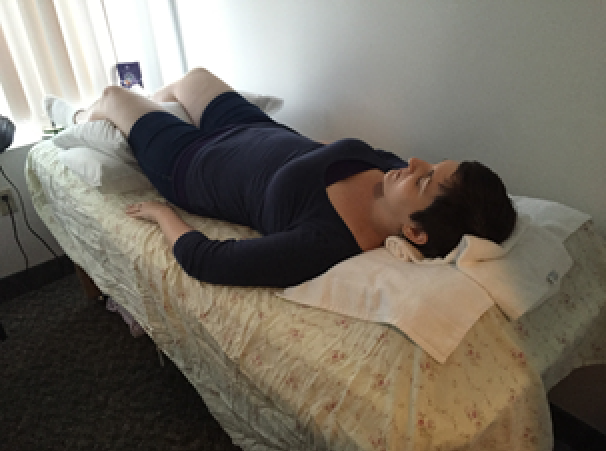
This version is the full-body mat covered with a sheet. Underneath my head is the Biomat pillow. Each session can last for five minutes or twelve hours, depending on how much time you have available. The heat can reach temperatures of 158 F° degrees. Read on to find out why that number means absolutely nothing when it comes to treating pain.

The FDA has approved the marketing of the Biomat for a whole host of things: relaxation of muscles, improvement of circulation, temporary relief of muscle pain and/or spasms, and much more. There are specific range settings for certain medical conditions, though it is generally safe.

The science involved came to being when Drs. Erwin Neher and Bert Sakmann discovered how ions flow in and out of cells, which they called the “ion channel theory.” The two scientists revolutionized the field of cell biology and won the Nobel Prize in 1991 for their shared research.

If you’re like me, you have no idea what this means. However, this ion channel theory is put into play by the Biomat’s use of negative ions, which is then complemented by far infrared spectrum therapy (or thermotherapy, like what is found in saunas) and the amethysts embedded in the outer layer of the mat. These stones have been used for thousands of years for everything from fighting the evils of drunkenness to helping with meditation.

In modern times, researchers discovered that amethysts can carry an electrical charge. (Readers, are you still with me? Hang on, we’re almost there!) So, the infrared rays pass through the amethyst layer of the mat and then become “long wavelengths capable of safely penetrating the body as deeply as seven inches.” This heats up your core body temperature, encouraging your body to detoxify.

To put all of this in English: The Biomat creates an environment in which the patient can safely enjoy negative ion therapy and infrared therapy.

What does this mean for the person actually flopped onto the mat? It means a yummy, delicious, low-grade heat. And low-grade does mean low-grade, even if it can reach 158 F° degrees.

One time, my husband wanted to use a heating pad on a strained muscle and cranked it all the way up to eleven: “Honey, I don’t think this is working. I’ve maxed it out and it’s still not warm enough.”

That’s because it doesn’t generate heat the same way a traditional heating pad does. It gets toasty, sure, but you couldn’t cook meat on top of it. At its price point, you certainly wouldn’t want to cook any sort of food on it.

I mean, look at the controls. It’s like the cockpit of an airplane.

For me, the Biomat doesn’t present a dramatic “Before and After” picture. It’s not like Tiny Tim could throw away his crutches after using this product. I can’t think of things I couldn’t do before that, with the Biomat, I can do afterward. Even so, I would never stop using it.

This product is just better than a heating pad. When you hurt all over, you want something that reaches all over. Those of us with chronic pain, we use a plethora of heating devices and creams and patches in order to soothe sore muscles. The Biomat, while extremely expensive, is a full-body restoration and relaxation device. Even the mini mat fits into a chair and covers a lot of real estate.

At the end of a long day, I look forward to sitting on the Biomat. I sleep better when I use it; in the summer, for instance, even a low-grade heat is too much for me, and I go to bed feeling stiffer and more rickety, like a broken marionette. Those are the days I truly notice a difference. Studies have been conducted regarding thermotherapy and resulted in pain decreasing significantly (concurrently with anger and depression). It has even been used to treat cancer.

So does one recline upon the Biomat and come forth as a new person? No, not after one session, two sessions, twelve sessions, or fifty sessions, but you absolutely do feel better. Your muscles are soothed. Your knots unwind, even just a little bit. Your pain is quieted for a time. And that’s enough for me.

Jennifer Kilgore.jpg

J. W. Kain is an attorney in the Greater Boston area who also works as a writer and editor in her spare time.  She has chronic back and neck pain after two car accidents.

You can read more about J.W. on her blog, Wear, Tear, & Care.  

The information in this column should not be considered as professional medical advice, diagnosis or treatment. It is for informational purposes only and represents the author’s opinions alone. It does not inherently express or reflect the views, opinions and/or positions of Pain News Network.

Florida’s ‘Modest’ Reduction in Opioid Prescribing

By Pat Anson, Editor

Florida was one the first states in the country to get serious about fighting the “epidemic” of prescription drug abuse.

In 2010, a year when eight Floridians were dying every day from drug overdoses, the state started cracking down on rogue pain clinics – “pill mills” -- and began to closely monitor the number of opioid prescriptions written and filled by physicians and pharmacies.

By most accounts, the crackdown has been a success – overdose deaths dropped and over 250 pain clinics were closed. But legitimate pain patients also began to complain that they couldn’t get their prescriptions filled. Their search for a pharmacy willing to dispense opioids – a search that could take hours or days – even got a name: Florida’s “Pharmacy Crawl.”

Which makes a new study in JAMA Internal Medicine all the more surprising.

Researchers analyzed an extensive database of prescription claims and found that there was only a “modest” decline of 1.4 percent in the number of opioid prescriptions in Florida from 2010 to 2012.

The reductions were generally limited to prescribers and patients with the highest rates of opioid prescribing and use – meaning the average pain patient shouldn’t have been affected at all.

That 1.4% reduction, researchers say, was a “statistically significant” decline by some measures. But they also acknowledge that Florida’s crackdown on opioids “had no apparent effect on days’ supply per transaction or on total number of opioid prescriptions dispensed.”

That less than overwhelming finding raises questions about the effectiveness of the crackdown and, in particular, prescription drug monitoring programs (PDMPs). Almost every state has implemented a PDMP in the last few years, spending millions of dollars to track patients with electronic databases that have yet to be proven effective. 

“Our findings highlight the need for more evidence demonstrating the effect of PDMP and pill mill laws,” wrote lead author Caleb Alexander, MD, of the Johns Hopkins Bloomberg School of Public Health.

Effect on Pain Patients

So if the number of opioid prescriptions in Florida barely budged, what about all those pain patients who claim they couldn’t get a prescription filled?

"The opioid lobby and media they've influenced portray Florida's efforts as draconian. We keep hearing that pain patients in Florida have lost access to opioids.  The study's findings refute these claims," said Andrew Kolodny, MD, a prominent critic of opioid prescribing practices who is President of Physicians for Responsible Opioid Prescribing.

“Dr. Kolodny can't see the whole picture just by looking at this short term study,” says Donna Ratliff, a chronic pain patient who founded the Fight for Pain Care Action Network, a non-profit group lobbying for adequate pain care in Florida.

“Things did get draconian after the DEA fined the distributors and chain pharmacies. The media headlines stigmatized the pharmacies and doctors early on into not treating legitimate pain patients out of fear.” 

It was in 2012 that Cardinal Health, one of the nation’s largest drug wholesalers, was fined $34 million by the DEA after it failed to report suspicious orders for hydrocodone at a distribution facility in Lakeland, Florida. Shipments of controlled substances from that facility were suspended for two years.

Walgreens and CVS Pharmacy were also fined tens of millions of dollars for violating rules and regulations for dispensing controlled substances. Afterwards, both pharmacy chains began to screen patients with opioid prescriptions more carefully, and told their pharmacists not to fill them if anything appeared suspicious.

Those developments, according to Ratliff, were not fully covered during the opioid prescription study, which ended in September 2012.

“This induced the pharmacy crawl, that got worse as time went by,” she told Pain News Network.

In a recent survey of hundreds of pharmacies, drug wholesalers and physicians by the General Accounting Office (GAO), over half said DEA enforcement actions had limited their ability to supply drugs to patients. Many said they were fearful of being fined or having their licenses revoked by the DEA.

“Some pharmacies may be inappropriately delaying or denying filling prescriptions for patients with legitimate medical needs,” the GAO report states.  


FDA Approves OxyContin for Kids

By Pat Anson, Editor

In a controversial move, the U.S. Food and Drug Administration has approved OxyContin for use by children aged 11 to 16 who suffer from severe, long-term pain.

OxyContin is a potent, extended release opioid painkiller that has been blamed for fueling an “epidemic” of prescription drug abuse and addiction in the U.S.

One critic, whose teenage daughter died after a single dose of OxyContin, called the FDA’s decision “beyond disgusting.”

The agency did not make a formal announcement about its decision, issue a news release, or consult with an outside advisory panel about the risks and benefits of making OxyContin available to pediatric patients.

Instead, the news was revealed in an FDA blog posting, an interview with Sharon Hertz, MD, a Director in the FDA’s Center for Drug Evaluation and Research.

“OxyContin is not intended to be the first opioid drug used in pediatric patients, but the data show that changing from another opioid drug to OxyContin is safe if done properly,” Hertz said.

“In pediatric patients who require opioid treatment to manage pain, extended-release opioids may be a useful alternative because they are taken only once or twice per day rather than every 4 to 6 hours. Fewer daily doses may free patients for physical therapy appointments, allow them to go home from the hospital sooner, and may help them to sleep through the night without waking up from pain. So from that perspective it's very useful.”

Hertz said the FDA decision was a "team effort" involving physicians, pediatricians, clinical pharmacologists, statisticians, ethicists and opioid experts. It came after the safety and efficacy of OxyContin was studied in children who were prescribed the drug after extensive trauma or major surgery. 

“Prior to this action, doctors had to rely on adult clinical data to shape their decision-making in treating pediatric patients. This program was intended to fill a knowledge gap and provide experienced health care practitioners with the specific information they need to use OxyContin safely in pediatric patients,” said Hertz.

She said OxyContin should only be prescribed to pediatric patients when they have shown they can tolerate a 20 mg daily dose of oxycodone, an immediate release opioid.  

The Duragesic patch, which contains fentanyl, is the only other extended release opioid product approved for use by children.

Hertz hinted the FDA would be approving more opioids for pediatric patients in the future.

“Quite a few of the newer opioid drugs have pediatric studies underway to gather the data that will help prescribers use them safely. I expect that our teams will be working together a lot more in future to make sure that new pediatric pain management options continue to be safe for children in the U.S.,” Hertz said.

OxyContin has a controversial history. It was introduced to the U.S. in 1996 and soon became a blockbuster drug for Purdue Pharma, reportedly generating profits in excess of $10 billion.

In 2007, Purdue and three of its top executives pleaded guilty to felony criminal charges for the off-label marketing of OxyContin – falsely telling doctors it had low potential for addiction.

Critics, who blame Purdue for thousands of fatal OxyContin overdoses, are angry about the FDA's decision to approve the drug for children.

“We've known for a long time how immoral this company is.  As far as Purdue's role, this comes as no surprise; they have had this idea for some time now, as it represents a very lucrative market for them,” said Pete Jackson, president of Advocates for the Reform of Prescription Opioids.

Jackson lost his 18-year-old daughter Emily to a single dose of OxyContin in 2006.

“We've also known for a long time how unethical the FDA is,” Jackson said in an email to Pain News Network.  “This brings both truths out in the open.  This is the pinnacle of dysfunction in our federal government: that a federal agency would openly sanction the use of a deadly narcotic on kids without even an advisory committee meeting to hear from the experts and the public is beyond disgusting.”

By 2010, nearly half the patients entering drug treatment facilities for opioid abuse said they had used OxyContin to get high at least once in the previous 30 days. That same year Purdue introduced a reformulated version of OxyContin to discourage patients from crushing the tablets for snorting or injection.

As a condition of its approval for use in pediatric patients, Purdue is required to conduct a follow-up study examining rates of injury, overdose, accidents and medication errors involving OxyContin in pediatric patients.

Stress and Anxiety in RA Patients Leads to Heart Disease

By Pat Anson, Editor

In addition to pain and disability, rheumatoid arthritis patients often have to cope with depression, stress, anxiety, and lack of social support.

New research shows that toxic brew of emotions also makes them more likely to develop atherosclerosis, a buildup of fatty deposits in the arteries that leads to cardiovascular disease. The study, published in Arthritis Care & Research, recommends that RA patients be screened and treated for psychological issues to lower their risk of heart problems.

Rheumatoid arthritis is a chronic autoimmune disease in which the body’s own defenses attack joint tissues, causing joint pain, inflammation and bone erosion. About 1.5 million Americans and 1% of adults worldwide suffer from RA.

Previous studies have shown that cardiovascular disease is more prevalent in RA patients, but until now the exact was unknown.

The new study looked at data from the Evaluation of Subclinical Cardiovascular Disease and Predictors of Events in Rheumatoid Arthritis Study (ESCAPE), which examined the prevalence, progression, and risk factors for cardiovascular disease in RA.

Nearly 200 RA patients underwent computed tomography and ultrasound tests to measure their coronary artery calcium (CAC) and carotid artery thickness for plaque build-up. Researchers found that patients with higher anxiety and anger scores, depression and caregiver stress were more likely to have high CAC scores – a sign of moderate to severe atherosclerosis.

"Our study shows that depression, stress, anxiety, and anger are associated with atherosclerosis markers, which are known predictors of cardiovascular risk in RA," said Dr. Ying Liu, the first author of the study. "These findings highlight the importance of screening and treatment of heart disease risks factors to limit not only health care costs, but prevent morbidity and mortality for RA patients."

Researchers also found that RA patients had an increased risk of carotid plaque buildup due to job stress. Having a strong social support network was linked to lower carotid artery thickness.

"Our study is the first to investigate the association between psychosocial comorbidities and elevated risk of atherosclerosis in RA patients," said  lead investigator Dr. Jon Giles, Assistant Professor of Medicine at Columbia University, College of Physicians & Surgeons in New York City. "Understanding the risk factors that lead to greater mortality in those with chronic conditions like RA is extremely important.”

A recent study by researchers in Mexico found that one quarter of patients with rheumatoid arthritis had ischaemia or infarction – decreased blood flow to the heart which can lead to a surprise heart attack.

“The condition nearly doubles the risk of a heart attack but most patients never knew they had heart disease and were never alerted about their cardiovascular risk," said Adriana Puente, MD, a cardiologist at the National Medical Center in Mexico City.

Many health experts believe the inflammation triggered by RA in the joints may raise inflammation throughout the whole body, including the heart’s coronary arteries.

According to the Arthritis Foundation, more than 50 percent of premature deaths in people with rheumatoid arthritis result from cardiovascular disease. The heightened risk of heart disease applies to all forms of arthritis, including osteoarthritis, gout, lupus and psoriatic arthritis.