A Safe Way to Healthy, Restorative Sleep

By Ellen Lenox Smith, Columnist

For many of us suffering from chronic pain, coping with our medical issues can be physically and emotionally draining. Often, the lack of healthy sleep is the culprit.

Living with Ehlers Danlos syndrome (EDS) and sarcoidosis, I used to constantly wake up in the middle of the night with so much pain it was impossible to get any form of rest. When I was teaching, I somehow went for years trying to teach on “empty” due to a chronic lack of restorative sleep.

I remember having to cheat and use a seating chart to remember the names of my wonderful students, who were sitting right in front of me. These were students I had known, loved and taught for months. It was embarrassing, heartbreaking, and created a sense of loss and hopelessness.

Thankfully, those days are gone. I have gone from years of almost no quality sleep to being someone who goes to bed at night and wakes up in the morning feeling well rested. I don’t even remember any dreams, so I am getting the real REM sleep!

How did I do it? A teaspoon of oil made from medical marijuana. I take it before bedtime, mixed with a little applesauce or a small amount of food.

Within an hour, my body is ready for bed and sleep. 

For years I made this oil at home on top of the stove, but today enjoy using the Magical Butter machine. We find that oil made from the indica strain of marijuana works best for sleep. Directions for making the oil can be found on our website. 

I am now both a medical marijuana patient and a caregiver in the state of Rhode Island. Patients visit us with a variety of different illnesses, but the one thing they all have in common is lack of sleep. Without sleep, you lose hope and courage to move forward with your life. Each patient that has tried this oil has found that it gives them rest and hope.

Recently, a young woman and her husband came to our home. Living with both EDS and Chronic Regional Pain Syndrome (CRPS), she had a difficult life, but was hoping to find something to make it easier. We have the same pain doctor and he suggested she get in touch with us to learn about cannabis. 

The first night that she tried the oil, she slept for eight hours and was both thrilled and shocked. She said even her face looked calmer and more rested.  She is now happier, hopeful and has more strength to get through the day.

There was another patient sent to us who was a paraplegic in constant pain. He was angry, miserable and wished he hadn’t been given life-saving surgery after his accident. He was at a loss as to what to do to cope with the life he was now given. 

He tried the oil and was shocked what it did for him. From that point on, the desperate man who first called me and couldn’t even be understood due to his level of pain, was happy, laughing and finding some meaning in his difficult life. He later passed, but the oil gave him a better quality of life and a sense of purpose again.

We have seen one success after another of pain patients getting real quality sleep and rest. We have seen it work for cancer patients, and those suffering with post-traumatic stress disorder, multiple sclerosis, back pain, fibromyalgia, arthritis and other conditions.

For those of you who are caught up in opioid hysteria and can no longer get medication, I hope you take a moment and think about trying cannabis oil at night for rest. I have used it safely for a decade, since I am not able to metabolize even an aspirin or Tylenol, let alone any opiate. May you find the courage to try it and get the same results.

Ellen Lenox Smith suffers from Ehlers Danlos syndrome and sarcoidosis.  Ellen and her husband Stuart are co-directors for medical marijuana advocacy for the U.S. Pain Foundation and serve as board members for the Rhode Island Patient Advocacy Coalition.

For more information about medical marijuana or to contact the Smith's, visit their website.

The information in this column should not be considered as professional medical advice, diagnosis or treatment. It is for informational purposes only and represents the author’s opinions alone. It does not inherently express or reflect the views, opinions and/or positions of Pain News Network.

Early Detection and Diet May Help Prevent Osteoporosis

By Pat Anson, Editor

The key to good bone health – and preventing fractures later in life – may lie in anti-inflammatory diets and earlier detection of bone loss, according to two new studies.

Researchers at the University of Michigan are studying new ways to identify women at risk of osteoporosis, a loss in bone density that raises the risk of fractures and disability. Breaking a bone in your spine or hip doubles your chances of developing chronic widespread body pain, especially if you are older.

"It's been considered a silent disease," says Karl Jepsen, PhD, associate chair of research and professor of orthopaedic surgery at Michigan Medicine. "One of the biggest challenges when you're looking at age-related bone fragility is to identify people who will fracture."

Jepsen is the lead author of a study published in the Journal of Bone and Mineral Research, which followed nearly 200 women for 14 years as they transitioned through menopause.

"Current identification for bone fragility takes place when the patient is around 65 years of age," Jepsen explains.

"We were hopeful that this study would give us an opportunity to identify those patients as early as 30 years before they fracture based on their bone traits. That means we would have an opportunity to intervene before the fracture happens, instead of after the fact."

Jepsen and his colleagues started following the women in 1996. Participants who enrolled had to be between 42 and 52 years of age and had at least one menstrual period in the previous three months. The women had bone density scans and other tests annually to measure changes in their bone mineral density.

Researchers found that the women experienced a wide variation in bone mineral content and bone area within the hip as they went through menopause, a finding that was unexpected.

"Our results were opposite to all expectations of how we assumed this would work," Jepsen says. "We found some women appeared to have hip bones that were increasing in strength during the menopausal transition while others seemed to be losing strength."

Jepsen said his study demonstrates that bone changes can be tracked individually in women during menopause, when treatment can begin earlier to prevent bone loss. Hormones and bisphosphonate drugs are currently used to help strengthen bones.

“Our goal is to use simple bone traits to identify those women that may benefit from early intervention when it comes to bone fragility, instead of the current strategy, which treats individuals after they have lost appreciable bone mass and strength," he said.

Anti-Inflammatory Diet Improves Bone Health

Anti-inflammatory diets -- which tend to be high in vegetables, fruits, fish and whole grains -- could boost bone health and prevent fractures, according to a study at The Ohio State University.

Researchers analyzed dietary data from over 160,000 women enrolled in the landmark Women's Health Initiative by assigning inflammation scores based on 32 foods that the women reported consuming. Researchers also looked at bone-mineral-density data from over 10,000 women and collected fracture data for the entire study group.

They found a correlation between high-inflammatory diets and fractures in post-menopausal younger than 63. Women with the least-inflammatory diets also lost less bone mineral density.

"This suggests that as women age, healthy diets are impacting their bones," said Tonya Orchard, an assistant professor of human nutrition at Ohio State's Food Innovation Center. "These women with healthier diets didn't lose bone as quickly as those with high-inflammation diets, and this is important because after menopause women see a drastic loss in bone density that contributes to fractures,"

The study, which appears in the Journal of Bone and Mineral Research, was observational -- meaning it does not definitively link diet to bone health. But it adds to a growing body of evidence that inflammation can increase osteoporosis risk.

"By looking at the full diet rather than individual nutrients, these data provide a foundation for studying how components of the diet might interact to provide benefit and better inform women's health and lifestyle choices," said Rebecca Jackson, the study's senior author and director of Ohio State's Center for Clinical and Translational Science.

Previous studies have connected high levels of inflammatory markers in the blood to bone loss and fractures in older women and men. The new findings suggest that women's bone health could benefit when they choose a diet higher in beneficial fats, plants and whole grains.

Pain Is Not That Simple

By Janice Reynolds, Guest Columnist

Let us stop talking about opioids for a moment and talk rather about pain. 

One of the unfortunate results of the phobia over opioids is that it has encouraged the belief that pain is a single and separate entity.  This way of thinking is being spread by the media, politicians and those who should know better, but don’t.  Pain is not that simple.

Pain affects the entire person and, when left untreated or undertreated, contributes to other health problems and can even lead to death. Acute and chronic pain can both exist in a cancer setting, as well as non-cancerous conditions.  The body does not know the difference.

What is different are the many different types and causes of acute and chronic pain.  There is also some crossover and intermingling.  Several different types of pain may exist at the same time, and acute pain can co-exist with chronic (notably as breakthrough pain).

It is usually easy to identify the source of acute pain, but there is no real evidence as to what “causes” chronic pain. We know there has been a change in neurons, which are no longer reporting a correct message to the brain. This poorly understood change is often permanent and not repairable.

People also respond differently to pain medications and therapies (what works for one may not work for another) and this is likely genetically linked. So a “study” which claims a certain medication doesn’t work for chronic pain or makes it worse has no basis in reality. There is no pain syndrome called “chronic pain.”

What is rarely talked about is the harmful effects of untreated pain. These effects are evidenced based, and can lead to increased suffering and fatal complications. Just with the cardiac system alone, pain can increase the heart rate, increase cardiac output, and contribute to heart attacks. Pain also affects the respiratory, musculoskeletal, endocrine, immune, gastrointestinal and nervous systems. Pain impairs wound healing.  

When left untreated or treated poorly, pain can also cause mental health problems, such as depression, suicide, insomnia, attention deficit, confusion, memory loss, and cognitive decline.  Many times these outcomes are blamed on medication, but pain is a much bigger impairment. Deaths are seldom evaluated to ascertain if pain was a contributing cause.

Stress has long been recognized as bad for your health.  It can worsen many illnesses and cause some as well.  We know that stress makes pain worse, but look at the amount of stress a person with pain faces almost every day in our society: losing access to a successful treatment, reading lies in the media, losing a provider, being treated like a criminal or drug addict, and so on.  This is not stress you can heal with exercise or meditation. It is relentless.

Pain may be an illness by itself, such as fibromyalgia, arthritis, headaches, interstitial cystitis, certain genetic conditions and more.  Pain accompanies many diseases or is part of their treatment: cancer, EDS, sickle cell anemia, lupus, post stroke pain, Parkinson’s, diabetes, alkalizing spondylitis, and so many more.

Pain could be a sudden onset of symptoms, such as kidney stones, gall bladder, disseminated shingles, or even an atypical heart attack. It may be the presenting symptom of other problems such as multiple myeloma, cancer metastases, ovarian cysts, torsion of the ovaries, testicles or intestines, and the list goes on. 

How many patients have died because the ER doctor hears the word “pain” and shuns them, refusing to see or treat them?  Or had a patient arrested because they refuse to leave?

Refusing to see someone in pain or denying them access to opioids or any treatment which works for them is malpractice. It certainly goes against the idea of “do no harm. ‘

The DEA has become a terrorist organization and many providers are afraid of it. “Evidence based practice” has also become a very loose term. The CDC opioid guidelines are not evidenced based.

Accusing only pain management doctors and patient advocacy groups of being influenced by the pharmaceutical industry is unethical as well, as the CDC, DEA and the addiction treatment industry also receive funding from pharma -- including support from drug testing companies.

Prescribing medication which is potentially more harmful than opioids, such as ibuprofen and acetaminophen, is also unscrupulous.  People with a history of ulcers and older adults are being told to take ibuprofen, even though ibuprofen causes 15,000 to 20,000 deaths a year when taken as prescribed. Ibuprofen was never meant for severe pain. 

People are being told they must do non-pharmacological interventions such as acupuncture, massage or physical therapy, even though they can’t afford it, it’s not covered by their insurance, or the therapy simply does not work for them.  Doctors insisting on an epidural steroid injection (which is not FDA approved) when it has not worked for someone in the past is also immoral.

There is a strong body of evidence that opioids work, no matter what an opiophobic or addiction treatment doctor will claim.

We have long fought against cook book medicine.  People with pain, whether acute or chronic, need to be considered in the whole, protected from harm, and treated with what is effective and affordable for them.  It is the ethical thing to do.    

Janice Reynolds is a retired nurse who specialized in pain management, oncology, and palliative care. She has lectured across the country at medical conferences on different aspects of pain and pain management, and is co-author of several articles in peer reviewed journals. 

Janice has lived with persistent post craniotomy pain since 2009.  She is active with The Pain Community and writes several blogs for them. 

The information in this column should not be considered as professional medical advice, diagnosis or treatment. It is for informational purposes only and represents the author’s opinions alone. It does not inherently express or reflect the views, opinions and/or positions of Pain News Network.

Insurers Behind Medicare’s ‘Big Brother’ Opioid Policy

By Pat Anson, Editor

The insurance industry appears to have played a major role in the development of a new strategy by the federal government to combat the abuse of opioid pain medication.

As Pain News Network has reported, the plan calls on pharmacists to report suspicious activity by doctors who prescribe opioids to Medicare and Medicaid patients (see “Medicare Takes ‘Big Brother’ Approach to Opioid Abuse”). Individual profiles of patients, their behavior, and opioid use would also be created and shared among insurance providers.

The plan was outlined earlier this month by the Centers for Medicare & Medicaid Services (CMS) in the agency’s proposed “Opioid Misuse Strategy.” 

The CMS plan closely follows a 62-page “white paper” prepared by the Healthcare Fraud Prevention Partnership (HFPP), a coalition of private insurers, law enforcement agencies, and federal and state regulators formed in 2013 to combat healthcare fraud. 

The white paper, however, goes far beyond fraud prevention by recommending policies that will determine how a patient is treated by their doctor, including what medications should be prescribed.  It states that all physicians should follow the opioid prescribing guidelines released by the Centers for Disease Control and Prevention, even though the guidelines are voluntary and explicitly state they are not intended for all prescribers.

The white paper was drafted largely by insurance companies – called “Partner Champions” -- including Aetna, Anthem, Blue Cross Blue Shield, Cigna, Highmark, Humana, Kaiser Permanente and the Centene Corporation.

“These HFPP Partner Champions have committed themselves to the creation of an HFPP White Paper that describes the best practices for serious consideration by all healthcare payers and other relevant stakeholders to effectively address and minimize the harms of opioids,”  the white paper states.

“Through coordinated action, payers, including members of the HFPP, have the opportunity to dramatically influence and reduce opioid misuse in the U.S. Simple actions performed systematically across a large group of stakeholders can considerably decrease the toll of prescription opioid misuse and OUD (opioid use disorder) in the U.S.”

Physicians and Patients Left Out

No other stakeholders in healthcare, such as physicians, pharmacists, hospitals or patients, were involved in a “special session” of the HFPP last October that led to the drafting of the white paper.

“It’s concerning that CMS appears to have developed a policy proposal regarding opioid prescribing solely on the basis of advice from a group dominated by the insurance industry, without asking for input from affected healthcare professional groups,” said Bob Twillman, PhD, Executive Director of the Academy of Integrative Pain Management, an organization of physicians who specialize in pain care.

“We have to be mindful of the vested interests of insurance companies in this issue. Some advocates have argued that pharmaceutical manufacturers have wielded outsized influence in previous policy decisions, but there has been precious little focus on the influence of payers, which seems obvious in this case.”

CMS contracts with dozens of private insurance companies to provide health coverage to about 54 million Americans through Medicare and nearly 70 million in state-run Medicaid programs.

“Who exactly are the individuals who put this information together for CMS… and what is their true aim?” asks Ingrid Hollis, the mother of a chronic pain patient. “It looks to me like collusion between insurance companies and federal agencies to cut costs.

“Senior citizens and those disabled with progressive painful diseases or injuries deserve better treatment than this. To single this community out for draconian policies based on what looks like purely profit motives in the name of ‘harm reduction’ is inhumane. Who is truly being harmed here?”

“When they describe insurance companies involved in their efforts as ‘Champions,’ it calls to mind comic book and movie heroes like Superman.  Superman was noble, his motives pure.  I don't think of profit-conscious insurers as being noble or pure in motive,” said Anne Fuqua, a disabled nurse, pain patient and patient advocate. 

“Involving insurance companies in setting policies that directly or indirectly impact prescribing and/or reimbursement presents a conflict of interest.”

Stewards, Stockers and Demanders

Under the proposed CMS policy, information about doctors and patients who’ve been red flagged by pharmacists for suspicious prescribing would be shared through a CMS database with all insurers. The companies would then be empowered to “investigate provider and beneficiary behaviors that may be indicative of fraud or abuse.” Violators could be dropped from insurance networks or lose their coverage.    

The HFPP white paper goes further, recommending that insurers develop profiles of each patient and classify them in one of three groups based on their behavior:

  1. “Stewards” (patients who follow guidelines)
  2. “Stockers” (patients who stockpile unused medications)
  3. “Demanders” (patients who ask for medication)

“Segmenting patients by intentions/behaviors with regards to opioid prescriptions could help payers better target messages and disseminate tailored communications that are most salient to the recipient,” the white paper states.

“For example, stewards may be those who are more likely to adhere to the CDC guideline and seek non-pharmacologic or non-opioid pharmacologic therapies for chronic pain and stockers may be those who are likely to ask for an opioid prescription/have received an opioid prescription for chronic pain in the past.”

A data analysis of patients and doctors, according to the white paper, could also be used by insurers to develop computer models to identify “problematic actors and schemes” and “deny payments for prescriptions that do not conform to general prescribing practices.”

“The HFPP strongly encour­ages collaborative efforts to develop and widely disseminate effective strategies to identify: patients at risk of opioid misuse or OUD, providers whose opioid prescribing patterns fail to comply with quality indicators (such as the CDC Guideline for Prescribing Opioids for Chronic Pain), and methods that are particularly ef­fective at preventing or treating OUD,” the white paper states.

But critics say the profiling of patients and doctors, as well as the sharing of data from prescription drug monitoring programs (PDMPs), amounts to an invasion of privacy.

“PDMP data contains some of the most sensitive health information that is produced.  When PDMPs were introduced, confidentiality protections were stressed and prescribers and pharmacists could review the information,” says Anne Fuqua.

“Now, CMS is discussing their plan to provide open access to insurers participating in their database.  They flip between arguments that this will help insurers make sure people get needed treatments for addiction and fraud detection.  It's clear that detection of fraud and conserving on drug costs is the primary focus.”

Non-Opioid Treatments Encouraged

Like the CDC guidelines, the white paper discourages the use of opioid pain medication, and recommends that over-the-counter pain relievers such as aspirin, acetaminophen and ibuprofen be used as an alternatives, as well as “non-pharmacological” treatments like cognitive behavioral therapy and chiropractic care. Addiction treatment drugs such as buprenorphine and methadone are strongly recommended for anyone showing signs of opioid use disorder.

“Clinicians should consider opioid therapy only if expected benefits for both pain and function are anticipated to outweigh risks to the patient. If opioids are used, they should be combined with non-pharmacologic therapy and non-opioid pharmacologic therapy,” the paper states.

Critics say the recommendations – and threats of sanctions against those who don’t follow them -- could interfere with the doctor-patient relationship.

"Proposals, like CMS' Opioid Misuse Strategy, aimed at combatting the prescription drug abuse crisis, while important, must be careful to not leave patients with a legitimate medical need without access to the treatments they and their doctors have determined are the best course of care,” the Alliance for Patient Access, a national network of physicians, said in a statement to PNN.

“Patient access can be impeded when physicians and patients feel threatened that they are being watched, may be reported, or their personal information shared by pharmacists and insurers. When that happens patients suffer and the physician-patient relationship, one based on trust, is strained.” 

“It should not be a surprise that insurance companies have been aggressively opposing the use of branded opioids. Their fiduciary responsibility is to their shareholders, not to patients,” said Lynn Webster, MD, past president of the American Academy of Pain Medicine. “Decisions by insurance companies are causing many patients to suffer. This is not right.”

“Patients and doctors don’t want insurance companies and other parties determining what is best for them.  Doctors have a medical degree, the experience, the knowledge and treatment plans are determined by the medical condition they are treating,” says Ingrid Hollis.

“They act in the best interest of the patient, and have pledged the Hippocratic Oath of ‘Do no harm.’ Can the same be said of the bean counters in the insurance industry? Insurance is interested in cost cutting and maximizing profits.  Doctors are trying to save lives.”

CMS has not said when it plans to implement its Opioid Misuse Strategy or if public hearings would ever be held on them. The agency has only said that in coming weeks it would release “statements reflecting the agency’s Medicare and Medicaid goals.”

The HFPP white paper was released publicly for the first time Tuesday on the CMS website, without any explanation of its broader meaning or impact on Medicare and Medicaid policies.

An HFPP infographic urging people "to fight healthcare fraud, waste and abuse" was also released on the government-run website, without any indication that it was largely developed by the insurance industry.

Spinal Cord Stimulators Reduce Opioid Use

By Pat Anson, Editor

Most patients who have a spinal cord stimulator significantly reduce their use of opioid pain medication one year after their implant, according to new industry-funded research.

In an analysis of private and Medicare insurance claims from 5,476 patients who received a spinal cord stimulator (SCS), opioid use declined or stabilized in 70 percent of the patients. Opioid use was higher among patients who had the stimulator removed.

The study, presented at the annual meeting of the North American Neuromodulation Society (NANS), was sponsored by Abbott (NYSE: ABT), a manufacturer of SCS systems and other medical devices.

"Given the epidemic of opioid addiction and abuse, these findings are important and confirm that spinal cord stimulation therapy can offer strong benefits for patients struggling with chronic pain," said Ashwini Sharan, MD, president of NANS and director of Functional and Epilepsy Surgery at Vickie and Jack Farber Institute for Neuroscience.

"Based on these results, we concluded it may be possible to improve outcomes by offering our patients spinal cord stimulation earlier, before opioid dependence and addiction can occur."

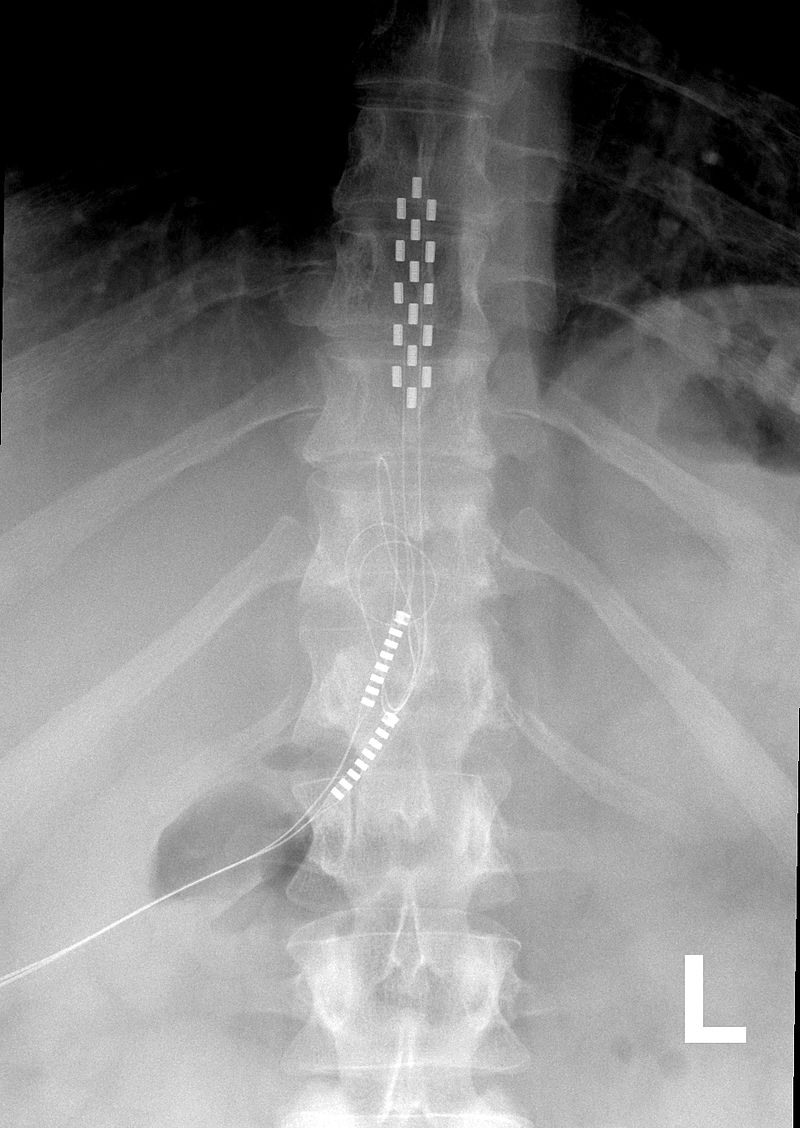
Spinal cord stimulators have long been considered the treatment of last resort for chronic back and leg pain, because the devices have to be surgically implanted near the spine and connected to batteries placed under the skin. The implants send electrical impulses into the spine to mask pain.

Some patients find the stimulators ineffective and have them removed. According to one study, only about half of patients who received a traditional SCS device have a 50 percent reduction in their back and leg pain.

New technologies have been developed to make the devices more effective, easier to recharge and to reduce complications such as paresthesia – a tingling or buzzing sensation.

And with government regulators and insurers discouraging the use of opioid pain medication, the medical device industry is urging patients and doctors to take another look at SCS devices.

X-RAY OF PATIENT WITH MEDTRONIC SCS DEVICE

"As our society has been seeking ways to stem opioid abuse and addition, our company offers treatment options that can reduce their exposure to opioid medication," said Allen Burton, MD, medical director of neuromodulation at Abbott in a news release. "Data like these are critical to helping us demonstrate that spinal cord stimulation can reduce exposure to opioids while giving patients comprehensive pain relief."

Abbot recently purchased St. Jude Medical, giving the medical device maker its first exposure to the SCS and neuromodulation market, which has an estimated value of $5.3 billion.

"Non-medical pain relief is a focus with attention on the dangers of pain medication and the need to find alternatives to reduce chronic pain," said Bruce Carlson, Publisher of Kalorama Information, a research firm that tracks the neuromodulation market. "Abbott builds on its cardiovascular device properties with this deal, and that is a big focus of press coverage.  St. Jude's impressive spinal cord offering should not be obscured in this transaction."

Pain Patients Sound Off on Opioid Cutbacks

By Pat Anson, Editor

In our last newsletter, we asked readers if their doctors had recently reduced or stopped prescribing opioid pain medication, and to share their stories with us.

We heard back from dozens of people, all of them angry and frustrated with the state of pain care and the government agencies that regulate pain medication in the U.S.

“We are disgusted with the DEA and uneducated callous physicians' war on chronic pain patients and their doctors. Suicides are skyrocketing and lives are being destroyed,” wrote Connie Potter, a registered nurse in New Mexico.  “The number of people I see whose lives are worthless and destroyed is appalling.” 

Connie said that her husband, who suffers from severe back pain, dystonia and fibromyalgia, is being prescribed about a third of the pain mediation he used to get.

“No one wants to give pain meds in southern New Mexico. My friend with acute MS (multiple sclerosis) has had his already pathetic meds dosages halved,” she said.

Many pain sufferers are being told by doctors that they are required to reduce or eliminate opioid prescribing, even though guidelines released last year by the Centers for Disease Control and Prevention are voluntary, not mandatory.

“I was told in November that as of January 1, 2017 my medication would be reduced by half because the government is mandating this across the United States,” wrote 46-year old Cindy, who has suffered from back and pelvic pain since childhood. 

“I am still trying to grasp how this could happen!  I am every doctor's dream patient. I do whatever they ask whatever they suggest - anything!  How the hell am I supposed to make it through a day of work when I can't sit? This is crazy!  Do I seriously not have any recourse?”

“These doctors don't give a s*** anymore, all they care about (is) lowering their opiates prescriptions, so they don't have to deal with the backlash from our stinking government,” said David Cole, who has perineural neuropathy.

“I've been using opioids for the last 14 years to control to my pain and manage my life,” wrote Eli. “Then came the infamous CDC 'recommendations' and in March of 2016 I was cut down 50% on my dosage. Was difficult to do it, and couldn't have pulled it off without the help of cannabis.”

Even though medical marijuana is legal in California, where Eli lives, most doctors don’t want to prescribe opioids to someone using cannabis. So he's been tapered again to a lower dose. And he may be on his last refill.  

“My life began falling apart when they cut my dose in half, and hasn't been the same since. I've grown much more dependent on help from others and can barely shop. This anti-opioid madness has got to stop," he says.

Treated Like Addicts

Many readers say they are tired of being treated like criminals or addicts.

“Being treated like an incompetent, drug seeking/selling, whiny and lazy hypochondriac by non-medical and/or elected individuals is not an issue I anticipated,” wrote Ellen Rames, who is disabled at the age of 65. “It feels like the eyes of judgment are on me every day. It shouldn't be this way.”

“Twenty five years of taking opioids without a problem and now I feel like criminal trying to get them,” said Kaye Ingram, a disabled coal miner. “I (am) just sick of being piss tested every month and being threatened.”

“I'm tired of being treated like a druggie or addict when I ask for relief,” said Mike Schmidt, who has chronic pain after 15 surgeries on his neck and back. At the age of 72, the retired drug and alcohol counselor says he’s not worried about addiction.

“I have always taken medication at the prescribed dosage or less,” says Schmidt.  “I found morphine to be an effective pain relief for me after trying different medications and not liking the side effects.”

“It angers me to no end that I can't get decent sleep and that I spend most days in a chair because some people abuse medications that I legitimately need, and for which I have a proven record of responsible use,” said G.D. King, who has suffered from chronic back pain for over 25 years.

“Clearly I understand that the government doesn't want citizens dropping dead willy-nilly from overdoses.  But the fact that these deaths are the result of abusive and/or illegal activity for which I must pay a very steep personal price does not incline me toward sympathy for those who engage in these activities.”

Illegal activity is what some patients are considering to get pain relief.

“Pot isn't legal where I am so guess I'd have to break the law, or well, heck, since heroin is easier to get than a legitimate pain prescription, I guess that might be another choice.  Do these people have any common sense?” asked Donna.

Suicide is seen as an alternative by some.

The government needs to get out of our doctor’s offices and our pharmacies and quit attempting to practice medicine by lumping all persons into the same category.

“I feel that there needs to be more reporting on the suicide rate among chronic pain sufferers.  These people who are pushing for stopping opioid use to prevent overdose and death from opioids are only trading one form of death for another,” said Sam, a retired counselor who has worked with suicidal clients.  “I support euthanasia and the legalization of physician assisted suicide for the terminally ill, but I think it should also be allowed for those who suffer chronic pain that are not getting relief.”

Others believe the campaign against opioids is more about corporate profits, not healthcare or preventing addiction.

“This is strictly a dollars and cents issue, with the insurance companies not wanting to fulfill their contractual obligations. I know firsthand, as my insurer cut me off completely in 2016,” wrote Russ. “My family already is prepared that when I die because of their incompetence, the major lawsuits will begin unabated against any agency or company that was implicit in this conspiracy, and a conspiracy it is.

“The government needs to get out of our doctor's offices and our pharmacies and quit attempting to practice medicine by lumping all persons into the same category.”

Would you like to subscribe to the PNN newsletter? Click here to answer a few questions and share your email address.

A Pained Life: The Hand of a Stranger

By Carol Levy, Columnist

I went to the Women’s March on Philadelphia Saturday. I am very politically minded.  I love doing these things. And each and every time, I have the same problem

I forget about the pain. I forget about the specifics, logistics and potential for pain.

I have trigeminal neuralgia, which causes severe pain on the left side of my face. It can be set off just by touch. I am also legally blind on that side.

It puts me in a precarious position. It is essential that I not let anyone get close enough to accidentally brush against my face. For me, the innocuous sign of an outstretched hand or arm is dangerous. And since I can't see on that side, I have no idea how close someone might be to touching and triggering the pain.

I did not expect the size of the crowd, which was estimated at 50,000 people. Small rallies are bad enough, but this one was so enormous that as soon as I left the train station and went towards the designated rally area, I was engulfed in a sea of people.

And I was petrified. Thousands of people were bearing in on me.

I tried to make my way through the mass of people. Everyone was very nice. “Excuse me. Excuse me,” I said.  Some moved, but some could not with the press of so many bodies.

image courtesy of philadelphia mayor's office

One woman smiled as I explained to her I was trying to reach the borders of the rally, so I would not be in the midst of so many people. For this kind of event it was an odd thing to say. She looked at me quizzically. I figured I had better explain.

I have learned to be hesitant about explaining my condition. My family has been nasty about the pain. Strangers, even friends and acquaintances, can and have been unpleasant about it. As way too many of us know firsthand.

This was a “'talk with the stranger in the next seat” moment. I would never see her again, so there was no risk in explaining and no worry if she didn't understand or could not care less. Plus, my need outweighed my concerns about how she might react.

Her reaction was unexpected. She put her arm around me and held out her hand. Taking mine in hers, she led us through a bastion of folks. When we got to an area less crowded, she let go and I continued on.

What a wonderful experience and for so many reasons, not the least of which was I said what I needed and I was heard.

Carol Jay Levy has lived with trigeminal neuralgia, a chronic facial pain disorder, for over 30 years. She is the author of “A Pained Life, A Chronic Pain Journey.” 

Carol is the moderator of the Facebook support group “Women in Pain Awareness.” Her blog “The Pained Life” can be found here.

The information in this column should not be considered as professional medical advice, diagnosis or treatment. It is for informational purposes only and represent the author’s opinions alone. It does not inherently express or reflect the views, opinions and/or positions of Pain News Network.

Even a Little Exercise Is Better Than None

By Pat Anson, Editor

We often hear from pain sufferers who say they’d like to exercise more, but can’t because their pain levels have left them bedridden or stuck on a couch. Others believe a workout at the gym will only make their pain worse.

But two new studies have found that you don’t need to be a gym rat to get the health benefits from exercise.

You may not even need to stand up!

Federal guidelines suggest a minimum of 150 minutes of exercise a week are needed to promote good cardiovascular health. But researchers at Northwestern University wanted to see if a lesser goal could improve overall health.

They measured the physical activity of 1,600 adults with osteoarthritis in their hips, knees or feet; and found that just 45 minutes of moderate physical activity a week improved their function and reduced pain

"We were interested in seeing what kind of physical activity might be beneficial to promote good function down the road,” said Dorothy Dunlop, a professor of rheumatology and preventive medicine at Northwestern University Feinberg School of Medicine.

“We found moderate-intensity activity rather than light activity, such as pushing a grocery cart, to be more valuable to promote future function."

Using sophisticated accelerometers to monitor movement, the researchers found that participants who engaged in moderate activity, such as brisk walking, for at least 45 minutes a week were 80 percent more likely to improve or sustain high future function.

The findings, published in the journal Arthritis Care & Research., were true for both men and women. The beneficial effects of the exercise were also long term. About a third of participants improved or had high function after two years.

"The federal guidelines are very important because the more you do, the better you'll feel and the greater the health benefits you'll receive," Dunlop said. "But even achieving this less rigorous goal will promote the ability to function and may be a feasible starting point for older adults dealing with discomfort in their joints.”

"Even a little activity is better than none," she added

Chair Yoga Relieves Pain of Osteoarthritis

A second study at Florida Atlantic University found that “chair yoga” is an effective way to reduce pain and improve quality of life in older adults with osteoarthritis.

As the name implies, the Sit-N-Fit Chair Yoga program was developed to help those who cannot stand during exercise or participate in traditional yoga. Chair yoga is practiced sitting in a chair or standing while holding the chair for support.

IMAGE COURTESY OF FLORIDA ATLANTIC UNIVERSITY

In a study of 131 older adults who have osteoarthritis, participants attended 45-minute chair yoga sessions twice a week for 8 weeks.

Researchers measured their pain, pain interference (how it affects one's life), balance, gait speed, fatigue and functional ability; before, during and after the sessions.

Compared to a control group enrolled in a health education program, the chair yoga group showed a greater reduction in pain, pain interference and fatigue during the sessions, as well as an improved gait. The reduction in pain interference lasted for about three months after the chair yoga program was completed.

"The effect of pain on everyday living is most directly captured by pain interference, and our findings demonstrate that chair yoga reduced pain interference in everyday activities," said Ruth McCaffrey, emeritus professor in FAU's College of Nursing and co-author of the study published in the Journal of the American Geriatrics Society.

"The potential impact of this study on public health is high, as this program provides an approach for keeping community-dwelling elders active even when they cannot participate in traditional exercise that challenges their balance," said co-author and principal investigator Patricia Liehr, PhD, a professor in FAU's College of Nursing.

Osteoarthritis is the most common form of arthritis and the leading cause of long-term disability in older adults. It affects about a third of Americans over the age of 65.

‘Confusing’ Email Warns of Drug Shortages in Florida

By Pat Anson, Editor

The Florida Department of Health is apologizing for a “confusing” email sent Friday that warned of possible prescription drug shortages in the state due to the recent suspension of a wholesale drug distributor.

Earlier this week, the McKesson Corporation agreed to pay a record $150 million fine for failing to track and report suspicious orders of opioid pain medication and other controlled substances.   As part of the settlement with the Drug Enforcement Administration, McKesson suspended sales of controlled substances from wholesale distribution centers in Colorado, Ohio, Michigan and Florida.

Late Friday morning, the Florida health department sent an email with the subject line “Emerging Health Threat” to pharmacists in the state warning of possible drug shortages.

“The DEA recently suspended McKesson Corporation’s sales of controlled substances from distribution in Florida. This suspension could impact your patients’ ability to fill their prescriptions and you may want to advise them about the potential implications. As a practitioner, you should be aware of the possibility of drug shortages and consider alternative treatment options when prescribing controlled substances.”

About six hours later, the health department sent out a second email, apologizing for the first one:

"A recent message that was sent out regarding the DEA’s suspension of McKesson Corporation’s sales of controlled substances from distribution in Florida was found to be confusing. This suspension will impact one distribution center in Florida and impacts only the handling of hydromorphone. The Florida Department of Health and Division of Medical Quality Assurance apologize for any confusion that may have resulted from that message.”

There was no explanation for why the first “confusing” email was sent or why there was such an abrupt change in tone in the second one. No press release was issued by the health department warning of possible drug shortages in Florida. 

A spokesperson for McKesson confirmed that the suspension of its Florida distribution center will only impact hydromorphone, an opioid medication sold under the brand names Dilaudid and Exalgo.

"We do not anticipate our pharmacy customers will experience any negative impacts as a result of the temporary suspension," wrote Kristin Hunter in an email to PNN.

"The Lakeland, FL distribution center will be suspended for one year from distributing hydromorphone ONLY (not ALL controlled substances). There will be no change to the distribution of non-controlled pharmaceutical and over-the-counter products. Customers that typically receive controlled substances from an affected distribution center are now being served by one of the other 28 DCs (distribution centers) in McKesson’s network with no interruption in service."

This is the second time McKesson has been accused of violating the Controlled Substances Act. In 2008, the company paid a $13.25 million fine after it failed to identify and report suspicious orders for opioid pain medication from independent and small pharmacies. 

As part of a settlement with the DEA, the company agreed to implement a system to detect such orders.

However, the DEA says McKesson “did not fully implement or adhere to its own program” and continued to supply pharmacies with “an increasing amount of oxycodone and hydrocodone pills, frequently misused products that are part of the current opioid epidemic.”

From 2008 to 2013, the company processed over 1.6 million orders for controlled substances in Colorado, but reported only 16 of them as suspicious, according to the DEA.

A pharmacist told WFTX-TV in Naples that suspending distribution centers and potentially disrupting the supply of opioids isn’t helpful because it only makes it harder for chronic pain patients to get their medications.

 "It's a terrible way of policing, essentially what they're going to try do is, rather than go in and physically shut down what they call 'pill mill physicians' or 'dirty doctors' they cut the supply," said Fort Myers pharmacist T. J. Depaola, who says some patients unable to get medication turn to the black market for pain relief.

"You have patients that were being treated for chronic pain; all of a sudden they couldn't get meds, they went to heroin because that's the closest thing to what they were on before."

Finding pain relief in Florida is already difficult. Because of the state’s crackdown on pill mills, many doctors are now unwilling to prescribe opioids and patients report pharmacies are often reluctant to fill legitimate prescriptions.  

A pharmacist who asked to remain anonymous told Pain News Network that many Florida pharmacies already operate under a strict quota system, in which they are allotted a certain number of painkillers per month. He predicted McKesson’s suspension will have a snowball effect, driving patients from one pharmacy to another in search of a dwindling supply of opioids.

“With the DEA restriction on McKesson hydromorphone supplied pharmacies, and with a shift of patient population to pharmacies using alternative suppliers, the latter pharmacies will now exceed the (quota) sooner and exhaust the supplies sooner. It is crazy,” he said.

Further tightening the supply are plans by the DEA to reduce the amount of almost every Schedule II opioid pain medication manufactured in the U.S. by 25 percent or more in 2017. The quota for hydrocodone, which is sold under brand names like Vicodin, Lortab and Lorcet, is being reduced by a third. The DEA said it was cutting the opioid supply to prevent diversion and because of declining demand for painkillers.

I Lost a Good Doctor Because of CDC Guidelines

By Roger Bigelow, Guest Columnist

My doctor responded quickly to the CDC opioid prescribing guidelines by sending a letter to all his patients informing them he would no longer prescribe any opiates to patients in his practice. He gave patients about 4 months’ notice to either find alternative treatment or a doctor who would prescribe opiates.

He had been my general practitioner for about 15 years and had even taken opiates himself when he battled a rare form of cancer recently. He is now in remission.

My doctor and I were friends. In fact, we were members at the same country club. He confided in me. He is by all accounts an outstanding provider. You would be hard pressed to find a better practitioner. Skilled and caring.

He told me the sole reason for changing his opiate policy was fear of the CDC. He demonstrated a "What do you want me to do?" kind of attitude that I suspect is common.

I had expected him to align with his patients, as he has taken an oath to do so. I didn't expect him to cave in so easily. He made no exceptions. I was even more taken aback, given he was a cancer survivor.

As a result, I have had to change doctors, as he left little option. The only pain doctor near where I reside in southern Vermont does not write maintenance prescriptions. I've lost a very good doctor and am now under greater scrutiny.

It's pretty sad when you lose a doctor you had been with for so long. I feel somewhat fortunate to have found another doctor, but it's not a positive change. Not at all.

It's a pretty sad situation we have, where political powers push a false agenda upon the public. If you listen to our "media," you would soon come to the belief that the heroin abuse crisis is solely caused by careless doctors overprescribing. And of course it’s Big Pharma’s fault for developing such effective medications. All it takes is young Jimmy taking two leftover Percocet tablets from the medicine cabinet -- and next thing you know, young Jimmy is plunging a needle into his vein.

Never mind the open borders, drug cartels, counterfeit medications, internet transactions and problems with wholesale distribution. And, of course, young Jimmy (and his divorced parents) are not accountable because addiction is a disease, not a conscious act. So addicts get Suboxone and free needles, while patients with documented medical conditions get cut off -- ironically driving many to street drugs like heroin.

They don't seem to care about the 11 million chronic pain patients who use opioid medication daily.

It's clearly about the money. It always is. With the government paying more and more people (Medicare, Medicaid, Obamacare) and facing an aging population, this is really all about saving our social health programs from destruction.

Prior to accident driven disability, Roger Bigelow worked for nearly 20 years with the New York State Bureau of Narcotics Enforcement, where he helped develop the world’s first prescription drug program designed to curb diversion and fraud. Roger is a national expert on the subject of drug diversion, as well as a chronic pain patient who has endured 17 surgeries.

Pain News Network invites other readers to share their stories with us.  Send them to:  editor@PainNewsNetwork.org

The information in this column should not be considered as professional medical advice, diagnosis or treatment. It is for informational purposes only and represents the author’s opinions alone. It does not inherently express or reflect the views, opinions and/or positions of Pain News Network.
Medication Could Reverse Peripheral Neuropathy

By Pat Anson, Editor

Blocking a sensory nerve signal with medication could prevent or even reverse symptoms of peripheral neuropathy, according to new research published in the Journal of Clinical Investigation

About 20 million Americans suffer from peripheral neuropathy, which often causes a painful stinging or burning sensation in the hands or feet.  

"Peripheral neuropathy is a major and largely untreated cause of human suffering," said lead author Nigel Calcutt, PhD, a professor of pathology at the University of California San Diego School of Medicine. "It has huge associated health care costs."

In studies on diabetic laboratory rats, Calcutt and his colleagues identified a molecular signaling pathway that, when blocked with the drug pirenzepine, promotes sensory neuron growth and prevents or reverses the nerve damage caused by peripheral neuropathy.

The discovery suggests that pirenzepine and other anti-muscarinic drugs – a class of nerve medication that is already used to treat Parkinson’s disease, motion sickness, irritable bowel syndrome and other conditions – could be used as a new treatment for peripheral neuropathy.

"This is encouraging because the safety profile of anti-muscarinic drugs is well-characterized, with more than 20 years of clinical application for a variety of indications in Europe," said senior study author Paul Fernyhough, PhD, a professor in the departments of pharmacology and therapeutics and physiology at the University of Manitoba in Canada. "The novel therapeutic application of anti-muscarinic antagonists suggested by our studies could potentially translate relatively rapidly to clinical use."

The first symptoms of peripheral neuropathy are usually a tingling or numbing sensation in the toes, feet, and hands caused by small fiber nerve damage. The symptoms progress, spread and become more painful, dramatically affecting quality of life.

Researchers say treating the disease in its early stages is key.

“Since small fiber degeneration develops early in the human disease and can be reliably quantified using a variety of minimal or noninvasive techniques that can be applied iteratively, future clinical trials of anti-muscarinic drugs might feasibly focus on reversal of these early indices of neuropathy,” they said.

“Further, as anti-muscarinic drugs were effective in augmenting collateral (nerve) sprouting in our in vitro assay, this new therapeutic approach may be most effective during the early stages of a dying-back neuropathy prior to overt and/or complete fiber loss.”

Nearly 26 million people in the United States have diabetes and about half have some form of neuropathy, according to the American Diabetes Association.  Small fiber neuropathy can also be caused by lupus, HIV, Lyme disease, celiac disease or chemotherapy.

Do Addicts Need Safe Havens to Shoot Up?

By Barby Ingle, Columnist

Lately I have been having more trouble sleeping than usual. At 3 am one night while lying in bed, my mind wandered to the more than 50 personal friends I have lost to suicide, medical complications, delays in treatment, and other health issues since 2012.

By 4 am I was watching the news. I had turned on the TV because my husband moved into a position that activated his “snore button” and I wasn’t going to be able to fall back asleep with that noise.

Then a news promo came across the screen. Next up, the announcer said, we will be discussing a proposal in San Francisco to provide addicts with a supervised facility to shoot heroin and other illegal drugs. Clean needles would be provided at no cost.

They think this will reduce the chances of an overdose death. Similar proposals have been made in other cities, like New York, Seattle and Baltimore.

I couldn’t believe what I was hearing.

I hit rewind and played it again. It really was happening! With the flood of thoughts that came to me, I knew I would never get to sleep and started thinking about the implications if this type of clinic was allowed.

How many ways would it affect our society? What message is it sending? Do I want my tax dollars to go to this type of clinic? Shooting heroin is illegal and there are people who support this?

The CDC put opioid guidelines in place last year for medications that are legal, prescribed and monitored. The guidelines caused many physicians to cut off or lower opioid doses -- even though it was not what some doctors felt was best for their patients. This has led to more suicidal thoughts, attempts, and actual deaths in the pain community.

I know one lady who was unable to get her opioid prescription filled for months. When they finally filled it, she used all the medication at one time to try and kill herself. Why? She didn’t want to face not being able to get the medication again and to go through the withdrawal pain of being without it.

She didn’t die. She was found and placed in a coma in intensive care. When the woman awoke days later, she was angry that her life had been saved.  

We are cutting off pain patients from medication that is legal because abusers may overdose and die. Yet there are plans to give drug abusers who are choosing to behave illegally a safe-haven, while denying legitimate patients access to the care their providers deem necessary.

We already have naloxone and similar medications available for people who overdose. Due to the great lobbying efforts of the “stop the abuse” team, naloxone is now available without prescription in 33 states. So basically it’s wrong to prescribe opioids, but if you choose to abuse them, we want to provide a place for you to use them safely. I am flabbergasted.

Can the legit pain patient show up and get opioids at these clinics as well?

I know if I was a heroin addict where I would be living. I would have my butt planted in a safe-haven drug facility so I could never have to go through withdrawal, be monitored so I don’t overdose, not have to pay for the care, and live the life I want.

That sounds much better than the life of the chronic pain patient, who comes in monthly at their own expense to get a prescription refilled. They are often drug tested, and if anything suspicious is found in their system, they are often taken off opioids and abandoned by their doctors.

Let’s circle back with this argument. Currently, legit pain patients are getting cut off from legally prescribed medications that help them be more productive and live better lives. This leads to withdrawal, which can cause death, and an increase in suicidal thoughts and actions. Some start looking for illegal means to help alleviate their pain.

Are we going to at least provide them with Suboxone, naloxone or methadone to help them come off the opioids more humanely?

We are helping drug abusers find new ways to keep abusing, while chronic pain patients are being ignored and discounted.

Let us not forsake one group for another. We need to find ways that address both pain and addiction concurrently, that don’t affect either side negatively or take away the rights of one group to give more rights to another. Let’s lower suicide statistics for those in chronic pain and overdose statistics for those who are abusing. It can be done. Silly proposals to provide safe-haven drug facilities for illegal drug use are wrong.

I am so looking forward to hearing everyone’s opinion in the comment section. Maybe there is something I am missing as to why anyone would think this is a good idea?

Barby Ingle suffers from Reflex Sympathetic Dystrophy (RSD) and endometriosis. Barby is a chronic pain educator, patient advocate, and president of the Power of Pain Foundation. She is also a motivational speaker and best-selling author on pain topics.

More information about Barby can be found at her website.

The information in this column should not be considered as professional medical advice, diagnosis or treatment. It is for informational purposes only and represents the author’s opinions alone. It does not inherently express or reflect the views, opinions and/or positions of Pain News Network.

CDC Guidelines Study: The Devil Is in the Details

By Stephen Ziegler, PhD, Guest Columnist

JAMA Internal Medicine has published a research letter that purports to be an examination of the relationship between funding from opioid manufacturers and opposition to the prescribing guidelines issued by the Centers for Disease Control and Prevention (CDC) in March of 2016.

The authors examined the written comments made to the CDC during the open comment period, asserted that those who had received funding were more likely to oppose the CDC guidelines, and concluded that their “findings demonstrate that greater transparency is required about the financial relationship between opioid manufacturers and patient and professional groups.”

The following commentary, while critical of information contained in the article written by Caleb Alexander, Andrew Kolodny and others, nevertheless concludes with some positive suggestions for the future.

Illicit Opioids: The Harms Associated With Conflation of Data

The research letter, like many articles authored by those who are rightly concerned about addiction and overdose, begins by asserting that an association exists between increases in opioid prescribing and “large increases in addiction and overdose deaths in the United States.”

However, there are several problems with such a statement. First, association is not causation. For example, while a positive association exists between the size of a fire and the number of fire engines on the scene, fire engines for the most part do not cause fires -- they are only associated with it. Further, it is misleading and harmful to lump all opioids, prescription and illicit, together.

While conflating the two may help create better headlines and fuel the hysteria, such conflation is misleading because studies continue to indicate that two opioids, illicit fentanyl and heroin, are major drivers in the alarming increase in addiction and overdose, not prescription opioids.

Moreover, lumping all opioids together can be harmful because it ignores the size and complexity of the problems associated with the use and abuse of illicit and licit drugs. Because drug abuse remains a moving target, it is important to draw distinctions between a variety of factors and sources so that solutions can be tailored and refined. One size does not fit all.

Unclear Methodology Used to Classify Comments

Another problem with the JAMA article was the lack of measurement clarity regarding content analysis and how the authors categorized (coded) the comments that were submitted to the CDC during the open comment period.

According to the authors, the comments were classified as belonging in one of four mutually exclusive categories: “supportive, generally supportive with recommendations, generally not supported with recommendations, and not supportive.”

While it is unclear whether the coding occurred before or after the comments were reviewed, one section of the paper the authors pointed out that about 6% of the comments “were coded as supportive by 1 reviewer and not supportive by the other; a third reviewer adjudicated these cases.”

The first question that comes to mind is: who was the reviewer? Since it is likely that the authors were not randomly selected, it remains unclear what criteria was used to adjudicate disputes related to coding, especially when we know that two reviewers were at opposite ends of the spectrum and the coding scheme was central to the study.

Along these same lines, what constitutes opposition to the CDC guidelines? Was opposition binary (yes/no), was it mixed (and if so, where was the line), or did opposition exist along a range (strong or weak)?

When dealing with qualitative data (words as opposed to numbers), there are tendencies in terms of direction, but the devil is in the details. This is notable because there were likely many different reasons commentators and organizations were not supportive of the CDC prescribing guidelines, such as, but not limited to:

  1. The secretive nature of the entire process
  2. The short time frame the CDC allotted for public comments (initially less than 24 hours)
  3. Allegations that the process violated the Federal Advisory Committee Act
  4. Strong recommendations based on weak evidence
  5. Committee membership that lacked balance and broad stakeholder involvement
  6. An anti-prescription opioid agenda or bias by some committee members
  7. The fixation on dosing limits ignored the problems associated with converting dosage from one opioid to another, the differences in patients, and the potential for unintentional overdose at any dosage level
  8. The lack of balance and selective nature of the literature cited in the guidelines
  9. The failure to recognize that non-pharmacologic therapy and alternatives to opioids may not be effective or covered by insurance
  10. An ironic lack of transparency and full disclosure concerning potential conflicts of interest among those involved in the guidelines at various levels from start to finish

Conclusion

While the reduction of harms associated with the use of prescription drugs and illicit opioids such as heroin remains essential to improving the public health, it serves no laudable purpose to continually lump all opioids together.

Drug abuse is a highly complex bio-psycho-social phenomenon that requires recognition that not all people, nor problems, are the same. We must also not lose sight of the fact that millions of Americans are suffering from chronic pain, alternatives to opioids may not be as effective or covered by insurance, and the overwhelming majority who take prescription opioids use them responsibly.

In regards to the conflicts of interest issue, while the authors eventually admitted that the “CDC did not prompt or require organizations to disclose their financial associations as part of their comments,” I agree that disclosing real or potential conflicts of interest in the future is good for all involved. However, such disclosure should not be limited to just the pharmaceutical industry. It should also include government agencies and those in the substance abuse community.

I have and continue to provide consultation to government and the pharmaceutical industry about the need for balanced solutions that help ensure appropriate access, while at the same time prevent abuse. I care about the under-treatment of pain, as I am sure that those in the substance abuse community care about those suffering from addiction.

Consequently, what both the pain community and the substance abuse community need to focus on is finding common ground and forging balanced solutions, since finger pointing, bullying or taking a zero-sum game approach only impedes progress.

Stephen J. Ziegler, PhD, is a Professor Emeritus of Public Policy at Indiana University-Purdue University in Fort Wayne, Indiana.

Dr. Ziegler conducts research, provides continuing medical education, and consults on the topics of opioid risk management and the impact of drug regulation and enforcement on the treatment of pain. He has been published in several peer reviewed journals and serves as a reviewer for several journals such as the Journal of Opioid Management, Pain Medicine, Cancer, and the Journal of Medical Ethics. Prior to obtaining his law degree, Dr. Ziegler worked as a police detective and as a Task Force Officer for the U.S. Drug Enforcement Administration.

The information in this column should not be considered as professional medical advice, diagnosis or treatment. It is for informational purposes only and represents the author’s opinions alone. It does not inherently express or reflect the views, opinions and/or positions of Pain News Network.
Bias and Conflict of Interest in Opioid Guidelines Study

By Pat Anson, Editor

A new study published in JAMA Internal Medicine is claiming that some patient advocacy groups and medical organizations that opposed the Centers for Disease Control and Prevention’s opioid prescribing guidelines had a conflict of interest.

Ironically, the two main authors of the study appear to have a conflict of interest themselves, as well as a bias against opioid pain medication.

In their review of 158 organizations that made public comments on the CDC guidelines – which discourage doctors from prescribing opioids from chronic pain – researchers found that about one third (38%) of those that accepted funding from opioid manufacturers opposed the guidelines. This alleged conflict of interest should have been disclosed, they say.

“A major concern is that opposition to regulatory, payment, or clinical policies to reduce opioid use may originate from groups that stand to lose financially if sales of opioids decline,” wrote senior author G. Caleb Alexander, MD, an associate professor of epidemiology at the Johns Hopkins Bloomberg School of Public Health.

“Our findings demonstrate that greater transparency is required about the financial relationships between opioid manufacturers and patient and professional groups.”

One of the co-authors who designed the study is Andrew Kolodny, MD, the founder and Executive Director of Physicians for Responsible Opioid Prescribing (PROP), an anti-opioid group that helped draft the CDC guidelines and was itself accused of numerous conflicts of interest. Kolodny is the former chief medical officer of Phoenix House, which runs a chain of addiction treatment centers and was PROP’s chief source of financial support until recently.

Alexander, who is a widely published researcher who has collaborated several times with Kolodny on other opioid-related studies, failed to disclose in the JAMA study that he has accepted funding from Otsuka Pharmaceuticals. The Japanese drug company makes Abilify, an anti-psychotic medication prescribed off-label to treat chronic pain. The amount paid to Alexander in 2015 was relatively small, a $668 fee for consulting, but according to the criteria used in his own study, it represents a conflict of interest.

Any amount of money accepted from an opioid manufacturer was considered a conflict of interest in Alexander and Kolodny’s study, whether it was a grant, gift, advertising or some other material support. No evidence was required to prove the money swayed an organization one way or another. In fact, nearly two-thirds (62%) of the organizations that accepted funding from opioid makers supported the CDC guidelines, disproving their own theory.   

“I’ll be the first to say that our method of assessing financial relationships is somewhat imprecise,” Alexander told Pain News Network. “This study was not designed for causal inference. This study doesn’t permit us to say what the effect of these funding relationships has been. But one has to wonder, when this amount of money is being spent, what the effects are.”
PROP and the “Opioid Lobby”

The claim that many medical organizations and patient advocacy groups have come under the influence of the “opioid lobby” has long been used by Kolodny.

“CDC’s plan was effectively blocked by intense pressure from the opioid lobby, which sees more cautious opioid use as a financial threat,” wrote Kolodny in a newsletter sent to PROP supporters in December 2015, after the CDC guidelines were temporarily delayed after a public outcry and threats of a lawsuit.

Kolodny’s smear campaign was widely covered uncritically by the news media, even though there was no evidence cited to support it.

“This is a big win for the opioid lobby,” Koldony told the Associated Press.

“The story here is how the opioid lobby is using the Cancer Action Network to discredit a public health effort to limit opioid prescribing,” Kolodny told The Hill.

“Here’s background on shady organization now attacking CDC’s draft opioid guideline,” Kolodny posted on Twitter.

Kolodny did not respond to a request for comment for this story.

Like his co-author, Alexander also is convinced there is a quid-pro quo between opioid manufacturers and groups that they fund.   

“The biggest myth out there is that there’s a conflict between reducing our dependence on opioids and improving care for patients in pain,” Alexander told the AP last year. “It’s an artificial conflict, but there are lots of vested interests behind it.”

Does the opioid lobby even exist? Are patient advocacy groups so easily swayed by their funding sources? Kolodny and Alexander’s study presented little evidence of either, yet they still managed to get it published in an influential journal published by the American Medical Association.

“No one in the pharmaceutical industry has ever asked me or anyone that is on our voting board to publicly state a specific stance on any issue regarding treatment options. Not one pharmaceutical representative has ever asked anyone from iPain to comment on the CDC guidelines,” said Barby Ingle, a PNN columnist who is President of the International Pain Foundation (iPain), a patient advocacy group.

Ingle, who did submit her own personal comments on the CDC guidelines, says it is very difficult to get funding from drug makers.

“We have gotten to the point of not even applying for funding unless we are contacted,” said Ingle. “Even when notified of funds available, iPain did not receive the funding requested and it turned out to be a waste of time on our part.”

What is a Conflict of Interest?

“These people perhaps don’t quite understand what is the definition of a conflict of interest,” said Richard Samp, chief counsel of the Washington Legal Foundation, which threatened to sue the CDC for violating federal law when it drafted the opioid guidelines.

“As I understand conflict of interest under federal law, that generally means that somebody has been appointed to serve in one position, but they have some other financial or ideological interest that conflicts with the interests that they’re supposed to have,” Samp told PNN.

“That was the focus of our criticism of the process that CDC went through in adopting its draft guidelines, which were written with the assistance of an advisory group that included people who had very severe conflicts of interest. For example, one particular member of the group, Jane Ballantyne, was a paid consultant for a plaintiffs’ law firm that had a vested interest in suing opioid manufacturers.”

Dr. Ballantyne is the President of PROP, the organization founded by Kolodny. At least four other board members of PROP, including Kolodny himself, served on various CDC panels that advised the agency during the drafting of the guidelines, a matter that the agency refused to disclose for several months.   

“What they are talking about (in the JAMA study) is not a conflict of interest. They’re just talking about the fact that some people who file comments with federal agencies have a particular point of view,” said Samp. “Every citizen regardless of his or her point of view and regardless of his or her background has a right to comment on what our government is doing.”

Another way to look at whether there is a conflict of interest is offered by Stephen Ziegler, PhD, in a commentary for Pain News Network (see "CDC Guidelines Study: The Devil Is in the Details").

“Association is not causation. For example, while a positive association exists between the size of a fire and the number of fire engines on the scene, fire engines for the most part do not cause fires -- they are only associated with it,” Ziegler wrote.

Ziegler says it’s time for the pain community and the addiction treatment community to end the finger pointing and bullying over opioids, and start finding common ground.

“It is misleading and harmful to lump all opioids, prescription and illicit, together. While conflating the two may help create better headlines and fuel the hysteria, such conflation is misleading because studies continue to indicate that two opioids, illicit fentanyl and heroin, are major drivers in the alarming increase in addiction and overdose, not prescription opioids,” Ziegler wrote.

The American Academy of Pain Medicine (AAPM), an association of pain management physicians, also released a statement about the JAMA study, saying it agreed that “disclosure is one means of managing conflicts of interest.” 

While the AAPM cautiously supported the CDC guidelines, it also warned that their widespread implementation could lead to problems.

“It is incumbent upon us all to monitor the deployment of the guideline to ensure that it does not inadvertently encourage under-treatment, marginalization, and stigmatization of the many patients with chronic pain that are using opioids appropriately,” the AAPM said.

Since the guidelines were released in March 2016, many pain patients have complained to PNN that their opioid doses have been reduced or eliminated, and that it’s become difficult to find a doctor willing to treat chronic pain. Others have said they are contemplating suicide because their pain is going untreated.

How to Cope With Fibromyalgia Fog

By Lana Barhum, Columnist

My day job in the legal field can be pretty demanding, involving numerous phone calls, emails, deadlines, and other verbal and written communications. Some days, fibromyalgia fog makes my job a whole lot harder. 

Whether it is memory issues, trying to find the right words, misplacing things, or transcribing phone numbers correctly, fibro fog can affect the quality of my work.

It also affects my personal life, sometimes leaving me forgetful, confused, flustered carrying on conversations, and even lost trying get to destinations often traveled.

Fibro fog is the term used to describe the cognitive difficulties associated with fibromyalgia. According to a 2015 review in Rheumatology International, some fibromyalgia patients reported that fibro fog is even more difficult to manage than their pain and fatigue.

At least half fibromyalgia patients “experience distressing subjective cognitive impairment,” according to a 2015 report in Arthritis Care and Research.  

Fibro fog can cause short term memory loss, distraction, forgetfulness, difficulty in carrying on conversations, inability to process new information and occasional disorientation.  In most cases, fibro fog is a mild symptom, but for some people it can be quite scary, especially for those used to functioning at very high levels.

Fibro fog can leave me temporally disorientated and unable connect my thoughts. My thoughts come in, but they are not being processed correctly, or in a way I can properly put into words. And that can be stressful and frightening.

Causes of Fibro Fog

The reasons for fibro fog are not well understood.  But doctors speculate fibro fog is a result of fibromyalgia patients' inability to get restorative sleep.

"Therefore they're chronically fatigued," says Corey Walker, MD, a rheumatologist at the Intermountain Health Care System in Logan, Utah. "Their minds aren't rested." 

Non-restorative sleep is the number one sleep issue among fibromyalgia patients. Even after getting a full night's sleep, you may still wake up feeling exhausted, or as if you have not slept at all. Up to 90% of fibromyalgia patients experience non-restorative sleep, according to a 2016 report in the Journal of Pain and Relief by researchers at Luigi Sacco University Hospital in Milan, Italy. These sleep problems can contribute to pain, daytime fatigue, and fibro fog.

"A large percentage of FM patients report sleep disturbance, including difficulties in falling or staying asleep, early morning awakenings and non-restorative sleep," says Maurizio Rizzi, MD, and colleagues. The researchers conclude managing sleep disorders could actually reduce fibromyalgia symptoms, including fibro fog.

Other theories blame pain levels for fibromyalgia fog. When people experience fibromyalgia pain, the belief is that some parts of their brains do not receive enough oxygen, causing confusion and disorientation. Pain also stimulates areas of the brain involved in cognitive tasks. Quite simply, it is just hard to concentrate when you are in pain.

Overexertion, extreme fatigue, stress and side effects of fibromyalgia medications are also blamed for fibro fog.  My fibro fog is worst when I am exhausted, and as a single parent, I have been known to push myself to the point of cloudiness. Overstimulation, such as background noise and fluorescent lights, is also a fibro fog trigger, along with not getting a good night's sleep.  All of these things can make it harder to focus on the things I need to do.

Coping With Fibro Fog

While there are no specific treatments for fibro fog, you can alleviate fibro fog by following your doctor's treatment plan. Your doctor may also prescribe medications to manage specific symptoms.  For example, he or she may prescribe a sleep aid to help improve sleep, and if sleep quality is better, you’ll feel more alert and focused. 

Here are some other strategies for coping with fibro fog.

Get Quality Sleep. Because lack of sleep is a big reason for fibro fog, improving sleep habits may provide relief. For example, try going to bed at the same time every night and get up in the morning at the same time every day. 

Stay Active. Even though you struggle with pain, you should still keep moving. Low impact activities, such as walking, are easy to do. Try to stay active throughout the day by sitting less, taking stairs more often, and parking further away.

Maintain a healthy diet. Cognitive functions do improve when you eat real food. This includes fruits and vegetables, whole grains, lean meat, and low-fat dairy.

Avoid caffeine. Most people think caffeine helps with alertness and awareness. But, caffeine makes symptoms worse for fibromyalgia patients, and contributes to sleep issues. Moreover, it is a stimulant that gives you energy and forces you to crash once it wears off.

Stop stressing. Stress triggers and worsens fibro fog.  Do your best to avoid stressful situations. Try relaxation breathing when you are feeling overwhelmed.

Keep a calendar. A calendar is a lifesaver when you can't think straight.  Keep track of appointments and events on a paper calendar or computer program.  Set timers and alarms as appointment reminders.

Have routines. Having routines for simple tasks helps, too.  For example, you may want to keep your purse, coat, and keys in the same place, so you are less likely to be searching when you need them and fibro fog is making it difficult to think straight.

Don’t Take Life So Seriously

Like most other fibromyalgia symptoms, there is no magic, one-size-fits-all solution to combat fibro fog. It usually requires a combination of strategies and habits to reduce cognitive issues. You will need to try and practice coping strategies until you find what works for you.

Remember to be kind to yourself when you struggle with mental unclarity.  Slow down if you are feeling frustrated and regain focus.  Lastly and most importantly, stop pushing yourself to adjust and just take care of yourself.

I have learned to not take life so seriously and to have a tongue-in-cheek attitude about my cognitive struggles. There are plenty of foggy -- yet funny – moments, like when I put my keys in the fridge and the milk in the cabinet.  I can either get depressed or laugh at these silly mishaps.  Taking yourself lightly will give you an emotional boost and put a smile on your face, and there are plenty of good health benefits when you are happier.

Lana Barhum is a freelance medical writer, patient advocate, legal assistant and mother. Having lived with rheumatoid arthritis and fibromyalgia since 2008, Lana uses her experiences to share expert advice on living successfully with chronic illness. She has written for several online health communities, including Alliance Health, Upwell, Mango Health, and The Mighty.

To learn more about Lana, visit her website.

The information in this column should not be considered as professional medical advice, diagnosis or treatment. It is for informational purposes only and represent the author’s opinions alone. It does not inherently express or reflect the views, opinions and/or positions of Pain News Network.