Does Transparency in Pricing Really Lower Healthcare Costs?

By Barby Ingle, PNN Columnist

Each year I get asked to support multiple legislative bills that could impact the chronic pain community. I look through them, think them through, and have written, called, testified and shared many over the years.

But sometimes a bill I supported comes back to haunt me as a patient. The intended consequences are not what I thought they would be.

Such is the case in Arizona, where I live. A state law was passed in 2013 calling for transparency in healthcare pricing (HB 2045). The law requires most healthcare providers to tell patients the “direct pay price” for a service or procedure. I always thought it was a good thing to have transparency in pricing and for patients to know what their responsibility is, so I supported the bill.

In 2019, Arizona passed another law (HB 2166) that authorized providers to collect “advance payments” from patients before a service is performed and without waiting for insurers to pay. The new law was quick to be adopted and providers have already started using it more than expected. This is causing an issue in getting the healthcare we need in a proper and timely manner.

The law really didn't affect me until this year, when I went through all the testing and multiple office visits with a new provider. Then I was called to the office of the “scheduling manager.” This was right after the doctor told me that I need a procedure on my bladder. I have an issue known as neurogenic bladder, where I lose control of my bladder nerves and muscles.

In the office, the woman wrote on a piece of paper the cost of the procedure ($30,000) based on my insurance (Medicare) and how much I would have to pay in advance, which was $6,000.

Before the law went into effect, I could pay the bill over time and get the procedure done when I needed it. But now, she says, I had to pay the entire $6,000 before even scheduling the procedure. I do not have $6,000 to pay upfront, so I am unable to schedule it.

New Hospital Rules

Arizona is not the only state that has passed healthcare price transparency laws; California, Connecticut, Louisiana, Maine, Maryland, Nevada, Oregon, Tennessee and Vermont have similar laws.

Federal rules are slated to go into effect in January, 2021 that will require hospitals to disclose their price information, including their negotiated prices with insurers. It is part of an effort by the Trump administration to increase price transparency in hopes of lowering healthcare costs on everything from hospital services to prescription medicines.

The federal efforts are controversial and have already faced court challenges. For good reason, seeing how transparency is being implemented in Arizona.  

Both HB 2045 and HB 2166 are good examples of bills I advocated for that are now being used against me and others in the chronic pain community who are low income or under-insured. It’s just a new way to stop healthcare or slow it down. Instead of having insurance companies delay care with prior authorizations and step therapy -- which I have been through as well -- they stop you at the doctor's office now.  

The same thing happened when I came down with Valley Fever pneumonia this past November. My provider ordered chest x-rays, but before I could get them, I had to pay my portion of the bill. I had to borrow money to get the x-rays done.  

Turns out I was way sicker than my provider thought and he apologized afterwards. Once I was diagnosed, follow up x-rays were covered, except when one lady was at the desk. She always charges me and says she has to because of the price transparency rules.  

I am hearing more and more stories about HB 2166 being used against the chronic and rare disease communities. As I said, it is odd to not want full transparency, but I would rather have access to healthcare when it is needed and then work on paying the bill afterward. Otherwise, like me, many of you may not receive the care you need, making our health worse and more expensive. 

Barby Ingle lives with reflex sympathetic dystrophy (RSD), migralepsy and endometriosis. Barby is a chronic pain educator, patient advocate, and president of the International Pain Foundation. She is also a motivational speaker and best-selling author on pain topics. More information about Barby can be found at her website. 

Study Finds Low Risk of Rx Opioid Abuse Among Young People  

By Pat Anson, PNN Editor

The stories are heartbreaking. A young man gets a prescription for opioid pain medication and quickly becomes addicted.

“I lost everything. I had to leave school, and stop playing sports in college. I started to watch my life slip away. These drugs are addictive. One prescription can be all it takes to lose everything,” says Mike.

A mother loses her son to an overdose.

“My son… was 20 years old when he was prescribed opioids,” says Ann Marie. “It took him five days to get addicted.”

These are some of the real-life stories being told in a CDC awareness campaign that warns against the use of prescription opioids. “It only takes a little to lose a lot,” is the theme in a series of CDC videos, billboards and online ads.

The stories are sad, but the widespread belief that adolescents and young adults can quickly become addicted to prescription opioids is not accurate for the vast majority of young people, according to a large new study published in JAMA Pediatrics.

Researchers at Indiana University looked at a database of over 77,000 young people in Sweden between the ages of 13 and 29 who were prescribed opioids for the first time. They were compared to a control group that was given non-steroidal anti-inflammatory drugs (NSAIDs) for pain relief. Both groups had no previous signs of substance abuse.

Only 4.6% of those prescribed an opioid developed a substance use disorder or other substance-related issue, such as an overdose or criminal conviction within five years of being prescribed.  That compared to 2.4% of those in the control group.

"By using several rigorous research designs, we found that there was not a huge difference -- in fact, the difference was smaller than some previous research has found,” said Patrick Quinn, PhD, an assistant professor at the IU School of Public Health-Bloomington. “But the study still shows that even a first opioid prescription may lead to some risk."

Interestingly, young people given oxycodone were at no greater risk of developing a substance abuse problem than those given “weaker” opioids such as codeine or tramadol.

Quinn says further research is needed to determine how much substance abuse risk is caused by opioid medication alone and how much is related to other issues, such as mental health, genetics and environmental factors.

"We need to have a good understanding of what those risks might be in order for patients and doctors to make informed decisions," said Quinn. "Our findings highlight the importance of screening for substance use disorders and other mental health conditions among patients with pain, including those receiving opioid therapy."

A 2018 study of young people given opioids after their wisdom teeth were removed also found the risk of long-term use low. The study of over 70,000 teens and young adults found that only 1.3% were still being prescribed opioids months after their initial prescription by a dentist.  

Pharmacies Sued for Discrimination Against Pain Patients

By Pat Anson, PNN Editor

National class action lawsuits have been filed against three of the nation’s largest pharmacy chains for discriminating against pain patients trying to fill legitimate prescriptions for opioid medication. 

Class action complaints against Walgreens, Costco and CVS Pharmacy were filed in California and Rhode Island on behalf of two women seeking legal relief that will allow them to get their opioid prescriptions filled without delays or restrictions, and without the fear that their prescriptions will be denied. 

Edith Fuog, a 48-year old Florida woman and breast cancer survivor, lives with trigeminal neuralgia, lupus, arthritis and other chronic pain conditions. Fuog’s lawsuit alleges that since 2017, CVS pharmacies have refused to fill her prescriptions for opioid medication in violation of the American with Disabilities Act (ADA), the Rehabilitation Act of 1973 and the anti-discrimination provisions of the Affordable Care Act.  Her complaint was filed in Rhode Island, where CVS has its corporate headquarters.

43-year old Susan Smith of Castro Valley, California, filed a similar class action against Walgreens and Costco in the Northern District of California. Smith suffers from Mesial Temporal Lobe Sclerosis, which resulted in scar tissue in her brain that causes severe chronic migraines. The only medication that gives Smith relief from headache pain are opioids.  She alleges that Walgreens and Costco pharmacies refused to fill her opioid prescriptions in violation of federal law.

"Many Americans are unaware of the difficulties chronic pain patients have getting pharmacies to fill their lawfully-obtained opioid prescriptions. It is not only a crisis for Edith and Susan, but for millions of Americans due to the backlash caused in part by the national publicity concerning opioid abuse,” said Scott Hirsch, a Florida lawyer who is one of several lead attorneys handling the cases.

“These lawsuits seek to allow the millions of chronic pain patients to obtain their legitimate opioid prescriptions without being discriminated against, harassed, denied, or embarrassed.  It will hopefully improve their quality of life and save many lives in the process."

Pain patients in the U.S. have complained for years about pharmacists refusing to fill their opioid prescriptions or reducing them to lower doses. It’s also not uncommon for patients to encounter delays and excuses, such as a pharmacy claiming it was out of stock of a particular medication. The California and Rhode Island cases are believed to be the first class action lawsuits to address the problem.

“I have always thought that this is one of the better potential legal avenues for an ADA action regarding prescription opioids.  It is a violation for any person with a disability to be denied service by a place of public accommodation, and pharmacies are clearly covered as places of public accommodation under the ADA,” said Kate Nicholson, a patient advocate and civil rights lawyer who handled discrimination cases at the Department of Justice for over 20 years.

“Whether this will succeed will depend on a lot of intangibles such as the quality of the complaints, what is learned during discovery about any nationwide policies the pharmacy chains had in place, or, alternatively, repeated instances of fills for legitimate prescriptions being denied. Also, whether the court which hears it considers the refusal to fill prescriptions tantamount to a denial of service. I think it’s promising.”

Corporate Policies Profile Patients

While pharmacies have a legal right to refuse to fill prescriptions they consider suspicious or inappropriate, the lawsuits allege that CVS, Walgreens and Costco adopted corporate policies that encourage their pharmacists to profile patients as drug abusers and impose limits on opioid medication. The companies did not respond to a request for comment.

Walgreens adopted a “secret checklist” in 2013 that required its pharmacies to watch for red flags such as patients paying for opioid prescriptions in cash, seeking an early refill or taking an “excessive” number of pills. If anything was suspicious, pharmacists were instructed to “inform the patient that it may take additional time to process the prescription.”  The policy was implemented after Walgreens was fined $80 million by the DEA for violating rules for dispensing controlled substances.

CVS adopted a policy in 2017 to limit the dose and supply of opioids for short-term, acute pain to seven days. For both acute and chronic pain, opioid prescriptions were not filled if they exceeded a 90mg MME daily dose. Customers enrolled in CVS’ pharmacy benefit plan were also required to try immediate release formulations, before using extended release opioids. The policy was adopted after CVS was fined hundreds of millions of dollars for violations of the Controlled Substances Act.

In a recent letter to the CDC, the American Medical Association called the CVS and Walgreens policies "inappropriate" because they misapplied the CDC opioid guideline in ways that were harmful to patients. The AMA said it has received numerous complaints about Walgreens pharmacists refusing to fill prescriptions because of corporate policy.

Other big pharmacy chains have similar policies. Walmart has been accused of “blacklisting” doctors for writing high dose prescriptions. And a tearful video posted online by a California woman with stage 4 breast cancer went viral after a Rite Aid pharmacist refused to fill her prescription for Norco.

The law firms that filed the cases against Walgreens, Costco and CVS are seeking additional information from patients interested in joining the legal action at this website.

Hospitals Hit Hard by Loss of Joint Replacement Surgeries

By Bernard J. Wolfson, Kaiser Health News

Dr. Ira Weintraub, a recently retired orthopedic surgeon who now works at a medical billing consultancy, saw a hip replacement bill for over $400,000 earlier this year.

“The patient stayed in the hospital 17 days, which is only 17 times normal. The bill got paid,” mused Weintraub, chief medical officer of Portland, Oregon-based WellRithms, which helps self-funded employers and workers’ compensation insurers make sense of large, complex medical bills and ensure they pay the fair amount.

Charges like that go a long way toward explaining why hospitals are eager to restore joint replacements to pre-COVID levels as quickly as possible — an eagerness tempered only by safety concerns amid a resurgence of the coronavirus in some regions of the country. Revenue losses at hospitals and outpatient surgery centers may have exceeded $5 billion from canceled knee and hip replacements alone during a roughly two-month hiatus on elective procedures earlier this year.

The cost of joint replacement surgery varies widely — though, on average, it is in the tens, not hundreds, of thousands of dollars. Still, given the high and rapidly growing volume, it’s easy to see why joint replacement operations have become a vital chunk of revenue at most U.S. hospitals.

The rate of knee and hip replacements more than doubled from 2000 to 2015, according to inpatient discharge data from the Agency for Healthcare Research and Quality. And that growth is likely to continue: Knee replacements are expected to triple between now and 2040, with hip replacements not far behind, according to projections published last year in the Journal of Rheumatology.

Joint procedures are usually not emergencies, and they were among the first to be scrubbed or delayed when hospitals froze elective surgeries in March — and again in July in some areas plagued by renewed COVID outbreaks. Loss of the revenue has hit hospitals hard, and regaining it will be crucial to their financial convalescence.

“Without orthopedic volumes returning to something near their pre-pandemic levels, it will make it difficult for health systems to get back to anywhere near break-even from a bottom-line perspective,” said Stephen Thome, a principal in health care consulting at Grant Thornton, an advisory, audit and tax firm.

Billions in Revenue Lost

It’s impossible to know exactly how much knee and hip replacements are worth to hospitals, because no definitive data on total volume or price exists.

But using published estimates of volume, extrapolating average commercial payments from published Medicare rates based on a study, and making an educated guess of patient coinsurance, Thome helped KHN arrive at an annual market value for American hospitals and surgery centers of between $15.5 billion and $21.5 billion for knee replacements alone.

That suggests a revenue loss of $1.3 billion to $1.8 billion per month for the period the surgeries were shut down. These figures include ambulatory surgery centers not owned by hospitals, which also suspended most operations in late March, all of April and into May.

If you add hip replacements, which account for about half the volume of knees and are paid at similar rates, the total annual value rises to a range of $23 billion to $32 billion, with monthly revenue losses from $1.9 billion to $2.7 billion.

The American Hospital Association projects total revenue lost at U.S. hospitals will reach $323 billion by year’s end, not counting additional losses from surgeries canceled during the current coronavirus spike. That amount is partially offset by $69 billion in federal relief dollars hospitals have received so far, according to the association. The California Hospital Association puts the net revenue loss for hospitals in that state at about $10.5 billion, said spokesperson Jan Emerson-Shea.

Hospitals resumed joint replacement surgeries in early to mid-May, with the timing and ramp-up speed varying by region and hospital. Some hospitals restored volume quickly; others took a more cautious route and continue to lose revenue. Still others have had to shut down again.

At the NYU Langone Orthopedic Hospital in New York City, “people are starting to come in and you see the operating rooms full again,” said Dr. Claudette Lajam, chief orthopedic safety officer.

At St. Jude Medical Center in Fullerton, California, where the coronavirus is raging, inpatient joint replacements resumed in the second or third week of May — cautiously at first, but volume is “very close to pre-pandemic levels at this point,” said Dr. Kevin Khajavi, chairman of the hospital’s orthopedic surgery department. However, “we are constantly monitoring the situation to determine if we have to scale back once again,” he said.

In large swaths of Texas, elective surgeries were once again suspended in July because of the COVID-19 resurgence. The same is true at many hospitals in Florida, Alabama, South Carolina and Nevada.

The Mayo Clinic in Phoenix suspended nonemergency joint replacement surgeries in early July. It resumed outpatient replacement procedures the week of July 27, but still has not resumed nonemergency inpatient procedures, said Dr. Mark Spangehl, an orthopedic surgeon there. In terms of medical urgency, joint replacements are “at the bottom of the totem pole,” Spangehl said.

In terms of cash flow, however, joint replacements are decidedly not at the bottom of the totem pole. They have become a cash cow as the number of patients undergoing them has skyrocketed in recent decades.

‘Industrial-Scale’ Surgeries

The volume is being driven by an aging population, an epidemic of obesity and a significant rise in the number of younger people replacing joints worn out by years of sports and exercise.

It’s also being driven by the cash. Once only done in hospitals, the operations are now increasingly performed at ambulatory surgery centers — especially on younger, healthier patients who don’t require hospitalization.

The surgery centers are often physician-owned, but private equity groups such as Bain Capital and KKR & Co. have taken an interest in them, drawn by their high growth potential, robust financial returns and ability to offer competitive prices.

“Generally the savings should be very good — but I do see a lot of outlier surgery centers where they are charging exorbitant amounts of money — $100,000 wouldn’t be too much,” said WellRithm’s Weintraub, who co-owned such a surgery center in Portland.

After canceling his hip replacement surgery in March because of COVID-19, Matthew Davis overcame his concerns and rescheduled in June because the procedure was performed at an outpatient surgery center, which meant no overnight hospital stay. (Matthew Davis)

Fear of catching the coronavirus in a hospital is reinforcing the outpatient trend. Matthew Davis, a 58-year-old resident of Washington, D.C., was scheduled for a hip replacement on March 30 but got cold feet because of COVID-19, and canceled just before all elective surgeries were halted. When it came time to reschedule in June, he overcame his reservations in large part because the surgeon planned to perform the procedure at a free-standing surgery center.

“That was key to me — avoiding an overnight hospital stay to minimize my exposure,” Davis said. “These joint replacements are almost industrial-scale. They are cranking out joint replacements 9 to 5. I went in at 6:30 a.m. and I was walking out the door at 11:30.”

Joint Replacement Often Unnecessary

Acutely aware of the financial benefits, hospitals and surgery clinics have been marketing joint replacements for years, competing for coveted rankings and running ads that show healthy aging people, all smiles, engaged in vigorous activity.

However, a 2014 study concluded that one-third of knee replacements were not warranted, mainly because the symptoms of the patients were not severe enough to justify the procedures.

“The whole marketing of health care is so manipulative to the consuming public,” said Lisa McGiffert, a longtime consumer advocate and co-founder of the Patient Safety Action Network. “People might be encouraged to get a knee replacement, when in reality something less invasive could have improved their condition.”

McGiffert recounted a conversation with an orthopedic surgeon in Washington state who told her about a patient who requested a knee replacement, even though he had not tried any lower-impact treatments to fix the problem.

“I asked the surgeon, ‘You didn’t do it, did you?’ And he said, ‘Of course I did. He would just have gone to somebody else.’”

Kaiser Health News, a nonprofit health newsroom whose stories appear in news outlets nationwide, is an editorially independent part of the Kaiser Family Foundation.


Finding Pain Relief in a Virtual World

By Madora Pennington, PNN Columnist

I am sitting on a deserted beach in Tasmania, listening to the gently lapping waves. All my worries fade in just 3 minutes.

While on my couch, I am touring the famous sites of London. Have I been on vacation? I feel as if I have.

I am by a creek in Bavaria. Water gently crashes against the rocks. Leaves fall to the ground. In four minutes, I am in state of joy.

Underwater with a school of dolphins, twisting my head to get the best views as they swim above me and all around, I forget anything that bothers me, physical or mental.

How can I be in so many places? I am using a virtual reality program designed to relieve chronic pain. I love it. I look forward to doing it every day.

Later, when I am out and about, a sound I heard during my VR sessions, perhaps the swaying of a tree, makes my body relax without effort.

IMG_8994.jpg

The AppliedVR headset I am using looks like a blacked-out snorkeling mask. It came with a warning not to expose it to direct sunlight, and to take great care not to scratch the lenses. The company loaned me the device to try at no cost and with no stipulations for this review.

Virtual reality (VR) had its start as entertainment in video gaming. Headsets have speakers or earphones, and are usually connected to a joystick or hand controller. When the user moves their head, tracking software shifts the images, providing an immersive experience into a full 360-degree view of a 3D world.

Besides gaming, VR has a growing number of practical uses. VR technology is used to teach dangerous jobs like piloting or to give doctors simulated practice at surgery. The U.S. military uses VR to train soldiers to fight and build mental resilience for battle. Ford employees use VR to inspect and look for problems in virtual automobiles before they are even manufactured. Architects and engineers use it to evaluate and find problems in their design work.

In a medical setting, VR therapy was first used in caring for patients who suffered burn wounds, which can be so painful that even opioids can be insufficient. A study found that VR, when coupled with pain medication, provided burn patients with significant relief.

More Than Just Distraction

How does VR make such a difference in pain?

“The most acceptable theory is the Gate theory of attention. It postulates that VR reduces the perception of pain by absorbing and diverting attention away from pain,” says Dr. Medhat Mikhael, a pain management specialist.

But there’s more to it. Dr. Brennan Spiegel, director of Cedars-Sinai's Health Service Research, completed a VR study on 120 hospitalized patients in 2019, which showed that VR significantly reduces pain. It was most effective for severe pain.

“Virtual reality is a mind-body treatment that is based in real science. It does more than just distract the mind from pain, but also helps to block pain signals from reaching the brain, offering a drug-free supplement to traditional pain management," Spiegel said.

Short-term, acute pain is a different beast than chronic pain. Only a few studies have been done using VR to treat chronic pain, which can overwhelm the nervous system, making the body even more sensitive to and aware of pain. This cycle can become so entrenched it can cause the body to interpret benign stimuli, such as the light brush of fabric against skin, as painful.

Early studies on VR for chronic pain are promising. In a study published in 2016, chronic pain patients had an average 60% reduction in pain from VR treatment. A third of the participants experienced total pain relief while doing VR sessions. They had a wide variety of conditions, such as spine pain, hip pain, myalgia, connective tissue disease, interstitial cystitis, chest pain, shoulder pain, abdominal pain and neuropathy. 

Another study recently found that VR reduces pain and improves mood and sleep in people living with fibromyalgia or chronic lower back pain.  

Pain Drifts Away

I’ve had a lifetime of chronic pain from the collagen disease, Ehlers-Danlos Syndrome. My body is very weak and flimsy. Having chronic pain and disability sometimes makes me feel resentful and betrayed by my own body.

In one VR session, I stare into the heavens. I am shown a projection of a human body and nervous system. A kind, encouraging woman explains simply and compassionately the phenomenon of pain. I hate my body less in two minutes.

Ordinarily, I would never play a video game. I don’t like cartoons. Meditating makes me anxious. I find it difficult to even lose myself watching a movie. I would not have thought I would respond well to virtual reality. But from the first brief session, I did.

I learned how to calm and balance my nervous system in an animated forest. Gently encouraged to breathe in time with a giant whimsical tree, the ground and surrounding plants change, becoming ever more colorful each time I exhale. The loving woman tells me I have changed myself and the outside world. I have to agree.

Some sessions are games that teach me to redirect my attention away from pain. In a cartoon winter wonderland, I shoot snowballs at happy teddy bears, who giggle when I hit them. I have made the teddy bears and myself happy.

In others programs, I swim with jellyfish. Or sunbathe on a beach in Australia. Or sit by a stream in the snowfall. You can watch a sample of these programs below.

The benefits of VR therapy continued for me after the sessions ended. When pain or panic about pain began to set in, I found it drifts away rather than latching onto me like it used to.

After a couple weeks of VR, during a visit to physical therapist, I noticed I was no longer afraid of her touching my neck and back, and actually enjoyed it.

VR reminds me of times in my life when I was fully engaged in the moment and overwhelmed by wonder or beauty. As a child swimming in the ocean, once I was surrounded by dolphins. They clicked and called to each other. I immediately forgot how cold I was and how my wet-suit was cutting off the circulation in my hands.

VR took me back to other transcendent moments of my life, like playing in an orchestra, surrounded by instruments producing layers of organized sound. Standing in front of Van Gogh’s Bedroom. A ride at Disneyland. Falling in love.

My only criticism of VR is the weight of the headset. The device is heavy and could be difficult for someone with neck or head pain to tolerate.

AppliedVR’s technology is being used in hundreds of hospitals, but it is not yet available for home use. The company hopes for a broader launch in 2021, but getting insurance coverage will be key.

"We know that living with and managing chronic pain can be a debilitating and costly challenge that is only exacerbated by the COVID crisis.  As such, we are focused on achieving our vision of delivering safe and effective VR therapeutics into the home where the need for non-opioid chronic pain treatment options is greatest,” says AppliedVR CEO Matthew Stoudt.

“We are now focused on partnering with payers to demonstrate how our chronic pain VR therapeutic improves health outcomes, reduces costs and empowers patients to lead their best lives.  This is the key to making VR a reimbursable standard of care for pain management."

In addition to pain, VR therapy is also being used to relax people going through dental procedures, chemotherapy, physical rehabilitation, phobias, anxiety and post-traumatic stress disorder (PTSD).

You cannot talk your brain out of perceiving pain, but with VR it finds other, better things to do than just focus on pain. Cognitive behavioral therapy and self-soothing techniques do that too, but VR disengaged my brain from the pain perception cycle at a much deeper level, just as pain once hijacked my thoughts and attention.

Madora Pennington writes about Ehlers-Danlos Syndrome and life after disability at LessFlexible.com. Her work has also been featured in the Los Angeles Times.

How to Say Goodbye When Someone is Dying

By Dr. Lynn Webster, PNN Columnist

Once, a patient with chronic pain due to an immunodeficiency made an appointment with me to say goodbye. For years, he had received intravenous therapies for his infections, but they had all stopped working. His other doctors had already told him that nothing more could be done, and he had little time left to live. He came to let me know that he appreciated what we had done for him.

It was a surreal moment. The young man wasn’t in agony, and he seemed to be at peace with the inevitability of his death. However, I was caught unprepared. Since I wasn't sure how to respond, I simply acknowledged his words with a "thank you." We shook hands and he departed. That was the last time I saw him.

Last week, a colleague of mine sent out an email to a small number of his professional associates. He told us that he is very ill. Clearly, his implicit message was that he might never see us again. 

As I reflected on his message, I felt unprepared again. I wondered how I should respond. How would I say goodbye? Should I even broach the topic? This might be my only chance to let him know that I'd always considered him a mentor. But would he become despondent if I appeared to eulogize him? Would it be hurtful to express my sadness that we might never speak again?

I certainly didn’t want to add to his suffering. Perhaps I should ignore the gravity of his illness and focus on how I hoped he would recover soon.

But that would be dishonest. He is a physician, too, and always modeled treating his patients with empathy and compassion This was the part of his character that I felt most drawn to. He is a doctor who healed as much by listening to his patients than by any other therapy.

Asking the Right Questions

I decided to tell my friend what an important role model he has been for me, but I also had a question for him. Having treated many terminally ill patients, I have learned that most people who are dying have hopes for themselves, as well as the loved ones they are leaving behind. Therefore, I asked my physician friend whether he had any hopes he wanted to share with me. He told me he had two wishes.

“As I have been reflecting upon my personal and professional life, my first hope is that my presence really made a positive difference in people's lives. That would be my legacy. The outpouring of affection, goodwill and positive comments that I have received from ex-patients, friends, family and colleagues has made it clear that I have succeeded in that,” he said.

My friend also expressed his hope for a change in our political situation. He mentioned the anger, frustration and hopelessness he feels watching American society fall into two warring ideological camps. His hope is that the young people of today will lead us into a better future.

Opportunities for Closure

COVID-19 has forced me to think about the reality that death can catch any of us by surprise.

As I write this, we are in the midst of a pandemic that has infected more than 17 million people and taken more than 680,000 lives worldwide. Many of the COVID-19 victims died alone and didn't get a chance to say goodbye to their loved ones.

Even in ordinary times, most of us don't get to say goodbye. We often deny the reality of death as life draws to a close. "You'll feel better soon," we say, either to make ourselves feel better or to avoid the topic. Even when we are allowed to be at the bedside of someone who is dying, we often lack the courage to convey our true feelings. Honesty can be too painful during those moments.

I remember saying goodbye to my dying father. Lying with him on his bed in his home, I asked my father if he was afraid. Many of us refrain from expressing grief at moments like that, because we worry that we might make the dying person feel worse. But I could not keep from crying.

In The Four Things That Matter Most, author Ira Byock, MD, identifies the messages he considers most important to communicate to loved ones near the end of life: “Please forgive me. I forgive you. Thank you. I love you.” Expressing these sentiments can help create a sense of mutual peace and completion.

Saying goodbye does not wish death on anyone. It acknowledges the richness of the relationship that has been. That is what I felt when I told my dad I loved him, which at the time was my way of saying goodbye. It is also how I felt when I brought closure to the relationship with my friend who emailed me.

Congressman John Lewis, the noted civil rights leader, expressed hope for the future in a New York Times op-ed published shortly after his July 17th death. He said, “Though I am gone, I urge you to answer the highest calling of your heart and stand up for what you truly believe.”

Perhaps we should consider following Lewis's example. By daring to acknowledge what is happening and to say goodbye, we are bravely addressing the highest calling of our hearts. We also have the opportunity to honor all those who touched us and made us who we are.

Lynn R. Webster, MD, is a vice president of scientific affairs for PRA Health Sciences and consults with the pharmaceutical industry. He is author of the award-winning book, “The Painful Truth,” and co-producer of the documentary, “It Hurts Until You Die.” You can find Lynn on Twitter: @LynnRWebsterMD

Former VP of Genetic Test Company Pleads Guilty to Paying Doctors Illegal Kickbacks

By Pat Anson, PNN Editor

The former vice-president of marketing for a controversial genetic testing company has pleaded guilty in federal court to paying physicians millions of dollars in illegal kickbacks to order genetic tests for Medicare patients.

Donald Matthews, who was Vice President of Market Development for Proove Biosciences, pleaded guilty this week in federal court. Matthews faces up to 5 years in prison and a $250,000 fine when he’s sentenced in October.

Proove filed for bankruptcy in 2017 after its headquarters in Irvine, California was raided by FBI agents. The company specialized in DNA testing that supposedly identified whether a patient is at risk of opioid addiction and what medications would best treat their pain. Proove said its tests, which cost thousands of dollars, were proven effective in peer-reviewed clinical studies, but a genetic expert told STAT News the studies were “hogwash.”

According to Matthews’ plea agreement, Proove paid doctors at least $3.5 million to induce them to order DNA tests for their patients.  The company then billed Medicare approximately $45 million to pay for the tests and received about $21 million in unlawful payments.

“Proove concealed the true nature of the kickbacks by falsely characterizing the payments as compensation for participating in a clinical research program sponsored by Proove,” the U.S. Attorney’s Office in San Diego said in a statement. “In furtherance of the scheme, Proove placed its own employees in doctors’ offices.  The Proove employees collected a cheek swab and completed most of the paperwork associated with the ‘clinical research’ program.”

Prosecutors say Proove paid kickbacks to an undisclosed number of doctors throughout the country, with the payments tied to how many DNA tests that a doctor ordered. When doctors complained about delayed or reduced payments, a Proove executive demanded that they increase their testing volume. 

“Kickbacks corrupt the medical judgment of physicians, generate unnecessary tests and treatments, increase health care costs, and create unfair competition,” said U.S. Attorney Robert Brewer.

‘A Waste of Time and Money’

As PNN has reported, a non-profit healthcare system in Great Falls, Montana had a Proove “patient engagement representative” employed on site at the Benefis Pain Management Center.

“We had a meeting one day and here are these people from Proove Biosciences. They told us they were doing a research project,” said Rodney Lutes, a physician assistant who was later fired by Benefis. “They wanted to come to Benefis, into the pain department, and test our patients.  We were told this would be at no cost to the patient. My understanding was that they weren’t going to charge anybody, but I found out afterwards they were charging insurance companies.

“They said providers who participated in this would get some form of payment for participating in the program and for filling out all the paperwork.”

Lutes’ supervising physician at the clinic was Katrina Lewis, MD, a pain management specialist at Benefis who was on Proove’s Medical Advisory Board. Benefis has denied that Lewis or any of its employees received kickbacks from Proove for referring business to them. The clinic also said the DNA tests were voluntary and only done on patients if they were appropriate.

 A copy of the clinic’s opioid policy obtained by PNN indicates the tests were mandatory for some patients.

“All patients on dosing levels at or higher than the maximum policy dose MUST be submitted for genetic testing,” the policy states.  

Proove had two types of tests for patients in pain management, an “Opioid Risk Test” and an “Opioid Risk Profile.” According to Proove, the tests could determine a patient’s risk of abusing pain medication.

A Benefis patient who took the tests said they were “a waste of time and money.”

“The meds it said I should be taking either didn’t work, stopped working, or made me sick. And the meds I should not be taking I do just fine on,” she told PNN.

Stem Cell Osteoarthritis Studies Advance

By Pat Anson, PNN Editor

A Canadian doctor is recruiting patients for a "first of its kind" stem cell research project for osteoarthritis. The Phase II study could further advance the use of regenerative medicine in treating osteoarthritis, a joint disease for which treatment options are currently limited to pain medication, steroid injections or joint replacement surgery.

"This is a potential game changer in the management of osteoarthritis," says lead investigator Dr. Grant Pagdin.  "Evidence is building that regenerative procedures using the combination of biologic materials we are investigating here have the potential to reduce joint pain and improve function.” 

Pagdin is recruiting 255 Canadians with osteoarthritis from 19 to 79 years of age. The purpose of the study is to demonstrate the effectiveness of combining platelet-rich plasma (PRP) derived from a patient’s own blood with stem cells derived from their body fat (adipose tissue) or bone marrow.  

Participants will be randomly assigned to one of three groups that will receive injections of PRP and adipose stem cells, PRP and bone marrow stem cells, or PRP with both types of stem cells. Three injections of the biologic material will be made into an arthritic joint. Participants will then be followed for up to 24 months to see which treatment worked better

Meanwhile, a California stem cell company has announced that enrollment has officially ended for a similar study of stem cells. Thirty-eight patients with knee osteoarthritis have been recruited by Personalized Stem Cells (PSC) for a Phase I trial to have adipose stem cells injected into one knee. The study was originally set to have up to 125 patients, but was scaled back due to COVID-19 concerns.

"While stem cells have previously been used successfully in the treatment of osteoarthritis, our goal is to produce high quality data and ultimately receive FDA approval so that arthritic patients have access to PSC's quality tested stem cell treatments," Dr. Robert Harman, PSC’s CEO, said in a statement.

PSC hopes to submit results from the study to the FDA by the end of 2020, after which a Phase II blinded, placebo-controlled study will be launched.

In addition to the osteoarthritis knee study, PSC recently received FDA approval to launch a small clinical trial for the treatment of COVID-19 patients with stem cells. The company also plans to pursue FDA approval of stem cells for the treatment of back pain and traumatic brain injuries, as well as arthritis affecting other joints.

A small Phase II clinical trial recently found a single injection of adipose stem cells can significantly reduce osteoarthritis knee pain for up to a year with no serious side effects, according to findings published in the American Journal of Sports Medicine.

More than 27 million Americans live with osteoarthritis, a progressive condition caused by the breakdown of joint cartilage. Osteoarthritis causes pain, physical disability, lower quality of life, and is associated with early death and cardiovascular problems.

10 Ways To Survive Home Isolation

By Barby Ingle, PNN Columnist

On November 2nd last year, I fell very ill. It was a Saturday evening. I was fine and then I was having trouble breathing. Two days later I was diagnosed with pneumonia and on the 18th I was told that I had Valley Fever.

My immune system is already weak due to multiple chronic conditions, and catching any kind of acute cold or flu is life-threatening for me. I was put on a breathing machine, which was new for me, and advised to stay home to avoid further infections.

Being homebound is something I have been doing for a very long time. By the time Covid-19 struck and a push for social and physical distancing began, I had already been isolated for years and ultra-isolated since November. I still have Valley Fever symptoms, which are similar to coronavirus, and still have a mass on my upper right lung. I have tested negative for both Covid-19 and its antibodies.

Now that being physically isolated is a thing, many are asking me for advice on what to do or how to make it through self-quarantine. Spending so much time at home, I’ve found that I have a lot of energy and have to turn to other activities to keep my spirits up. These are what I’ve come up with.

  1. Catch up on reading: Not everyone is ready to write a book, but reading one is something most of us can do. Expand your mind and educational knowledge by reading about subjects that have interested you and would like to learn more about.

  2. Dance party for one: It doesn’t matter if you can dance or not, no one is watching! Just put on some music and move your body. Movement can help circulate blood, increase endorphins and improve your mood. I always love a good spontaneous dance party!

  3. Games on your phone: For this you need a smart phone. My personal games are the free apps that keep my mind working. I like Solitaire, Drop the Number, Pull the Pin and Woodoku.

  4. Netflix: I never saw the need for Netflix until I had it. When people reached out and asked what they could do to help, this was one of the tools someone set us up with. We have watched more TV shows in the last 9 months than the previous 5 years. Everything from great dramas like Ozark and The 100, to comedies like You’re Dead To Me, Shameless and Happy! I’ve also enjoyed reality shows such as 100 Humans, Alone and Naked and Afraid.

  5. Organize your medical records: For those of you who have thick case file like me, what better time to order and organize your medical records? You can also address any mistakes in those records and be better prepared for future care by staying organized.

  6. Social media: We may be physically distant, but socially we can still be engaged. When I am up to it, I post updates. I’ve also been sharing messages and articles a lot more since I am not creating as much content during this period. I believe my followers like it and I know the people I share appreciate it as well.

  7. Start a gratitude journal: Isolation can lead to negative feelings, such as being scared, anxious, mad and sad. This can have an impact on you and your loved ones. Taking the time to write a gratitude list of the positive things in your life and the things you can still do (even if it is just taking a shower) can be a good tool for keeping a positive attitude. A gratitude journal can also be something you look back on to help see all the good in your life, even in the toughest of times.

  8. Start a new project: You could learn a new hobby, craft or language, or develop your appreciation for art. They say 21 days of something will improve your skills. When will you ever have this much time to do something, even if it is just a little each day?  

  9. Interview family members: With the passing of all of my grandparents and parents in recent years, I wished I had done a legacy video with each of them. I asked my mother-in-law do an interview with me and turned it into a Christmas present for both of her boys and our nephews. It’s a great way to get a living picture that is enduring, long past the time we are here on earth. It also gives us more social contact with the older members of the family.

  10. Rest! This one is the best for me. Because of how tired I am, I give myself permission to rest as much as possible and get nothing much done. My days are filled with resting and relaxing most of the time. There is no pressure or stress to do it any other way.

Do you have other ideas on how to survive isolation and stay engaged with the world?  Please share your thoughts in the comment section below.

Barby Ingle lives with reflex sympathetic dystrophy (RSD), migralepsy and endometriosis. Barby is a chronic pain educator, patient advocate, and president of the International Pain FoundationShe is also a motivational speaker and best-selling author on pain topics. More information about Barby can be found at her website. 

Feds Warn of Scammers Impersonating DEA Agents

By Pat Anson, PNN Editor

The U.S. Drug Enforcement Administration is once again warning doctors, pharmacists and the public about criminals posing as DEA agents or other law enforcement officers and attempting to extort money from them.

The scammers call the victims, often using caller ID to appear as a legitimate DEA phone number, and threaten arrest and prosecution for violations of federal drug laws unless the victim pays a “fine” over the phone or by wire transfer. Doctors and pharmacists are usually threatened with revocation of their DEA registrations, which allow them to prescribe or dispense opioids and other controlled substances.

A DEA spokesperson told PNN the scam has been going on for years, but the agency has recently seen an uptick in complaints, sometimes hundreds per week.  

“We at headquarters have gotten to the point where we are just inundated with reports of scam calls,” said DEA spokesperson Katherine Pfaff. "And scammers calling us.”

The scammers are now also targeting the general public, according to Pfaff, sometimes claiming that a vehicle intercepted at the border with illegal drugs had been traced back to them.

“No DEA agent would ever contact someone directly like that and insist on payment over the phone or use scare tactics like that. That’s not how we operate,” Pfaff said. “Unfortunately, we have received many reports of people who have actually paid these scammers and lost a lot of money to them.”

The scam tactics continually change, but often share many of the same characteristics. Callers typically use an urgent and aggressive tone, and refuse to speak to anyone other than the intended victim. They demand thousands of dollars via wire transfer or in the form of untraceable gift cards taken over the phone.

Scammers ‘Well Informed’ of DEA Tactics

When calls are made to doctors or pharmacists, the scammers will reference their DEA registration numbers and state license numbers. They also might claim that patients have made accusations against them.

The scammers appear to be aware that many practitioners are already under scrutiny by the DEA for their opioid prescribing practices. In recent years, the DEA has raided and prosecuted hundreds of doctors for alleged infractions. The cases often end with doctors paying a fine rather than face hefty legal bills defending themselves in court.

“The scammers are well enough informed of the tactics DEA is employing against controlled-medication prescribers to be able to replicate them,” says attorney Michael Barnes, who has called for an end to “indiscriminate raids” on doctors.  

“Like the DEA, the impersonators are claiming to have evidence of wrongdoing against licensed health care providers, threatening to revoke DEA registrations, and demanding enormous settlements to make the nightmare go away. The only thing that is missing is the office raid.”

Impersonating a federal agent is a violation of federal law. The DEA urges anyone receiving a  call from a scammer claiming to be with the DEA to report it online to the agency’s Diversion Control Division or by calling 877-792-2873.

Forced Opioid Tapering Is Risky and Unethical

By Roger Chriss, PNN Columnist

Prescription opioid use has come way down from its peak in 2012. Fewer people receive an initial opioid prescription, pill counts have been lowered, and more people are being taken off opioids.  The American Medical Association recently reported that there was a 37% decrease in opioid prescribing from 2014 to 2019.

The goal of this was to reduce the harms associated with opioid pain medication amid an ongoing drug overdose crisis. But there is no justification for forced opioid tapers. As PNN reported last year, outcomes for patients taken off opioids are not necessarily good. And despite an ongoing focus on reducing prescription opioid use, there is still no established deprescribing strategy or method.

A new study looked at a dozen randomized controlled trials for deprescribing opioids for chronic non-cancer pain. Researchers found that reducing or discontinuing treatment did not reduce opioid use in the intermediate term. It also didn’t increase the number of patients who stopped taking opioids.

After looking at the evidence, the authors of the systematic review concluded that the were unable to draw “firm conclusions to recommend any one opioid-analgesic-deprescribing strategy in patients with chronic pain."

Ethically Unjustified

But even if we knew how to taper patients on prescription opioids, it would still not be ethical to do so. Forced tapers offer relatively few benefits for the patient and may carry serious harms. Policies promoting opioid tapering have nonetheless proliferated in recent years, including one in Oregon that was tabled after a public outcry.

In a recent paper in The Journal of Law, Medicine & Ethics, physicians Stefan Kertesz, Ajay Manhapra, and Adam Gordon argued against the forced tapering policies being promoted by public agencies.

“Neither the 2016 Guideline issued by the Centers for Disease Control and Prevention nor clinical evidence can justify or promote such policies as safe or effective,” they said.

Specifically, Kertesz and his colleagues said “the provider is trained never to treat a patient as merely a means to an end.” In other words, involuntary tapers with the goal of satisfying prescribing metrics or state-mandated statistics are unethical.

A more detailed analysis of the ethics of deprescribing is taken up by Travis Rieder, PhD, author of the book, “In Pain: A Bioethicist’s Personal Struggle with Opioids.” In a new commentary in the AMA Journal of Ethics, Rieder concludes that nonconsensual tapering is “clinically and ethically wrong” because it exposes so-called legacy patients who are dependent on opioids to uncontrolled pain and withdrawal.

“Forcibly tapering otherwise stable patients off high-dose, chronic opioid therapy reveals that this practice might have an effect that is the opposite of what public health is calling for: it may be a harm expanding intervention, exposing those who have long received opioid medications variously to worsened pain, withdrawal, social instability amidst untreated dependence, or loss of medical care relationships,” Rieder said.

“Taking such risks into account, continuing to prescribe high-dose opioid therapy for a legacy patient does not clearly constitute ethical or legal misprescribing.”

‘Large-Scale Social and Medical Experiment’

There is little doubt that prescription opioids involve serious risks and lead to harm for some patients. In some urgent cases, a forced taper may be justifiable in light of specific risks to an individual. But in general, forced tapers not only introduce new risks and create new harms, but they also damage the doctor-patient relationship and deny the patient’s status as an individual.

Stanford pain psychologist Beth Darnall, PhD, calls forced tapering a “large-scale social and medical experiment” being conducted without sufficient evidence on how to do it the right way.

“You may have a patient that has been on a stable dose of opioids for 10 years, and then you start de-prescribing. We are now exposing them to new risks for opioid overdose, for suicidality, for actual suicide, for withdrawal symptoms, for increased pain,” Darnall told The Guardian.

It's worth noting that both Darnall and Rieder were recently named to a new CDC panel that will advise the agency as it prepares to update its 2016 opioid prescribing guideline.

Physicians already have a wide variety of tools to reduce risk and improve outcomes without resorting to the ethically unjustifiable approach of forced tapers. It’s time to emphasize those tools and underscore the ethical importance of patient outcomes.

Roger Chriss lives with Ehlers Danlos syndrome and is a proud member of the Ehlers-Danlos Society. Roger is a technical consultant in Washington state, where he specializes in mathematics and research. 

UK Guideline Warns Against Using Opioids and Most Other Drugs for Chronic Pain

By Pat Anson, PNN Editor

The United Kingdom may be on the verge of adopting even more stringent opioid guidelines than the United States and Canada.  

The UK’s National Institute for Health and Care Excellence (NICE) has released a sweeping guideline drafted by an expert committee that recommends opioid medication not be prescribed for chronic primary pain at any dose due to lack of evidence and risk of addiction.

“Based on their experience, the committee agreed that even short-term use of opioids could be harmful for a chronic condition. The lack of evidence for effectiveness of opioids, along with evidence of long-term harm, persuaded the committee to recommend against opioid use for people with chronic primary pain,” the guideline states.

The NICE guideline doesn’t stop there. It recommends against the use of virtually every other medication commonly used to treat chronic pain, including gabapentinoids, benzodiazepines, acetaminophen (paracetamol), non-steroidal anti-inflammatory drugs (NSAIDS), ketamine, corticosteroids, and antipsychotics. According to NICE, these non-opioid pain relievers may be addictive, have risky side effects and do more harm than good.

“The committee agreed that not commenting on these medicines could result in their continued use in practice, which would be inappropriate given the lack of evidence and possible harms, so they recommended against the use of these treatments,” the guideline says.

The guideline is the first by NICE to address “chronic primary pain” — a vague term used to describe pain conditions that last longer than 3 months, and cause significant emotional distress and disability, such as fibromyalgia, Complex Regional Pain Syndrome, chronic musculoskeletal pain and symptoms that “can’t be accounted for by another diagnosis.”

NICE said the new guideline “should be used alongside” existing recommendations it has already issued for headache, low back pain and sciatica, rheumatoid arthritis, osteoarthritis, spondyloarthritis, endometriosis and irritable bowel syndrome.

The draft guideline recommends that people with chronic primary pain get physical therapy, acupuncture, psychological therapy and regular exercise. Several other alternative therapies, including transcutaneous electrical nerve stimulation (TENS) and manual therapies such as chiropractic care, are not recommended due to lack of evidence.

Surprisingly, the only class of medication that was recommended for chronic primary pain is anti-depressants such as duloxetine (Cymbalta) and fluoxetine (Prozac), even though their use would be off-label.

Most Treatments Don’t Work

In short, the NICE guideline states that few treatments work for chronic primary pain and most should be avoided.

“There is no medical intervention, pharmacological or non-pharmacological, that is helpful for more than a minority of people with chronic pain, and benefits of treatments are modest in terms of effect size and duration. Additional morbidity resulting from treatment for chronic pain is not unusual, so it is important to evaluate the treatments we offer for chronic pain, to focus resources appropriately and to minimise harm,” the guideline warns.

The draft guidance is open for public comment until September 14.

The head of a large association of UK primary care physicians said the NICE recommendations are welcome, as long as the alternative therapies are made widely available.

“Most patients in pain do not want to take medication long-term, and GPs do not want this either, but sometimes medication has been the only thing that brings relief. As such these new guidelines, which focus on alternative therapies, have the potential to be beneficial for patients - but they will need to be guaranteed appropriate access to them,” Professor Martin Marshall, Chair of the Royal College of General Practitioners said in a statement.

“We should also be mindful not to disregard some medications completely as a lack of evidence may be due to a lack of high-quality research, particularly for older drugs, such as paracetamol.”

NICE estimates that chronic pain may affect between one-third and one-half of the UK population. Almost half of people with chronic pain have a diagnosis of depression and two-thirds are unable to work because of it.

The guideline emphasizes that physicians communicate and work collaboratively with patients to understand the symptoms and causes of their pain.  

“Understandably, people with chronic pain expect a clear diagnosis and effective treatment. But its complexity and the fact GPs and specialists alike find chronic pain very challenging to manage, means this is often not possible. This mismatch between patient expectations and treatment outcomes can affect the relationship between healthcare professionals and patients, a possible consequence of which is the prescribing of ineffective but harmful drugs,” Nick Kosky, a psychiatrist and chair of the NICE guideline committee said in a statement.

“This guideline, by fostering a clearer understanding of the evidence for the effectiveness of chronic pain treatments, will help to improve the confidence of healthcare professionals in their conversations with patients. In doing so it will help them better manage both their own and their patient’s expectations.” 

What If You Can’t Wear a Face Mask?

By Carol Levy, PNN Columnist

Of all the possible repercussions of trigeminal neuralgia -- all the things it keeps me from doing because of the pain -- I never thought it could make me a possible danger to others.

But suddenly I am. Because I cannot wear a face mask.

Because of trigeminal neuralgia (TN), I cannot tolerate any touch to the affected side of my face. The weight of a mask not only causes that side of my face to swell, as though I had been punched, it causes severe pain.

I assumed that everyone with TN has the same issue, probably not the swelling, but definitely the increased pain. I went to our local online TN support group expecting posts such as, “I am worried. I can't mask. What should I do?”

But there was only one post with a link to an article entitled, “What to Do If You Can't Wear a Face Mask.” I was excited expecting answers, but it was not about what to do if you can't wear a mask — more about ways that you could wear an alternative facial covering like a bandana. Nothing about medical or psychological issues that make wearing one difficult.

The article concluded with a list of 3 groups the CDC says should not wear a mask: Toddlers and babies under the age of 2, people with a health condition that causes trouble breathing, and those who can’t remove a face mask without help.

Omitted completely was any mention of medical issues like mine or those who cannot tolerate the touch of a mask against their skin. Don’t fit it into any of the 3 groups? The advice from an emergency room nurse was to stay at home as much as possible, rely on delivery services or loved ones to get essential items, and only go out when you won’t encounter other people. 

That’s good advice. But I, like many seniors and the disabled, have no one to do my shopping or other errands for me. I don’t have the funds to go the delivery route and I can’t go out at night, because my cataracts make night driving dangerous.

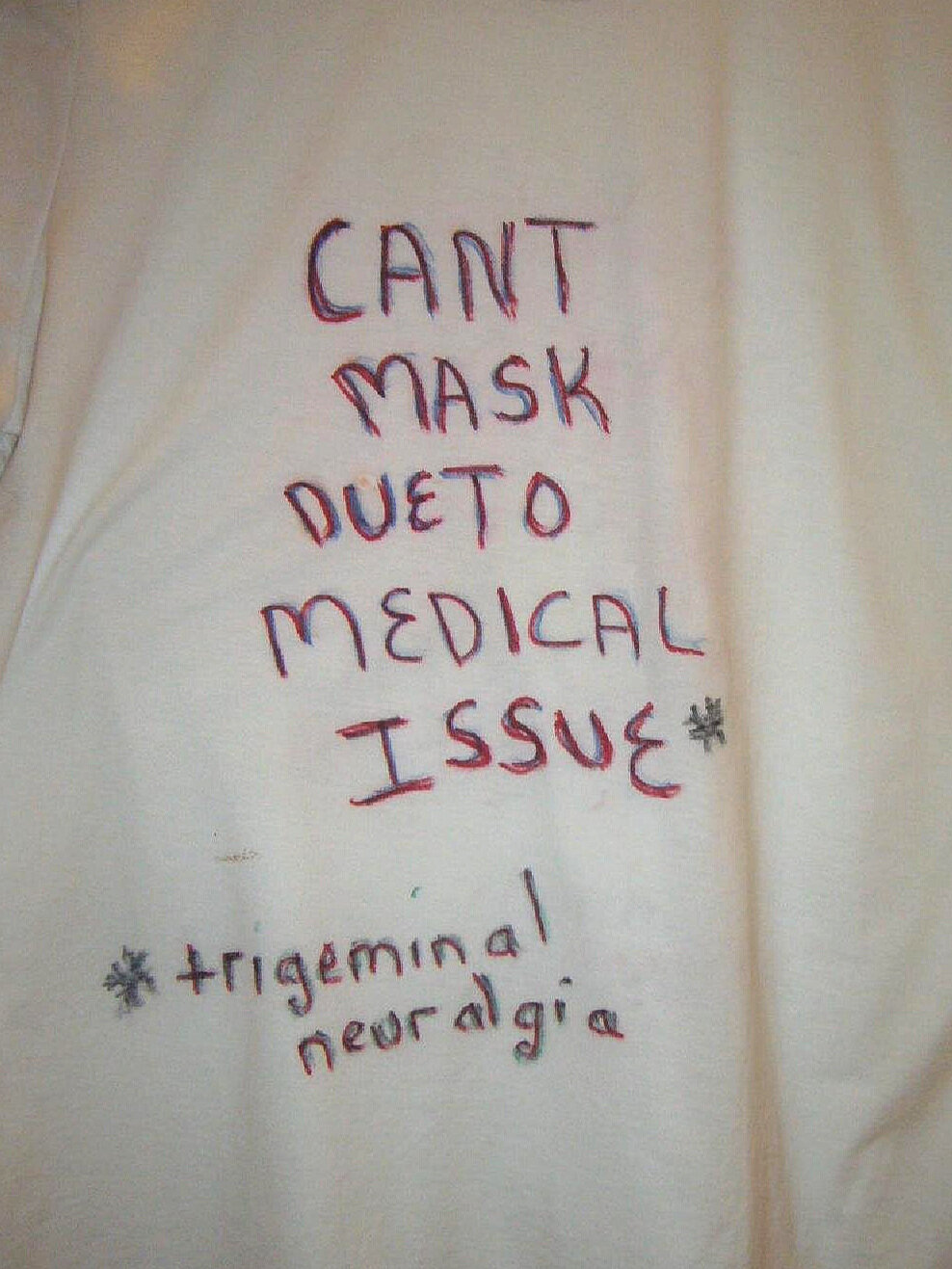
So I go out during the day. I made a t-shirt which reads, front and back, “Can’t mask due to medical issue. Trigeminal neuralgia.” Thankfully, people have been very nice to me, with one person even saying, “I am so sorry you need to wear that shirt.”

Recently, I went to a farmers market. A woman looked at me and got visibly excited. Instead of a tongue lashing, she said, “You have that? So does my husband.”

We had a nice conversation, but for all our similarities, he was able to mask. Which takes me back to my first point.

How often have we lamented that no one understands? That our families, friends and colleagues don’t accept why we so often have to say ‘no’ to extra work, a day at the park or other invitations?

thumbnail.jpg

Because of the masking issue, I learned maybe we too don’t always understand. I have seen people in support groups question someone else's report of their pain, how it feels, where it is located, and how they experience it. I never quite understood how anyone could question someone else's pain report.

Now I get it. Our diagnoses may be the same, but our pain experience may be very different. Mine may well not be the same as yours in how it feels, how I experience it or how it manifests itself in my body.

This was a new and important lesson for me. About the only time I can say, “Thank you, coronavirus.”

Carol Jay Levy has lived with trigeminal neuralgia, a chronic facial pain disorder, for over 30 years. She is the author of “A Pained Life, A Chronic Pain Journey.”  Carol is the moderator of the Facebook support group “Women in Pain Awareness.” Her blog “The Pained Life” can be found here.

Genetic Studies Could Pave the Way to New Pain Treatments

By Dr. Lynn Webster, PNN Columnist

Millions of Americans order DNA test kits to determine their ancestries. Knowing where you come from can be entertaining.  However, DNA testing can also help identify your risk of developing some diseases, including chronic pain.

Prenatal testing for genetic disorders is common. But genetic testing is also increasingly used to determine the risk of developing certain diseases or potential responses to specific drugs.

Currently, little is known about how to use genes to make an individual more or less sensitive to pain, or to learn the likelihood that someone will respond in a particular way to an analgesic based on their genetics. The good news is that we are on the cusp of gaining more information about the genes that control pain and pain treatments, and that knowledge should allow us to develop targeted pain therapies.

Most physicians still believe that everyone experiences pain in the same way. Research recently published in Current Biology discovered a gene—the so-called "Neanderthal gene"—that is associated with increased sensitivity to pain. Recognizing that a mutation of a specific gene can influence pain perception may be illuminating for many members of the medical profession.

The Individuality of Pain

Pain specialists have known for a long time that given the same stimulus, some people feel more pain than others. The truth is, there are several genes besides the Neanderthal gene that determine how an individual experiences pain. Some genes increase our sensitivity to pain, while other genes decrease it. Some genes influence how pain is processed, while other genes determine an individual's response to an analgesic.

The ability for an analgesic to provide pain relief in an individual is partially determined by the genetics of the receptor to which the pain medication binds. These genes are different from pain-sensitivity genes. For example, oxycodone may be very effective in relieving pain for one individual, but only partially effective for another.

Optimal pain relief requires recognition that each individual responds uniquely to a given analgesic. Doctors are beginning to provide gene therapy for cancer patients. Advancements in research may someday allow us to do the same for patients with pain.

The array of pain responses to the same stimulus is a major reason why one-size-fits-all dosing of pain medications is flawed. A given dose may leave some patients undertreated and others over-treated. Unfortunately, regulators who set arbitrary dose limits fail to understand or consider this biologic variability. 

Differing clinical responses to pain stimuli and medications underscore the need to individualize therapy. Knowing more about the biology of pain can help us to understand each individual’s response to painful stimuli and the variable response to any therapy.

The Heredity Nature of Pain

How we experience pain is a result of both environmental and genetic features. The genetic factors are what we inherit. Environmental factors — which we develop rather than inherit — include cultural attitudes, emotions, and individual responses to stress. Our personality and life’s experiences are included in the environmental factors that contribute to our experience of pain. Therefore, pain is a result of genetic and environmental interactions. Both can make an individual more or less sensitive to stimuli or analgesia. It is a complex and dynamic process.

The so-called Neanderthal gene is not a new discovery but was newly recognized in Neanderthals. The discovery is interesting, because it implies the gene has an evolutionary purpose. The gene is known as SCN9. There are several pain syndromes associated with the genetic mutations of the SCN9 gene, including some types of back pain and sciatica. Mutations of this gene can result in the total absence of pain or a heightened pain expression. The type of mutation determines the phenotype (or personal characteristics) of our response to a painful stimulus.

The Genetics of Analgesia

It is unclear how Neanderthals benefited biologically from increased pain sensitivity. As we know, acute pain elicits an alarm and is considered protective. It teaches us to avoid dangers that can threaten our life, and prevents us from walking on a broken leg until it heals sufficiently to bear our weight.

Evolution may not have been concerned about the effects of chronic pain. The Neanderthals' limited life expectancy, and the fact that their survival depended on strong physical conditioning, may have made chronic pain a non-issue. Chronic pain may have made survival difficult, or even impossible, for the Neanderthals.

The recent discovery that Neanderthals had the SCN9 gene should not be surprising, given the fact that modern humans shared a common ancestor with Neanderthals. The Neanderthal gene study is of particular interest to me, because I am working with several companies that are exploring potential drugs to affect the function of the SCN9 gene. The companies have different approaches, but they all are trying to find a way to dial down an individual's sensitivity to painful stimuli.

Since the SCN9 gene can be responsible for the total absence of all pain, as well as several extreme forms of pain, it may be reasonable to target the SCN9 gene to modulate pain.

My hope is that manipulation of the SCN9 gene will reduce pain sensitivity, making it easier to control pain by adjusting the dose and type of drug we prescribe.

It is possible one or more drugs that target the SCN9 gene will be available within the next 4-6 years. If that occurs, it could be game changer for people in pain. We can then thank our Neanderthal ancestors for the evolutionary gift. 

Lynn R. Webster, MD, is a vice president of scientific affairs for PRA Health Sciences and consults with the pharmaceutical industry. He is author of the award-winning book, “The Painful Truth,” and co-producer of the documentary, “It Hurts Until You Die.” You can find Lynn on Twitter: @LynnRWebsterMD

Avoiding Medical Care During Pandemic Could Mean Life or Death

By John Glionna, Kaiser Health News

These days, Los Angeles acting teacher Deryn Warren balances her pain with her fear. She’s a bladder cancer patient who broke her wrist in November. She still needs physical therapy for her wrist, and she’s months late for a cancer follow-up.

But Warren won’t go near a hospital, even though she says her wrist hurts every day.

“If I go back to the hospital, I’ll get COVID. Hospitals are full of COVID people,” says Warren, a former film director.

“Doctors say, ‘Come back for therapy,’ and my answer is, ‘No, thank you.’”

Many, many patients like Warren are shunning hospitals and clinics. The coronavirus has so diminished trust in the U.S. medical system that even people with obstructed bowels, chest pain and stroke symptoms are ignoring danger signs and staying out of the emergency room, with potentially mortal consequences.

A study by the Centers for Disease Control and Prevention found that emergency room visits nationwide fell 42% in April, from a mean of 2.1 million a week to 1.2 million, compared with the same period in 2019.

A Harris poll on behalf of the American Heart Association found roughly 1 in 4 adults experiencing a heart attack or stroke would rather stay at home than risk getting infected with the coronavirus at the hospital. These concerns are higher in Black (33%) and Hispanic (41%) populations, said Dr. Mitchell Elkind, president of the American Heart Association and a professor of neurology and epidemiology at Columbia University.

Perhaps even more worrisome is the drastic falloff of routine screening, especially in regions hit hard by the virus. Models created by the medical research company IQVIA predict delayed diagnoses of an estimated 36,000 breast cancers and 19,000 colorectal cancers due to COVID-19’s scrambling of medical care.

At Hoag Memorial Hospital Presbyterian in Newport Beach, California, mammograms have dropped as much as 90% during the pandemic. “When you see only 10% of possible patients, you’re not going to spot that woman with early-stage breast cancer who needs a follow-up biopsy,” said Dr. Burton Eisenberg, executive medical director of the Hoag Family Cancer Institute.

Before the epidemic, Eisenberg saw five melanoma patients a week. He hasn’t seen any in the past month. “There’s going to be a lag time before we see the results of all this missed care,” he said. “In two or three years, we’re going to see a spike in breast cancer in Orange County, and we’ll know why,” he said.

Dr. Farzad Mostashari, former national coordinator for health information technology at the U.S. Department of Health and Human Services, agreed. “There will be consequences for deferring chronic disease management,” he said.

“Patients with untreated high blood pressure, heart and lung and kidney diseases are all likely to experience a slow deterioration. Missed mammograms, people keeping up with blood pressure control — there’s no question this will all cause problems.”

In addition to fear? Changes in the health care system have prevented some from getting needed care.

Many medical offices have remained closed during the pandemic, delaying timely patient testing and treatment. Other sick patients lost their company-sponsored health insurance during virus-related job layoffs and are reluctant to seek care, according to a study by the Urban Institute.

A study by the American Cancer Society’s Cancer Action Network found that 79% of cancer patients in treatment had experienced delays in care, including 17% who saw delays in chemotherapy or radiation therapy.

“Many screening facilities were shuttered, while people were afraid to go to the ones that were open for fear of contracting COVID,” said Dr. William Cance, chief medical and scientific officer for the American Cancer Society.

Falling Through the Cracks

And then there are patients who have fallen through the cracks because of the medical system’s fixation on COVID-19.

Dimitri Timm, a 43-year-old loan officer from Watsonville, California, began feeling stomach pain in mid-June. He called his doctor, who suspected the coronavirus and directed Timm to an urgent care facility that handled suspected COVID patients.

But that office was closed for the day. When he was finally examined the following afternoon, Timm learned his appendix had burst. “If my burst appendix had become septic, I could have died,” he said.

The degree to which non-COVID patients are falling through the cracks may vary by region. Doctors in Northern California, whose hospitals haven’t yet seen an overwhelming surge of COVID-19 cases, have continued to see other patients, said Dr. Robert Harrington, chairman of the Stanford University Department of Medicine and outgoing president of the American Heart Association. Non-COVID issues were more likely to have been missed in, say, New York during the April wave, he said.

The American College of Cardiology and American Heart Association have launched campaigns to get patients to seek urgent care and continue routine appointments.

The impact of delayed care might be felt this winter if a renewed crush of COVID-19 cases collides with flu season, overwhelming the system in what CDC Director Robert Redfield has predicted will be “one of the most difficult times that we’ve experienced in American public health.”

The health care system’s ability to handle it all is “going to be tested,” said Anthony Wright, executive director of Health Access California, an advocacy group.

‘Sabbatical from Bad Habits’

But some patients who stay at home may actually be avoiding doctors because they don’t need care. Yale University cardiologist and researcher Dr. Harlan Krumholz believes the pandemic could be reducing stress for some heart patients, thus reducing heart attacks and strokes.

“After the nation shut down, the air was cleaner, the roads were less trafficked. And so, paradoxically, people say they were experiencing less stress in the pandemic, not more,” said Krumholz, who wrote an April op-ed in The New York Times headlined “Where Have All the Heart Attacks Gone?” “While sheltering in place, they were eating healthier, changing lifestyles and bad behaviors,” he said.

At least some medical experts agree.

“The shutdown may have provided a sabbatical for our bad habits,” said Dr. Jeremy Faust, a physician in the division of health policy and public health at Boston’s Brigham and Women’s Hospital. “We’re making so many changes to our lives, and that includes heart patients. If you go to a restaurant three times a week or more, do you realize how much butter you’re eating?”

While some patients may be benefiting from a COVID-19 change of regimen, many people have urgent and undeniable medical needs. And some are pressing through their fear of the virus to seek care, after balancing the risks and benefits.

In March, when the virus took hold, Kate Stuhr-Mack was undergoing a clinical trial at Hoag for her stage 4 ovarian cancer, which had recurred after a nine-month relapse.

Members of her online support group considered staying away from the facility, afraid of contracting the virus. But Stuhr-Mack, 69, a child psychologist, had no choice: To stay in the trial, she had to keep her regular outpatient chemotherapy appointments.

“We all make choices, so you have to be philosophical,” she said. “And I thought it was far more risky not to get my cancer treatment than face the off-chance I’d contract COVID on some elevator.”

Kaiser Health News, a nonprofit health newsroom whose stories appear in news outlets nationwide, is an editorially independent part of the Kaiser Family Foundation.