There’s Still Plenty of Stigma About Opioid Addiction 

By Crystal Lindell

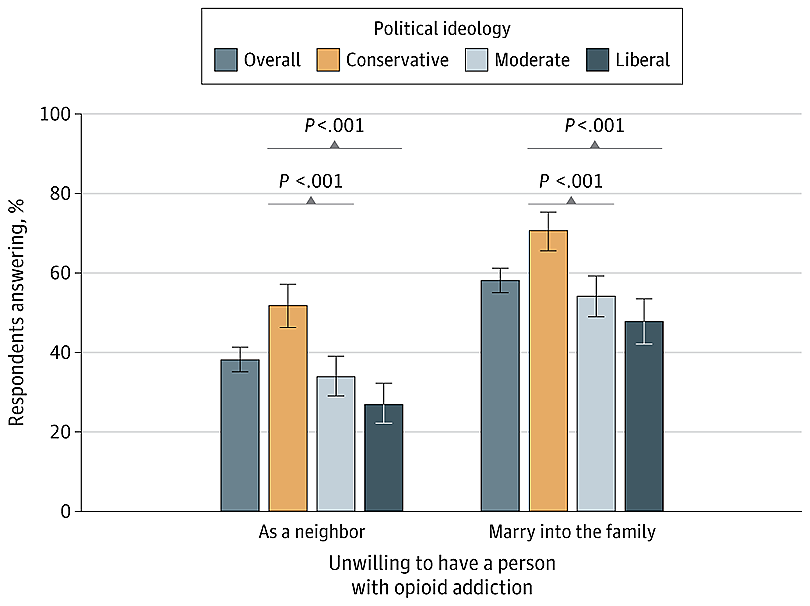
Many Americans still view opioid addiction as a stigmatized condition – with over half (58%) saying they wouldn’t want someone with an opioid use disorder marrying into their family. And over a third (38%) don’t want to be neighbors with someone with opioid addiction.

That’s according to an online survey of over 1,550 U.S. adults by researchers at Cornell University, who published their findings in JAMA

The goal of the survey was to see how Americans view opioid overdose deaths, people with opioid addiction, and who is responsible for solving the opioid crisis. They also measured if views differed by political ideology.

Notably, the survey did not define “addiction” before asking questions about it, leaving it up to each respondent to rely on their own personal perception of what addiction is. There are issues with that approach, as many people don’t know the difference between addiction and dependence, which is a reliance on medication to treat a health condition.

The survey also didn’t distinguish between people addicted to prescription opioids and those addicted to illicit opioids such as fentanyl or heroin. Most U.S. overdoses involve illicit fentanyl.  

That said, the responses indicate that many people view opioid addiction through an ideological lens.

There was broad agreement among conservatives, moderates and liberals that opioid overdose deaths are a serious problem. Overall, 88% rated it as a very serious problem. 

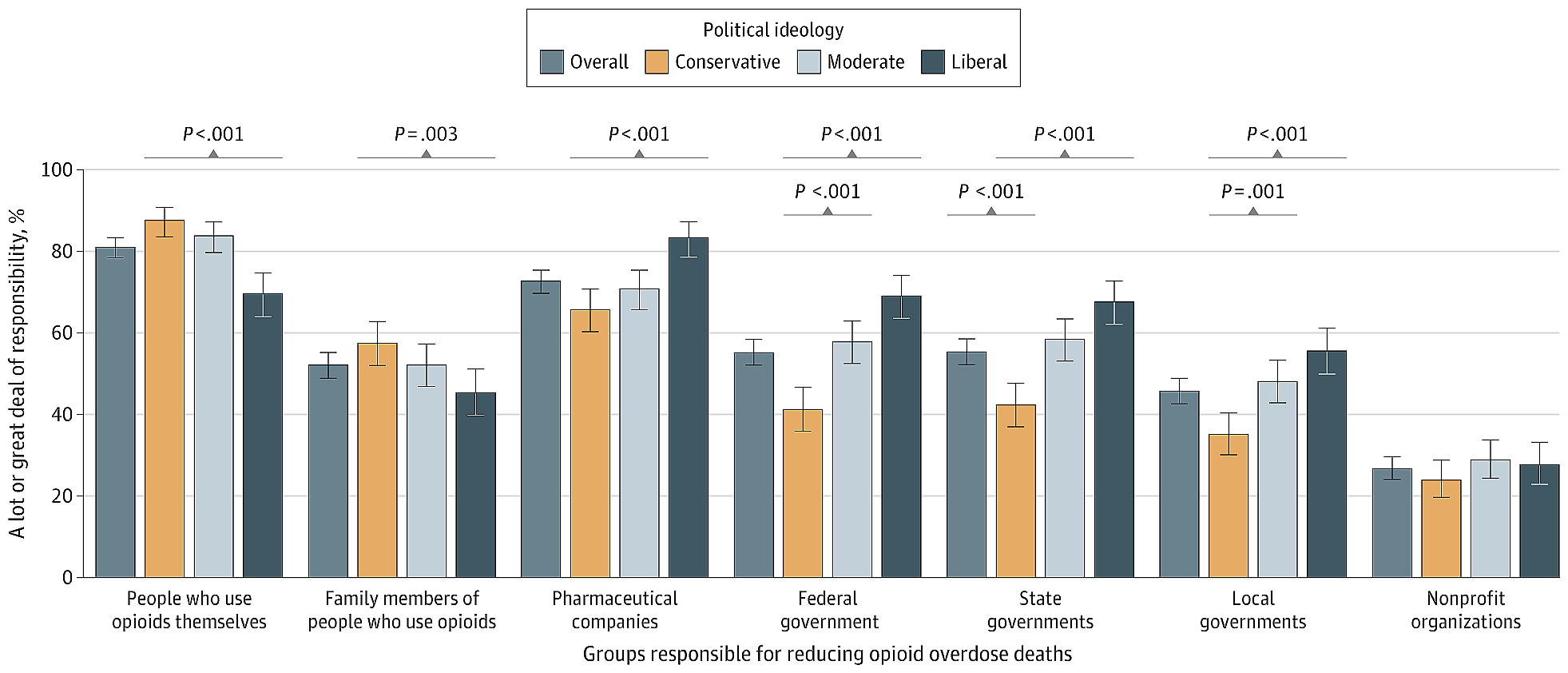
But when it comes to responsibility for reducing overdose deaths, conservatives were more likely than liberals to say people who use opioids and their family members bear a personal responsibility for reducing the number of deaths.

Liberals, on the other hand, were more likely than conservatives to say pharmaceutical companies, as well as federal, state and local governments, were responsible for fixing the problem.

Only about one in four thought that nonprofit organizations were responsible for the opioid crisis.  

Perceived Responsibility for Reducing Opioid Overdose Deaths

SOURCE: jama

Conservatives were also more likely to have a stigmatized view of people with opioid use disorder. Over half of conservatives (52%) said they were unwilling to have a neighbor with an opioid addiction (compared to 27% of liberals), and 71% of conservatives said they would not want someone with an opioid addiction to marry into their family (compared to 48% of liberals).

Attitudes About People With Opioid Addiction

SOURCE: jama

The findings highlight just how widespread the stigma still is when it comes to opioid use.

"It remains striking that nearly one-half of self-described liberals indicated unwillingness to have a person with opioid addiction marry into their family," wrote Harold Pollack, PhD, a Professor of Public Health at the University of Chicago, in a commentary also published in JAMA. "The stigma of current opioid addiction crosses political lines."

Respondents who have a personal experience with opioids — who experienced opioid addiction themselves, had a family member or close friend with addiction, or knew someone who died from overdose — showed a greater willingness to have a person with opioid addiction as a neighbor or in-law.

Interestingly, people with that lived experience were slightly more likely than others (82.2% vs 79.3%) to state that people who use opioids are responsible for reducing opioid overdose deaths.

In his commentary, Pollack said the findings carry important implications for public health messaging regarding harm reduction programs such as free syringes, naloxone distribution, and fentanyl test strips. 

"These evidence-informed interventions face continued resistance, most notably from communities and families that experience direct harms arising from the opioid epidemic, who are understandably drawn to abstinence-based approaches rather than to approaches that some perceive as encouraging continued drug use or as replacing one addiction with another," Pollack said.

The survey findings are a subset of data drawn from a much larger survey designed to test public messaging campaigns about Medicaid programs that treat substance use disorder.

Treating Pain Cost an Addiction Medicine Doctor Her Job

By Aneri Pattani, KFF Health News

Elyse Stevens had a reputation for taking on complex medical cases. People who’d been battling addiction for decades. Chronic-pain patients on high doses of opioids. Sex workers and people living on the street.

“Many of my patients are messy, the ones that don’t know if they want to stop using drugs or not,” said Stevens, a primary care and addiction medicine doctor.

While other doctors avoided these patients, Stevens — who was familiar with the city from her time in medical school at Tulane University — sought them out.

She regularly attended 6 a.m. breakfasts for homeless people, volunteered at a homeless shelter clinic on Saturdays, and on Monday evenings, visited an abandoned Family Dollar store where advocates distributed supplies to people who use drugs.

One such evening about four years ago, Charmyra Harrell arrived there limping, her right leg swollen and covered in sores. Emergency room doctors had repeatedly dismissed her, so she eased the pain with street drugs, Harrell said.

Stevens cleaned her sores on Mondays for months until finally persuading Harrell to visit the clinic at University Medical Center New Orleans. There, Stevens discovered Harrell had diabetes and cancer.

She agreed to prescribe Harrell pain medication — an option many doctors would automatically dismiss for fear that a patient with a history of addiction would misuse it.

ELYSE STEVENS

But Stevens was confident Harrell could hold up her end of the deal.

“She told me, ‘You cannot do drugs and do your pain meds,’” Harrell recounted on a Monday evening in October. So, “I’m no longer on cocaine.”

Stevens’ approach to patient care has won her awards and nominations in medicine, community service, and humanism. Instead of seeing patients in binaries — addicted or sober, with a positive or negative drug test — she measures progress on a spectrum. Are they showering daily, cooking with their families, using less fentanyl than the day before?

But not everyone agrees with this flexible approach that prioritizes working with patients on their goals, even if abstinence isn’t one of them. And it came to a head in the summer of 2024.

“The same things I was high-fived for thousands of times — suddenly that was bad,” Stevens said.

Flexible Care or Zero Tolerance?

More than 80% of Americans who need substance use treatment don’t receive it, national data shows. Barriers abound: high costs, lack of transportation, clinic hours that are incompatible with jobs, fear of being mistreated.

Some doctors had been trying to ease the process for years. Covid-19 accelerated that trend. Telehealth appointments, fewer urine drug tests, and medication refills that last longer became the norm.

The result?

“Patients did OK and we actually reached more people,” said Brian Hurley, immediate past president of the American Society of Addiction Medicine. The organization supports continuing flexible practices, such as helping patients avoid withdrawal symptoms by prescribing higher-than-traditional doses of addiction medication and focusing on recovery goals other than abstinence.

But some doctors prefer traditional approaches that range from zero tolerance for patients using illegal drugs to setting stiff consequences for those who don’t meet their doctors’ expectations. For example, a patient who tests positive for street drugs while getting outpatient care would be discharged and told to go to residential rehab.

Proponents of this method fear loosening restrictions could be a slippery slope that ultimately harms patients. They say continuing to prescribe painkillers, for example, to people using illicit substances long-term could normalize drug use and hamper the goal of getting people off illegal drugs.

Progress should be more than keeping patients in care, said Keith Humphreys, a Stanford psychologist, who has treated and researched addiction for decades and supports involuntary treatment.

“If you give addicted people lots of drugs, they like it, and they may come back,” he said. “But that doesn’t mean that that is promoting their health over time.”

Flexible practices also tend to align with harm reduction, a divisive approach that proponents say keeps people who use drugs safe and that critics — including the Trump administration — say enables illegal drug use.

The debate is not just philosophical. For Stevens and her patients, it came to bear on the streets of New Orleans.

‘Unconventional’ Prescribing

In the summer of 2024, supervisors started questioning Stevens’ approach.

In emails reviewed by KFF Health News, they expressed concerns about her prescribing too many pain pills, a mix of opioids and other controlled substances to the same patients, and high doses of buprenorphine, a medication considered the gold standard to treat opioid addiction.

Supervisors worried Stevens wasn’t doing enough urine drug tests and kept treating patients who used illicit drugs instead of referring them to higher levels of care.

“Her prescribing pattern appears unconventional compared to the local standard of care,” the hospital’s chief medical officer at the time wrote to Stevens’ supervisor, Benjamin Springgate. “Note that this is the only standard of care which would likely be considered should a legal concern arise.”

Springgate forwarded that email to Stevens and encouraged her to refer more patients to methadone clinics, intensive outpatient care, and inpatient rehab.

Stevens understood the general practice but couldn’t reconcile it with the reality her patients faced. How would someone living in a tent, fearful of losing their possessions, trek to a methadone clinic daily?

Stevens sent her supervisors dozens of research studies and national treatment guidelines backing her flexible approach. She explained that if she stopped prescribing the medications of concern, patients might leave the health system, but they wouldn’t disappear.

“They just wouldn’t be getting care and perhaps they’d be dead,” she said in an interview with KFF Health News.

Both University Medical Center and LSU Health New Orleans, which employs physicians at the hospital, declined repeated requests for interviews. They did not respond to detailed questions about addiction treatment or Stevens’ practices.

Instead, they provided a joint statement from Richard DiCarlo, dean of the LSU Health New Orleans School of Medicine, and Jeffrey Elder, chief medical officer of University Medical Center New Orleans.

“We are not at liberty to comment publicly on internal personnel issues,” they wrote.

“We recognize that addiction is a serious public health problem, and that addiction treatment is a challenge for the healthcare industry,” they said. “We remain dedicated to expanding access to treatment, while upholding the highest standard of care and safety for all patients.”

Not Black-and-White

KFF Health News shared the complaints against Stevens and the responses she’d written for supervisors with two addiction medicine doctors outside of Louisiana, who had no affiliation with Stevens. Both found her practices to be within the bounds of normal addiction care, especially for complex patients.

Stephen Loyd, an addiction medicine doctor and the president of Tennessee’s medical licensing board, said doctors running pill mills typically have sparse patient notes that list a chief complaint of pain. But Stevens’ notes detailed patients’ life circumstances and the intricate decisions she was making with them.

“To me, that’s the big difference,” Loyd said.

Some people think the “only good answer is no opioids,” such as oxycodone or hydrocodone, for any patients, said Cara Poland, an addiction medicine doctor and associate professor at Michigan State University. But patients may need them — sometimes for things like cancer pain — or require months to lower their doses safely, she said. “It’s not as black-and-white as people outside our field want it to be.”

Humphreys, the Stanford psychologist, had a different take. He did not review Stevens’ case but said, as a general practice, there are risks to prescribing painkillers long-term, especially for patients using today’s lethal street drugs too.

Overprescribing fueled the opioid crisis, he said. “It’s not going to go away if we do that again.”

‘The Thing That Kills People’

After months of tension, Stevens’ supervisors told her on March 10 to stop coming to work. The hospital was conducting a review of her practices, they said in an email viewed by KFF Health News.

Overnight, hundreds of her patients were moved to other providers.

Luka Bair had been seeing Stevens for three years and was stable on daily buprenorphine.

After Stevens’ departure, Bair was left without medication for three days. The withdrawal symptoms were severe — headache, nausea, muscle cramps.

“I was just in physical hell,” said Bair, who works for the National Harm Reduction Coalition and uses they/them pronouns.

Although Bair eventually got a refill, Springgate, Stevens’ supervisor, didn’t want to continue the regimen long-term. Instead, Springgate referred Bair to more intensive and residential programs, citing Bair’s intermittent use of other drugs, including benzodiazepines and cocaine, as markers of high risk. Bair “requires a higher level of care than our clinic reasonably can offer,” Springgate wrote in patient portal notes reviewed by KFF Health News.

But Bair said daily attendance at those programs was incompatible with their full-time job. They left the clinic, with 30 days to find a new doctor or run out of medication again.

“This is the thing that kills people,” said Bair, who eventually found another doctor willing to prescribe.

Springgate did not respond to repeated calls and emails requesting comment.

University Medical Center and LSU Health New Orleans did not answer questions about discharging Stevens’ patients.

‘Patients Will Die Without Her’

About a month after Stevens was told to stay home, Haley Beavers Khoury, a medical student who worked with her, had collected nearly 100 letters from other students, doctors, patients, and homelessness service providers calling for Stevens’ return.

One student wrote, “Make no mistake — some of her patients will die without her.” A nun from the Daughters of Charity, which ran the hospital’s previous incarnation, called Stevens a “lifeline” for vulnerable patients.

Beavers Khoury said she sent the letters to about 10 people in hospital and medical school leadership. Most did not respond.

In May, the hospital’s review committee determined Stevens’ practices fell “outside of the acceptable community standards” and constituted “reckless behavior,” according to a letter sent to Stevens.

The hospital did not answer KFF Health News’ questions about how it reached this conclusion or if it identified any patient harm.

Meanwhile, Stevens had secured a job at another New Orleans hospital. But because her resignation came amid the ongoing investigation, University Medical Center said it was required to inform the state’s medical licensing board.

The medical board began its own investigation — a development that eventually cost Stevens the other job offer.

In presenting her side to the medical board, Stevens repeated many arguments she’d made before. Yes, she was prescribing powerful medications. No, she wasn’t making clinical decisions based on urine drug tests. But national addiction organizations supported such practices and promoted tailoring care to patients’ circumstances, she said. Her response included a 10-page bibliography with 98 citations.

Abandoning People

The board’s investigation into Stevens is ongoing. Its website shows no action taken against her license as of late December.

The board declined to comment on both Stevens’ case and its definition of appropriate addiction treatment.

In October, Stevens moved to the Virgin Islands to work in internal medicine at a local hospital. She said she’s grateful for the welcoming locals and the financial stability to support herself and her parents.

But it hurts to think of her former patients in New Orleans.

Before leaving, Stevens packed away handwritten letters from several of them — one was 15 pages long, written in alternating green and purple marker — in which they shared childhood traumas and small successes they had while in treatment with her.

Stevens doesn’t know what happened to those patients after she left.

She believes the scrutiny of her practice centers on liability more than patient safety.

But, she said, “liability is in abandoning people too.”

KFF Health News is a national newsroom that produces in-depth journalism about health issues

5 Myths About Opioids That I Believed, Until I Needed Them

By Crystal Lindell

I had been enduring debilitating pain for months by the time I was given my first hydrocodone prescription for chronic pain in 2013.

At the time, I didn’t even know that hydrocodone was an opioid.

I had only heard of Vicodin being an opioid, and that was only because I lived near the Wisconsin border, where there are lots of Packer fans. The news that former Green Bay quarterback Brett Favre had to go to rehab for his Vicodin use was part of the local conversation.

But I had no idea that hydrocodone was the active ingredient in Vicodin.

It’s been over a decade now, and I have come to rely on opioids to manage the chronic pain I have in my right ribs, which is technically called “intercostal neuralgia.”

Before I needed opioids for pain relief, I used to buy into a lot of common cultural myths about them. Below is a look at what I used to believe, and how my views eventually shifted.

Myth #1: Only People Who ‘Misuse’ Opioids Have Physical Withdrawal

When I got my first hydrocodone prescription, I didn’t know it was a controlled substance with strict limits on how often you can get refills. And I definitely didn’t know that I would go through withdrawal if I stopped taking them abruptly.

My doctor prescribed 10mg pills and the label said: “Take 1-2 every 4-6 hours.”

So, that’s exactly what I did: Two pills every four to six hours.

My pain was (and still is) intense, but at the time I was still trying to keep pace with my pre-chronic pain lifestyle, which meant doing everything possible to push the pain away so that I could work and have a somewhat normal life.

But that meant that I ran out of my prescription early – something I was not aware was even a problem. When the doctor’s office said I would need to wait a couple days for a refill, I didn’t think it would be a big deal. Surely, I could easily ride out a couple of days without hydrocodone, no problem. After all, I had been taking them as prescribed.

Yeah. That’s not what happened. Turns out you actually cannot go from 40 to 80 mg of hydrocodone a day to zero.

I naively went to work that day, and still remember the trauma of spending the entire shift in the bathroom with diarrhea, nausea, horrible flu-like aches, and an odd feeling of anxiety.

Turns out, anyone can go through withdrawal from opioids. There is no magic spell that doctors can cast to give you immunity from it, just because you’re taking opioids exactly as prescribed. Your body doesn’t know the difference.

And that physical withdrawal is also not indicative that you have “a problem.”

In fact, it’s one of the reasons I think the entire conversation around addiction is often more nuanced than people want to admit. Taking a dose to combat withdrawal is often labeled as “misuse” – even though anyone can have withdrawal. 

And anyone who’s been through it knows that you’ll do almost anything to make it stop.

Myth #2: The Best Way to Stop Using Opioids Is Quitting Cold Turkey

There’s a common myth that the best way to stop using an addictive substance is to go cold turkey. That’s usually not true for things like nicotine and alcohol, and it’s also not true for opioids.

I used to believe in the common framing for this. That if you stopped using opioids cold turkey, made it through 72 hours of withdrawal, and then took just one dose, it would reset the whole process. You’d have to go through withdrawal all over again.

That’s not true. In fact, taking a dose after going longer than usual without one is often part of the tapering process that works best for getting off opioids. 

Ideally, you taper off slowly by lowering the amount you’re taking each day. So, if you’re on 40mg of hydrocodone a day, the best way to stop using it is to take 35mg daily for a week or so, then 30 mg, and so on until you get down to zero.

That’s the best way to reach success long-term and actually get off the medication, if that is your goal.

If you’re looking for more realistic tips on how to stop taking opioids, see “A Survival Guide for Opioid Withdrawal” that I wrote for PNN with my partner a few years ago. You can trust the advice because we learned it ourselves the hard way.

Myth #3: Opioid Doses Last as Long as Manufacturers Claim

I was eventually prescribed extended-release morphine pills for my chronic pain, and was told that each one should last a full eight hours. I was also told that hydrocodone should last four to six hours.

Unfortunately, neither of those things are true. So-called “extended release” morphine lasts about four hours, while the short-acting hydrocodone can stop working in just two or three hours.

So, it’s not wise to take another dose whenever your pain comes back. If you do that, you’ll end up running out of your prescription early every month.

Instead, you should expect to go through periods throughout the day when your pain starts to come back – and then you have to count down until your next dose.

Myth #4: Even One Dose of an Opioid Creates a High Risk of Addiction

Before I started taking opioids, I honestly believed the myth that just one 10mg dose of Vicodin could result in life-long addiction.

In reality, that’s nearly impossible. In fact, even among patients who take opioids long-term, the rate of addiction is still incredibly low. Estimates vary widely, but according to experts who have studied it, people who take opioids over long periods have addiction rates of 1 to 3 percent.   

Opioids are often framed as being so addictive that anyone can get hooked, so any exposure to them is dangerous and risky. In reality, low-dose opioids are incredibly safe, and most patients taking prescription opioids never develop an addiction to them

Myth #5: If Someone Is ‘Really’ in Pain, Doctors Will Prescribe Opioids

I am a little ashamed to admit this, but I used to think of a Vicodin prescription as an indicator of whether or not someone’s pain was actually severe.

If a doctor prescribed Vicodin to someone, that meant they were in “real” pain.

Boy, was I wrong.

While dealing with pain myself, I quickly learned that doctors will often ignore severe pain in patients because they don’t want to deal with the hassle of prescribing a controlled substance. That reluctance has only gotten worse since 2013. Much worse.

These days, doctors withhold opioid medication from post-op patients, cancer patients, palliative care patients, and even hospice patients. All of them are still in very real pain though.

Whether or not a doctor validates your pain with an opioid prescription has no bearing on how severe your pain actually is.

There’s a lot of misinformation about opioids and these are just some of the common myths perpetuated about them. While it’s understandable to believe them if you’ve actually never needed opioids, I encourage everyone to keep an open mind. After all, if you wait until you or a loved one needs opioids to see the truth, it may be too late.

Awake, Not Woke: How Politics in Medicine Harms Patients

By Dr. Lynn Webster

Somewhere between facts and social media, “woke” -- a perfectly good word for being awake to reality -- got transmogrified into a slur. If that alchemy puzzles you too, consider this brief field manual for the Anti-Alarm-Clock Caucus: a how-to on mistaking earplugs for policy and empathy for extremism.

Culture-war rhetoric chills evidence-based care and worsens outcomes. Let me explain what we should do instead. 

If you’ve ever sat with someone who was in real pain, you know how brittle the anti-woke script sounds in exam rooms. Patient-centered conversation becomes suspect; motivational interviewing gets mocked as coddling; and a clinician trying to tailor a taper to a patient’s specific needs is accused of ideology.

The risk isn’t a bruised ego -- it’s disengagement. People clamp down, under-report substance use, skip follow-ups, and show up again only when they’re much sicker.

The irony is stark: even the critics who rail at “woke medicine” still rely on the public health infrastructure they deride when it’s time to manage the fallout.

Here’s the magic trick they perform: They rebrand attentiveness as excess and turn “be aware of harm” into “behold the woke mind virus.” Once they frame awareness as contagion, politicians can sell indignation like energy drinks. Any medical practice that looks like it’s noticing the individuality of a patient -- bias training, person-first language, or trauma-informed care -- gets dismissed as ideology, rather than craft.

Because they like to think of themselves as honorable, they follow a set of prescribed rules including:

Rule #1: Relabel Compassion as “Coercion”

When a clinic swaps “addict” for “person with a substance use disorder” because it reduces stigma and improves engagement, they accuse the “word police” of forcing the change in nomenclature. Opposing any sign of empathy requires less energy than reading the literature and seems far more satisfying than measuring outcomes.

If they made the effort, they would know that the National Institute on Drug Abuse (NIDA) advises using person‑first, non‑stigmatizing language -- e.g., “person with a substance use disorder” rather than “addict” -- to reduce bias in clinical care.  

In fact, in the International Journal of Drug Policy, John Kelly and Cassandra Westerhoff reported that the term “substance abuser” prompts more punitive judgments against the patient, even when trained mental health professionals are involved.

Rule #2: Recode Lifesaving Tools as Culture War

Naloxone, syringe services, and overdose prevention centers are tedious in one way: they work. So, label them “woke enabling” and starve them of funding. It saves leaders from saying the quiet part out loud -- “I oppose what works” -- while ensuring the body count stays offstage.

The CDC reports that Syringe Services Programs (SSPs) are “safe, effective, and cost-saving” and “do not increase illegal drug use or crime.” Access to and disposal of sterile syringes that won’t be reused is associated with a 50% reduction in HIV/HCV incidence. The reduction exceeds two‑thirds when combined with medications for OUD. HHS adds that harm reduction is “critical to keeping people who use drugs alive.”

In Massachusetts, communities implementing overdose education and nasal naloxone distribution (OEND) programs saw a 27% lower opioid overdose death rate at modest program scale and a 46% lower death rate at higher scale compared to communities without OEND.

Rule #3: Flatten Complexity Into Blame

Fentanyl potency, housing collapse, and workforce shortages are complex, unglamorous problems. “Woke drug policy failed” fits easier on a bumper sticker.

When Oregon struggled amid a fentanyl wave, the vibe merchants -- outrage marketers who sell mood over evidence -- declared drug decriminalization to be the villain.

But nuance seldom survives a fact check. The best evidence to date is that Oregon’s decriminalization of small amounts of drugs in 2020 was not associated with an increase in fatal overdoses after accounting for fentanyl’s spread. Oregon later recriminalized possession in 2024, even though state health officials reported a 22% decrease in overdose deaths in the prior year.

On the street, cruel rhetoric cues policy. Call overdose prevention centers “ideological” and it becomes simpler to shutter them than to count the lives they save. Smear syringe services as permissive, and you can cut programs that prevent HIV and hepatitis C, while claiming fiscal prudence.

Mock “harm-reduction spending” and you can bury the line item without ever debating the outcomes. From 2019 to 2022, New York City’s Opioid Prevention Centers (OPCs) resulted in no significant increases in violent or property crime, 911 calls, or 311 calls for drug use after opening.

Similarly, Vancouver, Canada reported a 35% reduction in overdose mortality rates after the opening of North America’s first supervised injecting facility.

Inside healthcare systems, the anti-woke script causes harm. Clinicians already practicing under surveillance and time pressures learn to avoid nuance with patients, resulting in less motivational interviewing, fewer shared decisions, and more default suspicion. The clinical vocabulary hardens, and patients pick up on it the way they would the weather.

When language gets sharper, so do consequences -- patients disclose less, absorb less, and leave treatment sooner. NIDA’s guidance exists precisely to counter those effects.

The Anti-Theatrical Fix: What Actually Works

The fix is simple. The antidote to anti-woke drama is being awake.

Call things what they are: naloxone reverses overdoses, syringe programs prevent infections, and supervised drug consumption reduces death and connects people to care. That’s not a worldview, it’s reality.

Use words that keep doors open instead of closing them. Person-first language is stigma hygiene, not a lifestyle brand. Judge policies by outcomes and timelines rather than outrage cycles. If the curve bends where capacity expands and supply is stabilized, then fund capacity and stabilize supply.

Retire spin peddlers as culture-war props. Federal judges noted that an anti-woke law in Florida crossed constitutional lines, ruling that “viewpoint discrimination is inherent in the design and structure of this Act.”

We could even try a fascinating (or, perhaps, boring to some) experiment in courage: let leaders earn applause for actions that quietly work, instead of things that loudly sting. Pay clinicians for patient-reported function, not for performing moral panic. Reward programs that shrink infections and deaths, not those that inflate arrest numbers. And when someone tries to sell you an anti-woke policy branded as “toughness,” ask to see the data, the denominator, and the deaths averted.

If you need a slogan, Gov. Ron DeSantis already gave you one and it just proves the point: “We will never surrender to the woke mob. Florida is where woke goes to die.”

None of this requires everyone to be “woke” or to join a mob. It requires us to be awake. The linguistic jujitsu that turned woke into a boo-word lets leaders score easy points, while patients lose hard chances.

You can see the toll in the quiet statistics, but you can also hear it in the voices that don’t come back, including the patient who won’t return after being called an unkind name; the parent who stops carrying naloxone because a lawmaker sneered at “harm-reduction spending”; and the person who overdoses in a locked bathroom because a supervised site was branded as “ideology.”

Be awake to patients and outcomes; let data, not drama, guide healthcare.

Lynn R. Webster, MD, is a pain and addiction medicine specialist and serves as Executive Vice President of Scientific Affairs at Dr. Vince Clinical Research, where he consults with pharmaceutical companies. He is the author of the forthcoming book, “Deconstructing Toxic Narratives–Data, Disparities, and a New Path Forward in the Opioid Crisis,” to be published by Springer Nature. Dr. Webster is not a member of any political or religious organization.

The Strange Denial of Complications Caused by Poorly Treated Pain

By Drs. Forest Tennant and Scott Guess

There has been no shortage of controversy, scandal and fraud regarding the opioid and pain crises of the past decade. One standout in the debate over opioids and pain treatment has been a lack of an honest, objective discussion of the benefits of pain care.

A basic tenet in medical practice and therapeutics is what is called the “risk-benefit” ratio. This is a simple analysis of whether a specific drug or therapeutic measure has more benefit than risk.

For example, the risk-benefit of drugs taken during pregnancy is well-known and established. But strangely, the debate over whether opioids have more benefit than risk in the treatment of pain has never been broached.

None of the parties involved, especially the anti-opioid zealots, will discuss any benefit that opioids may bring. In fact, essentially their only discussion is that opioids are a risk for overdose and addiction, so they have no benefit and shouldn’t be used.  

This risk is overrated and overstated in relation to opioids prescribed and monitored by a physician. According to the CDC, total opioid overdose deaths in the US (including deaths from illicit opioids) were 24 deaths per 100,000 population in 2023.

That compares to the overdose death rate for prescribed opioids, which was 4 per 100,000 population. That is a raw number for prescribed opioids.  Some data reports opioid deaths among physician monitored chronic pain patients to be as low at 0.1 per 100,000 population. 

In other words, the overdose risk of evidence with prescription opioid is minuscule.

Pain has a number of pathological complications that benefit from opioid therapy. In addition to physical relief, there are humanitarian benefits, such as a reduction in suffering, and the ability to mentally and physically function as a productive person.

When poorly treated or left untreated, chronic pain has profound negative and deleterious effects on the cardiovascular and endocrine (hormonal) systems. Pain puts the cardiovascular system into overdrive, which raises blood pressure and pulse rates. Coronary artery spasm may also result from severe chronic pain.

We can personally attest to prescribing blood pressure medication and nitroglycerin to many pain patients at risk of cardiac arrest or heart failure.

Hormonal suppression and deficiency of cortisol, testosterone, estradiol and other hormones are also common in undertreated chronic pain patients. Cortisol levels can drop below levels that sustain life. We have administered emergency cortisone to pain patients who were severely ill, debilitated, and near collapse because they had inadequate cortisol levels.

Among Dr. Thomas Addison’s eleven reported original cases of Addison’s Disease in 1855, about half had serious intractable pain conditions such as adhesive arachnoiditis.

Chronic pain has also been found to alter blood glucose and lipids (cholesterol). Sleep deprivation is another major problem in pain patients.  And anorexia with malnutrition is common.

Given the medical complications induced by pain, one would logically think that there would always be a discussion of risk-benefit when discussing opioid therapy. But we’ve never heard or seen such a discussion in medical literature or in political circles.

As if denial of benefits over risks weren’t bad enough, an even stranger denial has occurred. We have searched the major medical textbooks used in medical schools today, and couldn’t find a single word that chronic pain is a risk for hypertension and cardiac disease, much less hormonal deficiencies.

Isn’t it time we quit denying that chronic pain has medical complications that can be easily treated with opioids and other medicinals? The risks of opioid therapy simply don’t outweigh the benefits. 

Forest Tennant, MD, DrPH, is retired from clinical practice but continues his research on the treatment of intractable pain and arachnoiditis. Readers interested in learning more about his research should visit the Tennant Foundation’s website, Arachnoiditis Hope. You can subscribe to its research bulletins here.   

Scott Guess, PharmD, operates an independent pharmacy and clinic in Atascadero, CA that specializes in pain management and arachnoiditis.

The Tennant Foundation gives financial support to Pain News Network and sponsors PNN’s Patient Resources section.  

FDA’s 7-OH Warning Sparks Sensational Claims About Kratom

By Pat Anson

The FDA’s latest campaign against kratom has reignited a wave of sensational claims in the media about the herbal supplement and its potential for addiction.

“A new emergency is quietly growing in the United States,” warns La Voce di New York, with an ominous but corny headline that calls kratom a new “Hippie Drug” disguised as an alternative to coffee.

“However, the preparation hides a high potential for addiction, with symptoms and withdrawal crises very similar to those caused by the most dangerous opioids.”

USA Today said it spoke with over 20 people who became “severely addicted” to kratom. One of them was Kim Maloney, a 49-year-old Ohio mother, who lost her car, home and marriage when her kratom use spun out of control. She believes it would have killed her, had she not gone into rehab.

"My eyes were rolling in the back of my head. I couldn't walk straight. I didn't leave my couch for months. I had pancreatitis. I had shingles. I was sick. I mean, I was really sick,” Maloney said.

Other news outlets are calling kratom “gas station heroin” and “legal morphine,” taking their cue from FDA Commissioner Marty Makary, MD, who recently announced plans to have a kratom alkaloid called 7-hydroxymitragynine (7-OH) classified as a Schedule One controlled substance --- the same category as heroin and LSD.

“7-OH is an opioid that can be more potent than morphine. We need regulation and public education to prevent another wave of the opioid epidemic,” said Makary.

‘Replacing One Addiction with Another’

The FDA’s renewed interest in kratom — and 7-OH in particular — apparently stems from a growing number of social media posts about it being addictive. A Reddit page created last year for people trying to quit 7-OH has over 4,000 members.

“You will have a passionate love affair with 7OH before it shows its true colors,” warns one former user. “Like many, I was a recovered kratom user before trying 7OH. And for the better part of a year, it felt like 7OH was a miracle drug that fixed all the negative side-effects of plain leaf kratom. IT'S NOT.”

Nicholas Campana, a recovering addict and YouTube influencer who goes by the name "Goblin," posted a video a few months ago calling 7-OH the “most dangerous drug in the smoke shop.”

“While kratom is a legitimate step down from opiates, in my opinion this is replacing one addiction with another,” Campana said in the video, which has been viewed over 700,000 times. "7-OH is the latest smoke shop craze. It’s not like the other ones, because this a very, very addictive opioid.”

For the record, neither kratom or 7-OH are opioids. They do not come from poppies. Kratom leaves come from Mitragyna speciosa, a tropical tree native to southeast Asia that belongs to the same botanical family as coffee.

Kratom does have opioid-like effects, however, and 7-OH is one of its active ingredients. In its natural state, only trace amounts of 7-OH are present in kratom. But some kratom vendors are selling gummies, drinks and tablets with concentrated synthetic versions of 7-OH to boost their potency.

‘Works as Well as Oxycodone’

According to one study, as many as two million Americans use kratom. Most take it for pain relief or as an energy booster, and have only been exposed to unadulterated kratom leaf products. Some chronic pain sufferers have tried 7-OH and found it just as effective as prescription opioids.

One of them is Emil, who suffers from chronic pancreatitis. Like many other pain patients, Emil has faced frustrating delays getting his opioid prescriptions filled. He asked that we not use his last name.

“I have had good experiences with 7-OH, using it primarily when I am waiting for a new prescription from my doctor since that can take over a week from the time I request it to getting it filled by the pharmacy, sometimes even longer,” Emil told PNN. ““It does not seem to cause the tiredness and aloofness, for lack of a better word, that prescription painkillers can cause and I feel like I am able to focus better, with less of the unpleasant side effects of painkillers such as nausea, dry mouth, etc. 

“I am prescribed oxycodone for pain and while it is somewhat effective in combination with ibuprofen in treating my pain, it is a constant struggle to keep my pain under control.  I would say that 7-OH works just about as well as oxycodone in controlling the pain, but definitely with less unpleasant side effects and really no so-called withdrawal symptoms or cravings, at least for me, as some people report with prescription painkillers. I truly do not understand why they are trying to ban it outright as a Schedule I substance with no medical use.”

The FDA has offered surprisingly little evidence about the harmful effects of 7-OH or why it is again trying to classify it as a Schedule One controlled substance. The FDA’s Adverse Event Reporting System has recorded only 15 cases involving 7-OH, two of them deaths, but because of “ambiguity about the contributory role of 7-OH” — which suggests other drugs were involved — the agency is downplaying the significance of those cases.

“This raises serious questions about the evidentiary basis for such a significant regulatory action,” Jeff Smith, PhD, national policy director for the Holistic Alternative Recovery Trust, wrote in an op/ed published in Medical Economics. “More research is needed to fully assess 7-OH’s risks, including its potential for misuse, dependence or drug-drug interactions. But they do not support the claim that 7-OH is an imminent threat to public health.

“To be clear, 7-OH is a potent compound. But potency alone does not justify prohibition. Alcohol, benzodiazepines and prescription opioids are far more dangerous and remain legally available under strict regulation. The proper response to uncertainty is research and oversight: not bans.”

‘Embarassing FDA Mistakes’

Kratom supporters and those who want access to 7-OH can take comfort in the FDA’s failure to get kratom banned in previous attempts.

In 2016, the Drug Enforcement Administration – acting at the request of the FDA – tried to classify 7-OH and the kratom alkaloid mitragynine as Schedule One drugs, only to drop those efforts after a public outcry. A top federal health official later said the FDA withdrew its scheduling request because of “embarrassingly poor evidence & data.”

In 2024, the FDA made another preliminary attempt at regulating kratom, publishing a notice in the Federal Register seeking public comment on a proposed survey of kratom users to evaluate 7-OH and mitragynine for potential harms. Ten days later, the FDA abruptly withdrew its study plans, citing unexplained “circumstances necessitating changes.”

Kratom advocates at the time said the FDA’s withdrawal of the study notice was the “latest embarrassing mistake” the agency made about kratom.

“The FDA’s few anti-kratom staff are repeatedly undermining the Agency’s credibility on harm reduction strategies,” said Mac Haddow, Senior Fellow on Public Policy at the American Kratom Association (AKA), an association of kratom vendors. “The FDA remains trapped in the web of their own making that unfairly demonizes products like kratom.”

The AKA has since changed its tune, and is now applauding the FDA for its “decisive and science-driven recommendation to classify 7-hydroxymitragynine (7-OH) as a Schedule I substance.”

“These 7-OH products are not kratom. They are chemically altered substances that carry potent opioid-like effects and pose an imminent threat to consumers,” Haddow said in a new statement.

It’s up to the DEA to decide if 7-OH should be classified as a controlled substance. If it does, the DEA must then publish a notice in the Federal Register, take public comments and reevaluate the evidence, a rulemaking process that could take months or even years. Until then, 7-OH can legally remain on the market under federal law as an unregulated dietary supplement, as long as no medical claims are made about it.

(Update 8/13/25: Florida isn’t waiting for the DEA or FDA to act. Florida Attorney General James Uthmeier has filed an emergency rule classifying concentrated forms of 7-OH as a Schedule One controlled substance in Florida. The rule makes it illegal to sell, possess or distribute concentrated forms of 7-OH in the state, calling them “an immediate and imminent hazard to the public health, safety, and welfare.”)

Continued Blaming of Purdue Pharma Won’t Solve the Opioid Crisis

By Lynn R. Webster, MD

On July 15, The Washington Post published an editorial urging states to use opioid settlement funds to expand naloxone access and addiction treatment programs.

These are sound public health goals. But the editorial’s framing — tying these investments to reparations for damage attributed to Purdue Pharma — rests on an oversimplified and misleading narrative that has shaped policy and public opinion for over a decade.

Purdue Pharma aggressively market OxyContin and contributed to early overprescribing. However, it was never the dominant supplier of prescription opioids. Analyses of pill counts, morphine milligram equivalents, and regional variation show that Purdue’s market share was often far less than one-third. While its actions were consequential, the disproportionate focus on Purdue distracts from the broader, ongoing drivers of the crisis.

Addiction is not caused by the availability of opioids alone, but also by the conditions that make people vulnerable: poverty, trauma, housing instability, and untreated mental illness. By fixating on corporate actors, we risk mistaking the spark for the fire — and neglecting the deeper issues that sustain the epidemic.

The editorial also perpetuates confusion between physical dependence and addiction. The former is a predictable response to long-term opioid use; the latter involves compulsive behavior and impairment. Blurring the two has led to harmful policies, including forced opioid tapers and abandonment of stable pain patients.

These policies have not reduced deaths. As prescription opioids became harder to obtain — often due to regulatory pressure — some patients turned to illicit alternatives; not to get high, but to avoid withdrawal or manage pain. This shift laid the groundwork for the explosion of heroin and illicit fentanyl use. Today, illicit synthetic opioids are involved in more than 70% of overdose deaths.

Framing settlement spending as payback reinforces a punitive narrative rather than advancing evidence-based solutions. Naloxone, youth prevention, and addiction treatment should be pursued because they work — not because they symbolize restitution.

The real challenge lies in addressing the conditions that lead to substance use in the first place. Reforming housing policy, expanding mental health care, and ensuring access to meaningful employment are more difficult— but are far more essential — than litigating against a defunct company.

We should also be asking why the healthcare system permitted aggressive opioid marketing, why insurers incentivized pill volume over outcomes, and why evidence-based addiction care and harm reduction remain chronically underfunded.

Managing the crisis requires more than blame. It requires accurate explanations, structural change, and sustained investment in public health — rather than narratives that feel satisfying but obscure the truth.

Lynn R. Webster, MD, is a pain and addiction medicine specialist, and serves as Executive Vice President of scientific affairs at Dr. Vince Clinical Research, where he consults with pharmaceutical companies.

Dr. Webster is the author of the forthcoming book, “Deconstructing Toxic Narratives – Data, Disparities, and a New Path Forward in the Opioid Crisis,” to be published by Springer Nature.

‘This Is Blood Money’: Who Is Policing How Opioid Settlement Funds Are Spent?

By Aneri Pattani, KFF Health News

After years of legal battles, state attorneys general won billions of dollars in opioid settlements from drug companies accused of fueling the addiction crisis. They declared victory at press conferences, and some touted the deals during their gubernatorial campaigns.

But now that the windfall is being spent, are attorneys general doing enough to ensure it’s used for the intended purposes?

No, say many families affected by the overdose crisis, recovery and harm reduction advocates, policy experts, and researchers following the cash.

“This is blood money,” said Toni Torsch, a Maryland resident whose son Dan died of an overdose at age 24. It can’t make up for the lives lost, but “we do want to make sure that it’s going to count.”

Torsch and others affected by the crisis are increasingly worried that no one seems to be guarding the opioid settlement cash while elected officials eye it hungrily. With the Trump administration slashing federal funding for addiction and Congress approving massive reductions to Medicaid — the largest payer for addiction care nationwide — people fear state legislators will use the settlements as a grab bag to fill budget shortfalls.

In the face of these concerns, two research and advocacy organizations are proposing a solution: a crowdsourced database to identify potential examples of misuse and prompt attorneys general to investigate.

The Opioid Policy Institute and Popular Democracy launched a website that allows members of the public to submit alleged cases of waste, fraud, abuse, and mismanagement of opioid settlement funds. Submissions are reviewed by Jonathan Stoltman, director of the Opioid Policy Institute, and then posted with details such as how much money was spent, what was purchased, who made the decision, and links to relevant news articles or budget documents.

The database, shared first with KFF Health News, includes about 150 examples to start, including $2,362 awarded by a Missouri county to its roads and bridge department and $375,600 spent on a body scanner for a Michigan county jail. The initial examples were sourced from people in recovery, advocates, and others Stoltman and his team asked to test the project. Stoltman acknowledged he’ll face criticism as the primary arbiter of what qualifies as misuse for the database, but said he’ll use research studies to defend his decisions.

The website also shows people how to file complaints with their state attorney general and ask the office to develop a formal process for receiving and investigating such complaints.

“I hope this is a wake-up call for state AGs that their work on this project is not done,” said Frank Kearl, who co-led the effort with Stoltman and is working as an attorney at Popular Democracy until July 14. “We still have time” to make changes to ensure we “spend this money in a way that actually responds to the harm that was caused.”

The website’s launch comes just over a week after New Jersey lawmakers passed a budget that gave health systems $45 million in settlement funds despite the state attorney general’s opposition. Legislators said it would shield hospitals from the blow of federal Medicaid cuts, but harm-reduction advocates said it gives short shrift to people with substance use disorders, whom the money was meant to serve.

Lawmakers in North Carolina and Washington, D.C., are also considering using settlement funds to plug gaps, and Connecticut and Nevada have discussed it too.

“That’s not what it’s there for,” said Torsch, who runs a nonprofit dedicated to addiction recovery in her son’s honor. “We want to make sure that money is being spent in the most responsible and effective way to help people that are still struggling.”

Last year, when Torsch heard that a western Maryland county spent some of its settlement money on guns, she reached out to her state attorney general to complain. The office said it wasn’t its responsibility, Torsch said, and told her to contact the health department.

She was confused.

The attorney general’s office is supposed to represent “the top cops,” Torsch told KFF Health News.

The Maryland attorney general’s office declined to answer KFF Health News’ questions about how it handles opioid settlement complaints.

Few States Monitor Spending

About a dozen companies are expected to pay state and local governments more than $50 billion in opioid settlements over nearly two decades. Purdue Pharma’s case, the most well known, is still wending its way through court. But other companies, including Johnson & Johnson, CVS Health, and Walgreens, have begun paying.

Although the specifics of each settlement deal vary, most require states to use at least 85% of the money on efforts related to the opioid crisis. But enforcement is left to the companies that paid out the money. And legal experts are skeptical that the companies are monitoring state spending.

Attorneys general should be enforcing that standard too, said Stoltman, of the Opioid Policy Institute. “If you’re going to bang your chest about how much money you got for your state for opioids,” he said, “what are you doing to make sure that it’s actually being spent well?”

Stoltman’s and Kearl’s teams surveyed attorneys general offices in 56 states and territories to see if each office had a complaint form specific to this pot of money, explained the details needed to report misuse, and allowed submitters to track their complaints. They also searched websites of state auditors, comptrollers, and similar entities for complaint forms or procedures.

Their findings? Only three states mentioned specific processes for reporting misuse of opioid settlement money.

South Carolina and New Jersey had links on settlement-related websites that directed people to general complaint forms. Oklahoma was the only state to have an opioid settlement-specific form.

Jill Nichols, opioid response and grant coordinator in the Oklahoma Office of Attorney General, said it was created in April in response to the researchers’ inquiry. As of late June, she’d received one complaint, which was found to be without merit.

Stoltman and Kearl said they hope the crowdsourced database will encourage more attorneys general to take an active oversight role by illustrating how much potential misuse is occurring.

The Michigan attorney general’s office said it plans to publish a settlement-specific complaint form this year.

But some attorneys general told KFF Health News it wasn’t their job to track how the money is spent.

Brett Hambright, a spokesperson for Pennsylvania Attorney General David Sunday, said the state created an opioid settlement council to take on that responsibility.

In North Carolina, Attorney General Jeff Jackson’s office said, settlement funds are controlled by the state legislature and local governments. “Our office does not administer the funds nor do we have the power to withhold them,” spokesperson Ben Conroy said.

Even when attorneys general watch the money closely, their power may be limited. For example, Arizona Attorney General Kris Mayes went to court last year to stop the state legislature from giving $115 million in settlement funds to the Department of Corrections. But a judge ruled against her.

Maryland Attorney General Anthony Brown’s office directed KFF Health News’ questions to other state agencies.

Michael Coury, a spokesperson for Maryland’s Office of Overdose Response, said members of the public can email the office with complaints. If the office agrees misuse has occurred, it will bring the complaint to the attorney general, who — per the state’s agreement with local governments — “may” take action.

As of this year, the attorney general’s office will receive $1.5 million of Maryland’s opioid settlement funds annually to cover personnel and administration costs related to opioid-related lawsuits. This may involve suing more companies for future settlement deals.

Torsch, the Maryland mom, said she wishes the focus wasn’t just on winning more money but also ensuring that existing settlement dollars are spent well.

“We owe it to all the families that have been destroyed and suffered great losses,” she said.

KFF Health News is a national newsroom that produces in-depth journalism about health issues and is one of the core operating programs at KFF — an independent source of health policy research, polling, and journalism. Learn more about KFF.
Scientific Review Dismantles Myths Behind ‘Opiophobia’

By Crystal Lindell

“There is little evidence that physicians and surgeons prescribing opioids for short-term pain relief leads to substantial levels of opioid use disorder (OUD), addiction, or death.”

That one sentence, found in a new scientific review, cuts straight to the heart of America’s irrational fear of opioids — also known as opiophobia.

Published in ACS Pharmacology & Translational Science and authored by John Bumpus, PhD, the paper looks at the irrational fear that prescribing opioids in any capacity is harmful – and how little evidence there is to back up such claims. 

Bumpus opens his report by saying that there is a false narrative that “even short-term (seven days or less) use of opioids under medical supervision to treat acute pain will often lead to opioid use disorder (OUD) and/or addiction.”

As a result of that narrative, many healthcare professionals and policy makers believe that the best way to address this problem is to “avoid using opioids altogether or to severely limit the use of prescription opioids, especially after surgery.” 

Bumpus says many providers also assume that limiting prescriptions will significantly reduce overdose deaths. Then he adds the line that cuts to the heart of opiophobia: 

“There is, however, substantial evidence that this is not the case.”

In that one sentence, Bumpus dismantles the main argument that’s often used to claim that opioid restrictions are necessary: the idea that such restrictions are “evidence-based.” 

His report lays out how opioid-related misconceptions have led to policy decisions that are not only unsupported by evidence — but are often harmful. Anyone who has had trouble accessing needed opioid medications over the last few years will find the article both cathartic and affirming.  

Bumpus, who’s a Professor of Chemistry and Biochemistry at the University of Northern Iowa, starts the paper by defining "'opiophobia'" based on the definition shared in a 2023 paper, “Opiophobia and the tragedy of needless pain

Opiophobia led many patients and providers to “fear, avoid or condemn the use of these compounds,” which Bumpus calls ‘the most effective family of analgesics known.”

While large chunks of the report focuses on surgical patients in post-operative pain, Bumpus says that many chronic pain patients use opioids “successfully and appropriately,” but have been “adversely affected by the catastrophization of issues and misinformation surrounding the use of opioids and the opiophobia it has generated."

Bumpus asserts that anti-opioid zealots have gone too far. 

“Although opioid-free protocols and policies may have their benefits and role, for some physicians, researchers, administrators, and politicians, the elimination of opioids appears to have become a goal in and of itself,” he warns. 

Bumpus says there's an underlying assumption "that physicians and surgeons are currently overprescribing opioids." He then adds, "Nationally, this does not appear to be the case."

While the number of opioid prescriptions decreased by about 50% from 2010 to 2022, Bumpus says deaths involving prescription opioids have remained constant. Meanwhile, fatal overdoses from illicit fentanyl and other synthetic opioids have skyrocketed.

“It does not appear that prescription opioids are the major problem here,” Bumpus concludes

He says those advocating for severe opioid limitation often ignore the adverse effects of alternatives like acetaminophen.

"For example, annually in the U.S., acetaminophen overdose is responsible for over 56,000 emergency department visits, 2600 hospitalizations and 500 deaths,” he writes. “Acetaminophen overdose is also the most common cause of acute liver failure and the most common reason for liver transplants in the U.S."

He says that "the narrative that the opioid crisis is caused by the prescribing habits of ethical, conscientious, and caring physicians is patently untrue."

Rather, what is true is that the “undertreatment of postoperative pain is a serious ongoing concern.”

Misleading Data Used to Justify Opioid Restrictions

While opioid-restricting polices may be well-intentioned, Bumpus says there is little evidence that physicians prescribing opioids for short-term pain leads to substantial levels of misuse.

For example, some of the claims used to justify opioid restrictions rely on a study that found 30% of Medicaid patients prescribed an opioid for the first time developed opioid dependency.

That is claim is misleading. The researcher was simply citing the fact that 30% of patients who filled a single opioid prescription needed a refill 3 to 9 months later. Getting a refill alone hardly meets the criteria for opioid dependency, much less addiction.

Bumpus says opioid restrictive policies have had the unintended effect of encouraging patients to store leftover opioids at home, which only makes them more likely to be misused by someone else. 

"Ironically, programs aimed at reducing access to opioids and their long-term storage may actually incentivize the hoarding of these medications," he says. 

People storing leftover opioids is understandable though, when patients fear their future pain will be untreated or they won’t be able to see a doctor.

"Long-term storage of opioid medications and self-medication may not be behaviors endorsed by the medical profession,” Bumpus says. “However, such behaviors are understandable human reactions, and they undoubtedly occur." 

Bumpus argues that while it’s illegal and medically unsupervised, using leftover prescription opioids is safer than turning to street drugs:

“These drugs serve as a relatively safe supply of opioids for people who use them,” he writes.

Ultimately, Bumpus says the public “should have access to information that accurately portrays the benefits as well as the risks associated with the medicinal use of opioids.” 

His paper is heavily researched and includes over 200 footnotes, including several PNN articles that debunk the narrative about opioid misuse being common. 

Bumpus says his paper is important for administrators, policymakers, and lawmakers to read, “so that mistakes of the past are not repeated, making sure that ill-conceived laws and policies are not put in place that do more harm than good.”

Bumpus is correct, of course, and his message is urgent. Now the medical community and policymakers just need to actually listen to him. 

Should Pharmacists Tell Your Doctor How to Treat Pain?

By Pat Anson

Would you like a pharmacist to consult with your doctor about how to treat your chronic pain before you even see the doctor?

Given all the problems that pain patients already have getting pharmacies to fill their opioid prescriptions, that sounds counter-intuitive. But embedding a pharmacist in doctors’ offices and giving them advice is the premise behind a new article published in the Drug Topics Journal, written by Sarah Schang and Madison Irwin, who both have medical degrees in pharmacy (PharmD).   

They think giving pharmacists a prominent and early voice in your pain care will lead to better treatment and reduce the risk of controlled substances being misused. In their eyes, pharmacists “play key roles in educating other health care professionals and patients about safe and effective chronic pain management.”

Under federal law, pharmacists have a “corresponding responsibility” when filling prescriptions for opioids and other controlled substances – a legal right to refuse to fill prescriptions they consider unusual or improper. Usually that “responsibility” begins at the pharmacy level, but Drs. Schang and Irwin think it should start before prescriptions are even written for chronic pain conditions.

“Despite the high prevalence of chronic pain and its far-reaching consequences, it often has suboptimal management, typically involving a combination of pharmacotherapy that can quickly become complex and require expertise. Pharmacists are uniquely well positioned to provide this expertise and optimize medication management for chronic pain,” they wrote.

“There is an immense need for safe and effective medication management in chronic pain, and pharmacists have a unique role to play in meeting this need.”

Schang and Irwin cite several old pilot studies to support their claims. One study, published in 2018, involved 45 pain patients on high-dose opioids being treated at a large family medicine practice. A few days before their appointments, two pharmacists embedded in the practice reviewed patient charts and pain management plans, and recommended changes to their treating physicians.

Almost always, the recommendations were to taper the patients off opioids, switch to non-opioid analgesics, refer the patients to a pain specialist, and offer them a naloxone prescription to reverse overdoses. Those recommendations were often implemented.        

How did that work out for the patients? According to Schang and Irwin, there was a 14% average decrease in their daily dose of opioids in morphine milligram equivalents (MME), a tapering that was achieved “without impacting pain scores.”  

Is that what happened? Not really. A close look at the study itself shows that the average pain score went up after doses were lowered, from 5.3 before the pharmacists’ intervention to 5.5 afterward, based on a zero to 10 pain scale.

It’s also worth noting that these “high-risk” patients were on relatively high opioid doses before the intervention (135 MMEs daily). Even with the 14% reduction in dose, they were still getting an average of 116 MMEs daily – a dose that’s unattainable for most patients today due to fears about “overprescribing” opioids. Most patients in 2025 get less than 90 MME, in many cases substantially less.

Another pilot study cited by Schang and Irwin dates back to 2016. It involved a community pharmacy in an academic medical center in southern California. Pharmacists there reviewed the treatment plans of 23 patients on high dose opioids and recommended changes in their treatment, such as tapering, regular drug tests, and naloxone.

How the changes impacted the patients’ pain levels was apparently not evaluated, but particular attention was paid to their mental health. The most common problems identified by the pharmacists were “untreated” depression, anxiety, insomnia, and substance misuse.

“Notably, substance misuse was identified in nearly a third of patients, which allowed for subsequent referral to substance use disorder treatment when appropriate. Similar interventions in the community pharmacy setting also demonstrated significant value, with pharmacists identifying unaddressed issues with mood in nearly two-thirds of patients and increasing the uptake of naloxone,” Schang and Irwin wrote.

Being referred to addiction treatment or a psychiatrist probably isn’t the goal of most pain patients, who simply want their pain managed. That would go a long way toward resolving their “unaddressed” mental health issues.

Many pain patients today are already frustrated with pharmacists. They can’t get their opioid prescriptions filled due to opioid rationing, and are tired of the stigma and hostility they often face at pharmacies. The pharmacy industry itself is also going through a major contraction, with big chain pharmacies closing thousands of stores, leaving behind a dwindling supply of overworked pharmacists who are just as frustrated as the patients.

This is probably not a good time to embed pharmacists in clinical practices, and make a bad situation even worse.

Are ‘Addicts’ to Blame for Prescription Opioid Crackdowns?

By Crystal Lindell

It’s been nearly a decade since the CDC released its infamous 2016 opioid guideline. In the years since, millions of pain patients have endured immense suffering, as doctors significantly reduced the amount of opioid medication they prescribe.

But who is really responsible for all that pain?

It’s tempting to lay the blame for all the crackdowns on “addicts.” After all, if it wasn’t for them, the rest of us could still get opioids for pain relief, right?

Unfortunately, it’s not so simple. 

The real culprits are the DEA, CDC, and the medical community at large, all of which have worked together to criminalize pain and punish patients.

But blaming ‘addicts” for the crackdown on opioids is exactly what the people with real power are hoping you will do. First and foremost, it has the effect of pitting opioid users against each other, when in reality we’re already on the same team. And as the old saying warns: United we stand, divided we fall. 

Many people who use opioids illegally have chronic pain or other health issues that opioids help address. In a country that does not have guaranteed healthcare, much less guaranteed pain treatment, they are left to fend for themselves. So, it’s no wonder that some of them turn to illegal drugs for relief. 

Using opioids illegally will get you labeled as “an addict,” regardless of the circumstances. In fact, that’s a big part of the reason why I no longer use the word “addict” when talking about illegal users. It’s a murky diagnosis that's often given to deprive patients of a controversial but effective treatment. 

Furthermore, blaming people who use illegal opioids for the fact that many pain patients can’t get an opioid prescription only serves to let the true oppressors off the hook for their crimes. 

We have to remember, it’s not “legal users vs. illegal users.” It’s “all users vs. the DEA, CDC and the medical community.”

I understand where the desire to blame “addicts” comes from. After all, illegal users make a very tempting target. It’s much easier to hate them than to admit that maybe your doctor, who has a lot of power over your life, is actually the one causing you harm. 

It’s also human nature to want to identify yourself as “one of the good ones.” As in: Yes, I use opioids. But I’m different and have a legitimate medical need. 

I mean, obviously, it’s not that simple. But I get why pain patients want to tell themselves that it is. 

The thing is, there are real solutions to the lack of access to opioid pain medication. But we won’t achieve them unless we all work together. 

For example, we could advocate for selling hydrocodone the same way we sell nicotine, alcohol and caffeine: over-the-counter and without a prescription. Eliminating doctors from the equation would help countless pain patients finally get relief, whether they used opioids illegally or legally. And it would be a whole lot safer than the Russian Roulette of drugs on the black market. 

That’s the kind of solution that’s only possible if all opioid users unite in the fight against opioid restrictions. But it won’t happen as long as pain patients insist on telling themselves that there are “addicts” out there that aren’t as worthy as they are.

Because that’s the crux of the issue, isn’t it? Deep down, a lot of pain patients think that people using medications illegally are a separate class of people that need to be banned from accessing opioids “for their own good.” 

Here’s the secret that your doctors won’t tell you though: The medical community has already put you into that group as well. They already think you need to be kept away from opioids “for your own good.” 

In their eyes, both legal and illegal users are one group – so we might as well embrace it. After all, we’re all worthy of pain relief. And all of us should have the right and the ability to treat our own pain as we see fit. 

If we all work together, maybe one day we can make the right to pain treatment a reality. 

Are 1 in 10 Americans Really Using Illicit Opioids?

By Crystal Lindell

A new study claims to have found that nearly 11% of Americans reported using illicit opioids in 2024, with 7.5% of them using illicit fentanyl.

It's a startling claim, in large part because those numbers are significantly higher than what's been reported in previous research. When the National Survey on Drug Use and Health asked about illicit fentanyl use in 2022, they found that just 0.3% of American adults used it in the past year

The study by researchers at the RAND corporation and USC led to a number of splashy headlines, including one in U.S. News and World Report reading: "U.S. Illicit Opioid Use Could Be 20 Times Higher Than Previously Estimated"

That is indeed a pretty striking claim – which is a large reason I am so skeptical of the research.

How did the study authors arrive at those figures? They developed and fielded a survey with Respondi, an online platform often used in academic research. So essentially, they did an online survey of 1,515 adults.

Participants were asked about their use of nonprescription opioids within the past 12 months, with heroin and illicitly manufactured fentanyl given as examples.

Among the respondents, they found that 166 (10.96%) reported illicit opioid use and 114 (7.5%) said they used illicit fentanyl. 

While I understand that population data is often collected with a relatively small sample size, it feels rushed to claim that 7.5% of adults used illicit fentanyl based on responses from 114 people in an online survey.

It feels equally rushed to claim that because 166 people reported illicit opioid use, that must mean that 11% of the population did so. 

There are about 262 million adults in the United States. If those survey numbers are accurate, that would mean 19.7 million Americans are using illicit fentanyl. And 28.8 million are using illicit opioids. That’s a lot of people. 

Overdose Deaths Declining

Keep in mind that the CDC just reported that U.S. overdose deaths fell by nearly 27% in 2024, the largest annual decline since they started tracking overdoses 45 years ago. 

Of the 80,391 drug deaths reported in 2024, the CDC estimates that 48,422 of those deaths involved synthetic opioids, primarily fentanyl. That’s nearly 28,000 fewer fentanyl deaths than the year before.

How can fentanyl deaths be declining when so many Americans claim they used the potent and often deadly street drug?     

The numbers just don’t add up. They suggest that illicit fentanyl isn’t nearly as dangerous as we’ve been led to believe, although I doubt that that’s the point the study authors were hoping to make. 

The RAND and USC researchers say their findings add to evidence that the CDC may significantly underestimate illicit drug use and that new methods are necessary to keep better track of them.  

“Estimates of illicit opioid use are rare and typically are available only years after the information is collected, limiting our ability to monitor trends on a near-term basis,” says lead author David Powell, PhD, a senior economist and Professor of Policy Analysis at RAND. “Our study offers a method to quickly and repeatedly monitor illicit opioid prevalence at low cost.”

All of this matters because studies like this are often used to punish people who use any opioids – both legal and illegal. 

For example, if 11% of the population truly is using illicit opioids, then the medical community may use that statistic to claim that opioid prescribing is still too high and that too many prescription opioids are finding their way onto the black market. 

They might also claim more public funding is needed for the addiction treatment industry. Or that the overdose reversal drug naloxone should be required for anyone getting an opioid prescription. 

There’s also the prevailing myth that prescription opioids are what lead people to use fentanyl and other street drugs, a claim that the RAND/USC researchers believe is true.

“As the opioid crisis has evolved, attention to the role of prescription opioids has waned, even though overdose deaths from prescription opioids remain high and prescription opioids may operate as critical pathways to illicit opioid use,” they reported.  

That’s why it is so important for researchers to be more cautious in how they frame their results, and it’s also important for the media to be skeptical of research that shows extreme outlier data. 

Maybe 11% of people are using illicit opioids, and 7.5% are using illicit fentanyl. Both of those things could very well be true. But I think additional research replicating those results is needed before regulators and opioid prohibitionists act on them – especially if that means further restricting access to pain medication. 

Safer Opioid Supply Helps Reduce Overdoses

By Pat Anson

Should people at high risk of an overdose be prescribed opioids like hydromorphone or should they get methadone to help them cope with opioid addiction?

It’s a controversial question in Canada, where harm reduction programs are being used to give high-risk drug users a “safer supply” of legal pain medications as an alternative to increasingly more toxic and deadly street drugs. Critics say safer opioid supply (SOS) programs don’t reduce overdoses and are a risky alternative to more traditional addiction treatment drugs like methadone.

A new study, however, found that SOS programs are just as effective as methadone and may even be safer in the long run. Researchers in Ontario followed the health outcomes of over 900 people newly enrolled in SOS programs, comparing them with a similar number of drug users who started methadone treatment.  

Their findings, published in The Lancet Public Health, show that people in both the SOS and methadone groups had significant declines in overdoses, emergency department (ED) visits, hospitalizations, severe infections, and health care costs in the year after they started treatment. In both groups, deaths related to opioids or any other cause were uncommon.

ED Visits Fell After High-Risk Drug Users Enrolled in SOS or Methadone Programs

THE LANCET PUBLIC HEALTH

"This is the first population-based study to compare SOS programs with opioid agonist treatment, and to explore how people's outcomes change in the year after initiation," said lead author Tara Gomes, PhD, an epidemiologist and Principal Investigator at the Ontario Drug Policy Research Network (ODPRN).

Gomes and her colleagues found that people on methadone had a slightly lower risk of an overdose or being admitted to hospital, but they were also more likely to discontinue treatment and be at risk of a relapse. The higher dropout rate outweighed most of the benefits of methadone over SOS.

"Neither methadone nor safer supply programs are a one-size-fits-all solution, but our findings show that both are effective at reducing overdose and improving health outcomes," said Gomes. "They are complementary to each other, and for many people who haven't found success with traditional treatments like methadone, safer supply programs offer a lifeline. Our findings show that when safer supply programs are implemented, we see fewer hospital visits, fewer infections, and fewer overdoses."

SOS programs were launched in Ontario and British Columbia to combat a rising tide of overdoses linked to illicit fentanyl. A decade ago, Vancouver was the first major North American city to be hit by a wave of fentanyl overdoses, which led Vancouver to become a laboratory for harm reduction and safe injection sites that provided heroin or prescription opioids to drug users.  

The results have been somewhat mixed. An investigation by the National Post found that hydromorphone pills given to drug users in Vancouver were being sold on the black market, with the sellers then using the money to buy street drugs. Complaints about people selling their safe supply drugs led to British Columbia’s Health Minister recently changing the rules so that the SOS drugs are consumed while under the supervision of a pharmacists or healthcare provider.

A 2024 study in JAMA Internal Medicine found that opioid-related hospitalizations rose sharply in British Columbia after harm reduction programs were launched there, although there was no significant change in overdose deaths. The spike in hospitalizations may have been due to more toxic street drugs and counterfeit pills on the black market.

Alarming Study Tries to Automate Labeling of Patients with Opioid Use Disorder

By Crystal Lindell

An alarming new study attempts to automate the process of labeling chronic pain patients with Opioid Use Disorder (OUD), by using a computer to scan doctors’ clinical notes. 

A team of researchers analyzed medical records for over 8,000 patients with chronic pain, and then used an automated process to scan clinical notes from doctors, patient demographics, and diagnostic codes. The automated process was then compared to whether patients had already been given a diagnostic code for OUD. 

The researchers claim that their automated approach out-performed diagnostic codes when it came to finding patients with OUD. The codes are a key part of healthcare and are used by doctors not only to make a diagnosis, but to get reimbursed by insurers for treating patients.  

The authors say the diagnostic codes are “unreliable and underused,” and claim that their automated approach will do a better job predicting which patients are at risk for OUD and which once already have it.

“This automated data extraction technique may facilitate earlier identification of people at risk for and who are experiencing problematic opioid use, and create new opportunities for studying long-term sequelae of opioid pain management,” wrote lead author Alvin Jeffery, PhD, an Assistant Professor in the Department of Biomedical Informatics at Vanderbilt University Medical Center.

Jefferey and his colleagues say chronic pain patients treated with opioids are “at high risk of developing an opioid use disorder,” and cite a single study estimating the risk is as high as 18%. Most research puts the probability much lower, at about 1%.  

There are a number of other alarming things about this research. 

First and foremost, using any sort of automated process to label patients as having opioid use disorder is incredibly dangerous. Especially if that automated process applies the label to more patients than doctors already are. 

Also, the researchers used the “Addictions Behaviors Checklist” to determine if patients have OUD. Unfortunately, that checklist is known for lumping in a lot of patients who simply have untreated or under-treated pain. 

For example, one of the items on the checklist is “patient running out of medications early” – which means anyone who isn’t being prescribed enough pain medication could qualify as having OUD. 

Another criteria on the list is “patient expressing concern about future availability of narcotics” – a normal thing to be worried about when opioid shortages are widespread and opioid-phobia is rampant in the medical community. 

Other red flag terms they search for in doctors’ notes are “hoard,” “stash,” “left over” and “storing.” This also overlooks the fact that prescription opioids can be difficult to get, causing  many patients to keep leftover ones, just in case they needed them in the future. A recent PNN survey found that 32% of patients hoarded unused opioids. 

Once a patient gets labeled with OUD, it can quite literally ruin their lives by making it more difficult for them to get their pain adequately treated. That doesn’t just apply to patients with chronic pain. If a surgical patient experiencing post-op pain (as nearly all do) has “possible OUD” in their chart, doctors are much less likely to prescribe opioid pain medication. 

I genuinely worry that we are reaching a point where computers and artificial intelligence will be used en masse to label patients with damaging mental health diagnoses like OUD. And if that takes root, there won’t be any way for patients to counter the diagnosis. 

In fact, one of the biggest problems in healthcare is that there is no right to due process. Once you are given a medical verdict, so to speak, you are often stuck with it. 

We should all be worried that these types of automated diagnostic tools will also be expanded beyond opioid users to label other patients with stigmatizing mental health conditions that impact the quality of the medical care they receive going forward.

At this point, I’m not sure what patients can even do to stop this from happening, but my hope is that bringing more awareness to the issue will at least slow its progression. 

I personally would judge any doctors who would rely on any sort of automated process to give a patient a dangerous label like OUD, even if such a process is mandated by the hospital they work for, or even the government. 

I hope that doctors will have the moral fortitude to fight back on these types of things. Although if the medical community’s recent history with opioids is an indication, I’m not convinced most of them will stand up for their patients. 

Trump’s Tariffs Won’t Stop Illicit Drug Use

By Rodney Coates

Americans consume more illicit drugs per capita than anyone else in the world; about 6% of the U.S. population uses them regularly.

One such drug, fentanyl – a synthetic opioid that’s 50 to 100 times more potent than morphine – is the leading reason U.S. overdose deaths have surged in recent years. While the rate of fentanyl overdose deaths has dipped a bit recently, it’s still vastly higher than it was just five years ago.

Ending the fentanyl crisis won’t be easy. The U.S. has an addiction problem that spans decades – long predating the rise of fentanyl – and countless attempts to regulate, legislate and incarcerate have done little to reduce drug consumption. Meanwhile, the opioid crisis alone costs Americans tens of billions of dollars each year.

With past policies having failed to curb fentanyl deaths, President Donald Trump is turning to another tool to fight America’s drug problem: trade policy.

During his presidential campaign, Trump pledged to impose tariffs on Canada and Mexico if they didn’t halt the flow of drugs across U.S. borders, and on China if it didn’t do more to crack down on the production of chemicals used to make fentanyl. Trump reiterated his plan on his first day back in office, and on Feb. 1, he made good on that threat, imposing tariffs on all three counties and citing fentanyl as a key reason.

Speaking as a professor who studies social policy, I think both fentanyl and the proposed import taxes represent significant threats to the U.S. While the human toll of fentanyl is undeniable, the real question is whether tariffs will work – or worsen what’s already a crisis.

In 2021, more than 107,000 Americans died from overdoses – the most ever recorded – and nearly seven out of 10 deaths involved fentanyl or similar synthetic opioids.

In 2022, fentanyl was killing an average of 200 people each day. And while fentanyl deaths declined slightly in 2023, nearly 75,000 Americans still died from synthetic opioids that year. In March of that year – the most recent for which full-year data on overdose deaths is available – the then-secretary of homeland security declared fentanyl to be “the single greatest challenge we face as a country.”

Drug Regulation Doesn’t Work

But history shows that government efforts to curb drug use often have little success.

The first real attempt to regulate drugs in the U.S. occurred in 1890, when, amid rampant drug abuse, Congress enacted a law taxing morphine and opium. In the years that followed, cocaine use skyrocketed, rising 700% between 1890 and 1902. Cocaine was so popular, it was even found in drinks such as Coca-Cola, from which it got its name.

This was followed by a 1909 act banning the smoking of opium, and, in 1937, the “Marihuana Tax Act.” The most comprehensive package of laws was instituted with the Controlled Substances Act of 1970, which classified drugs into five categories based on their medical uses and potential for abuse or dependence.

A year later, then-President Richard Nixon launched the “War on Drugs” and declared drug abuse as “public enemy No. 1.” And in 1986, Congress passed the Anti-Drug Abuse Act, directing US$1.7 billion for drug enforcement and control.

These policies have generally failed to curb drug supply and use, while also causing significant harm to people and communities of color. For example, between 1980 and 1997, the number of incarcerations for nonviolent drug offenses went from 50,000 to 400,000. But these policies hardly put a dent in consumption. The share of high school seniors using drugs dipped only slightly over the same period, from 65% in 1980 to 58% in 1997.

Tariffs Can Backfire

In short, past U.S. efforts to reduce illegal drug use haven’t been especially effective. Now, it looks like the U.S. is shifting toward using tariffs – but research suggests that those will not lead to better outcomes either, and could actually cause considerable harm.

America’s experiments with tariffs can be traced back to the founding era with the passage of the Tariff Act of 1789. This long history has shown that tariffs, industrial subsidies and protectionist policies don’t do much to stimulate broad economic growth at home – but they raise prices for consumers and can even lead to global economic instability.

History also shows that tariffs don’t work especially well as negotiating tools, failing to effect significant policy changes in target countries. Economists generally agree that the costs of tariffs outweigh the benefits.

Over the course of Trump’s first term, the average effective tariff rate on Chinese imports went from 3% to 11%. But while imports from China fell slightly, the overall trade relationship didn’t change much: China remains the second-largest supplier of goods to the U.S.

The tariffs did have some benefit – for Vietnam and other nearby countries with relatively low labor costs. Essentially, the tariffs on China caused production to shift, with global companies investing billions of dollars in competitor nations.

This isn’t the first time Trump has used trade policy to pressure China on fentanyl – he did so in his first term. But while China made some policy changes in response, such as adding fentanyl to its controlled substances list in 2019, fentanyl deaths in the U.S. continued to rise. Currently, China still ranks as the No. 1 producer of fentanyl precursors, or chemicals used to produce illicit fentanyl. And there are others in the business: India, over that same period, has become a major producer of fentanyl.

Drugs have been pervasive throughout U.S. history. And when you investigate this history and look at how other nations are dealing with this problem rather than criminalization, the Swiss and French have approached it as an addiction problem that could be treated. They realized that demand is what fuels the illicit market. And as any economist will tell you, supply will find a way if you don’t limit the demand. That’s why treatment works and bans don’t.

The U.S. government’s ability to control the production of these drugs is limited at best. The problem is that new chemical products will continually be produced. Essentially, failure to restrict demand only places bandages on hemorrhaging wounds. What the U.S. needs is a more systematic approach to deal with the demand that’s fueling the drug crisis.

Rodney Coates, PhD, is a public sociologist and Professor of Critical Race and Ethnic Studies at Miami University

This article originally appeared in The Conversation and is republished with permission.