Lightening the Load Over the Holidays

By Carol Levy, PNN Columnist

There was a train full of sewage traveling through Alabama. One town found the smell so horrid, likening the stench to “rancid meat” or worse, that they refused permission for the train to enter the town or even stop to transfer loads.

Another town welcomed the train. “Let it come. The smell can't be as bad as they say. They're exaggerating,” they said.

But then the train arrived. The second town found the stench to be as utterly revolting and repulsive as the first town had said. The second town had to experience it firsthand before they would believe a train could emit such noxious smells.

Sound familiar? I’ve always felt that those of us with chronic pain are singled out in a similar way, when we are disbelieved and told the pain "is all in your head.”

But if it can happen when people have a freight train full of sewage in their backyard, and even they are not believed, it gives me hope. Maybe we are not so different after all.

What does this have to do with the holidays, you ask?

When I heard about the train and the reaction to it, it started me thinking. The holidays are fast approaching and so are all the dinners and social gatherings that come with them.

I see the worries starting as I read posts on Facebook and elsewhere. Will I be able to do whatever they ask me to do? Will I have the energy to stay and make small talk and play with the kids? Will my family and friends accept me as I am, respecting my limitations and boundaries?

We can only answer those questions in the theoretical. We don’t know what the reality will be, how we will be, and how others will be when the holidays arrive.

Maybe now is the time to prepare ourselves. To realize some people will be respectful, helpful, compassionate and empathetic; while others will turn their backs on our needs and us. We often already know who will do what. We know who thinks, “It's not so bad. You're exaggerating.”

And like the first town with the sewage train, the residents' lives brightened and the stench dissipated when they got rid of the train. That is the thing about visiting. You know you can leave.

As the holidays approach, it is important that we allow ourselves the freedom to accept the caring folk, as well as the uncaring; the kind as well as the nasty; and the helpful as well as the hurtful.

And, most important of all, we must accept ourselves and all that we are.

Carol Jay Levy has lived with trigeminal neuralgia, a chronic facial pain disorder, for over 30 years. She is the author of “A Pained Life, A Chronic Pain Journey.” 

Carol is the moderator of the Facebook support group “Women in Pain Awareness.” Her blog “The Pained Life” can be found here.

The information in this column should not be considered as professional medical advice, diagnosis or treatment. It is for informational purposes only and represent the author’s opinions alone. It does not inherently express or reflect the views, opinions and/or positions of Pain News Network.

AMA: ‘Inappropriate Use’ of CDC Guideline Should Stop

By Pat Anson, PNN Editor

Two and a half years after the release of the CDC’s opioid prescribing guideline, the American Medical Association has finally taken a stand against the “misapplication” and “inappropriate use” of the guideline by insurers, pharmacists, federal regulators and state governments.

Although the guideline is voluntary and only intended for primary care physicians treating non-cancer pain, many pain patients have been forcibly tapered to lower doses, cutoff entirely or even abandoned by their doctors – all under the guise of preventing addiction and overdoses. The CDC has stood by and done nothing to correct the false portrayal of its guideline by insurance companies and pharmacies such as CVS.

The genie may be out of the bottle, but the AMA is now trying put it back in.

At its interim meeting in Maryland this week, the AMA House of Delegates adopted a series of resolutions that call for restraint in implementing the CDC guideline – particularly as it applies to the agency’s maximum recommend dose of 90mg MME (morphine equivalent units).

RESOLVED that our AMA affirms that some patients with acute or chronic pain can benefit from taking opioids at greater dosages than recommended by the CDC Guidelines for Prescribing Opioids for chronic pain and that such care may be medically necessary and appropriate.

RESOLVED that our AMA advocate against the misapplication of the CDC Guidelines for Prescribing Opioids by pharmacists, health insurers, pharmacy benefit managers, legislatures, and governmental and private regulatory bodies in ways that prevent or limit access to opioid analgesia.

RESOLVED that our AMA advocate that no entity should use MME thresholds as anything more than guidance, and physicians should not be subject to professional discipline, loss of board certification, loss of clinical privileges, criminal prosecution, civil liability, or other penalties or practice limitations solely for prescribing opioids at a quantitative level above the MME thresholds found in the CDC Guidelines for Prescribing Opioids.

“I was gratified to see these resolutions from AMA. This problem has been developing for some time, but really seems to have picked up steam over the past year, especially with respect to limits placed by pharmacy chains and insurers,” said Bob Twillman, PhD, Executive Director of the Academy of Integrative Pain Management.

“It would have been good to see this kind of statement when various entities first began misinterpreting and misapplying the CDC guideline, but I also understand the need to ensure that a problem develops before proposing a solution.”

“Great to see the AMA is finally stepping up to help bring common sense to the ill-conceived and frankly very harmful CDC guideline,” said Lynn Webster, MD, a pain management expert and past president of the American Academy of Pain Medicine. “Unfortunately too many people have already been a victim of CDC’s misguided attempt to address the opioid problem.” 

Guideline Not Mandatory

Missing from the resolutions is any recognition by the AMA that many of its own members – the organization represents over 200,000 physicians – have been lying to their patients or remain wilfully ignorant about the voluntary nature of the CDC guideline.  

“Earlier this year my doctor explained that he was required to reduce my pain medications. I was shocked. He explained that new opioid prescribing guidelines were requiring patients to be reduced across the board, regardless of their condition,” pain patient Liz Ott wrote in a recent guest column. 

“My current doctor is currently weaning me off the last of my opioids, stripping me of the last tiny bit of medication that have any effect on my pain,” wrote Michael Emelio in another guest column. “After talking to half a dozen pain management doctors this year, I believe that they have been so programmed by the anti-opioid propaganda that many believe they're doing the right thing and fail to realize the true extent of the suffering they have caused.”

“A pharmacist decided to cut my opioid medication in half without permission from me or my doctor. It took 3 months to fix this and find a pharmacy to fill my medication,” wrote Deann Goudy in her guest column.

Even the AMA’s president had a patient – a man with advanced prostate cancer – who couldn’t get an opioid prescription filled by a suspicious pharmacist.

“The pharmacist suspected my patient was a drug seeker and did not alert me that his prescription was denied. My patient, a very proud man, felt shamed and didn’t know what to do. So, he went home to be as tough as he felt he could be. That worked for about three days and then he tried to kill himself,” Barbara McAneny, MD, said in a speech this week at the AMA meeting.

“My patient suffered, in part, because of the crackdown on opioids… When I visited my patient in the hospital as he was recovering from his suicide attempt, I apologized for not knowing his medication was denied. I felt I had failed him.”

The AMA has failed pain patients in the past. In 2016, just months after the release of the CDC guideline,  the AMA House of Delegates recommended that pain be removed as a “fifth vital sign” in professional medical standards – a move that pain management experts warned against because it could lead to delays in getting a diagnosis and treatment.  

AMA delegates that year also passed a resolution urging The Joint Commission to stop requiring hospitals to ask patients about the quality of their pain care. Medicare has a funding formula that requires hospitals to prove they provide good care through patient satisfaction surveys, but critics contended that questions about pain promoted opioid prescribing. They offered no credible evidence to support their claims, but the pain questions were soon dropped from patient satisfaction surveys.

Is Pain a Self-Fulfilling Prophecy?

By Pat Anson, PNN Editor

Getting out of bed, taking a shower, doing the dishes and other simple chores can be painful experiences for someone with intractable chronic pain. But some of that pain may be self-fulfilling: Getting out of bed hurts because you expect it to.

That's the theory behind a new brain imaging study published in the journal Nature Human Behaviour, which found that false expectations about pain can persist even when reality demonstrates otherwise.

"We discovered that there is a positive feedback loop between expectation and pain," said senior author Tor Wager, PhD, a professor of psychology and neuroscience at the University of Colorado Boulder.

"The more pain you expect, the stronger your brain responds to the pain. The stronger your brain responds to the pain, the more you expect."

Wager and his colleagues recruited 34 people for a heat test to see if the expectation of pain can cause changes in neural mechanisms of the brain.

Participants were taught to associate one symbol with low heat and another with painful heat. Then, the subjects were placed in a functional magnetic resonance imaging (fMRI) machine, which measures blood flow in the brain as a proxy for neural activity.

For 60 minutes, subjects were shown the low or high pain cues (the symbols “Low” and “High” or the letters L and W), and then asked to rate how much acute pain they experienced as heat was applied to their forearms or legs. Unbeknownst to the participants, heat intensity was not actually related to the preceding cue.

The study found that when subjects expected more heat, brain regions involved in threat and fear were more active as they waited for the heat to be applied. Regions involved in the generation of pain were also more active when they received the stimulus.

The result? Participants reported more pain with high-pain cues, regardless of how much heat they actually got.

"This suggests that expectations had a rather deep effect, influencing how the brain processes pain," said lead author Marieke Jepma, PhD, a researcher in Wager's lab who is now a researcher at Leiden University in the Netherlands.

Many subjects also demonstrated a high degree of confirmation bias -- a tendency to learn from things that reinforced their beliefs, while discounting those that didn’t. If they expected high pain and got it, they might expect even more pain the next time. But if they expected high pain and didn't get it, nothing changed.

"You would assume that if you expected high pain and got very little you would know better the next time. But interestingly, they failed to learn," said Wager.

Researchers say the study was the first to demonstrate the dynamics of a feedback loop between pain expectations and neural mechanisms that cause pain. Although the test only involved short-term acute pain, researchers say the findings may help explain why chronic pain can linger long after damaged tissues have healed.

"Our results suggest that negative expectations about pain or treatment outcomes may in some situations interfere with optimal recovery, both by enhancing perceived pain and by preventing people from noticing that they are getting better," said Jepma. "Just realizing that things may not be as bad as you think may help you to revise your expectation and, in doing so, alter your experience.”

New Cannabis Studies for Pain Management Underway

By Roger Chriss, PNN Columnist

Clinical trials of cannabis are quickly ramping up. Legalization of cannabis in Canada is leading to new studies of cannabis for pain management. And the recent legalization of medical cannabis in Utah and Missouri underscores the growing consumer and commercial interest in cannabis and the need for proper clinical research.

The National Academies of Science last year released a report stating that cannabis can be effective for managing some forms of chronic pain. But the report also acknowledged there is a limited evidence base to support the use of cannabis in pain management.

So, while it is trite to observe that enthusiasm for cannabis may be running ahead of science, it is important to note how quickly this is changing. We will soon know more about what cannabis is useful for medically, as well as when and how to use it clinically.

For instance, a new clinical trial is getting underway in Canada to look at inhaled cannabis versus fentanyl buccal (sublingual) tablets for managing pain in cancer patients.

This is a Phase II trial with two goals. First, an open-label randomized study to evaluate the effects of cannabis versus fentanyl in adults with breakthrough cancer pain who are already on opioids. Second, a randomized double-blind placebo-controlled trial to evaluate the effect of cannabis or fentanyl as compared to a placebo group with breakthrough cancer pain.

“Medical cannabis may help reduce the use of drugs like fentanyl for treating breakthrough and chronic pain,” said Dr. Guy Chamberland, CEO of Tetra Bio-Pharma, which is running the trial. “However, unrefuted scientific data on its safety and effectiveness that will satisfy regulators, professional groups and insurers is what’s missing.”

This will be the first trial to compare cannabis and opioids in a head-on fashion. Though it is specific to breakthrough cancer pain, it may provide insight into what the strengths and limitations of cannabis are in other types of pain management.

Another trial is looking at CBD oil for managing chronic non-cancer pain. It is sponsored by Hamilton Health Sciences Corporation and the Michael G. DeGroote Institute for Pain Research and Care at McMaster University in Canada. This is also a Phase II trial that seeks to determine whether CBD alone or a combination of CBD and THC reduces the pain of patients with chronic non-cancer pain. The trial will assess pain reduction and associated symptoms, as well as reductions in the use of other medications.

According to the trial protocol, participants will be randomly selected to receive up to 80mg of CBD in capsules for 12 weeks. The doses are many times greater than the commercial CBD oils, edibles and other products that are available over-the-counter, so this trial should help clarify how much CBD is needed to treat pain.

Research is underway in the United States as well, in particular at places like the UCLA Cannabis Research Initiative and at Washington State University. The results of these and other trials will enable sound clinical decisions for cannabis in pain management. At present, a lack of information hampers clinicians.

This was demonstrated in a recent article in The New England Journal of Medicine that looked at the pros and cons of using medical cannabis to treat a woman with Complex Regional Pain Syndrome.  Even the doctor who wrote in favor of cannabis admitted “high-quality evidence is limited” on its effectiveness as a pain reliever, although experiments on animals “provide reassuring support on safety.”

The studies now underway will better inform doctors about such decisions and reduce uncertainty.

Cannabis deserves good science. The changing legal landscape in Canada and the United States is providing research opportunities that will help clarify what cannabis may be useful for and how best to use it.

Roger Chriss lives with Ehlers Danlos syndrome and is a proud member of the Ehlers-Danlos Society. Roger is a technical consultant in Washington state, where he specializes in mathematics and research.

The information in this column should not be considered as professional medical advice, diagnosis or treatment. It is for informational purposes only and represents the author’s opinions alone. It does not inherently express or reflect the views, opinions and/or positions of Pain News Network.

Will Christie or Bondi Be Next Attorney General?

By Pat Anson, PNN Editor

PNN readers cheered last week when Attorney General Jeff Sessions was fired by President Donald Trump. Sessions angered many in the pain community when he called for further cuts in opioid production and said pain patients should “tough it out” by taking aspirin.  

“The good news is Jeff Sessions (was) forced to resign,” wrote Carole Attisano. “Finally getting a small bit of Karma you so well deserved,”

“Now let’s hope that we get somebody with some type of human conscience for those who suffer with pain,” wrote another PNN reader.

As the saying goes… be careful what you wish for.

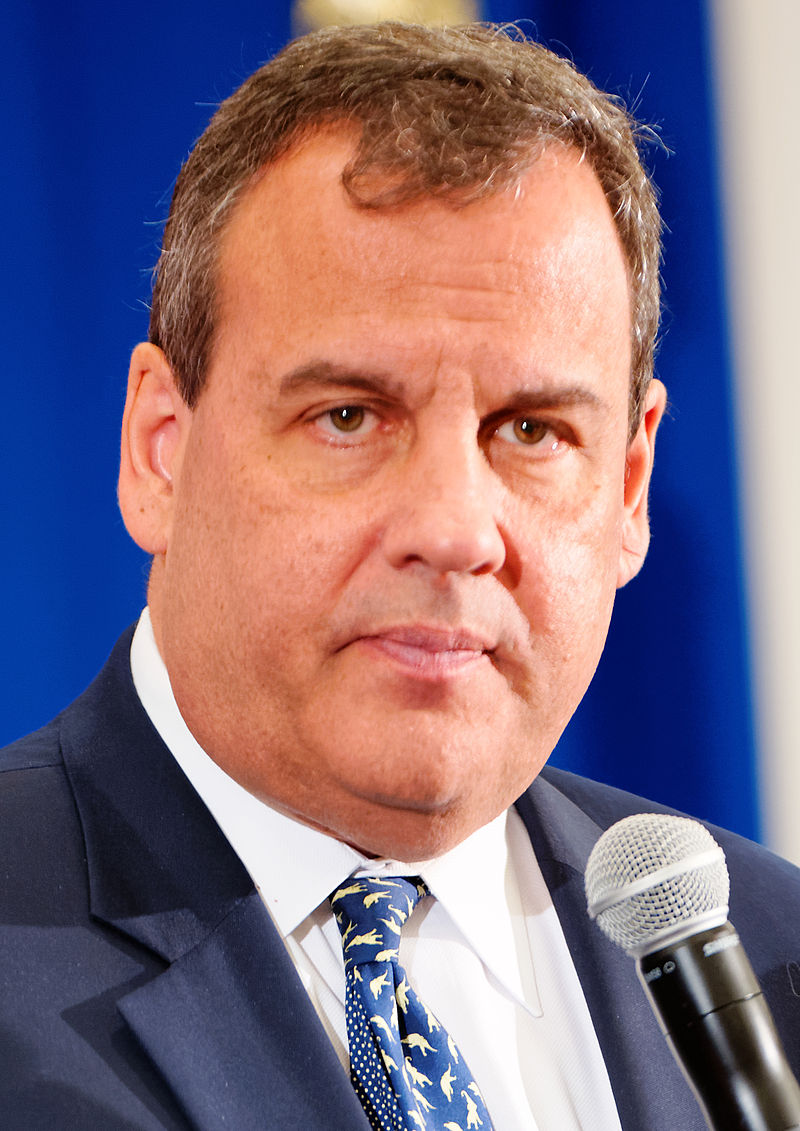
According to CBS News, two of the early front runners to be nominated as the next Attorney General are former New Jersey Gov. Chris Christie and Florida Attorney General Pam Bondi. Like Sessions, both have been longtime critics of opioid prescribing and served last year on President Trump’s opioid commission.

CHRIS CHRISTIE

Christie certainly has experience in law enforcement. He was a federal prosecutor and U.S. Attorney in New Jersey from 2002 to 2008.

As governor, Christie signed legislation that made New Jersey one of the first states to limit the supply of opioids for short-term, acute pain. He also bitterly opposed efforts to expand the use of medical marijuana, calling cannabis activists “crazy liberals” willing to “poison our kids” for marijuana tax revenue.   

The final report from the president’s opioid commission, which Christie chaired, took a law-and-order approach to the opioid crisis, calling for “involuntary changes” in opioid prescribing.

“This crisis can be fought with effective medical education, voluntary or involuntary changes in prescribing practices, and a strong regulatory and enforcement environment,” the commission said.

In its five public hearings, the commission heard testimony from addiction treatment activists and several people who lost loved ones to opioid overdoses. But the panel never asked for or received testimony from pain sufferers, patient advocates or pain management physicians.

Pam Bondi did not have a prominent role on the opioid commission and only joined the panel in its final weeks. Her second and last term as Florida’s Attorney General ends in January. “She has not yet made a decision as to what she will do next,” a spokesman told CNN.

Bondi has a good relationship with President Trump and was once rumored to be the next head of the White House Office of National Drug Control Policy — also known as the nation’s “drug czar.”

Bondi played a prominent in shutting down Florida’s pill mills, but critics say she has been slow to acknowledge that the opioid crisis has shifted away from prescription painkillers to heroin and illicit fentanyl.

“The problem is Bondi isn't doing enough about the heroin epidemic,” the Miami Sun Sentinel said in a 2017 editorial. “Considering that Bondi was once touted as a potential Trump drug czar — and infamously failed to investigate Trump University after receiving a major donation from Trump — it's no surprise that she was named to the commission. But she's still living off her reputation from the pill mill crack down.”

PAM BONDI

Christie also has a good relationship with the President Trump, but has urged that there be no interference with special counsel Robert Mueller’s investigation – a potential stumbling block with the president. Like Sessions, Christie could also face calls to recuse himself from the investigation because he chaired Trump’s transition team.

According to CNN, other potential contenders for Attorney General are Solicitor General Noel Francisco, Rep. John Ratcliffe, (R) Texas, former Judge John Michael Luttig, Judge Edith Jones, former Judge Janice Rogers Brown, retiring Rep. Trey Gowdy, (R) South Carolina, and Sen. Lindsey Graham, (R) South Carolina.

Matthew Whitaker, the current acting Attorney General, can serve in that temporary position for 210 days under federal law.

AMA: Patients Being Harmed by Rx Opioid Crackdown

By Pat Anson, PNN Editor

Patients are being harmed by the crackdown on opioid pain medication and increasingly “burdensome” requirements for prior authorization, according to the president of the American Medical Association.

“The pendulum swung too far when pain was designated a vital sign, and now we are in danger of it swinging back so far that patients are being harmed. We need to use our expertise in patient care to change the dialogue to appropriate pain control,” said Barbara McAneny, MD, at a weekend meeting of the AMA. 

McAneny, who is a practicing oncologist in Gallup, New Mexico, shared the story of a patient with advanced prostate cancer who was in severe pain.  

“Metastatic prostate cancer in your bones hurts, and one day he called me to say that his pain regimen wasn’t holding him. So, I increased the dosage of his opioids from two per day to three and of course he ran out early,” McAneny said. “So, I called his primary care physician who agreed to write a prescription for his very large amount of time-release morphine.” 

When the patient tried to get his prescription filled, the pharmacist called the insurer for prior authorization and was denied. The pharmacist also checked the prescription drug monitoring program (PDMP) and found that the patient had multiple prescriptions written by McAneny and other doctors.  

BARBARA MCANENY, MD (AMA PHOTO)

“The pharmacist suspected my patient was a drug seeker and did not alert me that his prescription was denied. My patient, a very proud man, felt shamed and didn’t know what to do. So, he went home to be as tough as he felt he could be. That worked for about three days and then he tried to kill himself,” said McAneny.  

“Fortunately, his family found him in time, and the emergency medicine physician was able to save his life. He spent a week in the hospital and finally we got his pain back under control, on the exact regimen I had prescribed him as an outpatient.”  

Ironically, the insurer paid for the patient’s ambulance and hospital bills without any prior authorization. And the CDC’s “voluntary” opioid guidelines — which have been widely adopted by insurers — don’t even apply to cancer patients.

“Like you, I share the nation’s concern that more than 100 people a day die of an overdose. But my patient nearly died of an under-dose. This story illustrates the problems we all confront every day in our current dysfunctional health care system,” McAneny said. “The health plan does not have the chart, doesn’t know the patient, and basically countermanded my orders without even telling me using the prior authorization process. How have we let health plans determine the course of care? They call this quality? 

“My patient suffered, in part, because of the crackdown on opioids… When I visited my patient in the hospital as he was recovering from his suicide attempt, I apologized for not knowing his medication was denied. I felt I had failed him.”

McAneny cited a 2017 AMA survey, which found over 90% of doctors believed prior authorization led to delays in treatment and had a negative impact on patient outcomes. Nearly a third of doctors had to wait at least 3 business days for a prior authorization decision to be made.  

New prior authorization rules to be adopted by Medicare on January 1 could lead to delays in treatment for millions of elderly and disabled pain patients on high doses of opioids. Prescriptions over 200mg MME (morphine equivalent daily doses) will trigger a “hard edit” safety alert requiring pharmacists to consult with the prescribing physician before filling a prescription. Insurers will also be given greater authority to identify beneficiaries at high risk of addiction and to require they use “only selected prescribers or pharmacies.”

A Painkilling Brew for Whatever ‘Ales’ You

By Steve Weakley

When anesthesiologist Admir Hadzic, MD, isn’t putting patients to sleep he’s putting them in a better mood with his Dr. Blues Belgian Brews.

Hadzic brews a potent dark beer called “PainKiller” that has 10% alcohol content, an award-winning blonde ale named “NerveBlock” that will make you comfortably numb, and a pilsner IPA called “SuperPills” that’ll make you hoppy.

References to the medicinal benefits of beer date back to the ninth century. For a short period during Prohibition, doctors even prescribed “medical beer” for patients who could no longer buy their brew legally without a prescription.

Dr. Hadzic, who was born in Yugoslavia and is a naturalized U.S. citizen, came up with the idea for medically themed malts when he married a Belgian anesthesiologist and moved to her country.

Belgium is the largest beer exporting country in Europe and Hadzic quickly fell in love with its chief export. He partnered with two local brewers to produce his own line of specialty beers.

In addition to being a practicing anesthesiologist, Hadzic is a blues bassist and has his own band, the “Big Apple Blues.” His beers actually ferment to the recorded sounds of his slide guitar.

“Since I’m a doctor and I play blues music, I’ll call it Dr. Blues Belgian Brews,” Hadzic told Pain Medicine News.

In addition to PainKiller, NerveBlock and SuperPills, Dr. Blues makes a malty “PaceMaker” beer and the non-alcoholic “Placebo” beer -- for people who like the flavor but not the buzz and can’t tell difference anyway. Placebo is so popular it’s already sold out for the year.

Dr. Blues beers are only available online and while a lot of the marketing is tongue-in-cheek, they’re also careful not to encourage excessive alcohol consumption. The website links to a recent Lancet study that found no amount of alcohol improves health, as some studies have suggested.

“DR BLUES does not promote drinking. Instead, he brews his recipes for the lucky, consenting few, who like him, insist on a unique story & experience for special occasions,” the website cautions.

Hadzic maintains a website, “Dr. Blues.com” that has fascinating factoids about his favorite beverage. You may not know that China is the world’s largest beer consuming nation or that Scotland’s “Snake Venom” is the world’s most potent beer at 67.5% alcohol.  Snake Venom is also one of the world’s most expensive brews at $67 a bottle.

If you are ever in Belgium and in need of beer, blues or anesthesia, look up Dr. Blues. He’s your one stop for the best of all three.

Living with Chronic Pain: Acceptance or Denial?

By Ann Marie Gaudon, PNN Columnist

It’s commonly understood that chronic pain not only negatively influences our physical health, but also leads to changes in our sense of self, as well as how we experience the world around us.

An interesting Swedish study set out to explore these factors. Twenty people with long-standing musculoskeletal pain were involved. Each participant completed 20 “qualitative” interviews -- which means the questions were designed to lead to descriptive answers, not hard data such as numbers or graphs on a chart.

The opening question was asked like this: “Please describe your problems. I’m thinking of the problems that made you contact a physiotherapist?”

All of the questions were focused on the participant’s perception of his or her body and were open-ended enough to encourage them to provide a narrative of their lives. After the answers were collected and analyzed, four distinct typologies emerged.

Typology A: Surrendering to one’s fate

In this typology, subjects do not oppose their pained body. They accept that their pain cannot be eliminated, so why battle against it? They are aware of their limitations and adapted accordingly.

When you accept pain, you can still engage in more important (non-pain) aspects of life. The pained body becomes more integrated with life when the person trusts their ability to cope with the unpredictability of it. Listening to signals and adapting becomes the norm. One participant described it this way:

“No, I don’t rely on my body, because I never know when the pain will come… I always have to consider how to carry things through, what I am doing, why I do it… to prevent pain afterwards. It (the body) is with me and I am the one who decides”

Typology B: Accepting by an active process of change

In contrast to Typology A, in this typology people accept pain through deliberate and active coping strategies. Attitude is adapted in the face of the new reality of living with pain, and it becomes possible to undergo positive change and go on to a richer life.

The precondition for this change is believing that the body and soul are closely linked. Participants describe a previous total lack of body awareness that changes to a life where the body becomes a wise teacher. They look to the future with optimism, while realizing it will take great effort.

The integration of the aching body into life requires a trusting and hopeful cooperation between self and body; there is trust that the body will help even when in pain. The pain puts the body in the foreground. When pain is not being fought against, it enhances both body awareness and self-awareness. One description read like this:

“…growing consciousness is the only, the only way to take control of the pain.”

Typology C: Balancing between hope and resignation

Here researchers found that major changes in life brought on by constant pain put the subject into a state of ambivalence. There is a pendulum swing back and forth between accepting and rejecting the aching body. Hope sees a way forward, but time after time despair sets in.

Integrating the aching body into life becomes problematic and the relationship with the body seems unclear at best. The subject swings from listening to the body to avoiding it.

Accepting this burdened body is necessary to move forward, yet that change is not fully realized. Pain results in feelings of fear or worry. The cause of the pain is considered complex and the subject has a tendency to ignore warning signals.  An example of this:

“My pain started because I am too slender for cleaning work, I believe. This, I think, is how my pain all began but you go on and on and don’t listen to our body until it is too late.”

Typology D: Rejecting the body

In this typology, integrating the aching body into life is impossible and rejected. The word acceptance is considered an insult or a threat. The pain is impossible to accept. The aching body is an enemy, life is unfair and unsafe, and something worse may happen. The subject has no trust in the body and nothing helps.

Living in denial like this may be beneficial for overcoming a short-term crisis, yet the costs in the long run lead to an inability to cope. A quote from one participant:

“No, no, no, I won’t do it. No, I don’t know how my body will react in different situations… it is against me”

Clinical Implications

The results from this study indicate that chronic pain patients can be found along a broad spectrum from accepting to rejecting their aching bodies. Both body awareness and body reliance seemed to be important for acceptance to take place and for life to be manageable.

Reinforcing body awareness and reliance may be a possible way forward. Your body and life may not have played out how you had anticipated, but you can still adjust to life and living with a pained body.

Ann Marie Gaudon is a registered social worker and psychotherapist in the Waterloo region of Ontario, Canada with a specialty in chronic pain management.  She has been a chronic pain patient for 33 years and works part-time as her health allows. For more information about Ann Marie's counseling services, visit her website.

The information in this column should not be considered as professional medical advice, diagnosis or treatment. It is for informational purposes only and represents the author’s opinions alone. It does not inherently express or reflect the views, opinions and/or positions of Pain News Network.

Pain App Lets Patients ‘Paint’ Their Pain

By Pat Anson, PNN Editor

There are dozens of mobile apps that can help chronic pain patients track their symptoms, send reports to doctors, get health tips and even keep tabs on the weather.

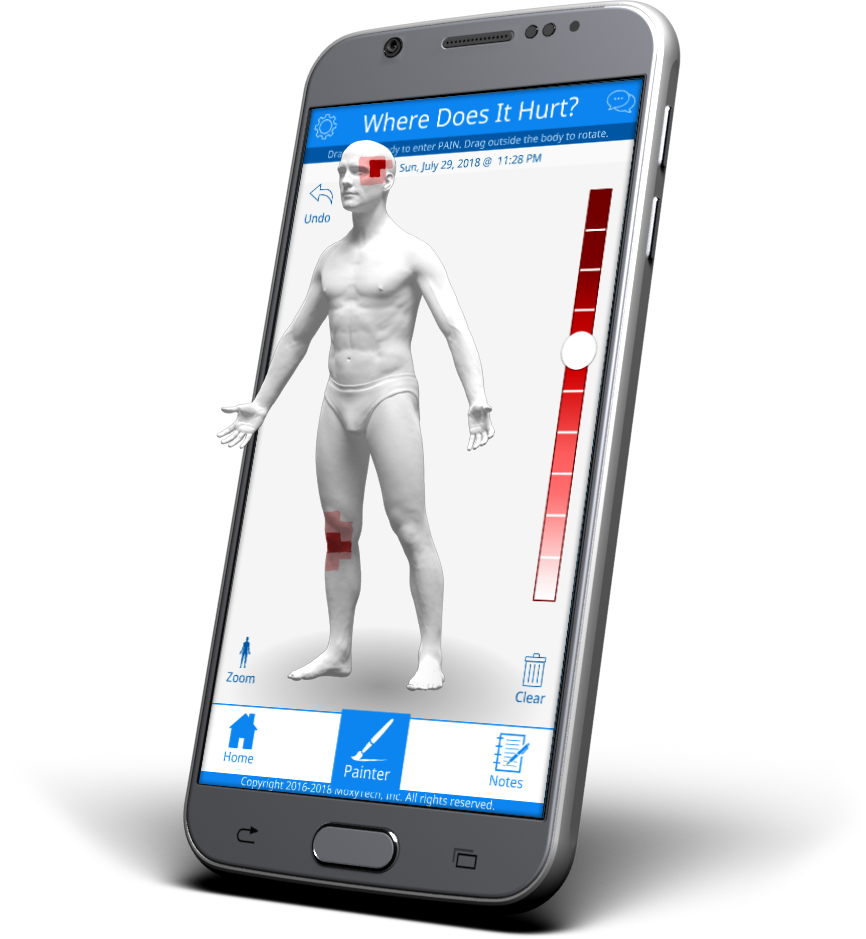
GeoPain, a free app recently launched by a University of Michigan startup, takes the technology a step further. Instead of just giving a single number on a pain scale of zero to 10, patients can “paint” their pain on multiple locations on a 3D image of the human body.

The app’s creators say visually mapping the pain gives doctors a better idea of the pain’s location, severity, it’s possible cause and the best way to treat it.

“We can dissect the pain with greater precision, in one patient or several, and across multiple body locations,” says Alexandre DaSilva, co-founder of MoxyTech and director of the Headache & Orofacial Pain Effort Laboratory at the U-M School of Dentistry.

“Whether the patient has a migraine, fibromyalgia or dental pain, we can measure whether a particular medication or clinical procedure is effective for each localized or spread pain condition. Geopain is a GPS for pain health care.”

Patients can also use GeoPain to show their doctors a visual recording of a pain flare long after the flare has ended.

“What patients are responding to the most is the visual tracking of their pain over time. They have shared some great stories of how they can now cleary show doctors how their pain has changed, which helps give them credibility and speeds up treatment,” Eric Maslowski, MoxyTech’s co-founder and chief technology officer, wrote in an email to PNN.

“Many clinicians like the visual nature of the app and ease of use. What was surprising to us initially was their interest in it for documenting patient visits for insurance and liability.” 

The app was initially created to track pain in patients enrolled in studies on migraine and chronic pain at the University of Michigan. Research showed that GeoPain data directly correlates with opioid activity in the brains of chronic pain patients, suggesting it might be useful in clinical trials to measure the effectiveness of pain medication.

The free app is available at Google Play, Apple’s App Store and at GeoPain.com.

The War on Drugs Is a War Against People in Pain

By Liz Ott, Guest Columnist

First, I want to say that I absolutely love my pain management doctor. He's an extremely well trained and respected doctor who really cares about his patients. I can always tell when it's not good news for me when he walks into the exam room, because it visibly hurts him to be unable to help his patients. 

I have fibromyalgia, arthritis everywhere, torn and bulging cervical vertebrae, and had a total replacement of my left knee. I haven't done the right knee yet, which I'm afraid to even think about.

Earlier this year my doctor explained that he was required to reduce my pain medications. I was shocked. He explained that new opioid prescribing guidelines were requiring patients to be reduced across the board, regardless of their condition. My pain medication was cut by a third and I wasn't happy about it at all. Especially when I've signed a pain contract, never went to any other doctors seeking meds, followed their procedures, taken drug tests, etc.

Since the weather was warm, I figured I had time to adjust to the lower dose before it started getting colder. Little did I know, this was only the beginning. 

A few months later, the doctor had the same face and the same news. I had to be reduced again. Now I'm only getting about half the Percocet and morphine I was getting before. I could barely manage my pain in cold rainy weather even with the old doses.

I've gone from being a mostly well-managed pain patient to a woman living with the very real fear of one day going in and being told that I am not going to get any pain meds. Just take some aspirin and deal with it.

In addition to the two opiates, I also take gabapentin, a muscle relaxer and Celebrex to offset the reduction in opioids. They don’t work!

LIZ OTT

I have done nothing wrong, yet I'm being treated as an addict or criminal. I’ve been seeing the same pain management specialist since 2011. They know me. I don't abuse my meds, I take them as instructed and never had anything wrong with my drug screens. And yet I'm still being punished.

I've been out of work since 2017 and just got my medical retirement approved. I wasn't able to work even at my old dose. There have been emotional issues to contend with as well, like the sudden death of my husband.

Why are politicians making healthcare decisions for patients? Don't they know that this is going to cause the exact problem that they're trying to avoid? People who have been at the same doses for years who are suddenly not getting what they need will be desperate. They're going to resort to dangerous street drugs mixed with who knows what. Or risk breaking the law and use cannabis. They have no choice.

Yes, there is an opiate epidemic. I don't disagree with that. But chronic pain patients are being treated as addicts. They're being mandated into forced reduction by politicians, not doctors.

This must be dealt with another way or the statisticians will have another number to deal with: Suicides by pain patients who are unable to get relief. We would never limit insulin to a diabetic or heart medications to someone with heart disease. But it’s okay to keep cutting pain medications because they’re dangerous?

The black market street drugs have not been reduced at all. Just the legally prescribed pain meds. The war on drugs isn't against the illegal side. The real war is against people in pain.

Liz Ott lives in Texas.

Pain News Network invites other readers to share their stories with us. Send them to editor@painnewsnetwork.org.

The information in this column should not be considered as professional medical advice, diagnosis or treatment. It is for informational purposes only and represents the author’s opinions alone. It does not inherently express or reflect the views, opinions and/or positions of Pain News Network.
Can a Rare Moss Be Used As a Painkiller?

By Pat Anson, PNN Editor

Cannabis, kava and kratom have some competition. Swiss scientists say a rare moss-like plant could be another natural substance that can treat pain and inflammation. And it’s completely legal.

Radula perrottetii is a member of the liverwort family that only grows in Japan, New Zealand, Tasmania and Costa Rica. It produces a molecule called perrottetinene (PET) that is remarkably similar to tetrahydrocannabinol (THC), the psychoactive ingredient found in cannabis. 

"It's astonishing that only two species of plants, separated by 300 million years of evolution, produce psychoactive cannabinoids," says Jürg Gertsch, PhD, a professor in the Institute of Biochemistry and Molecular Medicine at the University of Bern.

UNIVERSITY OF BERN

A few year ago, Gertsch learned that dried samples of liverwort were being advertised on the internet as incense that produces so-called "legal highs." At the time, little was known about the pharmacological effects of PET, so Gertsch and his colleagues set out to discover how the substance works.

In studies on laboratory mice, they found that PET reaches the brain very easily and that it activates the same cannabinoid receptors that THC does. PET also has a strong anti-inflammatory effect, which makes it potentially useful as a painkiller.

Because PET produces only a mild degree of euphoria, researchers believe it has low abuse potential and fewer side effects than THC.  

Gertsch and his colleagues recently published their findings in the journal Science Advances. They plan to conduct more extensive animal testing before any clinical trials on humans. And that could take years.

In the meantime, liverwort is already being used for medicinal purposes. “Despite serious safety concerns,” WebMD says liverwort is used to treat gallstones, liver conditions, varicose veins and menopause. Others uses include “strengthening nerves” and stimulating metabolism.

Amazon and eBay advertise liverwort – not as medicine – but to help decorate terrariums and aquariums.

Pain Patients and Doctors Have Civil Rights Too

By Richard Dobson, MD, Guest Columnist

In a recent column, I described the diversion of blame for the opioid crisis as an example of “Factitious Disorder Imposed on Another,” a psychiatric condition in which a person imposes an illness on someone who is not really sick.

Recently, the U.S. Department of Justice announced a plea deal in which a former police chief in Florida pleaded guilty to violating the civil rights of innocent people by making false arrests “under color of law.” I think there are some striking parallels between the way these innocent victims were treated and the way that chronic pain patients and their doctors are treated today.

For several years, Chief Raimundo Atesiano and officers in the Biscayne Park police department conspired to arrest innocent people, falsely accusing them of committing burglaries and robberies.  The arrests were based on phony evidence and confessions, all because Atesiano wanted to show he was tough on crime and solving cases.  Several officers plead guilty to the conspiracy and were prepared to testify against Artesiano when he entered his plea.

Let’s examine the logic of this case:

  1. “A” is an innocent person who has committed no crime.

  2. “B” is a criminal who has burglarized homes and cars.

  3. “C” is a person in authority who blames “A” for the crimes committed by “B.”

“C” has not been able to apprehend “B” and does not have any leads on how to catch him.  However, by diverting blame to “A”, “C” can claim that he has a much higher rate of solving crimes. “C” is rewarded for this illegal behavior because the citizens of Biscayne Park believe the police department is doing a much better job than it actually is.

Now change the focus to the scenario of Factitious Disease Imposed on Another to chronic pain patients and their doctors.

Just as the police in Biscayne Park were charged with using factitious evidence to arrest innocent people, regulators and law enforcement agencies like the CDC and DEA are using misleading information and overdose statistics to go after prescription opioids, when the real problem is those who misuse black market drugs.

Doctors who still treat chronic pain are also being targeted to end the legitimate medical distribution of opioid medication to patients. They are sanctioned with loss of license and some are even imprisoned for “overprescribing.”

Meanwhile, the real source of the public health problem – drug dealers, addicts and recreational users -- are largely going unpunished. It is these non-medical users that account for the vast majority of overdoses.

It was a civil rights violation for Atesiano and his officers to falsely blame innocent people while ignoring the real criminals. In similar fashion, equal justice demands that it should be a violation of the civil rights of pain patients and doctors to be factitiously blamed for the crimes of illicit substance use and drug trafficking.

“The right to be free from false arrests is fundamental to our Constitution and system of justice,” Acting Assistant Attorney General John Gore said when announcing the plea deal with Atesiano.

“Law enforcement officers who abuse their authority and deny any individual this right will be held accountable. As the Chief of Police, Defendant Atesiano was trusted by his community to lead their police officers by example; he has failed his community and the officers of Biscayne Park.”

The same standard applied to Atesiano should be applied equally to those who falsely accuse pain patients and doctors whose constitutional rights are being violated today.

Richard Dobson, MD, worked as a physician in the Rochester, New York area for over 30 years, treating and rehabilitating people suffering from chronic pain, mostly as the result of work or motor vehicle accidents.  He is now retired.  

The information in this column should not be considered as professional medical advice, diagnosis or treatment. It is for informational purposes only and represents the author’s opinions alone. It does not inherently express or reflect the views, opinions and/or positions of Pain News Network.

Kratom Missing From DEA Report on Drug Threats

By Pat Anson, PNN Editor

The Drug Enforcement Administration has released the 2018 National Drug Threat Assessment, the agency’s annual report on drug trafficking and drug abuse in the United States.

Over 150 pages long, the annual report paints a grim picture of a nation overwhelmed by a tsunami of illicit fentanyl, heroin, prescription opioids, meth, marijuana, cocaine and other drugs that the DEA says are having “a devastating effect on our country.”

Conspicuously absent from the report is kratom, the herbal supplement that the FDA blames for dozens of fatal overdoses and the DEA once tried to list as a dangerous controlled substance — the same substance that Ohio health officials call a “psychoactive plant” that produces a “heroin-like high.” Ohio will soon join five other states in banning the sale and possession of kratom.

But there’s not a word about kratom in the National Drug Threat Assessment. There never has been.

“It is not surprising.  Kratom is not the ‘dangerous opioid’ that the FDA has made it out to be,” says Jane Babin, PhD, a molecular biologist and consultant to the American Kratom Association, an organization of kratom vendors and consumers.  “It does not kill throngs of people like heroin and synthetic opioids. Everything we know about kratom is that people use it to avoid much more dangerous prescription and illicit opioids.”

Kratom comes from the leaves of a tree that grows in southeast Asia, where it has been used for centuries as a natural pain reliever and stimulant. In recent years, millions of Americans have discovered kratom and use it to self-treat their chronic pain, addiction, anxiety and depression.  

As kratom has become more popular, the public health campaign against it has intensified. A small salmonella outbreak earlier this year in kratom products led to several recalls and stark warnings that “anyone consuming kratom may be placing themselves at a significant risk.”

Nearly 200 people were sickened in the outbreak, but no one died and the CDC never identified the source of the salmonella.

FDA commission Scott Gottlieb, MD, has taken to calling kratom an “opioid” (its active ingredients are alkaloids) and regularly tweets that consumers “should be aware of the mounting risks” of using the herb.

Yet there’s been no mention of kratom in the DEA’s annual assessment of drug risks in the United States.    

““Every year that goes by in which alleged ‘kratom-associated deaths’ don’t even merit a mention by DEA in this report further drives home the relative safety of kratom,” says Babin. “The only thing peculiar is that FDA refuses to acknowledge these facts.”

FDA Approves Controversial New Opioid

By Pat Anson, PNN Editor

The U.S. Food and Drug Administration has approved a controversial new opioid drug intended to relieve moderate to severe pain in wounded soldiers and trauma patients. 

Dsuvia is a tablet form of the potent opioid sufentanil. It was developed by AcelRx Pharmaceuticals and the Department of Defense – in part to treat battlefield wounds – but became embroiled in the national hysteria over opioid drugs and addiction.

Dsuvia was developed to fulfill an unmet need in military and civilian hospitals, where patients in acute pain are usually treated with opioids intravenously or with a pill.

Each Dsuvia tablet comes in a single dose plastic applicator. The tablet is taken sublingually under the tongue, where it quickly dissolves and is absorbed into the body.

“There is currently no way available to rapidly treat your pain without sticking you with a needle,” said Dr. Pamela Palmer, an anesthesiologist who co-founded AcelRx and is Chief Medical Officer.

ACELRX image

“If you broke your femur and are obese or elderly or on a blood thinner, that can be very painful with a lot of bruising. If you take a pill, you have to swallow it with water and wait for it to kick in, which could take up to an hour. Right now, that’s all that’s available. For the first time, we’ve developed a small tablet that goes under the tongue and dissolves in about six minutes.”

“The FDA has made it a high priority to make sure our soldiers have access to treatments that meet the unique needs of the battlefield, including when intravenous administration is not possible for the treatment of acute pain related to battlefield wounds,” said FDA commissioner Scott Gottlieb, MD.

Dsuvia’s efficacy and safety were tested in two placebo-controlled studies with over 200 patients. The company said the drug was well-tolerated and effective across a range of patient ages and body sizes.

But because Dsuvia is so potent – it’s 10 times stronger than fentanyl – it drew the ire of critics who believe diversion is inevitable.

“We know from looking at other potent opioids that have been put on the market in the last four years that once these drugs get past the FDA, there’s very little, if any, control over them, no matter what the sponsor says prior to the time they come on the market,” Raeford Brown, MD, told ABC News.

Brown is chairman of the FDA advisory committee that voted 10-3 to recommend approval of Dsuvia.  Brown was not present for the vote, but called on the FDA to ignore the panel’s recommendation and stop the approval of “this dangerously unnecessary opioid medication."

“It doesn’t seem reasonable to place another potent opioid on the market at this time, especially when we’re currently still writing 200 million prescriptions for opioids a year,” said Brown.

Politicians also weighed in.

“An opioid that is a thousand times more powerful than morphine is a thousand times more likely to be abused and a thousand times more likely to kill,” said Sen. Ed Markey (D) Massachusetts. “It makes no sense to approve an opioid painkiller that has no benefits over similar medications and against the advice of experts.”

The FDA is requiring that Dsuvia not be dispensed for home use, should only be administered by a healthcare provider, and should not be used for more than 72 hours. Palmer says extra precautions would also be taken by distributors, wholesalers and hospitals to prevent theft and diversion.

“I’m not saying that drugs delivered to hospitals never get stolen or abused, but that’s a tiny sliver” of the opioid problem, she said.

Gene Therapy Eases Chronic Pain in Dogs

By Lisa Marshall, University of Colorado at Boulder

When Shane the therapy dog was hit by a Jeep, life changed for him and his guardian, Taryn Sargent.

The impact tore through the cartilage of Shane's left shoulder. Arthritis and scar tissue set in. Despite surgery, acupuncture and several medications, he transformed from a vibrant border collie who kept watch over Sargent on long walks to a fragile pet who needed extensive care.

"Sometimes he would just stop walking and I'd have to carry him home," recalls Sargent, who has epilepsy and relies on her walks with Shane to help keep her seizures under control. "It was a struggle to see him in that much pain."

Today, 10-year-old Shane's pain and reliance on medication have been dramatically reduced and he's bounding around like a puppy again, 18 months after receiving a single shot of an experimental gene-therapy invented by CU Boulder neuroscientist Linda Watkins

shane and taryn sargent (casey cass/cu boulder)

Thus far, the opioid-free, long-lasting immune modulator known as XT-150 has been tested in more than 40 Colorado dogs with impressive results and no adverse effects. With human clinical trials now underway in Australia and California, Watkins is hopeful the treatment could someday play a role in addressing the nation's chronic pain epidemic.

"I'm hoping the impact on pets, their guardians and people with chronic pain could be significant," said Watkins, who has worked more than 30 years to bring her idea to fruition. "It's been a long time coming."

The Role of Glial Cells

Watkins' journey began in the 1980s when, as a new hire in the department of psychology and neuroscience, she began to rock the boat in the field of pain research.

Conventional wisdom held that neurons were the key messengers for pain, so most medications targeted them. But Watkins proposed that then-little-understood cells called "glial cells" might be a culprit in chronic pain. Glial cells are immune cells in the brain and spinal cord that make people ache when they're sick. Most of the time, that function protects us. 

Watkins proposed that in the case of chronic pain, which can sometimes persist long after the initial injury has healed, that ancient survival circuitry somehow gets stuck in overdrive. She was greeted with skepticism.

"The whole field was like 'what on Earth is she talking about?'"

She and her students hunkered down in the lab nonetheless, ultimately discovering that activated glial cells produce specific inflammatory compounds which drive pain. They also learned that, after the initial sickness or injury fades, the cells typically produce a compound called Interleukin 10 (IL-10) to dampen the process they started.

"IL-10 is Mother Nature's anti-inflammatory," she explains. "But in the onslaught of multiple inflammatory compounds in chronic pain, IL-10's dampening cannot keep pace."

Over the years, she and her team experimented with a host of different strategies to boost IL-10. They persisted and, in 2009, Watkins co-founded Xalud Therapeutics. Their flagship technology is an injection, either into the fluid-filled space around the spinal cord or the site of an inflamed joint, that delivers circles of DNA in a sugar/saline solution to cells, instructing them to ramp up IL-10 production.

With financial help from the National Institute of Neurological Disorders and Stroke, the MayDay Fund and CU's Technology Transfer Office – which has provided intellectual property support, assistance with licensing agreements, and help obtaining a $100,000 research grant in 2018 – Watkins is edging closer to bringing her idea to clinical practice.

She has teamed up with veterinary chronic pain specialist Rob Landry, owner of the Colorado Center for Animal Pain Management in Westminster, to launch the IL-10 research study in dogs.

Their results have not been published yet. But thus far, the researchers say, the results look highly promising.

"They're happier, more engaged, more active and they're playing again," said Landry, as he knelt down to scratch Shane's belly after giving him a clean bill of health.

With Shane able to accompany her on her walks again, Sargent has also seen her quality of life improve. Her seizures, which increased in frequency when Shane was injured, have subsided again.

linda watkins with shane (casey cass/cu boulder)

Human Studies Underway

Because the treatment is so localized and prompts the body's own pain-killing response, it lacks the myriad side effects associated with opioids – including constipation and dependency – and it can last for many months after a single injection.

Ultimately, that could make it an attractive option for people with neuropathic pain or arthritis, Watkins says.

This summer, Xalud Therapeutics launched the first human study in Australia, to test the safety, tolerability and efficacy of the compound. Another one-year clinical trial of 32 patients with osteoarthritis of the knee is now underway in Napa, California.

More research is necessary in both pets and people, Watkins stresses. But she's hopeful.

"If all goes well, this could be a game-changer."