Gabapentinoids Involved in a Third of Overdoses in Scotland

By Pat Anson, PNN Editor

A new study in Scotland is shining more light on the risks of overprescribing gabapentin (Neurontin) and pregabalin (Lyrica). The two drugs belong to a class of nerve medication called gabapentinoids, which are increasingly prescribed in Western nations to treat chronic pain.

In 2018, there were 1,187 accidental drug-related deaths (DRDs) in Scotland – the highest overdose rate in the European Union — and gabapentinoids were involved in about a third of them.

According to research published in the British Journal of Anaesthesia, gabapentin was implicated in 15.2% of fatal overdoses in Scotland, while pregabalin was linked to 16.5% of drug deaths. That’s up from 3% and 1% of fatal overdoses, respectively, in 2012.

Researchers say deaths involving gabapentinoids are rising because they are frequently co-prescribed with opioids and other medications that depress the central nervous system and raise the risk of overdose. Drug diversion also plays a role.

“Gabapentinoid prescribing has increased dramatically since 2006, as have dangerous co-prescribing and death. Older people, women, and those living in deprived areas were particularly likely to receive prescriptions. Their contribution to DRDs may be more related to illegal use with diversion of prescribed medication,” wrote lead author Nicola Torrance, PhD, Senior Research Fellow at the School of Nursing & Midwifery, Robert Gordon University, in Aberdeen, Scotland.

From 2006 to 2016, the number of pregabalin prescriptions in Scotland rose by an astounding 1,600 percent, while prescriptions for gabapentin quadrupled. About 60% of the time, gabapentin was co-prescribed with an opioid, benzodiazepines or both.  

Gabapentinoids are also showing up in Scotland’s illicit drug supply. Drug users have found they can heighten the effects of heroin, marijuana, cocaine and other substances. In the Scottish region of Tayside, gabapentinoids were involved in 39% of drug deaths. About three out of four of those overdose victims did not have a prescription for the drug.

In addition to overdoses, gabapentinoids have also been associated with increased risk of suicidal behavior, accidental injuries, traffic accidents and violent crime. UK health officials were so alarmed by misuse of the drugs and the rising number of deaths that gabapentin and pregabalin were reclassified as controlled substances in 2019.

Gabapentin is not currently scheduled as a federally controlled substance in the United States, but pregabalin is classified as a Schedule V controlled substance, meaning it has low potential for addiction and abuse.  

A 2019 clinical review found little evidence that gabapentinoids should be used off-label to treat pain and that prescribing guidelines often exaggerate their effectiveness. The U.S. Food and Drug Administration also recently warned that serious breathing problems can occur in patients who take gabapentin or pregabalin with opioids or other drugs that depress the central nervous system.

The CDC, Opioids and Cancer Pain

By Roger Chriss, PNN Columnist

In 2016, the Centers for Disease Control and Prevention issued its controversial opioid prescribing guideline. Insurers, states and other federal agencies soon followed with mandatory policies and regulations to reduce the use of opioid pain medication. All this was supposed to exclude cancer-related pain care, but in practice that’s not what happened.

Dr. Judith Paice, director of the Cancer Pain Program at Northwestern University’s Feinberg School of Medicine, told the National Cancer Institute in 2018 that the opioid crisis “has enhanced fear — fear of addiction in particular” among both patients and doctors.

“Many primary care doctors no longer prescribe opioids. Oncologists are still prescribing these medications, but in many cases they’re somewhat anxious about doing so. That has led some patients to have trouble even obtaining a prescription for pain medication,” Paice said.

In 2019, the Cancer Action Network said there has been “a significant increase in cancer patients and survivors being unable to access their opioid prescriptions.” One out of four said a pharmacy had refused to fill their opioid prescription and nearly a third reported their insurance refused to pay for their opioid medication.

That same year, CDC issued a long-awaited clarification noting the “misapplication” of the guideline to patients it was never intended for, including “patients with pain associated with cancer.”  

Long Term Use of Opioids Uncommon

Cancer pain management in the U.S. has been severely impacted by the CDC guideline, even though rates of long-term or “persistent” opioid use are relatively low and stable:

  • A major review of over 100,000 military veterans who survived cancer found that only 8.3% were persistent opioid users. Less than 3% showed signs of opioid abuse or dependence.

  • A study of older women with breast cancer who were prescribed opioids found that only 2.8% were persistent opioid users.  

  • A study of 276 patients with head or neck cancer found that only 20 used opioids long-term – a rate of 7.2 percent.

  • And a study of nearly 23,500 women with early-stage breast cancer who had a mastectomy or mastectomy found that 18% of them were using opioids 90 to 180 days after surgery, while 9% were still filling opioid prescriptions 181 to 365 days later.

While any sign of opioid abuse or addiction is concerning, these studies show that long-term use of opioid medication is relatively uncommon among cancer survivors. The American Cancer Society says opioids are “often a necessary part of a pain relief plan for cancer patients” and “can be safely prescribed and used” for cancer pain.

Cancer patients and their doctors have been successfully managing opioid risks long before the CDC guideline or associated state laws and regulations. Perhaps it is time for lawmakers, regulators, insurers and pharmacies to learn from the cancer community rather than getting in the way of clinical best practices.

Roger Chriss lives with Ehlers Danlos syndrome and is a proud member of the Ehlers-Danlos Society. Roger is a technical consultant in Washington state, where he specializes in mathematics and research. 

Researchers Developing Safer Version of Acetaminophen

By Pat Anson, PNN Editor

Researchers at Louisiana State University have created a new type of analgesic that is similar to acetaminophen but can relieve pain and reduce fever without the risk of liver or kidney damage.

Acetaminophen -- also known as paracetamol – is the world’s most widely used over-the-counter pain reliever. Over 50 million Americans take acetaminophen each week, many unaware that excessive use can cause liver, kidney, heart and blood pressure problems. Acetaminophen overdoses are involved in about 500 deaths and over 50,000 emergency room visits in the U.S. annually.

Researchers at LSU Health New Orleans created 21 chemical compounds that are structurally similar to acetaminophen, but did not cause liver or kidney toxicity in tests on laboratory rodents. Their findings are published online in the European Journal of Medicinal Chemistry.

"The new chemical entities reduced pain in two in models without the liver and kidney toxicity associated with current over-the-counter analgesics that are commonly used to treat pain -- acetaminophen and NSAIDs. They also reduced fever in a pyretic model,” said senior author Nicolas Bazan, MD, Director of the LSU Health New Orleans Neuroscience Center of Excellence.   

The intellectual property behind the acetaminophen analogs has been licensed to South Rampart Pharma. The company expects to file an investigational new drug application with the Food and Drug Administration in the third quarter 2020, which would pave the way for clinical studies.

"Our primary goal is to develop and commercialize new alternative pain medications that lack abuse potential and have fewer associated safety concerns than current treatment options,” said Bazan. "Given the widespread use of acetaminophen, the risk of hepatotoxicity with overuse, and the ongoing opioid epidemic, these new chemical entities represent novel, non-narcotic analgesics that exclude hepatotoxicity, for which development may lead to safer treatment of acute and chronic pain and fever.”

Bazan said the development of safer pain relievers and fever reducers is particularly important because of the COVID-19 pandemic. Current treatments have led to kidney and liver disease in critically ill SARS-CoV-2 patients.

Acetaminophen is a key ingredient in hundreds of over-the-counter pain relievers and cough, cold and flu medicines – from Excedrin and Tylenol to Theraflu and Alka-Seltzer Plus. It’s also used in opioid pain medications such as Vicodin. Nearly two-thirds of the world’s supply of acetaminophen comes from China.

Gabapentinoids Ineffective for Pain Relief After Surgery

By Pat Anson, PNN Editor

Would you want to take Lyrica (pregabalin) or Neurontin (gabapentin) for pain relief after a major surgery? Both drugs belong to a class of nerve medication called gabapentinoids that are increasingly being prescribed to patients perioperatively (after surgery) as an alternative to opioid medication.

But gabapentinoids also have risks and there is little evidence to support their use for postoperative pain relief, according to a large new study by a team of Canadian researchers.  

“No clinically significant analgesic effect for the perioperative use of gabapentinoids was observed. There was also no effect on the prevention of postoperative chronic pain and a greater risk of adverse events. These results do not support the routine use of pregabalin or gabapentin for the management of postoperative pain in adult patients,” wrote lead author Michael Verret, MD, a resident at Laval University in Quebec City.  

Verret and his colleagues conducted a meta-analysis of 281 clinical trials involving nearly 25,000 patients undergoing a wide range of surgeries, including orthopedic, spinal and abdominal operations.

Their findings, recently published in the journal Anesthesiology, indicate that the analgesic benefits of pregabalin and gabapentin after surgery are negligible, regardless of the dose or type of operation. Gabapentinoids were also ineffective in preventing chronic pain from developing after surgery, one of the primary justifications for using the drugs postoperatively.

“Gabapentinoids were also associated with a greater incidence of adverse events, namely dizziness and visual disturbance, while other major adverse events such as respiratory depression and addiction are not reported or are underreported,” said Verret.

The findings contradict guidelines published by the American Pain Society (APS) in 2016,  which advocate “around the clock” use of gabapentin, pregabalin and other nonopioid drugs both before and after surgery.

“The panel recommends use of gabapentin or pregabalin as part of a multimodal regimen in patients who undergo surgery. Both medications are associated with reduced opioid requirements after major or minor surgical procedures, and some studies reported lower postoperative pain scores,” the APS guideline states.

“The panel suggests that clinicians consider a preoperative dose of gabapentin or pregabalin, particularly in patients who undergo major surgery or other surgeries associated with substantial pain, or as part of multimodal therapy for highly opioid-tolerant patients.”

‘Evidence of Harm’

Although opioid addiction is relatively rare after surgery, dozens of U.S. hospitals followed the lead of the APS and other medical guidelines by stopping the use of opioids for certain surgeries.

Cleveland Clinic Akron General Hospital, for example, adopted a policy of only using gabapentin and other non-opioid analgesics for colorectal operations.

It is now clear that over the past two decades, evidence of benefit from routine perioperative administration of gabapentinoids has diminished, while evidence of harm has increased.
— Dr. Evan Kharasch

Critics say gabapentinoids have become a trendy alternative for post-surgical pain relief, even though evidence supporting their use is minimal.

“It is now clear that over the past two decades, evidence of benefit from routine perioperative administration of gabapentinoids has diminished, while evidence of harm has increased. If any potential benefits exist in ‘special populations,’ published reports have yet to identify the benefits or the populations,” lead author Evan Kharasch, MD, Editor-in-Chief of Anesthesiology, wrote in an editorial.

“The good intentions that led to routine gabapentinoid use should be redirected to lead the way out. The French Society of Anesthesia and Intensive Care Medicine now states that gabapentinoids should not be used systematically or in outpatient surgery. Other societies should follow. As the weight of evidence has shifted and the risk–benefit balance tilted away from benefit, evidence-based practice impels revising if not eliminating the routine use of perioperative gabapentinoids in adults.”

It's too late for the APS to change its guideline. The organization filed for bankruptcy in 2019, ironically because of the high cost of legal fees in defending itself against opioid litigation.

While the CDC’s controversial opioid guideline does not advocate using gabapentinoids for post-surgical pain, it does recommend their use in treating chronic pain -- with little to no mention of their side effects.

One of the co-authors of the CDC guideline, Dr. Roger Chou, also played a significant role in drafting the APS guideline. Chou is currently heading much of the research being conducted by the CDC as it prepares to update and possibly expand its 2016 guideline.

Long-Term Use of Muscle Relaxants Has Tripled

By Pat Anson, PNN Editor

Long-term use of muscle relaxants has nearly tripled in the U.S. since 2005, according to a new study by researchers at the University of Pennsylvania, who say the drugs are often prescribed inappropriately for chronic pain and to older adults.

Skeletal muscle relaxants (SMRs) like carisoprodol (Soma) and metaxalone (Skelaxin) were approved years ago for short-term treatment of muscle spasms and back pain. Researchers believe many doctors are now prescribing the drugs as an alternative to opioids for long-term pain management.

"There are few studies on the short-term efficacy and safety of skeletal muscle relaxants, and almost no data on their long-term effects, so it is very concerning that patients, and particularly older adults, are using these drugs for an extended period of time," said Charles Leonard, PharmD, an assistant professor of Epidemiology at Perelman School of Medicine. "Providers seem to be reaching for them despite incomplete information on their potential benefits and risks."

Medical guidelines generally recommend limiting the use of muscle relaxants to three weeks because they have not been shown to work for muscle spasms beyond that duration. The drugs can also have side effects such as falls, fractures, vehicle crashes, abuse and dependence. Because of those risks, muscle relaxants should be avoided altogether in elderly patients, according to the American Geriatrics Society.

To measure national trends in muscle relaxant prescribing, researchers analyzed the number of office visits that resulted in muscle relaxant prescriptions from 2015 to 2016. They found the number of new prescriptions remained stable at about 6 million per year. But office visits for renewals of muscle relaxant prescriptions tripled -- from 8.5 million in 2005 to 24.7 million in 2016.

Over two-thirds (67%) of the patients getting renewals for muscle relaxants in 2016 were also taking opioid medication, despite an FDA warning that co-prescribing the drugs could lead to respiratory depression and overdose. Older adults accounted for about one in four (22%) office visits for muscle relaxants.

"For older adults, I think the message should be to avoid using muscle relaxants, especially when we consider the side effects and increased risk of falls and fractures, and to find alternatives for pain management," said first author Samantha Soprano, MPH, a research coordinator and student in Penn's Master of Behavioral and Decision Sciences program.

In addition to potential side effects, researchers say muscle relaxants may not be any more effective in managing pain than medications like Tylenol or Advil.

"Muscle relaxants' place in therapy is really limited. Based on most guidelines, they're normally reserved as second- or third-line therapies," Leonard said. "Our findings suggest that prescribers may be reaching for these drugs sooner than that."

The findings are published in JAMA Network Open.

Overdose Deaths Are Rising Again and the Pandemic Is Making It Worse

By Roger Chriss, PNN Columnist

The nation’s overdose crisis seemed to ease a bit in 2018, when fatal drug overdoses dropped 4.1% compared to 2017. This was heralded as a turning point in the crisis, a possible light at the end of the tunnel of overdoses that rose annually for nearly three decades.

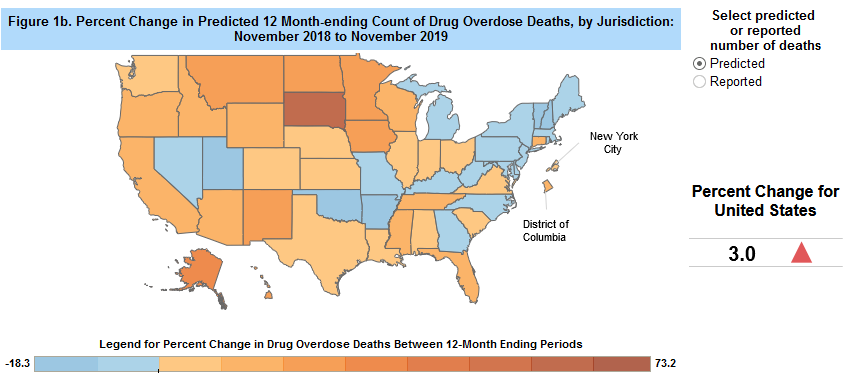
But new data from the CDC shows that 2019 saw increases that almost wiped out the drop in 2018. Although provisional, the data shows a 3% increase in overdose deaths between November 2018 and November 2019.

Overdoses are rising but the drugs are largely the same: Illicit fentanyl is involved in the vast majority of deaths, with an uptick in overdoses involving cocaine and other psychostimulants, too. Deaths involving prescription opioids and heroin both fell a little. Overdoses rose in the West, Midwest and South, while declining in New England and Mid-Atlantic states.

SOURCE: cdc

SOURCE: cdc

The early data for 2020 is mixed. Rhode Island’s preliminary data show a 22% increase in drug overdose deaths in the first quarter compared to the same period in 2018. Other states were doing better, at least until March.

Then came the coronavirus pandemic. State-mandated lockdowns, combined with reduced access to addiction treatment and talk therapy, along with loss of work and social support, were quickly seen as a perfect storm of risk factors for substance use problems, relapse and overdose, accidental or otherwise.

And that’s what is happening. Psych Congress reports that drug overdoses are up 16.5% nationwide from January to April 2020. Fatal overdoses rose by 11.4% during that period and nonfatal overdoses by 18.6%. This trend continued in early May, too.

The risks of the pandemic were recognized early. In March, Buzzfeed predicted that fatal overdoses were likely to increase during the pandemic because of disruption to recovery routines and access to treatment.

“The people who were getting help aren’t really getting any help right now at all,” said Danny Pont, who is part of an opioid treatment program in Rhode Island. “I suspect there will be a lot of relapses — and with a lot of relapses, there’s going to be an uptick in overdoses.”

National Public Radio also reported that treatment options are even more scarce during the pandemic, with inpatient and outpatient programs ill-equipped to operate under physical distancing rules.

All of this and more is now happening. The Well Being Trust has forecast an additional 75,000 deaths from overdose, alcohol abuse and suicide resulting from the socioeconomic stress of the pandemic, so-called deaths of despair.

The American Medical Association is trying to “reignite the fight” against the opioid crisis amid Covid-19. The AMA is calling on states to adopt new federal rules for telemedicine prescribing; removing prior authorizations or step therapy for treating opioid use disorder; removing arbitrary barriers on dose, quantity, and refill requirements; and allowing harm reduction strategies.

But the federal and state response to Covid-19 is a fragmented patchwork of policies, according to The Atlantic. The country cannot even agree on whether or not the pandemic exists, let alone if people should wear masks in public or engage in social distancing. And the rapidly shifting outbreaks, hotspots and epicenters of the pandemic make what little agreement there is transitory at best.

Sadly, the American response to the pandemic echoes the response to the overdose crisis. Too little science and too much ideology muddies what should be a clearly focused public health effort. As a result, 2020 may become the worst year for the opioid overdose crisis.

Roger Chriss lives with Ehlers Danlos syndrome and is a proud member of the Ehlers-Danlos Society. Roger is a technical consultant in Washington state, where he specializes in mathematics and research.

CDC Study Finds ‘No Significant Change’ in Use of Rx Opioids

By Pat Anson, PNN Editor

A new study by CDC researchers has a surprise finding, concluding that there has been “no significant change in the use of prescription opioids” over the past decade by U.S. adults.

The study is based on the National Health and Nutrition Examination Survey, in which a nationally representative sample of nearly 20,000 adults is asked every two years about their healthcare and nutrition.

Although the number of opioid prescriptions in the U.S. has dropped 43% since their peak in 2011, the survey found that the use of opioid medication hasn’t changed much at all.  

In 2017–2018, the survey found that 5.7% of U.S. adults used one or more prescription opioids in the past 30 days, compared to 6.2% of adults a decade earlier.

“Between 2009–2010 and 2017–2018, no significant trend in the use of prescription opioids was observed; however, an increasing trend in the use of nonopioid prescription pain medications without prescription opioids was seen,” researchers found.

USE OF PRESCRIPTION PAIN MEDICATIONS BY U.S. ADULTS

SOURCE: CDC

SOURCE: CDC

In 2017-2018, women (6.4%) were more likely to be prescribed opioids than men (4.9%). The use of opioids increased with age, from 2.8% among young adults aged 20–39 to 8.2% for those aged 60 and over.

The use of opioid prescriptions was highest among whites (6.4%), followed by blacks (5.2%), Hispanics (3.4%) and Asian adults (1.4%).

The survey did not ask respondents about the dose of opioids they were prescribed, which may account for the discrepancy with other prescription drug databases.    

A 2018 study by the health analytics firm IQVIA found a significant decline in the number of high dose opioid prescriptions of 90 MME (morphine milligram equivalent) or more. But low dose prescriptions of 20 MME or less remained relatively stable.

While the percentage of Americans using opioid prescriptions has remained relatively flat over the past decade, according to the survey, there was a notable increase in the use of non-opioid prescription pain relievers, which rose from 4.3% in 2009-2010 to 5.7% in 2017-2018.

Migraine drugs, COX-2 inhibitors, and non-steroidal anti-inflammatory drugs (NSAIDs) were classified in the survey as non-opioid prescription pain relievers, but anti-depressants and anti-convulsants were not – even though they are increasingly used to treat pain. The IQVIA study found 67 million prescriptions for the anti-convulsant medication gabapentin (Neurontin) in 2018 — a fact that is not reflected in the CDC findings.

The CDC is currently preparing an update of its controversial 2016 opioid guideline, which has been widely adopted as policy by other federal agencies, states, insurers, pharmacies and many doctors — who have used it as an excuse to take people off opioids or greatly reduce their doses.

The updated guideline – which is expected in late 2021 -- is likely to expand the CDC’s recommendations to include the use of opioids for treating short-term acute pain.

AMA: ‘CDC Guideline Has Harmed Many Patients’

By Pat Anson, PNN Editor

The American Medical Association is urging the Centers for Disease Control and Prevention to make significant changes to its 2016 opioid prescribing guideline to protect pain patients from arbitrary limits and other restrictions on opioid medication.

“It is clear that the CDC Guideline has harmed many patients,” the AMA said in a 17-page letter to the CDC.

The letter was in response to the CDC’s request for public comment as it considers an update and expansion of its controversial guideline. The guideline was only intended for primary care physicians treating chronic pain, but the CDC’s voluntary limits on opioid prescribing have been widely adopted as strict policy by federal agencies, states, insurers, pharmacies and doctors of all specialties.

The guideline has also failed to end the so-called opioid epidemic, which is now largely fueled by illicit fentanyl and other street drugs.  

“The nation no longer has a prescription opioid-driven epidemic. However, we are now facing an unprecedented, multi-factorial and much more dangerous overdose and drug epidemic driven by heroin and illicitly manufactured fentanyl, fentanyl analogs, and stimulants. We can no longer afford to view increasing drug-related mortality through a prescription opioid-myopic lens,” wrote AMA Executive Vice President and CEO James Madara, MD. 

“The nation’s opioid epidemic has never been just about prescription opioids, and we encourage CDC to take a broader view of how to help ensure patients have access to evidence-based comprehensive care that includes multidisciplinary, multimodal pain care options as well as efforts to remove the stigma that patients with pain experience on a regular basis.”

Over 5,300 public comments were submitted to the CDC, most of them from patients who blame the agency for their untreated and poorly treat pain. Tuesday was the deadline for comments to be submitted.

One-Size-Fits-All Restrictions

The AMA’s letter points out that opioid prescriptions were declining long before the CDC guideline was released, falling 33% from 2013 to 2018.  

Many patients cutoff from opioids have had no effective alternatives for pain relief. Some non-opioid therapies recommended by the CDC – such as massage and meditation – are still not fully covered by insurance.    

“In many cases, health insurance plans and pharmacy benefit managers have used the 2016 CDC Guidelines to justify inappropriate one-size-fits-all restrictions on opioid analgesics while also maintaining restricted access to other therapies for pain,” Madara wrote. 

The CDC plans to update and expand its guideline to include recommendations for treating short-term acute pain and tapering patients safely off opioid medication.

Madara said the agency should start by recognizing that pain patients need individualized care, not “one-size-fits-all algorithms and policies that do not take individual patient’s needs into account.”   

“Some patients with acute or chronic pain can benefit from taking prescription opioid analgesics at doses that may be greater than guidelines or thresholds put forward by federal agencies, health insurance plans, pharmacy chains, pharmacy benefit management companies, and other advisory or regulatory bodies,” Madara said. 

The AMA said the CDC Guideline could be substantially improved in three ways:  

  1. Acknowledge that many patients experience pain that is not well controlled, impairs their quality of life, and could be managed with more compassionate patient care.  

  2. Make the guideline part of a coordinated federal strategy to ensure patients receive comprehensive pain care delivered in a patient-centered approach.  

  3. Urge states, insurers, pharmacies and other stakeholders to immediately suspend use of the CDC Guideline as an arbitrary policy to limit, discontinue or taper a patient’s opioid therapy. 

The CDC has been slow to respond to criticism of its 2016 guideline. The agency ignored an early warning from a consulting firm that many patients are “left with little to no pain management options” because “doctors are following these guidelines as strict law rather than recommendation.” The warning came in August 2016, five months after the CDC released its guideline.

It took the agency another three years to publicly admit that many patients were being tapered off opioids inappropriately, putting them at risk of uncontrolled pain, withdrawal and suicide. The agency’s long awaited “clarification” in 2019 had little impact on the problem, because many insurers, pharmacies and doctors still adhere to strict dosing policies. 

Even now, the agency appears to be dragging its feet on making revisions to the guideline, which seem more focused on expanding the recommendations rather than fixing them. The CDC does not anticipate the updated guideline to be ready until late 2021.   

‘You Ruined My Life’: Patients Blame CDC for Poor Pain Care

By Pat Anson, PNN Editor

Nearly 5,400 people have left comments in the Federal Register sharing their experiences and concerns about the quality of pain care in the United States. Tuesday was the final day for people to make public comments, which the Centers for Disease Control and Prevention will consider as it updates and possibly expands its controversial opioid prescribing guideline.

Most of the respondents are patients who blame the CDC for their poorly treated or untreated pain. Although the 2016 guideline was only intended for primary care physicians treating chronic pain, the CDC’s recommended limits on opioid prescribing have been widely adopted as policy by federal agencies, states, insurers, pharmacies and many doctors — who use the guideline as excuse to take people off opioids or greatly reduce their doses.  

“The day the CDC guidelines came out, I was taking 400mg oxycodone and leading a productive life. Then I was taken completely off all my medication. I went through hell and wanted to kill myself,” wrote Wren Lum. “I lost my job because I couldn't work anymore. I could no longer get out of bed. Lost my house because I could no longer pay the mortgage. CDC, you ruined my life.”

“I am not being prescribed the right dose of pain medication and it’s all because of the CDC guidelines. I used to be on three times the amount of oxycodone that I am now on and it’s taken away my ability to walk. I’m only 34 years old. This is devastating to me and my family, and now have such a lack of quality of life,” wrote Holly Letendre.

“I was given opioid medicine for 8 years. I could work, volunteer, socialize, care for my children, my husband, my home, and importantly, myself. I now shower every 10-14 days, it's too painful. When I do, I am curled up in horrendous pain for hours afterwards,” said Donna Johnson. “This is due to the CDC’s guidelines. It was then that doctors became afraid to prescribe, even to compliant patients living happy lives. I want my life back.”

The CDC is planning to update or expand the guideline to include recommendations for treating short-term acute pain and tapering patients safely off opioid medication. It took the agency three years to acknowledge that some patients were being taken off opioids too rapidly, putting them at risk of withdrawal, uncontrolled pain and suicide.

“My life has become miserable. I suffer every day after my doctor cut my dosage by almost 90 percent. Ninety percent! My blood pressure meds have had to be tripled. I have gained weight since I am now for all intents and purposes nearly bedridden,” said Kendal Rice in her comment to the CDC. “You people are just monsters. Every one of you. You certainly are not healers.”

PROP ‘Urgent Action Request’

Thousands of people – mostly pain patients and their loved ones – left comments critical of the CDC guideline. That prompted anti-opioid activists to launch their own campaign in support of the agency.

Dr. Andrew Kolodny, founder and Executive Director of Physicians for Responsible Opioid Prescribing (PROP), emailed an “urgent action request” to supporters last night, urging them to leave their own comments. He claimed without any evidence that the backlash against the CDC was bankrolled by drug companies.

“The CDC has been receiving pressure to weaken the recommendations in its 2016 CDC Guideline,” wrote Kolodny. “Not surprisingly, much of this pressure is coming from pain organizations funded by drug companies and from opioid-dependent pain patients. Many of these patients are fearful and angry because they're having a harder time finding clinicians willing to prescribe opioids aggressively.” 

In a joint letter to CDC Director Dr. Robert Redfield, Kolodny and several PROP members said the guideline was “tremendously helpful” to primary care physicians and has led to “downward trends in inappropriate prescribing.” The letter also claimed that long term use of opioids often makes pain worse and leads to “intolerable negative mood changes” in patients. 

“We know from clinical experience and from controlled studies that opioids are rarely beneficial for chronic pain,” Kolodny wrote. “Now is not the time to reverse the gains of the 2016 guideline. The focus now should be twofold: to find better ways to help people already on opioids and improve access to better means than opioids to treat chronic pain.” 

Alternative Treatments

Many patients say they’ve already tried non-opioid treatments and found them ineffective for severe pain. 

“The majority of antidepressant and anti-seizure medications available today pose just as much a risk for dependency, withdrawal and death as opioids, if not more. Yet these medications are prescribed 1,000 times more and have much more severe side effects and withdrawal effects,” wrote Lois Luesing, who says her 36-year old son is housebound and unable to work because of chronic pain.

“He’s tried numerous available Rx meds, creams, alternative treatments, supplements, patches, etc. and nothing works. The only medication that will work to relieve his pain and give him his life back are opioids, yet we can’t find a doctor to prescribe this life-saving medication for him. It’s not his fault that’s the only thing that works. There are millions of others that this is the same for.”

Some patients have found alternatives that do work.  Although the herbal supplement kratom isn’t even mentioned in the CDC guideline, hundreds of kratom users left comments in the Federal Register asking the CDC not to regulate kratom.  

“Kratom is a life saver for me. I was being personally prescribed opiates for almost 20 years due to chronic pain. Although I always took as directed and never let them ruin my life, there's a very fine line to not go over the edge with them. They are so addictive and pretty dangerous for that matter. Since finding kratom this past year, I've been able to stop taking the opiates,” wrote Michael B. “Please don’t take this wonderful plant away from us. I assure you it will end up destroying many people's lives.” 

An update to the CDC guideline is not expected until late 2021, nearly six years after the initial guideline was released.  The agency has funded a series of new studies on opioid and non-opioid treatments for chronic pain.

The report on opioids was released in April. It concluded that opioids were no more effective in treating pain than nonopioid medication, and that long-term use of opioids increases the risk of abuse, addiction and overdose.

FDA Targets Websites Selling Illicit Opioids

By Pat Anson, PNN Editor

The U.S. Food and Drug Administration is trying to put more teeth into efforts to stop the sale of unapproved or misbranded opioid medications online.

The FDA has launched a pilot program with the National Telecommunications and Information Administration (NTIA) that could result in online pharmacies being blocked or having their domain names suspended for selling illicit opioids. The NTIA is a branch of the U.S. Commerce Department that is responsible for telecommunications and information policy issues.

Under the pilot program, the FDA will notify three internet registries – Neustar, Verisign and Public Interest Registry – when the agency sends a warning letter to a website operator for selling opioids illicitly and the operator does not respond adequately within the required time frame. The internet registries could then voluntarily block or suspend the website domains, which would effectively take them offline.

“Stopping abuse of illegal opioids, including those sold online, has been one of President Trump’s top health priorities. The men and women of FDA have worked tirelessly over the years with the private sector and federal partners, like NTIA, to fight illegal online opioid sales,” Health and Human Services Secretary Alex Azar said in a statement.

For now, according to an FDA spokesperson, the pilot program will not target websites selling kratom, an herbal supplement that the agency considers an opioid.

“Websites selling kratom are not being included in this pilot at this time,” the spokesperson said in an email to PNN. “FDA continues to express concerns about kratom, which affects the same opioid brain receptors as morphine and appears to have properties that expose users to the risks of addiction, abuse, and dependence.”

In recent years, the FDA has sent hundreds of warning letters to rogue online pharmacies that sell counterfeit drugs or illegal medication. When they are caught, the websites often reappear under new domain names or move offshore.

‘Our Best Selling Product’

Sometimes the letters are simply ignored. For example, in September 2019, the FDA sent a warning letter to Euphoria Healthcare, which operates an online pharmacy called “Generic Wellness.” The letter warned Euphoria about selling the opioid tapentadol under the name “Aspadol” – a generic version of Nucynta. The FDA considers Aspadol to be an unapproved and misbranded drug, and gave Euphoria 15 days to respond to the letter or face possible civil or criminal charges.

Nine months later, Generic Wellness not only continues marketing Aspadol, it calls the drug “our best selling product” and claims the company is a “well known online pharmacy for selling FDA approved high quality generic medicines.”

The FDA had better luck with a March 2019 warning letter to the online pharmacy “The Don Rx” for selling misbranded versions of the opioid tramadol. That website has apparently been blocked or is no longer operating.  

The FDA’s new pilot program is apparently the result of meetings the agency had with internet stakeholders and registries to discuss ways to collaboratively stop sales of illicit opioids online. As a result of those meetings, Google began to de-index websites named in FDA warning letters, and social media platforms like Facebook and Instagram redirected users looking to buy opioids to a government run help line.

How Poppy Seed Muffins Could Get You Flagged by a Drug Test

By Pat Anson, PNN Editor

If you’re a patient who is prescribed opioid pain medication, you may have been warned not to eat poppy seed muffins or bagels before a drug test.

The tiny black seeds may contain trace amounts of morphine and codeine, which can be detected in a drug screen and wreak havoc with your medical care. A positive test could result in your doctor taking you off opioid medication or even dropping you as a patient.

Is the poppy seed warning accurate or just an urban myth? A group of researchers wanted to find out, so they ran a series of tests to measure opiate levels in commercially available poppy seeds. They washed, steamed and heated the seeds to see how that changed concentrations of three opium alkaloids: morphine, codeine and thebaine.

Washing or soaking the poppy seeds in water significantly reduced the presence of all three opium alkaloids. So did heating the seeds at a temperature of 392 F for at least 40 minutes.

However, baking the seeds in a muffin for 16 minutes at 392 F didn't significantly change the opium alkaloids, possibly because the internal and external temperatures of the muffins reached only 211 F and 277 F, respectively.

“Baking had no significant effect on concentrations of opium alkaloids. Overall, these results indicate that opium alkaloids may not be significantly affected by baking or steam application and that poppy seeds may require water washing or extended thermal treatment to promote reduction of these compounds,” said lead author Benjamin Redan, PhD, a research chemist who works in the FDA’s Institute for Food Safety and Health.

Redan says poppy seed muffins would have to be baked for at least two hours just to reduce morphine and codeine levels by 50 percent – which is not a recipe for passing a drug test or for baking tasty muffins.

The findings were recently published in the American Chemical Society’s Journal of Agricultural and Food Chemistry.

Poppy Seed Tea

Researchers and law enforcement agencies have been paying more attention to the lowly poppy seed because of anecdotal reports of people using the seeds to brew a potent tea that can be used for pain relief or to get high.

Late last year, Drug Enforcement Administration classified unwashed poppy seeds as a Schedule II controlled substance. While the poppy plant has long been classified as an illegal substance, the unwashed seeds were exempt because they were not perceived as a problem until recently.

“Individuals wishing to extract the opium alkaloid content from unwashed poppy seeds, use the seeds to create a tea, which contains sufficient amounts of alkaloids to produce psychoactive effects,” the DEA said. “Unwashed poppy seeds are a danger to the user and their abuse may result in unpredictable outcomes including death.”

The Internet is filled with stories about people experimenting with poppy seed tea. One alternative health website even has a recipe for making poppy seed tea that comes with a stark warning.

“Unfortunately, the abuse of or having insufficient knowledge about this tea has led to a few fatal incidences,” the recipe warns.

Prescriptions for Hydroxychloroquine Surge, But Drop for Hydrocodone

By Pat Anson, PNN Editor

Prescriptions for the antimalarial drugs hydroxychloroquine and chloroquine surged dramatically over the last few months, likely due to their off-label use for treating COVID-19, according to a new analysis published in JAMA. The study also found a significant decline in prescriptions for the opioid painkiller Vicodin and other hydrocodone/acetaminophen combinations.  

Researchers at Brigham and Women's Hospital studied prescription drug data from over 58,000 chain, independent and mail-order pharmacies in the U.S. from February 16 to April 25, and compared them to prescriptions over the same period in 2019.

Prescriptions for hydroxychloroquine and chloroquine spiked in mid-March – rising over 2,000 percent in one week -- soon after President Trump began touting the drugs as a possible treatment for the coronavirus. Brigham researchers estimate there were close to half a million additional prescriptions filled for hydroxychloroquine/chloroquine in 2020 compared to the year before.

SOURCE: JAMA

SOURCE: JAMA

Hydroxychloroquine is only approved by the Food and Drug Administration to treat autoimmune diseases such as lupus and rheumatoid arthritis. Increased demand for the drug and government stockpiling soon led to spot shortages of hydroxychloroquine.

"There have been indications that hydroxychloroquine (HCQ) prescribing had increased and shortages had been reported, but this study puts a spotlight on the extent to which excess hydroxychloroquine/chloroquine prescriptions were filled nationally," said corresponding author Haider Warraich, MD, an associate physician in the Division of Cardiovascular Medicine at the Brigham.

"This analysis doesn't include patients who were prescribed HCQ in a hospital setting -- this means that patients could have been taking the drugs at home, without supervision or monitoring for side effects."

Last month President Trump took hydroxychloroquine for about two weeks with a doctor’s permission, even though the FDA warned that hydroxychloroquine should not be used as a treatment for COVID-19 outside of a hospital or clinical study because it could aggravate heart problems. The drug has been linked to at least 48 deaths in the U.S. so far this year, according to an FDA database.

On Sunday, the White House announced the U.S. supplied Brazil with 2 million doses of hydroxychloroquine. Brazil reported a record 33,274 new cases of the coronavirus over the weekend. Its death toll now ranks only below the United States, Britain and Italy.

Other Drugs Impacted by Pandemic

Brigham researchers say prescriptions for hydrocodone/acetaminophen fell by nearly 22 percent over the study period. There were also notable declines in prescriptions for the antibiotics amoxicillin and azithromycin, the blood pressure drug lisinopril, and the nerve drug gabapentin. Researchers said there are a variety of reasons why the drugs are being prescribed less often.

“The modest decline for most common long-term therapies after peak could represent reduced contact with prescribing clinicians, restricted access to pharmacies, pharmacist rationing, loss of insurance from unemployment, or replete supplies from early stockpiling,” researchers said. “Steep declines for amoxicillin and azithromycin appeared out of proportion to expected seasonal declines and could represent fewer outpatient prescriptions for upper respiratory tract infection symptoms.”

The pandemic appears to be taking a toll on the nation’s mental health. In the early stages of the outbreak, pharmacy benefit manager Express Scripts reported a surge in prescriptions for anti-anxiety medications such as Xanax and Valium, as well as antidepressants and anti-insomnia drugs.

A recent survey by the Kaiser Family Foundation found that nearly half of Americans said that they or a family member had cancelled or postponed medical care because of the pandemic. About one in every ten said the person’s medical condition worsened as a result of the delayed care.

Pain Warriors: A Civil Rights Movement for Our Time

By Pat Anson, PNN Editor

A long-awaited documentary about chronic pain in North America is shining a light on the other side of the opioid crisis – how chronic pain patients and their doctors have been marginalized and persecuted in the name of fighting opioid addiction.

“Pain Warriors” is being released by Gravitas Ventures. It is available for streaming on Vimeo, iTunes and Amazon Prime or on DVD.

The 80-minute film takes an intimate look at the lives of four chronic pain patients and their loved ones, including an 11-year old boy living with cancer pain and a doctor who nearly lost his medical license due to allegations he overprescribed opioids.

Two of the “pain warriors” featured in the documentary commit suicide after losing all hope that their pain will be properly treated.   

“That captures the essence of our film -- invisible, shunned and disbelieved. This is the story of their fight. Pain Warriors is a civil rights movement for our time,” says Tina Petrova, who produced and directed the documentary along with filmmaker Eugene Weis.  

“Doctors have been incarcerated, committed suicide, gone broke standing up for appropriate treatments for intractable pain. Families have lost loved ones due to suicides from chronic pain and medical complications such as spinal leaks. This is no small disease. It steals husbands and wives, sons and daughters.”

Pain Warriors is dedicated to Sherri Little, a California woman who took her life at the age of 53 after a last desperate attempt to get treatment for her fibromyalgia and colitis pain. (See Sherri’s Story: A Final Plea for Help”). Sherri was a good friend of Petrova, who is well-acquainted with the issues faced by chronic pain patients – because she’s one herself.

“I began pre-interviews for the film around 2014, gathering collections of heartbreaking, compelling stories. A pain patient struggling with her own pain demons donated money to the cause, wanting her story told alongside others, and we began making the film in earnest,” she told PNN.

“Has it been easy? I’d say it’s been a hell of a lot of painstaking work by all involved, including the cast, who bravely offered up their vulnerability and very intimate stories. Has it been worth it? Absolutely.”

You can see a preview of Pain Warriors here:

The release of Pain Warriors was initially delayed due to funding problems, and then because Petrova suffered a severe back injury during physical therapy. She was bedridden and housebound for over a year.

“I’m hopeful that I’m on the mend at long last, and will be able to take the film across North America, once COVID restrictions are lifted, and lead in-person screenings with the people the film was made for -- chronic pain patients and the healthcare professionals that sometimes risk everything fighting for their rights,” says Petrova.

Dr. Mark Ibsen plays a prominent role in the film. The Montana Board of Medicine suspended Ibsen’s medical license in 2016, a decision that was reversed two years later when a judge ruled the board made numerous procedural errors.

Ibsen’s legal battles have not ended. The Board of Medicine has refused to formally close his case, leaving Ibsen in professional limbo. Pharmacists won’t fill his opioid prescriptions and he was forced to close his urgent care clinic in Helena. Now he travels the back roads of Montana writing prescriptions for medical marijuana.

“I’ve been marginalized,” says Ibsen, who plans to sue the Board of Medicine for monetary damages. “Anything the board would say would not completely clear me. I need the judge to say, ‘This is bogus. Stop it. Dismiss the case.’”   

Pain Warriors is featured in PNN’s Suggested Reading section, where you can buy the DVD through Amazon.

Study Finds Limited Evidence to Support Use of Non-Opioid Drugs for Chronic Pain

By Pat Anson, PNN Editor

A new study by federal researchers has found limited evidence to support the use of non-opioid medications in treating chronic pain conditions such as fibromyalgia, neuropathy, rheumatoid arthritis and low back pain.

Only small improvements in pain and function were found in the use of anti-convulsants and non-steroidal anti-inflammatory drugs (NSAIDs), while moderate improvement was found in the use of some antidepressants.

Researchers noted that evidence was “too limited to draw conclusions” on long-term use of non-opioid drugs, and “no treatment achieved a large improvement in pain or function.” They also cautioned that “careful consideration of patient characteristics is needed in selecting nonopioid drug treatments” because of the risk of side effects.

The report was prepared for the Agency for Healthcare Research and Quality (AHRQ) by the Pacific Northwest Evidence-based Practice Center (EPC) at Oregon Health & Science University. The EPC has recently finalized two other studies on the use of opioids and nonpharmacological treatments for chronic pain.

Unlike their report on opioids, EPC researchers did not consult with technical experts and peer reviewers associated with Physicians for Responsible Opioid Prescribing (PROP), an anti-opioid activist group.

The researchers analyzed nearly 200 clinical studies and systematic reviews of non-opioid medication. Only 25 of the studies were rated as good quality and only 8 lasted a year or more. The pharamceutical industry funded 82 percent of them.

The EPC report is more cautious than other federal studies on the use of non-opioids such as pregabalin (Lyrica) and gabapentin (Neurontin).  Side effects from those drugs were often so severe that some patients stopped taking them and dropped out of clinical studies.

“Large increases in risk of adverse events were seen with pregabalin (blurred vision, cognitive effects, dizziness, peripheral edema, sedation, and weight gain), gabapentin (blurred vision, cognitive effects, sedation, weight gain), and cannabis (nausea, dizziness),” EPC researchers found. “Dose reductions reduced the risk of some adverse events with SNRI antidepressants. In the short term small increases in risk of major coronary events and moderate increases in serious gastrointestinal events (both short and long term) were found with NSAIDs.”

The EPC study is in marked contrast to the 2016 CDC opioid guideline, which recommends pregabalin, gabapentin and NSAIDs as alternatives to opioids with little to no mention of their side effects.

Other researchers have also warned that the effectiveness of gabapentin and pregabalin, which belong to a class of anti-convulsant drugs known as gabapentinoids, is often exaggerated in prescribing guidelines.

“Gabapentinoids have become frequent first-line alternatives in patients with chronic pain from whom opioids are being withheld or withdrawn, as well as in patients with acute pain who traditionally received short courses of low-dose opioid,” researchers at the University of South Carolina School of Medicine warned in a 2019 study.

“The evidence to support off-label gabapentinoid use for most painful clinical conditions is limited. For some conditions, no well-performed controlled trials exist.”

The EPC’s trio of studies on opioids, non-opioid drugs and non-pharmacological treatments are expected to help guide the CDC as it prepares an update and expansion of its 2016 opioid guideline, which is expected in late 2021. The update is likely to include new guidelines for treating short term, acute pain.  

How will CDC interpret the EPC findings on opioids and non-opioids? One outcome is suggested in the opioid study.

“Findings support the recommendation in the 2016 CDC guideline that opioids are not first-line therapy and to preferentially use nonopioid alternatives,” researchers said.

PROP Linked to New Federal Opioid Study

By Pat Anson, PNN Editor

A small but influential group of anti-opioid activists continues to play an outsized role in guiding federal policy on the use of opioid pain medication.

The latest example is a new report by the Agency for Healthcare Research and Quality (AHRQ) on the effectiveness of opioids in treating chronic pain. In a lengthy review of over 150 clinical studies, AHRQ researchers concluded that opioids were no more effective in treating pain than nonopioid medication, and that long-term use of opioids increases the risk of abuse, addiction and overdose, especially at high doses.

The findings are essentially the same as those in a draft report released by the AHRQ last year. What’s different is that the agency finally disclosed the authors of the report and the outside advisors they consulted with. They include a cabal of academic researchers and physicians with biased views about opioids that federal agencies keep bringing in as consultants.   

The AHRQ’s report confirms what PNN reported in November. The study was led by Dr. Roger Chou, a primary care physician who heads the Pacific Northwest Evidence-based Practice Center at Oregon Health & Science University.

Most public health researchers keep a low profile to avoid accusations of bias, but Chou has been a vocal critic of opioid prescribing for years. In a 2019 podcast, for example, Chou said the benefits of opioids were “clinically insignificant” and the medications were often quite harmful.

“The impact of prescription opioids in terms of mortality and substance use disorder and all the other things that come along with it have really been quite staggering,” he said.

Chou also served on a state task force last year that supported a rigid opioid tapering policy. If adopted, the policy would have forced thousands of Oregon’s Medicaid patients off opioids.

DR. ROGER CHOU

“I don’t think there’s anything compassionate about leaving people on drugs that could potentially harm them,” Chou said.

Collaboration with PROP

Chou has collaborated on several occasions with members of Physicians for Responsible Opioid Prescribing (PROP), an advocacy group that seeks to reduce the use of opioid medication. PROP has never disclosed its donors or funding.

Last year Chou co-authored an op/ed with PROP President Dr. Jane Ballantyne and PROP board member Dr. Anna Lembke that encourages doctors to consider tapering “every patient receiving long term opioid therapy.”

In 2011, Chou co-authored another op/ed with PROP founder Dr. Andrew Kolodny and PROP vice-president Dr. Michael Von Korff. 

The article was prescient because it called for a major overhaul of opioid guidelines that were then primarily developed by pain management specialist organizations.

Guidelines for long-term opioid therapy should not be developed by the field of pain medicine alone.
— Kolodny, Chou, et al 2011

“Guidelines for long-term opioid therapy should not be developed by the field of pain medicine alone. Rather, experts from general medicine, addiction medicine, and pain medicine should jointly reconsider how to increase the margin of safety,” they said.

That major overhaul came in 2016, when the Centers for Disease Control and Prevention released its controversial opioid guideline, which soon displaced all of the other guidelines. Chou was one of the co-authors of the CDC guideline – so it’s not altogether surprising that the AHRQ study reaffirms many of the CDC’s conclusions.

“Findings support the recommendation in the 2016 CDC guideline that opioids are not first-line therapy and to preferentially use nonopioid alternatives,” Chou and his colleagues wrote.

In preparing the AHRQ study, researchers sought input from a dozen outside experts, who served as technical experts and peer reviewers. Three of the 12 are PROP board members: Drs. Mark Sullivan and David Tauben were technical experts, and PROP vice-president Dr. Gary Franklin was a peer reviewer. Sullivan, Tauben and Franklin are all professors at the University of Washington, and played prominent roles in the development of Washington state’s opioid prescribing regulations, which are some of the toughest in the nation.

Another peer reviewer was Dr. Erin Krebs, an associate professor at the University of Minnesota Medical School. Krebs was the lead author of a controversial 2018 study that found non-opioid pain relievers worked better than opioids in treating osteoarthritis pain. While some critics said the study was poorly designed and amounted to junk science, it drew praise from Chou.

"The fact that opioids did worse is really pretty astounding," Chou told the Chicago Tribune. "It calls into question our beliefs about the benefits of opioids." 

In addition to her work as a researcher, Krebs also appeared in a lecture series on opioid prescribing funded by the Steve Rummler Hope Foundation, which lobbies against the use of opioids. The non-profit foundation is the fiscal sponsor of PROP, and Kolodny and Ballantyne both serve on its medical advisory committee.

If these intertwining connections are making your head spin, there’s more.

Core Expert Group

Ballantyne, Franklin and Krebs served on the “Core Expert Group” that advised the CDC when it drafted its opioid guideline, and Tauben was on the CDC’s peer review panel. Kolodny and yet another PROP board member, Dr. David Juurlink, were part of a “Stakeholder Review Group” that provided input to the CDC.

When PNN filed a request under the Freedom of Information Act (FOIA) to see what kind of advice the Core Expert Group gave to the CDC, we were stiff-armed by the agency. The CDC sent us nearly 1,500 pages of documents, but most were so heavily redacted they were completely blank.    

Even financial conflict of interest statements were scrubbed of information, with the CDC citing “personal privacy” and “deliberative process privilege” as reasons not to provide them in full.

At least two unidentified members of the Core Expert Group worked for or consulted with organizations with an interest in opioids or other controlled substances. One of those individuals also provided “expert opinion or testimony,” which has become a lucrative sideline for some PROP members.

Critics wonder why federal health agencies keep bringing in consultants with obvious biases and conflicts of interest.

“The AHRQ review presents itself as an objective scientific analysis of the medical literature. In my opinion, the document is arguably contaminated with a political agenda,” says Dr. Dan Laird, a physician attorney in Las Vegas. “Some of those involved in the review could be perceived by the chronic pain community as having strong anti-opioid political views and biased ideas about the meaning and treatment of chronic pain.

“Most importantly, there is no input whatsoever from the chronic pain community in the review. There are certainly chronic pain patients with academic credentials that would qualify them to conduct a literature review. Several highly regarded academic physicians and scientists, known for opioid moderatism, are conspicuously absent as investigators, peer reviewers, or technical experts; these include pain medicine academicians such as Drs. Michael Schatman, Sean Mackey, Stefan Kertesz, and Vanila Singh.”

AHRQ Conflict Policy

If a peer reviewer or technical expert has a financial or professional conflict of interest, that does not automatically disqualify them in the eyes of the AHRQ, which will retain them “because of their unique clinical or content expertise.”  

It’s also been a long-standing AHRQ policy not to disclose the names of advisors or authors until its reports are finalized.

“This policy is aimed at helping the authors maintain their independence by not being subject to lobbying by industry reps or others with conflicts of interest, either financial or intellectual,” AHRQ spokesman Bruce Seeman explained in an email.

But others wonder if the policy damages the agency’s reputation and the credibility of its research, by not giving the public a chance to review and comment on possible biases before a final report is released. The American Medical Association urged the AHRQ to change its policy last year.

“We would suggest that AHRQ publish the list of all those involved in any aspect of the report during the comment period to help remove any perception of potential conflict,” Dr. James Madara, the AMA’s Executive Director and CEO, wrote in a letter to the agency last year.

CDC Guideline Update

It might be tempting to dismiss the work of an obscure federal agency that produces wonky reports that are mostly read by public health researchers and government bureaucrats. That would be a mistake. It was a 2014 AHRQ report on opioids – co-authored by Chou – that played a foundational role in the CDC guideline.

Although the CDC guideline is voluntary and only intended for primary care physicians treating chronic pain, it has become mandatory policy for doctors in all specialties, as well as other federal agencies, dozens of states, insurers, pharmacy chains and law enforcement agencies. In effect, the guideline has delivered on the goals sought by Kolodny, Von Korff and Chou in 2011. The standard of care in pain management is no longer determined by pain specialists.

Chou and his colleagues hope the new AHRQ report will have a similar impact, not just in government, but throughout the healthcare system.

“The information in this report is intended to help healthcare decision makers — patients and clinicians, health system leaders, and policymakers, among others — make well-informed decisions and thereby improve the quality of healthcare services,” they said.

In addition to its report on opioid treatments for chronic pain, AHRQ has also finalized studies on the effectiveness of Nonopioid Medications for Chronic Pain and Nonpharmacologic Treatments for Chronic Pain, such as acupuncture and meditation.

All three reports will be utilized by the CDC as it prepares an update and expansion of its opioid guideline, which is expected in late 2021.  That effort is being overseen by the Board of Scientific Counselors at the CDC’s Center for Injury Prevention & Control.  Roger Chou happens to be one of its members.