FDA Order Stops Production of Medtronic Pain Pump

By Pat Anson, Editor

The U.S. Food and Drug Administration has filed a court order against medical device maker Medtronic ordering it to cease production and distribution of its SynchroMed II pain pumps.

Defects in the surgically implanted pumps, which are used to treat patients with chronic pain, cancer and severe muscle spasms, have been blamed for over a dozen deaths. The devices either lost power or inadvertently injected patients with too much or too little medication. The pump delivers analgesic drugs directly to the spinal fluid of pain patients.

Under the FDA's consent decree with Medtronic, the company will stop production of the SynchroMed II pump at its manufacturing plant in Columbia Heights, Minnesota. Medtronic will also retain a third-party expert to help develop and submit plans to the FDA to correct manufacturing and design problems. The consent decree will remain in effect until the FDA has determined that Medtronic has met all the provisions of the consent decree.

The FDA first approved the SynchroMed II pumps in 2004. Between 2006 and 2013, FDA investigators conducted five inspections at Medtronic’s production facilities, resulting in three warning letters notifying the company of major violations. The violations included inadequate processes for identifying quality control problems, failure to document design changes, and failure to ensure that finished products meet design specifications.

“The FDA expects that all patients will be treated with safe, effective and high-quality medical devices,” said Jan Welch, acting director of the Office of Compliance in the FDA’s Center for Devices and Radiological Health. “We will continue to stop distribution of devices made by firms that fall short of regulatory requirements.”

Over 200,000 SynchroMed pumps have been implanted worldwide, according to Medtronic, but the devices are not being recalled. Patients who experience a sudden change in their pain levels or hear a device alarm are being urged to contact their physician immediately.

“The agreement does not require the retrieval of any Medtronic products. With this announcement there is no new information to share about the safety and performance of the SynchroMed drug infusion system. Patients with the SynchroMed drug infusion system do not need to change their current course of therapy, have the pump removed, or take any other action as a result of this agreement,” the company said in a statement.

"We are committed to the highest level of quality, and have pursued significant efforts in recent years to enhance the performance of the pump and to address the FDA`s expectations," said Tom Tefft, senior vice president and president of Neuromodulation, which is part of the Restorative Therapies Group at Medtronic.


 

Miss Understood: Surgery is a Big Deal

By Arlene Grau, Columnist

A few weeks ago I had my first scheduled surgery, a synovectomy of the right wrist, to repair some of the damage caused by rheumatoid arthritis to my wrist joint.

I've had numerous surgeries in the past, but none before were the result of my auto immune diseases. I was first diagnosed 7 years ago, at the age of 22.  

It wasn't until I met with my orthopedic surgeon that I realized this may be the first of many surgeries I may need. I just didn't expect to need one when I was still in my 20's.

I guess you could say that there are many misconceptions when it comes to what pain sufferers have to endure and what the timeline is for everything because no two people are alike.

When I told people about the procedure I would be having, some of them were compassionate and offered help if I needed it during recovery. Others assumed I would be on my feet and back to normal within the first week. I only knew what I was being told by my surgeon -- and to me it was a big deal.

The type of surgery itself isn't dangerous, but I was more concerned with the fact that I would only have the use of my left arm while I recovered. Not only that, I had a nerve block to help me deal with the pain. This meant that for the first week I wouldn't be able to feel my right arm and I would have no control over it.

ARLENE GRAU

ARLENE GRAU

I had asked several friends for help with dinner, since I was unable to cook, and to my surprise the people who were the busiest and I hadn't seen in some time came to my aid.

Still, I felt like most people thought the surgery wasn’t very invasive and I probably had very small incisions, which meant I shouldn't be in much pain. Maybe they thought I was trying to milk my situation and get sympathy, but that was never the case.

I decided to post a picture of my wrist after my first cast was removed, something I regularly do when I have procedures done, because I want people to understand what I go through and get it through their heads that I'm not making up the fact that I'm in pain all the time.

It's easy for others to say, "Don't worry about what they think" or "Turn the other cheek." But it's hard to do when you're constantly being judged. The worst part is that at times it's by the people you love the most.

To say that surgery for someone who has chronic pain is no big deal is far from the truth. My fibromyalgia is a magnet for pain and as soon as I woke up from surgery, I began to scream in agony. Yes, the nerve block numbed the pain in my arm, but the rest of my body went crazy.

I felt like I had been in a terrible accident. Any type of procedure or even a regular checkup is painful when it involves another person pressing on the areas where you feel the most amount of pain.

To assume everyone heals the same way is ignorant. Some people would rather believe that though, because it excuses them from having to show compassion towards those of us who suffer on a day-to-day basis.

Arlene Grau lives in southern California with her family. She suffers from rheumatoid arthritis, fibromyalgia, lupus, migraine, vasculitis, and Sjogren’s disease.

The information in this column should not be considered as professional medical advice, diagnosis or treatment. It is for informational purposes only and represent the author’s opinions alone. It does not inherently express or reflect the views, opinions and/or positions of Pain News Network.

Soaring Cost of Multiple Sclerosis Drugs 'Alarming'

By Pat Anson, Editor

The cost of drugs used to treat multiple sclerosis (MS) in the United States has soared as much as 700 percent in the past two decades, according to researchers who call the price escalation “alarming” and possibly coordinated by drug companies.

There are no multiple sclerosis drugs now available in the U.S. with a list price below $50,000 a year, which is two to three times more than the price of the same drugs in Canada, Australia or the United Kingdom. Prices of MS drugs rose at five to seven times the rate of drug inflation in the U.S.

“The coordinated price escalations for these therapies has lead to increasing access and affordability problems for patients with MS. Pricing decisions by pharmaceutical companies need to better reflect the financial realities and constraints of our healthcare system as opposed to a strategy of whatever our dysfunctional market will bear,” said Daniel Hartung, an associate professor in the Oregon State University/Oregon Health & Science University College of Pharmacy, in an email to Pain News Network.

Hartung is the lead author of a scathing new study appearing in the journal Neurology, which blames the soaring cost of MS drugs on the greed of drug companies and the inability of a national healthcare system to negotiate drug prices.

"The simplest explanation is that pharmaceutical companies raise prices of new and old MS disease modifying therapies in the United States to increase profits, and our healthcare system puts no limits on these increases," the researchers wrote in their report. "The U.S. Medicare program, the largest single-payer healthcare system in the U.S., is legally prohibited from negotiating drug prices directly with the pharmaceutical industry.

“Government-issued patent monopolies, third-party payers, lack of reimbursement transparency, and imperfect clinical information all contribute to a seemingly dysfunctional marketplace where expanded choice has led to higher, rather than lower, prices. Some argue that recent trends in industry pricing suggest collusive behavior between manufacturers, although this is challenging to prove with price data alone.”

Pricing Defies "Common Sense"

The researchers cite several examples of older MS drugs rising in price decades after they were approved by the Food and Drug Administration – and long after pharmaceutical companies recovered the cost of developing the medications.

The annual cost of Copaxone, for example, was $8,292 when it was introduced in 1996 by Teva Pharmaceuticals. Today it is $59,158 – over seven times higher.

Avonex, another early MS treatment, had an annual cost of $8,723 when it was introduced by Biogen in 1996. Today it is $62,394 – also seven times higher.

"Economics 101 would suggest that competition should lower prices. In the pharmaceutical industry we often don't see that. Many professionals now believe that it's time to push back, to say enough is enough," said Hartung.

“What has happened defies common sense, logic, and the expected rules of the marketplace,” wrote T. Jock Murray, MD, in an editorial about Hartung’s study also published in Neurology. “These counter-intuitive increases suggest the possibility of collusion among the manufacturers, but the authors say they do not have evidence.

“What justification does the pharmaceutical industry in the United States offer for the remarkable increase in the costs of these drugs? Well, they do not have to explain, as they are allowed to set prices in a black box, based on the business ethic of maximizing profit, supported by a bizarre law that prevents Medicare from negotiating prices directly with the pharmaceutical industry.”

“We cannot comment on the practices or products of other companies,” said Kate Niazi-Sai, a spokesperson for Biogen in an email to Pain News Network.

“What we can say is that since its introduction as one of the first MS therapies two decades ago, Avonex has helped many thousands of people with MS, who before then had no treatment options.  Since then revenue from Avonex has enabled the development of improved treatments so that today, patients have a breadth of options they need to deal with MS.”

Niazi-Sai said Biogen offers discount programs and free medicines to needy patients worth hundreds of millions of dollars each year. But that’s a fraction of what the company makes from MS drugs.

According to first quarter financial results released by Biogen, sales of Avonex and other MS therapies were $2.1 billion, compared to $1.7 billion in the same quarter last year.

Niazi-Sai said the money is put to good use.

Revenue from our therapies for MS and hemophilia are now fueling the search for a way to reverse or possibly cure MS, as well as new treatments for Alzheimer’s disease, Lou Gehrig’s disease and other devastating medical conditions.  We are eager to be part of any thoughtful discussion about funding medical advances. Anyone who believes there is a better way should propose it," she wrote.

Teva Pharmaceuticals declined to comment on its pricing policies, but said in a statement to Pain News Network that “the wholesale acquisition cost for Copaxone is competitive to other branded molecules in this category. It is reflective of investments made to research, develop and commercialize a safe and effective relapsing MS product.”

MS is a chronic and incurable disease which attacks the body’s central nervous system, causing numbness in the limbs, difficulty walking, paralysis, loss of vision, fatigue and pain.

Escalating costs for MS therapies and other specialty drugs are a growing concern in the healthcare industry. A recent study said the cost of treating rheumatoid arthritis with new biologic drugs has become a “significant financial burden” for many patients. Patients enrolled in Medicare Part D plans paid an average out-of-pocket cost of $835 a month for a biologic drug in 2013. Costs varied widely depending on the drug – from $269 to $2,993 a month.

"Pricing in the pharmaceutical industry increasingly is a case of whatever the market will bear," Hartung said. "We used to think that any drug with $1 billion in sales was a blockbuster, but last year a drug for hepatitis C had 10 times that, or $10 billion in sales. This does not necessarily mean that drug research and innovation will be 10 times better.”


Chronic Pain: Nobody Tells You How Hard It Is

By Crystal Lindell, Columnist

Some days, I feel like I can finally lift my head above water. Like I can finally take a breath. Or better yet, a couple of deep breaths. 

I feel like maybe I finally have this whole chronically sick thing figured out. And, finally, after being in pain for more than two years, I can focus on living the life I want to live. Like just maybe, this whole chronic pain thing isn’t going to win after all.  

And then other days, like today, I wish I was dead.  

Days when I wake up with an insane amount of pain in my ribs, and a migraine and I have to work because I’m genuinely afraid I’ll lose my job if I call in sick one more time. 

Days when I hate my body so much, because it’s like a jail keeping me prisoner and holding me back from the life I once thought I was born to live.  And days when I want to push myself, because that’s what I do, I push things, to the limits, and that’s how I have always lived my life.

But then I do that, I push myself, and I do something crazy like go for a walk, or stay up late, or take a shower two days in a row, and then I literally end up spending the next week on the couch in too much pain to function. 

Days when all I want to want in the whole world is to lose weight, but instead, because of my stupid body, the only thing I’m allowed to want is relief from the pain. So rather than putting all my resources into losing some of the 50 pounds I’ve gained since getting sick, I have to use all my resources to just sit on the couch and check my email. 

I want so bad to worry about regular things, like whether or not my boyfriend is ever going to propose, or whether or not I’ll get that promotion. I want to think about going for a long walk, and just worry about the weather. 

But my body won’t let me. Instead, I have to worry about whether my boyfriend will, or should, stick it out with someone who is so radically different than the healthy, much thinner girl he first met almost 5 years ago. I have to worry about just keeping my job. I have to worry about whether my body has had enough time to recuperate from the walk I took three days ago to allow me to blow dry my hair. 

Being sick every day of your life is so much worse than anyone ever tells you. It’s so much harder than anyone can ever explain. 

That’s the thing, really. There’s no “talk” with the doctor when you have chronic pain. A medical professional doesn’t pull you into his office, hand you a box of tissues and say, “I’m so sorry to tell you this, but you have chronic pain.” That conversation never happens.  

Instead, they scan your test results, say something about sending you to a pain specialist and then they go on with their life, while you’re left holding the pieces. Or worse, they say, “At least you don’t have cancer.”

Everything is suddenly different, but nobody has the decency to tell you that. They just ship you off to another doctor and hand you some opioids. 

But your life has been changed forever.

There’s the constant, daily battle with the pain, and the insane side effects from the drugs you use as weapons. There’s the loneliness and the feeling of failure that comes from being stuck on the couch in pajamas all day, every day, even on Easter. There’s the assault on your faith, and the outright attack on your ability to hope. And there’s the way your brain goes crazy just trying to understand how you’ll ever endure like this forever. 

There are other days though. And on those days, for a second, you almost feel like you’ve got a handle on the situation, like you’ve got your head above water. 

Today just wasn’t one of those days. 

Crystal Lindell is a journalist who lives in Illinois. She loves Taco Bell, watching "Burn Notice" episodes on Netflix and Snicker's Bites. She has had intercostal neuralgia since February 2013.

Crystal writes about it on her blog, “The Only Certainty is Bad Grammar.”

The information in this column should not be considered as professional medical advice, diagnosis or treatment. It is for informational purposes only and represent the author’s opinions alone. It does not inherently express or reflect the views, opinions and/or positions of Pain News Network.

Weird Mushroom Could Lead to New Painkillers

By Pat Anson, Editor

A creepy looking parasitic mushroom that lives on caterpillars could help British researchers develop a new class of painkillers to treat osteoarthritis and other chronic pain conditions.

Scientists at the University of Nottingham are exploring the painkilling potential of cordycepin, a compound found in cordyceps mushrooms, which have been used in traditional Chinese medicine for thousands of years.

The mushroom acts as a parasite in the larvae of ghost moths – growing inside the caterpillar until it eventually kills it. The stalk-like mushroom then grows out of the caterpillar’s mummified body.

Food pellets containing the compound were given to rats and mice to see if cordycepin could relieve pain from a joint injury. The results, according to researchers, were startling.

"When we first started investigating this compound it was frankly a bit of a long-shot and there was much skepticism from the scientific community," said Dr. Cornelia de Moor. "But we were stunned by the response from the pilot study, which showed that it was as effective as conventional painkillers in rats.

A CORDYCEPS MUSHROOM (LEFT) EMERGES FROM A DEAD CATERPILLAR

A CORDYCEPS MUSHROOM (LEFT) EMERGES FROM A DEAD CATERPILLAR

"This study is the first step in a potential drug development for a new class of drugs for osteoarthritis, although there are a number of hurdles we have to go through - necessarily so - before it gets nearer patients. To the best of our knowledge, cordycepin has never been tested as a lead compound for osteoarthritis pain."

Native Tibetan healers have used cordyceps mushrooms as a tonic to treat a wide variety of conditions. They claim it improves energy, appetite, stamina, libido, endurance, and sleeping.

Researchers believe cordycepin blocks the inflammatory process that cause pain in osteoarthritis, but does so in a way that is completely different than painkillers like corticosteroids and non-steroidal-anti-inflammatory drugs (NSAIDs) such as ibuprofen.  Still unclear is whether cordycepin acts on the knee joint or on the nerves that send pain signals from the knee to the spinal cord.

Until clinical trials can be held to test the safety and effectiveness of cordycepin – which could take years – de Moor warns against people experimenting with herbal products containing the cordyceps mushroom.

"The lack of quality control means that cordyceps preparations for sale in Europe rarely contain much cordycepin, and may contain other harmful compounds," said de Moor, who is also investigating cordycepin as a possible treatment for cancer.

"Dr de Moor's research is certainly novel, and we believe may hold promise as a future source of pain relief for people with osteoarthritis. There is currently a massive gap in available, effective, side-effect-free painkillers for the millions of people with arthritis who have to live with their pain every day, so new approaches are very much-needed,"  said Dr. Stephen Simpson, director of research at Arthritis Research UK, which is helping to fund de Moor’s research.

Osteoarthritis is a progressive joint disorder caused by painful inflammation of soft tissue, which leads to thinning of cartilage and joint damage in the knees, hips, fingers and spine. The World Health Organization estimates that about 10% of men and 18% of women over age 60 have osteoarthritis.

Cost of RA Drugs a 'Significant Financial Burden'

By Pat Anson, Editor

Over the last decade great strides have been made in the treatment of rheumatoid arthritis (RA), but the cost of treating the disease with new biologic drugs has become a “significant financial burden” for many patients.

According to a new study published in Arthritis & Rheumatology, RA patients enrolled in Medicare Part D plans paid an average out-of-pocket cost of $835 a month for a biologic disease modifying drug (DMARD) in 2013. Costs varied widely depending on the drug – from $269 a month for the biologic infliximab to $2,993 a month for anakinra.

Costs remained high because the vast majority of Part D plans required RA patients to pay about a third of the cost of DMARD drugs, rather than a fixed dollar co-pay amount. In addition, catastrophic coverage under Part D didn’t kick in until out-of-pocket costs reached $4,450, after which patients paid 5% of the cost of DMARD drugs.

The financial burden is too much for many patients. According to a previous study, 1 in 6 adults with RA decreased their medication because of cost.

"While specialty DMARDs have improved the lives of those with chronic diseases like RA, many patients face a growing and unacceptable financial burden for access to treatment," said lead author Jinoos Yazdany, MD, with the Division of Rheumatology at the University of California, San Francisco (UCSF).

"Rather than determining which drug is best for the patient, we find ourselves making treatment decisions based on whether patients can afford drugs.”  

Rheumatoid arthritis is a chronic and incurable autoimmune disease that causes pain and stiffness in joints. Until the late 1990s, one in three RA patients were permanently disabled within five years of disease onset. In recent years there has been significant improvement in RA treatment, with disease control now possible for many patients who receive DMARD therapy.

Treatment with DMARDs is now a standard component of care with costs for some of the newer drugs topping $20,000 annually. A recent report by GBI Research estimates that the U.S. market for RA treatment will increase from $6.4 billion in 2013 to $9.3 billion by 2020, driven in part by an increase in the number of patients with RA – which is expected to grow from 1.3 million Americans to 1.68 million by 2020.

The UCSF study analyzed Medicare Part D coverage of nine biologic medications (abatacept, adalimumab, anakinra, certolizumab, etanercept, golimumab, infliximab, rituximab, tocilizumab) and nine non-biologic DMARDs (azathioprine, cuprimine, cyclophosphamide, cyclosporine, hydroxychloroquine, leflunomide, methotrexate, minocycline, and sulfasalazine).

Although nearly all Part D plans covered at least 1 biologic DMARD, access was tightly controlled, with 95% of plans requiring prior authorization.

Researchers said implementation of the Affordable Care Act (Obamacare) will not significantly lessen the cost of biologic drugs.

"Many patients are strapped with a substantial financial burden," said Yazdany. “Clinicians caring for individuals with RA should be aware of this and be prepared to discuss long-term affordability as well as relative efficacy of biologic DMARDs with their patients to help them make informed decisions about treatment. Currently, cost discussions occur in only one-third of RA office visits where changes are made to RA drug treatment.”

One alternative is the use of non-biologic DMARDs, such as methotrexate, which were once the standard treatment for RA. Both Medicare Advantage plans and PDP plans cover nearly all non-biologic DMARDs, with most charging fixed dollar co-pays that averaged $4 to $34 a month.

Researchers in Belgium recently found that a combination of older generic drugs (methotrexate, sulfasalazine and leflunomide) treated RA in its early stages just as effectively as biologics, but with less medication, fewer side effects, and at a significantly lower cost.

A similar study published in the New England Journal of Medicine found that RA patients who took three oral generic drugs (methotrexate, sulfasalazine and hydroxychloroquine) saw just as much improvement in their symptoms as those who used methotrexate and Enbrel, an injectable biologic sold by Amgen.

The average annual cost of the three drug therapy was about $1,000, compared to about $25,000 per year for Enbrel.

When Drug Tests Go Wrong

By Pat Anson, Editor

Robin Haas was driving to Disneyworld with her husband and three children in 2008 when their vehicle was rear-ended by a truck on a Florida highway. The accident left Robin with chronic back pain, and she had 17 surgeries over the next 11 months to repair her damaged spine.

It was only the beginning of her problems.

Last year Robin was kicked out of a pain management practice after two office urine tests failed to find any trace of the fentanyl patch she was wearing for pain relief – a red flag for physicians that a patient may be diverting a drug.

Initially, Robin says her doctor didn’t seem too concerned.

“When it happened the second time, he said ‘Don’t worry about it. It’s happened with several of my patients with the fentanyl patches,’” Robin said

About a week later, she was shocked to get a certified letter from the doctor discharging her.

“I don’t know what happened. I really don’t,” Robin told Pain News Network. “I was just mortified. I never did anything wrong in pain management. Ever.”

What happened to Robin is not uncommon. According to a recent study, immunoassay urine tests widely used by pain management doctors to screen patients for drug use are wrong about half the time – frequently giving false positive or false negative results.

“Clearly, people don’t know how to interpret these tests,” said Jeffrey Fudin, a pharmacist and patient advocate, who says most physicians have no idea how inaccurate immunoassay testing is.

“I’m positive that they don’t. I get probably 50 emails a week from all over the country from concerned physicians and nurse practitioners who want to make the right decision, but they’re not sure what to do,” said Fudin.

"The other problem is there are no standards. You can go to five different providers and be treated five different ways for the same results.”

Fudin says fentanyl may not show up on an opiate screen because it has a  different chemical structure compared to most commonly prescribed opioids. There can also be false negatives because an opioid is simply prescribed in too low of a dose to be detected.

Some medications can also trigger false positives for an illicit drug. Widely used pain relievers like naproxen and ibuprofen, for example, can trigger a false positive for marijuana. 

To help doctors correctly interpret immunoassay results, Fudin is developing an online app called Urintel that can help them decide whether to take a negative or positive drug screen seriously – and whether to order more reliable and more expensive confirmation testing in a laboratory.

“Basically, it’s educational and it’s not punitive to the patient,” said Fudin about his app.

“My goal is to make opioid therapy as safe as possible and to make it individualized for each patient. And also to be fair, not only to patients, but providers because it’s not their fault that they don’t have training in pharmacokinetics or biochemistry. It takes a lot of things to understand the complexity of this.”

Fudin’s app may be too late to help pain patients like Robin Haas. She just hopes more patients aren’t wrongly accused of diverting or abusing drugs because of a test that is so often wrong.

“I guarantee not one of my pills has ever hit the street,” says Robin.

The 43-year old Florida resident says the pain clinic told her that her urine samples were re-tested in a laboratory – at a cost of $18,000 – but the results came back the same. She’s still not sure what went wrong. The  clinic has refused to identify the laboratory it used or provide her with the lab results. She had to find a new doctor.

“It’s a horrible thing to happen to people. And when you’re having to deal with chronic pain to begin with, nobody should have to go through it,” she says.

Have you been wrongly accused of failing a drug test?

Tell us your story. Send an email to editor@PainNewsNetwork.org.

We respect your privacy.

Opioid Dispensing and Overdoses Down Sharply

By Pat Anson, Editor

Dispensing of opioid pain relievers and painkiller overdoses both declined substantially after an abuse-deterrent formula of OxyContin was introduced and the painkiller propoxyphene was withdrawn from the U.S. market in 2010, according to a new study published online in JAMA Internal Medicine.

The study is another indication there has been a reversal in the growth of opioid prescribing – which has long been blamed for the so-called “epidemic” of prescription drug abuse. Last week another study was released showing that the painkiller hydrocodone was no longer the most-widely prescribed drug in the U.S. 

Researchers analyzed claims from over 31 million members of a large national health insurer, and estimated that by 2012 total opioid dispensing declined by 19% and the overdose rate dropped by 20 percent. The drop in prescription opioid overdoses was partially offset by a 23% increase in overdoses due to heroin.

“Our results have significant implications for policymakers and health care professions grappling with the epidemic of opioid abuse and overdose,” said lead author Marc Larochelle, MD, of the Harvard Medical School and Boston University School of Medicine.

"Changes imposed through regulatory mandates or voluntary company actions may be a viable approach to stemming prescription abuse. However, identifying interventions that reduce opioid supply without affecting access to individuals who benefit from opioid therapy remains a challenge.”

Propoxyphene (also known as Darvon) was voluntarily withdrawn from the U.S. market after data emerged about its cardiac toxic effects.

The abuse-deterrent formula of OxyContin introduced by Purdue Pharma in 2010 is harder for drug abusers to crush or dissolve for snorting or injecting. Researchers said the prescribing of OxyContin and other extended released oxycodone products dropped by 39% in the two years after the formulation change.

They noted there was “minimal” evidence that people switched to other pain medications because of the formulation change – an indication they weren’t taking OxyContin for pain relief.

"These results suggest that many people who were prescribed OxyContin before it was reformulated may have been diverting or misusing the drug," said Larochelle. "Given the decreased supply of prescription opioids, those seeking out an opioid could be turning to heroin, which may partially explain the tremendous increase in heroin overdose deaths over the past few years both locally and nationally."

“This study parallels other independent and internal research that shows reformulated OxyContin is associated with a reduction in abuse,” Purdue Pharma said in a statement.

“We agree with the FDA, the U.S. Drug Enforcement Administration, The White House Office of National Drug Control Policy and many federal and state policymakers that abuse-deterrent formulations are a valuable public health tool that must be part of any comprehensive approach to combatting prescription drug abuse.”

The study also suggests that legitimate pain patients were not the ones abusing opioids.

“Most overdoses do not occur among patients who are receiving daily prescribed opioids or among those receiving the highest doses,” said Hillary Kunins, MD, of the New York City Department of Health and Mental Hygiene in an editorial also published in JAMA Internal Medicine.

"Recasting the often-maligned 'doctor-shopper' instead as a patient with a substance use disorder reminds us that using public health strategies to promote judicious opioid prescribing, including via pharmaceutical market change to reduce overdose risk, needs to be accompanied by similar policy approaches to provide accessible and effective services for people who use drugs.”


Americans Recognize Medical Value of Marijuana

By Pat Anson, Editor

The perception of marijuana users as pot heads and lazy stoners may finally be changing to a new one: Patient.

According to a new survey by the Pew Research Center, the medicinal value of marijuana is the #1 reason why a majority of Americans now favor its legalization.

The survey of 1,500 adults found that 53% favor legalization, a dramatic shift from a decade earlier when only 32%  favored legalization.

When asked what was the main reason they support legalization now, 41% cited its medicinal benefits. Another 36% said marijuana was no worse than other drugs such as alcohol and cigarettes.

Nearly half of U.S. states have legalized medical marijuana and four states -- Colorado, Washington, Oregon and Alaska -- and the District of Columbia have passed measures to legalize its recreational use. The federal government still classifies marijuana as a Schedule I controlled substance with no accepted medical use, but in recent years has stepped back enforcement efforts in states where it is legal.

But the stigma long associated with marijuana has discouraged physicians from prescribing it and kept pharmaceutical companies from doing extensive research about its medical benefits.

Only two prescription drugs based on cannabinoids – the active ingredients in marijuana — have been approved by the Food and Drug Administration. Nabilone is a synthetic cannabinoid approved for treating nausea in cancer patients. Marinol is also used to treat nausea, and as an appetite stimulant. Both drugs can still be  prescribed “off label” by physicians to treat other conditions.

Some limited studies have found that marijuana is effective in relieving chronic pain and some of the symptoms of HIV/AIDS, cancer, glaucoma, and multiple sclerosis.

"Scientific data indicate the potential therapeutic value of cannabinoid drugs, primarily THC, for pain relief, control of nausea and vomiting, and appetite stimulation," the Institute of Medicine said in a report.

"Smoked marijuana, however, is a crude THC delivery system that also delivers harmful substances. The psychological effects of cannabinoids, such as anxiety reduction, sedation, and euphoria can influence their potential therapeutic value. Those effects are potentially undesirable for certain patients and situations and beneficial for others." 

Efforts to get a medical marijuana spray approved as a drug to treat cancer pain suffered a setback early this year when GW Pharmaceuticals (NASDAQ: GWPH) reported the results of a clinical trial showing that Sativex worked no better than a placebo in relieving cancer pain.

Sativex is getting a "fast track review" from the FDA to treat cancer pain. It is estimated that 420,000 cancer patients in the U.S. suffer from pain that is not well controlled by opioid pain medications.

New 3-D Image of 'Wasabi' Pain Receptor (Video)

By Pat Anson, Editor

The spicy wasabi that gives a kick to the taste buds of sushi lovers may also be helping scientists develop new treatments for chronic pain.

Researchers at UC San Francisco say a protein in the human nervous system called the "wasabi receptor" -- because it helps us taste and smell spicy food -- also acts as a receptor to  pain signals triggered by itching and inflammation.

They've created a 3-D image of wasabi receptor proteins -- officially known as TRPA1 -- which work as gatekeepers in sensory nerve cells. These gates, normally closed, open in response to strong chemical signals and allow ions to pass into the cell's interior, triggering a warning impulse.

"The pain system is there to warn us when we need to avoid things that can cause injury, but also to enhance protective mechanisms," said David Julius, PhD, professor and chair of UCSF's Department of Physiology, and co-senior author of a new study appearing online in the journal Nature.

"We've known that TRPA1 is very important in sensing environmental irritants, inflammatory pain, and itch, and so knowing more about how TRPA1 works is important for understanding basic pain mechanisms. Of course, this information may also help guide the design of new analgesic drugs."

The challenge for scientists is learning how and where the wasabi receptor is activated by chemical compounds. In theory, that would enable them to design a drug to alleviate pain by controlling the action of the ion channel -- in effect, shutting the gate.

Julius and his colleagues were able to capture images of TRPA1 that revealed its structure in three dimensions, including a cleft where an experimental drug molecule sits when it binds to the ion channel.

"A few drugs have been developed that target TRPA1, and in our 3-D structure we can see where one such drug binds," said Julius. "This provides important insight into how this one major class of drugs interacts with TRPA1 and thus how it may work to block channel function."

Researchers used  a new imaging technique called electron cryo-microscopy (cryo-EM) to create an image of TRPA1 at a resolution of about 4 angstroms. By way of comparison, the thickness of a credit card is about 8 million angstroms.

The cryo-EM images of the TRPA1 ion channel are so refined they show it in three different states --closed, open, and partially open--a range that offers a lot of insight into how the channels work.

"Cryo-EM has undergone a 'resolution revolution' that has enabled us to literally see TRP channels in all their glory," said Julius. "We've had some idea what TRPA1 might look like, but there's something elegant and satisfying about obtaining the structure, because seeing really is believing."

U.S. Hydrocodone Prescriptions Dropping

By Pat Anson, Editor

The number of prescriptions filled in the U.S. for hydrocodone declined in 2014, the first concrete evidence that restrictions on the widely used opioid painkiller are starting to have an impact.   

According to the IMS Institute, 119.2 million prescriptions for hydrocodone pain medications were dispensed by pharmacies last year -- down from 129.5 million the year before – a decline of 8 percent. Hydrocodone is typically combined with acetaminophen in Vicodin, Lortab, Lorcet, Norco, and other hydrocodone products.

The IMS report also found that levothyroxine – a synthetic hormone used to treat thyroid deficiency -- has replaced hydrocodone as the #1 most widely filled prescription in the U.S.

The decline in hydrocodone prescriptions is striking because it was only in the last three months of 2014 that the painkiller was reclassified by the U.S. Drug Enforcement Administration from a Schedule III drug to a more restrictive Schedule II medication.

The DEA and Food and Drug Administration have been under pressure to restrict access to opioids because of the so-called epidemic of prescription drug abuse. Over 16,000 Americans die annually from painkiller overdoses, although most of those deaths involve other drugs or alcohol.

“The rise in opioid prescribing, which led to an opioid becoming America’s most prescribed medication, resulted in a public health catastrophe,” said Andrew Kolodny, MD, director of Physicians for Responsible Opioid Prescribing (PROP), which played an instrumental role in getting hydrocodone rescheduled.

“The trend is clearly moving in the right direction. I’d predict that up-scheduling will accelerate the decline in prescriptions. This will go a long way toward bringing the opioid crisis under control because with more cautious prescribing we are likely to see less new cases of opioid addiction.

The rescheduling of hydrocodone limits pain patients to an initial 90-day supply of hydrocodone — and also requires them to see a doctor for a new prescription each time they need a refill. Prescriptions for Schedule II drugs also cannot be phoned or faxed in by physicians.

Since the rescheduling, many patients have complained that their doctors were no longer willing to prescribe hydrocodone and that pharmacists were unwilling to fill valid prescriptions. A recent survey found that many pain patients had suicidal thoughts after being denied a prescription. Others said that rescheduling hard been harmful to their relationship with their doctor.

Hydrocodone prescriptions were dropping even before the rescheduling took effect. They peaked in 2011 with nearly 137 million prescriptions filled by pharmacies.

The IMS report found that prescriptions of tramadol, a weaker Schedule IV opioid, rose by over 5% in 2014 – a possible sign that tramadol is being used as a substitute for hydrocodone. The number of tramadol prescriptions being dispensed has nearly doubled since 2010 from 28 million to over 44.2 million in 2014.

“I predicted tramadol prescriptions would increase,” said Lynn Webster, MD, past president of the American Academy of Pain Medicine and vice president of scientific affairs at PRA Health Sciences.

“I think the overall amount of opioids has declined a little.  Physicians are prescribing less because of publicity, and fear of regulatory interventions. Payers are also limiting what patients can receive. Seems inappropriate that payers have so much control.”

Total spending on all prescription medications in the U.S. rose over 10% to $373.9 billion in 2014, according to IMS, with a record volume of 4.3 billion prescriptions filled.


Researchers Say Acetaminophen Dulls Emotions

By Pat Anson, Editor

Health experts have been warning for years about the risk of liver damage caused by taking too much acetaminophen.  Now a new study is out that found a previously unknown side effect of the drug: It also dulls emotions.

Acetaminophen -- also known as paracetamol – is the world’s most widely used over-the-counter pain reliever. It is the active ingredient in Tylenol, Excedrin, and hundreds of other pain medications.

Researchers at Ohio State University conducted two studies involving over 80 college students, half of whom took a large dose of 1000 milligrams of acetaminophen and half who took a placebo. They waited 60 minutes for the drug to take effect.

The students then viewed 40 photographs from a database used by researchers to elicit emotional responses. The photographs ranged from the extremely unpleasant (crying, malnourished children) to the neutral (a cow in a field) to the very pleasant (young children playing with cats).

After viewing each photo, participants were asked to rate how positive or negative the photo was on a scale of -5 (extremely negative) to +5 (extremely positive). Then they viewed the same photos again and were asked to rate how emotional they felt, ranging from 0 (little or no emotion) to 10 (extreme amount of emotion).

Results in both studies showed that participants who took acetaminophen rated all photos less extremely than did those who took the placebo. Positive photos were not seen as positively under the influence of acetaminophen and negative photos were not seen as negatively. The same was true of their emotional reactions.

“People who took acetaminophen didn’t feel the same highs or lows as did the people who took placebos,” said Baldwin Way, an assistant professor of psychology at the Ohio State Wexner Medical Center’s Institute for Behavioral Medicine Research.

For example, people who took the placebo rated their emotional response relatively high (average score of 6.76) when they saw jarring photos of the malnourished child or the children with kittens. But people taking acetaminophen didn’t feel as much in either direction, reporting an average emotion level of 5.85 when they saw the same photos.

Neutral photos were rated similarly by all participants, regardless of whether they took the drug or not.

“This means that using Tylenol or similar products might have broader consequences than previously thought,” said Geoffrey Durso, lead author of the study and a doctoral student in social psychology at The Ohio State University.

“Rather than just being a pain reliever, acetaminophen can be seen as an all-purpose emotion reliever.”

Previous research has shown that acetaminophen reduces not only on physical pain, but also psychological pain.

“Most people probably aren’t aware of how their emotions may be impacted when they take acetaminophen,” said Way.

The study is published online in the journal Psychological Science.

Over 50 million people in the U.S. use acetaminophen each week to treat pain and fever. The pain reliever has long been associated with liver injury and allergic reactions such as skin rash. In the U.S. over 50,000 emergency room visits each year are caused by acetaminophen, including 25,000 hospitalizations and 450 deaths.

Urine Drug Test Often Gives False Results

By Pat Anson, Editor

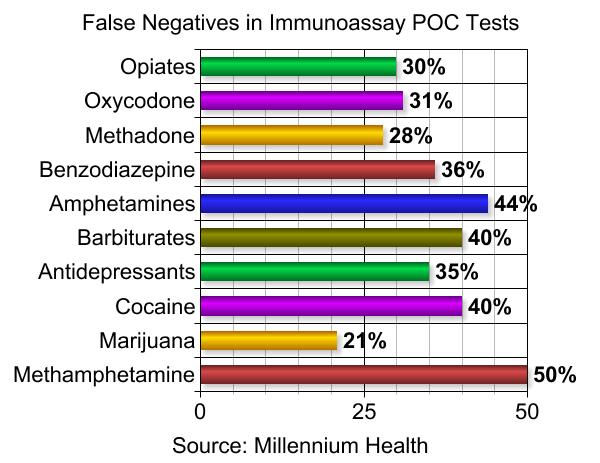
A urine drug test widely used by pain management and addiction treatment doctors to screen patients for illicit drug use is wrong about half the time – frequently giving false positive or false negative results for drugs like marijuana, oxycodone and methadone. 

The “point-of-care” or POC tests come with immunoassay testing strips that use antibodies to detect signs of recent drug use. Physicians like the urine tests because they can be performed in their offices, are inexpensive, and give immediate results. But experts say the tests are wrong so often that no doctor should base a treatment decision solely on the results of one test. 

“Immunoassay testing has an extraordinarily high rate of false positives and false negatives as compared to laboratory testing,” said Steve Passik, PhD, Vice President of Research and Advocacy for Millennium Health, which analyzed urine samples from nearly 4,300 POC tests obtained at addiction treatment clinics.The Millennium study was published in The Journal of Opioid Management.

A false positive reading means a drug was detected that isn’t actually there, while a false negative means the POC test missed finding a drug that was present in a urine sample.

The Millennium study found plenty of both.

False positive readings for marijuana, for example, were given over 21% of the time, while false negative results for marijuana also appeared about 21% of the time.

The POC tests had an even worse track record for oxycodone, a widely prescribed opioid pain reliever. False positive results were detected over 41% of the time and false negatives over 31% of the time for oxycodone.

“We always knew it wasn’t as sensitive and we always knew that it didn’t look for specific drugs within a class. But this was revealing in regard to how much it misses, with false negative and false positives rates in 40 to 50 percent in some instances,” said Passik.

“If we were in another area of medicine, let’s say oncology, and you had a tumor marker or a test that you were going to base important treatment decisions on, and it was as inaccurate as immunoassay is, the oncologists would never stand for it.”

Passik says “the word is starting to get out” how inaccurate the immunoassay tests are. But few patients are aware of it and some doctors are still dropping patients from pain management programs after POC tests found illicit or unprescribed drugs in their urine. 

Passik told Pain News Network that patients should insist on a second test if they feel the first one is wrong.

“If they think it’s a false positive, they need to ask the doctor to be re-tested. And particularly they should ask what method was used. And if they find out they were tested with immunoassay, they should say they want the same specimen either re-tested at the lab or they want to provide another specimen tested at the lab,” Passik said.

A laboratory test that uses chromatography-mass-spectrometry to break down and identify individual molecules is far more accurate than an immunoassay POC test, but it could cost thousands of dollars -- something many insurers and patients are unwilling to pay for.

And critics say Millennium – one of the largest drug screening companies in the nation – has produced a self-serving study designed to drum up more business for itself.

“It does not surprise me that Millennium would show a high rate of inconsistencies with the POC test,” said a source with broad experience in the drug testing industry. “Remember, their business is to sell confirmation testing, so they will skew the way they present data to try to influence the market to do more confirmation testing.  In most cases, that’s how it works in any study conducted or funded by a device or pharmaceutical company.”

The source told Pain News Network the data in Millennium’s study was “skewed toward exaggeration” and questioned the need for further testing.

“In addiction centers, there is not really a large demand for confirmation testing. I understand Millennium wants to increase that business because that’s what they do.  However, medical necessity does play into all laboratory testing.  The great majority of the time, when a patient in a treatment center is confronted with the results of a POC test that shows a drug in their system that shouldn’t be there, they will confess to taking the drug.  So, what would be the medical necessity of confirming that test?

“I believe many of the urine drug testing labs are promoting confirmation testing when it is not medically necessary.”

Millennium took offense that the validity of its study was being questioned.

“Millennium Health strongly disagrees with the characterization in the story that the study was skewed or biased in any way,” the company said in a statement to Pain News Network.

“The study was accepted and published by a well-respected, peer-reviewed publication. Millennium Research Institute is committed to the highest ethical and research science standards, and we stand by the results of our study. The study was based on random samples from addiction treatment clients. The data clearly indicated that immunoassay, or point-of-care, tests have a high rate of false positives and false negatives when used to screen patients for illicit drug use.”

"Liquid Gold"

A growing number of doctors who treat addicts and chronic pain patients require them to submit to random drug screens. And some companies and government agencies also require employees and job applicants to submit to POC tests as a condition of employment.

The competition between drug screening companies for this business is intense. According to one estimate, drug testing has grown into a lucrative $4 billion dollar a year industry -- “liquid gold” as some have called it – that is projected to reach $6.3 billion by 2019.

But addiction experts say more reliable and expensive testing is needed, simply to be fair to patients.

“Heavy reliance on immunoassays in addiction treatment can be detrimental to the patient due to their higher risk for false positives and false negatives in comparison with more reliable technology, such as chromatography-mass-spectrometry,” said Michael Barnes, executive director of the Center for Lawful Access and Abuse Deterrence (CLAAD), a non-profit that gets some of its funding from Millennium.

“A false positive can be detrimental to a patient by subjecting her to unjust suspicion or accusations, unnecessary adjustments to the treatment plan, or the deterioration of the practitioner-patient relationship. A false negative may result in delayed diagnosis or misdiagnosis, false confidence that a patient has not relapsed, and failure to catch behavior that could eventual result in a preventable overdose death. Therefore, chromatography-mass-spectrometry is often more appropriate.”

Millennium’s Passik says most doctors recognize that both tests may be needed.

“These two different methods yield very different kinds of results,” Passik said. “If I was still practicing, I wouldn’t feel that immunoassay is accurate enough to be the only test that you use.”

Ironically, a federal court last year found Millennium guilty of giving illegal kickbacks to doctors by providing them with free POC test cups – the very tests the company says have an “extraordinarily high rate” of false results.

Physical Therapy Lowers Healthcare Cost of Back Pain

By Pat Anson, Editor

Early physical therapy for low back pain significantly lowers healthcare costs by reducing the use of expensive treatments such as spinal surgery, injections, imaging and painkillers, according to a large new study published in the journal BMC Health Services Research.

About a quarter of Americans report an incidence of low back pain (LBP) within the previous three months and it is one of the most common reasons to visit a physician. Most LBP episodes resolve within 2 to 4 weeks, but about 25% of patients will experience recurring back pain for a year or more. 

Researchers analyzed health care records for over 122,000 patients in the U.S. Military Health System who went to a primary care physician for an initial episode of low back pain and received physical therapy within 90 days. 

Over 17,000 patients in the study received early physical therapy within 14 days – and it was this group that made significantly less use of advanced imaging, spinal injections, spine surgery and opioids than patients who started physical therapy later. 

Health care costs on average were 60% lower (about $1,200) over a two year period for patients who had early physical therapy compared to those who delayed therapy.

"Physical therapy as the starting point of care in your low back pain episode can have significant positive implications," said physical therapy researcher John Childs, PhD. "Receiving physical therapy treatment that adheres to practice guidelines even furthers than benefit."

Medical guidelines recommended for low back pain are to avoid opioids and advanced imaging as a first-line of treatment. However, recent research shows those guidelines are often ignored.

A large new study by pharmacy benefit manager Prime Therapeutics found that about one in five opioid prescriptions were written to treat low back pain.

"Low back pain was the most common diagnosis among all members taking an opioid, even though medical guidelines suggest the risks are likely greater than the benefits for these individuals," said Catherine Starner, PharmD, lead health researcher for Prime Therapeutics.

Another study of older adults with low back pain found that spending thousands of dollars on advanced imaging such as CT scans or MRI’s within six weeks of visiting a primary care doctor was often a waste of money.  

“Early imaging was not associated with better one-year outcomes. The value of early diagnostic imaging in older adults for back pain without radiculopathy is uncertain,” said Jeffrey G. Jarvik, MD, a professor of radiology in the University of Washington School of Public Health, who studies the cost effectiveness of treatments for patients with low back pain.

Combined direct and indirect costs for low back pain in the U.S. are estimated to be between $85 billion and $238 billion a year.

"Given the enormous burden of excessive and unnecessary treatment for patients with low back pain, cost savings from physical therapy at the beginning of care has important implications for single-payer health care systems," said Paul Rockar, President of the American Physical Therapy Association.

A Pained Life: Hey Handicap!

By Carol Levy, Columnist

You may have seen a story in the news a few weeks ago about an Ohio woman with a prosthetic leg who left a note on the windshield of a car parked in a handicapped spot. The car had no handicapped ID, placard or license plate, so it appeared it was parked illegally, taking a place someone with a handicap (and proper ID) might have needed.

The owner of the car responded to the note in a very, very nasty way – leaving a note of her own:

“Hey handicap! First, never place your hands on my car again! Second, honey you ain’t the only one with ‘struggles.’ You want pity go to a one leg support group!” the note said.

There was no excuse for what she wrote. When a picture of the note was posted on Facebook, it went viral.

I abhor it when I see someone without proper ID parking in a handicapped spot. I have a handicapped license plate which allows me to park in the designated spots. Why should or would someone who does not need it take a space reserved for the handicapped, absent being lazy and self-centered? Does it not occur to them they are possibly making life much harder for someone truly in need?

There is nothing about me that looks disabled (at least not until I take off my sunglasses because of a facial paralysis). As a result, I get "the look" sometimes when someone watches as I exit my car.

Only once did someone actually accost me. She came flying towards me, nostrils flaring, her voice shaking with rage.

"How dare you park there? There's nothing wrong with you!" she said.

I was ready to respond in kind. I could feel the blood rushing to my face. My body tensed, ready to engage.

I should not have to defend myself, especially to a stranger. My pain is none of her business.

And then a calm came over me.

This can be a perfect teaching moment.

“You know, not everyone has a visible disability,” I told her. “I don't need to be on crutches, use a cane or be in a wheelchair to be disabled. I could have lung disease, heart disease, cancer, any number of things that makes me physically fragile and yet look fine to the outside world."

I watched as her face registered a variety of reactions. She went from indignation, to surprise, to maybe even a scintilla of understanding. As upset as I had been by her remarks, a sense of relief replaced my anger. Maybe one more person now “gets it.”

What bothers me about the story of the disabled person leaving the note on the windshield was that she did not consider the possibility that maybe the person who parked there was invisibly disabled.

It is possible that she forgot to put her handicapped placard on the mirror or dashboard. It is possible she was parked legally and legitimately needed the spot.

I see that in myself at times. How dare she park there? Look how healthy she looks!

And then I catch myself. My disability is invisible. How dare I not give others the same consideration without having to prove it.

Carol Jay Levy has lived with trigeminal neuralgia, a chronic facial pain disorder, for over 30 years. She is the author of “A Pained Life, A Chronic Pain Journey.” 

Carol is the moderator of the Facebook support group “Women in Pain Awareness.” Her blog “The Pained Life” can be found here.

The information in this column should not be considered as professional medical advice, diagnosis or treatment. It is for informational purposes only and represent the author’s opinions alone. It does not inherently express or reflect the views, opinions and/or positions of Pain News Network.