All Forms of Medical Marijuana Now Legal in Canada

By Pat Anson, Editor

Medical marijuana advocates are cheering – and some health officials are jeering – a landmark ruling by the Supreme Court of Canada allowing patients to use cannabis in any form they choose.

The unanimous decision greatly expands the use of medical marijuana in Canada beyond the traditional means of smoking it – to include everything from cookies and teas to ointments and tinctures that are laced with THC and cannabinoids, marijuana’s active ingredients.

Many users believe smoking marijuana is harmful to their health. But under Canada’s Controlled Drug and Substances Act, use of marijuana outside of its “dried” form could result in possession and drug trafficking charges.

That’s what happened to Owen Smith, a baker for the Victoria Cannabis Buyers Club, who was arrested in 2009 for making over 200 cookies containing marijuana, as well as various oils and lotions.

The Supreme Court upheld two lower court decisions that acquitted Smith, saying the government’s marijuana law violated his right to liberty and security "in a manner that is arbitrary and hence is not in accord with the principles of fundamental justice." 

The court declared the marijuana section of the law “null and void” immediately, rather than give Parliament a chance to rewrite it. To do otherwise, the court said, would "leave patients without lawful medical treatment.”

"I'm proud and really happy today for all those people who are going to benefit from this ruling," Smith said at a press conference in Victoria, British Columbia. “Across the country there will be a lot more smiles and a lot less pain.”

“How exciting is this! I am thrilled with this decision,” said Ellen Lenox Smith, a medical marijuana advocate and columnist for Pain New Network. 

Smith, who is not able to smoke marijuana because of a medical condition, wrote a column earlier this month about ways to consume marijuana for pain relief without smoking itShe prefers a nightly dose of a marijuana oil that she makes herself.

“It all depends on the patient, condition, type of medicine used and how your body reacts. This is a wonderful alternative. We all have to find the magical way to administer,” she said. “I applaud them for having the courage to understand the reality of this medication. One size does not fit all and allowing for the variety is wonderful and something I hope we will always be allowed to turn to for help.”

Canadian health officials are angry about the court’s decision.

"Frankly, I'm outraged by the Supreme Court," said Health Minister Rona Ambrose, according to CBC News.

"Let's remember, there's only one authority in Canada that has the authority and the expertise to make a drug into a medicine and that's Health Canada," she said. "Marijuana has never gone through the regulatory approval process at Health Canada, which of course, requires a rigorous safety review and clinical trials with scientific evidence."

Ambrose said the government would fight against the court's "normalization" of marijuana with a public relations campaign outside the courtroom.

"We will continue to combat it. We will continue our anti-drug strategy, we will target youth with the message that marijuana pot is bad for them," the minister said. "We'll continue to work with medical authorities across the country to make sure they're involved in the message."

British Columbia’s chief medical health officer says edible marijuana products should come with labels listing the strains used and their potency, to help ensure that users don’t accidentally overdose and get sick.

“Quality control, certainly for medical use, should be labelled and analyzed,” Dr. Perry Kendall told the Vancouver Sun. “It would be better for people, if they’re taking an illegal product by mouth, to know how much and what, is in it.

“It can take a half an hour to an hour to absorb through the stomach.  If you’re a naive young user you might go on eating and eating because you don’t feel anything and then you take more than you want to.”

Medical marijuana – in all its various forms -- is legal in 23 U.S. states and the District of Columbia. However, there are no regulations governing its quality, dosage or labeling.  

“Evidence in the U.S. is that wider availability of these products is causing increased poisonings in children, and we want to prevent this from occurring here in Vancouver,” the city of Vancouver warned in a news release after the Supreme Court’s ruling. “Unregulated edible products also pose a greater risk to adults than other forms of marijuana.”

Aleve & Other Pain Relievers Reduce Fertility in Women

By Pat Anson, Editor

Health experts have warned for years about the side effects of over-the-counter pain relievers – everything from liver failure to heart disease to hearing loss.

Now researchers are saying that Aleve and some other non-steroidal anti-inflammatory drugs (NSAIDs) reduce the fertility of women so significantly they could potentially be used as an emergency form of contraception.

The results of a small study presented at the European League Against Rheumatism Annual Congress show that three NSAIDs --  naproxen, diclofenac, and etoricoxib -- inhibited ovulation in women after just a few days of treatment.

Naproxen, diclofenac, and etoricoxib are the active ingredients in several brand name drugs sold around the world, including Aleve, Voltaren, and Arcoxia, respectively. Etoricoxib is not approved for use in the United States.

Thirty nine Iraqi women of childbearing age who suffered from back pain took part in the study; receiving diclofenac (100mg once daily), naproxen (500mg twice daily), etoricoxib (90mg once daily), or a placebo.

Treatment was given for 10 days from day 10 of the onset of their menstrual cycle, with their progesterone levels and follicle diameter analyzed via blood sample and sonography.

“After just ten days of treatment we saw a significant decrease in progesterone, a hormone essential for ovulation, across all treatment groups, as well as functional cysts in one third of patients,” said study investigator Professor Sami Salman, Department of Rheumatology, University of Baghdad.

“These findings show that even short-term use of these popular, over-the-counter drugs could have a significant impact on a woman's ability to have children. This needs to be better communicated to patients with rheumatic diseases, who may take these drugs on a regular basis with little awareness of the impact.”

Of the women receiving NSAIDs, only 6.3% taking diclofenac, 25% taking naproxen, and 27.3% taking etoricoxib ovulated, compared with 100% of the control group that was not taking a pain reliever.

The dominant follicle remained unruptured in 75% of the women taking diclofenac, 25% taking naproxen and 33% of the patients receiving etoricoxib. Rupturing of the dominant follicle and the subsequent release of an oocyte (unfertilized egg), is essential for ovulation to occur.

“These findings highlight the harmful effects NSAIDs may have on fertility, and could open the door for research into a new emergency contraception with a more favorable safety profile than those currently in use,” said Salman.

NSAIDs are among the most common pain relief medicines in the world. Every day more than 30 million Americans use them to relieve pain, lower fever and reduce inflammation.

How Chronic Pain Changes Mood and Motivation

By Pat Anson, Editor

Researchers in California have found the first biological evidence that chronic pain alters regions in the brain that regulate mood and motivation -- raising the risk of depression, anxiety and substance abuse.

In animal studies at UCLA and UC Irvine, researchers found that brain inflammation in rodents that was caused by chronic nerve pain led to accelerated growth and activation of immune cells called microglia. Those cells trigger chemical signals within the brain that restrict the release of dopamine, a neurotransmitter that helps control the brain's reward and pleasure centers.

"For over 20 years, scientists have been trying to unlock the mechanisms at work that connect opioid use, pain relief, depression and addiction," said Catherine Cahill, associate professor of anesthesiology & perioperative care at UCI, Christopher Evans of UCLA's Brain Research Institute. "Our findings represent a paradigm shift which has broad implications that are not restricted to the problem of pain and may translate to other disorders."

The study also revealed why opioid drugs such as morphine and cocaine may lose their effectiveness as animals transition from acute pain to chronic pain. Cahill and her colleagues learned that opioids fail to stimulate a dopamine response in mice and rats, resulting in impaired reward-motivated behavior.

Treating the rodents with a long-acting antibiotic called minocycline inhibited microglial activation, and restored dopamine release and reward-motivated behavior. That finding suggests that a similar approach could be used in treating chronic pain in humans.

"Our findings demonstrate that a peripheral nerve injury causes activated microglia within reward circuitry that result in disruption of dopaminergic signaling and reward behavior. These results have broad implications that are not restricted to the problem of pain, but are also relevant to affective disorders associated with disruption of reward circuitry," the study found.

The results of the five-year study appear online in the Journal of Neuroscience.

Cahill and her research team are now trying to establish that pain-derived changes in human brain circuitry can account for mood disorders.

"We have a drug compound that has the potential to normalize reward-like behavior," she said, "and subsequent clinical research could then employ imaging studies to identify how the same disruption in reward circuitry found in rodents occurs in chronic pain patients."

Back Pain World's Leading Cause of Disability

By Pat Anson, Editor

Lower back pain remains the world's leading cause of disability, according to an extensive new study of health data that also warns that the number of people living in poor health is set to rise rapidly over coming decades.

Using a statistical analysis known as "years lived with disability" (YLD),  the Global Burden of Disease Study ranks lower back pain as the leading cause of disability worldwide, followed by major depression.  

Low back pain was the leading cause of YLDs in 86 countries and the second or third leading cause in 67 countries. It also caused more health loss than diabetes, chronic obstructive pulmonary disease, and asthma combined.

Several other painful conditions also ranked high, including neck pain (#4), migraine (#7),  musculoskeletal disorders (#10), osteoarthritis (#13) and medication overuse headache (#18).

The study, which is published online in The Lancet, is the first to examine the extent, pattern, and trends in disabilities worldwide. An international consortium of researchers led by the Institute for Health Metrics and Evaluation (IHME) at the University of Washington studied 301 diseases and injuries in 188 countries.

They found that while people around the world are living longer, they are spending more time in ill health as rates of diseases and injuries decline more slowly than death rates.

Just one in 20 people worldwide had no health problems in 2013, with a third of the world’s population -- 2.3 billion people -- experiencing more than five ailments. Of those, 81% were younger than 65 years old.

The disease burdens for low back pain and depression both increased more than 50% since 1990. There was also a startling increase in disability caused by diabetes (up 136%), Alzheimer’s disease (up 92%), medication overuse headache (up 120%), and osteoarthritis (up 75%).

"What ails you isn't necessarily what kills you," said IHME Director Dr. Christopher Murray. "As nonfatal illnesses and related ailments affect more people of all ages, countries must look closely at health policies and spending to target these conditions."

Between 1990 and 2013, YLDs increased from 537.6 million to 764.8 million for both sexes. The leading causes of YLD remained largely stable during this period, but they took an increased toll on health due to population growth and aging.

Musculoskeletal disorders, combined with fractures and soft tissue injuries, accounted for one-fifth of YLDs globally in 2013, ranging from a low of 11% for Mali's population to a high of 30% in South Korea.

"Many countries around the world have made great progress in addressing fatal diseases, but nonfatal illnesses pose the next major threat in terms of disease burden," said Professor Theo Vos of IHME, the study's lead author. "This need to meet the challenge of nonfatal diseases and injuries only becomes more urgent as the population increases and people live longer."

Leading Causes of YLDs in 2013:

  1.  Low back pain
  2.  Major depressive disorder
  3.  Iron-deficiency anemia
  4.  Neck pain
  5.  Hearing loss
  6.  Diabetes
  7.  Migraine
  8.  Chronic obstructive pulmonary disease
  9.  Anxiety disorders
  10.  Other musculoskeletal disorders

“Large, preventable causes of health loss, particularly serious musculoskeletal disorders and mental and behavioral disorders, have not received the attention that they deserve. Addressing these issues will require a shift in health priorities around the world, not just to keep people alive into old age, but also to keep them healthy,” said Vos.

This study was funded by the Bill & Melinda Gates Foundation.

Five Ways TIME Gets Pain Pills So Wrong

By Crystal Lindell, Columnist

Access to pain pills is not a cause I chose. I didn’t wake up one day and think, “Gee, more people need opioids.”

No, access to pain pills is a cause that chose me. Because I really did wake up one day two and half years ago, and say, “What is wrong with me? Why do I suddenly have insane pain in my ribs?”

It’s a pain that never went away. And for months, the doctors didn’t take me seriously. They gave me prescription-strength Advil, Lidoderm patches, and told me to wear looser bras.

None of that worked.

So, for weeks on end, the pain got worse and worse, while I tried multiple doctors, trying to find someone who could help.

I was in so much pain that I would often lay down on the ground mid-sentence because I didn’t have it in me to keep standing. The pain was just that overwhelming.

And at night, after trying to survive the day, I would lay in bed and plan ways to commit suicide. I wish I was exaggerating.

Finally, I found a pain specialist who put me on hydrocodone. At the time I had no idea that opioids were controversial. I was just happy to finally have found something that gave me relief.

The problem with hydrocodone though is that it comes with these crazy spikes. So you take a pill, it relieves the pain and then it completely wears off within a couple hours — and you to wait six hours for your next dose. It’s a horrible way to live.

I’m also on a time-released morphine that lasts about 8 hours. I take it three times a day — so I am always on an opioid, 24 hours a day. And then, on top of that, I also take hydrocodone as needed.

I pretty much always need it.

The pain still gets bad. But now, because of the pain pills, I have times when I am nearly pain free. Times when I can catch my breath and remember that life is worth living.

Opioids have literally saved my life.

Which is why I’m so upset about TIME magazine’s cover story about the “worst addiction crisis America has ever seen.” 

I realized when I read the article that I am spoiled by my Facebook news feed. I tend to follow chronic pain groups, so most of the information I see is about how chronic pain patients need access to these drugs. As a result, I’ve been lulled into thinking that the chronic pain community is actually making progress on this issue.

Apparently, we aren’t.

And it is articles like this that make it that much harder for pain patients like me to get the relief they need.

Let’s break down what it gets so wrong, with some quotes from the report:

1.    It implies time-released morphine is basically heroin.

“The longer patients stay on the drugs, which are chemically related to heroin and trigger a similar biological response, including euphoria, the higher the chances users will become addicted.”

Aside from the excessive number of commas, there are so many infuriating things about this sentence. 

While the drugs can give you a “high” feeling when you first start taking them, I can promise you — after being on morphine all day, every day for over a year — that the “high” is only a short-term side effect.

Also, comparing the drugs I take to heroin is like saying that both TIME and US Weekly are similar because they both require reading. Yes, that’s true. But that’s about all they have in common.

2. The article focuses on how much the drug companies are supposedly making on these meds.

“The total annual sales for opioids in the U.S. has grown over 20 years to more than $8 billion.”

While there have been some new meds on the market, like Zohydro, the pills that I take and the pills most of the people I know take, are generic. Morphine isn’t exactly a brand name.

Giving people relief from horrific, daily pain is not part of some drug company conspiracy. It’s called compassion.

3. It devalues how horrible pain can be.

“The standard-setting Joint Commission on Accreditation of Health Care Organizations in 1999 required doctors to measure pain as part of their basic assessment of a patient’s health, which had the effect of elevating pain the same level of importance as objective measurements like temperature and heart rate.”

The author writes that like it’s a bad thing. I’m here to tell you, it’s not. Pain is such a huge part of your health. And managing it is just as important as managing your blood pressure or your insulin level.

Having too much pain will ruin your life and your body just like any other health issue.

Living with chronic pain is like living every day of your life with the same amount of pain you would wake up with after an extensive surgery, or a horrific car accident, or a stabbing.

Anyone in those situations would be given adequate pain relief. And, just because people with chronic pain have that same pain every day, all day, doesn’t mean they don’t deserve the same relief.

4. It implies that anyone on long-term pain medications is an “addict.”

“With America awash in opioids for the foreseeable future, health care providers and public officials are searching for ways to help addicts get clean.”

I don’t need to “get clean.” I need a cure, but there isn’t one for what I have. The next best thing is daily pain relief. Going off all my meds would be catastrophic for me, not because I’m addicted, but because I would end up stuck on the couch for the rest of my life in too much pain to shower.

Also, we need to take a second to talk about the word “addicted.” It is very different from what’s actually happening for most people, which is “dependence.”

Dependence is what happens when you take lots of different types of drugs long-term. Your body becomes dependent, so going off them cold turkey would be hell. However, if you taper off it, you’re good. Just like anti-depressants. And nobody ever says people are “addicted to anti-depressants.”

Addiction is when you start to crave that high feeling you get the first few times you take the drug, so you start taking higher and higher doses seeking it out. Sort of like how all of us are dependent on food, while a select few are addicted.

5. The authors don’t mention any alternatives.

For those enduring chronic pain, the real-life alternative to not having adequate pain pills is suicide.

Articles like this just make it that much harder for people with chronic pain to get the medications they need. If you want to see the suicide rate jump, just take away the medications that so many people rely on to do even simple things, like make dinner or do a load of laundry.

Look, I’m not saying everyone with a cold should get a prescription for morphine. I’m just saying that there are millions of people out there who need these drugs. And more regulation just gets in the way of decisions that doctors and patients should make together to help those who are suffering cope with their pain. The government should never be in anyone’s doctor’s appointment.

At the end of the day, I guess I just wish that TIME had talked to even one chronic pain patient for the article. There are millions of us out here, responsibly using opioids long-term, and we would have loved to chat with TIME.

If only they had asked.

Crystal Lindell is a journalist who lives in Illinois. She loves Taco Bell, watching "Burn Notice" episodes on Netflix and Snicker's Bites. She has had intercostal neuralgia since February 2013.

Crystal writes about it on her blog, “The Only Certainty is Bad Grammar.”

The information in this column should not be considered as professional medical advice, diagnosis or treatment. It is for informational purposes only and represent the author’s opinions alone. It does not inherently express or reflect the views, opinions and/or positions of Pain News Network.

Critics Question Oxygen Therapy for Fibromyalgia

By Pat Anson, Editor

Some experts are challenging the findings of a new clinical study that found that hyperbaric oxygen therapy (HBOT) could be used to treat -- and possibly even cure -- fibromyalgia.

Israeli researchers gave HBOT therapy to dozens of women suffering from fibromyalgia and found there was a significant improvement in their pain and other symptoms. The women were put in pressurized air chambers and breathed pure oxygen for 90 minutes, five times a week for two months.

Researchers say brain scans of the women before and after HBOT proved their theory that additional oxygen alters brain pathology and "repairs" parts of the brain overly sensitized by chronic pain. 

"Brain pathology? This is speculation being presented as established knowledge," said John Quintner, MD, an Australian rheumatologist who maintains that fibromyalgia is not a disease, but a "symptom cluster" that could have many different causes.

tHE INTERIOR OF A HYPERBARIC CHAMBER. COURTESY OF Sagol Center for Hyperbaric Medicine and Research

tHE INTERIOR OF A HYPERBARIC CHAMBER. COURTESY OF Sagol Center for Hyperbaric Medicine and Research

Fibromyalgia is a poorly understood disorder that is characterized by deep tissue pain, headaches, fatigue, depression and insomnia. The cause is unknown.

"This clinical trial is using a methodology that is predicated upon fibromyalgia being a distinct medical condition," said Quintner, telling Pain News Network that the study proved little, but was "good news for those who manufacture portable HBOT units." 

Researchers at the Sagol Center for Hyperbaric Medicine and Research at the Assaf Harofeh Medical Center and Tel Aviv University were studying the use of HBOT on stroke and concussion patients when they realized that oxygen therapy might also change the neural activity of patients with fibromyalgia.

"Patients who had fibromyalgia in addition to their post-concussion symptoms had complete resolution of the symptoms," said Shai Efrati, MD,  lead author of the study that is published online in PLoS ONE

Efrati said some patients will require follow-up sessions of HBOT and some won't need to.

"We have learned, for example, that when fibromyalgia is triggered by traumatic brain injury, we can expect complete resolution without any need for further treatment. However, when the trigger is attributed to other causes, such as fever-related diseases, patients will probably need periodic maintenance therapy."

HBOT puts more oxygen into the bloodstream, which delivers it to the brain. Efrati's earlier studies found that HBOT induces neuroplasticity, which leads to repair of chronically impaired brain functions. Most of the women who participated in the new study had fibromyalgia that the researchers believe was triggered by brain trauma.

DR. SHAI EFRATI

DR. SHAI EFRATI

"Symptoms in about 70 percent of the women who took part have to do with the interpretation of pain in their brains," said Eshel Ben-Jacob, a study co-author who is an adjunct professor of biosciences at Rice University. "They're the ones who showed the most improvement with hyperbaric oxygen treatment. We found significant changes in their brain activity.

"Most people have never heard of fibromyalgia. And many who have, including some medical doctors, don't admit that this is a real disorder. I learned from my MD friends that this is not the only case in which disorders that target mainly women raise skepticism in the medical community as to whether they're real or not."

HBOT Claims Called "Crazy" 

One of those skeptics is Fred Wolfe, MD, a prominent fibromyalgia researcher who says the Israeli study lacks proper controls used in most clinical studies -- such as patients being "blinded" to whether they are receiving treatment or a placebo.  

"The fibromyalgia study world is filed with positive studies based on unacceptable controls," said Wolfe. "While I don't know enough about this treatment to be sure, I would tend to think the symptomatic improvement could be based on control and blinding problems. It is possible that the demonstrated effect on the brain of oxygen is separate from the effect of symptoms." 

Wolfe is particularly troubled by a recommendation at the end of the study that fibromyalgia patients should undergo HBOT therapy now, "rather than wait until future studies are completed.”  

"I could only characterize (that) as crazy. Crazy because of the money it would cost and crazy because it posits fibromyalgia as brain disease. FM is not a disease and there is a difference between mechanism and causes. One needs some replication before jumping in," said Wolfe in an email to Pain News Network. 

Many fibromyalgia patients are ready to jump in, based on the comments from readers to our first report about the Israeli study.

"Where do you find studies like this to volunteer? I would so do this," wrote one fibromyalgia sufferer.

"I would so try this. I often feel like I'm not getting enough oxygen," said another.

"Sign me up, please," a woman wrote.

"Is this available in Tucson or Phoenix, Arizona?" asked another woman.

Many fibromyalgia sufferers are desperate for any kind of treatment that would provide relief, much less a cure. In the Israeli study, several patients either drastically reduced or eliminated their use of pain medications.

"The results are of significant importance since, unlike the current treatments offered for fibromyalgia patients, HBOT is not aiming for just symptomatic improvement," said Efrati. "HBOT is aiming for the actual cause -- the brain pathology responsible for the syndrome. It means that brain repair, including even neuronal regeneration, is possible even for chronic, long-lasting pain syndromes, and we can and should aim for that in any future treatment development."

John Quintner is not convinced.

"I have thought long and hard about this issue and have come to the conclusion that we have been dealing with a 'symptom cluster' rather than with a syndrome," he said. "According to my understanding, fibromyalgia is best explained as an  'idiom of human distress' and, as such, is outside the purview of the biomedical model." 

Invisible Illness: A Blessing or Burden?

(Editor’s note: Pain News Network is pleased to welcome Pat Akerberg as a columnist. Pat is an executive coach and business consultant who suffers from trigeminal neuralgia, a rare facial pain disorder. She shared her story recently in a column.)

By Pat Akerberg, Columnist

Even though we can’t see some things, they still exist nonetheless.  Take imperceptible things like belief, faith, hope, or even the air that we breathe.  Our indirect experience of those things comes from a hidden world.  I suppose we could view their invisibility as either a blessing or a burden.

Sometimes invisibility is a deliberate strategy intended to hide or protect.  I readily count make-up as a blessing designed to hide or conceal.  Military clothing is a tactic borrowed from nature that camouflages for protection. 

The question that I ask is posed in the context of living with invisible chronic illness and/or pain, certainly not felt indirectly or deliberately designed. 

So ask yourself: Is the invisible illness and pain that you live with a blessing or a burden?

I’d have to answer “yes” to both blessing and burden.  It’s not either one or the other for me; it’s  both -- a burden that also offers some blessings.

In the burden category, explaining my neurological disorder to raise awareness and educate others can require energy that I don’t always have.  This is especially true if you have a rare illness like mine that triggers unseen pain when you speak. 

A SCENE FROM THE 1933 MOVIE "THE INVISIBLE MAN"

A SCENE FROM THE 1933 MOVIE "THE INVISIBLE MAN"

It’s a real Catch-22, because emotionally I desire the understanding. However, there’s a high price physically in trying to get some level of it.

Then there are the not always successful attempts to find an effective way of answering the oft dreaded questions, like:

 How are you?

 Are you feeling better now (or yet)?

 You don’t seem to be getting better. Have you thought of trying (fill in the blank)? 

Six years later and my continual test drives of better ways to answer those questions -- that don’t shut down a conversation or open it up to redundant, ill-fitting advice -- still take lots of practice, just like a workout routine. 

High on my burden list would be all the small, insidious ways in which I extend myself to fit in or help others be more comfortable around someone who doesn’t look sick or in pain -- yet won’t get “back to normal” again. 

Sometimes I say yes to invites so as not to disappoint someone close.  I minimize the level or graphic description of pain that I’m in; contort my facial expression into a smile or semi-laugh to keep rapport; or attempt to eat something someone brought, even though it physically pains me to do those things.

Longing for Connections

You’re probably asking, “Why, Pat, do you do them if they can be a burden? “

It’s a fair question. 

The short answer is because they relate to the blessing part of my burden.  Living with invisible chronic pain is a great social isolator; one that prescriptions don’t treat. 

To the contrary, human connection for me serves as a much needed lubricant that primes my psychological and emotional gears to work better.  So I’m motivated to interact in spite of the price.  And, realistically, when I can, I do. And when I can’t, I don’t.   

In talking with my trigeminal neuralgia (TN) friends, we have remarked how it would be easier if our plight and handicaps were visible.  Maybe then, we fantasize, the understanding and compassion that we seek and need would be more forthcoming. 

We have also wondered if our experience of being misunderstood would be different if we had an illness or disease that had a medical label more widely recognized, publicized, or even scary. 

We witness that even the terrifying descriptions used for TN, like “the worst pain known to medical practice” or “the suicide disease” seem to diminish in stature in comparison to those. 

It’s maddening and confounding how something so torturous going on inside of us rarely registers to that extent in our external world. 

Yet, at the same time, these longings of ours do contain the special favor of not attracting the kind of unfavorable attention that we don’t want.  Those who don’t know us aren’t as likely to stare at us, give us those judgmental looks, or jump to conclusions about our health or wellness based solely on what they see. 

So in that sense, I have come to view the invisibility of TN as a mixed blessing that protects me from those hurtful, unwarranted glances.

Having the luxury of being able to control how much information that I want to share about my particular affliction is another blessing I receive from the invisibility of it.  That includes my personal struggles with the burden of it all. 

That’s a freedom of choice that many with visible illnesses, handicaps, and disabilities have to a much lesser degree. 

Thankfully, I am learning to accept the trade-offs involved with this odd paradoxical mix and view them as blessings in disguise.  They are unseen and sincerely felt.

I offer a few of my answers, but in no way profess to have yours.  Sometimes asking a question can serve as a catalyst to search beneath the surface of our particular medical labels. 

One of my favorite professors always challenged his students to “mine for the gold.”    Maybe this question will uncover some important nuggets for you. 

We are still offered the potential to learn from each other and grow in different ways, despite our incapacities and similar challenges.  That’s another blessing in my book. 

Pat Akerberg lives in Florida. Pat is a member of the TNA Facial Pain Association and serves as a moderator for their online support forum. She is also a supporter of the Trigeminal Neuralgia Research Foundation.

The information in this column should not be considered as professional medical advice, diagnosis or treatment. It is for informational purposes only and represents the author’s opinions alone. It does not inherently express or reflect the views, opinions and/or positions of Pain News Network.

Experimental RA Vaccine Shows Promise

By Pat Anson, Editor

Australian researchers have developed an experimental vaccine for rheumatoid arthritis (RA)  that could prevent the disease from developing in high-risk patients who have a genetic predisposition for RA.

In a small Phase I clinical study, researchers say the "Rheumavax" vaccine was safe and effective in suppressing the immune system response that triggers RA -- a chronic autoimmune disease in which the body’s own defenses attack joint tissues, causing swelling, inflammation and bone erosion. About 1% of adults worldwide suffer from RA.

"Current therapies only treat the symptoms and slow the progression of the disease,” said Professor Ranjeny Thomas of the University of Queensland Diamantina Institute. “We have designed a vaccine-style treatment or ‘immunotherapy’ specifically for individuals carrying high-risk rheumatoid arthritis genes and specific rheumatoid arthritis antibodies, called anti-CCP."

CCP antibodies are present in about 60% to 70% of people with RA and can be detected years before symptoms appear.

The personalized Rheumavax vaccine is made by taking a sample of each patient's blood and extracting an immune system cell called dendritic cells. Those cells are then challenged with a foreign peptide and an immune system modulator to create a vaccine that is then injected back into the patient.

Researchers say Rheumavax "teaches" the patient’s immune system to ignore a naturally occurring peptide that triggers the production of CCP antibodies that cause inflammation. In the study, 18 patients received a single injection of Rheumavax and one month later showed no signs of inflammation or RA disease flares.

“At this stage, the technique would not be ideal for widespread treatment or prevention of rheumatoid arthritis because it’s costly and time-consuming," said Thomas. “However, the promising results of this trial lay the foundations for the development of a more cost-effective, clinically-practical vaccine technology that could deliver similar outcomes for patients." 

"This research is such an exciting advancement for arthritis sufferers.  To know that someday in the future, hopefully the near future, there may be a treatment that actually treats the cause, not just the symptoms of rheumatoid arthritis, makes me very hopeful," said  Jennifer Martin, a rheumatoid arthritis sufferer and columnist for Pain News Network.  

"I often worry that my son could have inherited this awful illness from me and that one day he will begin to show symptoms.  To think that there may be a treatment that is effective very early on, or even before symptoms arise if they are able to detect the gene is very reassuring."

Professor Thomas says if Rheumavax proves successful treating RA, it could also be applied to other autoimmune diseases, such as Type 1 diabetes.  The study is published in the journal Science Translational Medicine

Until the late 1990s, one in three RA patients were permanently disabled within five years of disease onset. Although there are no cures for RA, in recent years there has been significant improvement in treatment, with disease control now possible for many patients who receive biologic drugs.

Poor Sleep Makes Osteoarthritis Worse

By Pat Anson, Editor

A new study is adding to the growing body of evidence linking poor sleep habits to chronic pain.

Researchers at Johns Hopkins University School of Medicine say patients with knee osteoarthritis (OA) who slept poorly had greater central sensitization -- which amplifies the amount of pain they feel. They are also more likely to catastrophize -- a clinical term meaning they were consumed by thoughts about pain.

Osteoarthritis is a joint disorder that leads to thinning of cartilage and progressive joint damage. Nearly 40 percent of Americans over the age of 45 have some degree of knee OA.

"Our study is the largest and most comprehensive examination of the relationship between sleep disturbance, catastrophizing and central sensitization in knee OA," said lead author Claudia Campbell, PhD, from the Department of Psychiatry & Behavioral Sciences at Johns Hopkins University School of Medicine. The study is published in Arthritis Care & Research.

The study included 208 participants who were categorized into four groups: OA patients with insomnia, OA patients with normal sleep habits, healthy controls with insomnia, and healthy controls without pain and normal sleep habits. Most of the participants were female.

Results showed that patients with knee OA and insomnia had the greatest degree of central pain sensitization compared to the controls. Researchers also found that patients with poor sleep and high catastrophizing scores reported higher levels of central sensitization -- which was associated with increased  pain.

"While no causal processes may be determined from this study, our data suggest that those with low sleep efficiency and higher catastrophizing have the greatest central sensitization. Understanding the intricate relationship between sleep, central sensitization, and catastrophizing has important clinical implications for treating those with chronic pain conditions such as knee OA," said Campbell.

A recent study in Norway found that getting a good night’s sleep plays a key role in determining how bad your pain levels are doing the day.  Those who had trouble sleeping at least once a week had a 52% lower pain tolerance. The study, which was published in the journal PAIN,  is the first to link insomnia and impaired sleep to reduced pain tolerance in a large, general population sample.  

A previous study in Norway found that women who have trouble sleeping are at greater risk of developing fibromyalgia.

How to Use Medical Marijuana Without Smoking

By Ellen Lenox Smith, Columnist

It can be overwhelming to try anything new, especially something like medical marijuana. Many people are afraid to try it – not only because of the stigma associated with cannabis – but the smell that comes from smoking it.  

There are many different ways besides smoking that I have learned to administer medical marijuana. But remember, I am not an expert, just a woman who was desperately trying to find a solution as to how to address her pain. I have been learning this slowly, through reading, help from others, and trial and error.  

Due to having sarcoidosis in my chest, smoking anything could be fatal. I had to find an alternative method that I could use to safely administer medical marijuana. Acting on the advice of a friend, I started my journey utilizing this medicine in an oil form. 

Oils             

ELLEN LENOX SMITH

ELLEN LENOX SMITH

I start by grinding up dried marijuana buds in a simple coffee grinder, always being careful to use only an indica strain of cannabis. Indica plants give you pain relief and allow you to rest. I take my oil at night to help me to sleep. If I ever took this same oil during the day, I would be sleepy and groggy.

Next, I heat up oil (I use extra virgin olive oil, but you can use other types you prefer) and when it gets hot, but not to a boil, I sprinkle the ground product over the oil. When you get it just right, there is a sound similar to putting an Alka Seltzer tablet in water, and you can hear the THC and CBD being released into the oil. 

You then allow the oil to cool, strain it, and store it away from the sun. It lasts for a long time.

At night, one hour before I want to go to sleep, I take my medication. I presently use one teaspoon of the oil mixed with some applesauce or something I enjoy eating. You do not want to take this on an empty stomach. 

You should start slowly with a small amount, and gradually introduce the medication to your body. If you need to increase the dose, you can add a quarter of a teaspoon until you have reached an appropriate level. When you can sleep through the night, and awake relatively clear headed and not groggy --then you know your dose is appropriate.  

Keep in mind that by utilizing this method the medication takes time to kick in because it is being ingested. Plan your evening carefully and be sure to be ready for bed once you have medicated. It usually takes 30-60 minutes. We all react differently, so be safe.

If you want to make this oil even easier, then purchase a machine called Magical Butter, and it will do all the work for you after you grind, measure and plug it in. It costs about $175.

Vaporizers

Most days, I do not need any medication after having had a good night’s sleep. But on the days I need something else for help, I find vaporizing simple and easy. 

I have found two portable vaporizers that I love. One is called the Vape-or-Smoke and the other is named PAX. They require a small amount of marijuana, are small enough to fit in a purse, and are simple to use. 

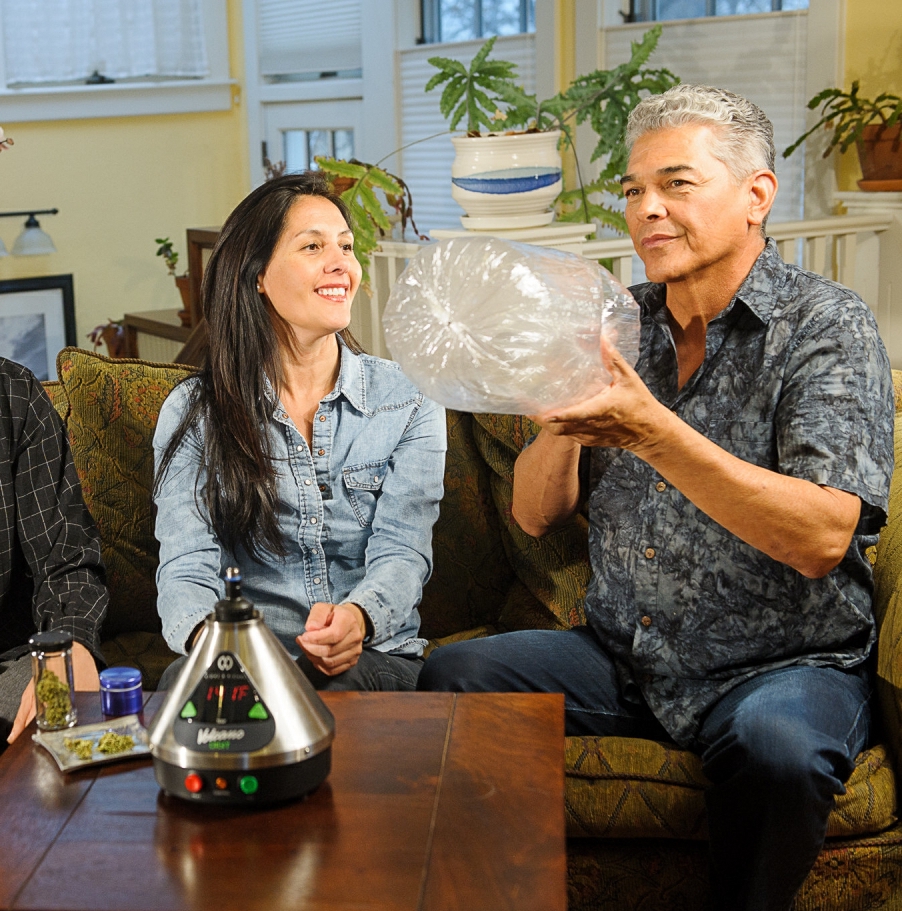
Many people use the Volcano, which is a larger, table top model seen in the picture to the right. There are so many types; you just have to decide what you are willing to spend. Some vaporizers cost several hundred dollars.

Now be careful, for you want to vaporize the correct type of cannabis. I could list all fifteen strains we grow, but I can tell you that there would be no guarantee they would be your magic.

The main thing to remember is if you are going to vaporize during the day, then you need to use a sativa strain of cannabis. This type of plant allows you to gain pain relief and also helps to stimulate you and keep you awake, not sleep like the indica plant does. If I vaporized an indica during the day, I would want to sleep. So be careful you have selected the correct type of plant.

Use a grinder to prepare the marijuana and follow the directions on the vaporizer. You will notice when you first use a vaporizer that it looks like you are blowing out smoke. However, what you are observing is actually a vapor. 

I have permission from my pulmonologist to vaporize because it is safe to use. Take a simple hit, see how you feel in a few minutes, and if you need more to help with the pain, just use it one puff at a time to find your needed dose. This method should provide you with short, yet quick relief, unlike the oil that takes awhile to kick in, but last so much longer.

Tinctures

Sometimes I also use a tincture during the day.  As with vaporizing, it is fast acting and also fast to leave the system. We have recipes for a few types. One is made with alcohol, such as lemon schnapps and it takes two months to cure. The other is made with glycerin and can be made in less than an hour in a crock pot or using the Magical Butter machine. 

When making a tincture, you again have to be careful you are using the correct strain. I make day tincture, so I only use a sativa plant. Alcohol based tinctures require the product to be put into a jar, the alcohol of choice poured over it, and then covered tightly. 

Twice a day, take a moment to shake the jar. After two months, the THC and CBD are released, and you should strain and store the liquid away from the sun.

The tincture can be taken one teaspoon at a time or with an eye-dropper, putting a few drops under the tongue or in the side of the cheek. You hold it there for about 20 seconds and then swallow. Feel free to repeat this every half hour. Remember, this is made with the plant that stimulates, so do not take at night!

The glycerin recipe is easy and can be made in an hour using a crock pot. You administer it the same way as above. The difference with this method is it has no alcohol and tastes sweet -- even though a diabetic can use it for it is not sugar based. 

It’s just a matter of preference of which type you prefer and how long you want to wait for the finished product to use.

Topical Ointments

We have had good success using topical ointments. The recipes are simple and the results are amazing. I know people with Complex Regional Pain Syndrome who have turned their lives around with topicals. 

All it requires is the tincture (not the oil), some bees wax, and then we add essential oils to mask any marijuana odor. Peppermint extract seems to be the favorite additive -- it provides a tingling sensation as it absorbs into the skin along with the cannabis.

Recipes for topicals, tinctures, and oils can all be found on our website at the end of this article.

As stated in the beginning, I am not an expert on all the various way to administer medical marijuana. Many people love using edibles, such as brownies and cookies, but I live with so many food allergies that I have no interest in even trying them. 

It also concerns me, being so drug reactive, how much I should eat or not eat because I don’t feel the effects immediately. Like the oil, edibles are slow to activate and sometimes people eat more than they should -- and suddenly they’re shocked at how strange they feel. 

Go slowly and give it time to kick in before deciding you need to eat more!

We try to steer people away from smoking to keep the lungs as safe as possible. However, if that is the only way that works for you and the smell is not an issue for you, then smoking is one of the faster ways to get pain relief from marijuana.

Ellen Lenox Smith suffers from Ehlers Danlos syndrome and sarcoidosis. Ellen and her husband Stuart are co-directors for medical marijuana advocacy for the U.S. Pain Foundation and serve as board members for the Rhode Island Patient Advocacy Coalition. For more information about medical marijuana, visit their website. 

The information in this column should not be considered as professional medical advice, diagnosis or treatment. It is for informational purposes only and represents the author’s opinions alone. It does not inherently express or reflect the views, opinions and/or positions of Pain News Network.

Many Doctors Not Confident Prescribing Opioids

By Pat Anson, Editor

Nearly two-thirds of physicians who prescribe opioids say they are not confident or only somewhat confident about managing patients on opioid painkillers, according to the results of a new survey that found widespread gaps in education about opioid safety.

"This indicates a critical need for provider education addressing this issue. It is important our medical community is given the training it needs to confidently manage chronic pain while significantly reducing prescription opioid misuse, overdose and diversion," said Daniel Alford, MD, of Boston University School of Medicine.

Boston University and Haymarket Medical Education conducted an online survey of nearly 800 physicians who are registered with the Drug Enforcement Administration to prescribe Schedule II and III controlled substances.

Over a quarter (28%) said they had not completed certified medical education (CME) in safe opioid prescribing. Many also said they lacked the time or staff to implement an opioid monitoring system for patients, such as drug testing and pill counts.

"It's troubling that so many physicians say implementing safe opioid prescribing systems is not a priority, even though this is an acute issue. We've created a situation where some physicians are comfortable not doing anything about it,” said Alford.

Only a quarter of the doctors surveyed said they were very confident about their ability to safely manage chronic pain with opioid pain medication. Four out of ten said they don’t even prescribe opioids.

 “Lack of knowledge regarding some narcotics. Concerns of dealing with patients who appear to be drug seeking. Lack of time to follow some of these patients closely,” said one doctor who was not confident about prescribing opioids.

“Lack of training. Fear of providing access to patients who might abuse opioids,” said another.

Pain education for doctors – or the lack of it – is such a concern that the recently released National Pain Strategy considers it a top priority.

“Many health professionals, especially physicians, are not adequately prepared and require greater knowledge and skills to contribute to the cultural transformation in the perception and treatment of people with pain,” a draft version of the report states. “Core competencies in pain care are not fully developed and generally do not inform undergraduate curricula in health professions schools or graduate training programs, even those in pain medicine.”

A 2012 study published in the Journal of Pain  called pain education in the U.S. and Canada “lackluster” and warned that unless steps were taken to improve the training of pain physicians, “the crisis in pain care and resultant deaths from opioid abuse will only spiral upwards.”

The study of 117 U.S. and Canadian medical schools found that less than 4% required a course in pain education and only one in six schools offered a pain elective. A large number of U.S. medical schools do not have any pain courses and many of those that do have less than five hours of classes.

Power of Pain: There is Great Reason for Hope

(Editor’s note: Pain News Network is pleased to welcome Barby Ingle as our newest columnist. Some of you may already know Barby from her work with the Power of Pain Foundation, but you may not know the story behind her activism on behalf of pain sufferers. You can read all about it here.)

By Barby Ingle, Columnist

The good news is I have taken control of my chronic pain diseases. It has been a long tough road -- 18 years of living in the healthcare system have taught me to stand up for myself and learn to be my own best advocate.

It all began when I developed endometriosis in 1997 and worsened when I developed Reflex Sympathetic Dystrophy (RSD) after a minor car accident in 2002. I thought endometriosis was bad until I got it RSD.

Prior to the accident, I was a business owner and head coach at Washington State University for the cheer and dance program. I was living a great life and was successful in managing the endometriosis through medication and surgery. After the accident I had shoulder pain. Even though there were no signs of an injury on x-rays or MRI images, doctors suggested I have shoulder surgery. This surgery did not fix the pain and only made things worse.

Doctors were stumped and sent me a TOS specialist. After more tests the doctor realized I needed surgery again because bone spurs from the first TOS surgery were going into my lung and nerve bundles in my right shoulder.

BARBY INGLE

BARBY INGLE

In 2005, I was finally diagnosed with RSD and learned that TOS was a symptom of RSD. By the time of that diagnosis, I had been treated by 42 other healthcare providers and been told many random strange things, from “It’s all in your head” to “Your boobs are too big. You should get a breast reduction.”

My RSD symptoms were called “bizarre” by one prominent neurovascular surgeon. Some of those symptoms included severe pain, sweating, skin discoloration, sensitivity to touch and light breezes, dizziness, vomiting, syncope, and gastrointestinal issues.

Every procedure was a new trauma that increased my pain and other symptoms.

Learning about RSD

The 43rd provider finally looked at my records in their entirety before coming into the exam room. He was the one to figure out I had RSD and give me some of my first answers. I remember being so excited because I finally had a name for what I was dealing with.                                                     

But once I started to research RSD on the internet, that excitement turned to fear. I took the time to find out who the best providers were and found ways to get to see them. I have now been treated by over 100 providers since 1997.

Having experienced painful injuries many times in my life, I thought all pain was the same. Now, I know there is a difference. I learned that you can have more than one type of pain at the same time (burning, stabbing, cutting, electric, etc.). I feel bad for the people I knew with chronic pain before my experience began. I thought they were constant complainers. I was wrong.

I was humbled as I needed help with ordinary activities of daily living, like dressing, bathing, traveling, cooking, shopping, and walking. What I was going through was traumatic and depressing. The burning pain was never ending.

Living with pain is a big life challenge. It has been hard. Through this challenge I have learned we all have a right to proper care and treatment to ease our pain. Don't stop until you get the help you need.

Remission

As of 2009, I have been in and out of remission. What I found that worked best for me is the use of an oral orthotic (a mouth device that lowers brain stem inflammation), IV infusion therapy, aqua therapy, heat, traction, better posture, improved eating habits, and stretching exercises. There was not a one size fits all cure for me or any of the thousands of patients I have met in my pain journey.

I have come in and out of remission since then. In the beginning I would be so afraid that this time the doctor would not be able to help me. Now I know that if one doctor can’t help there are others that can. Not all providers offer the same knowledge or access to treatments that may be right for me. I have to research for myself to find out what I am comfortable going through.

We all have to learn to be the chief of staff of our medical team. Be empowered patients and live life to the fullest each moment. Don’t feel guilt if you can’t do something right now -- make it a goal to accomplish once you are able.

When you think it can’t get any worse, it can. And when you think is can never get better, it can. Take life moment by moment and know that we all have ups and downs. Never give up and never give in!

My drive to turn pain into power comes from my motivation to find a cure for RSD. No one should have to go through my experience. 

Barby Ingle is a chronic pain educator, patient advocate, and president of the Power of Pain Foundation.

Barby is also a motivational speaker and best-selling author on pain topics. More information about Barby can be found by clicking here and at the Power of Pain Foundation.

The information in this column should not be considered as professional medical advice, diagnosis or treatment. It is for informational purposes only and represents the author’s opinions alone. It does not inherently express or reflect the views, opinions and/or positions of Pain News Network.

Study Links Painkillers to Homicides

By Pat Anson, Editor

You can add the term “homicidal” to the list of stigmas faced by chronic pain patients.

A new study in the journal World Psychiatry has found that certain drugs that affect the central nervous system – particularly opioid painkillers – significantly increase the risk of committing murder.

The Swedish and Finnish researchers behind the study wanted to know if there was any scientific basis for the claim that anti-depressants and other psychotropic drugs can cause violent behavior. It’s an issue that was debated after massacres committed by young people in schools and other public places in Finland and around the world.

"It has been repeatedly claimed that it was the anti-depressants used by the persons who committed these massacres that triggered their violent behavior. It is possible that the massive publicity around the subject has already affected drug prescription practices," said lead author Jari Tiihonen of the Karolinska Institute in Sweden.

In one of the first studies of its kind, researchers analyzed a database of 959 people convicted of homicide in Finland between 2003 and 2011 to see what medications they were taking before their crimes.  

They found that anti-psychotic medication was not associated with a significantly increased risk of homicide, and there was only a slightly elevated risk for most people taking anti-depressants and benzodiazepines – drugs used to treat anxiety and insomnia.

But the study did find, rather surprisingly, that there was a significantly higher risk of committing a homicide associated with opioid pain medications like oxycodone and tramadol (93% higher) and anti-inflammatory pain relievers such as acetaminophen (206% higher).

The risk was even more elevated for young people. For someone under the age of 26, there was a 223% greater chance of them killing someone if they were taking opioids. Young people taking benzodiazepines had a 95% greater risk.

"Benzodiazepines can weaken impulse control, and earlier research has found that painkillers affect emotional processing. Caution in prescribing benzodiazepines and strong painkillers to people with a history of substance abuse is advisable," Tiihonen concluded.

Although alcohol and other intoxicants were also involved in a majority of the homicides, the researchers said their use did not explain the differences between the drug groups.

In 2007, an 18-year old Finnish high school student named Pekka-Eric Auvinen fatally shot eight people at his school before taking his own life. He had been taking anti-depressants for a year prior to the massacre.

The Citizens Commission on Human Rights UK has a list of several other massacres around the world linked to the use of anti-depressants. Opioids are not mentioned in any of the examples.

New Software Helps Doctors See Kids' Pain Levels

By Pat Anson, Editor

Accurately assessing pain levels in a patient is difficult because pain is so subjective. No one really knows how much pain a patient is in – except the patient.

It gets even harder when the patient is a young child who can’t verbally express their feelings the same way an adult can. For decades doctors have relied on low-tech diagnostic tools like the Wong Baker Pain Scale – a series of sad and smiling faces the child chooses from to help the doctor understand how much pain they are in.

Thankfully, that era may be coming to an end with the development of a high-tech approach at the University of California, San Diego School of Medicine.

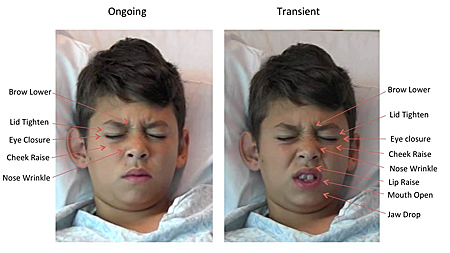
Researchers there have demonstrated the validity of new software that measures pediatric pain by recognizing facial patterns in each patient. Their study is published online in the journal Pediatrics.

“The current methods by which we analyze pain in kids are suboptimal,” said senior author Jeannie Huang, MD, a professor in the UC San Diego School of Medicine Department of Pediatrics and a gastroenterologist at Rady Children's Hospital-San Diego.

COURTESY UC SAN DIEGO SCHOOL OF MEDICINE

COURTESY UC SAN DIEGO SCHOOL OF MEDICINE

“In this study, we developed and tested a new instrument, which allowed us to automatically assess pain in children in a clinical setting. We believe this technology, which enables continuous pain monitoring, can lead to better and more timely pain management.”

The researchers used the software to analyze pain-related facial expressions from video taken of 50 youths, ages five to 18 years old, who had laparoscopic appendectomies.

Researchers filmed the patients during three different post-surgery visits: within 24 hours of their appendectomy; one calendar day after the first visit and at a follow-up visit two to four weeks after surgery. Facial video recordings and self-reported pain ratings by each patient, along with pain ratings by parents and nurses were collected.

“The software demonstrated good-to-excellent accuracy in assessing pain conditions,” said Huang. “Overall, this technology performed equivalent to parents and better than nurses. It also showed strong correlations with patient self-reported pain ratings.”

Huang says the software also did not demonstrate bias in pain assessment by ethnicity, race, gender, or age – an important consideration given how subjective current pain scales can be.

Because the software operates in real-time, doctors can be alerted to pain when it occurs instead of during scheduled assessments. The technology could also advocate for children when their parents are not around to notify medical staff about their child's pain level.

Huang said the software needs further study with more children and other types of pain in a clinical setting.

“It still needs to be determined whether such a tool can be easily integrated into clinical workflow and thus add benefit to current clinical pain assessment methods and ultimately treatment paradigms,” she said.

Huang says controlling pain is important, not only for the child's comfort, but also for their recovery since studies have shown that under-treatment of pain is associated with poor surgical outcomes.

Can Oxygen Therapy Treat Fibromyalgia?

By Pat Anson, Editor

Hyperbaric oxygen therapy – also known as HBOT – has been used for decades to treat infections, severe burns, carbon monoxide poisoning, even scuba divers recovering from decompression sickness.

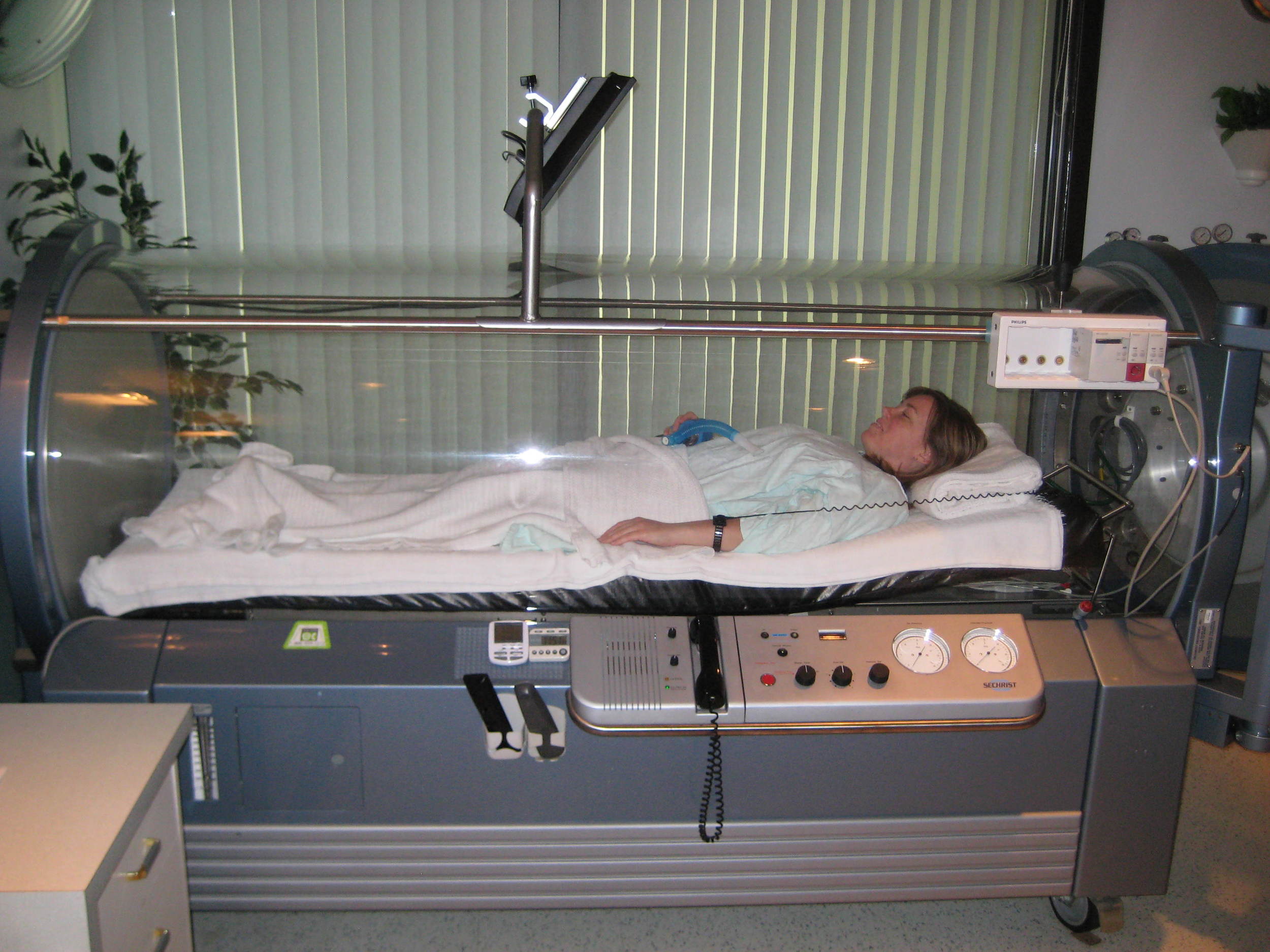
Patients undergoing HBOT are put in a pressurized room or tube. The higher air pressure allows lungs to gather more oxygen than they would normally – helping the body to heal faster.

Promising new research out of Israel suggests that HBOT can also be used to treat fibromyalgia patients by causing neuroplasticity – a “re-wiring” of the brain that can change neural activity in areas overly sensitized by chronic pain. The study has been published in the journal PLoS ONE.

“This study provides evidence that HBOT can improve quality of life and well-being of many FMS (fibromyalgia) patients. It shows for the first time that HBOT can induce neuroplasticity and significantly rectify brain activity in pain related areas of FMS patients,” wrote lead author Shai Afrati, MD, of the Institute of Hyperbaric Medicine, Assaf Harofeh Medical Center.

file photo of a woman getting hyperbaric oxygen therapy

file photo of a woman getting hyperbaric oxygen therapy

Fibromyalgia is a poorly understood disorder that is characterized by deep tissue pain, headaches, fatigue, depression and insomnia. The cause is unknown and there is no cure.

Afrati, who has also studied oxygen therapy on stroke and concussion victims, enrolled 60 female fibromyalgia patients in his latest study. For five days each week they were given 90 minutes of HBOT with oxygen enriched air.

“It is plausible that increasing oxygen concentration by HBOT can change the brain metabolism and glial function to rectify the FMS-associated brain abnormal activity. It has already been demonstrated that exposure to hyperbaric oxygen induces significant anti-inflammatory effect in different conditions and pathologies,” said Afrati.

After two months, brain imaging showed the women had significant changes in neural activity, and they reported less pain and fewer tender points. Several said that they had either reduced or stopped taking pain medication.

However, not everyone could handle being placed in a pressurized air chamber. Five women dropped out of the study, complaining of dizziness, claustrophobia and an inability to adjust to the air pressure.

But Afrati is encouraged by the results.  

“Follow-up studies are needed in order to investigate the durability of the HBOT effects on FMS. It might be that some patients will need more HBOT sessions,” he wrote. “Since there is currently no solution for FMS patients, and since HBOT is obviously leading to significant improvement, it seems reasonable to let FMS patients benefit from HBOT, if possible, now rather than wait until future studies are completed.”