Some California Pain Patients Forced to Buy Naloxone

By Pat Anson, PNN Editor

A new state law that mandates new prescription pads isn’t the only headache faced by doctors and pain patients in California.

Over a dozen bills passed by the state legislature and signed into law by former Gov. Jerry Brown are aimed at addressing the opioid crisis. One of them -- AB 2760 -- requires doctors to “offer” a prescription for naloxone to any patient deemed at high risk of an opioid overdose.  Naloxone (Narcan) rapidly reverses the effects of an opioid overdose and has been credited with saving thousands of lives.

The naloxone law does not require patients to fill the prescription, but some pain sufferers are being forced by pharmacists to buy naloxone if they want to get their opioid medications filled. For one patient, it was a choice between pain relief and putting food on the table.

“A medication I don't want, don't need, and didn't ask for, is being forced on me. As in holding my other medication hostage. And each dose of Narcan is $75 for the uninsured. Which I am, because my insurance company won't pay for it,” one reader wrote on PNN’s Facebook page.

“I had to go without groceries to purchase a medication I didn't want, need or ask for. Nine years of never ever breaking a rule, having any adverse effects EVER, and never failing all those ‘gotcha’ tests they inflict on pain patients. So now, in addition to being in pain, I'm hungry. This cannot be.”

Another pain sufferer said she felt treated like a drug addict when a pharmacist forced her to buy Narcan, a nasal spray that contain naloxone.

“Blackmailed by Kaiser to pay $50 for Narcan before they would give me my pain meds. I am retired, disabled, and on fixed income,” wrote a woman who lives with severe arthritis. “I was an RN who worked holidays, weekends, nights, etc. Now this ‘greatest’ country treats me like some scum addict who shoots up illegal drugs.”

The requirement that doctors offer a naloxone prescription applies to so-called “high-risk” patients taking over 90 MME (morphine milligram equivalents) of opioids a day or those who are co-prescribed benzodiazepines, an anti-anxiety medication. Patients who have previously overdosed or have a history of substance abuse are also considered high risk.

But whether high-risk or low-risk, nothing in the law requires a patient to buy naloxone or empowers a pharmacist to withhold medications.

“The law does not make it mandatory for the patient to accept a prescription for naloxone or to fill it but only for the patient and physician to have a thoughtful conversation about whether it would be in the best interest of the patient,” Assemblyman Jim Wood, the bill’s sponsor, said in a statement to PNN.

The law does not make it mandatory for the patient to accept a prescription for naloxone or to fill it.
— CA Assemblyman Jim Wood

“We are beginning to hear circumstances where patients are being required to fill the naloxone prescription, and will investigate the circumstances where this is happening because that is not what the law states.”

Naloxone costs only pennies to make and syringes containing generic versions of the drug typically cost about $15 each. Branded and formulated versions such as Narcan are more expensive.

Evzio, a kit that contains two auto-injectors of naloxone, retails for about $3,700 and its manufacturer has been accused of price gouging.  The company reportedly raised Evzio’s price by over 600% to “capitalize on the opportunity” of a “well established public health crisis.”

Whether it comes in a spray, injector or syringe, its impractical to expect anyone to give themselves a dose of naloxone.

“What the state and others fail to realize is many pain patients live alone. Even if one were to accidentally overdose and lose consciousness how are they supposed to administer the Narcan?” asks PNN columnist Rochelle Odell, who lives in California. “No one clearly thinks these grandiose ideas through.”

Law enforcement groups, pharmacists and the Medical Board of California supported passage of AB 2760, but the bill was opposed by the Academy of Family Physicians, American College of Emergency Physicians and the California Medical Association (CMA).

“Mandating that a specific medication be prescribed in a variety of situations, regardless of the individual patient characteristics, is inappropriate and places the government between a patient and his or her physician,” the CMA said.

Despite that warning, AB 2760 was passed unanimously by the state Assembly and Senate, signed by the governor, and became law on January 1st.

Prescription Pad Chaos

As PNN has reported, the law of unintended consequences also applies to AB 1753, which requires California doctors to use customized prescription pads for opioids that have uniquely serialized identification numbers.

The idea was to prevent counterfeiting and get more prescriptions filed electronically, but instead the early weeks of the law’s implementation have been marked by chaos. Many doctors were unaware of the new law or unable to get new prescription pads ordered before January 1st. As a result, pharmacists have refused to fill prescriptions written on old pads and patients have been sent away empty-handed.

“I just got my new prescription pads (Monday) at a cost of several hundred dollars, and the change is trivial,” Dr. Richard Buss, a family practice physician in Jackson, told the Sacramento Bee. “At the hospital here, I was next to a doctor who was trying to send a patient home after knee surgery, and the pharmacy wouldn’t honor his prescription because they were old forms.” 

Buss said this is the second year in a row that California doctors were not given proper notification of changes in their prescription pads. 

“They’re just changing prescription requirements, and then the doctors have to jump through the hoops suddenly, and I’m left with thousands of prescription blanks that are unusable, and that’s probably true for a lot of other doctors,” he said. 

Assemblyman Evan Low, who sponsored AB 1753, was unavailable to comment to PNN. In a January 7 letter to California’s Attorney General, Low blamed state regulators for the “unanticipated” confusion caused by his legislation. 

“I have been informed that numerous pharmacies have already turned away individuals holding prescriptions written on unserialized forms that are otherwise valid; in the face of possible discipline, dispensers are forced to decide between denying care to their patients and risking action against their license,” Low wrote. 

The California Medical Association is drafting new legislation to ensure a smoother transition to the new prescription pads, a process that usually takes weeks or months.


How to Check Out a Charity Before You Donate

By Stefanie Lee Berardi, Guest Columnist

Many of us have been following PNN’s reporting on the misuse of donated funds by the former CEO of the U.S. Pain Foundation. Paul Gileno allegedly misappropriated about $2 million for his own personal use from the non-profit from 2015 to 2017.

The acting CEO and chair of U.S. Pain’s board of directors has admitted that a lack of financial oversight enabled Gileno to commit his misdeeds. Nicole Hemmenway says the board has instituted “a robust system of checks and balances” to make sure it doesn’t happen again.

As the story continues to unfold, U.S. Pain has attempted to refocus the public’s view of this fraudulent activity by claiming that 2018 was “its most successful year of programs and services,” while also indicating that additional financial irregularities may be reported on its 2018 tax return.

Arguably, their claim of success does not comport with the facts and does not enumerate the numerous failings of the board and senior staff that enabled the fraud to continue for years. Until there is full disclosure of what happened and people are held accountable, the public cannot be sure that U.S. Pain’s resources are being utilized effectively going forward.

Choosing to support a non-profit organization is an investment. And those of us who give our limited time and money to a charity must protect that investment by learning all that we can about what the organization does, what senior staff they employ, where they get their money and how they spend it.

It is not always easy to find reliable information about a non-profit, but if you know where to look, a short online search can give you a wealth of information. Here are some tips that donors and volunteers may want to explore.

Search Their Website

Consider an organization’s website as the front door to its operations and core mission. A disease-related organization’s mission, for example, might be to provide support for those affected, education about the disease, and research to find a cure.

An organization must be accountable and transparent to its investors. Their website should provide an annual report of its accomplishments from the previous year and goals for the next. You will need to review several annual reports to evaluate if the organization is making progress on the previous years’ goals.

Look at Their Tax Returns

Examine the organization’s tax returns to learn about how they operate, where they get their funding, and what proportion of their money is spent on programs that actually help people versus overhead costs like administration, salaries and fundraising.

There are a few exceptions, but most non-profit organizations’ tax returns are public information, meaning anyone can inspect them. When you compare two or three years of the organization’s tax returns, you can get a sense of the organization’s financial stability over time.

I find ProPublica to be the easiest place to find these documents. You can also search an IRS database to see if an organization’s tax-exempt status is in good standing. If a non-profit misses a tax return filing deadline, as was the case with U.S. Pain, that could be a sign of trouble.

Identify Their Funding Sources

In order for a non-profit to remain financially healthy and compliant with IRS regulations, it must seek funding from different types of revenue streams, such as grants and corporate or individual donations. For example, an organization may accept donations from pharmaceutical companies or charge membership dues or fees to attend their events.

Investors need to know where the organization gets its money. If the organization is growing and thriving, you will see a steady increase in the money they bring in (revenue); the money they spend (expenses) will remain proportional to their revenue; and their bottom line (net assets) will remain stable from year to year.

Learn Where They Are Spending Their Money

There are well-established benchmarks for how much of a non-profit’s budget should be spent on programs versus administration and fundraising. Organizations should be spending at least 75% of their revenue on programs that raise awareness or directly benefit a cause and less than 25% of their revenue on overhead.

As a reference, Charity Navigator publishes an annual report on CEO pay that finds mid-sized non-profits pay their CEO’s in the low $100,000’s. And the Better Business Bureau’s accountability standards indicate that fundraising expenses should not exceed 10 to 25 cents of every dollar raised.

As an investor, we want to see these figures as low as possible and to ensure they are aligned with organizations of similar size and type.

Engage with a Non-Profit at All Levels

If an organization is worthy of receiving your financial support, it should also be worthy of receiving your time and talent. Volunteering for the organization is an important way for you to increase the value of your investment. Most non-profits depend on volunteers to help them run programs, raise funds and promote awareness.

When you find the right organization, consider pledging a monthly, rather than a one-time annual donation. Large foundations that offer grants to non-profits want to see repeat donations because it is an indication of a healthy, growing organization that is capable of using their grant money effectively. Staying involved with an organization helps ensure your investment is used to its fullest potential.

There is simply too little time and money to waste on an organization that lacks oversight and is not using its resources effectively. Many of us have made donations to organizations simply because they asked and believed they were doing good things. In the future, we must raise that benchmark.

When nonprofit organizations solicit for financial support, they are in a position of public trust. That money is not theirs to misuse and they should be held accountable if they lose that trust.

Each of us has the responsibility to learn everything we can about an organization before we offer our time, talent and money. We must advocate for each other and contribute to the body of knowledge about the organizations that we support. 

Stefanie Lee Berardi worked as an advancement and communications professional, grant writer and principal investigator of several multi-agency grant programs at Illinois State University. She has a graduate degree specializing in the management and administration of non-profit organizations.

Stefanie is an avid volunteer in her local community and has volunteered for organizations supporting individuals with Complex Regional Pain Syndrome, a disease she developed in 2008.

The information in this column should not be considered as professional medical advice, diagnosis or treatment. It is for informational purposes only and represents the author’s opinions alone. It does not inherently express or reflect the views, opinions and/or positions of Pain News Network.

Climbing Mountains Together

By Mia Maysack, PNN Columnist

Just about every time I'm in the bathtub, I contemplate slipping my head under water for a tad bit too long.  I do not consider myself suicidal, nor do I really want to die in the literal sense. But sometimes I reach a point when I'd do almost anything to kill this pain.   

Current situation: At least 30 cluster headache attacks thus far this week. Constant migraine going strong for about two weeks. Ongoing fibromyalgia flares. Working to pass kidney stones induced by stress and dehydration. Nausea, dizziness, fatigue and exhaustion have latched onto my soul like draining parasites. None of my go-to treatments have eased any of the discomfort.   

Despite my own battles, I consistently make myself available to others in the thick of their own private storms. The world needs more light and I can always use a distraction from my own body self-destructing. Win/win.  

Recently I did what I could to talk a loved one off the ledge. This person is also unwell but in a very different way. Their infliction is not physical, but boils down to their own personal choices.  

You might imagine the frustration I feel when surrounded by others who could save themselves from drowning simply by standing up.

All the while, I've been standing strong for years but consistently get swept away by overwhelming undercurrents that are entirely out of my control. 

It can be difficult to encourage others to live when you're barely hanging onto a shred of hope for yourself. But I consider myself honored for the opportunity to try.  

I cannot keep track of how many times I've had to “die" in a figurative sense so that I could grieve the losses of countless aspirations, ideas, goals and dreams.  I've always been known as a positive person and that's most definitely who I am.  It is not an act, but people tend to think it’s easy for me and they couldn't be more wrong. 

It takes absolutely everything I have to lay my head down at night, knowing I'll awaken to the same demons I spent the previous day slaying. And that it'll likely remain this way, forever.  

My positivity began out of necessity and is a method of survival. Relentless pain every single day for 20 years straight is enough for anyone to question their sanity or possibly even lose it. As a matter of fact, we're currently mourning the medically assisted suicide of a fellow Pain Warrior, who endured similar pain for the same amount of time.   

I felt the need to write this so that others do not think they are crazy. Under our circumstances, it's understandable we might fantasize about no longer feeling this way. The mantras, positive quotes and clichés can only get us so far, and it can be downright devastating to not have adequate support, acknowledgment, validation or pain relief.  

I also had to write this because I want to convey that you are all the main reason why I still hold on. Knowing there's a community of others who truly get it, provides me with a purpose and reason to get myself out of bed in the morning.

It has become my mission to demonstrate that these mountains of misfortune aren't meant to be carried, but they can be climbed. They might even be moved if we all work together.   

No one can give us quality of life or the will to live outside of ourselves, but we can lean on one another during our deepest and darkest moments of despair. It's okay to have bad days, to be in a negative headspace, to question the purpose of all this, to feel angry, hurt or sad.  

As I envision the water calming my ailments and swirling its way down the drain, I think about the possibility of someone reading this at a time they needed it most. That thought gives me the strength I need. 

Mia Maysack lives with chronic migraine, cluster headaches and fibromyalgia. Mia is the founder of Keepin’ Our Heads Up, a Facebook support group, and Peace & Love Enterprises, a wellness coaching practice focused on holistic health.

The information in this column should not be considered as professional medical advice, diagnosis or treatment. It is for informational purposes only and represents the author’s opinions alone. It does not inherently express or reflect the views, opinions and/or positions of Pain News Network.

Experimental Stem Cell Therapy Reverses MS

By Steve Weakley

A small but promising study has shown that an experimental stem cell therapy can dramatically slow the progression of multiple sclerosis. Some MS patients treated with their own stem cells even experienced a reversal of their symptoms that has lasted for years.

MS is a chronic, incurable and progressive disease that attacks the body’s central nervous system, causing numbness in the limbs, difficulty walking, paralysis, loss of vision, fatigue and pain. The disease affects over 2 million people around the world.

An international team of researchers enrolled 110 patients in the study with relapsing-remitting MS, a version of the disease where symptoms appear for a few days or weeks, followed by periods of remission.

Half of the patients were treated with standard MS medications as a control group, while the other half went through a four-step experimental procedure.

The experimental group was given chemotherapy to stimulate the production of hematopoietic stem cells that recharge the immune system. Those stem cells were then removed from the patients’ blood and frozen.  After that, a more powerful round of chemotherapy was used to wipe out the patients’ damaged immune systems, and the thawed stem cells were put back into their bodies by transfusion.

Over half of the 55 patients in the control group continued to see their disease progress, while only three patients got worse in the experimental stem cell group. The other 52 had fewer symptoms and a better quality of life. The findings were reported in the journal JAMA.

“It’s the best evidence comparing stem cell transplants to standard therapy,” Harry Atkins, MD, a stem cell scientist at Ottawa Hospital in Canada told Vox . “This is one of the first pieces of proof that, yes, patients who have aggressive MS do better after a transplant than with the standard therapy.”

“The stem cell therapy gets patients off lifelong treatments and gives them results that have never been seen before with this disease,” said lead author Richard Burt, MD, a stem cell researcher and physician at Northwestern University.

One of Burt’s patients who benefited from the stem cell transplant is 28-year old Amanda Loy, who told Vox that prior to treatment she needed a cane to walk and was unable to work.  Within a year of treatment her symptoms had disappeared.

“It sounds so dramatic, but (the treatment) gave me my life back,” said Loy, who now works as a full-time teacher, runs half marathons and plays soccer with her 10-year-old son. She no longer takes MS medication.

Researchers still don’t know if the stem cell therapy will work with other forms of MS or how long the benefits will last. But it’s the first treatment that has shown the potential to actually reverse the disease.

“I do think it’s going to change the natural history of MS,” says Burt. “When you use it in the right group of patients with MS, you get these really gratifying results.”

A recent study by Australian researchers found that another experimental stem cell therapy shows promise in treating patients with progressive multiple MS, the most difficult-to-treat form of the disease.

Scientists at the University of Queensland extracted immune cells from patients who had either primary or secondary progressive MS. The cells – known as T-cells – were then “trained” in a laboratory to target and kill cells infected with the Epstein Barr virus, which has long been associated with MS.

When the altered T-cells were injected back into the bloodstream of 10 patients, seven said their symptoms improved. They had more energy, improved concentration, slept better, and had improved vision and balance. There were no serious side effects.

National Safety Council's Misleading Report on Opioids

By Roger Chriss, PNN Columnist

This week the National Safety Council released a report claiming that “for the first time on record, your odds of dying from an accidental opioid overdose are greater than dying in a motor vehicle crash.”

Media outlets from The New York Times to NPR were quick to repeat that claim.

“The opioid crisis in the United States has become so grim that Americans are now likelier to die of an overdose than in a vehicle crash,” The Times reported.

This is incorrect. The average American is vastly more likely to die in a car crash than of an opioid overdose. The reason is simple: the typical American does not have any opioids to overdose on.

Good practice in epidemiology and public health research is to look at the “population at risk.” This population represents those people who would be counted if they are affected by whatever risk is being studied.

The population at risk for opioid overdose consists of people exposed to opioids, intentionally or otherwise. Within this population are people with varying degrees of risk, from low-risk in the form of a single dose of opioid medication in a hospital to high-risk in the form of heroin injection.

By contrast, the population at risk for car crash death is people who are exposed to car rides, whether as drivers or passengers. Needless to say, this is a very broad population that includes most Americans.

These two populations are not the same. There is some overlap between the two, but that does not mean they can be lumped together for the purpose of a generalized conclusion. Instead, epidemiological investigations look at a target population, that is to say the group of people about which conclusions will be drawn.

Again, these are distinct populations. The target population for reducing car crash fatalities is not the same as the target population for reducing opioid overdose fatalities.

As a result, a general comparison between the odds of dying of an opioid overdose versus a car crash is not statistically meaningful. Moreover, such comparisons misconstrue risk management and may lead to poor allocation of resources.

For instance, in 2017 there were 2,008 fatal overdoses with Benadryl and 1,250 with tramadol, according to the CDC. But this does not mean that Benadryl is more dangerous than tramadol. Far more people use Benadryl than tramadol, and usually without a prescription or monitoring. Ranking one as inherently more dangerous than the other would not lead to good public health policy.

Further, the risk of opioid overdose rises when people use other substances like alcohol, benzodiazepines or cocaine. Similarly, the risk of fatal car crashes rises when driving under the influence or other risky driving behaviors are involved. Because most people do not do these things, they are at the low end of the range of risk in the population at risk.

State laws like California’s AB 2760 requiring naloxone co-prescribing may help reduce opioid overdoses, but only if they reach people at greater risk. And resources committed to people at low risk may be taking resources away from people at high risk.

So although the National Safety Council’s report may be technically accurate, it is flawed and misleading. Most people are much more likely to die in a car crash because they are exposed to that risk on a regular basis. Only a small number of people are more likely to die of an opioid overdose, and risk reduction strategies need to be directed to them.

The NSC is a nonprofit that promotes itself as a "data-driven organization," but this is not the first time it has provided misleading information about opioids.  As PNN has reported, an NSC memorial to opioid victims that toured the country last year overestimated the number of Americans who overdosed on prescription opioids by about 25 percent.

Good public health policy involves assessing the relative risks for the population at risk and adopting effective harm reduction policies. Sweeping statements that confuse a population at risk with the population at large can only lead to bad policies. And we’ve seen enough of those.  

Roger Chriss lives with Ehlers Danlos syndrome and is a proud member of the Ehlers-Danlos Society. Roger is a technical consultant in Washington state, where he specializes in mathematics and research.

The information in this column should not be considered as professional medical advice, diagnosis or treatment. It is for informational purposes only and represents the author’s opinions alone. It does not inherently express or reflect the views, opinions and/or positions of Pain News Network.

California’s New Prescription Law Causing Chaos

By Jeffrey Grolig, MD, Guest Columnist

Like many other states, California has enacted a series of laws to more tightly regulate the prescribing of opioid medication.  One such law that took effect January 1 is AB 1753, which requires doctors to use new prescription pads for controlled substances that have uniquely serialized identification numbers. The idea is to prevent counterfeiting and to get more prescriptions filed electronically.

The serial numbers begin with three letters, followed by six numbers, followed by one letter, and end with five more numbers. There are 46-thousand trillion potentially different combinations of numbers and letters – making California’s prescription pads more complicated than the serial numbers on U.S. currency.

Only publishers who are fingerprinted, pass a security check, and approved by the Department of Justice (DOJ) are authorized to print these new pads.

What could possibly go wrong? A lot.

Shortly before Christmas, the California Medical Association (CMA) expressed concern that doctors would not be able to get the new prescription pads before the new year:

“Physicians were finally notified this week that the updated forms were available for purchase... with less than two weeks to go before the compliance date. The CMA is very concerned that this does not provide enough time for physicians to re-order forms... and ​could be a serious barrier​ to patients who must access necessary medications in a timely manner.”  

And a serious barrier it has become.  

Up to a million old prescriptions for controlled substances became technically invalid in California at the stroke of midnight on New Year’s Eve, potentially leaving hundreds of thousands of patients with medication delays and denials, including some who need emergency room treatment.  

On January 2, I was barraged with telephone call interruptions while I tried to see my patients. Dozens of messages were left by pharmacists stating that my prescriptions were invalid and that I needed to phone them immediately.

When I returned the calls, I was informed about the new law and told to order new scripts immediately as the old ones would not be honored. The pharmacists told me all I needed to do was write a note that I was aware of the new law and was ordering the new pads. Fortunately, in each case the pharmacist made an exception.

But the following week, the problem worsened. A colleague told me he fielded some 40 telephone calls dealing with the new law and invalid scripts. Not all his patients were lucky. One woman, just discharged from abdominal surgery, went an entire weekend without pain medication as her pharmacist could not get through on the telephone to her surgeon. 

Then last Friday, a pharmacist telephoned me about a patient I had on methadone. “I cannot fill this script, because it is written on the old form,” she said. 

“But I wrote on the top that I was aware of the new law,” I replied.

“Yes, I noted that. However, my board has told me that I need your purchase order number, or else I cannot fill the prescription,” she answered.

I informed her I had not been given any information on which printers might be able to produce the new prescription pads with their complicated 15-character serial numbers. She provided me with a telephone number to the DOJ. I called and learned about a website which had recently posted the compliant printers. It was 5:00 p.m. Friday before the weekend, and many of the approved printers were located back east and had already closed.

I asked the pharmacist if an exception could be made, and she stated it could not. She required a valid purchase order number and I needed to scramble. I had patients waiting over an hour in the examination rooms while I telephoned printing companies on the west coast. Mostly I got recorded messages. I received website and fax information. But what I could not get was a purchase order number. They were all too busy to take an order over the telephone.   

I went back to seeing patients, my main priority. Then I stayed late, copied my DEA and medical license certificates and a voided prescription like they had requested, and I placed my order via fax. I still had no purchase order number. I called my methadone patient over the weekend and fortunately her methadone script had been honored. She would not go through withdrawal or end up at the ER.  

A public healthcare crisis emerged in California the first day of the new year due to this new law. Pharmacists who fill a prescription on an old pad risk losing their licenses and there is no grace period to allow doctors time to order the new script pads.   

The pharmacists have been told by the Board of Pharmacy “to exercise their best judgement in handling these situations” and to refuse to fill a prescription if they’re not comfortable with it. If they do fill one, they are required to telephone the prescriber and get their purchase order number for the new pads in every case. This represents hundreds of thousands of telephone calls between pharmacists and physicians. And millions of dollars in new prescription pad orders.   

Because of the new law, patients are being subjected to numerous delays and denials of pain medication.  And physicians and pharmacists are losing countless hours on the telephone.  One physician texted me:   

“This whole fiasco has been nothing short of a delusional nightmare, construed as improved patient safety, although California already requires at least two different types of security features that have worked flawlessly for many years.”  

Meanwhile, insurance companies are saving millions of dollars in unfilled prescriptions. Is the government really worried about mathematical-genius counterfeiters working feverishly in their basements to make fake Norco scripts? Or is the true reason because insurance companies no longer wish to fund the annual $500 billion price tag of chronic pain treatments?

Is the serial number law a sincere attempt to reign in prescription theft or is it yet another transparent effort to further limit pain patients' access to opioids?

Jeffrey W. Grolig, MD, JD, is a board-certified specialist in Physical Medicine & Rehabilitation. He has taught at UC Davis Medical Center in both the departments of Family Practice and Physical Medicine & Rehabilitation. Dr. Grolig has formerly worked as a licensed attorney and has authored 6 books, including “The Physician Primer: Prescribe Like a Lawyer.

The information in this column should not be considered as professional medical advice, diagnosis or treatment. It is for informational purposes only and represents the author’s opinions alone. It does not inherently express or reflect the views, opinions and/or positions of Pain News Network.

Limiting Rx Opioids Is Making Opioid Epidemic Worse

By David Hanscom, MD, PNN Columnist

I am an orthopedic spine surgeon who specializes in complex problems in all areas of the spinal column.

Over the last five years, a significant percent of my practice has been addressing spine infections, most of them in patients addicted to intravenous drugs. Bacteria can enter the blood stream from a contaminated needle and lodge in the discs between the vertebrae, which have a limited blood supply. It’s an ideal environment for bacterial growth and it destroys the neighboring discs and vertebra. Often they weaken to the point where they break.

Corrective surgery entails draining the infection and then stabilizing the broken spine with a fusion. These operations are complex, expensive and risky. After surgery there is a minimum of six weeks of IV antibiotics.  Occasionally, a patient ends up paralyzed because the infection cuts off the blood supply to the spinal cord.

One typical case was that of middle-aged carpenter with low back pain, who had been able to work for years by taking a stable low dose of opioid medication. He needed to keep working, so when the local pain clinic shut down, he felt he had no other choice but to use IV heroin. His spine became infected and the infection spread deeply into his pelvis. I met him in the hospital when he was extremely ill, and it took three operations to drain and stabilize his spine.

My experience from this and other cases tells me the opioid epidemic is rapidly getting worse. In addition to the medical problems created from IV drug abuse, there were nearly 49,000 overdose deaths from opioids – both legal and illegal -- in 2017. Unfortunately, there doesn’t appear to be a viable solution in sight. In fact, current efforts to reduce opioid prescribing are exacerbating the problem. Although I agree with more careful prescribing practices, it isn’t the answer to the epidemic.

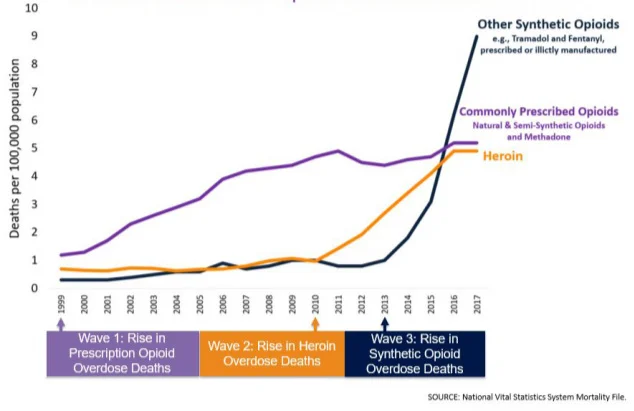
This CDC graphic tells why. As deaths from prescription opioids leveled off over the past several years, mortality from heroin and synthetic opioids like illicit fentanyl have spiked higher. Although the medical system is decreasing the supply of prescription opioids, it’s pushing people to these illicit sources.  

Chronic Pain and Anxiety

Nearly 90 percent of patients on opioids have chronic pain, while the rest mostly suffer from acute pain. But the mental pain is a far greater problem than the physical pain. Any physical or mental threat causes your body to secrete stress hormones, such as cortisol, adrenaline and histamines to improve your chances of survival.

The sensation created by these chemicals is anxiety. Humans have a major problem when they can’t escape from negative thoughts. Anxiety triggers a sustained chemical assault that we will try almost anything to escape from. This unconscious and automatic survival response is over a million times stronger than the conscious brain.

Research has documented that when you are upset for any reason, your pain will increase. It isn’t psychological or “all in your head.” There’s a direct linkage between pain circuits and stress. You will experience an increased speed of nerve conduction from stress chemicals, causing your pain levels to increase.

Many Treatments Don’t Work

Another problem is that modern medicine isn’t providing viable solutions to chronic pain. A recent survey found that only about 1% of physicians enjoy and are comfortable treating chronic pain.

Modern medicine is only pretending to treat your pain. You go to the doctor trusting him or her to help you and you’re repeatedly disappointed. As your frustration grows, your stress hormones remain elevated and your pain physically worsens.

Even worse, many “mainstream” interventions such as surgery have been demonstrated to be ineffective and often cause harm, while effective treatments are not readily available because they are not covered by insurance. A significant percent of a medical system’s revenue is driven by these expensive and risky interventions.

Instead of exploring ways to implement effective treatments for pain, the government and medical establishment are focusing their efforts on restricting access to pain medications -- with most of the focus being on the providers. Physicians are now afraid to prescribe long-term opioids, even though most of us have had patients thrive on a stable opioid regimen.

This is the worst step that could be taken because patients immediately experience increased anxiety, frustration and eventually anger when they are cutoff or have their doses reduced.

What can we do to solve the opioid epidemic?

First, solve chronic pain! Recent medical research has revealed possible solutions but mainstream medicine isn’t implementing them.

Second, recognize that what drives most people to use opioids is mental pain. Physical pain is often secondary.

Third, environmental factors, especially family dynamics may be exacerbating chronic pain. Allow physicians to take the time to listen to patients and focus on their real problems, rather than just randomly treat their symptoms.

Finally, since the problem is so pervasive, the answers must be widely available and implemented by anyone. 

Dr. David Hanscom is a spinal surgeon who has helped hundreds of back pain sufferers by teaching them how to calm their central nervous systems without the use of drugs or surgery.

In his book Back in ControlHanscom shares the latest developments in neuroscience research and his own personal history with pain.

The information in this column should not be considered as professional medical advice, diagnosis or treatment. It is for informational purposes only and represents the author’s opinions alone. It does not inherently express or reflect the views, opinions and/or positions of Pain News Network.

Defining Your Story As a Patient Advocate

By Barby Ingle, PNN Columnist

Almost a year ago, I covered the topic of motivational speaking as a patient advocate for the pain community. A lot of the information I shared dealt with how to plan and organize for advocacy, but the messaging you use is equally important. It must be specific to the audience you’re trying to reach.

I have learned that honing and defining my story is an important aspect of being an advocate. I used to spew it all out and see what sticks, but have learned over the years that when I concentrate on a few key points specific to my audience I will be a more effective communicator.

For instance, when I spoke at a rare disease event, I focused on how rare conditions have impacted me and how more rare disease research and funding are needed. At a cancer event, I spoke about my experiences with cancer and the missing support I see in that area.

There is no specific way to advocate, but there are some basic guidelines that can help get you started. The first step is finding your own voice. You want to have your own message and share your own personal story. You don’t want to copy or act like someone else. I have told newbies, “Don’t try to be me. You be you, and I’ll be me.”

When honing your message, start with deciding what you want to talk about. Sometimes it is important to go wide and broad when talking about chronic pain, but other times it’s important to discuss your most pressing experiences with a specific disease or challenge.

There are thousands of issues that need working on in the chronic pain world, from access to medication to finding a compassionate doctor. Defining the issue that’s important to you is key. You must be able to explain your point of view and back it up with data and science that is relevant and recent.

Keep it simple. Think of 2 or 3 takeaways for your audience. What should the listener walk away knowing when you are done?  In many cases, such as testifying at a legislative hearing, you’re only going to get 2 or 3 minutes to speak. Respect the time limit and practice beforehand so that you can explain and emphasize your takeaways. Leave a few moments for follow up questions.

Remember, you are not sharing your message to prove someone else is wrong or to undermine them. You are there to share your story and the challenges that affect your daily living. I do a lot of reality television, and producers always remind me to only talk about what I want to bring attention to. If I talk about someone else’s message, it takes away from my own. Tell them who you are, how you are affected by a policy, and what can be done to solve it.  

Your personal story should be about you and what you have gone through. If you’re a caregiver whose spouse was put through step therapy and had delays in getting proper medication, how did that affect you?  What did that delay in care do to you? Why do you care about this cause? Let the audience know why you care.

Next, give them the takeaways. There should always be “an ask.”  What do you want your audience to do for you?  A state legislator may be voting on a specific bill that you want them to support or vote against. Or tell your audience how they can help spread awareness and advocacy.

Keeping the requested action positive is important and keeps it moving in society. You could ask other patients to discuss an issue with their friends or to be sure to vote. You can ask for just about anything, but be as specific as possible. If you are asking for others to make a change or believe in something you advocate, then you must show some expertise on the topic.

Understand that some words are trigger words that should be avoided. Instead of talking about how hard it is to get “opioids” or “narcotics,” say patients need better access to “pain medication.” They are all descriptors of the same thing, but have very different meanings and connotations.

It takes a lot of courage to share health topics and challenges we’ve been through. Many advocates, including myself, are ridiculed and shamed. PNN had a great column on this last month, “Stop Shaming Pain by Mia Maysack. As Mia explained, you may encounter negativity even within our own pain community.

Your story should take others on the journey you’ve been on. Think about how you want your audience to feel and what your end goal for them will be. Being yourself, being vulnerable, and sharing your story are powerful ways to engage the public and create change.

Barby Ingle lives with reflex sympathetic dystrophy (RSD), migralepsy and endometriosis. Barby is a chronic pain educator, patient advocate, and president of the International Pain Foundation. She is also a motivational speaker and best-selling author on pain topics. More information about Barby can be found at her website. 

The information in this column should not be considered as professional medical advice, diagnosis or treatment. It is for informational purposes only and represents the author’s opinions alone. It does not inherently express or reflect the views, opinions and/or positions of Pain News Network.

Are Opioid Prescriptions for Pets Diverted to Humans?

By Pat Anson, PNN Editor

Opioid prescriptions for pets have soared over the past decade and may have helped fuel the opioid epidemic in humans, according to a small and speculative study published in JAMA Network Open.

Researchers at the University of Pennsylvania's Perelman School of Medicine say there was a 41 percent increase in opioid MMEs (morphine milligram equivalents) prescribed to dogs, cats and other pets at an acute care veterinary hospital at Penn’s School of Veterinary Medicine from 2007 to 2017.  Some of the increase was attributed to more complex procedures performed in veterinary medicine, as well as a greater awareness of the importance of pain management in animals.

But the authors took their analysis a step further by suggesting -- without offering any evidence -- that some of the opioids were diverted for human use.

"As we are seeing the opioid epidemic press on, we are identifying other avenues of possible human consumption and misuse," said senior author Jeanmarie Perrone, MD, a professor of Emergency Medicine and the director of Medical Toxicology at Penn Medicine.

"Even where the increase in prescribed veterinary opioids is well intended by the veterinarian, it can mean an increased chance of leftover pills being misused later by household members, sold or diverted, or endangering young children through unintentional exposure. The results of this study suggest that by assessing the rate of veterinary opioid prescriptions, we can develop strategies to reduce both human and animal health risks associated with increasing use."

Perrone was one of three peer reviewers who helped the CDC develop its controversial 2016 opioid prescribing guideline. One of her co-authors is Lewis Nelson, MD, a longtime critic of opioid prescribing practices who belonged to the “Core Expert Group” that drafted the CDC guideline.

The researchers reviewed pharmacy records at Penn Vet's Ryan Hospital during the 10-year study window, analyzing trends in four opioids prescribed to animals: tramadol, hydrocodone, codeine and fentanyl. The vast majority of animal patients were dogs and cats, along with an assortment of rabbits, snakes and birds.

"We found that the increased quantity of opioids prescribed by our hospital was not due to increased patient volume alone. It is likely that our goal of ensuring our patients are pain-free post-operatively, particularly for those requiring complex and invasive procedures, has driven our increased prescribing practices during this period," said lead author Dana Clarke, VMD, a professor of Interventional Radiology at Penn’s School of Veterinary Medicine.

"At the national level, we don't know the potential or extent of prescription diversion from animals to humans, and what impact this could have on the human opioid crisis."

Although the evidence of veterinary opioids being diverted to humans is largely anecdotal, many states have adopted measures that require background checks on pet owners. Twenty states require veterinarians to report their opioid prescriptions to a drug database, just as medical doctors do.

Maine and Colorado require background checks on a pet owner’s drug use before a veterinarian can even write a opioid prescription; while Alaska, Connecticut and Virginia limit the amount of opioids any one veterinarian can prescribe to a single animal.

Last year the Food and Drug Administration warned veterinarians to be cautious when prescribing opioids and be alert for people who may be using their pets to gain access to the drugs.

“We recognize that opioids and other pain medications have a legitimate and important role in treating pain in animals,” said FDA commissioner Scott Gottlieb, MD. “But just like the opioid medications used in humans, these drugs have potentially serious risks, not just for the animal patients, but also because of their potential to lead to addiction, abuse and overdose in humans who may divert them for their own use.”

A small study published in the American Journal of Public Health suggested that some pet owners are purposely injuring their animals to gain access to opioids. In a survey of 189 Colorado veterinarians, 13 percent reported they suspected an animal owner of purposefully injuring a pet to obtain opioid medication.

Chronic Fatigue Patients Often Feel Disbelieved in ERs

By Pat Anson, PNN Editor

Patients suffering from chronic fatigue syndrome (CFS) often feel disrespected and disbelieved in hospital emergency rooms, according to a new survey by researchers at Georgetown University Medical Center.

CFS is a complex and poorly understood disorder characterized by extreme fatigue, chronic pain, impaired memory and insomnia. Because many of the symptoms of CFS overlap with other conditions -- including fibromyalgia, depression, and inflammation – a correct diagnosis is often difficult.

In the first study of its kind, Georgetown researchers surveyed 282 CFS patients about their experiences in emergency departments. Two-thirds said they would not go to an ED because they believed they wouldn't be taken seriously or because they had a previous unsatisfactory experience. Only a third said they received appropriate treatment in the ED.

"The high proportion of patients who were basically told 'It is all in your head' by ED staff indicates that there is much misunderstanding and misgivings about the diagnosis of CFS,” said allergist and immunologist James Baraniuk, MD, senior investigator of the study published in the journal Open Access Emergency Medicine.

“These patients should feel they are respected and that they can receive thorough care when they feel sick enough to go to an ED."

The survey found that only 59 percent of the CFS patients had gone to an ED. In that group, 42 percent were dismissed as having psychosomatic complaints. Asked to collectively rate their ED caregivers' knowledge of chronic fatigue, patients gave them a score of 3.6 on a 10-point scale.

Baraniuk says more training is needed for ED staff and physicians to better understand the disorder.

"An already-available CFS Symptom Severity Questionnaire can be used in the ED to assist with the diagnosis of CFS, and to differentiate exacerbations of CFS symptoms from medical emergencies such as heart attacks or infections," Baraniuk says.

The number one reason for going to the ED was orthostatic intolerance, which occurs when a person feels faint when standing or sitting upright because not enough blood is reaching the brain and heart. The symptoms only improve when a person lies down.

"This condition is something that can be readily addressed by ED caregivers. There is a real need for physician education that will improve their efficiency in identifying and treating CFS and in distinguishing CFS symptoms from other diseases in the exam room," he said.

In 2015, an independent panel convened by the National Institutes of Health called for major changes in the way the healthcare system treats people suffering from chronic fatigue – which is also known as Myalgic Encephalomyelitis/Chronic Fatigue Syndrome (ME/CFS).

“Both society and the medical profession have contributed to ME/CFS patients feeling disrespected and rejected. They are often treated with skepticism, uncertainty, and apprehension and labeled as deconditioned or having a primary psychological disorder,” the panel reported in its final report.

About one million Americans suffer from chronic fatigue, most of them women. There are no pathogens linked to CFS, no diagnostic tests and no known cures.

Survey: Most Medical Cannabis Users Drive While High

By Pat Anson, PNN Editor, and Shefali Luthra, Kaiser Health News

With medical marijuana now legal in nearly three dozen states – and ten allowing its recreational use – state governments face two difficult questions: Are more people driving under the influence of marijuana? And at what point are they too impaired to drive?

The answer to the first question is troubling and the second one is elusive. 

According to a new survey, over half the people who take medical cannabis for chronic pain say they've driven under the influence of cannabis within two hours of using it.  And one in five say they've driven while “very high.”

Researchers at the University of Michigan Addiction Center surveyed 790 Michigan adults who sought medical cannabis certification for chronic pain in 2014 and 2015. The researchers asked about their driving habits over the past six months.

Fifty-six percent reported driving within two hours of using cannabis, 51% said they drove while a "little high" and 21% reported driving while "very high."

"We want people to know that they should ideally wait several hours to operate a vehicle after using cannabis, regardless of whether it is for medical use or not," said Erin Bonar, PhD, a psychiatry professor, clinical psychologist and lead author of the study published in the journal Drug & Alcohol Dependence. "The safest strategy is to not drive at all on the day you used marijuana."

The survey found that patients with higher pain levels were less likely to to drive while impaired. But Bonar says the overall risk of impairment could be higher for chronic pain patients who use medical marijuana daily and have trace amounts of tetrahydrocannabinol (THC) lingering in their system. THC is marijuana’s main psychoactive ingredient.

"When it comes to driving, we haven't yet figured out the best way to know how impaired marijuana users are at any given time," she says. “It's hard to quantify because there is a lot of variation in marijuana dosing, THC potency, and route of administration. We also don't have specific guidelines yet about when exactly it would be safe to operate a vehicle.

"We also need clearer guidelines about marijuana dosing and side effects with an understanding of how individual differences in things like sex and body weight interact as well."

The study was funded by the National Institute on Drug Abuse.

Measuring Impairment

Brain scientists, pharmacologists and law enforcement are still learning how measure if and to what extent marijuana causes impairment.

Blood and urine tests can detect marijuana use, but because traces of the drug stay in the human body for a long time, those tests can’t specify whether the use occurred earlier that day or that month. They also don’t indicate the level at which a driver would be considered under the influence.

“It’s a really hard problem,” said Keith Humphreys, PhD, a psychiatry professor and drug policy expert at Stanford University in California, the first state to legalize medical marijuana and where recreational cannabis use among adults became legal in 2016. “We don’t really have good evidence — even if we know someone has been using — what their level of impairment is.”

For alcohol, there is a clear, national standard for impairment. If your blood alcohol content is 0.08 percent or higher, you’re considered cognitively impaired at a level that is unsafe to drive.

Extensive research supports this determination, and the clarity makes enforcement of drunk driving laws easier.

Setting a marijuana-related impairment level is a murkier proposition. And states that have legalized cannabis have to figure it out, experts said.

“You can’t legalize a substance and not have a coherent policy for controlling driving under the influence of that substance,” said Steven Davenport, an assistant policy researcher at the nonprofit Rand Corp., who specializes in marijuana research.

With marijuana going mainstream around the country, regulators are “playing catch-up,” according to Thomas Marcotte, a psychiatry professor at the University of California-San Diego and one of a number of academics who is researching driving while high.

States have put forth a bevy of approaches. At least five outlaw driving if someone’s blood level of THC exceeds a certain amount. Colorado, where voters approved recreational marijuana in 2012, has this type of driving law on the books. But it took three years to pass amid fiery debate and deems “intoxicated” any driver who tests higher than 5 nanograms of THC per milliliter of blood.

Rhode Island, Pennsylvania and Indiana are among states that forbid driving at any THC level.

Still others say drivers should be penalized only if they are impaired by THC -- a standard that sounds reasonable but quickly gets difficult to measure or even define.

None of these approaches offers an ideal solution, experts say. “We’re still definitely evaluating which policies are the most effective,” said Ann Kitch, who tracks the marijuana and driving issue for the National Conference of State Legislatures.

States that set a THC-level standard confront weak technology and limited science. THC testing is imprecise at best, since the chemical can stay in someone’s bloodstream for weeks after it was ingested. Someone could legally smoke a joint and still have THC appear in blood or urine samples long after the high passes.

There’s general agreement that driving while high is bad, but there’s no linear relationship between THC levels and the degree of impairment. States that have picked a number to reflect when THC in the bloodstream becomes a hazard have “made it up,” argued Humphreys.

“The ones who wrote [a number] into legislation felt they had to say something,” he said. But “we don’t know what would be the analogy. Is the legal amount [of THC] equal to a beer? Is that how impaired you are? Is it a six-pack?”

Roadside testing for THC is also logistically difficult. Blood and urine samples need to be collected by a medical professional and analyzed in a lab.

In Canada, where recreational cannabis was legalized last year, law enforcement will test drivers with a saliva test called the Dräger DrugTest 5000. But that isn’t perfect, either.

Some private companies are trying to develop a sort of breathalyzer for marijuana. But Jonathan Caulkins, a drug policy researcher at Carnegie Mellon University, said, “There are fundamental issues with the chemistry and pharmacokinetics. It’s really hard to have an objective, easy-to-administer roadside test.”

Until a reliable system is found, states are relying on law enforcement to make a subjective assessment of whether someone’s driving appears impaired by marijuana.

In California, every CHP officer learns to administer field sobriety tests — undergoing an extra 16 hours of training to recognize the influence of different drugs, including marijuana. Because medical marijuana has been legal there since 1996, officers are “very used” to recognizing its influence, says Glenn Glazer, the state’s coordinator for its drug recognition expert training program.

That kind of training is taking off in other states, too. Lobbying groups such as Mothers Against Drunk Driving are pushing for more law enforcement training to help officers assess whether a driver is impaired.

In the meantime, the public health threat is real. States with legalized cannabis appear to have more car crashes, though the relationship is muddled.

“This is going to be a headache of an issue for a decade,” Caulkins said.

Kaiser Health News is a nonprofit news service covering health issues. It is an editorially independent program of the Kaiser Family Foundation, which is not affiliated with Kaiser Permanente.

The 7 Golden Rules of Opioid Prescribing for Patients

By Jeffrey Grolig, MD, JD, Guest Columnist  

“Don’t do it!” is the advice often given to brand new physicians about whether to specialize in pain medicine. Increasing numbers of doctors are being fined, disciplined or arrested due to scrutiny caused by the nation’s opioid crisis. Every single opioid prescription, even the mildest painkiller, is being tracked, and prescription drug database searches tell the DEA and state board investigators who to watch.  

The unfortunate innocent victims of this crisis have been those legitimate patients who suffer in chronic pain, with up to 100 million in the United States alone. Each time a physician or pharmacy is attacked, thousands of pain patients must pay the price.

A pharmacy in my northern California town recently closed after the owner was charged with 200 counts of failing to properly keep records. Each count carries a $20,000 fine.

A local physician’s license was restricted for failure to warn in writing about the risks of combining sleeping pills with opioids. This family physician had already spent $56,000 in legal fees for previous documentation lapses.

A pulmonary specialist with English as his second language was arrested for prescribing codeine-containing cough syrup to four undercover DEA agents posing as patients. He is facing 20 years in prison and $2 million in fines.   

I still accept pain patients, but my background as an attorney compels me to use “universal precautions,” something I advise every physician who prescribes opioids to do. This boils down to following what I call “The 7 Golden Rules of Opioid Prescribing.” If you, as the patient, understand that your doctor must follow these 7 golden rules, it will make it much easier for you to obtain excellent pain management, including opioids.  

I developed the 7 golden rules by analyzing the most common documentation lapses of doctors who were disciplined or prosecuted. I included them when I wrote the “Physician Primer: Prescribe Like a Lawyer” to empower doctors to think and practice like a lawyer and not lose their careers over simple documentation errors.

If you write a cover letter like the one below to your current or prospective physician, touching on each and every one of these 7 golden rules, your pain control will vastly improve, I promise. 

Dear Doctor,

#1 I have a legitimate medical reason for needing opioids. My medical diagnosis is… (be specific: examples include diabetic neuropathy, failed spine surgery, spinal stenosis, CRPS, etc.). Attached is my MRI report (or EMG, CT, X-ray, Bone Scan, lab test, etc.) proving this.  

#2 I am not now, nor have I ever been addicted to prescription medication, illegal drugs or alcohol.   

#3 I have no depression, psychosis or bipolar disorder.  

#4 I understand all the risks of opioids and related medications, as well as my options for all non-opioid alternative treatments.  

#5 I am not taking benzodiazepines and drinking alcohol.  

#6 I have attached my last 12 months of medical records (not applicable if you have been with the same physician for one year).  

#7 These records reflect that I am an honest, compliant and responsible patient.  

Respectfully,  

Pain Patient

If you do not meet these criteria, it means you are in a higher risk category and would be better managed at a university medical center or a teaching hospital. To my knowledge, the DEA or state medical board has never raided a teaching hospital or university medical center. 

The best way a patient can signal to me they are responsible and low risk is to write a letter covering each of the 7 golden rules, attached to one year’s worth of medical records. This essentially does my work for me, and it makes it easy for me to decide whether or not to accept the patient.

If your doctor still won’t budge, hand him my free “Primer Flyer,” a pamphlet that explains risk management, that’s available on my website: ​ThePhysicianPrimer.com​.

If all else fails, have him watch my YouTube video on The 7 Golden Rules of Opioid Prescribing for Doctors. 

Jeffrey W. Grolig, MD, JD, is a board-certified specialist in Physical Medicine & Rehabilitation. He has taught at UC Davis Medical Center in both the departments of Family Practice and Physical Medicine & Rehabilitation. Dr. Grolig has formerly worked as a licensed attorney and has authored 6 books.

The information in this column should not be considered as professional medical advice, diagnosis or treatment. It is for informational purposes only and represents the author’s opinions alone. It does not inherently express or reflect the views, opinions and/or positions of Pain News Network.

Scrambler Therapy Helped My Daughter Walk Again

By Reggie Greening, Guest Columnist

Beginning in August 2017, my daughter Amanda began having severe pain in her left foot after spraining her ankle. She was 20 years old at the time and described the pain as feeling as though her bones were being crushed by a red-hot anvil.

Over the next few months, Amanda started having more and more symptoms. It began with sharp pain, then discoloration, and severe swelling set in. This was about the time when she stopped being able to walk and had to be put on opioid medication in an attempt to manage the pain.

The bone crushing sensation began around the end of September, followed closely by burning pain. Amanda was still unable to walk and was taking opioids every four to six hours like clockwork. No one could figure out what was wrong or how to manage the pain other than with opioids.

While attempting to get a diagnosis, Amanda went through many rounds of testing. She had multiple x-rays, two MRIs (one with contrast dye injected intravenously), a three-phase bone scan, a nerve conductivity test, and two phases of bloodwork examined. She also went to a plethora of doctors, including a podiatrist, orthopedist, rheumatologist, dermatologist, physical therapists, homeopathic physician, chiropractor, pain management doctor, and a general medicine doctor.

The podiatrist and one of her physical therapists suspected Complex Regional Pain Syndrome (CRPS), and her podiatrist was the one who eventually determined the diagnosis of CRPS on February 16, 2018.

This spurred my research to find a more sustainable treatment option for Amanda. I spent hours searching online before discovering Scrambler Therapy.

I found a physician in New Jersey who posted videos on YouTube about Scrambler Therapy (also known as Calmare Pain Relief Therapy) and its benefits for those suffering with CRPS and other chronic nerve conditions.

We live in Louisiana, so I looked for a doctor who had a Scrambler Therapy machine closer to our home state. I eventually found a doctor in Dallas who has a machine in his office.

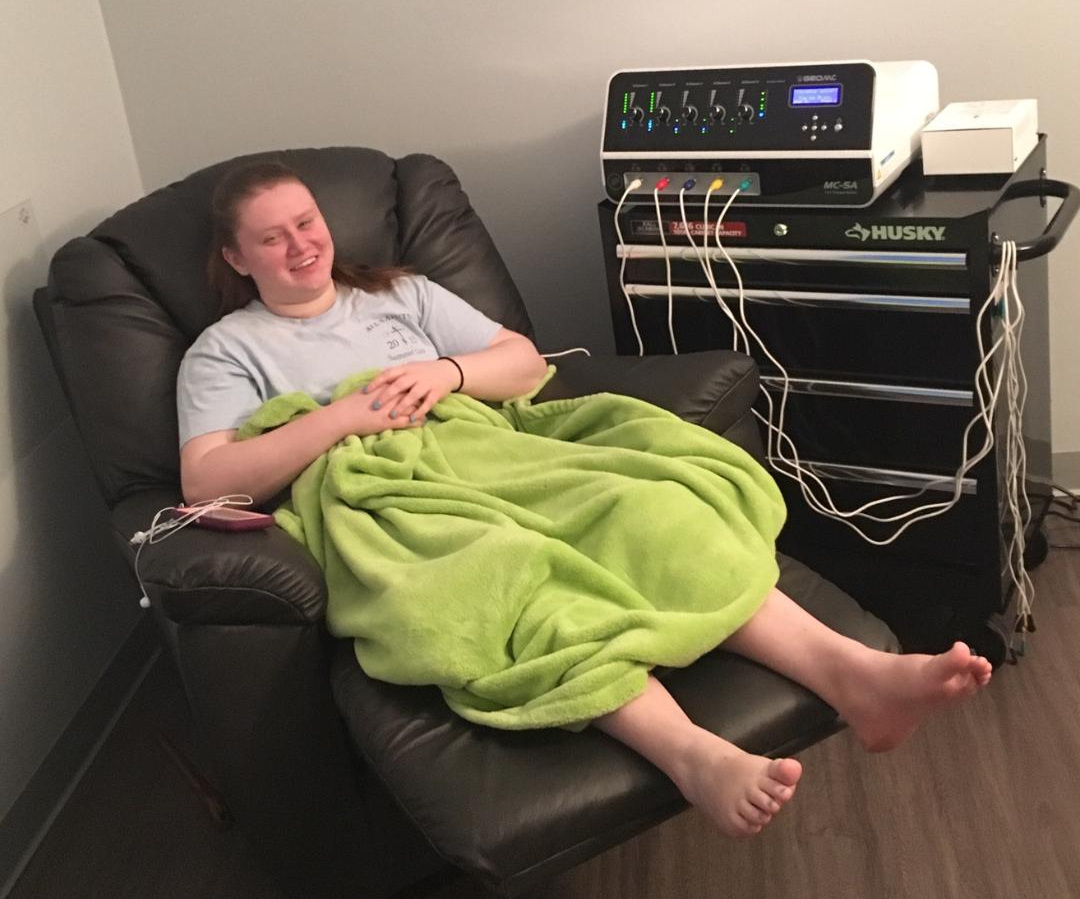
Amanda’s first round of treatment was administered by an osteopathic doctor in March 2018. After the fourth consecutive day of treatment, she was able to walk with the aid of crutches for the first time in seven months. The next day, after her fifth treatment, Amanda was able to walk independently. By the end of her initial round of treatment, she was entirely off opioids and NSAID pain relievers.

Our local TV station did a story about Amanda’s recovery.

Right now, the Scrambler treatment is not covered by insurance and payment for it adds up rather quickly. I am trying to get this therapy more widely acknowledged and known about so that it may become an option for others suffering with chronic neuropathic pain.

I have seen the benefits of Scrambler Therapy firsthand in my daughter. At the time of this writing, Amanda has been off opioids for two months and has been able to maintain the benefits of the initial treatment through booster treatments as needed.

Scrambler Therapy has the potential to help not just those suffering from CRPS (for whom pain relief often seems distant and hopeless), but also for those suffering from other neuropathic pain conditions.

The Greening family lives in Shreveport, Louisiana.

Pain News Network invites other readers to share their stories with us. Send them to editor@painnewsnetwork.org.

The information in this column should not be considered as professional medical advice, diagnosis or treatment. It is for informational purposes only and represents the author’s opinions alone. It does not inherently express or reflect the views, opinions and/or positions of Pain News Network.

Bad Posture During Computer Use Leads to Back Pain

By Pat Anson, PNN Editor

It's no secret that staring into a computer screen for too long can lead to a stiff neck or back pain. Many of us instinctively lean forward to get a closer look at laptop or tablet, without being fully aware of how bad our posture is or what it’s doing to our spines.

Researchers at San Francisco State University say this “head-forward position” compresses the neck and can lead to fatigue, headaches, poor concentration and muscle tension. And it takes less than a minute for the symptoms to start.

"When your posture is tall and erect, the muscles of your back can easily support the weight of your head and neck -- as much as 12 pounds," says Erik Peper, PhD, a Professor of Holistic Health at San Francisco State University.

"But when your head juts forward at a 45-degree angle, your neck acts like a fulcrum, like a long lever lifting a heavy object. Now the muscle weight of your head and neck is the equivalent of about 45 pounds. It is not surprising people get stiff necks and shoulder and back pain."

Peper and his colleagues tested the effects of head and neck position in a recent study published in the journal Biofeedback.

SAN FRANCISCO STATE UNIVERSITY

First, they asked 87 students to sit upright with their heads properly aligned on their necks and asked them to turn their heads. Then the students were asked to "scrunch" their necks and jut their heads forward. Ninety-two percent reported being able to turn their heads much farther when they were not scrunching.

In a second test, 125 students scrunched their necks for 30 seconds. Afterwards, 98 percent reported some level of pain in their head, neck or eyes.

“Most participants were totally surprised that 30 seconds of neck scrunching would rapidly increase symptoms and induce discomfort. It provided motivation to identify situations that evoked neck scrunching and avoid those situations or change the ergonomics,” Peper said.  

What can you do to prevent yourself from scrunching? Two easy solutions would be to increase the font size on your computer screen or get a pair of computer reading glasses. You can also make sure your computer screen is at eye level, which will reduce the temptation to lean forward.

If you suffer from headaches or neck and backaches from computer work, check your posture and make sure you are sitting upright, with your head aligned on top of your neck.

"You can do something about this poor posture very quickly," says Peper, who recommends people test themselves by scrunching forward and try rotating their head. Until they do that, many have no idea how bad posture contributes to back and neck pain.

"You can exaggerate the position and experience the symptoms. Then when you find yourself doing it, you can become aware and stop," he said.

A recent study by researchers at the University of Nevada Las Vegas found that 60 percent of students have persistent pain in their neck and shoulders -- often caused by slouching or bending to watch their iPads or tablets. Women were twice as likely as men to experience neck and shoulder pain during tablet use.

Sen. Wyden Wants to Censor Pain Experts’ Opinions

By Lynn Webster, MD, Guest Columnist

In 2016, the Comprehensive Addiction and Recovery Act (CARA) created an advisory panel called the Pain Management Best Practices Inter-Agency Task Force and charged it to “develop a set of best practices for chronic and acute pain management and prescribing pain medication.”

The task force has just released its first draft report that makes several recommendations. One is to update the scientific evidence on which the Centers for Disease Control and Prevention’s controversial 2016 Guideline for Prescribing Opioids for Chronic Pain was based. Another goal is to expand areas already included in the guideline.

On December 18, 2018, just before the report was published, Oregon Senator Ron Wyden (D) wrote a letter to Alex Azar, Secretary of Health and Human Services (HHS). In it, he questioned the ability of several experts to serve impartially on the task force because of their alleged connections to the pharmaceutical industry. Specifically, Sen. Wyden worried that opioid manufacturers could exert “financial influence” on those task force members.

Wyden’s concerns about the HHS’s vetting practices would be understandable if the individuals who had been appointed to the advisory panel actually were receiving funds directly from industry. However, that is not the case.

Wyden’s letter specifically mentions Dr. Jianguo Cheng, president of the American Academy of Pain Medicine (AAPM), and Dr. Rollin Gallagher, editor-in-chief of the journal Pain Medicine.

In his letter, Wyden opposes Drs. Cheng and Gallagher’s participation primarily because of their association with AAPM, a professional medical organization that has registered concerns about the impact of the CDC’s opioid prescribing guideline on people in chronic pain.

Dr. Josh Bloom, the American Council on Science and Health’s Director of Chemical and Pharmaceutical Sciences, recently shared written communications from Drs. Cheng and Gallagher that make it difficult to see any logical reason to object to their participation on the panel.

SEN. RON WYDEN (D-OR)

Since he became president-elect of the AAPM at the end of 2016, Dr. Cheng has had no financial ties to the pharmaceutical industry. Similarly, to ensure Pain Medicine’s editorial independence, Dr. Gallagher voluntarily ended his relationships — consulting or advisory— with the industry when he became editor-in-chief more than 10 years ago.

Ironically, the AAPM has long advocated for alternatives to opioids and generally supported the CDC guideline. However, they did have concerns about lack of evidence for some of the CDC’s recommendations. Other organizations, including the American Medical Association (AMA), have also criticized components of the CDC guideline.

Wyden has previously lodged a similar complaint with the National Academies of Sciences, Engineering, and Medicine, also challenging members selected for an FDA advisory panel because of a perceived conflict of interest. Following his complaint, Dr. Mary Lynn McPherson, professor at Maryland University School of Medicine, and Dr. Gregory Terman, who was the president of the American Pain Society, were removed from the panel. Here again, neither Dr. McPherson nor Dr. Terman personally received funds from Pharma. The University of Maryland and the American Pain Society, with which they were associated, did.

If Wyden’s reasoning were taken to its logical conclusion, no member of the AMA or any professional organization of pain experts critical of the CDC opioid guideline would be an acceptable member of the advisory panel. Also, most university faculty members would be disqualified because their universities accept funding, in one form or another, from industry.

Some people assume that any association with industry must create bias and cause conflicts of interest. Perhaps so, but that does not apply to the people Wyden is trying to silence. Further, membership in a professional association or serving as a faculty member of a university that receives industry support should not necessarily disqualify an individual to make an important contribution to committees. The goal should be to seek out the most qualified individuals.

There is danger associated with Wyden’s persistent efforts to purge advisory panels of members who have expressed views he doesn’t share. In essence, eliminating people with differing views from advisory panels stacks the deck. It creates a special-interest group that is empowered to influence policy without having to consider differing opinions. The irony is that this very attempt to limit bias creates bias.

Prohibiting experts with no direct connections to industries, like Drs. Cheng, Gallagher, McPherson and Teman, from participating on advisory panels seems to be a punitive gesture. Physicians and researchers, such as these four individuals, who actually care for patients are uniquely equipped to help advisory committees set best practices for pain management. And these panels cannot afford to lose the expertise that these individuals can provide.

If the vetting process includes removing all potential conflicts of interest, then it should also flag anyone who has ties to insurance, including Medicare. Clearly, insurance companies have a financial interest in which treatments are recommended.

Today, Wyden and others are calling to ban anyone with direct or indirect ties to Pharma from serving as a government adviser. Tomorrow, another industry could be targeted. For example, people who work in energy or university researchers who receive industry grants to study the weather might not be permitted to advise the government on climate change. This would likely mean the committees would be comprised of the least knowledgeable individuals.

Hopefully, the HHS and other governmental bodies will consider viewpoints from a broad swath of qualified experts and not just those whose perspectives they endorse. A functioning democracy must value and listen to all views.  

Lynn Webster, MD, is a senior editor at Pain Medicine. He is also a vice president of scientific affairs for PRA Health Sciences and consults with pharmaceutical companies. Webster is a former president of the American Academy of Pain Medicine and author of “The Painful Truth: What Chronic Pain Is Really Like and Why It Matters to Each of Us.”

You can find him on Twitter: @LynnRWebsterMD. 

The information in this column should not be considered as professional medical advice, diagnosis or treatment. It is for informational purposes only and represent the author’s opinions alone. It does not inherently express or reflect the views, opinions and/or positions of Pain News Network.