Help Us End the Suffering of Chronic Pain Patients

By Anne Fuqua, Guest Columnist

In 2014, a good friend of mine suffered a heart attack after his opioid pain medications were stopped abruptly. This was despite the fact his records showed that he was a responsible and compliant patient who worked full-time.

Following his death, I started logging the deaths I became aware of on a spreadsheet. Initially, this was just my version of a memorial. I have pain too, and at times wondered if I’m going to wind up on this same memorial.

Every month for the past six years, I have had to add at least one more name to that list, sometimes multiple names. I knew many of these patients and considered them to be my friends.

Some had no quality of life and chose to end their suffering. Some fought to live with all the strength they could muster, but fell to heart attacks, strokes and ruptured aneurysms that occurred after their medication was involuntarily tapered, stopped abruptly or during periods of severe uncontrolled pain. 

For others, the cascade of physiologic changes that help our bodies respond to stress can become harmful in themselves if left unchecked, causing effects that may shorten life even if the person does not suffer one specific event like a heart attack or stroke.

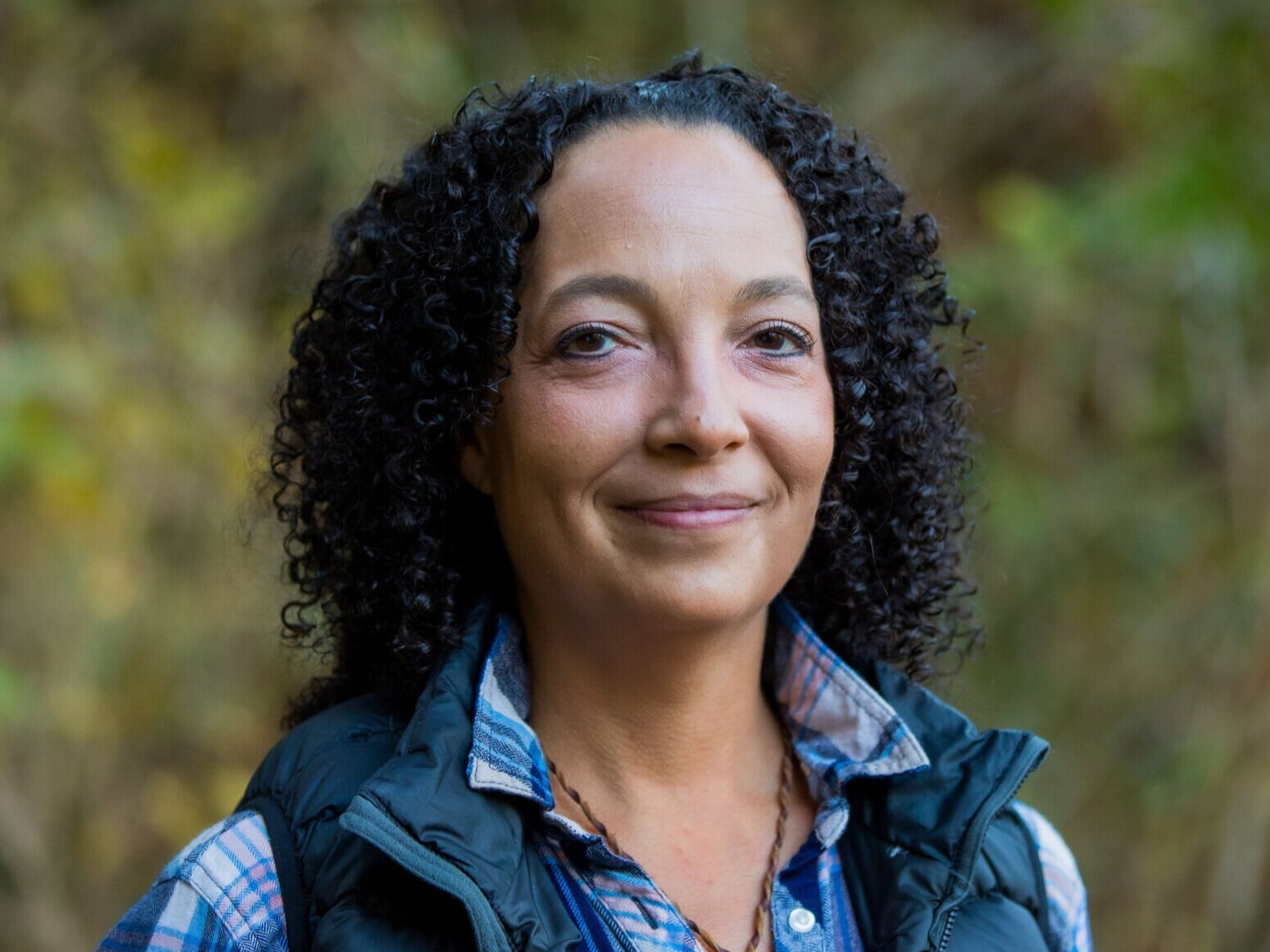
ANNE FUQUA

ANNE FUQUA

Still others were desperate to live but also desperate to get relief. They went to the illicit drug market when they failed to get the surgery, physical therapy or medication that they felt could improve their quality of life. 

There is a name for abandoned pain patients, left to fend for themselves. Dr. Steve Passik coined the term “opioid refugee” in 2012. Tragically, some of these opioid refugees have died in their quest for relief. They sought relief that would allow them to get restful sleep, enjoy quality time with loved ones, and give them the ability to fulfill responsibilities to their family and society.

CSI Opiods Survey

In 2016, I was fortunate enough to become friends with Dr. Stefan Kertesz, a physician I respect immensely. Dr. Kertesz and his colleague, Dr. Allyson Varley, assembled a team of some of the most respected healthcare providers and thought leaders in the field to advise and support their work. Their goal is to understand what exactly happens when a person with chronic pain dies by suicide. 

After over 2 years of tireless efforts to obtain funding, they have begun a pilot project, a survey of people who have lost someone to suicide. I am helping them understand how to reach out to the people who have lost loved ones. The project has the support of the Department of Medicine at University of Alabama at Birmingham. 

If you would like to know more about Drs. Varley or Kertesz, I would encourage you to Google them so you can see for yourself the quality of their work and their dedication to underserved populations. You may also want to check out Dr. Kertesz’s Tedx Birmingham talk on suicides in the pain community.

Our initial work is a pilot study, We wish to learn how many surviving family members and close friends are willing to come forward and complete a survey after losing a loved one to suicide. For now, we are examining suicides where the patient who died had experienced a change in their opioid medication prior to their death, whether it was decreased, increased or stopped. 

If you have lost a loved one, there are two ways that you can participate. We have a brief online survey you can complete that’s entirely confidential. You can take the survey by clicking here or on the banner below. If you are unable to complete this survey all at once, click “save and return later” and you will be able to save your responses and return to the point you left off at a later time. 

If you would feel more comfortable speaking with someone, you can call toll-free (866) 283-7223. There is no payment for doing the survey. Official study information, approved by a University Institutional Review Board, is online at the survey website.

We may eventually get funding to study other types of deaths. We are asking anyone who has lost a loved one to suicide following a change in opioid dose to consider responding to our survey. If enough people do come forward, it will help to make the case that these terrible losses need to be studied closely, rather than ignored.

I recognize this initial effort has a narrow focus. There are many grieving families who want their loved one’s death to be counted even if it was not a suicide. The way the survey is set up, if you report that the person you lost did not die by suicide, it is going to ask for your contact information. You can provide the research team with your contact information so you can be notified about future studies. 

I still keep my own list of deaths as I learn about them, my memorial. It’s important to know that my list is private. Dr. Kertesz and Dr. Varley do not take names off my list. That’s because university research can only be done with consent. If you have a name for my list, whether they died by suicide or not, contact me and I will add your friend or loved one. I make statistics about the deaths -- but no names -- available to policymakers and patients involved with advocacy work. The list itself will not be made public. 

If you are like me, you are apprehensive about what will happen next. I think most of us are exhausted from the fight for better pain care and desperate for change. Change cannot come soon enough when you are the one who is suffering. This is the first step towards ending needless suffering and loss of life.

Anne Fuqua is from Birmingham, Alabama. She lives with her cat Gabby and has primary generalized dystonia and arachnoiditis.

No Blessing Is Too Small

By Mia Maysack, PNN Columnist

People have asked me and goodness knows, I ask myself sometimes: How am I going continue living this life?  

Please don't ever think I made it to this place overnight. Blood, sweat and tears are only the beginning of what it has taken. There aren't enough words to properly convey or explain what it's like to be in pain each moment of every day. Unless that's relatable to you, others just don't get it because they ain't got it, right?  

The ongoing situations I experience sound insane when I attempt to explain them. It's not logical to never have a break from discomfort; for your insides to feel as though they're climbing their way out, while the outside shrivels into a condensed version of identity that exists some days more than others, and at some points seems to disappear altogether.  

My conditions, whether we're referring to my relentless hurting head or the agony of damaged nerves, cause symptoms far beyond the ailments themselves. Persistent exhaustion has brought me to tears because the extent of the tiredness legitimately frightens me, convinced I must be slowly dying. But isn't that ultimately what we're all doing?

That acknowledgement isn't meant to be grim, but rather to shed a light on what has made it possible for me to even be here to write this:  Gratitude. Even for the smallest blessings.

Although I'm thankful to have made it to see another day, it began at an unreasonable hour this morning. As I lay there defenseless, a brutal migraine attack wreaked havoc out of nowhere, causing a wide array of less than positive emotions while I attempted to fight back.  Those are the moments when I wonder how I'll ever continue to possess what's needed to survive. When I cannot even manage to get myself out of bed.

Pre-COVID, most people smirked at the idea of “lounging around all day” and how nice it must be. So, maintaining that same logic, next time you're ravished with a relentless flu or tummy bug, just reflect on how nice it is to lie around and you'll feel much better. Not.

Remain mindful as to what you wish for and the way you judge a life you haven't lived. I don't even get a shot at normalcy, because the trigger of stabbing pains has already been pulled as I wake to attacks and flare ups. 

We continue on despite our pain. If we didn't, we obviously would no longer be here. There are times I contemplate slamming my head against the wall. Considering it already feels as though I have, that seems counterproductive.  

I'm overjoyed for whoever can continue to carry on, there are just days that I can't. Part of how I had even gotten myself this ill is by pushing myself too far. Singlehandedly operating a business, attending school and successfully running a hospital floor tending to the needs of others.

I'm no stranger to hard work; incurable ailments and a lifelong illness are the toughest jobs I’ve ever had!  Self-care wasn't something that existed in my world. Despite the fact it required hitting a wall first, learning self-care to tend to myself properly and unapologetically has been a gift that keeps giving.    

A difficult aspect of all this for me is that others seemingly forget who you were. I'm seen in a light now, almost as if I'm not living up to my potential and definitely pick up on vibes that being chronically ill somehow makes me "less" of a person.

I do not accept that and here's why: Anyone that has a negative opinion regarding your situation either cannot relate or doesn't understand, so always consider the source. I am thankful for their health and celebrate that mine isn't any worse.  

As people enduring these circumstances, we experience pain levels that would bring others to their knees. Free yourselves from judgement of self and others. Remain prideful. We know what it has taken to make it to this point and only we know what's best for us. My choice is to continue inching closer toward acceptance of the current moment and remain faithful in future possibilities.

Mia Maysack lives with chronic migraine, cluster headache and fibromyalgia. Mia is the founder of Keepin’ Our Heads Up, a Facebook advocacy and support group, and Peace & Love, a wellness and life coaching practice for the chronically ill.

New Drug Could Improve Effectiveness of Stem Cell Therapy

By Pat Anson, PNN Editor

Scientists have developed an experimental drug that can lure stem cells to damaged tissues and help them heal -- a discovery being touted as a major advancement in the field of regenerative medicine.

The findings, recently published in the Proceedings of the National Academy of Sciences (PNAS), could improve the effectiveness of stem cell therapy in treating spinal cord injuries, stroke, amyotrophic lateral sclerosis (ALS), Parkinson’s disease and other neurodegenerative disorders. It could also expand the use of stem cells to treat conditions such as heart disease and arthritis. 

“The ability to instruct a stem cell where to go in the body or to a particular region of a given organ is the Holy Grail for regenerative medicine,” said lead author Evan Snyder, MD, director of the Center for Stem Cells & Regenerative Medicine at Sanford Burnham Prebys Medical Discovery Institute in La Jolla, CA. “Now, for the first time ever, we can direct a stem cell to a desired location and focus its therapeutic impact.”

Over a decade ago, Snyder and his colleagues discovered that stem cells are drawn to inflammation -- a biological “fire alarm” that signals tissue damage has occurred. However, using inflammation as a therapeutic lure for stem cells wasn’t advisable because they could further inflame diseased or damaged organs, joints and other tissue.

To get around that problem, scientists modified CXCL12 -- an inflammatory molecule that Snyder’s team discovered could guide stem cells to sites in need of repair— to create a drug called SDV1a. The new drug works by enhancing stem cell binding, while minimizing inflammatory signals.

“Since inflammation can be dangerous, we modified CXCL12 by stripping away the risky bit and maximizing the good bit,” Snyder explained. “Now we have a drug that draws stem cells to a region of pathology, but without creating or worsening unwanted inflammation.”

To demonstrate its effectiveness, Snyder’s team injected SDV1a and human neural stem cells into the brains of mice with a neurodegenerative disease called Sandhoff disease. The experiment showed that the drug helped stem cells migrate and perform healing functions, which included extending lifespan, delaying symptom onset, and preserving motor function for much longer than mice that didn’t receive the drug. Importantly, the stem cells also did not worsen the inflammation.

Researchers are now testing SDV1a’s ability to improve stem cell therapy in a mouse model of ALS, also known as Lou Gehrig’s disease, which is caused by a progressive loss of motor neurons in the brain. Previous studies conducted by Snyder’s team found that broadening the spread of neural stem cells helps more motor neurons survive — so they are hopeful that SDV1a will improve the effectiveness of neuroprotective stem cells and help slow the onset and progression of ALS. 

“We are optimistic that this drug’s mechanism of action may potentially benefit a variety of neurodegenerative disorders, as well as non-neurological conditions such as heart disease, arthritis and even brain cancer,” says Snyder. “Interestingly, because CXCL12 and its receptor are implicated in the cytokine storm that characterizes severe COVID-19, some of our insights into how to selectively inhibit inflammation without suppressing other normal processes may be useful in that arena as well.”

Snyder’s research is supported by the National Institutes of Health, U.S. Department of Defense, National Tay-Sachs & Allied Disease Foundation, Children’s Neurobiological Solutions Foundation, and the California Institute for Regenerative Medicine (CIRM).

“Thanks to decades of investment in stem cell science, we are making tremendous progress in our understanding of how these cells work and how they can be harnessed to help reverse injury or disease,” says Maria Millan, MD, president and CEO of CIRM. “This drug could help speed the development of stem cell treatments for spinal cord injury, Alzheimer’s, heart disease and many other conditions for which no effective treatment exists.”

Intractable Pain Syndrome Has 2 Kinds of Pain

By Forest Tennant, PNN Columnist

A major reason that persons with Intractable Pain Syndrome (IPS) experience such misery is that when pain is the constant, 24/7 variety, it has two parts: ascending and descending pain. Both types need to be treated for relief.

Picture your body running on electric currents. In your house, electric currents are conducted by wire. Although there is no good reason to avoid the term “wire” when it comes to the human body, we usually refer to our biologic wires as nerves, nerve roots or neurons.

Unfortunately, any disease or injury to one or more of our “wires” blocks the electric currents that normally flow through the nerves, nerve roots or neurons, and diverts electricity into the surrounding tissue to produce inflammation and pain.

Ascending Pain is caused when pain electricity travels from the disease or injury site up the nervous system to the brain. This is the most common type of pain. For example, if you have a sore knee, pain signals travel from the knee to the brain.

Descending Pain is caused when severe pain from any number of diseases and injuries sends so much electricity into the brain and spinal cord that it accumulates. Areas of inflammation develop and destroy and/or damage the dopamine-noradrenaline neurotransmitter systems that control descending pain.

The excess electricity from these inflamed sites travels down the nervous system into muscles, skin, tendons, joints, fatty tissues, and the large and small peripheral nerves. Small nerve endings in the skin can “burn out” due to all the descending electricity and a skin biopsy will probably show small fiber neuropathy.

bigstock-Migraine-Pain-5625018.jpg

How do you know if you have descending pain? You have muscle aches all over which are often labeled as fibromyalgia. You hurt everywhere and experience episodes of overheating, sweating, and cold hands and feet, often at the same time!

Tips to Reduce Descending Pain

The critical point is that usual pain treatment only treats ascending pain, not descending pain. Opioids, antidepressants, anti-inflammatories and muscle relaxants do not usually do much for descending pain.

Each person with IPS must adopt a few simple but specific medical, physical, and dietary measures to attain some relief and recovery from both kinds of pain. You must maintain your dopamine-noradrenaline neurotransmitter systems daily, or you will have increased pain and misery, and believe that more drugs like opioids are the answer.

The understanding of blocked and diverted electric currents has led to the identification and labeling of a group of treatment agents that help normalize electric currents. These are known as neuropathic agents. The neurotransmitter most responsible for the proper conduction of electric currents is called gamma aminobutyric acid (GABA for short). It is synthesized by the body from the amino acid glutamine.

Neuropathic medications include gabapentin, pregabalin, carisoprodol, topiramate, duloxetine, and benzodiazepines.

In addition to neuropathic agents, there are simple “age-old” remedies that still work for most people because they help modulate electric currents so that they don’t divert, accumulate, and cause more inflammation and pain:

  • Water Soaking

  • Epsom or Herbal Salts

  • Magnets

  • Acupuncture

  • Copper Jewelry

  • Walking Barefoot

  • Dry Needling

  • Petting Fur

  • Magnesium

Every person with IPS needs a daily program of neuropathic agents and age-old remedies to minimize the consequences of accumulated electricity.

Forest Tennant is retired from clinical practice but continues his groundbreaking research on intractable pain and arachnoiditis. This column is adapted from newsletters recently issued by the IPS Research and Education Project of the Tennant Foundation. Readers interested in subscribing to the newsletter can sign up by clicking here.

The Tennant Foundation has given financial support to Pain News Network and is currently sponsoring PNN’s Patient Resources section.  

Tarantulas May Help Develop New Pain Medication

By Pat Anson, PNN Editor

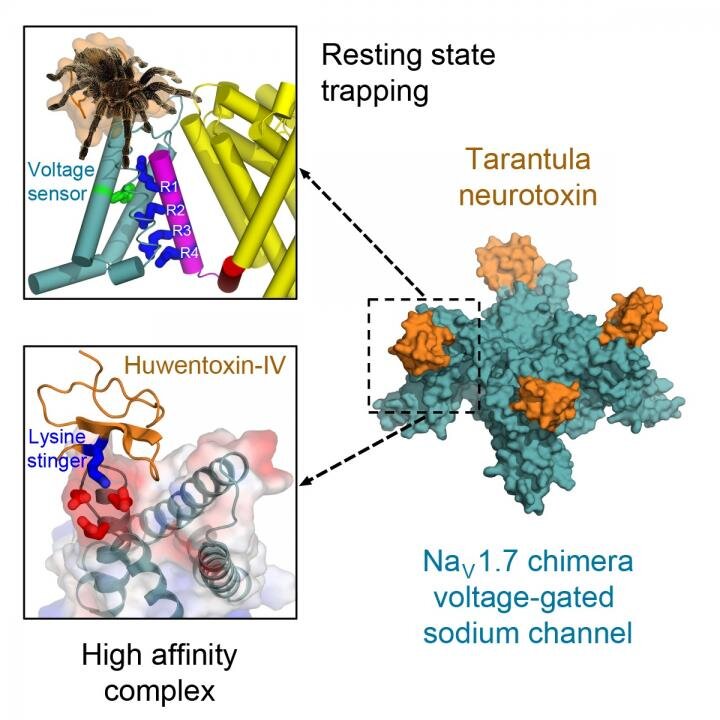
Venom from a bird-catching Chinese tarantula may hold the key to medications that could someday block pain signals in humans, according to a new study at the University of Washington School of Medicine. Researchers say the oversized, hairy spiders inject a toxin into the birds that quickly immobilize them.

"The action of the toxin has to be immediate because the tarantula has to immobilize its prey before it takes off," said William Catterall, PhD, a professor of pharmacology and lead author of a study published in the journal Molecular Cell.

Catterall and his colleagues were curious how the venom works, so they used a high-resolution cryo-electron microscope to get a clear molecular view of its effect on nerve cells.

They found that tarantula venom contains a neurotoxin that locks the voltage sensors on sodium channels, the tiny pores on cell membranes that generate electric signals to nerves and muscles.

Locked in a resting position, the voltage sensors are unable to activate and the spider’s prey is essentially paralyzed.

"Remarkably, the toxin plunges a 'stinger' lysine residue into a cluster of negative charges in the voltage sensor to lock it in place and prevent its function," Catterall said. "Related toxins from a wide range of spiders and other arthropod species use this molecular mechanism to immobilize and kill their prey."

In humans, sodium channels known as the Nav1.7 channel are essential for the transmission of pain signals from the peripheral nervous system to the spinal cord and brain.

UNIVERSITY OF WASHINGTON

UNIVERSITY OF WASHINGTON

In theory at least, drugs modeled after tarantula venom could be used to target and immobilize the Nav1.7 channel. Previous research has shown that people born without Nav1.7 channels due to genetic mutation are indifferent to pain – so blocking those channels in people with normal pain pathways could form the basis for a new type of analgesic.

"Our structure of this potent tarantula toxin trapping the voltage sensor of Nav1.7 in the resting state provides a molecular template for future structure-based drug design of next-generation pain therapeutics that would block function of Nav1.7 sodium channels," Catterall explained.

While venom-based medicine may sound impractical and more than a little creepy, it’s not unheard of. A pharmaceutical drug derived from cone snail venom is already being used to treat chronic pain. Prialt is injected into spinal fluid to treat severe pain caused by failed back surgery, trauma, AIDS and cancer. Like tarantula venom, Prialt blocks channels in the spinal cord from transmitting pain signals to the brain.  

12 Holiday Gifts on Life With Chronic Pain

By Pat Anson, PNN Editor

If you live with chronic pain or illness and want to have a friend or family member get a better understanding of what you're going through -- here are 12 books and videos that would make great gifts over the holidays. Or you can always “gift” one to yourself.

Click on the cover to see price and ordering information. PNN receives a small amount of the proceeds -- at no additional cost to you -- for orders placed through Amazon. As an Amazon Associate, we earn from qualifying purchases. 

Finding a New Normal: Living Your Best Life with Chronic Illness by Suzan Jackson

For nearly 20 years, Suzan Jackson has lived with Myalgic Encephalomyelitis/Chronic Fatigue Syndrome (ME/CFS) — a condition she shares with two of her sons. In this book, Jackson shares what she and her family have learned about living well with chronic illness and finding a “new normal” through strong relationships, healthy emotions and finding joy in everyday life. The emphasis is on living life, not just enduring it.

War on Us by Colleen Cowles

Lawyer Colleen Cowles looks at how the war on drugs and myths about addiction have created a dysfunctional drug policy that prosecutes doctors for treating pain and stigmatizes patients for seeking relief. The U.S. has spent over a trillion dollars fighting the war and has little to show for it except some of the highest rates of addiction, overdose and incarceration anywhere in the developed world.

Ketamine Infusions: A Patient’s Guide by Berkley Jones

Berkley Jones looks at the increasing use of ketamine, a non-opioid analgesic, in treating chronic pain, depression, post-traumatic stress disorder and anxiety. This book is a useful guide if you are considering ketamine infusions and want to know how to select a provider, what to expect during infusions and possible side effects. Although primarily used to treat depression, some pain patients say ketamine is effective in treating neuropathy and CRPS.

Bitten: The Secret History of Lyme Disease and Biological Weapons by Kris Newby

Author Kris Newby began looking into the origins of Lyme disease after she was bitten by a tick and became seriously ill. Her research led her to a secret U.S. government program during the Cold War that used insects as biological weapons to spread disease. Newby believes the Lyme outbreak that began 50 years ago and has infected millions of Americans may have been the result of a military experiment gone wrong.

Vagina Problems: Endometriosis, Painful Sex and Other Taboo Topics by Lara Parker

A memoir by Lara Parker that explores — with unflinching honesty — her battle with endometriosis, a chronic vaginal condition that makes daily life difficult and sex painful. As a teenager, doctors initially dismissed Parker’s pain as “bad period cramps” and suggested her pain was psychological. She nearly checked herself into a mental institution before finally getting a proper diagnosis.

A Quick Guide to CBD by Dr. Julie Moltke

CBD won’t cure you of chronic pain, but Dr. Julie Moltke says cannabidiol can reduce pain, inflammation, anxiety and insomnia — and help make life more livable. This handbook is intended for beginners who want to learn how and when to take CBD, and are puzzled by all the hype surrounding vapes, oils, gummies and edibles on the market.

Pain Warriors by Tina Petrova

A documentary produced by patient advocate Tina Petrova that examines the poor treatment and medical neglect faced by millions of pain sufferers in North America. The film is dedicated to Sherri Little, a chronic pain patient who committed suicide after one last attempt to get effective treatment. Available on DVD or for streaming on Amazon Prime.

Together: The Healing Power of Human Connection by Dr. Vivek Murthy

This timely book by former U.S. Surgeon General Dr. Vivek Murthy looks at the importance of human connections and how loneliness affects our health and society at large. To combat loneliness, Murthy recommends spending at least 15 minutes each day connecting with people we care about and to give them our undivided attention.

Bottle of Lies: The Inside Story of the Generic Drug Boom by Katherine Eban

Wonder why that generic drug you take doesn’t seem to work? About 90% of pharmaceutical drugs are generic and most are manufactured overseas. While generics are promoted as cheaper alternatives to brand name drugs, journalist Katherine Eban found the generic drug industry rampant with greed, fraud and falsified manufacturing data — resulting in many patients consuming drugs that are ineffective or have dangerous side effects.

In Pain: A Bioethicist’s Personal Struggle with Opioids by Travis Rieder, PhD

Travis Rieder is a professor of bioethics at Johns Hopkins University who severely injured his foot in a motorcycle accident and became dependent on opioids while recovering from surgery. In this book, he shares his frustration with the healthcare system and how it often abandons patients to pain, addiction or both. Rieder serves on a CDC advisory panel that is helping the agency prepare an update of its controversial 2016 opioid guideline.

The Chronic Pain Management Sourcebook by David Drum

A comprehensive guide about chronic pain by medical journalist David Drum, who summarizes the many causes, types and treatments of pain. Drum also has tips on managing stress, anxiety, lack of sleep and depression. The book is easy to understand and would be a useful resource for family members, friends and caretakers who want to understand and help someone living with chronic pain.

A Little Book of Self Care: Trigger Points by Amanda Oswald

This well-illustrated book provides 40 simple, step-by-step exercises you can use to manage back pain, migraine and other painful conditions. Author Amanda Oswald explains how “trigger points” — small knots of muscles and connective tissue — can be relieved through self-massage and the “power of touch” without visiting a chiropractor or physical therapist.

These and other books and videos about living with chronic pain and illness can be found in PNN’s Suggested Reading section.


The Gaslighting of Pain

By Ann Marie Gaudon, PNN Columnist

It’s become a buzzword. “Gaslighting” is a term used to describe the repeated denial of someone’s reality in an attempt to invalidate them. Its origins can be found in a misogynistic 1944 film showcasing a husband trying to convince his wife that she is insane.

To be clear, gaslighting is a form of emotional abuse and is not exclusive to romantic relationships. This attempt to manipulate a person’s reality is systemic and can be seen in social media, politics, cable news and even healthcare. When a medical professional invalidates, dismisses or even leads a patient to question their own thoughts and experiences, that is traumatic and abusive.

It is hardly news that women are more often told than men that their pain and other symptoms are emotionally-based and psychogenic: not real. Years ago, I attended a lecture given by a young woman detailing her experience with significant knee pain. She had seen several doctors to no avail; she was told the pain was all in her head. One doctor said the cause of her pain was due to “wearing her jeans too tightly and this is a common problem with teenage girls.”

She wondered out loud if this would have been her diagnosis if she were a male teenager. Eventually she did obtain a correct diagnosis for her knee pain which was osteosarcoma – the very same cancer that Canadian athlete and national hero Terry Fox succumbed to.

 A 2015 study interviewed women who had been hospitalized due to a heart attack but were reluctant to seek medical care, citing anxiety about “being perceived as complaining about minor concerns” and “feeling rebuffed or treated with disrespect.”

Since being diagnosed and treated for the female-only disease of “hysteria” in the 19th century, women’s emotions continue to be used as the cause for all that ails them. This inherent gender bias in healthcare is another form of gaslighting.

“We want to think that physicians just view us as a patient, and they’ll treat everyone the same, but they don’t,” Linda Blount, president of the Black Women’s Health Imperative, told BBC Future. “Their bias absolutely makes its way into the exam room.”

Your chances of being subjected to medical gaslighting increase if you are not white, cisgender or able-bodied -- essentially any marginalized group. However, do not be misled into thinking that all white males will be cared for with dignity and medical acuity. I have had conversations with men who have been dismissed time and again, and had their substantial suffering completely invalidated with the likes of “that [diagnosis] would never bother anyone.” Or they cannot even get a diagnosis and so are labelled as malingerers.  

‘You’re Making This Up’

At times, I am the only person in a patient’s life who actually has validated their pain, because their family does not believe them either. “You’re making this up” or “You’re not getting better because you don’t want to get better” are common themes told to my victimized clients. I watch as their teary eyes fluctuate hurriedly from boring into mine to staring down at the floor as they question their own sanity and if their pain is indeed real.

What happens next can lead to disastrous results. When physicians inappropriately conclude that a patient’s symptoms are all in their head, they delay a correct diagnosis – just like the young woman with knee pain. This can be especially dangerous for patients with rare diseases who already wait longer to be diagnosed as it is. According to a survey of 12,000 European patients, receiving a psychological misdiagnosis can make a proper diagnosis of a rare disease take up to 14 times longer.

The pain patients in my practice (as well as myself) have been told it’s just normal aches and pains, there’s nothing wrong with you, condescended to, yelled at, disbelieved, laughed at, mocked, called names, and dismissed in all manners of arrogance and ignorance.

We’re on the cusp of 2021 and I am still telling my pain patients not to go to any appointment alone because that makes you even more vulnerable to mistreatment. Another person in the room with you can temper abusive treatment by being there as a witness. No one suffering should have to go to any lengths to receive the care they deserve. However, that is reality.

We’ve come too far just to lie down and accept medical gaslighting. Do what you can to defeat this. Find a medical provider that you can connect with; someone who listens, is honest, and frank with you. I have had the privilege of having one physician who completely fits the bill and am now searching for the next.

Become your own advocate. Do not put up with someone who is condescending, arrogant, or mistreating you – fire this person. You and your health need to be taken seriously. Watch for biases and do report a gaslighting doctor. Go to the clinical supervisor, board of the hospital, and the regulating college or agency. Be direct and honest about how you were treated and demand they take action.

There is always a legal option as well if you were harmed physically and/or mentally by the grievous actions of a gaslighting physician. Whatever decision you make, above all else, do not accept this abuse. We must all speak up and speak out!

“Nothing strengthens authority so much as silence.”
Leonardo da Vinci

Ann Marie Gaudon is a registered social worker and psychotherapist in the Waterloo region of Ontario, Canada with a specialty in chronic pain management.  She has been a chronic pain patient for over 30 years and works part-time as her health allows. For more information about Ann Marie's counseling services, visit her website.

Can ‘Magic Mushrooms’ Help Dying Patients?

By JoNel Aleccia, Kaiser Health News

Back in March, just as anxiety over COVID-19 began spreading across the U.S., Erinn Baldeschwiler of La Conner, Washington, found herself facing her own private dread.

Just 48 and the mother of two teenagers, Baldeschwiler was diagnosed with stage 4 metastatic breast cancer after discovering a small lump on her chest, no bigger than a pea.

Within weeks, it was the size of a golf ball, angry and red. Doctors gave her two years to live.

“It’s heartbreaking,” she said. “Frankly, I was terrified.”

But instead of retreating into her illness, Baldeschwiler is pouring energy into a new effort to help dying patients gain legal access to psilocybin — the mind-altering compound found in so-called magic mushrooms — to ease their physical and psychic pain.

“I have personally struggled with depression, anxiety, anger,” Baldeschwiler said. “This therapy is designed to really dive in and release these negative fears and shadows.”

Erinn Baldeschwiler

Erinn Baldeschwiler

Dr. Sunil Aggarwal, a Seattle palliative care physician, and Kathryn Tucker, a lawyer who advocates on behalf of terminally ill patients and chairs a psychedelic practice group at Emerge Law Group, are championing a novel strategy that would make psilocybin available using state and federal “right-to-try” laws that allow terminally ill patients access to investigational drugs.

They contend that psilocybin — whether found in psychedelic mushrooms or synthetic copies — meets the criteria for use laid out by more than 40 states and the 2017 Right to Try Act approved by the Trump administration.

“Can you look at the statute and see by its terms that it applies to psilocybin?” Tucker said. “I think the answer is yes.”

Currently, psilocybin use is illegal under federal law, classified as a Schedule 1 drug under the U.S. Controlled Substances Act, which applies to chemicals and substances with no accepted medical use and a high potential for abuse, such as heroin and LSD.

Recently, however, several U.S. cities and states have voted to decriminalize possession of small amounts of psilocybin. This month, Oregon became the first state to legalize psilocybin for regulated use in treating intractable mental health problems. The first patients will have access beginning in January 2023.

It’s part of a wider movement to rekindle acceptance of psilocybin, which was among psychedelic drugs vilified — and ultimately banned — after the legendary counterculture excesses of the 1960s and 1970s.

“I think a lot of those demons, those fears, have been metabolized in the 50 years since then,” Aggarwal said. “Not completely, but we’ve moved it along so that it’s safe to try again.”

He points to a growing body of evidence that finds that psilocybin can have significant and lasting effects on psychological distress. The Johns Hopkins Center for Psychedelic and Consciousness Research, launched this year, has published dozens of peer-reviewed studies confirming that psilocybin helped patients grappling with major depressive disorder and suicidal thoughts.

Researchers are also looking at psilocybin as a treatment for post-traumatic stress disorder (PTSD), Lyme disease syndrome, cluster headaches and migraines. A small placebo-controlled study by Yale researchers found that migraine sufferers experienced a significant decrease in weekly migraine days after only one dose of psilocybin. 

“Psilocybin was well-tolerated; there were no unexpected or serious adverse events or withdrawals due to adverse events. This exploratory study suggests there is an enduring therapeutic effect in migraine headache after a single administration of psilocybin,” researchers found. 

Psilocybin Shifts Perception

Psilocybin therapy appears to work by chemically altering brain function in a way that temporarily affects a person’s ego, or sense of self. In essence, it plays on the out-of-body experiences made famous in portrayals of America’s psychedelic ’60s.

“What psychedelics do is foster a frame shift from feeling helpless and hopeless and that life is not worth living to seeing that we are connected to other people and we are connected to a universe that has inherent connection,” said Dr. Ira Byock, a palliative care specialist and medical officer for the Institute for Human Caring at Providence St. Joseph Health.

“Along with that shift in perspective, there is very commonly a notable dissolution of the fear of dying, of nonexistence and of loss, and that’s just remarkable.”

The key is to offer the drugs under controlled conditions, in a quiet room supervised by a trained guide, Byock said. “It turned out they are exceedingly safe when used in a carefully screened, carefully guided situation with trained therapists,” he said. “Almost the opposite is true when used in an unprepared, unscreened population.”

The FDA has granted “breakthrough therapy” status to psilocybin for use in U.S. clinical trials conducted by Compass Pathways, a psychedelic research group in Britain, and by the Usona Institute, a nonprofit medical research group in Wisconsin. More than three dozen trials are recruiting participants or completed, federal records show.

But access to the drug remains a hurdle. Though psychedelic mushrooms grow wild in the Pacific Northwest and underground sources of the drug are available, finding a legal supply is nearly impossible.

End of Life Washington, a group focused on helping terminally ill patients use the state’s Death With Dignity Act, recently published a policy that supports psilocybin therapy as a form of palliative care. Other treatments for anxiety and depression, such as medication and counseling, may simply not be practical or effective at that point, said Judith Gordon, a psychologist and member of the group’s board of directors.

“When people are dying, they don’t have the time or the energy to do a lot of psychotherapy,” she said.

Baldeschwiler agrees. With perhaps less than two years to live, she wants access to any tool that can ease her pain. Immunotherapy has helped with the physical symptoms, dramatically shrinking the size of the tumor on her chest. Harder to treat has been the gnawing anxiety that she won’t see her 16-year-old daughter, Shea McGinnis, and 13-year-old son, Gibson McGinnis, become adults.

“They are beautiful children, good spirits,” she said. “To know I might not be around for them sucks. It’s really hard.”

Kaiser Health News (KHN) is a national health policy news service. It is an editorially independent program of the Henry J. Kaiser Family Foundation which is not affiliated with Kaiser Permanente.

Low-Dose Naltrexone Gaining Recognition as Chronic Pain Treatment

By Pat Anson, PNN Editor

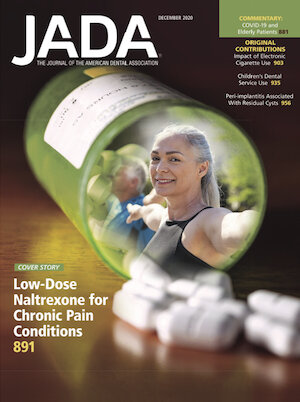
Low-dose naltrexone (LDN) is finally getting some recognition from the medical community as a treatment for chronic pain. The December edition of the Journal of the American Dental Association (JADA) features a cover story on the use of LDN by dentists – not to manage short term pain during dental procedures – but to treat chronic oral and facial pain conditions such as temporomandibular joint disorder (TMJ).

“Low-dose naltrexone provides an alternative in medical management of chronic pain disorders as a novel anti-inflammatory and immunomodulator. It can offer additional management options, as orofacial pain conditions share characteristics with other chronic pain disorders,” wrote Elizabeth Hatfield, DDS, corresponding author and clinical lecturer at the University of Michigan School of Dentistry.  

Few mainstream medical organizations have recognized the benefits of naltrexone as a pain reliever, largely because the drug is only approved by the Food and Drug Administration as a treatment for substance abuse. In 50mg doses, naltrexone blocks opioid receptors in the brain and decreases the desire to take opiates or alcohol.  

But in smaller doses of 5mg or less, patients with a wide variety of pain conditions have found LDN to be a surprisingly effective pain reliever. PNN columnists have shared their positive experiences using LDN to treat everything from interstitial cystitis to Ehlers-Danlos syndrome to fibromyalgia.  

How naltrexone works is not exactly clear – more research is needed – but LDN supporters believe the drug helps modulate the immune system, reducing inflammation and stimulating the production of endorphins, the body's natural painkiller.  

20201120_DecemberJADACover.jpg

The lack of good quality research on LDN is evident in the JADA article. Hatfield and her colleagues reviewed nearly 800 studies, but could find only eight that met their criteria for evaluation, most of them focused on treating fibromyalgia. Nevertheless, they say LDN could be an effective and less risky alternative to opioids and non-steroidal anti-inflammatory drugs (NSAIDs) for treating chronic oral and facial pain.

"The unique antinociceptive properties mediated via glial cell modulation, as opposed to previously identified pathways of opioids and anti-inflammatories such as NSAIDs, is attractive as it bypasses certain side effects and concerns with long-term NSAID and opioid use," said Hatfield. "Further benefits include reduction in reported pain levels and measurable increases in quality of life for patients with chronic pain disorders. Additionally, it offers an option for prescribers managing temporomandibular joint disorders with a centralized pain component.”

A 2019 review by British researchers found that LDN is safe to use, but also recommended that more clinical studies be conducted on its potential uses.

Because naltrexone is only approved to treat addiction, LDN needs to be prescribed “off-label” for pain. Patients interested in trying LDN often encounter doctors who refuse to prescribe it or don’t know anything about it. The LDN Research Trust includes a list of LDN-friendly doctors and pharmacies on its website.

A Grumpy Old Lady in Pain

By Rochelle Odell, PNN Contributor

As I lay once again, in pain, waiting for my small dose of pain meds to kick in, I stare at the dark ceiling, asking, begging God to please help me. There is nothing but silence around me except for the low volume of my TV.

I find my patience, what little I had, is now gone. I find myself writing a post on Facebook that perhaps did not have to be as blunt as it was or as challenging -- as even I recognized it to be. 

Am I judging others in this battle? Has my nearly 28-year battle with CRPS and it's incessant, never ending pain turned me into someone I am not thrilled about? Am I judging good people, in pain like me, too harshly at times?

I find some online comments are made with little thought or logic by others. I know and tell people there is only one person or deity that can judge anyone and that's the man upstairs, God. And in all honesty, I don't have the right to criticize anyone for what they say or do, except for liberals. Okay, cardinal rule, don't bring politics into our battle for pain relief. I am sorry.

Why do those who obviously haven't read an article or post refuse to admit that their response makes no sense? I spend a lot of time reading articles, but many don't and I feel if you can't find the time to read, don't comment. There are times I may read a post that really galls me and I respond critically, then I think of those I may have upset.

Why did I do or say what I did? I guess because like all in pain, I am tired. Tired of hurting, tired of fighting to get pain management back to where it should be for all. Especially tired of the few wannabes who think it's cool to be part of the pain community -- a community we would all give anything not to be a part of.

The very few I do challenge proudly boast of the ever-growing list of ailments that they wear as a badge of honor. They proudly state no doctor will agree or diagnose them with any of the pain diseases that they have self-diagnosed. You know the type. They have gone down the list of symptoms, convinced they surely must have it.

For shame. They honestly believe they have been wronged. Those people bother me, because there are many who suffer unrelenting pain from diseases physicians have actually diagnosed. I have been diagnosed with several and I want no part of them. I do try to stick with the CRPS only. It was the first and worst of what ails me.

ROCHELLE ODELL

ROCHELLE ODELL

Adding more or reading off what I call our laundry list of ailments won't change my low dose of opioid pain medication. My pain management PA is very sweet and compassionate, but we all know that high doses of opioids are nothing but a memory. A memory of when we used to function. I want my life back without pain and without needing medication. We all want our lives back... period!

I have my life friends who I’ve known since childhood, and new friends I’ve met in the pain community. Like my family, they mean the world to me. Each person brings something I may need or I bring something to them that they need. Pain brought us together. And if it weren't for pain, our paths would never have crossed.

My life has spanned seven decades, sometimes flying by and other times dragging by ever so slowly. The adventures I had, the experiences, I wouldn't trade for anything. I am thankful to have experienced what I did. Too many pain patients don't, especially younger ones. All they know is pain. They can only dream of traveling the world like I did. Those of us who had a life before pain were able to experience places, people and things. The memories are bittersweet.

I suppose at 73 that I am old, very opinionated and faced with the reality God can come knocking on my door anytime. Although for some reason the age of 93 is set in my mind when he will take me. Can't imagine living in this pain for twenty more years.

I have learned in this pain journey that I don't have to win every argument. I don't have to win every point. That if I ignore an annoying Facebook post and simply log off, I don't develop a killer stress headache trying to prove I was right. Being right all the time makes for a probably obnoxious person. I don't want to be that way, I really don't, but it is my reality, my life, me.

When thinking of love, I have loved and have been in love. Do I want to be married again? Odds are no. Like most, I don't want to live my golden years alone but I have become so set in my ways, set in my routine, set in how I choose to live any day my way. If I want to wear my jammies all day and not comb my hair, I can. If another person was around, I would have expectations placed on me I may not want.

But I also get so tired of battling pain with no real source of help I can depend on. I have only me to depend on. I am not the only one alone and we do hurt the most.

If my pain is severe and I want to cry, I can, with no explanations. Although if I do cry my little sidekick Maggie, an 8-year-old dachshund, gets right next to my face crying with me. Don't have any humans that sit next to me and cry with me, although I know of some sweet pain friends who would if I asked. Little Maggie has been so vocal. I look at her and ask do I really sound that bad, that pathetic? Yes!

I don't want to come across as judgmental or too critical. I don't want to be the mean old lady in the neighborhood. But you know what? Living in pain, alone for close to 28 years, well, if the shoe fits...

If my comments come across as mean, try to remember pain has changed us all. I see that in the pain community. 'A' can't stand 'B' and 'B' is thoroughly disgusted with 'C.' Meanwhile, 'D' shakes their head asking why? Why do we say and act in ways that may not be nice?

Guess I will set the timer on my TV, pray to God one more time to please take my pain away, and close my eyes hoping sleep comes, if even for a couple of hours. And pray those around me understand why this grumpy old woman says what she does.

Rochelle Odell lives in California.

PNN invites other readers to share their stories with us. Send them to editor@painnewsnetwork.org.

COVID-19 Vaccines May Be Risky for People with Chronic Illness

By Roger Chriss, PNN Columnist

Covid-19 vaccine researchers reported good news this week. Pfizer and Moderna both announced encouraging efficacy data and will soon submit applications to the Food and Drug Administration for emergency use authorizations.

Moderna reported that its vaccine was 94.5% effective in a Phase 3 trial of more than 30,000 participants. Similarly, Pfizer’s vaccine had an efficacy rate of over 90 percent, with only 94 confirmed cases of COVID-19 in a study that included over 43,000 volunteers.

Both of these vaccines are based on mRNA technology, a genetic approach to vaccines that directs protein production throughout the body. AstraZeneca took a more conventional approach with its vaccine and just reported promising Phase 2 trial results.

There are of course important questions to sort out, including long-term efficacy and safety. This latter point is particularly important for people with chronic illness.

The vaccine trials have been run with volunteers, who may be more health conscious and healthier than the population at large, and people with specific disorders are excluded. As a result, safety issues for people in treatment for active cancer, people with autoimmune diseases, and people with rare genetic disorders are unclear.

“We also don't know for sure whether this vaccine is safe and effective in different types of people, such as pregnant women, the elderly, or those with a chronic illness,” MedicalXpress reported. “Once a vaccine is deployed ‘in the real world,’ we'll start to understand its true effectiveness. In practice, this is likely to be different to its efficacy in highly controlled clinical trials.”

Specific disorders sometimes require avoiding certain vaccines. The CDC maintains a comprehensive list of vaccine contraindications and precautions, including a recommendation that live virus vaccines “should not be administered to severely immunocompromised persons.”

The CDC cautions that anyone with a “weakened immune system, or has a parent, brother, or sister with a history of hereditary or congenital immune system problems” should talk to their doctor before being vaccinated. People who have had any other vaccines in the past 4 weeks should also consult with a provider first.  

The American Cancer Society recommends against live vaccines for patients getting chemotherapy or radiation treatment.

“In general, anyone with a weak immune system should not get any vaccines that contain live virus. There are a few vaccines that contain live viruses, which can sometimes cause infections in people with weak immune systems that can become life-threatening,” the Society warns.

Autoimmune disorders are also complex. The Hospital for Special Surgery warns that live vaccines “are not recommended for lupus patients, due to the increased risk of infection from the vaccine.”

Most vaccines are very safe for most people. But vaccine safety presents a big question for a small group of people with specific risk factors like cancer or chronic illness. At this point there is simply no safety data on COVID-19 vaccines in such people. Hopefully there will soon be clear answers.

Roger Chriss lives with Ehlers Danlos syndrome and is a proud member of the Ehlers-Danlos Society. Roger is a technical consultant in Washington state, where he specializes in mathematics and research. 

What Does Intractable Pain Really Mean?

By Forest Tennant, PNN Columnist

Many people have chronic pain. If you are over age 60, you probably have some bothersome pain from arthritis, bunions, carpal tunnel, TMJ or a neuropathy. These common conditions cause intermittent pain which may be quite bothersome.

There are some unfortunate persons, however, who have terrible, grueling pain that just won’t go away. It’s there 24/7. It’s the kind that keeps you awake and makes you feel so sick you can’t read, think or socialize, and it will force you to take cover on the couch or in bed.

The pain can be primarily located anywhere on the body such as the hip, neck or back. But when it flares you feel it “all over” and it is intense.

This constant pain means you have a primary or underlying disease or injury that has emitted and sent so much electricity to the central nervous system (CNS) that inflammation forms inside the brain or spinal cord. The brain chemicals and neurotransmitter-receptor systems (NTRS) that normally control and shut down pain become damaged and impaired. The chemicals your own body makes for pain control, as well as pain medications, ​stop working correctly because of the damage to these chemical-tissue receiving sites.

Constant pain means you ​need a program or protocol to treat your basic injury or disease. One that reduces electric impulses and helps rebuild the damage to the NTRS in your spinal cord and brain. Symptomatic pain relievers are usually a must, but they don’t treat or reverse your basic problem.

Intractable Pain Syndrome

Due to new research, we now call the constant pain condition the Intractable Pain Syndrome (IPS). It’s called a “syndrome” because of the many manifestations of the condition.

IPS is a complication of a disease or injury. To obtain some relief and recovery, every person with IPS must know the name of the disease or injury that started the pain, and the anatomic location on the body that first sustained pain. Our studies have found that many persons with IPS don’t have a diagnosis for the cause of their pain and may have even forgotten the site on their body where the pain originated.

Common causes of IPS are:

  • Adhesive Arachnoiditis

  • Reflex Sympathetic Dystrophy (RSD) or Complex Regional Pain Syndrome (CRPS)

  • Advanced Osteoarthritis

  • Genetic Connective Tissue/Collagen Disorder (Ehlers-Danlos Syndrome)

  • Traumatic Brain Injury (stroke, trauma)

  • Autoimmune Disease

There are other rare causes of IPS, including porphyria, sickle cell disease, interstitial cystitis, Lyme disease and rare genetic disorders.

Vague complaints or diagnoses about back pain, headaches, sprains, strains or “pain all over” are not specific enough to get you much relief or recovery and can’t be considered a legitimate cause of IPS. That’s why it is important to know the specific cause of your pain. What was the specific diagnosis that warranted an epidural injection, surgery or an opioid prescription?

Regardless of what caused your IPS or how long you’ve had it, your original pain site is problematic and needs to be identified. The site is generating inflammation and electricity, and could be scarred in a way that blocks the normal flow of electricity through the body.

The major goal of the IPS Research and Education Project is to bring awareness that simple chronic pain and IPS are quite different entities. A second goal is to bring recognition, prevention and treatment of IPS into mainstream medical practice at the community level. IPS must be known, recognized and treated in the ambulatory medical system like any other long-term care problem such as rheumatoid arthritis, emphysema, diabetes, asthma, or schizophrenia.

It must also be done along with physical, psychologic and pharmaceutical measures that are acceptable to all concerned parties and that don’t require high, risky dosages of abusable drugs.

Forest Tennant is retired from clinical practice but continues his groundbreaking research on intractable pain and arachnoiditis. This column is adapted from newsletters recently issued by the IPS Research and Education Project of the Tennant Foundation. Readers interested in subscribing to the newsletter can sign up by clicking here.

The Tennant Foundation has given financial support to Pain News Network and is currently sponsoring PNN’s Patient Resources section.  

Alcohol Yes, But Opioid Meds Not So Easy

By Fred Brown, Guest Columnist

Like everyone else, I have found that living through the past many months of Covid-19 has been very taxing and challenging. Fortunately, our family has been blessed. One of our daughters who works in a local hospital caught a mild case of Covid-19 and has fully recovered. The rest of us are Covid-free. 

As more and more states began to reopen their economies in the spring, I noticed an interesting phenomenon.  Why were some of the first businesses to reopen bars and lounges?   

Before becoming a chronic pain patient, I did enjoy an occasional vodka and tonic or a glass or two of wine.  But now that I am on medications to help reduce the symptoms of pain, I am not stupid enough to drink liquor.  Even during religious holidays, where small amounts of wine are customary, I will drink grape juice. 

Fellow pain patients; please do not combine your medications with any form of liquor. There is plenty of evidence that side effects from the two do not add up. They multiply! 

My objective in this column is to make a point and share an observation about alcohol. Unfortunately, this legal drug kills an estimated 88,000 Americans every year. Alcohol not only hastens the deaths of people who abuse it, but often causes the deaths of other innocent people. 

I am in no way saying that bars, lounges and liquor stores should not open. I would never say what people should or should not do.  But I must still pose the question: Is alcohol really a necessity?  I do not know. But speaking as a patient advocate, I will say that something else most certainly is: Many patients need opioid medication to help control their pain. Not to take the pain totally away, but to help reduce the symptoms and have at least some quality of life. 

Millions of people are in constant, daily pain -- and usually not through any fault of their own. There are hundreds of different diseases that cause severe pain. Or maybe there was a medical error or botched surgery that resulted in a patient having chronic pain. 

I am not going to analyze why an individual drinks alcohol. It is a legal and socially accepted practice during dinner, parties and other events, many times in celebration. But why is this drug sold so freely, while opioid medications have so many obstacles and barriers that prevent patients from obtaining them? Even when a licensed physician legally prescribes them?  

Both alcohol and opioids, when used over time, can cause people to become dependent or, in some instances, addicted. But there is a big difference between addiction and dependence that many people do not fully recognize. Briefly, let us examine the truth about both terms.   

Dependency refers to a person who has been on medication for a specific period (generally at least weeks or months). The body has developed a physical dependence on the drug and has built a tolerance to it. Pain medicine may require increases in dosage and strength over time because of the progression of the underlying medical condition or because the body has adjusted and becomes tolerant. If the medication is withdrawn rapidly, the person may suffer very unpleasant withdrawal symptoms.

Addiction is a compulsive need for and use of any habit-forming substance, such as opioids, nicotine or alcohol. It is characterized by a spectrum of well-defined behaviors that persist even when the substance use is associated with profoundly negative consequences for the user and their family.

Is there an "opioid crisis" as the media has reported? YES!  Was it primarily caused by doctors writing too many prescriptions for opioids? The answer to that question is a resounding NO!   

It is rare for a medical patient to abuse or become addicted to opioid medication. Every person processes medication differently. Their bodies metabolize medicines at different rates.  That is why the current belief in "one size fits all" solutions for pain are not acceptable. There is zero science to back it up.  

Fred Brown is an advocate for pain patient rights who has lived with degenerative disc disease, bone spurs, stenosis and other spinal problems for over two decades. Opioid medication therapy allows Fred to continue functioning and have quality of life.  

GlaxoSmithKline Most Heavily Fined Drug Company

By Pat Anson, PNN Editor

The pharmaceutical industry has long been criticized for engaging in illegal or unethical activities, such as fraud, kickbacks and price gouging. A new study published in JAMA shines a light on the scale of the problem, finding that Big Pharma paid over $30 billion in financial penalties for illegal activities in the United States.

Researchers looked at state and federal settlements from 2003 to 2016 and found that almost every large pharmaceutical company had paid a fine for illegal activity. The biggest transgressor was GlaxoSmithKline (GSK), which paid nearly $9.8 billion to settle 27 cases brought against it for bribery, corruption, improper marketing, pricing violations and selling adulterated drugs. In one settlement alone, GSK was fined $3 billion for encouraging doctors to prescribe its antidepressants to children.  

The fines paid by GSK were over three times higher than the amounts paid by Pfizer ($2.9 billion) and Johnson & Johnson ($2.6 billion) during the study period. Researchers say only four of the 26 drug companies they analyzed were not assessed a penalty.

TOP 10 MOST HEAVILY FINED DRUG COMPANIES

  1. GlaxoSmithKline $9.8 billion

  2. Pfizer $2.9 billion

  3. Johnson & Johnson $2.6 billion

  4. Abbott Laboratories $2.5 billion

  5. Merck $2.1 billion

  6. Eli Lilly $1.8 billion

  7. Schering-Plough $1.6 billion

  8. Wyeth $1.6 billion

  9. Bristol Myers Squibb $1.4 billion

  10. Novartis $1.2 billion

bigstock-Caduceus-Medical-Symbol-Chrome-7762432.jpg

“Among the large pharmaceutical companies included in this study, 85% had evidence of financial penalties for illegal activities. Given the scope and nature of the illegal activities involving financial penalties, physicians and regulators should exhibit vigilance over the activities of large pharmaceutical firms,” wrote lead author Denis Arnold, PhD, a professor of business ethics at Belk College of Business, University of North Caroline at Charlotte.

“Four firms were not found to have penalties for illegal activities during the sample period. This may indicate an ability for illegal activity to be undetected, although these firms may instead have effective ethics and compliance programs.”

Because the study period ended in 2016, it did not include any recent settlements with drug companies involving opioid litigation. Nor did it cover fines paid outside the U.S., such as the $490 million fine that GSK paid for bribing Chinese doctors to prescribe its medications.

“This has been a deeply disappointing matter for GSK," chief executive Sir Andrew Witty said in a formal apology to the Chinese government in 2014.

Not much has changed at GSK over the years. This year the company agreed to pay $4.5 million in fines in Australia for marketing and price violations involving the pain relief gel Voltaren.  The British pharmaceutical giant was also recently fined $2.8 million by Romania for failing to supply the country with asthma medication.

Drug company executives rarely serve prison time for illegal activities and the large fines do not appear to be much of a deterrent against unethical behavior. The nearly $9.8 billion paid by GSK amounts to less than 2 percent of its total revenues during the study period. On average, GSK’s illegal activities went on for over seven years before the company stopped them, according to the JAMA study.

GSK did not respond to a request for comment for this story.    

Fraud Alert for Speaker Programs

In recent years, federal watchdogs have become increasingly concerned about the use of speaker fees, free meals, entertainment and other kickbacks paid by healthcare companies to promote their drugs and medical devices. In the last three years, companies paid nearly $2 billion to healthcare providers for speaker-related services.

In a special fraud alert released this week, the Office of Inspector General (OIG) for the Department of Health and Human Services warned against the practice, saying high-priced speaker programs “may be subject to increased scrutiny.” The OIG cited cases where speaker programs were held at wineries, stadiums and restaurants where expensive meals and alcohol were served at no charge to attendees.

“OIG is skeptical about the educational value of such programs. Our investigations have revealed that, often, HCPs (healthcare providers) receive generous compensation to speak at programs offered under circumstances that are not conducive to learning or to speak to audience members who have no legitimate reason to attend,” the report warns.

“Furthermore, studies have shown that HCPs who receive remuneration from a company are more likely to prescribe or order that company’s products. This remuneration to HCPs may skew their clinical decision making in favor of their own and the company’s financial interests, rather than the patient’s best interests.”

Tax on Prescription Opioids Costly for Pain Patients

By Anastassia Gliadkovskaya, Kaiser Health News

Mike Angevine lives in constant pain. For a decade the 37-year-old has relied on opioids to manage his chronic pancreatitis, a disease with no known cure.

But in January, Angevine’s pharmacy on Long Island ran out of oxymorphone and he couldn’t find it at other drugstores. He fell into withdrawal and had to be hospitalized.

“You just keep thinking: Am I going to get sick? Am I going to get sick?” Angevine said in a phone interview. “Am I going to be able to live off the pills I have? Am I going to be able to get them on time?”

His pharmacy did not tell him the reason for the shortage. But Angevine isn’t the only pain patient in New York to lose access to vital medicine since July 2019, when the state implemented an excise tax on many opioids.

The tax was touted as a way to punish major drug makers for their role in the opioid epidemic and generate funding for treatment programs. But to avoid paying, scores of manufacturers and wholesalers stopped selling opioids in New York. Instead of the anticipated $100 million, the tax brought in less than $30 million in revenue, two lawmakers said in interviews. None of it was earmarked for substance abuse programs, they said.

The state’s Department of Health, which has twice this year delayed an expected report on the impact of the tax, did not respond to questions for this story.

The tax follows strong efforts by federal and New York officials to tamp down the use of prescription opioids, which had already cut back some supply. Now, with some medications scarce or no longer available, pain patients have been left reeling. And the law appears to have missed its target: Instead of taking a toll on manufacturers, the greater burden appears to have fallen on pharmacies that can no longer afford or access the painkillers.

Among them is Epic Pharma. Independent Pharmacy Cooperative, a wholesaler, confirmed it no longer sells medications subject to the tax, but still sells those that are exempt, which are treatments for opioid addiction methadone and buprenorphine and also morphine. AvKARE and Lupin Pharmaceuticals said they do not ship opioids to New York anymore. Amneal Pharmaceuticals, which manufactures Angevine’s oxymorphone, declined to comment, as did Mallinckrodt.

Since the tax went into effect, Cardinal Health, which provides health services and products, published an extensive 10-page list of opioids it does not expect to carry. Cardinal Health declined to comment.

The New York tax is slowly gaining attention in other states. Delaware passed a similar tax last year. Minnesota is assessing a special licensing fee between $55,000 and $250,000 on opioid manufacturers. New Jersey Gov. Phil Murphy proposed such a tax this year but was turned down by the legislature.

More Expensive Prescriptions

The company that makes the first point of sale within New York pays the tax. That isn’t always the drug maker. It can mean wholesalers selling to pharmacies here are assessed, explained Steve Moore, president of the Pharmacists Society of the State of New York.

Independent Pharmacy Cooperative (IPC) said about half its revenue from opioid sales in New York would have gone to taxes. Mark Kinney, the company’s senior vice president of government relations, said the law is putting companies in a very difficult position. When wholesalers like IPC left the opioid market, competitive prices went with them.

Without these smaller wholesalers, it’s hard for pharmacies to go back to other wholesalers “and say, ‘Hey, your prices aren’t in line with the rest of the market,’” Moore said.

Indeed, nine independent pharmacies told KHN that when they can get opioids they are more expensive now. They have little choice but to eat the cost, drop certain prescriptions or pass the expense along.

“We can trickle that cost down to the patient,” said a pharmacist at New London Pharmacy in Manhattan, “but from a moral and ethics point of view, as a health care provider, it just doesn't seem right to do that. It’s not the right thing to ask your patient to pay more.”

In addition, Medicare drug plans and Medicaid often limit reimbursements, meaning pharmacies can’t charge them more than the programs allow.

Stone’s Pharmacy in Lake Luzerne was losing money “hand over fist,” owner Leigh McConchie said. His distributor was adding the tax directly to his pharmacy’s cost for the drugs. That helped drive down his profit margins from opioid sales between 60% and 70%. Stone’s stopped carrying drugs like fentanyl patches and oxycodone, and though that distributor now pays the tax itself, the pharmacy is still feeling the effects.

“When you lose their fentanyl, you generally lose all their other prescriptions,” he said, noting that few customers go to multiple pharmacies when they can get everything at one.

If pharmacies have few opioid customers, those price hikes have less impact on their business. But being able to manage the costs is not the only problem, explained Zarina Jalal, a manager at Lincoln Pharmacy in Albany. Jalal can no longer get generic oxycodone from her supplier Kinray, though she can still access brand-name OxyContin.

New York’s Medicaid Mandatory Generic Drug Program requires insurers to provide advance authorization for the use of brand-name prescriptions, delaying the approval process. Sometimes patients wait several days to get their prescription, Jalal explained.

“When I see them suffer, it hurts more than it hurts my wallet,” she said.

One of Jalal’s customers, Janis Murphy, needs oxycodone to walk without pain. Now she is forced to buy a brand-name drug and pays up to three times what she did for generic oxycodone before the tax went into effect. She said her bill since the start of this year for oxycodone alone is $850. Lincoln Pharmacy works with Murphy on a payment plan, without which she would not be able to afford the medication at all. But the bill keeps growing.

“I’m almost in tears because I cannot get this bill down,” she said in a phone interview.

Several pharmacists raised concerns that patients who lose access to prescription opioids may turn to street drugs. High prescription prices can drive patients to highly addictive and inexpensive heroin. McConchie of Stone’s Pharmacy said he now dispenses twice as many heroin treatment drugs as he did a year ago. Former opioid customers now come in for prescriptions for substance use disorder.

Cost of Percocet Doubled

Trade groups and some physicians and state legislators opposed the tax before it went into effect, voicing concerns about a slew of potential consequences, including supply problems for pharmacists and higher consumer prices.

New London Pharmacy said one of its regular distributors stopped shipping Percocet, a combination of oxycodone and acetaminophen. Instead, the pharmacy orders from a more expensive company. The pharmacist estimated that a bottle of Percocet for which it used to pay $43 now costs up to $92.

“Even if we absorb the tax, we’re not getting a break from reimbursements either,” a pharmacist who spoke on the condition of anonymity explained, adding that insurance reimbursements have not increased in proportion to rising drug costs. “We’re losing.”

Latchmin Raghunauth Mondol, owner of Viva Pharmacy & Wellness in Queens, has also seen that problem. The pharmacy used to be able to purchase 100 15-milligram tablets of oxycodone for $15, but that’s now $70, she said, and the pharmacy is reimbursed only about $21 by insurers.

Other opioids are just not available.

Mondol said she has been unable to obtain certain doses of two of the most commonly prescribed opioids, oxycodone and oxymorphone—the drug Angevine was on.

After Angevine lost access to oxymorphone, his doctor put him on morphine, but it does not give him the same relief. He’s been in so much pain that he stopped going to physical therapy appointments.

“It’s a marathon from hell,” he said.

KHN (Kaiser Health News) is a nonprofit news service covering health issues. It is an editorially independent program of KFF (Kaiser Family Foundation) that is not affiliated with Kaiser Permanente.