DEA: U.S. Facing ‘Fentanyl Crisis’

By Pat Anson, Editor

The United States is facing an unprecedented “fentanyl crisis” that is likely to grow worse as drug dealers ramp up production of counterfeit pain medication made with illicit fentanyl, according to a new report from the Drug Enforcement Administration.

Fentanyl is a synthetic opioid 50 to 100 times more potent than morphine. It is legally prescribed in patches and lozenges to treat severe chronic pain, but illicit fentanyl has recently emerged as a fast-growing scourge on the black market, where it is increasingly being used in the manufacture of counterfeit drugs.

“The counterfeit pills often closely resemble the authentic medications they were designed to mimic, and the presence of fentanyls is only detected upon laboratory analysis,” the DEA warns in the unclassified report.

“Fentanyls will continue to appear in counterfeit opioid medications and will likely appear in a variety of non-opiate drugs as traffickers seek to expand the market in search of higher profits. Overdoses and deaths from counterfeit drugs containing fentanyls will increase as users continue to inaccurately dose themselves with imitation medications.”

Dozens of Americans have died this year after ingesting counterfeit versions of oxycodone, Norco and Xanax, which are virtually indistinguishable from the real medications. Even a few milligrams of fentanyl can be fatal.
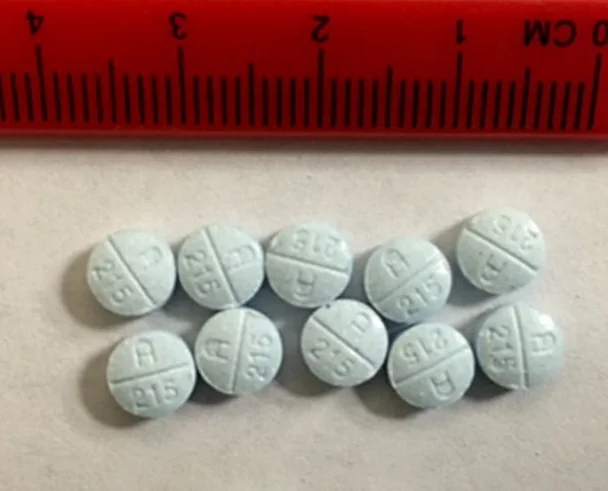
Tennessee bureau of investigation

The DEA said “hundreds of thousands of counterfeit prescription drugs” laced with fentanyl were on the market and predicted more would be produced because of heavy demand and the “enormous profit potential” of fake medication.

“The seizures of fentanyl-laced pills and clandestine pill press operations all across North America indicate that this is becoming a trend, not a series of isolated incidents,” the DEA said.

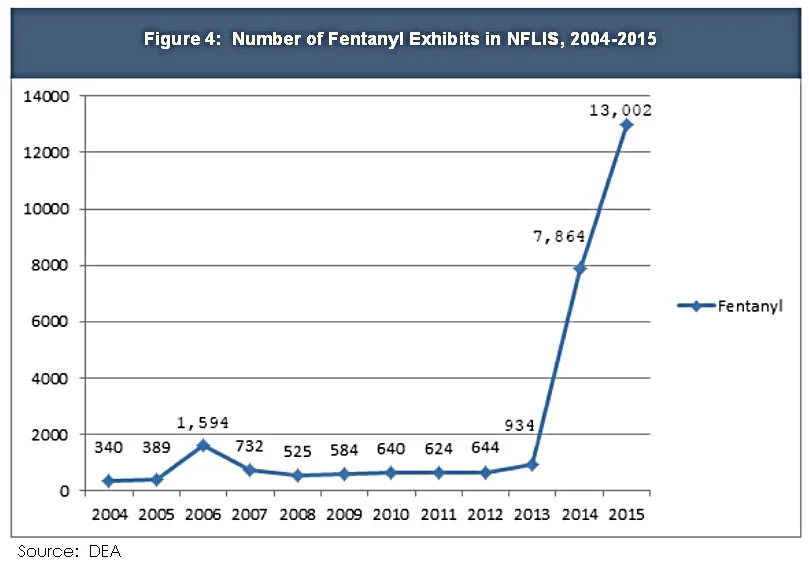
The report highlighted the fact that U.S. forensic laboratories tested over 13,000 seized drugs containing fentanyl in 2015, up sharply from less than a thousand cases two years earlier.
The DEA said counterfeit pills are being smuggled into the U.S. from Mexico and Canada. Traffickers usually purchase powdered fentanyl and pill presses from China, and pill press operations have recently been found in Los Angeles and New York.

The counterfeit drugs problem is so serious the DEA believes it is undermining efforts to limit opioid prescribing.

“The arrival of large amounts of counterfeit prescription drugs containing fentanyls on the market threatens to devalue such initiatives and replaces opioid medications taken off of the street,” the DEA said. “Although not all controlled prescription drug users eventually switch to heroin, fentanyl-laced pills give DTOs (drug trafficking organizations) broader access to the large controlled prescription drug user population, which is reliant upon diversion of legitimate pills. This could undermine positive results from the state Prescription Drug Monitoring Programs, as well as from legislative and law enforcement programs.”

As Pain News Network has reported, Massachusetts and Rhode Island recently said fentanyl was to blame for nearly 60 percent of their opioid overdose deaths.

Senators Urge DEA to Reduce Supply of Opioids

A group of U.S. Senators is urging the DEA to "aggressively combat the opioid epidemic," not by going after fentanyl traffickers, but by making legal opioids even harder to get.

In a letter to acting DEA administrator Chuck Rosenberg, Senators Dick Durbin (D-IL) Sherrod Brown (D-OH), Edward Markey (D-MA), Amy Klobuchar (D-MN), Angus King (I-ME), and Joe Manchin (D-WV) urged the agency to tighten its annual quotas for manufacturers to produce controlled substances.

"In effect, DEA serves as a gatekeeper for how many opioids are allowed to be legally sold every year in the United States. Yet, for the past two decades, DEA has approved significant increases in the aggregate volume of opioids allowed to be produced for sale," the letter states.

The Senators urged the agency to rollback a 25 percent increase in production quotas for Schedule II opioids that was implemented in 2013. Schedule II opioids include hydrocodone, a widely prescribed painkiller that was reclassified from a Schedule III to a Schedule II drug in 2014.

The Senators also said the DEA should make a mid-year adjustment in the quota to immediately reduce the supply of prescription opioids. The letter did not address the fentanyl crisis or the rapid growth in counterfeit medication.

Lower Back Pain Linked to More Drug Use

By Pat Anson, Editor

People with chronic lower back pain are more likely to have used illicit drugs -- including marijuana, cocaine, heroin and methamphetamine -- compared to those without back pain, according to new research published in the journal Spine.

The study also found that people with lower back pain who had used illicit drugs were somewhat more likely to have an active prescription for opioid pain medication (22.5% vs. 15%).

Lower back pain is the world’s leading cause of disability and most people will suffer from it at least once in their lives. Although nearly a quarter of the opioid prescriptions written in the U.S. are for low back pain, medical guidelines often recommend against it.

Researchers analyzed data from over 5,000 U.S. adults who participated in a nationally representative health study and found that nearly half (49%) of those who reported lower back pain admitted having a history of illicit drug use, compared to 43% of those without back pain.

Current use of illicit drugs (within the past 30 days) was much lower in both groups; 14% versus nine percent.

The study did not differentiate between recreational and medical marijuana use, nor did it draw a distinction between marijuana use in states where it is legal and where it is not. All marijuana use was considered "illicit."

All four illicit drugs in the survey were more commonly used by people with low back pain compared to those without back pain. Rates of lifetime use were 46.5% versus 42% for marijuana; 22% vs. 14% for cocaine; 9% vs. 5% for methamphetamine; and 5% vs. 2% for heroin.

Researchers said there was no evidence that illicit drug use causes lower back pain, only that there was an association between the two that bears watching when opioids are prescribed.

“The association between a history of illicit drug use and prescription opioid use in the cLBP (chronic lower back pain) population is consistent with previous studies, but may be confounded by other clinical conditions,” said lead author Anna Shmagel, MD, Division of Rheumatic and Autoimmune Diseases at the University of Minnesota.

“Mental health disorders, for example, have been associated with both illicit substance use and prescription opioid use in the chronic low back pain population. In the context of management, however, illicit drug abuse is predictive of aberrant prescription opioid behaviors. As we face a prescription opioid addiction epidemic, careful assessment of illicit drug use history may aid prescribing decisions.”

In a recent analysis of prescriptions filled for 12 million of its members, pharmacy benefit manager Prime Therapeutics found that nearly a quarter of the opioid prescriptions were written to treat low back pain.

"Our analysis found low back pain was the most common diagnosis among all members taking an opioid, even though medical guidelines suggest the risks are likely greater than the benefits for these individuals," said Catherine Starner, PharmD, lead health researcher for Prime Therapeutics.

In a 2014 position paper, the American Academy of Neurology said opioids provide “significant short term pain relief” for low back pain, but there was “no substantial evidence” that long term use outweighs the risk of addiction and overdose.

Woman Arrested in California Fentanyl Investigation

By Pat Anson, Editor

A 50-year old northern California woman has been arrested for drug trafficking after a federal grand jury indicted her for illegal possession and distribution of hydrocodone and fentanyl.  Mildred Dossman was arrested at her home in Sacramento. She faces up to 20 years in prison and a $1 million fine if convicted.

Federal prosecutors did not reveal many details in the indictment, but Dossman’s arrest appears to be connected to a wave of fentanyl overdoses earlier this year that killed at least 12 people and hospitalized dozens of others in the Sacramento area.

The fentanyl involved in those deaths was disguised as Norco, a prescription pain medication that combines hydrocodone with acetaminophen.

Dossman was allegedly involved in drug deals on January 18 and March 25 of this year – which fits the timeline of the fentanyl overdoses.

Fentanyl is a powerful opioid that is 50 to 100 times more potent than morphine. It is prescribed legally in patches and lozenges to treat severe chronic pain, but illicitly manufactured fentanyl is fast becoming a scourge across the U.S. and Canada, where it is blamed for thousands of fatal overdoses.  

In addition to the counterfeit Norco, fentanyl has also been found in fake oxycodone and Xanax tablets. The counterfeit medication appeared on the streets at about the same time the Centers for Disease Control and Prevention released controversial guidelines that discourage doctors from prescribing opioids for chronic pain.

“I've had one of these so called super Norco’s,” a 25-year old Sacramento man told Pain News Network in March.  “It had the markings of a regular prescription, M367. I only took a half just in case because of the news from the day and luckily I did. It was unlike any high I've had. It made me dizzy.  I couldn't see straight or sleep.”

“David” bought 16 of the fake Norco pills from a friend for $5 each, not knowing he was actually getting fentanyl. He initially began taking opioid pain medication for a herniated disc several years ago, but switched to street drugs after being abruptly cut off by his doctor. 

“I tried everything to get more and more prescription drugs prescribed. After that I had no choice but to turn to the street. It's a huge problem here in Sacramento,” said David. “Now there is such a high demand for the pills because of the increased regulations on them and not being able to scam an early refill. It has caused the price to spike on the streets and as soon as the word gets out someone has them they are immediately sold for ridiculous prices. It’s not all addicts and not all pain patients. The doctors around here are cutting people down on the amount they are prescribed, causing them to have nowhere else to turn but the neighborhood dealer.”

A DEA spokesman told PNN last month the U.S. was being “inundated” with illicit fentanyl, particularly in the Midwest and northeastern states. Massachusetts, Rhode Island, Ohio and Delaware recently reported an “alarming surge” in fentanyl related deaths. In some states, the number of deaths from fentanyl now exceeds those from prescription opioids.

“We think fentanyl and fentanyl overdoses have been underreported over the years in a lot of places. But we think people are now starting to pay more attention to it,” said DEA spokesman Rusty Payne.

CDC: Opioid Guidelines 'Not a Rule, Regulation or Law'

By Pat Anson, Editor

It’s no secret in the pain community that many patients are being taken off opioid pain medication or weaned to lower doses because of an overzealous reaction by doctors to the CDC’s opioid prescribing guidelines.

Those guidelines – which discourage opioid prescribing for chronic pain -- are meant to be voluntary and are intended only for primary care physicians. Yet they are having a chilling effect on many doctors and their patients.

One such patient, a retired Nevada pharmacist who took high doses of opioids for years for chronic back and hip pain, refused to be silent when his pain management doctor abruptly lowered his dosage to 90 mg (morphine equivalent) a day – the highest dose recommended by the CDC.  

Richard Martin wrote 27 letters to the CDC and didn’t mince words, saying doctors in the Las Vegas area “are scared shitless that the DEA will get them” and that their malpractice insurance rates would skyrocket if they didn’t follow the guidelines to the letter.

“All of you at the CDC and like-minded groups, individuals, etc. are causing hundreds of thousands if not millions of people to suffer in pain needlessly,” wrote Martin.

“The medical community has failed me. I was stable on my opioid regimen for over 6 years. No tolerance, no cheating, no hyperglasia and a pretty good quality of life. Last year my primary MD up and told me to go to a pain specialist. He would no longer provide me with opioid prescriptions. The first thing the pain doctor did was decrease my opioids. Of course I am in much more pain now. Due to my decreased level of activity my blood sugar levels have spiked. I used to be able to walk up to 3 miles every other day. Now I can’t go walking. I may have to start taking insulin.”  

To see all of Martin’s letter, click here.

Martin received two responses from the CDC. One appears to be nothing more than a form letter, in which a CDC official blandly wrote, “We are sorry to hear about your health problems.”

The other letter was from Debra Houry, MD, Director of the CDC’s National Center for Injury Prevention, which oversaw the guidelines’ development. In her letter, Houry appears to acknowledge that the guidelines are being too widely implemented by doctors.

“The Guideline is a set of voluntary recommendations intended to guide primary care providers as they work in consultation with their patients to address chronic pain,” wrote Houry.

“Specifically, the Guideline includes a recommendation to taper or reduce dosage only when patient harm outweighs patient benefit of opioid therapy. The Guideline is not a rule, regulation, or law. It is not intended to deny access to opioid pain medication as an option for pain management. It is not intended to take away physician discretion and decision-making.”

To see Houry’s letter in its entirety, click here.

Martin wrote back to Houry and challenged her to address the issue of patients being abruptly weaned from opioids more publicly.

DEBRA HOURY, MD

“My pain management doctor and his group are quoting your guidelines and more or less cowardly blaming you for the problem. Personally, I think they may be using this as an excuse to get rid of Medicare patients and perform more interventional injections or procedures,” he wrote in his follow-up letter, which you can see by clicking here.

“The CDC, in my opinion, should change the dosing guideline… The CDC should EMPHASIZE as you stated ‘The Guideline is not a rule, regulation, or law. It is not intended to deny access to opioid pain medication.’”  

Martin has yet to receive a response from Houry. When Pain News Network contacted the CDC about the letters, we were encouraged to post them. But the agency declined an offer to explain its position further.

Martin’s letter writing campaign hasn’t ended. He’s written to the American Association of Retired Persons (AARP) about the “huge tragedy unfolding across America” and has been contacted by Pharmacy Today magazine about having one of his letters published.

Patient Survey about CDC Guidelines

Another pain patient who is fighting back is Lana Kirby, a 60-year old retired paralegal who suffers from chronic back pain and several other chronic illnesses. Kirby and her husband recently moved to Florida, but found she can't find a doctor in that state willing to prescribe the pain medication she needs. So every three months, Kirby drives back to her home state of Indiana to see a doctor and get her prescriptions filled.

“In all my years as a paralegal, I've never seen anything like this,” she told PNN.  “Quite frankly, if an attorney were to take this to Federal Court, it would be a slam dunk due to the damages occurring on an ongoing basis and the ‘avoidable decline.’ We all know it costs a lot more to take care of a bedbound person than someone who can take care of themselves.  And if that means using opioids, that is the way it should be.  But as far as I know, no one has found an attorney with the resources to take on a case like this.”

Kirby is conducting an online survey of pain patients, asking if their opioid doses have been lowered since the CDC guidelines came out or if they have been discharged or abandoned by their doctors.

“The reason I did the survey was because I was talking to hundreds of pain patients everyday online and they all were saying the same thing,” she said. “Having a legal background, I felt that the damages needed to be documented and quantified in order to prove what was going on and the volume of people affected.”

To take Kirby’s survey, click here.

Lies, Damned Lies, and Overdose Statistics

By Pat Anson, Editor

“There are three kinds of lies: Lies, damned lies, and statistics.”

That famous quote, often attributed to British Prime Minister Benjamin Disraeli, was first used by Mark Twain in 1906. One hundred and ten years later, we still don’t know who said it first or why.

Which brings us to overdoses -- and the confusing, sometimes exaggerated, and often contradictory statistics on how many Americans are dying daily from opioid pain medication.  

According to the nation’s news media, anywhere from dozens to hundreds of Americans are dying every day from drug overdoses -- or as the Los Angeles Times boldly claimed today, “Overdose deaths now total 130 every day, or roughly the capacity of a Boeing 737.”

A Boeing 737? Really?

According to Boeing, a 737 can hold between 85 and 215 passengers, depending on the model. But maybe the Times is just giving us a ballpark estimate -- which may be entirely appropriate, given the muddled and murky reporting we get on overdoses.

The Times story got me curious about how other news organizations are reporting the overdose numbers. Here is a sampling:

100 Americans die of drug overdoses each day.” The Washington Post

 “Dozens of Americans die daily from overdoses of pain relievers, heroin and other opioids.” Associated Press

“The United States averages 110 legal and illegal drug overdose deaths every day.”  Pittsburgh Post Gazette

The number of these deaths reached...  about 125 Americans every day.” New York Times

 “More than 120 Americans die of opiate overdoses every day.” Logan Daily News

           “44 people in the U.S. die every day from overdose of prescription painkillers.” Des Moines Register

“More than 40 Americans die every day from prescription opioid overdoses.” Fox News

“Roughly 78 Americans die every day from overdoses of opioids.” Fox News

Yes, that’s right, Fox News reported two different estimates. To be fair, the numbers depend on whether you're counting all drug overdoses, opioid overdoses alone, or just prescription painkiller overdoses. Still, the numbers are all over the map and probably confusing to most readers.

Advocacy groups and politicians also play the numbers game:

“Every day, 46 Americans die from using prescription painkillers.” American Association of Retired Persons

“Every day, about 60 people die from opioid overdoses -- 44 from narcotic painkillers and 16 from heroin.” Physicians for Responsible Opioid Prescribing

“Over 130 Americans die every day from opioid and heroin overdoses.”  The Police Assisted Addiction Recovery Initiative

“Each day, 129 people die from drug overdoses in our country.”  Sen. Patrick Leahy (D-Vermont)

“Every day, 51 Americans die as a result of prescription opioid overdose.” Sen. Joe Manchin (D-West Virginia)  

So who is right? According to the Centers for Disease Control and Prevention, 28,647 Americans died from opioid overdoses in 2014, which works out to about 78 per day -- the number most often reported by the nation’s news media.

It is also a very misleading number, because many of those deaths include overdoses from heroin, illicit fentanyl and other illegal opioids. Take out the illegal drugs and the CDC admits that only about “half of all opioid overdose deaths involve a prescription opioid.”

That estimate too is misleading, because some heroin and illicit fentanyl deaths are wrongly reported as prescription opioid overdoses, because the coroner or medical examiner never actually performed a toxicology test on the deceased. The CDC admits that as well, but not too loudly.

So the next time you see someone report on the number of overdose deaths in the United States (and tries to fill a Boeing 737 in the process), remember that quote about “Lies, damned lies, and statistics.”

And thank either Mark Twain or Benjamin Disraeli for reminding us that statistics don’t always tell the truth.

Two Drug Combo More Effective for Fibromylagia

By Pat Anson, Editor

Two drugs commonly prescribed for fibromyalgia – Lyrica and Cymbalta – are more effective in treating the disorder when used together, according to a new study by Canadian researchers.

Lyrica (pregabalin) is an anti-seizure nerve drug, while Cymbalta (duloxetine) works primarily as an anti-depressant. Both have been used for years to treat fibromyalgia -- a poorly understood disorder characterized by deep tissue pain, fatigue, insomnia, and mood swings. Until now no one has studied how effective the two drugs could be when used in combination.

"We are very excited to present the first evidence demonstrating superiority of a duloxetine-pregabalin combination over either drug alone," said lead author Ian Gilron, MD, Director of Clinical Pain Research at Queen’s University in Kingston, Ontario.

“The results of this trial suggest that combining pregabalin with duloxetine can safely improve outcomes in fibromyalgia including pain relief, physical function and overall quality of life.”

This was a small study – only 41 fibromyalgia patients participated – and the researchers admit that larger trials are needed to see if the results can be replicated. The new research was published in the journal Pain.

The study is the latest in a series of clinical trials -- funded by the Canadian Institutes of Health Research -- which Gilron and his colleagues have conducted on combination therapies for chronic pain conditions. By studying promising drug combinations, they hope to show physicians how to make the best use of current treatments.

"The value of such combination approaches is they typically involve drugs that have been extensively studied and are well known to health-care providers," says Gilron.

Patients in the study were divided into three groups that either took pregabalin alone, duloxetine alone or a combination of the two for six weeks. Doses were gradually increased in the study to the maximum tolerated dose. When used in combination, patients could only tolerate relatively low doses of pregabalin and duloxetine, suggesting the drugs have an overlap effect when used together.

“The pharmacological diversity of a pregabalin-duloxetine combination is a mechanistically appealing feature that increases the likelihood of additive analgesic actions although there could similarly be some additive adverse effects with this combination. Even at significantly lower doses during combination therapy, superior global pain relief during combination therapy would suggest a greater additive effect for pain reduction than for side effects,” said Gilron.

The biggest side effect of the pregabalin-duloxetine combination was drowsiness, and the researchers admit that reduced physical activity caused by drowsiness could have contributed to pain reduction. 

Patients have long complained of other side effects from pregabalin and duloxetine when used separately, such as weight gain, nervousness, and brain fogginess. Many have also reported severe withdrawal symptoms and “brain zaps” when trying to get off the drugs. The study apparently didn’t address those issues. 

Lyrica (pregabalin) is one of Pfizer’s top selling drugs and generates over $5 billion in revenue annually. In addition to fibromyalgia, Lyrica is approved by the Food and Drug Administration to treat chronic pain associated with epilepsy, shingles, diabetic peripheral neuropathy, and spinal cord injury. The drug is also prescribed “off label” to treat lumbar spinal stenosis, the most common type of lower back pain in older adults.

Cymbalta (duloxetine) generated sales of $5 billion for Eli Lilly until its patent expired in 2013 and cheaper generic versions of duloxetine became available. Cymbalta is approved for fibromyalgia, neuropathy, osteoarthritis, depression and anxiety.

Only one other medication – Savella – is approved by the FDA for fibromyalgia, but it is not as widely used as the other drugs.

Fibromyalgia was initially thought to be a musculoskeletal disorder, but research now suggests it's a disorder of the central nervous system - the brain and spinal cord. Researchers believe that fibromyalgia amplifies painful sensations by affecting the level and activity of brain chemicals responsible for processing pain signals. It affects twice as many women as men.

What Next for Arachnoiditis Patients?

By Pat Anson, Editor

A pioneering two-day conference on arachnoiditis has ended in Helena, Montana with dozens of  patients armed with new information about the chronic and disabling spinal disease.

Many are also left wondering who will treat them and how to pay for it.

"We practitioners need your help and you need our help," says Forest Tennant, MD, who is the world's foremost authority on arachnoiditis, a progressive and incurable inflammation of the spinal cord that leaves most people who have it with severe chronic pain.

Tennant, who treats about 60 arachnoiditis patients from around the country at his pain clinic in West Covina, California, has developed a complex and unique therapy for arachnoiditis that combines pain medication, anti-inflammatory drugs, vitamins and hormones. Once bedridden or using walkers, several of his patients were healthy enough to make the long trip to Montana to hear him speak.

"I would not dare prescribe these drugs if I didn't have control of the opioids and everything else you're doing. These things are hazardous in the hands of the inexperienced," he warned.

At age 75, Tennant knows it is time for other doctors to learn and start practicing his treatment methods.  But he and his patients face a dilemma. Most pain management doctors and specialists already have a full patient load and Tennant himself is not taking new patients.

"Every good specialist in this country is booked. They're not available and they don't know anything about this anyway," says Tennant.

"Pain management really is its own specialty now and if they're not in that field, they're not going to help you do this. These hormones are going to have to be done by the same doctor that manages your pain and manages your inflammation. It's going to have to be done by the same practitioner."   

If attendance at the conference is any indication, finding doctors willing to learn and practice Tennant's treatment protocol will be difficult. Invitations went out to over two thousand practitioners in Montana, but only a handful showed up.  No one from the Montana Medical Association or the Montana Board of Medical Examiners attended.

"The problem with this protocol in the conventional medical world is that this crosses disciplines. We're talking rheumatologists, we're talking endocrinologists, and that's where conventional medicine gets stuck," says Christine White, ND, a naturopathic physician from Missoula who attended the conference. "Conventional medicine has evolved into this realm where the general practitioner doesn't do a lot. They refer out (to specialists) and what we need to do as physicians is get general practitioners willing to take on more rings of this problem."

The problem may be a bigger one that anyone imagines. Tennant estimates as many as one million Americans may suffer from arachnoiditis, many of them misdiagnosed with “failed back syndrome” or other spinal problems.

Most people get the disease when the arachnoid membrane that surrounds their spinal cord is damaged during surgery or punctured by a needle during an epidural steroid injection. Inflammation sets in and can spiral out of control, forming scar tissue that cause spinal nerves to stick together. That leads to adhesive arachnoiditis and neurological problems, which can cause burning or stinging pain that can be felt from head to toe.

Insurance Won't Pay the Bills

Besides getting treatment, another common problem faced by arachnoiditis sufferers is their insurance coverage.

"The reimbursement structure is part of the problem and the reason why I ended up with adhesive arachnoiditis," says Terri Anderson, who as a federal employee was covered by Blue Cross Blue Shield when she went to get treatment for back pain.

"I think the doctors and surgeons looked at my Blue Cross Blue Shield and they wanted to do epidural steroid injections and spinal surgery. Blue Cross had good coverage for all these invasive procedures, so I think they have some culpability," she said

Like many arachnoiditis patients, Anderson is not reimbursed for the unusual drugs and hormone therapy that she gets "off label" from Dr. Tennant or for the cost of traveling to see him in California. Her out of pocket expenses add up to about $200 a month.

"My co-pays for my medications are about $500 a month," says Nancy Marr of Los Angeles, who is insured through Medicare and a supplemental policy with AARP. Marr doesn't have to travel far to see Tennant, but she does have to pay out-of-pocket for his services.

"To participate in this kind of a program at this point in time would end up costing people a tremendous amount of out-of-pocket costs," she says.

While all of this is discouraging, the mood was anything but gloomy at the conference. For many, including this reporter, it was their first chance to meet and interact with people they've been communicating with online for years. That sense of community and a common goal stirs optimism. And so does the knowledge that the conference may have laid the groundwork for a treatment that could ultimately benefit thousands of people who are suffering.

New Treatment Gives Hope to Arachnoiditis Patients

By Pat Anson, Editor

Dozens of pain patients and physicians are meeting in Helena, Montana this weekend at a pioneering medical conference focused on arachnoiditis -- a progressive spinal disease long thought to be incurable that leaves many patients disabled with chronic back pain.

The conference is being led by Dr. Forest Tennant, a pain management physician from southern California, who has developed a unique protocol to treat arachnoiditis with a combination of pain medication, hormones and anti-inflammatory drugs. Unable to get the same type of therapy where they live, desperate patients from as far away as Maine, Alaska and Florida have been traveling to see Tennant for treatment at his pain clinic in West Covina, a Los Angeles suburb.

“We’re making history today. In all my wildest dreams I never thought we’d be having an arachnoiditis seminar in my home state,” said Gary Snook, a Montana native and a patient of Tennant for over a decade. “If there is one thing that we can learn today, it's that this hopelessly incurable disease that we suffer from is not as hopeless as we once thought.”

It was Kate Lamport’s idea to have Tennant give a seminar on arachnoiditis in her hometown of Helena. The 33-year old mother of four developed spinal pain after a series of epidurals for child birth and bulging discs in her back. She was diagnosed with arachnoiditis last year and went to see Dr. Tennant in California.

“As I learned more about arachnoiditis, I realized how many people were struggling just getting a diagnosis and treatment,” Lamport says. “There are so many people who want to go see Dr. Tennant, but they can’t. He’s booked and they can’t afford to travel, so I wanted to put something together to give people an opportunity to come see him and learn from him.”

The arachnoitditis conference is not just for patients. Several physicians and practitioners are also attending, hoping to learn some of the therapies Tennant has developed over the past decade.  

FOREST TENNANT, MD

“Physicians are simply not getting the education and training they need,” says Tennant. “I am just so frustrated by all of the patients who are calling and all of the physicians that are calling, the demand for knowledge. And so we need a new way of doing some training and some education. And this is my first attempt to step outside of the educational box, if you will, and see if this is a mechanism that will successful.”

Tennant has conducted extensive research on the disease and has launched an Arachnoiditis Education Project for physicians. He says patients respond much better to treatment when arachnoiditis is in its early stages, when the inflammation is limited to the arachnoid membrane that surrounds the spinal cord.

As the disease progresses, the inflammation causes scar tissue to build around spinal nerves, which begin to adhere or stick together, leading to adhesive arachnoiditis -- which causes severe pain and other neurological problems, such as burning and stinging sensations that can radiate from the back down to the feet. More advanced stages of arachnoiditis can lead to paralysis.

Growing Number of Cases

Once considered rare, arachnoiditis is appearing more frequently as interventional pain physicians perform more surgeries and epidural steroid injections as alternatives to opioids for back pain. Tennant estimates as many as one million Americans may suffer from arachnoiditis, many of them misdiagnosed with “failed back syndrome” or other spinal conditions. He says every pain practice in the country needs to familiarize itself with arachnoiditis.

“We’ve had a decade of some marvelous science that no one talks about. We talk about opioids, epidurals and all the problems, but we don’t talk about the good things that have happened scientifically that have helped us develop a protocol to treat spinal cord inflammation,” Tennant told Pain News Network.

One discovery is the role that specialized cells in the brain and spinal cord – called microglial cells -- have in protecting and nourishing nerve cells. When glial cells become hyperactive in response to an injury, they trigger an inflammatory response that causes chronic pain.  That inflammation needs to be addressed with corticosteroids, says Tennant, or pain medications will never be effective.

The second discovery is that the central nervous system uses oxytocin, progesterone, pregnenolone and other hormones to regulate microglial cells. Hormone supplements and injections can be used to boost hormone levels and keep microglial cells at healthy levels.

“These two discoveries are profound. If it had not been for these two things, we would not be doing this seminar. The protocol that I’ve developed is because of these discoveries,” says Tennant.

Treatment Lowers Use of Opioids

Tennant’s treatment protocol is complex and requires the “off-label” use of several different medications. But many of his patients report they’ve been able to lead more productive and active lives, while reducing their use of opioid pain medication.

“It’s allowed me to be more active. I’m less exhausted, I get around better. I don’t have to use a walker as much,” says Rhonda Posey of Texas, who started seeing Tennant in April. “I’m smiling more. I’ve got better spirit and I have hope.”

“I actually believe that I was close to dying last year,” says Nancy Marr of Los Angeles, who suffered from arachnoiditis for a decade before she started seeing Tennant last year. “I went to see Dr. Tennant because my pain physician all of a sudden was threatening to withdraw all of my opioid medication.”

Blood tests revealed that Marr had low hormone levels and her inflammatory markers were “off the charts.” After treatment by Tennant, she’s only taking half the oxycodone she used to need for breakthrough pain.   

“My inflammatory markers are within normal range and my hormone levels are up. I’m feeling much better. I do have flares, but I can do a lot more,” she says.

“I’m on less pain medication now than I’ve been on for years,” said Jerry Davis of Arizona, who believes his back problems stem from a case of meningitis. “I got off the fentanyl. I got off all the other stuff."

Davis said he can usually sleep through the night, no longer has to spend some days in bed, and can lead a fairly normal life.

"I wasn’t in a wheelchair, but I probably would be by now if I hadn’t found him,” he says.

At age 75, Tennant isn’t sure how much longer he’ll be practicing. But he’s determined to share what he’s learned with other doctors, so they can provide the same treatment and hope he's given to arachnoiditis patients. Tennant is planning to host another arachnoiditis seminar in Hattiesburg, Mississippi this October.

Medicare Drops Pain Questions in Patient Survey

By Pat Anson, Editor

The Centers for Medicare and Medicaid Services (CMS) has caved into political pressure from Congress and healthcare lobbying organizations by proposing to drop all questions related to pain in patient satisfaction surveys.

The proposed rule change is the latest in a series of steps by the federal government aimed at fighting the so-called opioid epidemic by reducing the prescribing of narcotic pain medication. The policies are meant to prevent addiction and abuse, but have left many pain patients without access to opioids, and feeling marginalized and abandoned by the healthcare system.

At issue in the Medicare rule change is a funding formula that requires hospitals to prove they provide quality care through patient satisfaction surveys. The formula rewards hospitals that provide good care and are rated highly by patients, while penalizing those who do not. 

Critics claim that three pain care questions in the survey -- known as the Hospital Consumer Assessment of Healthcare Providers and Systems survey (HCAHPS) -- encourage doctors to overprescribe opioid pain medication to boost their hospital's scores.

"While there is no empirical evidence of this effect, we propose to remove the pain management dimension from the Hospital Value-Based Purchasing program to eliminate any potential financial pressure clinicians may feel to overprescribe pain medications," CMS said in a statement.

"CMS continues to believe that pain control is an appropriate part of routine patient care that hospitals should manage and is an important concern for patients, their families, and their caregivers."

CMS has been under intense political pressure over the last few months to drop the pain questions. In March, 26 U.S. senators sent a letter to Health and Human Services Secretary Sylvia Mathews Burwell claiming "the evidence suggests that physicians may feel compelled to prescribe opioid pain relievers in order to improve hospital performance on quality measures."

Several physician groups have also made the same claim, without offering anything more than anecdotal evidence. Physicians for Responsible Opioid Prescribing (PROP)  said the survey "fosters dangerous pain control practices" and even the American Medical Association recently said the surveys "are clearly motivating forces for opioid prescribing."

A top Medicare official disputed those claims in an article published in JAMA. 

"It has been alleged that, in pursuit of better patient responses and higher reimbursement, HCAHPS compels clinicians to prescribe prescription opioids. However, there is no empirical evidence that failing to prescribe opioids lowers a hospital’s HCAHPS scores," wrote Lemeneh Tefera, MD. “Nothing in the survey suggests that opioids are a preferred way to control pain.”

These are the three pain questions in the CMS patient survey::

During this hospital stay, did you need medicine for pain?

During this hospital stay, how often was your pain well controlled?

During this hospital stay, how often did the hospital staff do everything they could to help you with your pain?

The agency said it would develop and "field test" alternative questions related to pain and include them in the survey. Public comments on the proposed rule change will be accepted until September 6, 2016.

CMS said the rule changes "are based on feedback from stakeholders, including beneficiary and patient advocates, as well as health care providers, including hospitals, ambulatory surgical centers and the physician community."

While some politicians and lobbyists may support the CMS decision, pain patients clearly do not. 

Pain News Network and the International Pain Foundation recently conducted a survey of over 1,250 pain patients. Nine out of ten said patients should be asked about their pain care in hospital satisfaction surveys. Over half rated the quality of their pain treatment in hospitals as poor or very poor, and over 80 percent said hospital staffs are not adequately trained in pain management. 

The Centers for Disease Control and Prevention has adopted guidelines that discourage primary care physicians from prescribing opioids or chronic pain. The Obama administration has also proposed spending over a billion dollars on opioid addiction treatment. Not one cent is proposed for pain research or for funding alternative treatments for pain.  

Post-Operative Chronic Pain Costly for Hospitals

By Pat Anson, Editor

A new study by Canadian researchers has documented the long-term cost that chronic pain can have when patients are sent home from a hospital with post-surgical pain that doesn't go away.

Researchers at Toronto General Hospital (TGH) and University Health Network (UHN) estimate that about 15 percent of complex post-operative patients develop moderate to severe chronic pain, and have significant disability that requires the use of opioids for long-term pain relief.

The estimated additional cost of treating those patients at TGF ranges from $2.5 million to $4.1 million year, due to repeat doctor visits, extended hospital stays, and re-admissions.

On average, chronic pain patients stay five to seven days longer in the hospital for the same condition as patients who do not have chronic pain.

"We need to break the cycle of pain before it becomes chronic. It is much harder to treat someone when the pain is entrenched, and the window of opportunity is lost," says senior author Hance Clarke, MD, who is Director of the Transitional Pain Service in the Anesthesia Department and Pain Management at TGH and a clinical researcher at the Toronto General Research Institute.

Clarke says it takes about six months for post-surgical pain to develop into chronic pain, and it’s important to intervene before that happens. About 13 percent of TGH surgical patients already have chronic pain when the enter the hospital, which can worsen after surgery.

The cost of treating chronic pain in Canada is estimated at between $47 billion and $60 billion a year -- more than HIV, cancer and heart disease combined. It costs about $5,000 a year to care for a chronic pain patient in Ontario.

"Pain is an epidemic, and the costs to the healthcare system, as well as to patients, are staggering," said Clarke.

Up to 70 percent of patients after major surgery are discharged from the hospital with a prescription for opioids. Three months later, over one in four (27%) are still using them.

"Identifying at-risk patients, typically those who have pre-existing pain, mental health issues, chronic use of opioids before surgery, is critical, so that we can develop follow-up plans, and educate patients and other healthcare providers,'' saysClarke. "We need to give patients the tools to manage their pain, should it become problematic."

The study findings are published in the journal Pain Management.

Ironically, the Canadian study highlighting the need for early pain intervention in hospitals comes at a time when politicians and some leading health officials in the U.S. are calling for an end to hospital surveys that ask patients about the quality of their pain care.

The American Medical Association recently said the patient surveys, which are required by Medicare, “are clearly motivating forces for opioid prescribing.”

Medicare says there is no evidence to support that claim, but has proposed dropping all pain questions from the survey.

Medical Marijuana Lowers Prescription Drug Costs

By Pat Anson, Editor

Prescriptions for pain relievers and other medications have fallen significantly in states where medical marijuana is legal, according to a new study published in the journal Health Affairs.

Researchers at the University of Georgia analyzed data from Medicare’s Part D prescription drug program in 2013 – a year when 17 states and the District of Columbia had legalized medical marijuana -- and estimated there was a cost savings of $165 million in prescription drug claims.

The results suggest that if all 50 states had medical marijuana laws that year, the overall savings to Medicare would have been around $468 million.

“Generally, we found that when a medical marijuana law went into effect, prescribing for FDA approved prescription drugs under Medicare Part D fell substantially,” said lead author Ashley Bradford, a recent graduate from the University of Georgia who will pursue her master's degree in public administration this fall.

"The results suggest people are really using marijuana as medicine and not just using it for recreational purposes.”

Compared to Medicare Part D's 2013 total budget of $103 billion, the $165 million in estimated savings only amounts to half of one percent. But it shows the potential for medical marijuana as an alternative to prescription drugs for a wide range of ailments, including pain. Until now, little was known about the impact medical marijuana was having on healthcare spending.

"We realized this question was an important one that nobody had yet attacked," said co-author W. David Bradford, who is the Busbee Chair in Public Policy in the UGA School of Public and International Affairs.

Researchers studied data on all prescriptions filled by Medicare Part D patients from 2010 to 2013, and then narrowed down the results to focus only on nine conditions for which marijuana might serve as an alternative treatment:  anxiety, depression, glaucoma, nausea, pain, psychosis, seizures, sleep disorders and muscle spasticity (stiffness).

The biggest reduction in prescriptions was for analgesics used to treat pain. Doctors in states where medical marijuana was legal wrote an average of 1,826 fewer daily doses for analgesics in 2013.

Currently 24 states and the District of Columbia have laws allowing for medical marijuana. The federal government still considers marijuana illegal, however the Drug Enforcement Administration is reviewing marijuana’s status as Schedule I controlled substance. Reclassifying marijuana could make it legal for medical use in all 50 states.

“Our findings and existing clinical literature imply that patients respond to medical marijuana legislation as if there are clinical benefits to the drug, which adds to the growing body of evidence suggesting that the Schedule I status is outdated,” said Bradford. “Lowering the costs of Medicare and other programs is not a sufficient justification for approving marijuana for medical use, a decision that is complex and multidimensional. Nonetheless, these savings should be considered when changes in marijuana policy are discussed.”

Previous studies have found a significant decline in use of opioid pain medication in patients who use marijuana and that marijuana users are not at greater risk of alcohol and drug abuse.        

Acetaminophen Linked to Autism and ADHD

By Pat Anson, Editor

An over-the-counter pain reliever widely used by pregnant women has been linked to autism and attention deficit problems in their children, according to researchers.

In a new study involving over 2,600 Spanish women and their children, published online in the International Journal of Epidemiology, researchers said maternal use of acetaminophen – also known as paracetamol -- appears to increase the risk of autism spectrum disorder (ASD) in boys. There was also a “weak” association between acetaminophen and attention deficit disorder (ADHD) in both male and female children.

“To our knowledge, this is the first prospective study to report an independent association between the use of acetaminophen during pregnancy and autism spectrum symptomatology in exposed children. It is also the first paper to report differential gender effects of prenatal acetaminophen exposure on neurodevelopment,” the researchers said.

About 40 percent of the women in the study used acetaminophen while pregnant. Their children were evaluated at 1 and 5 years of age.

The researchers speculated that boys may metabolize acetaminophen differently than girls, accounting for the greater risk of autism.

“Animal studies have suggested that male mice undergo greater toxicity than female mice after being administered a similar dose of acetaminophen. Furthermore, the male brain may be more vulnerable to early life stressors  and this could explain why neuropsychiatric disorders of childhood, such as ASC and ADHD, are more prevalent in male children,” they said.

Acetaminophen (paracetamol) is the world’s most widely used over-the-counter pain reliever. It is the active ingredient in Tylenol, Excedrin, and hundreds of other pain medications.

In a review of the study, the UK’s National Health Service (NHS) said researchers failed to prove a clear link between maternal use of acetaminophen and autism or ADHD.

“This research cannot prove paracetamol use is directly responsible for these findings. Not all links were statistically significant – for example, paracetamol was not linked with ADHD when looking at full diagnostic criteria, or with ASD when looking at the full sample of children,” the NHS said. “Importantly, no link was found with developmental or intellectual outcomes in the child.

“The current viewpoint is that occasionally using paracetamol as needed, and at recommended doses, is safe during pregnancy. This study has not provided sufficient evidence to the contrary to change this advice.”

Over 50 million people in the U.S. use acetaminophen each week to treat pain and fever. The pain reliever has long been associated with liver injury and allergic reactions such as skin rash.

Another recent study of pregnant women found that Lyrica (pregabalin) – a medication also prescribed for pain – appears to  increase the risk of major births defects, including heart defects and structural problems with the central nervous system.

Doctor: Pain Has Never Killed Anyone

By John Hsu, MD, Guest Columnist

The opioid problem with medicine began when The Joint Commission promoted the concept that pain is the fifth vital sign, and that patients should be asked about their pain and the quality of their treatment.

Ten years ago, when my hospital was undergoing an inspection, I clearly remember the examiner chastising me about my multimodal pain therapy and her concern that it would leave patients in pain. Clearly, doctors were put on alert that they could be sued for leaving a patient in pain.

Pain as a fifth vital sign is really contraindicated. Pain has never killed anyone, but opioids killed over 29,000 Americans last year. They don’t have any vital signs.

Doctors are now at a crossroads. The Centers for Medicare and Medicaid (CMS) has attached patient satisfaction scores to reimbursement. A patient comes to the office and demands pain meds. If the doctor prescribes pain meds, the doctor can not only lose their license, but go to jail for murder, as Dr. Lisa Tseng from Rowland Heights, CA has. Or they can risk poor patient satisfaction scores and, if they are a part of an accountable care organization (ACO), risk losing their employment.

Why are doctors burned out? Because other people have come between the doctor-patient relationship. I had a nurse tell me that she would put her 21 years in ICU up to my skills as a physician, to which I retorted that she still had to take orders from me.

This loss of respect amid the loss of autonomy is frightening.  It is one of the major complaints doctors describe when they are asked about burnout and why they are leaving medicine. The healthcare team is no longer run by the doctor. It is run by nurses from the quality review department, enforcing best practices on physicians so protocols and guidelines set up by the government are followed.

I call that evidence-less based medicine. Guidelines have destroyed the doctor-patient relationship. Does the government really have patient interests at heart or is the government really just a big micromanager? 

Perhaps the answer to the opioid problem lies with outside-the-box thinking. What if we correctly promote that pain must be present for us to live and that some pain is good?  Unlike Patrick Henry, who said “Give me liberty or give me death,” I personally would prefer to say, "Give me pain and give me liberty, but don't give me death."

Patients have a responsibility to take care of their own health. All prescriptions written by doctors and filled by pharmacists were written correctly. Yet some patients are not compliant and take too many pills. We all know we should not overeat, but 70% of the American public is obese. Humans are their own worst enemies.  Unpopular as this stance may seem, it must be mentioned that while the population of the U.S. is 324 million, 259 million opioid prescription were written in in 2012. 

The Joint Commission's edict that no patient should be in pain changed patients' expectations. Everyone expected and demanded to be pain free. But focusing on the short term discomfort experienced by those in pain ignores the long term goal of improving a patient's health.

The government (FDA, DEA, CDC and policymakers) has decided to restrict opioid prescriptions. This is logical, but does not address human nature. The end result has been that a
ddicts and patients who cannot get prescription opioids have turned to cheaper and easily attainable $5 bags of heroin. Heroin deaths have quadrupled in the last decade. In 2015, over 10,000 people died from heroin overdoses. The situation is rapidly worsening, as illicit drug makers are mixing heroin with fentanyl, which is 70 times stronger than morphine. 

The opioid conundrum has become readily apparent. Opioids may be the best treatment for pain, but they raise the risk of addiction, respiratory suppression, and death.

Cultural Shift Needed in Patient Education

The solutions needed for this dilemma include a cultural shift in the education physicians and nurses give to patients and the perception that pain is bad. We have to forsake the short term treatment of pain with opioids and look to the long term goal of preserving human life.

Let’s look at patient satisfaction scores and medical education. Studies show that when patient satisfaction scores are considered in prescribing care to patients, their care is not only more expensive, but often worse -- resulting in higher morbidity and mortality. Despite this evidence, CMS has connected patient satisfaction scores to hospital reimbursement. 

The Joint Commission has promoted an atmosphere where patients believe that they should never have to suffer pain and have the right to be “pain free.” More opioids were prescribed, but often patients demanded and even threatened doctors if they did obtain pain relief.  Doctors were accused of elder abuse and medical negligence if they did not prescribe pain medication, despite the lack of medical indications or consideration of narcotic alternatives. 

Fast forward a decade and suddenly the government realized that more addicts existed and more people were overdosing. Nearly 19,000 people died in 2014 from opioid prescription overdoses legally obtained from physicians and correctly filled by pharmacists.  The government ironically declared that doctors were to blame. 

The government could not blame patients for the problem, even though the general consensus is that patients were non-compliant with their prescribed opioid doses and shared their narcotics with family and friends.  Patients were not blamed for their actions because they vote and they reelect government officials. 

The government’s solution to the current opioid overdose epidemic was a policy change.  The FDA and CDC forced physicians to limit opioid prescriptions, and increased the difficulty of prescribing opioids by changing the scheduling of hydrocodone from Schedule III to Schedule II.  The government also began criminally prosecuting physicians for murder, even though the patient was noncompliant and overdosed on opioids. 

Why did the The Joint Commission, representing the federal government, have to get involved in medicine?  Why should a federal entity interfere with the doctor-patient relationship? It is not our fault that policies make us do certain things we believe are not in the best interest of the patient.

The Hippocratic Oath directs physicians to not allow outside influences effect their patient care decisions. I would like to see medicine practiced so that the government can no longer come between patients and their doctors. Let us amend the constitution so that there is a separation of medicine and state, just like the separation of church and state.  

JOHN HSU, MD

John Hsu, MD, has been practicing anesthesia at 600-bed hospital inCalifornia for the past 23 years.

Dr. Hsu recently founded MedRev Pharma, a pharmaceutical development company which is developing a safer opioid that minimizes the risk of abuse, addiction and respiratory depression.  Dr. Hsu is also the Director of SBS Medical Management, a consultation service that addresses issues relating to healthcare reform policies, physician practice management, and medical devices.

Pain News Network invites other readers to share their stories with us.  Send them to:  editor@PainNewsNetwork.org

The information in this column should not be considered as professional medical advice, diagnosis or treatment. It is for informational purposes only and represents the author’s opinions alone. It does not inherently express or reflect the views, opinions and/or positions of Pain News Network.

DEA: ‘Hundreds of Thousands’ of Fake Pills in U.S.

By Pat Anson, Editor

A new report from the U.S. Drug Enforcement Association about the national threat posed by heroin may tell us more about another illegal opioid – fentanyl -- than it does about heroin.

The recently unclassified report, which you can read by clicking here, documents a stunning 248% increase in overdose deaths involving heroin from 2010 to 2014. Over 10,500 Americans died from heroin overdoses in 2014 alone.

But it turns out many of those deaths may have actually been caused by fentanyl, a synthetic opioid 50 to 100 times more potent than morphine. We’re not talking about pharmaceutical grade fentanyl legally prescribed in transdermal patches or lozenges to treat chronic pain, but bootleg white powder fentanyl manufactured in China and smuggled into the U.S.

The DEA says there were 5,544 deaths caused by fentanyl and other synthetic opioids in 2014, but admits “the true number is most likely higher.” The actual number is not known because many coroners and state crime laboratories do not test for fentanyl.

What medical examiners do often test for in suspected drug overdoses is heroin – and that is why the statistics on heroin should be taken with a grain of salt. Because the real culprit is often fentanyl.

“Most of the areas affected by the fentanyl overdoses are in the eastern United States, where white powder heroin is used,” the DEA report states. “Fentanyl is most commonly mixed with white powder heroin or is sold disguised as white powder heroin.”

Massachusetts and Rhode Island – two eastern states with big heroin problems – recently came out with reports showing that fentanyl, not heroin, was to blame for nearly 60 percent of their opioid overdose deaths. The states used toxicology tests that are far more accurate than the death certificate codes used by the DEA and the Centers for Disease Control and Prevention.  

The DEA and CDC overdose statistics are muddied even further by the fact that heroin deaths are “often undercounted” and blamed on morphine, a prescription painkiller.

“Many medical examiners are reluctant to characterize a death as heroin related,” the DEA admits. “Thus many heroin deaths are reported as morphine-related deaths. Further, there is no standardized system for reporting drug related deaths in the United States. The manner of collecting and reporting death data varies with each medical examiner and coroner.”

Why does any of this matter to chronic pain patients? Because deaths caused by fentanyl and heroin are being lumped together with overdoses caused by prescription painkillers. The CDC has been doing it for years to build a case against opioid pain medication and to justify its release of guidelines that discourage doctors from prescribing opioids for chronic pain.

Prescribing of opioid pain medication has been in decline for several years and hydrocodone prescriptions have fallen by 30 percent since 2011. Yet the CDC claims there was a sudden spike in opioid analgesic deaths in 2014 and that nearly 19,000 Americans died.

Some pain patients – no longer able to get opioids legally – are turning to the streets for pain relief. And the DEA report acknowledges that patients are now being targeted by drug dealers selling counterfeit medication.

“Hundreds of thousands of counterfeit prescriptions pills, some containing deadly amounts of fentanyl, have been introduced into U.S. drug markets, exacerbating the fentanyl and opioid crisis,” the DEA report says. “Motivated by enormous profit potential, traffickers are exploiting high consumer demand for prescription medications by producing inexpensive, fraudulent prescription pills containing fentanyl.

“The equipment and materials necessary to produce these counterfeit drugs are widely available online for a small initial investment, greatly reducing the barrier of entry into production for small-scale drug trafficking groups and individuals. In addition, fentanyl pill press operations have been identified in the United States, Canada, and Mexico, indicating a vast expansion of the traditional illicit fentanyl market.”  

The DEA says counterfeit medication caused at least 19 deaths this year in California and Florida. But, like the statistics for fentanyl and heroin, the actual number may never be known.   

When asked to comment on the DEA report, a spokesperson for the CDC told us that "the large distribution of pills seems to be a new threat that we are still assessing."

Should Pain Patients Be Prescribed Naloxone?

By Pat Anson, Editor

A medication that rapidly reverses the effects of an opioid overdose should be prescribed to patients taking opioid analgesics for chronic pain, according to a study published in the Annals of Internal Medicine.

But the study fails to address the soaring cost of naloxone and whether pain patients can afford it.

In a pilot program at primary care clinics in San Francisco, doctors gave naloxone “rescue kits” to nearly 2,000 pain patients on long-term opioid therapy, and found that they had 63 percent fewer opioid-related emergency rooms visits in one year than patients not prescribed naloxone. Naloxone is usually administered by injection to reverse the effects of an overdose and has been credited with saving thousands of lives.

Naloxone has rapidly gone mainstream in recent years as public health officials have reacted to the so-called opioid epidemic. The rescue kits are increasingly being carried by police and paramedics, and given to heroin and opioid addicts to keep at home. But they are not usually prescribed to people taking opioids for pain relief.

Researchers say being given a rescue kit and being trained how to use one may have made pain patients in the study more careful with their opioids, without the kits ever actually being used.

“The educational component of the intervention may have reduced ED (emergency department) visits by altering risky behaviors, thus preventing overdoses in the first place,” said lead author Alexander Walley, MD, in an editorial also published in the Annals of Internal Medicine. "Receiving a naloxone rescue kit may have served as tangible reinforcement of overdose prevention messages, though this warrants further study.”

university of washington

The Centers for Disease Control and Prevention recently released opioid prescribing guidelines that encourage physicians to prescribe naloxone to high-risk patients.

“Providers should incorporate into the management plan strategies to mitigate risk, including considering offering naloxone when factors that increase risk for opioid overdose, such as history of overdose, history of substance use disorder, or higher opioid dosages (≥50 MME), are present,” the guidelines state.

The Food and Drug Administration is also encouraging the widespread distribution of naloxone. Last November, the agency approved Narcan -- a naloxone nasal spray – as an emergency life-saving medication. The approval came less than four months after the FDA received a new drug application from Adept Pharma. The process usually take the agency years to complete. 

“Anyone who uses prescription opioids for the long term management of chronic pain, or those who take heroin, are potentially at risk of experiencing a life-threatening or fatal opioid overdose where breathing and heart beat slow or stop,” Adept Pharma said in a statement.

The company said Narcan would be available at a “public interest price” of $75 for a package of two nasal sprays when ordered by public health  organizations.  For consumers, however, Narcan costs nearly twice as much. Healthcare Bluebook lists the retail “fair price” of Narcan at $134.

Prices for naloxone have soared in recent years as demand for the medication has increased. Some hospital emergency departments have run out of naloxone, according to Politico, and some drug makers are being accused of price gouging.

"You have increased demand and a few people who control the pricing, so they can charge whatever they want," said Eliza Wheeler, who runs an overdose prevention project in Northern California, in Politico.

Generic versions of naloxone cost only pennies in other countries, but in the U.S. an auto inject version sold by Kaleo Pharma soared from $575 for a two-dose package to $3,750, according to Truven Health Analytics.

“Opioid abuse is an epidemic across our country, yet drug companies continue to rip off the American people by charging the highest prices in the world because they have no shame,” Democratic presidential candidate Sen. Bernie Sanders said in a statement. “The greed of the pharmaceutical industry is killing Americans.” 

Many drug makers offer discounts on naloxone rescue kits to hospitals, schools, non-profits and public agencies, but patients often wind up paying full price.