Living with Chronic Pain After Being Labeled an Addict

By Patricia Young, Guest columnist

I am writing this article from the perspective of a patient who has chronic back pain and also an unwarranted, doctor-imposed label of “addiction.”

As most people can imagine, having both of these problems -- chronic pain and a substance use disorder -- can be very difficult for a healthcare provider to manage. Imagine though how harmful it is when someone is diagnosed or labeled as an addict and it is not an appropriate diagnosis.

The new polite wording for addiction is "chemical dependence," "substance use disorder" or "opiate dependence."

But these terms are not helpful either, since they have the same meaning to most healthcare professionals, as well as the general public.

To make matters worse, I was totally unaware that this diagnosis was ever made and it was never explained to me that it would be in my medical record. I want to share some of the problems this has caused me.

The first time I thought something was wrong was when I found myself having severe eye pain. I called ahead to the emergency room to make sure they had an eye doctor available to see me and decided to go in when they said they did. Instead, I was examined by a physician’s assistant (PA) after he reviewed my medical records. He looked at my eye from a distance without using any diagnostic equipment, told me I had an infection, and gave me antibiotic drops for it. The eye drops only made the pain worse.

I thought it was odd since I had no eye drainage of any kind and never had such pain before with an eye infection. A few days later I learned I had a herpes sore in my eye. No wonder those eye drops didn’t work!

Not one medical doctor or PA had taken my pain seriously in the ER because I had been labeled as having “drug seeking” behavior. But I did not know that until much later.

At the time I was taking opioid pain medication prescribed by my doctor to treat chronic pain from a lower back injury and two back surgeries. Sometimes I have flare ups of severe pain in my left hip, groin and leg despite the prescribed opiate drugs.

I went another time to the ER in severe pain and was seen by another physician’s assistant. After looking at my medical record, the PA proceeded to tell me to get out of the ER as I lay there on a gurney. My husband and I had no understanding at the time why 3 security guards came and told me to get back in my wheelchair myself or they would pick me up and put me there.

My husband picked me up and we were escorted out the door. I was 59 years old, disabled and was no threat to anyone. It was at that point that I started to wonder what “red flag” was in my medical records to make them treat me like that.

Later I found out what that red flag was. A doctor had written down after one visit that I had a “history of addiction.” This was the first time I became aware of this. I really could not understand why since no medical person had ever said I may have this diagnosis or even mentioned the word “dependency” to me.

I later had to move to Florida from upstate New York because my disability made it hard to cope with harsh winter weather. After the move I had great difficulty finding a new primary care physician. I believe no doctor wanted me as a patient after they saw the diagnosis of “history of addiction.”

We all know how difficult it can be to deal with an individual with a drug addiction. It’s a diagnosis that follows people for a lifetime. Unfortunately, when it is made in error, it is very detrimental and can even be a factor in someone’s death. Not only can there be a huge physical ramification from a diagnosis of addiction, but it can do harm to a person’s mental and emotional health, as well as cause family problems. I know it has affected me that way. The diagnosis evokes many people to make judgements.

I had many angry responses from healthcare professionals in my times of real need. The ones that threw me out of the ER demonstrated their anger by tone of voice, gestures, and curtness. I felt hopeless leaving there and my husband was so stunned he had no words to say. It was a very dark time in my life that is difficult to forget.

It has been suggested to me that I now suffer with post-traumatic stress syndrome and anxiety. Doctors want me to take anti-hypertensive medications daily as a result. This very frustrating and damaging diagnosis has led me to distrust the very physicians I go to for help. My blood pressure is high in their offices but not at home.

I also wrestle now with the problem of feeling as if my reputation has been harmed. I am seen by doctors as untrustworthy and in denial since I disagree with the addiction diagnosis. The very medical system that I worked in for almost 35 years has now mislabeled me and treats me harshly at a time when I need care myself.

I strongly believe there needs to be more understanding within the medical community as well as the public arena about this problem. There is a definite difference between a physical dependence on a substance versus an addiction to it. An addiction diagnosis suggests that one has misused drugs and has a mental disorder.

I have been judged as one of those types of people and it’s wrong. I had many medical professionals come up to me and congratulate me for stopping my pain medication. I thought they were crazy. It was no mental feat to stop taking the drugs, but I must admit my body’s physical reaction was not good. That is normal for someone that has taken opioid pain medicine for a period of time.

It is time we stop hurting and stigmatizing pain patients in this manner. It just makes our pain worse and can even lead to serious mental health problems and in some cases suicide.

Please healthcare providers, make sure your diagnosis is made correctly. I believe that an addiction or dependency diagnosis should only be made by someone who is trained in addiction medicine and who specializes in treating addictive disorders.

Patricia Young lives in Florida.

Pain News Network invites other readers to share their stories with us.  Send them to:  editor@PainNewsNetwork.org

The information in this column should not be considered as professional medical advice, diagnosis or treatment. It is for informational purposes only and represents the author’s opinions alone. It does not inherently express or reflect the views, opinions and/or positions of Pain News Network.

CDC: Prescription Opioid Abuse Costs $78.5 Billion

By Pat Anson, Editor

A new analysis by the Centers for Disease Control and Prevention estimates the total “economic burden” of prescription opioid abuse in the United States at $78.5 billion a year.

Researchers at the National Center for Injury Prevention and Control – the same agency that oversaw development of the CDC’s controversial opioid prescribing guidelines – analyzed economic data from 2013 associated with opioid abuse, including the cost of health care, lost productivity, substance abuse treatment and the criminal justice system.

“A large share of the cost is borne by the public sector, both through direct services from government agencies, but also through tax revenue that will be lost from reduced earnings. Also, the health care sector bears approximately one third of the costs we have estimated here,” wrote lead author Curtis Florence, a senior health economist at CDC.

Florence and his colleagues estimated that nearly two million Americans abuse or are dependent on opioids. Their study is published online in Medical Care, the official journal of the American Public Health Association.

 "More than 40 Americans die each day from overdoses involving prescription opioids. Families and communities continue to be devastated by the epidemic of prescription opioid overdoses.” said CDC Director Tom Frieden, MD, in a news release.

"The rising cost of the epidemic is also a tremendous burden for the health care system."

Exactly what that burden is is open to conjecture. The researchers admit that some of their data is flawed because they relied on death certificates codes – which often fail to distinguish between deaths associated with prescription opioids and those caused by heroin. Heroin users and prescription opioid users are essentially lumped together – even though heroin users are far more likely to enter the criminal justice system.

In addition, opioids associated with death were considered a sign of abuse even if multiple drugs were involved. No distinction was made if the deaths were accidental, intentional or undetermined.

“Our health care cost estimates used the definition of opioid abuse and dependence identified by ICD-9 diagnosis codes. This definition does not differentiate between prescription opioids and heroin,” said Florence. "We did not attempt to attribute costs to specific drugs if multiple types of drug abuse were reported. This could bias our results if the health care cost impact of abuse and dependence is different between prescription opioids and heroin, or if abuse of prescription opioids alone has a different effect from abuse of multiple drugs,”

The researchers also were unable to distinguish between the “nonmedical” use of opioids by someone who obtained the drugs illegally and those who obtained them legally through a prescription.  

“It is extremely difficult to measure all costs to society from an epidemic. In this case, there are many costs we were unable to measure, such as the reduction in quality of life of those who are dependent,” wrote Florence.

Despite these limitations, the CDC research team said their estimates should be considered by healthcare providers and regulators in deciding whether prescription opioids should be used to treat pain.

“In the ideal case, decision makers could use these estimates when weighing the benefits and risks of using opioids to treat pain, and evaluating prevention measures to reduce harmful use. However, at the present time a full accounting of both the benefits and costs of prescription opioid use is not available,” they wrote.

The CDC estimate of $78.5 billion as the annual cost of prescription opioid abuse is only a fraction of the total cost of chronic pain on society. Using data from 2008, researchers from Johns Hopkins University estimated that the economic cost of pain in the United States ranged from $560 to $635 billion annually.

The CDC’s opioid guidelines discourage primary care physicians from prescribing opioid for chronic pain. Although voluntary, anecdotal reports from patients and doctors suggest the guidelines are being widely adopted by many prescribers. Some states have even adopted the CDC guidelines as official policy or in legislation.

The CDC has released no estimate on the economic impact of its guidelines or on the reduction in quality of life for pain patients who are no longer able to obtain opioids.

Half of Patients Have Trouble Getting Pain Meds

By Pat Anson, Editor

A new survey of chronic pain patients found that over half – 56 percent -- have experienced problems getting access to opioid pain medication, either from a pharmacy or their own doctor. Nearly half of the patients surveyed also said they have contemplated suicide.

“Access continues to be a problem and a growing problem for patients living with chronic pain,” said Jeff Dayno, MD, chief medical officer for Egalet, a pharmaceutical company that conducted the survey along with the American Chronic Pain Association (ACPA).

The online survey of over 1,000 patients was conducted in 2015, before guidelines were issued by the Centers for Disease Control and Prevention that discourage primary care physician from prescribing opioids for chronic pain. Although the guidelines are voluntary, they’ve had a chilling effect on many doctors and pharmacists since their release in March.  

“General practitioners who don’t have as much experience are having somewhat of a knee jerk reaction. Either they’re not prescribing opioids at all or taking a very cautious approach,” said Dayno.

“The broader medical community is backing away from the more effective type of pain medications and opioids specifically, even at the pharmacy level in terms of stocking them and having them available.”

Nearly two-thirds of patients (63%) said their pharmacy carries only a limited supply of pain medication. And nearly four out of ten patients (39%) said their physician no longer prescribes pain medication.

“Since the push to combat prescription medication abuse has risen, so have the number of calls we have received from individuals expressing their frustration about accessing their prescription medications,” said Penney Cowan, founder of the ACPA. “The study found that access really is an issue for individuals; they struggle to find doctors who are willing to treat them, and pharmacies that stock their medication.

“For individuals living with chronic pain, access to medication is vital to functioning in their everyday lives. Doctors would not withhold prescriptions from patients with other medical conditions such as diabetes or heart disease. What’s startling is the high percentage of individuals who have contemplated suicide.”

Forty-seven percent of the survey respondents said they’ve had thoughts of suicide.

“The statistic around patients contemplating suicide, we’ve seen numbers like that in the literature before. And that’s a very concerning and frightening aspect of the impact of limited access to effective pain medications,” said Dayno, who believes the number of patients complaining about access would be even higher if the survey was conducted today.

When asked by Pain News Network if he thought the CDC even considered suicides and other negative consequences on patients when it was drafting the guidelines, Dayno said no.

“I don’t think that dimension was clearly considered in the guidelines. I think it was much more of an evidence based, clinical approach on the pain management side. But the impact of potential barriers to access to these medications was not factored in to that assessment as part of the CDC guidelines,” he said.

A noted expert on pain management says he’s also seen “anecdotal reports” of primary care physicians and pain management specialists dumping pain patients since the CDC guidelines came out.

“I think some doctors are increasingly uncomfortable with continuing to prescribe what has been a higher dose of opioids, uncomfortable with the scrutiny that they’ve gotten, and as a consequence they are discharging patients from clinics, urging them to find care elsewhere,” said Sean Mackey, MD, Chief of the Division of Pain Medicine at Stanford University.


Kratom Petition Reaches Goal, But Now What?

By Pat Anson, Editor

Supporters of a citizens' petition that calls on the Obama administration to reverse a decision that will make the sale and possession of kratom illegal have reached their goal of 100,000 signatures.

But the move is largely symbolic and will probably not prevent the Drug Enforcement Administration from classifying kratom as a Schedule I controlled substance at the end of the month.

The DEA filed notice in the federal register last week for an emergency scheduling of mitragynine and 7-hydroxymitragynine, the two main active ingredients in kratom, which comes from the leaves of a tree that grows in southeast Asia.

Kratom is used in teas and supplements as a natural treatment for pain, depression, anxiety and other medical conditions. The DEA claims kratom is also used recreationally for its "psychoactive effects" and has even been used as a substitute for heroin. Kratom supporters say its no stronger than a cup of coffee.

Under its "We the People" petition rules, the Obama Administration promises to "take action" on an issue whenever supporters are able to gather at least 100,000 signatures online within 30 days.

"We will do our best to respond to petitions that cross the signature threshold within 60 days, however, depending on the topic and the overall volume of petitions from We the People, responses may be delayed," the White House says in a statement on its website.

According to the website whpetitions.info, the average response time for a successful petition is 118 days. Six petitions -- including the kratom petition -- are currently waiting for a response.

Barring a last minute legal challenge, the DEA scheduling of kratom as a controlled substance, alongside heroin, LSD and marijuana, will begin September 30.

"This may go into effect before we get a response from the White House," says Susan Ash, founder of the American Kratom Association, a volunteer organization of kratom users. "That's one of the reasons why we are doing our rally September 13th in front of the White House, so that we can bring this issue to their attention prior to them being required to give us a response."

The Obama administration began hosting "We the People" petitions on the White House website in 2011. Although the petitions have been criticized as a public relations gimmick, some have resulted in federal action, such as legislation allowing consumers to use their mobile devices on any network they choose.

At other times, however, the White House response to a petition has been a statement that only reaffirms current policy. That was the case in 2011, when petitioners asked the administration to legalize marijuana.

"Like many, we are interested in the potential marijuana may have in providing relief to individuals diagnosed with certain serious illnesses," wrote Gil Kerlikowske, Director of the Office of National Drug Control Policy, in the official White House response to the petition.

"That is why we ardently support ongoing research into determining what components of the marijuana plant can be used as medicine. To date, however, neither the FDA nor the Institute of Medicine have found smoked marijuana to meet the modern standard for safe or effective medicine for any condition."

The DEA is taking a similar stance on kratom, saying it has no medically accepted use.


Should the DEA Ban Kratom? Take Our Survey

By Pat Anson, Editor

A natural supplement that most Americans are not familiar with is suddenly being thrust into the national spotlight and debate over opioid addiction.

Nearly 70,000 people have signed a White House petition and many are planning to attend a rally next week in Washington DC to protest plans by the DEA to classify a kratom as an illegal narcotic.

Kratom comes from the leaves of a tree that grows in southeast Asia, where it has been used for centuries as a natural medicine. Only in recent years has kratom caught on in the United States – where the leaves are used in teas and supplements to treat pain, depression, anxiety and even addiction.

Since the DEA’s surprise decision was announced, many kratom supporters have written us saying that kratom is far more effective and safer than pharmaceutical drugs.

“I was amazed at the pain relief, energy, anxiety relief, and mood boost that it gave me,” wrote Connie Fuller, a high school teacher and mother of two who suffers from arthritis, fibromyalgia, back pain and other chronic conditions. “I still feel pain 24/7 but it’s quite tolerable most days and I gladly smile again. We MUST keep kratom legal so that I can keep my life.”

“I'm a kratom user of two years and my life has dramatically improved. I'm so scared about this. Not sure what I'm going to do. I don't want to be on pharmaceuticals again. But I don't want to be a criminal either,” said Jordan.

Is kratom really the “hazard to public safety” that the DEA says it is? Does it make people high? Where is the evidence that it actually works?

In an effort to answer some of these questions, Pain News Network has partnered with the American Kratom Association in an online survey to see why people use kratom, whether it is effective, and what they plan on doing if the sale and possession of kratom is criminalized by the DEA.  

(Update: The survey is now closed. The results will be released September 20)

“The CDC, DEA and other federal agencies, as well as the media, believe that we are nothing but a bunch of teenagers or young adults who are only using kratom on a recreational basis and are abusing it,” says Susan Ash, who founded the American Kratom Association. “That is simply not the case. Our members are largely people in their 40’s, 50’s and 60’s. We have a lot of soccer moms, firefighters, lawyers and lobbyists who are members. To paint a truer picture of the kind of people that are using this product medicinally, this survey will be helpful in showing that we’re not the kind of people that they think we are.”

The DEA notice published in the Federal Register last week will classify the two main active ingredients in kratom -- mitragynine and 7-hydroxymitragynine -- as Schedule I controlled substances, the same classification used for heroin, LSD and marijuana.

Although mitragynine and 7-hydroxymitragynine are alkaloids, the DEA took the unusual step of calling them “opioid substances,” even though they don’t originate from the poppy plant like other opioid pain medications. The DEA saidkratom has “a high potential for abuse” and was linked to several deaths.

“In the United States, kratom is misused to self-treat chronic pain and opioid withdrawal symptoms, with users reporting its effects to be comparable to prescription opioids. Users have also reported dose-dependent psychoactive effects to include euphoria, simultaneous stimulation and relaxation, analgesia, vivid dreams, and sedation,”  the DEA said.

“They did that on purpose,” says Ash. “They put ‘opioid’ in there to get sympathy from all of the Congress people already working on this issue, who will look at that Federal Register notice and say ‘Oh my God, another opioid.’ We need to ban it.”   

Another unusual aspect of the DEA action is that there was no public notice or comment period, as there usually is when a controlled substance is scheduled. It will become illegal to possess or sell mitragynine and 7-hydroxymitragynine – in other words, kratom itself – at the end of September.

“This emergency scheduling only gives people 30 days to come up with a solution. Most people can’t even get in to see their doctors in 30 days,” says Ash. “They’re putting tens of thousands of people in a position where they have to decide 'Do I go back to pharmaceuticals?' and 'Do I even have time to see my doctor?'

“We’re leaving people completely in the lurch that count on kratom for their health and well-being. People have been using kratom safely for years and these people are basically being told you need to cut off your use abruptly.”

Ash says the American Kratom Association is meeting with lawyers to pursue every possible legal avenue to stop or delay the DEA's scheduling process. She’s also hopeful that grassroots action, the rally in Washington, and the results of our survey will help educate the public and media about kratom’s benefits.  


FDA Expands Warning Labels on Opioids & Sedatives

By Pat Anson, Editor

The U.S. Food and Drug Administration is expanding the warning labels on all opioids and benzodiazepines – a class of anti-anxiety sedative that includes Xanax – because of the serious risk of overdose and death when the drugs are used together.

The FDA’s “black box” warning labels – the FDA's strongest warning – involve nearly 400 opioid analgesics, opioid-containing cough products, benzodiazepines and other central nervous system (CNS) depressants.  The risks associated with using the drugs simultaneously are fairly well-established and include extreme sleepiness, respiratory depression, coma and death.

The agency said the move is one of a number of steps the FDA is taking as part of its Opioids Action Plan, which is focused on policies “aimed at reversing the prescription opioid abuse epidemic, while still providing patients in pain access to effective and appropriate pain management.”

"It is nothing short of a public health crisis when you see a substantial increase of avoidable overdose and death related to two widely used drug classes being taken together," said FDA Commissioner Robert Califf, MD. "We implore health care professionals to heed these new warnings and more carefully and thoroughly evaluate, on a patient-by-patient basis, whether the benefits of using opioids and benzodiazepines – or CNS depressants more generally – together outweigh these serious risks."

In addition to benzodiazepines, other CNS depressants include sedatives, hypnotics, anxiolytics, tranquilizers, muscle relaxants, general anesthetics, antipsychotics, and alcohol.

The new warning labels caution physicians to prescribe benzodiazepines or other CNS depressants “at the lowest effective dose” if a patient is already taking an opioid.  

The FDA said the number of patients who were prescribed both an opioid analgesic and benzodiazepine increased by 41 percent between 2002 and 2014, which translates to an increase of more than 2.5 million opioid analgesic patients receiving benzodiazepines.

From 2004 to 2011, the rate of emergency department visits involving non-medical use of both drug classes increased significantly, with overdose deaths involving the drugs nearly tripling.

Recent guidelines by the Centers for Disease Control and Prevention also urge doctors to use caution when co-prescribing opioids and benzodiazepines.

The prescribing of opioid pain medication in the U.S. has actually been in decline for several years, but the number of overdoses blamed on opioids – both legal and illegal – continue to rise. One explanation for that is that the co-prescribing of opioids and sedatives has not changed.

According to a 2015 study, over a third of the patients prescribed opioids for chronic musculoskeletal pain were given a sedative. And patients with a history of psychiatric and substance abuse disorders were even more likely to be co-prescribed opioids and sedatives.

In February 2016, the FDA received a citizen petition from the city of Baltimore and over 40 public health officials asking the agency to strengthen warning labels for opioids, sedatives and depressants. The FDA said it was already reviewing data on the simultaneous use of the drugs, but today’s action was a response to that citizen petition.

Animal Studies Show Promise for Safer Opioids

By Pat Anson, Editor

Animal studies currently underway could hold the key to developing new opioid therapies that relieve pain without the risk of addiction, overdose and other harmful side effects.

Researchers at Wake Forest Baptist Medical Center in North Carolina have developed a pain killing compound -- called BU08028 – that relieves pain in monkeys without causing physical dependence. BU08028 is similar to buprenorphine, an opioid currently used to treat both pain and addiction.

"Based on our research, this compound has almost zero abuse potential and provides safe and effective pain relief," said Mei-Chuan Ko, Ph.D., professor of physiology and pharmacology at Wake Forest Baptist and lead author of the study published in the Proceedings of the National Academy of Sciences.

"This is a breakthrough for opioid medicinal chemistry that we hope in the future will translate into new and safer, non-addictive pain medications."

This study, which was conducted on 12 monkeys, targeted a combination of mu opioid receptors in the brain – the same receptors targeted in humans by existing opioid pain medication.

The Wake Forest researchers examined behavioral, physiological and pharmacologic factors and found that BU08028 blocked pain signals without the side effects of respiratory depression, itching or adverse cardiovascular events. In addition, the study showed pain relief lasted up to 30 hours in the monkeys and repeated administration did not appear to cause physical dependence.

"To our knowledge, this is the only opioid-related analgesic with such a long duration of action in non-human primates," said Ko. “Given the decades-long effort aimed at developing abuse-free opioid analgesics, BU08028 represents a major breakthrough for opioid medicinal chemistry.”

Ko plans further animal studies on related compounds to see if they have the same safety profiles as BU08028. If those studies are successful, he hopes to begin studies on humans with the ultimate goal of getting FDA approval for a new class of opioid medication.

The research is funded by the National Institutes of Health and National Institute on Drug Abuse.

Rat Study Targets Peripheral Nerves

Another animal study is taking a different approach to pain relief – by targeting nerves in peripheral tissue – not the mu opioid receptors in the brain and spinal cord.

In findings published in Cell Reports, researchers at the University of Texas found that targeting delta opioid receptors on sensory neurons in the peripheral tissue of laboratory rats produces fewer side effects and with much lower abuse potential.

"Being able to increase the responsiveness of peripheral opioid receptor systems could lead to a reduction in systemic opioid administration, thereby reducing the incidence of side effects," says senior study author Nathaniel Jeske of the University of Texas Health Science Center at San Antonio.

One complication is that delta opioid receptors in peripheral tissues only become activated in the presence of inflammation. Because it has not been clear how to overcome this need for an inflammation trigger, the development of drugs that target peripheral nerves has been limited.

Jeske and his colleagues discovered a protein called GRK2 that binds to and prevents delta opioid receptors on rat sensory neurons from responding normally to opioids. But when those peripheral nerves were exposed to a natural inflammatory molecule called bradykinin, GRK2 moved away from the delta opioid receptors, setting off a biochemical reaction that restored the functioning of these receptors.

In addition, rats with reduced GRK2 levels in peripheral sensory neurons regained sensitivity to the pain-relieving effects of a drug that activates delta opioid receptors, and without the need for an inflammatory trigger.

The researchers hope to replicate the same findings using human tissues.

"By shedding light on how inflammation activates delta opioid receptors, this research could potentially lead to the development of safer, more effective opioids for the treatment of pain," said Jeske, whose work is funded by the National Institutes of Health.

Did Untreated Pain Lead Veteran to Commit Suicide?

By Pat Anson, Editor

Two congressmen are asking for an investigation into the apparent suicide of a Navy veteran suffering from chronic back pain outside a veteran’s hospital in New York.

76-year old Peter Kaisen of Islip was found dead inside his car in a parking lot Sunday at the Veterans Affairs Medical Center in Northport. He suffered a fatal gunshot wound to the head.

Kaisen’s wife told Newsday that he suffered from back pain and was unable to sit for more than a few minutes. She said doctors at the VA hospital told her husband there was nothing more they could do to ease his suffering.

The VA this year implemented the Centers for Disease Control and Prevention’s opioid guidelines, which discourage doctors from prescribing opioid pain medication for chronic pain. Since those guidelines were adopted, several veterans have complained to Pain News Network that their opioid doses have been reduced or stopped altogether. It's not clear if that's what happened to Kaisen.

The VA provides health services to 6 million veterans and their families. Over half of the veterans treated by the VA have chronic pain.   

A longtime friend and fellow veteran told the Associated Press that Kaisen visited the VA hospital once or twice a month. He lives about 30 miles away.

"We all think there is probably some depression," said Tom Farley said. "Maybe he wanted meds. Maybe he wanted to sit and talk. I don't know. None of the family knows."

A spokesman for the hospital declined to discuss Kaisen's medical history, but said the hospital had no evidence that he sought treatment at the emergency room on the day he died.

"The Northport VA stands ready to cooperate with any investigative body that believes more information is needed," the hospital's director, Philip Moschitta, said in a statement. "At no point did the staff in this facility fail to do the right thing by our patients."

PETER KAIsEN

But two hospital employees told The New York Times that Kaisen had been frustrated he could not see a doctor in the emergency room, where he went to seek help related to his mental health.

“He went to the E.R. and was denied service,” one employee said. “And then he went to his car and shot himself."

“Someone dropped the ball. They should not have turned him away,” another worker said.

Congressmen Peter King and Steve Israel sent a letter to the FBI and the Department of Veterans Affairs on Thursday asking for a "transparent" investigation into Kaisen’s death.

"It is critical that our nation's veterans feel they can trust the services provided by their VA medical facilities, and that their health and wellbeing is of the upmost priority," they wrote.

Kaisen’s wife told Newsday her husband served on a Navy supply ship, the USS Denebola, from 1958 to 1962.

According to a 2014 Inspector General’s study, more than half of the veterans being treated at the VA have chronic pain, as well as other conditions that contribute to it, such as post-traumatic stress disorder.

Because veterans are at high risk of opioid abuse and overdose, the VA implemented an Opioid Safety Initiative in 2013 to discourage its doctors from prescribing the drugs. The number of veterans prescribed opioids fell by 110,000, but alarms were raised when some vets turned to street drugs or suicide to stop their pain.

According to a VA study released in July, an average of 22 veterans commit suicide each day.


CDC: Fentanyl Urgent Public Health Problem

By Pat Anson, Editor

The Centers for Disease Control and Prevention is finally acknowledging that the U.S. has a fentanyl problem that is growing worse by the day. And that more people are dying in some states from overdoses of illicit fentanyl than from prescription opioids.

“An urgent, collaborative public health and law enforcement response is needed to address the increasing problem of IMF (illicitly manufactured fentanyl) and fentanyl deaths,” CDC researcher Matthew Gladden, PhD, said in the agency’s Morbidity and Mortality Weekly Report.  

Fentanyl is a synthetic opioid 50 to 100 times more potent than morphine. It is prescribed legally in patches and lozenges to treat chronic pain, but in recent years there has been a surge in overdoses linked to illicit fentanyl obtained on the black market, where it is often mixed with heroin.

In a new analysis of opioid overdoses in 27 states, the CDC identified eight “high burden” states where fentanyl overdoses sharply increased, even though fentanyl prescriptions were relatively stable.

Those states are Massachusetts, Maine, New Hampshire, Ohio, Florida, Kentucky, Maryland and North Carolina.

In six of the eight states, the CDC said fentanyl was the “primary driver” of synthetic opioid deaths – meaning they outnumbered overdoses from legal synthetic opioids. That is a major concession by the agency, which has long maintained that prescription opioids were primarily responsible for the nation’s so-called opioid epidemic.

The data analyzed was from 2013 and 2014. More recent reports from several states indicate the fentanyl problem has significantly worsened. The DEA recently reported the U.S. is being “inundated” with counterfeit prescription drugs made with fentanyl.  

“This finding coupled with the strong correlation between fentanyl submissions (laboratory tests) and fentanyl-involved overdose deaths observed in Ohio and Florida and supported by this report likely indicate the problem of IMF is rapidly expanding,” Gladden wrote. “Recent (2016) seizures of large numbers of counterfeit pills containing IMF indicate that states where persons commonly use diverted prescription pills, including opioid pain relievers, might begin to experience increases in fentanyl deaths because many counterfeit pills are deceptively sold as and hard to distinguish from diverted opioid pain relievers.”

The CDC hasn’t been completely silent about the fentanyl problem. In October 2015 the agency issued a health advisory to public health departments, healthcare providers and medical examiners to be on the alert for fentanyl overdoses.  Warnings to the public, however, have been scarce as the agency focused instead on controversial guidelines that discourage doctors from prescribing opioids for chronic pain.

Even the U.S. Surgeon General appears to be neglecting the fentanyl problem. This week Surgeon General Vivek Murthy, MD, said he would be sending letters to over two million physicians urging them to follow the CDC guidelines and pledge to safely prescribe opioids. Nowhere in the letter or on a website promoting the “Turn the Tide” campaign is fentanyl even mentioned.  

Critics of opioid prescribing have long maintained that opioid pain medication is often a gateway drug to heroin and other illicit substances, but recent research indicates that is not true.

"Although the majority of current heroin users report having used prescription opioids non-medically before they initiated heroin use, heroin use among people who use prescription opioids for non-medical reasons is rare, and the transition to heroin use appears to occur at a low rate," researchers reported in the New England Journal of Medicine.

Another recent study of military veterans found there was no significant link between heroin use and legally prescribed opioids or chronic pain.

Further compounding the problem is that some heroin and fentanyl deaths are falsely reported as overdoses from opioid pain medication due to inadequate or nonexistent toxicology tests.

Surgeon General Launches Anti-Opioid Campaign

By Pat Anson, Editor

U.S. Surgeon General Vivek Murthy, MD, has partnered with two non-profit health organizations in an ambitious and unusual campaign against the abuse of prescription opioids.

Murthy is taking the unprecedented step of sending a letter to 2.3 million physicians and prescribers, asking them to take a pledge to “turn the tide” against opioid abuse. Included in the letter is a “pocket card” that summarizes guidelines released by the Centers for Disease Control and Prevention, which discourage primary care physicians from prescribing opioids for chronic pain.

“Years from now, I want us to look back and know that, in the face of a crisis that threatened our nation, it was our profession that stepped up and led the way. I know we can succeed because health care is more than an occupation to us. It is a calling rooted in empathy, science, and service to humanity,” Murthy says in the letter.

The two-page pocket card generally follows the CDC guidelines, stating that opioids only provide short-term benefits for moderate to severe pain and that "scientific evidence is lacking" for opioids to treat chronic pain.

“In general, do not prescribe opioids as the first-line treatment for chronic pain,” the pocket card states.

The card also urges physicians to prescribe no more than a 3-day supply of opioids for acute pain and to “avoid” prescribing doses of more than 90 mg (morphine equivalent) a day. 

surgeon general vivek murthy, MD

To take the pledge, physicians are asked to visit TurnTheTideRx.org and promise to educate themselves about treating pain safely and effectively; to screen patients for “opioid use disorder” and provide them access to treatment; and to talk about addiction “as a chronic illness, not a moral failing.”  

Physicians are also asked to give their full names, zip code and an email address to “stay connected” with the Turn The Tide campaign. The website was created in partnership with Public Health Foundation Enterprises and the Institute for Healthcare Improvement.

“The Surgeon General realized that in order to raise awareness and reach people in all communities, he wanted to partner with non-profits that were in the public health space to help advance the messaging around the opioid crisis in the United States,” said Blayne Cutler, MD, president and CEO of Public Health Foundation Enterprises. 

“We thought it was a very important campaign because the data surrounding opioid addiction in this country has been very concerning and worsening over time. This is one of the few areas in public health where we see the number going in the wrong direction.”

No Mention of Fentanyl Crisis

Murthy's letter and the website focus exclusively on prescription opioids and don’t even mention opioid overdoses caused by heroin or the surge in illicit fentanyl deaths now sweeping the country, which the DEA has called an unprecedented crisis. Some states have reported over half of their overdoses are now caused by fentanyl.

In explaining the omission, Cutler said Murthy wanted to focus on how people are introduced to opioids and how they become addicted.

“He’s taking a broad look at how prescribers are thinking about opioids in the context of their patients and what can we do to make sure we effectively treat pain and also make sure we are doing no harm in that process. So it’s a tricky balance,” Cutler told Pain News Network.

“Blaming prescription opioid prescribing for all the overdoses is not going to help solve the problem,” said Lynn Webster, MD, past president of the American Academy of Pain Medicine. “Of course every unintentional or accidental overdose is a tragedy beyond belief but so are the suicides by people who have been told they can no longer receive opioids for their pain.  

“Why do we ignore the people in pain? Most overdoses are not people recently prescribed an opioid. It is very harmful to send a message to providers that doesn't reflect the honest crisis that exists.” 

Webster says he receives an email nearly every day from a pain patient crying for help because a physician has already taken them off opioids or lowered their dose.

“Dr. Murthy will worsen this crisis with his letter,” Webster said in an email to PNN. “Abandonment is not humane. I know he is well intended but he obviously doesn't understand the crisis.”

EpiPen Price Scandal Overshadows Opioid Tax

By Pat Anson, Editor

The high cost of prescription drugs has been a hot topic this year for many Americans struggling to pay the soaring cost of healthcare. But a scandal over the price of a lifesaving medication provides a lesson on how tangled money, family and politics can get -– and how low the price of opioid painkillers ranks on the totem pole of public outrage.

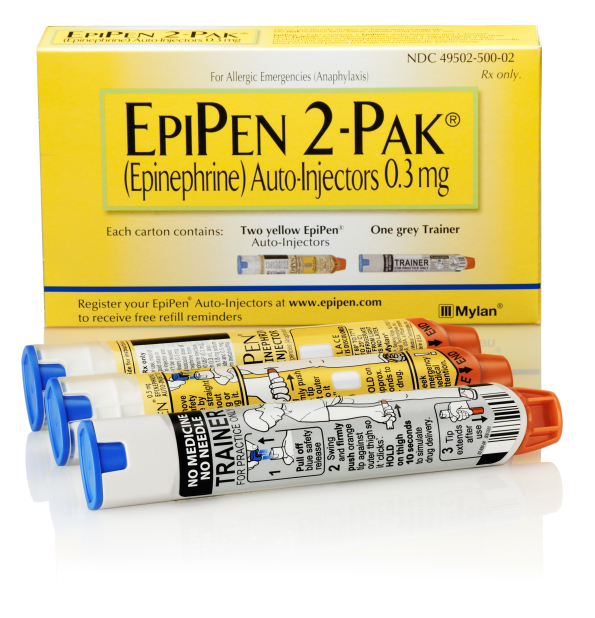
The scandal involves the CEO of Mylan Pharmaceuticals -- who happens to be the daughter of a U.S. senator – whose financial compensation has ballooned right alongside the inflated price of the EpiPen, a drug injector that reverses allergic reactions to things like peanuts and bee stings.

According to NBC News, Mylan CEO Heather Bresch took home nearly $19 million in salary, stock and other compensation last year, amounting to almost a 700% raise over eight years.

During the same time period, Mylan jacked up the price of the EpiPen by over 400%. The pocket sized injector that sold for $56 in 2007 now costs $317 wholesale.

sen. joe manchin

Bresch is the daughter of West Virginia Senator Joe Manchin (D), perhaps the biggest critic of opioid prescribing in Congress, who has alleged that pharmaceutical companies that make opioids have too cozy a relationship with the Food and Drug Administration.   

According to OpenSecrets.org, Manchin has accepted over $127,000 in campaign contributions from donors affiliated with Mylan, making the company the senator’s second largest corporate contributor. Mylan makes a wide variety of pharmaceutical products, including opioids.

There is no indication Manchin has ever acted on behalf of Mylan while in Congress, but his daughter’s involvement in the EpiPen scandal has created an embarrassing situation for the senator with many colleagues, including fellow Democrats.

"I demand that Mylan take immediate action to lower the price of EpiPen's for all Americans that rely on this product for their health and safety," Connecticut Sen. Richard Blumenthal (D) wrote this week in a letter to Bresch. “My office has been contacted by dozens of concerned Connecticut residents, families, school nurses, and first responders who urgently require your life-saving product but fear that its skyrocketing price has put it out of reach.”

“This outrageous increase in the price of EpiPens is occurring at the same time that Mylan Pharmaceutical is exploiting a monopoly market advantage that has fallen into its lap,” chimed in Sen. Amy Klobuchar (D), who called for a federal investigation of Mylan.

“Patients all over the U.S. rely on these products, including my own daughter. Not only should the Judiciary Committee hold a hearing, the Federal Trade Commission should investigate these price increases immediately,” Klobuchar said in a press release that claimed the Minnesota senator has “championed efforts to address the high cost of prescription drugs.”

Klobuchar’s concern about the cost of prescription drugs only goes so far. She is co-sponsoring legislation with Sen. Manchin that would establish a tax on all opioid pain medication.

If approved, it would be the first federal tax on a prescription drug levied directly on consumers.  Eight other senators are sponsoring the Budgeting for Opioid Addiction Treatment Act, also known as the LifeBoat Act, which would raise an estimated $2 billion annually to fund addiction treatment programs.

Democratic presidential nominee Hillary Clinton is another fan of Manchin’s opioid tax. In May, during a roundtable discussion about opioid overdoses in West Virginia, Clinton called the tax “a great idea” and said it was “one of the reasons why I am such an admirer of Sen. Manchin.”

Raising prices on opioids is one thing, but hiking the cost of EpiPens is apparently another. Today Clinton called the injector price hikes “outrageous” and “the latest troubling example of a company taking advantage of its consumers.”

Several weeks ago Pain News Network asked the Donald Trump campaign where the Republican nominee stood on the opioid tax. We have yet to get a response.

EpiPen Heather Bresch's "Baby"

Sen. Manchin has been in tangled situations before involving his daughter. In 2007, the Pittsburgh Post Gazette reported that West Virginia University bent the rules to give Heather Bresch a master’s degree in business administration – even though she had only completed about half the credits needed to earn it.

There is no indication that Manchin, who was then West Virginia’s governor, pulled any strings for his daughter, but the resulting scandal led to the resignation of several school officials and Bresch’s MBA degree was revoked.

That didn’t stop Mylan from promoting her to chief operating officer, then president, and now CEO.

Manchin was further embarrassed when Mylan took advantage of a tax loophole and moved much of the company's business to the Netherlands, where there are lower taxes and Dutch law made it easier to fend off a hostile takeover from a rival drug maker. Manchin told The National Journal that what his daughter did should be illegal.

Manchin has not commented publicly about the EpiPen pricing scandal, which Bresch played a major role in starting.  According to STAT, Bresch called the EpiPen her "baby" and spearheaded efforts to widen its use.

heather bresch

Mylan spent tens of millions of dollars in lobbying and advertising efforts that culminated in passage of a federal law that gives preferential treatment to schools that stockpile EpiPen injectors.  Sales of the EpiPen soared as a result and so did its price, even though the amount of epinephrine – the generic drug inside the injector – is only worth about $1 according to Bloomberg.

The EpiPen now generates $1.2 billion in sales for Mylan, which issued a long statement that vaguely blamed the injector’s soaring price on “changes in the healthcare insurance landscape.”

“This current and ongoing shift has presented new challenges for consumers, and now they are bearing more of the cost. This new change to the industry is not an easy challenge to address, but we recognize the need and are committed to working with customers and payors to find solutions to meet the needs of the patients and families we serve,” the company said.

The EpiPen scandal has enraged so many people that a MoveOn.org petition, called Stop Immoral Price Gouging for Life-Saving EpiPen, had garnered over 150,000 signatures.

Meanwhile, a petition drive aimed at scuttling the opioid tax has drawn a little over 1,600 signatures.

Prescribed Opioids Not Linked to Veterans’ Heroin Use

By Pat Anson, Editor

A new study of U.S. military veterans found a strong link between heroin use and the abuse of opioid pain medication, but with an important caveat:  the heroin use was associated with the non-medical use of opioid painkillers.

Having chronic pain was also not found to be a significant risk factor for heroin use.

The ten-year study by researchers at Brown and Yale Universities followed nearly 3,400 veterans at nine Veterans Affairs facilities who were participating in the Veterans Aging Cohort Study (VACS).

Of the 500 veterans who started using heroin during the study, 386 of them also began using prescription painkillers non-medically.

"Our findings demonstrate a pattern of transitioning from non-medical use of prescription opioids to heroin use that has only been demonstrated in select populations," said study co-author David Fiellin, a Yale public health and medical professor and director of the VACS study.

"Our findings are unique in that our sample of individuals consisted of patients who were receiving routine medical care for common medical conditions."

Even after statistically accounting for other risks -- such as race, income, use of other drugs, post-traumatic stress disorder (PTSD) and depression -- researchers found that veterans who began misusing painkillers were 5.4 times more likely to begin using heroin. Other major risk factors for heroin use include being male (2.6 times greater risk) and abusing stimulant drugs (2.1 times greater risk).

Veterans who received a short-term prescription for an opioid medication had a 1.7 times greater risk of starting heroin. But having a long-term prescription for opioids was not found to be a significant risk factor. And neither was having chronic pain.

“In our final model, pain interference in daily life was not a significant predictor of heroin initiation,” said lead author Brandon Marshall, an assistant professor in the Brown University School of Public Health.

Despite those findings, researchers recommend that all veterans should be screened for painkiller abuse, including those with legal prescriptions.

"This paper shows that, as a general clinical practice, particularly for this population which does experience a lot of chronic pain and other risks for substance use including PTSD, screening for non-medical painkiller use, whether you are prescribing an opioid or not, may be effective to prevent even more harmful transitions to heroin or other drugs," said Marshall, adding that veterans have a "constellation of risks" for substance abuse.

The study, published in the journal Addiction, did not identify the source of the opioids that were used non-medically. The National Institutes of Health and the U.S. Department of Veterans Affairs supported the study.

Under a federal spending bill passed by Congress and signed into law last year by President Obama, the Veteran’s Administration is required to follow the CDC's “voluntary” opioid guidelines, which discourage opioid prescribing for chronic pain. Since those guidelines were adopted, many veterans have complained to Pain News Network that their opioid doses have been reduced and they live in daily pain.

“They just cut my meds to one oxycodone every 12 hours, which gives me absolutely no relief,” wrote Harvey Williams, a Vietnam vet. “There must be something that the Veterans Administration can do to treat severe pain in the Vets. It's not fair for us to be sprayed with Agent Orange, return back to the United States, develop diabetes and in turn have severe neuropathy and pain for the rest of our lives and not be treated.”

“My VA doctors did not exam me prior to (cutting) my prescriptions,” wrote retired Army Capt. William Green, a Desert Storm veteran. “I asked how they decided to start reducing when I was reporting ongoing 6-8 on 10 pain scale. He didn't even consult with the doctor I do get ongoing treatment from. The doctor said, ‘We don’t care. We are following CDC guidelines.’”

The VA provides health services to 6 million veterans and their families. Over half of the veterans treated by the VA have chronic pain.   

Counterfeit Pain Meds Found in Prince’s Home

By Pat Anson, Editor

Counterfeit pain medication laced with fentanyl was found in the home of the late pop star Prince, a source with knowledge of the investigation into the his death has told the Minneapolis Star Tribune.

Prince was found dead in his Paisley Park home on April 21 and speculation immediately focused on a possible opioid overdose. A medical examiner later reported that Prince died from an accidental overdose of fentanyl, but did not say where the drug came from.

Prince did not have a prescription for fentanyl, which is used in skin patches and lozenges to treat chronic pain. He died less than a week after his private plane made an emergency landing in Moline, Illinois, where paramedics reportedly treated him for an opioid overdose.

Recently, the Drug Enforcement Administration reported the U.S. was being “inundated” with hundreds of thousands of fake pills made with illicit fentanyl, a synthetic opioid that is 50 to 100 times more potent than morphine. Dozens of deaths have been blamed on the fake pills.

The Star Tribune’s source said Prince weighed only 112 pounds at the time of his death and had so much fentanyl in his system that it would have killed anyone.

Despite the finding, investigators still aren’t sure how the 57-year-old musician ingested the fentanyl. However, they are leaning toward the theory that he took fake pills disguised as hydrocodone, not knowing they contained fentanyl, according to the Star Tribune.

If so, that would make Prince the most high-profile victim of the fast growing fentanyl crisis. Several states in the Northeast and Midwest have recently reported that most of their fatal overdoses are now caused by illicit fentanyl, not opioid pain medication.

A source told the Associated Press that several pills found in Prince’s home were labeled as “Watson 385” – a stamp used to identify generic pills containing hydrocodone and acetaminophen sold under the brand name Lortab. When one of those pills was tested, it was found to contain fentanyl and lidocaine.

The Star Tribune reported that Prince was found in his home wearing a black shirt and pants — both were on backward — and his socks were inside-out. Prince appeared to have been dead for several hours before his body was found in an elevator.

In addition to fentanyl, sources told the newspaper that lidocaine, Percocet and alprazolam were found in Prince’s system. Alprazolam is the generic name for Xanax, an anti-anxiety medication. Counterfeit versions of Xanax made with fentanyl have also been blamed on several deaths.

“The counterfeit pills often closely resemble the authentic medications they were designed to mimic, and the presence of fentanyls is only detected upon laboratory analysis,” the DEA warned in an unclassified report last month.

“Fentanyls will continue to appear in counterfeit opioid medications and will likely appear in a variety of non-opiate drugs as traffickers seek to expand the market in search of higher profits. Overdoses and deaths from counterfeit drugs containing fentanyls will increase as users continue to inaccurately dose themselves with imitation medications.”

Two public health researchers recently speculated that a “malicious actor” may be intentionally poisoning people with counterfeit medication made with fentanyl. However, a DEA spokesman said that was unlikely.

“If you’re a drug trafficker, you don’t want to poison people. You want a regular customer base,” Rusty Payne said.

‘Weird and Cool’ Discovery Could Lead to Safer Opioid

By Pat Anson, Editor

A “weird and cool” discovery by a team of international researchers could lead to the development of a new opioid medication that relieves pain without the risk of abuse and overdose.

In a case of reverse engineering, scientists in the U.S. and Germany deciphered the atomic structure of the brain’s mu-opioid receptor and then designed a drug – called PZM21 – that activates the receptor without the typical side effects of opioids. In experiments on mice, PZM21 did not cause drug-seeking behavior and did not interfere with breathing – the main cause of death in opioid overdoses.

“With traditional forms of drug discovery, you’re locked into a little chemical box,” said Brian Shoichet, PhD, a professor of pharmaceutical chemistry at UC San Francisco’s School of Pharmacy.

“But when you start with the structure of the receptor you want to target, you can throw all those constraints away. You’re empowered to imagine all sorts of things that you couldn’t even think about before.”

Shoichet and colleagues at Stanford University, the University of North Carolina and the Friedrich Alexander University in Erlangen, Germany published their findings in the journal Nature.

"This promising drug candidate was identified through an intensively cross-disciplinary, cross-continental combination of computer-based drug screening, medicinal chemistry, intuition and extensive preclinical testing," said Brian Kobilka, MD, a Nobel Prize winner and professor of molecular and cellular physiology at Stanford. It was Kobilka who first established the molecular structure of the opioid receptor.

Shoichet and his research team conducted roughly four trillion “virtual experiments” on UCSF computers, simulating how millions of different drug candidates could turn and twist in millions of different angles – called “molecular docking” -- to see how they fit into a pocket on the receptor and activate it. They avoided using molecules linked to the respiratory suppression and constipation typical of other opioids.

This led to the development of PZM21, which efficiently blocked pain in mice without producing the constipation and breathing suppression typical of other opioids. PZM21 also appears to dull pain by affecting opioid circuits in the brain only, with little effect on opioid receptors in the spinal cord. No other opioid has that effect, which Shoichet says is “unprecedented, weird and cool.”

The drug also didn’t produce the hyperactivity that other opioids trigger in mice by activating the brain’s dopamine systems. The mice did not display drug-seeking behavior by spending more time in chambers where they had previously received doses of PZM21.

“After we replicated the lab experiments and mouse studies several times, then I became excited about the potential of this new drug,” said Bryan Roth, MD, a professor of pharmacology and medicinal chemistry at University of North Carolina.

Researchers say more work is needed to establish that PZM21 is truly non-addictive, and to confirm that it is safe and effective in humans.

 “We haven’t shown this is truly non-addictive,” Shoichet cautioned. “At this point we’ve just shown that mice don’t appear motivated to seek out the drug.”

Acetaminophen Linked to Kids’ Behavior Problems

By Pat Anson, Editor

Another study has linked acetaminophen to attention deficit and other behavioral problems in children whose mothers used the over-the-counter pain reliever while pregnant.

"Children exposed to acetaminophen use prenatally are at increased risk of multiple behavioral difficulties,” said lead author Evie Stergiakouli, PhD, of the University of Bristol. “Given the widespread use of acetaminophen among pregnant women, this can have important implications on public health advice.”

The study, published in JAMA Pediatricsinvolved nearly 7,800 mothers in the UK who used acetaminophen in 1991 and 1992.

Prenatal use of acetaminophen in the second and third trimesters was associated with a higher risk of behavior problems and hyperactivity in children. Use of acetaminophen at 32 weeks of pregnancy was also associated with a higher risk for emotional problems.

“We found stronger association between maternal acetaminophen use and multiple behavioral and emotional problem domains during the third trimester than during the second trimester, in agreement with previous studies that have included multiple measurement times during pregnancy," said Stergiakouli

"Given that there is active brain development and growth during the third trimester, this finding could indicate that there are developmental periods when the brain is more sensitive to acetaminophen exposure.” 

Acetaminophen (paracetamol) is one of the most widely used pain relievers in the world. It is the active ingredient in Tylenol, Excedrin, and hundreds of other pain medications. Researchers say over half the pregnant women in the United States and European Union use the drug.

"The risk of not treating fever or pain during pregnancy should be carefully weighed against any potential harm of acetaminophen to the offspring," said Stergiakouli

A recent study of over 2,600 Spanish women linked acetaminophen to autism and attention deficit problems in their children. Studies in Denmark and New Zealand have also linked acetaminophen with a higher risk of hyperkinetic disorders and attention-deficit hyperactivity disorder (ADHD).

Over 50 million people in the U.S. use acetaminophen each week to treat pain and fever. The pain reliever has long been associated with liver injury and allergic reactions such as skin rash.