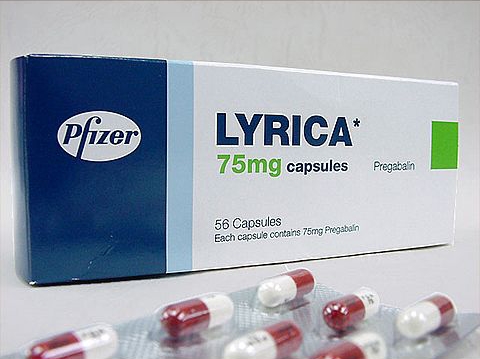
Is Cinnamon a Safer Pain Reliever?

By Pat Anson, Editor

A new warning from the U.S. Food and Drug Administration about the risk of serious side effects from non-steroidal anti-inflammatory drugs (NSAIDs) may have you thinking about finding safer, more natural pain relievers.

The idea isn’t new by any means – about 2,400 years ago the Greek physician Hippocrates was writing about the use of willow bark to ease aches and pains. Other natural remedies used for centuries to relieve pain and reduce inflammation include St. John’s Wort, ginger, ginseng, turmeric, and cinnamon.

Cinnamon, in fact, was recently found to be nearly as effective as the NSAID ibuprofen in relieving pain from menstrual cramps (dysmenorrhea).

The results of a small double-blind clinical trial, published in the Journal of Clinical and Diagnostic Research, evaluated the effects of cinnamon, ibuprofen and a placebo in 114 Iranian female college students. The women were broken up into groups of three; and given either 420 mg of Cinnamon Zeylanicum, 400 mg of ibuprofen or a starch placebo during the first 72 hours of their menstrual cycle.

Eight hours after treatment, researchers found that pain severity in the cinnamon group was significantly less than those who took a placebo, while pain severity in the ibuprofen group was less than those who took cinnamon.

Although ibuprofen was found to be the more effective pain reliever, the researchers believe cinnamon may be a better treatment for menstrual cramps because it doesn’t have the side effects of ibuprofen.

The research results suggest that, Cinnamon as compared significantly reduces the severity and duration of pain during menstruation, but this effect is less compared to that of Ibuprofen. Due to the lack of adverse events in this study, Cinnamon can be used as a safe and non-pharmacological treatment for primary dysmenorrheal pain in young girls,” the researchers reported.

Iranian researchers have also found that thyme oil and lavender oil were effective in treating menstruation cramps, according to GreenMedInfo.

Last week, the FDA warned that "everyone may be at risk" from using NSAIDs – and ordered drug makers to strengthen warning labels about the risk of a fatal heart attack or stroke.

The warning applies to Advil, Tylenol, Motrin and other popular pain relievers sold over-the-counter, as well as all prescriptions drugs containing ibuprofen and acetaminophen. Many multi-symptom cold and flu products, such as NyQuil and DayQuil, also contain NSAIDs.

The agency said studies have shown the risk of serious side effects can occur in the first few weeks of using NSAIDs and could increase the longer people use the drugs. The revised warning does not apply to aspirin.
Changing Our Country One Addict at a Time

By Mary Maston, Guest Columnist

It’s obvious that our current ways of dealing with addiction aren’t working. They have never worked. The entire process of making drugs illegal and incarcerating those who use, possess, and sell them has been an epic fail in every way imaginable.

The “War on Drugs” – a phrase coined by President Nixon -- has been raging for almost 45 years, longer than I have been alive. How many trillions of our tax dollars have been spent in that time and where has it gotten us?

According to the officials, the problem of addiction is worse now than it’s ever been, despite throwing people in jail left and right. Making things even worse, legitimate chronic pain patients are being lumped together with addicts and drug abusers -- making opioid pain medication harder and harder to get.

We haven’t solved anything, and we never will if this is the path we continue to take.

"Insanity: doing the same thing over and over again and expecting different results.” -- Albert Einstein

It’s time that we start thinking outside the box. We need a different approach and the police chief of Gloucester, Massachusetts may have found one.

Chief Leonard Campanello has worked in law enforcement for 25 years. In that time, I’m sure he’s seen just about every scenario imaginable and then some. Perhaps he’s grown tired of seeing the same people in and out of his jail repeatedly. Or perhaps he just has a bigger heart than most, and the desire to contribute to a real solution. That’s what I choose to believe.

After dealing with addicts repeatedly over the years, Campanello has decided to change the way he does things and tackle the issue from a totally different angle.

Campanello recently announced that anyone who walks into his police station and asks for help with addiction, and surrenders any drugs and paraphernalia they have, will not be arrested. Instead he/she will be put into a detox and rehab program, funded by the money the police department has collected from drug raids.

You read that correctly: Anyone who asks for help will receive it without judgement, persecution, fines, or jail time. It’s called the Gloucester Initiative.

It’s a bold move. It’s never been attempted before. Many may say it’s crazy, that it will never work. It goes against everything we’ve heard about addiction.

Get this though: it is working.

It’s an absolutely brilliant concept and it’s already changing lives in the short time since it’s been started. It’s also gaining national attention. There are many organizations that are starting to come on board, and because of that, the Police Assisted Addiction and Recovery Initiative  was born.

police chief leonard campanello

police chief leonard campanello

So far over two dozen people have entered the program. While that doesn’t seem like many in the grand scheme of things, it’s a start. The drugs those people had are off the streets, and they are getting help when they would otherwise be using and selling. What if 28 drug addicts were no longer on YOUR streets and in YOUR community? Would you feel a little bit safer, maybe a little less cynical? Everyone has to start somewhere.

This proves that there are people who are addicted and who truly want help, but haven’t been able to get it for any number of reasons. Maybe they can’t afford it – rehab facilities aren’t cheap. Maybe they don’t have insurance or if they do, it doesn’t cover extended treatment.

If they are using illegal drugs but haven’t been caught yet, maybe they are afraid of going to jail for the first time. Maybe they enjoyed being an addict for a long time, but don’t want to be one anymore and don’t know how to stop.

Think about it for a moment. This could be a huge game changer for chronic pain patients, especially if this initiative takes off nationally like I’m hoping it will.

Right now, everyone is so quick to label anyone that uses pain medication for any reason as an addict. What if addicts weren’t abusing anymore? Perhaps that would equate to better treatment for us, without the stigma of being judged so harshly because we actually need medications to function; not because we want to get high, but because we want to live somewhat productive lives and medication is the only thing that helps us.

Think about how much better your life would be if medical professionals got back to actually treating patients with debilitating diseases and conditions – respectfully – instead of focusing on policing everyone that walks through their doors and denying medical care.

I’m not naïve enough to think that this is going to completely solve everything. Not everyone wants help and there are some genuinely bad people in this world, but I’m holding onto hope that this can potentially make a positive difference in the lives of millions – the ones that do want help.

Putting people in jail doesn’t accomplish that, and there are people out there that would stop using drugs if given the opportunity to do it in the right environment.

Just ask those that have come forward. Out of all of the things I’ve read over the years on the subject of the war on drugs, this is the only thing I’ve come across that has the potential to actually change things for the better and make an impact.

That’s why I fully support this cause. I would be insane not to.
 

Mary Maston suffers from a rare congenital kidney disease called Medullary Sponge Kidney (MSK), along with Renal Tubular Acidosis (RTA) and chronic cystitis. She is an advocate for MSK and other chronic pain patients, and helps administer a Facebook support group for MSK patients.

Mary has contributed articles to various online media, including Kidney Stoners, and is an affiliate member of PROMPT (Professionals for Rational Opioid Monitoring & Pharmaco-Therapy).

The information in this column should not be considered as professional medical advice, diagnosis or treatment. It is for informational purposes only and represents the author’s opinions alone. It does not inherently express or reflect the views, opinions and/or positions of Pain News Network.

FDA: 'Everyone May Be at Risk' from NSAIDs

By Pat Anson, Editor

Warning that "everyone may be at risk," the U.S. Food and Drug Administration has ordered warning labels for non-steroidal anti-inflammatory drugs(NSAIDs) to be strengthened to indicate they increase the risk of a fatal heart attack or stroke.

The warning applies to ibuprofen, Advil, Motrin and other popular pain relievers sold over-the-counter, as well as prescriptions drugs containing NSAIDs. Many multi-symptom cold and flu products also contain NSAIDs.

The agency said studies have shown the risk of serious side effects can occur in the first few weeks of using NSAIDs and could increase the longer people use the drugs. The revised warning does not apply to aspirin.

“There is no period of use shown to be without risk,” says Judy Racoosin, MD, deputy director of FDA’s Division of Anesthesia, Analgesia, and Addiction Products.

The FDA said people who have a history of heart disease, particularly those who recently had a heart attack or cardiac bypass surgery, are at the greatest risk for a serious cardiovascular event associated with NSAIDs. But the risk is also present for people who don't have heart problems.

“Everyone may be at risk – even people without an underlying risk for cardiovascular disease,” Racoosin said.

NSAIDs are widely used to treat everything from fever and headache to low back pain and arthritis. They are in so many different pain relieving products that health officials believe many consumers may not be aware how often they use NSAIDs. 

“Be careful not to take more than one product that contains an NSAID at a time,” said Karen Mahoney, MD, deputy director of FDA’s Division of Nonprescription Drug Products.

The labels for both prescription and over-the-counter NSAIDs already have information warning of heart attack and stroke risk. In the coming months, FDA will require drug manufacturers to update their labels with more specific information warning that the risk is heightened even in the first few weeks of use.

“Consumers must carefully read the Drug Facts label for all nonprescription drugs. Consumers should carefully consider whether the drug is right for them, and use the medicine only as directed. Take the lowest effective dose for the shortest amount of time possible," Mahoney said.

Several recent studies have found that NSAIDs increase the risk or heart attack and other health problems. The exact cause is unclear, but researchers believe NSAIDs may raise blood pressure and fluid retention, which can affect how the heart functions.  

A 2013 study published in The Lancet warned that high doses of NSAIDs may increase the risk of heart problems by about a third. In a review of over 600 clinical trials involving more than 353,000 patients, researchers found that NSAIDs doubled the risk for heart failure. People on high doses of the drugs also had up to four times greater risk for bleeding ulcers or gastrointestinal problems.

Another large study at the University of Florida in 2014 found that the over-the counter pain reliever naproxen raises the risk of a heart attack, stroke and death in postmenopausal women. Naproxen is a NSAID and the active ingredient in Aleve and other pain relievers commonly used to treat arthritis.

Studying data from over 160,000 postmenopausal women participating in a study funded by the National Institutes of Health, researchers estimated that using naproxen just twice a week raises the risk of cardiovascular problems by about 10 percent. The same study did not find a higher risk of a heart attack, stroke and death associated with ibuprofen, another type of NSAID.

Opioids Less Effective for Back Pain When Depressed

By Pat Anson, Editor

Patients who have low back pain are significantly less likely to get relief from opioid pain medication if they suffer from depression or anxiety, according to a new study published in the journal Anesthesiology.

Lower back pain is the leading cause of disability worldwide, with about 80 percent of adults experiencing back pain at some point in their lives. According to one recent study, about one in five low back pain patients also suffer from depression.

"High levels of depression and anxiety are common in patients with chronic lower back pain," said Ajay Wasan, MD, study author and professor of anesthesiology and psychiatry at the University of Pittsburgh School of Medicine.

"Learning that we are able to better predict treatment success or failure by identifying patients with these conditions is significant. This is particularly important for controlled substances such as opioids, where if not prescribed judiciously, patients are exposed to unnecessary risks and a real chance of harm, including addiction or serious side effects."

Wasan and his colleagues examined 55 chronic lower back pain patients with low- to-high levels of depression or anxiety. The patients were given morphine, oxycodone or a placebo to take orally for pain as needed over a six-month period.  

Patients with high levels of depression or anxiety experienced 50 percent less improvement in back pain (21% vs. 39% pain improvement) when compared to patients with low levels of depression or anxiety. They were also significantly more likely to abuse their medication.

Wasan says doctors should be cautious in prescribing opioids for depressed patients with back pain.

"It's important for physicians to identify psychiatric disorders prior to deciding whether to prescribe opioids for chronic back pain as well as treat these conditions as part of a multimodal treatment plan," he said

"Rather than refusing to prescribe opioids, we suggest that these conditions be treated early and preferably before lower back pain becomes chronic. For those prescribed opioids, successful treatment of underlying psychiatric disorders may improve pain relief and reduce the chance of opioid abuse in these patients."

A large study presented in March at the annual meeting of the American Academy of Orthopedic Surgeons found that depression, as well as obesity, smoking and alcohol use significantly raise the risk of having low back pain.

The study did not address the “chicken and egg question” of which came first. Does depression cause low back pain, or does low back pain lead to depression?

“With our study there was no way to determine the cause and the effect or which came first because there was so much overlap,” said lead author and orthopedic surgeon Scott Shemory, MD. “Especially with alcohol abuse and depressive disorders. Anybody who’s got low back pain for years and years, I don’t think it would be surprising that they would have a higher chance of depression or alcohol abuse.”

A leading U.S. medical organization recently urged its members not to prescribe opioids for back pain – whether patients are depressed or not. The American Academy of Neurology released a position paper last year saying the risk of serious side effects from opioids outweigh the benefits of pain relief. The Academy represents 28,000 neurologists and other healthcare providers.

“Whereas there is evidence for significant short-term pain relief, there is no substantial evidence for maintenance of pain relief or improved function over long periods of time without incurring serious risk of overdose, dependence, or addiction,” wrote Gary M. Franklin in the journal  Neurology.

Searching for Medical Marijuana’s ‘Therapeutic Window’

Dr. Mark Ware is one of the world’s leading experts on medical marijuana. Ware is an associate professor in Family Medicine and Anesthesia at McGill University in Montreal and director of clinical research at the Alan Edwards Pain Management Unit at McGill University Health Centre. He practices pain medicine at Montreal General Hospital.

Although medical marijuana is legal throughout Canada, and in 23 U.S. states and the District of Columbia, mainstream medicine still frowns upon its use. Research into the therapeutic benefits of cannabis -- particularly for pain management -- has also been limited.

Pain News Network editor Pat Anson recently spoke with Ware at the annual meeting of the American Pain Society. The interview has been edited for content and clarity.

DR. MARK WARE.

DR. MARK WARE.

Anson: You’ve called medical marijuana an “incredible social experiment.” What do you mean by that? 

Ware: I think what we’re seeing is the lid coming off something that’s been going on for a long time. I think people have been self-experimenting with marijuana for years and years. People have been growing it in their basements and backyards. So there’s been a social experiment with cannabis since the 1960’s in the Western world.

I think the medical aspect of it has kind of followed through with that, because as you get thousands of people using cannabis, eventually somebody with an illness is going to stumble upon it. Lester Grinspoon (a marijuana researcher) reported on this in 1971. So that’s how long we’ve known or suspected the potential medical properties. The fact that the drug has been illegal has suppressed the possibility of there being much in the way of good quality research. So the experiment has been going on underground, out of sight and out of the public eye.

What we’re seeing now is that suddenly we’re able to talk about it. We’re able to look at this seriously. And we’re beginning to realize how much was already going on. So I think it’s an experiment that’s been going on for a long time and we’re beginning to put some parameters around it now, which allow us to track it more carefully. And hopefully it can yield some important results that can help inform the patient and the physician about what to do with this.

Anson: Some doctors have told me they don’t think marijuana will ever go mainstream until big companies like Pfizer and Purdue Pharma start backing marijuana research and doing clinical studies. Would you agree with that?

Ware: I don’t know if I would agree with that. That’s true for new pharmaceutical drugs. If you’re developing a molecule from the lab up, you need Big Pharma to come along and take that and move it to the point where they can do the big clinical trials.

With an herbal medicine, I think you almost don’t want to look at the pharmaceutical model for drug development. It’s more like how we regulate natural health products in Canada. We want good quality cultivation techniques, we want good quality processing, and we want to know what it is that we’re giving to patients.

I think fundamentally what we have to figure out is what we want to know about this drug. What is it that we need to know and how do we go about getting that information?

I think if we wait for Big Pharma to come along it’s going to be a long wait.  They would have been on this long ago if they thought this was important.

It’s a plant based medicine that’s already in our society at some level and we need to recognize the reality that mainstream doesn’t mean mainstream prescription availability. It’s going to mean mainstream figuring out how to put cannabis in a safe place in our society.

Anson: Medical marijuana is so widely available today, it’s like we’re already past the clinical trial phase.

Ware:  Exactly.  And to go back and do the Phase III study now, it’s expensive and would take hundreds of millions of dollars. And that requires knowing whether you’re going to get your money back. Companies invest that money when they know they’ve got a patent and they can make money back on the drug in the ten years after it’s launched. It’s much harder to see that happening with an herbal material like cannabis.

Why invest the money? It’s already available. You can already buy it at the dispensary. So now the question is how do we improve that process? How do we improve the quality of the product? How do we label them so people know what’s in them? How do we provide information to the patients that are buying them? What they should be looking for and what they should be careful about?

And how do we inform the physicians and health professionals who should be managing that whole process or at least informing it? What kinds of patients should be avoiding this? This isn’t for young kids. This isn’t for women who are pregnant. Some of this is obvious, but some of it needs to be specified and mandated.

I don’t think there’s strong enough evidence to start using cannabis in younger people. I think that the risks of cannabis on the developing brain in teenagers is significant enough that, unless there is a very real reason like a younger person with a severe intractable illness, this is a drug that should be held for the 25 and older crowd.

I would caution people who have unstable heart problems against using cannabis. It does increase your heart rate, can open up your blood vessels, and that could precipitate some heart problems.

Anson: What are the pain conditions that you think medical marijuana can be beneficial for?

Ware: I think for sure it’s more likely effective for chronic pain than acute pain. It’s never been reported for acute pain syndromes, but it has been reported for chronic pain.  There are clinical trials now that bear out that chronic neuropathic pain is one of the relieved conditions that it seems to respond to. We’ve seen reports for spinal cord injury, fibromyalgia, and PTSD (post-traumatic stress disorder). Cannabinoids appear to have some signals in some of these conditions.

And then you go beyond that to abdominal pain with Crohn’s disease, diabetic neuropathy, and so on. The list of conditions where it looks like it may work is as long as your arm.  There are individual case reports of cannabis being used on a huge range of conditions.

Anson: What is the most effective delivery system? Everyone thinks of smoking, but there are plenty of other ways to ingest marijuana.

Ware: There are. And I think the key thing is the difference between inhaling and taking it by mouth. The inhaled route is a very quick onset, has a very rapid effect on the patient, and then a fairly quick half-life; whereas the oral route takes much longer to absorb and takes a longer time for the patient to feel the effects. But then it lasts a lot longer. 

courtesy drug policy alliance

courtesy drug policy alliance

So it’s almost like a short acting versus a long acting medication. I don’t think there’s any way of saying one is more effective than the other. I think they’re effective in different ways.

If I was vomiting because of chemotherapy, I’d want something I could inhale to control the vomiting quickly. But if I’m not able to sleep because of my chronic pain, I want something that would be longer lasting so I could sleep through the night.  I don’t want to wake up three hours later and have to do it again. So I think we just have to figure out how to use the different administrative techniques for different clinical conditions.

Anson: Most of our readers are pain patients and when this subject comes up many of them say, “I’ve never tried marijuana. I’m curious about it and I’d like to try it, but I’m worried about getting high.” Can they get pain relief without getting high?

Ware: We’ve done studies where we kept the doses very, very small -- to the point where people have read the protocols and said you’re not giving these patients enough to feel the effect. And in fact, what happens is patients are still able to find analgesic benefit and avoid that euphoric or psychoactive effect.

That’s important for most patients. They want to be able to use a drug or any kind or a therapy that doesn’t impair them from doing the things that they need to do. They need to drive. They need to work. They need to hang out with their families. They need to do their sports and their activities. And this is part of pain management generally. We want people to be living as full and as active a life as possible. We don’t want them collapsing on the couch all day long.

So can we find that window, what we call that therapeutic window, that dose where you get the benefit but you don’t get the sedative or psychoactive effect? And I think we can. I think for patients who are considering this approach, they really have to learn to be very patient and use very, very small doses. Try very small amounts first and allow your body to feel what the drug is doing to you. And if nothing happens, that’s okay. You’ve started with a low enough dose that you felt nothing. You gradually work your way up.

The interesting thing about cannabis is that there are two ways of thinking about dose. One is the amount of the drug itself, the number of grams, joints or pipes, if you will. The other is the THC level of the cannabis itself.

courtesy drug policy alliance

courtesy drug policy alliance

If patients have access to material where the THC level has been standardized or has been measured, they should be trying to use THC cannabis that is as low as possible, because the likelihood of having a psychoactive reaction to a high THC cannabis is much higher.

If it’s high in THC, it doesn’t take much to get that effect, where if they use very low THC levels, less than 10 percent THC, and they use a small quantity of the material, then potentially they can find that therapeutic window that can be effective.

Anson: What about taking marijuana with opioids? Can you do that?

Ware: You can. There’s no medical reason why you shouldn’t. I think the key thing for patients who are doing that, and again I emphasize with the knowledge and support of their physician, is that they can reduce the doses of other medications which may not be helping as much.

Cannabis use can be seen in terms of improving patients in two ways. One is in reducing the medications that they’re already taking, which may have side effects. And the other is in improving their functioning state so that they’re doing more. This is where I think the responsibility lies with the patient to prove to the doctor that this drug is helping. And you do that by reducing your other medications with the doctor’s support, by increasing your functioning and by showing that you’re doing things that you weren’t doing before. That is what doctors want to see.

There appears to be evidence, at least in animal studies, that opioids and cannabinoid drugs work synergistically. So if you take the two separately and you take the two combined, you get a greater effect with the combination than if you took either of the others by themselves.

This synergism, we’ve seen it in patients who started using cannabis successfully and they were able to reduce their other medications. In some cases they find that the dose of opioids they were taking, they can lower it and get a similar effect with much lower doses. With others, they don’t need the opioids any longer and they can taper off it and stop completely. 

Anson: One fear of using medical marijuana is that it could make you more prone to abusing other substances.

Ware: I think patient selection is very important when you’re considering as a physician whether to authorize or prescribe cannabis, because cannabis is a drug with a known risk of abuse and dependence by itself. There are people who struggle with their marijuana use and withdrawal when they try to get off it. Physicians need to be sure they’re not making things worse for a patient that has a dependency disorder by authorizing cannabis.

Screening for dependence means looking for abuse of other substances, such as alcohol. If you’ve done that carefully, prescribing cannabis to a patient who doesn’t have that addiction risk appears to be fairly safe.

Medical cannabis should be used as an option only when all the conventional therapies have failed; when all of the other approaches to pain management, and I’m not just talking about pharmacology, but when all of the non-pharmacological approaches have all been considered and tried. Cannabis is not at the point where it can be thrown in as a first line agent for a patient struggling with pain management.

Anson: Thank you, Dr. Ware.

How Pain Clinics Fail Patients

By Jennifer Kain Kilgore, Guest Columnist

“You have exhausted all of your options.”

That is what I was told when I was denied as a new patient at Massachusetts General Hospital. Western medicine has officially given me the heave-ho.

Because I have a “long-standing relationship with another pain management clinic,” unless I am being referred for a specific procedure that my current doctors do not have, I am not allowed to become a patient elsewhere.

It’s so strange to reach the end of the road. It’s one thing to be told that the doctors are running out of ideas; it’s another thing entirely to have someone tell you that there is literally no other procedure in existence. All the treatments they are willing to try have been attempted. Science and research have not caught up yet. This is as good as it’s going to get.

What they’re willing to try. That’s the operative phrase here. Despite my decade of experience in the medical system, despite never exhibiting pill-seeking behavior, my pain management doctors refused to prescribe any kind of opioid safety net. If the pain gets really bad? “Go to the ER.”

Really? That’s the best you can offer? “Go to the ER”?

“I don’t think you understand,” I told my doctor. “I’ll have to quit my job. I can’t function like this.”

Shrug.

That’s the thing about pain management clinics. They do not cure. Most of the time they do not even have the power to manage. They try to dull the pain, to numb it, just long enough to get you out of their office. The problem is that pain is subjective. A finger slammed in a door can hurt worse than a fracture, and everyone thinks their pain is intolerable.

So if you keep coming back and complaining, then the problem must be in your head. Even though I told my pain doctor that I am already seeing a pain psychologist, she insisted that I meet with one in-house in order to come to terms with the “new” me. Like I’m not letting some kid sit at the lunch table with me. Play nice, you two!

I actually told her that when she said “you have to learn how to live with the ‘new you,'” not only did she make me want to murder everyone in my immediate vicinity, but she was also entirely patronizing. I’m sure I got some black mark in my medical file for that comment (“aggressive,” “argumentative,” “abusive,” etc.), but don’t tell me how to react to my issues when you have no experience dealing with them. I hope to God she never says those words to another patient.

Pain management doctors do not work well with patients who need more than the usual series of steroid injections. I’ve had the steroid injections, the ablations, the Botox in my muscles, the pills, the trigger point injections, the surgery, the infusion. There are no other procedures.

“We’ve done everything. So why are you still hurting? It must be in your head.

Of course it’s in my head. That’s where pain is processed: IN YOUR BRAIN. My brain has learned these pain pathways, and my nervous system is constantly hyper-stimulated. It doesn’t take a Philadelphia lawyer to figure that one out.

 “Give her antidepressants. Give her nerve meds. Just don’t give her opioids.” That’s the reasoning my pain doctor kept parroting: “It’s been clinically proven that opioid medication doesn’t help chronic pain.”

I know that it doesn’t — not in the long run. Not if you take it every day, multiple times a day. All I need is a safety net for the really bad days. I was prescribed 14 Vicodin in March. Guess what? Still one left. Whole bottle of Tramadol? Untouched. I take them when I need them.

Doctors are more interested in protecting their own medical licenses than handing out medication to those who need it — which I can understand. If it were between my law license and some person I only see once a month, I’d go for the law license. For years, however, doctors over-prescribed until the government cracked down; now they under-prescribe and hope that none of their patients will notice. The pendulum has swung so far in the other direction that it’s only a matter of time before something breaks.

Pain management doctors must be frustrated with patients like me. It’s not like they’re huddled in a conference room, rubbing their hands together and muttering under their collective breath the names of patients they’re going to disappoint. I hate when I fail at my job. I’m sure they feel the same. But they are the gatekeepers, and they are in my way.

Everything that has helped recently has been found by my father, by my husband, and by me. I exercise as much as I can when the pain allows. I use a BodyBlade in order to strengthen my core muscles. I practice mindfulness and meditation. I stretch and do yoga on a daily basis. I walk at lunch. I get pain relief massages. I go to the chiropractor. I found the Quell pain relief device, which I adore and wrote about on my blog.

These are alternative forms of care, and they have been all found — wait for it — by people other than my pain management team.

We chronic pain patients truly have to be our own advocates. It is our responsibility to find the interventions that will help us. These treatments might seem strange or like some sort of hippie nonsense, but I am done being told by doctors that the pain is all in my head and that they can do nothing to help me. I will help myself. This is not the best it is going to be.

J. W. Kain is an attorney in the Greater Boston area who also works as a writer and editor in her spare time.  She has chronic back and neck pain after two car accidents.

This column is republished with permission from her blog, Wear, Tear, & Care.  

The information in this column should not be considered as professional medical advice, diagnosis or treatment. It is for informational purposes only and represents the author’s opinions alone. It does not inherently express or reflect the views, opinions and/or positions of Pain News Network.

Power of Pain: Avoiding Summer Travel Pain Storms

By Barby Ingle, Columnist

If you’re flying somewhere this summer, chances are you’ll have to contend with overcrowded terminals, flight delays, and security checkpoints. There are ways to make traveling easier and less stressful for chronic pain patients.

My first suggestion is to pack your medications in a carry-on bag. If your luggage gets lost, you won’t have to worry about where or how to get your medications.

Airport terminals are hectic and people are at a frantic pace, so by arriving early you can go at a slower, more relaxed pace and make the hassles of dealing with disabilities more manageable. Your goal is to make it to your destination on time, in a low pain level, and in a good mood.

When you decide to make a trip, it is best to plan ahead. I use the Internet to get destination information. I check out the floor plans of the airports I am coming and going from, and what types of foods are available in the terminals. I also request handicapped services from the airline, bus depot, car rental company, and hotel ahead of time.

If you are on oxygen, let the airline know 30 days prior to travel or as soon as you know that you will be flying. In-flight oxygen needs to be prearranged, and there is typically a charge. Then call 24 to 48 hours before your flight to confirm the oxygen arrangements.

At the airport, if traveling alone, bring tip money. I try to bring one-dollar bills and tip a dollar for each bag that I am assisted with, both when I am departing and at my destination. I also pay the person pushing my wheelchair one to two dollars for their assistance. I also have a scooter, so I do not always have to pay for the wheelchair assistance.

It is not mandatory to pay for help; however, the person pushing you often works for tips only or tips with a low wage.

Be sure to let them know if you want to make any stops to use the restroom or purchase food while they are assisting you. When they bring you to your gate, ask to be “parked” at the door or the start of the line. Make sure that the airline person sees you. If you sit off to the side, they may miss you, and you will not be able to take advantage of pre-boarding.

If you need extra time and assistance, you may have a problem. Typically, the flight attendant or ground crew comes over to me and moves me up in the plane if I have a seat towards the back, and they ask me if I need any assistance walking, or if I need an aisle chair to get to my seat.

Sometimes I board with the first group, when they call for people who need assistance. I do not tip the attendant who brings me down the jet way.

When I pre-board, once on the plane, if I need to take medication or I am nauseated, I ask for a small glass of water. If they do give you a glass of water, they must take it back before the plane takes off, so make sure you drink what you need when they give it to you.

Let them know while in flight if you need assistance in using the restroom or need blankets and pillows for comfort.

When you arrive at your destination, stay in your seat until your wheelchair assistance has arrived. They typically ask you to wait until the other passengers unload so that you do not hold them up or so that they do not bump against you and cause you further injury.

At baggage claim, if you are alone, ask the assistant to get your luggage and to bring you outside to meet your party. Once you are in a place you do not need assistance, give them their tip and thank them, so they may go help other travelers needing assistance.

Barby Ingle suffers from Reflex Sympathetic Dystrophy (RSD) and endometriosis. Barby is a chronic pain educator, patient advocate, and president of the Power of Pain Foundation. She is also a motivational speaker and best-selling author on pain topics.

More information about Barby can be found at her website.

The information in this column should not be considered as professional medical advice, diagnosis or treatment. It is for informational purposes only and represents the author’s opinions alone. It does not inherently express or reflect the views, opinions and/or positions of Pain News Network.

198 Thoughts I Had While Watching ‘Cake’

By Crystal Lindell, Columnist

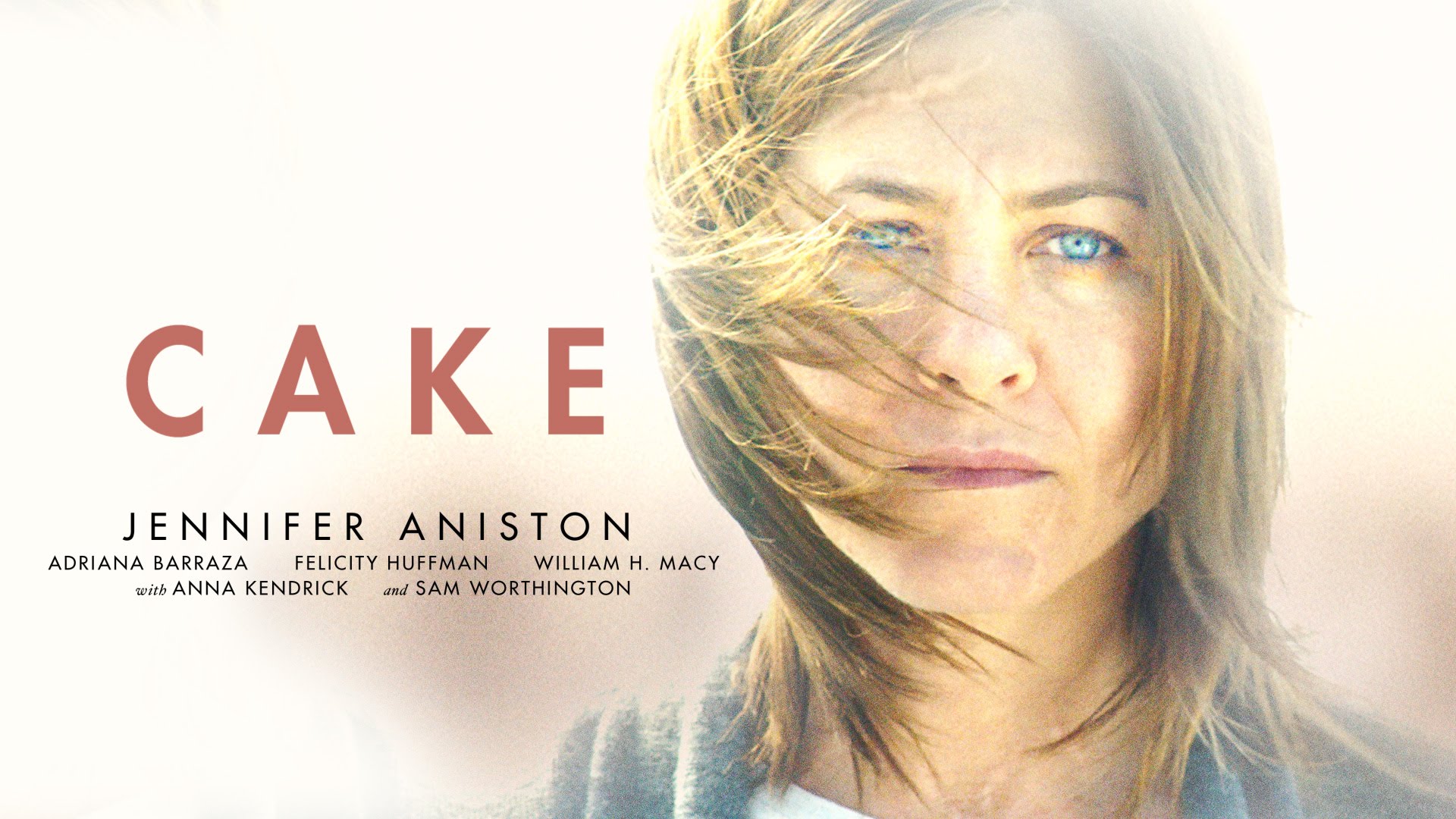
I finally got around to watching Cake, the movie about chronic pain starring Jennifer Aniston.

Aniston plays Claire Bennett, who suffers from chronic pain and has visions of Nina Collins, played by Anna Kendrick. Nina also had chronic pain, but in the opening scene we are told she killed herself by jumping off a highway overpass.

I would definitely recommend you see this movie. It’s currently playing on Netflix, and if I know anything about people with chronic pain, it’s that they all have Netflix. So get on that, and then read this.

Basically everyone in my life has recommended this movie to me.

Lots of spoilers ahead, obviously.

1. Well, I guess, since it’s on Netflix, I’ll give it a go. It’s basically free.

2. I swear if they show Jennifer Aniston “getting better” in any way I’m going to scream.

3. And I really hope she doesn’t magically “get off opioids” because that crap is not realistic at all.

4. Of course it opens on a support group.

5. Seriously, where is this support group? Because I have yet to find one for people with chronic pain anywhere near me.

6. Hey, that’s Lynette Scavo from Desperate Housewives!

7. I’m glad she’s found some work since that show ended.

8. Yay! It’s Anna Kendrick!!! I hope she sings something from Pitch Perfect in this movie.

9. Oh. Anna Kendrick killed herself.

10. That’s sad.

11. Why is this group so mad at Anna Kendrick?.

12.  If you have chronic pain, and you can’t at least understand why someone would kill themselves in that situation, then you don’t actually have chronic pain.

13. #SorryNotSorry

14. Look! It’s Rachel from Friends.

15.  I wonder if Ross is going to be in this too.

16. Nevermind, he’s probably on a break.

17. Ha! I crack myself up. 

18. Someone should tell Claire about dry shampoo.

19.  I get it, showers suck when you have chronic pain. But that’s why God invented Batiste.

20. The fact that Anna Kendrick ended up in Mexico after her suicide is actually kind of hilarious. In a dark humor kind of way.

21. Man, everything gets stuck in customs. Even Nina.

22. So Claire’s laying down in the back of the cab?

23. I’m assuming because sitting up hurts?

24. Whenever I try that I get super car sick because of all my meds.

25  I wish I had a really nice Hispanic woman to take care of me and make me quesadillas.

26. That would probably make it a lot easier to cope with my chronic pain.

27.  What? The freaking support group kicked Claire out? Is that a thing? That support group sucks.

28.  Lynette, I’m so disappointed in you.

29. Ug. Claire and her husband are separated. Chronic pain man. It effs up your love life.

30.  I always wonder how/why people try to keep a secret stash of meds. I never have anything extra to put in a bottle behind a painting. I use all of my meds, every month.

31. Yep, trying to sleep with chronic pain is a bitch.

32  And I cry throughout the night a lot too.

33. This movie got that part right.

34. I wish I had a pool like Claire.

35. Maybe if I had a personal pool in my backyard, I could go in it and feel better.

36. Why is the pool green though. Just the evening light? It makes it look like a scummy lake.

37. And the opossum isn’t helping the vibe.

38. Seriously, I need to move to California though, where you can apparently take a dip in the middle of the night, and it’s so nice outside that you can fall asleep in a lawn chair like it’s nbd.

39. I feel like this movie is trying to make Claire seem like a bitch, but honestly, when you’re in pain and you’re riding in a car, every bump really does make you want to die.

40. I try to be nice and witty with my doctors too, just to make sure that they don’t think I’m just a drug seeker.

41. Ahh. Wine and meds. The best meal ever.

42. Also, true story, the doctor I saw at the Mayo Clinic once told me that drinking alcohol could help with my pain. So it’s not as crazy as it sounds.

43. Even chronic pain, greasy hair and a massive scars isn’t enough to repel men when it’s Jennifer freaking Aniston.

44. Congrats Claire! You get it girl!

45. Yep, having sex with chronic pain sucks.

46. How can you be physically intimate when it hurts every time someone touches you?

47. So based on Claire’s housekeeper’s reaction here, I’m going to guess that Claire’s kid died and those toys belonged to that kid.

48. Yep, this movie really is trying to make Claire look like a bitch.

49. I mean, what is up with this scene between the housekeeper and her daughter?

50. Claire’s not a bitch though. She’s just in pain.

51. And apparently, her freaking kid died.

52.Those two things would drive anyone to crazy town.

53. Yay! Anna Kendrick is back!!! I hope she sings Cups.

54. So Claire is kind of trying to kill herself with help from Anna Kendrick?

55. I can see that.

56. I think drowning would be a particularly awful way to die though.

57. Oh look! It’s that chick from the Good Wife!

58. Who was she on that show? Like an incompetent lawyer or something? 

59. I wish I could get aqua therapy. There’s nothing like that where I live.

60. Yeah. I’m on Claire’s side here. I don’t think the super healthy chick in the water really understands how much it hurts.

61. Oh? Really? Someone with chronic pain hasn’t magically gotten better in six months?

62. SHOCKING!

63. Like I said, the healthy chick in the pool doesn’t get it.

64. Another drowning attempt.

65. See, drowning isn’t a fun way to go Claire.

66.  I knew she would quit mid-way through.

67. And by “quit” I mean, “decide to live.”

68. Again with the laying down while they drive stuff.

69. Seriously, I would be throwing up all over the place if I tried that.

70. Maybe I should try that.

71. I mean, long car rides are one of my biggest issues. Would lying down in full recline position maybe help?

72. Oh, Claire’s going to go see where Anna Kendrick tried to kill herself. Interesting.

73.  I really don’t think Claire is going to jump, seeing as how we’re only 23 minutes into this movie.

74.  It was dream.

75. Maybe.

76. Either way, Claire lives!

77. Go Claire! You totally should sue the support group!

78. Oooo! Anna Kendrick’s husband is Australian!

79. I LOVE Australian accents!!!

80. This movie has suddenly become an episode of House Hunters. “Look what we’ve done with the kitchen!” Fun.

81. The Australian guy looks strikingly like Chris Pratt.

82. Is Chris Pratt from Australia?

83. Man, I wish I was Jennifer Aniston with chronic pain. Even Australian Chris Pratt look-a-like is into her.

84. Claire and her housekeeper are going to Tijuana!

85.  I want to go Tijuana! 

86.  Is this real? Can you really get opioids without a prescription in Mexico?

87.  Now I REALLY want to go to Tijuana.

88.  I wonder how much opioids cost in Mexico.

Cake-Movie.jpg

89. The pharmacist in Tijuana just called Claire a rich, white woman. But that’s where this movie get chronic pain wrong. If all you do is sit around all day, drink wine, and pop pills, there is no way you are rich.

90. Oh, maybe Claire got some kind of insurance money when her kid died. I guess that makes sense.

91. Now I want Mexican food.

92. I really wish the only Mexican restaurant in my town hadn’t give me and my family food poisoning.

93. Crap. They got stuck in customs.

94. Just like Nina.

95. Oh. Hello there, Danny from the Mindy Project!

96. So Claire’s ex-husband was able to get them out of customs?

97.  I need to find an ex-husband who can get me out of customs.

98. “Tell me a story where everything works out in the end for the evil witch.” Ok Claire.

Subscribe to TRAILERS: http://bit.ly/sxaw6h Subscribe to COMING SOON: http://bit.ly/H2vZUn Like us on FACEBOOK: http://goo.gl/dHs73 Follow us on TWITTER: http://bit.ly/1ghOWmt Cake Official Trailer #1 (2014) - Jennifer Aniston, Anna Kendrick Movie HD The acerbic, hilarious Claire Simmons becomes fascinated by the suicide of a woman in her chronic pain support group The Movieclips Trailers channel is your destination for the hottest new trailers the second they drop.

99.  Now Claire’s back at the Australian guy’s house.

100. Apparently Australian guy is cool with her randomly showing up in the middle of the night?

101.  He seems weird.

102. Anna Kendrick was 31 when she died in this movie?

103.  Crap. I’m 31.

104.  And she already had a 5-year-old?

105.   I’m so behind in life.

106.  Wow, Australian guy is really mad at Anna Kendrick.

107.   I feel like if Anna Kendrick was in so much physical pain that she jumped off an overpass, then you know, maybe she was in a lot of physical pain. Something her husband doesn’t seem to be taking into account.

108.  But, also I get it: Grief, it sucks.

109. Billy Joel. Interesting choice Claire.

110. Ahh. More wine. Better choice Claire.

111.  Now Claire is back at the Australian guy’s house AGAIN?

112. Do you think they’re ever going to have sex?

113. Or no?

114. Really? Anna Kendrick had a bunch of pain meds in the house, and they’re still just sitting there in the medicine cabinet?

115. I call B.S.

116. Oh. Hey. Anna Kendrick is back again.

117. She’s sassy in this movie.

118. Are we ever going to get Anna Kendrick’s back story?

119. Like, did she have a bad back? Or MS? Or intercostal neuralgia? Or what? Why was she in so much pain that she killed herself?

120. Hello Australian guy’s son.

121. “I like any animal that bites.” Ok again Claire.

122. And we’re back at the cemetery.

123. Now we’re in a diner. With Anna Kendrick. Seriously? If we don’t get to hear Cups in about five seconds, I’m gonna be so mad.

124.  I’m so mad.

125. Claire, I hate to tell you this, but you’re officially losing your shit.

126. You’re yelling at a ghost in a diner? This does not look good for you.

127. And don’t try to blame the meds, because I take tons of meds, and I don’t see Anna Kendrick anywhere.

128. Amazing Hispanic housekeeper invited Australian guy and his son to lunch.

129. AND she’s going to make mango tamales.

130. Now I want Mexican food again.

131. And we’re back with the healthy lady in the pool who has no clue.

132. “Sometimes I suspect you think I’m just this uncooperative, old bitch who’s making all of this up.” Preach Claire. 

133. Did she just ask Claire if she wants to get better?

134. Pretty sure everyone, everywhere with chronic pain WANTS to get better.

135. It’s Lynette again.

136. Really? Claire made you look unprofessional Lynette? Pretty sure you kicking her out of group was what made you look unprofessional.

137. Vodka from Costco solves everything.

138. What the heck was the point of that scene?

139. Are they just advertising Costco?

140. Woah! Claire curled her hair!!

141. You look nice Claire.

142. Oh no. Claire is going to try to lend her dead kid’s swimsuit to Australian guy’s kid.

143. This is not going to go well.

144. Nope. Didn’t go well.

145. Thank God for the nice Hispanic housekeeper.

146. She fixes everything.

147. Even Claire.

148. Australian guy, “How can you still live here?”

149. Umm, well, it’s a gorgeous house in California, with a freaking pool, that’s how.

150. This lunch is going so well.

151. Nevermind.

152. Hey, that’s Lynette’s real-life husband at the door.

153. Yep, that’s pretty much how I would react in that situation if I was Claire.

154. TBH, that guy was dumb for even showing up at Claire’s house.

155. Jerk.

156. So wait, did Claire try to kill herself with the pills?

157. Or was she just trying to take a lot of pills so she would feel better?

158. And there’s the nice Hispanic Housekeeper again.

159. Seriously, I wish she was my housekeeper.

160. Hello again, Anna Kendrick.

161. I would totally want to have sex with the entire Madrid soccer team too.

162. Soccer players are hot.

Cake_612x380_0.jpg

163. Baking a cake is cool too, I guess.

164. Oh. A cake. I get it now.

165. “Saints don’t jump off bridges.” Don’t they?

166. Ok. Sure, Claire. You’re just going to go off your meds cold turkey. Uh huh.

167. Why would they put up a drive-in theater right next to train tracks?

168. Wouldn’t that make it hard to hear the movie?

169. Claire is totally going to try to kill herself on those tracks.

170.  Anna Kendrick, “What would Saint Jude do?”

171. Claire, “I bet that son of a bitch would lay down on those tracks and just let Union Pacific put him out of his misery.”

172.  Agreed.

173. Mmmmm. McDonald’s French Fries.

174. Those things are so delicious.

175. You WERE a good mother Claire.

176. Maybe.

177.  We actually don’t really know.

178. And, once again the Hispanic Housekeeper to the rescue.

179. I can totally understand the housekeeper’s Spanish.

180. Well some of it.

181. I could totally get by in Argentina.

182.  Really? Someone stole their car? Because their lives don’t suck enough.

183. Why does every single movie and TV show ever set in California feature a runaway?

184. Everyone must run away to LA.

185. I should run away to LA.

186. Runaway: “Gross. I won’t do porn.” Famous last words.

187. “A homemade, yellow cake with fudge frosting.” That does sound good.

188.  Why can’t the housekeeper make the cake for Claire though? Because it’s American food?

189. I feel like the housekeeper could handle it. She makes mango tamales for goodness sake.

190. That is a gorgeous picture of Claire’s son.

191. Seriously, if I had a kid die AND I had chronic pain, I’d be a way worse shape than Claire.

192. Aww. Look. She got Anna Kendrick’s kid the cake that Anna Kendrick wished she could make him AND a huge shark kite.

193. Claire sat up. In the car

194. And that’s it. That’s the end.

195. Effing independent movies. They always just stop in like the middle of scene.

196. But also, chronic pain. It never ends either.

197. So maybe the best you can hope for if you have chronic pain is learning to sit upright in the car?

198. And cake.

Crystal Lindell is a journalist who lives in Illinois. She loves Taco Bell, watching "Burn Notice" episodes on Netflix and Snicker's Bites. She has had intercostal neuralgia since February 2013.

Crystal writes about it on her blog, “The Only Certainty is Bad Grammar.”

The information in this column should not be considered as professional medical advice, diagnosis or treatment. It is for informational purposes only and represent the author’s opinions alone. It does not inherently express or reflect the views, opinions and/or positions of Pain News Network.

Smoking Linked to Longer Opioid Use

By Pat Anson, Editor

About one in five patients who are prescribed an opioid pain medication for the first time are still taking painkillers 90 days later, according to a small new study published in the Mayo Clinic Proceedings. Smokers and former smokers who were found to have the highest risk of using painkillers long-term.

Researchers at the Mayor Clinic studied a health database of residents in Olmsted County, Minnesota and identified 293 patients who were prescribed opioids in 2009. Nearly two-thirds were women who received their first opioid prescription after surgery, or some type of musculoskeletal pain or injury.

Most of the patients only needed one or two prescriptions and stopped taking pain medication. But 61 of them (21%) progressed to an “episodic” prescribing pattern in which they were still using opioids 90 days later. Nineteen patients (6%) were classified as “long term” users – which was defined as someone who had ten or more opioid prescriptions or at least 120 days of supply.

Women, Caucasians, people with a high school education or less, and patients with a history of depression or substance abuse had higher risks of long-term use.

But it was current or past smokers who stood out – nearly 74% of long-term opioid users had a history with tobacco. Nicotine is known to activate a group of nerve receptors in the brain, in a way very similar to how opioids and chronic pain activate them.

Researchers say the identification of potential risk factors like tobacco is an important tool for physicians, who should be careful about prescribing painkillers to patients with such histories.

“Before initiating a new opioid prescription, patients should be screened for past or current tobacco use and past or current substance abuse. This would allow the clinician to assess the risk of longer-term prescribing and would provide the opportunity to counsel the patient about these potential risk factors before actually receiving the initial prescription,” said lead author W. Michael Hooten, MD, a Mayo Clinic anesthesiologist.

"From a patient perspective, it is important to recognize the potential risks associated with these medications. I encourage use of alternative methods to manage pain, including non-opioid analgesics or other non-medication approaches. That reduces or even eliminates the risk of these medications transitioning to another problem that was never intended."

Not only does smoking raise the risk of longer opioid use, previous studies have shown it also increases your chances of having chronic pain.

A study of over 6,000 Kentucky women found that those who smoked had a greater chance of having fibromyalgia, sciatica, chronic neck pain, chronic back pain and joint pain than non-smokers. Women in the study who smoked daily more than doubled their odds of having chronic pain, while occasional smokers showed a 68% percent higher risk, and former smokers showed a 20% greater risk.

A large study in Norway found that smokers and former smokers were more sensitive to pain than non-smokers. Smokers had the lowest tolerance to pain, while men and women who had never smoked had the highest pain tolerance.

Is Your Doctor Getting Money from a Drug Company?

By Pat Anson, Editor

Have you ever wondered why your doctor recommended a particular drug or treatment, when cheaper and better alternatives were available?

A treasure trove of data released by the Centers for Medicare & Medicaid Services (CMS) may help you get some answers. It shows that pharmaceutical and medical device companies paid nearly $6.5 billion to doctors and research hospitals in 2014, the first full year the companies were required to disclose the payments under the Affordable Care Act (ACA).

You can see what your doctor was paid, if anything, by clicking here to search the CMS "Open Payments" database.

“Consumer access to information is a key component of delivery system reform and making the healthcare system perform better,” said acting CMS Administrator Andy Slavitt. “This is part of our larger effort to open up the health care system to consumers by providing more information to help in their decision making.”

About half of the $6.5 billion was for research, such as clinical trials to find new treatments for cancer, diabetes, Alzheimer’s and other debilitating diseases.

Over $400 million went to doctors to reimburse them for meals, beverages, lodging and travels costs.

The Wall Street Journal dug into the data further and found some questionable items, including a trip to a Cayman Islands resort, tickets to Alcatraz, and a $65 airport massage.

But it’s the sheer scale of the payouts – over 11 million payments to over 600,000 physicians – that has critics wondering if prescribing practices and treatment decisions are being unduly influenced by money and gifts. The average physician received about $3,644 last year.

“No pharma companies spend this kind of money in a disinterested way,” Jason Dana, a professor at Yale School of Management told Bloomberg Business. “We have to know where the money is going to really understand the problem, to develop policy.”

Dana says doctors can be influenced by free meals and perks, even if they’re not consciously aware of it.

“If we have a financial incentive to believe something or conclude something, we kind of trick ourselves into thinking it’s true. And we’re not always aware we’re doing it,” he said.

Purdue Pharma, the maker of OxyContin and several other painkillers, reported $5.8 million in research payments and $6.1 million in general payments to doctors -- modest amounts compared to what others companies paid.

Pfizer, the maker of Lyrica, reported at least $234 million in research payments and $53.3 million in general payments.

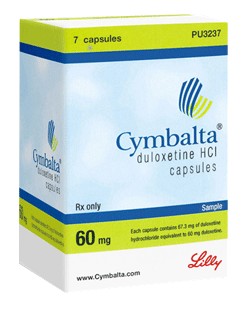
Eli Lilly, the maker of Cymbalta, paid over $137 million for research and $8.7 million in general payments.

The American Medical Association disputes a lot of this data, saying the “vast majority” was never vetted by physicians.

"The complicated and cumbersome process for physicians to register to review their data and seek correction of any inaccuracies continues to hinder their participation in the validation process," the AMA said in a statement.

Curious about your doctor? I was about our longtime family physician and searched his name in the CMS database.

I found nothing scandalous or suspicious, but there was a surprising amount of detail. I learned he received $707.59 in “food and beverage” and “informational meal” payments last year from AstraZeneca, Forest Pharmaceuticals, Eli Lilly, Pfizer and several other companies. What was on the menu is anyone’s guess, but what they talked about is duly noted.

For example, the arthritis drug Celebrex was discussed at a $12.60 meal that Pfizer paid for. And Eli Lilly bought a $11.74 meal for my doctor so he could learn more about the erectile dysfunction drug Cialis.

The most expensive item was a meal for $127.80 paid for by Shionogi, a Japanese drug company. The topic was Osphena, a post-menopausal drug for women to help them have pain free sex -- a discussion apparently reserved for only the finest of restaurants.

Which Marijuana Strain Works Best for Pain?

By Ellen Lenox Smith, Columnist

Unfortunately, “one size does not fit all” when it comes to using medical marijuana for pain relief. You and I could have exactly the same medical condition and use the same strain, but we will not necessarily react in similar fashion.

Because of that, it may take time to find your effective strain. This process will require patience and holding onto hope that you will eventually succeed. I was lucky. The first time I tried some Indica oil, I literally slept the entire night. However, we have had patients who sampled numerous strains before they found what works for them.

a leaf of cannabis sativa

a leaf of cannabis sativa

There are two strains of marijuana plants, both of which provide pain relief: Indica has a calming and soothing effect that can help you sleep, while Sativa helps stimulate the brain and body so you can have a more productive day.

The other thing you have to pay attention to is the THC (Tetrahydrocannabinol) and CBD (Cannabidiol) content of the strain you are selecting. THC is known to provide the “high” sensation that people refer to when marijuana is used recreationally.

Those of us who use marijuana for pain generally do not have that experience, unless we take too high of a dose or just react wrong to a strain. 

CBDs are believed to be responsible for the therapeutic and medical benefits of cannabis.  They don’t make people feel “stoned” and can actually counteract the psychoactive effects of THC.  The fact that CBD-rich cannabis doesn’t get you high makes it an appealing treatment option for patients seeking anti-inflammatory, anti-pain, anti-anxiety, anti-psychotic, and/or anti-spasm effects, without the troubling side effects of lethargy or depression.

However, we don’t all experience pain relief without a higher content of THC. In fact, we have seen some patients be more successful in reducing seizures with more of the THC included. So do not become discouraged if you don’t have success at first.

Please know that THC and CBD levels don’t mean that every plant ever produced of a specific strain will always have the same percentages and ratios. Due to different growing methods, those levels can vary. So, always make sure what you are buying has been tested by a reputable testing facility if cannabinoid levels are important to you.

One successful thing I would like to pass on to you is a trick we discovered making our sleep inducing pain relief oil and day tinctures. 

We now mix all of our five types of Indica strains or Sativa strains together to create the oil or tincture. We make it from the small clippings around the bud, instead of the whole bud. Patients seem to prefer it made this way. You are exposed to the benefits of each plant, along with it being very gentle and less expensive.

female flowers of cannabis indica

female flowers of cannabis indica

In conclusion, remember that you may have to test several strains of medical marijuana to find the right match for your personal needs. It is worth the time and effort, because the pain relief is gentle, non-invasive, and allows you to return to a more productive life without worrying about organ damage from pharmaceuticals.

Ellen Lenox Smith suffers from Ehlers Danlos syndrome and sarcoidosis.

Ellen and her husband Stuart live in Rhode Island. They are co-directors for medical marijuana advocacy for the U.S. Pain Foundation and serve as board members for the Rhode Island Patient Advocacy Coalition. For more information about medical marijuana, visit their website. 

The information in this column should not be considered as professional medical advice, diagnosis or treatment. It is for informational purposes only and represents the author’s opinions alone. It does not inherently express or reflect the views, opinions and/or positions of Pain News Network.

Medical marijuana is legal in 23 U.S. states and the District of Columbia, but is still technically illegal under federal law. Even in states where it is legal, doctors may frown upon marijuana and drop patients from their practice for using it.

Opioid Implant Raises Safety Questions

(Editor’s Note: Our story about an opioid implant that could someday be used to treat chronic pain struck a nerve with a lot of readers. One of them was Mary Maston, a pain sufferer and  patient advocate, who wrote in expressing concern about the safety and risks associated with implants and other medical devices.)

By Mary Maston, Guest Columnist

Why is everything going to implants? Implants seem to have an initial success rate and I can't argue with the fact that they do work for some, but it seems that class action lawsuits for side effects and internal injuries invariably come about down the line.

Transvaginal mesh was touted as the "next big thing." I had a doctor try to convince me that it would solve all of my female problems. Luckily, I didn't bite. We all know how that ended up.

Bladder slings come to mind too. Some IUD’s have caused issues. People have had major problems with hip and knee replacements. Spinal cord stimulators are being pushed on patients in record numbers, and the bomb is eventually going to drop on those too.

While there are success stories, there are some pretty horrific stories floating around online about implanted devices in general. Some will argue collateral damage: "Just think of the ones they've helped. The many outweigh the few.”

But I can promise you that the ones that have been harmed by these implants see things much differently.

Here's the thing: anything implanted in the body is going to be seen as a foreign object. What does the body tend to do when there's a foreign object inside it? It attacks it, trying to force it out. That's why your eyes water when you get something in them, that's why you vomit when you ingest something that's harmful, and that's why you go to the bathroom -- so the body can rid itself of waste.

When it can’t force the implants out, the body rebels with side effects, infections and pain. The surgeries required to implant these things damage nerves and create scar tissue, which also contribute to pain.

courtesy titan pharmaceuticals

courtesy titan pharmaceuticals

If they're planning on this new implant being simply injected into the arm instead of being surgically implanted, that's going to have to be one heck of a big needle! The size of a match stick? Ouch!!

Then there is the issue of tolerance. Pain medication is not a "one size fits all" fix like the makers of this implant are implying. It comes with a preloaded dose of buprenorphine. How can they guarantee that the dosage they put in it is going to work for the majority of the people it's implanted in? 

What if it stops working in a month or two, or doesn't work at all? Do they have that one taken out and another one put in, or is the old one left in and a new one with a stronger dose implanted?

Will the patient be able to go back to taking oral pain medication? What if it causes side effects in the patient after a few days or weeks that they can't handle, or they end up being allergic to the medicine? How long would they have to live with those issues before it is removed?

Some people metabolize medications faster than others, so saying that it's going to work for a full six months for the implant or an entire month for the injection in everyone isn't practical. What about breakthrough pain? If someone had the implant, but showed up in the ER in pain because of their condition, would they be treated respectfully and in a timely manner, or dismissed because they had the implant and "that should take care of all of your pain."

There needs to be a very specific and compassionate treatment protocol set up for patients before this scenario happens, and all doctors need to be required to follow it.

I can understand and appreciate some of the pros listed in the article. Not having to make trips to the pharmacy, not having to remember to take pills and waiting for them to kick in to feel better. Possibly and hopefully not having to go to the doctor every month and being subjected to random drug screens and pill counts.

Doctors would certainly benefit because they wouldn't be prescribing pain medications nearly as much or maybe not at all. That would definitely get them off the hook with the DEA and I can see how that would make them want to push it onto all of their patients.

I understand that addiction and chronic pain go hand in hand for some people. Not all, but some. But as a chronic pain patient, I don't want to be lumped into the same category as addicts, because I am not an addict, never have been and never will be.

This raises serious questions that I think should be considered before we shout to the heavens how wonderful this new implant is going to be for addicts and legitimate chronic pain patients alike.

I understand there is still a lot of work to be done, and that it's going to take time and testing to answer a lot of these questions. Oral medications certainly have their own set of problems and aren't without risks either. However, history tells us that jumping on a bandwagon isn't necessarily a good thing down the road in a lot of cases.

I'm not saying that the thought of being pain free for an extended amount of time isn't appealing. Honestly, I would probably be more apt to try this than a spinal cord stimulator. But I hope that the manufacturers and the FDA will address the questions I've posed. I guarantee you I'm not the only one that will ask them.

Mary Maston suffers from a rare congenital kidney disease called Medullary Sponge Kidney (MSK), along with Renal Tubular Acidosis (RTA) and chronic cystitis. She is an advocate for MSK and other chronic pain patients, and helps administer a Facebook support group for MSK patients.

Mary has contributed articles to various online media, including Kidney Stoners, and is an affiliate member of PROMPT (Professionals for Rational Opioid Monitoring & Pharmaco-Therapy).

The information in this column should not be considered as professional medical advice, diagnosis or treatment. It is for informational purposes only and represents the author’s opinions alone. It does not inherently express or reflect the views, opinions and/or positions of Pain News Network.

Implant Could Be ‘Game Changer’ in Pain Treatment

By Pat Anson, Editor

Imagine going to your doctor’s office and getting an implant put in your arm that delivers a steady flow of pain medication for six months.

No more pills. No more trips to the pharmacy. No more worries about your pain medication getting lost or stolen.

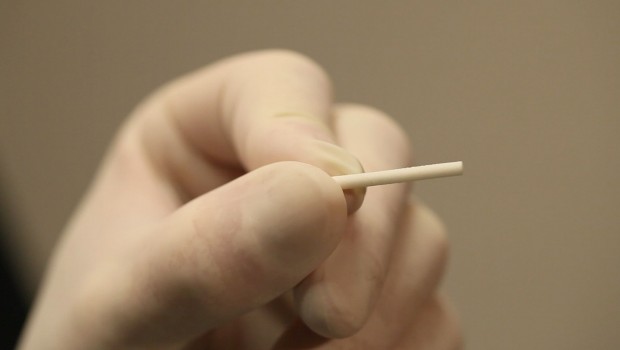
That’s the scenario a New Jersey drug maker envisions for its Probuphine implant – tiny rods about the size of a matchstick designed to be inserted subcutaneously under the skin of the upper arm.

Probuphine was developed by Braeburn Pharmaceuticals under a license agreement with Titan Pharmaceuticals (OTC: TTNP), which holds the rights to the implant technology. Both companies have applied to the Food and Drug Administration to have Probuphine approved to treat opioid addiction, but Braeburn’s long term goal is to also have the implant approved for chronic pain.

COURTESY TITAN PHARMACEUTICALS

COURTESY TITAN PHARMACEUTICALS

“We are definitely interested in talking to the FDA about the use of Probuphine in pain,” said Behshad Sheldon, President and CEO of Braeburn.

The active ingredient in Probuphine is buprenorphine, a weaker opioid that’s long been used as an addiction treatment drug sold under the brand name Suboxone. Buprenorphine is also used to treat chronic pain and comes in various forms – pills, patches and film strips – but none as long-acting as an implant.

The advantages of an implant are many. The dosage is controlled and there’s hardly any risk of abuse, diversion, or accidental overdose. You also never have to remember to take a pill.

“We believe a buprenorphine implant could be a really great clinical tool to treat pain,” Sheldon told Pain News Network. “There’s just a peace of mind aspect for the patients. The medicine’s on board and they don’t have to worry about it.”

“I personally would want a Lipitor implant, because I can’t manage to take it three days in a row,” she joked.

Probuphine’s path to the marketplace hasn’t been a smooth one. Braeburn and Titan were stunned in 2013 when the FDA denied approval of the implant and asked for a new clinical study of Probuphine’s effectiveness in treating opioid addiction.

Braeburn recently reported the results of a six month, double-blind clinical trial of Probuphine on 177 patients, which found that the implant was more effective than buprenorphine tablets in treating addiction. The company said the implant insertion and removal were "generally well tolerated," although nearly one in four patients had a "mild" adverse event at the implant site.

“The data from this trial are encouraging and underscore the benefit of longer term medical treatments for patients with opioid addiction. I am confident that the implant, if approved by FDA, will be at least as effective as a sublingual formulation and have the added benefits of reducing problems related to compliance, misuse and abuse,"  said Richard Rosenthal, MD, Professor of Psychiatry and Medical Director of Addiction Psychiatry at the Icahn School of Medicine at Mount Sinai.

Braeburn and Titan plan to resubmit a New Drug Application (NDA) for Probuphine to the FDA in the second half of this year.

Long Term Injection for Pain

Braeburn has formed another partnership with Camurus, a Swedish drug company, to develop an injectable buprenorphine drug to treat addiction and chronic pain -- a single injection that lasts as long as a month. Camurus has already completed successful Phase I and II studies on the drug and both companies hope to start a Phase III trial later this year -- with the goal of seeking regulatory approval in 2016.

“There have been many conversations with expert clinicians and they’ve told us that they think buprenorphine in general, in a non or less abuse-able form of buprenorphine, in either an implant or an injection could really be game changing,” said Sheldon. “It is part of our plan to move into pain because pain and opioid addiction are so interconnected and we think there are ways, by treating patients with a less abuse-able formulation, you could actually help alleviate the addiction problem.”

Sheldon admits a lot more work needs to be done before a buprenorphine implant or injection is available to treat chronic pain.

“We haven’t studied it yet in pain and we haven’t had any conversations yet with the FDA. So there’s a lot more to do to get to that point,” she said.

Another formulation of buprenorphine to treat pain may be coming to the market relatively soon. Endo International (NASDAQ: ENDP) and BioDelivery Sciences (NASDAQ: BDSI) have submitted a new drug application for a buprenorphine film patch to the FDA. The companies are hoping for FDA approval by October of this year.

Although the patch contains much smaller doses than buprenorphine tablets or patches already on the market, the companies say the film is very effective in treating pain because the drug is absorbed through the inside lining of the cheek and enters the blood stream faster.

Why Choosing a Doctor Is Like a Job Interview

By Pat Akerberg, Columnist

There’s an online answer for just about everything.  If you use a search engine, you are soon inundated with links, marketing products and services to match your needs.  There are even dating services that connect you with possible romantic partners.

Choosing the right doctor isn’t quite as simple as shopping for a new pair of shoes or making a love connection. Shoes that don’t fit can be returned. First dates that don’t work out can be cut short.  But our medical needs carry significant costs, benefits and risks. The right -- or wrong -- doctor can be life changing.

Like any important decision, it’s best to begin with an approach in mind. Doctors carefully scrutinize us as would-be patients.  Isn’t it in our best interest to make the same effort? 

After all, we both have important needs to fill.  So what if we approach our decision just like a job interview, with us doing the hiring?

When I worked in business, the three key points of a solid job interview were focused on:

1. Does the person have the competence to be effective in this role?

2. Are they a “good fit” for the job requirements?

3. Does the person pose any risks or concerns?

If any of those questions turned up a negative answer, that candidate was eliminated. We can borrow from this formula as we search for the kind of doctor that we need.

Competence

This includes expertise, years of experience, a solid track record, and the transparency to share it.  Without transparency, there’s very little objective information available, like a surgeon’s complication rates, for instance.  

There are some ways to get a feel for this prior to your appointment.  The internet can be helpful with this part of your research.  You can conduct a search for support groups for your particular chronic pain condition. (Example: “support groups for trigeminal neuralgia”).

In my case, I rely upon one that I consider to be my most valuable resource for facial pain – it’s the TNA Facial Pain Association.  Once I joined, through discussion groups I could get candid feedback from other members about their experiences with different doctors or treatments -- and learn who the leading experts are in the field. Support and friendship with people who truly understand what you’re going through are extra benefits

An informative website from the Agency for Health Care Resources and Quality can also help with several quality of care topics, including pertinent questions to ask your doctor.

The leading experts may not be in your geographic area.  Will you allow that to keep you from consulting with them?  Some doctors offer Skype consultations if you ask.  Local may not always equal the best chances for success.

A Good Fit

From a doctor’s perspective, a good fit requires you to share factual information about yourself so that they can effectively treat you. 

A good fit from a patient’s perspective begins with a list of the traits and characteristics that meet your unique needs.  These are your “must have’s.”  Here are a few of mine for doctors:

  • Listens and makes eye contact with me
  • Seeks to understand, invites my input
  • Seems engaged and interested in addressing my situation
  • Takes time to explain things to me
  • Comfortable with questions (isn’t defensive or dismissive)
  • Flexible, operates well in a partnership
  • Transparent about treatment outcomes
  • Offers a clear plan

There is no substitute for the experience gained from tuning up your radar and conducting your own interview.  It can be helpful to have a spouse or family member accompany you to appointments to compare notes. 

You may want to make a “nice to have” list too. People in pain often want some empathy from healthcare providers, yet may not always get it.  Is empathy a “nice to have” or “must have” for you? 

Risks and Concerns

Caution is also a part of doing your due diligence to find the best possible doctor.

Unless there’s an extreme need for aggressive treatment, a good rule of thumb to minimize risk is to start with the least invasive, lowest risk treatments. These are often done by practitioners who offer complementary, alternative approaches (acupuncture, physical therapy, chiropractic, homeopathic, etc.)

There is no substitute for doing your homework and becoming knowledgeable about several important things:

  • The costs involved for services and treatments, and how they relate to your insurance coverage and out of pocket expenses. Healthcare Bluebook uses a nationwide database to estimate a “fair price” for everything from drugs to surgery to x-rays.
  • Patient reviews and experiences with a physician.  There are a number of websites where you can read what people are saying about a particular doctor, including RateMDs, Vitals and Healthgrades.
  • Red flags like sanctions, malpractice claims, or medical board actions against a physician can usually be found through your state medical board or licensing agency.  
  • The latest research studies related to your condition.  It will serve you well to be aware of the most effective treatments, the odds for success and potential risks. You can see published research studies at PubMed and the National Institutes of Health.

In terms of knowing the risks upfront about treatments, later is too late if the unthinkable should happen.  You don’t want to be left on your own to scramble for help. 

In the end, it never hurts to have more than one choice available or more than one opinion before you decide. 

Becoming informed will empower you to be your own best advocate when entrusting your medical care to someone. Just like any good hiring decision, choosing the best doctor can prove to be an investment well worth your active involvement.

Pat Akerberg suffers from trigeminal neuralgia. Pat is a member of the TNA Facial Pain Association and serves as a moderator for their online support forum. She is also a supporter of the Trigeminal Neuralgia Research Foundation.

The information in this column should not be considered as professional medical advice, diagnosis or treatment. It is for informational purposes only and represents the author’s opinions alone. It does not inherently express or reflect the views, opinions and/or positions of Pain News Network.

Cymbalta and Lyrica in Legal Battles

By Pat Anson, Editor

The makers of Cymbalta and Lyrica – two blockbuster drugs widely used to treat fibromyalgia and other chronic pain conditions – face legal battles this summer that could potentially cost the companies billions of dollars.

In London, a court case begins next week on Pfizer’s efforts to keep doctors in the U.K. from prescribing pregabalin – a cheaper generic version of Lyrica.

And in Los Angeles, a federal judge this week ordered Eli Lilly to face claims in lawsuits alleging that the company misled consumers about the side effects of withdrawal from Cymbalta.

Over 5,000 patients have filed suit against Lilly claiming that Cymbalta caused “brain zaps” – electric shocking sensations – as well as nausea, vomiting and insomnia when they stopped taking the drug.  The first two cases will be heard in August.

“The withdrawal symptoms from Cymbalta were hell,” wrote Crystal Lindell, a Pain News Network columnist in a recent article.

“Less than a week after my last pill, I was getting so dizzy that I seriously thought I had a new disease. Then, there was this thing called the brain zaps that I didn’t understand until they happened to me. In short, it literally felt like my brain was being, well, zapped by electricity. There was also nausea and vertigo and just an overall feeling of falling off a skyscraper.” 

Several readers shared their own experiences with Cymbalta.

“My neurologist put me on Cymbalta, I took 2 pills, I thought my head was going to explode,” wrote Judy Dunn.

“I suffered from 6 weeks of vertigo, nausea, dizziness, and MASSIVE headaches,” said Andy, who was prescribed Cymbalta to treat depression. “I will never take Cymbalta again. EVER.”

“While on the drug I did get a better mood and it helped a lot, but it raised my blood pressure and I was shaky and jittery. I also went through the brain ZAPS!!” wrote Candra Clark.

“We believe in our defenses to these claims and we will continue to defend Lilly vigorously,” Scott MacGregor, a Lilly spokesman told Bloomberg Business.

Cymbalta generated annual sales of $5 billion for Lilly until its patent expired in 2013 and cheaper generic versions of Doluxetine became available.

Lyrica Legal Battle

Like Cymbalta, Lyrica wasn’t originally developed to treat pain. It was used as a treatment for anxiety and epilepsy until drug maker Pfizer realized it could also be effective for fibromyalgia and neuropathic pain.

Pfizer’s patent on Lyrica for epilepsy and anxiety expired last year, but its secondary patent for pain is good until July of 2017 – and that is the essence of its legal fight in the U.K.

Rival drug makers started making pregabalin – the generic version of Lyrica – when its original patent expired. But it didn’t take long for doctors to also start prescribing pregabalin for pain.

According to Pharmalot, about 80% of all U.K. patients on pregabalin are using it to treat pain and Pfizer has launched an aggressive campaign to stop that. Last year the company wrote an unusual letter to physician groups in the U.K. warning them that prescribing pregabalin for pain was a violation of its patent.

“Pfizer believes the supply of generic pregabalin for use in the treatment of pain whilst the pain patent remains in force in the U.K. would infringe Pfizer’s patent rights,” the company said in the letter.

The Royal College of Physicians, which represents 29,000 U.K. doctors, responded with a statement of its own.

“Pregabalin is a useful drug for many patients and, given the current financial pressures the NHS (Britain’s National Health Service) is under, it is disappointing that a pharmaceutical company has made a move that will, potentially, prevent some patients from getting access to it,” a spokesman said.

The NHS has since issued guidance to doctors telling them to use the brand name Lyrica when prescribing pregabalin for pain “so far as reasonably possible.” Pfizer is seeking a stronger statement from the British High Court.

Ironically, Pfizer paid $2.3 billion dollars in 2009 to settle criminal and civil charges in the U.S. for the “off-label” marketing of Lyrica and other medications – the very sort of off-label use it is trying to stop in the U.K.

Lyrica remains one of Pfizer’s top selling drugs, generating $5.1 billion in revenue in 2014.