Surviving the Hurricane of Chronic Pain

By Crystal Lindell, Columnist

I have recently started feeling better these last few months — a string of good days, I like to say — and it’s given me a chance to catch my breath and reflect on some of the crap I’ve endured over the last couple years.

For me, waking up one day with stabbing rib pain was like swimming along the river of life, only to be picked up by a hurricane, hurled back about 100 miles, and left to fight the raging current in water that was barely above freezing.

And yeah, it made about as much as sense as a hurricane in a river.

It was like everything I had accomplished had been taken from me, and instead of swimming forward, or swimming at all, I was literally gasping for air, about to drown every single day.

And people would come along and say, “Oh, I’ll pray for you!” And I’d be like, “Umm, I’m literally drowning! And there’s a hurricane! In a river! HELP ME!”

And they would say, “Well, if you really want to survive, you’ll give up gluten.” And I’d be like, “Umm, I just need a life raft! Giving up gluten isn’t going to help me!”

And they would say, “Well, if you were a horse, we would have let you drown by now.” And then they would laugh. And I’d be in the river, trying to survive the winds and waves and the rain.

And then someone with the best of intentions would come up to me and say, “Well, everything happens for a reason. I’m sure there’s some larger reason why you’re drowning.” And then they would walk away. On the land.

I spent almost six months on the verge of drowning. And eventually I just got so tired that I wanted nothing more than to close my eyes, fall back into the water, and let it all go. Let the pain go. Let the depression go. Let the daily battle to stay above water, go.

I spent every day wanting to let go. Planning ways to let go. Convincing myself that if my family really loved me, they would just let me go.

I also started stripping away everything I could so that I could stay above water. I got rid of my part-time job as a church youth leader. I threw my independence over board and moved in with my mom. And eventually, heartbreakingly, I even let go of my boyfriend’s hand. I let it all slip away so I could focus all of my energy, every day, on breathing in air instead of filling my lungs with water.

And I tried to see every doctor I could find, looking for a lifeguard. But they would say things like, “Well, you don’t look like you’re drowning.” Or, “Well, I mean, you’re drowning. But we can’t see the hurricane, so there’s not really anything we can do about it.”

And then, finally, a rescuer came along. We will call him, Dr. M, for Miracle. I literally tear up when I think about meeting Dr. M. 

He couldn’t see the hurricane either, but he believed me when I said there was one. And he understood the one thing I needed more than anything was a life raft. So he threw me one. Dr. M put me on a large dose of opioids, and it was the best thing that could have ever happened to me. It was like someone calmed the winds and the storm started dying down. The water finally got still for the first time in a long time.

He was the first doctor to actually take my pain seriously. I imagine that he’s either had chronic pain himself, or loves someone who had it because that’s the only way I can explain how compassionate he was — how amazing he was about believing that I was truly drowning.

It’s true that the best thing you can say to someone who is sick is, “I believe you.”

It was because of Dr. M that I finally got on a drug regimen that allowed me to float in the water every once in a while and rest my arms. To let the life raft do some of the work. And when I told him that the medication wasn’t lasting me all month — that, near the end of the 30 days, I was starting to drown again — he believed me, and gave me enough to get through all four weeks.

But even with the drugs, the only thing I could really do was float. I couldn’t swim forward or even get to shore. I just stayed still, trying to survive all the times the winds picked up, or the water got below freezing, or the waves got too big. I did my best to endure the side effects from the medication, the pain flares, and the ER visits.

There’s a saying, “You’ve got what it takes, but it will take everything you’ve got.” And surviving this has taken everything I ever had in my soul.

For the last two years though, I’ve just been happy to still be alive. Happy that I had a life raft and some calmer waters. I started planning how to live my life where I was. It was 100 miles behind where I’d been, but I started to realize that the trees in that area were actually kind of pretty. And that there were some other people floating around that I would have never met if there had never been a hurricane. I started to think that perhaps I could set up a life there.

But then, something happened. Something I never thought would ever happen, actually happened. I started swimming forward again.

I had tried every day that I could to swim forward, only to be pushed back. I would wake up and try to shower, go for a walk, drive, or do anything that would help me go forward again. But every time, I ended being tossed right back to where I was — sometimes even further back.

One day though, I swam forward and I stayed there. And then the next day, I swam forward a little more, and I stayed there too. And then again, again and again.

I had started taking vitamin D, after realizing that I was tragically deficient in what should more accurately be referred to as hormone D. When I started getting my levels back up it was like I suddenly had the strength to move forward again. My whole body could swim again.

And for the first time in a long time, I experienced things I had almost forgotten existed. The perfect pleasure of going for a long walk on a crisp fall day. The heart-stopping independence of being able to get in car, drive myself to the mall, and do the one thing I used to love most of all — shop. The joy of being able to take a shower and immediately blow dry my hair without needing an hour-long break in between the two.

There were so many things that I couldn’t do because I couldn’t swim forward for so long. So many things I had to give up. Like folding my own towels in my own special way. And waking up to the sunrise and being happy to see the morning light without having to worry about the pull of fatigue from my medications.

And even, especially, turning over and laying on my right side. I had not laid on my right side in over two years.

So now, here I am, finally swimming forward again for the first time in a long time. For now, it feels like maybe the hurricane has finally passed. But I still wake up every day worried that there will be another storm. I worry that the winds will pick up and I’ll be hurled backward, and I won’t have a life raft and I’ll start to drown again.

But now, at least, I know that if that does happen, I have it in me to survive.

Crystal Lindell is a journalist who lives in Illinois. She loves Taco Bell, watching "Burn Notice" episodes on Netflix and Snicker's Bites. She has had intercostal neuralgia since February 2013.

Crystal writes about it on her blog, “The Only Certainty is Bad Grammar.”

The information in this column should not be considered as professional medical advice, diagnosis or treatment. It is for informational purposes only and represent the author’s opinions alone. It does not inherently express or reflect the views, opinions and/or positions of Pain News Network.

Marijuana No ‘Magic Bullet’ for Pain in Minnesota

By Pat Anson, Editor

Minnesota may be one of 23 U.S. states where medical marijuana is legal, but getting a prescription for cannabis there is difficult – especially for chronic pain patients.

Since Minnesota enacted one of the nation’s strictest medical marijuana laws last year, less than 700 people have enrolled in the state’s cannabis registry. Only nine health conditions qualify for a marijuana prescription in Minnesota – and chronic pain isn’t one of them – a status that appears unlikely to change after an advisory panel voted 5-3 not to allow pain patients into the cannabis registry.

The reason? Medical marijuana is “not a magic bullet” and there’s not enough evidence that it can treat pain.

“Panel members expressed concern that patients eligible to use medical cannabis for pain have expectations that it would provide total relief and that such a perception may leave patients to abandon other proven pain-management methods, such as physical therapy,” the recommendation said.

“Panel members cited the recent opioid crisis, where good medications were demonized because prescribers used it to treat pain without knowing its proper uses. Even after studying the information available on medical cannabis, panel members said providers do not feel prepared to certify patients for its use.”

The panel recommended that marijuana not be prescribed to anyone with a history of substance abuse or patients with mental health problems. If marijuana is allowed for intractable chronic pain, the panel suggested that patients should be disqualified if they are under 21, have a history of psychosis, are pregnant or breast feeding.

The final decision is in the hands of Minnesota’s Health Commissioner, who has until the end of the year to decide if medical marijuana should be allowed for intractable pain.

The nine conditions that qualify for medical marijuana in Minnesota are cancer, glaucoma, HIV/AIDS, Tourette Syndrome, Amyotrophic Lateral Sclerosis (ALS), seizures, severe muscle spasms, Crohn’s Disease and terminal illness.

Terminally ill cancer patients – many of whom are in pain – are allowed to use medical marijuana. And many say they’ve been able to reduce their use of opioids since they started taking marijuana, according to the Minneapolis StarTribune.

“What are we going to do about patients? What do we tell patients who we know we can help, but we currently can’t help them? That’s the remarkably frustrating thing about this process that gets to me,” said Manny Munson-Regala, CEO of LeafLine Labs, one of the state’s two medical marijuana producers.

In addition to limits on the conditions it can be prescribed for, medical marijuana is not available in leaf form and cannot legally be smoked in Minnesota.  It is only legal in a pill, vapor or liquid form.

Miss Understood: Vibrant Trial

(Editor’s note:  Several weeks ago we were contacted by a sales representative for Neurovative Technologies, a Canadian manufacturer of medical devices that use vibration to relieve chronic pain. These “Vibrant” devices sell for about $300 each and, we were told, “have been able to decrease pain and stiffness and increase range of motion in 95% of our OA, RA and Fibromyalgia patients.” The company was invited and agreed to provide a Vibrant device for back pain at no cost to PNN columnist Arlene Grau for a test run. Arlene suffers from fibromylagia and rheumatoid arthritis.)

By Arlene Grau, Columnist

There are many people who suffer the same pain day in and day out with little to no relief from medication, acupuncture, medical devices, etc. My pain begins in my back and spreads throughout my body. Recently, I was asked to give a drug free and non-invasive device called Vibrant a try to see if it helped with some of the pain I was suffering from. I received the device that is designed for back pain management.

During my time using the device, which was about two weeks, I have found that there is no change in my pain level or relief for my back pain.

The device is recommended for use in 16 minute sessions.  It can be used as many times as you'd like during the day, however it is not recommended that anyone use it for an extended period of time all at once.

It is extremely easy to use. You just push the “on” button and it does all the work. It also comes with a charger and backpack for storing or carrying, which I thought was pretty neat.

The Vibrant device reminded me of a massage chair, but I kept wanting to raise the level of intensity and couldn't because it doesn't come with that feature.

It did however help relieve minor aches and pains related to everyday life. My husband even tried it and said that he found it to be relaxing.

I also have a TENS unit which was prescribed by my pain management doctor and I feel like I get a lot more relief from that than the Vibrant device. As far as being able to target my pain and getting deep down into the problem areas, I feel like the Vibrant device fell short.

It's possible that it's meant for smaller aches and pains, but as far as rheumatoid arthritis and fibromyalgia patients go, there really are no minor pains related to our diseases.

Arlene Grau lives in southern California. She suffers from rheumatoid arthritis, fibromyalgia, lupus, migraine, vasculitis, and Sjogren’s disease.

The information in this column should not be considered as professional medical advice, diagnosis or treatment. It is for informational purposes only and represent the author’s opinions alone. It does not inherently express or reflect the views, opinions and/or positions of Pain News Network.

Wireless LED Device Could Block Pain Signals

By Pat Anson, Editor

Researchers say a new type of implantable wireless device could revolutionize the treatment of chronic pain by using light to block pain signals before they reach the brain.

In animal studies at Washington University School of Medicine and the University of Illinois at Urbana-Champaign, researchers used implanted microLED devices to “light up” peripheral nerve cells in mice. Their study is published online in the journal Nature Biotechnology.

"Our eventual goal is to use this technology to treat pain in very specific locations by providing a kind of 'switch' to turn off the pain signals long before they reach the brain," said co-senior investigator Robert Gereau IV, PhD, a Professor of Anesthesiology and director of the Washington University Pain Center.

Unlike spinal cord stimulators, which also mask pain signals to the brain, the new devices are  soft and stretchable, and can be implanted in parts of the body that move. Spinal cord stimulators have to be anchored to bone.

"When we're studying neurons in the spinal cord or in other areas outside of the central nervous system, we need stretchable implants that don't require anchoring," said Gereau.

image courtesy gereau lab/washington university

image courtesy gereau lab/washington university

Gereau and his colleagues are experimenting with mice that are genetically engineered to have light-sensitive proteins on some of their nerve cells. The wireless implants contain microLED lights that use “optogenetics” to activate specific nerve cells. The devices are thin, flexible, and minimally invasive because they can be implanted in soft tissue.

Earlier versions of the device used remote lighting and fiber optic delivery systems that were tethered to power sources and could not be fully implanted.

Because the new devices are small, flexible and can be held in place with sutures, they have potential uses in or around the bladder, stomach, intestines, heart or other organs, according to John Rogers, PhD, a professor of materials science and engineering at the University of Illinois.

"They provide unique, biocompatible platforms for wireless delivery of light to virtually any targeted organ in the body," said Rogers.

Rogers and Gereau designed the implants with an eye toward mass production of the devices so they could be available to other researchers. They’ve formed a company called NeuroLux to aid in that goal.

According to iData Research, the spinal cord stimulator (SCS) market was valued at $1.3 billion in 2014. The company estimates that less than 10% of potential patients are being treated with an SCS device.

Stimulators are often considered the treatment of last resort after opioid pain medication, physical therapy, steroid shots and other types of treatment fail. Many patients are reluctant to get SCS devices because the surgery is so invasive.

How I Use Exercise to Manage Chronic Pain

By Fred Kaeser, Guest Columnist

My dilemma may not be yours. I can only speak for myself. But when my intermittent severe pain became everyday severe pain, I felt I had a choice to make. Find a doctor that would prescribe me enough opioids everyday so that my horrible pain could be reduced considerably… or…decide that the risks of using opioids on a regular, constant basis outweigh the benefits.

When making this risk-benefit analysis, I needed to explore as best I could the empirical evidence on both sides of the opioid debate. Just as important, I needed to look at the evidence concerning alternative pain management strategies such as exercise, physical therapy, nutrition, yoga, mindfulness visualizations, and the like.

I am 63 years old and am in severe pain on an everyday basis. I have severe cervical spinal stenosis, multiple osteophytes impinging on my thecal cord, severe spondylosis, and multiple discs that have been severely compromised. I have osteoarthritis throughout my body. My hips have been replaced and one will need revision surgery fairly soon. My knees are shot. My lumbar spine is not as bad as my cervical, but multiple discs are herniated, the stenosis is in the moderate range.

I have crawled around on the floor many times for days and even weeks at a time since I was 25. I also have intermittent, but infrequent bouts of intercostal neuralgia, where it feels like the left side of my ribs are on fire. But without question, my cervical spine is the worst of them all.

      fred kaeser

      fred kaeser

I was determined to be an educated consumer in my quest to relieve pain, but time was of the essence. It’s brutal being in constant severe pain. It not only hurts, it’s exhausting. Fighting the hurt, trying to stay positive, trying to do your daily stuff, trying to be friendly, just trying to smile becomes harder and harder. .

I had done enough periodic trials of opioids to know several things. They work. But then at a certain point they don’t work as well. Even upping the dosage works for only so long. I can take an opioid for breakthrough pain or an extended release opioid, but the weird haze I’d get, the strange cloudy, foggy feelings I have, I never felt normal doing them.

I mean, is that what I want to feel like for years to come? I hate the pain, but the opioid cloud from any extended use I hate also. And the risks: tolerance, dependence, respiratory distress, sexual disruption, and constipation. That last one can be a bitch. I didn’t want to live in pain. but I didn’t want the risks and that overall crap feeling that opioids presented me. So the search for alternative pain therapies was on.

Let me first say I had to have the right attitude. “Stinkin-thinkin” is out, or as my meditation expert friend says, “If you “awful-ize” regularly you will feel awful.” I cannot emphasize enough the benefit of staying upbeat. I’m not stupid, I get it. You feel horrible, you feel like crap, you want to crawl out of your skin. But I have a choice; get swallowed up in negative thoughts and that is where I’ll stay, or stay as positive as I can and that is where I’ll stay. Not easy by any means, but it is the only means for me.

I was always athletic but I smoked. Smoked from 24 years of age to 56. That had to stop. When I had my second hip replacement I said I would quit right as I entered the hospital. I did and I could write a book on that fun trip.

I knew my diet would have to change. Didn’t want anymore extra weight and I knew I needed to increase my intake of foods that reduce inflammation. I love hot peppers, love those oily fish, those greens like spinach, kale, collard greens, those whole grains, and those almonds (but gotta watch the calories).

It took hard work to stop smoking and change my diet. And there was still a whole bunch more to come. I wanted to exercise more, I wanted to do my physical therapy exercises and stretches regularly, I wanted to give basic yoga posturing a try, I wanted to do some sort of meditation/positive visualizing practice.

I had read about all the benefits these could offer and I also knew it wouldn’t come quick. THIS IS THE HARD PART. I knew I would have to stick with it. I know too many people who say they’re going to make changes in their health status and do not stick with it. They’re in abundance after all those New Year’s resolutions every January, right? I’ve been one of them any number of times! It’s much easier to stop all the hard work and a whole lot easier to just take the pills.

But not this time. I knew that if my chosen alternative pain strategies were to work, I would have to be loyal to them and I would have to give them time. A lot of time, like 3-6 months of everyday, regular time. I have a family, I was working, I had all the stuff that comes with life, and now I had to fit a bunch more things in. I had to get up earlier than before, I had to spend an hour and half to two hours at night after work doing things I hadn’t before, and I had to fit these things into my weekends as well.

My Exercise Regimen

I had a YMCA membership and it’s amazing how many free or very low cost add-ons they provide. Yoga was free. Fairly low cost trainer sessions. My insurance covered a certain amount of physical therapy. A colleague-friend at work was a meditation expert. I get a lot of free senior citizen exercise and healthy activity benefits from the town I live in.

I started an exercise regimen that included cardiopulmonary exercise, weight training, and core exercise. I do an hour and half a day, 6 days a week. The myriad PT exercises and stretches I learned had to be done every day, 7 days a week as well. I don’t do all I know every time, but I usually spend about 20 minutes to a half hour on these.

The meditation/visualization I do is a form of guided imagery. Real easy to learn and real calming to do. I conjure peaceful, beautiful images for a 15 minute period in the morning and before bed I do 15 minutes of a mindfulness type experience where I am aware of positive thoughts, feelings, and images. I try to put my pain into a corner and focus on just the other things.

The yoga may give me the most benefits. I just do poses and stretches. I incorporate most of them in my daily workout routine and at times combine them with my PT work. All nothing real fancy, or too in-depth, but just enough of the basics to really help.

I lost count how many times I would bitch and complain in the beginning. How many times did I feel all this stuff was a waste? How many times would I curse them? How many times my pain hurt when I did them? How many times was my pain worse right after them? How many times did I want to give up? How many times did I want to just take the opioids? The answers: MANY!

A month went by…two months…three months…and I started to actually feel better. My pain was being mitigated. Six months and they worked even better. And now, almost 7 years later, they work better than ever. And my opioids? I am prescribed oxycodone, but I only take it every other day or every two days. I try to allocate myself no more than 10 pills a week.

Do I still have pain? Yep. Do the opioids help? Yep. In fact, when I take them they work as effectively as the first day I started taking them. I know I could easily do more and, considering the level of pain I have, they are easily warranted. But my pain is mitigated by my alternative pain management and my opioid use is minimized.

Just as important, there has been another benefit. The cervical spine surgery that I should be eligible for I don’t have to do because my functioning is normal. You don’t do this surgery unless your functionality suffers considerably.  Removing 2-3 discs, shaving down multiple osteophytes, and fusing 3-4 vertebras pose considerable post-op risks and perhaps even more pain. I’ve been told that my function is so good because of all the exercises I do, so no surgery for now.

Like I said, I can only speak for myself. But I have found a very effective balance to mitigating my pain through alternative pain management and the limited use of opioids. I still have pain every day but I manage it with a lot of hard work.

I know there are many people out there that must take opioids every day. And they should be provided with them. But I felt that I would be cheating myself if I didn’t do my best to mitigate my pain through alternative means.

I always have to be honest with myself. Am I doing all I can to ease my pain other than by taking opioid medication?

Fred Kaeser, Ed.D, is the former Director of Health for the NYC Public Schools. He taught at New York University and is the author of "What Your Child Needs to Know About Sex (and When): A Straight Talking Guide for Parents." Fred enjoys exercising, perennial gardens, and fishing.

Pain News Network invites other readers to share their stories with us. 

Send them to:  editor@PainNewsNetwork.org.

The information in this column should not be considered as professional medical advice, diagnosis or treatment. It is for informational purposes only and represent the author’s opinions alone. It does not inherently express or reflect the views, opinions and/or positions of Pain News Network.

Women More Likely to Get Addicted to Pain Meds

Pat Anson, Editor

Over half the women being treated for addiction at methadone clinics in Canada say their first experience with opioids was a pain medication prescribed by a doctor, according to a new study.

Researchers at McMaster University in Hamilton recruited over 500 men and women being treated for opioid dependence at 13 clinics in Ontario. The aim of the study, which is published online in the journal Biology of Sex Differences, was to identify any significant gender differences between men and women attending the clinics. Participants provided researchers with detailed information about their health and lifestyle, as well as urine tests to measure their use of illicit and legal drugs.

Compared to men, women were found to have more physical and psychological health problems, more childcare responsibilities, and were more likely to have a family history of psychiatric illness.

While over half the women (52%) and about a third (38%) of the men reported doctor-prescribed painkillers as their first contact with opioids, only 35% of participants said they suffered from chronic pain during the study period.

"It's not clear why women are disproportionately affected by opioid dependence originating from prescription painkillers - it could be because they're prescribed painkillers more often due to a lower pain threshold, or it might simply be because they're more likely than men to seek medical care,” said lead author Monica Bawor of McMaster University.

“Whatever the reasons, it's clear that this is a growing problem in Canada and in other countries, such as the U.S., and addiction treatment programmes need to adapt to the changing profile of opioid addiction."

Only about a third (36%) of the study participants were employed or had completed a high school education (28%).

Men were more likely than women to be employed, and were more likely to smoke cigarettes. Men were also more likely to report having smoked marijuana, although rates of marijuana use were relatively high among both men and women, Nearly half (47%) said they had used marijuana in the month prior to the study.

"Most of what we currently know about methadone treatment is based on studies that included few or no women at all. Our results show that men and women who are addicted to opioids have very different demographics and health needs, and we need to better reflect this in the treatment options that are available,” Bawor said.

"A rising number of women are seeking treatment for opioid addiction in Canada and other countries yet, in many cases, treatment is still geared towards a patient profile that is decades out of date - predominantly young, male injecting heroin, and with few family or employment responsibilities."

Compared to studies from the 1990s, the average age of patients being treated for opioid addiction is older (38 vs. 25 years of age), and patients also started using opioids at a later age (25 vs. 21 years). There was a 30% increase in the number of patients becoming addicted to opioids through doctor-prescribed painkillers.

The number of opioid painkiller prescriptions has doubled in Canada over the last two decades. According to the World Health Organization, Canada consumes more opioid painkillers per capita than any other country.

Are Opioids or Economics Killing White Americans?

By Pat Anson, Editor

Opinions are all over the map about a recent study by two Princeton University researchers, who estimate that nearly half a million white Americans died in the last 15 years due to a quiet epidemic of pain, suicide, alcohol abuse and opioid overdoses.

The husband and wife research team of Angus Deaton and Anne Case were careful not to point a finger at any one cause, but speculated that financial stress caused by unemployment and stagnant incomes may be behind the rising mortality of middle-aged whites. The deaths were concentrated in baby boomers with a high school education or less.

But some were quick to blame the “opioid epidemic.”

“An opioid overdose epidemic is at the heart of this rise in white middle-age mortality,” wrote psychiatrist Richard Friedman, MD, in an editorial that appeared in the New York Times under the headline “How Doctors Helped Drive the Addiction Crisis.”

“Driving this opioid epidemic, in large part, is a disturbing change in the attitude within the medical profession about the use of these drugs to treat pain,” said Friedman. “It is physicians who, in large part, unleashed the current opioid epidemic with their promiscuous use of these drugs; we have a large responsibility to end it.”

And what should doctors do to end the epidemic?

bigstock-Health-Care-United-States-Flag-1719607.jpg

Friedman said there was “strong evidence” that Motrin, Tylenol and other nonsteroidal anti-inflammatory drugs (NSAIDS) were “safer and more effective for many painful conditions than opioid painkillers.”

The Fresno Bee took a more nuanced view of what it called “the epidemic of pain and heartbreak.”

“If ever a set of numbers cried out for deeper examination, it is this one. Human frailty may be epidemic, but surely it is also no surprise that a generation raised with the expectation of a secure future might sink into depression, hostility, illness, anguish and rage when that future fails to transpire,” The Bee said in an editorial. “Whether the solution is better jobs, cheaper schools, more mental health care or less reliance on painkillers, the distress of America’s white working class has become a public health crisis.”

“White Americans who used to be able to support a family are now struggling even in dual income households, and there's a corresponding loss in stature and self-esteem. They are turning to prescription opioids in greater numbers than minorities,” said the Baltimore Sun. “The transition to a 21st (century) economy is literally killing some people, and the United States can ill afford to ignore this disturbing development.”

Overseas news outlets also tended to blame the rising death rate on a “ruthless economy.”

“These people are dying because history has unexpectedly thrown them on the scrapheap,” said The Guardian. “White baby boomers had high expectations of the future, yet many of them have lived to discover that they will be worse off than their parents.”

“(The) findings should awaken Americans to the price we pay for pursuing economic policies that enrich the few at the expense of the many,” said David Cay Johnston in a column for Al Jezeera America. “The harsh reality is that our economy is in many ways stuck in 1998 and that for poorly educated Americans, the economy has become a living nightmare with no expectation of a brighter tomorrow. The rise in drug and alcohol poisonings as well as the rising tide of suicides should not surprise. But these trends should disturb.”

What do you think? Is the economy to blame for the increasing number of deaths? Or is it opioids?

Exercise Improves Pain and Mobility of Seniors

By Pat Anson, Editor

A low-impact exercise program can significantly reduce pain and improve mobility for older adults with arthritis and other musculoskeletal conditions, according to the Hospital for Special Surgery (HHS) in New York City.

For several years HHS has offered exercise programs at senior centers in Chinatown, Flushing, and Queens – and tracked the health of those who participated. The hospital’s most recent findings are being presented at the annual meeting of the American College of Rheumatology/Association of Rheumatology Health Professionals in San Francisco.

"Getting seniors to be active in any way will generally improve their quality of life and help them function better in their everyday activities," said Linda Russell, MD, a rheumatologist and chair of the Public and Patient Education Advisory Committee at HHS. "People believe that if you have arthritis you shouldn't exercise, but appropriate exercises actually help decrease pain."

The eight-week exercise programs began in 2011 and are held once a week. They were originally developed for Asian seniors 65 and older, many of whom lived in poverty and suffered from musculoskeletal conditions.

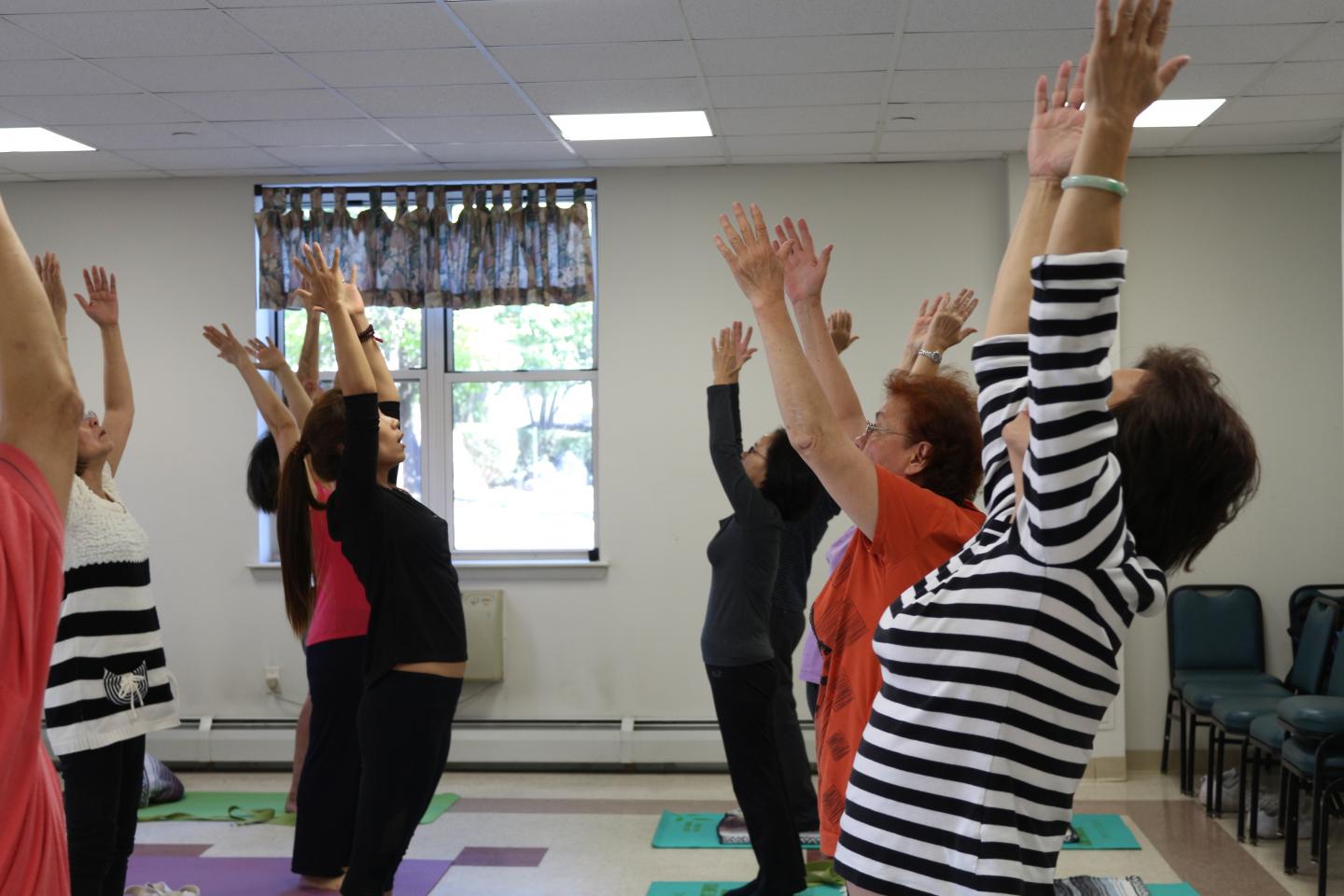
The low-impact exercises included pilates, yoga, yoga-lates (a combination of yoga and pilates), t’ai chi and dance, and were led by certified instructors.

In surveys of over 200 participants, most reported that they experienced less pain and were better able to perform activities of daily living. Muscle and joint pain were reduced by nearly a third and mobility improved dramatically:

  • 88% more participants could climb several flights of stairs
  • 66% more participants could lift/carry groceries
  • 63% more participants could bend, kneel, or stoop
  • 91% of participants felt the program reduced their fatigue
  • 97% of participants felt that the program reduced their stiffness
  • 95% of participants felt their balance improved
  • 96% of participants felt more confident that exercising would not make their symptoms worse

"The study results indicate that the hospital's Bone Health Initiative has a positive impact on the musculoskeletal health of the Asian senior population," said Huijuan Huang, MPA, program coordinator. "Providing free exercise programs to the community can play an important role in helping adults manage musculoskeletal conditions."

An earlier study at HHS found that exercise decreases pain, reduces the severity and frequency of falls, and improves the balance of people suffering from osteoarthritis. Exercise also improved their quality and enjoyment of life.

CDC: We Need Safer, More Effective Pain Relief

(Editor’s Note: Debra Houry is director of the CDC's National Center for Injury Prevention and Control, which is developing new opioid prescribing guidelines that the agency plans to adopt in January 2016. We have many questions about the guidelines and the manner in which they are being drafted, and asked for an interview with Dr. Houry. She declined, as did CDC Director Tom Frieden. Dr. Houry did offer to write a column about the guidelines for our readers and we agreed to publish it.)

By Debra Houry, MD, Guest Columnist

At CDC I see the numbers.  The numbers of people dying from an overdose of opioid pain medications.  And, many of these unintentional deaths were in patients taking medications for chronic pain.

But to me, it’s not about numbers.  It’s about the people.  I’m concerned about stories we’ve heard at CDC from people like Vanessa and Carl, who were both prescribed opioid pain medications after car crashes. Vanessa was 17 years old when she was prescribed opioids the first time, and within several years, she was abusing IV drugs and was afraid she was going to die with a needle sticking out of her arm. Carl became addicted quickly and suffered from withdrawal when he tried to stop. He became a drug dealer to get access to the drugs that would prevent the unbearable withdrawal symptoms caused by his opioid addiction. Thankfully both Vanessa and Carl got into treatment and have been in recovery for several years now.

As an ER doctor I’ve cared for people like Carl and Vanessa suffering from traumatic injuries or in chronic pain. I’ve also had to be the one to tell families that they lost a loved one to an overdose of prescription opioids.  I see the risks. It worries me when patients return because their opioid medications are no longer effective at relieving their pain, and they need larger and larger doses.  Although opioids are powerful drugs that are important to manage pain, they have serious risks, with multiple side effects and potential complications, some of which are deadly.

But I want patients for whom the benefits outweigh the risks, to be able to get these important pain medications. And, I need to be able to treat pain more safely and effectively so that people can have relief without the risk of abuse, overdose or death.

Since 1999, we’ve seen a dramatic increase in the amount of opioid pain medications prescribed in the U.S. and at the same time overdose deaths from these medications have quadrupled.  The evidence is becoming clearer that overprescribing these medications leads to more abuse and more overdose deaths. Guidelines that help doctors and other health care providers work with their patients to determine if and when opioid medications should be given as part of their overall pain management strategy need to be updated.  

Most of the existing guidelines have focused safety precautions on high-risk patients, and have recommended use of screening tools to identity patients who are at low risk for opioid abuse. However, opioids pose a risk to all patients, and currently available tools cannot rule out risk for abuse or other serious harm outside of end-of-life settings.  

We must find a better way to treat pain so that diseases, injuries or pain treatments themselves don’t stop people from leading full and active lives. That is why CDC is working with doctors, other health care providers, partners, and patients on urgently needed guidelines based on the most current facts about safer and effective pain treatment. In a national health crisis like this one, our priorities are clear. First, take swift action to protect and save lives. Second, use world class science and proven processes to determine further improvements. And third, use the facts to prevent this situation from happening in the future.

The upcoming CDC guidelines will provide recommendations on providing safer care for all patients, not just high-risk patients. The guidelines will also incorporate recent evidence about risks related to medication dose and encourage use of recent technological advances, such as state prescription drug monitoring programs.

The guidelines are intended to help providers choose the most effective treatment options for their patients and improve their patients’ quality of life. Currently, 44 Americans die each day as a result of prescription opioid overdose. By providing the tools to help physicians make informed prescribing decisions, we can improve prescribing and help prevent deaths from prescription opioid overdose.

Thank you to the many Pain News Network readers who took the time to share your thoughts with us.  As we move forward, we will continue to look for opportunities to work with you on the critical issue of safer, effective pain management.

Debra Houry, MD, is a former emergency room physician and professor at Emory University School of Medicine in Atlanta. In 2014, she was named director of the National Center for Injury Prevention and Control at the Centers for Disease Control and Prevention.

Dr. Houry can be emailed at vjz7@cdc.gov and reached on Twitter at @DebHouryCDC.

The information in this column should not be considered as professional medical advice, diagnosis or treatment. It is for informational purposes only and represents the author’s opinions alone. It does not inherently express or reflect the views, opinions and/or positions of Pain News Network.
For a look at the first draft of the CDC’s opioid prescribing guidelines, click here.

Rheumatoid Arthritis Raises Death Risk

By Pat Anson, Editor

Rheumatoid arthritis (RA) is not only painful and disabling – new research indicates it raises the risk of an early death, especially for patients with seropositive RA.

In a study of nearly 1,000 women with RA, researchers at Brigham and Women’s Hospital (BWH) in Boston found that RA significantly increased the women’s risk of death from cardiovascular and respiratory disease. The women are enrolled in the Nurses' Health Study, which has followed more than 100,000 female registered nurses since 1976.

"Because the Nurses' Health Study is so large and has been following participants for so long, we were able to gather much more information about our subjects - we could follow them before and after diagnosis, take their health behaviors into account and determine specific causes of death. By doing so, we found strong evidence of increased risk for respiratory, cardiovascular and overall mortality for patients with RA," said lead author Jeffrey Sparks, MD, a physician in BWH's Division of Rheumatology, Immunology and Allergy.

RA is a chronic autoimmune disease in which the body’s own defenses attack joint tissues, causing swelling, inflammation and bone erosion. Because RA is incurable, treatments focus on suppressing the immune system to reduce inflammation and slow progression of the disease.

Sparks and his colleagues evaluated 964 women in the Nurses’ Health Study and compared their mortality rates to women in the study without RA. The team controlled for other risk factors, including smoking, a known cause of respiratory and cardiovascular mortality, as well as age, body mass index, physical activity and diet.

They found that RA was associated with a 40 percent increased risk of death and that many RA patients died of chronic obstructive pulmonary disease (COPD).

Researchers also looked at differences between the two types of RA, "seropositive" and "seronegative." Patients with seropositive RA have auto-antibodies related to RA, and generally have more severe symptoms. The team found that participants with seropositive RA had nearly three times the risk of respiratory mortality than women who did not have RA. Seronegative RA was not significantly associated with increased risk of respiratory mortality.

"We found that whether participants with RA were seropositive or seronegative really mattered - those who were seropositive were at higher risk, particularly for respiratory mortality," said Sparks. "We hope that this study will encourage patients and clinicians to be more aware that patients with RA are at increased risk of both respiratory and cardiovascular mortality, particularly patients with seropositive RA."

A recent study by researchers in Mexico found that RA patients with no prior symptoms of heart disease were at higher risk of a heart attack. Their risk was higher even without other cardiovascular risk factors such as smoking and diabetes.

Many health experts believe the inflammation triggered by RA in the joints may cause inflammation throughout the body, including the heart’s coronary arteries.

According to the Arthritis Foundation, more than 50 percent of premature deaths in people with rheumatoid arthritis result from cardiovascular disease. The heightened risk of heart disease applies to all forms of arthritis, including osteoarthritis, gout, lupus and psoriatic arthritis.

Is Vitamin D Making Me Feel Better?

By Crystal Lindell, Columnist

This is the story of how I have turned into the crazy lady constantly telling everyone I meet to get their vitamin D level tested.

The thing about the vitamin D is that it could either be the cure I’ve been searching for, or have absolutely nothing to do with why I’ve been feeling better since about July. Either way though, I am feeling better these days.

Back in May, I went to visit a local weight loss clinic to try and lose some of the 60 lbs. I’ve gained since getting sick. While I was there they ran some routine blood work. And it turns out my vitamin D was low. Not like, “Oh, it’s just a little low, you should probably take a supplement” low.

My level was 6 ng/ml. It was literally the lowest the doctor at the weight loss clinic had ever seen.

To put it in perspective, the Vitamin D Council says it’s best to be between 40-80 ng/ml, while the University of Wisconsin recommends being between 30-80 ng/ml.

I had tested low before, like 19 ng/ml, but it was years before I suddenly woke up feeling like someone was stabbing me in the ribs. And I honestly don’t remember the doctor at the time impressing on me that it was any sort of an issue. I just figured it was like needing an oil change every 3,000 miles. Sure that’s the ideal, but your car isn’t going to just shut off if you wait until 5,000 miles.

So I told my primary care doctor about the results, and he and the weight loss doctor decided to put me on prescription-strength 50,000 IU vitamin D for three months, followed by a daily dose of 4,000 IU after that.

When I got home from my appointment, I looked through all my medical records — from Loyola University, the Mayo Clinic and the University of Wisconsin-Madison — and realized that not once had anyone thought to test my vitamin D.

I have literally had more than 35 blood tests, a handful of urine tests, and a more imaging than is probably healthy, but none of them were for vitamin D!

It turns out vitamin D is pretty important though, and has been shown to have direct links to chronic pain. It’s also not actually a vitamin, so much as a hormone. There’s all sorts of research on how low vitamin D can cause chronic pain, even specifically rib pain, which is what I have.

A recent study in The Pain Physician journal shows that, "Vitamin D, a hormone precursor essential for maintaining homeostasis of the musculoskeletal system, has long been proposed as an associated factor in CWP (chronic widespread pain). The most severe type of hypovitaminosis D, osteomalacia, features generalized body pain, especially in the shoulder, rib cage, and lumbar and pelvic regions."

And another study from the American Academy of of Pain Medicine showed that, “The prevalence and clinical correlates identified in this pilot study provide the basis for the assertion that vitamin D inadequacy may represent an under-recognized source of nociception and impaired neuromuscular functioning among patients with chronic pain.”

In other words, if low levels aren’t the cause, not having enough vitamin D can make chronic pain more severe. And, low Vitamin D can also make pain medications less effective.

According to an article on the Mayo Clinic website, “patients who required narcotic pain medication, and who also had inadequate levels of vitamin D, were taking much higher doses of pain medication — nearly twice as much — as those who had adequate levels.”

So I was cautiously optimistic that getting my vitamin D levels back up could at the very least make my pain medications more effective.

But for the first few months, I didn’t really feel much different. I only told a few people about the vitamin D because constantly talking about possible cures is exhausting — everyone wants it to work so much, and then when it doesn’t you feel like you have personally failed at something.

So I only told my mom, my boyfriend at the time, and my best friend. My then-boyfriend was hoping for a miracle by day two. But alas, nothing. My best friend was hoping for a miracle by month two. But alas, nothing. And my mom, who I live with, wasn’t really putting her hope in it all. She had seen too many things not work.

But then, in July, I started noticing things. Like little things. Like I could go for a walk and not die afterward. And then, in August, I cleaned the freaking bathroom! Seriously, I did the floors, washed the mirrors and scrubbed the tub, all without ending up in the hospital!! And by September, I was even able to make the four-hour round trip trek to work without having to spend the entire next day recovering.

Slowly, but surely, I have started feeling better. I mean, I’m not cured. And I’m not holding my breath that I ever will be. I’m also completely aware of the fact that I could backslide at any moment.

And, I still take morphine on a daily basis, for now anyway. But I have literally gone off almost all my other meds, including the sleeping pill amitriptyline and the nerve pain medication Cymbalta. As for the hydrocodone, I’m down to like one or two pills a week at the most. And sometimes, I can go the whole week without taking any at all — which is pretty much a miracle of God if there ever was one.

There’s also been some weight loss. I honestly never went back to the weight loss clinic because they wanted to put me on a weight loss drug, and over the last couple years I’ve come to a place where I just don’t want to be on any drugs unless I have to.

Even so though, feeling better has meant that I’ve been able to walk three to five miles about six days a week all summer, and I’m excited to report that since May I’ve lost 30 pounds! WHAT?

I had a visit with my amazing doctor last week, and we talked about whether or not the vitamin D deserved any credit for my newfound ability to shower almost every single day.

When I showed him that I had a whole bottle of hydrocodone left over — I honestly used to run out of the drug a week early each month — he literally said, “Congratulations!”

He tested my vitamin D, and I’m happy to report that I’m now at 35 ng/mL — a much healthier level than six. As my doctor remarked on the top of the lab results, “Your vitamin D level looks good. You can safely keep taking your current dose of vitamin D supplements.”

When we talked about it during the appointment, he told me that the vitamin D could be part of why I’m feeling better, or it could be that the nerve that they think was causing the pain had shifted somehow. Or it could be something else all together. Maybe it’s the placebo effect, or maybe it’s all those Taco Bell Cheesy Gordita Crunches I eat every other day that have something magical in them.

So yeah, I don’t know if the vitamin D is the reason I’m feeling better or how long-term this could be, but honestly, I don’t care. I’m just happy that I can clean the bathroom again.

Crystal Lindell is a journalist who lives in Illinois. She loves Taco Bell, watching "Burn Notice" episodes on Netflix and Snicker's Bites. She has had intercostal neuralgia since February 2013.

Crystal writes about it on her blog, “The Only Certainty is Bad Grammar.”

The information in this column should not be considered as professional medical advice, diagnosis or treatment. It is for informational purposes only and represent the author’s opinions alone. It does not inherently express or reflect the views, opinions and/or positions of Pain News Network.

Millennium Wins FDA Contract Despite Fraud Charges

By Pat Anson, Editor

Just days after agreeing to pay $256 million to the federal government to settle fraud and kickback charges, Millennium Health has been selected to provide urine drug tests to the Food and Drug Administration for a clinical trial.

The trial will assess the development of opioid tolerance in patients taking pain medication with an abuse deterrent formula. Millennium could potentially make $1.6 million under the FDA contract.

"Long term opioid treatment can produce positive outcomes when prescribed and used appropriately, but they also carry risks that must be managed. UDT (urine drug testing) plays a critical role in aiding the clinician in evaluating patient safety. Millennium's selection as a service partner in this important initiative reflects our advanced technical and analytic capabilities and commitment to excellence," said Millennium CEO Brock Hardaway.

Millennium -- the nation’s largest drug testing company -- won the contract soon after it agreed to settle fraud charges under the Federal False Claims Act. Millennium was accused of bilking Medicare, Medicaid and other federal health care programs for a large number of medically unnecessary urine drug and genetic tests. The San Diego based firm was also accused of violating federal kickback laws by providing physicians with free urine “point of care” (POC) test cups if they referred more expensive laboratory testing to Millennium.  

“Millennium allegedly promoted indiscriminate and unnecessary testing that increased medical costs without serving patients’ real medical needs,” said U.S. Attorney Carmen M. Ortiz of the District of Massachusetts.  “A laboratory that promotes and knowingly conducts medically unnecessary drug testing operates unlawfully and squanders our precious federal health care resources.”

Under terms of its settlement with the Department of Justice (DOJ), Millennium will pay $237 million to settle claims for unnecessary urine and genetic tests. Millennium also entered into a corporate integrity agreement with the Department of Health and Human Services, and will pay $19.2 million to the Centers for Medicare and Medicaid Services to resolve issues over its billing practices. The government, in turn, will pay whistleblowers over $30 million for their help in building the case against Millennium.

“Millennium used a variety of schemes to cause physicians, including many of its biggest referrers, to routinely order excessive amounts of UDT (urine drug tests) for all patients (including Medicare and Medicaid patients) regardless of individual patient assessment or need. Millennium’s abusive practices included the use of physician standing order forms to encourage routine, excessive UDT, and the dissemination of false and misleading statements about drug abuse rates and the value of its testing,” the original government complaint said.

"While Millennium may debate some of the merits of the DOJ's allegations, we respect the government's role in health care oversight and enforcement,” said Millennium's Hardaway. “At the end of the day, it was time to bring closure to an investigation that began nearly four years ago. Millennium Health is currently a very different organization than we were in the past. We fully embrace our obligation to both commercial and publicly funded health plans to provide value to the health care system overall and ensure that doctors who order our testing solutions adequately demonstrate that those solutions are clinically necessary.”

After the settlement was reached, Moody's Investors Service downgraded Millennium's Health's corporate debt rating and said its rating outlook was negative.

"The downgrade reflects Moody's expectation that Millennium will complete a distressed debt exchange or file for Chapter 11 bankruptcy in the near term. Moody's is estimating that lenders will suffer material losses in the event of a default," Moody's said in a statement.

Millennium is not the first drug testing company to face fraud and kickback charges. Competitors Amertiox, Calloway Labs, Quest Diagnostics, and LabCorp have all faced similar charges and paid millions of dollars in fines.As a result of these cases, Medicare has proposed lowering its billing rates for diagnostic testing as early as 2016, moving to a flat-rate fee structure to prevent drug-testing companies from charging more by testing for more substances.

As Pain News Network has reported, urine drug testing grew into a lucrative $4 billion industry – what some call “liquid gold” – largely because so many doctors who treat addicts and chronic pain patients require them to submit to urine drug screens. In many cases, point-of-care tests are used, even though many experts consider them unreliable.

Power of Pain: Choosing to be Happy

By Barby Ingle, Columnist  

Mental health can be disrupted by chronic pain. Anxiety, depression, hopelessness, isolation and helplessness can increase to dangerous levels. Particularly for people who have been suffering with chronic pain for a long period of time, life can become overwhelming.

When I finally realized that chronic pain had no cure and that my future would include pain on a daily basis, I began to have dark thoughts. I did not want to end up at risk of suicide, so I started to build tools into my life for emotional comfort. 

There are going to be good and bad days, and if this is a bad day for you, remember to focus on the good days, good feelings, positive past, and future experiences. It is very important for you and your family to recognize the symptoms of diminished emotional well-being and take action.

Understand that these feelings and thoughts are common among people living with chronic pain. It is helpful to create an overall strategy to get through the rough times.  Chronic pain patients learn over time that they can better cope and adjust to both the physical and psychological consequences of their disorder with the help and support of spiritual guidance, family and therapists.

Creating an arsenal of tools, such as spirituality, physical modalities and meditation, are all ways to better your situation. Turning to God has especially helped me with anxiety, depression, and other psychological and physical challenges; and it offers a great way to cope with and put situations into proper perspective so we can learn to live with them.

Chronic pain is not understood very well, and there are physicians and psychiatrists who believe that it is all in our heads or that people just complain for the sake of getting worker’s compensation or some other benefit. If we are seen as malingering patients who just won’t go away, doctors who don’t understand chronic pain may find it difficult to look for any other diagnosis other than psychological. A lot of my stress could have been avoided if doctors had really listened to me from the start, instead of looking at my marriage troubles as an excuse to “be ill for attention.” 

There were stages to my grieving. First was hope. I hoped that there was some cure to make the pain go away. Second, wondering if the treatment I was receiving was appropriate, I got angry. Feeling resentment and depression when I realized that this is not temporary is sometimes overwhelming in itself.

When this happens, I try to rationalize and evaluate the changes in my life and how I live it. In doing this I come to an understanding and acceptance of what my place is with permanent pain.

Despite the difficulties we experience, it is important that patients with chronic pain and other chronic conditions maintain a healthy lifestyle, including getting enough sleep, exercising, and eating healthy foods.

There are long-term health consequences created by leading a more sedentary lifestyle due to our pain. Because we are less active, we are at greater risk for developing other medical problems. We need to watch out for cardiovascular disease, diabetes and osteoporosis, as the risk for these conditions is heightened by inactivity.

I myself have been dealing with poor posture and sudden weight gain and loss. I fall easily and have trouble gripping and holding onto things.  

No matter the challenges of today, they will pass, and in retrospect, they will not seem as bad as time moves on. The challenges may just turn out to be a bump that looked like a mountain at the time.

I have found that when I live life with a negative attitude I am saying that I do not respect myself and do not believe success is possible. Try working on displaying a positive attitude and the moods of others and the challenges of life will become easier to deal with.

Choosing to be happy starts with you. No person or thing can make you happy and positive. It is a skill you have to practice and develop when living with chronic pain. When you are able to live in a happy, positive and optimistic light, your life will become a life worth the ups and downs that come with it.

Barby Ingle suffers from Reflex Sympathetic Dystrophy (RSD) and endometriosis. Barby is a chronic pain educator, patient advocate, and president of the Power of Pain Foundation. She is also a motivational speaker and best-selling author on pain topics.

More information about Barby can be found at her website.

The information in this column should not be considered as professional medical advice, diagnosis or treatment. It is for informational purposes only and represents the author’s opinions alone. It does not inherently express or reflect the views, opinions and/or positions of Pain News Network.

Feds Unveil Opioid Mapping Tool

By Pat Anson, Editor

Big Brother is watching your doctor. And now you can watch too.

In a graphic display of just how closely the government is tracking the prescribing of opioid pain medication, the Centers for Medicare & Medicaid Services (CMS) has released an interactive online map that allows ordinary citizens to follow opioid prescribing trends across the United States.

The map not only permits users to see the number and percentage of opioid prescription claims for each state filed under Medicare Part D – but to drill down on the data to counties, ZIP codes and even prescribers. Over 31 million people are enrolled in Medicare Part D, which subsidizes the cost of prescription drugs for Medicare beneficiaries.

“The opioid epidemic impacts every state, county and municipality. To address this epidemic, while ensuring that individuals with pain receive effective treatment, we need accurate, timely information about where the problems are and to what extent they exist,” said CMS Acting Administrator Andy Slavitt. 

“This new mapping tool gives providers, local health officials, and others the data to become knowledgeable about their community’s Medicare opioid prescription rate.”

The data used in the mapping tool is from Medicare Part D prescription drug claims in 2013, when over 80 million claims for opioids were filed at a cost of $3.7 billion.

The names of Medicare patients are not included in the online map, but prescribers can be looked up by name.

“By openly sharing data in a secure, broad, and interactive way, CMS and the U.S. Department of Health and Human Services (HHS) believe that this level of transparency will inform community awareness among providers and local public health officials,” the CMS said in a statement.

That kind of easy access to prescribing data -- without any context -- is chilling to Mark Ibsen, a Montana doctor who stopped prescribing opioid pain medication to patients because he feared prosecution or losing his medical license.

"Let's keep threatening data bases on car dealers and the crashes that happen, or pharmacies and who dies from their meds, or oncologists and what they prescribe, or police officers and who they have shot, or people we have dated and where they live," Ibsen said in an email to Pain News Network.

"Whatever useless data we can, thinking because it may be useful, using it, regardless of ANY forethought about harm, unintended consequences, or impact on prescribers, patients, business or law enforcement. This has gotten so carried away. I'm done. Whatever evil idea is going on, whoever thought this up, needs to be reeled in."

A look at the national map shows that Alabama, Oklahoma and Nevada have the highest rates of opioid prescribing for Medicare Part D beneficiaries. Over 7 percent of the claims in those states were filed for opioid pain medication, compared to a national average of 5 percent.

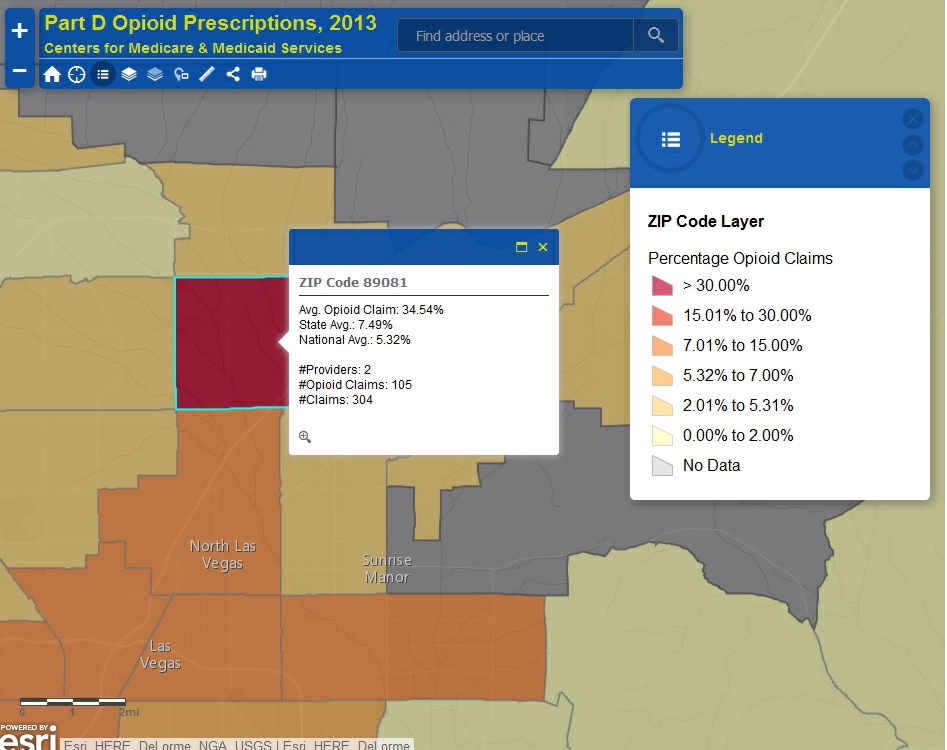
Counties and ZIP Codes can have much higher rates, as the map below shows. ZIP code 89081 is north of Las Vegas, near Nellis Air Force Base. Over 34% of the Medicare claims filed by two prescribers in that ZIP code were for opioids.

“The opioid abuse and overdose epidemic continues to devastate American families,” said CDC Director Tom Frieden, MD. “This mapping tool will help doctors, nurses, and other health care providers assess opioid-prescribing habits while continuing to ensure patients have access to the most effective pain treatment. Informing prescribers can help reduce opioid use disorder among patients.”

The CDC is trying to rein in opioid prescribing by issuing guidelines for primary care physicians, who prescribe most of the nation’s opioids. Those guidelines, which are expected to be released in January, encourage doctors to prescribe non-opioid pain relievers and “non-pharmacological” treatments for chronic non-cancer pain.

A recent survey of over 2,000 pain patients by Pain News Network and the Power of Pain Foundation found that 90 percent are worried they will lose access to opioid pain medication if the guidelines are adopted. Many also believe the guidelines will lead to more addiction and overdoses, not less.

Opioid Use Stabilized in U.S. Decade Ago

By Pat Anson, Editor

The use of prescription drugs has soared in the United States since the turn of the century, with nearly six out of ten adults taking a prescribed medication at least once in the last 30 days, according to a new survey.

But while the use of blood pressure medication, statins and anti-depressants rose sharply from 1999 to 2012 -- the use of opioid pain medication appears to have stabilized and gone into decline over a decade ago.

“Although increased use of narcotic analgesics may raise concern about their potential misuse or abuse, it should be noted that use stabilized after 2003-2004. This flattening trend may reflect increased awareness of prescription opioid drug misuse or abuse, although underreporting of these drugs may have increased with awareness regarding their potential for abuse,” wrote lead author Elizabeth Kantor, PhD, formerly of the Harvard T.H. Chan School of Public Health, who is now with the Memorial Sloan Kettering Cancer Center.

The study findings are published in JAMA, the official journal of the American Medical Association.

The use of opioids rose from 3.8% of adults in 1999 to 5.7% in 2004, according to the study. Since then they have begun to decline slightly. The use of non-opioid pain relievers also appears to have leveled off. 

The data for the survey was compiled differently than most other studies of prescription drugs, which rely on pharmacy databases and insurance claims, not on actual use of the drugs.

The survey involved nearly 38,000 adults across the U.S. and was collected during household interviews.  Participants were asked if they had taken a prescription drug during the last 30 days. If they responded “yes” they were asked to name the medication or to show the drug’s container.

Although other studies have indicated that opioid prescribing is in decline, the Centers for Disease Control and Prevention (CDC) claims there is an “urgent need for improved prescribing practices.” It plans to issue new prescribing guidelines for primary care physicians in January that would limit the quantities and doses of opioids for both acute and chronic pain.  A complete list of the guidelines can be found here.

The opioid hydrocodone was once the most widely prescribed medication in the U.S. But hydrocodone does not appear in the list of top ten drugs used by participants in the survey, nor does any other opioid. The most commonly used prescribed medication in 2011-2012 was simvastatin, followed by lisinopril, levothyroxine, metoprolol, metformin, hydrochlorothiazide, omeprazole, amlodipine, atorvastatin, and albuterol.

“Eight of the 10 most commonly used drugs in 2011-2012 are used to treat components of the cardiometabolic syndrome, including hypertension, diabetes, and dyslipidemia. Another is a proton-pump inhibitor used for gastroesophageal reflux, a condition more prevalent among individuals who are overweight or obese. Thus, the increase in use of some agents may reflect the growing need for treatment of complications associated with the increase in overweight and obesity,” said Kantor.

The researchers found that prescription drug use increased from 51% of adults in 1999-2000 to 59% in 2011-2012. The prevalence of polypharmacy (use of five or more prescription drugs) nearly doubled, from 8% to 15% of those surveyed.