Survey Finds Medical Marijuana Safe and Effective

By Ellen Lenox Smith, Columnist

Recently HelloMD, an online “telehealth” service that provides consultations with doctors who can write prescriptions for medical marijuana, conducted an extensive survey of 1,400 of patients. Patients were asked to complete a questionnaire consisting of 31 questions dealing with their marijuana use.

The survey results (which you can see by clicking here)  really caught my attention and are very exciting.

The survey found that the most common conditions that medical marijuana was being used to treat were chronic pain, anxiety, stress and insomnia. Eight out of ten patients (84%) strongly agreed that cannabis provides them with relief from their symptoms.

Medical marijuana may be legal in 23 states, but many of those states have yet to certify chronic pain as a condition marijuana can be prescribed for. Yet we have 100 million in our country suffering from pain! Let’s hope surveys like this will help to educate those states.

“There were few to no reports of negative consequences of cannabis use, with over 96% of users either somewhat likely or highly likely to recommend cannabis use to friends, family or others seeking improved wellbeing,” according to the HelloMD report.

This statement does not surprise me at all, for we have not seen negative consequences of marijuana use since 2007, when my husband and I first started helping patients wanting to try cannabis. Those of us that have felt the benefits of cannabis talk and encourage others to consider trying it all the time when we meet someone who is suffering.

I also do not believe this was any select group surveyed by HellloMD, but are typical cannabis users that realized how gentle, safe and effective this medication is.

The survey found that middle aged and elderly patients were more likely to use marijuana for pain management, while younger age groups were using it to treat stress, anxiety, mental-health disorders, nausea and issues with appetite. I love this finding. That is exactly what we are observing in the different ages we deal with.  

HelloMD also found that social perception of cannabis use is moving into the mainstream of society, as more and more states pass legislation allowing medical marijuana.

“Amongst those that use medical marijuana, 82% are open with family members about their use with 44% strongly agreeing. 15% still hide their use from family members (perhaps their children, although this is unclear from our data). 59.5% of patients are open with their close friends and a further 35% with all friends (close and otherwise). Only 5.3% do not admit to friends that they use medical marijuana,” the report found.

How exciting that we are now able to feel comfortable sharing the truth of our lives and the benefits we are gaining by being allowed to use this medication. As the report points out, there has never been a death from overdose attributed to cannabis and the safety record of cannabis is superior to that of pharmaceutical pain medications. This reinforces what we have been observing and I am thrilled what we have been saying is mentioned here!

“Our data indicates that 78% of those using cannabis for health and wellness are above the age of 25. In stark contrast to the stoner stereotype, these people are highly educated working professionals. Many are parents. They could be your friends, your colleagues, or your neighbors. All of them have legitimate health issues. All of them are seeking alternatives to traditional prescribed medication considered toxic and laden with the potential of negative side effects,” the report concludes.

Thanks to surveys like this, we can continue to work to get the education out there for people to understand that those of us using cannabis for pain are not all getting high or stoned. The brain receptors react to marijuana and we simply get pain relief! However, anyone can take too much of any medication and have a negative reaction.

I hope we will see even more surveys about medical marijuana, along with research, so that more will get on board and understand the advantages of this plant.

Ellen and Stuart.JPG

Ellen Lenox Smith suffers from Ehlers Danlos syndrome and sarcoidosis. Ellen and her husband Stuart live in Rhode Island. They are co-directors for medical marijuana advocacy for the U.S. Pain Foundation and serve as board members for the Rhode Island Patient Advocacy Coalition.

For more information about medical marijuana, visit their website.

The information in this column should not be considered as professional medical advice, diagnosis or treatment. It is for informational purposes only and represents the author’s opinions alone. It does not inherently express or reflect the views, opinions and/or positions of Pain News Network.

Hospital Study Calls Chest Pain ‘Opportunity for Savings’

By Pat Anson, Editor

Reducing the cost of healthcare is a major goal for insurers, providers and patients, but some physicians say the state of Rhode Island is taking things too far by discouraging some patients from getting their pain treated.

The state’s Executive Office of Health and Human Services has issued a report that identifies $90 million in annual savings “by preventing non-emergency visits” to hospital emergency rooms. Chest pain is listed as “the greatest opportunity for savings” while back pain, abdominal pain and headache are considered “potentially preventable" reasons for emergency room care.

“While many people associate ‘chest pain’ with ‘heart attack’, a truly emergent and serious condition, the majority of those who present to the emergency room with chest pain and are not admitted to the hospital are not experiencing a heart attack,” the report says.

In Rhode Island, 46% of emergency room visits were considered potentially preventable for privately insured patients and 70% of the visits for Medicaid patients.

“A potentially preventable emergency room visit is when a patient goes to an emergency room for a health condition that could have been treated in a non-emergency setting or prevented by keeping them healthier earlier on. Treatment in an emergency room is generally more expensive than a primary care visit,” according to the report.

The average cost of an emergency room visit in Rhode Island varies considerably, from $368 for a Medicaid recipient to $1,154 for someone with private insurance.  

The American College of Emergency Physicians (ACEP) calls the report irresponsible and flawed, because it relies on data about patients’ final diagnoses, not their presenting symptoms. That analysis does not take into consideration the national "prudent layperson" standard in the Affordable Care Act (ACA), which says emergency visits must be covered by insurance companies based on the patients' symptoms, not their final diagnoses.

"It is very alarming that a report like this is being issued that directly undermines language in the ACA and patients' responsible use of the emergency department," said Jay Kaplan, MD, president of ACEP. "Patients never should be forced into the position of self-diagnosing their medical conditions out of fear of insurance not covering the visit. This applies 20/20 hindsight to possibly life-threatening conditions — such as chest pain — and it violates the national prudent layperson standard designed to protect patients' health plan coverage of emergency care."

Data in the Rhode Island report also does not correlate with the latest national data on emergency visits from the CDC, which found that 96 percent of emergency patients needed medical care within two hours.

"A report like this only serves to potentially scare patients away from the emergency department when they may need it most," said Christopher Zabbo, DO, president of ACEP's Rhode Island Chapter. "Both harmless and deadly conditions often have the same presentations. Asking patients to make that determination while at home, anxious, and with inadequate information, is a recipe for disaster."   

“I do all I can to stay away from our hospitals unless it is a planned surgery. I arrive with all my records, educated on my condition and find they (doctors) are immediately turned off due to my complications,” said Ellen Lenox Smith, a Rhode Island resident who suffers from Ehlers Danlos syndrome and is a columnist for Pain News Network. Ellen recently wrote about some of her bad hospital experiences and how she learned to avoid future ones. (see”How to Stop Hospital Horrors”).  

According to the CDC, stomach and abdominal pain were the number one reason for patients to visit an emergency room in 2011, followed by chest pain, fever, headache, cough and back pain.

Law Enforcement and Pain Patients

By John Burke, Guest Columnist

I first need to tell you that I spent 48 years in law enforcement and recently retired in 2015 after commanding a large enforcement initiative in southwestern Ohio. I have extensive experience in  prescription drug abuse as it pertains to law enforcement and have written a monthly article for the past 15 years in Pharmacy Times magazine on the topic of drug diversion.

I am the past national president of the National Association of Drug Diversion Investigators and current president of the International Health Facility Diversion Association. In short, I am no stranger to the issues surrounding the abuse and diversion of pharmaceuticals.

I am also a self-declared pain patient advocate who strongly believes that the vast majority of controlled substances that are consumed in the U.S. are taken by legitimate pain patients.  Pain patients have no real lobbying group that can apply pressure on politicians – who are often oblivious to the plight of pain patients as they scramble to get reelected!

In 1990, I was fortunate enough to be assigned to form and command the Cincinnati Police Department’s Pharmaceutical Diversion Unit (PDU). In the early 1970’s I had seen prescription drug abuse on the streets and knew that it was a much bigger problem than was being hailed by the news media. In starting PDU, I made a point to try and educate the media on the subject, and we were very successful in doing that as it was a brand new issue as far as they knew and they flocked to our press conferences.

JOHN BURKE

JOHN BURKE

In addition to the arrests, we provided community education on prescription drug abuse, but sadly we said very little about a victim I got to know well -- the chronic pain patient. I can’t honestly say that pain patients entered my mind in those days, as we stayed focused on those illegally diverting pharmaceuticals. We also specialized on the diversion of medications inside healthcare facilities, a huge problem that exists still today.

We entered a time in the 1990’s when pain patients were deemed to be undertreated, new opioid medications were developed and marketed, and as we entered the 21st century, pain pill abuse started to skyrocket. Most of this century has seen a concentration on pharmaceutical diversion issues, with the spotlight on OxyContin until Purdue Pharma successfully marketed an abuse deterrent formulation in 2010. Since then, heroin has exploded onto the illicit drug scene, accelerating the overdose death rate as even the smallest of communities cry for help.

I saw a chronic pain patient up close and personal about 10 years ago. She was my mother-in-law and she came to live with my wife and I in our home. She had been a pain patient since elementary school. Her leg was permanently fused together and over the years she fought doctors who insisted that amputation was the best route to take for her welfare.

One day, her husband came to me and said that his wife was experiencing a particularly bad time with her pain relief and was moaning most of the night, unable to sleep. Since I had participated in dozens of continuing education programs with renowned pain specialists, I did know a little about pain management -- at least enough to ask if they had told her doctor so that her pain medication could be adjusted.

The answer was that she doesn’t take any pain medication due to the fact that her former doctor, several decades deceased, had told her never to take anything stronger than an aspirin or she would get addicted! I was shocked at this and advised him to go back to her current doctor and request some pain medication for a person who had suffered with daily pain for over 60 years at this point.

Her young physician told her that she was unable to prescribe a controlled substance, something that was blatantly false, but was nonetheless a reality for this almost lifetime pain patient. I then assisted them in finding a pain specialist and after one visit she was prescribed a pain patch and immediately started using something she should have had access to years before.

Her relief was incredible. Although not pain free by any means, she came crying to me that it was by far the most significant pain relief she had ever had in her life. No doubt it was, when aspirin was the only analgesic she was taking for chronic pain. This pain had flourished for decades due to the advice of a well-intentioned, but misinformed physician, who warned her about addiction issues when her pain was becoming unbearable.

I offer no apologies for the aggressive prosecutions of criminal doctors and those who prey on drug addicts by prescribing or dispensing controlled substances merely to line their pockets rather than to provide quality pain care. These people had no intention to provide pain relief to patients, and in the end did great damage to legitimate patients by giving the public the erroneous thought that virtually all people on pain meds are nothing more than addicts!

Every presentation I give, I make it a point to remind the audience that the vast majority of pain medications are prescribed by competent caring prescribers, dispensed by caring pharmacists, and end up in the hands of those who desperately need these drugs to perform every day functions we take for granted.

Right now there is incredible pressure by uninformed politicians to suggest some drastic changes in how opioids are prescribed and dispensed in this country. Law enforcement has plenty of good laws to go after the outliers vigorously, and I strongly urge we continue to do that, but with the full realization that the plight of pain patients’ needs to be protected in the meantime. Balance is important in most things in life and this issue is certainly no exception.

The information in this column should not be considered as professional medical advice, diagnosis or treatment. It is for informational purposes only and represents the author’s opinions alone. It does not inherently express or reflect the views, opinions and/or positions of Pain News Network.

Australians Lead Global Pain Survey

By Pat Anson, Editor

Australians have more aches and pains than anyone else in the world, but are least likely to complain about it.

Germans say their pain stings, the Chinese have a dull pain, in Japan it throbs, and the Poles say they’re numb from it.

And the Italians? Those Latin lovers are least likely to let pain interfere with their sex lives.

Those are some of the odder facts that emerged from a consumer research survey of 7,000 people in 14 countries conducted by GlaxcoSmithKline (GSK), a British pharmaceutical company.

The so-called Global Pain Index found that overall body pain – defined as aches in your muscles, tendons, ligaments and joints – truly knows no borders and is widespread throughout the world, but it affects people differently depending on where they live.

The survey found that Australians (97%) are most likely to report pain, followed by Russia (95%), China (94%), the UK (93%) and the United States (90%).

Swedes and Germans (88%) are least likely to feel pain.

The Chinese are most likely to complain about their pain (71%), followed by Mexicans (69%), Brazilians (57%) and Italians (55%). Only about a third of Australians complain about their pain.

People in the UK are most likely to see pain as just another part of life, even though it affects them negatively in a variety of ways. Over half (55%) say they cannot have sex because of body pain, two-thirds say it disrupts their social life, and 62% say pain has hurt their work performance.

Only about half (53%) the people in the UK know what is causing their pain.  

“Many people in the UK are taking the attitude that body pain is something you can ignore and hope it goes away, but this approach isn’t working. The findings of the GSK Global Pain Index have shown us that the UK is one of the countries where most people report feeling pain, but it also illustrates that we need a better understanding of our pain and how to treat it,” says Dr. Sarah Davis, a general practitioner in London.

“Pain is hurting every aspect of our lives in the UK, stopping people from enjoying time with friends and family, from enjoying the hobbies and sports they enjoy and hurting their prospects at work.”

The survey was conducted by the research firm Edelman Berland from November 2014 through January 2015 in Australia, Brazil, Canada, China, Germany, Italy, Japan, Mexico, Poland, Russia, Saudi Arabia, Sweden, UK and the United States.

Senate Confirms Califf as FDA Commissioner

By Pat Anson, Editor

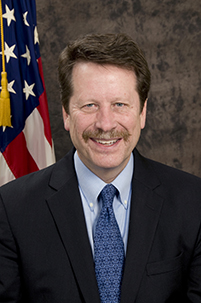
The U.S. Senate has overwhelmingly confirmed Dr. Robert Califf as commissioner of the Food and Drug Administration after months of controversy over his ties to the pharmaceutical industry and criticism of the agency’s regulation of opioid pain medication.

The vote was 89-4 for Califf, a cardiologist and medical researcher at Duke University, who pledged earlier this month to use tougher language in warning labels for extended release opioids and to prioritize development of non-opioid alternatives for pain. Califf also endorsed the CDC’s controversial opioid prescribing guidelines, even though some of the FDA’s own experts believe the guidelines lack scientific evidence.

"If addiction to opioids and misuse of opioids is the enemy, then we underestimated the tenacity of the enemy," Califf told The Associated Press after his nomination was confirmed. "We've got to adjust."

Califf was pressured into changing the FDA’s opioid policies after his nomination was held up by Democratic presidential candidate Sen. Bernie Sanders of Vermont, and Sens. Joe Manchin of West Virginia (D) and Ed Markey of Massachusetts (D).

DR. ROBERT CALIFF

DR. ROBERT CALIFF

Manchin, Markey, Sen. Richard Blumenthal of Connecticut (D) and Sen. Kelly Ayotte of New Hampshire (R) voted against the nomination. Sanders was on the campaign trail and did not vote on the nomination.

"FDA stands for Food and Drug Administration, but over the last 20 years it really stands for ‘fostering drug addiction,' " Markey said in a speech on the Senate floor.

Both Markey and Manchin have vowed to “change the culture” at FDA to combat what they call a “pandemic” of opioid abuse and overdoses.

“I just think he’s the wrong person at this time of need for the position that we need to shake it up,” said Manchin. "The FDA needs new leadership, new focus and a new culture."

Califf founded Duke University’s Clinical Research Institute, which primarily works with and is funded by pharmaceutical companies. He listed over a dozen drug makers in a conflict-of-interest disclosure for a recent article he wrote in the New England Journal of Medicine.

“Dr. Califf has demonstrated a long and deep commitment to advancing the public health throughout his distinguished career as a physician, researcher, and leader in the fields of science and medicine.  He understands well the critical role that the FDA plays in responding to the changes in our society while protecting and promoting the health of the public,” said Dr. Stephen Ostroff, the FDA’s chief scientist, who has served as acting head of the agency for the past year.

How to Get the Most out of Your Doctor’s Appointment

By Barby Ingle, Columnist

In my last column, I wrote about using a patient checklist to organize your thoughts and questions before going to the doctor. Now it's time to put that checklist to work and get the most out of your doctor's appointment. 

The process of finding and choosing a physician is, in some respects, comparable to the process of making a decision about investing in a particular stock or mutual fund. After all, you would not invest your hard-earned money in a stock without first doing research about the company’s past performance, current financial status, and projected future earnings. You’d spend a considerable amount of time and energy doing research before investing.

The same general principle applies to the process of finding and choosing a physician. Finding the right medical team requires a considerable investment in terms of both time and energy, but the potential payoff can be well worth it. After all, what is more important than your health and well-being?

It’s appointment day with my healthcare provider. I have prepared my checklist, got myself dressed enough to leave the house, put on my flip flops, and am ready to go. Most of my provider’s offices are at least one hour away from my house. I pack the car with comforts like pillows, blanket, and bottled water. The better we are prepared, the better our appointments will go.

Especially for new patients, be ready to answer a series of questions such as exactly where does it hurt? Have you had similar pain in the past? Is the pain sharp, dull, aching, burning, or does it have some other characteristic? Is the pain constant or does it come and go?

What makes the pain better? What makes the pain worse? Are you able to sleep through the night or does the pain keep you awake? How much does pain interrupt your daily activities, such as bathing, eating, dressing, and getting around?

How often does the pain interfere with your ability to think clearly, your appetite, energy, mood, or relationships with other people? How many days over the past week have you been unable to do what you want because of your pain? Is there an obvious reason for the pain, such as a sprained ankle or an arthritic joint? 

For longtime patients, or as providers say “thick case file” patients, be ready to give your doctor an update on any changes since your last visit and to ask questions of your own. This medication is not helping anymore, what else is there? Are there any new options for non-drug treatments? Do you recommend any specific diet changes?

Remember to leave the checklist with the doctor to put in your records, so if something comes up they can refer to it and better remember what you may need if an emergency comes up. Keep in mind that doctors have hundreds or even thousands of patients, so they sometimes need reminders. It does not mean that they do not care about you. Taking control of your healthcare team will facilitate communication, better treatment, and quality pain care.

Be sure that you are keeping all of your healthcare providers abreast of your condition, goals, progress and setbacks. This team includes all doctors (primary, neurologist, pain management and other specialties), physical therapists and caregivers.

Waits are getting longer and longer at my providers' offices. This past year doctors have kept me waiting at least 20 minutes. My heart doctor was over 2 hours late one time. That’s another reason to be totally prepared so you can get the best of your 10 or 15 minutes with the provider. It is important that we stay on track and focused at doctor appointments.

Many times I forget what the doctor even told me to do within five minutes of leaving the office. What I do to combat this is bring someone with me when possible to take notes. If there is no one who can come with me, I record the conversation. When I get home I can turn to my notes or caregiver to remember all of the new directions, goals and plans I should be working on between appointments.

A doctor’s appointment for me is really draining; the drive, waiting in the office, poking, testing, blood draws, etc. By the time I get home I have to rest. Since my notes are done I don’t have to worry about forgetting what to do.

Barby Ingle suffers from Reflex Sympathetic Dystrophy (RSD) and endometriosis. Barby is a chronic pain educator, patient advocate, and president of the International Pain Foundation. She is also a motivational speaker and best-selling author on pain topics.

More information about Barby can be found at her website.

The information in this column should not be considered as professional medical advice, diagnosis or treatment. It is for informational purposes only and represents the author’s opinions alone. It does not inherently express or reflect the views, opinions and/or positions of Pain News Network.
Race and Economic Insecurity Play Key Roles in Pain

By Pat Anson, Editor

Two new studies are adding to the growing evidence that links pain with economic, social and racial differences in the United States.

Researchers at Indiana University-Purdue University say African-Americans use coping strategies that often make their pain worse; while researchers at the University of Virginia found that people who feel that their financial outlook is shaky experience more physical pain.

“The past decade has seen a rise in both economic insecurity and frequency of physical pain. The current research reveals a causal connection between these two growing and consequential social trends,” wrote lead author Eileen Chou of the University of Virginia in the journal Psychological Science.

Chou and her colleagues looked at six different studies and found that economic insecurity produces physical pain, reduces pain tolerance, and predicts consumption of over-the-counter pain relievers. The researchers believe economic insecurity also leads people to feel a lack of control in their lives, which activates psychological processes associated with anxiety, fear, and stress.

Data from a consumer panel of nearly 34,000 individuals revealed that households in which both adults were unemployed spent 20% more on over-the-counter pain relievers than households in which at least one adult was working.

Smaller studies also found that unemployment was correlated with reports of pain. And people who recalled periods of economic instability reported almost double the amount of physical pain than those who recalled economically stable periods.

“Overall, the findings show that it physically hurts to be economically insecure,” Chou said.

Financial stress and economic insecurity were also blamed in a recent landmark study by Princeton University researchers who found that nearly half a million middle aged white Americans died prematurely in the last 15 years. The rising death rate for whites was also attributed to drug and alcohol poisoning, suicide, chronic pain and disability.

Blacks and Whites Cope with Pain Differently

The researchers at Indiana University-Purdue University also used a meta-analysis (a study of studies) to reach their conclusion that black and white Americans cope with pain differently. The review of 19 studies, which included 2,719 black and 3,770 white adults, is the first to quantify the relationship between race and the use of pain-coping strategies.

"Coping" was broadly defined as the use of behavioral and cognitive techniques to manage stress.

Blacks were significantly more likely to use prayer and hoping as pain-coping strategies than whites, according to researchers. Blacks were also more likely than whites to think about their pain in a catastrophic manner.

"Our findings suggest that blacks frequently use coping strategies that are associated with worse pain and functioning," said Adam Hirsh, a clinical health psychologist. "They view themselves as helpless in the face of pain. They see the pain as magnified -- the worst pain ever. They ruminate, think about the pain all the time, and it occupies a lot of their mind space."

While that kind of coping might be considered a negative approach to pain, Hirsch says it also may have benefits.

“It may also be a potent communication strategy -- it tells others in a culture with a strong communal component that the person is really suffering and needs help. Thus, it may be helpful in some ways, such as eliciting support from other people, and unhelpful in other ways. In future studies, we will give this more nuanced investigation," said Hirsch, whose study is published in the Journal of Pain.

Ignoring pain rather than allowing it to interfere with the task at hand was the only coping strategy employed by whites more than blacks. Several studies reviewed by researchers found that ignoring strategies are associated with less pain, whereas praying, hoping and catastrophizing are associated with higher pain levels.

"How people think about their pain matters," said Hirsh. "For example, religion can be used as a passive coping strategy -- asking a higher authority to take the pain away -- or as an active coping strategy -- asking to be given strength to manage pain.”

Blacks reported higher levels of pain than whites for a number of conditions including arthritis, post-operative pain and lower-back pain. Blacks also experience greater pain in both clinical and experimental studies. Blacks reported less-effective pain care, are unable to return to work for a longer time due to pain, and have worse functional outcomes.

Hirsch says understanding how different racial groups cope with pain may improve pain care and support individually tailored treatment.

It’s Time for Pain Patients to Speak Up

By Emily Ullrich, Columnist

By definition, journalists are ethically bound to present both sides of a story; to be unbiased, objective, fair and equal. Stories that are not labeled as opinion should leave it up to the consumer to determine the truth or which side of the controversy they agree with.

But since the media have become obsessed with the so-called opioid epidemic, these necessary fundamentals seem to not apply. We, as consumers of media, need to ask why they have fallen short on this topic.

The government is also supposed to consider all sides before making laws which will potentially be detrimental to the lives and health of its citizens. But the CDC only furthered the anti-opioid hysteria by not including chronic pain patients or the doctors who treat them in the initial drafting of its opioid prescribing guidelines.

In fact, the witch hunt has gotten so bad, that we have a bipartisan majority of U.S. senators who have organized to dictate the quality of medical care for the 100 million Americans who suffer from chronic pain. (see “Senators Seek to Silence Pain Patients”)

If senators from both parties came together to speak out for or against any other hot-button issue, like gun control or abortion, there would be absolute mayhem. But, not only do people not challenge the senators’ insensitive, unilateral, and fascist attack on pain patients, we sit quietly in fear.

These lawmakers propose that pain patients should not even be allowed to give their opinions regarding pain control when filling out hospital satisfaction surveys. Now our freedom of speech is under attack, too?

Elimination of pain patients’ rights has become the new American genocide. Patients and doctors alike sit in fear, watching as we are stripped of our right to happiness, our right to adequate medical care, and our ability to treat our pain in the ways we and our doctors see fit. When will enough be enough?

On top of the inequality, there are often discrepancies in the overdose and addiction claims of the CDC, government, and media. There are blatant attempts to hide the sources, research, and financial motives of those involved in the anti-opioid hysteria. There is a significant lack of research and evidence to support this drastic upheaval of our healthcare. Still, no one speaks.

There are so many things that obviously don't add up. No one is asking the right questions and no one is challenging this shady behavior. For some time now, I have been pointing out that the media and government both continuously lump pain patients and addicts together, call our pain medication “drugs,” and lump our meds together with heroin.

This is not accidental. By brainwashing the public to believe that all pain patients are drug addicts, and that pain medicine and heroin are one in the same, they have created an atmosphere of fear. No one wants to sound like they're pro-heroin. No one wants to be seen enabling addicts to get their fix.

There is a desperate need for more mental healthcare and addiction treatment in this country. Instead of addressing this need, the government and media (both funded by the pharmaceutical companies that make the medications deemed to be the “preferred” treatments over opioids) have diabolically created this carefully planned, malignant strategy to eliminate pain patients by making them addicts instead of pain patients. They will make more money by forcing us into rehab and putting us on drugs that will ensure that they keep making far more money than pain medicines ever would, all while making people believe that it's all for our own good.

Many of these “preferred” medications have not been around long enough to determine their long-term safety. They have side effect profiles a mile long and they will only keep us sick; thereby making us lifelong pharmaceutical consumers. Anti-opioid and addiction special interest groups stand to benefit from all of this.

The few times pain patients have been included in the discussion, they are immediately treated like criminals. Boston’s NPR station recently put the onus on a patient to defend herself with questions like, “How is a doctor to know the difference between someone who is addicted and someone with chronic pain that needs to be treated?”

Since when do patients have to defend the reality of their illness? When did being a patient become a defendant? And, if that is the case, what happened to innocent until proven guilty? What happened to doctors (not government and media) determining what is best for their patients?

It is an absolute outrage that our own government officials are dismantling our constitutional and human rights. Yet the stigmas of chronic pain and pain medication run so deep in this country that we keep quiet, knowing it's wrong, but afraid to be lynched for our insubordination.

Our disabilities often prevent us from having the physical fortitude to organize, march, and protest. They are counting on that. Our bodies may be weak, but our minds are strong. Our voices are ONE HUNDRED MILLION STRONG! We need to face our fears and SPEAK UP!

Emily Ullrich suffers from Complex Regional Pain Syndrome (CRPS/RSD), Sphincter of Oddi Dysfunction, Carpal Tunnel Syndrome, Endometriosis, chronic gastritis, Interstitial Cystitis, Migraines, Fibromyalgia, Osteoarthritis, Periodic Limb Movement Disorder, Restless Leg Syndrome, Myoclonic episodes, generalized anxiety disorder, insomnia, bursitis, depression, multiple chemical sensitivity, and Irritable Bowel Syndrome.

Emily is a writer, artist, filmmaker, and has even been an occasional stand-up comedian. She now focuses on patient advocacy for the Power of Pain Foundation, as she is able.

The information in this column should not be considered as professional medical advice, diagnosis or treatment. It is for informational purposes only and represents the author’s opinions alone. It does not inherently express or reflect the views, opinions and/or positions of Pain News Network.

Obama Rejects Limits on Opioid Prescribing

By Pat Anson, Editor

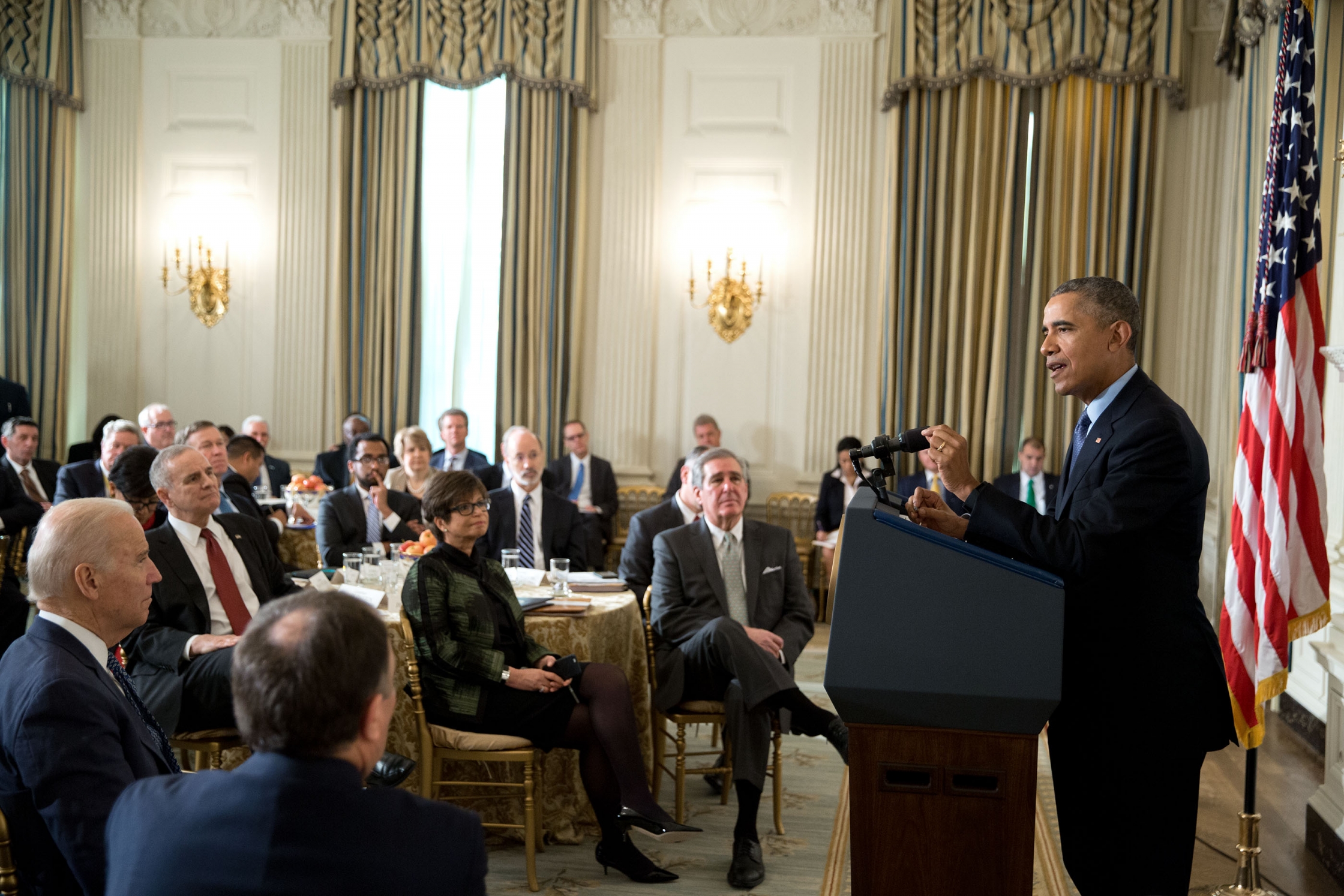
President Barack Obama declined to endorse a sweeping proposal by some governors to put limits on the number of opioid painkillers that doctors can prescribe, saying such a policy would be unfair to rural Americans who don’t have easy access to pain medication or addiction treatment programs.

"If we go to the doctors right now and say 'Don't overprescribe' without providing some mechanisms for people in these communities to deal with the pain that they have or the issues that they have, then we're not going to solve the problem,” Obama said. "Because the pain is real. The mental illness is real. In some cases, addiction is already out there. In some cases these are underserved communities when it comes to the number of doctors and nurses and practitioners."

Over the weekend, a committee of the National Governors Association unanimously voted to develop treatment guidelines that could include limits on opioid prescribing. The proposed guidelines could be voted on by the governors at their next meeting in August.

Although no specific figure was put on the number of opioid doses that could be prescribed at one time, Vermont Gov. Peter Shumlin (D) said it should be no more than 10 pills for treatment of acute pain. Shumlin has complained in the past that opioids “are passed out like candy in America.”

Shumlin’s proposal was quickly endorsed by Republican Gov. Matt Bevin of Kentucky, a sign that the guidelines would have bipartisan support among the nation’s governors.

President Obama met with the governors Monday at the White House and endorsed their bipartisan approach to addressing the so-called opioid epidemic.

"This is an area where I can get agreement from Bernie Sanders and Mitch McConnell. That doesn't happen that often," Obama said.

The president of the American Medical Association said Obama was right to question the potential consequences of putting additional restrictions on doctors and patients.

"The complexity of the problem makes it difficult to create a successful one-size-fits-all approach," Dr. Steven Stack said in a statement to the Associated Press.

WHITE HOUSE PHOTO

WHITE HOUSE PHOTO

The proposed guidelines could also include policies similar to those adopted by insurer Blue Cross Blue Shield of Massachusetts, which requires prior authorization for opioid prescriptions. Some patients are also required to use a single pharmacy for their opioid prescriptions. The policies have resulted in a 50 percent reduction in claims for long acting opioids such as OxyContin, and a 25 percent reduction in claims for short-acting opioids, according to Blue Cross Blue Shield.

According to the Centers for Disease Control and Prevention (CDC), heroin and opioid overdoses are killing as many as 78 American a day, although the agency admits its numbers may not be accurate.

Vermont’s Shumlin has emerged as one of the nation’s most vocal critics of opioid prescribing practices. His state and others in the Northeast have been have been hit hard by opioid and heroin overdoses.

“As long as opioid medications remain the default mainstay therapies for chronic pain, these drugs will constitute an ever-present risk for diversion and addiction. We need to address the prescription opioid crisis at its source: opioid medications, as we know them, must be made obsolete,” Shumlin wrote in a recent letter to U.S. senators who are drafting legislation to reform the Food and Drug Administration and the National Institutes of Health (NIH).     

Shumlin urged the senators to provide additional funding to NIH for clinical research into affordable and non-addictive alternatives to opioids.

Take Our Survey About Hospital Pain Treatment

By Pat Anson, Editor

Over the last few months, we’ve received hundreds of reader comments about the poor quality of their pain care in hospitals and emergency rooms. Many said they their pain was not treated or undertreated, while others said they were misdiagnosed or labelled as addicts if they asked for pain medication.

In an effort to keep the dialogue going and see just how common these problems are, Pain News Network and the International Pain Foundation (IPain) are conducting a survey of pain sufferers about their treatment in hospitals. The survey, which you can take by clicking here, should only take a few minutes to complete.

One reason we’re doing the survey is because a group of U.S. senators recently proposed that Medicare no longer require hospitals to ask patients about the quality of their pain care. The senators believe questioning patients about their pain leads to over-prescribing "because physicians may feel compelled to prescribe opioid pain relievers" to improve their hospital's ranking in patient satisfaction surveys.

Why would we want to reduce pain care or stop asking about a person’s comfort and pain levels?” asked Barby Ingle, president of IPain, who knows from experience what it’s like to go untreated or undertreated in a hospital. Barby recently wrote a column about ways to make your hospital stay easier.

“The International Pain Foundation has been hearing increasing stories of undertreated pain care in ER and hospital settings over the past few years,” she said. “With such a large outcry from pain patients across the country saying ‘don’t go the hospital for pain, they don’t know how to treat pain,’ we know there is a problem. How can it be addressed? Surveying the pain community will help put a spotlight on this issue and show lawmakers, providers, insurance companies, and the pain community that we need more focus on our pain care needs, not less.”

A recent development that will affect future pain care in hospitals is the release of new guidelines for post-surgical pain management. The American Pain Society is encouraging physicians to use opioids alongside “multimodal therapies” such as acetaminophen, non-steroidal anti-inflammatory drugs (NSAIDs), Lyrica, Neurontin, and cognitive behavioral therapy to treat patients in post-operative pain.

“Cognitive behavioral therapy? Really? So you cut into my nerves and tissue and muscles for 6 hours, and the pain is all in my head?” is what Janet Lynn wrote about that idea.

“So when the NSAIDs shut down a person’s kidneys or cause massive stomach irritation and bleeding is it time to give a patient a narcotic pain med?” asked Sharon Storck

Even doctors aren’t immune from poor treatment in hospitals. Family practice physician Lisa Kehrberg, who has severe abdominal pain from visceral neuropathy, recently wrote about one of her experiences in a hospital (see “My Journey From Doctor to Chronic Pain Patient”)

“The first surprise was, after admission, they refused to treat my excruciating pain. I was doubled over, rocking, vomiting, and crying with the worst pain of my life. Worse than labor, appendicitis, or anything else I'd experienced,” wrote Dr. Kerhberg. “Doctor after doctor walked in and witnessed this and continued to refuse ordering opioids. After all the tests were complete and normal, the doctors were very rude to me and implied this was all a psychological problem.”

Has this ever happened to you? Are you satisfied with the quality of your pain care in hospitals? Take our survey and let us know, by clicking here.

Let’s Talk About Sex, Baby — and Chronic Pain

By Crystal Lindell, Columnist

The thing that nobody tells you about Cymbalta is that it takes a machine gun to your sex drive. Seriously. When I was on it, I was so repulsed by sex that I started to think maybe I was legitimately asexual. 

I mean, when the doctor hands you the prescription, it would be nice if they threw in something like, “BTW, you’re never going to want to make passionate love while you’re on this medicine.”

But of course, doctors never tell you stuff like that. And God forbid they give you a handout of some sort that maybe mentions it. No, they just leave you to Google “asexual” at 1 a.m. on a Tuesday night when you realize you’re identifying a little too much with Sheldon on the Big Bang Theory.

Don’t get me wrong, I have definitely been in such tragic levels of pain, that if someone had asked me if I wanted to give up sex so I could feel better, I wouldn’t have even thought twice about cutting off my own vagina and handing it over. 

But the thing is nobody asked me. They didn’t tell me I might have to make that sacrifice when they put me on Cymbalta. So I didn’t even know it was happening. And that’s when you get to some pretty dark places. 

Thankfully, I’ve since gone off Cymbalta, and my sex drive came back like a freight train. 

But that doesn’t mean there aren’t other issues related to sex and chronic pain.

Like when you have stabbing rib pain on your right side, so you can only tolerate sports bras, and then he goes to unhook the back, and it kills the mood because there is no hook in the back of a sports bra. And he’s mad that you’re dressed like someone planning to run a 5K, and then you’re mad that he’s mad that you’re dressed like someone planning to run a 5K, and so you just leave.

Or when he wants to cuddle, and you have to explain that, “Sorry, I can’t lay on my right side because when I do it feels like someone is jack hammering into my bones through the mattress. Hope that’s not a deal breaker!”

Not to mention the fact that when you’re in physical pain, the last thing you feel is sexy. And you most certainly don’t feel like having anyone touch you ever. 

First, there’s just the literal pain that can come from someone passionately throwing you against the wall, or even a pillow top mattress for that matter. When you feel like you always have a broken rib, even passionate love making can make you wince. 

Then, there’s the fact that the pain probably keeps you from showering as often as most Americans believe is normal, which means you probably smell, which means you’re probably not feeling very romantic. 

And of course, there’s the side effects from the medications, which make you gain weight, sleep all day, and zone out in front of YouTube videos about makeup while you simultaneously lose the ability to actually wear makeup. 

Not to mention the fact that it’s just really hard to make love to someone, while you yell things like, “OH GOD! OH GOD! OH GOD!  IF YOU TOUCH MY RIGHT SIDE AGAIN I’M GOING TO STAB YOU TO DEATH!’ or “YES! YES! YES! I NEED YOU TO AVOID MY CHEST AREA AT ALL COSTS!”

That’s the kind of stuff that can turn an evening of “Netflix and Chill” into an evening where you actually watch Netflix and chill. 

But even with so many things working against the sex lives of those with chronic pain, that doesn’t mean people should give up. 

For one, that old saying about how, “You can have great sex without having a great relationship, but you can’t have a great relationship without great sex,” is actually pretty true in my experience. Having sex is an important part of being a healthy couple. Of course, that doesn’t mean partners shouldn’t be understanding of the situation, and our pain levels. What it does mean is that avoiding sex, regardless of how legitimate the reasons for doing so are, will likely put a strain on your love life. 

Also, sex is just a good thing to have in general. It helps your mood, it can be a great pain reliever and stress reducer. And, you know, it’s fun.

So I don’t think patients should just resign themselves to the idea that having chronic pain means giving up good sex for the rest of their lives.

Unfortunately, I don’t have magical solutions to offer people with chronic pain struggling to work sex back into their daily life. But there are a couple things you can at least try.

Frist, there’s always the obvious “talk to your doctor” advice. Yes, I know that conversation can be awkward — both for the patient and the physician. If you’re up for the conversation though, I definitely recommend it. Your doctor might be able to recommend other medications that don’t kill your sex drive, some less painful positions or other techniques to help you out.

In the end though, I honestly think the best thing you can do is be open about the issues without whomever you’re making love to. Just like with anything, talking about what’s going on usually does the most good.

And if you both decide that maybe you can try to get a wire-free bra with a hook in that back because that’s what he’s into, as long as he promises to never touch your right boob, then great! Or, if you decide that having sex just isn’t worth the pain, then that’s great too.

After all, there’s always Better-than-Sex cake in a pinch.

Crystal Lindell is a journalist who lives in Illinois. She loves Taco Bell, watching "Burn Notice" episodes on Netflix and Snicker's Bites. She has had intercostal neuralgia since February 2013.

Crystal writes about it on her blog, “The Only Certainty is Bad Grammar.”

The information in this column should not be considered as professional medical advice, diagnosis or treatment. It is for informational purposes only and represent the author’s opinions alone. It does not inherently express or reflect the views, opinions and/or positions of Pain News Network.

From Bad to Worse for Pain Patients?

By Pat Anson, Editor

Has the pendulum swung too far against pain patients?

The answer is "Yes" according to some leading pain management experts at the annual meeting of the American Academy of Pain Medicine (AAPM) in Palm Springs.  The AAPM represents 2,400 physicians and health care providers, including some who have stopped prescribing opioid pain medication because they fear prosecution or sanctions if they prescribe to patients who might abuse the drugs.

"There are a variety of primary care doctors that are dropping out altogether (from prescribing opioids). They will not allow it. They're saying everybody has to go to a pain management expert or you don't get anything. And its abrupt," said Bill McCarberg, MD, President of the AAPM. "For that group of patients, you're cutting everybody off inappropriately. There are some of those patients who probably need those medications, who do better with medications."

McCarberg, who volunteers at a health clinic in San Diego, says even opioids with abuse deterrent properties are difficult to prescribe because they are expensive and usually not covered by insurance. He is not optimistic about the continued use of opioids in pain management.

"In my experience over the last year its gotten worse and I think a year from now it will be even worse," McCarberg said. "When you come back here in five years, in ten years, we'll be having the discussion about the pendulum being over here, patients suffering.  About you getting shoulder surgery and getting nothing but acetaminophen to treat your shoulder because nobody is willing to give you more (opioids). That's what I worry about."

"I think that's right. I think the pendulum has swung in the direction of things being worse for patients very rapidly and very dramatically. And I don't think its finished swinging yet," says Bob Twillman, PhD, Executive Director of the American Academy of Pain Management.

"I think its the general atmosphere, the whole focus on opioid overdoses and all of that stuff.  That's what is driving the CDC's actions and every bit of the press that's out there is about that problem. And until we get the other side of the story out there and point out that not treating pain has negative consequences too, including people dying, until we can get that story out there and get some traction with it, patients are in a bad place."

PROP President Speaks to AAPM

Although the AAPM has "very significant concerns" about the quality of evidence and "negative bias" in some of the CDC's proposed opioid prescribing guidelines, it invited a controversial figure who helped draft them to its annual meeting. Jane Ballantyne, MD, who is president of Physicians for Responsible Opioid Prescribing (PROP), served on a CDC advisory panel known the "Core Expert Group." The CDC guidelines discourage primary care physicians from prescribing opioids for chronic pain.

Ballantyne, who gave a talk at the AAPM meeting on "Pain Curriculum Development for Primary Care Practitioners," recently come under fire for co-authoring an article in the New England Journal of Medicine that said reducing pain intensity should not be the primary goal of doctors that treat chronic pain. 

Several patient advocates asked AAPM to remove Ballantyne from the program.

"How, in good conscience, can you include someone with her views about pain teach other physicians, or influence future curriculum for physicians, on how to effectively treat pain? It is clear from her writings that she doesn’t understand pain, or painful disease processes. Should someone with views like this be influencing our present and future doctors?" wrote Ingrid Hollis of Families for Intractable Pain Relief in a letter to the AAPM.

"While I appreciate your concerns about including Dr. Ballantyne as a member of the faculty, the Academy will not comply with your request that it remove her from the program," responded Phil Saigh, Jr., Executive Director of AAPM. "The Academy is committed to the free exchange of information and perspectives among pain physicians and other clinicians.  It is this commitment that ensures that diverse perspectives are examined rather than creating a one-size-fits-all approach to education. To remove Dr. Ballantyne from the program would not be true to that commitment."

Ballantyne's presentation was low key and did not focus on opioid use. She spoke about improving pain curriculum in medical schools, an area where there is broad agreement that change is needed. 

"Pain education has been really, really bad. And a large part of the problem, in terms of primary care, is actually managing those with chronic pain and not having received any education on how to do that," said Ballantyne, who explained that her own education and training in the 1970's focused on pain medication and injections, and did not include other disciplines such as psychology.

"The evidence suggests strongly that entry level pain management training is widely inadequate across all disciplines in the United States. Only a few medical schools in Canada and the U.S. offer courses on pain," she said. "The young primary care physicians that I work with are suddenly faced with this extremely complex disease, chronic pain, and they have only been taught to see it in a unitary way. That's what leads to a very simple treatment goal, which is simply to reduce pain intensity.

JANE BALLANTYNE, MD

JANE BALLANTYNE, MD

"When we treat chronic pain we do an awful lot more or want to achieve an awful lot more than simply reducing pain intensity. We want to improve people's lives. We want to help them function better. We want to improve their state of mind and their mood, and have to pay attention to all the other factors that contribute to the disease. Chronic pain is a complex disease that is not simply a focus on pain intensity. And that's one thing we can really help in our teaching."  

Spreading Awareness and Hoping for a Cure

By Sarah Daniels, Guest Columnist

When I was 25 I decided to reclaim my life. I left an abusive relationship and worked very hard on my physical and mental health. With diet and exercise, I went from 240 pounds to 180 pounds in about 5 months.

I thought losing weight would make me feel better, but as soon as I dropped weight I began to have debilitating pain. It got so bad I could no longer walk. Not only was it painful, I literally couldn’t move my leg. There were days I couldn’t get out of bed.

Most of the pain was in my hips; radiating down my legs into my feet. My doctor had no idea what to make of this so she sent me to a specialist. I waited months for the referral. Finally, my prayers would be answered. The specialist would be able to help me!

Instead they laughed and told me I should join the circus because I was so flexible. I am double jointed in every part of my body. I should have known then that this was just the beginning and it was going to be a long ride.

Four doctors, two physical therapists, and $8,000 worth of useless therapies later, I finally found a specialist who diagnosed me with Congenital Hip Dysplasia. They told me I had a torn labrum, severe tendonitis of the hip, and a shallow socket that permitted my hips to dislocate with even the slightest movement. In order to “fix” me they would do a surgery called a peri-acetabular osteotomy (PAO).

SARAH DANIELS

SARAH DANIELS

At the time, this surgeon was one of only two in the U.S. that performed PAOs. It was fairly new but had promising results. It had been three years since the onset of my symptoms, so I was desperate.

An incision was made into the skin, through the muscle, through the nerve, and into the bone. The pelvic bone was then cut in four spots, making it freely mobile and the head of the femur bone was reshaped. Lastly, the pelvic bone was tilted forward, and the femur is fit into the head of the joint. Three huge screws held everything together.

A PAO is one of the biggest major orthopedic surgeries in existence. The recovery was supposed to be 3 months and then I would have my right side done.

It took about 3 months for me to even move my leg on my own. It took 6 months to learn to walk again. Finally, after a year of recovery, I would continue on with my new normal: constant pain.

I had complication after complication from my hip surgery. Two years went by as I told my doctors I was continuing to have excruciating pain. They ignored me and told me it would go away.

I ended up going to a chiropractor when I herniated a disc in my back. After he took the x-rays he came racing into the room. Did I know my pelvic bone was broken in three different spots?

My bones had broken around each of the screws that were holding my hip together. No wonder I was in hideous pain.

I had surgeries to remove the screws, but my health continued to deteriorate. Emergency room visits became a usual thing for me. All of my joints began to fail.

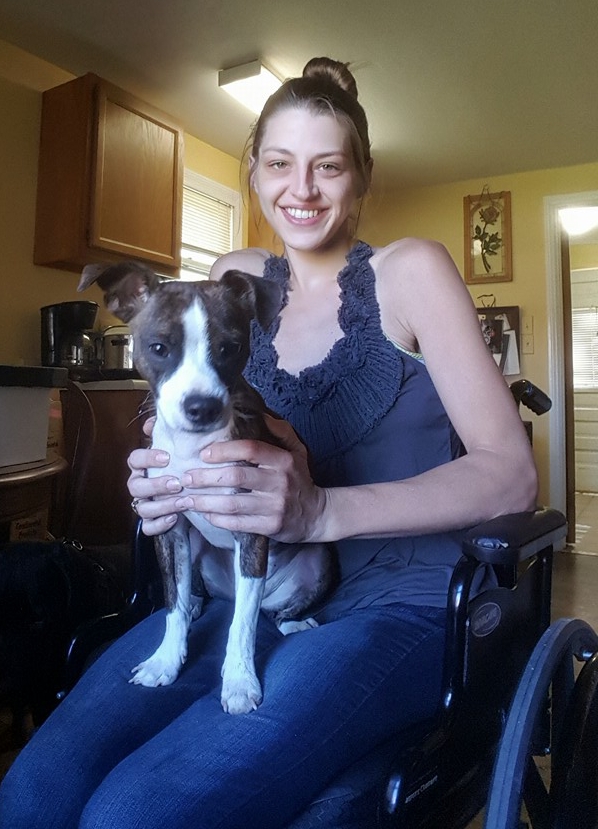
Some days I have to use a wheelchair to get around because the multiple dislocations in my knees, hips, shoulders, and wrists prevent me from using a cane or even crutches.

I finally went to a geneticist and was diagnosed with Ehlers Danlos Syndrome (EDS). It is a group of hereditable connective tissue disorders with a mutation in the collagen, the glue that holds your body together. Symptoms range from easily bruised skin, broken bones and torn ligaments to digestive disorders and life threatening cardiac issues.

This diagnosis was my saving grace. It finally connected everything. On the same token, being diagnosed with an incurable chronic illness is an entire grieving process in its own. It is important to be responsible about recognizing signs and symptoms, but you also can’t let it consume you. You have to stay positive even though there is no end at the light of the tunnel. I began to find different ways of dealing with the pain, deep breathing, meditation, and listening to music. It was tough but I was getting by.

Then another problem developed. I was constantly sick to my stomach and couldn't keep anything down. I spent most of my days throwing up and didn’t know why. I lost 70 pounds. No longer was I only dealing with pain, I had no energy or nutrients to keep me going. I went to a gastrointestinal specialist, who diagnosed me with Gastroparesis.

Ordinarily, muscles propel food through your digestive tract but with Gastroparesis, your stomach's motility works poorly or not at all.  My digestive tract was almost 100% paralyzed. I had to do something or a feeding tube would be in my near future. I had always been overweight my whole life and never thought for a second, I would literally be starving to death.

On top of everything my illnesses had already taken from me, they was now taking my body. I stopped getting my period and couldn’t stop the weight from coming off. I went from a size 12 to a size 0 in a matter of months. Friends would tell me I was lucky I was thin. Lucky? I feared for my life!

I spent most of my days with my head in the toilet, praying I wouldn’t aspirate and die. When I was too weak to sit up on my own, my boyfriend would sit with me, watching to make sure I was safe. I would give anything to be able to eat again, to be able to look in the mirror and see my vivacious frame, instead of the sunken skeletal figure that was there now, but this is a distant reality for me.

Like Ehlers Danlos Syndrome, there is no cure for Gastroparesis. With medication, a new eating plan, and a daily shot to the stomach, I have been able to get somewhat of a handle on my illness.  

In the beginning of this story I was a happy, healthy, outspoken young woman with a great job, and the world on my shoulders. I had infinite possibilities ahead of me. I am writing to you now as a 29-year-old female with the body of an 80-year old.

I completely exhausted my savings due to my numerous surgeries, office visits, and medications. I had to quit my dream job that I loved. I am no longer able to work and had to file for disability at the age of 28.

I was let go from my most recent job after two years because they thought I needed to "focus on my health." I tried to keep my job for as long as I could. It was the last thing that kept me connected to the normal world. They provided my full dental health and vision insurance, which is obviously essential to my life. I’m now stuck with an almost $600 monthly Cobra insurance bill with no idea how to pay it.

I have thousands of dollars of medical debt, I am months behind on my rent and utilities, and at the time of writing, I have no groceries or gas. My illness has taken everything from me. My body, money, job, my positive outlook, independence, and friendships!

I am lucky to have a family that loves me. I have been blessed with an amazing boyfriend that does everything in the world for me, whom I love insurmountably. But even they are overwhelmed. Loving someone with a chronic illness is not always easy and definitely not always fair.

I’m writing this not to get sympathy. Sympathy won't help me. It won't cure me or make me better. I write to you because I want people to know that this horrible illness exists.

About 1 in 5,000 people are affected by Ehlers-Danlos Syndrome and the varying comorbidities associated with it. I want people to know that there are hundreds of thousands of our fellow human beings that are suffering from this rare illness.

Most doctors think if you have EDS it just means you are flexible. I have even had doctors tell me I should join the circus. If I have to, I will single handedly wipe out all of the ignorance surrounding Ehlers-Danlos Syndrome. It has now become my goal to create and spread awareness.

I don't spend a lot of time these days wishing for my old life back. It only depresses me. However, I do take time to think about the future. With medical technology advancing every day, and with the help of others, there is no reason we should not be able to find a cure!

I know this has been a long story to read. It hasn't been the happiest story or the most positive story, but it is my story. I will do whatever it takes to spread awareness. I only ask that you can join me in fighting for this cause!

Sarah Daniels lives in the Detroit, Michigan area. Sarah is a proud supporter of the Ehlers Danlos National Foundation and the Gastroparesis Patient Association for Cures and Treatments (G-Pact).

Sarah would also like you to know that that February 29 marks Rare Disease Day, which seeks to raise awareness about rare diseases such as EDS.

Pain News Network invites other readers to share their stories with us.  Send them to:  editor@PainNewsNetwork.org

The information in this column should not be considered as professional medical advice, diagnosis or treatment. It is for informational purposes only and represent the author’s opinions alone. It does not inherently express or reflect the views, opinions and/or positions of Pain News Network.

Post-Surgical Pain Guidelines Reduce Use of Opioids

By Pat Anson, Editor

The American Pain Society (APS) has released new guidelines for post-surgical pain management that encourage physicians to limit the use of opioids and offer “multimodal therapies” to patients suffering from postoperative pain.

According to studies, more than half of patients who undergo surgery receive inadequate pain relief, which can heighten the risk of developing chronic pain, mood disorders and disability.

The 32 recommendations were developed by a panel of nearly two dozen experts that reviewed over 6,500 scientific studies. Most of the recommendations were adopted unanimously.

“The intent of the guideline is to provide evidence-based recommendations for better management of postoperative pain, and the target audience is all clinicians who manage pain resulting from surgery,” said lead author Roger Chou, MD, a prominent researcher who also co-authored the proposed opioid prescribing guidelines developed by Centers for Disease Control and Prevention.

Like the CDC guidelines, the APS guidelines encourage the use of non-pharmacological therapies and non-opioid medications, such as acetaminophen, non-steroidal anti-inflammatory drugs (NSAIDs), gabapentin (Neurotin) and pregabalin (Lyrica). Those treatments would be used along with opioids for post-operative pain.

“Because of the availability of effective non-opioid analgesics and non-pharmacologic therapies for postoperative pain management, the panel suggests that clinicians routinely incorporate around the clock non-opioid analgesics and non-pharmacologic therapies into multimodal analgesia regimens,” the guideline states.

“Systemic opioids might not be required in all patients. One study suggests that it should be avoided when not needed, because limited evidence suggests that perioperative opioid therapy might be associated with increased likelihood of long-term opioid use, with its attendant risks.”

Chou says using multiple approaches to pain management provides better pain relief than a single analgesic.

“Randomized trials have shown that multimodal anesthesia involving simultaneous use of combinations of several medications -- acting on different pain receptors or administered through different techniques -- are associated with superior pain relief and decreased opioid consumption compared with use of a single medication administered by one technique,” Chou said.

The APS panel also recommends that non-pharmacological therapies, such as cognitive behavioral therapy and transcutaneous elective nerve stimulation (TENS), can be used as effective adjuncts to pain medication.

Other recommendations in the APS guidelines include:

  • Adults and children can be given acetaminophen and/or NSAIDs for postoperative pain management
  • Oral administration of opioids is preferred over intravenous (IV) administration
  • Spinal analgesia (epidurals) is appropriate for major thoracic and abdominal procedures
  • Use of benzodiazepines, tramadol and ketamine is not recommended for postoperative pain.
  • Clinicians should consider giving preoperative doses of celecoxib (Celebrex) to adult patients
  • Gabapentin (Neurotin) and pregabalin (Lyrica) can be considered for postoperative pain relief.  The drugs are associated with lower opioid requirements after surgery.

The guidelines recommend the physicians consult with a pain management specialist when a patient has a tolerance for opioids, or a history of substance abuse or addiction.

“Adequate pain treatment should not be withheld from patients with active or previous opioid addiction because of fears of worsening addiction or precipitation of relapse. In addition to the ethical requirement to address postoperative pain, poorly treated pain can be a trigger for relapse,” the guidelines say. “An interdisciplinary approach using pharmacologic and nonpharmacologic interventions might be required to achieve successful postoperative outcomes and should be considered as part of the perioperative management plan in these patients.”

The APS post-operative pain guidelines, which are being published in the Journal of Pain, was endorsed by the American Society for Regional Anesthesia. A link to the guidelines can be found here.

Patients Betrayed in Pain Management Debate

By Pat Akerberg, Columnist

I’ve often wondered whether the term “pain management” qualifies as an oxymoron.  It’s no secret that the use of opiates for management of chronic pain is a treatment strategy currently under siege – sparking polarizing debate, government intervention, and pushback by legitimate pain patients.

This is my 7th year of dealing with the intractable pain of trigeminal neuralgia (TN) in spite of many failed pain management attempts.  While interacting with hundreds of my counterparts, pleas are constant for alternative ways to effectively treat this notoriously painful disorder. 

Not one of them relishes the potential of being dependent on any medications that they take to manage pain and rightly fear the long-term negative effects that some medications have on our bodies. 

Others whose pain is tamped down to some extent with opiate medication are placed in an untenable Catch-22. They are surrounded by volatile uncertainty and shameful character judgments.

When leading neurological experts and research scientists I saw also shared their own frustrations about the lack of alternatives to or efficacy of most pain medications, my concern heightened.

Will I be left to needlessly suffer indefinitely while this controversy stalls solutions?

From my vantage point the pain management issue seems to involve at least four different issues:

1. Some abuse of opiates

2. Reactionary guidelines that further limit or curtail availability to legitimate patients

3. Multiple competing agendas thwarting progressive strides for pain management alternatives

4. Ethical imbalance placing profits, careers, and CYA (cover your ass) strategies over patient care

Unfortunately the current proposed CDC and FDA backed prescribing guidelines are an ill fated attempt to solve the first problem of opiate abuse (by some) by worsening a second problem for many legitimate patients already living severely hampered lives. This one-size-fits-all, closed regulatory approach upsets me (even though I’m not taking an opiate) because it excludes the input of those afflicted and prolongs suffering, adding more stressful setbacks to pain relief.

Ironically, the very agencies deemed to protect us from harm seem to be intent on a stance that inflicts it in varied ways.

Until we have acceptable options to abate pain (that don’t triangulate pain patients with their doctors/the medical system and the government) or put us at risk; we’ve been involuntarily forced into some part of this fight. 

This issue has been turned into such an embattled political conflict that even patient advocacy groups (with something of their own to protect) seem to be sitting on the sidelines avoiding the crossfire. Patients have become sitting ducks while others who share a stake in the chronic pain pandemic still gain by our plight. 

The third problem is about the forces that work against new research, medical institutions and companies stepping up the pace and availability of affordable new pain treatment alternatives. 

Haven’t they positioned themselves as stakeholders with missions to cure or improve the impact of diseases, disorders, and health threats that result in chronic pain and other debilitating effects?

One of the many forces in play is that rare diseases (known as orphan diseases/disorders) don’t impact enough people to make it financially appealing for drug companies to come up with targeted, affordable medications or institutions to fund research. 

As the lusty price-hiking grab of Big Pharma continues, insurance companies will keep upping their premiums and deductibles to protect their profit objectives.  While for us affordability is our burden.

Yes, the fourth problem is all about return on investment and profits weighted against some deemed acceptable number of us who will die sooner or suffer longer while living.

If you suffer from an orphan disease (like TN) you’re likely taking some off-label medication that wasn’t intended to even address your issue.

The National Institute of Health could overcome that lag to progress by applying its’ considerable leverage. It could require that research grants be granted based on collaborative initiatives, findings be openly shared across science/medical institutions, and research dollars pooled, so that discoveries and treatment innovations are accelerated for a win-win.

Why isn’t any of that happening now?  Political power and financial collusions, along with competition among stakeholders, are the short answers.  There’s no political, financial, academic, career, or ethically motivated profit incentive for open, unbiased collaboration to occur. 

As long as our disease centered (versus patient-centered), profit over patientmodel continues, collaboration is a direct threat to all special interests since they currently measure the success of their stake in advancing medical health by their own bottom lines, career progressions, and investor return.  

Until they can otherwise be held accountable to exemplary medical and just ethical standards, there’s no incentive to coalesce and dedicate their collective resources to resolving the pain management needs of millions of pain sufferers.   

It’s the medical/scientific version of our political underbelly, with pain patients involuntarily caught in its’ snare while progress sputters. The result is that effective pain management has been hijacked and diminished medically into a political football playing brinksmanship with the quality of our lives.

There’s so much wrong with how the whole “pain management” situation is evolving for us.  The real blow in all of this for me is the realization that pain patients seem to be left with no representation or clout.

Without representation, I’m concerned that while we’re the ones least able to deal with it; we’ll be left holding the bag to gain more attention, commitment, and reform for real pain management answers.   

I worry about precious time toward new alternatives wasted while the powerful lobby agendas, the government over reaches, our representation retreats, the AMA debates, and the profitable jockey to vindicate their approach.

Until then, it’s hard not to feel betrayed by the downward spiral in societal values, a slippery slope of collusion allowed to operate among some interests convincingly indifferent towards human suffering.

I really want to be proven wrong about pain management becoming an oxymoron.

Pat Akerberg suffers from trigeminal neuralgia, a rare facial pain disorder. Pat is a member of the TNA Facial Pain Association and serves as a moderator for their online support forum. She is also a supporter of the Trigeminal Neuralgia Research Foundation.

The information in this column should not be considered as professional medical advice, diagnosis or treatment. It is for informational purposes only and represents the author’s opinions alone. It does not inherently express or reflect the views, opinions and/or positions of Pain News Network.