
When Will They Start Listening to Pain Patients?

By Ann Marie Gaudon, PNN Columnist

It’s often suggested that pain patients and their advocates write or call elected officials, government regulators and physicians’ organizations to protest the sorry state of pain care in the U.S. and Canada. Many of us do just that and wind up feeling ignored or dismissed.

I have now corresponded with two different physicians at the College of Physicians and Surgeons of Ontario (CPSO), only to be passed onto their “Director of Strategy” (a fancy pants title no less).

The CPSO is the body which governs physicians in Ontario and it has rigidly enforced Canada’s 2017 guideline for opioids. They have monitored patient files, hauled over 80 doctors in to investigate “overprescribing” and basically terrorized doctors for prescribing opioids.

The doctors in turn deny and restrict opioid medications to their patients out of fear for losing their licenses.

I have asked the CPSO these questions:

  • What evidence do you have to indicate the long-term use of opioids increases pain?
  • Why is the chronic pain population being penalized for overdose deaths due to illicit street drugs?
  • Why are you not listening to chronic pain researchers, physicians and patients?
  • Does a decrease in opioid prescriptions and an increase in overdose deaths suggest a statistically significant relationship?
  • How is it ever acceptable for pain patients to be dictated to by non-pain specialists?

I have provided no less than 27 references to show that there was never a connection between chronic pain patients and those dying from overdoses. However, no one has provided me with answers to my questions -- not even fancy pants.  In fact, the CPSO continues to disseminate disingenuous information about pain management, opioids, addiction and overdoses.

And remember folks, these are the people who took an oath to care for the suffering. That would include all of us pain patients -- or one would think. To put out genuine effort and have nothing but deaf ears returned is sickening -- pun intended.

Health Canada also hasn’t answered my questions and continues to make baseless claims such as "high rates of opioid prescriptions are a contributing factor to Canada's opioid crisis." Predictably, when the media hears that, they rush to publish the news that Health Canada plans to “severely restrict marketing of opioids” -- as if that will have any effect on those dying from overdoses. It will not. The non-pained public laps it up.

I also wrote to my representatives in Parliament. MPP Michael Harris did not respond in any way. MP Marwan Tabbara responded with a boilerplate letter about the opioid crisis, yet when I asked for a purposeful response, none was forthcoming.

Dr. Helena Jaczek, Ontario’s Minister of Health, did not address my concerns either. A representative of Health Quality Ontario did respond to me quickly, yet when I replied with additional concerns, I had no further correspondence.

I’m aware that our friends in the U.S. are certainly not being heard either. Scores of you sent letters and emails commenting on the open letter that desperate pain sufferer Charles Malinowski sent to California Sen. Kamala Harris, who replied with a boilerplate letter filled with hype and hysteria about opioids and how more funding was needed to treat addiction.

Another example is when over 100 comments were submitted to the DEA asking it not to cut the supply of opioid medication because it could lead to shortages and worsen the quality of pain care. The DEA’s response? The agency said the comments dealt with medical issues that were “outside of the scope” of its order. Then it cut the supply anyway.

A genuine letter is sent and verbal diarrhea is returned. I can assure you that this phenomenon is not just “Made in America.” 

If you’ve written or tried to be heard and have gotten nowhere, that is no reason to stop trying to hold governments and physician groups accountable for their shameful disregard for pain patients. We have just had a shakeup in Ontario’s government, so it's all new players now. Will they help? I intend to find out.

Who is with me? More than ever pain patients and advocates need to stick together, focus and move toward effective change. Don’t make quitting an option. If you live in Canada and are a pain patient having unethical treatment forced upon you, please join us at this Facebook page. 

Ann Marie Gaudon is a registered social worker and psychotherapist in the Waterloo region of Ontario, Canada with a specialty in chronic pain management.  She has been a chronic pain patient for 33 years and works part-time as her health allows. For more information about Ann Marie's counseling services, visit her website.

The information in this column should not be considered as professional medical advice, diagnosis or treatment. It is for informational purposes only and represents the author’s opinions alone. It does not inherently express or reflect the views, opinions and/or positions of Pain News Network.

Now Is the Time to Advocate

By Barby Ingle, PNN Columnist

I have written many articles on patient advocacy and it is still one of the topics I am most asked about. Now through the first week of September is the perfect time to visit with your state legislators and congressional representatives. I have appointments with three coming up in the next few weeks myself.

They need to hear from their constituents. The need to learn about issues facing people who vote in their districts and state. They need to know who makes up the pain community so that they can better represent and REMEMBER us when it is time to vote on legislation that may help or hurt our access to proper and timely pain care.

How do you get an appointment? Look up the website for your legislator or congressman and request a meeting. Sometimes you can make an appointment directly through the website, but I believe the best way is to call and set it up, followed by a written request or confirmation of the appointment.

You may be scheduled with the lawmaker themselves or a staff member who assists them with a particular issue. In our case, it is usually the staffer who handles health or insurance issues.

These appointments can take place in Washington, DC or in your home state. The U.S. House (but not the Senate) is in recess until after Labor Day, so most representatives are in their districts campaigning for the midterm elections. Many are taking meetings and doing town halls.

When you call for a meeting, you may get voicemail. Leave a message! If you don’t get a return call in a few days, call again. If someone answers, call and ask to speak with the scheduler.

It’s impressive to friends, family and other pain community members when you actually follow through with a meeting. It is something that anyone can do, but few actually try. Most rely on others to make it to these meetings.

You need to focus on what you'll talk about before the meeting. If you get an appointment, dig in and study. Do your homework and research legislation so you can explain why you support or oppose it. Share your personal story in a highlight reel fashion. You might have a 20+ year story of living with chronic pain and illness, but you should get it down to no more than 2 minutes. Highlight the challenges you faced and where you are now in the chronic care process.

Make an Ask

The main purpose of your first meeting will be to familiarize yourself with your senator, representative or legislator and make a memorable connection. Stay on topic, stay timely and “make an ask” – ask them to do something specific for you.

These meetings typically last 15 to 20 minutes. Don’t bring a truck load of supporting materials. Discuss no more than 3 topics at the meeting and leave a one-page fact sheet for each topic. You want them to know that they can use you as a resource, so include a calling card with your contact information.

If you are asked about a fact that you don’t know the answer to, just say, “I don’t know.” It is better to be truthful than to make something up and risk losing credibility. You can always follow-up later with the information they seek.

You are there to make an ask, so set a reasonable deadline for them to respond to you with the answer. They may say right away they won’t support or oppose a bill and why. Don’t argue with them if they do. Use it as a teachable moment as to why you hope they will reconsider and how their decision will affect you and others like you in the pain community. If they haven’t taken a position on the issue in the past, it is not likely that they will commit to one in this meeting.

When you get home, always send a short thank you letter to the representative or staffer who was there. Also include any follow-up answers you promised. Remember, if you met with a staffer, they are there to filter out the messaging and bring back the best info they can to the representative.

our 2017 MEETING WITH WITH REP. ANDY BIGGS

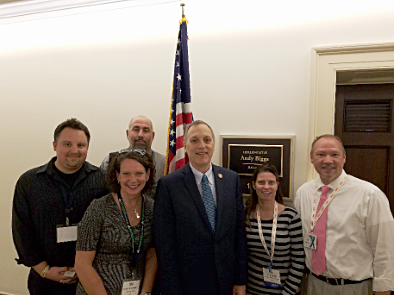
If you do get an actual face-to-face chat with your senator or representative, you are lucky. In 2017, we were fortunate to get a meeting with Arizona Rep. Andy Biggs (pictured above).  A personal meeting like that demonstrates to lawmakers there is a constituency for chronic pain and illness that is active in their district and needs to be listened to.

After your first meeting, get ready for the next one. Stay in touch with the staffers and representatives, and when it comes time for them to act or vote, there is a better chance they will remember you and your story and do something that helps the pain community in a positive way.

Hearing directly from patients and caregivers goes a long way in helping us get access to proper and timely pain care. They need to know that we care, so they should care too.

Barby Ingle lives with reflex sympathetic dystrophy (RSD), migralepsy and endometriosis. Barby is a chronic pain educator, patient advocate, and president of the International Pain Foundation. She is also a motivational speaker and best-selling author on pain topics. More information about Barby can be found at her website. 

The information in this column should not be considered as professional medical advice, diagnosis or treatment. It is for informational purposes only and represents the author’s opinions alone. It does not inherently express or reflect the views, opinions and/or positions of Pain News Network.

I Thank God for Opioid Medication

By Carmen Littizzio, Guest Columnist

I was born with a rare genetic defect called Arnold Chiari Syndrome, which blocks the flow of cerebral fluid and causes pressure to build in my brain. I had brain surgery to treat it in 1999, when I was 44 years old.  

During this surgery they cut off a portion of the skull in the back of my head to make more space for cerebral fluid to flow. Lack of fluid in the brain and spinal cord causes intense pain for me from the waist down.  At times I’m not able to walk and have painful electrical sensations that are torturous.

Nineteen years after the surgery, I still suffer from high pressure headaches, chronic leg pain, thigh and buttock pain, and other symptoms. The high cerebral pressure has also caused other problems, such as retinal detachment in both eyes, vomiting, vertigo and vision issues. 

In 2008, when I was 53, I developed a crowding in my spinal cord the same as I had in the brain and had to have a spinal cord decompression. They put a titanium plate with four screws into my back to hold it all together.

This operation was so intense that for days after the surgery, I just wanted to die. It was a living hell.

I survived with the help of morphine, but eventually went back to my old pain medication, which consisted of Neurontin, Topamax, Elavil and Diamox -- all in very high doses.

CARMEN LITTIZZIO

In 2009, my body started shutting down because of those meds and I was unable to urinate. I had a permanent catheter put in and all those medications were stopped. I started taking Percocet for pain. After 4 months, I began urinating again and never wanted to go back to those other meds. 

I was told of the dangers of long term opioid use, but decided to risk it for some quality of life. My other choice was to sit in a wheelchair for the rest of my life, be able to do nothing, and still die young because of being so sedentary. 

I am now 63 and next year it will be 20 years since the brain surgery. I take a time released OxyContin in the morning and evening, and oxycodone for breakthrough pain and the headaches. 

I am entering my senior years, but still walking on my own and enjoying my children and 5 grandchildren. I don't know how much longer I will live, but I feel like I’ve won the war. What war? The war for quality of life. I thank God for opioid medication. I have never been high or abused my medications. 

I feel very bad for those that abuse narcotics or overdose.  But why should I pay the price for their inability to use self-control? We don't take alcohol off the market because we have alcoholics and drunk driving.

There are many people like me that have chronic pain and illness, and we are paying the price for those who abuse. It’s not right and not fair that we should be made to stop living because of their issues.  Nobody has the right to choose for me. 

Carmen Littizzio lives in Maine.

Pain News Network invites other readers to share their stories with us. Send them to editor@painnewsnetwork.org.

The information in this column should not be considered as professional medical advice, diagnosis or treatment. It is for informational purposes only and represents the author’s opinions alone. It does not inherently express or reflect the views, opinions and/or positions of Pain News Network.

Prescription Pain Creams Flagged for Medicare Fraud

By Julie Appleby, Kaiser Health News

Medicare pays hundreds of millions of dollars each year for prescription creams, gels and lotions made-to-order by pharmacies — mainly as pain treatments. But a new report finds that officials are concerned about possible fraud and patient safety risks from products made at nearly a quarter of the pharmacies that fill the bulk of those prescriptions.

“Although some of this billing may be legitimate, all of these pharmacies warrant further scrutiny,” concludes the report from the Office of the Inspector General for the Department of Health and Human Services.

In total, 547 pharmacies — nearly 23 percent of those that submit most of the bills to Medicare for making these creams — hit one or more of five red-flag markers set by investigators.

Those included what the researchers called “extremely high” prices; large percentages of Medicare members getting identical drugs — 16 of the pharmacies billed for identical drugs for 200 or more customers; “greatly increased” year-over-year billing — 20 pharmacies increased their billing by more than 10,000 percent; or having a single medical provider writing more than 131 prescriptions.

More than half of those pharmacies hit two or more measures — and 10 hit all five.

One Oregon pharmacy, for example, submitted claims for 91 percent of its customers. A pharmacy in New York submitted 5,342 prescriptions ordered by one podiatrist, while a Florida pharmacy saw its Medicare billing for such treatments go from $7,468 in 2015 to $1.8 million the following year.

Many of the pharmacies are clustered in four cities: Detroit, Houston, Los Angeles and New York.

The report comes amid ongoing concern by Medicare officials about these custom-made — or compounded — drugs. In addition to questions like those raised in the report about overuse and pricing, safety has been a key issue in recent years. A meningitis outbreak in 2012 was linked to a Massachusetts pharmacy that did not maintain sterile conditions and sold tainted made-to-order injections that killed 64 Americans.

When done safely, pharmacy-made compounded drugs provide a legitimate option for patients whose medical needs can’t be met by commercially available products mass-produced by pharmaceutical companies. For example, a patient who can’t swallow a commercially available prescription pill might get a liquid version of a drug.

State boards of pharmacy generally oversee compounding pharmacies, and the drugs they produce are not considered approved by the Food and Drug Administration.

Rising Cost of Compounded Drugs

The new report focuses on concerns with compounded topical medications.

Medicare spending for such treatments has skyrocketed, rising more than 2,350 percent, from $13.2 million in 2010 to $323.5 million in 2016. Price hikes and an increase in the number of prescriptions written drove the increase, the report said.

It is not the first time the inspector general has looked at compounded drugs. A 2016 report found that overall spending on all types of compounded drugs — not just topical medications — rose sharply.

The U.S. Postal Service inspector general and the Department of Defense also have raised concerns about rising spending and possible fraud for compounded drugs.

In response to those previous reports, the International Academy of Compounding Pharmacists, the industry’s trade group, has said that legitimately compounded drugs “can dramatically improve a patient’s quality of life,” noting that proper billing controls need to be in place. The inspector general’s report in 2016, it added, found that “such controls are not in place.”

This report, which the compounding trade group has not yet reviewed, focuses on topical drugs and a subset of the 15,290 pharmacies that provide at least one such prescription each year. It looked at billing records from the 2,388 pharmacies that do at least 10 such prescriptions a year — providing 93 percent of all compounded topical drugs paid for by Medicare.

Most of the prescriptions were for pain treatment, made from ingredients such as lidocaine, an anesthetic, or diclofenac sodium, an anti-inflammatory drug.

On average, those compounds were more expensive than non-compounded drugs with the same ingredients.

For example, Medicare paid an average of $751 per tube of compounded lidocaine, and $1,506 for the diclofenac, according to the inspector general’s report. Non-compounded tubes of those drugs averaged $445 and $128, respectively.

FDA Commissioner Scott Gottlieb recently outlined new efforts his agency is taking to oversee compounded drugs in the wake of legislation passed by Congress following the meningitis outbreak.

“The FDA is inspecting compounding facilities to assess whether drugs that are essentially copies of FDA-approved drugs are being compounded for patients” who could otherwise take a product sold commercially, he said in a statement issued on June 28.

Gottlieb also said the FDA plans to make more information available to patients and their doctors about compounded topical pain creams, including information about their effectiveness and any potential safety risks.

Not being effective is a safety risk, noted Miriam Anderson, a researcher with the inspector general’s office who helped write the report.

The report urged the Centers for Medicare & Medicaid Services to clarify some of its policies to emphasize that insurers can limit the use of compounded drugs by requiring prior authorization or other steps. The agency concurred with the recommendations, according to the report, including the need to “follow up on pharmacies with questionable Part D billing and the prescribers associated with these pharmacies.”

Anderson said the inspector general’s office is continuing to probe the issue.

“We will investigate a number of leads on specific pharmacies and prescribers who were identified as having these questionable patterns,” she said. “Whenever we see that kind of increase in spending, it raises concern about fraud, waste and abuse.”

Kaiser Health News’ coverage of prescription drug development, costs and pricing is supported in part by the Laura and John Arnold Foundation.

Kaiser Health News, a nonprofit health newsroom whose stories appear in news outlets nationwide, is an editorially independent part of the Kaiser Family Foundation.

Why ‘The Bleeding Edge’ Gave Me a Panic Attack

By Emily Ullrich, Guest Columnist

If you haven't seen it yet, you've likely heard the buzz about The Bleeding Edge on Netflix. This documentary should be seen by every adult in America, not just chronically ill or chronic pain patients.

The Bleeding Edge gives insight and affirmation to those of us who have dealt with the medical system a little too much and demonstrates how important self-advocacy is. If you haven't seen it yet, don't let what I'm about to tell you deter you. I've seen it twice now. The first time I watched it, I had a full-on panic attack because it reminded me of the infuriating ordeal I went through dealing with the American medical system.

I wanted to watch the film again, hoping I would be able to watch it more objectively. I made it through the second time without a panic attack, but I was still yelling at the screen.

The film covers an array of medical device errors and malfunctions. But more importantly, it also delves into the mistakes and oversights that the FDA, CDC, American Medical Association and others have made (and continue to make) at the expense of our health because it's more lucrative to make us sick than it is to ensure our safety.

One of the main topics in The Bleeding Edge is the autoimmune disorders that many women developed after the implantation of the Essure birth control device. I was especially stricken by this story.

My first experience with chronic pain was pelvic pain, due in part to endometriosis. I started having my periods when I was 11 years old, and by age 12 was literally passing out because of the severe pain I had when menstruating. I saw doctor after doctor, and every one of them told me the same three things:

“This is normal.”

“At least part, if not all of this, is psychological.”

“Take ibuprofen and a hot bath, and you'll be fine.”

Of course, they were all wrong.

By age 19, I went to probably my twelfth doctor. She decided, in her infinite and culturally superior attitude, that since I had two sexual partners in my lifetime that I must be promiscuous. And if I continued this reckless behavior, she would not be able treat me and would be forced to tell my parents. When I told her I didn't need to be judged or lectured, she clucked her tongue and shook her head, as though I was a lost cause.

Many years and irresponsible, uncaring and uninformed doctors later, at age 31, I went to a doctor who told me I probably had endometriosis and performed a laparoscopic procedure to confirm this diagnosis. The procedure was also supposed to remove it and I was supposed to feel better. It didn't.

As I aged, it got worse. And as I moved around the country, I had to go through the degrading and exasperating experience of finding a doctor who believed me and believed in endometriosis. Many OB/GYN's and MD's still do not.  Even now, I see doctors on occasion who refer to it as a “garbage pail diagnosis.”

The Mirena IUD

At age 36, I was finally referred to a pelvic pain specialist. He believed in my pain and suffering and wanted to help. I cried because he was so nice.

After a fourth endometrial ablation surgery, he suggested the Mirena IUD as a long-term solution to my problem. He said it would not only prevent pregnancy but would be effective in reducing or eliminating my periods. As I lay back to have the IUD inserted, he assured me that it would not be painful that I would merely feel a “slight pinch.”

I never felt ANYTHING as excruciatingly painful. The doctor mistakenly punctured the fundus of my uterus. So, he casually penetrated me again with the same invasive tools, pulled the IUD out, opened a new one and attempted to place it. My uterus simply spat it back out at him. He said, laughing, “Your body doesn't seem to like this! Wanna try it again?”

I should have listened to my body and said no. But he tried again and finally placed it. For the next nine months. I bled profusely every day and the pain was worse than ever. I called and visited the doctor numerous times throughout these months, and every time he assured me the bleeding would stop and I should be patient.

Finally, I marched into an appointment and demanded he remove it. He did, and although I had pain for the next few days, it finally got a little better.

My point in all of this is that I now have about 15 chronic pain conditions. And with each one, I have a similar horror story. I feel a connection to the women who had the Essure device and who later developed autoimmune illnesses because of it. I will never know if any of my ongoing list of health problems stemmed from the Mirena, but I do know that after my bad experience with it and a few other attempted medical devices, my body doesn't respond well to foreign objects.

We are all different chronic pain snowflakes, if you will, and different treatments work for different people. However, as one goes through the process of repetitive ER visits, hospital admissions and doctor's appointments, we get to know what we can and cannot tolerate pretty well.

The pain patients' mantra of “Be Your Own Best Advocate” could not be hammered home better than it was watching The Bleeding Edge. The film struck a deep chord within me about the irresponsibility of our government, medical companies and doctors, as well as their willingness to suspend disbelief if it is easier and more financially convenient, even if it's at the cost of people's lives.

It is very much like the movement to stop the use of opioids, a proven and mostly safe class of pain medication, while encouraging the use of under-tested drugs with bad side effects that are often prescribed off label to treat conditions they were never intended for. It doesn't matter anymore if the patient has a better life or not. It only matters that the medical system drains our wallets and souls, while selling theirs.

Still, after all of this, we have to fight. We have to because no one else is going to do it for us. We have to do our own research and educate ourselves about medical devices and treatments.

As The Bleeding Edge demonstrates, when you can buy stock in healthcare companies, when government became controlled by corporations, and when doctors get paid for using and recommending their products, we lost the ability to trust them. 

Emily Ullrich lives with Complex Regional Pain Syndrome (CRPS), Sphincter of Oddi Dysfunction, Carpal Tunnel Syndrome, endometriosis,  Interstitial Cystitis, migraines, fibromyalgia, osteoarthritis, PTSD, insomnia, bursitis, depression, multiple chemical sensitivity, and chronic pancreatitis.

The information in this column should not be considered as professional medical advice, diagnosis or treatment. It is for informational purposes only and represents the author’s opinions alone. It does not inherently express or reflect the views, opinions and/or positions of Pain News Network.

Magnetic Gel Could Someday Treat Chronic Pain

By Pat Anson, Editor

Magnet therapy has been used for thousands of years to treat arthritis, inflammation and other chronic illnesses. Today therapeutic magnets can be found in bracelets, shoes, clothing, mattresses and dozens of other products, sold by companies that claim magnets relieve pain, improve blood flow and even flush out toxins.

It's a controversial theory and there is little science to support the medical use of magnets. One critic has even called magnet therapy “a billion-dollar boondoggle.”  

But maybe there’s something to it after all.

UCLA researchers have demonstrated that a gel-like material containing tiny magnetic particles can be used to relieve chronic pain caused by disease or injury. In a study published in the journal Advanced Materials, they say the biomechanical force of magnets can be used on damaged cells to help them heal.

"Much of mainstream modern medicine centers on using pharmaceuticals to make chemical or molecular changes inside the body to treat disease," says principal investigatorDino Di Carlo, PhD, a UCLA professor of bioengineering. "However, recent breakthroughs in the control of forces at small scales have opened up a new treatment idea -- using physical force to kick-start helpful changes inside cells. There's a long way to go, but this early work shows this path toward so-called 'mechanoceuticals' is a promising one."

Di Carlo and his colleagues used magnetic particles inside a gel to manage cell proteins that control the flow of calcium ions. The proteins are on the cell's membrane and play a role in the sensations of touch and pain. When damaged by injury or disease, these “excitable” neuron cells continually send pain signals.

"Our results show that through exploiting 'neural network homeostasis,' which is the idea of returning a biological system to a stable state, it is possible to lessen the signals of pain through the nervous system," said lead author Andy Kah Ping Tay, a recent UCLA doctoral graduate. "Ultimately, this could lead to new ways to provide therapeutic pain relief."

UCLA IMAGE

To make the magnetized gel, UCLA researchers used hyaluronic acid, a gel-like material found naturally in the spinal cord and brain. Hyaluronic hydrogel can also be produced artificially and is used in cosmetics and other beauty products as a filler and moisture barrier.

The researchers put tiny magnetic particles into the gel and then grew a type of primary neural cell -- dorsal root ganglion neurons – embedded inside the gel. In laboratory tests, they applied a magnetic field to generate a pulling force on the particles, which was transmitted through the gel to the embedded neurons.

The researchers found that the magnetically induced pulling led to an increase in calcium ions in the neurons. When they increased the magnetic force steadily over time, the neurons adapted to the continuous stimulation by reducing the signals for pain. In effect, researchers created a form of neuromodulation using magnets -- an old theory put to a new use.

In addition to treating pain, researchers say the magnetic gel could be modified with different biomaterials to treat heart disease, muscle disorders and other health conditions.

The UCLA research was funded by a New Innovator Award grant from the National Institutes of Health.

Grieving a Former Life

By Pamela Jessen, Guest Columnist

Once upon a time, there was a woman named Pamela. She was a strong, vibrant woman who worked as an operations administrative assistant for a company called FGL Sports, which operated a chain of sporting goods stores in Canada. Pamela took care of the administrative needs of the director and senior management team. 

Unknown to these people, Pamela lived with fibromyalgia and osteoarthritis. She did her job so well that she was able to keep these illnesses hidden for a long time, but they gradually started to get in the way of her work. Pamela eventually had to leave her job and go on permanent disability.

That was really devastating for Pamela because work was her life! She loved everything she did, from organizing training meetings and corporate functions to keeping her boss’s life on track. 

Once she was no longer working, a lot of negative feelings started to dwell up inside Pamela. She started feeling depressed, angry, sad and lonely. These were natural responses to having a chronic illness, but it was also frustrating to have to deal with them on top of not actually having a job to go to.

Pamela felt herself getting more depressed and sometimes it was easier to just stay in bed and sleep rather than get up and face life. She knew this wasn't good, but there really wasn't any reason to get up anymore.

Well, of course, that woman was me. It was a difficult phase of my life, as work had always been my passion. I was an administrative specialist in retail support for most of my career and I loved what I did. Every day was a treat. Unfortunately, my body just couldn’t keep up with me. The pain and exhaustion that goes along with fibromyalgia and osteoarthritis took over my body and I had to surrender to it. There simply was no other choice. 

After some time, I took a chronic pain management course and started feeling better mentally. This course explored the various stages of grief we go through when you experience a job loss because of illness and disability, and I realized that was exactly what had happened to me. I had been grieving. 

There are five stages of grief: denial, anger, bargaining, depression and acceptance. The instructor asked us what we had to give up in our lives because of chronic illness. He had us make a list and to really think about what was on that list. Mine, of course, was my job and the volunteering that I loved to do. 

I knew going back to work wasn't going to happen again, but I was sure there must be a way I could use my volunteer skills on my terms. Then one day I noticed an advertisement in my local paper for an organization called Patient Voices Network in British Columbia and it looked perfect for me. The group was looking for volunteers who could be the voice of the patient when health care providers needed that voice in their engagements. I attended an orientation session and before I knew it, was attending my first assignment! I loved it from the start and have been an active participant ever since. 

Currently, I am the co-chair of the Oversight & Advisory Committee for Patient Voices Network. I also sit on the Clinical Resources Committee for the BC Emergency Physicians Network. 

It’s amazing how getting involved again in something you love can bring the grieving process full circle to acceptance. I realized that I had given up a lot because of fibromyalgia and osteoarthritis. But by accepting my new limitations, I actually gained a whole lot more.

Pamela Jessen lives in Langford, British Columbia. She has a blog called There Is Always Hope, where she writes about living with invisible illness.

Pain News Network invites other readers to share their stories with us. Send them to editor@painnewsnetwork.org.

The information in this column should not be considered as professional medical advice, diagnosis or treatment. It is for informational purposes only and represents the author’s opinions alone. It does not inherently express or reflect the views, opinions and/or positions of Pain News Network.

Long-Term Opioid Use Rare After Wisdom Teeth Removed

By Pat Anson, Editor

Anti-opioid activists have long claimed that thousands of young people have become addicted to opioid pain medication after having their wisdom teeth removed.

“Would you give your child heroin to remove a wisdom tooth?” is how a provocative 2016 anti-opioid billboard in New York City’s Times Square put it.

But a large new study published in JAMA found that the risk of long-term opioid use after wisdom tooth removal is relatively rare – although still a cause for concern.

The study of over 70,000 teens and young adults found that only 1.3% were still being prescribed opioids months after their initial prescription by a dentist. The risk of long-term use was nearly 3 times higher for young people prescribed opioids than for those who were not (0.5%).

Although the overall risk of long-term use is small, researchers say the sheer number of wisdom tooth removals warrants caution when prescribing opioids.

"Wisdom tooth extraction is performed 3.5 million times a year in the United States, and many dentists routinely prescribe opioids in case patients need it for post-procedure pain," said lead author Calista Harbaugh, MD, a research fellow and surgical resident at the University of Michigan’s Institute for Healthcare Policy and Innovation.

"Until now, we haven't had data on the long-term risks of opioid use after wisdom tooth extraction. We now see that a sizable number go on to fill opioid prescriptions long after we would expect they would need for recovery, and the main predictor of persistent use is whether or not they fill that initial prescription."

Harbaugh and her colleagues looked at insurance claims for opioid prescriptions between 2009 and 2015. Hydrocodone (70%) was the most common opioid prescribed after wisdom tooth removal, followed by oxycodone (24%). Long-term opioid use was defined as two or more prescriptions filled in the year after wisdom tooth removal.

But other factors besides dental surgery raised the risk of long-term opioid use. Teens and young adults who had a history of chronic pain or mental health issues such as depression and anxiety were more likely to go on to regular use after filling their initial opioid prescription.

"These are some of the first data to the show long-term ill effects of routine opioid prescribing after tooth extractions. When taken together with the previous studies showing that opioids are not helpful in these cases, dentists and oral surgeons should stop routinely prescribing opioids for wisdom tooth extractions and likely other common dental procedures," said senior author Chad Brummett, MD, co-director of the Michigan Opioid Prescribing and Engagement Network.

There are no specific prescribing guidelines for wisdom tooth removal. The American Dental Association recommends that dentists first consider non-steroidal anti-inflammatory drugs (NSAIDs) for pain relief. It also supports the CDC opioid guidelines, which recommend that opioids be limited to no more than 7 days' supply for acute pain.

A small 2016 study found that over half the opioids prescribed to patients after wisdom tooth removal or dental surgery go unused, with many of the leftover pills being abused or stolen by friends and family members. On average, dental patients received 28 opioid pills and – three weeks later – most had pills leftover.

How Common Is Opioid Addiction?

By Roger Chriss, PNN Columnist

As the opioid crisis continues to worsen, there is increased scrutiny of both prescribing levels and fatal overdose rates. The goal of reducing opioid prescriptions is to decrease the exposure to opioids, on the theory that medical use of opioid analgesics is closely linked with addiction and overdose risk.

But how valid is that theory? A key issue in the crisis is opioid addiction rates, which can be divided into medical and non-medical addiction.

Medical Opioid Addiction Rates

The National Institute on Drug Abuse (NIDA) reports that 8 to 12% of patients on long-term opioid therapy develop an opioid use disorder.

“The best and most recent estimate of the percentage of patients who will develop an addiction after being prescribed an opioid analgesic for long-term management of their chronic pain stands at around 8 percent,” NIDA Director Nora Volkow, MD, told Opioid Watch.

The NIDA estimate is well-researched and widely accepted. But there are other estimates, each with important qualifications.

Cochrane found in a major review of studies of long term opioid therapy for non-cancer pain that only 0.27% of participants were at risk of opioid addiction, abuse or other serious side effects.

In another large study, The BMJ reported that only about 3% of previously opioid naïve patients (new to opioids) continued to use them more than 90 days after major elective surgery.

Other addiction rates include numbers as low as 1% and as high as 40%. But details matter. Much of the difference in addiction rates stems from three factors:

  1. How well screened the patient population is

  2. How carefully monitored the patients are during opioid therapy

  3. How the criteria for opioid use disorder are applied

In other words, a well-screened and closely monitored population of adults with no risk factors may well have an addiction rate of 1%. The recent SPACE study by Erin Krebs, MD, in which over 100 people with knee osteoarthritis and low back pain were put on opioid therapy for a year, saw no signs of misuse, abuse or addiction. There were also no overdoses.

Non-Medical Opioid Addiction Rates

It’s also important to look at the percentage of people who become addicted to opioids without ever having an opioid prescription. Here the addiction rates are much higher.

A 2009 study in the American Journal of Psychiatry found that among treatment-seeking individuals who used OxyContin, 78% had not been prescribed the drug for any medical reason. The OxyContin was “most frequently obtained from nonmedical sources as part of a broader and longer-term pattern of multiple substance abuse.”  

The 2014 National Survey on Drug Use also found that about 75% of all opioid misuse starts outside medical care, with over half of opioid abusers reporting that the drugs were obtained “from a friend or relative for free.”

Heroin is considered highly addictive, with nearly one in four heroin users becoming dependent. Importantly, most people who try heroin already have extensive experience with other substances, including opioid medication, and many have serious mental illness. There is no research on the addictive potential of heroin in drug-naive people.

Relatively little is known about the complex and concealed world of nonmedical opioid use. Researchers like UCSF’s Daniel Cicerone are working to fill this gap by collecting information on overdoses to get a more accurate picture on the type of opioids being used.  

Risk Management

Opioids remain an essential part of modern medicine, from trauma and battlefield medicine to surgery, end-of-life care and long-term management of chronic, progressive degenerative conditions. This makes risk management vital.

Current tools to screen patients include the long-standing COMM tool and the new NIDA TAPS tool. Novel approaches using genetic testing for opioid risk may eventually help clinicians better assess risk, too. And improved data analytics may also help reduce addiction.

"Understanding the pooled effect of risk factors can help physicians develop effective and individualized pain management strategies with a lower risk of prolonged opioid use," says Ara Nazarian, PhD, a researcher at Beth Israel Deaconess Medical Center.

The Krebs SPACE study achieved an admirable level of safety by carefully screening and monitoring patients during opioid therapy. A similar patient-focused approach that acknowledges the low rate of medical opioid addiction and works to minimize it further is likely to bring benefits to both individuals and society at large.

Roger Chriss lives with Ehlers Danlos syndrome and is a proud member of the Ehlers-Danlos Society. Roger is a technical consultant in Washington state, where he specializes in mathematics and research.

The information in this column should not be considered as professional medical advice, diagnosis or treatment. It is for informational purposes only and represents the author’s opinions alone. It does not inherently express or reflect the views, opinions and/or positions of Pain News Network.

I Have No Life Without Pain Medication

By Teresa Brewer, Guest Columnist

In 2003, I developed a rare illness called retroperitoneal fibrosis, also known as Ormond’s disease. Many have died from this progressive and painful disease when their abdominal organs became blocked by a fibrous mass.

I have a fibrous mass in my right abdominal area that extends into my back and right leg. The mass was about the size of a soccer ball when it was found during a cat scan and exploratory surgery. The mass is smaller now, but I still have severe chronic pain. And because of the opioid crisis, I was weaned off pain medication in March.

TERESA BREWER

My doctor sent my medical records and referral letters to 17 pain doctors. So far, none have accepted me. Many pain doctors are so busy they're not taking new patients, and many don’t know anything about retroperitoneal fibrosis or won’t take the time to learn about it.

I've been told, "I don't know about your illness and therefore I can't help you!” It’s devastating to hear that.

I do have an appointment at a pain clinic in September to talk with a nurse, get a physical and go over my records. Maybe then I’ll get an appointment to see a doctor. I HOPE! But then who knows, that could be another month or two. The lady who called said they have been overrun with new patients and were trying to see all they can.  But they have a 3-month backlog.

Because I was taken off pain medication, I missed my daughter’s wedding. That really upset and depressed me. She lives in another state and I was looking forward to seeing her get married. She called to tell me she was engaged, and we talked many times over the phone about the wedding. She set up appointments to get my hair and makeup done and even bought me two dresses. 

It totally devastated me to call her in April to tell her I wouldn't be able to make it. We both cried, and I cried almost every day until her wedding day. My son used FaceTime so I could at least watch the wedding, but it was not the same as being there in person. I was heartbroken. 

I also can't see my grandchildren until something is done about the pain. I have a grandson and recently have a new granddaughter, who was born in July. I haven’t seen her yet and haven’t seen my grandson since March. I love my grandson and granddaughter with all my heart!  I have no life. 

Doctors are taking many patients, including cancer patients, off pain medication because they fear losing their medical licenses. And some hospitals aren't giving pain medication to surgery patients. Instead they’re getting Tylenol or Aleve. That is not right! If anyone has surgery, and I've had six surgeries, you need something stronger for pain management.

Why let people suffer?  Many individuals who have abused pain medication are switching to heroin, meth or cocaine. A real drug addict will always find something to take. I've always hated taking medication, even for a headache, but when I became ill, I had no choice.

It seems they are more worried about addicts dying than about people who really need pain medication. I'm not talking just about me. Many people who live with retroperitioneal fibrosis have been taken off pain medication and are suffering.

An individual has no life when they are at home in major pain. It's very hard to get ready to go anywhere or do anything. Many of us are bedridden due to chronic pain. 

Is anything being done about this problem? If so, I'd like to hear it! 

Teresa Brewer lives in Arkansas.

Pain News Network invites other readers to share their stories with us. Send them to editor@painnewsnetwork.org.

The information in this column should not be considered as professional medical advice, diagnosis or treatment. It is for informational purposes only and represents the author’s opinions alone. It does not inherently express or reflect the views, opinions and/or positions of Pain News Network.

Mayo Clinic: Opioid Prescribing Has Not Changed

By Pat Anson, Editor

Numerous studies have shown that opioid prescriptions are falling. The trend started in 2011 and appears to have accelerated since the release of the CDC’s 2016 opioid prescribing guidelines.

The volume of opioid medication filled last year fell by 12 percent, the largest decline in 25 years, according to the IQVIA Institute.  Prescriptions for hydrocodone – once the most widely prescribed drug in the country – have fallen by a third since their peak. Even the CDC has reported that opioid prescriptions have dropped by about 5% each year between 2012 and 2016.

Anecdotally, many patients tell us opioids are harder, if not impossible, to obtain. Nearly half of the 3,100 patients PNN surveyed last year said they were getting a lower dose. And one in four said they were no longer prescribed opioids.

But according to Mayo Clinic researchers, opioid prescribing hasn't changed that much and remains at high levels. In a study published in the British Medical Journal (BMJ), they report that opioid prescriptions for Medicare and privately insured patients have remained relatively stable over the past few years. And the average daily dose of opioids is well above what it was 10 years ago.

“If you’re hearing the message that prescription opioid use is starting to decline, I think we need to counter that message and say in most populations it really isn’t moving very much.” says lead author Molly Jeffery, PhD, scientific director of the Mayo Clinic Division of Emergency Medicine Research. “Our data suggest not much has changed in prescription opioid use since about five years ago.”

Why the discrepancy? Jeffrey says most of the previous studies only looked at market-level data – the amount of opioids that drug makers reported producing and selling. She and her colleagues dug a little deeper, looking at insurance claims for 48 million U.S. patients between 2007 and 2016.  

Over that 10-year period, the rate of opioid use by privately insured patients remained relatively flat at 6 to 7 percent. The average daily dose for that group, about two pills of 5-milligram oxycodone, remained the same.

The rate of opioid use by Medicare patients 65 and older peaked at 15% in 2010 and decreased slightly to 14% by 2016. Their average daily dose, three 5 mg pills of oxycodone, also remained relatively unchanged.

Rates of opioid use by disabled Medicare patients also haven't changed much, peaking at 41% in 2013 and falling to 39% in 2016. Their average daily dose remains relatively high, about eight 5 mg oxycodone pills. 

“Our research of patient-level data doesn’t show the decline that was found in previous research,” says Jeffery. “We wanted to know how the declines were experienced by individual people. Did fewer people have opioid prescriptions? Did people taking opioids take less over time? When we looked at it that way, we found a different picture.”

The Mayo study includes an interesting disclaimer. While the researchers looked at data from patient insurance claims, they never surveyed or spoke to any patients about their opioid use. The researchers said they would “engage” with patients in future blog posts and press releases.

You can share your views with Molly Jeffery by email at jeffery.molly@mayo.edu or @mollyjeffery on Twitter.

Indiana Paramedics Use Laughing Gas to Treat Pain

By Pat Anson, Editor

They say laughter is the best medicine, but an Indiana fire department has taken that cliché a step further by using “laughing gas” to treat emergency patients.

This week paramedics in the Indianapolis suburb of Fishers became the first in the state to use nitrous oxide for pain management when a patient suffers a broken bone, sprain or some other injury.  The goal is to reduce the use of prescription fentanyl – a potent opioid – and run the risk of a patient becoming addicted.  Fentanyl is currently used to manage pain in about 10 percent of Fishers’ emergency transports.

“It really comes down to the number of overdoses that we respond to. Fishers is not immune to that problem and we're trying to look at any and all ways that we can prevent people becoming addicted to opioids," Fishers Fire Captain John Mehling told WTTV. “If we can take even a little piece of that out of the care for the patients that we deal with, that might be that one step that keeps them from becoming addicted.”

Fire officials say patients must be alert enough to administer the gas themselves by holding a mask over their face while under the supervision of a paramedic. It takes about 2 to 3 minutes for the nitrous oxide to reduce pain and anxiety.    

“This is an effective and responsible adjustment to the care of our patients without the introduction of opiates into their system when possible,” said Fisher Fire Chief Steven Orusa.

Nitrous oxide has long been used to manage pain during dental procedures and is commonly used in European and Australian ambulances. It’s use by paramedics in the United States is relatively new.

Laughing gas is also making a comeback in some U.S. hospitals, where it is offered as an alternative to epidurals for labor pain. St. Joseph’s Regional Medical Center in New Jersey has incorporated nitrous oxide into its “Alternative to Opiates” program, along with dry needles, nerve blocks and music therapy. St. Joseph’s has drawn international attention for significantly reducing the use of opioids in its emergency room, but is rated as one of the worst hospitals in the country by patients, who complain of poor pain care and long wait times.

Although nitrous oxide is considered safer than opioids, it has a long history of being abused for its euphoric effects. The gas was first used in “laughing gas parties” 200 years ago in Great Britain and is still used today by recreational drug users. When inhaled without oxygen mixed in, nitrous oxide can cause blood pressure to drop suddenly and lead to fainting and heart attacks.

How Rx Opioids Saved My Firefighter Husband

By Sonia Bodie, Guest Columnist

A captain at a very busy fire department, a Homeland Security employee, and an instructor with the South Carolina Fire Academy. That was my husband’s life for 17 years. Brent and I both had busy careers in public safety. I'm a paramedic and a firefighter. 

One morning nine years ago, after getting off a particularly grueling 24-hour shift, we decided to drive to some property we own and place a trail camera to observe the wildlife. We drove our off-road vehicle many times before, but that day a grave mistake was made. Whether we were tired, careless or just from a sense of invincibility, I'll never know, but up an extremely steep hill we went!

Almost at the top, the four-wheeler lurched and rolled, throwing us both violently off. I sustained a lower leg fracture that had to be surgically repaired. Brent fractured three vertebrae in his neck. His neck was broken and life as we knew it came to a screeching halt. 

It was like a nightmare that just wouldn't end. Brent needed extensive surgery that included cadaver bones to replace his fractured ones, pins and screws, and a halo neck brace. This sort of thing happens to the people we care for, but this time it was the protector who needed protection. 

Brent’s career was put on hold, but in his mind if he did exactly what the physicians said to the letter, it would be just a matter of time before he would be back to work. He began physical therapy. Four to five days a week he attended. But the pain continued.

He was prescribed anti-inflammatory drugs, a TENS unit, ice and heat therapy. Brent tried them all, thinking his career was just a short step away. 

BRENT AND SONIA BODIE

I recovered and went back to work. But my strong, never-sick husband was slowly becoming a man I barely knew. The pain in his neck was mind boggling, along with severe numbness and constant tingling in his right arm and hand. The severity of the pain completely changed him. 

After a year, Brent’s neurosurgeon gently told him that his part in the healing was over and that he wouldn't sign any medical clearance for him to return to full time firefighting duty.  Brent looked at the doctor with something between shock, horror and bewilderment.  With tears streaming down his face, in a voice so soft and cracking, Brent asked, "What do I do now? I've been a fireman since I was 18 years old. When will this non-stop agony end?" 

I couldn't believe things could get any worse, but they did. Talk of suicide started swirling. He shut down. I cannot count how many times I'd come home from my 24-hour shifts to find Brent curled up in a ball on the floor in so much pain.  

The straw breaker occurred one cold, windy morning.  I came home from work to find Brent sitting at the kitchen table with a pistol beside him. I was frozen in fear. I couldn't find my voice! He said, in a tone I'd never heard from him, "I will NOT continue to live another day, not one single more, in this much suffering and torture! I'm done!" 

I immediately contacted the doctor, who got Brent to see a pain specialist that day.  This was the beginning of a new life for us. I’m so thankful and grateful for this physician. I cannot say that Brent’s agony ended on the spot, but after three months of trying different pain relievers and doses, they found a medication regimen that worked for him. 

Brent goes there monthly. There are urine drug tests and visits with a psychologist before he sees the physician. This is a new season, one that includes opiates. They are taken exactly as prescribed and kept secure, locked in a fire safe.

I see the opioid crisis daily. I give my all as a medic to save those who have chosen to snort, ingest or smoke opioids, most of them illegal, for a life-ending high.  Then I come home to a beloved spouse, whose opioid medication literally saved his! 

I'm very fearful what will happen if Brent’s medication is lowered or stopped because of the new, yet antiquated, opioid prescribing laws. The persecution of the innocent, who require these life-giving medications, must cease.  My husband, who saved so many lives, depends upon it. And he's important too! 

Sonia and Milton “Brent” Bodie live in South Carolina.

Pain News Network invites other readers to share their stories with us. Send them to editor@painnewsnetwork.org.

The information in this column should not be considered as professional medical advice, diagnosis or treatment. It is for informational purposes only and represents the author’s opinions alone. It does not inherently express or reflect the views, opinions and/or positions of Pain News Network.
Chronic Pain Patients Caught in Debate Over Opioids

By Will Stone, KJZZ

It started with a rolled ankle during a routine Army training exercise. Shannon Hubbard never imagined it was the prologue to one of the most debilitating pain conditions known to exist, called ­­­­­­­complex regional pain syndrome.

The condition causes the nervous system to go haywire, creating pain disproportionate to the actual injury. It can also affect how the body regulates temperature and blood flow.

For Hubbard, it manifested years ago following surgery on her foot — a common way for it to take hold.

“My leg feels like it’s on fire pretty much all the time. It spreads to different parts of your body,” the 47-year-old veteran said.

Hubbard props up her leg, careful not to graze it against the kitchen table in her home east of Phoenix. It’s red and swollen, still scarred from an ulcer that landed her in the hospital a few months ago.

“That started as a little blister and four days later it was like the size of a baseball,” she said. “They had to cut it open and then it got infected, and because I have blood flow issues, it doesn’t heal.”

She knows it’s likely to happen again.

Over the past three years, I’ve been prescribed over 60 different medications and combinations; none have even touched the pain,” she said.

Hubbard said she’s had injections and even traveled across the country for infusions of ketamine, an anesthetic that can be used for pain in extreme cases. Her doctors have discussed amputating her leg because of the frequency of the infections.

“All I can do is manage the pain,” she said. “Opioids have become the best solution.”

For about nine months, Hubbard was on a combination of short- and long-acting opioids. She said it gave her enough relief to start leaving the house again and do physical therapy.

But in April that changed. At her monthly appointment, her pain doctor informed her the dose was being lowered. “They had to take one of the pills away,” she said.

Hubbard knew the rules were part of Arizona’s new opioid law, which places restrictions on prescribing and limits the maximum dose for most patients. She also knew the law wasn’t supposed to affect her — an existing patient with chronic pain.

Hubbard argued with the doctor, without success. “They didn’t indicate there was any medical reason for cutting me back. It was simply because of the pressure of the opioid rules.”

Her dose was lowered from 100 morphine milligram equivalents daily (MME) to 90, the highest dose allowed for many new patients in Arizona. She said her pain has been “terrible” ever since.

“It just hurts,” she said. “I don’t want to walk, I pretty much don’t want to do anything.”

Hubbard’s condition may be extreme, but her situation isn’t unique. Faced with skyrocketing drug overdoses, states are cracking down on opioid prescribing. Increasingly, some patients with chronic pain like Hubbard say they are becoming collateral damage.

New Limits On Prescribing

More than two dozen states have implemented laws or policies limiting opioid prescriptions in some way. The most common is to restrict a patient’s first prescription to a number of pills that should last a week or less. But some states like Arizona have gone further by placing a ceiling on the maximum dose for most patients.

The Arizona Opioid Epidemic Act, the culmination of months of outreach and planning by state health officials, was passed earlier this year with unanimous support.

It started in June 2017, when Arizona Gov. Doug Ducey, a Republican, declared a public health emergency, citing new data, showing that two people were dying every day in the state from opioid overdoses. He has pledged to come after those responsible for the rising death toll.

He has pledged to come after those responsible for the rising death toll.

“All bad actors will be held accountable — whether they are doctors, manufacturers or just plain drug dealers,” Ducey said in his annual State of the State address, in January 2018.

The governor cited statistics from one rural county where four doctors prescribed 6 million pills in a single year, concluding “something has gone terribly, terribly wrong.”

Later in January, Ducey called a special session of the Arizona legislature and in less than a week he signed the Arizona Opioid Epidemic Act into law. He called it the “most comprehensive and thoughtful package any state has passed to address this issue and crisis to date.”

The law expands access to addiction treatment, ramps up oversight of prescribing and protects drug users who call 911 to report an overdose from prosecution, among other things.

Initially, Arizona’s major medical associations cautioned against what they saw as too much interference in clinical practice, especially since opioid prescriptions were already on the decline.

Gov. Ducey’s administration offered assurances that the law would “maintain access for chronic pain sufferers and others who rely on these drugs.” Restrictions would apply only to new patients. Cancer, trauma, end-of-life and other serious cases were exempt. Ultimately, the medical establishment came out in favor of the law.

Pressure On Doctors

Since the law’s passage, some doctors in Arizona report feeling pressure to lower patient doses, even for patients who have been on stable regimens of opioids for years without trouble.

Dr. Julian Grove knows the nuances of Arizona’s new law better than most physicians. A pain doctor, Grove worked with the state on the prescribing rules.

“We moved the needle to a degree so that many patients wouldn’t be as severely affected,” said Grove, president of the Arizona Pain Society. “But I’ll be the first to say this has certainly caused a lot of patients problems [and] anxiety.”

“Many people who are prescribing medications have moved to a much more conservative stance and, unfortunately, pain patients are being negatively affected.”

Like many states, Arizona has looked to its prescription-monitoring program as a key tool for tracking overprescribing. State law requires prescribers to check the online database. Report cards are sent out comparing each prescriber to the rest of their cohort. Clinicians consider their scores when deciding how to manage patients’ care, Grove said.

“A lot of practitioners are reducing opioid medications, not from a clinical perspective, but more from a legal and regulatory perspective for fear of investigation,” Grove said. “No practitioner wants to be the highest prescriber.”

Arizona’s new prescribing rules don’t apply to board-certified pain specialists like Grove, who are trained to care for patients with complex chronic pain. But, said Grove, the reality is that doctors — even pain specialists — were already facing pressure on many fronts to curtail opioids — from the Drug Enforcement Agency to health insurers down to state medical boards.

The new state law has only made the reduction of opioids “more fast and furious,” he said.

Grove traces the hypervigilance back to guidelines put out by the Centers for Disease Control and Prevention in 2016. The CDC spelled out the risks associated with higher doses of opioids and advised clinicians when starting a patient on opioids to prescribe the lowest effective dosage.

Psychiatrist Sally Satel, a fellow at the American Enterprise Institute, said those guidelines stipulated the decision to lower a patient’s dose should be decided on a case-by-case basis, not by means of a blanket policy.

“[The guidelines] have been grossly misinterpreted,” Satel said.

The guidelines were not intended for pain specialists, but rather for primary care physicians, a group that accounted for nearly half of all opioids dispensed from 2007 to 2012.

“There is no mandate to reduce doses on people who have been doing well,” Satel said.

In the rush to address the nation’s opioid overdose crisis, she said, the CDC’s guidelines have become the model for many regulators and state legislatures. “It’s a very, very unhealthy, deeply chilled environment in which doctors and patients who have chronic pain can no longer work together,” she said.

Satel called the notion that new prescribing laws will reverse the tide of drug overdose deaths “misguided.”

The rate of opioid prescribing nationally has declined in recent years, though it still soars above the levels of the 1990s. Meanwhile, more people are dying from illicit drugs like heroin and fentanyl than prescription opioids.

In Arizona, more than 1,300 people have died from opioid-related overdoses since June 2017, according to preliminary state numbers. Only a third of those deaths involved just a prescription painkiller.

Heroin is now almost as common as oxycodone in overdose cases in Arizona.

A Range Of Views

Some physicians support the new rules, said Pete Wertheim, executive director of the Arizona Osteopathic Medical Association.

“For some, it has been a welcome relief,” he said. “They feel like it has given them an avenue, a means to confront patients.” Some doctors tell him it’s an opportunity to have a tough conversation with patients they believe to be at risk for addiction or overdose because of the medication.

The organization is striving to educate its members about Arizona’s prescribing rules and the exemptions. But, he said, most doctors now feel the message is clear: “We don’t want you prescribing opioids.”

Long before the law passed, Wertheim said, physicians were already telling him that they had stopped prescribing, because they “didn’t want the liability.”

He worries the current climate around prescribing will drive doctors out of pain management, especially in rural areas. There’s also a fear that some patients who can’t get prescription pills will try stronger street drugs, said Dr. Gerald Harris II, an addiction treatment specialist in Glendale, Ariz.

Harris said he has seen an increase in referrals from doctors concerned that their patients with chronic pain are addicted to opioids. He receives new patients — almost daily, he said — whose doctors have stopped prescribing altogether.

“Their doctor is afraid and he’s cut them off,” Harris said. “Unfortunately, a great many patients turn to street heroin and other drugs to self-medicate because they couldn’t get the medications they need.”

Arizona’s Department of Health Services is working to reassure providers and dispel the myths, said Dr. Cara Christ, who heads the agency and helped design the state’s opioid response. She pointed to the recently launched Opioid Assistance and Referral Line, created to help health care providers with complex cases. The state has also released a set of detailed prescribing guidelines for doctors.

Christ characterizes this as an “adjustment period” while doctors learn the new rules.

“The intent was never to stop prescribers from utilizing opioids,” she said. “It’s really meant to prevent a future generation from developing opioid use disorder, while not impacting current chronic pain patients.”

Christ said she just hasn’t heard of many patients losing access to medicine.

It’s still too early to gauge the law’s success, she said, but opioid prescriptions continue to decline in Arizona.

Arizona saw a 33 percent reduction in the number of opioid prescriptions in April, compared with the same period last year, state data show. Christ’s agency reports that more people are getting help for addiction: There has been about a 40 percent increase in hospitals referring patients for behavioral health treatment following an overdose.

Shannon Hubbard, the woman living with complex regional pain syndrome, considers herself fortunate that her doctors didn’t cut back her painkiller dose even more.

“I’m actually kind of lucky that I have such a severe case because at least they can’t say I’m crazy or it’s in my head,” she said.

Hubbard is well aware that people are dying every day from opioids. One of her family members struggles with heroin addiction and she’s helping raise his daughter. But she’s adamant that there’s a better way to address the crisis.

“What they are doing is not working. They are having no effect on the guy who is on the street shooting heroin and is really in danger of overdosing.” she said. “Instead they are hurting people that are actually helped by the drugs.”

This story is part of a partnership that includes KJZZ, NPR and Kaiser Health News. It is republished with their permission.

Kaiser Health News is a nonprofit news service covering health issues. It is an editorially independent program of the Kaiser Family Foundation, which is not affiliated with Kaiser Permanente.

Oregon Opioid Plan Would Do 'Substantially More Harm'

By Pat Anson, Editor

A proposed change in Oregon’s Medicaid program would result in the forced tapering of many pain patients off opioid medication and do “substantially more harm than good,” according to a group of pain physicians, academics and patient advocates.

At issue is a recommendation by a task force to limit Oregon Health Plan coverage of opioids to just 90-days for five broad chronic pain conditions – including fibromyalgia and chronic pain caused by trauma.  Medicaid patients with those conditions taking opioids beyond 90 days would lose coverage for the pain relievers and be encouraged to use alternative pain therapies such as yoga, acupuncture and physical therapy, which would be covered under the plan.

“We recently learned of efforts by the Oregon Medicaid Pain Task Force to deny coverage of opioids beyond 90 days for most chronic pain conditions and, effectively, to mandate the taper of current patients receiving opioid therapy. We believe that such efforts risk doing substantially more harm than good,” wrote Kate Nicholson, a civil rights attorney and pain patient, in a letter to Oregon health officials. The letter was co-signed by over a dozen  physicians, academics and advocates.

“An across-the-board denial of opioid therapy for the huge umbrella category of chronic pain is as destructive as is liberally prescribing opioids for all types of chronic pain,” the letter warns. “The denial of coverage to the Medicaid population, in particular, is likely to have a disproportionate impact on individuals with disabilities, on the sickest patients and those with multiple chronic conditions.”

Oregon’s Health Evidence Review Commission will review the proposal at its August 9th meeting. The commission could give final approval as early as October, but the opioid restrictions would not go into effect until 2020, according to the Bend Bulletin.

“Individuals with chronic pain really face debilitating conditions that impact quality of life, yet we’re faced with this significant opioid epidemic where we know there’s a lot of misuse and overprescribing,” Dr. Dana Hargunani, chief medical officer for the Oregon Health Authority, told the Bulletin. “We’re trying to use evidence to guide us, but we really welcome public input into the process. I know it’s a really significant issue for many individuals.” 

Opioid prescribing in Oregon has been declining for years – as it has nationwide – yet the state has “one of the highest rates of prescription opioid abuse in the nation,” according to the Oregon Health Authority. An average of three Oregonians die every week from an opioid overdose. However, many of those deaths involve the “non-medical” use of opioid pain relievers by drug abusers, not patients.

The 2013 National Survey on Drug Use and Health found Oregon to have the highest rate of non-medical use of prescription pain relievers in the country.

“I’m very sad for the people who OD’d,” pain patient Steve Hix told the Bulletin. “But what’s that got to do with me?”