A Beginner’s Guide to Using Kratom for Pain Relief

By Crystal Lindell

Whenever I meet someone who’s having trouble managing their chronic pain, I always suggest that they look into kratom. However, many soon realize that there’s not much trustworthy information out there about what kratom is and how to use it. 

I’ve been taking kratom for my own chronic pain since 2018, and I have found that it’s the only thing sold over the counter that actually helps me. 

Below is a look at my experiences with it, and some tips to help if you’re new to the idea of taking kratom for chronic pain. 

Also, I want to make clear that this column is not sponsored, and you’ll notice that there are no links to any specific kratom products or companies. There is a lot of spammy content in articles about kratom, but this isn’t one of them.

What Is Kratom?

The formal name for kratom is “Mitragyna speciosa.” It’s a tropical tree that’s native to southeast Asia, and belongs to the same botanical family as coffee. 

Kratom has been used for centuries in Asia as a natural stimulant and pain reliever, but only in the past decade has it become widely available in the United States

To create the powder that’s usually sold in smoke shops, gas stations and online, kratom leaves are dried and ground up into a fine powder. 

There are three basic strains of kratom, and each one has different effects. 

There is a white strain, which I have found acts as a stimulant or energy booster. The red strain seems more like a mood booster that helps with pain. And then there’s a green strain, which is seen as more of the middle point between the two. 

You’ll also find products labeled as “gold” and “black” and those claim to be stronger versions of kratom, although I haven’t always found that to be the case. 

I personally use a mix of the strains, which is commonly referred to as a "trainwreck" mix. 

Is Kratom Legal?

Laws vary by state, county, and even cities in the United States. So it’s best to check your local laws before purchasing kratom. 

In June, the FDA sent warning letters to 7 kratom vendors about illegally marketing their products as dietary supplements. The letters were specifically in regards to an alkaloid in kratom called 7-hydroxymitragynine -- known as 7-OH -- which relieves pain and increases energy.

The FDA said it would try to get 7-OH classified as an illegal controlled substance, falsely claiming it was an opioid. While 7-OH occurs naturally in kratom, it is present only trace amounts.

To boost its potency, some vendors are selling gummies, tablets and extracts with concentrated levels of 7-OH, which the FDA says “may be dangerous.” For more information about 7-OH, check out this recent column I wrote about that product.

Although some states and cities have already banned 7-OH, the natural leaf powder is widely available (and still legal) in most U.S. states, as long as no medical claims are made about it. 

Is Kratom Dangerous?

It’s rare for someone to have an adverse reaction to natural kratom leaf, which is the form I take. However, people who consumed the concentrated extracts have been hospitalized or experienced overdoses. In most cases, they also consumed alcohol and other substances.

Recently, former CDC Commissioner Robert Redfield, MD, talked about a 2024 FDA-funded study, the final results of which have never been published. He said they found that kratom has low abuse potential.

“In 2024, the FDA completed a single ascending-dose clinical trial examining ground kratom leaf in experienced users. The results were illuminating: participants experienced no serious adverse events at doses up to 12 grams, with side effects limited to mild nausea and pupil constriction. Crucially, subjective ‘drug liking’ scores never reached statistical significance compared to placebo, indicating low abuse potential for natural leaf.”

According to the American Kratom Association, FDA researchers were "profoundly disappointed” at the lack of adverse events associated with kratom, as its contradicts the agency’s long-standing opposition to it. That’s supposedly why the study’s findings have not been formally released.

Does Kratom Relieve Pain?

I think kratom really works, at least it does for my chronic pain. I can tell there’s a difference in my pain level shortly after I take a dose. My partner also swears by kratom as an effective treatment for chronic pain.

A 2016 PNN survey of over 6,000 kratom users found that 97% thought it was very or somewhat effective in treating their pain, depression, anxiety and other medical conditions. Over 98% said that kratom wasn’t harmful or dangerous.  

I always say that the best way to know that kratom actually works is when people try to regulate or ban it.

How Do You Take Kratom?

I mostly use the powder form of kratom. It comes in a bag, and it’s usually sold by weight.

I take half a spoonful of the powder, put it under my tongue, and then wash it down with a non-carbonated flavored beverage like juice or Gatorade. The powder is gritty and tastes bad, so you’ll probably need something to wash it down quickly with. To improve the taste, the powder can be mixed into a beverage directly.

You can also buy the powder in capsules, which are easier to consume. I personally find that capsules give me heartburn, so I tend to avoid them. 

There are also edible versions of kratom on the market, such as gummies, chocolates and even seltzers. I find those take longer to kick in, but they tend to offer a more even effect. However, they are more expensive than the raw powder, so I don’t buy them very often. 

If you do try kratom, I recommend using an extremely small dose to start with and, if possible, purchasing it from a smoke shop where employees can help you navigate your options. 

Overall, kratom has the potential to help a lot of people. But everyone is different, so your experience with the substance may vary. My hope is that people who could benefit from using kratom will feel more confident about trying it after learning more about it. 
A Pained Life: Should Doctors Be More Curious?

By Carol Levy

In my last column, I wrote about doctors needing more empathy. I feel it’s important for them to understand and relate to whatever their patients are experiencing.

I have been sick for a few months, a jaw infection that keeps coming back. The left side of my face, the side with the trigeminal neuralgia, is where the swelling is located. 

The doctors all seem afraid to try and figure it out: “Well, it's probably related to the issues you already have there.”

If that were true, the swelling wouldn't be new. But it is, and that doesn't seem to faze them.

My family doctor referred me to a bunch of different specialists. Some actually touched the area of swelling, but other than a cursory heart and lung check, they did nothing but order blood tests, an MRI and CAT scan. All were negative. 

Then they threw antibiotics at it. That too didn’t help. Maybe that means they should look into it further, maybe by examining me? It doesn't happen. I merely get, in one form or another, “I haven't a clue. Sorry I can't be of more help.”

All of them were nice to me. Some even showed empathy. That made me feel heard. And yet, I wasn't heard. Had I been, they would have done more than the basic exam and tests. 

I thought a connection, through empathy, would enable more trust in doctors, more acceptance of a diagnosis or lack of one. 

It turns out, it’s not a question of empathy, but a lack of curiosity that makes me doubt their medical ability. Is a lack of curiosity the same as indifference? Do they just not care?

So many of us have experienced this when we present to a doctor with chronic pain. First of all, pain is wholly subjective. They have to choose to believe us (or not) when we say we are in pain. Then they have to make an effort to find the cause. That almost requires them to do a full exam, to show curiosity about our bodies, and therefore our pain.

It seems to me, if someone decides to go to medical school, curiosity has to be a motivator. Curiosity about how our bodies work, what happens when they don't, and what causes them not to work as they should.

What happens to that curiosity? Do doctors become jaded? Does the thought process go something like this: “I don't need to do an exam. Blood work and x-rays will tell me, and if they don't, that's the way it goes.”

I find I have to ask my doctor if it could be this or that. I have to suggest that he order an x-ray. It seems to be my job to come up with ideas. Since there is an infection, maybe there is an underlying disorder? 

Sometimes he merely shrugs.  Other times, he goes with my suggestions.

Maybe that makes it a partnership, but it’s one based on my work and thoughts, not his. And it’s all based on my curiosity about what is making me sick. 

Somehow, that feels wrong. Because, after all, isn’t being curious enough to figure out what is wrong the doctor's job?

Carol Jay Levy has lived with trigeminal neuralgia, a chronic facial pain disorder, for over 40 years. She is the author of “A Pained Life, A Chronic Pain Journey.”  Carol is the moderator of the Facebook support group “Women in Pain Awareness.” Her blog “The Pained Life” can be found here.  

Does Mindfulness Really Help with Chronic Pain?

By Neen Monty

“Mindfulness” is one of those words that’s been stretched so far it’s almost lost its meaning. We’re told it will calm our nerves, ease our pain, and maybe even transform our lives. 

But what is mindfulness, really? And what can it actually do for people living with chronic pain?

The popular definition goes something like this: Mindfulness is the practice of focusing your awareness on the present moment, without judgment.

Does that make sense to you? It didn’t make sense to me the first time I heard it. It sounds so simple… but it’s not so simple to do.

Most people think mindfulness is meditation. It’s not. Mindfulness is a state of awareness, a way of relating to your thoughts and sensations, while meditation is a tool that helps you develop that state. Meditation is how we practice mindfulness, the training ground for the skill of self-awareness.

Clear? As mud…

Okay, let me try again. At its core, mindfulness rests on two ideas:

  1. Paying attention to the present moment.

  2. Doing so without judgment.

That second part is the hardest. It can take a lot of practice. But in practical terms, living mindfully is living in the present moment. It’s not wasting time worrying about a future that may never happen, or dwelling on a past that can’t be changed.

The Difference Between Pain and Suffering

Let’s use pain as an example. Being mindful doesn’t mean ignoring pain or pretending it’s not there. It means noticing it: “I feel pain right now” and stopping there.

What we usually do next is the problem: “Oh no, it’s back. The pain is so bad! It’s going to get worse. I can’t take this anymore.”

Those thoughts are the suffering part. They layer emotion, fear, and meaning on top of the physical sensation of pain.

Mindfulness helps peel that layer away. Pain still hurts, but without the extra story, the extra worry, the panic, the hopelessness and the emotional response. It’s just pain.

Pain then becomes something we can observe, without emotion, rather than something that swallows us whole. This distinction isn’t just philosophical. Brain imaging studies show that mindfulness changes the way we process both thoughts and sensations.

Meditation strengthens brain regions that regulate attention and emotion, such as the prefrontal cortex and anterior cingulate cortex, while reducing reactivity in the amygdala, the brain’s alarm system. Other reviews confirm that meditation produces measurable neurobiological changes that are associated with greater emotional stability and self-regulation.

Over time, meditation helps the mind become less reactive. We learn to notice sensations, thoughts, and emotions without immediately trying to fight or fix them. 

Instead of launching into fight or flight, we remain calm and in control. Meditation, in that sense, is kind of the laboratory in which mindfulness is trained.

The Limits of Mindfulness

Does mindfulness cure pain? No. It does not.

Systematic reviews and meta-analyses find that mindfulness training has only small effects on pain intensity. What it does reduce is distress — the anxiety, fear, and emotional turmoil that often surrounds chronic pain.

That distinction matters. Mindfulness was originally designed as a treatment for stress and anxiety. And therefore, its benefits for pain are more indirect. It helps people who are fearful of pain or overwhelmed by it, to regulate their emotions and cope better.

But, if you’re already calm and accepted your pain without fear, mindfulness won’t make the pain go away. It won’t have much effect at all on your pain.

Most importantly, mindfulness is not a treatment for severe pain. You cannot be mindful and you cannot meditate, when you’re in severe pain. Mindfulness is not an intervention for 8 or 9/10 pain. That’s pure cruelty. I would even call that medical negligence.

Mindfulness is a treatment for fear and anxiety in the setting of chronic pain. In that sense, mindfulness may be helpful for someone in mild to moderate pain, where there is a lot of negative emotion surrounding that pain – such as fear, anxiety and catastrophising.

Mindfulness is a psychological tool, a treatment for fear and anxiety that’s been repurposed for pain. 

And often oversold as something it’s not.

Why Mindfulness Is Still Worth Trying

Even within those limits, I still believe mindful living is the best way for me to live. It doesn’t make my pain stop. My pain is caused by disease, pathology and biology, not by anxiety or fear.

Mindfulness does make my days quieter. It keeps me from being dragged into fear or frustration. I don’t worry about the future and don’t dwell on the past. Mindful living keeps me grounded. In the present moment. Because that’s where life is happening – the here and now.

That’s what mindfulness is, living in the present moment.

Mindfulness won’t fix what’s broken in the body. Mindfulness cannot fix pathology. But it can help restore what pain often breaks in the mind: calmness, control, and your sense of peace in the middle of chaos.

And sometimes, that’s enough.

Neen Monty is a patient advocate in Australia who lives with rheumatoid arthritis and Chronic Inflammatory Demyelinating Polyneuropathy (CIDP), a progressive neurological disease that attacks the nerves.

Neen is dedicated to challenging misinformation and promoting access to safe, effective pain relief. She has created a website for Pain Patient Advocacy Australia to show that prescription opioids can be safe and effective, even when taken long term. You can subscribe to Neen’s free newsletter on Substack, “Arthritic Chick on Chronic Pain.”

5 Tips for Surviving the Holiday Season with Chronic Pain

By Crystal Lindell

The holiday season kicks off this week, but for people with chronic pain, this time of year can be difficult to navigate. 

Below are some tips for surviving the season while also dealing with chronic pain and illness. You can trust that they actually work, because all of them are gleaned from my own experiences of surviving the holidays while dealing with chronic pain myself.  

1. Check Your Pharmacy Schedule

A lot of pharmacies are closed on holidays or they close early, so if you have refills scheduled on those days, it’s best to plan ahead. Make sure you know when they are open so you can get your medications.

If you have a refill scheduled for a day when your pharmacy is closed, you may want to ask your doctor if they can send in any refill prescriptions the day before the holiday.

In my experience, a lot of doctors are surprisingly accommodating about this. Of course, if they refuse, you can ration out your medication a little so that you have enough to cover the holiday.  

2. Embrace Pre-Made Food

One of the most draining tasks over the holiday season is cooking. So, I highly recommend embracing pre-made food options.

Whether that means grabbing pre-made sides from the grocery store or ordering a fully prepared holiday feast from a local restaurant, outsourcing the labor of cooking can be a huge help if you have chronic pain.

Obviously though, buying pre-made food does usually cost more than cooking from scratch, but if you’re really in a pinch, I do have one more suggestion: Order takeout.

Fast food is usually inexpensive and quick, which means you’ll have more time and energy to actually enjoy the holiday season with loved ones.

Later, when you look back on those memories, it won’t matter if dinner was tacos or chicken wings, as long as you were all together. 

3. Include Rest Days in Your Holiday Plans

If you have multiple family functions to attend, try your best to plan days of rest into your schedule. 

Put “Rest” on your calendar as though it were any other required activity. And if it conflicts with other events, don’t be afraid to say that you just can’t make it. 

I know that saying “no” is easier to suggest than actually accomplish, especially when it comes to family. So if you do get pressured into doing multiple events in a row, just do your best to schedule an equal number of guilt-free rest days afterward. Emphasis on the “guilt-free.”

For example, if you have plans on Christmas Eve and Christmas Day, try to use Dec. 26 and Dec. 27 to recover. And I don’t mean, spend those days cleaning up, I mean actual rest.

When you’re dealing with chronic illness, providing your body with rest is just as important as providing food. 

4. Wear Compression Socks on Long Trips

Swollen feet and ankles are a common side effect of both chronic illness and many prescription medications.

So, if you’re traveling this holiday season — whether it’s a three-hour flight or a one-hour drive — I highly recommend wearing compression socks during your trip. Aside from preventing swelling, they can also help prevent dangerous blood clots.

5. Use Gift Bags

Wrapping gifts is a lot more time consuming than people usually like to admit, so do yourself a favor and just use gift bags instead. And save the ones you get, so you can reuse them next year.

Gift bags don’t have to be expensive either. If you head over to Dollar Tree, you can find a wide assortment of gift bags for just $1.25 each. 

The holiday season can easily turn into a series of stressors and pain triggers, but if you plan ahead and allow yourself some grace, you still can enjoy it — even with chronic pain. 

New Autism Guidance on CDC Website Angers Health Experts 

By Arthur Allen, KFF Health News

The rewriting of a page on the CDC’s website to assert the false claim that vaccines may cause autism sparked a torrent of anger and anguish from doctors, scientists, and parents who say Health and Human Services Secretary Robert F. Kennedy Jr. is wrecking the credibility of an agency they’ve long relied on for unbiased scientific evidence.

Many scientists and public health officials fear that the Centers for Disease Control and Prevention’s website, which now baselessly claims that health authorities previously ignored evidence of a vaccine-autism link, foreshadows a larger, dangerous attack on childhood vaccination.

“This isn’t over,” said Helen Tager-Flusberg, a professor emerita of psychology and brain science at Boston University. She noted that Kennedy hired several longtime anti-vaccine activists and researchers to review vaccine safety at the CDC. Their study is due soon, she said.

“They’re massaging the data, and the outcome is going to be, ‘We will show you that vaccines do cause autism,’” said Tager-Flusberg, who leads an advocacy group of more than 320 autism scientists concerned about Kennedy’s actions.

Kennedy’s handpicked vaccine advisory committee is set to meet next month to discuss whether to abandon recommendations that babies receive a dose of the hepatitis B vaccine within hours of birth and make other changes to the CDC-approved vaccination schedule. 

Kennedy has claimed — falsely, scientists say — that vaccine ingredients cause conditions like asthma and peanut allergies, in addition to autism.

The revised CDC webpage will be used to support efforts to ditch most childhood vaccines, predicts Angela Rasmussen, a virologist at the University of Saskatchewan and co-editor-in-chief of the journal Vaccine. 

“It will be cited as evidence, even though it’s completely invented,” she said.

The website was altered by HHS, according to one CDC official who spoke on condition of anonymity. The CDC’s developmental disability group was not asked for input on the website changes, said Abigail Tighe, executive director of the National Public Health Coalition, a group that includes current and former staffers at the CDC and HHS.

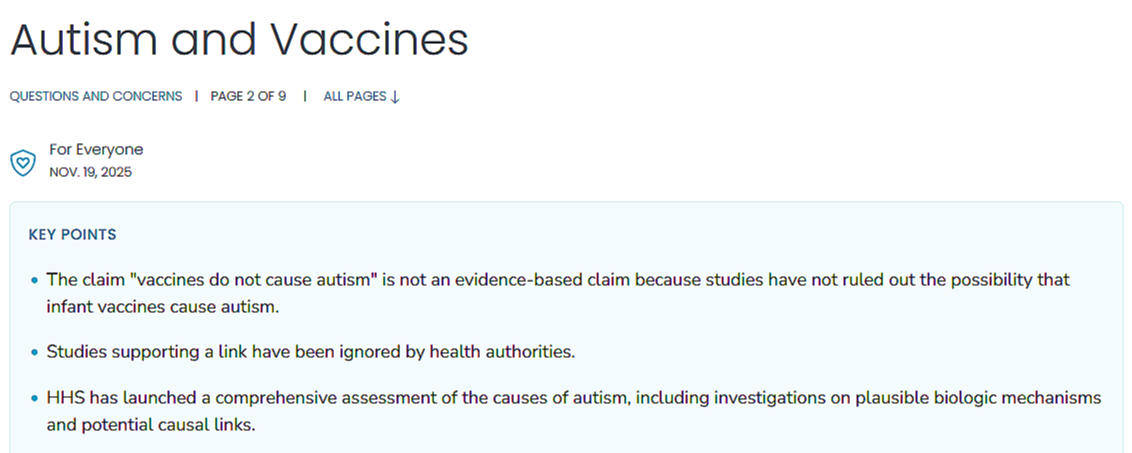
FROM CDC WEBSITE

Scientists ridiculed the site’s declaration that studies “have not ruled out the possibility that infant vaccines cause autism.” While upward of 25 large studies have shown no link between vaccines and autism, it is scientifically impossible to prove a negative, said David Mandell, director of the Center for Autism Research at Children’s Hospital of Philadelphia.

The webpage’s new statement that “studies supporting a link have been ignored by health authorities” apparently refers to work by vaccine opponent David Geier and his father, Mark, who died in March, Mandell said. 

Their research has been widely repudiated and even ridiculed. David Geier is one of the outside experts Kennedy hired to review safety data at the CDC.

Asked for evidence that scientists had suppressed studies showing a link, HHS spokesperson Andrew Nixon pointed to older reports, some of which called for more study of a possible link. Asked for a specific study showing a link, Nixon did not respond.

‘Using CDC to Spread Lies’

Infectious disease experts, pediatricians, and public health officials condemned the alteration of the CDC website. Although Kennedy has made no secret of his disdain for established science, the change came as a gut punch because the CDC has always dealt in unbiased scientific information, they said.

Kennedy and his “nihilistic Dark Age compatriots have transformed the CDC into an organ of anti-vaccine propaganda,” said Amesh Adalja, a senior scholar at the Johns Hopkins Center for Health Security.

“On the one hand, it’s not surprising,” said Sean O’Leary, a professor of pediatrics and infectious disease at the University of Colorado. “On the other hand, it’s an inflection point, where they are clearly using the CDC as an apparatus to spread lies.”

“The CDC website has been lobotomized,” Atul Gawande, an author and a surgeon at Brigham and Women’s Hospital, told KFF Health News.

CDC “is now a zombie organization,” said Demetre Daskalakis, former director of the National Center for Immunization and Respiratory Diseases at the CDC. The agency has lost about a third of its staff this year. Entire divisions have been gutted and its leadership fired or forced to resign.

Kennedy has been “going from evidence-based decision-making to decision-based evidence making,” Daniel Jernigan, former director of the CDC’s National Center for Emerging and Zoonotic Infectious Diseases, said at a news briefing Nov. 19. With Kennedy and his team, terminology including “radical transparency” and “gold-standard science” has been “turned on its head,” he said.

Sen. Cassidy Goes Quiet

The new webpage seemed to openly taunt Sen. Bill Cassidy (R-La.), a physician who chairs the Senate Health, Education, Labor, and Pensions Committee. Cassidy cast the tie-breaking vote in committee for Kennedy’s confirmation after saying he had secured an agreement that the longtime anti-vaccine activist wouldn’t make significant changes to the CDC’s vaccine policy once in office.

The agreement included a promise, he said, that the CDC would not remove statements on its website stating that vaccines do not cause autism.

The new autism page is still headed with the statement “Vaccines do not cause Autism,” but with an asterisk linked to a notice that the phrase was retained on the site only “due to an agreement” with Cassidy. The rest of the page contradicts the header.

“What Kennedy has done to the CDC’s website and to the American people makes Sen. Cassidy into a total and absolute fool,” said Mark Rosenberg, a former CDC official and assistant surgeon general.

On Nov. 19 at the Capitol, before the edits were made to the CDC website, Cassidy answered several unrelated questions from reporters but ended the conversation when he was asked about the possibility Kennedy’s Advisory Committee on Immunization Practices might recommend against a newborn dose of the hepatitis B vaccine.

“I got to go in,” he said, before walking into a hearing room without responding.

Cassidy has expressed dismay about the vaccine advisory committee’s actions but has avoided criticizing Kennedy directly or acknowledging that the secretary has breached commitments he made before his confirmation vote. Cassidy has said Kennedy also promised to maintain the childhood immunization schedule before being confirmed.

The senator criticized the CDC website edits in a Nov. 20 post on X, although he did not mention Kennedy.

“What parents need to hear right now is vaccines for measles, polio, hepatitis B and other childhood diseases are safe and effective and will not cause autism,” he said in the post. “Any statement to the contrary is wrong, irresponsible, and actively makes Americans sicker.”

Leading autism research and support groups, including the Autism Science Foundation, the Autism Society of America, and the Autism Self Advocacy Network, issued statements condemning the website.

“The CDC’s web page used to be about how vaccines do not cause autism. Yesterday, they changed it,” ASAN said in a statement. “It says that there is some proof that vaccines might cause autism. It says that people in charge of public health have been ignoring this proof. These are lies.”

What the Research Shows

Parents often notice symptoms of autism in a child’s second year, which happens to follow multiple vaccinations. “That is the natural history of autism symptoms,” said Tager-Flusberg. “But in their minds, they had the perfect child who suddenly has been taken from them, and they are looking for an external reason.”

When speculation about a link between autism and the measles, mumps, and rubella vaccine or vaccines containing the mercury-based preservative thimerosal surfaced around 2000, “scientists didn’t dismiss them out of hand,” said Tager-Flusberg, who has researched autism since the 1970s. “We were shocked, and we felt the important thing to do was to figure out how to quickly investigate.”

Since then, studies have clearly established that autism occurs as a result of genetics or fetal development. Although knowledge gaps persist, studies have shown that premature birth, older parents, viral infections, and the use of certain drugs during pregnancy — though not Tylenol, evidence so far indicates — are linked to increased autism risk.

But other than the reams of data showing the health risks of smoking, there are few examples of science more definitive than the many worldwide studies that “have failed to demonstrate that vaccines cause autism,” said Bruce Gellin, former director of the National Vaccine Program Office.

The edits to the CDC website and other actions by Kennedy’s HHS will shake confidence in vaccines and lead to more disease, said Jesse Goodman, a former FDA chief scientist and now a professor at Georgetown University.

This opinion was echoed by Alison Singer, the mother of an autistic adult and a co-founder of the Autism Science Foundation. “If you’re a new mom and not aware of the last 30 years of research, you might say, ‘The government says we need to study whether vaccines cause autism. Maybe I’ll wait and not vaccinate until we know,’” she said.

The CDC website misleads parents, puts children at risk, and draws resources away from promising leads, said Paul Offit, director of the Vaccine Education Center at the Children’s Hospital of Philadelphia. “Kennedy thinks he’s helping children with autism, but he’s doing the opposite.”

Many critics say their only hope is that cracks in President Donald Trump’s governing coalition could lead to a turn away from Kennedy, whose team has reportedly tangled with some White House officials as well as Republican senators.

Polling has also shown that much of the American public distrusts Kennedy and does not consider him a health authority, and Trump’s own approval rating has sunk dramatically since he returned to the White House.

But anti-vaccine activists applauded the revised CDC webpage. 

“Finally, the CDC is beginning to acknowledge the truth about this condition that affects millions,” Mary Holland, CEO of Children’s Health Defense, the advocacy group Kennedy founded and led before entering politics, told Fox News Digital.

“The truth is there is no evidence, no science behind the claim vaccines do not cause autism.”

Céline Gounder, Amanda Seitz, and Amy Maxmen contributed to this report. KFF Health News is a national newsroom that produces in-depth journalism about health issues.

The PAIN GAME: How Pain Medicine Was Criminalized

By Dr. Lynn Webster

“What happened?”

It’s the most basic question you can ask about the opioid crisis. Yet for more than two decades, most of the answers the public has been given have been pre-packaged: Greedy drug companies, corrupt “pill mill” doctors, desperate patients, and a heroic legal system swooping in to clean up the mess.

What almost no one has seen is what was happening inside those prosecutions as they unfolded; in the homes of the accused physicians, in the war rooms of their defense teams, in the quiet panic of the patients who depended on their care.

That’s what makes The PAIN GAME so extraordinary.

More than twenty years ago, filmmaker Erica Modugno Dagher did something journalists almost never do: she embedded herself at the center of an unfolding legal, medical, and political firestorm and started asking, with a genuinely open mind, “What happened?” 

Then she kept the camera rolling for two decades.

Writer and editor Amy Bianco, who now authors The PAIN GAME on Substack, has taken that trove of footage, documents and human stories, and begun unpacking how the legal system — especially the DEA and federal prosecutors — systematically confused pain medicine with crime, and how that confusion still harms patients today.

If you want to understand why doctors are afraid to treat pain, and why patients are still paying the price, I’d urge you to start with Bianco’s first episode. It’s one of the most important stories you’ve never heard.

Targeting Doctors

The origin of The PAIN GAME runs through the work of political scientist Ronald Libby, PhD, whose 2007 book The Criminalization of Medicine: America’s War on Doctors” documented a wave of prosecutions in which physicians were recast as criminals. 

Instead of tackling the hard work of healthcare reform or rational drug policy, federal and state authorities went after doctors who billed heavily to Medicare and Medicaid, especially those caring for poor and disabled patients with complex pain.

According to Libby, the logic was simple and brutal:

  • High billing = “fraud and abuse”

  • High opioid prescribing = “drug dealing”

Under that lens, the DEA and U.S. attorneys didn’t need to understand the nuances of chronic pain, palliative care, or Ehlers–Danlos syndrome. They just needed numbers: prescription counts, morphine milligram equivalents, and outlier billing profiles. 

The more a physician’s practice reflected the grim reality of caring for very sick people, the more suspicious they looked on a spreadsheet.

By the early 2000s, news outlets were saturated with stories of “pill mills” flooding communities with OxyContin. Those stories had a ready-made villain and an easy fix: prosecute the doctor, shut down the clinic, and declare victory.

But as The PAIN GAME shows from the inside, it didn’t add up.

A Camera Inside the Crackdown

Because Libby had earned the trust of embattled clinicians, that trust extended to Erica. She was invited into defendants’ homes, their lawyers’ strategy sessions, back-hall conversations at medical and legal conferences, and even the corridors of Congress.

Crucially, she went in without an agenda. There was no narrative she needed to confirm and no “pill mill” caricature she had to deliver. She simply watched and listened as doctors, patients, lawyers, and advocates tried to understand why the government had suddenly turned medicine into a crime scene. That is what makes the series riveting.

Amy’s first episode on Substack tells this origin story from the inside. She weaves in her own path through the pain world, including her friendship with chronic pain advocate Siobhan Reynolds, founder of the Pain Relief Network, and her own diagnosis with Ehlers–Danlos syndrome. She then patiently walks readers through what the footage and documents reveal.

What emerges is not a defense of every prescribing decision ever made. It is something more unsettling: a portrait of a legal system that decided it was easier to dramatize a few high-profile prosecutions than to grapple with the real drivers of overdose and despair.

When the DEA Writes Medical Policy

Once you see these cases from the inside, the larger pattern comes into focus.

Prosecutors leaned on cooperating witnesses, often people who themselves had been charged, to transform complex medical practices into simple crime stories.

DEA agents and auditors treated prescribing volume as guilt, with almost no capacity to distinguish a high-complexity referral practice from a storefront drug operation.

The media, fed a steady diet of press releases and perp walks, amplified the “drug dealers in white coats” narrative until it hardened into common sense.

And while those courtroom dramas played out, something quieter, and more damaging. was happening across the country.

Doctors who were never criminally charged saw colleagues indicted or their offices raided — which led them to decide that continuing to treat high-risk patients simply wasn’t worth taking the chance. 

Pharmacists also grew skittish about filling legitimate prescriptions. Medical boards and hospital systems imposed rigid rules, less in the service of good medicine than to signal compliance and to distance themselves from the crisis that had been miscast in the public eye.  

The overdose crisis surged forward in the meantime, driven increasingly by illicit fentanyl and a volatile street supply that no prosecution could touch. Prescribing plummeted, while overdose deaths soared.

This is the great irony The PAIN GAME helps expose: The very tools we were told would “fix” the crisis — aggressive DEA enforcement against prescribers — did little to curb overdoses. But they have been devastatingly effective at making it harder for people in pain to get care.

Why The Pain Game is Timely Today

You cannot reconstruct this history by looking backward. Many of the key players are gone. The media environment has only grown more hostile toward anyone who challenges the standard narrative about opioids. The raw fear that Libby detected in the early 2000s has turned into a kind of enforced silence.

That’s why Bianco’s work on The PAIN GAME is so valuable. She and Erica were there as it happened. I have learned that they turned over every page in their research: trial transcripts, medical records, internal memos, and obscure legal filings. They followed the story from exam rooms and courtrooms all the way to Capitol Hill, and they never stopped asking, “What actually happened here?”

If you care about pain medicine, civil liberties, or the rule of law, you’ll find The PAIN GAME both captivating and deeply sobering. It shows, in human terms, how we let a criminal justice narrative substitute for real health policy, and how that mistake still shapes the lives of patients and clinicians today.

The first episode is your entry point into that world. Read it. Sit with it. And then, if you find yourself thinking, No one ever told this part of the story, hit the subscribe button on Amy Bianco’s Substack.

We cannot undo the damage that has been done, but we can tell the truth about how it happened. The PAIN GAME is one of the few places where that truth is being documented, carefully and courageously, in real time.

Lynn R. Webster, MD, is a pain and addiction medicine specialist and serves as Executive Vice President of Scientific Affairs at Dr. Vince Clinical Research, where he consults with pharmaceutical companies.

Dr. Webster is the author of the forthcoming book, “Deconstructing Toxic Narratives -- Data, Disparities, and a New Path Forward in the Opioid Crisis,” to be published by Springer Nature.

Winter Taught Me a Better Way to Cope with Chronic Pain

By Crystal Lindell

We’ve already had our first snowfall here in northern Illinois. Regardless of the official day winter begins next month, the first snow marks the start of winter for us.

And when you have chronic pain, the season brings with it cursed gifts, offering both a time of guilt-free rest and more days of ache.

During the summer, there’s a guilt that accompanies any days spent inside, even if you’re doing it because your pain is too intense to allow for anything else. Watching TV all day makes me feel like I am personally wasting the warm weather and sunshine.  

But that is not the case in winter. Instead, the long nights and cold days allow me to embrace the comfort of staying in, curled up under layers of blankets. 

I already have my Christmas tree up, and the warm glow makes being a couch potato seem almost magical.

And since the sky turns midnight blue at 5 pm, it suddenly feels almost natural to go to bed early. 

These are things my chronic pain-riddled body enjoys year-round. But in the winter, societal expectations allow me to indulge in the impulse to take full rest days or even rest weeks, without feeling the summertime angst about it.

The change in seasons also brings with it lots of changes in barometric pressure, which means all those cozy evenings come with a downside.

My body always knows when it’s about to snow, or sleet or both. It also feels every temperature change as it happens. Anytime it goes from -10 degrees to 40 and back again, my ribs feel it. 

The result is often multiple days spent with the type of excruciating pain that barely even responds to opioid pain medication.

Over the years, I have found that the only treatment that works for those pain flares is to accept them. I can’t stress myself out about it, because it only serves to escalate the pain. So I have to try to stay as calm as possible. My body can’t handle activity under those circumstances.

Which brings me back to those guilt-free rest days that winter supplies in ample amounts. And embracing things instead of trying to fight them.

Growing up in the Midwest, I was often taught that winter was a season to be fought and denied. Just a few months that we all had to endure until the “real” weather came back. Most people here spend the winter complaining, cursing, and just trying to survive.

A few years ago, I took a trip to Montreal, Canada in January, and witnessed an entirely different approach. Despite the fact that the holiday season was well behind us, the city was filled with winter festival activities, ice statues, colorful lights, and just a general sense that the dark and cold days were actually a good thing.

The experience has since shaped my own approach to the coldest months of the year. I do my best to appreciate the gifts that gray days and eternal nights bring. It’s a time for all of us to rest, refocus, and embrace the downtime the cold weather affords us.

Embracing pain has the same effect. When you learn to let it exist, it is paradoxically easier to keep it confined to smaller flare ups.

Weather forecasters predict many of us are in for a particularly harsh winter this year, with more snow and colder temperatures. 

But that doesn’t mean it has to be a slog.

When we take the winter season as it is, it can bear its gifts of rest and time. And who among us doesn't need more of both?

Low-Glutamate Diet Linked to Fewer Migraines 

By Pat Anson

A diet low in glutamate significantly reduced migraines in U.S. veterans with Gulf War Illness, according to a new study that documents for the first time that a reduction in migraine symptoms is linked to changes in the brain.  

Glutamate is an amino acid used in food additives like monosodium glutamate (MSG), which is widely used in processed food and soups as a flavor enhancer. Previous studies have shown that a low glutamate diet reduces pain and other symptoms from fibromyalgia.   

Researchers at Georgetown University Medical Center observed a “big, big decrease” in migraines in 40 veterans with Gulf War Illness a month after they were put on a low-glutamate diet. Like fibromyalgia, Gulf War illness causes an array of musculoskeletal, gastrointestinal, and neurologic symptoms, including migraines. It is thought to be caused by exposure to toxic chemicals during the war.

“More than half of the Gulf War veterans had migraines before the diet, and that dropped to under 20% after following the diet for one month,” said senior author Ashley VanMeter, PhD, Professor of Neurology at Georgetown University School of Medicine. “So it was a very significant drop.”

In addition to fewer migraines, veterans on the low-glutamate diet also had significant reductions in widespread body pain, fatigue, mood issues, and cognitive dysfunction. 

Findings from the study were recently presented at the annual meeting of the Society for Neuroscience in San Diego. The research, funded by the U.S. Department of Defense, grew out of a collaboration with Kathleen Holton, PhD, a nutritional neuroscientist at American University, who has been researching the low-glutamate diet as a way to manage neurological conditions. 

In addition to food additives, glutamate occurs naturally in foods like tomatoes, cheese, mushrooms and nuts. Glutamate acts as a neurotransmitter in the brain and is believed to stimulate nerve cells that process pain signals. 

In the Georgetown University study, researchers used brain scans to compare differences in the visual cortex – the part of the brain that processes visual information – in patients with Gulf War Illness and a group of healthy patients. Those with Gulf War Illness had a thicker right visual cortex and were more likely to report migraines than the healthy control group. 

But after being put on a low glutamate diet, the brain scans of Gulf War Illness vets showed a significant reduction in cortical thickness.

Holton says the findings support the theory that glutamate may damage nerve cells, causing a repetitive cycle of neuroinflammation and oxidative stress in the brain. 

“We think this is one of the reasons people who are susceptible to dietary glutamate tend to have prolonged symptoms over time,” said Holton.  

Thickening of the visual cortex is common among migraine sufferers, especially those whose migraines occur with aura, or visual disturbances. That raises the question of whether a low-glutamate diet could be an inexpensive treatment option for patients with migraine or fibromyalgia..  

“This is a very doable diet,” VanMeter said. “It’s a healthy diet, it’s not that hard to follow, and it’s a very low-cost way of treating what for some individuals is a chronic and debilitating condition.” 

Holton noted that the study also adds to a growing body of evidence about how processed foods impact health.

“This speaks to the fact that diet can not only make us sick, but can also acutely treat our symptoms,” she said.

The FDA considers MSG to be “generally recognized as safe,” although some people are sensitive to it and experience short-term, mild symptoms, such as headache, numbness, flushing, tingling, palpitations, and drowsiness.

“Over the years, FDA has received reports of symptoms such as headache and nausea after eating foods containing MSG. However, we were never able to confirm that the MSG caused the reported effects,” the agency says.

Chronic Pain Raises Risk of High Blood Pressure

By Pat Anson

Having untreated or poorly treated chronic pain is known to raise the risk of serious health problems, including high cholesterol, elevated pulse, arteriosclerosis, and heart attack..

So it should come as no surprise that chronic pain also increases the risk of high blood pressure, according to a new study by the American Heart Association, which found that the extent and location of the pain may determine the level of risk. 

Someone with chronic widespread body pain, for example, has a 74% higher risk of developing high blood pressure; while chronic headaches are associated with a 22% higher risk and chronic back pain has a 16% higher risk.

“The more widespread their pain, the higher their risk of developing high blood pressure,” said Jill Pell, MD, Professor of Public Health at the University of Glasgow in the UK and lead author of the study published in the journal Hypertension.

“Part of the explanation for this finding was that having chronic pain made people more likely to have depression, and then having depression made people more likely to develop high blood pressure. This suggests that early detection and treatment of depression, among people with pain, may help to reduce their risk of developing high blood pressure.”

Pell and her colleagues analyzed over 13 years of health data from more than 200,000 adults enrolled in the UK Biobank Project. Participants completed a baseline questionnaire that asked if they had experienced pain in the last month that interfered with their usual activities. 

They also noted if the pain was in their head, face, neck/shoulder, back, stomach/abdomen, hip, knee, or all over their body. If they reported pain, they indicated whether pain persisted for more than three months.

Depression was measured based on participants’ responses to questions about the frequency of a depressed mood, disinterest in activities, restlessness or lethargy. Inflammation was measured with blood tests for C-reactive protein (CRP).

At the end of the study period, nearly 10% of all participants developed high blood pressure, which is considered a blood pressure measurement higher than 130/80 mm Hg or 140/90 mm Hg.

Compared to people with no pain, people with short-term acute pain had a 10% greater risk of high blood pressure, while those with chronic localized pain had a 20% higher risk.

When comparing sites of pain, there was a wide variation in risk levels:

  • 74% higher risk for chronic widespread pain

  • 43% higher risk for chronic abdominal pain

  • 22% higher risk for chronic headaches

  • 19% higher risk for chronic neck or shoulder pain

  • 17% higher risk for chronic hip pain

  • 16% higher risk for chronic back pain

Depression and inflammation accounted for 11.7% of the association between chronic pain and high blood pressure.

The findings highlight the need for good pain management to prevent or reduce the risk of hypertension and other health problems.

“When providing care for people with pain, health care workers need to be aware that they are at higher risk of developing high blood pressure, either directly or via depression. Recognizing pain could help detect and treat these additional conditions early,” Pell said.

Pain Relievers Can Cause High Blood Pressure

Another consideration is the need for further studies on the role of pain medicine in high blood pressure. Ibuprofen and other nonsteroidal anti-inflammatory drugs (NSAIDs) may increase blood pressure and worsen pre-existing hypertension. They can also interfere with the effectiveness of some blood pressure medications. 

The effect is more pronounced with some NSAIDs over others. Aspirin, for example, appears to have less effect on blood pressure than naproxen, which can cause the body to retain salt and water, leading to fluid buildup and hypertension. 

Opioids can cause both low and high blood pressure, depending on the dose and duration of use. Sudden discontinuation of long-term opioid use is associated with increased blood pressure

“Chronic pain needs to be managed within the context of the patients’ blood pressure, especially in consideration of the use of pain medication that may adversely affect blood pressure,” said Daniel Jones, MD, Dean and Professor Emeritus at the University of Mississippi School of Medicine.

One limitation of the study is that participants were middle- and older-aged adults who were mainly white and of British origin – therefore the findings may not apply to people from other racial or ethnic groups, or who live in other countries.

Other contributing factors is that participants reporting pain were more likely to be women, have an unhealthy lifestyle, larger waists, higher body mass index (BMI), more long-term health problems, and live in areas with higher unemployment, lower home and car ownership, and more overcrowding.

Shame on Me 

By Rochelle Odell 

Why a headline like “Shame on Me”? 

I have lived with Complex Regional Pain Syndrome (CRPS), an intractable and painful nerve disease, for nearly 34 years. 

And I used my fear of a pain flare to avoid getting a colonoscopy. 

For four years, I thought I had hemorrhoids. They are painful, irritating and embarrassing. After all, who wants to bend over for your primary care doctor to examine them?

Yes, she said, I definitely have hemorrhoids. So I let the symptoms ride.

Parts of this column are a bit graphic. However, there’s a good reason why I’m sharing them. I don’t want you to make the same mistakes I did. 

In January of this year, after spending three days on the toilet feeling like I was trying to expel whatever was in my bowels (along with the bowels themselves), a large mass emerged. 

I saw my doctor again and she said it was hemorrhoids that had become very swollen and were bleeding.

Coupled with my CRPS, they made my pain even worse. Pain at a level I had never experienced before. It never lets up, never. 

Lest we not forget, adult diapers have become my new norm as the mass is on the rectum/sphincter, so I am now stool incontinent. Oh joy. 

ROCHELLE ODELL

This is a topic rarely discussed, but once it is brought up, I learned I am not the only one. When one discusses this, I learned others also suffer from the same problems – the same pain, the same embarrassment, and the same wearing of diapers.

My CRPS pain reached a new high and, of course, my one prescribed pain medication became a joke. It's a higher dose than many receive these days, but it basically only works for 30-45 minutes before waning.

My PCP added a new glitch to my stress level, when she sold out to an insurance company and became a private equity provider. How long would her practice continue? Not long. She retired at the end of August. 

Like most patients when we find a good provider, we do not want to lose them. Ever. I liked Dr. Powell a lot, and saw her for eight years. Being a black doctor, I believe all she had to endure to get where she did helped her be a better doctor. All her patients gave her five star reviews. 

My first question to her was did she still have autonomy when it comes to treating her patients, ordering tests, and speciality referrals? I believe that question surprised her as few people know about private equity and fewer understand the ramifications. 

She did order a referral for me to see a surgeon for a hemorrhoidectomy. Not a surgery I was looking forward to, after all it would be a whole new team that I had to bare my toosh to. So I delayed making that appointment. Shame on me. 

By June, the mass I had named George had grown. I had no choice, I had to see the surgeon. He also said the mass was hemorrhoids, no mention of anything more serious. So, the surgical procedure was scheduled. 

Not one mention of cancer, he hadn't ordered any scans or tests, so silly me thought I had a big, bleeding hemorrhoid. 

The day before the scheduled surgery, I was given the option of drinking two bottles of magnesium citrate or Golightly, a prescription laxative. I opted for the magnesium citrate, because it sounded less disruptive to my bowels. Shame on me.

Please do what I didn't, which is read about the many adverse effects that magnesium citrate can cause and did cause in me. It is not a harmless laxative.  After half the first bottle, my ears began ringing and my heart started skipping all over. It went downhill from there. I truly felt like I was going to die.

The magnesium citrate did not even do the bowel cleanse. Kept waiting for the explosion I had heard and read about. I could barely move the rest of the afternoon and my pain was creeping up.

Mind you, I haven't been eating much these last few months. I was close to 200 pounds three years ago, the heaviest I have ever been. But eating caused very painful bowel movements and I lost my appetite due to the increased pain.

I came out of anesthesia to learn the surgeon had only performed a biopsy. My pain level was approaching a 10 when he told me the bad news.

“You have cancer,” he said, matter of factly. 

I learned it is adenocarcinoma, the most common of all cancers that starts in mucous membranes, like the bowels/rectum. It totally surprised, even shocked me.  

My PCP had ordered the Cologuard test about three years ago, after I flippantly told her I don't do colonoscopies. And of course I tossed out the Cologuard order. Shame on me.  

I was sent home after the biopsy, still reeling from the magnesium citrate, and in excruciating pain. My sweet friend Stella, who has been a godsend, took me to the hospital and back home after I was discharged. I was in so much agony by the time we got home that I screamed into my pillow.

Stella urged me to call 911 and I finally did. I was taken to my local hospital where I was treated very well, and given strong doses of IV Dilaudid to manage the pain. The ER doctor ordered a CT scan, where the cancerous mass was glaring for all to see. 

Oh yeah, they had to change my diaper every hour or so, and by this point everybody and their relatives had seen my bottom. So much for being embarrassed. 

I was transferred back to the hospital where the biopsy was done and got another CT scan. I spent three days in the hospital before I was transferred to a skilled nursing facility for two weeks to gain strength and try to bring my pain under control. 

Both facilities provided adequate pain management including a fentanyl patch, oxycodone and Dilaudid. For those two weeks, I still experienced symptoms from the magnesium citrate. Never again.

I had to leave my pain management group because they don't do palliative or hospice care, and they would not add any additional pain medication. With how badly cancer patients are being treated these days, I was so afraid my meds would be reduced. But so far so good 

Because I need a portacath for imagery tests, it took four months to get an MRI scheduled at a university medical center in my area. Then I learned a doctor changed it back to another facility where they have no one to access my portacath. 

I just shake my head at this level of incompetence. I have explained multiple times why I must have it at the university medical center. I normally have no issues with an MRI, because I am not claustrophobic. But because of George, I cannot lay flat on my back and must be sedated through the portacath.

I have not fully acknowledged the cancer diagnosis. Like today, when speaking to my oncology office, I ended up crying out of frustration. These senseless delays could ultimately cause my death.  

A PET scan found a couple of small growths on each lung, so I am now waiting for the appointment for a biopsy. In the past, I have had scar tissue show up on my chest X-rays due to my asthma and I am praying it's not lung cancer. 

I have done my best to exclude sugar from my diet, as sugar feeds cancer. I have lost so much weight, I’m down to 113 pounds. I can't remember the last time I was this small. My body has lost almost all the fat it had, my ribs and collarbone stand out, glaring in the mirror at me. 

Chemotherapy and radiation haven't even started yet, and the expected weight loss from the chemo, well, I have no idea where it will come from. There is no more fat.

Living alone frightens me now. No, it terrifies me. I had to rehome one of my two dogs, because I can no longer care for myself and two dogs.

I have a whole new set of medical terminology to learn. Patients must navigate and fight for every part of needed care, when the last thing we want to do is be on the phone daily with insurance and one's Medicare provider.

I have also learned oncologists haven't heard of CRPS, a disease known to be triggered by chemotherapy. 

I am tired, don't want to talk on the phone, and believe I shouldn't have to.  My friend Stella has taken over calling and explaining all the issues. 

My pharmacy is causing me grief now, it won't cover my full oxycodone dose, so I spent over 20 minutes on the phone talking to the pharmacist. He isn't taking on new patients on opioids because his wholesaler is supposedly giving him grief. I told him I understand his position. 

In closing, please don't be like me. Don't use feeble excuses to not get a colonoscopy or let embarrassment keep you from having your doctor examine your toosh.  

What I tried to delay for dumb reasons has actually caused my pain to worsen. 

Shame on me.

Does 7-OH Actually Work for Pain?

By Crystal Lindell

I have some bad news for pain patients: 7-OH is the new pain reliever we’ve been searching for.

It’s about as effective at treating pain as a mild opioid pain reliever, with almost no risk of an overdose if used wisely. And best of all, you can buy it the same way you buy alcohol and tobacco: Over-the-counter. No doctor or prescription required.

So why is this bad news? Well, multiple government agencies are working on making 7-OH illegal, including the FDA. Some states, like Florida, have already banned it, while in California, they’re taking it off store shelves.

While those efforts would be benign if 7-OH was just another snake oil treatment, they quickly turn dire when we’re talking about a substance that actually helps pain patients, many of whom have lost access to prescription opioids.

For those unfamiliar, 7-OH is short for 7-hydroxymitragynine, an alkaloid that occurs naturally in kratom in trace amounts. Some kratom vendors now sell concentrated versions of 7-OH to boost its potency as a pain reliever and mood enhancer.

One of my relatives credits 7-OH with giving him back the ability to play with his daughter. 7-OH has done for him what Advil never could: it helped his back pain so much that it allowed him to be a better father.

Another one of my friends credits 7-OH with allowing him to stay off street fentanyl. Seriously. It’s that effective at treating his pain and alleviating long-term opioid withdrawal symptoms.  

Another friend of mine who has been living in constant fear of losing access to her prescription hydrocodone says 7-OH has eased those fears. Because she now knows that if the unthinkable happens, she will still have access to pain relief. 7-OH works really well at treating her pain and lifting her mood. 

While opioid pain relievers can cause drowsiness, many people report that 7-OH actually gives them a small burst of energy – just as kratom does. 

My friends have told me that a small dose of 7-OH works about as good as 5 mg of hydrocodone, while larger doses rival the effectiveness of oxycodone.

When taken alone, 7-OH also doesn’t cause the same respiratory depression that large doses of opioids can, which means it doesn’t carry the same risk of overdose. Most deaths attributed to 7-OH actually involve other substances, such as alcohol or street drugs. 

There are definitely downsides to 7-OH though. 

One is that it does cause physical dependence pretty rapidly, especially if you take 7-OH on a regular basis. So, if you try to stop taking it abruptly, you may feel more irritable, have trouble sleeping, and you may have other symptoms like a restless leg. The best way to deal with that is to slowly taper off it if you want to stop using it. 

Second, a lack of regulations around 7-OH also means that you may have to trial and error your way into finding a reliable brand you can trust. For example, some brands put additives in the tablets that cause bad headaches, and some brands don’t put as much 7-OH into their tablets as they claim, making them ineffective.

The third major downside to 7-OH is that it’s expensive. Smoke shops and online retailers sell a 5-pack of chewable 7-OH tablets for at least $50, while one tablet sells for about $10. Insurance won’t pay for it.

Each chewable tablet is made to be broken into sections, and the packaging usually says that either a fourth or half a tablet can be considered one dose. 

However, how much you take depends greatly on your personal tolerance levels. Some people I know take a half tablet as a dose. But others I know take far less – about 1/16th of a tablet – because that’s more than enough to relieve their pain.

Unfortunately, one dose only lasts about four to six hours, which means you may need multiple tablets if you need to use it all day. You can see how fast that can add up financially when each tablet is $10. 

Part of me wishes that pharmaceutical companies would work on developing pain relievers that use 7-OH, and their advancements would help address safety issues by making doses more uniform. But my fear is that they would also make the 7-OH medication available only by prescription, thereby killing one of its best features: accessibility.  

If you are a chronic pain patient who’s looking for something over-the-counter to treat your pain, it might be worth giving 7-OH a try. 

And if you’re a government official trying to ban it, well, all I can say is, please don’t. Pain patients get relief from 7-OH – and one day, you may need it too.

Medicare May Stop Paying for Peripheral Nerve Blocks  

By Pat Anson

A public comment period will end soon on a proposal that could dramatically limit coverage of peripheral nerve blocks (PNB) and nerve ablation procedures for Medicare patients suffering from chronic nerve pain.

A PNB generally involves the injection of an anesthetic or corticosteroid into an injured area to block the transmission of pain signals. Under the proposal, all PNBs and nerve ablation procedures would no longer be covered for any pain condition, and the number of steroid injections and radiofrequency ablation procedures for nerve pain and trigeminal neuralgia would be limited.    

Five Medicare administrative contractors (MACs) representing 24 states made the proposal in September and public comments will be accepted until November 22. MACs are private insurers that process Medicare claims and determine what coverage is “reasonable and necessary.” 

In this case, they’ve determined that PNB’s and other nerve procedures have little or no benefit, and “therefore are not considered medically reasonable and necessary.” If approved, the proposal could be adopted by MACs in other states and become de facto Medicare policy nationwide.

Not surprisingly, there is opposition to the MAC proposal from healthcare providers who perform the procedures, who claim denial of coverage would force millions of chronic pain patients “to turn to opioids or less effective treatments.”       

“For decades, chronic pain patients have received treatment from PNBs and ablation techniques that provide rapid and durable pain relief, enhance function and quality of life, and decrease reliance on systemic pain medications, including opioids,” said Patrick Giam, MD, President of the American Society of Anesthesiologists. 

“We urge Medicare to consider the compelling clinical and functional evidence that supports coverage of PNBs and related procedures.” 

“Unless the MACs want more Americans to be unable to work, reliant on opioids, and suffering in pain, it’s hard to understand their motivation here,” Tricia Pendergrast, MD, an anesthesiology resident at the University of Michigan, wrote in a recent STAT News op/ed 

“Eliminating peripheral nerve block coverage will not result in meaningful cost savings from these patients, and may lead to more frequent emergency department and clinic visits, increased use of opioids and other pharmacologic interventions.” 

As an alternative to injections and nerve blocks, the MAC proposal suggest the use of anti-depressants, gabapentin, topical lidocaine and transcutaneous electrical nerve stimulation (TENS) as first-line treatments for neuropathic pain.

Pregabalin, tramadol, capsaicin patches, Botox injections, and psychotherapy would be considered second-line treatments. 

Opioids should only be considered as a third-line treatment, according to the MAC proposal, “as a last resort.”

Another effort to limit coverage of chronic pain treatments for Medicare patients begins in January. That is when Medicare is launching a 6-year pilot program in six states that will use artificial intelligence (AI) to review prior authorization claims for epidural steroid injections, cervical fusions, spinal cord stimulators, arthroscopic knee surgery, and other pain treatments. 

Medicare considers the treatments to be “low value,” potentially unsafe, and ripe for fraud and wasteful spending. 

The Wasteful and Inappropriate Service Reduction Model will cover Medicare patients in New Jersey, Ohio, Oklahoma, Texas, Arizona, and Washington who seek treatment for chronic pain, impotence, incontinence, and burns or wounds needing skin and tissue substitutes. 

Can Self-Hypnosis Relieve Hot Flashes?

By Crystal Lindell

A new study suggests that self-administered hypnosis significantly reduces hot flash symptoms for women going through menopause.

While previous research has shown that hypnosis can relieve hot flashes, depression, PTSD and even some types of chronic pain, those studies mainly focused on hypnosis given by a professional in a clinical setting.

The results from this study are noteworthy because they show that hypnosis can be effective even if it’s self-administered.

Hot flashes can cause sweating, discomfort, anxiety, fatigue, and sleep interference. Up to 80% of older women report hot flash symptoms from menopause, which can persist for 4 to 7 years.

The study, which was published in JAMA Network Open, included 250 postmenopausal women. One group received self-administered hypnosis, while the other group received a placebo “sham” hypnosis. 

Participants in the hypnosis intervention were given educational material on the use of hypnosis for the treatment of hot flashes and were asked to listen to 20-minute audio-recorded hypnosis sessions daily for 6 weeks. The audio recordings included hypnotic relaxation methods and mental imagery for “coolness” to counteract the “hot” sensations.

Those receiving the placebo hypnosis were asked to listen to white noise audio recordings labeled as “hypnosis” for 20 minutes each day. They were also given the same educational material.

Participants in both groups completed a daily diary on the frequency and severity of their hot flashes.

The results were striking. After six weeks, the hypnosis group experienced a significantly greater reduction in hot flash scores vs. the sham group (53.4% vs 40.9%).

The hypnosis group also reported a greater reduction in daily interference from hot flashes (49.3% vs 37.4%), and greater perceived benefits (90.3% vs 64.3%) compared with the sham hypnosis group.

“Self-administered clinical hypnosis was shown to be an effective, clinically significant intervention for the treatment of hot flashes due to its efficacy in reducing hot flash scores (ie, frequency and severity) by more than half and yielding improvements in participants’ perception of their quality of life,” wrote lead author Gary Elkins, PhD, a Professor of Psychology and Neuroscience at Baylor University.

While hormonal changes are the root cause of menopausal hot flashes, environmental factors can also play a role. According to the Mayo Clinic, hot flash triggers include hot weather or warm environments; wearing heavy clothing; drinking caffeinated or alcoholic beverages; eating spicy foods; feeling stressed; drinking hot beverages; taking hot showers or baths; and smoking cigarettes.

The wide range of triggers, including “feeling stressed” may help explain why hypnosis would be effective at treating hot flashes. And since stress is also a trigger for chronic pain flares, there are definitely implications here for the chronic pain community. 

Of course, there is always the fear that doctors will take too much from studies like this, and will use the results as a reason to deny patients treatments like medication. 

Ideally though, this type of research will instead be used to broaden the treatment options for various health conditions, offering the possibility to pair non-traditional treatments like hypnosis with more traditional options like pain medication. 

If a treatment works and it’s accessible, then it’s worth trying — even if that treatment is hypnosis. 

Central Sensitization and Hyperalgesia Are Bogus Medical Terms

By Dr. Forest Tennant

Some 15 years ago, “central sensitization” was a term I first started seeing when I was editor of Practical Pain Management. It was defined as experiencing a pain level above what was normally expected from arthritis, fibromyalgia, neuropathy, and other peripheral (outside the brain) pain conditions. 

When central sensitization was present, it was an indication to more aggressively treat the pain with opioids and/or other measures. Unfortunately, this simple, well-meaning term has been transformed by some unscrupulous practitioners to imply that patients with central sensitization don’t need opioids or other treatment.

Central sensitization also became synonymous with the term “hyperalgesia” – meaning the patient was overreacting or feeling too much pain for their condition. What’s more, opioids were supposedly the cause of hyperalgesia, so they need to be stopped. 

Let’s be very clear. Neither “central sensitization” nor “hyperalgesia” are bonafide medical conditions. A medical condition is one in which there is a common set of symptoms and physical findings, and the condition can be confirmed by a diagnostic test such as an MRI or blood test. 

Central sensitization and hyperalgesia are bogus medical conditions that can’t be objectively identified, quantified, or diagnosed. They are simply terms that sound scientific and authoritative, when in reality they have become fraudulent terms used to justify withholding opioids and other treatments.

It is time patients, families, and physicians reject these terms and the medical practitioners who use them.

Central sensitization is not to be confused with the term “central pain.” This is a serious condition that more likely than not requires opioids, along with great care and concern on the part of the medical practitioner.

“Central pain” initially referred to the emergence of pain after a stroke. Strokes can wipe out and destroy brain tissue that contain opioid receptors and the normal biologic apparatus which shuts down and relieves pain. One especially severe post-stroke pain condition is known as the Dejerine-Roussy Syndrome, which damages the thalamus. 

Opioid drugs, sometimes in high or unusual formulations, are required for post-stroke central pain.

Although central pain was first associated with strokes, it soon became appropriate to include brain tumors, hydrocephalus, and scarring from meningitis infections, since these conditions can also wipe out brain tissue and cause pain.

In recent times, central pain has come to include those pain patients who have developed neuroinflammation and tissue destruction in the brain concomitantly with a peripheral pain problem that may involve the joints, muscles, nerves, or spine.

It is interesting to note that central pain in the past was often called “secondary pain” as it tends to occur after someone has developed a peripheral pain condition. 

The first investigator to elucidate peripheral pain conditions with brain tissue destruction was Apkarian in 2004.He and his colleagues found decreased prefrontal gray matter deficiencies in the brain scans of persons with chronic back pain. 

Since that time, a plethora of brain scan and glial cell studies have found that persons with a peripheral pain condition may experience brain inflammation involving glial cells and tissue destruction — akin to what occurs after a stroke. 

Bona fide central pain is clinically typical and obvious. It is characterized by constant (24/7) pain and high pulse rates, hypertension, episodes of excess sweating, and cold hands and feet.

Prescription opioids, including long-acting opioids, may be required to control bonafide central pain. In addition to opioids, central pain has what is called descending pain, which requires dopamine stimulating drugs to adequately control it. 

The cause of central pain that accompanies or follows the development of a peripheral pain condition is now believed to be related to an autoimmune process and/or viral reactivation, especially from the Epstein-Barr virus.

In summary, central sensitization and hyperalgesia are not bonafide medical conditions. To use these bogus labels to justify the withholding of medications is unscientific, fraudulent and inhumane. 

These terms and the practitioners who use them should be summarily rejected. Central pain is a serious condition characterized by severe constant pain which often requires opioids for pain control. 

Forest Tennant, MD, DrPH, is retired from clinical practice but continues his research on the treatment of intractable pain and arachnoiditis. Readers interested in learning more about his research should visit the Tennant Foundation’s website, Arachnoiditis Hope. You can subscribe to its research bulletins here.   

The Tennant Foundation gives financial support to Pain News Network and sponsors PNN’s Patient Resources section. 

OTC Pain Relievers Just as Effective as Opioids After Wisdom Tooth Removal

By Pat Anson

A combination of acetaminophen and ibuprofen works just as well as a low dose of opioids in relieving pain in men and women after wisdom tooth removal, according to a new study in JAMA Network Open

The research builds on a previous study of over 1,800 patients, which compared the effectiveness of 400 mg of ibuprofen and 500 mg of acetaminophen to 5 mg of hydrocodone and 300 mg of acetaminophen in the first three days after surgery. That dose of hydrocodone is the equivalent of 5 morphine milligram equivalents (MME), which is considered a low dose under medical guidelines.

"We wanted to determine whether the pain medication's effects were consistent in males and females separately," lead author Janine Fredericks Younger, DMD, an associate professor at Rutgers School of Dental Medicine, said in a press release.

 "And what we found is that in both subgroups (males and females), the non-opioid was superior for that first day and night, and then no worse than the opioid for the rest of the post-op period."

Researchers performed a gender-specific analysis because women often report higher pain levels after surgery, raising questions about whether pain medications work differently for each sex.

"There's obviously different biological mechanisms, different hormones involved," said Cecile Feldman, DMD, Dean of Rutgers School of Dental Medicine and senior author of both studies. "But results confirm that the analgesic effect for both groups is the same."

Pain levels were low whether patients took acetaminophen-ibuprofen or the hydrocondone-acetaminophen combination. Pain ratings over three days were slightly lower for female patients taking non-opioids than those on the low dose of hydrocodone (2.83 vs 2.98). The same was true for male patients (2.24 vs 2.37).

Patient satisfaction and sleep quality were also slightly better in the non-opioid group, which also experienced less pain interference with daily activities.

"The results actually came in even stronger than we thought they would," Feldman said. "We expected to find the non-opioid to be non-inferior, so that at least it was no worse than opioids. We were surprised to see that it was actually superior." 

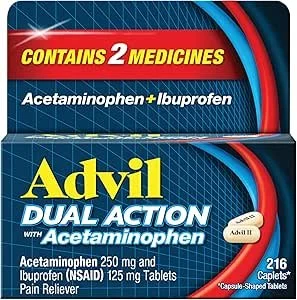
The first FDA-approved over-the-counter pain reliever that combines acetaminophen with ibuprofen was Advil Dual Action, although the doses are somewhat different than what was used in the Rutgers study.

Each capsule contains 250 mg of acetaminophen and 125 mg of ibuprofen, with up to six capsules per day recommended for toothaches, headaches and “minor aches and pain.”

Patients are cautioned not to take Advil Dual Action with other products containing acetaminophen, as that can cause liver damage. Acetaminophen overdoses are involved in hundreds of deaths and over 50,000 emergency room visits in the U.S. annually.

Wisdom tooth extraction is performed about 3.5 million times a year in the United States. Dental surgery is often the first exposure that a patient has to prescription opioids, although their use after dental procedures has declined in recent years as fears grew about opioid addiction.

Last year the American Dental Association (ADA) released new guidelines recommending that nonsteroidal anti-inflammatory drugs (NSAIDs) such as ibuprofen be taken alone or in combination with acetaminophen as first-line treatments for acute dental pain in adults and adolescents aged 12 and older. 

NSAIDs and acetaminophen work differently, with NSAIDs reducing pain and inflammation in damaged tissue, while acetaminophen acts in the central nervous system to block pain signals that are not caused by inflammation. Taking the two together is believed to boost their analgesic effect. 

The ADA says opioids should only be used when NSAIDs and acetaminophen don’t relieve pain enough or when NSAIDs are contradicted due to health issues, such as a patient having cardiovascular problems or a bleeding ulcer.     

The risk of long-term opioid use after a tooth extraction is relatively rare. A large study of over 70,000 teens and young adults who had their wisdom teeth removed found that only 1.3% were prescribed opioids long-term after their initial prescription by a dentist. 

"We feel pretty confident in saying that opioids should not be prescribed routinely for dental procedures," Feldman said. "Our non-opioid combination really should be the analgesic choice."