Sen. Wyden 'Hypocritical' About Healthcare Funding

By Pat Anson, Editor

Sen. Ron Wyden, who has raised serious allegations of bias and conflict of interest on federal health panels, has accepted nearly $2.7 million in campaign donations from the healthcare and insurance industries that he helps regulate, according to a review of campaign donations by Pain News Network.

Wyden accepted $2,060,004 from donors affiliated with pharmaceutical companies, hospitals, HMO’s, and healthcare professionals from 2011 to 2016, along with $636,861 from the insurance industry, according to OpenSecrets.org, which keeps a tabulation of campaign donations.

Some of Wyden's biggest donors were Blue Cross/Blue Shield, MetLife, Prudential and the American Health Care Association, which represents thousands of nursing homes.

The Oregon Democrat is the senior ranking minority member of the Senate Finance Committee, which has broad jurisdiction over tax and financial issues effecting healthcare and insurance, as well as Medicare, Medicaid and Obamacare.

“Senator Wyden himself is funded in part, by insurance companies and Pharma. Isn't it hypocritical for him to be critical of others with connections to Pharma? Why is there a different standard for him?” asks Lynn Webster, MD, former president of the American Academy of Pain Medicine.

“Senators shouldn’t be calling the kettle black. Senators should set an example for the rest of the country with regard to being free of conflicts of interest,” said patient advocate David Becker.

In recent months, Wyden has challenged the integrity of several pain experts and patient advocates on federal advisory committees, alleging they have a conflict of interest because they belong to organizations that accepted funding from drug makers.

He recently pressured the National Academy of Medicine to remove two doctors from a panel formed to advise the Food and Drug Administration about its policies on opioid pain medication.

SEN. RON WYDEN

In a lengthy letter to the president of the National Academy of Medicine, which appointed the panel, Wyden wrote that Dr. Gregory Terman and Dr. Mary Lynn McPherson both had “potential conflicts of interests and bias” because they belonged to organizations “with substantial ties to the pharmaceutical industry, specifically, opioid manufacturers.”   

Terman is the immediate past president of the American Pain Society (APS), which accepted over $350,000 in donations from drug makers in 2013, according to Wyden’s letter.  The senator listed Purdue Pharma, AstraZeneca, Endo, Pfizer and several other companies as APS donors.

Wyden said McPherson, a professor at the University of Maryland School of Pharmacy, also had significant ties to drug makers, and “received grants and residencies worth at least $300,000 that were sponsored – or paid directly – by opioid manufacturers.” 

Both Terman and McPherson were removed from the advisory panel within days of Wyden’s letter, along with two other doctors who specialize in pain management.

“It is incredibly hypocritical and disingenuous for anyone who accepts that much Pharma money to try to demonize the leadership of pain societies for accepting Pharma support, especially when there is no one else who will fund these societies,” said Michael Schatman, editor-in-chief of the Journal of Pain Research. “Greg Terman is ethically beyond reproach and exercised ethical leadership during his tenure as APS President.”

"Any implication that Dr. McPherson or her work has been compromised by association with pharmaceutical companies is deeply misguided," a University of Maryland spokesman said in a statement to the Associated Press.

"Serious Concerns" About Objectivity of Pain Panel

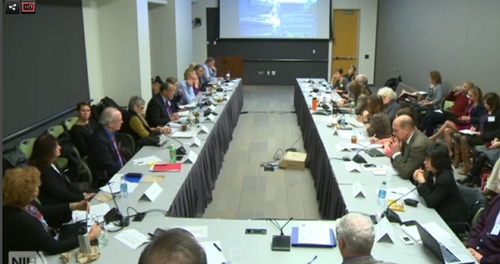
Wyden has raised similar concerns about conflicts of interest on the Interagency Pain Research Coordinating Committee (IPRCC) a federal panel that advises the government on pain care policies.

At a meeting last December, several members of the IPRCC were sharply critical of opioid guidelines then being developed by the Centers for Disease Control and Prevention, which discourage doctors from prescribing opioids for chronic pain. IPRCC members called the evidence used to justify the guidelines “ridiculous” and an “embarrassment to the government.”
INTERAGENCY PAIN RESEARCH COORDINATING COMMITTEE (iprcc)

That brought a rebuke from Wyden, who claimed in a February letter to Health and Human Services (HHS) Secretary Sylvia Burwell that he had “serious concerns about the objectivity of the panel’s members” and claimed they were trying to “weaken efforts” at CDC to rein in opioid prescribing. 

Wyden’s letter mentioned several members of the panel, including two patient advocates: Cindy Steinberg of the U.S. Pain Foundation and Penny Cowan of the American Chronic Pain Association. Both organizations are non-profits that accept donations from drug makers.

I do not and have never been paid by a pharmaceutical company,” said Steinberg in an email to PNN. Steinberg, who suffers from chronic back pain, is National Policy Director for U.S. Pain Foundation and receives a small stipend of about $8,000 a year from the organization.

“I do this work despite my daily, debilitating chronic pain, often needing to lie flat in meetings to control the pain and lay across two plane seats to travel because I am passionate about improving pain care in this country,” said Steinberg.

Unhappy with the response to his first letter, Wyden followed up with another letter to Burwell last month, saying he had serious concerns about the agency’s “flawed conflict of interest policy.”

“Americans expect significant transparency when it comes to government policy making, particularly for an issue like the opioid crisis which is devastating communities in Oregon and across the country,” Wyden said in a statement. “I’m going to continue to demand accountability to ensure the manufacturers of these powerful prescription drugs aren’t having an undue influence on policies designed to reduce their usage.”

“Senator Wyden is misguided,” says Lynn Webster.  “I find irony in his attempt to purge members of the IRPCC that may have a different view than his just because they are associated with Pharma grants. It is anti-democratic.  We should invite different views not exclude them.”

Ironically, the CDC itself has been accused of bias for secretly impaneling a committee to help draft the guidelines and for holding a much maligned webinar for addiction treatment clinics, pharmacies, insurers and other special interest groups to provide input on the guidelines.

The CDC has a foundation that received over $157 million last year from donors, including Abbott Laboratories, Amgen, Medtronic, Johnson & Johnson, Merck, Quest Diagnostics and Pfizer, all companies which stand to benefit from the prescribing guidelines because they offer non-opioid treatments or tests.  The FDA also has a foundation that has accepted millions of dollars from many of the same companies.

“If Senator Wyden really wants to sanitize the panel, he will need to ask for removal of anyone who also has ties to insurance payers, including Medicare,” says Webster. “Since the FDA and CDC receive money from payers and Pharma, they should be stricken from the panel, too.  In fact since Medicare is a payer, anyone within HHS should not be allowed to be on the panel. They are too biased.”

Wyden’s one man campaign against bias recently led the FDA to revise its conflict of interest guidelines for advisory panels.  The proposed guidelines state that someone could be removed from a committee if there is any “appearance” of conflict, such as a non-profit accepting money from a company involved in a panel’s deliberations.

This is an interest or relationship that could cause a reasonable person to question the member’s impartiality,” the guidelines state.

But activists say weeding out even the appearance of conflict could eliminate needed input from a medical or scientific expert, or a patient who would be directly impacted by FDA policy.  Virtually every medical school, professional association and non-profit involved in healthcare has accepted industry funding.

“The people who are most active in helping make change do have costs associated with their activities,” said Barby Ingle, President of the International Pain Foundation (iPain), a non-profit advocacy group that accepts industry funding. “Many people in the chronic pain community are low income and are not able to donate to charities to keep them going. Stopping grant funding would cut off the patient voice, which is already limited due to the physical condition of many chronic pain patients.”

“Eliminating people who have any association with Pharma is, in essence, stacking the deck. It creates a special interest group that’s empowered to influence prejudicial policy. This attempt to limit bias is creating bias,” says Webster.

Webster, who is vice president of scientific affairs at PRA Health Sciences, has himself been a frequent target of conflict of interest claims. According to a database maintained by Medicare, Webster received over $1.5 million in funding from healthcare companies last year for consulting fees, travel expenses, and research funding.

In 2012, Webster and several other prominent pain physicians were targeted in a Senate Finance Committee investigation that looked into allegations that drug makers bankrolled misleading marketing information about opioids and helped create the opioid abuse epidemic.  That investigation quietly ended without any hearings or an official report.

Four years later, critics are still demanding that documents related to the investigation be released. A Wyden spokesman recently suggested the investigation could be re-opened.

“Senator Wyden, now the ranking member of the minority, is deeply committed to curtailing the crisis of opioid addiction, and that includes holding accountable those who contributed to its rise in the first place,” said Wyden spokesman Taylor Harvey in STAT. The documents related to the 2012 investigation are currently being reviewed by Democratic investigations staff. Senator Wyden intends to take official action related to this investigation.”

Wyden Campaign Donations Doubled

In his deep blue state of Oregon, Wyden is widely expected to be re-elected this fall. And if Republicans lose control of the Senate, he would emerge as the powerful new chair of the Senate Finance Committee.

That’s one reason why Wyden’s campaign donations have nearly doubled in recent years. The senator has received over $13 million from donors and political action committees, and has over $7.7 million in cash on hand, according to his campaign committee’s latest report.

Only four percent of the money raised so far has come from small, individual donors. Over $6 million has come from large individual contributions and another $3 million has come from PAC’s.

Donors affiliated with Blue Cross/Blue Shield ($124,500) are Wyden’s single biggest contributor, followed by Nike ($123,322), Intel ($73,807), the lobbying firm of Akin Gump ($68,155) and the physicians’ group DaVita HealthCare Partners ($64,750).

Other contributors to Wyden from the insurance and healthcare industries include MetLife ($47,507), Prudential ($37,500), nursing home operator Prestige Care ($36,000), Kindred Healthcare ($37,700) and Vibra Healthcare ($35,300). The latter two operate patient rehabilitation centers.

Wyden is by no means alone in raising substantial campaign donations. The current chairman of the Senate Finance Committee, Utah Republican Orrin Hatch, has raised over $14.5 million in campaign contributionsaccording to OpenSecrets.org, and Hatch isn’t even up for re-election until 2018. Blue Cross/Blue Shield, Pfizer, Amgen and several other healthcare companies are some of Hatch’s biggest contributors

While there doesn’t appear to be anything illegal about these donations and they are a matter of public record, patient advocates like Barby Ingle say Wyden’s fundraising and potential conflicts of interest should get the same kind of scrutiny he demands of others.

“There have been times iPain has turned down funding from companies and private donors because there were strings attached to accepting the funding,” says Ingle. “I wonder now, has a legislator ever turned down donations because they were given with strings attached? I do believe it is a conflict of interest if a majority of operational funds for the nonprofit come from pharmaceutical companies, but the rule should apply to legislators as well.”

A request for comment on this story from Wyden’s office went unanswered.

Why IQ Isn’t Enough for Pain Care

By Pat Akerberg, Columnist

Our once patient-centric healthcare system has been upended and turned into a profit-over-people financial equation. 

Consequently, patients feel their concerns are intentionally disregarded while medical practitioners are ham strung by compromised standards. I wonder if they are as disillusioned as we are with timed, cookie-cutter treatment approaches that reinforce unsettling disconnects.

One such disconnect involves an underrated, often missing link – empathy – considered one of the most effective aspects of an outstanding healthcare practitioner. 

Empathy is compassion for the chronic illness, pain and impairments their patients endure. 

In his 2005 groundbreaking book, “Emotional Intelligence: Why It Can Matter More Than IQ,” Daniel Goleman made the case for empathy to be recognized as an essential component for emotional intelligence.

Differing from the intellectual focus of IQ, empathy is one of the 5 essential dimensions that make up ones’ emotional quotient or emotional intelligence – “EQ” for short. 

  • Emotional self-awareness: Knowing what one is feeling at any given time and understanding the impact those moods have on others
  • Self-regulation: Controlling or redirecting one’s emotions; anticipating consequences before acting on impulse
  • Internal Motivation: Utilizing emotional factors to achieve goals, enjoy the learning process and persevere in the face of obstacles
  • Empathy: Sensing and responding effectively to the emotions of others
  • Social skills: Managing relationships, inspiring others and creating connections

The key point behind EQ is that it can often matter more than IQ or technical training alone.  While IQ may typically get someone hired or gain them entry, the EQ factor is what gets them promoted, predicts excellence and professional success.

Possessing both IQ and EQ is considered a winning combination in any role or field. But not everyone acquires that golden pair without awareness and training -- unless they are uniquely and naturally skilled at both. 

Our medical practitioners (regulators and stakeholders) are no exception to this.  In fact, the widespread distortions and neglect surrounding our side of the pain care equation and story clearly demonstrate the kind of harm pervasive EQ blind spots can do.

We’ve all experienced those rare physicians and practitioners who are both competent and capable of conveying a caring approach and empathetic style.  Even if medications and various treatments fall short in addressing our chronic illnesses, their support and desire to help us never falters.

It helps immeasurably to know they’re in our corner.  Physical healing may not always be possible given our circumstances, but that’s not the only kind of healing that matters. The presence of such EQ far outweighs the deficits of an approach without it.  Numerous studies confirm that such human consideration and concern delivers a positive placebo effect that can’t be underestimated. 

Pain patients already endure more than most will ever face.  We suffer even further when our practitioners and administrators lack or devalue the human understanding EQ brings.

So how effective are our practitioners at delivering that kind of humanistic medical care in our current system?

Using the 5 factors for EQ, I did a personal rating of all of the practitioners I’ve seen since the start of my trigeminal neuralgia.  It turns out that 30% on my list are high in EQ.  Unfortunately, that means that 70% fall short.

The stand out characteristics that I look for made those 30% rank far above the 70% include:

  • Being personable
  • Making eye contact with me (not a computer screen)
  • Showing true interest in my level of pain
  • Patiently and intently listening to my answers
  • Being open to my questions
  • Offering tailored options
  • Expressing empathy or gestures of concern
  • Thinking outside the box for solutions
  • Collaborating
  • Treating me like an important partner and a helpful staff

The reasons that some practitioners or institutions may or may not possess or demonstrate empathy vary as much as our illnesses do.  The good news is that once a person becomes self aware and motivated, EQ and empathy can be learned thanks to plasticity, our brains’ ability to change.

There’s no formal assessment that I know of that measures the damaging, stressful effects of chronic pain and illness when coupled with the double whammy of marginalized or impersonal healthcare.

However, like an IQ test, there is a formal assessment that determines a persons’ EQ status on all five dimensions.  For a better tomorrow, there’s no reason that this assessment couldn’t be required at the start of medical training programs (doctors, nurses, physical therapists) to identify a students’ strengths and needs.

Taking it further, educational institutions can also borrow from a virtual reality learning tool developed by Embodied Labs founder Carrie Shaw, which she used to increase her understanding about her mother’s experience with dementia.    

With the intention of bridging the life experience-understanding-empathy gap for young medical students, John’s Hopkins recently experimented with this technology. The project, “We Are Alfred,” gave students hands-on experience of what it’s like to be a 74- year old dealing with impairments in sight, hearing, and memory.  The simulation demonstrated that you can develop EQ skills and foster understanding between practitioners and patients by giving students a slice of what their patients have to deal with.   

Many times I’ve wished that the severe face pain that I experience could be simulated so that practitioners (and others) could experience what it feels like. I bet you have too. 

Wouldn’t it be great, even fitting, for our government to sponsor an initiative to simulate pain?  Maybe then the reality of debilitating pain would finally trump the punitive intellectual biases blocking the balanced approach EQ brings about.

Meanwhile, I’m all for efforts that aim to reinforce the message to our medical practitioners and facilities, educational institutions, government regulators, insurance companies, Big Pharma and other stakeholders that no one cares what you might know (IQ) until they know that you care (EQ).

Pat Akerberg suffers from trigeminal neuralgia, a rare facial pain disorder. Pat is a member of the TNA Facial Pain Association and is a supporter of the Trigeminal Neuralgia Research Foundation.

Pat draws from her extensive background as an organizational effectiveness consultant who coached and developed top executives, mobilized change initiatives, and directed communications.

The information in this column should not be considered as professional medical advice, diagnosis or treatment. It is for informational purposes only and represents the author’s opinions alone. It does not inherently express or reflect the views, opinions and/or positions of Pain News Network.

DEA: U.S. Facing ‘Fentanyl Crisis’

By Pat Anson, Editor

The United States is facing an unprecedented “fentanyl crisis” that is likely to grow worse as drug dealers ramp up production of counterfeit pain medication made with illicit fentanyl, according to a new report from the Drug Enforcement Administration.

Fentanyl is a synthetic opioid 50 to 100 times more potent than morphine. It is legally prescribed in patches and lozenges to treat severe chronic pain, but illicit fentanyl has recently emerged as a fast-growing scourge on the black market, where it is increasingly being used in the manufacture of counterfeit drugs.

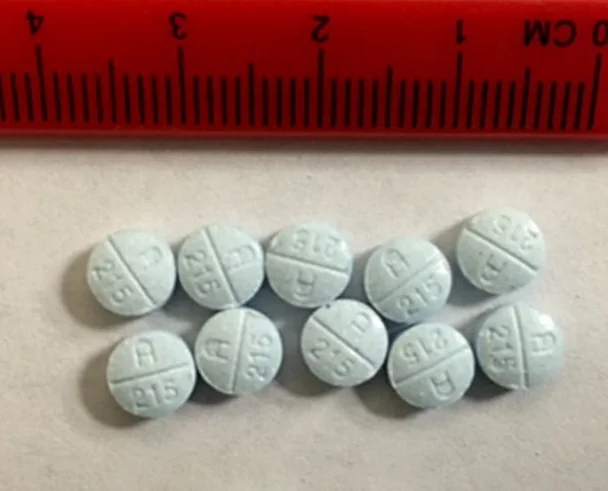
“The counterfeit pills often closely resemble the authentic medications they were designed to mimic, and the presence of fentanyls is only detected upon laboratory analysis,” the DEA warns in the unclassified report.

“Fentanyls will continue to appear in counterfeit opioid medications and will likely appear in a variety of non-opiate drugs as traffickers seek to expand the market in search of higher profits. Overdoses and deaths from counterfeit drugs containing fentanyls will increase as users continue to inaccurately dose themselves with imitation medications.”

Dozens of Americans have died this year after ingesting counterfeit versions of oxycodone, Norco and Xanax, which are virtually indistinguishable from the real medications. Even a few milligrams of fentanyl can be fatal.

Tennessee bureau of investigation

The DEA said “hundreds of thousands of counterfeit prescription drugs” laced with fentanyl were on the market and predicted more would be produced because of heavy demand and the “enormous profit potential” of fake medication.

“The seizures of fentanyl-laced pills and clandestine pill press operations all across North America indicate that this is becoming a trend, not a series of isolated incidents,” the DEA said.

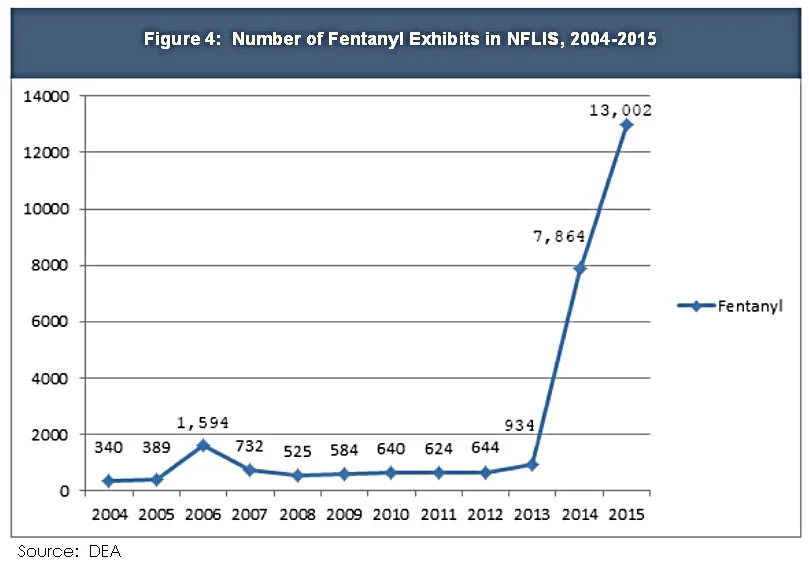
The report highlighted the fact that U.S. forensic laboratories tested over 13,000 seized drugs containing fentanyl in 2015, up sharply from less than a thousand cases two years earlier.

The DEA said counterfeit pills are being smuggled into the U.S. from Mexico and Canada. Traffickers usually purchase powdered fentanyl and pill presses from China, and pill press operations have recently been found in Los Angeles and New York.

The counterfeit drugs problem is so serious the DEA believes it is undermining efforts to limit opioid prescribing.

“The arrival of large amounts of counterfeit prescription drugs containing fentanyls on the market threatens to devalue such initiatives and replaces opioid medications taken off of the street,” the DEA said. “Although not all controlled prescription drug users eventually switch to heroin, fentanyl-laced pills give DTOs (drug trafficking organizations) broader access to the large controlled prescription drug user population, which is reliant upon diversion of legitimate pills. This could undermine positive results from the state Prescription Drug Monitoring Programs, as well as from legislative and law enforcement programs.”

As Pain News Network has reported, Massachusetts and Rhode Island recently said fentanyl was to blame for nearly 60 percent of their opioid overdose deaths.

Senators Urge DEA to Reduce Supply of Opioids

A group of U.S. Senators is urging the DEA to "aggressively combat the opioid epidemic," not by going after fentanyl traffickers, but by making legal opioids even harder to get.

In a letter to acting DEA administrator Chuck Rosenberg, Senators Dick Durbin (D-IL) Sherrod Brown (D-OH), Edward Markey (D-MA), Amy Klobuchar (D-MN), Angus King (I-ME), and Joe Manchin (D-WV) urged the agency to tighten its annual quotas for manufacturers to produce controlled substances.

"In effect, DEA serves as a gatekeeper for how many opioids are allowed to be legally sold every year in the United States. Yet, for the past two decades, DEA has approved significant increases in the aggregate volume of opioids allowed to be produced for sale," the letter states.

The Senators urged the agency to rollback a 25 percent increase in production quotas for Schedule II opioids that was implemented in 2013. Schedule II opioids include hydrocodone, a widely prescribed painkiller that was reclassified from a Schedule III to a Schedule II drug in 2014.

The Senators also said the DEA should make a mid-year adjustment in the quota to immediately reduce the supply of prescription opioids. The letter did not address the fentanyl crisis or the rapid growth in counterfeit medication.

Fed Up With Media Coverage of Opioids

By Janice Reynolds, Guest Columnist

I got fed-up the other day with another article in the newspaper that lacks veracity and is truly not in the interests of the “people’s right to know,” as it is untrue, biased, and does not include any input from true experts.  

Where has integrity and veracity gone when it comes to the press?  I speak particularly of the Portland Press Herald, but many of the other news media also confuse opinion with fact and sensationalism with truth.

100 million people in the U.S. suffer from chronic pain related to many different causes, including cancer, yet no politician seems to care.  They are very uncompromising that an addict’s life is much more important. 

When the media is asked to show the evidence for the oft repeated claim that “studies have shown conclusively opioids don’t help chronic pain, in fact they make it worse,” requests are denied.  This is likely because there are no such studies on humans.

The one study which claimed opioids made pain worse was done on rats who had essentially been tortured – which is not evidence at all. 

Pain is pain, and chronic non-cancer pain does not differ physiologically from other pain.  With some types of pain, another medication may work better than an opioid, but most severe pain is relieved best by an opioid. 

A recent Associated Press article republished in the Portland Press Herald is an example of half-baked reporting:

“At least 43 states’ governors signed on to the Compact to Fight Opioid Addiction, committing to fight the epidemic fueled by the overprescribing of prescription pain relievers.”

There is no evidence to support this statement what-so-ever.  If you look at the history of the current epidemic, it has nothing to do with people with chronic pain.  There are many problems people want to apply to the epidemic’s cause, including the advent of OxyContin, but that is a correlation rather than a causation. Most overdoses now are heroin and illegal fentanyl related.  Blaming the overdoses on prescription drugs is pure conjecture. 

The “overprescribing” of opioids is pure opinion -- unlike the overprescribing of antibiotics, which is based on evidence and is a justifiable use of the word. 

One of the worst references in the article is the use of Andrew Kolodny.  The man is an addiction treatment doctor who his chief medical officer of Phoenix House, which operates a chain of addiction recovery centers (which the article fails to point out). He knows nothing about pain management and is a known opiophobic, yet is considered an expert on pain by the AP:

“Until recently, many policymakers believed the epidemic was fueled by drug abusers and that limiting prescriptions would hurt legitimate pain patients, Kolodny said. But now there is growing awareness that doctors and dentists are prescribing too many painkillers, which are addictive and hurting many otherwise good people, he said.”

Other “real” pain experts such as Dr. Forest Tennant, Dr. Lynn Webster, Chris Pasero and many others who are acknowledged internationally should have been quoted or allowed to give a counterpoint. 

The sin of omitting the opposition’s opinion is greater than lying outright.  When the media stacks the deck to reflect their opinion only, how can they be trusted? 

Meanwhile, people with pain suffer, many cannot even find a provider and suicides are increasing.  Insurance and Medicaid will not pay for many of the non-opioids and non-pharmaceutical interventions, and very dangerous drugs such as NSAIDs (ibuprofen, naproxen, diclofenac, etc.) are pushed. Some estimate there are 20,000 deaths a year from NSAIDs, but you don’t see that in the media. 

People with pain have become marginalized, and subjected to prejudice and bias, much of it due to media coverage of chronic pain and opioids.  Everyone should be concerned, as they are going after acute pain next.

Janice Reynolds is a retired nurse who specialized in pain management, oncology, and palliative care. She has lectured across the country at medical conferences on different aspects of pain and pain management, and is co-author of several articles in peer reviewed journals. 

Janice has lived with persistent post craniotomy pain since 2009.  She is active with The Pain Community and writes several blogs for them, including a regular one on cooking with pain. 

The information in this column should not be considered as professional medical advice, diagnosis or treatment. It is for informational purposes only and represents the author’s opinions alone. It does not inherently express or reflect the views, opinions and/or positions of Pain News Network.

Lower Back Pain Linked to More Drug Use

By Pat Anson, Editor

People with chronic lower back pain are more likely to have used illicit drugs -- including marijuana, cocaine, heroin and methamphetamine -- compared to those without back pain, according to new research published in the journal Spine.

The study also found that people with lower back pain who had used illicit drugs were somewhat more likely to have an active prescription for opioid pain medication (22.5% vs. 15%).

Lower back pain is the world’s leading cause of disability and most people will suffer from it at least once in their lives. Although nearly a quarter of the opioid prescriptions written in the U.S. are for low back pain, medical guidelines often recommend against it.

Researchers analyzed data from over 5,000 U.S. adults who participated in a nationally representative health study and found that nearly half (49%) of those who reported lower back pain admitted having a history of illicit drug use, compared to 43% of those without back pain.

Current use of illicit drugs (within the past 30 days) was much lower in both groups; 14% versus nine percent.

The study did not differentiate between recreational and medical marijuana use, nor did it draw a distinction between marijuana use in states where it is legal and where it is not. All marijuana use was considered "illicit."

All four illicit drugs in the survey were more commonly used by people with low back pain compared to those without back pain. Rates of lifetime use were 46.5% versus 42% for marijuana; 22% vs. 14% for cocaine; 9% vs. 5% for methamphetamine; and 5% vs. 2% for heroin.

Researchers said there was no evidence that illicit drug use causes lower back pain, only that there was an association between the two that bears watching when opioids are prescribed.

“The association between a history of illicit drug use and prescription opioid use in the cLBP (chronic lower back pain) population is consistent with previous studies, but may be confounded by other clinical conditions,” said lead author Anna Shmagel, MD, Division of Rheumatic and Autoimmune Diseases at the University of Minnesota.

“Mental health disorders, for example, have been associated with both illicit substance use and prescription opioid use in the chronic low back pain population. In the context of management, however, illicit drug abuse is predictive of aberrant prescription opioid behaviors. As we face a prescription opioid addiction epidemic, careful assessment of illicit drug use history may aid prescribing decisions.”

In a recent analysis of prescriptions filled for 12 million of its members, pharmacy benefit manager Prime Therapeutics found that nearly a quarter of the opioid prescriptions were written to treat low back pain.

"Our analysis found low back pain was the most common diagnosis among all members taking an opioid, even though medical guidelines suggest the risks are likely greater than the benefits for these individuals," said Catherine Starner, PharmD, lead health researcher for Prime Therapeutics.

In a 2014 position paper, the American Academy of Neurology said opioids provide “significant short term pain relief” for low back pain, but there was “no substantial evidence” that long term use outweighs the risk of addiction and overdose.

Is Chronic Pain a Family Affair?

By Pat Anson, Editor

We can credit – or blame – our parents for many things, including our eye color, hair color, height, weight, personality, even our cravings for certain foods.

And if our parents have chronic pain, we are also more likely to suffer from pain ourselves, according to research recently published in the journal Pain. 

“Offspring of parents with chronic pain are at increased risk for pain and adverse mental and physical health outcomes,” wrote co-authors Amanda Stone of Vanderbilt University and Anna Wilson of Oregon Health & Science University.

"Although the association between chronic pain in parents and offspring has been established, few studies have addressed why or how this relation occurs."

Stone and Wilson developed a “conceptual model” of how chronic pain can be transmitted from parent to child through genes, parenting, stress, and lifestyle choices.

"Such a framework highlights chronic pain as inherently familial and intergenerational, opening up avenues for new models of intervention and prevention that can be family-centered and include at-risk children," they wrote.

The researchers identify five "plausible mechanisms" to explain the transmission of chronic pain from parent to child:

  • Genetics. Children of parents with chronic pain might be at increased genetic risk for sensory as well as psychological components of pain. Research suggests that genetic factors account for about half of the risk of chronic pain in adults.
  • Early Neurobiological Development. Having a parent with chronic pain may affect the functioning of the nervous system during critical periods of child development. For example, a baby's development might be affected by the mother's stress levels or behavior during and after pregnancy.
  • Social Learning. Children may learn "maladaptive pain behaviors" from parents, such as catastrophizing and excessive worrying about pain.
  • Parenting and Health Habits. Chronic pain risk could be affected by parenting behaviors linked to adverse child outcomes--for example, permissive parenting or lack of consistency and warmth. The parents' physical activity level and other health habits might also play a role.
  • Exposure to Stress. There may be adverse effects from growing up in stressful circumstances related to chronic pain -- for example, financial problems or parents' inability to perform daily tasks.

Other factors that may explain why some children are at greater risk include chronic pain in both parents, the location of the parent's pain, and the children's personal temperament.

"The outlined mechanisms, moderators, and vulnerabilities likely interact over time to influence the development of chronic pain and related outcomes," wrote Stone and Wilson, who hope their model will help guide future research toward developing early prevention and treatment approaches for children at risk of chronic pain.

Poor Fitness Leads to Childhood Pain

Another recent study in Finland found that poor physical fitness and sedentary behavior are linked to pain in children as young as 6-8 years of age.

The Physical Activity and Nutrition in Children (PANIC) study at the University of Eastern Finland analyzed the physical fitness, exercise, hobbies, body fat and various pain conditions in 439 children. Physically unfit children suffered from headaches more frequently than others. High amounts of screen time and other sedentary behavior were also associated with increased prevalence of pain conditions.

“Pain experienced in childhood and adolescence often persists later in life. This is why it is important to prevent chronic pain, recognize the related risk factors and address them early on. Physical fitness in childhood and introducing pause exercises to the hobbies of physically passive children could prevent the development of pain conditions,” the study found.

Woman Arrested in California Fentanyl Investigation

By Pat Anson, Editor

A 50-year old northern California woman has been arrested for drug trafficking after a federal grand jury indicted her for illegal possession and distribution of hydrocodone and fentanyl.  Mildred Dossman was arrested at her home in Sacramento. She faces up to 20 years in prison and a $1 million fine if convicted.

Federal prosecutors did not reveal many details in the indictment, but Dossman’s arrest appears to be connected to a wave of fentanyl overdoses earlier this year that killed at least 12 people and hospitalized dozens of others in the Sacramento area.

The fentanyl involved in those deaths was disguised as Norco, a prescription pain medication that combines hydrocodone with acetaminophen.

Dossman was allegedly involved in drug deals on January 18 and March 25 of this year – which fits the timeline of the fentanyl overdoses.

Fentanyl is a powerful opioid that is 50 to 100 times more potent than morphine. It is prescribed legally in patches and lozenges to treat severe chronic pain, but illicitly manufactured fentanyl is fast becoming a scourge across the U.S. and Canada, where it is blamed for thousands of fatal overdoses.  

In addition to the counterfeit Norco, fentanyl has also been found in fake oxycodone and Xanax tablets. The counterfeit medication appeared on the streets at about the same time the Centers for Disease Control and Prevention released controversial guidelines that discourage doctors from prescribing opioids for chronic pain.

“I've had one of these so called super Norco’s,” a 25-year old Sacramento man told Pain News Network in March.  “It had the markings of a regular prescription, M367. I only took a half just in case because of the news from the day and luckily I did. It was unlike any high I've had. It made me dizzy.  I couldn't see straight or sleep.”

“David” bought 16 of the fake Norco pills from a friend for $5 each, not knowing he was actually getting fentanyl. He initially began taking opioid pain medication for a herniated disc several years ago, but switched to street drugs after being abruptly cut off by his doctor. 

“I tried everything to get more and more prescription drugs prescribed. After that I had no choice but to turn to the street. It's a huge problem here in Sacramento,” said David. “Now there is such a high demand for the pills because of the increased regulations on them and not being able to scam an early refill. It has caused the price to spike on the streets and as soon as the word gets out someone has them they are immediately sold for ridiculous prices. It’s not all addicts and not all pain patients. The doctors around here are cutting people down on the amount they are prescribed, causing them to have nowhere else to turn but the neighborhood dealer.”

A DEA spokesman told PNN last month the U.S. was being “inundated” with illicit fentanyl, particularly in the Midwest and northeastern states. Massachusetts, Rhode Island, Ohio and Delaware recently reported an “alarming surge” in fentanyl related deaths. In some states, the number of deaths from fentanyl now exceeds those from prescription opioids.

“We think fentanyl and fentanyl overdoses have been underreported over the years in a lot of places. But we think people are now starting to pay more attention to it,” said DEA spokesman Rusty Payne.

Pain Companion: Rediscovering Yourself in Pain

By Sarah Anne Shockley, Columnist

Pain is so pervasive and so enmeshed with our daily experience that we can forget what life was like without it. We may lose a sense of who we were before pain entered the picture.

When I began to return from the most intense part of my own journey with pain, I realized that I was going to have to find a way to disentangle myself from it, to disengage my sense of who I was, my identity, from pain.

At the time, I couldn’t find a sensation of body-without-pain, even in my imagination, and I couldn’t envision a future without pain, though I desperately desired it. I had forgotten who I was without pain, and I wasn’t sure who I had become from the experience.

I certainly knew I had changed irrevocably, but I wasn’t quite sure in which direction all the changes lay.

Pain had become so embedded in my body, my daily routines, and my awareness, that this constant companion had become too familiar, like a terrorist and his hostage. Perhaps this is a familiar feeling for you.

The difficulty doesn’t lie in wanting to keep pain around like an old pal, far from it. It lies in the fact that pain has been with us for so long that we aren’t sure what will be left of us when it finally departs.

Will it take most of us with it? What does it mean about who we are if pain never leaves? Maybe we’re not even sure we have an identity beyond the pain anymore.

This merging of the sense of self-identity with the self-in-pain is really important to recognize.

I found that, in order to find myself again and to re-engage with the inner me (as opposed to seeing myself only as the-one-in-pain), I had to disengage my self-image and feelings of self-worth from my experience of pain and my body’s limitations.

I worried that my injury, my pain, and my being in need of assistance had turned me into a weak and needy person. I had to realize that just because my body felt weak, didn’t mean I was weak as a person. Just because my body was in pain, didn’t mean I was being a pain. Because my pain created new needs which I had to learn to communicate, didn’t mean I had turned into a needy person.

Many of us who have been in pain for a long time have been living in reaction to pain. We have allowed pain to become the organizing principle in our lives. s the only real power in life. We might shift all our choice making onto pain’s shoulders. After all, it seems to rule everything.

This seems like the only choice there is, but there is a subtle but important shift that seems to be necessary during the healing process, and that is to move the responsibility, power, and decision-making back onto our own shoulders. This is part of dis-identifying with pain and disentangling ourselves from it.

While pain is certainly the reason we can’t do many things, we need to be careful not to allow ourselves to think that it is the director of our lives. We can make the small but vital shift in our perception of who we are in pain, as we begin to find a way out of living utterly beholden to pain and connected to it on an identity level.

As far as I can tell, this process has the potential of gradually unfolding something like these five steps:

1. Pain Arrives: We resist, we do all the “right” things, including therapies and medications. Pain doesn’t leave, so we try harder to get rid of it, adding alternative therapies, prayer, more willpower, more and different medications, etc.

2. Pain Stays: It still won’t leave. It may even get worse. The longer we live with pain, the more difficult it becomes to see ourselves beyond or through it.

3. We Learn to Work with Pain: We come to a place of honoring pain’s presence and its unusual gifts. We stop fighting against pain and begin to work with it and through it, regaining a sense of self that is not utterly beholden to pain as dictator and director. We recognize pain as something that is trying to heal itself in and through us.

4. We Realize Pain is One Aspect of our Lives, Not the Totality: Pain represents a very demanding part of our experience, but it is not who we are. It is a landscape we are walking through. Our inner selves are still intact. We learn to work with pain differently, seeing both it and ourselves from a different perspective.

5. Pain Begins to Relax, reduce, and dissolve.

Ultimately, whether pain completely leaves, or it stays for some time longer, we can let go of identifying with the pain as us, and ask ourselves who we want to become from and through the incredibly challenging experience of living with pain.

When we reconnect with our inner selves beyond the pain, we can find renewal. We can accept all of our experience with pain as part of a greater path, putting ourselves at the center (rather than pain), and live with more ease, grace, well-being, and inner peace.

Sarah Anne Shockley suffers from Thoracic Outlet Syndrome, a painful condition that affects the nerves and arteries in the upper chest. Sarah is the author of The Pain Companion: Everyday Wisdom for Living With and Moving Beyond Chronic Pain.

 Sarah also writes for her blog, The Pain Companion.

The information in this column should not be considered as professional medical advice, diagnosis or treatment. It is for informational purposes only and represent the author’s opinions alone. It does not inherently express or reflect the views, opinions and/or positions of Pain News Network.

CDC: Opioid Guidelines 'Not a Rule, Regulation or Law'

By Pat Anson, Editor

It’s no secret in the pain community that many patients are being taken off opioid pain medication or weaned to lower doses because of an overzealous reaction by doctors to the CDC’s opioid prescribing guidelines.

Those guidelines – which discourage opioid prescribing for chronic pain -- are meant to be voluntary and are intended only for primary care physicians. Yet they are having a chilling effect on many doctors and their patients.

One such patient, a retired Nevada pharmacist who took high doses of opioids for years for chronic back and hip pain, refused to be silent when his pain management doctor abruptly lowered his dosage to 90 mg (morphine equivalent) a day – the highest dose recommended by the CDC.  

Richard Martin wrote 27 letters to the CDC and didn’t mince words, saying doctors in the Las Vegas area “are scared shitless that the DEA will get them” and that their malpractice insurance rates would skyrocket if they didn’t follow the guidelines to the letter.

“All of you at the CDC and like-minded groups, individuals, etc. are causing hundreds of thousands if not millions of people to suffer in pain needlessly,” wrote Martin.

“The medical community has failed me. I was stable on my opioid regimen for over 6 years. No tolerance, no cheating, no hyperglasia and a pretty good quality of life. Last year my primary MD up and told me to go to a pain specialist. He would no longer provide me with opioid prescriptions. The first thing the pain doctor did was decrease my opioids. Of course I am in much more pain now. Due to my decreased level of activity my blood sugar levels have spiked. I used to be able to walk up to 3 miles every other day. Now I can’t go walking. I may have to start taking insulin.”  

To see all of Martin’s letter, click here.

Martin received two responses from the CDC. One appears to be nothing more than a form letter, in which a CDC official blandly wrote, “We are sorry to hear about your health problems.”

The other letter was from Debra Houry, MD, Director of the CDC’s National Center for Injury Prevention, which oversaw the guidelines’ development. In her letter, Houry appears to acknowledge that the guidelines are being too widely implemented by doctors.

“The Guideline is a set of voluntary recommendations intended to guide primary care providers as they work in consultation with their patients to address chronic pain,” wrote Houry.

“Specifically, the Guideline includes a recommendation to taper or reduce dosage only when patient harm outweighs patient benefit of opioid therapy. The Guideline is not a rule, regulation, or law. It is not intended to deny access to opioid pain medication as an option for pain management. It is not intended to take away physician discretion and decision-making.”

To see Houry’s letter in its entirety, click here.

Martin wrote back to Houry and challenged her to address the issue of patients being abruptly weaned from opioids more publicly.

DEBRA HOURY, MD

“My pain management doctor and his group are quoting your guidelines and more or less cowardly blaming you for the problem. Personally, I think they may be using this as an excuse to get rid of Medicare patients and perform more interventional injections or procedures,” he wrote in his follow-up letter, which you can see by clicking here.

“The CDC, in my opinion, should change the dosing guideline… The CDC should EMPHASIZE as you stated ‘The Guideline is not a rule, regulation, or law. It is not intended to deny access to opioid pain medication.’”  

Martin has yet to receive a response from Houry. When Pain News Network contacted the CDC about the letters, we were encouraged to post them. But the agency declined an offer to explain its position further.

Martin’s letter writing campaign hasn’t ended. He’s written to the American Association of Retired Persons (AARP) about the “huge tragedy unfolding across America” and has been contacted by Pharmacy Today magazine about having one of his letters published.

Patient Survey about CDC Guidelines

Another pain patient who is fighting back is Lana Kirby, a 60-year old retired paralegal who suffers from chronic back pain and several other chronic illnesses. Kirby and her husband recently moved to Florida, but found she can't find a doctor in that state willing to prescribe the pain medication she needs. So every three months, Kirby drives back to her home state of Indiana to see a doctor and get her prescriptions filled.

“In all my years as a paralegal, I've never seen anything like this,” she told PNN.  “Quite frankly, if an attorney were to take this to Federal Court, it would be a slam dunk due to the damages occurring on an ongoing basis and the ‘avoidable decline.’ We all know it costs a lot more to take care of a bedbound person than someone who can take care of themselves.  And if that means using opioids, that is the way it should be.  But as far as I know, no one has found an attorney with the resources to take on a case like this.”

Kirby is conducting an online survey of pain patients, asking if their opioid doses have been lowered since the CDC guidelines came out or if they have been discharged or abandoned by their doctors.

“The reason I did the survey was because I was talking to hundreds of pain patients everyday online and they all were saying the same thing,” she said. “Having a legal background, I felt that the damages needed to be documented and quantified in order to prove what was going on and the volume of people affected.”

To take Kirby’s survey, click here.

Stem Cell Therapy Could Avoid Joint Replacement

By Pat Anson, Editor

An experimental stem cell treatment that grows new cartilage could someday help millions of arthritis patients avoid joint replacement surgery.

Researchers at Washington University School of Medicine in St. Louis and Cytex Therapeutics in Durham, N.C. have developed a 3-D, biodegradable synthetic scaffold that is molded into the precise shape of a patient’s hip joint.

The scaffold, which is covered with cartilage made from the patient’s own stem cells, is designed to be implanted onto the surface of an arthritic hip.

Resurfacing the hip joint with this “living” tissue could ease arthritis pain, and may delay or even eliminate the need for hip replacement surgery, according to researchers.

Joint replacement surgery is usually performed on the elderly to relieve pain from osteoarthritis, a painful and disabling condition caused by a loss of cartilage and the degradation of joints. Over a million hip and knee joint replacement surgeries are performed annually – a number expected to surpass four million by 2030 due to the aging of the U.S. population. 

WASHINGTON UNIVERSITY IMAGE

“We’ve developed a way to resurface an arthritic joint using a patient’s own stem cells to grow new cartilage, combined with gene therapy to release anti-inflammatory molecules to keep arthritis at bay. Our hope is to prevent, or at least delay, a standard metal and plastic prosthetic joint replacement,” said Farshid Guilak, PhD, a professor of orthopedic surgery at Washington University.

After inserting a gene into the newly grown cartilage and activating it with a drug, researchers say the gene will release anti-inflammatory molecules to fight arthritis.

“When there is inflammation, we can give a patient a simple drug, which activates the gene we’ve implanted, to lower inflammation in the joint,” said Guilak. “We can stop giving the drug at any time, which turns off the gene.”

By adding gene therapy to the stem cell and scaffold technique, Guilak and his colleagues believe it will be possible to coax patients’ joints to fend off arthritis, preserve cartilage, and function better for a longer time.

The 3-D scaffold is built using a weaving pattern that gives the device the structure and properties of normal cartilage. It is made with hundreds of biodegradable fiber bundles that are woven together to create a high-performance fabric that functions like normal cartilage.

“The woven implants are strong enough to withstand loads up to 10 times a patient’s body weight, which is typically what our joints must bear when we exercise,” said Franklin Moutos, PhD, vice president of technology development at Cytex.

Scientists have tested the tissue engineering in cell culture, and some customized implants are being tested in laboratory animals. If all goes well, such devices could be ready for testing in humans in three to five years.

Currently, there are about 30 million Americans who have osteoarthritis. That number includes a growing number of younger patients — ages 40 to 65 — who have limited treatment options.  Doctors are often reluctant to perform hip replacement surgery on patients under age 50 because prosthetic joints typically last for less than 20 years. A second surgery to remove a worn prosthetic can destroy bone and put patients at risk for infection and other complications.

“We envision in the future that this population of younger patients may be ideal candidates for this type of biological joint replacement,” said Bradley Estes, PhD, vice president of research and development at Cytex.

The research findings, which are published in the Proceedings of the National Academy of Sciences, are supported by the National Institute of Arthritis and Musculoskeletal and Skin Diseases and the National Institute on Aging, which are both part of the National Institutes of Health (NIH).

Updated Device Helps Prevent Migraines

By Pat Anson, Editor

A new pocket-sized wearable device is available to help treat and prevent migraine headaches.

Cefaly Technology has released the Cefaly II, an updated version of the Cefaly I, which is worn over the forehead like a headband and uses small electrical impulses to stimulate the trigeminal nerve, which has been associated with migraine headaches.

The Cefaly II is much smaller and fits in the palm of a hand. Like its predecessor, the device is worn on the forehead, but is held more securely in place by a magnet. Because of its smaller size, the manufacturer believes the Cefaly II will be more accessible and easier to use.

“This compact device is so easy to tuck in a pocket or purse and I am hopeful it will further increase compliance and bring an even larger reduction in migraine attacks to patients,” said Dr. Pierre Rigaux, Chief Executive Officer of Belgium-based Cefaly Technology.

“Now that the device is so small, it’s a big deal because patients can have their Cefaly II with them wherever they go, which means they’ll be able to use it more readily, at their most convenient time.”

cefaly technology image

The Cefaly II uses a magnet to attach itself to a self-adhesive electrode worn directly on the forehead. The rechargeable, battery powered device sends tiny electrical impulses through the skin to desensitize the upper branches of the trigeminal nerve and reduce the frequency of migraine attacks. Patients have full control of their daily 20-minute session and can ramp up the intensity to their own comfort level.

In a small study of 20 migraine sufferers, published in The Journal of Headache and Pain, the Cefaly I provided "statistically significant" pain relief and an 81 percent reduction in the number of migraine attacks. Patients in the study also said they used significantly less migraine medication.

The electrode and output of the Cefaly II is identical to the Cefaly I, according to the company.

Here’s a company produced video of how the Cefaly II works:

The Cefaly II is only available by prescription and costs $349, with a 60-day money back guarantee. The device can be ordered online by clicking here. The Cefaly I will no longer be offered, but the electrodes for it will be available for another 5 years. Cefaly Technology has sold about 20,000 of the devices in United States and 80,000 outside the U.S.

Migraine is thought to affect a billion people worldwide and about 36 million adults in the United States, according to the American Migraine Foundation. It affects three times as many women as men. In addition to headache pain and nausea, migraine can also cause vomiting, blurriness or visual disturbances, and sensitivity to light and sound.

Lies, Damned Lies, and Overdose Statistics

By Pat Anson, Editor

“There are three kinds of lies: Lies, damned lies, and statistics.”

That famous quote, often attributed to British Prime Minister Benjamin Disraeli, was first used by Mark Twain in 1906. One hundred and ten years later, we still don’t know who said it first or why.

Which brings us to overdoses -- and the confusing, sometimes exaggerated, and often contradictory statistics on how many Americans are dying daily from opioid pain medication.  

According to the nation’s news media, anywhere from dozens to hundreds of Americans are dying every day from drug overdoses -- or as the Los Angeles Times boldly claimed today, “Overdose deaths now total 130 every day, or roughly the capacity of a Boeing 737.”

A Boeing 737? Really?

According to Boeing, a 737 can hold between 85 and 215 passengers, depending on the model. But maybe the Times is just giving us a ballpark estimate -- which may be entirely appropriate, given the muddled and murky reporting we get on overdoses.

The Times story got me curious about how other news organizations are reporting the overdose numbers. Here is a sampling:

100 Americans die of drug overdoses each day.” The Washington Post

 “Dozens of Americans die daily from overdoses of pain relievers, heroin and other opioids.” Associated Press

“The United States averages 110 legal and illegal drug overdose deaths every day.”  Pittsburgh Post Gazette

The number of these deaths reached...  about 125 Americans every day.” New York Times

 “More than 120 Americans die of opiate overdoses every day.” Logan Daily News

           “44 people in the U.S. die every day from overdose of prescription painkillers.” Des Moines Register

“More than 40 Americans die every day from prescription opioid overdoses.” Fox News

“Roughly 78 Americans die every day from overdoses of opioids.” Fox News

Yes, that’s right, Fox News reported two different estimates. To be fair, the numbers depend on whether you're counting all drug overdoses, opioid overdoses alone, or just prescription painkiller overdoses. Still, the numbers are all over the map and probably confusing to most readers.

Advocacy groups and politicians also play the numbers game:

“Every day, 46 Americans die from using prescription painkillers.” American Association of Retired Persons

“Every day, about 60 people die from opioid overdoses -- 44 from narcotic painkillers and 16 from heroin.” Physicians for Responsible Opioid Prescribing

“Over 130 Americans die every day from opioid and heroin overdoses.”  The Police Assisted Addiction Recovery Initiative

“Each day, 129 people die from drug overdoses in our country.”  Sen. Patrick Leahy (D-Vermont)

“Every day, 51 Americans die as a result of prescription opioid overdose.” Sen. Joe Manchin (D-West Virginia)  

So who is right? According to the Centers for Disease Control and Prevention, 28,647 Americans died from opioid overdoses in 2014, which works out to about 78 per day -- the number most often reported by the nation’s news media.

It is also a very misleading number, because many of those deaths include overdoses from heroin, illicit fentanyl and other illegal opioids. Take out the illegal drugs and the CDC admits that only about “half of all opioid overdose deaths involve a prescription opioid.”

That estimate too is misleading, because some heroin and illicit fentanyl deaths are wrongly reported as prescription opioid overdoses, because the coroner or medical examiner never actually performed a toxicology test on the deceased. The CDC admits that as well, but not too loudly.

So the next time you see someone report on the number of overdose deaths in the United States (and tries to fill a Boeing 737 in the process), remember that quote about “Lies, damned lies, and statistics.”

And thank either Mark Twain or Benjamin Disraeli for reminding us that statistics don’t always tell the truth.

Two Drug Combo More Effective for Fibromylagia

By Pat Anson, Editor

Two drugs commonly prescribed for fibromyalgia – Lyrica and Cymbalta – are more effective in treating the disorder when used together, according to a new study by Canadian researchers.

Lyrica (pregabalin) is an anti-seizure nerve drug, while Cymbalta (duloxetine) works primarily as an anti-depressant. Both have been used for years to treat fibromyalgia -- a poorly understood disorder characterized by deep tissue pain, fatigue, insomnia, and mood swings. Until now no one has studied how effective the two drugs could be when used in combination.

"We are very excited to present the first evidence demonstrating superiority of a duloxetine-pregabalin combination over either drug alone," said lead author Ian Gilron, MD, Director of Clinical Pain Research at Queen’s University in Kingston, Ontario.

“The results of this trial suggest that combining pregabalin with duloxetine can safely improve outcomes in fibromyalgia including pain relief, physical function and overall quality of life.”

This was a small study – only 41 fibromyalgia patients participated – and the researchers admit that larger trials are needed to see if the results can be replicated. The new research was published in the journal Pain.

The study is the latest in a series of clinical trials -- funded by the Canadian Institutes of Health Research -- which Gilron and his colleagues have conducted on combination therapies for chronic pain conditions. By studying promising drug combinations, they hope to show physicians how to make the best use of current treatments.

"The value of such combination approaches is they typically involve drugs that have been extensively studied and are well known to health-care providers," says Gilron.

Patients in the study were divided into three groups that either took pregabalin alone, duloxetine alone or a combination of the two for six weeks. Doses were gradually increased in the study to the maximum tolerated dose. When used in combination, patients could only tolerate relatively low doses of pregabalin and duloxetine, suggesting the drugs have an overlap effect when used together.

“The pharmacological diversity of a pregabalin-duloxetine combination is a mechanistically appealing feature that increases the likelihood of additive analgesic actions although there could similarly be some additive adverse effects with this combination. Even at significantly lower doses during combination therapy, superior global pain relief during combination therapy would suggest a greater additive effect for pain reduction than for side effects,” said Gilron.

The biggest side effect of the pregabalin-duloxetine combination was drowsiness, and the researchers admit that reduced physical activity caused by drowsiness could have contributed to pain reduction. 

Patients have long complained of other side effects from pregabalin and duloxetine when used separately, such as weight gain, nervousness, and brain fogginess. Many have also reported severe withdrawal symptoms and “brain zaps” when trying to get off the drugs. The study apparently didn’t address those issues. 

Lyrica (pregabalin) is one of Pfizer’s top selling drugs and generates over $5 billion in revenue annually. In addition to fibromyalgia, Lyrica is approved by the Food and Drug Administration to treat chronic pain associated with epilepsy, shingles, diabetic peripheral neuropathy, and spinal cord injury. The drug is also prescribed “off label” to treat lumbar spinal stenosis, the most common type of lower back pain in older adults.

Cymbalta (duloxetine) generated sales of $5 billion for Eli Lilly until its patent expired in 2013 and cheaper generic versions of duloxetine became available. Cymbalta is approved for fibromyalgia, neuropathy, osteoarthritis, depression and anxiety.

Only one other medication – Savella – is approved by the FDA for fibromyalgia, but it is not as widely used as the other drugs.

Fibromyalgia was initially thought to be a musculoskeletal disorder, but research now suggests it's a disorder of the central nervous system - the brain and spinal cord. Researchers believe that fibromyalgia amplifies painful sensations by affecting the level and activity of brain chemicals responsible for processing pain signals. It affects twice as many women as men.

A Pained Life: The Art of Pain

By Carol Levy, Columnist

There was a gigantic painting in the dining room of my parents house. My mother was the artist. It was beautiful, captivating and very, very unsettling.

Dead center she had painted a person crouched down in a tight position. It has been many years since I last saw it, but as I recall one hand was held outstretched towards the viewer. This person was surrounded by triangles, each one a different color, all pointing downward towards the person in the middle.

I did not like to look at it, but I never thought through what bothered me so much about it -- until I became involved with Susanne Main's research into creative depictions of life with chronic pain.

Susanne is an associate lecturer and PhD candidate at the Open University in the United Kingdom. Using online platforms, she is exhibiting artistic renderings by chronic pain patients.

Some are in your face: this is my pain, my life. LISTEN TO ME!

Some are explanatory: this is what arthritis does to my body. Some show the emotional effects of living with daily pain.

The goal of the Exhibiting Pain project is to find new ways of communicating to each other and the medical community what our pain is, how it feels, how it effects and affects us.

The meaning behind the picture I contributed, Trigeminal Neuralgia Strikes, was obvious, even the double meaning of the title: the lightning-like strike of pain and the fact that trigeminal neuralgia strikes out of the blue.

I was very surprised by the response. One commenter felt using red for the pain made it seem “superficial," the picture not indicative of how painful the disorder can be.

But the picture also got my point across. He said it made him want to know more about a condition of which he had been unaware.

"trigeminal neurlagia strikes"

So it was successful. To me.

We often lament how people don't “get” our pain no matter how many times and ways we try to explain it. We know what we are saying. We assume that that is what is being heard.

I drew the picture some time back to denote the pain for both Trigeminal Neuralgia Awareness Day and for Women in Pain Awareness month. It never occurred to me that what I drew was not  what people were seeing. 

So often we say, "They refuse to understand." I explain and explain until I'm blue in the face and they still say, “It's not so bad” or “I had a headache like that once.” 

The one thing I rarely hear, or to be honest even thought, is maybe I am not explaining it in a way they can understand. Instead of getting frustrated or angry, maybe I need to ask, “What exactly is it you don't understand?”

Sometimes we think we are speaking the same language, but the language of pain is often so very person specific. It's like the old break- up line: “It's not you, It's me.”

I regret never talking with my mother about what she had painted. I knew her life had been hard, and that she retained a disability from her bout with polio. I did not want to truly know her sadness and suffering. I now realize her picture spoke, very clearly and with no doubt, of her own pain.

But when it does not speak, like with my picture, it may just be me. And I may need to learn the language of the listener, so what I say is what is being heard.

Carol Jay Levy has lived with trigeminal neuralgia, a chronic facial pain disorder, for over 30 years. She is the author of “A Pained Life, A Chronic Pain Journey.” 

Carol is the moderator of the Facebook support group “Women in Pain Awareness.” Her blog “The Pained Life” can be found here.

The information in this column should not be considered as professional medical advice, diagnosis or treatment. It is for informational purposes only and represent the author’s opinions alone. It does not inherently express or reflect the views, opinions and/or positions of Pain News Network.

Why Won't Doctors Come to My State?

By Ellen Lenox Smith, Columnist

The other day at a medical exam, I was asked if I would consider helping to raise awareness about a serious issue we face in Rhode Island: doctors are rarely willing to come practice here.

My doctor’s medical practice wants to hire new physicians, but they have trouble finding a doctor even willing to be interviewed.  Many doctors in the practice are in their 50’s and will be difficult to replace when they retire.

Why is it so difficult to find their replacements?

I looked up an article written by John Kiernan called “2016’s Best & Worst States for Doctors” and began to find some answers.

To my surprise and dismay, Rhode Island is listed as the 50th worse state for opportunity and competition, and it is rated 46th for medical quality.

Overall, Rhode Island was ranked as the 49th worst state for doctors, only beating New York and the District of Columbia.

Learning this, I called the Rhode Island Medical Society to get a better understanding of  why we rank so poorly. I spoke with Steve DeToy, the Director of Government and Public Affairs. He offered to explain what was happening, not only in our state, but around the country.

According to DeToy, about 20 percent of Rhode Island’s population is eligible for Medicare. Reimbursement fees for Medicare are established by a formula and presently are equivalent to those in Massachusetts.

DeToy told me the problem is not Medicare, but the reimbursement rates set by commercial insurers, which are deterring doctors from wanting to practice here. Health plans like Tufts, United, Blue Cross Blue Shield, etc. have for years established very low reimbursement rates and there is no regulatory agency telling them what they should pay a doctor for.

These insurers may be saving costs to keep rates lower, but we are losing the chance for more medical help in Rhode Island. Why would a doctor choose to come here with huge debt from medical school knowing they could go to another state and be paid for the same services at much more reasonable rates?

The only positive aspect I found in this inexcusable and perhaps avoidable mess is that Rhode Island participates in federal and state funded health professional loan program that helps pay the exorbitant costs many doctors face for medical school loans. On average, medical school students end their education about $180,000 in debt.

In return for the loan payments, primary care, dentistry, and mental health professionals make a two year commitment to practice in communities where there is a shortage of physicians. Part-time employment requires a commitment of four years. This year, 24 such awards were given out. Last year, due to financial issues, only 14 were awarded.

Many patients in Rhode Island who live with complicated conditions are having trouble finding a doctor willing to treat them. Doctor shortages are a serious problem, not only here, but in other small and rural states where reimbursement rates are set too low. As doctors reach the age of retirement, imagine what it’s like to have trouble finding a qualified replacement to keep treating your patients.

Who can blame these practitioners? Why would you want to have less reimbursement for the same job that can be done in another state where you can get adequate compensation?

Medical professionals should earn enough to pay off their loans, support their families, and live the lives they deserve.

Where does your state stand? Do you know? We need to write our congressmen and make sure they are focused on this issue and are coming up with reasonable solutions to address this problem.

Ellen Lenox Smith suffers from Ehlers Danlos syndrome and sarcoidosis. Ellen and her husband Stuart live in Rhode Island. They are co-directors for medical marijuana advocacy for the U.S. Pain Foundation and serve as board members for the Rhode Island Patient Advocacy Coalition.

For more information about medical marijuana, visit their website.

The information in this column should not be considered as professional medical advice, diagnosis or treatment. It is for informational purposes only and represents the author’s opinions alone. It does not inherently express or reflect the views, opinions and/or positions of Pain News Network.