Can Marijuana Improve Your Sex Life?

By Roger Chriss, Columnist

A new study by researchers at Stanford University, published in the Journal of Sexual Medicine, shows that marijuana use is associated with greater sexual frequency in both men and women. There has been a lot of enthusiasm about the findings, but relatively little understanding of what the research actually says.

Marijuana has intriguing medical potential, from symptom relief in terminal cancer patients to pain management in chronic conditions. And the possibility that it may improve sexual function is enticing in particular for people with health problems. Thus, it’s important to understand what any new results are really saying. So let’s use this paper as a case study on how to read a research paper.

We start with the study methodology. Because the gold-standard of a double-blind placebo-controlled randomized prospective trial is not possible with marijuana, the authors had to engage in data mining, the process of using an existing data set to ask new questions.

For a data source, the study uses the National Survey of Family Growth (NSFG), a large database assembled by the CDC. The study results were drawn from an analysis of 28,176 women (average age = 29.9 years) and 22,943 men (average age = 29.5).

It is important not to be impressed by these large numbers. Increasing a sample size beyond a certain point offers no additional reliability, and it may create more problems with confounding variables and hidden biases. Because the authors did not assemble this data themselves, there was no way for them to address these issues.

A sanity check of the data is the next step. This study looks at sexual frequency at various levels of marijuana use. A check of the International Encyclopedia of Human Sexuality shows that “on average, men and women engage in sexual intercourse approximately six times per month.”

This is consistent with the Stanford study findings, but with a caveat: recall of the previous month’s sexual activity or marijuana use may be imperfect. Some researchers try to get around this problem by having participants keep written logs or by using apps, but this study did not.

It is also important to keep in mind that the study variable of sexual frequency is an imperfect number. You cannot have sex 0.73 times!  Any change in sexual frequency has to occur in increments of one per unit time. In this study, the unit time is a 4-week period. The increase reported in the study represents the smallest possible increase, or one additional sexual event. The authors found that regular marijuana use was associated with one more sexual event every four weeks.

The study mentions the use of the NSFG data as a limitation. The authors note that “survey responses were self-reported and represent participants only at a specific point in time.” But there is a deeper issue here. As noted above, the data set may contain flaws, biases, or other issues beyond the control or even the awareness of the authors. Formally speaking, randomness is lost. In election polls, for instance, pollsters follow strict protocols to ensure randomness because doing so makes for more reliable results.

In practice, large data sets often contain many associations because life is complicated and even seemingly simple activities like sex are subject to a variety of influences. So posing questions to large data sets requires caution, or as statisticians sometimes say, “give me a large enough data set and I can prove anything.”

The Stanford study’s conclusion is that a “positive association between marijuana use and sexual frequency is seen in men and women across all demographic groups.”

But in an interview with The Washington Post, the authors qualify that by noting that the study “doesn't say if you smoke more marijuana, you'll have more sex,” appropriately warning that correlation is not causation.

Spurious Correlations

But the mantra of “correlation does not imply causation” is simplistic. In reality, association does not even imply direction. It is equally reasonable here to say that greater sexual frequency is associated with increased marijuana use. But changing the word order alters the implication.

The second problem is that the association may be meaningless, an artifact of our data-rich world. Such spurious correlations can even be a source of entertainment. For instance, coital frequency may be correlated with living in an even-numbered zip code or marijuana use may be associated with banana slug activity.

Not to make light of overdoses, but there is even a spurious correlation between deaths caused by opioids and the price of potato chips:

SOURCE: TYLERVIGEN.COM

These associations could be tested, but a positive result would probably not get the kind of media attention the Stanford study is receiving.

Moreover, sexual activity is influenced by a wide range of factors. It is possible that regular marijuana users have a lifestyle more conducive to sex, making lifestyle a lurking variable that affects both sexual frequency and marijuana use. Or it may be that daily marijuana users have more disposable income, more time to enjoy the effects of marijuana, and a more drug-tolerant work situation. In this case, marijuana use would act as a proxy for other potentially causal factors that influence coital frequency.

Because these issues are always found in large data sets, the potential for finding meaningless associations is ever-present. Or as statisticians say, “if you torture the data enough, you can get it to confess to anything.”

Thus, a study of this nature has inherent limitations that mean its results must be interpreted with caution. As the authors note in their conclusion, “the effects of marijuana use on sexual function warrant further study.”

So our final task is to consider what would constitute further study. Obviously, this result needs to be confirmed, ideally with a prospective study that controls for confounders. If the result is reproduced, then the hard work of identifying the causes begins. Once identified and confirmed through human testing, then and only then can we say that marijuana increases sexual frequency. For now the best we can do is read such studies with care and caution.

Roger Chriss lives with Ehlers Danlos syndrome and is a proud member of the Ehlers-Danlos Society.

Roger is a technical consultant in Washington state, where he specializes in mathematics and research.

The information in this column should not be considered as professional medical advice, diagnosis or treatment. It is for informational purposes only and represents the author’s opinions alone. It does not inherently express or reflect the views, opinions and/or positions of Pain News Network.

How Rx Opioids Helped Me Work Again

By Kate Nicholson, Guest Columnist

I recently told 2,200 intimate listeners during a TED Talk how a surgical error left me in severe pain, unable to sit or stand, and largely bedridden for almost twenty years.

I also explained that with appropriate pain management, including treatment with opioids, I continued working as a high-level federal civil rights prosecutor despite my physical limitations. I won important arguments in federal court, arguing from a folding lawn chair. I drafted the current regulations under the Americans with Disabilities Act (ADA), coordinated with the White House, and supervised thousands of cases by hundreds of attorneys across the country from a computer screen and well-camouflaged bed.

And when my pain finally improved, I stopped taking opioids.

A part of me was not eager to go public as someone who used opioids, for the same reasons that I was initially reluctant to take opioids for pain. Opioids carry a stigma, one that is only increasing today in an era of opioid abuse.

The increase in prosecutions and the oversight of physicians, and the difficulty people in pain today experience in getting appropriate pain medication motivated me to tell my story.   

My story of pain began 23 years ago. I was working at my desk in the Civil Rights Division of the U.S. Justice Department, putting the finishing touches on a document due to court, when my back started to burn. It felt like acid eating my spine. My muscles seized and threw me from my chair.  As I curled on the floor, my body seared with pain.

Over the coming days and weeks, the pain only intensified. Any postural compression on my spine caused electrical and burning sensations to escalate like an alarm that grows louder and louder.

At the age of 30, just a few years out of Harvard law school, I could barely stand and sitting was impossible. So, I began to conduct my life lying down. For a while, I was able to commute, lying across the backseat of a car to work from a futon on the floor of my office, using a walker to get from place to place. Then for many, many years, I was entirely bedridden.

Two things allowed me to maintain a life under these circumstances. The first is that I happened to be working in one of the few jobs that would accommodate me. When my pain began, I was enforcing the ADA, a civil rights law that protects the rights of individuals with everything from multiple sclerosis to cancer to HIV disease.

The second and more critical factor was my access to good medical care. My pain began in the 1990s, when the pendulum on pain swung decidedly in the opposite direction of where it is today.  I had access to the best doctors and to treatment at a pain management clinic. My physicians tried all sorts of treatments, from lidocaine infusions and directed injections, to nerve ablations and a surgery to separate nerves from adhesions. Nothing restored my mobility or diminished the pain.

Early on, I refused to take opioids.  I was worried about addiction and stigma.  When my doctors initially approached me about taking opioids for pain, I was, at first, devastated. I felt like they were giving up, that I was being put out to pasture.  But I had exhausted my available treatment options, so I relented and underwent psychological screening to determine if opioids were appropriate. 

As soon as I took opioids, I improved. I wasn’t foggy or especially euphoric. In fact, the opposite happened, space opened in my mind and I could work again.  I also never developed a tolerance, requiring more medication for the same level of pain relief. 

Opioids did not heal me. Integrative treatment over a long period of time did.  But opioids gave me a life until I could find my way to healing. Importantly, they allowed me to continue to work.  

I understand that opioids are complicated. People are different. I also recognize that as a public health matter, the interests of treatment must be balanced against the potential for abuse.  But today we have no such balance: our media attention and public policy focus singularly on abuse.

Serious physical pain needs to figure into the conversation, especially since severe or persistent pain affects 25 times more Americans than opioid abuse.

I worry that we are throwing out the baby with the bath water. By focusing on a single substance, we are not addressing the root causes of addiction.  By placing undue pressure on physicians and the doctor-patient relationship we abandon people in severe pain, many of whom could contribute and lead productive lives, to their suffering.

Kate Nicholson lives in Colorado. She served in the Civil Rights Division of the U.S. Department of Justice for more than 20 years, practicing health-related civil rights law and securing powerful victories including in the U.S. Supreme Court. 

Kate is currently writing a book about her personal experiences with severe chronic pain. She can be reached through her website at www.katemnicholson.com

You can watch Kate's TED Talk below:

Should You Tell an Employer About Your Chronic Pain?

By Lana Barhum, Columnist

Telling your boss or a potential employer about your chronic pain condition can be slippery slope. 

If you disclose it, you may wind up dealing with judgments and misguided attitudes from supervisors and coworkers about the extent of your chronic pain. On the other hand, if you don’t disclose it, you may miss out on accommodations you need and are entitled to.

There is always going to be risk when you disclose. And it is hard to know whether an employer will be accommodating or treat you unfairly.   

You do have rights as an employee and a person living with chronic pain. You should know what they are before you decide whether to disclose.

You Do Not Have to Be Visibly Disabled

Many people who live with chronic pain don’t consider themselves “disabled.”  Even so, they may still qualify for accommodations under the federal Americans with Disabilities Act (ADA).

The ADA defines a person with disability as someone who has “a physical or mental impairment” that significantly alters one or more major life activities. You may have trouble sitting, standing or walking, for example. The key is whether the limitation is substantial

It is important to note the ADA’s definition is a legal one, not medical. And because it is a legal definition, the meaning of disability is different than it would be under other laws. The ADA doesn’t list all the covered conditions, which gives some flexibility to people living with  non-specific chronic pain; which is pain that lasts longer than three months, but has no specific medical cause.

For example, you could have joint pain from rheumatoid arthritis, while someone else’s back pain may not be related to a specific event or health condition. It doesn’t make the other person’s pain any less valid than yours or diminish their need for job accommodations. Back pain would still be considered an impairment.

You Do Not Have to Disclose When Job Hunting

The ADA does not require you to disclose your medical conditions when interviewing and applying for jobs.  However, the employer is allowed to ask questions about whether there is anything that could prevent you from doing the job required. 

They may inquire about medical conditions and request a medical exam, but only if they are doing this with all their new hires and being in good physical health is a requirement to perform the job.

You Do Not Have Disclose When You Start a New Job

If you didn’t disclose your condition while interviewing or when you started the job, you can still ask for accommodations later.  You have the right to ask when the need arises.

If you request an accommodation, an employer is allowed to ask for a reasonable corroboration of your need for one,  such as a doctor’s letter. You can disclose what you want about your medical condition and it doesn’t have to be everything.

You Can Disclose on Your Own Timetable

You are under no legal obligation to tell anybody at your job about your chronic pain.  Your employer also does not have any legal right to request this information from you; unless it involves health and safety obligations they are required to meet.  

It is your decision when and if you want to tell your employer, ask for accommodations and/or share with your co-workers.  You never have to let anyone know if you don’t want to.

Should You Disclose?

If you believe chronic pain affects your ability to do your job, think about the ways it does and what solutions there might be.  For example, are you leaving work often for medical appointments? Would a flexible schedule or working from home one day a week help your situation?

Or could you benefit from other tools that make it easier to work, such as an ergonomic workstation?  Keyboards, mice, office chairs, standing desks and other ergonomically designed tools are increasingly being used in the workplace because they reduce the risk of back pain and other musculoskeletal disorders. 

A good resource where you can find examples of accommodations for specific medical conditions is the Job Accommodation Network.

Things May Not Go as You Plan

If you choose to disclose, you may not get the response you want. Your employer is prohibited by law from terminating you based on your need for accommodation.  However, they might find other ways to get rid of you or retaliate, such as changing your work schedule or denying you a promotion.

They’re taking a big risk if they do. Any form of retaliation when someone asserts their rights is illegal under the ADA. The question will be -- can you prove it? Always keep good records and notes about your communications with an employer about your medical conditions.

Your employer can deny your request for a specific accommodation, provided they are willing to accommodate you in other ways.  For example, if your office space is cold and your joints hurt more in that environment, they could deny your request for a space heater due to fire concerns, but offer to move you to a warmer section of the office as an alternative.

The good news is that your employer cannot flat out deny your request for accommodation. They are required to make a good faith effort to accommodate you in ways that make it easier to do your job with chronic pain.

Good Employers Want to Keep Good Employees

There are no easy answers as to whether you should or shouldn’t disclose your chronic pain to your employer. You should do what works best for you and your workplace. A good employer will be motivated to keep you and will do everything to accommodate you. Others may not.

Make sure you are continually updating your resume and your skill-set should you need to look for a new job.

I have been fortunate to work for companies that have accommodated my needs as a person with chronic pain.  They have understood my need for a flexible work schedule, an ergonomic workstation, and to be able to leave work early or show up late after medical appointments. They’ve made it easier for me to be successful at my job.

I know the idea of disclosure can make you nervous, but it may help you get the support necessary to be a better employee.  From my experience, most employers are accommodating and want to keep valuable employees. They know that the best employees are found in comfortable workplaces.

Lana Barhum is a medical writer, patient advocate, legal assistant and mother. Having lived with rheumatoid arthritis and fibromyalgia since 2008, Lana uses her experiences to share expert advice on living successfully with chronic illness. She has written for several online health communities, including Alliance Health, Upwell, Mango Health, and The Mighty.

To learn more about Lana, visit her website.

The information in this column should not be considered as professional medical advice, diagnosis or treatment. It is for informational purposes only and represent the author’s opinions alone. It does not inherently express or reflect the views, opinions and/or positions of Pain News Network.

Fentanyl Linked to Over Half of Opioid Overdoses

By Pat Anson, Editor

A new report from the Centers for Disease Control and Prevention shows that illicit fentanyl – not prescription pain medication -- was involved in over half of the recent opioid overdoses in ten states.

The report underscores the changing nature of the nation’s overdose crisis and how public health officials have been slow to respond to the growing role of fentanyl and other illegal opioids – focusing instead on limiting access to opioid medication.

CDC researchers say fentanyl or its chemical cousins (known as fentanyl analogs) were detected in 2,903 of 5,152 opioid overdoses (56.3%) during the last six months of 2016.

Their report on overdoses in ten states (Oklahoma, New Mexico, Wisconsin, West Virginia, Ohio, Maine, Missouri, Rhode Island, Massachusetts and New Hampshire) is the first to use toxicological and death scene evidence to characterize opioid overdoses, a method that is far more accurate than other CDC reports that rely on death certificate codes.

source: Centers for disease control and prevention

Maine, Massachusetts, New Hampshire, Rhode Island and Missouri reported the highest percentages of deaths involving fentanyl (60-90%), while New Mexico and Oklahoma had the lowest (15-25%). Fentanyl is a potent synthetic opioid that is legally prescribed to treat severe pain. The vast majority of the deaths, however, involve illicit fentanyl that has flooded the black market in recent years. 

“This analysis of opioid overdose deaths in 10 states participating in the ESOOS (Enhanced State Opioid Overdose Surveillance) program found that illicitly manufactured fentanyl is a key factor driving opioid overdose deaths and that fentanyl analogs are increasingly contributing to a complex illicit opioid market with significant public health implications,” the researchers reported.

“Illicitly manufactured fentanyl is now a major driver of opioid overdose deaths in multiple states, with a variety of fentanyl analogs increasingly involved, if not solely implicated, in these deaths. This finding raises concern that in the near future, fentanyl analog overdose deaths might mirror the rapidly rising trajectory of fentanyl overdose deaths that began in 2013 and become a major factor in opioid overdose deaths.”

The CDC recently expanded the ESOOS program to 32 states and the District of Columbia. Additional funding was also provided to improve toxicology testing for a wider range of fentanyl analogs such as carfentanil, which is estimated to be 10,000 times more potent than morphine.

The new CDC report did not detail how many of the overdose deaths involved prescription opioids. A recent report from Massachusetts  estimated that prescription opioids were involved in only about 15% of overdoses in that state, ranking well behind cocaine, benzodiazepines, heroin and fentanyl.

source: massachusetts department of public health

Although opioid prescribing has been in decline for years, public health efforts remain focused on limiting access to pain medication. As PNN has reported, the CDC recently launched a new advertising campaign that focuses exclusively on raising awareness about the risks of prescription opioids, while ignoring the role of fentanyl and heroin in the overdose crisis.

The CDC’s Rx Awareness campaign will initially run in four states -- including Massachusetts and Ohio, two of the states where fentanyl overdoses vastly outnumber those involving pain medication.

Why We Should Keep Those Letters Coming

By Janice Reynolds, Guest Columnist

I have been a pain management and oncology nurse for over 20 years, and have long been a patient advocate.

Eight years ago, I joined the ranks of those living with a chronic pain syndrome (persistent post craniotomy pain), and in the last year spent an ungodly amount of time in acute pain.

As a patient advocate, I have written emails and letters for over 15 years to politicians, newspapers and online media, columnists, and book authors -- usually with poor results. But it is that one letter out of a dozen that makes it worthwhile.

My hometown newspaper, the Portland Press Herald, has refused to print any of my letters or editorials for several years now. I know they had good results when they did, because I would receive letters and calls from individuals thanking me or asking me questions.

Letters to the editor that were published by the Press Herald in response to my letters tended to be on the malicious side. Politicians were defensive or accused me of being wrong. 

I have had responses from two authors. One actually thanked me and said his source was obviously misinformed.  The other was on the nasty side. Her son is an orthopedic surgeon in the Army, and she said he knows what he is talking about – that our military and veterans are nearly all becoming addicts because of their pain treatment! She was a little more conciliatory when I wrote her back, but still didn’t understand why what she wrote was misleading and dangerous, which I found even more scary.

I still owe Stephen King a letter for the misinformation he presented on pain management, addiction and how opioids work in “Under the Dome,” which I recently re-read. Even though the book is fiction, people will believe what they read.

It was my latest email which brings me to writing this. Recently there was a political cartoon which really upset me.  It showed a bottle labeled “opioids” pouring pills onto the U.S. Capitol and nearly covering it.

The cartoon is based on a recent story by 60 Minutes and The Washington Post that was critical of a law that limited the ability of the DEA to go after pharmaceutical distributors.

I looked up the cartoonist – R.J. Matson -- on the Internet and sent him an email.  It basically told the other side of the story and how the current situation is harming not only people in pain but those in the future as well. 

I did use the term “witch hunt” and my analogy of the four pillars of the so-called opioid epidemic: McCarthyism, Fear-mongering, Yellow Journalism, and Bigotry towards People in Pain with a foundation built on Opiophobia.

I received a reply back almost immediately.

“Far from a witch hunt, the United States Congress, at the behest of lobbyists for the pharmaceutical industry, passed legislation preventing the DEA from monitoring opioid abuse in the medical profession and taking action against that abuse,” Matson wrote to me. “The prevention of responsible oversight of the pharmaceutical industry and doctors who profit from overprescribing pain medication is the subject here.

“Do you applaud the Congress taking away the ability of the DEA to do its job?”

Actually, if this happens, I do applaud Congress.  The DEA’s job is to prevent the illicit use of drugs, not to harass providers and patients or make medical decisions for them.

One of the key words in Matson’s response is “overprescribing.” There is no evidence to support this word and anyone who uses it should be deeply ashamed.  You are saying the provider should only prescribe “X” amount to patients and any amount more than that is too much.  If you mean they are prescribing inappropriately, then you should also be ashamed. This is a judgment call between the patient and provider. What knowledge or expertise do you have to say otherwise?

As for the reasons for the law, I seriously doubt it was “at the behest of lobbyists for the pharmaceutical industry.” Pharmaceutical companies are responsible for many wrongs -- like direct to consumer advertising -- but pushing addiction is not one of them.  If Pharma was trying to "behest" anything, it has more to do with the prevention of widespread terrorism the DEA has inflicted on physicians and their patients. 

This is why I believe it is tremendously important to write letters. You may get a response like mine, but at least you got a dialogue going. Here are other reasons: 

  • Telling “our” story may help weaken the stance of non-compassion.
  • Review facts we know are wrong and point out why.
  • Review facts we know are true and why we know this.
  • Explain why opioid addiction is a fictional epidemic or has little relationship to prescribed opioids.
  • Call people on the use of fictional terminology like “overprescribing." I once read an AP story where the reporter actually wrote, “everyone knows people become addicted by taking opioids for pain.”
  • Remind everyone they are only one accident, one surgery, one illness or one disease away from severe acute pain that may become chronic if not treated correctly.  
  • Remind everyone of the ethical and moral issues raised by ignoring and undertreating pain.  Medical professionals are required to know them. Should media and politicians be held to lesser standards?

A single letter may cause someone to think and put a crack in the wall of propaganda.  Many more letters may be powerful enough to break that wall down. 

Letters and emails are our strength and hope.  Changing the current situation may seem overwhelming, but to borrow a phrase from a famous World War II poster: “We Can Do It.” 

Janice Reynolds is a retired nurse who specialized in pain management, oncology and palliative care. She has lectured across the country on pain and co-authored several articles in peer reviewed medical journals. 

Janice has lived with persistent post craniotomy pain since 2009.  She is active with The Pain Community and writes several blogs for them.

The information in this column should not be considered as professional medical advice, diagnosis or treatment. It is for informational purposes only and represents the author’s opinions alone. It does not inherently express or reflect the views, opinions and/or positions of Pain News Network.

Trump: Overdose Crisis a ‘Public Health Emergency’

By Pat Anson, Editor

President Trump today declared the overdose crisis a nationwide “public health emergency,” a legal designation that falls well short of the national emergency sought by his own opioid commission.

The difference between the two is significant. Under a national emergency, the Trump administration could immediately access funds already set aside for disaster and emergency relief. There is little funding currently available -- only about $57,000 -- to pay for a public health emergency.

Despite the lack of funding, President Trump pledged his administration would act swiftly to end an overdose crisis that he said was killing 7 Americans every hour.

“Nobody has seen anything like what's going on now. As Americans, we cannot allow this to continue.  It is time to liberate our communities from this scourge of drug addiction,” Trump said.

“That is why, effective today, my administration is officially declaring the opioid crisis a national public health emergency under federal law, and why I am directing all executive agencies to use every appropriate emergency authority to fight the opioid crisis.  This marks a critical step in confronting the extraordinary challenge that we face.”

The president said he was awaiting a final report and recommendations from the White House opioid commission, which is expected next week. An interim report by the commission in July strongly urged the president to declare a national emergency.  

Your declaration would empower your cabinet to take bold steps and would force Congress to focus on funding and empowering the Executive Branch even further to deal with this loss of life,” the report said. “You, Mr. President, are the only person who can bring this type of intensity to the emergency and we believe you have the will to do so and to do so immediately.”

Soon after the interim report was released, the president said he would declare a national emergency, but the White House never got around to actually declaring one -- amid reports of division in the administration about what should be done and how to pay for it.

Nearly $1 billion in federal funding to pay for addiction treatment was authorized by Congress in the final weeks of the Obama administration.

The National Safety Council released a statement saying the president’s declaration was “vague at a time when a clear path forward is critical.”

“The federal response must include adequate funding for implementing other evidence-based strategies as well, a move the president himself said is necessary,” the statement said.

Also expressing disappointment was Andrew Kolodny, MD, a psychiatrist and researcher at Brandeis University, who is the founder of Physicians for Responsible Opioid Prescribing (PROP), an anti-opioid activist group.

"Everything that was mentioned today sounds helpful, but mentioning a few helpful items is not a plan," Kolodny told Time Magazine.

Koldony, who is the former chief medical officer of Phoenix House, said a massive appropriation of $60 billion to subsidize the addiction treatment industry would be needed over the next decade.

The number of people seeking treatment for abuse of pain medication has actually been in decline for years. According to a recent DEA report, there were 128,175 admissions to publicly-funded treatment facilities for painkiller abuse in 2014, a decrease of about 32 percent since 2011.

‘Truly Evil’ Painkiller

President Trump outlined a number of steps his administration has taken or will take to combat opioid abuse. That includes filing lawsuits against pharmaceutical companies for their marketing of opioid pain medication, something many states are already doing.

“I will be looking at the potential of the federal government bringing major lawsuits against bad actors.  What they have and what they're doing to our people is unheard of.  We will be bringing some very major lawsuits against people and against companies that are hurting our people.  And that will start taking place pretty soon,” he warned. 

President Trump said one opioid painkiller was “truly evil” and should be taken off the market immediately because it had a high risk of abuse. That was apparently a reference to Opana ER, an extended released opioid that Endo International agreed to stop selling in July.

The president also praised CVS Health for its plan to limit opioid prescriptions for acute pain to 7-days’ supply and the CDC for launching a public awareness campaign that "put a face" on opioid abuse.    

4 Infusions That Can Help Relieve Chronic Pain

By Barby Ingle, Columnist

I am so excited to finally be to my favorite letter – "I" -- in my series on alternative pain treatments. The “I” stands for infusions.

There are many different types of infusions, but the four I will cover are ketamine, immunoglobulins, lidocaine and stem cells. I have done 3 of the 4, and one of my good friends has done the fourth with great success. So I feel comfortable sharing what I know about infusions based on my personal health journey.

Ketamine

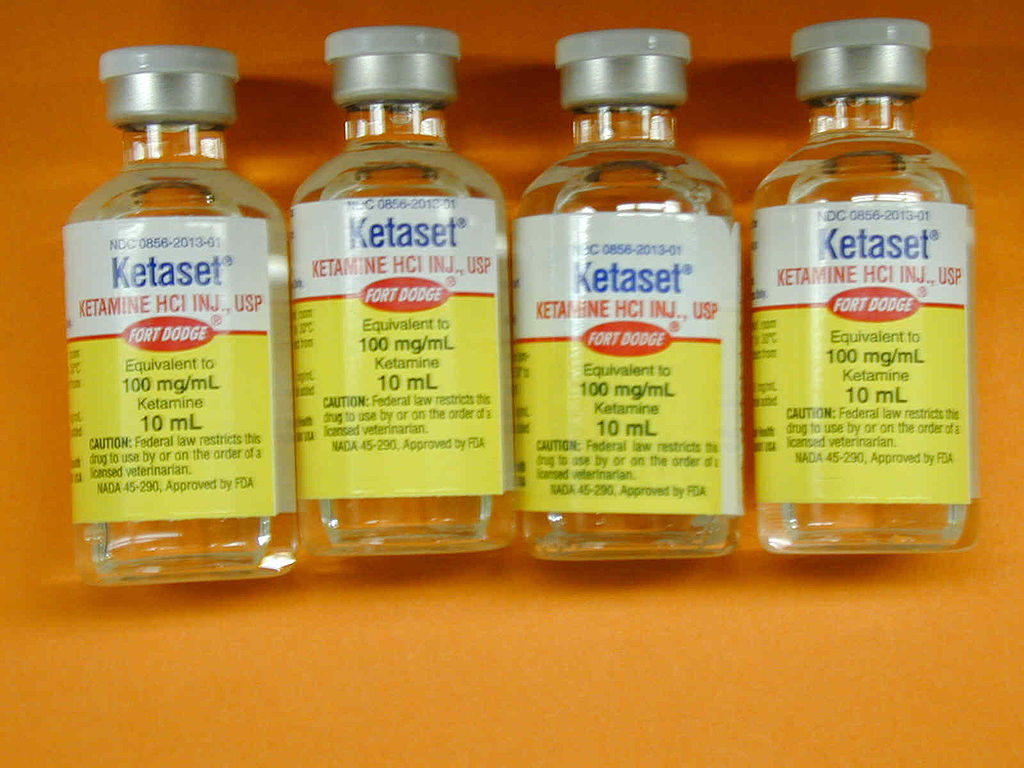
I was afraid of ketamine when I first heard about it. Ketamine was created in 1962, when it was first synthesized by scientist Calvin Stevens at the Parke Davis Laboratories. Ketamine is a potent anesthetic that blocks pain by acting as a N-methyl-D-aspartate (NMDA) receptor antagonist. It can also reset glia nerve cells in the spine and brain.

Ketamine is not appropriate for everyone. For me, I saw it as a chance to reverse the Reflex Sympathetic Dystrophy (RSD) that I had been living with since 2002.  My excitement was great, along with my family’s. My regular treating doctors were not so optimistic about ketamine, but were not discouraging it either.

I began receiving ketamine infusions in 2009. They put me into remission and I continue with booster therapy as needed. I still have flares, but ketamine got me through the biggest challenges of living with RSD. Here is a video of me after my initial infusion treatments, which many find motivational.

Before I started getting ketamine infusions, they wanted me off opioids completely so that my nervous system would reboot better. Research showed that ketamine patients on opioids were not getting the same good results as people who stopped taking them. Since then, I have also learned that opioids also set off glia cells, which is not a good thing for nerve pain patients.

Immunoglobulins

Intravenous Immunoglobulin – known as IVIg --  is used to treat various autoimmune, infectious and idiopathic diseases. One of my best friends, who has multifocal motor neuropathy, uses it to stay functional.

I have not had IVIg yet, but if ketamine didn’t work for me, I would give it a try, insurance permitting. The cost per treatment is between $5,000 and $10,000, so for many it is not an option.

If you have the cash, the FDA has approved IVIg for graft disease and idiopathic thrombocytopenic purpura (ITP). It is also used to treat patients with Kawasaki disease, Guillain-Barre syndrome, and polymyositis/dermatomyositis. I know a number of people who have used it for RSD.

One of the complaints I have heard from friends who use IVIg is that it takes time before your feel any benefits – sometimes days or weeks. If it is a viable treatment for you, there should be some changes in your symptoms and pain levels within 4 weeks.

However, some people do not respond to IVIg and it is very expensive to try just to see what happens. The cost is high because immunoglobulin products come from the pooled human plasma of a thousand or more blood donors, who have to go through an extraction process themselves before it can be processed and ready for use in infusions.

Stem Cells

Stem cell research could pave the way for an entirely new approach to chronic pain that reduces the current reliance on opioids and other analgesics.

I tried two rounds of stem cell infusions for gastroparesis, intestinal ischemia, heart valve dysfunction, cardiac ischemia, and temporomandibular joint disorder (TMJD).

The infusions reversed my gastrointestinal issues within 24 hours and my heart issues in 7 days, but it took longer for my TMJD to feel any relief. I did get some, just not as much as the other areas of my body. I also got improved function in my ovaries, with an increase in estrogen production I did not have before stem cell therapy.

The providers I worked with said it would take 6 to 8 rounds of stem cell infusions to help my nerve pain. I don’t have the money for that, so I stopped after two treatments.

Stem cell studies I have seen show great promise for multiple sclerosis patients, and I will be watching closely to see if it works for RSD and other neuro-autoimmune diseases. Stem cells could also be used as a tool to reverse opioid tolerance and opioid-induced hyperalgesia, two problematic side effects of opioid therapy.

Lidocaine

Although my providers told me that lidocaine infusions are practically pain free, I can tell you they are not. The lidocaine infusions I was given were in conjunction with my stem cell therapy. I felt everything and came away feeling that lidocaine was not a good option for me.

My step sister did have good results from her 7-day infusions of lidocaine, so it goes to show that you have to check to see what works best for you.

Lidocaine is an amide anesthetic and has a wide range of mechanisms of action. Research has shown that lidocaine, when given in a low dose intravenous infusion, has successfully provided pain relief for several chronic pain conditions that have failed other treatment modalities. A recent study in Pain Medicine found that lidocaine provided pain relief to 41 percent of patients, most of whom had neuropathic pain. 

According to providers at Stanford University, the success of lidocaine infusion is dependent on the specific cause of your pain. Some patients report immediate and long lasting pain relief, while others say relief came slowly and only lasted while the medication is being infused. Some patients also report unpleasant side effects.

The only adverse reaction I had – besides the fact it didn’t work for me – is that the infusion itself was extremely painful. Physicians have no way of knowing how you’ll react until you try it. By the time I was begging for help during the infusion, it was too late.

PNN columnist Crystal Lindell has been getting lidocaine infusions and they’ve helped Crystal reduce her use of painkillers. A recent study in Pain Medicine found that lidocaine provided long-lasting pain relief in 41 percent of patients, most of whom had neuropathic pain. 

I would be glad to share more of my experiences with infusions for anyone who has questions from the patient perspective. I would also love to hear your stories about infusions and whether they worked for you. 

Barby Ingle lives with reflex sympathetic dystrophy (RSD), migralepsy and endometriosis. Barby is a chronic pain educator, patient advocate, and president of the International Pain FoundationShe is also a motivational speaker and best-selling author on pain topics.

More information about Barby can be found at her website. 

The information in this column should not be considered as professional medical advice, diagnosis or treatment. It is for informational purposes only and represents the author’s opinions alone. It does not inherently express or reflect the views, opinions and/or positions of Pain News Network.

How the DEA Changed the Overdose Numbers

By Pat Anson, Editor

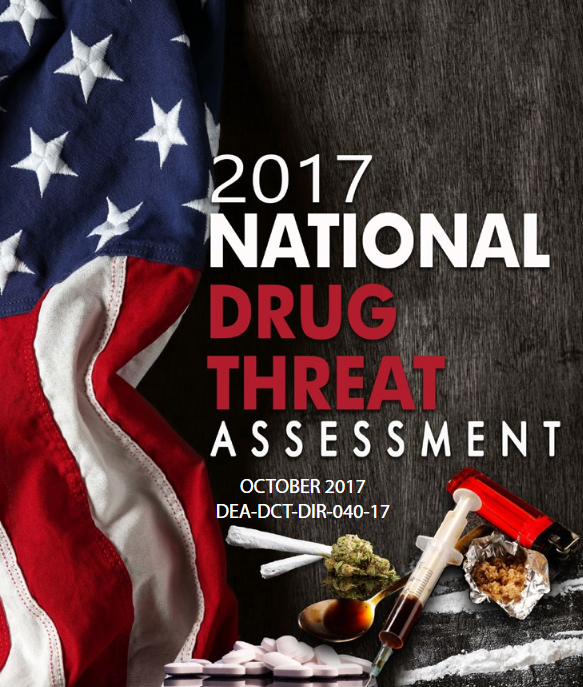
The Drug Enforcement Administration has released its annual report on the threat posed to the U.S. by drug trafficking and the abuse of illicit drugs.

The 2017 National Drug Threat Assessment (NDTA) has both good and bad news about the nation’s worsening overdose crisis. But like other federal agencies, the DEA has a disturbing tendency to massage statistics to make the role of opioid pain medication more significant than it actually is.

“The threat posed by controlled prescription drug (CPD) abuse is prevalent. Every year since 2001, CPDs, specifically opioid analgesics have been linked to the largest number of overdose deaths of any illicit drug class, outpacing those for cocaine and heroin combined,” the report declares.

That sure makes it sound like opioid pain medication is killing more people than ever before, doesn’t it? A closer look at the numbers and methodology used by the DEA suggests otherwise.

"Controlled prescription drugs" is a very broad category that includes not only opioid pain relievers, but anti-anxiety drugs (Valium, Xanax), stimulants (Adderall, Ritalin), and anabolic steroids. And there's plenty of evidence people are dying from those drugs as well.

This is not the first time the DEA has lumped opioid pain relievers with other drugs. In the 2016 NDTA, the DEA combined opioids with anti-anxiety drugs, but not stimulants or steroids.

A year earlier, in the 2015 NDTA, prescription opioids were in a category all to themselves.

The effect of these changing and broadening definitions is significant. Every year the overdose crisis appears to be getting worse and worse. It certainly is for deaths linked to illicit drugs like heroin, cocaine and fentanyl, but not necessarily for prescription drugs and definitely not for opioid pain medication.

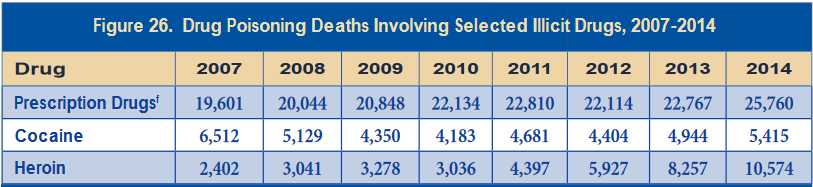
One has to wonder why these definitions keep changing and distorting the true nature of the overdose crisis. Don’t take my word for it. Look at how the overdose numbers for "Selected Illicit Drugs" in 2013 have grown over the years.

In the 2015 NDTA, the DEA reported that an “opioid analgesic” was involved in the deaths of 16,235 Americans in 2013.

In the 2016 NDTA, the DEA reported that “prescription drugs” were involved in the deaths of 22,767 Americans in 2013.

And in the 2017 NTDA, the DEA reported that “medications” were involved in the deaths of 24,536 Americans in 2013. The "medications" category includes not only controlled prescription drugs, but over-the-counter drugs as well.

Simply by changing the way they counted overdoses, the DEA and other federal agencies raised the death toll for 2013 by over 8,300 people.  We’re only using 2013 as an example.  From one report to the next, overdoses grew for every other year as well.

This isn’t the first time the federal government has played around with the overdose numbers. As PNN reported, last December the CDC and the White House Office of National Drug Control Policy released three different estimates of how many Americans died in 2015 from overdoses linked to prescription opioids.  

Within one week, the overdose numbers evolved from 17,536 deaths, down to 12,700, and then back up to 15,281 deaths. To use a football metaphor, that is known as moving the goalposts.

Pain Medication Abuse Declining

A closer reading of the 2017 NDTA shows that heroin, illicit fentanyl and other illegal drugs are now driving the overdose crisis, not opioid pain medication. Less than one percent of legally prescribed opioids are being diverted to the black market. 

A recent survey of law enforcement agencies, known as the National Drug Threat Survey, found that less than 10 percent of respondents nationwide believed controlled prescription drugs were the greatest drug threat in their jurisdiction -- down considerably from 2014 when over 21.5 percent reported the same

The abuse of prescription opioids is also declining. Fewer Americans are testing positive for hydrocodone, oxycodone and other painkillers in workplace drug tests. And the number of people seeking treatment for abusing pain medication has fallen significantly. From 2011 to 2014, admissions to publicly-funded treatment facilities for prescription opioid abuse fell by nearly a third. 

“This decline can in part be attributed to CPD (controlled prescription drugs) abusers switching to heroin or other illicit opioids. Some CPD abusers, when unable to obtain or afford CPDs, begin using heroin as a cheaper alternative offering similar opioid-like effects,” said the DEA.

“Expansion of the counterfeit pill market, to include pills containing fentanyl, threatens to circumvent efforts by law enforcement and public health officials to reduce the abuse of opioid medications; the arrival of large amounts of counterfeit prescription drugs containing fentanyl on the market replaces opioid medications taken off of the street.”

Curiously, the DEA report doesn’t even list kratom as a drug threat – even though the agency considers the herbal supplement a “drug of concern” and tried to ban it last year. 

“I think that all of us in the kratom community have a hard time reconciling the lack of a threat listing for kratom and yet still being considered a drug of concern,” said Dave Herman, chairman of the American Kratom Association, a pro-kratom consumer group.  “The science tells us that kratom has a low potential for either abuse or addiction and we hope to see that reflected in all DEA materials.”

Whether its kratom or pain medication, the DEA and other federal agencies have a responsibility to be consistent and to get their facts right.  Inflating the overdose numbers and blaming opioid medication may make for good headlines, but it diverts funding, resources and policymakers away from other drug problems that truly need more attention. We'll never get a handle on the overdose crisis if we keep moving the goalposts.

A recent editorial in the Journal of Pain Research took the CDC to task for doing just that.

"Transparency, freedom from bias, and accountability are, in principle, hallmarks of taxpayer-funded institutions. Unfortunately, it seems that at least one institution, the Centers for Disease Control and Prevention, continues to struggle with all three," wrote researchers Michael Schatman, PhD, and Stephen Ziegler, PhD.

"What began with a prescribing guideline created in secrecy has now evolved to the use of statistical data and public statements that fail to capture not only the complexity of the problem but also the distinction between licit and illicit opioids and their relationship to the alarming increase in unintentional overdose. This is unfortunately consistent with Mark Twain’s assertion that 'there are lies, there are damn lies, and then there are statistics.'"

Opioid Limits: Means, Medians or Madness?

By Roger Chriss, Columnist

CVS recently announced it would impose a 7-day limit on opioid prescriptions for short-term acute pain for customers in its pharmacy benefit management program.  A pharmaceutical industry trade group also supports a 7-day limit and so does the U.S. Pain Foundation, a patient advocacy group.

Maine, New Jersey, Massachusetts and other states are also limiting prescriptions to a week or less, justifying the time frame by saying that’s what patients need on average.

But this represents a misunderstanding of how statistics work and ignores emerging research about opioid analgesia in the world of acute pain care.

In statistics, we have three values of fundamental importance: the mean, median, and variance.

The mean, also known as the “arithmetic mean,” is the sum of a collection of numbers divided by the number of numbers in the collection. The average height or weight of a group of people is the mean.

The median is the “middle value” of a data set that is ordered from lowest to highest. The mean is found in “median income” or “median price of a new home.” Importantly, the mean and median are not necessarily the same. In the set of numbers 2, 3, 3, 5, 7, 17 and 313, the median value is 5, but the mean value is 50.

The variance is the tendency of a set of numbers to cluster around the mean, or how spread out the numbers are. We know from experience that the height of adults is closely clustered around average height: Most people are over five feet tall and under seven feet tall. No one is 2 inches or 20 feet tall. But variance can also be significant, as is the case with annual income, home prices or family size.

The significance of these three values cannot be understated. In his essay “The Mean Isn’t the Message,” biologist Stephan J. Gould explains that a “median mortality of eight months” does not mean that a person will probably be dead in eight months. Some people, including Gould himself, live many times more than the median survival time for a disease. 

So when talking about opioid analgesia for acute pain, we cannot rely on just an “average” value. Physicians know this, but legislators, corporations and even some patient advocates do not seem to.

JAMA Surgery recently reported on the post-surgical acute pain needs of over 200,000 patients who had one of eight common surgical procedures. The results showed median values from 4 days for an appendectomy or gallbladder surgery to 7 days for a discectomy.  

The authors then used these values and the variance to calculate the range of time a patient would typically need opioids for acute pain after surgery:

  • 4 to 9 days for general surgery procedures
  • 4 to 13 days for women's health procedures
  • 6 to 15 days for musculoskeletal procedures

In other words, there is substantial variance, with the optimal length extending to as much as two weeks. And there is no way to know ahead of time where in this range an individual will fall.

To address this uncertainty, the Opioid Prescribing Recommendations for Surgery were developed at the University of Michigan. They list the recommended numbers of tablets of hydrocodone, codeine, tramadol, or oxycodone for a range of common surgical procedures, including laparoscopic cholecystectomy, open colectomy, and several types of biopsy.

This resource gives amounts that “represent the actual maximum opioid use reported by three-quarters of actual surgery patients.” Those amounts range from 10 to 40 pills, depending on the procedure, noting that “prescribers are encouraged to use their best judgment.”

The Opioid Prescribing Recommendations for Surgery also advise recovering unused pills to reduce the risk of diversion, which is a much more sensible policy than forcing people recovering from trauma or surgery to seek refills if they happen not to fit a mandated average.

In sum, the medical profession is offering evidence-based recommendations for pain management that include not just a simplistic mean, but the real-world variance found in individuals. This approach is likely to provide better results than blanket policies geared toward a statistical mean that does not capture vital features of medical care.

Roger Chriss lives with Ehlers Danlos syndrome and is a proud member of the Ehlers-Danlos Society.

Roger is a technical consultant in Washington state, where he specializes in mathematics and research.

The information in this column should not be considered as professional medical advice, diagnosis or treatment. It is for informational purposes only and represents the author’s opinions alone. It does not inherently express or reflect the views, opinions and/or positions of Pain News Network.

Why Human Suffering Should Bother You

By Margaret Aranda, MD, Columnist

Patients go to doctors when they have pain and doctors can give them opioid medication to relieve that pain. That should not bother you, because it is a decision made between the physician and the patient.

No doctor has the right to strip a patient of dignity by minimizing or downplaying their pain. We can't become indifferent to the denial of pain, because pain is real. Pain hurts.

A recent column in The Conversation by Dr. Andrew Kolodny bothers me because of two sentences:

"They (opioids) are also helpful when used for a couple of days after major surgery or a serious accident. Unfortunately, the bulk of the opioid prescriptions in the U.S. are for common conditions, like back pain," wrote Kolodny, who is a psychiatrist, not a pain management doctor.

Let’s look at the different ways that Dr. Kolodny is minimizing pain:

Postoperative Pain: A large study recently found that long-term opioid use after surgery is rare. Yet some patients are now being denied opioids after major surgery because of fears they might become addicted. Patients should ask questions about how their postop pain will be treated before surgery and get another surgeon if no opioids are to be offered. Patients do not have to allow a surgeon to minimize their pain.

Trauma:  Serious accidents cause severe trauma. Severe trauma can take months, years or decades to alleviate, leaving patients with chronic pain through no fault of their own. Many are burned, disfigured, scarred, disabled, have a pain syndrome, use a wheelchair, and go on disability or Medicare. 

We cannot allow ourselves to minimize any degree of pain that leads to suffering, less zest for living, and lower quality of life.

Back Pain: Millions of people have low back pain and the added mental health stress that often comes with it, which costs the U.S. economy $100-200 billion in lost workdays and productivity annually. Don't minimize their pain, either!

Treating Pain:  No doctor who witnesses a patient suffering in an emergency room, operating room or intensive care unit should minimize their pain. I've worked in all three as a board certified anesthesiologist and intensive care unit doctor, and am a witness to how an Ivy League university, private clinic, free clinic, county hospital, women's hospital, and Veterans Administration hospitals treat severe pain that may never, ever get better. I'm also a witness as a rebel patient who was offered acetaminophen and ibuprofen for my postop pain.

Physician judgment: Many patients with chronic pain are disabled and legally protected from discrimination. They have failed other therapies and deserve opioid medication for quality of life. They are not bad people, and they have not done anything wrong. Nevertheless, they are often treated like "today's lepers," as Dr. Thomas Kline says. So don't minimize their pain.

Patient Perspective: While on opioids, many chronic pain patients can get out of bed, work a job and keep their families together. They aren't addicts, do not sell their pills, steal money from others to get more, are not estranged from their families for a “drug problem,” and have never had naloxone used on them.

If they are lucky enough to still get an opioid prescription, many are being treated like criminals with rigors that do not stand on evidence-based medicine. They are forced to sign pain contracts, undergo drug tests, and then deal with pharmacy restrictions. Even with pills in hand, it is often not enough. There is an epidemic of undertreated chronic pain, so don't minimize the patient.

Patient Outcome: Unilateral withdrawal or sudden tapering of opioid therapy leads to patient suffering, sleep loss and decreased quality of life. A patient can become bedridden, depressed, and some have committed suicide! It all starts with non-validation of pain.

The Doctor's Oath

No doctor has a right to label, stigmatize, minimize or abandon a patient, much less a patient in pain. To stay clear of this, every medical student is taught to preserve patient dignity and autonomy. Nevertheless, patients are being withdrawn from opioid therapy all over America today, and it is being done by doctors who minimize pain, break the physician-patient bond, and dishonor the Hippocratic Oath.

We've known for over 150 years that doctors commit suicide twice as often as other professions. I think the current situation truly bothers most compassionate doctors, who will be struggling even more in the years to come with physician burnout syndrome. We could see even more suicides by medical students and physicians. 

Doctors are supposed to save lives, and it is just as important to save quality of life. Without quality of life, it is entirely human to have moments when death seems to be the only option out of a life of suffering. Doctors need to keep patients away from having suicidal thoughts, especially if their illness is something that modern medicine can take care of and is severely undertreated, like pain.

It is important to the public in general, and to patients who are disabled in particular, that everyone understands that there are doctors who work night and day for patients who are in pain. We are passionate about it because doctors are healers and no one is ever going to change the meaning of being a real doctor.

I was reminded of this recently when I saw the revised version of the Hippocratic Oath by the World Medical Association. Two important sentences depict how doctors should be responding to pain and their patients:

“I WILL RESPECT the autonomy and dignity of my patient."

"I WILL NOT USE my medical knowledge to violate human rights and civil liberties, even under threat."

When we minimize pain, we minimize the patient. When we minimize the patient, the patient dies.

So go ahead and let human suffering bother you. It proves that you still have empathy and compassion. 

Dr. Margaret Aranda is a Stanford and Keck USC alumni in anesthesiology and critical care. She has dysautonomia and postural orthostatic tachycardia syndrome (POTS) after a car accident left her with traumatic brain injuries that changed her path in life to patient advocacy.

Margaret is a board member of the Invisible Disabilities Association. She has authored six books, the most recent is The Rebel Patient: Fight for Your Diagnosis. You can follow Margaret’s expert social media advice on Twitter, Google +, Blogspot, Wordpress. and LinkedIn.

The information in this column should not be considered as professional medical advice, diagnosis or treatment. It is for informational purposes only and represents the author’s opinions alone. It does not inherently express or reflect the views, opinions and/or positions of Pain News Network.

A Promising Solution to Lower Back Pain

By A. Rahman Ford, Columnist

As many of us can attest to, lower back pain (LBP) is a debilitating and painful medical condition that severely impacts quality of life.  An analysis of the Global Burden of Disease in 2010 showed that LBP ranked as the greatest contributor to disability out of nearly 300 conditions studied. 

Lower back pain tends to peak in older age groups; thus, regions with higher life expectancies are disproportionately impacted.  The number of people with LBP is projected to increase in the coming decades, especially in low- and middle-income countries.  About 149 million work days are lost every year in the U.S. because of LBP, at an estimated cost of $100-200 billion.  

Of course, the costs to the patient – both financial and emotional – can never be adequately quantified.

Tough Questions, Few Answers

Although the causes of LBP generally are multifarious, the National Institutes of Health maintains that the majority of cases are mechanical in nature.   The gradual degeneration of the spine as a result of normal wear and tear – referred to as spondylosis – can result in a myriad of painful conditions that range from simple sprains, to herniated or ruptured discs, to injuries caused by trauma. 

While the causes of lower back pain are rarely addressed, analgesic medications are routinely prescribed to treat its symptoms.  Commonly prescribed medications include opioids, NSAIDS, anticonvulsants, antidepressants, counter-irritants and epidural steroid injections.

However, these analgesic treatments have shortcomings: potentially dangerous side-effects, adverse drug interactions, addiction, organ damage or only temporary relief.  Other treatment options include physical therapy, transcutaneous electrical nerve stimulation (TENS), acupuncture and in extreme cases, surgery. 

Sadly, neither the conservative management nor the more invasive surgical options consistently yield satisfactory results, because they fail to address the underlying disease processes.  In fact, some treatments may actually lead to a worsening of the condition in the long term.  Undoubtedly, new approaches are needed to solve the problem.

Research Supports Stem Cells for LBP

Many cases of lower back pain involve structural damage to the intervertebral discs, either by way of a herniated disc or degenerative disc disease (DDD).  This condition is quite prevalent among older adults, with one study finding that 95% of older Americans exhibiting some degree of disc degeneration. 

In the search for treatments beyond analgesics and surgery, several researchers have demonstrated the effectiveness of stem cell therapy in treating disc injuries in both humans and animals. 

Leung et al. (2006) and Drazin et al. (2012) noted the potential for mesenchymal stem cells (MSC) to treat intravertebral disc degeneration in laboratory animals.  Orozco et al. (2011) used autologous bone marrow-derived MSCs to treat 10 patients with lumbar disc degeneration, who exhibited rapid improvement in pain and disability. 

Similarly, Pettine et al. (2015) reported significantly reduced pain scores in 26 patients who received autologous bone marrow-derived stem cells. 

Coming to a Clinic Near You?

Just this year, Centeno et al. successfully used an injection of autologous bone marrow derived MSCs to treat DDD in 33 patients with lower back pain.  The authors found “no safety issues, substantially reduced pain, increased function and reduced disc bulge size in most patients.”

That treatment utilized stem cell technology created by BioRestorative Therapies, which uses autologous bone marrow-derived MSCs to treat chronic lumbar disc disease.  According to the company’s website, “not only could this program potentially eliminate surgery in many cases, but it could also provide substantially more effective treatment than current non-invasive therapies with a design to be curative.”  The company has been cleared by the FDA for Phase 2 clinical trials to treat lower back pain due to DDD.

DiscGenics, a biotech company based in Utah, has also received FDA approval for a study of stem cell therapy to treat patients with intervertebral disc disease. DiscGenics’ approach is different, because it uses patented technology to derive its proprietary “discogenic cells” directly from adult human disc tissue.

“We believe it has the potential to offer pain relief and restored function to millions of patients suffering from the debilitating effects of lower back pain,” DiscGenics CEO Flagg Flanagan told The Salt Lake Tribune. “Receiving the go-ahead from the agency to begin in-human trials is a critical step forward for our clinical program.”

DiscGenics plans to begin enrolling 60 patients in the study before the end of the year.  

Although both BioRestorative and DiscGenics have therapies that look promising, it will be some time – likely years – before either treatment is publicly available. But these studies could be a major step forward in finding an actual cure for back pain, not just another treatment that masks the pain.

A. Rahman Ford, PhD, is a lawyer and research professional. He is a graduate of Rutgers University and the Howard University School of Law, where he served as Editor in Chief of the Howard Law Journal. He earned his PhD at the University of Pennsylvania.

Rahman lives with chronic inflammation in his digestive tract and is unable to eat solid food. He has received stem cell treatment in China.  

The information in this column should not be considered as professional medical advice, diagnosis or treatment. It is for informational purposes only and represent the author’s opinions alone. It does not inherently express or reflect the views, opinions and/or positions of Pain News Network.

Insurers Promise More Cuts in Rx Opioids

By Pat Anson, Editor

Less than two weeks before its final report is due, President Trump’s opioid commission held its fourth and final public meeting Friday – hearing testimony from top government officials and insurance industry executives about the nation’s worsening overdose crisis.

“Insurance companies are going to be a very, very important part of whether we will be able to stem the tide here or whether we’re not,” said commission chairman Gov. Chris Christie of New Jersey.

It was clear from their testimony that many insurers are planning to tighten access to prescription opioids even more than they already have.

Aetna’s chief medical officer told the commission the insurance giant was planning to reduce “inappropriate opioid prescribing” to its members by 50 percent within the next five years.  He did not explain what would be considered inappropriate.

Aetna has already sent warning letters to hundreds of physicians and dentists identified as “super-prescribers,” urging them to reduce the number of opioid prescriptions they write.

“We’re now re-running our analysis and planning more aggressive interventions for those providers who haven’t improved their opioid prescribing habits over the past several months,” said Harold Paz, MD.  

The chief medical officer of Cigna said his company was close to achieving a 25 percent reduction in coverage of opioid prescriptions, a priority it set last year.

“That’s only the first of our goals,” said Alan Muney, MD.

Insurer Harvard Pilgrim said its coverage of opioid prescriptions has declined by over 20 percent since 2014.

“That’s not enough.  This feels like a balloon where you tap on one end and it comes out somewhere else. So it doesn’t mean we’re even close to solving this,” said Michael Sherman, MD, chief medical officer of Harvard Pilgrim.

Insurers clearly have the ear of the federal government when it comes to opioids. As PNN has reported, an obscure federal advisory group composed of insurers, law enforcement, and federal and state regulators has discussed eliminating opioid prescriptions for acute pain, as well as paying doctors not to prescribe opioids.

The Healthcare Fraud Prevention Partnership also wants access to the “personally identifiable and protected health information” of 57 million Medicare beneficiaries to see if they are abusing opioids.

Reducing Opioids a ‘Win-Win’

Labor Secretary Alexander Acosta said reducing opioid prescriptions was important to get unemployed Americans back into the workforce. He cited a recent study that found that about a third of unemployed men aged 25 to 54 were using prescription painkillers.   

“Reducing the amount of opioids is a win-win across the board. It’s a win for the individual who doesn’t want to get hooked,” Acosta said. “It’s a win for the insurance companies who don’t want to be paying for medicines that people don’t need. And it’s a win for the American workforce, because if we can get people back to work and paying taxes and participating fully, that’s a win for them and it’s a win for the country.”

Acosta cited no studies that might indicate how many Americans currently taking opioids would become unemployed or disabled if their pain medication was reduced or taken away. 

No pain patients, patient advocates or experts in pain management were asked to appear before the commission. No one from the pain community has testified during any of the commission’s public meetings, although thousands have submitted written comments.

An interim report released by the opioid commission in July focused on expanding access to addiction treatment and developing new ways of treating pain without opioids. Since then, the commission has increasingly focused on limiting opioid prescriptions. The final report from the commission is expected November 1.

The interim report also strongly urged President Trump to declare a national emergency to speed up efforts to combat the overdose crisis, something he has yet to do.  “We’re going to be doing it in the next week,” Trump told reporters on Monday.  However, there appears to be little consensus in the administration about what actions to take after an emergency is declared or how to pay for them.

"Everyone wants opioids to be a priority, but there's a lot of resistance to calling it an emergency," a senior administration official told Politico.

Nursing Textbook Slammed for Racist Content on Pain

By Pat Anson, Editor

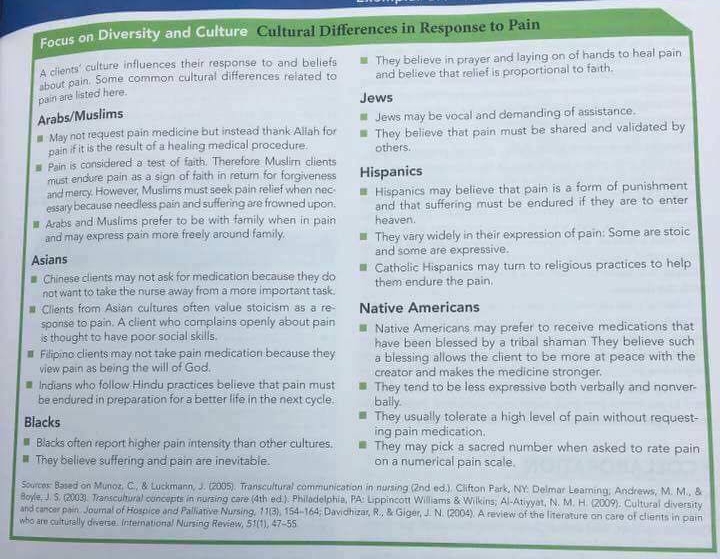
Blacks believe suffering and pain are inevitable. Hispanics believe pain is a form of punishment. Muslims consider pain a test of faith. Jews are vocal and demanding about pain care.

Those are some of the startling claims being made in "Nursing: A Concept-Based Approach to Learning," a nursing textbook that has a section that looks at ethnic and cultural differences in how people respond to pain.

The book advises nursing students that a patient’s culture and religion play a “critical role” in how a patient responds to acute or chronic pain, and that “nurses must approach each client with cultural competence.”

Fair enough. But then the book makes sweeping generalizations about various ethnic groups that some consider offensive and racist.

“Clients from Asian cultures often value stoicism as a response to pain. A client who complains openly about pain is thought to have poor social skills,” the book declares.

“Native Americans may prefer to receive medications that have been blessed by a tribal shaman…. They may pick a sacred number when asked to rate pain on a numerical scale.”

The textbook has been used by nursing students for years, but the section on diversity and culture drew little attention until a page from the book started circulating on social media this week.

“This is an excellent example of how not to be even remotely culturally sensitive. These assumptions are not evidence-based, they encourage nurses to ignore what a patient is actually saying,” said Onyx Moore, who posted the page on Facebook. “If a patient tells you their pain level, believe them -- because *they* are the expert on their body."

“I'm so disgusted. In 2017 how is this being published?” asked one poster. “Why isn't the protocol basic compassion instead of that ignorant nonsense?”

"I’ve seen so many examples like this in my nursing textbooks. It’s infuriating," wrote another Facebook poster.

“This is horrifyingly wrong,” said another.

In response to the uproar on social media, the book’s publisher apologized and said it would drop the offending section from the textbook.

“While differences in cultural attitudes towards pain are an important topic in medical programs, we presented this information in an inappropriate manner. We apologize for the offense this has caused and we have removed the material in question from current versions of the book, electronic versions of the book and future editions of this text,” Scott Overland, Pearson Publishing’s communications director told Mic.com.

“In addition, we now are actively reviewing all of our nursing curriculum products to identify and remove any remaining instances of this inappropriate content that might appear in other titles.”

Now in its second edition, “Nursing: A Concept-Based Approach to Learning” is still available for sale on Amazon, where a new hardcover can be bought for $235. First published in 2014, many of the early reviews of the book are positive, with some nursing students saying it was “indispensable” and a “life safer.”

The more recent reviews -- apparently in response to the uproar on social media -- are scathing.

“This book should cease to be printed. The fact that this is taught in schools makes me quite literally sick,” one reviewer said.

“This book is racist and if you apply it's concepts you will hurt your patients and possibly get in some uncomfortable situations or even litigation,” said another.

“If this kind of racist dreck can pass unnoticed by the authors AND editors of this book, it cannot be trusted. And they cannot be trusted. Unbelievable,” wrote another reviewer.

Pearson is the world’s biggest publisher of educational textbooks. Today the company put a video on its YouTube page in which Tom Bozik, president of Pearson’s global product development, made another apology and said the book doesn't represent the company's values.

Drug Overdose Rates Rise in Rural Areas

By Pat Anson, Editor

Rates of drug overdose deaths in rural areas of the United States now exceed those in urban areas, according to a new report by the Centers for Disease Control and Prevention.

CDC researchers say the overdose rate in non-metropolitan (rural) areas was 17 deaths per 100,000 people in 2015, which was slightly higher than urban areas (16.2 deaths). Both rates are substantially higher than they were a generation ago. About 52,000 Americans died of drug overdoses in 2015.

“The drug overdose death rate in rural areas is higher than in urban areas,” said CDC Director Brenda Fitzgerald, MD. “We need to understand why this is happening so that our work with states and communities can help stop illicit drug use and overdose deaths in America.”

In 2015, both urban and rural areas experienced significant increases in the percentage of people aged 26 and older who reported illicit drug use in the past month.

One of the few bright spots in the CDC report is that use of illicit drugs by adolescents (aged 12-17 years) has declined for the last ten years.

The report did not go into detail on what drugs were being abused, although it acknowledges the declining role of prescription opioids in the overdose crisis.

“Although prescription drugs were primarily responsible for the rapid expansion of this large and growing public health crisis, illicit drugs (heroin, illicit fentanyl, cocaine, and methamphetamines) now are contributing substantially to the problem,” the report found.

“Recent studies suggest that a leveling off and decline has occurred in opioid prescribing rates since 2012 and in high-dose prescribing rates since 2009.”

Curiously, while those studies have documented the increased role of heroin, illicit fentanyl and other illegal opioids in the overdose crisis, the federal government’s public awareness campaigns remain focused on prescription opioids.  

Heroin and fentanyl are barely even mentioned in the Department of Health and Human Services’ “5-Point Strategy to Combat the Opioid Crisis.” The strategy focuses instead on “advancing better practices for pain management,” and increasing access to addiction treatment and overdose prevention drugs.

The CDC also recently launched an advertising campaign using billboards and videos that completely ignore the scourge of heroin and fentanyl.  The CDC explained the omission by saying it wanted to focus on prescription opioids and avoid “diluting the campaign messaging.”

“Prescription opioids can be addictive and dangerous,” a woman says in one CDC ad.

“One prescription can be all it takes to lose everything,” a man says in another ad.

Five public health experts interviewed by Pacific Standard questioned whether the CDC campaign will be effective, because the ads don't empower people or give them an alternative to prescription opioids.

"The campaign isn't going to make a damn bit of difference," said Bill DeJong, a professor of community health sciences at Boston University.

The Secret Role of Insurers in Medicare Opioid Policy

By Pat Anson, Editor

This month marks the one year anniversary of a closed door meeting between law enforcement agencies, federal and state regulators, and health insurance companies in a Baltimore suburb – a “special session” of an obscure advisory group to the U.S. Justice Department and the Department of Health and Human Services.

Although the mission of the Healthcare Fraud Prevention Partnership – HFPP for short -- is to prevent healthcare fraud, the October 20, 2016 meeting went much further. It gave the insurance industry – so-called “Partner Champions” -- a direct role in drafting recommendations that could decide how millions of pain patients will be treated by their doctors and what opioid medications will be prescribed to them, if any.

Major insurers like Aetna, Anthem, Cigna, Humana, Blue Cross Blue Shield and Kaiser Permanente were invited to attend, but no other stakeholders in healthcare, such as physicians, pharmacists, hospitals or patients, were asked to appear or share their insights. Few details about the meeting were made public, until now.

Pain News Network has obtained documents through the Freedom of Information Act (FOIA) that shed some light on how the meeting was organized and what was discussed, but we were denied access to a list of individuals that attended, who they represented, or any recordings of what they said.

“The nature of some of the information provided during the Special Session on opioids would be of the sort that could have a negative impact on the competitive posture or business interests of a company if made public,” Jay Olin, Director of FOIA Analysis for the Centers for Medicare and Medicaid Services (CMS), wrote in a letter to PNN.

CMS COMMAND CENTER IN WOODLAWN, MD

“The release of this sensitive information could put the company at significant financial risk if interested parties use this information to develop and execute schemes and individuals and organizations use this information to game the system and reap financial or other benefit.”

Olin also said the HFPP is not a federal advisory committee and therefore not subject to federal open meeting laws, even though the October 20 meeting was called by CMS, organized by CMS, funded by CMS, and held on federal property at the CMS Command Center in Woodlawn, Maryland.

“Furthermore, most (HFPP) partners are from the private sector and private industry is not subject to FOIA, nor is CMS authorized to release such information,” Olin wrote.

PNN is appealing that decision.

‘Government-authorized use only’

CMS may be trying to distance itself from the HFPP, but it’s clear they work closely together in their unusual “public-private partnership.”

A CMS website hosts a portal for HFPP members to sign-in that plainly states “this system is provided for Government-authorized use only.” The website also goes into detail on how to become an HFPP partner, the benefits of membership and provides an extensive list of partners that includes 45 different insurance companies.

According to a recent report from the General Accounting Office (GAO), CMS has spent over $30 million funding the HFPP since 2012, the year the partnership was created by the Obama administration to help the federal government detect and prevent healthcare fraud. A side benefit for insurers is that it helps them lower the cost of healthcare coverage. A CMS flyer plainly states that one of the reasons the HFPP exists is to help payers “identify potential savings.”       

The goals and activities of the partnership are important to understand because CMS contracts with dozens of insurers to provide Medicare coverage to about 57 million elderly and disabled Americans, at an annual cost of nearly $700 billion. And if the insurance industry is making healthcare decisions while being subsidized with billions of taxpayer dollars, Americans have a right to know what’s going on.

Yet CMS won’t even say who attended that October 20 meeting.

“A total of 58 participants across 26 federal, state, public and private organizations, including CMS, attended the event,” is all that an executive summary of the meeting says about the attendees.

The first half of the daylong meeting wasn’t even about opioids. It focused on the HFPP’s mission: combating fraud. According to the executive summary, a CMS technical advisor briefed attendees about common fraud schemes in the addiction treatment and drug testing industries, such as “substance abuse facilities that may be exposing their patients to physical or other harm” and insurance claims from treatment facilities “for services not rendered and unnecessary service, including lab claims.”

Another fraud scheme flagged by CMS was “physicians who appear to be referring Marketplace (Medicare/Medicaid) members, as well as other individuals who may be paid by substance abuse facilities to sign people up for Marketplace coverage.”

After a break for lunch, the discussion veered away from fraud prevention and into treatment decisions normally left between a patient and their doctor. A CMS official “emphasized the need to look at improving the quality of care” and identified several priority areas, including “best practices for acute and chronic pain.”

“Eliminate or restrict opioid prescribing for acute conditions,” was one of the many strategies discussed. So was the concept of “pay for performance,” in which doctors would receive payments from insurers “for following guidelines or quality practices, not for prescribing opiates.”

“Higher copay for opioid prescriptions” was another recommendation, as was “step therapy and dosage control.”

"Media outreach" and “social media and digital advertising tools” were suggested as ways to promote patient and provider compliance through “social normalizing.”

It is not clear from the documents provided to PNN if these were strategies advocated by insurers, law enforcement or CMS.

‘Serious Conflict of Interest’ for Insurers

Attendees were told the ultimate goal of the meeting was “to produce an HFPP-branded White Paper that identifies best practices payers can take to effectively address and minimize current and future opioid abuse.”

In other words, the meeting was not just about fraud prevention. The insurance industry was being asked to help design federal policy on opioid prescribing and “encourage practices that connect patients to the level of care best suited to their needs…. while avoiding unnecessary services or opioid prescriptions.”

“It is very disturbing to see CMS working with insurance companies to reduce the amount of opioids prescribed without physician and organized medicine's input,” said Lynn Webster, MD, a pain management expert and past president of the American Academy of Pain Medicine (AAPM). 

It is a serious conflict of interest to have insurance companies determine what medications are appropriate and how much to use.”

Webster was also alarmed by some of the strategies discussed at the October 20 meeting.  

“The proposal that insurance might eliminate opioids for acute pain would leave many patients without any effective treatment. That is not helpful and will produce a huge backlash,” he said.

“To encourage CMS to reward doctors to not prescribe opioids is a very ominous trend, knowing that untreated pain can have lethal effects on the body,” said Ingrid Hollis, a patient advocate and mother of a chronic pain sufferer. “To perpetuate these myths about reining in the addiction crisis, when in fact it is looking more and more like cost saving measures, is a conflict of interest for sure.

“I also find it disturbing that a private group with so much influence on insurance would not disclose to you who was in attendance at their meetings. Because they are influencing public programs and healthcare funded by taxpayers, they need to disclose who they are.”

When asked why the October 20 meeting was closed to the public, a CMS spokesman said "all HFPP meetings are limited to members of the Partnership, as they deal with sensitive issues relating to fraud, waste and abuse in the healthcare sector."

Payer ‘Partner Champions’

The HFPP white paper was released in January on the CMS website. The 62-page report -- Healthcare Payer Strategies to Reduce the Harms of Opioids -- begins by praising the “Partner Champions” who helped draft it. 

Among the payers listed as “champions” were Aetna, Anthem, Blue Cross Blue Shield, Cigna, Centene, Highmark, Horizon, Humana, and Kaiser Permanente.

“To overcome the problems of prescription opioid misuse, it is also vital to understand that provider prescribing practices and patient drug seeking behavior can exacerbate the development and persistence of OUD (opioid use disorder),” the white paper warns.

“Providers may write prescriptions without assessing their patient’s risk for misuse, prescribe opioid analgesics for minor pain, prescribe a greater medication quantity or dose than warranted by the patient’s medical indication, or provide opioids fraudulently with the knowledge they are likely to be misused. Patients may exaggerate or falsify symptoms to obtain opioid prescriptions, seek prescriptions from multiple physicians, forge prescriptions, or obtain prescriptions for resale on the black market.”

The white paper goes on to endorse the CDC’s opioid prescribing guideline, and recommends that over-the-counter pain relievers such as aspirin, acetaminophen and ibuprofen be used as alternatives to opioids, as well as non-drug therapies such as cognitive behavioral therapy, chiropractic care and TENS nerve stimulation units. Few of these treatments are covered by insurance.

The white paper also encourages pharmacists to “deny payments for (opioid) prescriptions that do not conform to general prescribing practices” and to profile doctors and patients to identify “problematic actors and schemes.”

Patients could be profiled in one of three ways, according to the HFPP:

  1. Stewards (those who follow guidelines)
  2. Stockers (those who hoard medication)
  3. Demanders (those who ask for medication)

The white paper does not discuss fraud in the addiction treatment industry, the initial focus of the October 20 meeting. Also unmentioned is a recent HFPP policy decision that allows insurers to share information about Medicare beneficiaries.

Individual patient data on 57 million Americans is now being pooled, studied and analyzed by the insurance industry, something that payers were previously reluctant to do.

“Several HFPP participants we spoke with indicated their support for the new strategy and willingness to provide beneficiaries’ personally identifiable information and protected health information for more in-depth HFPP studies,” the GAO report says.

Several HFPP participants we spoke with indicated their support for the new strategy and willingness to provide beneficiaries’ personally identifiable information and protected health information for more in-depth HFPP studies.
— GAO Report

Is the HFPP overstepping its authority? Do insurers have any business sharing and analyzing the personal health information of millions of Americans? No one at HFPP would comment. CMS referred us to this statement in the white paper:

“Payers can help to combat the opioid crisis by identifying and sharing strategies, such as reimbursement and coverage policies, conditions for provider plan participation, and dissemination of information to a variety of audiences, to address the large-ranging issues that lead to fraud, waste, and abuse in the healthcare system. Such interventions are particularly suited to payers due to their relationships with providers of healthcare services, pharmacies, insured patients, employers, and law enforcement (in cases where potential fraud is identified). Payers collect and administer a large amount of healthcare information that can be used to identify and intervene on behalf of patients at risk of opioid-related harm, as well as to target fraud, waste, and abuse in opioid prescribing.”

CMS announced plans to align its Medicare Advantage and Part D prescription drug plans with the CDC guideline soon after receiving the HFPP white paper. But some of the more extreme strategies discussed by the HFPP were not adopted. CMS won’t be paying doctors to follow the guideline or be eliminating opioids as a treatment for short term, acute pain.

But the agency is moving ahead with plans for a new monitoring system to identify opioid “overutilizers” -- physicians who prescribe high doses, patients who get them, and pharmacies that fill their prescriptions. Payers are authorized to drop suspicious pharmacies, doctors and patients from Medicare coverage and their insurance networks.

How many overutilizers are there? At last count, there were 15,651 Medicare beneficiaries getting multiple high dose opioid prescriptions. That may sound like a lot, but it amounts to only 0.04% of the 41.8 million patients enrolled in Medicare Part D plans.

Why are insurers targeting Medicare beneficiaries when only a tiny percentage may be abusing prescription opioids? Dr. Webster suspects the real motive is money.

“Clearly the insurance companies are benefiting from tunnel vision and a laser focus on Pharma companies and doctors,” says Webster. “There is a vast under appreciation that commercial insurers are also driven by the bottom line.  This is why they should not be making medical decisions without input from pain physicians and organized medicine.”