Survey: CDC Guideline Having ‘Horrendous’ Impact on Pain Patients

By Pat Anson, PNN Editor

The CDC opioid prescribing guideline has harmed pain patients, significantly reduced their access to pain care, and forced many patients to turn to alcohol and other drugs for pain relief, according to a large new survey of over 6,000 patients and healthcare providers by Pain News Network. 

Today marks the third anniversary of the CDC guideline, which discourages the prescribing of opioid medication for chronic pain. Although voluntary and only intended for primary care physicians, the guideline has been implemented as mandatory policy by many states, insurers, pharmacies and throughout the U.S. healthcare system. The survey found many unintended consequences for both patients and providers.

Over 85 percent of patients say the guideline has made their pain and quality of life worse. And nearly half say they have considered suicide because their pain is poorly treated.

“The guidelines are affecting legitimate patients in a horrendous way while the actual addicts are just turning to street drugs,” said one pain sufferer.  “My quality of life has been so drastically reduced I attempted to take my life last year. Fortunately, I was found before I could bleed out but every single day has been an absolute struggle.”

Over two-thirds of healthcare providers are worried about being sanctioned or prosecuted for prescribing opioids. Rather than risk going to prison, many have stopped treating pain, closed their practice or retired.

“Many of those doctors are scared to do their job, leaving patients in unnecessary pain, both acute and chronic. Tapering patients on chronic stable doses of opioids because some people abuse opioids is not just unjustified, it’s cruel and harmful,” a doctor wrote.

The PNN survey was conducted online and through social media from February 17 to March 15.  A total of 5,856 patients and 157 doctors and other healthcare providers in the U.S. participated.

Asked if the guideline is helpful or harmful, 96 percent of respondents said it has harmed pain patients — a startling verdict for an agency with a mission statement that says “CDC saves live and protects people from health threats.”

“Cannot understand or know why the CDC will not speak out on the harm done to undertreated, denied and abandoned patients,” one patient said.

“It was a criminal act. The outcome was foreseen, the guidelines were written in secret, and the carnage that we predicted has come to pass,” said an emergency medicine physician.

“They should be revoked. People are suffering and committing suicide due to inability to tolerate suffering. This is inhumane,” another provider wrote. “It blemishes CDC’s reputation.”

HAS CDC GUIDELINE BEEN HELPFUL OR HARMFUL TO PAIN PATIENTS?

Opioid Prescriptions Declining

Opioid prescriptions in the U.S. have been declining for several years and now stand at their lowest level since 2003. The drop in prescriptions appears to have accelerated since the CDC guideline was released in 2016.

Eight out of ten patients said they are being prescribed a lower dose or that their opioid prescriptions were stopped. Many indicated they were forcibly tapered off opioids without an effective alternative.

“I had my pain under control until my doctor told me he was cutting my pain meds by half,” a patient said. “He lied to me, he cut them by 85% and now I am home ridden! The CDC guidelines are a disaster to the chronic/intractable pain patients.”

“I have lost all quality of life and many days I no longer want to live with this pain,” another patient wrote. “I've never abused my meds, yet I'm being treated like a drug addict.”

“VA doctors are afraid to prescribe any opioids or narcotics, because of mandatory education courses given to all VA doctors,” a nurse with the Veterans Administration said. “The veterans are not being treated for chronic pain. Suicides have increased!”

“Our doctors should not have to choose between treating their patients in a safe meaningful way or feeling like they could lose their licenses to practice,” another patient said.

HOW HAS CDC GUIDELINE AFFECTED YOUR OPIOID PRESCRIPTIONS?

Patient Abandonment

It’s not just opioids that patients are losing access to. Nearly 9 out 10 pain patients report problems finding a doctor that’s willing to treat them. Many say they’ve been discharged or abandoned by a doctor or had problems with a pharmacy or insurer. Only a small percentage of patients have been referred to addiction treatment.

  • 73% of patients say it is harder to find a doctor

  • 15% unable to find a doctor

  • 34% abandoned or discharged by a doctor

  • 27% insurer refused to pay for a pain treatment

  • 27% pharmacy refused to fill an opioid prescription

  • 5% given a referral for addiction treatment

“As an RN in pain management I have seen decreased quality of life, increased pain and anxiety for patients. Providers fear for their license and livelihood. My staff spends HOURS on the phone trying to authorize scripts,” a nurse wrote.

“Most doctors in our area are refusing to prescribe any opioids, even the pain management doctors. This is forcing some patients to buy street drugs,” a primary care physician said.

Desperate Measures

The widespread denial of care has many patients taking desperate measures for pain relief. One in five are hoarding opioid medication because they fear losing access to the drugs. Many others are using alcohol, marijuana or the herbal supplement kratom for pain relief. A small percentage are using illicit drugs. Few have found medical treatments that work as well as prescription opioids.

  • 22% of patients hoarding opioid medication

  • 11% obtained opioid medication from family, friends or black market

  • 26% used medical marijuana for pain relief

  • 20% used alcohol for pain relief

  • 20% used kratom for pain relief

  • 4% used illegal drugs (heroin, illicit fentanyl, etc.) for pain relief

  • 2% found other treatments that work just as well or better than Rx opioids

“I know seven people personally that have gone to the streets to get pain relief. Four of them died because it was mixed with fentanyl. Two committed suicide,” one patient said.

“Since my doctor stopped prescribing even my small amount of opioids, I deal with days where I can’t even get out of bed because I hurt so much and I’m stuck turning to alcohol, excessive amounts of acetaminophen and NSAIDs,” another patient wrote. “Kratom has been the omly thing that has helped my pain.”

“I have been without a prescription for two years and have been getting medication on the street. I cannot afford this and I have no criminal history whatsoever. I have tried heroin for the first time in my life, out of desperation and thank God, did not like it. It was stronger than anything I need to help with pain,” wrote another patient.

Addiction and Overdoses Still Rising

While the guideline appears to have significantly reduced the dose and quantity of opioid prescriptions, patients and providers overwhelmingly believe it has failed to reduce opioid addiction and overdoses. Nearly 49,000 Americans died from opioid overdoses in 2017, but over half of the deaths involved illicit fentanyl or heroin, not prescription opioids.

“They are attacking the wrong problem. Pain patients are under strict scrutiny by their doctors and therefore have an addiction rate lower than the general population. The large numbers of deaths are among those who are using heroin and other illegal drugs,” one patient wrote.

“As a retired substance abuse counselor, these new guidelines do nothing to stop the real addict. It only hurts those of us in chronic pain,” said another patient.

“What happened to care for the elderly, disabled and sick?” asked one patient. “We are not the problem. The amount of prescription pain medicine has significantly gone down but the overdoses are continuing to rise. This is targeting the wrong people!”

HAS CDC GUIDELINE REDUCED OPIOID ADDICTION AND OVERDOSES?

Guideline Revisions Needed

An overwhelming majority (97%) of patients and healthcare providers believe the CDC guideline should be revised. When it released its recommendations in 2016, the agency said it was “committed to evaluating the guideline” and would make future updates “when warranted.” A CDC spokesperson recently told PNN there are several studies underway evaluating the impact of the guideline, but gave no indication that any changes are imminent.

Patients and providers say the the guideline is misunderstood, based on faulty evidence and needs revision.

“It is a falsified document created only to satisfy political pressure which demanded such a report. There is no medical/scientific evidence to support the conclusions made in the document,” a patient wrote.

“The CDC needs to correct their glaring error. They need to make sure that every doctor in America is re-educated and reassured that they can treat people with serious pain disorders without being jailed,” said another patient. “The CDC needs to stand up and admit their mistake, they need to correct the damage.”

“While the guidelines are useful, they should not have been made into mandatory rules followed by states and insurers. The patients with chronic pain issues are suffering. Can we revisit them?” asked a palliative care doctor.

SHOULD CDC GUIDELINE BE REVISED?

For more survey results and comments on the guideline, see “What Pain Patients Say About CDC Opioid Guideline” and “What Doctors Say About the CDC Opioid Guideline.”

Over 6,200 people responded to PNN’s survey. In tabulating the results, we did not include the responses of caretakers, spouses and friends of patients or those who live outside the U.S. We greatly appreciate everyone who participated and will be releasing more survey results in coming days.

Oregon’s Opioid Tapering Plan Delayed

By Pat Anson, PNN Editor

A controversial plan that could force thousands of Medicaid patients in Oregon off opioid pain medication has been put on hold because of a medical expert’s potential conflict of interest.

Oregon Health Authority (OHA) Director Patrick Allen asked the Health Evidence Review Commission (HERC) to table a final vote on changes in opioid policy until his agency could get an independent review of the recommendations.

At issue is a task force plan to limit Medicaid coverage of opioids to just 90-days for fibromyalgia and lower back pain. Patients currently on opioids longer than 90 days would be required to taper off the medications and switch to alternative therapies such as acupuncture and physical therapy that would be covered by Medicaid.

The plan has drawn nationwide criticism from chronic pain patients, advocates and pain management experts who say forced tapering would “exacerbate suffering for thousands of patients.”

Allen said he learned this week that Dr. Catherine Livingston, a family medicine physician who serves as a contracted medical consultant to HERC, is also a paid consultant to the Kaiser Center for Health Research and the National Institute of Drug Abuse. Livingston helped draft the opioid coverage proposal.

“I have requested the HERC to remove a chronic pain management proposal from today’s agenda to allow OHA time to seek independent review to ensure no potential conflicts of interest compromised the way the chronic pain benefit proposal was developed for the HERC’s consideration,” Allen said in a statement.

“It is vital for the Oregon Health Plan to cover safe and effective therapies to help people reduce and manage chronic pain. Yet it is also vital that Oregonians have full confidence in the decisions the HERC makes to assess the effectiveness of health care procedures.”

No timetable was set for the independent review. At a HERC hearing earlier this week, The Bend Bulletin reported that state officials defended the opioid policy change.

“I think the potential harms associated with opioids have become clear,” said Dr. Dana Hargunani, chief medical officer for the Oregon Health Authority. “Harms shown by the evidence about tapering are less clear.”

But in a joint letter signed by over 100 pain management experts, Dr. Sean Mackey, chief of pain medicine at Stanford University, urged the commission not to mandate “non-consensual forced tapering.”

“We fear the HERC’s proposal is, in essence, a large-scale experiment on medically, psychologically and economically vulnerable Oregonians, at a moment when Oregon has already seen a significant reduction in opioid prescribing and prescription opioid-related deaths,” Mackey wrote. “The evidence supports that this proposal represents an alarming step backward in the delivery of patient-centered pain care for the state of Oregon.”

Other members of the task force questioned the distinction between forced and voluntary tapers.

“I can’t tell you whether the tapers I do in my practice are voluntary or involuntary,” said Dr. Roger Chou, a professor of medicine at Oregon Health & Science University who was one of the co-authors of the controversial CDC opioid prescribing guideline.  “I explain why I think that’s important, that it’s a safety issue, and I guide them through the process. I try to be empathetic, but they don’t want to taper.

“I don’t think there’s anything compassionate about leaving people on drugs that could potentially harm them.”

Steep Decline in New Opioid Prescriptions

By Pat Anson, PNN Editor

The number of doctors writing new prescriptions for opioid pain medication has fallen by nearly a third in recent years, according to a large but limited study that documents a dramatic shift in opioid prescribing patterns in the U.S.

Researchers at Harvard Medical School studied health data for over 86 million patients insured by Blue Cross Blue Shield from 2012 to 2017, and found that first-time prescriptions for patients new to opioids – known as “opioid naïve” patients -- declined by 54 percent.

At the start of the study, 1.63% of Blue Cross Blue Shield patients were being treated with new opioid prescriptions. Five years later, only 0.75% were.

The study also found a shrinking pool of doctors willing to start opioid treatment. The number of doctors who prescribed opioids for opioid naive patients decreased by nearly 30 percent, from 114,043 to 80,462 providers.

The research findings, published in The New England Journal of Medicine, do not provide any context on the patients’ health conditions or the severity of their pain and injuries. As such, it is a data-mining study that provides no real information on the harms or benefits of opioids.

"The challenge we have in front of us is nothing short of intricate: Curbing the opioid epidemic while ensuring that we appropriately treat pain," lead investigator Nicole Maestas, PhD, an associate professor of health care policy at Harvard Medical School, said in a statement. "It's a question of balancing the justified use of potent pain medications against the risk for opioid misuse and abuse."

First-time prescriptions for opioids are usually used to treat short-term acute pain caused by trauma, accidents or surgery. They rarely result in long-term opioid use or addiction, but have become a major target for healthcare policymakers and anti-opioid activists. Several states have adopted regulations that limit the initial supply of opioids to 7 days or less.

While the number of doctors starting opioid therapy has fallen dramatically, Harvard researchers say many are still engaged in “high-risk prescribing” – which they defined as new prescriptions for more than 3 days’ supply or a daily dose that exceeds 50 morphine milligram equivalent (MME).

More than 115,000 of these “high-risk prescriptions” were written monthly for Blue Cross Blue Shield patients. Over 7,700 of the prescriptions exceeded 90 MME per day, a dose that researchers say puts patients at a substantially higher risk of an overdose. The study did not identify whether any of those high-dose patients experienced an overdose.

Opioid prescriptions in the U.S. have fallen sharply since their peak in 2010, but have yet to slow the rising tide of overdoses. Nearly 49,000 Americans died from opioid overdoses in 2017, over half of them due to illicit fentanyl and heroin, not prescription opioids.

The Complexity of Rx Opioid Misuse

By Roger Chriss, PNN Columnist

The misuse of prescription opioids is a complex phenomenon. Recent research has found that non-medical opioid use almost always involves a variety of other substances -- not just exposure in the course of routine medical care.

The risks of non-medical prescription opioid use developing into addiction need to be better understood to develop more effective measures to prevent misuse and to ensure that patients who use opioids responsibly are not wrongly targeted.

A new study in The American Journal on Addictions looked closely at the 2016 National Survey on Drug Use and Health, which found that that about 2.5% of respondents had misused prescription opioids in the previous 30 days. Almost half (43.9%) obtained opioid analgesics from a friend or relative for free and most were using other substances, such as cigarettes, alcohol, marijuana or street drugs.

“So much of the public discussion focuses on the opioid epidemic as though it is happening in a vacuum when, in fact, so many people misusing prescription opioids are also engaging in other substance use,” says lead author Timothy Grigsby, PhD, an assistant professor at The University of Texas at San Antonio.

“If we want to end the opioid epidemic, and stop another similar one from taking its place, then we need to consider the entire clinical picture of the patient including their use of other substances.”

Grigsby and his colleagues found that prescription opioid and polydrug users were also more likely to engage in stealing, selling drugs, have suicidal thoughts, suffer from major depression and need substance use treatment.

A similar study recently published in the journal Pediatrics examined non-medical prescription opioid use by parents and teenagers. The study found that parental misuse of opioid analgesics was associated with teenagers doing the same, with mothers’ use having a stronger association than fathers’ use.

Parental smoking, low parental monitoring and parent-adolescent conflict were also associated with teenage prescription opioid misuse, as were adolescent smoking, marijuana use, depression, delinquency and schoolmates’ drug use.

Despite what you may have heard, non-medical prescription opioid use does not usually lead to heroin. The National Institute on Drug Abuse reports that only 4 to 6 percent of people who misuse prescription opioids transition to heroin.

But trends in this transition have been shifting. A new study in PLOS One found that people who injected illicit drugs who were born after 1980 were more likely to initiate drug use with prescription opioids and non-opioids, and had higher levels of polydrug use. This study was limited to Baltimore, but similar findings have been reported for other parts of the U.S.

Importantly, most non-medical prescription opioid use occurs in the context of more general substance use. U.S. News recently reported that most patients treated in emergency rooms for misuse of prescription medications get into trouble because they mixed different substances.

"Most of the time there may have been only one pharmaceutical involved, but there were other non-pharmaceutical substances or psychoactive drugs or alcohol involved as well. When people get into trouble with misusing medicines, they're usually taking more than one substance," Dr. Andrew Geller of the CDC told U.S. News.

This is a long-standing trend in the opioid crisis. The 2014 Overdose Fatality Report in Kentucky found that the top five drugs in drug-related deaths were morphine, cannabis, heroin, alcohol and alprazolam (Xanax), with more than one drug present in many overdoses.

Moreover, a new study in the Journal of Substance Abuse Treatment compared 2013 and 2017 data on patients seeking opioid addiction treatment. Researchers found that many patients had employment, psychiatric, alcohol and drug problems, and were more likely to have depression, anxiety, hallucinations and suicidal thoughts. In other words, the overdose crisis is far more complex and dangerous than just opioids alone.

Fortunately, these long-standing trends are now starting to be appreciated. Public and private health officials in Ohio have started looking at data from multiple sources to better address mental health and substance abuse. 

The overdose crisis is a fast-moving target that is rapidly evolving. Overdoses now more than ever involve multiple drugs, and may not even occur among people who use opioids non-medically or people who have a substance use disorder. Understanding these features of the crisis is essential for developing better responses.

Roger Chriss lives with Ehlers Danlos syndrome and is a proud member of the Ehlers-Danlos Society. Roger is a technical consultant in Washington state, where he specializes in mathematics and research.

The information in this column should not be considered as professional medical advice, diagnosis or treatment. It is for informational purposes only and represents the author’s opinions alone. It does not inherently express or reflect the views, opinions and/or positions of Pain News Network.

Are Sit-Stand Desks Overrated?

By Pat Anson, PNN Editor

You’ve probably seen commercials touting the health benefits of sit-stand desks. Experts say being able to stand occasionally – instead of sitting at an office desk all day -- helps prevent back pain, diabetes, high blood pressure, obesity and other chronic health conditions.

There may be some truth to that, but some of the health claims range from silly to the absurd.

“Sitting is more dangerous than smoking. We are sitting ourselves to death,” James Levine, MD, an endocrinologist at the Mayo Clinic, told the Los Angeles Times. “The chair is out to kill us.”

Is sitting really that dangerous? It is if you believe Australian researchers, who came to the eye-opening conclusion that sitting for one hour reduces life expectancy by 22 minutes. Their study was about people who watch a lot of television, but it is often cited by sit-stand desk manufacturers.

One desk manufacturer funded a study — which is mysteriously being promoted by the CDC — that looked into the psychological benefits of sit-stand desks. The study found that standing more often at work will not only relieve back pain, but make you feel healthier, happier and improve your self-esteem.

Minimal Health Benefits

Just how reliable is this industry-promoted research?

“There has been a great deal of scientific research about sit-stand desks in the past few years, but we have only scratched the surface of this topic,” says April Chambers, PhD, an assistant professor of bioengineering at the University of Pittsburgh’s Swanson School of Engineering. “I wanted to gather what we know so far and figure out the next steps for how can we use these desks to better benefit people in the workplace.”

Chambers and her colleagues reviewed 53 studies on sit-stand desks and published their findings in the journal Applied Ergonomics. Their research focused on the impact of the desks on behavior, physiology, psychology, work performance, discomfort and posture.

“The study found only minimal impacts on any of those areas, the strongest being changes in behavior and discomfort,” said co-author Nancy Baker, ScD, an associate professor of occupational therapy at Tufts University.

“There are health benefits to using sit-stand desks, such as a small decrease in blood pressure or low back pain relief, but people simply are not yet burning enough calories to lose weight with these devices,” added Chambers.

One of the biggest flaws in current studies is that most were done with young and healthy subjects who were asked to use the desk for a week or month at most. Researchers say it would be beneficial to perform longer studies with middle-aged or overweight workers to get a more accurate measure of the desks’ impact on cardiovascular health and weight loss.

Further study is also needed on desk height, monitor height, the amount of time standing, and the use of anti-fatigue floor mats to soften the blow of so much standing. 

“There are basic ergonomic concepts that seem to be overlooked,” said Chambers. “Many workers receive sit-stand desks and start using them without direction. I think proper usage will differ from person to person, and as we gather more research, we will be better able to suggest dosage for a variety of workers.”

Sit-stand desks range in price from inexpensive models for $179 to nearly $1,000 for motorized adjustable desks that come with settings for different users.

If you’re thinking of buying a sit-stand desk, a good place to start your research is online. In the YouTube video below, David Zhang rates some of desks he’s tried over the past year. David likes having a standing desk, but has doubts about their health benefits and says the desks do not replace the need for a good old-fashioned office chair.

Risky Combination: Opioids and Gabapentin

By Pat Anson, PNN Editor

Opioid medication significantly reduces low back pain, but opioids should not be used in combination with gabapentin (Neurontin) because of their limited effectiveness and potential for abuse, according to the authors of a small new study presented at the annual meeting of the American Academy of Pain Medicine.

"In these days, when we are focusing on reduction of opioids due to opioid crisis in the U.S., gabapentin could be an important part of multimodal non-opioid pain management," N. Nick Knezevic, MD, of the University of Illinois in Chicago told MedPage Today. "However, it should not be given to all patients since the effectiveness in chronic pain patients, particularly in those with low back pain, is limited."

KAISER HEALTH NEWS

In a retrospective study, Knezevic and his colleagues looked at 156 patients with low back pain; half of whom were treated with opioids alone and the other half with a combination of opioids and gabapentin.

“According to our study, the combination of gabapentin with opioids was not statistically superior in providing pain relief, in contrast to opioids alone, in patients with chronic pain. Our results are in line with recent guidelines for low back pain treatment that reflect the need to assess the recommendation of gabapentinoids for chronic pain in patients already taking opiods to mitigate risk factors of abuse and overdose,” researchers found.

Gabapentin is an anticonvulsant that was originally developed as a treatment for epilepsy, but is now widely prescribed for a variety of chronic pain conditions. Its use in primary care as a treatment for chronic back and neck pain has risen by 535% in the last decade, despite little evidence of its effectiveness.

"The fact that anticonvulsants are often advertised to be effective for 'nerve pain' may mislead the prescriber to assume efficacy for low back pain or sciatica," Oliver Enke, MD, of the University of Sydney, told MedPage.

A 2018 study by Australian researchers found that gabapentinoids did not reduce back pain or disability and often had side effects such as drowsiness, dizziness and nausea. Another recent study found that combining gabapentin with opioid medication significantly raises the risk of dying from an overdose than opioid use alone.

There have been increasing reports of gabapentin being abused by drug addicts, who have learned they can use the medications to heighten the high from heroin, marijuana, cocaine and other substances.

The CDC’s opioid prescribing guideline recommends gabapentin as a safer alternative to opioids, without saying a word about its potential for abuse or side effects.

A 2017 commentary in the The New England Journal of Medicine warned that gabapentinoids -- a class of nerve medication that includes both gabapentin and pregabalin (Lyrica) -- are being overprescribed.

"We believe… that gabapentinoids are being prescribed excessively — partly in response to the opioid epidemic,” wrote Christopher Goodman, MD, and Allan Brett, MD. “We suspect that clinicians who are desperate for alternatives to opioids have lowered their threshold for prescribing gabapentinoids to patients with various types of acute, subacute, and chronic noncancer pain."

My Daily Persistent Headache

By Warren Cereghino, Guest Columnist

Waking up from my pre-work noontime nap one October day in 2007, I had a headache.  I still have it.

Thinking little of it at the time, I took two acetaminophen capsules (maybe Tylenol; maybe the generic from CVS or Costco) and headed off to work. 

I toiled nightly in a Los Angeles television station’s news department, where I was a news editor contributing to the nightly 10pm newscast.  I liked the work and didn’t mind the night schedule because it kept me out of mischief and off the streets.

That first night, the headache persisted.  And it just never stopped.  Over the next few weeks, I was gobbling pain relievers of one form or another every four hours, all the while trying to find the cause and a cure with all sorts of practitioners.

A little research taught me that this was known as “New Daily Persistent Headache.”  It sure as hell was persistent.

My journey took me to the offices of two different chiropractors who had successfully treated the persistent headaches of two referring friends (one was my daughter-in-law, who is a RN).  Both doctors tried, and both were unable to make it go away. 

Next, I tried acupuncture. That didn’t work, either. 

WARREN CEREGHINO

Meanwhile, I kept gobbling acetaminophen and ibuprofen like they were candy.  Determined to find the cause, I turned to neurologists. Two doctors who were with separate practices in Santa Monica evaluated me, had me undergo a scan and tried to figure it out, but to no avail.

By year’s end, I was still struggling with the debilitating effects of the headache and despairing of ever finding the elusive cause and cure. I had to face the fact that the only avenue open to me appeared to be pain management.  

In January 2008, I went to see David Kudrow, MD, whose neurology practice in Santa Monica specializes in pain management.  He treats patients and conducts research.  Dr. Kudrow gave me a thorough interview and then prescribed a nightly dose of 10mg of Elavil, an anti-depressant.

I cannot remember what he predicted in regard to when it would take effect, but a few weeks later I encountered a young man who’d grown up across the street from me and was now a practicing pediatric neurosurgeon.  He said he agreed with the prescription and told me it would take about a month to take effect.  He was right. 

Over the years, the dosage of Elavil (or its generic amitriptyline) has had to be increased, first from 10mg nightly and then to 20mg.  A couple of years ago Dr. Kudrow bumped it up again to 30mg nightly.

Recently he suggested I try to scale back to 20mg nightly. I tried, but it didn’t work. The 20mg dosage didn’t offer enough pharmacological firepower and I went back to 30mg after about ten days. 

Dr. Kudrow saved my life.  I have other health issues, but without his help in pain management I wouldn’t even be able to address the other issues of hypertension, diabetes and pre-clinical heart disease. I’m two months shy of turning 82 as of this writing.  Without Elavil, I would be dead.

Warren Cereghino is a retired TV news producer, writer and editor who spent 55 years at TV stations in Phoenix, Sacramento, San Francisco-Oakland and Los Angeles.  Warren is a graduate of Arizona State and a military veteran who served during the Berlin Crisis of 1961. 

The information in this column should not be considered as professional medical advice, diagnosis or treatment. It is for informational purposes only and represents the author’s opinions alone. It does not inherently express or reflect the views, opinions and/or positions of Pain News Network.

Study: Alcohol Relieves Fibromyalgia Pain

By Pat Anson, PNN Editor

Another study is adding to a growing body of evidence that alcohol is an effective – yet risky – way to treat chronic pain.

Researchers at the University of Michigan surveyed over 2,500 patients being treated at a university pain clinic about their drinking habits, pain severity and physical function. Participants were also assessed for signs of depression and anxiety. About a third of the patients were diagnosed with fibromyalgia (FM), a poorly understood disorder characterized by widespread body pain, fatigue, insomnia, headaches and mood swings.

Researchers, who recently published their study in the journal Pain Medicine, found that patients who were moderate drinkers had less pain and other symptoms than those who did not drink alcohol.

“Female and male chronic pain patients who drink no more than 7 and 14 alcoholic drinks per week, respectively, reported significantly lower FM symptoms, pain severity, pain-related interference in activities, depression, anxiety and catastrophizing, and higher physical function,” said lead author Ryan Scott, MPH, of UM’s Chronic Pain and Fatigue Research Center.

“These findings suggest that chronic pain patients with a lesser degree of pain centralization may benefit most from low-risk, moderate alcohol consumption.”

According to the Mayo Clinic, moderate alcohol consumption for healthy adults means up to one drink a day for women of all ages and men older than age 65, and up to two drinks a day for men age 65 and younger.

Of the study participants, over half reported use of opioid medication, which carries serious risks when combined with alcohol. Perhaps for that reason, participants in the UM study drank less alcohol than the general population.

“People with chronic pain may drink less due to the stigma and because they are being told not to drink while on pain medication,” says Scott.

Moderate drinkers with chronic pain were more likely to be white, have an advanced degree and were less likely to use opioids. They reported less pain, lower anxiety and depression, and higher physical function.

Researchers found that fibromyalgia patients who drank moderately reported decreased pain severity and depression, but alcohol had no effect on how widespread their pain was or other symptoms such as cramps, headache, fatigue, poor sleep and cognitive dysfunction.

Scott believes alcohol may stimulate the production of gamma-aminobutyric acid (GABA), a neurotransmitter in the central nervous system that reduces nerve activity. Alcohol and drugs such as gabapentin (Neurontin) that act on GABA typically have relaxing effects.

“Alcohol increases gamma-aminobutyric acid in the brain, which is why we could be seeing some of the psychiatric effects. Even though alcohol helped some fibromyalgia patients, it didn’t have the same level of effect,” said Scott. “You probably need much more GABA to block pain signals and that may be why we’re not seeing as high an effect in these patients.”

Over a dozen previous studies have also found that alcohol is an effective pain reliever. In a 2017 review published in the Journal of Pain, British researchers found “robust evidence” that alcohol acts as an analgesic.

“It could be a stepping stone to increased quality of life, leading to more social interactions,” says Scott. “Fibromyalgia patients in particular have a lot of psychological trauma, anxiety and catastrophizing, and allowing for the occasional drink might increase social habits and overall health.”

Menopause Linked to Chronic Pain

By Pat Anson, PNN Editor

It’s no secret that middle-aged women are far more likely than men to have chronic pain and to feel its effects more severely. A large new study tells us some of the reasons why.

VA researchers analyzed the health data of over 200,000 female veterans between the ages of 45 and 64 and found that women with menopause symptoms were nearly twice as likely to have chronic pain and multiple chronic pain diagnoses.

"Changing levels of hormones around menopause have complex interactions with pain modulation and pain sensitivity, which may be associated with vulnerability to either the development or exacerbation of pain conditions," says JoAnn Pinkerton, MD, Executive Director of the North American Menopause Society (NAMS). "This study suggests that menopause symptom burden may also be related to chronic pain experience."

Hormonal change alone wasn’t the only thing many of the women had in common. Those who were overweight, obese or had a mental health diagnosis were also more likely to have chronic pain. Eighteen percent of the female veterans had been diagnosed with post-traumatic stress disorder (PTSD), 13 percent suffered from depression and 15 percent had anxiety.

Common changes related to menopause and aging include weight gain, decreased physical activity, impaired sleep and negative mood, which can contribute to chronic pain and are also known to affect pain sensitivity and tolerance.

“Both chronic pain and menopause symptoms are strongly and consistently associated with psychosocial factors and health risk behaviors prevalent in and after the menopause transition,” said lead author Carolyn Gibson, PhD, San Francisco VA Health Care System. “Consideration should be given to integrated approaches to comprehensive care for midlife and older women with chronic pain, such as targeted cognitive behavioral therapy coordinated with interdisciplinary care providers.”    

The study findings are published in the journal Menopause.

A large 2018 study also found a strong association between menopause and symptoms of rheumatoid arthritis (RA). Researchers at the University of Nebraska Medical Center found that post-menopausal women with RA had a significant increase in functional physical decline. Menopause was also associated with worsening progression of the disease.  

60 Minutes Fails to Consider Pain Patients

By Laura Mills, Kate M. Nicholson, and Lindsay Baran

In a Feb. 24 segment, CBS’s 60 Minutes accused the Food and Drug Administration (FDA) of igniting the overdose epidemic in the United States with its “illegal approval of opioids for the treatment of chronic pain.” While the program highlighted the adverse consequences of misleading pharmaceutical marketing and lax government oversight, this segment failed to consider the perspective of patients who legitimately use opioids for pain, stigmatized them as drug-seekers, and propagated misconceptions about the overdose crisis, such as the idea that opioid treatment for chronic pain is indisputably illegitimate and is driving overdose deaths in the U.S.

When OxyContin went to market in 1996, its FDA label said that addiction was “very rare” when the medication was used to manage chronic pain. Although that warning was enhanced in 2001, the market for OxyContin was already booming: advertising spending for the drug increased from $700,000 in 1996 to $4.6 million in 2001. Lawsuits allege that Purdue Pharma, the maker of the drug, targeted high-prescribing physicians and continued to aggressively market OxyContin even after it learned its product had become a go-to drug for illicit use. The lack of government oversight and Purdue’s practices certainly deserve media scrutiny that could help shed light on actions that may underlie the overdose crisis.

However, the guests featured in the 60 Minutes segment gave the impression that the use of opioids for chronic pain is illegitimate or illegal, that prescription opioids are still driving overdose deaths in the United States, and that the use of prescribed opioids to manage chronic pain is equivalent to “heroin addiction.”

These are false narratives that do real harm to pain patients, who have been regularly stigmatized in the media and elsewhere as drug-seekers. In presenting this report, 60 Minutes failed to tell the other side of the story: that of pain patients who rely on these medications to function, and that of the medical community which largely agrees that opioids may help patients whose pain isn’t resolved by other means.

Chronic pain is a large category that includes pain associated with incurable illnesses, severe neurological conditions, and catastrophic trauma as well as more common ailments like arthritis. There is growing agreement that using opioids across this broad category was inappropriate and did harm, and that it is important to balance the potential benefits of opioids with misuse and diversion risks. But the medical community still largely agrees that, for some patients, opioids provide benefits. Indeed, the Centers for Disease Control, the Federation of State Medical Boards, a 2011 report by the Institute of Medicine, and all applicable medical and government guidelines on prescribing opioids have reaffirmed that opioids may be appropriate for patients whose chronic pain isn’t resolved by other means. 

Re-evaluating the use of opioids in long-term pain makes sense given recent history, but rushing to judgment before we do so can do real harm and risks violating a fundamental component of the right to health, including the right to adequate treatment for pain.  In over 80 interviews with patients, physicians, and experts, a recent Human Rights Watch report found a disconcerting trend: chronic pain patients are being forced off opioid medications simply because doctors fear regulatory oversight and reprisal. In many cases, physicians acted against their better medical judgment. Even when they believed their patients’ health was improved by long-term opioid treatment, they felt they had no option but to reduce patients’ doses dramatically or cut them off completely. They felt a wide range of pressures, from fear of Drug Enforcement Agency or state medical board scrutiny to the heavy bureaucratic burden created by insurance companies through their efforts to discourage opioid prescribing.

When deprived of their medication, the consequences for patients can be devastating: their health declines to the point where they can no longer work, do simple chores, or take care of their personal hygiene.  Several patients said they had turned to alcohol or illicit drugs to manage their pain when they were deprived of care.

Take Maria Higginbotham, whose story is included in the report. She has undergone 12 operations to prevent the collapse of her spine. Unfortunately these operations, which failed to relieve her pain, also left her with adhesive arachnoiditis, an incredibly painful condition that causes the nerves of the spinal cord to “stick together.”

Re-evaluating the use of opioids in long-term pain makes sense given recent history, but rushing to judgment before we do so can do real harm and risks violating a fundamental component of the right to health.
— Human Rights Watch

Maria is now being forced to a lower dose of medication by a provider who believes she needs opioids, but is afraid of attracting law enforcement scrutiny of his practice. Previously, Maria could function independently; she now requires assistance to go to the toilet.  To suggest that Maria has no legitimate right to these medications—and that her need for them is misguided, inappropriate or the result of drug misuse — is stigmatizing to all patients like her.

Hundreds of leading physicians and experts from with varying views on the efficacy of opioids have called attention to the dangers of involuntarily discontinuing opioids for the estimated 18 million Americans who currently use them for long-term pain, a practice the CDC and other medical bodies do not encourage. These dangers include medical destabilization, the lost ability to work and function, and suicide. The National Council on Independent Living (NCIL), a national disability rights organization, shares these concerns, which have a disproportionate impact on people with disabilities living with chronic pain who already face major barriers to accessing healthcare.  The American Medical Association has similarly criticized the indiscriminate discontinuation of opioids, and has underscored that the stigma surrounding opioids now affects cancer and palliative care patients who, despite explicit exemptions, face increased barriers to access as well

While liberal prescribing undoubtedly caused harm, further perpetuating inflammatory and stigmatizing ideas about people who rely on opioids helps legitimize the growing reluctance of physicians to prescribe these medications to those who they believe need them. At a time when the prescribing of opioids has dropped precipitously and drug overdose deaths are largely attributed to illicit substances, such harm ought to figure into the conversation.

It’s true that there is a lack of high quality data studying the efficacy of opioids beyond 12 weeks, but it is also the case that most medications approved for the treatment of pain reflect studies of similar duration.  This is in part because doing long-term, placebo-controlled trials with real human beings who are suffering presents practical and ethical challenges. 

FDA Commissioner Scott Gottlieb recently responded to the concerns raised by 60 Minutes, by announcing that the agency will conduct new studies into the efficacy of opioid analgesics for chronic pain, a move that he signaled could have an impact on how these drugs are marketed in the future. We agree that more research is critical and have backed initiatives such as the National Pain Strategy that call for much needed additional research into chronic pain. In the meantime, the dangers of reinforcing an incomplete or incorrect narrative and of stigmatizing patients are real—60 Minutes should ensure it doesn’t do either in its coverage, and should show all sides of the story.

This article was originally published on the Human Rights Watch website and is republished with permission.   

Laura Mills is a health researcher at Human Rights Watch and author of the HRW report, “Chronic Pain, the Overdose Crisis, and Unintended Harms in the U.S.”

Kate M. Nicholson is a civil rights and health policy attorney. She served for 20 years in the Department of Justice’s civil rights division, where she drafted current regulations under the Americans With Disabilities Act. She gave a TEDx talk about chronic pain, “What We Lose When We Undertreat Pain.

Lindsay Baran is the policy analyst at the National Council on Independent Living (NCIL), the longest-running national cross-disability grassroots organization run by and for people with disabilities.

My Constant Daily Companion

By Mia Maysack, PNN Columnist

I've got a companion everywhere I go. The wants and needs of this little bugger consistently require that I prioritize it before myself. It tests my boundaries, my patience, as well as my sanity.

I cannot eat, sleep or even use the restroom uninterrupted. This results in a consistent flow of tailored accommodations to make life easier for all involved. Temper tantrums are not only a daily occurrence, but a humble reminder that I am operating on a clock outside of my control.

I'm not discussing a child. I am referring to my chronic illness.

Migraines and my other ailments wake me up throughout the night, demanding attention. We all know how this works. No one gets any rest until the situation settles down. Pain is a constant companion who must be catered to.

Today, for example, I woke up to what felt like a pitchfork making its way through my cheek and out through my left eyeball.  Grabbing my face out of reflex -- as if somehow that'll ease the discomfort -- I rocked myself back and forth until the severity lessened.

My entire body still feels the aftershock of that attack, but it's only the first of many that'll transpire throughout the day. I know enough to recognize this as a warning.  My brain injury is now triggered, turning an everyday 5/6 on the migraine scale into a solid 8/9.

The impact on my physical body is severe due to the heightened sensitivity of my nerves. Getting up from a sitting position gets harder by the day. At times it is not possible for me to stand up straight or navigate stairs. Sometimes I can barely walk.

There is overwhelming nausea to the point that even breathing seems to aggravate it, so no food or drink remains inside. This causes further complications, as malnourishment and dehydration only worsen things. The dizziness gets so severe it hinders my eyesight.

Despite the fact I am on no drugs whatsoever, I feel “out of it” to the point that all I can do is write because I'm unable to verbally speak.  

If you're so sick, how can you type?  Lowest brightness. Special glasses. I document this so the world can understand and because I am currently on bed rest.

It doesn't take long for the darkness to creep in, with special guests anxiety, grief, stress and panic. Despite how much it hurts, keeping my mind busy is imperative. So I write.  

What I'd really love to do is rest, but it hurts to close my eyes. And even though quality sleep is what my body needs most, it further heightens my head pain.  In other words, the self-care that has been my saving grace actually worsens things.

I'm not a violent person, but if someone suggested a Tylenol or something like it, I'd have to fight the urge to use my last ounce of energy to punch them in the face.

No work was done today, meetings were cancelled, my dog didn't get a walk and I am barricaded in a blacked-out room. Another rescheduled dinner date with the girls, unable to answer phone calls or messages, couldn't run errands or get any chores done. The world continues to spin without me.

Missing out on life and feeling the weight of disappoint is a crippling side effect of all these symptoms. With broken hearts we mourn the lives we've lived and who we once were.

I have always been the one to take care of everybody -- the nanny, teacher, nurse. Now I struggle just to keep up with what's going on internally. As if that’s not difficult enough, we have to fight to be taken seriously or even believed. That is unacceptable.

Mia Maysack lives with chronic migraine, cluster headaches and fibromyalgia. Mia is the founder of Keepin’ Our Heads Up, a Facebook support group, and Peace & Love Enterprises, a wellness coaching practice focused on holistic health.

The information in this column should not be considered as professional medical advice, diagnosis or treatment. It is for informational purposes only and represents the author’s opinions alone. It does not inherently express or reflect the views, opinions and/or positions of Pain News Network.

FDA Commissioner Resigns Unexpectedly

By Pat Anson, PNN Editor

The head of the U.S. Food and Drug Administration resigned unexpectedly Tuesday, just days after a critical report on 60 Minutes that alleged the FDA “opened the floodgates” to the opioid crisis.  

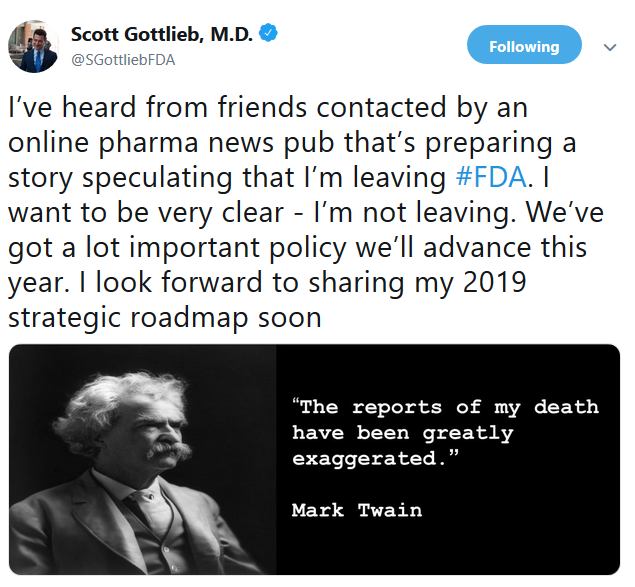
“I’m immensely grateful for the opportunity to help lead this wonderful agency,” FDA commissioner Scott Gottlieb, MD, tweeted. ”This has been a wonderful journey and parting is very hard.”

In a lengthier statement to FDA staff, Gottlieb cited family reasons for his departure.

“There’s perhaps nothing that could pull me away from this role other than the challenge of being apart from my family for these past two years and missing my wife and three young children,” Gottlieb said, indicating he would remain on the job until next month.

Gottlieb is a 46-year old cancer survivor and a former consultant to several drug companies. He commutes to Washington DC from his home in Westbury, Connecticut, where he lives with his wife and three daughters.   

President Trump tweeted that Gottlieb “has done an absolutely terrific job” and “he and his talents would be greatly missed!”

SCOTT GOTTLIEB, MD

There was no indication that Gottlieb was in trouble or that he was forced out. The FDA is currently involved in a number of complex and controversial regulatory issues, from high drug prices and e-cigarettes to medical marijuana and the opioid crisis.

The timing of Gottlieb’s departure is puzzling, however, because he tweeted two months ago that he had no intention of resigning after hearing from friends about speculation in the news media that he was leaving.

“I want to be very clear — I’m not leaving. We’ve got a lot of important policy we’ll advance this year,” Gottlieb tweeted, adding a famous quote from Mark Twain that reports of his death “have been greatly exaggerated.”

The 60 Minutes report alleged that the FDA caved into lobbying pressure from the pharmaceutical industry in 2001 by changing the warning labels on OxyContin and other opioid medications to indicate they were effective for long term use.

Gottlieb was not working at FDA when the agency made its labeling decision, but pledged last week in a lengthy essay that the FDA would “learn from past mistakes” and take “a much more aggressive approach to regulatory action” involving opioids.

Gottlieb joins a long list of agency directors and cabinet members who have resigned from the Trump administration, including former Health and Human Services Secretary Tom Price, who was forced out over excessive travel expenses and other ethical lapses, and former CDC director Brenda Fitzgerald, who resigned after it was disclosed she invested in tobacco and drug companies.

How Sodas and Smoking Worsen Disability

By Pat Anson, PNN Editor

Most doctors will tell you that smoking and drinking sweetened beverages like soda every day will lead to poor health. They can also worsen your risk of disability if you have rheumatoid arthritis or multiple sclerosis, according to new studies.

Researchers in Germany wanted to know how diet can affect the progression of multiple sclerosis (MS), a chronic disease that attacks the body’s central nervous system, causing numbness, difficulty walking, paralysis, loss of vision, fatigue and pain.  

They surveyed 135 MS patients to see how close their diet was to the Dietary Approaches to Stop Hypertension (DASH) diet – which limits foods that are high in saturated fat and sugar – and recommends whole grains, fruits and vegetables, low-fat dairy products, lean meats, poultry and fish, nuts and legumes.

Researchers did not find a link between what the participants ate and their level of disability, but there was a strong association with what they drank.

"While we did not find a link with overall diet, interestingly, we did find a link with those who drank sodas, flavored juices and sweetened teas and coffees," said study author Elisa Meier-Gerdingh, MD, of St. Josef Hospital in Bochum, Germany.

MS patients who consumed the largest amounts of sugar-sweetened beverages – averaging about 290 additional calories per day -- were five times more likely to have severe disability than people who rarely drank sweetened beverages.

"While these results need to be confirmed by larger studies that follow people over a long period of time, and the results do not show that soda and sugar-sweetened beverages cause more severe disability, we do know that sodas have no nutritional value and people with MS may want to consider reducing or eliminating them from their diet," said Meier-Gerdingh, who will present her findings at the American Academy of Neurology's annual meeting in Philadelphia in May.

Smoking Worsens Risk of Rheumatoid Arthritis

Previous studies have also found that smoking increases your chances of having MS and several other chronic pain conditions.

A new study by researchers at Brigham and Women's Hospital in Boston demonstrated for the first time that women who stop smoking can reduce their risk of developing the most severe form of rheumatoid arthritis (RA). But it takes time to have a beneficial effect.

"Ours is the first study to show that a behavior change can reduce risk for seropositive RA. Risk isn't just about genes and bad luck--there's a modifiable environmental component to the onset of this disease and a chance for some people to reduce their risk or even prevent RA," said corresponding author Jeffrey Sparks, MD, of the Division of Rheumatology, Immunology and Allergy at the Brigham.

Sparks and colleagues analyzed data from the Nurses' Health Study, which tracked the long-term health of registered nurses from across the U.S.  Brigham researchers identified over 1,500 nurses who developed RA, but they were most interested in those with "seropositive" RA as opposed to "seronegative" RA. Patients with seropositive RA generally have more severe joint deformities and disability.

For seropositive RA, the risk of disability began to go down about five years after women quit smoking and continued to decrease the longer they stayed non-smokers. Participants who quit for good reduced their risk of seropositive RA by 37 percent after 30 years. The team did not find any association between seronegative RA and smoking.

"One of the lessons here is that it takes sustained smoking cessation to reap the full benefit," said Sparks, who published his findings in the journal Arthritis Care & Research.

"Whereas for other diseases, such as cardiovascular disease, quitting smoking can provide a more immediate effect, here we're seeing benefits decades later for those who quit smoking permanently."

RA is a chronic autoimmune disease in which the body’s own defenses attack joint tissues, causing pain, inflammation and bone erosion. While the biological mechanisms that link smoking and the development of RA are unclear, Sparks believes that smoking may contribute to the formation of RA-related antibodies that increase inflammation.

In future studies, Brigham researchers want to extend their investigations to include men and to see if smoking cessation can prevent the formation of RA-related antibodies and stop progression of the disease.

A Recap of Rare Disease Week on Capitol Hill

By Barby Ingle, PNN Columnist

Last week was Rare Disease Week on Capitol Hill, and I was excited to join hundreds of patients, advocates and caregivers in Washington, DC to raise awareness about rare diseases.

I was once again chosen as the Arizona “team leader” by the EveryLife Foundation, and led our group in meetings with our Senators and Representatives. I handled logistics for the legislative conference, helped organize the strategy for the meetings and kept the group on task during our discussions.

The EveryLife Foundation is a science-based advocacy organization that works to bring lifesaving treatments to 30 million Americans with rare diseases. There are more than 7,000 rare diseases. The foundation’s focus is on educating and advocating for rare disease patients to ensure they are heard by policy makers in government and by healthcare organizations.

The week kicked off on Sunday with a cocktail reception and Rare Disease documentary screening at the Ronald Reagan Building. We spent Monday at a legislative conference, where we heard from industry lobbyists about important federal bills and learned how the National Institutes of Health (NIH) is researching new treatments for rare diseases.

On Tuesday we split up and went to scheduled meetings with our members of the House and Senate on Capitol Hill. This day of lobbying was for patients, caregivers, and patient advocacy groups only.

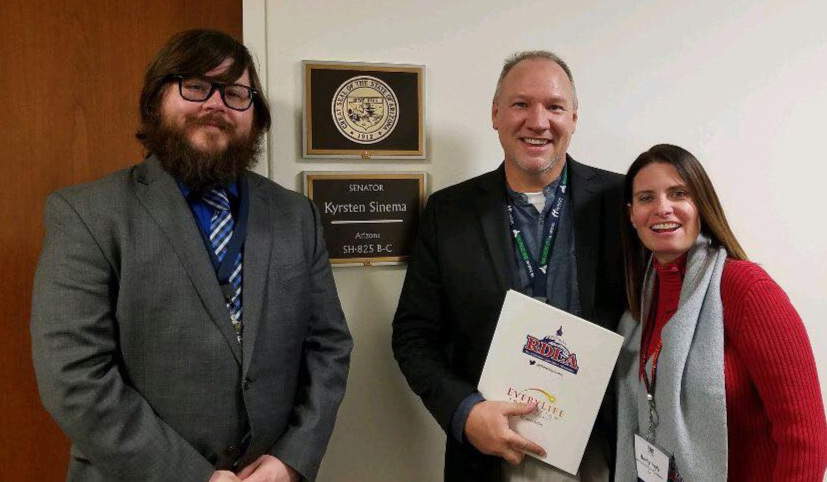
Patient and fellow advocate Mike Heil joined me and my husband Ken as we visited the offices of Sen. Kyrsten Sinema (D-AZ), Sen. Martha McSally (R-AZ) and Rep. Paul Gosar (R-AZ).

One of my favorite parts of the week was Wednesday, when there was a briefing by the Rare Disease Congressional Caucus at the Dirksen Senate Office Building. The caucus is a bipartisan group of over 100 senators and representatives that meets to pursue common legislative objectives to help rare disease patients. You don’t hear much about bipartisanship these days on Capitol Hill, but this group has been active since 2010.

The caucus meeting was followed by a reception that featured a collection of art from across the rare disease community. This event was designed to help educate Congress about rare diseases and to empower patients to express their pain through artwork.

Thursday was full of action as we gathered at the NIH headquarters in Bethesda, MD to mark the global observance of Rare Disease Day. The day featured multiple interactive panel discussions on rare disease research, patient registries and cancer research initiatives, with the theme being "no disease left behind, no patient left behind."

Other highlights included posters and exhibits by rare disease groups and researchers as well as artwork, videos and campus tours. Global Genes participants were encouraged to wear their favorite pair of jeans and to use the social media tag, #RDDNIH to help raise awareness.

This was my second time participating in Rare Disease Week on Capitol Hill. I hope you join me in person or online next year for Rare Disease Week 2020. For more information on the next event, visit the website of Rare Disease Legislative Advocates (RDLA).

Barby Ingle lives with reflex sympathetic dystrophy (RSD), migralepsy and endometriosis. Barby is a chronic pain educator, patient advocate, and president of the International Pain FoundationShe is also a motivational speaker and best-selling author on pain topics.

More information about Barby can be found at her website. 

The information in this column should not be considered as professional medical advice, diagnosis or treatment. It is for informational purposes only and represents the author’s opinions alone. It does not inherently express or reflect the views, opinions and/or positions of Pain News Network.

Laser Spine Institute Shuts Down

By Pat Anson, PNN Editor

The Laser Spine Institute, which once ran a nationwide chain of surgery centers that specialized in “minimally invasive” spinal procedures, has abruptly ceased operations due to financial problems.

The company had four remaining surgery centers in St. Louis, Cincinnati, Scottsdale and Tampa, Florida, where it is headquartered. It recently closed three other surgery centers in an effort to control costs and restructure.

Despite “significant cost saving” in recent months, Laser Spine Institute said in a new release that it was “unable to attract the necessary financing” to continue operating while it sought Chapter 11 bankruptcy protection. About 600 employees are affected.

"My heart goes out to our great, dedicated staff who have stuck with us through all of our adversity and worked so tirelessly to help us right the ship," said Jake Brace, Laser Spine Institute's CEO, who was brought in last year to help restructure the company.

The company said it would contact patients slated for surgery and those in post-operative care and refer them to other medical facilities in their area.

Laser Spine Institute treated patients with neck and back pain caused by spinal stenosis, degenerative disc disease, pinched nerves, bone spurs, herniated discs, sciatica and other chronic conditions.

Although it claimed to have 98% patient satisfaction rate, the company was hit with dozens of malpractice lawsuits, including one by superstar wrestler Hulk Hogan, who claimed its treatments were ineffective and cost him $50 million in lost revenue. Hogan reportedly settled out of court for $10 million.

Last year the family of a Pennsylvania woman who died hours after being discharged from a Laser Spine Institute surgery center was awarded $20 million in a wrongful death lawsuit.

A competing surgery center also sued Laser Spine Institute for offering illegal incentives to patients, such as paying for their airfare and hotel expenses, which is prohibited under Medicare guidelines. Nine surgeons told Bloomberg Businessweek that the company was doing spinal surgeries that were often unnecessary or inappropriate.