Crackdown on Opioids and Benzodiazepines Ignores Their Benefits

By Roger Chriss, PNN Columnist

The overdose crisis is driving a lot of panicky policy to more closely regulate the prescribing of scheduled drugs, from oxycodone and other opioids to clonazepam and other benzodiazepines, which are used to treat anxiety.

A California doctor was recently accused of unprofessional conduct and could lose her license for prescribing “excessive amounts of opioid medications and benzodiazepines.” And a New Jersey doctor faces criminal charges for prescribing the so-called “Holy Trinity” of opioids, benzodiazepines and muscle relaxers.

The crackdown on opioids and benzodiazepines may help reduce overdose fatalities, but it also risks depriving people of beneficial drugs. Research is finding new benefits for familiar drugs that may slow diseases and improve quality of life.

In a recent Phase III clinical trial, a “novel” combination drug was shown to ease Charcot-Marie-Tooth disease. The drug – called PXT3003 -- provided “meaningful improvement” for people with a hereditary neuropathy that results in a progressive loss of sensation and motor function.

This is a significant advance for people with Charcot-Marie-Tooth disease, which currently has no treatment. The FDA recently gave PXT3003 its “fast track” designation, which speeds the development of drugs for which there is an unmet medical need.

PXT3003 is a combination of three familiar drugs, naltrexone (an opioid receptor blocker), baclofen (a muscle relaxant), and sorbitol (an alcohol sugar). The how and why of this combination of drugs is not well-understood at present. The manufacturer Pharnext says there are “multiple main mechanisms of action” that improve nerve, muscle and immune cells.

In other words, research on existing drugs with known risk profiles has led to a novel treatment. Ordinarily, the use of an opioid and a muscle relaxant is regarded as clinically inadvisable and is actively counseled against in many prescribing guidelines.

Benzodiazepine Research

A similar outcome is occurring with long-term benzodiazepine therapy in congestive heart failure (CHF). An editorial in Psychotherapy and Psychosomatics reported that low-to-moderate doses of benzodiazepines “seem to be helpful in silent myocardial ischemia, angina, essential hypertension, and CHF, especially in patients with comorbid anxiety.”

This builds on research from Taiwan in 2014 showing that anti-anxiety medications are “associated with a decreased risk of cardiac mortality and heart failure hospitalization in patients after a new myocardial infarction.”

Long-term benzodiazepine therapy is already seen as important in the treatment of rapid eye movement sleep behavior disorder, a condition in which causes people to act out vivid and violent dreams, often injuring themselves or bed partners. Low-dose clonazepam therapy for months or even years turns out to be a highly effective treatment.

In the same fashion, benzodiazepines are used to treat stiff-person syndrome, a rare neurological disorder that causes extreme muscle rigidly and spasms that can make walking impossible. According to the National Institutes of Health, therapy to treat stiff-person syndrome includes “anti-anxiety drugs, muscle relaxants, anti-convulsants, and pain relievers.”

‘Political Interference’ in Medicine

But treatments for these disorders and the development of new regimens for other disorders may be impeded under current federal and state laws and guidelines. Recently a coalition of six physician groups called on state legislatures to end their “political interference” in the practice of medicine and the patient-physician relationship.

“The insertion of politics between patients and their physicians undermines the foundation of trust this relationship is built on and inhibits the delivery of safe, timely, and comprehensive care. Outside interference endangers our patients’ health by limiting, and sometimes altogether eliminating, access to medically accurate information and to the full range of health care,” the coaltion warned.

Physicians should never face imprisonment or other penalties for providing necessary care. These laws force physicians to decide between their patients and facing criminal proceedings.
— Coalition of physician groups

“Physicians should never face imprisonment or other penalties for providing necessary care. These laws force physicians to decide between their patients and facing criminal proceedings. Physicians must be able to practice medicine that is informed by their years of medical education, training, experience, and the available evidence, freely and without threat of criminal punishment.”

The statement was released by the American Academy of Family Physicians, American Academy of Pediatrics, American College of Physicians, American Congress of Obstetricians and Gynecologists, American Osteopathic Association and American Psychiatric Association.

As the past couple of years have shown, prescribing guidelines have a way of leading to blanket prohibitions. And a risk of blanket prohibitions is that we may miss important benefits.

Roger Chriss lives with Ehlers Danlos syndrome and is a proud member of the Ehlers-Danlos Society. Roger is a technical consultant in Washington state, where he specializes in mathematics and research.

The information in this column should not be considered as professional medical advice, diagnosis or treatment. It is for informational purposes only and represents the author’s opinions alone. It does not inherently express or reflect the views, opinions and/or positions of Pain News Network.

Beautifully Catastrophic

By Mia Maysack, PNN Columnist

Whatever I do, there is going to be detrimental repercussions to my health and I do it anyway. Because if I didn't, I may as well be dead. At least in the sense of the quality of life I'd be lacking.

I have a love for creative expression through dance. As a young girl swimming and diving were my passions, but after a freak accident in the water gave me bacterial meningitis and chronic migraine, I found another passion in the form of dancing.

Over the years, my ability to dance had lessened and getting a nerve disorder diagnosis was another wake-up call. But who's to know what the future holds. It’s wise to make good use of this gift while still able.

I am lucky to get a few solid moments of dancing and when I get to the point of breaking a sweat, heightened pain is just about guaranteed as a result.

What's a person to do, if they can’t do what they love? For me, the answer has been to pursue it at a lighter extent, a handful of times per month as opposed to every day as it was in the past.   

My movement has evolved into a demonstration of my ailments --- to acknowledge and release them, while providing outside space for them to breathe. We all have unique traits and possess individualized talents that I believe were given to us as gifts to provide back to the world. 

I submitted this creative dance video to the 4th Annual Migraine Moment Short Film contest. It’s dedicated to those mourning the loss of who they were or wanted to be before becoming a Pain Warrior.

Prior to the making of this video, there was a solid month of resilience training. After recording it, I crawled into bed and rocked myself in response to the excruciating pain induced by dancing.  

The pain was horrendous and lasted for days, but I felt gratitude to have had even just a few moments to do something that brings me joy. I worked hard for that extra Spoon to be able to continue on through discomfort. It’s empowering to reclaim a part of myself in the midst of what can feel like broken pieces.   

A lot of us have had to give up things we've enjoyed. That’s another realm of grief that ordinarily doesn't make it to the surface, because we're fixated on just getting by one moment at a time. That alone takes much of our energy. 

It's imperative that we not allow our ailments or conditions to become our identity. I no longer look at it as if I “make myself sick” by engaging in this release. I already am sick. And that's not my fault either.   

I've found when I take conscious time to engage in meaningful activities that aren't revolved around being sick that there’s an impactful sense of replenishment. 

Some of us have been dealing with our battles for longer than we even want to think about or have situations that are expected to be incurable or life-long. What if we shifted our focus on what we can do right now? 

A lot of odds may be stacked up against us but we need not underestimate the power within an adequate self-care approach and routine. Although we've fallen down 7 times, we must rise up 8 -- and as many more times it takes.

It's important to mourn our losses so we may then find the strength to move on from them. It provides the opportunity to re-invent ourselves, which in my experience has been necessary more times than I'm able to count.  

I've referred to my chronic conditions as a thief. These illnesses have taken away jobs, social engagements and the concept of commitment. It's devastating to pick up the broken pieces of a shattered life, especially when it happens repeatedly.  

Alas, the good news is that our mindset is entirely within our power. What can be done with this pain, how will it be productively used?

There will always be those that’ll suggest I shouldn’t ever wear headphones, blast loud music or engage in any sudden movements. But I’ll never give it up!!

Mia Maysack lives with chronic migraine, cluster headaches and fibromyalgia. Mia is the founder of Keepin’ Our Heads Up, a Facebook support group, and Peace & Love Enterprises, a wellness coaching practice focused on holistic health.

The information in this column should not be considered as professional medical advice, diagnosis or treatment. It is for informational purposes only and represents the author’s opinions alone. It does not inherently express or reflect the views, opinions and/or positions of Pain News Network.

Judge Rules FDA Can Regulate Stem Cells

By Pat Anson, PNN Editor

A federal judge has ruled that the U.S. Food and Drug Administration does have the legal authority to regulate stem cells made from adipose tissue – a patient’s own fat cells.

The decision is a blow to U.S. Stem Cells, a Florida-based company that produces and markets stem cells derived from body to treat rheumatoid arthritis, lupus and other chronic illnesses. At least three of its patients were blinded after having the stem cells injected into their eyes while being treated for macular degeneration.

The FDA has been struggling in recent years to rein in the fast-growing stem cell industry, which often markets procedures that the agency considers unproven and potentially dangerous.

“Cell-based regenerative medicine holds significant medical opportunity, but those in this field who do not operate in compliance with the law can potentially cause serious harm to patients,” acting FDA Commissioner Ned Sharpless, MD, said in a statement.

“The FDA has advanced a comprehensive policy framework to promote the development and approval of regenerative medicine products. But at the same time, the FDA will continue to take action — such as issuing warning letters or initiating court cases — against clinics that abuse the trust of patients and endanger their health with inadequate manufacturing conditions or by manufacturing and promoting products in ways that make them drugs under the law, but which have not been proven to be safe or effective for any use.”

The FDA sent a letter to U.S. Stem Cell nearly two years ago warning the company that its laboratory safety standards were inadequate and could lead to contamination.  A year later, the agency sought a permanent injunction against the company, which led to Monday’s court decision by U.S. District Judge Ursula Ungaro.  

“The clinic and its leadership have put patients at serious risk through their disregard of the law and prior FDA warnings. This decision today is a victory for the FDA’s work to stop these bad actors and to protect patients,” said Peter Marks, MD, director of the FDA’s Center for Biologics Evaluation and Research.

U.S. Stem Cell and its chief science officer Kristin Comella have yet to respond to the judge’s ruling. In the past, they have argued the FDA doesn’t have the legal authority to regulate cells derived from a patient’s own body tissue.

The Los Angeles Times has reported that Comella’s purported PhD in “stem cell biology” was issued by an unaccredited online university in Panama. Three-year doctorate degrees can be purchased at Panama College of Cell Science for less than $9,000. The college has been vigorous in defense of its most famous graduate.

“Through Dr. Comella’s leadership, she and her team have trained and certified more than 700 physicians worldwide in adult stem cell therapy,” the college said recently in a blog post.

KRISTIN COMELLA

“So it is understandable that against this backdrop, America’s most gifted adult stem cell clinician, Kristin Comella, should be singled out for attack, criticism, and personal smearing in an effort to chill and silence her activities, if not outright ban them. A federal lawsuit was even filed against her to stop her treatment of patients and to slow the progress of adult stem cell therapy.”

In addition to the lawsuit against U.S. Stem Cell, the FDA is also seeking a permanent injunction to stop California Stem Cell Treatment Center and Cell Surgical Network Corporation from producing cellular products for stem cell clinics without FDA approval.

The agency has also issued warning letters to a number of clinics, including one recently sent to R3 Stem Cell of Scottsdale, Arizona warning that its treatments for Lyme disease, diabetes, Parkinson’s disease, stroke, kidney failure and amyotrophic lateral sclerosis (ALS) are not FDA approved.  

Prescription Opioids Play Minor Role in Massachusetts Overdoses

By Pat Anson, PNN Editor

Two new studies in Massachusetts – one of the states hardest hit by the overdose crisis – highlight the role of multiple substances in most overdose deaths and how limiting the supply of prescription opioids has failed to reduce the number of drug deaths.

Researchers at Boston Medical Center's Grayken Center for Addiction analyzed toxicology reports on nearly 2,250 fatal overdoses involving opioids in Massachusetts between 2014 and 2015. Overdose data in Massachusetts is considered more reliable because it is one of the few states to extensively use toxicology testing.

Only 9 percent of the deaths in Massachusetts involved prescription opioids alone. Most of the overdoses (72%) involved illicit fentanyl or heroin, while one in five (19%) involved a combination of heroin, fentanyl or prescription opioids.

Other substances such as alcohol, marijuana, stimulants (cocaine and methamphetamine) and non-opioid medications (benzodiazepines and gabapentin) were also frequently involved.

“Using multiple substances, in addition to opioids, is the rule rather than the exception for opioid-related deaths,” researchers reported in the journal Drug and Alcohol Dependence.

“Our study draws attention to the heterogeneity of the problem at hand and that there is not a one-size-fits-all approach to addressing the overdose epidemic, which is increasingly driven by polysubstance use.”

Over half of the Massachusetts overdoses involved someone with a diagnosed mental illness. Homelessness and a recent incarceration also raised the risk of a fatal overdose involving both opioids and stimulants.

"As a provider, these findings indicate a pressing need to address and treat not just opioid use disorder, but other substances that patients are misusing," said lead author Joshua Barocas, MD, an infectious disease physician at BMC. "To truly make a difference in reducing opioid overdose deaths, we must tackle issues such as homelessness and access to mental health services. This means not only investing in treatment but also implementing tailored programs that address the specific barriers to accessing care."

Opioid Prescriptions Down 39% since 2015

The number of opioid prescriptions has declined significantly in Massachusetts over the last four years, according to a recent report from the state’s Department of Public Health. In the first quarter of 2019 there were over 518,000 prescriptions filled for Schedule II opioids such as hydrocodone and oxycodone – a 39% decline from the first quarter of 2015.

But the decrease in prescriptions has failed to make much of a dent in Massachusetts’ opioid overdose rate, which peaked in 2016 with 2,100 deaths and remains stubbornly high.  

SOURCE: MASSACHUSETTS DEPARTMENT OF PUBLIC HEALTH

In 2018, nearly nine out of ten opioid-related deaths (89%) in the state involved illicit fentanyl, with cocaine (39%), heroin (32%), and benzodiazepines (40%) such as Xanax also commonly found.

Only about ten percent of the overdose deaths in the fourth quarter of 2018 involved prescriptions opioids, virtually unchanged from the 2014-2015 study.

A Pain Poem: What I Wouldn't Do

“What I Wouldn’t Do”

By Serina Mikunda

What would I do just to feel okay?
To feel less pain, for only a day?
I would hope and wish and pray
But what would I not do?

We would do most anything to quell desperation
To feel like more than an aberration
To achieve more than adaptation
But our laser tight focus can lead us askew

Would you take meds from a loved one's drawer?
Cause suffering to someone you say you adore?
Turn into someone you would abhor?
Changing from the person you once knew?

Would you use heroin you got off the street?
Would you lie, or would you cheat?
Dig in deeper to a life of deceit?
Justifying that relief was long overdue?

I know you are feeling a lot of abandonment
Not getting much help from the medical establishment
I offer only my view, no judgement
I know you are doing the best you can do

I know what is asked of you is crazy
I know people think that you're just lazy
And your ability to see beauty is getting hazy
These urges are getting hard to subdue

Think long-term, join us in the fight
Help us shoot sparks until something ignites
We will all warm ourselves by the firelight
Warming others by the light of our virtue

Because we have all walked through the fire
And we know all too well the situation is dire
But you have the chance to lead, to inspire
Whether it happens is all up to you

Serina Mikunda is an author and activist in St. Louis, Missouri. Serina lives with Ehlers-Danlos syndrome.

Pain News Network invites other readers to share their stories (and poems). Send them to:  editor@PainNewsNetwork.org

The information in this column should not be considered as professional medical advice, diagnosis or treatment. It is for informational purposes only and represents the author’s opinions alone. It does not inherently express or reflect the views, opinions and/or positions of Pain News Network.

Federal Task Force Releases ‘Roadmap’ to Treat Pain Crisis

By Pat Anson, PNN Editor

A federal advisory panel has released its final report on recommended best practices for acute and chronic pain management, calling for a balanced approach to pain treatment that focuses on individualized patient care – not rigid guidelines that triggered a pain crisis for millions of Americans.

“There is a no one-size-fits-all approach when treating and managing patients with painful conditions,” said Vanila Singh, MD, Task Force chair and chief medical officer of the HHS Office of the Assistant Secretary for Health. “Individuals who live with pain are suffering and need compassionate, individualized and effective approaches to improving pain and clinical outcomes. This report is a roadmap that is desperately needed to treat our nation’s pain crisis.”

Unlike previous federal efforts that focused primarily on limiting access to opioid medication while expanding access to addiction treatment, the 116-page report by the Pain Management Best Practices Inter-Agency Task Force took a more comprehensive approach to pain management that focused on the needs of patients, improving their quality of life, and establishing a “therapeutic alliance” between patient and clinician.   

The panel sought and received feedback from over 5,000 patients, advocates and healthcare providers on issues such as suicide, patient abandonment and the stigma associated with chronic pain. Several patient stories were incorporated into the final report.

Even longtime critics of federal pain care policies were impressed.

“This report from the HHS Pain Management Task Force is exceptional, in my view. Rarely have I seen a report that is of such high quality, with such reasonable, common-sense recommendations,” said Bob Twillman, PhD, former Executive Director of the Academy of Integrative Pain Management. “The willingness to recognize concerns expressed by people with pain and by healthcare providers is not something we have often seen, and it is refreshing to see those comments play an important role here.”

“I truly hope this is a huge step forward,” said Andrea Anderson, a pain sufferer and patient advocate. “I think there was much to be praised, such as the focus on individualized patient care, the need for multi-disciplinary treatment teams with care-coordination, a more robust focus on post-surgical pain management, an emphasis on moving complementary and integrative health approaches into the main stream of pain treatment, and the need for further education and research  on a number of important topics.”

No Repeal of CDC Guideline

The task force did not call for a repeal of the CDC’s controversial opioid prescribing guideline, but said the guideline should be clarified and updated with better evidence to supports its recommendations..

“The Task Force recognizes the utility of the 2016 CDC Guideline for many aspects of pain management and its value in mitigating adverse outcomes of opioid exposure. Unfortunately, misinterpretation, in addition to gaps in the guideline, has led to unintended adverse consequences. Our report documented widespread misinterpretation of the CDC Guideline — specifically, the recommendation regarding the 90 morphine milligram equivalents (MME) dose,” the report found.

“Educating stakeholders about the intent and optimal application of this guideline and re-emphasis of its core beneficial aspects are essential. Instances have been reported where the CDC Guideline was misapplied to the palliative care and cancer populations with pain and to providers who care for these patient populations.”

The task force called for a more “even-handed approach” to opioid prescriptions that allows doctors to use their own clinical judgement on how to treat patients.

“Various health insurance plans, retail pharmacies, and local and state governments are implementing the CDC Guideline as policy, limiting the number of days a patient can receive prescription opioids even when the seriousness of the injury or surgery may require opioids for adequate pain management for a longer period. A more even-handed approach would balance addressing opioid overuse with the need to protect the patient-provider relationship by preserving access to medically necessary drug regimens and reducing the potential for unintended consequences,” the task force said.

That kind of thinking is heresy to anti-opioid crusaders and politicians who consider the CDC guideline a cornerstone of the government’s war on drugs. Even before the task force report was finalized, 39 state and territory attorney generals wrote a letter of protest.   

“As a matter of public safety, there is simply no justification to move away from the CDC Guideline to encourage more liberal use of an ineffective treatment that causes nearly 50,000 deaths annually,” the letter warns. “It is incomprehensible that officials would consider moving away from key components of the CDC Guideline.”

Critics have also claimed that some task force members have a conflict-of-interest because of their financial ties to pharmaceutical companies. Oregon Sen. Ron Wyden (D) — who has received millions of dollars in campaign donations from healthcare companies and insurers — recently told Mother Jones that the task force was “being used as part of the industry’s broader effort to water down the CDC’s recommendations on opioid prescribing.”

The 29 members who served on the task force included representatives from the FDA, CDC, VA and Office of National Drug Control Policy; as well as academic and medical experts in pain management, addiction treatment, pharmacy, oncology, psychiatry and interventional medicine. There was only one patient advocate, Cindy Steinberg of the U.S. Pain Foundation.

Interestingly, Harold Tu, MD, the lone dentist on the panel, is the father-in-law of Andrew Kolodny, MD, the founder and Executive Director of Physicians for Responsible Opioid Prescribing (PROP), an anti-opioid activist group that played a key role in drafting the CDC guideline. Tu voted in favor of the task force’s final report.

The report’s recommendations are voluntary and not binding on the Department of Health and Human Services or anyone else. The task force was created in 2016 by the Comprehensive Addiction and Recovery Act to “determine whether there are gaps in or inconsistencies between best practices for pain management.”

Those gaps have been identified. Whether anyone will get to work and fill them is unclear.

“I think the task force provided a very good analysis of the problem with recommendations that if implemented should help millions of Americans with pain and reduce the problem with opioids,” says Lynn Webster, MD, past president of the American Academy of Pain Medicine and a PNN columnist.

“My concern is that there doesn't appear to be any teeth to the recommendations. I would like to have seen some specifics but that may have been too much to expect at this stage.”

Emmy Winning Video Perpetuates Myths About Addiction

By Dr. Lynn Webster, PNN Columnist

"Rebekkah's Story" recently won an Emmy for Short Format Daytime Program at the 46th Annual Daytime Emmy Awards. The six-and-a-half minute video was produced by Truth Initiative, a non-profit created to campaign against tobacco use that recently launched an opioid misuse and education campaign called The Truth About Opioids.

Rebekkah is a young woman addicted to opioid medication and heroin who spent five days in a “treatment box” publicly detoxing on a New York City street.  The documentary has also been broadcast on television and can be seen online:  

Though billed as educational, the producers of “Rebekkah’s Story” failed to accurately convey the facts. This is not the first time we've seen movies about drug use and addiction that misinform.  

I wrote a blog not long ago about the problems with two mainstream movies -- "Ben Is Black" and "Beautiful Boy"— both of which reinforced unhelpful narratives about addiction. In both films, good people from good families found themselves caught in the web of addiction, seemingly with no personal responsibility for it. 

"Rebekkah's Story" continues in the same tradition. It exploits Rebekkah and her experience while perpetuating three myths about addiction that do us no favors as our nation struggles with this terrible illness.

At the same time, millions of Americans with chronic pain are being forced off opioid medication — left to suffer in part because of these three myths:

Myth #1: Heroin Use Starts With Prescription Drugs

The movie begins with a misleading statistic: “Eighty percent of heroin users started with a prescription painkiller.” That implies taking painkillers as prescribed for medical use leads to using heroin 80% of the time, and that is not accurate. 

The 80% statistic comes from a 2013 study of heroin users who reported nonmedical use of opioid pain relievers before initiating heroin. Most of them had not been prescribed those opioids for pain; they obtained the drugs from family or friends for nonmedical use.  

In fact, the vast majority of people who use heroin have abused other substances prior to abusing prescription opioids. Usually, their long history of substance abuse begins in adolescence with tobacco, alcohol and other substances besides opioids. Moreover, by 2015, one in three heroin users initiated their opioid use with heroin.

Rebekkah's situation -- progressing from oxycodone to heroin -- was unusual. The video presents her story as a cautionary tale of what can happen if you use prescription opioids, but her story is atypical. Almost always, there are other factors that contribute to the transition from appropriate use to abuse and addiction. This is a truth not addressed in the film. 

The film begs the question: Why did Rebekkah start to use heroin? What did heroin provide that she could not resist? 

Myth #2: Withdrawal Is Synonymous to Addiction

"She had been an accomplished dancer and athlete, and that was lost when her addiction took over her life and self-image," explains the video's website. "Now Rebekkah is regaining control of both — courageously making her detox public in order to help other people while she works towards a new start."

The producers of “Rebekkah’s Story” present a poignant story, but they propose that withdrawal is synonymous with addiction. That is incorrect.

Withdrawal may be associated with addiction, but it does not necessarily follow from addiction. Not everyone who goes through withdrawal has the disease of addiction, and not everyone with addiction must go through the agonizing withdrawal that Rebekkah did.

A major problem that most people with addiction face is the stigma associated with their disease and their inability or unwillingness to obtain help. Fear of facing a legal penalty (such as incarceration) or a social consequence (estrangement from family members, job loss, etc.) often prevent those who use heroin from seeking treatment.  

People experience opioid withdrawal largely because the healthcare and criminal justice systems make access to appropriate and safe treatment illegal, unavailable or unaffordable.  

Myth #3: Detoxification Ends Addiction 

The ending of "Rebekkah's Story" differs from reality, too. Addiction is usually a life-long disease and patients who recover frequently relapse. The video's tidy and triumphant resolution does not accurately reflect what occurs in real life.  

It's troubling how the producers went about creating the video in ways that subtly strengthen and exploit the three myths about addiction.

Their set was a makeshift hospital room projected in a cubicle visible to pedestrians walking near Times Square. The setting was essentially a stage for performance art at Rebekkah's expense.

Rebekkah takes on the role of a gladiator engaging in combat against a metaphorical beast: the agony of opioid addiction.

She is the heroine with whom we should empathize. We are supposed to share her anger toward the wicked doctors who prescribed her pain medication. 

People watch as Rebekkah suffers from withdrawal without receiving the medical treatment that should be available to anyone in withdrawal. It was surprising that, in the documentary, an addiction physician was complicit in exploiting a person undergoing withdrawal.   

No one should be forced to experience what Rebekkah went through. She should have been given appropriate medical care as she recovered from heroin abuse. 

"Rebekkah's Story" claims to tell the truth about opioids. It does not. All it shows is Rebekkah’s decision to voluntarily and publicly experience a horrible withdrawal that was both unnecessary and avoidable.

Unfortunately, compliant and non-addicted pain patients who are currently being forced off opioid medication don’t have the same stage to tell their stories. Their voices often go unheard, and their agonies are invisible.

Lynn R. Webster, MD, is a vice president of scientific affairs for PRA Health Sciences and consults with the pharmaceutical industry. He is a former president of the American Academy of Pain Medicine and is author of the award-winning book “The Painful Truth” and co-producer of the documentary “It Hurts Until You Die.”

You can find him on Twitter: @LynnRWebsterMD.

The information in this column should not be considered as professional medical advice, diagnosis or treatment. It is for informational purposes only and represents the author’s opinions alone. It does not inherently express or reflect the views, opinions and/or positions of Pain News Network.

A Pained Life: Who Benefits From the Opioid Crisis?

By Carol Levy, PNN Columnist

For the first time in almost 40 years, I have to fight to get my codeine prescription filled.

I understand intellectually what so many pain patients have said about the frustration, upset and upheaval they experience when a pharmacist refuses to fill their prescription or insurance refuses to pay for it. Or harder still, what they go through having their opioid medications cut down or stopped completely.

But I did not understand the emotional side of it until it happened to me.

The insurance company refused to pay for my codeine prescription. They had no problem filling it for the last many, many years but suddenly they need "authorization" from the doctor. How does that make sense? Writing the prescription was authorizing. Why do they need to add a second permission?

It is now over three weeks. The pharmacist tells me they have contacted the doctor's office three times: "You need to call them and find out why they haven't responded."

When I call the office, they tell me the pharmacy never sent over the forms they need.

So I call the pharmacy back. They recite a fax number for the doctor’s office. It is not the right number. I give them the number the doctor's office just gave me. “We'll try it again right now,” she says.

I keep my fingers crossed and hope I don't run out of pills before it is resolved — if it is resolved.

The pharmacy clerk and I talked the day the prescription was refused by the insurance company. I was venting my frustration over not being able to get the prescription filled, especially because it is the same prescription I have had for years, one that was always covered by my insurance.

To my surprise she says: "It is not just narcotics. Many insurance companies are refusing to cover or making unwarranted demands, requiring many more hoops to jump through. They have refused to cover certain creams and hormones, other prescriptions, non-narcotics that are routinely given and, until now, paid for by the insurance companies."

This is appalling. And makes no sense.  

But then I start thinking about it and was struck by a thought: Yes, there is an opioid crisis. And we’ve all heard the reasons they blamed patients for the “crisis.”  But I think there may be another factor at play: the profit margin.

After all, if we pay insurance premiums but they refuse to pay for our medication -- forcing some folks to pay cash rather than wait for all the rigamarole to be completed -- then the insurance company comes out way ahead. They get our monthly fees and work to make sure we get as little as possible in return. 

I hope I am merely being paranoid. But somehow, I doubt it.

Carol Jay Levy has lived with trigeminal neuralgia, a chronic facial pain disorder, for over 30 years. She is the author of “A Pained Life, A Chronic Pain Journey.” 

Carol is the moderator of the Facebook support group “Women in Pain Awareness.” Her blog “The Pained Life” can be found here.

The information in this column should not be considered as professional medical advice, diagnosis or treatment. It is for informational purposes only and represent the author’s opinions alone. It does not inherently express or reflect the views, opinions and/or positions of Pain News Network.

FDA Clears New Wearable Device for Migraine

By Pat Anson, PNN Editor

A neuromodulation device worn on the arm and controlled by a smartphone has been cleared by the Food and Drug Administration for the treatment of acute migraine. The Nerivo Migra device was developed by Theranica, an Israeli medical technology company, and is expected to be available in the U.S. later this year.

The FDA’s market authorization is based on the results of a double-blind, placebo-controlled study of Nerivo Migra involving 252 migraine patients at 12 headache clinics in the U.S. and Israel. The study findings were recently published in Headache: The Journal of Head and Face Pain.

Over two-thirds of patients who wore the device for 30-45 minutes during a migraine attack experienced pain relief two hours after treatment, compared to only about a third of those who wore a sham device. For many, the pain relief was sustained 48 hours after treatment.

THERANICA IMAGE

"The results of the study demonstrate a high efficacy ratio for single as well as multiple attacks, both at two and 48 hours after treatment," said lead investigator Dr. Brian Grosberg, MD, director of the Hartford Healthcare Headache Center in Connecticut.

Placed on the upper arm, Nerivio Migra uses smartphone-controlled electrical pulses to disrupt pain signals. At this time, the device is only indicated for acute treatment of migraine with or without aura in adult patients who do not have chronic migraine. But company officials say it shows potential as a treatment for other pain conditions.

"We have identified at least 7 different painful conditions that may be relieved by this non-invasive, drug-free technology after appropriate clinical development," said Alon Ironi, CEO and co-founder of Theranica. "While the company is preparing to launch the Nerivio Migra in the United States market later this year at an affordable price, we remain committed to continuing our clinical development, expanding the use of remote electrical neuromodulation therapy for additional indications.”

Theranica has not disclosed what its “affordable price” will be. Over the next four months, the company said it would begin a series of clinical studies of Nerivo Migra at 30 headache clinics in the U.S. to assess patient selection and correct product use.

A handheld neuromodulation device – called gammaCore –  is currently available for about $600 to treat migraine and cluster headache.  Another device used to treat migraine – called Cefaly – is worn on the head and costs about $350. A new class of injectable migraine drugs is even more expensive, costing about $7,000 a year or $580 for each monthly dose.

"Over the last 20 years my colleagues and I have used triptans and ergots for acute migraine treatment. There is a large unmet need for new treatments in this population when these medications are not effective, are contra-indicated, or have non-tolerable side effects,” said Stephen Silberstein, MD, a member of Theranica’s medical advisory board.

“In addition, triptans and most current acute migraine medications, including over-the-counter drugs indicated for migraine, are associated with medication-overuse headache, which is associated with increased frequency of migraine attacks, and often results in chronic migraine.”

Migraine affects a billion people worldwide and about 36 million adults in the United States, according to the American Migraine Foundation. In addition to headache pain and nausea, migraine can cause vomiting, blurriness or visual disturbances, as well as sensitivity to light and sound. Women are three times more likely to suffer from migraine than men.

Liability Trial of Opioid Drug Maker Could Set Precedents

By Jackie Fortier, Kaiser Health News

All eyes will be on Oklahoma this week when the first case in a flood of litigation against opioid drug manufacturers begins. Oklahoma Attorney General Mike Hunter’s suit alleges Johnson & Johnson, the nation’s largest drugmaker, helped ignite a public health crisis that has killed thousands of state residents.

With just two days to go before the trial, one of the remaining defendants, Teva Pharmaceutical, announced an $85 million settlement with the state on Sunday. The money will be used for litigation costs and an undisclosed amount will be allocated “to abate the opioid crisis in Oklahoma,” according to a press release from Hunter’s office.

In its own statement, Teva said the settlement does not establish any wrongdoing on the part of the company, adding Teva “has not contributed to the abuse of opioids in Oklahoma in any way.”

That leaves Johnson & Johnson as the sole defendant.

Court filings accuse the company of overstating the benefits of opioids and understating their risks in marketing campaigns that duped doctors into prescribing the drugs for ailments not approved by regulators.

The bench trial — with a judge and no jury — is poised to be the first of its kind to play out in court.

Nora Freeman Engstrom, a professor at Stanford Law school, said lawyers in the other cases and the general public are eager to see what proof Hunter’s office offers the court.

“We’ll all be seeing what evidence is available, what evidence isn’t available and just how convincing that evidence is,” she said.

Most states and more than 1,600 local and tribal governments are suing drugmakers and distributors. They are trying to recoup billions of dollars spent on addressing the fallout tied to opioid addiction.

Initially, Hunter’s lawsuit included Purdue Pharma, the maker of OxyContin. In March, Purdue Pharma settled with the state for $270 million. Soon after, Hunter dropped all but one of the civil claims, including fraud, against the remaining defendants. Teva settled for $85 million in May, leaving Johnson & Johnson as the only opioid manufacturer willing to go to trial with the state.

But he still thinks the case is strong.

“We have looked at literally millions of documents, taken hundreds of depositions, and we are even more convinced that these companies are the proximate cause for the epidemic in our state and in our country,” Hunter said.

The companies involved have a broad concern about what their liability might be, said University of Kentucky law professor Richard Ausness.

“This case will set a precedent,” he said. “If Oklahoma loses, of course they’ll appeal if they lose, but the defendants may have to reconsider their strategy.”

With hundreds of similar cases pending — especially a mammoth case pending in Ohio — Oklahoma’s strategy will be closely watched.

“And of course lurking in the background is the multi-state litigation in Cleveland, where there will ultimately be a settlement in all likelihood, but the size of the settlement and the terms of the settlement may be influenced by Oklahoma,” Ausness said.

Rx Opioids ‘Useful Products’

The legal case is complicated. Unlike tobacco, where states won a landmark settlement, Ausness pointed out that opioids serve a medical purpose.

“There’s nothing wrong with producing opioids. It’s regulated and approved by the Food and Drug Administration, the sale is overseen by the Drug Enforcement Administration, so there’s a great deal of regulation in the production and distribution and sale of opioid products,” Ausness said. “They are useful products, so this is not a situation where the product is defective in some way.”

It’s an argument that has found some traction in court. Recently, a North Dakota judge dismissed all of that state’s claims against Purdue, a big court win for the company. In a written ruling that the state says it will appeal, Judge James Hill questioned the idea of blaming a company that makes a legal product for opioid-related deaths.

“Purdue cannot control how doctors prescribe its products and it certainly cannot control how individual patients use and respond to its products,” the judge wrote, “regardless of any warning or instruction Purdue may give.”

Now the Oklahoma case rests entirely on a claim of public nuisance, which refers to actions that harm members of the public, including injury to public health.

“It’s sexy you know, ‘public nuisance’ makes it sound like the defendants are really bad,” Ausness said.

If the state’s claim prevails, Big Pharma could be forced to spend billions of dollars in Oklahoma helping ease the epidemic. “It doesn’t diminish the amount of damages we believe we’ll be able to justify to the judge,” Hunter said, estimating a final payout could run into the “billions of dollars.”

Hunter’s decision to go it alone and not join with a larger consolidated case could mean a quicker resolution for the state, Ausness said.

“Particularly when we’re talking about [attorneys general], who are politicians, who want to be able to tell the people, ‘Gee this is what I’ve done for you.’ They are not interested in waiting two or three years [for a settlement], they want it now,” he said. “Of course, the risk of that is you may lose.”

Oklahoma has the second-highest uninsured rate in the nation and little money for public health. Of the $270 million Purdue settlement, $200 million is earmarked for an addiction research and treatment center in Tulsa, though no details have been released. An undisclosed amount of the $85 million Teva settlement will also go to abating the crisis.

This story is part of a partnership that includes StateImpact Oklahoma, NPR and Kaiser Health News. KHN is an editorially independent program of the Henry J. Kaiser Family Foundation which is not affiliated with Kaiser Permanente.

Pain Clinic Sign ‘Unauthorized and Untrue’

By Pat Anson, PNN Editor

A Florida-based chain of surgery centers and pain clinics says a sign that briefly appeared at one of its clinics implying that the company would no longer prescribe opioid medication is unauthorized and untrue.

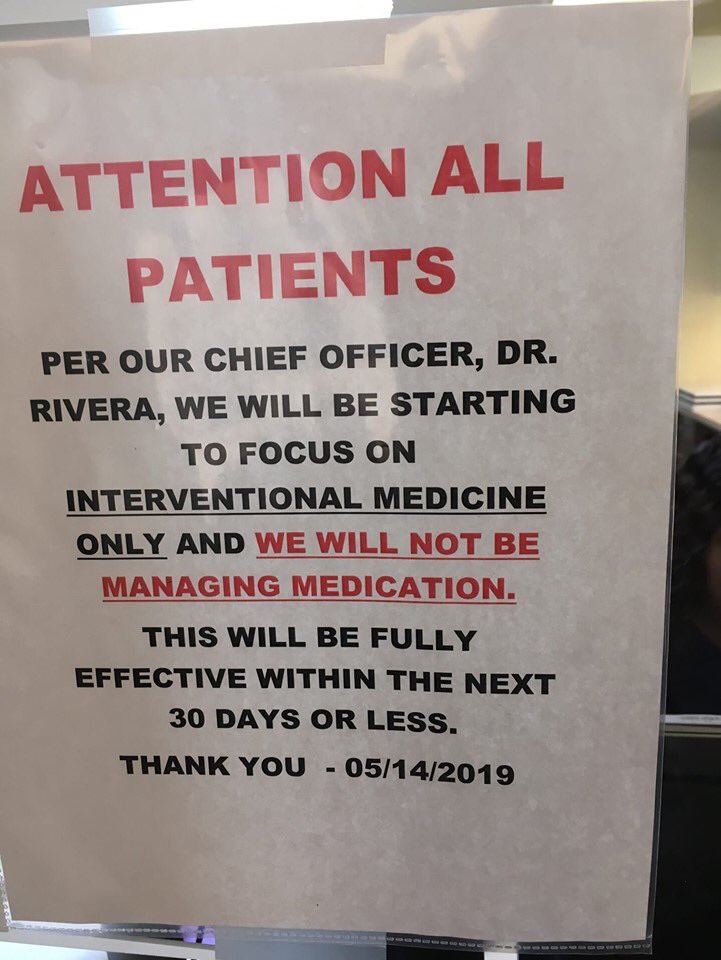
The sign appeared in a window at Physician Partners of America’s Jacksonville clinic on May 14.  Someone took a picture of the sign and posted it online, where it was widely shared on Twitter and Facebook among pain patients, advocates and doctors.

“ATTENTION ALL PATIENTS,” the sign said in bold red letters. “Per our chief (medical) officer, Dr. Rivera, we will be starting to focus on interventional medicine only and we will not be managing medication. This will be fully effective within the next 30 days or less.”

For someone taking opioid medication for chronic pain, the threat of being cutoff is very real. The potential number of patients that would be impacted would also be significant. Physician Partners of America (PPOA) treats around 20,000 patients in Florida and Texas.

The problem with the sign is that it isn’t true, according to the company.

“This sign was brought to our attention through social media. It was in no way authorized or approved by management, and its message is untrue. It resulted from an employee’s misinterpretation of our goal to reduce opioid dependence,” Maria Hickman, PPOA’s social media and content specialist, said in a statement on the company’s website.

“We recognize the opioid crisis backlash. As an organization, we sympathize with the plight of people who rely on, but who do not intentionally abuse, prescription opioid medications to manage their chronic pain. We aim to show them what we consider a better, safer way to reduce or eliminate pain.”

That “safer way” is interventional pain management, a more aggressive form of treatment that includes epidural steroid injections, nerve blocks, “minimally invasive” spinal procedures, Botox injections, spinal cord stimulators and stem cell therapy. Interventional methods are more expensive than pain medication, are not always covered by insurance, and many patients believe they are neither safer or effective.

PPOA said it would continue prescribing opioids to patients when it is appropriate, adding that they would be tapered to lower doses. “Patients are and will continue to be titrated down according to CDC guidelines; however, there is no cut-off date,” Hickman said.

That part of the company’s statement reflects a common misconception about the CDC’s controversial guideline, which is voluntary and does not mandate tapers. The 2016 guideline only recommends tapering “if benefits do not outweigh harms of continued opioid therapy” and explicitly says tapering should be voluntary, with the patient’s consent.

“Clinicians should emphatically review benefits and risks of continued high-dosage opioid therapy and should offer to work with patients to taper opioids to safer dosages. For patients who agree to taper opioids to lower dosages, clinicians should collaborate with the patient on a tapering plan,” the guideline says.

That part of the guideline has been so widely ignored that CDC Director Robert Redfield, MD, released a letter last month warning doctors not to taper patients without their consent.

“The Guideline does not endorse mandated or abrupt dose reduction or discontinuation, as these actions can result in patient harm,” Redfield said. “The Guideline includes recommendations for clinicians to work with patients to taper or reduce dosage only when patient harm outweighs patient benefit of opioid therapy.”

The marketing of Physician Partners of America clearly states a preference for interventional therapy over opioid medication, so patients who go to a PPOA clinic shouldn’t be surprised if tapering or discontinuation is recommended.

“At its foundation, PPOA uses interventional pain management modalities to treat pain at its source instead of masking it with medication,” the company says. “We have championed remedies to the opioid crisis in public forums, in the media, in televised town halls and at medical conventions. PPOA physicians strictly follow the prescribing laws of the states in which they operate.”

A new law recently went into effect in Florida limiting the initial supply of opioids to 3 days, with a 7-day supply allowed if it is medically necessary. However, the law only applies to acute, short-term pain.  Most of PPOA’s patients suffer from chronic back pain and other long-term chronic conditions.

Stem Cell Therapy Can Cure Sickle Cell Disease

By A. Rahman Ford, PNN Columnist

Sickle cell disease is a debilitating illness that affects the hemoglobin in red blood cells.  The disorder causes the normally-round hemoglobin molecules to adopt an abnormal crescent or sickle shape. As a result, the patient suffers from anemia, repeated infections and periodic episodes of pain. 

According to the National Institutes of Health, sickle cell disease affects millions of people worldwide and is the most commonly inherited disorder in the U.S.  It affects approximately 70,000 – 80,000 Americans.  Blacks and Latinos are hit especially hard, with 1 in 500 and 1 in 1,000 being affected, respectively.

Pain is a major symptom of sickle cell disorder.  According to the Mayo Clinic, the pain develops when the sickle-shaped red blood cells block blood flow to the tiny blood vessels in your chest, abdomen and joints.  Pain in the bones can also occur.  Pain crises may last from hours to weeks and may require hospitalization.  According to mainstream medicine, there is no cure.  The only option is symptom management.

However, stem cell therapy (SCT) has brought new hope. Recently, it was reported that 11-year-old Valeria Vargas-Olmedo was cured of painful sickle cell disease.

That’s right. Cured.

In its first stem cell transplant for sickle cell disease, doctors at Loma Linda Children’s University Hospital in California used a stem cell transplant from Valeria’s father to cure the disease. This is noteworthy because the genetic match was only half – what is called haploidentical transplant. 

VALERIA VARGAS-OLMEDO AND HER PARENTS

Prior to treatment, Valeria could not walk, go to school and experienced debilitating chronic pain. After conditioning with chemotherapy, the father’s cells were transfused directly into his daughter. After the treatment, Dr. Akshat Jain pronounced young Valeria “disease free.” 

The University of Illinois Hospital also offers SCT for sickle cell disease.  Using cells from a healthy, tissue-matched full sibling, patients receive immunosuppressive drugs and very low dose radiation before being infused with the cells. This method is less harsh and has fewer side effects than chemotherapy. The donor blood cells produce healthy new blood cells in the patient, eliminating symptoms and making the disease undetectable. 

In 2011, Iesha Thomas was the first patient to receive SCT for sickle cell disease at UI Health.  Six months later, she was cured.

Brothers Julius and Desmond Means were cured the following year.  In this video, Julius says having sickle cell disease as a young child was “like being tortured from the inside out.”


Saint Louis Children’s Hospital offers a similar therapy and uses cells from bone marrow, circulating blood or donated umbilical cord blood.

Unfortunately, not every hospital offers SCT for sickle cell disease.  However, if you are suffering from the illness it might be a good idea to contact a hospital that does, make an appointment with an experienced physician, and see what your options are. 

It is extraordinarily rare that mainstream medicine uses the term “cure” in association with any chronic disease.  Stem cell therapy has ushered in a new cure-based paradigm of medicine.  We need to take advantage of it.

A. Rahman Ford, PhD, is a lawyer and research professional. He is a graduate of Rutgers University and the Howard University School of Law, where he served as Editor-in-Chief of the Howard Law Journal. He earned his PhD at the University of Pennsylvania.

Rahman lives with chronic inflammation in his digestive tract and is unable to eat solid food. He has received stem cell treatment in China. 

The information in this column should not be considered as professional medical advice, diagnosis or treatment. It is for informational purposes only and represent the author’s opinions alone. It does not inherently express or reflect the views, opinions and/or positions of Pain News Network.

Honoring Our Veterans on Memorial Day

By Dr. Lynn Webster, PNN Columnist

On Memorial Day, we honor those who lost their lives while serving in the United States military. It is a time when we should also acknowledge the sacrifices all veterans have made, and continue to make, for our country.

Physical and mental trauma are some of the most devastating consequences veterans suffer as a result of their sacrifices. Opioid drug use in military populations is nearly triple that of civilian populations.

A 2014 JAMA study reported that more than 44 percent of active-duty U.S. infantry soldiers suffered from chronic pain. Other reports state that combat injuries cause most of the chronic pain.  

That doesn't surprise me. I've received many emails from veterans who describe their struggles to find treatment for the pain they acquired during their military service.

Here are three typical stories from veterans:

A Persian Gulf veteran, John, is being forced to slowly taper from a combination of opioids that he claims worked for him. His dose of medication is being tapered because his physician feels pressured to comply with recommendations of the CDC Opioid Prescribing Guideline.  

John is afraid that the new limit will be inadequate to treat his pain.  

"I am VERY upset with my government, as their draconian 'solutions' to the perceived 'drug problem' will only exacerbate pain issues with legitimate chronic pain patients. I don't think their efforts will have ANY effect on the illegal drug problems that plague the U.S.," John wrote me.  

He may be more fortunate than others. At the time John contacted me, he had a pain specialist who was still able and willing to support his need for treatment. 

Others have not been as lucky. Mark is a 100% disabled veteran with post-traumatic stress disorder (PTSD), severe lower back pain and severe knee problems. After surgery, Mark was only able to get a two week supply of pain medicine. For two and a half months, he suffered without any medication until he was able to go outside the VA system to obtain oxycodone.  

Then there is Jason. He is a young American hero who used opioids to self-medicate his PTSD and chronic pain. His story may help people understand why there are approximately 20 suicides each day by America's veterans.  

Although firearms are a common method of suicide with veterans, the use of prescription medication has also been implicated. Having access to opioids gives veterans a less violent way to end their lives. 

Unfortunately, the number of veteran suicides may even be underreported. As many as 45 percent of drug overdoses -- including those of military members -- might be related to suicide, according to a former past president of the American Psychiatric Association. 

Veterans' suicides make up 18% of all suicides in the U.S. The suicide rate among members of the military is nearly 3 times that of civilians.  In 2012, for the first time in a generation, the number of active duty soldiers who killed themselves exceeded the number of soldiers who were killed in battles.

Approximately 20% of recent war veterans suffer from PTSD, in addition to chronic pain. PTSD was the most common mental health condition for almost 1 million soldiers who served between 2001 and 2014. Nearly one in four of those who served during those years developed PTSD within a year of coming back home. 

Much of the general public and many mental health professionals have doubted that PTSD was a true disorder until recently. Even now, soldiers with symptoms of PTSD face rejection by their military peers and are often feared by society as potentially dangerous. Movies ranging from "American Sniper" to "Thank You for Your Service" frequently depict characters with PTSD struggling to fit into society.  

In real life, those with PTSD symptoms are often labeled as “weak” and removed from combat zones, and sometimes they are involuntarily discharged from military service. 

These disturbing trends are difficult to read anytime, but they seem especially troubling as we commemorate Memorial Day. This is the time for us to acknowledge that those who have served our country deserve the best medical care available.  

Five years ago, retired Gens. Wayne Jonas, MD, and Eric Schoomaker, MD, wrote a commentary in JAMA titled “Pain and Opioids in the Military: We Must Do Better.” Recognizing that veterans often misuse opioids to self-medicate mental health disorders, they proposed teaching members of the military a greater degree of self-management skills such as problem-solving and goal setting.   

Of course, self-management would be preferable to using opioids if it were sufficient to afford veterans a quality of life they deserve. However, teaching self-management skills is often insufficient. That is clear in the cases of John, Mark and Jason. 

On Memorial Day, I hope we can take a moment to think about the men and women who have fought -- and sometimes died -- for a country they believed in.  

I also hope we honor the living by showing them that they deserve treatment for their chronic pain, PTSD, addiction and any other health care issues they may have. We owe it to them. 

Lynn R. Webster, MD, is a vice president of scientific affairs for PRA Health Sciences and consults with the pharmaceutical industry. He is a former president of the American Academy of Pain Medicine and is author of the award-winning book “The Painful Truth” and co-producer of the documentary “It Hurts Until You Die.”

You can find him on Twitter: @LynnRWebsterMD.

The information in this column should not be considered as professional medical advice, diagnosis or treatment. It is for informational purposes only and represents the author’s opinions alone. It does not inherently express or reflect the views, opinions and/or positions of Pain News Network.

Fibromyalgia Stole My Life, Kratom Gave It Back

By Mary Ann Dunkel, Guest Columnist

Fibromyalgia stole my life more than 28 years ago. I have severe chronic pain and fatigue that limits my activities of daily living. Unless you have experienced unrelenting severe pain 24 hours a day, you cannot know the horror of it.

I have been prescribed more pharmaceuticals than I can remember and suffered damaging side effects from them. I've participated in psychotherapy, aqua therapy, multiple pain management programs, acupuncture and hypnosis. None of these modalities brought me relief and for quite some time I was bedridden and dependent on family for care.

My doctors have prescribed me morphine, fentanyl, oxycodone, tramadol and other medications to control the pain. None of them worked for very long and I could see these prescriptions were going to lead to addiction. Often, I weaned myself off them and suffered through terrible withdrawal because the small amount of relief they gave was not worth the risk of addiction or overdose death. Bottom line is these narcotics were not effective in treating my chronic pain.

There were times when I thought about taking my life because I just couldn't get a break from the pain and didn't think I could take it any longer.

Then a friend introduced me to kratom. She had been consuming it for more than 10 years without side effects or becoming addicted to it. I started my own journey consuming kratom.

Kratom is not a drug. It is a dietary supplement. It does not heal any disease, but it has certainly improved my quality of life. I am having pain free days and my energy level is greatly improved. Kratom has restored my ability to have a normal life and I can enjoy all sorts of activities that make my life rich and full.

Kratom does not make me high, nor do I experience side effects. I am now clear minded without the sedation caused by narcotics. And I am devastated that the FDA is working to ban the only thing that has helped me in the past 28 years.

MARY ANN DUNKEL

I am sick to death of reporters parroting the lies from the FDA and CDC. I implore you. The studies they have done are full of inaccuracies and half-truths. Independent studies of the autopsies in the so called kratom deaths have shown the victims had multiple medications in their systems. They also included a death caused by gunshot.

Eight leading scientists have studied kratom and found it to be safe. It has been used for hundreds of years without problem. It is not an opioid; it is related to the coffee plant. It does attach to the same receptors in the brain as opioids, but so do many other substances such as chocolate and milk.

I would suggest to you that the FDA wants it banned because it is cutting into Big Pharma's financial bottom line. People are finding the help they need without costly and deadly pharmaceuticals. I fear that if kratom is banned this country will see an epidemic of self-inflicted deaths by people who have no hope. Kratom would become a black market substance due to overreach by the government to protect the monies they get from pharmaceutical lobbies.

Please investigate these facts and do the right thing. Do a story on the positives of kratom.

Do you have a story you want to share on PNN? Send it to: editor@painnewsnetwork.org.

The information in this column should not be considered as professional medical advice, diagnosis or treatment. It is for informational purposes only and represents the author’s opinions alone. It does not inherently express or reflect the views, opinions and/or positions of Pain News Network.

American Pain Society Likely to File for Bankruptcy

By Pat Anson, PNN Editor

The board of directors of the American Pain Society (APS) is recommending to its members that the organization cease operations and file for bankruptcy, PNN has learned.

The APS is a non-profit, research-based organization that focuses on the causes and treatment of acute and chronic pain. Although many of its members are researchers and academics who are investigating non-opioid treatments for pain, the APS has been named as a defendant in numerous “spurious lawsuits” involving opioid prescriptions.

“Despite our best efforts, APS was unsuccessful in its attempts to resolve these lawsuits without the need for what will no doubt be lengthy and expensive litigation. The anticipated time-consuming and costly litigation combined with the declining membership and meeting attendance has created the perfect storm placing APS in a precarious financial position,” the board said in a letter sent to its members yesterday.

“Constrained by these unfortunate circumstances, we do not believe APS can continue to fulfill its mission and meet the needs and expectations of our members and community.”   

In order to proceed with a Chapter 7 bankruptcy filing, only 10% of the organization’s 1,173 active members need to approve the board’s recommendation. Assuming there are sufficient votes, an independent third party trustee would then be appointed by a bankruptcy judge and all lawsuits pending against APS will be subject to an automatic stay.

“This will allow APS to minimize legal expenses and maximize recoveries for its creditors, as opposed to future dissipation of assets in defending the lawsuits which have no end in sight,” the board wrote.

The APS membership vote will be tallied May 29th.

Sad day for U.S. pain research, education, advocacy and patient care,” APS member and Stanford University psychologist Beth Darnall, PhD, tweeted to her followers.

In recent years, thousands of lawsuits have been filed by states, cities and counties seeking to recover billions of dollars in damages caused by the “overprescribing” of opioid pain medication. The lawsuits initially focused on Purdue Pharma and other opioid manufacturers, but have recently expanded to include opioid distributors, wholesalers, pharmacies and professional medical organizations like the APS as defendants.

If the APS files for bankruptcy, it would be the second pain management organization to cease operations in recent months. In February, the Academy of Integrative Pain Management (AIPM) shutdown, largely due to financial problems.  

“It's really sad that pain organizations are failing,” said Bob Twillman, PhD, the former Executive Director of AIPM. “I'm not clear about the extent to which this was an anticipated or desired outcome of the lawsuits against opioid manufacturers, but it strikes me that an effort to say that we've been harming people by treating pain the wrong way has now eliminated two organizations focused on treating pain the way every guideline now says it should be treated, and on discovering new treatments that might obviate the need for opioids.”

Twillman says the shutdown of APS and AIPM will cause “significant gaps in the field” of pain management.

“The unintended consequences here may end up being quite ironic," he added.

Guilt by Association 

Like other professional medical organizations, APS relied on corporate donors to help pay for its annual meetings and widely respected publication, The Journal of Pain. That meant accepting nearly $1 million in donations from Purdue Pharma, Janssen, Depomed and other opioid manufacturers.

It also meant being targeted by lawyers and politicians in a campaign of guilt by association.

In 2018, APS was one of the medical societies and patient advocacy groups singled out by Missouri Sen. Claire McCaskill (D) in a Senate report that accused the organizations of being mouthpieces for opioid manufacturers. 

“Initiatives from the groups in this report often echoed and amplified messages favorable to increased opioid use — and ultimately, the financial interests of opioid manufacturers,” the report found.

McCaskill’s report failed to mention that she accepted nearly $500,000 in campaign donations since 2005 from the national law firm of Simmons Hanly Conroy, which represents many of the plaintiffs involved in opioid litigation. It has named the APS as a defendant in several of those lawsuits, along with American Academy of Pain Medicine and American Geriatric Society “for working with the manufacturing defendants in promoting opioids to doctors and patients.”

Simmons Hanly Conroy was the third largest contributor to McKaskill during her losing bid for re-election last year, donating over $400,000, an amount seven times larger than it gave to any other candidate in 2018, according to OpenSecrets.org.

According to its website, Simmons Hanly Conroy currently represents governmental entities in Illinois, Louisiana, Texas, and eight New York counties in opioid lawsuits. The law firm reportedly stands to collect one-third of the proceeds from opioid settlements, which could potentially reach $50 billion, according to a Bloomberg analyst.

‘Corrupting Influence’

APS is also mentioned in a congressional report released this week by Reps. Katherine Clark (D-MA) and Hal Rogers (R-KY). The “Corrupting Influence: Purdue and the WHO” report accuses the World Health Organization of being unduly influenced by Purdue Pharma and other opioid makers when it developed guidelines in 2011 and 2012 to treat pain in adults and children.

“The web of influence we uncovered, combined with the WHO’s recommendations, paints a picture of a public health organization that has been manipulated by the opioid industry,” the report said. “The investigation revealed that multiple organizations that claimed to be independent patient advocacy groups, including the American Pain Society, received significant payments from opioid manufacturers.”

The report does not mention that Rep. Clark has also accepted significant payments from drug makers. According to OpenSecrets.com, Clark has received over $522,000 in campaign donations from the healthcare industry since 2013, including donations from Pfizer, Celgene, Takeda, Biogen, Vertex, AstraZeneca and Sanofi.

Rep. Rogers has received over $581,000 in campaign donations from the healthcare industry during his 30 years in Congress.