
5 Myths About Opioids That I Believed, Until I Needed Them

By Crystal Lindell

I had been enduring debilitating pain for months by the time I was given my first hydrocodone prescription for chronic pain in 2013.

At the time, I didn’t even know that hydrocodone was an opioid.

I had only heard of Vicodin being an opioid, and that was only because I lived near the Wisconsin border, where there are lots of Packer fans. The news that former Green Bay quarterback Brett Favre had to go to rehab for his Vicodin use was part of the local conversation.

But I had no idea that hydrocodone was the active ingredient in Vicodin.

It’s been over a decade now, and I have come to rely on opioids to manage the chronic pain I have in my right ribs, which is technically called “intercostal neuralgia.”

Before I needed opioids for pain relief, I used to buy into a lot of common cultural myths about them. Below is a look at what I used to believe, and how my views eventually shifted.

Myth #1: Only People Who ‘Misuse’ Opioids Have Physical Withdrawal

When I got my first hydrocodone prescription, I didn’t know it was a controlled substance with strict limits on how often you can get refills. And I definitely didn’t know that I would go through withdrawal if I stopped taking them abruptly.

My doctor prescribed 10mg pills and the label said: “Take 1-2 every 4-6 hours.”

So, that’s exactly what I did: Two pills every four to six hours.

My pain was (and still is) intense, but at the time I was still trying to keep pace with my pre-chronic pain lifestyle, which meant doing everything possible to push the pain away so that I could work and have a somewhat normal life.

But that meant that I ran out of my prescription early – something I was not aware was even a problem. When the doctor’s office said I would need to wait a couple days for a refill, I didn’t think it would be a big deal. Surely, I could easily ride out a couple of days without hydrocodone, no problem. After all, I had been taking them as prescribed.

Yeah. That’s not what happened. Turns out you actually cannot go from 40 to 80 mg of hydrocodone a day to zero.

I naively went to work that day, and still remember the trauma of spending the entire shift in the bathroom with diarrhea, nausea, horrible flu-like aches, and an odd feeling of anxiety.

Turns out, anyone can go through withdrawal from opioids. There is no magic spell that doctors can cast to give you immunity from it, just because you’re taking opioids exactly as prescribed. Your body doesn’t know the difference.

And that physical withdrawal is also not indicative that you have “a problem.”

In fact, it’s one of the reasons I think the entire conversation around addiction is often more nuanced than people want to admit. Taking a dose to combat withdrawal is often labeled as “misuse” – even though anyone can have withdrawal. 

And anyone who’s been through it knows that you’ll do almost anything to make it stop.

Myth #2: The Best Way to Stop Using Opioids Is Quitting Cold Turkey

There’s a common myth that the best way to stop using an addictive substance is to go cold turkey. That’s usually not true for things like nicotine and alcohol, and it’s also not true for opioids.

I used to believe in the common framing for this. That if you stopped using opioids cold turkey, made it through 72 hours of withdrawal, and then took just one dose, it would reset the whole process. You’d have to go through withdrawal all over again.

That’s not true. In fact, taking a dose after going longer than usual without one is often part of the tapering process that works best for getting off opioids. 

Ideally, you taper off slowly by lowering the amount you’re taking each day. So, if you’re on 40mg of hydrocodone a day, the best way to stop using it is to take 35mg daily for a week or so, then 30 mg, and so on until you get down to zero.

That’s the best way to reach success long-term and actually get off the medication, if that is your goal.

If you’re looking for more realistic tips on how to stop taking opioids, see “A Survival Guide for Opioid Withdrawal” that I wrote for PNN with my partner a few years ago. You can trust the advice because we learned it ourselves the hard way.

Myth #3: Opioid Doses Last as Long as Manufacturers Claim

I was eventually prescribed extended-release morphine pills for my chronic pain, and was told that each one should last a full eight hours. I was also told that hydrocodone should last four to six hours.

Unfortunately, neither of those things are true. So-called “extended release” morphine lasts about four hours, while the short-acting hydrocodone can stop working in just two or three hours.

So, it’s not wise to take another dose whenever your pain comes back. If you do that, you’ll end up running out of your prescription early every month.

Instead, you should expect to go through periods throughout the day when your pain starts to come back – and then you have to count down until your next dose.

Myth #4: Even One Dose of an Opioid Creates a High Risk of Addiction

Before I started taking opioids, I honestly believed the myth that just one 10mg dose of Vicodin could result in life-long addiction.

In reality, that’s nearly impossible. In fact, even among patients who take opioids long-term, the rate of addiction is still incredibly low. Estimates vary widely, but according to experts who have studied it, people who take opioids over long periods have addiction rates of 1 to 3 percent.   

Opioids are often framed as being so addictive that anyone can get hooked, so any exposure to them is dangerous and risky. In reality, low-dose opioids are incredibly safe, and most patients taking prescription opioids never develop an addiction to them

Myth #5: If Someone Is ‘Really’ in Pain, Doctors Will Prescribe Opioids

I am a little ashamed to admit this, but I used to think of a Vicodin prescription as an indicator of whether or not someone’s pain was actually severe.

If a doctor prescribed Vicodin to someone, that meant they were in “real” pain.

Boy, was I wrong.

While dealing with pain myself, I quickly learned that doctors will often ignore severe pain in patients because they don’t want to deal with the hassle of prescribing a controlled substance. That reluctance has only gotten worse since 2013. Much worse.

These days, doctors withhold opioid medication from post-op patients, cancer patients, palliative care patients, and even hospice patients. All of them are still in very real pain though.

Whether or not a doctor validates your pain with an opioid prescription has no bearing on how severe your pain actually is.

There’s a lot of misinformation about opioids and these are just some of the common myths perpetuated about them. While it’s understandable to believe them if you’ve actually never needed opioids, I encourage everyone to keep an open mind. After all, if you wait until you or a loved one needs opioids to see the truth, it may be too late.
VA Researchers Say Opioid Guidelines Should Include Cancer Patients

By Pat Anson

Most medical guidelines that limit the use of opioid pain medication are intended only for patients suffering from “non-cancer” pain. The CDC, for example, says that its guideline “does not apply to patients undergoing cancer-related pain treatment,” because the potential for addiction and overdose “might not be relevant” to patients at risk of dying.

That long-held policy is now being questioned. In a study published in CANCER, the medical journal of the American Cancer Society, VA researchers say cancer patients are living longer and may be at risk of “persistent opioid use.”

The study, led by researchers at the VA Medical Center in Philadelphia and the Perelman School of Medicine at the University of Pennsylvania, followed over 9,000 veterans who had surgery for early-stage cancer, mostly prostate, colon, bladder or lung cancers. About a third of those patients also needed chemotherapy, immunotherapy or radiation therapy.  

Thirteen months after surgery, about one in ten patients (10.6%) were still prescribed opioids for pain relief. And about 4% of them were co-prescribed benzodiazepines for anxiety, a combination of medications that some consider risky.

Although none of the veterans overdosed from taking opioids, and less than one percent (0.78%) were diagnosed with opioid use disorder, researchers say stronger measures are needed to limit the use of opioids by cancer patients.

“Minimizing opioid exposure associated with cancer treatment while providing effective pain control will decrease long-term health risks among cancer survivors,” said lead author Marilyn Schapira, MD, Professor of Medicine at the University of Pennsylvania and Co-Director at the Center for Health Equity Research at the VA Medical Center.

“Prescription opioid practices associated with cancer treatment may lead to unsafe and long-term opioid treatment (LTOT) and the related adverse outcomes of opioid use disorder, opioid overdose, and nonoverdose adverse events, including suicide.”

Schapira and her colleagues say medical guidelines that exclude cancer patients from opioid prescribing limits, such as the CDC guideline and the Department of Defense/Veterans Affairs guideline, should be rewritten.

“There may be benefits to extending general guidelines regarding prescription opioids to those facing cancer treatment in consideration of health and well-being during the years of survivorship," researchers concluded. “Efforts should be taken to mitigate long-term opioid use and its potential adverse effects in this population. This is especially true because cancer is increasingly recognized as a chronic condition, and survivors of cancer are living longer.”

Cancer patients with a history of chronic pain, greater comorbidities, lower socioeconomic status, and those who received chemotherapy were said to be at “especially high risk of opioid use in the year after surgery.”

Regardless of what the guidelines say, many U.S. patients being treated for cancer already have trouble getting opioids for pain control. A recent study found a 24% decline in opioid prescribing to cancer patients on Medicare after the CDC’s 2016 guideline. Another study found the number of cancer patients seeking treatment for pain in hospital emergency rooms doubled. About a quarter of the patients had cancer pain so severe they were admitted.  

Other studies have found that cancer patients are getting smaller and fewer doses of opioids, while some can’t get them at all. A recent survey of palliative care doctors in New York City found that nine out of ten (88%) reported frequent obstacles in getting opioids for their patients due to tight supplies at pharmacies. Nearly a third said the shortages resulted in sub-optimal care for their patients.

One of the more egregious examples of a cancer patient being unable to get opioids was the case of April Doyle, a California woman with metastatic breast cancer who couldn’t get her Norco prescription filled at a Rite Aid pharmacy. April recorded a tearful video in the pharmacy parking lot and shared it online, where it went viral. Outrage over the incident led to an apology from Rite Aid and her prescription being filled. April died a year later at the age of 42, leaving behind a 9-year-old son.

How To Get More Pain Relief From Rx Opioids

By Drs. Forest Tennant, Martin Porcelli and Scott Guess

Due to a multitude of legal restrictions and biases, many persons living with pain who take opioid medication can’t get enough relief to function, be comfortable, and have quality of life.

Summarized below are some of the ways we have found to boost or enhance the pain-relieving effect of prescription opioids.

Take a Booster (Potentiator)

Opioids trigger the endorphin receptor to relieve pain. If you simultaneously take a medicine or supplement that triggers a different receptor or suppresses inflammation, pain relief is enhanced. This boosting effect is the reason opioids are combined with acetaminophen or aspirin in pain medications such as Vicodin or Percocet.

Here is a list of potential non-prescription boosters. You may have to experiment to find one or two that boost the potency of your opioid. You can swallow the booster with your oral opioid or take the booster within 15 minutes after taking the opioid.

  • Taurine 1000 mg

  • Glutamine 1000 mg

  • Lion’s Mane mushrooms

  • Quercetin

  • Benadryl

  • St. John’s wort

  • White willow bark

  • Cannabidiol (CBD)

  • Kava

  • Palmitoylethanolamide (PEA) 300 to 600 mg

Under the Tongue vs Swallowing

A medication dissolved under the tongue (sublingually) is always more potent than if you swallow it whole. That’s because digestion in the stomach and intestines may wipe out as much as 50% of an oral opioid’s pain relief capability.

Try dissolving an opioid tablet under your tongue. You may find it much more effective, as it will enter the bloodstream faster. We recommend starting with half your usual dose and increase it as needed, being careful not to exceed your usual dose. Discuss this practice with your medical practitioner.

Don’t Forget Aspirin

Aspirin has been disparaged to the point that people are afraid to take it. It is still one of the very best opioid boosters. Dissolve it under your tongue to avoid stomach upset or bleeding.

Receptor Health

The central nervous system has many receptors (“action points”) that relieve pain. They need to stay healthy and active to provide maximal pain relief. A good nutrition program that consists of daily protein, vitamin D, and magnesium helps keep nerve receptors healthy and maximizes opioid pain relief.

Bedtime Preparation

Some medicinals taken at bedtime have the effect of making the next day’s opioids more effective. Here are some suggestions:

  • Metformin 500 mg + L-Theanine 200 mg

  • Tryptophan 500 to 1000 mg

  • Amitriptyline

  • Pentoxifylline

Cannabis

Some persons find that cannabis provides significant pain relief, while others experience little or no relief.

Do not take cannabis products within four hours before or after an opioid dosage to avoid over-sedation, loss of coordination, and mental deficiency.

Kratom

Kratom is the only non-prescription herbal supplement that has opioid-like effects. It comes in a variety of forms, usually natural leaf powder that is sold in capsules, edibles or drinks.

Kratom can be simultaneously taken with opioids, but be wary of synthetic or concentrated kratom as its potency may be unknown or too high.

All persons who take opioids for pain relief should find a kratom form and dosage that relieves pain. Given today’s adverse attitudes and restrictions on opioids, a person relying on prescription opioids alone must face the fact that their medical practitioners may end or reduce their opioid therapy at any time. When this happens, you may have to rely on kratom.

Prescription Boosters

Many physicians prescribe non-opioid medications for pain relief, such as gabapentin (Neurontin), clonidine, tizanidine, baclofen, and pregabalin (Lyrica). These can also be used to boost the potency of opioids. Take these medications within four hours before or after your opioid dose.

Forest Tennant, MD, DrPH, is retired from clinical practice but continues his research on the treatment of intractable pain and arachnoiditis. Readers interested in learning more about his research should visit the Tennant Foundation’s website, Arachnoiditis Hope. You can subscribe to its research bulletins here.

Martin J. Porcelli, DO, is a family medicine doctor in Pomona, CA and is affiliated with Casa Colina Hospital.

Scott Guess, PharmD, operates an independent pharmacy and clinic in Atascadero, CA that specializes in pain management and arachnoiditis.

The Tennant Foundation gives financial support to Pain News Network and sponsors PNN’s Patient Resources section. 

7 Tips to Help Fight a Health Insurance Denial

By Lauren Sausser, KFF Health News

When Sally Nix found out that her health insurance company wouldn’t pay for an expensive, doctor-recommended treatment to ease her neurological pain, she prepared for battle.

It took years, a chain of conflicting decisions, and a health insurer switch before she finally won approval. She started treatment in January and now channels time and energy into helping other patients fight denials.

“One of the things I tell people when they come to me is: ‘Don’t panic. This isn’t a final no,’” said Nix, 55, of Statesville, North Carolina.

To control costs, nearly all health insurers use a system called prior authorization, which requires patients or their providers to seek approval before they can get certain procedures, tests, and prescriptions.

Denials can be appealed, but nearly half of insured adults who received a prior authorization denial in the past two years reported the appeals process was either somewhat or very difficult, according to a July poll published by KFF, a health information nonprofit that includes KFF Health News.

“It’s overwhelming by design,” because insurers know confusion and fatigue cause people to give up, Nix said. “That’s exactly what they want you to do.”

The good news is you don’t have to be an insurance expert to get results, she said. “You just need to know how to push back.”

Here are tips to consider when faced with a prior authorization denial:

1. Know your insurance plan

Do you have insurance through your job? A plan purchased through healthcare.gov? Medicare? Medicare Advantage? Medicaid?

These distinctions can be confusing, but they matter a great deal. Different categories of health insurance are governed by different agencies and are therefore subject to different prior authorization rules.

For example, federal marketplace plans, as well as Medicare and Medicare Advantage plans, are regulated by the U.S. Department of Health and Human Services. Employer-sponsored plans are regulated by the Department of Labor. Medicaid plans, administered by state agencies, are subject to both state and federal rules.

Learn the language specific to your policy. Health insurance companies do not apply prior authorization requirements uniformly across all plans. Read your policy closely to make sure your insurer is following its own rules, as well as regulations set by the state and federal government.

2. Work with your provider to appeal

Kathleen Lavanchy, who retired in 2024 from a job at an inpatient rehabilitation hospital in the Philadelphia area, spent much of her career communicating with health insurance companies on behalf of patients.

Before you contact your health insurer, call your provider, Lavanchy said, and ask to speak to a medical care manager or someone in the office who handles prior authorization appeals.

The good news is that your doctor’s office may already be working on an appeal.

Medical staffers can act as “your voice,” Nix said. “They know all the language.”

You or your provider can request a “peer-to-peer” review during the appeals process, which allows your doctor to discuss your case over the phone with a medical professional who works for the insurance company.

3. Be organized

Many hospitals and doctors use a system called MyChart to organize medical records, test results, and communications so that they are easily accessible. Similarly, patients should keep track of all materials related to an insurance appeal — records of phone calls, emails, snail mail, and in-app messages.

Everything should be organized, either digitally or on paper, so that it can be easily referenced, Nix said. At one point, she said, her own records proved that her insurance company had given conflicting information. The records were “the thing that saved me,” she said.

“Keep an amazing paper trail,” she said. “Every call, every letter, every name.”

Linda Jorgensen, executive director of the Special Needs Resource Project, a nonprofit offering online resources for patients with disabilities and their families, has advised patients who are fighting a denial to specifically keep paper copies of everything.

“If it isn’t on paper, it didn’t happen,” she said.

Jorgensen, who serves as a caregiver to an adult daughter with special needs, created a free form you can print to help guide you when taking notes during phone calls with your insurance company. She advised asking the insurance representative for a “ticket number” and their name before proceeding with the conversation.

4. Appeal as soon as possible

The silver lining is that most denials, if appealed, are overturned.

Medicare Advantage data published by KFF in January found that nearly 82% of prior authorization denials from 2019 through 2023 were partially or fully overturned upon appeal.

But the clock is ticking. Most health plans give you only six months to appeal the decision, according to rules laid out in the Affordable Care Act.

“Don’t dillydally,” Jorgensen advised, especially if you’re sending a paper appeal, or any supporting documents, through the U.S. Postal Service. She recommends filing quickly, and at least four weeks before the deadline.

For the sake of speed, some people are turning to artificial intelligence for help crafting customizable appeal letters.

5. Ask your HR department for help

If you get your health insurance through an employer, there’s a good chance your health plan is “self-funded” or “self-insured.” That means your employer contracts with a health insurance company to administer benefits, but your employer shoulders the cost of your care.

Why does that matter? Under self-funded plans, decisions about what is or isn’t covered ultimately rest with your employer.

Let’s say, for example, your doctor has recommended that you undergo surgery, and your insurer has denied prior authorization for it, deeming the procedure “not medically necessary,” a phrase commonly used. If your plan is self-funded, you can appeal to the human resources department at your job, because your employer is on the hook for your health care costs — not the insurer.

Of course, there’s no guarantee your employer will agree to pay. But, at the very least, it’s worth reaching out for help.

6. Find an advocate

Many states operate free consumer assistance programs, available by phone or email, which can help you file an appeal. They can explain your benefits and may intervene if your insurance company isn’t complying with requirements.

Beyond that, some nonprofit advocacy groups, such as the Patient Advocate Foundation, might help. On the foundation’s website is guidance about what to include in an appeal letter. For those battling severe disease, foundation staffers can work with you one-on-one to fight a denial.

7. Make noise

We’ve written about this before. Sometimes, when patients and doctors shame insurers online, denials get overturned.

The same holds when patients contact lawmakers. State laws regulate some categories of health insurance, and when it comes to setting policy, state lawmakers have the power to hold insurance companies accountable.

Reaching out to your legislator isn’t guaranteed to work, but it might be worth a shot.

Finally, if you’re interested in sharing your experiences with a journalist, fill out this form. We’d like to hear from you.

KFF Health News is a national newsroom that produces in-depth journalism about health issues.

Experimental Brain Implant Gives Long-Term Relief from Chronic Pain

By Crystal Lindell

An experimental brain implant that detects when someone is in pain and responds by stimulating the brain with tiny electrodes provided long-term relief from chronic pain, according to a small new study led by researchers at the University of California, San Francisco (UCSF) 

The preprint study, which has not yet been peer-reviewed, involved six patients with severe chronic nerve pain that did not respond to conventional treatment. The patients were hospitalized for 10 days so that researchers could put temporary electrodes in their brains to target areas involved in pain processing with deep brain stimulation (DBS). 

Of the six patients, five had clinically meaningful pain relief. Those five patients then had the experimental DBS implants permanently placed in their brains. Over the next six months, brain activity and pain signals were recorded to create a personalized “map” of each brain 

The system then used each patient’s unique brain signals (pain “biomarkers”) to decide in real time when to turn the low frequency stimulation on or off. Referred to as “closed-loop DBS,” the implants did not run continuously, but automatically adjusted when pain was felt and turned off when patients were asleep. 

Patients were also given sham placebo stimulation in brain areas outside the ideal location to serve as a comparison..  

The closed-loop DBS system worked better than the placebo treatment. Researchers say they identified several brain areas that gave quick pain relief when stimulated, and that they could accurately predict people’s pain levels just from their brain activity. 

On average, the DBS implants reduced pain intensity by 50 percent, while the sham treatment increased pain levels. Patients also were able to walk further after real stimulation – their step counts rose by 18 percent – compared to just one percent with sham treatment. For some patients, the benefits lasted over three years. 

“In five participants, we observed acute, rapid pain relief which translated into long-term efficacy after permanent closed-loop DBS for up to 3.5 years,” researchers reported. One patient who suffered from chronic pain after a stroke experienced “profound and durable pain relief.” 

The implant surgeries, however, were not trouble free. Two participants experienced serious adverse events related to surgery, but continued in the trial and experienced no serious adverse events related to stimulation. 

“Our study is limited by a small sample size, constraining the generalizability of these findings to other chronic pain syndromes. Although we observed initial evidence of sustained benefits up to 3.5 years, additional follow up is required to monitor for late-emerging tolerance,” researchers concluded.

Previous attempts to use deep pain stimulation for pain relief have been “inconsistent with poor long-term results.”  Those prior attempts, however, used a one size-fits-all-approach and did not target specific brain regions for each patient, as the UCSF study did..

DBS is being used to treat movement disorders associated with Parkinson’s disease, tremors, and other neurological conditions. It is also used to manage some psychiatric conditions. DBS is considered a treatment of last resort for patients that don’t respond well to medications or have severe side effects from them.

Childhood Trauma Raises Risk of Chronic Pain and Other Health Problems in Adults

By Crystal Lindell

A new study has found links between childhood trauma, chronic pain and several health problems in adults, according to research published in JAMA Network Open. 

Many previous studies have found that adverse childhood experiences (ACEs) increase the risk of chronic pain in adulthood. This study goes further, finding links between ACEs and severe pain, poor mental health, back and hearing problems, gastrointestinal issues, and hypertension at age 50.

However, it remains unclear how much of that association may be causation and how much is simple correlation. There is also a very real concern that the study will add to the stigma that chronic pain patients already face in the medical community. 

The research, which was conducted by a team of scientists at the University of Aberdeen, followed over 16,000 participants in the UK who were enrolled in the National Child Development Study.  All were born during one week in 1958 in England, Scotland or Wales, and were interviewed when they turned 50.

Researchers asked about their current health and whether they experienced any childhood trauma, such as abuse, neglect, bullying, divorce and financial stress, or if they had witnessed substance abuse, criminal activity or mental illness in their family.

While most studies report associations between ACEs and a single health outcome, researchers say this is the first research to look at a broad range of health outcomes.

They found that mental health problems and severe pain in adults had the strongest connections to childhood trauma. Men and women who experienced childhood adversity were more likely to suffer from depression, anxiety, and chronic pain at 50. 

Women who had an ACE were also more likely to have digestive problems, asthma or bronchitis compared to women who did not experience childhood trauma.

It’s important to note that the “higher risk” was often marginal, at best. For example, while 8.7% of men who experienced childhood trauma had severe pain at 50, that compares to 4.88% of men with severe pain at 50 who did not have an ACE. That’s just a 4% difference.

The same is true for women. Researchers found that 11.22% of women with childhood trauma had severe pain at 50, compared to 7.53% of women with no history of ACE. Again, just a 4% difference. Most researchers look for at least a 5% difference before calling an outcome “statistically significant.”

Little or no association was found between ACEs and migraine, hay fever or rhinitis, eyesight problems, or skin problems. 

Researchers found that the more trauma experienced, the greater the impact on health at age 50. People who experienced four or more types of childhood adversity had the highest risk of developing health problems as adults. Abuse, neglect, and family conflict had the most wide-ranging consequences. Just one adverse childhood event was found to increase the risk of dying before age 50.

The research was partly funded by Versus Arthritis, the UK’s largest charity supporting people with arthritis.

"This important research highlights the strong relationship between early childhood adversity and severe pain in adulthood. Findings suggest that our earliest experiences may be driving the health inequalities we know exist for people living with chronic pain,” Deborah Alsina, CEO of Versus Arthritis, said in a press release.

"Tackling childhood adversity is vital if our governments are serious about reducing the burden of chronic pain for the next generation."

Early Intervention and Prevention

Researchers say the study highlights the importance of preventing childhood trauma and providing early support to at-risk families.

"Going forward, screening for ACEs in primary care settings, and targeted interventions for at-risk individuals, may help reduce the burden of chronic pain, mental ill-health, and other poor health outcomes,” said lead author Gary Macfarlane, PhD, Chair of Epidemiology at the University of Aberdeen.

"While 'broad spectrum' interventions remain important to ameliorate the impact of ACEs, a targeted approach, considering types of ACE, could address specific vulnerabilities — particularly mental ill-health and severe pain.”

That’s an important goal, but for adults already suffering from health issues that could be linked to childhood trauma, that doesn’t offer much help. 

In the real world, studies like this are very often used to dismiss the health problems people suffer. That's especially true for chronic pain. 

Patients are often told their pain was caused by childhood trauma, and doctors use that as an excuse to invalidate their symptoms and withhold treatments like opioid pain medication. This gets especially frustrating when a history of childhood trauma is then used to claim that a patient is more likely to abuse opioids. 

Many doctors seem to believe that if childhood trauma is the direct cause of a health issue, then the only real treatment is mental health services. This can contribute to the stereotype that chronic pain is “all in your head” or that patients are “just looking for attention.”

There is also the question of causation vs correlation. For example, many health conditions are hereditary, including those that cause chronic pain, like arthritis and Ehlers-Danlos Syndrome.

Parents who grew up with those health problems may be more likely to have negative experiences with their children. Chronic pain drains time, money and energy, which then impacts someone's ability to be a present parent. So a parent with chronic pain may be more likely to neglect their child, not out of malice but out of necessity, as they deal with their own health issues. 

Then when the child grows up and has chronic pain, it seems like it could be related to childhood trauma when it may be actually be a case of simple genetics. 

While it is important to find better ways to respond to children who have experienced trauma, it’s also important that such research is not used to dismiss adults dealing with health issues. For many adults, the current trauma of living with chronic pain is more pressing than what they experienced in childhood. 

Chronic Pain Surged in U.S. After Pandemic

By Pat Anson

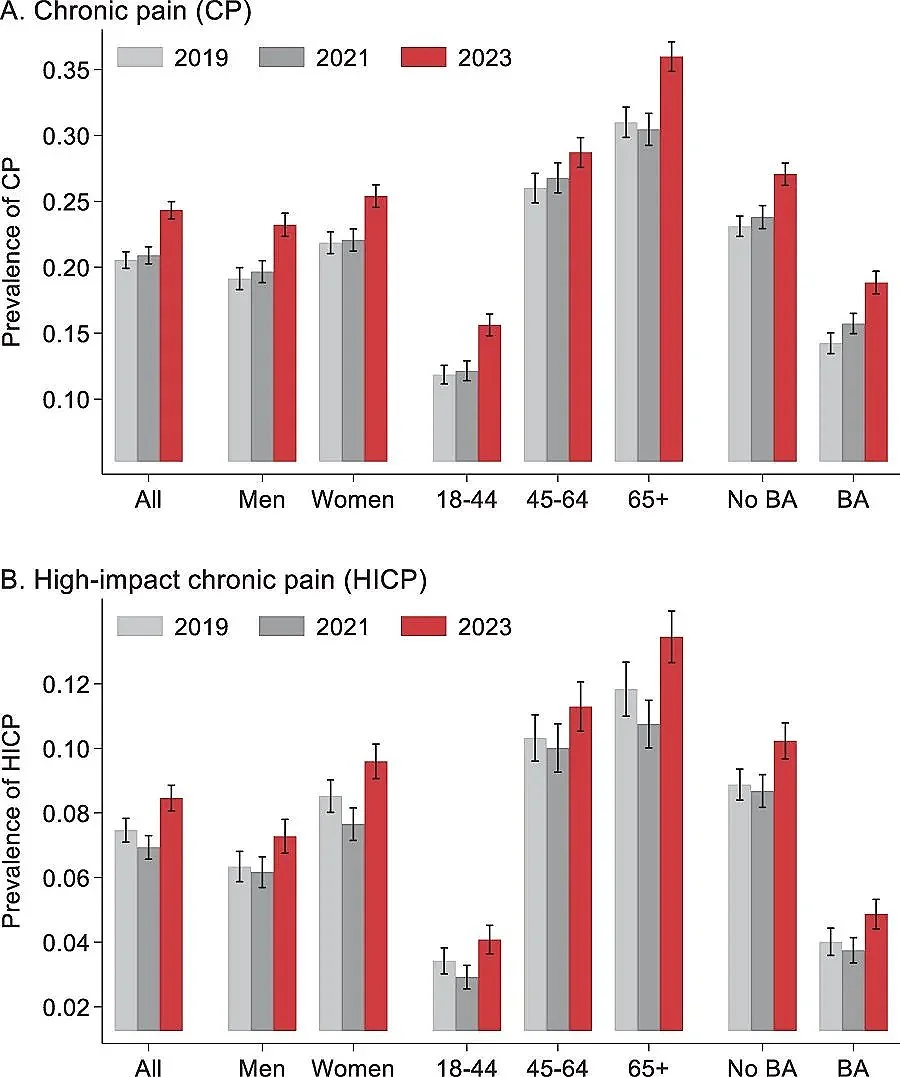
Rates of chronic pain and disabling pain surged in the United States after the Covid pandemic, reaching the highest levels ever recorded, according to a new study.

In 2019, about 20.5% of Americans (50 million people) had chronic pain and 7.5% had high-impact pain, which is pain strong enough to limit daily life and work activity.

Pain prevalence remained stable during the pandemic, and by some measures even declined, but in 2023 the chronic pain rate surged to 24.3% of Americans, while high-impact pain rose to 8.9% of the population.

That brought the total number of people who have chronic pain to 60 million, with 21 million having high-impact pain.

“We found that chronic pain, already a widespread health problem, reached an all-time high prevalence in the post-pandemic era, necessitating urgent attention and interventions to address and alleviate this growing health crisis,” wrote co-authors Anna Zajacova, PhD, at Western University in Ontario and Hanna Grol-Prokopczyk, PhD, at the University of Buffalo..

The study is based on results from the 2019, 2021 and 2023 National Health Interview Surveys (NHIS), a federal survey conducted every two years. A preprint of the study was released last year and has now been published in the peer-reviewed journal PAIN.

The 2023 surge in pain was observed in all age, gender, racial/ethnic groups, education levels, and in both rural and urban areas.

Pain increased in almost all body areas, including the back and neck; arms, shoulders and hands; hip, knees and feet; headache or migraine; and in the abdominal, pelvic, and genital areas. The lone area where pain declined was in the jaw or teeth.

Why did pain increase after the pandemic, but not during the pandemic — when people saw doctors less often and postponed or cancelled many health procedures?

One possible explanation is that Covid relief payments, expanded unemployment benefits, and eviction moratoriums eased financial stress.

Working from home and commuting less also lessened physical demands, while giving remote workers more opportunities for self-care.

PAIN journal

“The big question is why we saw this substantial increase in pain prevalence after the pandemic. We examined the role of long COVID and found that it explained about 13% of the increase,” said Grol-Prokopczyk. “None of the other measures we examined — including changes in income or physical health conditions — explained the increase.

“We speculate that abrupt termination of pandemic-era policies, such as remote work arrangements and expanded unemployment benefits, may have played a role.”

In addition to long Covid, researchers also noted an uptick in rates of health conditions that can cause pain, such as arthritis, cancer, cardiovascular disease, diabetes, depression, and anxiety.

The finding of an increase in pain rates conflicts with an FDA analysis that predicted the “medical need” for hydrocodone, oxycodone and other pain relieving Schedule II opioids would decline by 5.3% in 2023. The FDA also predicted a 7.4% decline in the medical use of opioids in 2024 and a 6.6% decline in 2025.

Those FDA projections are important because they are used by the DEA to establish annual production quotas for opioids, which have fallen for nine consecutive years. Since 2015, the DEA has reduced the supply of oxycodone by 68% and hydrocodone by 73%.

When short-term, acute pain is poorly treated, it can have long-term consequences for patients who may transition to chronic pain. Healthcare visits for non–Covid health issues declined dramatically in 2020 and 2021, particularly at hospitals and emergency departments, which are often the first site of care for acute pain management.

Researchers say the lack of adequate and timely pain management during the pandemic may have contributed to more people having chronic pain and high-impact pain in 2023.

“These findings highlight the importance of expanded epidemiological and clinical research on chronic pain to better understand population-level drivers of pain, and to improve national pain prevention and treatment efforts for the many Americans at risk of or affected by pain,” said Grol-Prokopczyk.

How Well Does Your Doctor Listen?

By Carol Levy

In addition to my trigeminal neuralgia, I also have many side effects from various surgical procedures. It’s bad enough that trigeminal neuralgia is considered a “rare” disorder, but mine is from an even more rare birth defect. Add to that facial paralysis and phantom pain, and I am a very rare duck indeed.

My cornea specialist acknowledged this recently, when I asked him about an issue with my eye.

“Most patients do fine. But there's no one else like you. So with you, I just don't know,” he said.

It’s been years since I’ve had trigeminal neuralgia “tics.” The trigeminal nerve was cut and burned surgically to stop the “tics” from occurring. But lately I've been getting new facial pain, so I asked my neurologist if the nerve could be growing back.

She shrugged her shoulders and said, “I don’t know.”

I appreciate it when a doctor is honest. They don't like to admit or show uncertainty. After all, they're the experts. They need to be able to give an answer to the question that often haunts us and sends us to them in the first place: “What is this?”

To say “I don't know” is probably very difficult for them.

Unfortunately, for many of us, instead of an honest answer, we get pats on the head and platitudes: “It's anxiety. Calm down and relax. Your pain will get better.”

Sometimes we get disbelief: “I don't believe you have pain. Your story isn't right.”

Some basically tell us to go away and not bother them anymore.

And then doctors wonder why patients have lost trust in them.

Patients complain rightfully when a doctor spends most of the appointment on the phone or looking at their laptops. Sometimes, if they bother to look up, they’ll say, “I'm looking into a medication I think may help.” 

Okay, that's good. He's researching so he can prescribe the right thing. But couldn't he have said something before he turns to his phone?

“I need to do some research,” the doctor could say. “I want to be sure I have the right diagnosis and prescribe the right drug. I can call you or see you again if necessary.”

I might be annoyed by that. After all, I'm leaving the office with no diagnosis or prescription. But it's preferable to the wrong diagnosis or the wrong medication. Waiting for the phone call or going back to the office to get what I need is preferable to being treated for the wrong thing or with a medication that doesn't work.

But it doesn't negate the feeling that "he never looked at me."

This has gotten worse in the digital age. They don't look at us, they are often more focused on the computer. Supposedly that helps them take notes and write a thorough report as they conduct an exam. But how many times have you seen the report? Is it rife with errors, things you never said, or exams never done?

I have read a number of articles that put the blame for this on the insurance companies. They require all health records to be stored electronically (EHR), so a doctor has to look at his computer.

But, having to comply with that requirement does not impose an inability to look your patient in the eye, to show interest, empathy and caring. That is not the insurance company's mandate. That should be the mandate for good doctoring

I’ve also seen articles where the blame is placed on the media. They only report on the bad doctors, never the good ones.

I have never imagined my doctor wearing a magical cape or having phantasmagorical powers. I could care less what the media shows. I only care about my doctors and how honest they are with me.

Sadly, too many of them are encased in an armor that pushes us away, that makes us distrust them. It’s the turnabout of the old breakup adage: It's not me, it's you.

Carol Jay Levy has lived with trigeminal neuralgia, a chronic facial pain disorder, for over 40 years. She is the author of “A Pained Life, A Chronic Pain Journey.”  Carol is the moderator of the Facebook support group “Women in Pain Awareness.” Her blog “The Pained Life” can be found here.  

Awake, Not Woke: How Politics in Medicine Harms Patients

By Dr. Lynn Webster

Somewhere between facts and social media, “woke” -- a perfectly good word for being awake to reality -- got transmogrified into a slur. If that alchemy puzzles you too, consider this brief field manual for the Anti-Alarm-Clock Caucus: a how-to on mistaking earplugs for policy and empathy for extremism.

Culture-war rhetoric chills evidence-based care and worsens outcomes. Let me explain what we should do instead. 

If you’ve ever sat with someone who was in real pain, you know how brittle the anti-woke script sounds in exam rooms. Patient-centered conversation becomes suspect; motivational interviewing gets mocked as coddling; and a clinician trying to tailor a taper to a patient’s specific needs is accused of ideology.

The risk isn’t a bruised ego -- it’s disengagement. People clamp down, under-report substance use, skip follow-ups, and show up again only when they’re much sicker.

The irony is stark: even the critics who rail at “woke medicine” still rely on the public health infrastructure they deride when it’s time to manage the fallout.

Here’s the magic trick they perform: They rebrand attentiveness as excess and turn “be aware of harm” into “behold the woke mind virus.” Once they frame awareness as contagion, politicians can sell indignation like energy drinks. Any medical practice that looks like it’s noticing the individuality of a patient -- bias training, person-first language, or trauma-informed care -- gets dismissed as ideology, rather than craft.

Because they like to think of themselves as honorable, they follow a set of prescribed rules including:

Rule #1: Relabel Compassion as “Coercion”

When a clinic swaps “addict” for “person with a substance use disorder” because it reduces stigma and improves engagement, they accuse the “word police” of forcing the change in nomenclature. Opposing any sign of empathy requires less energy than reading the literature and seems far more satisfying than measuring outcomes.

If they made the effort, they would know that the National Institute on Drug Abuse (NIDA) advises using person‑first, non‑stigmatizing language -- e.g., “person with a substance use disorder” rather than “addict” -- to reduce bias in clinical care.  

In fact, in the International Journal of Drug Policy, John Kelly and Cassandra Westerhoff reported that the term “substance abuser” prompts more punitive judgments against the patient, even when trained mental health professionals are involved.

Rule #2: Recode Lifesaving Tools as Culture War

Naloxone, syringe services, and overdose prevention centers are tedious in one way: they work. So, label them “woke enabling” and starve them of funding. It saves leaders from saying the quiet part out loud -- “I oppose what works” -- while ensuring the body count stays offstage.

The CDC reports that Syringe Services Programs (SSPs) are “safe, effective, and cost-saving” and “do not increase illegal drug use or crime.” Access to and disposal of sterile syringes that won’t be reused is associated with a 50% reduction in HIV/HCV incidence. The reduction exceeds two‑thirds when combined with medications for OUD. HHS adds that harm reduction is “critical to keeping people who use drugs alive.”

In Massachusetts, communities implementing overdose education and nasal naloxone distribution (OEND) programs saw a 27% lower opioid overdose death rate at modest program scale and a 46% lower death rate at higher scale compared to communities without OEND.

Rule #3: Flatten Complexity Into Blame

Fentanyl potency, housing collapse, and workforce shortages are complex, unglamorous problems. “Woke drug policy failed” fits easier on a bumper sticker.

When Oregon struggled amid a fentanyl wave, the vibe merchants -- outrage marketers who sell mood over evidence -- declared drug decriminalization to be the villain.

But nuance seldom survives a fact check. The best evidence to date is that Oregon’s decriminalization of small amounts of drugs in 2020 was not associated with an increase in fatal overdoses after accounting for fentanyl’s spread. Oregon later recriminalized possession in 2024, even though state health officials reported a 22% decrease in overdose deaths in the prior year.

On the street, cruel rhetoric cues policy. Call overdose prevention centers “ideological” and it becomes simpler to shutter them than to count the lives they save. Smear syringe services as permissive, and you can cut programs that prevent HIV and hepatitis C, while claiming fiscal prudence.

Mock “harm-reduction spending” and you can bury the line item without ever debating the outcomes. From 2019 to 2022, New York City’s Opioid Prevention Centers (OPCs) resulted in no significant increases in violent or property crime, 911 calls, or 311 calls for drug use after opening.

Similarly, Vancouver, Canada reported a 35% reduction in overdose mortality rates after the opening of North America’s first supervised injecting facility.

Inside healthcare systems, the anti-woke script causes harm. Clinicians already practicing under surveillance and time pressures learn to avoid nuance with patients, resulting in less motivational interviewing, fewer shared decisions, and more default suspicion. The clinical vocabulary hardens, and patients pick up on it the way they would the weather.

When language gets sharper, so do consequences -- patients disclose less, absorb less, and leave treatment sooner. NIDA’s guidance exists precisely to counter those effects.

The Anti-Theatrical Fix: What Actually Works

The fix is simple. The antidote to anti-woke drama is being awake.

Call things what they are: naloxone reverses overdoses, syringe programs prevent infections, and supervised drug consumption reduces death and connects people to care. That’s not a worldview, it’s reality.

Use words that keep doors open instead of closing them. Person-first language is stigma hygiene, not a lifestyle brand. Judge policies by outcomes and timelines rather than outrage cycles. If the curve bends where capacity expands and supply is stabilized, then fund capacity and stabilize supply.

Retire spin peddlers as culture-war props. Federal judges noted that an anti-woke law in Florida crossed constitutional lines, ruling that “viewpoint discrimination is inherent in the design and structure of this Act.”

We could even try a fascinating (or, perhaps, boring to some) experiment in courage: let leaders earn applause for actions that quietly work, instead of things that loudly sting. Pay clinicians for patient-reported function, not for performing moral panic. Reward programs that shrink infections and deaths, not those that inflate arrest numbers. And when someone tries to sell you an anti-woke policy branded as “toughness,” ask to see the data, the denominator, and the deaths averted.

If you need a slogan, Gov. Ron DeSantis already gave you one and it just proves the point: “We will never surrender to the woke mob. Florida is where woke goes to die.”

None of this requires everyone to be “woke” or to join a mob. It requires us to be awake. The linguistic jujitsu that turned woke into a boo-word lets leaders score easy points, while patients lose hard chances.

You can see the toll in the quiet statistics, but you can also hear it in the voices that don’t come back, including the patient who won’t return after being called an unkind name; the parent who stops carrying naloxone because a lawmaker sneered at “harm-reduction spending”; and the person who overdoses in a locked bathroom because a supervised site was branded as “ideology.”

Be awake to patients and outcomes; let data, not drama, guide healthcare.

Lynn R. Webster, MD, is a pain and addiction medicine specialist and serves as Executive Vice President of Scientific Affairs at Dr. Vince Clinical Research, where he consults with pharmaceutical companies. He is the author of the forthcoming book, “Deconstructing Toxic Narratives–Data, Disparities, and a New Path Forward in the Opioid Crisis,” to be published by Springer Nature. Dr. Webster is not a member of any political or religious organization.

Medical Cannabis Helps Insomnia Patients Sleep and Reduces Pain

By Pat Anson

Insomnia patients taking medical cannabis reported better sleep quality, as well as less anxiety, depression and pain, according to a new study published in PLOS Mental Health.

The study is notable because it showed sustained improvement in symptoms over 18 months of treatment with medical cannabis. Most previous studies are much shorter.

Researchers at Imperial College London followed 125 patients diagnosed with an insomnia disorder who were prescribed medical cannabis and enrolled in the UK Medical Cannabis Registry. Participants either ingested cannabis oil, smoked dried flower, or a combination of the two. Improvements in sleep and other symptoms were observed after one month of treatment and continued over the 18-month course of the study.

However, the magnitude of improvement declined over time, suggesting that some patients developed tolerance to cannabis. Less than 10% of patients reported mild side effects, such as dry mouth, insomnia and fatigue.

“Over an 18-month period, our study showed that treatment for insomnia with cannabis-based medicinal products was associated with sustained improvements in subjective sleep quality and anxiety symptoms. These findings support the potential role of medical cannabis as a medical option where conventional treatments have proven ineffective,” said co-author Simon Erridge, a PhD candidate at Imperial College and Research Director at Curaleaf Clinic, a cannabis dispensary.

“Conducting this long-term study provided valuable real-world evidence on patient outcomes that go beyond what we typically see in short-term trials. It was particularly interesting to observe signs of potential tolerance over time, which highlights the importance of continued monitoring and individualised treatment plans.”

The researchers say larger clinical trials are needed to confirm their finding of long-term efficacy. Most of the researchers are either employees or medical practitioners at Curaleaf Clinic.

A previous study conducted in Israel also found that cannabis helps with sleep, but regular use lead to drug tolerance and even more sleep problems. Over time, the benefits of cannabis were reversed, with frequent users finding it harder to fall asleep and waking up more often during the night.  

Brains Control Pain Differently, Depending Where It’s Felt

By Crystal Lindell

Different parts of the brain are more active when relieving pain — depending on where the pain originates — according to a new Australian study. The finding could lead to more targeted and effective treatments that utilize the body’s own pain relief system.  

Researchers  at the University of Sydney made the discovery while studying the placebo effect. They used MRI brain scans to monitor 93 healthy participants, while exposing them to painful heat on various parts of the face, forearm and leg. 

Before the test, participants were given a placebo analgesic cream and told it would help relieve their pain. In reality, the “lidocaine” cream was a placebo and researchers secretly lowered the temperature of the heat, tricking the participants to believe the cream was easing their pain. 

The heat stimulus was applied to the placebo-treated area, as well as a separate untreated area for comparison. Up to 61% of participants reported less pain in the area where the cream was applied, typical of a placebo response.

The MRI scans showed how the brain responded to the placebo effect. Researchers found that upper parts of the brainstem were more active when relieving facial pain, while lower regions of the brainstem were engaged for arm or leg pain. 

“This is the first time we’ve seen such a precise and detailed pain map in the human brainstem, showing us that it tailors pain relief to the specific part of the body that’s experiencing it,” lead author Lewis Crawford, PhD, a Research Fellow at the University of Sydney, said in a press release

Understanding which brainstem areas are linked to different parts of the body may open new avenues for developing non-invasive therapies that reduce pain.   

“The brain’s natural pain relief system is more nuanced than we thought,” said Crawford. “Essentially, it has a built-in system to control pain in specific areas. It’s not just turning pain off everywhere; but working in a highly coordinated, anatomically precise system.”     

“We now have a blueprint for how the brain controls pain in a spatially organised way,” said senior author Luke Henderson, PhD, a Professor in the School of Medical Sciences and the Brain and Mind Centre. “This could help us design more effective and personalised treatments, especially for people with chronic pain in a specific area of their body.”

It is important to note that none of the “healthy” participants had chronic pain, and thus these results may only apply to short-term, acute pain that is treated with a placebo.

Nevertheless, the study challenges long-held assumptions about how pain relief works. Instead of relying on medications that target opioid pain receptors in the brain, researchers say receptors in the brainstem could be targeted with cannabinoids. 

“Opioid-based pain relief typically activates central areas of the brain and can affect the whole body, whereas the cannabinoid circuit that we identified appears to operate in more targeted regions of the brainstem,” said Crawford. “This supports the idea that cannabinoids may play a role in localised, non-opioid pain control.”

Most oral pain medications today – including acetaminophen, ibuprofen and opioids – work by telling the brain to relieve pain throughout the entire body. This research opens the door to more targeted therapies that relieve pain in specific parts of the body.

Top Officials at CDC Resign After Director Fired in Dispute Over Vaccines

By Pat Anson

CDC Director Susan Monarez has been fired by President Trump, capping a week-long drama that began with Monarez refusing to make changes in vaccine policy ordered by Health and Human Services Secretary Robert F. Kennedy Jr.  At least four top CDC officials resigned in protest after Monarez was ousted, creating further chaos at the country’s top public health agency.   

“The agency is in trouble, and we need to fix it, and we are fixing it, and it may be that some people should not be working there anymore,” Kennedy told Fox News.

Kennedy, a longtime critic of vaccines, demanded that Monarez resign or be fired, and she refused. Monarez had been acting CDC director since President Trump took office and was confirmed by the US Senate only a month ago.

Attorneys for Monarez say she could only be fired by the president and accused Kennedy of “weaponizing public health for political gain” by dismissing CDC scientists and appointing vaccine skeptics to CDC advisory committees.

“When CDC Director Susan Monarez refused to rubber-stamp unscientific, reckless directives and fire dedicated health experts, she chose protecting the public over serving a political agenda. For that, she has been targeted,” attorneys Mark Zaid and Abbe Lowell said in a statement. “The attack on Dr. Monarez is a warning to every American: Our evidence-based systems are being undermined from within.”

Tensions have been rising at the CDC for months after steep cuts in its staff and budget, followed by the overhaul of advisory panels ordered by Kennedy.

Recently, a gunman angry about Covid vaccines fire hundreds of shots at CDC headquarters in Atlanta, killing a policeman and traumatizing employees. Both President Trump and Kennedy were notably silent after the attack, which only made morale worse.  

More than 750 HHS staffers signed a letter saying the Trump administration “failed to adequately respond” to the attack and that Kennedy was “endangering the nation’s health by repeatedly spreading inaccurate health information.”

‘This Is a Heartbreaking Decision’

The four high-ranking CDC officials who resigned are Dr. Debra Houry, the CDC’s deputy director and chief medical officer; Dr. Demetre Daskalakis, who headed the center that makes vaccine recommendations; Dr. Daniel Jernigan, who oversaw vaccine safety; and Dr. Jennifer Layden, who was in charge of the CDC’s public health data. Kennedy recently pressured the agency to share health data for a study to confirm his beliefs that vaccines cause autism.

“This is a heartbreaking decision that I make with a heavy heart,” Houry said in an email to colleagues.

When she started at CDC over a decade ago, Houry was director of the CDC’s National Center for Injury Prevention and Control, which oversaw the secretive drafting of the agency’s controversial 2016 opioid guideline. Critics say anti-opioid activists had too much influence on the guideline and accused then-CDC Director Thomas Frieden of “blatant violations” of federal advisory committee laws.

Although the guideline was voluntary, it was so widely implemented by doctors that it caused “serious harm” to pain patients who were tapered to lower doses or no longer able to get opioid medication. Many suffered through withdrawal, uncontrolled pain, psychological distress and, in some cases, suicide.

Things got so bad, the CDC revised its guideline in 2022 to give doctors more flexibility in prescribing opioids. By then, Houry had left the Injury Center and been promoted to chief medical officer.

“From a very narrow viewpoint, some might take comfort in the resignation of Debra Houry as chief medical officer of CDC. Prior to holding that position, she had been Tom Frieden's action arm for implementing the original opioid guidelines. However, like Frieden, she also had a history of positive accomplishments and her current resignation appears to be a laudable matter of principle,” said Dr. Charles LeBaron, a retired CDC epidemiologist.

LeBaron wrote a book critical of the agency’s guideline and its leadership: “Greed to Do Good: The Untold Story of CDC’s Disastrous War on Opioids.” He says the current turmoil at CDC and HHS is likely to disrupt other public health efforts besides vaccines.  

“This is a developing situation in which efforts to address both pain and addiction treatment matters are really suffering collateral damage in a war over vaccines and related matters of public health,“ LeBaron told PNN in an email. “Whatever happens, it's hard to imagine that RFK Jr, with his ‘healing farms’ approach to eliminating opioid use, is ever going to make matters better in this area. 

“Until we get a sane person in charge of HHS, it's hard to see how anything useful in any area, including pain treatment, is going to happen. If you want my opinion, the more that the pain treatment community (along with everybody else) can successfully urge for RFK Jr's replacement, the more likely we are to see some progress at some point, rather than the current headline-de-jour chaos.”

The most immediate impact of the turmoil at CDC is uncertainty and delay in the release of the updated 2025-2026 Covid vaccines. Earlier this week, the FDA approved the use of new vaccines made by Pfizer, Moderna and Novavax, but limited who can get them to older Americans or those with a high-risk health condition. Several states are reporting a surge in Covid infections caused by a new Omicron variant.

FDA approval will be enough for some states to begin offering the new Covid vaccines, but other states will wait for a recommendation from the CDC’s new advisory panel, which now includes doctors and researchers who have publicly questioned the safety of vaccines.

The Advisory Committee on Immunization Practices is scheduled to meet September 18-19. According to the agenda, the panel will discuss many common vaccines, including those for COVID-19, hepatitis, measles, mumps, and rubella. The panel will consider whether to “revise the list of vaccines for administration to vaccine-eligible children.”

What Having Chronic Pain Teaches You About Doctors

By Crystal Lindell

There’s an old story often shared in my family about my great uncle Jim. It’s a story I’ve heard since I was a kid, as a warning. 

You see, when Jim was 39 years old, he was told to take “heart medication.” 

But Jim felt fine, so he ignored the doctor’s orders and never took the pills. And then, one night, while his wife – my aunt Sylvia – was watching TV, Jim went upstairs, fell asleep and died. He never even made it to his 40th birthday. 

I never met Jim, but his early and unexpected death sent shock waves through generations of my family. And his story eventually morphed into family folklore, where the moral was that if a doctor gives you medication, you need to take it. 

It is with this mindset that I first approached my doctor appointments back in 2013 when I developed chronic pain in my right ribs. 

I didn’t know the cause – and to be honest, I still don’t really know for sure how it started – but I did know that I was in a lot of pain, and I was very scared. 

So when the doctors started loading me up with prescriptions, I filled every single one of them. Within a couple months, I had a line of pill bottles and patches on my nightstand spanning everything from gabapentin and amitriptyline to lidocaine and other medications I can’t even remember now. 

And I took all of them exactly as prescribed. 

The only problem was, the lessons of the past did not apply to my situation. The medications were prescribed by a team of doctors who were just throwing stuff at the wall to see if anything would stick. 

Taking them in combination caused horrible side effects. I was always on the verge of falling asleep, and I started gaining weight so fast that my clothes would stop fitting in the span of a week. 

Not to mention the fact that they also weren’t even doing the one thing I needed: None of them were helping my chronic pain. 

It wasn’t until I eventually went to the Mayo Clinic about a year later that I realized the flaws in my logic.

It was there that a doctor told me to just stop taking half the medications I was on. When I questioned her, she was shocked that I had not thought to stop any of them sooner. 

It sounds naive in retrospect, but that was the first time I started to realize that doctors were not gods. And that doctors are sometimes guessing when it comes to treatments.

It was a lot to process, because it also meant that I had to reckon with the fact that I could no longer just blindly follow whatever treatment they were giving me. Rather, I was going to have to figure out a lot of this for myself. 

There’s a common myth that if you ever get sick, a doctor will save you. But when you develop any sort of chronic health condition, you realize that doctors are just humans too. They come into appointments with prejudices, egos, bias, and flawed information. They also often disagree with other doctors.

This can be extremely difficult to navigate because when it comes to your health, a lot of treatments really are about life or death. And filtering out which ones are life and which ones might be death is dangerous business. Doctors are definitely needed to guide us, but they can’t be relied upon to do it alone. 

There’s an old saying about doctors: “There’s a reason they call it a practice.” Even doctors are still learning about the complexity of our bodies. Because as I said, they are not gods, and as such, they can’t be relied upon to be our saviors. 

In the end, we have to save ourselves. 

It’s not quite as comforting to see the world that way, with the knowledge that nobody is coming to save us. But it’s more realistic. And a lot more likely to actually save you. 

Ohio Governor Seeks Ban on All Kratom Products 

By Pat Anson

Ohio Governor Mike DeWine wants his state to immediately ban the sale and use of all natural and synthetic kratom products by designating them as illegal Schedule One controlled substances, on the same level as heroin and LSD. DeWine is also seeking bans on “all existing and future synthetic kratom compounds.” 

If approved by the Ohio Board of Pharmacy, stores and other businesses in the state would be required to remove all kratom edibles, powders and drinks from their shelves and stop selling them online.

Kratom comes from the leaves of a tree that grows in southeast Asia and has been used for centuries as a natural stimulant and pain reliever. In recent years, millions of Americans have discovered that kratom can be used to treat pain, anxiety, depression and addiction.

The FDA, however, has not approved kratom for any medical condition. The agency recently warned that synthetic kratom products boosted with concentrated forms of the kratom alkaloid 7-hydroxymitragynine (7-OH) could cause addiction and overdoses, and should be classified federally as Schedule One drugs by the DEA.

“These modified kratom products, sold online and in stores, are essentially legal, over-the-counter opiates that anyone – including kids – can buy with just a few bucks,” Gov. DeWine said in a press release.

“There is no accepted medical use for kratom in Ohio, and it is an imminent public health risk. The Ohio Board of Pharmacy should act with urgency to schedule all kratom compounds and future alterations of them as Schedule I illegal drugs.” 

This isn’t the first time the Ohio Board of Pharmacy will consider banning kratom. In 2018, the board voted to classify kratom as a Schedule One drug after receiving a report from the Ohio Substance Abuse Monitoring Network blaming kratom for several deaths and falsely claiming that people were injecting kratom like it was heroin. The board later rescinded its decision after a public outcry.

Another public outcry is likely, judging by the early reaction to DeWine’s proposal on X/Twitter.

“This is not good! Do you want to help patients with uncontrolled pain get their pain medicine doctors back? Because they quit prescribing,” said one poster. “Some have now found relief with Kratom and you want to take this away?”

“Prohibition of both plain-leaf kratom and 7-OH extracts is a bad thing. In both cases, they will lead to people turning to more dangerous opioids,” said another. “Kratom, particularly the pure leaf powder, is incredibly safe, pretty much impossible to have a lethal overdose. Mike DeWine is putting hundreds of thousands of people in his state at risk.”

“Our system has already turned their back on people suffering from chronic pain, disregarding their quality of life. Now the government wants to have us suffer more. This is total bull,” wrote another poster.

Under existing Ohio state law, kratom can only be sold in its natural, dried leaf or powdered form. Selling synthetic or adulterated kratom is also illegal.

Despite those safeguards, the Ohio Department of Health says kratom was found to be a cause of death in more than 200 overdose deaths in the state from 2019 to 2024.

Earlier this month, Florida Attorney General James Uthmeier filed an emergency rule classifying concentrated forms of 7-OH as a Schedule One controlled substance in Florida. Gov. DeWine’s proposal would go much further than that, by classifying all kratom products – including natural leaf kratom – as Schedule One drugs.

Alabama, Arkansas, Indiana, Rhode Island, Vermont and Wisconsin have already classified kratom as a controlled substance. Dozens of cities, counties and local jurisdictions have also banned its sale.

While hundreds of deaths in the US have been linked to kratom use, most cases involve other drugs and illicit substances, making it difficult to determine the exact cause of death or any liability.

In a playbook reminiscent of the campaign against opioid pain medication, several law firms are seeking plaintiffs allegedly harmed by kratom to participate in class action lawsuits against kratom vendors and wholesalers.    

A former CDC director recently said that natural leaf kratom caused “no serious adverse events“ to patients involved in an FDA study, but agreed that synthetic kratom should be scheduled as an illegal drug.

“Natural kratom leaf, when used as it has been for centuries, presents a markedly different risk profile than the synthetic products flooding American markets,” said Robert Redfield, MD. “Full spectrum kratom, used responsibly, appears to have acceptable safety margins based on FDA’s own clinical data.”  

(Update 8/27/25: The Ohio Board of Pharmacy cancelled a special meeting scheduled for Wednesday to make an emergency move to ban kratom. No explanation was made as to why the meeting was cancelled.)

FDA Approves First Implant That Zaps Rheumatoid Arthritis

By Madora Pennington

A nerve stimulation implant recently approved by the FDA reduces symptoms of rheumatoid arthritis by stimulating the vagus nerve with mild electronic pulses. It’s the first FDA-approved neuromodulation device for adults with moderate-to-severe rheumatoid arthritis (RA).

The vagus nerve stimulator (VNS), created by SetPoint Medical of Valencia, California, is the size of a coffee bean. It is implanted in the left side of the neck under anesthesia during an outpatient procedure.

The device delivers electronic pulses into the vagus nerve for just one minute each day to calm the immune system and have an anti-inflammatory effect. RA causes the immune system to attack the lining of joints, damaging cartilage and eroding bone.

“The approval of the SetPoint System, the first-in-class neuroimmune modulation platform, represents a transformative milestone in the management of autoimmune diseases,” Murthy Simhambhatla, PhD, CEO of SetPoint Medical, said in a press release. “We plan to introduce the SetPoint System in targeted U.S. cities this year, followed by expansion across the country starting in early 2026.”

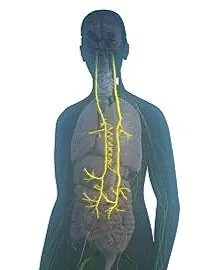
In auto-immune diseases like RA, the function of the vagus nerve becomes impaired. The nerve starts in the brainstem and runs through the neck, chest and abdomen, where it branches out into many organs.

The vagus nerve helps regulate the nervous system, including heart rate, blood pressure, respiration and digestion. When the nerve malfunctions, it causes inflammation and disrupts the immune system.

In a clinical trial of 242 patients, just over half (51.5%) had at least a 20% improvement in RA symptoms after 24 weeks with the SetPoint implant. Most patients tolerated the device well, but two experienced side effects of vocal cord weakness and hoarseness.

SETPOINT MEDICAL IMAGE

The SetPoint System is intended for RA patients who have not benefited from medications designed to calm the immune system, known as Disease-Modifying Antirheumatic Drugs (DMARDS) or the much stronger biologics that target specific immune cells. Doctors can monitor the device with an iPad application and patients can recharge it themselves with a wireless charger.

Vagus nerve stimulation is not new. In 1997, the FDA approved VNS for epilepsy. The implanted device is installed in the chest like a pacemaker to reduce seizures or even stop ones in progress.  

VNS can also treat chronic pain, by helping the brain "turn down" pain signals and reduce pain indirectly through its anti-inflammatory effects.  

Other types of pain for which VNS has demonstrated effectiveness are chronic migraine, chronic primary headache, cluster headache, fibromyalgia, chronic pancreatitis, esophageal pain, irritable bowel syndrome, neuropathic pain, musculoskeletal pain, osteoarthritis, and chronic low back pain.

SetPoint is investigating whether its technology can also treat multiple sclerosis, Crohn's disease and other autoimmune conditions.
