Bill Would Strictly Limit Opioids for Acute Pain

By Pat Anson, Editor

A bipartisan bill has been introduced in Congress that would put strict limits on the prescribing of opioid medication for the treatment of short-term, acute pain.

The bill by Senators John McCain (R-AZ) and Kirsten Gillibrand (D-NY) would require doctors to limit the initial supply of opioids for acute pain to seven days, a prescription that could not be renewed. The legislation is similar to recent laws adopted in several states, including New Jersey, Arizona and New York.

“Our bipartisan bill would target one of the root causes of the opioid addiction crisis, which is the over-prescription of these powerful and addictive drugs for acute pain,” said Gillibrand. “Too many lives have been destroyed, too many families have been torn apart, and too many communities all over New York are suffering because of this tragic epidemic.”

“One of the main causes for the alarming increase in drug overdoses in the United States is the over-prescription of highly addictive opioids,” said McCain. “We have a long way to go to end the scourge of drugs across our communities, but this legislation is an important step forward in preventing people from getting hooked on these deadly drugs.”

Anti-opioid activists and government regulators have long claimed that even just a few painkillers can easily lead to addiction and death.

“You take a few pills, you can be addicted for life. You take a few too many and you can die,” former CDC Director Thomas Frieden recently told the Washington Post.

But only a small percentage of pain patients become addicted or overdose on prescription opioids. And research shows that less than two percent of patients who are prescribed opioids for acute pain become long-term users.

Under current federal law, doctors must receive a license from the Drug Enforcement Agency (DEA) to prescribe a schedule II, III, or IV controlled substance. The registration must be renewed every three years.

The 7-day limit would not apply to opioid medication used in the treatment of chronic pain or cancer pain, or for patients in hospice care, end-of-life care or palliative care. However, it would prevent doctors from prescribing any opioids for any type of pain if they don't promise to limit prescriptions for acute pain:

“The Attorney General shall not register, or renew the registration of, a practitioner…  who is licensed under State law to prescribe controlled substances in schedule II, III, or IV, unless the practitioner submits to the Attorney General, for each such registration or renewal request, a certification that the practitioner, during the applicable registration period, will not prescribe any schedule II, III, or IV opioid, other than an opioid prescription… for the initial treatment of acute pain in an amount in excess of the lesser of a 7-day supply (for which no refill is available) or an opioid prescription limit established under State law.”

Schedule II opioids include painkillers with “a high potential for abuse” such as hydrocodone, fentanyl, morphine, and codeine. Schedule III opioids have “a potential for abuse” and Schedule IV opioids have “a low potential for abuse.” Opioids such as Suboxone and buprenorphine, which are generally used to treat addiction but are also being abused, are exempted from the legislation.

Anti-anxiety and antidepressant drugs such as Xanax, Soma and Valium – which are classified as Schedule IV controlled substances – are also not covered by McCain and Gillibrand’s bill, even though they are involved in a substantial number of overdoses. The bill was assigned to the Senate Judiciary Committee.

“It’s only too obvious, a careless clueless Congress and state governments have forgotten the lessons of the drug wars and prohibition as they seem intent on repeating the mistakes of the past instead of learning from them when it comes to opioids,” said David Becker, a social worker and patient advocate in New York.

“Furthermore, it is clear they could care less how their opioiphobia harms not only people in pain but their loved ones and those that care and depend on them. It’s clear they never had a real plan to help people in pain but allowed doctors, insurers, and researchers to do their own thing -- unless headlines showing the harms of their lazy laissez faire policies threatened their careers.”

Why Pain Patients Should Worry About Chris Christie

(Editor’s Note: Last month President Donald Trump named New Jersey Gov. Chris Christie as chair of a new commission that will study and draft a national strategy to combat opioid addiction..

Gov. Christie has been a prominent supporter of addiction treatment and anti-abuse efforts.

He also recently signed legislation to limit initial opioid prescriptions in New Jersey to five days, a law that takes effect next month.)

white house photo

By Alessio Ventura, Guest Columnist

Unfortunately, Chris Christie's crackdown on opioids will have extremely negative consequences for people with acute and chronic pain in New Jersey. It is equivalent to gun control, where because of crime and mass shootings, innocent gun owners are punished.

The fact is that only a small percentage of opioid deaths are from legitimate prescriptions. Most overdose deaths are from illegal drugs or the non-medical use of opioids.

The government crackdown on opioids has created a literal hell on earth for people with severe pain, who often can no longer find the medication they need. This has become a major issue, even though there are other drugs that are just as dangerous when misused:

Deaths from alcohol, antidepressants and NSAIDs far exceed deaths from opioids, yet it is opioid medication that gets all of the attention.

So when we see Chris Christie leading a new opioid commission, we chronic pain patients know full well that this just means more restrictions for us. Addicts and criminals will continue to support their habit through the illegal market, and pain patients will continue to live a life of hell that will only get worse. Most of us don’t go to the black market to buy pain medication. We drive around in excruciating pain looking for a pharmacy that can fill our prescriptions.

We also cringe in fear every time we see the "opioid epidemic" headlines and the new initiatives to combat overdoses, because we know that we will pay the price, not the addict or criminal.  It’s like when a nut case opens fire and kills people. Gun owners know that new restrictions will impact them, not the criminals.

New Jersey’s 5-Day Limit on Opioids

Gov. Christie recently pushed for and convinced the New Jersey legislature to pass very restrictive pain medicine laws. Physicians in New Jersey were very much opposed to Christie's model, but it was forced upon them anyway. Since I am originally from New Jersey and most of my family still lives there, I know firsthand the devastating consequences these restrictions could have on family members.

I have had 18 invasive surgeries since 2008 and recently suffered from a sepsis infection after shoulder replacement surgery. The infection required 3 additional surgeries, two of which were emergency surgeries as the infection spread. I was fed broad spectrum antibiotics intravenously 3 times per day.

I also suffer from chronic pain from arthritis. I have tried every other pain treatment modality, and opioid-based pain medicine is the only one that works for me.

There is no way I would have been able to get up after a 5 days to visit my doctor just to refill pain medicine. But if New Jersey’s law were instituted in Florida, where I now live, it would require me to do just that. After the surgery, I was dealing with horrible pain in my shoulder, along with severe fatigue and other complications. Thank God that Florida law still allows for prescriptions of pain medicine beyond 5 days.

Chris Christie is now leading a study for President Trump, and my fear is that a new executive order will be forthcoming which will force the New Jersey model of restricting pain medicine across every state, including Florida.

Let me relay to you a recent experience of my 85 year old mother, who had invasive back surgery in New Jersey. They sent her home after 2 days in the hospital with a prescription for a 5 day supply of Percocet, and strict orders to "NOT MOVE FROM BED.”

There is already a shortage of pain medicine in New Jersey pharmacies. My sister took the script, started at a pharmacy in Bridgewater, and worked her way on Route 22 toward Newark. She visited 30 pharmacies along the way and was unable to find the medicine. She called me in tears because my mother was in terrible pain.

My sister even took my mother to the ER, but they would not give her any medicine for pain.

Thankfully, after asking several friends for help, my sister received a call from her best friend, who found a pharmacy that had Percocet. My mother received significant relief from the pain medicine, but 5 days was not nearly enough. My sister lives with my mother and was able to take her on the 4th day to see the doctor about a refill, but she never should have gotten out of bed. She was under strict orders to stay in bed, use a bed pan and not to get up until two weeks after the surgery.

Yet now on the 4th day she had no choice because of her pain. The patient has to be present to receive a new script for opioids in New Jersey, so my sister could not visit the doctor's office to pick up a script for her without my mother's presence.

This is an unbelievable intrusion into the doctor-patient relationship. Why is it that politicians are so hell bent on government intrusion when it comes to legitimate use of medicines? This is insanity.

It is time for a full court press in Washington DC. If you have acute, chronic or intractable pain, then you better wake up and do something to preserve your rights. Chronic pain is a disease, and for people who have tried all modalities and found that opioids are the only solution, you are about to lose access to the medicine that gives you some semblance of a normal life. I anticipate that an executive order mirroring the misguided New Jersey restrictions will be issued by President Trump, in essence trampling on your ability to obtain pain relief.

I am imploring you to make our voices heard. We should not be further punished because of people with addiction illness. Of course they need to be helped, but restricting access for law abiding, non-addicted patients is an outrage. It is already difficult enough to get pain medicine in Florida, often requiring visits to 20 or more pharmacies before one finds a pharmacist willing to fill a script.

I have often thought about suicide because of my pain. Many others have as well. If additional restrictions are forthcoming from Washington, then many of us will face life or death decisions. Please do not allow Chris Christie to tip the balance.

Alessio Ventura lives with chronic arthritis and post-surgical pain. He shared his experiences as a pain patient in a previous guest column. Alessio was born in Italy, came to the U.S. at age 17, and finished high school in New Jersey. He worked for Bell Laboratories for 35 years as a network and software engineer. 

Pain News Network invites other readers to share their stories with us.  Send them to:  editor@PainNewsNetwork.org

The information in this column should not be considered as professional medical advice, diagnosis or treatment. It is for informational purposes only and represents the author’s opinions alone. It does not inherently express or reflect the views, opinions and/or positions of Pain News Network.

Chiropractic Therapy Gives ‘Modest’ Relief to Back Pain

By Pat Anson, Editor

When it comes to treating short-term back pain, spinal manipulation may not be all it’s cracked up to be.

In a review published in JAMA of over two dozen clinical trials involving over 1,700 patients, researchers said chiropractic adjustments provided only “modest” relief for acute low back pain – pain that lasts no more than 6 weeks.

The improvement in pain and function were considered “statistically significant,” but researchers said it was about the same as taking over-the-counter pain relievers. Over half of the patients also experienced side effects from having their spines manipulated, including increased pain, muscle stiffness and headache.

Although the study findings are mixed on the benefits of chiropractic treatment, the American Chiropractic Association (ACA) said it “adds to a growing body of recent research supporting the use of spinal manipulative therapy.”

“As the nation struggles to overcome the opioid crisis, research supporting non-drug treatments for pain should give patients and health care providers confidence that there are options that help avoid the risks and dependency associated with prescription medications,” said ACA President David Herd, DC.

Last month the ACA approved a resolution supporting new guidelines by the American College of Physicians (ACP), which recommend spinal manipulation, massage, heating pads and other non-drug therapies as first line treatments for chronic low back pain.

“By identifying and adopting guidelines that ACA believes reflect best practices based on the best available scientific evidence on low back pain, we hope not only to enhance outcomes but also to create greater consensus regarding patient care among chiropractors, other health care providers, payers and policy makers,” said Herd.

But the ACP guidelines are hardly a ringing endorsement of spinal manipulation. The overall evidence was considered low quality that chiropractic adjustments can “have a small effect on function” and that they provide “no difference in pain relief.”

In fact, the best treatment for acute low back pain may be none at all.

"Physicians should reassure their patients that acute and subacute low back pain usually improves over time regardless of treatment," said ACP President Nitin Damle, MD.

One in four adults will experience low back pain in the next three months, making it one of the most common reasons for Americans to visit a doctor. According to a 2016 Gallup survey, more than 35 million people visit a chiropractor annually.

Wear, Tear & Care: The SpineGym

By Jennifer Kilgore, Columnist

You’ve got to hand it to SpineGym’s marketing team -- when one of your device’s signature moves is visually hilarious, you could try to hide it... or you could own it.

They decided to own it.

The video was what intrigued me many months ago. I mean, it’s incredible.

I have Google Alerts set to notify me about new medical technology, and those are the types of emails sent to me by crowdfunding websites like Kickstarter and IndieGogo. The SpineGym device, which is designed to develop your back and abdominal muscles, was 928% funded nearly a year ago.

My core has as much strength as a trash bag filled with mashed potatoes. I’ve been desperate for something to help me focus on those important muscles, but I was concerned that it would be too intense for my spine at T-11 and T-12, as a facet joint in that area never healed correctly.

Upon watching the exercise video, however, it didn’t seem too physically strenuous. I reached out to SpineGym USA to ask for a test unit, and they were gracious enough to offer me one. I’ve been using the device for a couple months now. Each session is intended to be less than five minutes, a few times a week.

Surprisingly, that’s all I can physically manage.

What is the SpineGym?

The SpineGym has two parallel poles set into a floorplate that go back and forth. There is a black band between the poles that you lean back or forward on. There are also loops on the base plate where you can hook plastic bands as an alternative workout for your arms.

The machine bases a workout’s pace on the user’s strength and capabilities, because the force working against the machine is what sets the tone. The moves themselves range from simple isometrics to a variation of crunches that work the abdominal and back stabilizer muscles.

With the positioning of the machine’s arms, it changes the moves entirely. I felt my muscles in a way I never had on a yoga mat, and they engaged from my low back all the way up to the base of my neck. When you watch the video it doesn’t look hard, but it’s surprisingly difficult when you actually try it.

SPINEGYM PHOTO

I wondered if this was because I have absolutely no core strength, so I asked my husband to try it. Here are a few key demographic differences between the two of us: He’s 6’, an ultra-marathon runner and exercises for approximately three hours a day. (Yes, I am aware of the irony.) He did agree with my assessment, however, and said that the SpineGym engaged his midsection in a way that crunches definitely do not.

SpineGym’s Data

When 20 sedentary workers aged 35-60 were given SpineGyms to use for two weeks, they were instructed to exercise for only five minutes a day. The following results were based on EMG measurements after two weeks:

  • an average 80% improvement in activation of back muscles
  • an average 141% improvement in activation of abdominal muscles
  • significant postural improvements
  • significant improvements in abdominal muscle strength
  • approximately 90% of users found the training method to be efficient or very efficient.

A second test was performed on users aged 70-90 and included three SpineGym sessions a week for two months. Each session lasted four to five minutes.

  • Standing balance improvement of 74%
  • Muscle strength and coordination: improvement of 58%
  • Walking speed improvement of 41%

Most of this improvement was reached by participants already after the first month of exercise.

How It Worked for Me

My lower back has been hurting much more recently in that “coming-back-from-the-dead” way. If I overdo it with the SpineGym -- meaning if I use it more often than once every few days -- I go into spasm and have a flare. This is when a session lasts about five minutes. It targets that specific area that needs the most work, so I am very excited about this unit.

People larger than 6’ might find it a bit flimsy for their size, as the poles are quite tall, set into a base plate that fits your shoes side by side, and is made of carbon fiber. It’s a bit of a balancing act. However, as long as your feet are firmly planted and your core is engaged, the platform should not move. Plus, there’s an anti-slip pad underneath.

The other great things? It’s relatively small and light for medical equipment (11.2 pounds or 5.1 kg). It sets up and breaks down easily and stores flat in a T-shirt-shaped bag, though I don’t ever put it away. It doesn’t take up much space, so why bother?

When I’ve been working all day and desperately need to stretch my lower and mid back, the SpineGym hits the muscles that need releasing the most. The unit targets the discomfort better than an upward-facing dog pose on the yoga mat. I just have to remind myself not to use the SpineGym too often, or I’ll be my own worst enemy in terms of progress.

You can purchase the SpineGym for $198 through Indiegogo.

Jennifer Kain Kilgore is an attorney editor for both Enjuris.com and the Association of International Law Firm Networks. She has chronic back and neck pain after two car accidents.

You can read more about Jennifer on her blog, Wear, Tear, & Care.  

The information in this column should not be considered as professional medical advice, diagnosis or treatment. It is for informational purposes only and represents the author’s opinions alone. It does not inherently express or reflect the views, opinions and/or positions of Pain News Network.

McCain Calls for New Study of Veteran Suicides

By Pat Anson, Editor

Arizona Senator John McCain has reintroduced legislation that calls for a comprehensive review of veteran suicides by the Department of Veterans Affairs (VA), including the role of opioids and other prescription drugs in their deaths.

Veterans suffer from high rates of chronic pain, depression and post-traumatic stress disorder (PTSD). According to a recent VA study, an average of 20 veterans die each day from suicide, a rate that is 21 percent higher than the civilian population.

“The tragedy of 20 veterans a day dying from suicide is a national scandal,” said McCain. “Combatting this epidemic will require the best research and understanding about the key causes of veteran suicide, including whether overmedication of drugs, such as opioid painkillers, is a contributing factor in suicide-related deaths.”

If passed, the Veterans Overmedication Prevention Act would authorize an independent study by the National Academies of Sciences of veterans who died of suicide, violent death or accidental death over the last five years – including what drugs they were taking at the time of their death.

The bill specifically calls for a listing of “any medications that carried a black box warning, were prescribed for off-label use, were psychotropic, or carried warnings that include suicidal ideation.”

SEN. JOHN MCCAIN

Dozens of medications prescribed to treat chronic pain, depression or PTSD are psychotropic – meaning they affect a patient’s mental state. They include tranquilizers, sedatives, antidepressants and anticonvulsants such as Lyrica (pregabalin), Cymbalta (duloxetine), Neurontin (gabapentin), Xanax (alprazolam), and Valium (diazepam). Many of the drugs also have warning labels that they “may cause suicidal thoughts or actions.”

McCain’s bill may bring new attention to something that is rarely discussed in the national debate over opioids and the overdose epidemic: many of the drugs prescribed "off label” as alternatives to opioids raise the risk of suicide and have other side effects.

“I almost committed suicide myself after being prescribed Lyrica and Cymbalta. I went from 190 pounds to 300 pounds, and had suicidal thoughts almost from the outset,” Alessio Ventura wrote in a recent guest column for PNN. “After the Lyrica and Cymbalta were stopped, I stayed on OxyContin and had bi-weekly testosterone shots. I lost all of the weight and the suicidal thoughts went away. It was a miracle.”

Vietnam veteran Ron Pence was pressured by VA doctors to take Cymbalta for his chronic arthritis.

“The VA is really pushing these drugs that I would not give to a dog. They are a lobotomy in a pill. I WILL DIE BEFORE TAKING THEM. They take away your ability to think, speak and make decisions; and come with side effects such as permanent blindness, kidney stones and suicide, even in non-depressed people with no mental problems,” Pence wrote in a guest column.

“Even trying to get off this drug under a doctor's care can end in death for some people. Besides that, it’s nothing more than a sugar pill for the pain.”

As PNN has reported, the VA recently adopted new clinical guidelines that strongly recommend against the prescribing of opioids for chronic pain. The guidelines recommend exercise and psychological therapies such as cognitive behavioral therapy, along with non-opioid drugs such as Neurontin. No mention is made that Neurontin and other non-opioid drugs raise the risk of suicide, only that they “carry risk of harm.”

McCain’s bill would require the National Academies of Science to study the medications or illegal substances in the system of each veteran who died; whether multiple medications were prescribed by VA physicians or non-VA physicians; and the percentage of veterans who are receiving psychological therapy and its effectiveness versus other treatments.

What Parenting With Chronic Pain is Like

By Lana Barhum, Columnist

I am a parent with chronic pain.

The reality of those words strikes a nerve. Living with rheumatoid arthritis (RA) and fibromyalgia can often be debilitating and draining.  The pain makes it hard to stand for long periods of time, be active, and spend quality time with my children. Sometimes, something as simple as cooking dinner takes everything I’ve got. 

It has been a long week, and at the moment I am struggling with low energy levels and pain so bad that I can barely stand. Dinner was delivered, as it seems to be most nights lately.  And I’m frustrated because there is overwhelming research that is not in favor of parents like me.

Most studies about parents with chronic pain suggest their children are adversely affected, including one published in the Journal of Child and Adolescent Psychiatric Nursing. That study was painful to read, because it found that children whose parents live with chronic pain are more likely to have adjustment and behavioral problems.

They’re also more likely to have pain complaints of their own. A 2013 study in JAMA Pediatrics looked at 8,200 teens and found that those who had parents with chronic pain were at a greater risk of having chronic pain themselves.

The researchers do not know, however, if it is caused by genetics, learned behavior, sympathy or other factors. Whatever the reason, these children experience actual physical pain.

Another study, this one from the Journal of Nursing Scholarship, finds adolescents who grow up with parents who struggle with pain generally see their parents as physically and emotionally uninvolved, and more likely to be angry, irritable and unpredictable. As a result, the children hid their true feelings or needs from their parents for fear of stressing them or causing them more pain. Some blamed themselves for their parents’ suffering. Others turned to substance abuse.

Studies like these break my heart.  It is not my kids’ fault that I hurt. And they shouldn’t have to miss out on life because I am in too much pain to handle the simplest activities. It scares me that they may not speak up or have their needs met because of my struggles with pain.

Chronic pain also affects how I parent. The research in this area disappoints me, mostly because I think it is true for me. A 2006 study in the Journal of Pain compared mothers with chronic pain to mothers without pain. The mothers living with pain reported they were more lax in their parenting and had a reduced relationship quality with their children.

Our pain also effects are children emotionally, whether they speak up about it or not. A 2012 study published in the journal Pain found that teenagers, especially girls, whose parents were in pain were more likely to experience anxiety and depression.  Teenage girls were also at a greater risk for behavior problems in school if their mothers were pain.

Doing the Best I Can

Chronic pain is a torture I don’t deserve and there are days where I feel sorry for myself.  I was 32 when I was diagnosed and here I am, nine years later, with a purse full of pills. It hasn’t gotten better and I only see it getting worse.  My marriage ended because this was too much for my ex-husband. None of this is fair to my kids who have lost the most from my battle with RA and fibromyalgia pain.

Most days, I talk myself into sucking it up.  I look in the mirror tell myself while it was my choice to have children, it wasn’t their choice to have a mother who lives with pain.  So, I am taking my kids out for quality family time even if I have to limp around and pay for it later.  I will be the mother they deserve, even if it is for one day.

I know I shouldn’t compare myself to other parents because I am in no way like them, but I do. There are days where I can actually be Supermom. On a good day, I work my 9 to 5 job, come home, make a home-cooked meal, help with homework and even clean up my modest home before I go to bed. But when my head hits the pillow, my body has had it.  I know other parents can do this stuff every day without pain and extreme fatigue, and while that upsets me, I still choose to feel a sense of accomplishment. 

The studies about parents with chronic pain don’t seem to be in my favor, but I did find one that gave me hope.  A 2008 study published in the journal Qualitative Health Research found that when a mother has chronic pain her children actually develop life skills early on and are more successful in adverse situations. That was just what I needed to hear.

After all, I see my kids turning out just fine. Despite all of my worst fears, my boys – ages 8 and 17 – are turning out to be kind, caring, smart and responsible human beings, and I couldn’t be prouder.  I am also grateful they see me as a mother who, despite chronic pain, can still love them, be there for them, and who shows them daily that anything is possible even in the most adverse situations.

Lana Barhum is a freelance medical writer, patient advocate, legal assistant and mother. Having lived with rheumatoid arthritis and fibromyalgia since 2008, Lana uses her experiences to share expert advice on living successfully with chronic illness. She has written for several online health communities, including Alliance Health, Upwell, Mango Health, and The Mighty.

To learn more about Lana, visit her website.

The information in this column should not be considered as professional medical advice, diagnosis or treatment. It is for informational purposes only and represent the author’s opinions alone. It does not inherently express or reflect the views, opinions and/or positions of Pain News Network.

West Virginia Admits Pain Patients Suffering

By Pat Anson, Editor

As Ohio, New Jersey and other states move to put further limits on opioid prescribing, West Virginia is acknowledging that its own efforts may have gone too far.

This week the West Virginia House of Delegates unanimously passed a bill that would create a commission to review state regulations on opioid pain medication and report back to the legislature on ways to make them “less cumbersome.”

Senate Bill 339 calls the abuse of pain medication in West Virginia “a nearly insurmountable plague,” but recognizes that efforts aimed at curbing abuse and overprescribing have “resulted in unforeseen outcomes often causing patients seeking pain treatment to suffer from a lack of treatment options.”

“Effective early care is paramount in managing chronic pain. To that end, prescribers should have the flexibility to effectively treat patients who present with chronic pain. However, there must be a balance between proper treatment for chronic pain and the abuse of the opioids found most effective in its treatment,” the bill states.

The legislation calls for the Dean of the School of Public Health at West Virginia University to serve as chair of the commission, which is to be known as the Coalition for Responsible Chronic Pain Management. Other members of the panel will include a board certified pain specialist, three physicians, a pharmacist, a chiropractor and a pain patient. 

The coalition will meet quarterly to review regulations on physicians and pain clinics, and will advise the legislature on ways to “further enhance the provider patient relationship in the effective treatment and management of chronic pain.”

Because the bill was amended in the House, it now returns to the West Virginia Senate for approval.

In many ways, West Virginia was ground zero for the nation’s overdose epidemic, and was one of the first states to crackdown on pill mills and the overprescribing of pain medication. Fewer opioids are now being prescribed, but West Virginia still leads the nation with the highest overdose death rate in the country.

At least 844 people died of drug overdoses in the state in 2016, a record number, compared to 731 in 2015. As in other parts of the country, addicts in West Virginia have increasingly turned to heroin and illicit fentanyl, which are more potent, dangerous and easier to obtain than prescription painkillers. Over a third of the overdose deaths in West Virginia last year were linked to fentanyl. Most of the deaths involved multiple drugs.   

Ohio Tightens Opioid Regulations

In neighboring Ohio, Gov. John Kasich last week announced new plans to limit opioid prescriptions to just seven days of supply for adults and five days for minors. Doses are also being limited to no more than 30 mg of a morphine equivalent dose (MED) per day.

The new regulations, which are expected to take effect this summer, are more than just guidelines – they are a legal requirement for prescribers. Although only intended for acute pain patients, many chronic pain patients are worried they will lose access to opioid medication.

"Doctors are already feeling this pressure not to prescribe pain medications," Amy Monahan-Curtis told NBC News. "What I am hearing is people are already being turned away. They are not getting medications. They are not even being seen. "

Ohio has been down this path before. In 2012, it began a series of actions to restrict access to pain medication. By 2016, the number of opioid prescriptions in Ohio had fallen 20 percent, or 162 million doses.

As in West Virginia, however, the number of drug overdoses continues to soar. Ohio led the nation with over 3,000 drug overdoses in 2015, with many of those deaths linked to illicit fentanyl and heroin. The situation is so bad that some county coroners are storing bodies in temporary cold storage facilities because they’ve run out of room at the morgue.

Next month new regulations will go into effect in New Jersey that will limit initial opioid prescriptions to just five days of supply. Only after four days have passed can a patient get an additional 25 day supply.

That law is primarily intended for acute pain patients, but many chronic pain patients are worried they’ll be forced to make weekly trips to the doctor and pharmacy for their prescriptions, or not be able to get them at all.

“You can imagine my alarm and fear when I was told yesterday that I will likely have to have the dosage of my medications reduced soon,” said Robert Clayton, a New Jersey man who suffers from chronic back and neck pain.

“This is LUNACY. As a nurse who treats individuals with chronic pain and addiction issues, I can tell you these new laws are going to have catastrophic results. Most of the people abusing opiates and dying are the addicts who abuse heroin and other prescription drugs like benzodiazepines, not the chronic pain patients like myself and the other unfortunate souls who have a genuine need for these drugs through no fault of our own.”

According to a recent survey of over 3,100 pain patients by PNN and the International Pain Foundation, one in five pain patients are hoarding opioid medications because they fear losing access to them.

Study Finds Opioids Reduce Effectiveness of Massage

By Pat Anson, Editor

Massage therapy significantly improves chronic low back pain, but is not as effective when patients are taking opioid pain medication, according to a new study.

Nearly 100 patients with low back pain were given a series of 10 massages designed and provided by a massage therapist. Over half experienced clinically meaningful improvements in their low back pain.

"The study can give primary care providers the confidence to tell patients with chronic low back pain to try massage, if the patients can afford to do so," said lead author Niki Munk, an assistant professor of health sciences in the School of Health and Rehabilitation Sciences at Indiana University-Purdue University Indianapolis.

Most patients showed improvement in their pain and disability after 12 weeks, but the effectiveness of massage appeared to diminish after 24 weeks of therapy.

The study also identified several characteristics in patients that made them more or less likely to experience relief from massage:

  • Adults older than 49 had better pain and disability outcomes than younger adults.
  • Patients who were taking opioids were two times less likely to experience clinically meaningful change compared to those who were not taking opioids.
  • Obese patients experienced significant improvements, but those improvements were not sustained over time.

"The fact of the matter is that chronic lower back pain is very complex and often requires a maintenance-type approach versus a short-term intervention option," said Munk.

Another inhibiting factor is cost. Patients in the study were given free massages, but in the real world massage therapy is often not covered by insurance, Medicaid and Medicare. Researchers say more studies are needed to determine just how cost-effective massage is compared to other treatments,

"Massage is an out-of-pocket cost," Munk said. "Generally, people wonder if it is worth it. Will it pay to provide massage to people for an extended period of time? Will it help avoid back surgeries, for example, that may or may not have great outcomes? These are the types of analyses that we hope will result from this study."

The study was published in the journal Pain Medicine. 

Lower back pain is the world's leading cause of disability. Over 80 percent of adults have low back pain at some point in their lives.

Do You Really Want to Know Your Genetic Traits?

By Barby Ingle, Columnist  

A few months ago, I got a DNA saliva test done through Ancestry.com for $99. I was a surprised at the results both my husband and I received.

We were both told stories by our parents and grandparents about our heritage that could not be true based on our DNA results. We were a little shocked that so many relatives could be so wrong about our heritage.

Then I started to wonder how much it would cost to look at my genetic health traits and found a site that builds a personal health profile based on the DNA genotypes identified in the saliva test.

The second test at Promethease.com was only $5. I thought I wanted to know the results. How good or bad could they be from what I already knew? I am almost 45, have a lot of health issues, and by this age I should know what it is going to tell me. Or so I thought.  

Most of the DNA findings in tests by Ancestry and 23andMe have no meaningful impact on your health. Promethease is great for this reason -- it is a cost-effective way to see if there is anything additional that really warrants discussion with a doctor or genetic specialist.

Since I did a saliva test, there were about 2,000 points of interest that could be run on me. If I had completed a blood test, they could have run over 12,000. I settled for 2,000 and uploaded my Ancestry test data to Promethease.

When I got the results, it was recommended that I sort them by "magnitude." Anything rated as 4 or higher might be worth looking into. I thought -- given my poor health history -- that I would have more magnitude 4 results than my husband.

It turns out I had 271 and he had 237 “bad” genome finds. So either I am not as sick as him or he is just better at sucking it up. Although some of his genomes are considered bad, they are not affecting his health. One makes him prone to balding. Well, we already knew that.  

We knew a lot of other health traits they identified. A few that I found fascinating were my learning disabilities, impaired motor skills learning, dyslexia and poor reading performance, and multiple autoimmune disorders.

If it can pick up the traits I already knew about myself, then I better pay attention to what I didn’t know:  

  • 1.4 times increased risk for heart disease; increased LDL cholesterol
  • 1.7x increased risk of melanoma; increased risk of squamous cell carcinoma
  • 2.7x increased risk for age related macular degeneration
  • 3x increased risk for Alzheimer's
  • Altered drug metabolism and bioavailability
  • Increased risk for type-2 diabetes
  • Moderately increased risk for certain cancers (breast, skin, lung, thyroid)
  • susceptibility to Crohn's disease

There were also some genetic traits relating to medication. I am a slow metabolizer of dichloroacetate (a cancer drug) and I have a Coumadin resistance. I am a slow metabolizer of protein and have multiple slow metabolism issues. I am 7 times less likely to respond to certain antidepressants and have a higher likelihood of favorable postmenopausal hormone therapy.

My results also show that I have an increased risk of exercise induced ischemia. I found that out the hard way after exercising last fall and landing in the hospital. It also showed an increase risk of arthritis. I already knew that, but it is good to know it’s because of my DNA and not necessarily just from all my years as an athlete and cheerleader.

I also have an increased risk for gluten intolerance and for autoimmune disorders such as celiac disease. 

My husband found out that he is not able to get the full benefits of caffeine. No wonder he can drink so much coffee. 

It was interesting to find out that I have stronger cravings for alcohol. If I was an alcoholic, naltrexone treatment would be 2 times more successful with my DNA. Luckily for me I don’t drink.

Another interesting finding was that I am not susceptible to the placebo effect. I think that is really the best part of what I learned.  

There are some things that I would like to unlearn about myself, but overall this was a positive experience. There is still so much more to dive into with my test results and I am sure I will focus on some other areas down the line. I am also excited to talk to my providers about the results so that we can make better plans and follow up on any items that need attention.  

If you take a genetic test and something stands out, I recommend being very specific if you reach out to a genetic specialist for further clarification. Instead of just saying you took an ancestry test and need help understanding it, I was told to ask, "It looks like I might be a carrier for Disease X, can I come in to talk about it and get this confirmed?"

My results kept me glued to the computer for a few days. Once you see them they can’t be unseen. Would you want to see your test results?

Barby Ingle lives with reflex sympathetic dystrophy (RSD), migralepsy and endometriosis. She is a chronic pain educator, patient advocate, motivational speaker, best-selling author and president of the International Pain Foundation (iPain).

More information about Barby can be found by clicking here.

The information in this column should not be considered as professional medical advice, diagnosis or treatment. It is for informational purposes only and represents the author’s opinions alone. It does not inherently express or reflect the views, opinions and/or positions of Pain News Network. 

Study Questions Value of Knee Replacement Surgery

By Pat Anson, Editor

New research is raising questions about the value of knee replacement surgeries, one of the fastest growing elective procedures in the United States.

In an analysis of over 7,400 patients with osteoarthritis who had knee replacement surgeries, researchers concluded the procedure often had minimal effects on quality of life and wasn’t worth the cost. But when the surgeries are performed on patients with more severe knee pain, their effectiveness increases, researchers reported in The BMJ.

The annual rate of total knee replacements in the U.S. has doubled since 2000, with more than 640,000 surgeries now performed annually at a cost of $10.2 billion.

"Given its limited effectiveness in individuals with less severely affected physical function, performance of total knee replacement in these patients seems to be economically unjustifiable," wrote lead author Bart Ferket, MD, an assistant professor at the Icahn School of Medicine at Mount Sinai in New York City.

"Considerable cost savings could be made by limiting eligibility to patients with more symptomatic knee osteoarthritis,"

Osteoarthritis is a joint disorder that leads to thinning of cartilage and progressive joint damage. Nearly 40 percent of Americans over the age of 45 have some degree of knee osteoarthritis, and those numbers are expected to grow as the population ages.

Ferket and his colleagues found that about a third of the patients who had their knees replaced continued to experience chronic pain after the procedure. Their quality of life generally improved, but the change was small. The improvement in quality of life was higher when patients with lower physical scores before surgery were operated on.

“The practice of total knee replacement as performed in a recent U.S. cohort of patients with knee osteoarthritis had minimal effects on quality of life. If the procedure were restricted to patients with more severe functional status, however, its effectiveness would rise, with practice becoming economically more attractive,” they concluded.

"Our findings emphasize the need for more research comparing total knee replacement with less expensive, more conservative interventions, particularly in patients with less severe symptoms.”

Previous studies have also questioned the value of many knee surgeries. A five year study of 175 knee replacement patients by the National Institutes of Health found that over a third of the surgeries were inappropriate. Many patients had pain and other symptoms that were too mild to justify having their knees replaced.  

Another study found that arthroscopic knee surgery is “not an economically attractive treatment option” compared to physical therapy, exercise and medication.

In arthroscopic surgery, a doctor makes a small incision in the knee and inserts a tiny camera and instruments to repair damaged ligaments or torn meniscus. Arthroscopic surgery is far less invasive than a total knee replacement. Depending on insurance, hospital charges and the surgeon, arthroscopic surgeries cost about $4,000.  A total knee replacement costs about $28,000 according to HealthCare Bluebook.

The Rest of the Opioid Story

By Roger Chriss, Columnist

Media reports about the opioid crisis in the U.S. are often grim and sensational.

The Economist declares that “states are losing the battle against deadly drugs like heroin and fentanyl.” Vox describes the opioid epidemic as “America’s worst drug crisis ever.” And CBS News warns that “opioid dependence can start within just a few days.”

But all this ignores a key point: Opioids are the best pain reliever we have, and they relieve a lot of pain.

The Institute of Medicine estimates that 100 million Americans will be in chronic pain at some point in their lives. Associated Press reporter Matthew Perrone laughed at this number in an interview that recently appeared in The Huffington Post, saying “That’s a damn lot of pain.” And Anna Lembke suggested the number may be much lower in her book, Drug Dealer, MD.

Let Perrone have his little laugh and assume Lembke is right. Perhaps there are only 25 million people in chronic pain. That’s still a lot of people -- the population of many nations in the world. It’s a population that also includes some of the worst diagnoses imaginable. They include diseases and disorders that rarely get better and often get worse, requiring the patient to live for years or even decades in pain.

These journalists and authors may not realize what this pain represents. This is the pain that lands you in the emergency room only if someone else takes you there. You are simply not capable of getting there on your own.

This is the pain that keeps you awake for days at a stretch because the brain simply cannot disengage. This is the pain that ends careers, shatters families and destroys relationships. It is not an achy muscle or a tender joint. Chronic pain is to ordinary pain as a hurricane is to a rain shower.

Opioids make a huge difference in the life of such people. According to The Washington Post, “the vast majority of those who have used strong painkillers for a long period say they work.” Lembke may trivialize multiple sclerosis or complex regional pain syndrome in her book, but people with these and other disorders deserve the best modern medicine has to offer. For pain management, that is often opioid medication.

Moreover, opioids are essential to modern healthcare, a reality often ignored by journalists.  Trauma and battlefield injuries could not be managed without the analgesic effects of opioids. The same is true for tens of thousands of cancer surgeries, organ transplants and hip replacements. And for the neuropathic pain caused by chemotherapy or the pain of a sickle-cell crisis. The list goes on and on. Opioids are an invaluable medical resource.

Of course, they must be used wisely. Developing a safer opioid would be wonderful, but this has proven difficult. Clearly not Purdue Pharma with OxyContin, which contributed greatly to the current opioid crisis before it was reformulated into a pill that is harder to abuse. Endo’s Opana ER is under review by the FDA and may be removed from the market for safety reasons.

Nektar Therapeutics has a new opioid called NKTR-181 that is showing promise in clinical trials. But it remains to be seen if it will come to market or if it will actually be any safer. Non-opioids like NSAIDs and Lyrica also have their own non-trivial risks.

In other words, drug development is hard. And despite enthusiastic media coverage of new drugs, often labeled as promising alternatives for “deadly opioids,” we shouldn’t expect a medication with no risk of abuse or addiction to appear any time soon, assuming that is even possible. And none of this matters if you are facing a major surgery, chemotherapy, or life with a chronic medical disorder right now.

Opioid medications are already here. They work. Their risks have been amply described in the media with phrases like “highly addictive opioid” or “dangerous opioid,” but never with modifiers like “life-saving” or “function-preserving.”

Few people doubt the need for careful opioid prescribing, the importance of prescription drug monitoring programs, and the value of shutting down pill mills, but too many are ignoring the medical importance of opioids. 

Everyone recognizes the tragedy of overdose deaths. Nothing can express the significance of the loss of a family member or friend to addiction and overdose. But let’s also not understate the importance of preserving life, of restoring function, and minimizing suffering. In other words, let’s prevent both tragedies. Let opioid medications do what they can do, and make sure they do that and nothing else.

Roger Chriss suffers from Ehlers Danlos syndrome and is a proud member of the Ehlers-Danlos Society.

Roger is a technical consultant in Washington state, where he specializes in mathematics and research.

The information in this column should not be considered as professional medical advice, diagnosis or treatment. It is for informational purposes only and represents the author’s opinions alone. It does not inherently express or reflect the views, opinions and/or positions of Pain News Network.

Medicare Modifies Opioid Prescribing Plan

By Pat Anson, Editor

The Centers for Medicare and Medicaid Services (CMS) is moving ahead with plans to align its Medicare Advantage and Part D prescription drug plans with the CDC’s opioid prescribing guidelines.

However, the agency has modified a policy to ensure that high doses of opioids that are medically necessary can still be prescribed.

Like the CDC guideline, CMS is recommending a daily ceiling on opioid pain medication at 90 mgs of a morphine equivalent dose (MED).  If a dose exceeds that level, Medicare insurers are expected to impose a "soft edit" that would automatically block the prescription from being filled until the edit is overridden by a pharmacist. 

Under a previous proposal, insurance companies could also impose a “hard edit” that could not be overridden on prescriptions that exceed 200 mgs of MED. The modification allows a pharmacist to override the edit if the prescribing physician says the dose is medically needed.

“Point of sale edits are not intended to substitute physician judgment or dictate a prescribing limit. If a sponsor (insurer) chooses to implement a hard edit, CMS expects the sponsor to rely only on prescriber attestation that the MED is medically necessary to override the hard edit, and to not require additional clinical criteria,” a senior CMS official said in a news briefing.

“The edits are not to stop prescriptions. They’re to provide information to sponsors in real time as a preventative step, so that prescribers are aware of the amount of opioids that patients are receiving as well as that they may be receiving opioids from other doctors.  They are not prescriber limits and they are not to substitute for prescriber judgement.”

CMS said there was a “significant number of comments” from the public about its opioid prescribing proposal. Some doctors and patient advocacy groups expressed concern that pain patients who are medically stable on high opioids doses would be forced to taper to lower doses.

“My tentative judgement, based on quickly looking at the documents today, is that CMS carefully stepped back from the absolute requirement that would have caused patients at over 200 (MED) mgs to have a sudden crisis in their care,” said Stefan Kertesz, MD, a practicing physician and Associate Professor at the University of Alabama at Birmingham School of Medicine.

“That doesn’t mean that they have foresworn this course of action in the future, but they clearly registered that they heard concerns from patients, doctors and others, and to me that is a hopeful sign.”

CMS is still moving ahead with plans to implement an opioid Overutilization Monitoring System (OMS) to identify physicians who prescribe high doses and the patients who receive them. Patients who receive opioids from more than 3 prescribers and more than 3 pharmacies during a 6 month period would also be red-flagged.

Insurers are expected to identify pharmacies, doctors and patients who do not follow CMS policies, and could potentially drop them from Medicare coverage and their insurance networks.

As PNN has reported, the insurance industry appears to have played a major role in drafting the OMS plan, which contains some of the same strategies suggested in a “white paper” prepared by the Healthcare Fraud Prevention Partnership, a coalition of insurers, law enforcement agencies, and federal and state regulators formed in 2013 to combat healthcare fraud. 

The white paper goes far beyond fraud prevention, however, by recommending policies that will determine how a patient is treated by their doctor, including what medications should be prescribed.  The white paper was drafted largely by insurance companies, including Aetna, Anthem, Blue Cross Blue Shield, Cigna, Highmark, Humana, Kaiser Permanente and the Centene Corporation.

CMS contracts with dozens of insurance companies to provide health coverage to about 54 million Americans through Medicare and nearly 70 million in Medicaid. CMS policy changes often have a sweeping impact throughout the U.S. healthcare system because so many insurers and patients are involved.

Few Drugs Effective in Treating Neuropathy Pain

By Pat Anson, Editor

Cymbalta and some other anti-depressants are moderately effective at relieving diabetic nerve pain, according to a new report by the Agency for Healthcare Research and Quality (AHRQ).

But researchers found little or no evidence that opioids, Lyrica, Neurontin and other widely prescribed medications are helpful in treating neuropathy pain.

Nearly 26 million Americans have diabetes and about half have some form of neuropathy, according to the American Diabetes Association. 

Diabetic peripheral neuropathy causes nerves to send out abnormal signals. Patients can feel stinging or burning pain, as well as loss of feeling, in their toes, feet, legs, hands and arms.

"Providing pain relief for neuropathy is crucial to managing this complicated disease," said lead author Julie Waldfogel, PharmD, of The Johns Hopkins Hospital in Baltimore.

"Unfortunately, more research is still needed, as the current treatments have substantial risk of side effects, and few studies have been done on the long-term effects of these drugs."

In a systematic review of over 100 clinical studies published in the journal Neurology, AHRQ researchers found moderate evidence that the SNRI antidepressants duloxetine (Cymbalta) and venlaxine (Effexor) were effective in reducing neuropathic pain. Nausea, dizziness and somnolence were common side effects of the drugs.

The evidence was weaker for anti-seizure medication such as pregabalin (Lyrica) and oxcarbazepine (Trileptal). Common side effects from those drugs are weight gain, dizziness, headache and nausea.

While pregabalin works in the same way as gabapentin (Neurontin) -- both are often used to treat nerve pain -- the reviewers found gabapentin was not more effective than placebo. The seizure drug valproate and capsaicin cream were also found to be ineffective.

Oxycodone was not effective in treating neuropathy pain, and the evidence was weak for two other opioids, tramadol and tapentadol.

The U.S. Food and Drug Administration has approved only three medications -- duloxetine, pregabalin and tapentadol -- for diabetic nerve pain. However, many others drugs are prescribed “off label” for the disease.

"We hope our findings are helpful to doctors and people with diabetes who are searching for the most effective way to control pain from neuropathy," said Waldfogel. "Unfortunately, there was not enough evidence available to determine if these treatments had an impact on quality of life.”

Researchers noted that all of the studies were short-term, many for less than three months, and even the most effective drugs had relatively high rates of side effects. They say longer-term studies are needed so that adverse effects and the continued effectiveness of the drugs can be assessed.

What Rights Do Pain Patients Have?

By Carol Levy, Columnist

Too often when I read comments posted to articles about the “opioid epidemic” or the CDC opioid guidelines, someone will write that “we need to bring a class action lawsuit.”

I am always perplexed by this.

Many of us feel we have the right to treatment for our pain, including the right to opioids.

But the only potential idea under which this might be considered a “right” (disclaimer: I am not an attorney) is in the Declaration of Independence: “We hold these truths to be self-evident, that all men... are endowed by their Creator with certain unalienable Rights, that among these are Life, Liberty and the pursuit of Happiness.”

Most of us do not have pain from a terminal condition. That takes care of the right to life. Many of us are imprisoned by our pain, but that is not the liberty the founders meant. The only one potentially relevant is the right to happiness.

What a great thought:  We are entitled to be happy. But are we? No. Those rights are not codified in law. They are a statement of belief.

How about the Patient’s Bill of Rights? It too is not a legally binding document.

It does not specifically include the right to pain management, only a right to treatment with “available resources and generally accepted standards,” along with the right to refuse that treatment.

Many states have specific guidelines. But as with the CDC opioid recommendations, they are merely guidelines (although often treated as rules and regulations).

Pain consumes us. More so, I think, then almost any other disease or disorder. If it is constant, we cannot put it aside. Being with friends, going out to dinner, even sleeping may not provide a scintilla of relief or distraction.

How then can it not feel like we have the right to pain relief? Why is it we cannot demand treatment, demand opioids?

Simply put, it is not the way the country or the world works.

We have the right to access health care. We have the right to say to a doctor, “Please treat my pain.” But we do not have the right to force a doctor to see us or to provide a particular treatment, such as opioids. The doctor also has a right to say, “No, I cannot help you.” or “I do not see pain patients.”

Maybe if we looked at it from a different angle, we can gain some distance.

If I have a rash, I go to a doctor. If I say, “I want you to prescribe this drug,” he doesn't have to agree. He may refer me to a dermatologist who says, “I don't treat rashes.” I can't demand that he treat me. I have to look for someone who does.

We can try and find a doctor who will agree, but there is always a chance we will not be able to find one. That does not mean our rights are being abrogated or denied. It merely means we have to work harder to find a doctor who will help us, no matter how daunting a task that may be.

It means that we have to accept the fact that we may want one form of treatment, but the doctor is not obligated to provide it.

And it means understanding that we have a right to try and find care, but not a right to demand it.

Carol Jay Levy has lived with trigeminal neuralgia, a chronic facial pain disorder, for over 30 years. She is the author of “A Pained Life, A Chronic Pain Journey.” 

Carol is the moderator of the Facebook support group “Women in Pain Awareness.” Her blog “The Pained Life” can be found here.

The information in this column should not be considered as professional medical advice, diagnosis or treatment. It is for informational purposes only and represent the author’s opinions alone. It does not inherently express or reflect the views, opinions and/or positions of Pain News Network.

Lady Gaga May Not Have Rheumatoid Arthritis

By Pat Anson, Editor

Lady Gaga has not publicly disclosed that her chronic hip pain is caused by rheumatoid arthritis.

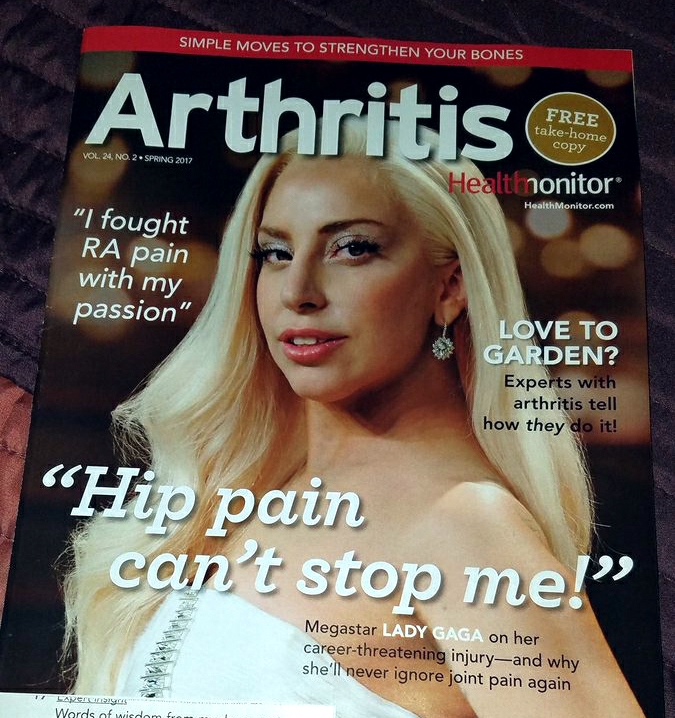
In a cover story published in Arthritis Magazine, the 31-year old entertainer appears to be quoted as saying, “I fought RA pain with my passion." The issue hasn’t been released yet, but a copy of the magazine cover is already circulating on Twitter.

Several websites, including Pain News Network, have wrongly assumed the quote was attributed to Lady Gaga. We regret the error.

The magazine story focuses on a “career-threatening injury" that Lady Gaga suffered and "why she’ll never ignore joint pain again.” But the article only states that she suffers from synovitis, an inflammation of the joint that can be caused by overuse or injury.

Synovitis is also a common symptom of rheumatoid arthritis (RA), but Lady Gaga never actually says she suffers from the autoimmune disease.

The singer hid her chronic pain from fans and even her own staff until 2013, when she finally had surgery to repair the injured hip.

“I hid my injury until I couldn’t walk,” Lady Gaga told Arthritis Magazine. “I had a tear on the inside of my joint and huge breakage.

“The surgeon told me that if I had done another show, I might have needed a full hip replacement. I would have been out at least a year, maybe longer.”

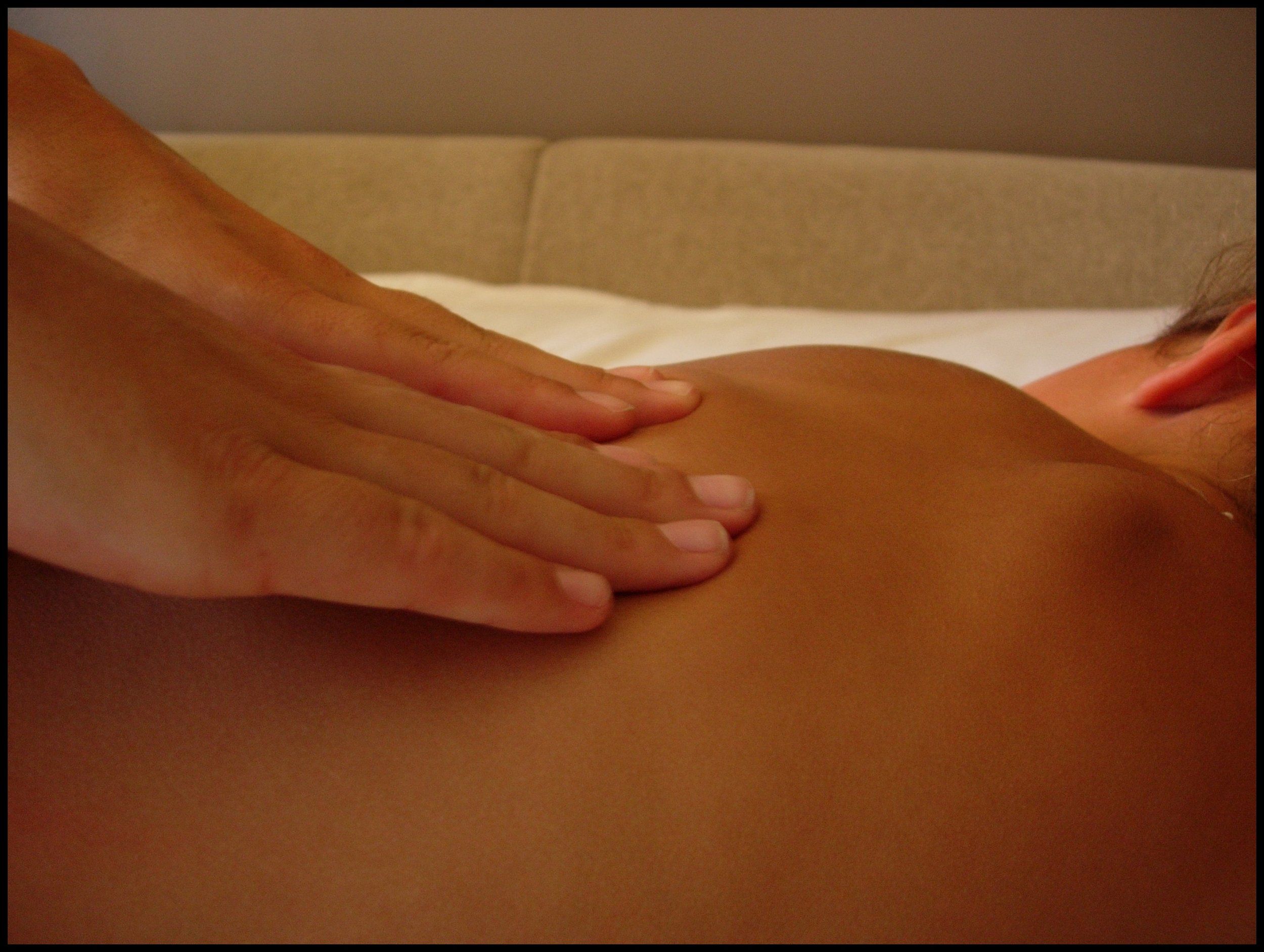
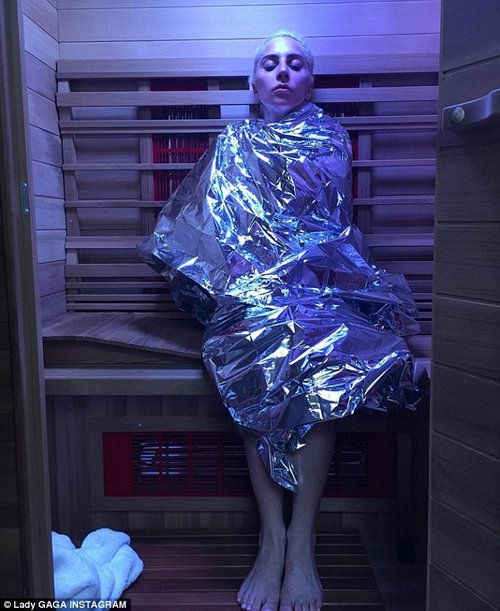
Lady Gaga has been fairly open about her struggle with chronic pain. Last November, she posted on Instagram two images of herself, trying to ease her pain by getting her shoulder massaged and by sitting in a sauna.

“Having a frustrating day with chronic pain, but I find myself feeling so blessed to have such strong intelligent female doctors. I think about Joanne too and her strength and the day gets a little easier," she posted.   

“Joanne” is Lady Gaga’s aunt, who died from lupus at the age of 19 before the singer was even born. The posts drew an outpouring of support from her Instagram followers.

“I was so overwhelmed by the empathy, confessions & personal stories of chronic pain in response to my previous post I thought what the hell. Maybe I should just share some of my personal remedies I've acquired over the past five years,” she said.

“When my body goes into a spasm one thing I find really helps is infrared sauna. I've invested in one. They come in a large box form as well as a low coffin-like form and even some like electric blankets! You can also look around your community for a infrared sauna parlor or homeopathic center that has one."

Lady Gaga is apparently coping quite well with her pain. She soared around the stadium during a spectacular halftime show at this year's Super Bowl. According to the magazine, Lady Gaga is planning another concert tour as well as her first movie, a remake of A Star is Born.