More Americans Worried About Rx Drug Misuse

By Pat Anson, Editor

A recent study by the Centers for Disease Control and Prevention found that about one in four overdose deaths in 2016 involved prescription opioids. That’s a lot – but it’s far less than the number of Americans killed by illegal drugs such as heroin, cocaine and illicit fentanyl – which account for nearly two-thirds of all drug related deaths.

But a new survey shows that a growing number of Americans still blame the overdose crisis on prescription drugs.

The nationwide poll by the Associated Press and the NORC Center for Public Affairs at the University of Chicago found that 43 percent of Americans believe the misuse of prescription drugs is a serious problem in their community. That’s up from 33% two years ago. Only 37 percent see heroin as a serious concern locally.

The survey findings show that many Americans have a conflicted attitude about the opioid crisis and drug misuse in general.

For example, while over half (53%) believe prescription drug addiction is a disease that is treatable, a significant number (39%) think substance abuse is caused by mental illness. Forty-three percent think opioid addiction shows a lack of willpower or discipline, and nearly a third (32%) say it’s a character defect or a sign of bad parenting.

The stigma associated with drug addiction is strong. Fewer than 1 in 5 Americans are willing to associate closely with a friend, colleague or neighbor who is addicted to prescription drugs.  

"In the national effort to grapple with the enormous issue of opioid addiction, it is important to know the level of awareness and understanding of Americans who find themselves in the midst of an epidemic that is claiming growing numbers of lives," said Caitlin Oppenheimer, senior vice president of public health at NORC. "This survey provides important, and in some cases troubling, information."

Other survey findings:

  • 13% of Americans had a relative or close friend die from an opioid overdose.
  • 24% have an addicted relative, close friend, or say they themselves are addicted to opioids.
  • Two-thirds say their community is not doing enough to make treatment programs accessible and affordable
  • 64% would like to see more effort to crack down on drug dealers.

"The number of people who recognize how serious the opioid epidemic is in this nation is growing," said Trevor Tompson, vice president for public affairs research at NORC. "There is clearly a continuing challenge to ensure that what is learned about the crisis is grounded in fact."

The survey found that Facebook plays a dominant role in how Americans get their news – particularly about opioids. Of the 74 percent of adults who use Facebook, 41 percent say they have seen messages about opioids or deaths from overdoses. Fewer users of Twitter, Instagram and other social media platforms report seeing such information.

The nationwide survey of 1,054 adults was conducted online and using landlines and cell phones. The margin of sampling error is +/- 4.1 percentage points.


How CDC's Opioid Guidelines Killed My Mother

Sheila Ramsey, Guest Columnist

For the past year, I have been reading the heartbreaking stories being posted about the degrading and inhumane treatment of the elderly, critically ill and disabled persons by our government, healthcare institutions and physicians.

And all I can do is sit here and cry, thinking about the struggles that my mother went through for the last 25 years of her life. She was a diabetic for 40 years, had rheumatoid arthritis, osteoarthritis, degenerative disc disease, high blood pressure, depression and cystic lung fibrosis. These conditions caused her much pain every day.

She was placed on a low dose of hydrocodone 20 years ago. It did not completely erase her pain, but made it manageable to where she wasn’t completely bedridden.

Then in 2016, when the CDC came out with their opioid "guidelines," her doctor reduced her dosage three times. I watched her suffer immensely and she pleaded with him to raise it several times. He would not.

Her life became more miserable than before and her depression worsened. She even had to stop driving, relying on me and a few friends to take her to appointments and grocery shopping once a week. Which were the only times she got out of her small one-bedroom apartment.

In May 2017, her lung disease got worse and it was hard for her to breath due to panic attacks several times a day. Her pulmonary doctor placed her on a low dose of Ativan to reduce her anxiety.

JANET DIXON

As soon as her primary care doctor found out about that, he immediately gave her a choice of which illness she was willing to suffer from: panic attacks or chronic pain due to her many incurable illnesses. She chose the Ativan and he immediately stopped her pain meds. She then had to start using a walker instead of her cane.

In June 2017, she had a friend drop her off to see her lung doctor. While waiting for the elevator, she tripped over her walker, fell and broke her hip. She went into the hospital for surgery, caught pneumonia and had to be placed in a medically induced coma. She also had congestive heart and kidney failure. She was waiting on a lung transplant but did not make it. We had to take her off life support on October 25, 2017.

This was all due to complications from being in the hospital for a hip surgery that never would have been needed if she did not have to use a walker and had not been taken off pain medication! If her pain had been controlled, my mother might still be alive.

That’s why it angers me that our government is denying medication to patients that benefit from them. How in America can our lawmakers let this happen? I’ve written so many letters. I don’t know who else to contact or what else I can do to help all the people who have been brutally denied pain relief and subjected to humiliating and degrading treatment. Please if there is anything I can do to help stop this neglect, I’m all in.

I just want to let everyone who reads this to know that I feel for each and every one of you who is suffering, and I hope this ends soon. God bless you all.

Sheila Ramsey lives in Ohio. Her mother, Janet Dixon, died last year at the age of 69.

Pain News Network invites other readers to share their stories with us. Send them to editor@painnewsnetwork.org.

The information in this column should not be considered as professional medical advice, diagnosis or treatment. It is for informational purposes only and represents the author’s opinions alone. It does not inherently express or reflect the views, opinions and/or positions of Pain News Network.

Rallies Draw Attention to Suffering of Pain Patients

By Pat Anson, Editor

Hundreds of people braved the rain, wind and cold Saturday to take part in a nationwide series of rallies in support of people living with chronic pain and illness.

The “Don’t Punish Pain” rallies were organized by a grassroots group on Facebook and held mostly at state capitols in 47 states.

The primary goal of the rallies is to get the Centers for Disease Control and Prevention to change its opioid prescribing guidelines, which have caused many doctors to stop treating patients with opioid medication or to drastically lower their doses.

Although attendance was sparse in some locations, a dozen or more people gathered in Baton Rouge, Dallas, Little Rock, Annapolis and several other cities.

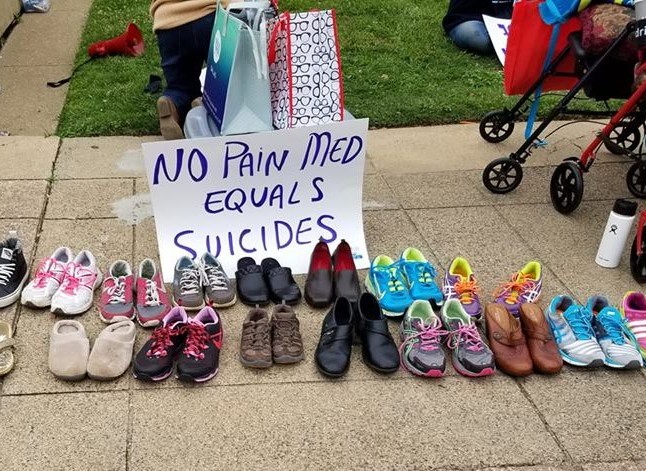
Some protestors brought an empty pair of shoes to represent people who were too ill to attend, those who have died due to poorly treated pain, and some who have committed suicide.

While the turnout may have been disappointing to some, the rallies were successful in attracting local media attention – shining a rare spotlight on the plight of pain patients and how many are suffering in an age of hysteria over opioid medication and the overdose crisis.

"We have gone so much to the other side that we are forgetting that there are voices of pain that need to be heard," Carlene Hansen told KIVI-TV in Boise, Idaho. "I've been on medications for 5-7 years and always take it as prescribed."

 "I think that a responsible doctor is going to do the right thing and prescribe the right medications for the right individual," Michele Thomas told the News Tribune in Jefferson City, Missouri. "Where I have a problem is when the government comes in and tells the doctor that they cannot prescribe what the doctor feels is the best medication."

“Doctors need to be able to treat their patients again,” Karlyn Beavers told WLNS-TV in Lansing, Michigan. "I have pain every day. Whether some days it may be light, some days it's heavy, but it's always there.”

The Don’t Punish Pain rallies were organized in the last few months on social media without support or funding from patient advocacy groups or pharmaceutical companies.

Since the CDC released its opioid guidelines in 2016, many patients say the quality of their medical care has gone downhill. 

In a PNN survey of over 3,100 patients on the first anniversary of the guidelines, 84 percent said their pain and quality of life had gotten worse. Over 40 percent said they had considered suicide and 11 percent said they had obtained opioids on the black market for pain relief.

CDC researchers recently admitted that they significantly overestimated the number of Americans that have died from overdoses involving opioid medication. A CDC report released last month found that most drug deaths are actually caused by illicit fentanyl, heroin, cocaine and other drugs obtained on the black market.

More Salmonella Cases Linked to Kratom

By Pat Anson, Editor

The Centers for Disease Control and Prevention says another 45 people have been sickened in a salmonella outbreak linked to the herbal supplement kratom.  A total of 132 people have been infected in 38 states, with 38 of them hospitalized. There have been no deaths.

Salmonella is a bacterial infection usually spread through contaminated food or water. Most people who become infected develop diarrhea, fever and stomach cramps. Salmonella causes an estimated one million food-borne illnesses a year in the United States.

This particular outbreak is small compared to previous ones, but it’s been long-lasting. While the vast majority of cases have only been reported in the last few months, CDC traced the first illnesses back to January 2017. Three different Salmonella strains have been identified – none of them resistant to antibiotics.

Millions of Americans use kratom to treat chronic pain, addiction, depression, anxiety and other medical conditions. The CDC says kratom is the “likely source” of the outbreak – although the evidence behind it is not entirely clear.

Several kratom samples have been found to be contaminated with salmonella bacteria, but less than half the people sickened in the outbreak say they consumed kratom. Their ages are also unusual, ranging from 1 to 73 years old.

salmonella bacteria

“State and local health officials continue to interview ill people to ask about the foods they ate and other exposures before they became ill. Fifty-seven (73%) of 78 people interviewed reported consuming kratom in pills, powder, or tea,” the CDC said in its latest update.

“People who reported consuming kratom purchased it from retail locations in several states and from various online retailers. Despite the information collected to date about where ill people purchased kratom, a single common brand or supplier of kratom has not been linked to the outbreak. CDC continues to recommend that people not consume kratom in any form because it could be contaminated with Salmonella and could make people sick.”

Earlier this week, the Food and Drug Administration ordered a Las Vegas company – Triangle Pharmanaturals -- to recall all of its dietary supplements containing kratom. The rare mandatory recall order was issued after the company refused to make a voluntary recall when some of its kratom capsules were found contaminated with salmonella.

There other kratom distributors – PDX Aromatics, Tamarack and NutriZone voluntarily recalled their products after samples tested positive for salmonella. A complete list of recalled kratom products can be found here.

Many kratom supporters remain suspicious of the motives behind the federal government’s salmonella investigation. The Drug Enforcement Administration tried unsuccessfully to list kratom as a controlled substance in 2016, which would have effectively banned its sale and use. In recent months, the FDA has also released several warnings that kratom should not be used to treat any medical conditions because it has opioid-like properties and could cause addiction.

The American Kratom Association (AKA) – a pro-kratom association of consumers and vendors -- is currently surveying members “to get a clearer picture” of the actions taken by the FDA and CDC in the salmonella outbreak.

“We are particularly concerned with reports that the FDA/CDC may be using the salmonella outbreak purportedly in kratom products as a pretext to allow the FDA to expand their war on kratom,” the AKA says on its website. “If your business was contacted by either the FDA or CDC regarding the salmonella outbreak that has been associated with kratom, we are asking that you take the following survey.”

Among other things, the survey asks vendors if they were given a laboratory analysis of any “alleged salmonella contamination” by the FDA or CDC, and if they were given time to conduct their own independent lab test.    

A Pained Life: My Medical Marijuana Experiment

By Carol Levy, Columnist

I just got my medical marijuana ID card.

I never tried marijuana as a teen. The one time someone gave me a sample of their medical marijuana, it made me feel terrible, as though I had taken a large dose of opioid medication -- fuzzy mouthed and cloudy brained.

It made me leery, but once it became legal in Pennsylvania there was no way I would not try it.

First thing you have to do is find a state certified doctor. There are only a few, so you are pretty much stuck with whomever is nearby. Before I could see the doctor, I had to give a urine sample. I have never been asked before to do this. All patients are required to – so they can weed out those who may be abusers.

That does not make it any less uncomfortable. I felt, as many do, as though I had been convicted of something and now had to prove my innocence.

The expense seems to be created to make it very hard to access. I am on a fixed disability income. The first visit with the doctor cost $125. This fee was required at the time of the appointment. The doctor told me that I would have to come in once a month for the first six months of use. This would cost $50 per visit, again payable at the time of the appointment.

Next you must send in $50 to get the state ID card.

Once that arrived, I had to find a dispensary. There was one about a half an hour from my home.  I called first to make sure they were open. They were very nice, but the feeling of doing something untoward was hard to ignore. I watch Law and Order. The drug dealers invariable say they have “product.”

“Are you open yet?” I asked the receptionist at the dispensary. “Yes. But we are out of product at this time.” Product? But this is supposed to be a legitimate medical medication, not something clandestine.

Product? But this is supposed to be a legitimate medical medication, not something clandestine.

I went as soon as they had “product.” When I arrived, another person was waiting outside at the entrance, where there was a security guard. He looked at me and said, “Sorry you have to wait outside. We're only allowed to let one person in at a time.”

A security guard? I get that. You never know who might try to worm their way in. But I had the ID card. Why did we have to wait outside before each person was cleared?

Inside was lovely. Nice personnel, a waterfall, plants, real wood tables, coffee, tea and cookies waiting for us on a sideboard. It almost puts you off balance. A security guard at the door. Only one customer inside a time. Is something nefarious going on? But once inside it is warm, embracing and inviting.

I was escorted to a private room, where I spoke with the dispensary pharmacist. She explained how the medication works and what would be best for me, at least to start with. After the consultation I went back to the dispensary room.

The cost was less than I expected. Again, the fee was required at the time of purchase. It was cash only, no checks and no credit cards. Just like with a drug dealer. Apparently, banks are not able to accept checks or credit card charges because of the federal prohibition against marijuana.

Aside from feeling like I was doing something wrong, because of the urine test, security guard, “product” and cash up front, I am glad I tried it. The product I bought has not helped my pain, but the good thing is there are other concentrates and combinations I can try.

It is ironic that there is this war on opioids, yet marijuana remains a Schedule I controlled substance, making it very hard for researchers to get permission to study it. Studies that are available show it helps many disorders, including some forms of chronic pain  If the government truly wanted to help us get off opioids, they should make marijuana readily available for study and for patients..

Then, for many of us, there would be one more avenue of hope.

Carol Jay Levy has lived with trigeminal neuralgia, a chronic facial pain disorder, for over 30 years. She is the author of “A Pained Life, A Chronic Pain Journey.” Carol is the moderator of the Facebook support group “Women in Pain Awareness.” Her blog “The Pained Life” can be found here.

The information in this column should not be considered as professional medical advice, diagnosis or treatment. It is for informational purposes only and represent the author’s opinions alone. It does not inherently express or reflect the views, opinions and/or positions of Pain News Network.

‘Don’t Punish Pain’ Rallies Set for Saturday

By Pat Anson, Editor

Dozens of protests are being planned across the United States this Saturday to draw attention to the plight of patients suffering from chronic pain and illness.

The “Don’t Punish Pain” rallies were organized by a grassroots group on Facebook and quickly gained traction in the pain community – where there is growing frustration over reduced access to pain medication and medical care.

“One day we were talking and decided we could have a rally. And it went from there. It just exploded,” says David Israel, a 30-year old Michigan man disabled by chronic pain.

Israel says the group is planning rallies in 47 states – mostly at state capitols – and has obtained the necessary permits. For a complete list of the times and locations, click here.

The primary goal of the rallies is to get the Centers for Disease Control and Prevention to change its opioid prescribing guidelines, which have caused many doctors to stop treating patients with opioid medication or to drastically lower their doses.

“There are millions of people that are being affected by this. Not only do we need to get the CDC to change but we also need to get help for the people who’ve been abandoned,” says Israel.

Israel was recently abandoned by his doctor and has been unable to find a new one, in part because of a disputed drug test. He suffers from hydrocephalus, a condition that causes spinal fluid to build up in his brain, leading to headaches and other neurological problems.

“I don’t have a doctor at all right now,” said Israel. “I need pain meds, but I don’t have any because there was a false positive last year that I proved was false, but the doctor said there was no such thing as a false positive. She dropped my pain meds overnight.”

Some patients have complained to PNN that the rallies are poorly organized and they don't know who to contact or where to get further information. Perhaps the best thing to do is to join their Facebook group by clicking here and see if the information has already been posted.

The Don’t Punish Pain rallies were organized in the last few months without support or funding from other patient advocacy groups. It truly is a grassroots effort, supported by volunteers like Rhonda Posey, a Texas grandmother who suffers from arachnoiditis, a chronic spinal condition.

“It’s been fun to be involved with it, but it’s been quite a job,” says Posey, who helped organize the Don’t Punish Pain rally at Dallas City Hall Saturday morning. She was unable to get a permit at the state capitol in Austin, possibly due to the stigma associated with opioids.

“We had to have legislator sponsorship (for a permit). And we reached out to probably a dozen people trying to get someone to sponsor us and nobody would do it,” she told PNN. “They probably didn’t want their name associated with something like that.  

“Dallas has been very nice. Someone will be there with us the entire time. They’ve been real nice about everything, so it’s worked out well.”

Posey has also been successful in getting some advance media coverage of the rally from local newspapers and from KTRE-TV.  Her group plans to bring 50 pairs of shoes to the rally to represent patients who have died from suicide or medical conditions caused by untreated pain. 

She and Israel say it is time for different tactics by the pain community. Just signing petitions and writing letters to politicians about how the government’s response to the opioid crisis is hurting patients hasn't been effective.

“Nobody’s got the guts to standup and say wait a minute, there are other people suffering. It’s not just people that are suffering form addiction. It’s not just the families who are suffering from people who have died from overdoses," Posey said. “What about me? What about the millions of chronic pain patients that are suffering? What about us?”

The Opioid Crisis Is Not Just About Pain Medication

By Roger Chriss, Columnist

The opioid crisis is no longer primarily about prescription opioids. Illicit fentanyl, heroin, cocaine and other black market drugs are now involved in more overdoses than pain medication.

However, the current response to the overdose crisis is still focused primarily on opioid prescribing. Arizona just approved  legislation to reduce opioid prescribing for injured workers. And President Trump has stated that he will push for a one-third reduction in opioid prescribing over the next three years. 

The ongoing media narrative reinforces this view. The crisis is blamed on prescription opioids, combined with manipulative marketing by manufacturers, pharma funded advocacy groups, and poor prescribing practices by physicians. Although these factors may have played a role in the onset of the crisis 20 years ago, the “opioid epidemic” has evolved far beyond that.

The National Institute on Drug Abuse summarizes the origins of the crisis this way:

"In the late 1990s, pharmaceutical companies reassured the medical community that patients would not become addicted to prescription opioid pain relievers, and healthcare providers began to prescribe them at greater rates. This subsequently led to widespread diversion and misuse of these medications before it became clear that these medications could indeed be highly addictive."

The Centers for Disease Control and Prevention says there have been three “waves” to the crisis:

"The first wave of opioid overdose deaths began in the 1990s and included prescription opioid deaths. A second wave, which began in 2010, was characterized by heroin deaths. A third wave started in 2013, with deaths involving highly potent synthetic opioids, particularly IMF (illicitly manufactured fentanyl) and fentanyl analogs."

CDC researchers recently admitted that they significantly inflated the number of deaths involving prescription opioids for years.  They also acknowledged in an “Annual Surveillance Report of Drug-Related Risks and Outcomes” that high dose opioid prescribing has been in decline for over a decade:

“Between 2006 and 2016, the annual prescribing rate per 100 persons for high-dosage opioid prescriptions (>90 morphine milligram equivalents (MME)/day) decreased from 11.5 to 6.1, an overall 46.8% reduction and an average annual percentage change of 6.6%. The rate leveled off between 2006 and 2009, then decreased 9.3% annually from 2009 to 2016.”

These trends are clearly visible at the state level. Maine’s Attorney General recently said “Fentanyl has invaded our state” and that most of the overdose deaths there were caused by multiple drugs. When pharmaceutical opioids were involved, most of the time they were “not prescribed for the decedent.”

FiveThirtyEight gave a detailed breakdown of drug deaths by state. In an article headlined “There Is More Than One Opioid Crisis,” Kentucky was actually found to have more overdoses involving gabapentin than oxycodone.

And in a recent Cleveland.com interview, FDA Commissioner Scott Gottlieb, MD, refers to the crisis as shifting “from a prescription-pill problem to one centered around deadly street drugs.”

In other words, prescription opioids have become only a small part of a crisis that now includes heroin, illicit fentanyl, and an increasing number of non-opioid drugs. In fact, we are fast approaching what will become the fourth wave of the crisis, one involving poly-drug abuse and overdoses, that will further challenge first responders, emergency rooms and addiction treatment facilities.

But still the response to the crisis has been focused on opioid prescribing. This may have made some sense a decade ago, when surveillance of the crisis was just starting. It made for good optics, but it was bad policy. Curbing prescribing is wreaking havoc with pain management, not only for chronic, progressive and degenerative disorders but also cancer and hospice patients. And it is not helping people who suffer from opioid addiction.

As Drs. Stefan Kertesz and Sally Satel point out: “Too many health care providers have started to see their fierce commitment to dose reductions as a badge of good citizenship, without any effort to measure the human outcomes of their own policies.”

Pain management expert Dr. Lynn Webster wrote this about the recently announced Medicare plan to reduce high dose opioid prescribing: “Such actions will not reduce opioid deaths related to heroin and illicit fentanyl which is the source of most overdose deaths. In fact the opposite effect may occur."

The opioid crisis will not be solved by focusing on prescription opioids. It is too late for that. Failure to recognize the evolving nature of the crisis will simply risk more fatal overdoses.  

Roger Chriss lives with Ehlers Danlos syndrome and is a proud member of the Ehlers-Danlos Society. Roger is a technical consultant in Washington state, where he specializes in mathematics and research.

The information in this column should not be considered as professional medical advice, diagnosis or treatment. It is for informational purposes only and represents the author’s opinions alone. It does not inherently express or reflect the views, opinions and/or positions of Pain News Network.

FDA Orders Recall of Kratom Linked to Salmonella Scare

By Pat Anson, Editor

The U.S. Food and Drug Administration has issued a mandatory recall for kratom capsules made by a Las Vegas company after several of its products were found to be contaminated with salmonella bacteria.

The FDA said it ordered the recall after Triangle Pharmanaturals failed to cooperate with the agency’s request to conduct a voluntary recall.

The FDA is advising consumers to discard kratom products made by Triangle, which include Raw Form Organics Maeng Da Kratom Emerald Green, Raw Form Organics Maeng Da Kratom Ivory White, and Raw Form Organics Maeng Da Kratom Ruby Red. The products are sold in 300 capsule plastic bottles.

It’s possible other brands may be included in the recall because Triangle manufactures and packages kratom products for other companies.

“This action is based on the imminent health risk posed by the contamination of this product with salmonella, and the refusal of this company to voluntarily act to protect its customers and issue a recall, despite our repeated requests and actions,” said FDA Commissioner Scott Gottlieb, MD, in a statement.

“We continue to have serious concerns about the safety of any kratom-containing product and we are pursuing these concerns separately. But the action today is based on the risks posed by the contamination of this particular product with a potentially dangerous pathogen. Our first approach is to encourage voluntary compliance, but when we have a company like this one, which refuses to cooperate, is violating the law and is endangering consumers, we will pursue all avenues of enforcement under our authority.”

The FDA said Triangle did not cooperate with its investigation or order a voluntary recall after six samples of its kratom products tested positive for salmonella. “FDA investigators were denied access to the company’s records relating to potentially affected products and Triangle employees refused attempts to discuss the agency’s findings,” the FDA said.

The company did not immediately respond to a request for comment.

At least 87 people have been sickened in 35 states by a salmonella outbreak linked to kratom – an herbal supplement used by millions of Americans to treat chronic pain, depression, anxiety and addiction. At least one other kratom distributor – PDX Aromatics of Portland, Oregon – agreed to voluntarily recall its products after several were found contaminated with salmonella.

Salmonella is a bacterial infection usually spread through contaminated food or water. Most people who become infected develop diarrhea, fever and stomach cramps. Severe cases can result in hospitalization or even death.

Kratom is usually sold in powder, capsules or leaves.  The Centers for Disease Control and Prevention has not been able to trace the salmonella outbreak to a single brand or source, so it is recommending that people not consume “any brand of kratom in any form.”

The FDA has also warned against consuming kratom, claiming it has opioid-like qualities and could lead to addiction. In recent months, the FDA has released a public health advisory warning that kratom should not be marketed as a treatment for any medical condition. The agency also released a computer analysis that found kratom contains over two dozen opioid-like substances.

Under the Food Safety Modernization Act, the FDA has broad authority to order the recall of food products when the agency determines that there is a reasonable probability the food is adulterated or could have serious health consequences.

Medicare Finalizes Plan to Reduce High Dose Opioids

By Pat Anson, Editor

The Trump administration has finalized plans that will make it harder for many Medicare patients to obtain high doses of opioid pain medication. Medicare beneficiaries will also be limited to an initial 7-day supply of opioids for acute pain.

Under new rules released today for the 2019 Medicare Part D prescription drug program, a ceiling for opioid doses will be established at 90mg morphine equivalent units (MME).  Any prescription at or above that level would trigger a “hard safety edit” requiring pharmacists to talk with the prescribing doctor about the appropriateness of the dose. If satisfied with the explanation, the pharmacist could then override the edit and fill the prescription.

Under an earlier proposal that was widely criticized, only insurers could decide whether to override a safety edit – a requirement that would have essentially made insurers the final arbiters in deciding who gets high doses of opioid pain medication.

The new rules adopted by the Centers for Medicare and Medicaid Services (CMS) will still allow insurers to implement safety edits, but only at a much higher dose of 200 MME or more.  Insurers will also be given greater authority to identify beneficiaries at high risk of addiction and to require they use “only selected prescribers or pharmacies.”

CMS is also adopting a new policy that requires all new opioid prescriptions for short term acute pain to be limited to no more than 7 days’ supply. Several states have already adopted similar measures.

CMS says this “tailored approach” to opioid prescriptions was needed to address what it called “chronic opioid overuse” at the pharmacy level and to encourage support for the CDC’s 2016 opioid prescribing guideline.

“CMS believes it is important that (insurers) set expectations for prescribers to implement the CDC’s recommendations as a best practice through their provider contracts. PDPs (prescription drug plans) should also reinforce these messages through interactions with prescribers as an integral component of sponsors’ drug utilization management program,” CMS said.

“We also recommend that beneficiaries who are residents of a long-term care facility, in hospice care or receiving palliative or end-of-life care, or being treated for active cancer-related pain are excluded from these interventions.”

About 1.6 million Medicare beneficiaries met or exceeded opioid doses of 90mg MME for at least one day in 2016. The 90mg MME ceiling established by the CDC was only meant as a recommendation for primary care physicians, but has been widely adopted as a rule by other federal agencies, insurers, state regulators and prescribers.

'Cruel' Limits on Opioid Prescribing

"The 90 mg dose they set as a threshold for 'high' or overuse is flawed and not scientifically based.  It is totally arbitrary," says Lynn Webster, MD,  a pain management expert and past president of the American Academy of Pain Medicine.  "It is cruel to impose such a limit on people with involuntary dose reductions who have been functioning well without signs of abuse for years.

"Even the 7 day limit is misguided at best. The average length of time a person requires an opioid post-op involves several factors and include the type of operation, the genetics of the person and the type of medication. The literature states the duration of pain requiring treatment with an opioid post-operatively is 4-9 days for general surgery, 4-13 days for women's health procedures and 6- 15 days for musculoskeletal procedures.  This means half of the Medicare patients will receive less than half of what they will need."  

Over 1,200 people left public comments in the Federal Register about the Medicare proposal, most of them sharply critical of CMS.

“This is archaic medicine and does more harm than one can imagine,” wrote pain patient Henry Yennie. “The DEA, HHS, private insurers, and now CMS are pursuing policies and restrictions that will cause harm and suffering to millions of people.”

“I cannot understand how Medicare can be so uncaring about the pain people have,” wrote Mikal Casalino, a 72-year old pain patient. “Limiting the dosage to an arbitrary amount is not going to be helpful for individuals.”

A joint letter opposing the rule changes was also submitted by 180 doctors and academics, including some who helped draft the CDC guidelines. The letter points out that a steep reduction in high dose prescribing since 2010 has not reduced the number of opioid overdoses. And it faults CMS for being focused on reducing the number of high dose prescriptions – not the quality of patient care.

“The proposal does not consider adverse impacts on pharmacies, physicians or patients…and it will accelerate patient abandonment,” the letter warns. “The plan avows no metric for success other than reducing certain measures of prescribing. Neither patient access to care nor patient health outcomes are mentioned.”

CMS contracts with dozens of insurance companies to provide health coverage to about 54 million Americans through Medicare and nearly 70 million in Medicaid. CMS policy changes often have a sweeping impact throughout the U.S. healthcare system because so many insurers and patients are involved.  The new Medicare regulations will go into effect on January 1, 2019.

Doctors and Pharmacists Targeted in DEA Surge

By Pat Anson, Editor

The U.S. Drug Enforcement Administration has arrested 28 people and revoked the registrations of over a hundred others in a nationwide crackdown that targeted prescribers and pharmacies that dispense “disproportionally large amounts” of opioid medication.

For 45 days in February and March, a special team of DEA investigators searched a database of 80 million prescriptions, looking for suspicious orders and possible drug thefts.

The so-called “surge” resulted in 28 arrests, 54 search warrants, and 283 administrative actions against doctors and pharmacists.  The DEA registrations of 147 people were also revoked – meaning they can no longer prescribe, dispense or distribute controlled substances such as opioids.

The DEA said 4 medical doctors and 4 medical assistants were arrested, along with 20 people described as "non-registrant co-conspirators." The arrests were reported by the agency's offices in San Diego, Denver, Atlanta, Miami and Philadelphia.

“DEA will use every criminal, civil, and regulatory tool possible to target, prosecute and shut down individuals and organizations responsible for the illegal distribution of addictive and potentially deadly pharmaceutical controlled substances,” Acting DEA Administrator Robert Patterson said in a statement.

“This surge effort has demonstrated an effective roadmap to proactively target illicit diversion of dangerous pharmaceuticals. DEA will continue to aggressively use this targeting playbook in continuing operations.”

The DEA surge is the latest in a series of steps taken by Attorney General Jeff Sessions to crackdown on opioid prescribing. Last August, Sessions ordered the formation of a new data analysis team, the Opioid Fraud and Abuse Detection Unit, to focus solely on opioid-related health care fraud. 

Sessions also assigned a dozen prosecutors to “hot spots” around the country where opioid addiction is common.  Last week the DEA said it would add 250 investigators to a task force assisting in those investigations.

Although overdose deaths are primarily caused by illicit drugs such as fentanyl, heroin and cocaine, federal law enforcement efforts appear focused on opioid prescribing. Doctors and pharmacists are easier to target because they are already in DEA databases, as opposed to drug dealers and smugglers operating in the black market.   

As PNN has reported, the data mining of opioid prescriptions -- without examining the full context of who the medications were written for or why – can be problematic and misleading.

For example, last year the DEA raided the offices of Dr. Forest Tennant, a prominent California pain physician, because he had “very suspicious prescribing patterns.” Tennant only treated intractable pain patients, many from out-of-state, and often prescribed high doses of opioids because of their chronically poor health -- important facts that were omitted or ignored by DEA investigators.

Tennant has not been charged with a crime and denied any wrongdoing. Nevertheless, he retired this month due to the stress and uncertainty caused by the DEA investigation. About 150 of his patients now have to find new doctors, not a simple task in an age of hysteria over opioid medication.

In an interview with AARP, Sessions defended the use of data mining to uncover health care fraud.

“Some of the more blatant problems were highlighted in our Medicare fraud takedown recently where we had a sizable number of physicians that were overprescribing opioid pain pills which were not helping people get well, but instead were furthering an addiction being paid for by the federal taxpayers. This is a really bad thing,” Sessions said.

“It’s a little bit like these shysters who use direct mail and other ways to defraud people. They will keep doing it until they’re stopped. In other words, if we don’t stop them, they will keep finding more victims and seducing them.”

Fewer Opioids Prescribed in Medical Marijuana States

By Pat Anson, Editor

The availability of medical marijuana has significantly reduced opioid prescribing for Medicaid and Medicare patients, according to two large studies published in the Journal of the American Medical Association (JAMA).

In one study, researchers at the University of Georgia looked at Medicare Part D prescription drug data from 2010 to 2015. They found that the number of daily doses prescribed for morphine (-14%), hydrocodone (-10.5%) and fentanyl (-8.5%) declined in states with medical marijuana laws. However, daily doses for oxycodone increased (+4.4%) in those same states.

The drop in opioid prescribing was most pronounced in states that have medical marijuana dispensaries, as opposed to those that only allow home cultivation of cannabis for medical purposes.

“We found that prescriptions for hydrocodone and morphine had statistically significant negative associations with medical cannabis access via dispensaries,” wrote lead author W. David Bradford, PhD, Department of Public Administration and Policy at the University of Georgia.

“Combined with previously published studies suggesting cannabis laws are associated with lower opioid mortality, these findings further strengthen arguments in favor of considering medical applications of cannabis as one tool in the policy arsenal that can be used to diminish the harm of prescription opioids.”

The second study, by researchers at the University of Kentucky, looked at Medicaid prescriptions from 2011 to 2016, and found a 5.88% decline in opioid prescribing in states with medical marijuana laws.  Opioid prescribing for Medicaid patients fell even more -- by 6.38% -- in states where the recreational use of marijuana is legal.

“These findings suggest that medical and adult-use marijuana laws have the potential to reduce opioid prescribing for Medicaid enrollees, a segment of population with disproportionately high risk for chronic pain, opioid use disorder, and opioid overdose,” wrote lead author Hefei Wen, PhD, University of Kentucky College of Public Health.

One weakness of both studies is that they did not determine if Medicaid and Medicare patients reduced their use of opioid medication because they were using cannabis.  They also only included patients that were elderly, poor or disabled. And they were conducted during a period when nationwide opioid prescribing was in decline.

A recent study by the RAND corporation found little evidence that states with medical marijuana laws experience reductions in the volume of legally prescribed opioid medication. RAND researchers believe some pain patients may be experimenting with marijuana, but their numbers are not large enough to have a significant impact on prescribing. 

"If anything, states that adopt medical marijuana laws... experience a relative increase in the legal distribution of prescription opioids," the RAND study found. "Either the patients are continuing to use their opioid pain medications in addition to marijuana, or this patient group represents a small share of the overall medical opioid using population." 

Although 29 states and the District of Columbia have legalized medical marijuana and a handful of states allow its recreational use, marijuana remains illegal under federal law.

An Open Letter to All the Doctors Who Missed My EDS

By Crystal Lindell, Columnist

I hate you. I actually hate you.

Well, maybe not all of you.

But most of you, yes I hate. Actually, hate is too nice word. I detest you. I loathe you. I have venom in my heart for you. I hope your favorite show gets cancelled after a cliff hanger. I hope your air conditioner breaks in your car in July. I hope your crush never likes any of your Instagram photos. I hope every single time you go through the Taco Bell drive thru, they mess up your order. And I hope your phone screen cracks, your laptop crashes and you lose everything you ever saved.

I was recently diagnosed with Hypermobile Ehlers Danlos syndrome (hEDS), a connective tissue disorder that not only explains why my ribs always feel broken, but also why I’m always covered in unexplained bruises, why I sprain my ankles too often, why my vision changed for no reason, why my skin is baby soft, and why I crave salt.

And so many doctors missed it. And I can’t get it out of my head.

Like the doctor at Loyola who told me to stop coming to see him because there was nothing else he could do about my pain.

And the other doctor at Loyola who looked right at me while I was sitting on the exam table in just a paper-thin gown and said, “Well there are two options. You either woke up with a completely unexplainable pain, or you’re a great actress.”

I was so caught off guard that I didn’t even realize he was accusing me of trying to get drugs for like a full 30 seconds.

I also hate literally every single doctor at the Mayo Clinic that missed this crap. You know how easy it is to do an initial test for hEDS?

Doctor: "Can you bend your thumb to your wrist?"

Patient: "Yes."

Doctor: "Yeah, you probably have it. Let’s do a full evaluation."

IT’S THAT EASY!!!

The Mayo Clinic missed it because they were obsessed with me going to their rehab clinic and getting off opioids, despite the fact that it wasn’t covered by my insurance and that they required a $35,000 upfront payment.

So yes, I hate all of you.

I also hate every single chiropractor I ever saw. Seriously, all you guys do is see people in pain, and it never crosses your mind to evaluate for EDS? Why are you not asking every single patient who walks through your doors if they can touch their thumb to their wrist? What is wrong with you?

Not to mention the fact that chiropractors have to be super careful with EDS patients, if they treat them at all, because things can dislocate and all that. It’s irresponsible of you not to be evaluating every single patient for EDS.

I also hate the pain specialist who berated me for not wanting a spinal cord stimulator. If he had evaluated me for EDS, he would have known that a spinal cord stimulator would have probably been a horrible idea for me. Like chiropractors, all pain specialists do is see people in pain. They should be evaluating every single patient they see for EDS too! 

The whole thing is so infuriating and frustrating. I sincerely wish I could go back to every single doctor I have seen over the last five years and personally tell all of them how much I hate them. And then I wish I could tell all of them to freaking check people for EDS. But I can’t do that. All I can do is write this letter and then try to move forward with my new life and my new diagnosis.

But if you’re a pain patient and you can touch your thumb to your wrist, get checked for EDS. Seriously.

And if you’re a doctor, do better.

Crystal Lindell is a journalist who lives in Illinois. She eats too much Taco Bell, drinks too much espresso, and spends too much time looking for the perfect pink lipstick. She has hypermobile EDS. 

Crystal writes about it on her blog, “The Only Certainty is Bad Grammar.”

The information in this column should not be considered as professional medical advice, diagnosis or treatment. It is for informational purposes only and represent the author’s opinions alone. It does not inherently express or reflect the views, opinions and/or positions of Pain News Network.

Living in Denial About the Overdose Crisis

By Ann Marie Gaudon, Columnist

Most of us know that denial of reality exists, but why is this so? How can humans with the ability to consider, evaluate, analyze and resolve complex problems ignore the facts? Even when ignoring the truth might lead to disastrous results?

Conceived by Sigmund Freud as a defense mechanism (to “defend” us against that which we do not want to feel), denial has been a concept for many decades. To over-simplify the premise, it’s a belief that something is either true or false when the facts say otherwise. Why would we do this? It’s because people experience a broad range of powerful emotions and intentions, such as greed, pride, revenge, fear, desire and a need for status – just to name a few. The have a strong influence over our ability to interpret facts.

When the Canadian government introduced the 2017 Canadian Guideline for Opioid Therapy, the creators were in denial. They ignored medical facts about chronic pain and turned pain sufferers into sacrificial lambs for people abusing illicit opioids. Patients and doctors tried to tell the truth but were not allowed a seat at the table with the so-called “experts.”

Chronic pain patients have never, ever, had their pain needs met and now they fare much worse. They are in more pain and experience more death and disability due to forced tapering and suicide.

Deniers yell loud and long that opioid pain medications are not effective, dangerous, addictive and will kill you in the end. Except that the evidence does not support that. Those with the worst pain have necessarily taken opioid medications to cope. It was their strongest weapon and were usually taken without danger, addiction or death. Opioids gave them effective pain relief that helped them regain function in everyday life.  Deniers will neither believe nor admit to this.

Let’s take a look at some of the strong influences which spur deniers to ignore the facts. We can see through many interviews and articles that McMaster University’s chosen group for creating the Canadian guideline enjoyed inflated reputations as “progressive thought leaders” who were “experts in pain management.” Add in the prestige and desire for status that comes from speaking engagements, media interviews, and more committees to participate in. Imagine the pride and prestige from conducting more studies (despite knowing little about the study area), and let’s not forget the enormous sums of monies paid to them by our government.

Greed, desire and a need for status can easily veto reality. So can feelings of morality and “doing the right thing” for people, while living under the fictitious perception that they are making positive inroads into addiction and overdose deaths while saving chronic pain patients from themselves.

In the real world, what has been the impact of the guideline on addiction? Nothing.

What has been the impact on pain patients? Devastation.

Most people can’t seem to figure out why the very same dreadful outcomes keep happening until they are knee-deep in it. Health Canada said this week that over 4,000 Canadians died from drug overdoses in 2017, the most ever. Most of those deaths – 72 percent – were caused by illicit fentanyl, not prescription pain medication.

Jordan Westfall, President of the Canadian Association of People Who Use Drugs, was bang on when he wrote in the Huffington Post that “it should shame this country to no end that our federal government is still afraid to see this epidemic for what it is in reality… What’s killing people is drug overdose and an apathetic government.”

May I add that what has never been killing people are chronic pain patients and their medications. Remorse and shame are powerful motivators for living in denial. Deniers continue to believe that punishing patients will somehow decrease the alarming rate of overdose deaths.

Chronic pain patients have always known the emperor has no clothes. It is a fact that all over North America prescriptions for opioids continue to go down, while overdose deaths continue to go up.  Does this suggest a statistically significant relationship between prescription analgesics and overdose deaths?  Yet the deniers continue with the same old agenda, despite the disastrous situation they have created.

There is an annoying little fact about denial. It doesn’t work in the long-term. Reality always wins out and when that happens, the next step for the deniers will be to place misdirected blame onto someone else. Count on it. It’s already happening. Doctors put the blame on the guideline’s creators and the creators reply, “No, no, no…it’s the doctors who have misunderstood the guideline.”

Here’s a message to the Canadian government and to the plethora of advisory groups, committees, response teams, et cetera and ad nauseam that are funded with taxpayers’ money to deny the facts:

When you are consistently creating the same disastrous outcome over and over again, you are in denial. And if this shameful situation continues, it will only lead to more suffering and deaths.

Ann Marie Gaudon is a registered social worker and psychotherapist in the Waterloo region of Ontario, Canada with a specialty in chronic pain management.  She has been a chronic pain patient for 33 years and works part-time as her health allows. For more information about Ann Marie's counseling services, visit her website.

The information in this column should not be considered as professional medical advice, diagnosis or treatment. It is for informational purposes only and represents the author’s opinions alone. It does not inherently express or reflect the views, opinions and/or positions of Pain News Network.

CDC Blames Fentanyl for Spike in Overdose Deaths

By Pat Anson, Editor

The Centers for Disease Control and Prevention released a new report today estimating that 63,632 Americans died of a drug overdose in 2016 – a 21.5% increase over the 2015 total.  

The sharp rise in drug deaths is blamed largely on illicit fentanyl, a powerful synthetic opioid that has become a scourge on the black market. Deaths involving synthetic opioids doubled in 2016, accounting for about a third of all drug overdoses and nearly half of all opioid-related deaths.

For their latest report, CDC researchers used a new “conservative definition” to count opioid deaths – one that more accurately reflects the number of deaths involving prescription opioids by excluding those attributed to fentanyl and other synthetic opioids. Over 17,000 deaths were attributed to prescription opioids in 2016, about half the number that would have been counted under the “traditional definition” used in previous reports.

CDC researchers recently acknowledged that the old method "significantly inflate estimates" of prescription opioid deaths.

The new report, based on surveillance data from 31 states and the District of Columbia, shows overdose deaths increasing for both men and women and across all races and demographics.  A wider variety of drugs are also implicated:

  • Fentanyl and synthetic opioid deaths rose 100%
  • Cocaine deaths rose 52.4%
  • Psychostimulant deaths rose 33.3%
  • Heroin deaths rose 19.5%
  • Prescription opioid deaths rose 10.6%

The CDC also acknowledged that illicit fentanyl is often mixed into counterfeit opioid and benzodiazepine pills, heroin and cocaine, likely contributing to overdoses attributed to those substances.

2016 DRUG RELATED DEATHS

West Virginia led the nation with the highest opioid overdose rate (43.4 deaths for every 100,000 residents), followed by New Hampshire, Ohio, Washington DC, Maryland and Massachusetts.  Texas has the lowest opioid overdose rate.

‘Inaccurate and Misleading” Overdose Data

The CDC's new method of classifying opioid deaths still needs improvement, according to John Lilly, DO, a family physician in Missouri who took a hard look at the government’s overdose numbers. Lilly estimates that 16,809 Americans died from an overdose of prescription opioids in 2016.

“Not all opioids are identical in abuse potential and likely lethality, yet government statistics group causes of death in a way that obscures the importance of identifying specific agents involved in deadly overdoses,” Lilly wrote in a peer reviewed article recently published in the Journal of American Physicians and Surgeons..

Lilly faults the National Institute on Drug Abuse (NIDA) -- which relies on a CDC database -- for using “inaccurate and misleading” death certificate codes to classify drug deaths. In its report for 2016, NIDA counted illicit fentanyl overdoses as deaths involving prescription opioids. As a result, deaths attributed to pain medication rose by 43 percent, at a time when the number of opioid prescriptions actually declined.

“That large an increase in one year from legal prescriptions does not make sense, particularly as these were being strongly discouraged,” Lilly wrote. “Rather than legal prescription drugs, illicit fentanyl is rapidly increasing and becoming the opioid of choice for those who misuse opioids... Targeting legal prescriptions is thus unlikely to reduce overdose deaths, but it may increase them by driving more users to illegal sources.”

Some researchers believe the government undercounts the number of opioid related deaths by as much as 35 percent because the actual cause of death isn’t listed on many death certificates.

“We have a real crisis, and one of the things we need to invest in, if we’re going to make progress, is getting better information,” said Christopher Ruhm, PhD, a professor at the University of Virginia and the author of a overdose study recently published in the journal Addiction.

Ruhm told Kaiser Health News the real number of opioid related deaths is probably closer to 50,000.

4 Alternative Therapies That Help Lower Pain Levels

By Barby Ingle, Columnist

This is the 11th month of my series on alternative therapies for chronic pain management. As I have stressed month after month, each of us is different, even if we are living with the same diseases. No one treatment works for everyone. We must find creative and effective ways to get our pain levels lower.

This month I am shining a spotlight on four treatments that may help you or your loved one in chronic pain: Quell, radiofrequency ablations, reflexology and sonopuncture, also known as sound therapy. I have tried all four of these treatments with varying degrees of success.

Quell

Quell is a wearable medical device that uses electric nerve stimulation to deliver relief from chronic pain. I have tried this device and passed it on to some of my friends with back, arthritis, nerve, leg and foot pain. For me, the relief was not as significant as I had hoped, but I have a friend who has used it daily for a year and swears that it helps her leg pain.

NeuroMetrix, the maker of Quell, designed the device to be worn on the upper calf muscle. It was small enough to wear under my sweatpants and not too big or bulky to get in the way. The device sends neural pulses through the central nervous system to the brain to trigger the body’s own pain blockers. It has a variety of stimulation patterns and sleep modes, and the intensity of therapy can be adjusted through an app.

If you have tried a TENS unit or Calmare and gotten some relief, this might be a successful tool to help you manage your pain. A Quell starter kit costs $249. Each unit comes with the device, leg band, two electrodes and charging cords. You have to replace the electrodes about every two weeks with normal use, but the battery is rechargeable.

I believe Quell is an option that is worth looking into and they have a 60-day moneyback guarantee if it doesn’t help you.

image courtesy neurometrix

Radiofrequency Ablation

Radiofrequency ablation (RFA) uses heat to stop the transmission of pain. Radiofrequency waves “ablate” or burn the nerve that is causing the pain. The nerve stops sending pain signals until it regrows and heals from the ablation. RFA is most commonly used to treat chronic pain caused by arthritis and peripheral nerve pain.

I had RFA procedures 36 times from 2005 to 2008. It never took my pain away but did lower my pain levels and helped take the edge off. The doctor performed them on the ganglion nerve bundle in my neck. My insurance covered the procedures and it was helpful in keeping the need for high dose pain medications down.

RFA procedures are typically done in an outpatient setting under local anesthetics or conscious sedation anesthesia. The procedure is done under guidance imaging, like a CT scan or by ultrasound machine, by an interventional pain specialist.

RFA is said to help in treating the desired nerve without causing significant collateral damage to the tissue around where the ablation is performed. Still, a patient should take precautions and understand that the ablation can cause trauma or injury to the body, and conditions such as CRPS or arachnoiditis can be exacerbated long-term with this treatment.

When I was having RFA, it was one of the only options I had access to. Once less invasive options became available to me, I opted to stop these and nerve blocks all together.

Reflexology

Reflexology involves the application of pressure to the feet and hands with thumb, finger, and hand techniques. Reflexology is very relaxing and calming for me but there is no consensus among reflexologists about how it works, and some technicians are better at it than others.

Practitioners believe that there are specific areas in the hands and feet that correspond with organs in the “zones” of the body. There are five zones on each half of the body that reflexologists work on. In theory, they help stimulate blood flow and better blood flow leads to better working organs and muscles

The research on reflexology is skimpy and it has not been proven as an effective treatment for any medical condition.  It’s more of an approach to health lifestyle living, which can be of benefit to pain patients. This can help lower blood pressure and relax a pained body by taking the edge off.

I can say reflexology did seem to help with my constipation issues, but I was doing it while taking OTC and prescription strength medications, as well as stretching and stomach massages.

Sonopuncture

Sonopuncture is also known as vibrational or sound therapy. The idea behind it is similar to that of acupuncture, although instead of needles they use sound waves. Sonopuncture practitioners believe that sound waves stimulate the body into healing.

Sonopuncture was recently highlighted on an episode of “Keeping Up with the Kardashians” when Kendall Jenner was going through some anxiety challenges. I have used sound therapy myself to help with the stress of living with chronic pain and find it relaxing and mentally therapeutic.

Typically, the patient lays down in a comfortable position on the floor or a massage table. The practitioner will used tools like a tuning fork, glass bowls, chimes, metal or electronic devices that emit harmonic sounds or vibrations on acupressure points for about a minute each.

This is a noninvasive therapy and is suitable for all ages. Since no needles are involved, it could be seen as an alternative to acupuncture. With one in four patients afraid of needles, this could be a great way to calm your nerves and mind to help manage the challenges of living with chronic pain.

If you are considering any of these alternative treatments, I encourage you to first talk with a medical professional who is familiar with your past and present care and can help you discover what would be appropriate for you.

Barby Ingle lives with reflex sympathetic dystrophy (RSD), migralepsy and endometriosis. Barby is a chronic pain educator, patient advocate, and president of the International Pain Foundation. She is also a motivational speaker and best-selling author on pain topics.

More information about Barby can be found at her website. 

The information in this column should not be considered as professional medical advice, diagnosis or treatment. It is for informational purposes only and represents the author’s opinions alone. It does not inherently express or reflect the views, opinions and/or positions of Pain News Network.