Opioid Hysteria Leading to Patient Abandonment

By Pat Anson, Editor

As the overdose crisis has worsened, doctors are under increasing pressure from law enforcement, regulators and insurers to reduce or stop prescribing opioids.

A nurse practitioner in the Seattle area – who asked to remain anonymous -- recently told us that she was closing her pain clinic because she was afraid of losing her license and going to prison. 

“This whole thing is making me literally sick to my stomach. I've cried a million tears for my patients already, and I'm just beginning,” she wrote.

“I will be carefully weaning them all down… or arranging transfer of care to anywhere the patient would like. What a joke that is. There is no one else prescribing effective doses of opioids for chronic pain patients.  If I am to be thrown in prison, it should be for that -- not for keeping them on therapy that enriches their lives."

Patient abandonment is a growing problem in the pain community. Patients safely prescribed opioids for years are being dropped by doctors – often without weaning or tapering -- after they fail a drug test, miss a pill count, or become disruptive during an appointment. Sometimes they’re dropped for no reason at all.

Such is the case of Chris Armstrong, a 50-year old Orlando, Florida man severely disabled by multiple sclerosis and trigeminal neuralgia, a chronic pain facial disorder sometimes called the “suicide disease.” For over six years, Armstrong’s pain was treated with relatively high doses of morphine and hydrocodone at Prospira’s National Pain Institute in Winter Park.

That came to abrupt ending in late December, when Armstrong’s 74-year old mother and caretaker was handed a brief letter during their last visit to the clinic.

"This letter is to inform you that I will no longer be your physician and will stop providing medical care to you,” wrote Cherian Sajan, MD. “I will continue to provide routine emergency and medical care to you over the next 30 days while you seek another physician.”  

No explanation was given for Armstrong’s dismissal. Dr. Sajan did not respond to a request for comment.

“To have the plug pulled just like that,“ says Chris. “There’s nothing in my record that I’ve ever done anything wrong. I was a model patient.”

“They discharged him and gave no reason,” Valerie Armstrong said.  “They gave us a name of another pain doctor which they scribbled on a piece of torn paper. We went to see him, but after a few visits, (that doctor) told my son he was discharging him as well, as he needs ‘long term care’ which they refuse to provide.”

At the National Pain Institute, Armstrong says he was prescribed 150 morphine equivalent units (MME) of opioid medication daily. The second doctor reduced that dose to 100 MME – still above the maximum dose of 90 MME recommended by the CDC.  

Chris has been unable to find a new doctor and believes he’s been red flagged as a patient who needs high doses of opioids. 

“I went to another one and he said he can’t do anything because his hands are tied because I’ve been ousted by another pain doctor,” he told PNN. “What am I going to do, if no one will see me because of that?”

CHRIS ARMSTRONG

“I have called every pain clinic in my area and no one will see my son because he has been discharged by the previous pain clinics,” says Valerie. “My son is bed-bound quadriplegic, only travels in a wheelchair and can barely talk or eat from trigeminal neuralgia pain. His health is extremely fragile, and he will surely die if he has to stop his pain medication abruptly. That happened once before and he went to the ER in an ambulance having seizures.”

Armstrong has only a few days left of his last prescriptions.

“We need help and we need it now. He only has a few days supply of his pills left and then I'm sure his body will give out from withdrawals,” says Valerie. “My son had never taken any kind of pain medication before going to the National Pain Institute six and a half years ago and now he is physically dependent on them. I have begged and pleaded with them to take him back and even called their corporate headquarters to no avail.”

There is often little recourse for patients like Chris Armstrong.  Malpractice and patient abandonment laws vary from state to state, but discharging a patient is generally considered legal, as long as it isn’t discriminatory.

Florida’s Board of Medicine says a “health care practitioner can terminate a patient relationship at any time, but the practitioner may not abandon a patient” and should provide “continuity of care” until a patient can find a new doctor. To fulfill that requirement, the Florida Medical Association recommends that patients be given adequate notice in writing, be provided with medical care for at least 30 days, and be offered assistance in locating another practitioner – which Armstrong’s previous doctors did.

“There not a lot of strength in the law here,” says Diane Hoffman, a professor of health law at the University of Maryland Carey School of Law. “That makes it very challenging for chronic pain patients. And for physicians, they are trying to find the right place to be. Physicians are very risk averse in terms of the law.”

If patients have a complaint about a doctor, Hoffman says they should contact their state medical board or their state’s consumer protection office.

If you have an experience with patient abandonment that you’d be willing to share, Hoffmann is collecting patient experiences on the issue. You can send your story to her at:  patientstories@law.umaryland.edu
Wear, Tear & Care: Rating Omron's Avail TENS Unit

By Jennifer Kilgore, Columnist

I don’t use TENS units very often. Since I wear the Quell on a daily basis, it usually seems superfluous -- unless I’m having a very bad day.

Then my TENS unit makes an appearance, wires snaking under my shirt and sticky pads placed wherever I can get them. The power pack is latched to my pants, and the result is that I feel like a moron. Even if there is nobody at home to witness my treatment, I become self-conscious. My cat has an opinion, I’m sure.

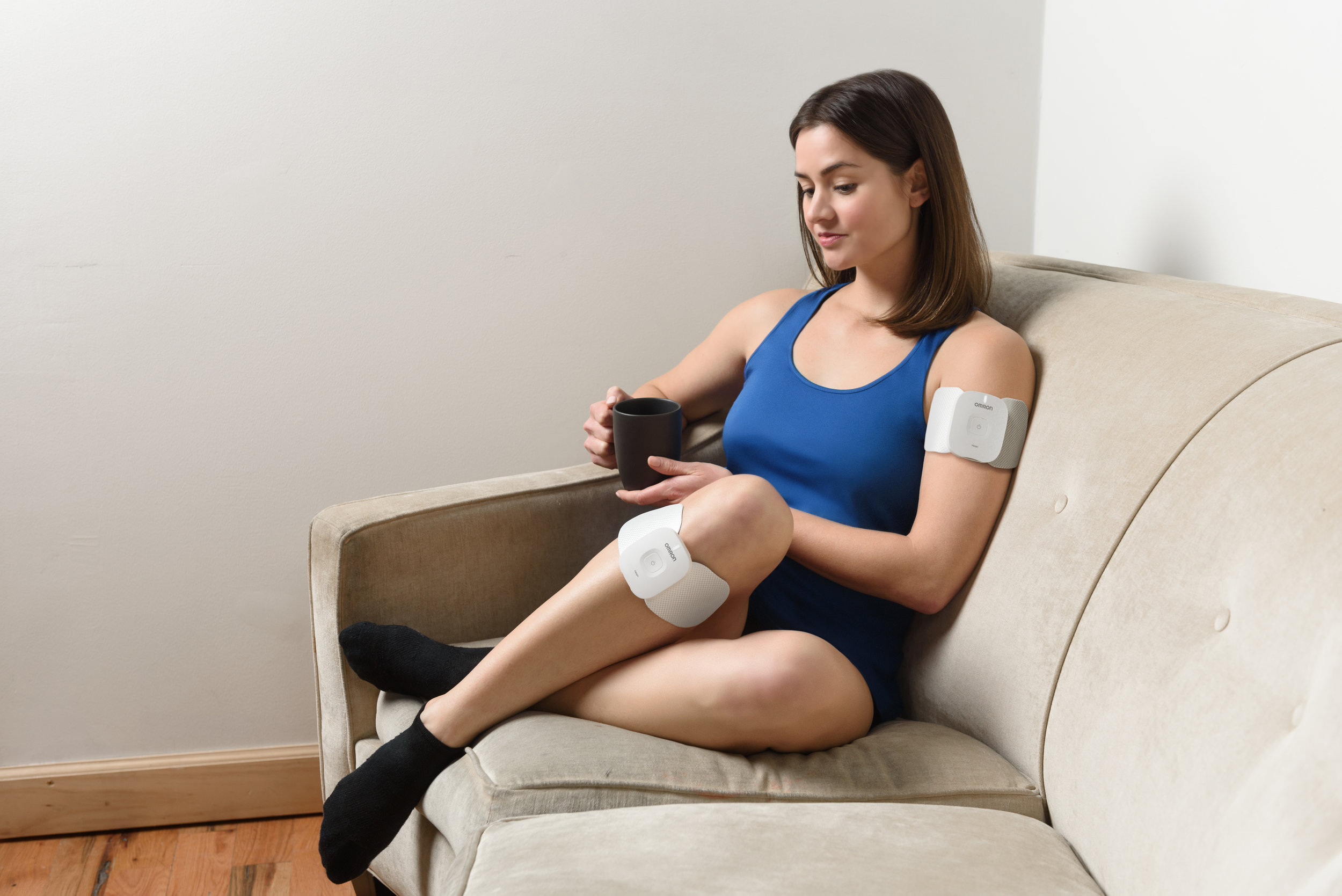
That’s why I was excited to try the Omron Avail TENS device. It’s wireless, has two large pads, and can be controlled from my phone. There’s no bulky battery pack to wear on my belt, no wires tangling me, and the pads themselves are larger than the unit I currently have. The coverage of more bodily real estate is always a winner for me.

The Avail TENS is a wearable electrotherapy device that is designed to alleviate chronic muscle and joint pain. It has various pre-programmed settings designed for the shoulder, arm, back or leg; as well as modes that include both TENS and microcurrent, the latter of which applies electrical stimulation that one can hardly feel. The TENS modes are much stronger in sensation.

IMAGE COURTESY OF OMRON

I actually didn’t know that microcurrents were used in pain relief -- I thought they only applied to anti-aging treatments at spas. However, this therapy mimics the body’s natural currents, which are believed to restore normal frequencies within cells.

I don’t know how well the microcurrent mode works yet, because I still experienced pain when I tried it.  I imagine it takes some getting used to and that benefits accrue over time. However, the TENS mode works wonderfully, and having such large pads means that I can get more coverage.

Treatment sessions run between 30 and 60 minutes, depending on the mode chosen. You can also set sessions to run indefinitely. To charge the sensors, they must be placed on a special charging box that comes with the device. I’ve managed to use it multiple times now after the initial charge.

IMAGE COURTESY OF OMRON

It is very easy to set up and use, as most of it is intuitive for a chronic pain patient. The device must be paired with your smartphone, and the app is fairly straightforward. The only thing that kept happening to me was that the pads would unlink with the app because I kept pressing the power button on the pads by mistake -- for instance, when I leaned back on a couch.

The pads stay on well. The "help” section of the app states I can use them up to 30 times, and replacement pads range from $12.75 to $19.99. I might resort to using athletic tape to keep them on longer, as I do with normal TENS pads. I know that isn’t advised, but I want these pads to last as long as possible.

So far, my only complaint is the slight bulkiness of the pad itself. Having a wireless device means that a sensor must be placed on the pad, which ties it to the app. These blink in orange or green lights, which are even visible from underneath two shirts. Granted, clothing manufacturers have been making clothing thinner and thinner so you are required to buy more clothes, so maybe that’s not Omron’s fault. There’s even a name for this clothing phenomenon: “planned obsolescence.”

Additionally, since my problem areas are on my back, sitting in a chair can be awkward. The pads stick out and rub against the seat, which turned them off once or twice. I don’t think the unit is meant to be worn all day, though, unless one plans to use microcurrents alone. The company only recommends that three TENS treatment sessions be completed on a daily basis.

My overall impression is a good one. I like the device, and I think it works well. It controls my pain when I use the TENS settings. I just wish the sensors on the pads were thinner -- that would help my back-pained compatriots (and me) when leaning back into a chair. That seems like a small complaint for such a device, though.

The Omron Avail is currently on sale for $159.99 (normally retails at $199.99). 

Jennifer Kain Kilgore is an attorney editor for both Enjuris.com and the Association of International Law Firm Networks. She has chronic back and neck pain after two car accidents.

Jennifer receives products or services mentioned in her reviews for free from the manufacturer. She only mentions those that she uses personally and believes will be good for readers. You can read more about Jennifer on her blog, Wear, Tear, & Care.  

The information in this column should not be considered as professional medical advice, diagnosis or treatment. It is for informational purposes only and represents the author’s opinions alone. It does not inherently express or reflect the views, opinions and/or positions of Pain News Network.

Dr. Forest Tennant Retiring Due to DEA Scrutiny

By Pat Anson, Editor

A prominent California pain physician and a longtime champion of the pain community has announced his retirement. Dr. Forest Tennant, and his wife and office manager, Miriam, have informed patients that they are closing their pain clinic in the Los Angeles suburb of West Covina, effective April 1.

“On strong legal and medical advice, as I am 77 and Miriam 76, we are closing the Veract Intractable Pain Medical Clinic and taking retirement. I will write no additional opioid prescriptions after this date,” Tennant wrote in a letter to patients. “We very much regret this situation as the clinic is filled with patients we consider beloved family and friends.”

Tennant’s retirement is largely due to an ongoing DEA investigation of his opioid prescribing practices.   DEA agents raided the Tennants’ home and clinic last November, while Tennant was testifying in Montana as a defense witness in the trial of doctor accused of negligent homicide in the overdose of two patients. The Tennants arrived home to find the front door of their home had been kicked in by DEA agents.

A DEA search warrant alleged that Tennant was part of a “drug trafficking organization” and had personally profited from the sale of high dose opioid prescriptions. Tennant has denied any wrongdoing and no charges have been filed against him, but the investigation remains open and the resulting stress and uncertainty have taken their toll.

“It’s hard to continue operating when they never closed my case, and so I’m going to retire and move on,” Tennant told PNN. “That’s on the advice of both my lawyers and my doctors."

DR. FOREST TENNANT  (courtesy montana public radio)

Tennant is a revered figure in the pain community because of his willingness to treat patients with intractable pain who were unable to find effective treatment elsewhere or were abandoned by their doctors. Many travel to California from out-of-state, and some are in palliative care and near death.

Tennant and his colleague, Dr. Scott Guess, treat about 150 intractable pain patients with a complex formula of high dose opioid prescriptions, hormones, anti-inflammatory drugs and other medications. 

Tennant says the DEA effectively forced him into retirement by refusing to drop the case.   

“You can’t do the kind of work I do and operate in legal uncertainty,” Tennant said. "You’ve got to have legal backing to treat these individuals. And I don’t know what the law is anymore.”

‘Many Patients Will Die’

This was a difficult day for Tennant's patients -- as many see their lives dependent on his continued care and treatment.

“I believe many of Dr. Tennant’s patients will die because they will never find another doctor to treat their painful condition,” says Gary Snook, a Tennant patient who lives with adhesive arachnoiditis, a painful and incurable inflammation in his spinal nerves. “I haven't decided if I will even look for another doctor, nobody will take a patient like me. And to be honest with you, I am tired of looking, tired of being treated like an addict, tired of being treated like a curiosity and nothing more, not a human being with a serious health issue that deserves to be treated.

"I am completely devastated for myself and my family, for Dr. Tennant and Miriam, for his patients and their families, and for all those who could have benefited from his continued breakthrough treatments and research," said Denise Molohon, another Tennant patient who lives with arachnoiditis, in an email.

"But I am most deeply saddened today for the entire chronic pain community - both patients and providers - for the tsunami of injustices perpetrated by DOJ/DEA and CDC in their cruelty, ignorance and haste to appear as though they are fighting the opioid overdose epidemic by ruining the lives of many innocent physicians. Their combined actions have had the tragic result of harming untold millions and leading to the senseless, needless deaths of patients all across our country whose only fault was suffering from horrific, intractable pain."

"The government has stepped in and stopped doctors from treating patients. They have created a hostile work environment for physicians who refuse to conform. Physicians who refuse to let their patients suffer. Addiction is a huge problem but so is intractable pain, yet those of us who play by the rules are the ones who suffer," said Kate Lamport, a Tennant patient who has arachnoiditis.

"Dr. Tennant and Mrs. Tennant have been a Godsend to all whom have crossed their paths and will never be forgotten by the thousands of lives they have touched and saved. Our blood is not on their hands, it is on the hands of those who have taken Dr. Tennant and every other doctor from us by way of fear." 

“Forest and Miriam treated me like a son as they did all their family, their patients. They did their best to take care of us," added Snook. "How could any doctor do so and pay $1,000 an hour in legal fees just to defend himself from false charges from the DEA?”

Tennant is referring all of his patients to new doctors, but in an age when many physicians are afraid of prescribing opioids, its unlikely they'll find similar care elsewhere.  Tennant has operated his pain clinic basically as a charity for years and charged patients little, if anything. He and his wife live modestly, and drive cars that are nearly 30 years old.

“They (the DEA) think my clinic has been operated to make a great deal of money. Some years it loses money. The last two years, it actually lost money. We subsidize it,” Tennant explained.

‘Highly Suspicious’ Prescribing

One medical professional who has been critical of Tennant's prescribing practices is Dr. Timothy Munzing, a Kaiser Permanente family practice physician who was hired by the DEA to review Tennant’s prescriptions.

Munzing was quoted in a DEA search warrant saying it was suspicious that “many patients are traveling long distances to see Dr. Tennant” and that they were prescribed “extremely high numbers of pills/tablets.”

“I find to a high level of certainty that after review of the medical records… that Dr. Tennant failed to meet the requirements in prescribing these dangerous medications. These prescribing patterns are highly suspicious for medication abuse/and or diversion,” Munzing wrote.

Munzing has worked for several years as a consultant for the DEA and the Medical Board of California, creating a lucrative second career for himself.

dr. timothy munzing

According to GovTribe, a website that tracks payments to federal contractors, Munzing is paid $300 an hour by the DEA. In the past few months, Munzing has been paid over $250,000 by the DEA to review patient records and testify as an expert witness in DEA cases.

The agency recently created a task force to focus on doctors like Tennant who prescribe high doses of opioids. The task force appears focused solely on the dose and number of prescriptions, not on the quality of life of patients or whether they’ve been harmed.   

After three years of investigation, the DEA has not publicly produced evidence that any of Tennant’s patients have overdosed, been harmed by his treatments, or that they are selling their drugs.

Tennant says he and his wife plan to retire to their home state of Kansas, where they have real estate investments. Once out of the picture, he hopes the medical profession and law enforcement will someday come to a sensible approach about how to deal with patients who need high doses of opioids.

“I have learned that my personality and my image is such that I think its prohibiting a good debate and discussion as to how the country is going to deal with people with really severe pain,” he said.

For the record, Dr. Tennant and the Tennant Foundation have given financial support to Pain News Network and are currently sponsoring PNN’s Patient Resources section.  

Doctor Shopping Has Always Been Rare

By Roger Chriss, Columnist

A commonly cited factor in the opioid crisis is "doctor shopping" -- the act of seeing multiple physicians in order to get an opioid prescription without medical justification. States like Indiana are passing prescribing laws with the specific goal of preventing doctor shopping in an effort to address the opioid crisis.

However, doctor shopping has not at any time in the past decade been a statistically significant factor in the opioid crisis.  The National Institute of Drug Abuse tells us that only one out of every 143 patients who received a prescription for an opioid painkiller in 2008 obtained prescriptions from multiple physicians "in a pattern that suggests misuse or abuse of the drugs." That’s a rate of about 0.7 percent.

The importance of doctor shopping over the last decade was not because of frequency -- it has more to do with quantity. Research shows that the 0.7% of people who doctor-shopped were buying about 2 percent of the prescriptions for opioid medications, constituting about 4% of the amount dispensed.

Moreover, these doctor-shoppers tended to be young, to pay in cash, and to see five or six prescribers in a short period of time, so they are easily identifiable and can be thwarted with prescription drug monitoring programs (PDMP’s).

Diversion prevention had long been seen as important. Back in 1999, the Drug Enforcement Administration published “Don’t Be Scammed by a Drug Abuser,” which included advice to doctors and pharmacists on how to recognize drug abusers and prevent doctor-shopping. And states like Washington specifically list doctor shopping among the indicators of opioid addiction in prescribing guidelines, making recognition and intervention key goals for prescribers. 

These efforts have paid off. A study in the journal Substance Abuse found that the number of prescriptions diverted fell from approximately 4.30 million (1.75% of all prescriptions) in 2008 to approximately 3.37 million (1.27% of all prescriptions) in 2012. The study concluded that “diversion control efforts have likely been effective.”

Similarly, Pharmacy Times reported a 40% decrease in doctor shopping in West Virginia between 2014 and 2015, thanks in part to efforts by that state’s Board of Pharmacy Controlled Substance Monitoring Program.

The Inspector General of the Department of Health and Human Services found in 2017 that among 43.6 million Medicare beneficiaries, only 22,308 “appeared to be doctor shopping.” That’s a minuscule rate of 0.05 percent.

“You have this narrative that there are these opioid shoppers and rogue prescribers and they’re driving the epidemic, and in fact the data suggests otherwise,” says Dr. Caleb Alexander, who co-authored a 2017 study in the journal Addiction.

"The study found that of those prescribed opioids in 2015, doctor shoppers were exceedingly rare, making up less than one percent of prescription opioid users,” Alexander told Mother Jones.

Doctor shopping is still a problem in other contexts. Opioids are not the only class of medication that people seek to obtain illicitly for a variety of reasons, from hypochondriasis to malingering. PDMPs and other law enforcement efforts have a useful role to play in addressing these issues, and the opioid crisis requires ongoing efforts to prevent drug theft and diversion at all levels of the supply chain.

But claims that doctor shopping is a significant factor in the opioid crisis are mistaken. Doctor shopping was not significant in 2008, and measures to reduce diversion have succeeded, making doctor shopping in 2018 that much rarer.

Roger Chriss lives with Ehlers Danlos syndrome and is a proud member of the Ehlers-Danlos Society. Roger is a technical consultant in Washington state, where he specializes in mathematics and research.

The information in this column should not be considered as professional medical advice, diagnosis or treatment. It is for informational purposes only and represents the author’s opinions alone. It does not inherently express or reflect the views, opinions and/or positions of Pain News Network.

How I Started Telling People I Have EDS

By Crystal Lindell, Columnist

One of the first people I told about my new Hypermobile Ehlers-Danlos syndrome (hEDS) diagnosis was a local politician.

I was still trying to get a feel for how the letters EDS tasted on my lips. How they felt in my breath. How people would react when I said them. And truth be told, this was when doctors were telling me I probably had it, but before I was officially diagnosed — that came later.

He didn’t know he was among the first people I told — that he was a test case. But there we were, at a local Democrats meeting and he asked me about medical marijuana, and I decided to go for it. 

“I actually have EDS,” I said. “My thumb touches my wrist, want to see? Yes, marijuana should be legalized. No, it won’t help everyone.”

He had the response most people seem to have.

“Maybe it will get better?”

“It won’t get better,” I told him.

“Yeah, but maybe it will! Once, I was sick and then I got better. So maybe you will get better.”

“It won’t.”

I get it. Nobody wants to really understand that being born in the wrong family is enough to sentence you to a lifetime of weak ankles and debilitating pain. It’s hard to understand that. It’s hard to accept that. It’s a lot easier to believe someone might get better.

It’s been hard for me to accept that. And harder still to say it out loud.

I have found though that it feels easier to lay the news on random acquaintances. The Tinder guy I met once. The woman who expertly bleaches my hair at the over-priced salon. The clerk at Walgreen's ringing up my pain medications.

There’s something to be said for telling random strangers something so overwhelming. It greatly reduces the consequences of your words — and of their reaction.

My initial instinct was to tell the people closest to me, my inner circle, first. But that quickly become completely overwhelming. Those people care way too much about me. They take it way too hard. It cuts too deep.

No, strangers are much better. They are morbidly impressed with my thumb to wrist trick. They are able to distance themselves from the depressing, long-term aspects of the diagnosis and ask horrifically, wonderful mundane questions like, “What does EDS stand for?”

And they never stop to think about what it might mean for my future. That’s my favorite part. Because the future looks very scary right now. And I need to do my best to stay in the present.

I have forced myself to pepper in the tougher conversations with the people who care about me. The late-nights over tears with my best friend wondering what this might mean for my future. Asking things like, what if I can never kids? And even if I can, do I want to risk passing it on to them?

Will I need assisted care sooner than most? How will I ever explain my health to future lovers? Why did it take so excessively long to get the diagnosis? How much of my life was wasted waiting for it? What could have been different if only I had known sooner? Will my siblings need to be evaluated? And what happens if they have it too?

All the things that fill me with grief and despair if I let them.

But strangers never ask questions like that. And even if they do, they don’t actually care about the answers that much. And I love that about them.

Eventually, hopefully, it will just become one more things about me. I’m blonde, I don’t like Trump, I love Burn Notice, I eat too much Taco Bell, and I have hEDS. It’s part of who I am, but not the whole part, or even the most important part. Just another casual fact in my Instagram bio next to things like, “I like lipstick.”

And no, I won’t actually ever getter better, but eventually, hopefully, I’ll get better at having hEDS and telling people about it.

Crystal Lindell is a journalist who lives in Illinois. She eats too much Taco Bell, drinks too much espresso, and spends too much time looking for the perfect pink lipstick. She has hypermobile EDS. 

Crystal writes about it on her blog, “The Only Certainty is Bad Grammar.”

The information in this column should not be considered as professional medical advice, diagnosis or treatment. It is for informational purposes only and represent the author’s opinions alone. It does not inherently express or reflect the views, opinions and/or positions of Pain News Network.

Do Hungry Mice Have the Answer to the Opioid Crisis?

By Pat Anson, Editor

Yes, that a silly headline. There have been a lot of them lately on how to end the opioid crisis, most of them involving new ways of treating chronic pain without the use of addictive drugs.

Some of these ideas are sincere, some are strange and others are just plain silly. There were a quite a few this week that produced some interesting headlines.

“Staying hungry may suppress chronic pain” was the headline in a Chinese website that reported on a study conducted at the University of Pennsylvania. Researchers there found that laboratory mice that weren’t fed for 24 hours still felt acute short-term pain, but their chronic pain was suppressed by hunger.

“We didn't set out having this expectation that hunger would influence pain sensation so significantly," says J. Nicholas Betley, an assistant professor of biology in Penn's School of Arts and Sciences. "But when we saw these behaviors unfold before us, it made sense. If you're an animal, it doesn't matter if you have an injury, you need to be able to overcome that in order to go find the nutrients you need to survive."

Betley isn’t suggesting that chronic pain patients stop eating or starve themselves, but he believes the finding could pave the way to new pain medications that target brain receptors that control survival behavior.  

“Chronic pain relief: How marine snails may be able to help” was the headline used by WNDU-TV to report on a recent study at the University of Utah. 

Researchers there say a compound in the venom of cone snails could someday be used in pain medication. The venom paralyzes small fish so that hungry cone snails can slowly eat their prey alive.  

"We really hope that we will find a drug that could be as effective for severe pain as opioids but has far less side effects and is not addictive," says Russell Teichert, PhD, a research associate professor in the Department of Biology.

Interestingly, the cone snail study is funded with a $10 million grant from the U.S. Department of Defense. Human trials are expected to begin in a couple years.

“Why Tai Chi Works So Well for Pain Relief” was the headline in Time about a study by researchers at Tufts Medical Center. The headline is a bit misleading, because the study only included fibromyalgia patients and compared the effectiveness of tai chi to aerobic exercise in relieving pain.

The last thing many fibromylagia sufferers want to do is practice tai chi, but the Chinese martial arts exercise was found to be just as good or better than aerobics, which is sometimes recommended as a non-drug treatment for fibromyalgia.

“It is low risk and minimally invasive, unlike surgery, and it will not harm your organs, like long term drug use,” said Amy Price, a trauma survivor who lives with chronic pain.

“Kellyanne Conway Tells Students to Eat Ice Cream and Fries Rather than Take Deadly Drug Fentanyl”  is how Newsweek summed up a speech by a top presidential advisor to a group of college students.

“On our college campuses, you folks are reading the labels, they won’t put any sugar in their body, they won’t eat carbs anymore, and they’re very, very fastidious about what goes into their body. And then you buy a street drug for $5 or $10, it’s laced with fentanyl and that’s it,” said Conway, who oversees the Trump administration’s response to the opioid crisis.

“So my short advice is, eat the ice cream, have the French fry, don’t buy the street drug—believe me, it all works out.”

Conway probably said this tongue-in-cheek, but critics were quick to pounce.

“Was feeling bad about my McDonalds ice cream cone today until I realized it helped me avert opioid addiction. Thanks Kellyanne Conway!” Lola Lovecraft tweeted.

 “I was considering doing fentanyl but now thanks to Kellyanne I’m just gonna 'have the French fry” instead. Saved me from a life on the streets!” tweeted Mike Stephens.

Conway’s boss had zinger of his own after signing a $1.3 trillion spending bill on Friday.

“We’re also spending $6 billion on, as you know, various forms of drug control, helping people that are addicted,” said President Trump.  “The level of drugs that are being put out there and the power of this addiction is hard to believe. People go to the hospital for a period of a week and they come out and they’re drug addicts.”

No, Mr. President, that’s a myth. Studies have repeatedly shown that it is rare for hospital patients to become addicted to opioids.

One study found that only 0.6% of patients recovering from surgery were later diagnosed with opioid misuse. Another study found that only 1.1% of patients treated with opioids in a hospital emergency room progressed to long term use.

What is true is that there’s a growing shortage of opioid medication in hospitals and hospices, and that’s leading to medical errors and the unnecessary suffering of patients. The shortage is due in part to manufacturing problems and severe cuts in opioid production quotas ordered by the DEA.

President Trump is aware that opioid prescribing has declined significantly, but he’d like to see more.  This week he called for opioid prescriptions to be cut by a third over the next three years. “Doctors are way down now in their orders of the opioids, way down. It’s a great thing,” he said.

Let's hope the hungry mice and cone snails share their secrets soon.

Stem Cell Therapy Becoming More Affordable

By Dr. Kristin Comella, Guest Columnist

Demand for stem cell therapy in the U.S. is anticipated to be at an all-time high this year as more patients seek to use their own cells to heal from various injuries and diseases. Among them are many chronic pain patients seeking alternatives to opioid medication and surgery for treating pain caused by systemic diseases, orthopedic conditions, neurological problems and aging.

At one time many patients traveled outside the country and were paying $20,000 to $50,000 for treatment at stem cell clinics in Europe and Asia. But over the past five years, the cost of stem cell therapy has come down dramatically.

Stem cell providers have been able to simplify the process into an outpatient protocol at hundreds of clinics throughout the U.S. As a result, costs are lower -- typically from $5,000 to $12,000 -- depending on the specific condition, practitioner, location and treatments required.

As with any specialized procedure, the cost will reflect the depth of the treatment and the time spent working with the patient. Unfortunately, stem cell treatments are not usually covered by insurance.

When compared to traditional surgery, where in most cases there is a similar price point and significant down-time, out-patient stem cell therapy is much less invasive. Patients treated with stem cells can return to their regular routines soon after the simple procedure, rather than requiring weeks of physical therapy or needing crutches and wheelchairs to get around.

Recent studies show that stem cells may be used in a variety of indications where opioids are frequently prescribed, such as back pain.  I recently co-authored a small study appearing in the Journal of Translational Medicine, in which 15 patients with degenerative disc disease were treated with stem cells derived from their own fat tissue. All 15 patients reported a statistically significant reduced pain level after stem cell therapy.

Adult stem cells may have the ability to improve and possibly even reverse the effects of many types of chronic pain caused by tissue or neurological damage. Adult stem cells are found in every part of the body, and can be harvested from a patient’s own tissue, such as adipose (fat) tissue, muscle, teeth, skin or bone marrow. Fat tissue is one of the most plentiful sources of stem cells in the body. In fact, approximately 500 times more stem cells can be obtained from fat than bone marrow.

Typically, during a simple outpatient procedure, stem cells can be isolated from fat tissue in 30 to 90 minutes, under local anesthesia using a mini-lipoaspirate technique. They can then be infused or re-injected after the mini-liposuction.

A recent study published in the Journal of Clinical Medicine Research underscores the safety of using a person’s own stem cells – known as autologous stem cells -- in treating degenerative diseases and injuries. The study was the largest safety trial to date that successfully used stem cells from fat in procedures completed on 676 patients. It is also the first trial to address cells from fat in multiple diseases and with different delivery routes.

To date, more than 10,000 patients have been successfully treated using the stem cell protocols being utilized at American Stem Cell.  There has been a significant increase in interest from patients in using stem cells for general health, anti-aging, and reducing inflammation. More and more patients are also seeking to preserve and bank their cells for “just in case” scenarios.

The positive results we’ve been getting are very encouraging and offer hope for many patients battling chronic pain. 

Kristin Comella, PhD, is Chief Science Officer for American Stem Cell Centers of Excellence. She specializes in regenerative medicine with a focus on adipose derived stem cells.

The information in this column should not be considered as professional medical advice, diagnosis or treatment. It is for informational purposes only and represents the author’s opinions alone. It does not inherently express or reflect the views, opinions and/or positions of Pain News Network.

Opioid Painkillers Top Selling Drug in 10 States

By Pat Anson, Editor

If you live in Oklahoma, the drug you’re most likely to be prescribed is the opioid painkiller Vicodin -- or some other combination of hydrocodone and acetaminophen.

In Texas, the #1 drug is Synthroid (levothyroxine) – which is used to treat thyroid deficiencies.

In California, its Lipitor (atorvastatin) – a statin used to treat high cholesterol.

And Tennessee has the unique distinction of being the only state in the country where the addiction treatment drug Suboxone (buprenorphine/naloxone) is the most prescribed drug.

These findings are part of an interesting study by GoodRx, an online discount drug company, on prescribing trends in all 50 states. GoodRx looked at pharmacy and insurance data from around the country – not just its own customers -- from March 2017 to February 2018.

It then developed a map to show how prescription trends can vary by region and by state.

Levothyroxine (Synthroid) is easily the top selling drug in the country. It’s #1 in 26 states (AR, AZ, CO, CT, FL, IA, KS, KY, LA, ME, MI, MN, MT, ND, NJ, NV, OR, PA, SD, TX, UT, VT, WA, WI, WV, WY).

Hydrocodone (Vicodin, Norco, Lortab) is #1 in 10 states (AK, AL, GA, ID, IL, IN, MS, NC, NE, OK), mainly in the South and Midwest. As recently as 2012, hydrocodone was the most widely prescribed medication in the country. Since then, hydrocodone prescriptions have fallen by over a third and it now ranks 4th nationwide.

Atorvastatin (Lipitor) is #1 in 5 states (CA, HI, MD, MO, VA) and so is lisinopril (MA, NH, NM, OH, RI), a medication used to treat high blood pressure.

There are a few outliers. New York, for example, is the only state that’s #1 in amlodipine (Norvasc), a blood pressure medication, and Delaware and South Carolina are the only states where the leading prescription drug is Adderall, a medication used to treat Attention Deficit Hyperactivity Disorder (ADHD).   

That brings us to Tennessee, one of the states hardest hit by the opioid crisis. In 2012, doctors wrote 1.4 opioid prescriptions for every citizen in Tennessee, the second highest rate in the country. The state then moved aggressively to shutdown pill mills and expand access to addiction treatment -- which explains why Tennessee is #1 for Suboxone.

Prescriptions for opioid pain medication have dropped by 12% in Tennessee since their peak, but overdose deaths and opioid-related hospitalizations continue to climb, due largely to heroin and illicit fentanyl.  No other state even comes close to Tennessee in per capita prescriptions for Suboxone.  Addiction treatment has become such a growth industry that Tennessee has adopted measures to rein in the overprescribing of Suboxone.

CDC Admits Rx Opioid Deaths ‘Significantly Inflated’

By Pat Anson, Editor

Researchers with the Centers for Disease Control and Prevention have acknowledged that the agency’s methods for tracking overdose deaths are inaccurate and have significantly overestimated the number of Americans that have died due to prescription opioids.

In an editorial appearing in the American Journal of Public Health, four researchers in the CDC’s Division of Unintentional Injury Prevention say many overdoses involving illicit fentanyl and other synthetic black market opioids have been erroneously counted as prescription drug deaths.

“Availability of illicitly manufactured synthetic opioids (e.g., fentanyl) that traditionally were prescription medications has increased. This has blurred the lines between prescription and illicit opioid-involved deaths,” they wrote. “Traditionally, the Centers for Disease Control and Prevention (CDC) and others have included synthetic opioid deaths in estimates of ‘prescription’ opioid deaths. However, with IMF (illicitly manufactured fentanyl) likely being involved more recently, estimating prescription opioid–involved deaths with the inclusion of synthetic opioid–involved deaths could significantly inflate estimates.”

How inflated were the overdose numbers?  Using the agency’s “traditional definition” for prescription opioids, the CDC estimated that 32,445 Americans died from overdoses of pain medication in 2016.

Under a new “conservative definition” – one that excludes the “high proportion of deaths” involving synthetic opioids like fentanyl – the death toll from prescription opioids is cut nearly in half to 17,087 overdoses.

The researchers note that even that estimate is likely wrong for a variety of reasons:

  • The number of deaths involving diverted prescriptions or counterfeit drugs is unknown
  • Toxicology tests cannot distinguish between pharmaceutical fentanyl and illicit fentanyl
  • Drugs are not identified on death certificates in 20% of overdose deaths
  • Multiple drugs are involved in almost half of drug overdose deaths

The editorial by CDC researchers Puja Seth, Rose Rudd, Rita Noonan and Tamara Haegerich carries a disclaimer that their views “do not necessarily represent the official position” of the CDC.  But given the agency’s past reluctance to let employees speak to the media without prior approval, it’s highly unlikely the editorial was not cleared beforehand.

A spokesperson for the CDC said the agency first noticed the growing number of deaths caused by illicit fentanyl in  2015 and changed the way it calculated opioid overdoses that year. She said the explanation for the change was being published now "to document the method in peer-reviewed literature."

However, as one of our readers pointed out, the inflated overdose numbers can still be found on the agency's website, with only a vague explanation that some may be fentanyl-related:

"In 2016 there were 32,445 deaths involving prescription opioids, equivalent to about 89 deaths per day. This was an increase from approximately 22,598 in 2015. However, a significant portion of the increase in deaths was due to deaths involving synthetic opioids other than methadone, which likely includes illegally-made fentanyl."

President Trump's opioid commission warned last year that a better system was needed to keep track of overdose deaths. “We do not have sufficiently accurate and systematic data from medical examiners around the country to determine overdose deaths, both in their cause and the actual number of deaths,” the commission said in its final report.

The CDC has recently implemented a new overdose surveillance system in 32 states that supplements data from death certificates with toxicology tests and death scene investigations to more accurately reflect which drugs are involved in overdose deaths.

Lies and Damned Lies

We’ve written before about how confusing, flimsy and exaggerated the numbers can be for overdoses (see “Lies, Damned Lies, and Overdose Statistics”). Last October, PNN reported that the Drug Enforcement Administration changed its definition of prescription drug deaths for three consecutive years in an annual report, apparently in an effort to inflate the number of Americans dying of overdoses.

In 2016, we reported that within one week the CDC and the White House Office of National Drug Control Policy released three different estimates of the number of Americans that died from prescription opioids the year before. The numbers were wildly different, ranging from a low of 12,700 to a high of 17,536 deaths.

To be clear, one overdose is too many. But if we are ever going to find real solutions to the overdose crisis, we need to find accurate numbers to reflect what is causing so many drug deaths. Pinning the blame on prescription opioids, pain patients and prescribers has only led to a growing catastrophe in pain care –  where doctors are too fearful to prescribe opioids and patients can’t get treatment. 

As the CDC researchers say in their editorial, "inaccurate conclusions” not only mask what’s driving the overdose crisis -- they mask the solutions too.

“Obtaining an accurate count of the true burden and differentiating between prescription and illicit opioid-involved deaths are essential to implement and evaluate public health and public safety efforts,” they wrote. “If deaths involving synthetic opioids—likely IMF—are categorized as prescription opioid overdose deaths, then the ability to evaluate the effect of interventions targeting high-risk prescribing practices on prescription opioid–involved deaths is hindered. Decreases in prescription opioid–involved deaths could be masked by increases in IMF deaths, resulting in inaccurate conclusions. ”

Study Finds Many Treatments for Back Pain Ineffective

By Pat Anson, Editor

Lower back pain is the world’s leading cause of disability, affecting about 540 million people at any given time. With so many people suffering, you'd think there would be a consensus on the best way to treat or at least manage low back pain.

And you'd be wrong.

In a series of reviews appearing in The Lancet medical journal, an international team of researchers found that low back pain is usually treated with bad advice, inappropriate tests, risky surgeries and painkillers -- often against treatment guidelines.

“The majority of cases of low back pain respond to simple physical and psychological therapies that keep people active and enable them to stay at work,” says lead author Professor Rachelle Buchbinder of Monash University in Australia. “Often, however, it is more aggressive treatments of dubious benefit that are promoted and reimbursed.”

Buchbinder and her colleagues say low back pain is best managed in primary care, with the first line of treatment being education and advice to exercise, stay active and continue to work. Instead, a high number of low back pain patients are treated in emergency rooms, encouraged to rest and stop work, referred for scans or surgery, and prescribed painkillers.

“In many countries, painkillers that have limited positive effect are routinely prescribed for low back pain, with very little emphasis on interventions that are evidence based such as exercises," adds co-author Professor Nadine Foster of Keele University in the UK.

"As lower-income countries respond to this rapidly rising cause of disability, it is critical that they avoid the waste that these misguided practices entail."

Low back pain mostly affects adults of working age in lower socioeconomic groups. People with physically demanding jobs, physical and mental comorbidities, smokers, and obese individuals are at greatest risk of reporting low back pain. 

Most people with new episodes of low back pain recover quickly, but recurrences are common. It’s also important to rule out more serious causes of back pain, such as cancer, arthritis and spinal fractures. In a small proportion of people, low back pain can become chronic and disabling.

The Lancet authors say patients should avoid harmful and useless treatments, and doctors need to address widespread misconceptions about their effectiveness. For example, there is limited evidence to support the use of opioids for low back pain, and epidural steroid injections and acetaminophen (paracetamol) are not recommended at all.

The authors recommend counseling, exercise and cognitive behavioral therapy as first-line treatments for short-term low back pain, followed by spinal manipulation, massage, acupuncture, meditation and yoga as second line treatments.

“Millions of people across the world are getting the wrong care for low back pain. Protection of the public from unproven or harmful approaches to managing low back pain requires that governments and health-care leaders tackle entrenched and counterproductive reimbursement strategies, vested interests, and financial and professional incentives that maintain the status quo,” said co-author Professor Jan Hartvigsen of University of Southern Denmark.

“Funders should pay only for high-value care, stop funding ineffective or harmful tests and treatments, and importantly intensify research into prevention, better tests and better treatments.”

The findings in The Lancet series are similar to those reported in other medical journals. A 2016 study published in JAMA Internal Medicine found that regular exercise and education reduce the risk of developing lower back pain by as much as 45 percent.

Another study in JAMA found that opioid medication provides only modest short-term relief for low back pain. Previous studies published in the British Medical Journal and The Lancet also found little evidence that acetaminophen was effective in treating low back pain.

A Nightmare Experience With Surgery

By Rochelle Odell, Columnist

I have been warning my “healthy” family and friends that the opioid epidemic and the backlash against prescription opioids would affect them at some point. My recent nightmare of a surgery may prove that the time may now be at hand. 

On February 2, I underwent what normally would be minor surgery to remove a catheter -- called a portacath -- that had become dislodged. For patients with Complex Regional Pain Syndrome (CRPS), there is no such thing as a minor procedure and my experience became a prime example of what could go wrong.

My friend Debbie drove me to the hospital where the surgery was performed. I have undergone over 40 procedures for CRPS and I always become apprehensive, as any patient facing surgery should be. I told Debbie I did not have a warm toasty feeling about the surgery. I was frightened, a feeling I don't usually experience. But this time I did.

Before I was taken back to pre-op, Debbie asked me if I would like to pray. Thankful for the thought, I responded yes. It did not alleviate the feeling of dread nagging at me, but I hoped God would protect me.

Once in pre-op, the nurse went over my extensive allergy list. Believe me, it's long. I am allergic to almost all antibiotics, including penicillin, along with some opioids like Demerol and methadone, as well as aspirin and NSAID's. Betadine causes blisters and a horrible rash. I’m also allergic to most medical tape, including cloth, plastic, silk and paper tapes. The only one I can tolerate is Hypafix. It's a soft adhesive that allows the skin to breathe. I was very vocal about that.

The nurse asked what kind of surgery I was about to undergo and why. I told her it was because I don't have any good veins, never have, and that a catheter was a necessary evil. Without one, if I were to pass out or become very ill, dying could be a real possibility.

I told her she would only got two tries for the IV line I would need for surgery. I am not a pin cushion and multiple needle pricks could cause a major pain flare. She started the IV on the second try.

The surgeon and anesthesiologist then came to see me. I explained how nervous I was and that I honestly was very close to walking out. I should have done that. I could tell the surgeon had no clue what CRPS was or how to treat me post-op. That is not unusual, a lot of doctors have no clue what it is, and that extra steps are needed to keep a major pain flare from happening.

Even the anesthesiologist seemed clueless about CRPS. I thought that odd, since anesthesiologists are often pain management physicians. He kept telling me don't worry, once in the operating room I would be out soon.

Four hours later I was taken to the operating room. I told the anesthesiologist that I forgot to add fentanyl to my allergy list. It gives me a smothering feeling and can't breathe. I also told him I wanted an LMA mask, because being intubated causes my asthma to flare. He told me he would use the mask, but he wanted to use fentanyl and that if I stopped breathing he would intubate me.

What is wrong with this explanation? Use something other than fentanyl and you won't have to intubate me. I also asked the surgeon to place me on IV antibiotics, as I have a long history of staph and MRSA infections.

Upon coming out of anesthesia, my throat was killing me. I knew he must have intubated me and used a drug I didn't want. The pain was excruciating. I was given small doses of Dilaudid and oxycodone, which did absolutely zip for me.

They also gave me IV Tylenol. Really, Tylenol post-op in a CRPS patient? The recovery room nurse was trying to console me as I was in tears.  Any nurse I dealt with said they were trying to make sure I didn't die of an opioid overdose. That took the cake, the minuscule doses I received were obviously not working, so an opioid overdose certainly would not happen.

One nurse told me my pain was emotional pain. I should have screamed at her to get away from me, but I was in so much pain I couldn't think clearly. I was kept for observation overnight, which brought more problems and the realization that the very thing I warned my healthy family and friends about was indeed at hand.

What kind of pain control do patients get now after surgery?  My surgeon was responsible for ordering all my meds, but how is a man who has no clue what CRPS is going to manage my pain? A man I had only seen one time before the surgery.

My RN was very sweet, but she too was stating what I think must be the hospital's policy. They do not want to provide opioid pain management.  Everyone is so convinced the opioid epidemic was and is caused by prescription opioid medication. It dawned on me, ignorance is alive and well and it must be contagious.

My ordeal continued to worsen. I looked at my surgery sites. Not only were my upper chest and right arm covered in the tell-tale orange color from Betadine, but there was medical tape. A big painful and very itchy rash had developed.

My skin was driving me nuts. I asked the nurse to remove the tape and use non-stick pads and Hypafix, but she refused. Didn't anyone read my allergy list? Why ask for one if you are going to ignore it? The surgeon ordered Benadryl cream for my arm. It helped a little and I did get one injection of IV Benadryl, but that was it. I received less medication in the hospital than I was taking at home.

After a long painful night, I told the nurse I would refuse to see the surgeon. Anyone who causes a patient as much pain as he did is one I will not see again. The nurse said he had to see me in order to release me. I told her to tell him to have a different doctor release me, as I did not want to see him. I was livid. The morning I was released I removed the tape, as I could no longer tolerate it. She helped me cover the area with sterile gauze.

As soon as I got home I cleaned the surgery area thoroughly and made an occlusive dressing over the two surgical sites. The next morning my whole upper right chest was covered with tiny blisters and a nasty looking rash. My friend took pictures for me.  The asthma flare I was afraid of was in full swing and I was running a temperature of 102.  I could barely breath and my pain was completely out of control.

I had a temperature for three weeks, and six weeks later I am still coughing up yellow gunk. That could have easily been prevented, but what do I know, I am just the patient.  Because I refused to see the surgeon for a post-op checkup, my primary care provider sent me a letter informing me I was trying to direct my care and was argumentative. He would only treat me for 30 more days and I needed to find a new primary care physician.

In the past I might have been upset with a letter like that, but since this opioid epidemic has affected me so negatively, I simply do not want to be seen by any physician who doesn't try to understand how sick I am. I was in so much pain.  Wouldn't you try to direct your care at that point?

My ordeal has not ended. As of this writing, the whole port area and catheter tubing are swollen and look infected. Have I gotten it checked yet? Nope. I have literally been frozen in place by fear, a fear I have never experienced before. I know this will require more surgery to remove and replace the portacath. Just thinking about it scares me.

All of this could have been avoided if my allergy list had been read, if there had been adequate pain management, and if IV antibiotics had been started. If this is the future of medical care, I may reconsider seeing any doctor. It just isn't worth the stress and pain.

Rochelle Odell lives in California. She’s lived for nearly 25 years with Complex Regional Pain Syndrome (CRPS/RSD).

The information in this column should not be considered as professional medical advice, diagnosis or treatment. It is for informational purposes only and represents the author’s opinions alone. It does not inherently express or reflect the views, opinions and/or positions of Pain News Network.

Trump Calls for More Cuts in Opioid Prescriptions

By Pat Anson, Editor

President Trump is calling for further reductions in the prescribing of opioid pain medication and for some drug dealers to get the death penalty.

In a speech in Manchester, New Hampshire, a state hit hard by the overdose epidemic, Trump outlined his plan to combat the nation’s opioid and addiction crisis by cracking down on drug dealers, opioid manufacturers and doctors who overprescribe pain medication.

“We’re going to cut nationwide opioid prescriptions by one third over the next three years,” Trump said. “We’re also going to make sure that virtually all prescriptions reimbursed by the federal government follow best practices for prescribing. We’ll ensure that opioid addiction is not subsidized by the American taxpayer. The best way to beat the drug crisis is to keep people from getting hooked on drugs to begin with.”

The president did not spell out precisely how opioid prescribing would be reduced. His administration has proposed new rules that would make it harder for Medicare beneficiaries to obtain high doses of opioid medication by rigidly adhering to the CDC’s voluntary opioid prescribing guidelines. Under the Medicare plan, insurers could refuse to pay for opioid prescriptions that exceed the dose levels recommended by the CDC.

Opioid prescriptions peaked in 2010 and the Drug Enforcement Administration has cut opioid production quotas nearly in half over the last two years – which has led to shortages of pain medication at some hospitals and hospices.  

The president also said the nation “must get tough” with high volume drug traffickers.

“The ultimate penalty has to be the death penalty,” Trump said. “Drug traffickers kills so many thousands of our citizens every year and that’s why my Department of Justice will be seeking much tougher penalties than we’ve ever had. And we will be focusing on the penalty that we talked about previously for the big pushers, the ones that are really killing so many people.

"Whether you are a dealer or doctor or trafficker or a manufacturer, if you break the law and illegally peddle these deadly poisons, we will find you, we will arrest you, and we will hold you accountable."

Trump said tougher border security was needed to stop the flow of illegal drugs and called for an nationwide advertising campaign to encourage children to avoid drug use.

“Spending a lot of money on great commercials showing how bad it is,” he said.

Last October, the president declared the opioid crisis a public health emergency, a designation that stopped short of the national state of emergency sought by his opioid commission. Critics have said the Trump administration has done little to fund or execute a coherent strategy to combat the overdose problem. 

Prescription Opioids Rarely Lead to Heroin Use

By Roger Chriss, Columnist

A recent Politico column by three anti-opioid activists asserts that “opioid use disorder is common in chronic pain patients”  and that the nation’s overdose crisis “stems largely from the overprescribing of opioids.”

Andrew Kolodny, MD, Jane Ballantyne, MD, and Gary Franklin, MD --  who are the founder, president, and vice-president, respectively, of Physicians for Responsible Opioid Prescribing (PROP) – also wrote that “many individuals become addicted to prescription opioids through medical or non-medical use, and then switch to heroin after becoming addicted."

This claim is an oversimplification of the tragedy that is heroin addiction. It both ignores the complex trajectory of drug use that culminates in heroin and omits the known risk factors of the people who suffer from heroin addiction. It also runs counter to the known data about various forms of opioid addiction, which clearly shows that most people on opioid therapy do not develop problems with misuse, abuse or addiction, and rarely move on to heroin.

The National Institute on Drug Abuse (NIDA) estimates that about 10 percent of patients prescribed opioids develop an opioid use disorder. And only about 5 percent of those who misuse their medication ever make the transition to heroin.

Further, the number of people addicted to prescription opioids -- about two million -- has been stable for over five years, while rates of heroin use have been rising, suggesting there is not a strong corelation between the two.

From 2002 to 2016, the number of Americans using heroin nearly tripled, from 214,000 to 626,000. Overdose deaths involving heroin also soared during that period.

The reasons behind this are complex and not fully understood. One theory is that heroin became more popular when prescription opioids became harder to obtain and abuse. According to a study by the RAND Corporation, the introduction of abuse-deterrent OxyContin in 2010 was a major driver in the shift to heroin.

Heroin use is also strongly associated with mental illness and childhood trauma. Studies have found that 75 percent of people with heroin addiction have another mental illness, with about half showing signs of psychiatric problems or post-traumatic stress disorder (PTSD) before age 16. At least half were abused or neglected as children, with especially high rates of sexual abuse.

In addition, it is well established in psychiatry that certain mental health disorders – such as borderline personality and bipolar disorder -- have a significantly increased risk of substance use.

Thus, heroin use and addiction is far more complex than just a result of opioid misprespcribing. Most people placed on opioid therapy do not misuse their medication, and the few who do become addicted rarely transition to heroin. Recent studies also suggest that more people are starting on heroin without prior exposure to other opioids.

Heroin addiction is most often the tragic outcome of a shattered childhood or mental illness, and not simply a result of medication exposure. To claim that heroin addiction stems largely from pain management is a disservice to both addicts and pain patients, and will only further the suffering of both groups by diverting attention from the real issues.

Roger Chriss lives with Ehlers Danlos syndrome and is a proud member of the Ehlers-Danlos Society. Roger is a technical consultant in Washington state, where he specializes in mathematics and research.

The information in this column should not be considered as professional medical advice, diagnosis or treatment. It is for informational purposes only and represents the author’s opinions alone. It does not inherently express or reflect the views, opinions and/or positions of Pain News Network.

My Arachnoiditis Family

By Elaine Ballard, Guest Columnist

I live in the rural county of Somerset in England, UK. At the age of 22, I had a sporting accident which eventually left me 80 percent disabled and unable to lead a normal life. 

The accident caused several crushed discs in my spine and a great deal of nerve damage. Over the years multi-level disc degeneration set in, as well as osteoarthritis. I am unable to use a wheelchair, as bulging discs prevent me from sitting without severe pain. I am now 73.

ELAINE BALLARD

Since 1994, I have been confined to lying on a bed in my living room and only leave home to keep hospital appointments. I travel by stretcher ambulance.

Just over two years ago I had an MRI scan which showed I had Adhesive Arachnoiditis (AA) and my life changed drastically yet again. 

Arachnoiditis is listed as a rare neurological condition, but in fact many thousands of people all over the world have been diagnosed with it. There are also thousands of other people who have the same symptoms, but as yet, no diagnosis.

It is difficult for patients to get diagnosed as doctors are not trained to recognize this disease and often fail to even recognize the symptoms.

Arachnoiditis results from severe inflammation of the arachnoid membrane that surrounds the nerves of the spinal cord. It may cause stinging and burning pain, as well as muscle cramps, spasms, and uncontrollable twitching. The most common symptom is severe to unbearable neurological pain, especially to the nerves connecting to the lower back, legs and feet. This can lead to tingling, numbness, weakness and severe pain in the legs and feet.

Other symptoms include sensations that feel like insects crawling on the skin or water trickling down the legs. It can also affect the bladder, bowel and sexual function. Unfortunately for some, it may also result in paralysis.

As this disease progresses, the symptoms can become more severe or even permanent. Most people with Arachnoiditis are eventually unable to work and suffer significant disability because they are in constant pain. Pain is the most dominant factor and it is both chronic and acute. As the disease progresses, it can be relentless and unbearable and sadly suicide becomes an option.

Inflammation of the arachnoid membrane can lead to the formation of scar tissue, which may cause the spinal nerves to clump together and eventually adhere to the lining wall of the dura, the middle layer of the spine. The disease can then progress to Adhesive Arachnoiditis.

What Causes Arachnoiditis

There are a few different causes of Arachnoiditis. In the 1970's a dye used in myelograms was injected during spinal procedures directly into the area surrounding the spinal cord and nerves. The dye was too toxic for these delicate parts of the spine and was blamed for causing Arachnoiditis. This dye continues to be used in some parts of the world.

Bacterial infections and viruses in the spine can also lead to Arachnoiditis. So can complications from spinal surgery and invasive spinal procedures such as epidural steroid injections.

There is no cure for Arachnoiditis and there is little effective pain relief. This is a disease or condition for life. Opioids are offered by doctors, but are not specific to reducing neurological pain of this nature.

It is very sad and cruel that opioids are being clamped down in America and that Arachnoiditis patients are being classed together with people who seek drugs for recreational purposes. We are not drug seekers but desperate victims crying out for something that will stop this relentless and overwhelming neurological pain.

The Facebook support group Arachnoiditis Together We Fight has been an important part of my education in understanding this disease. I am thankful to say it has become more of a family, where members can come in and gradually feel at home while we bring education, support and encouragement. This family atmosphere and great support has saved many lives, as people first arrive feeling suicidal and lost in a medical world that will not help them.

That is why I wrote this poem to show people how important support groups can be and to bring more attention to this rare but life changing disease.

"The Family"

By Elaine Ballard

Lonely, fearfully I knock at the door
Arac greets me, a smile, so kind
I want to die, eyes keep to the floor
"Welcome" she says, but what will I find?

"Welcome" repeated again and again
"Good to have you!" Are you kidding?  
"Family" really can it be true? 
Lost, lonely, rejected... what you too? 

I tell my story, they will never believe
"We understand, you're not alone"
Tears trickle down, I cannot believe
We are bound together by this dreaded disease

Files, inflammation, medication
Head's in a spin, where do I begin?  
Then a hand upon my shoulder
Guides me to those precious folders

Questions answered, hope is rising
Found some friends, pain subsiding
Flares still come but under control
No longer afraid nor out in the cold

We need each other, your pain is mine  
Strength in unity, love is the sign
Moving forward we are free
To Fight Together as one FAMILY


Elaine Ballard has written a book about Adhesive Arachnoiditis and how her Christian faith helped her through many difficult flares and times. It is called “The Furnace of Fire” and is available on Amazon. Click on the book's cover to see price and ordering information.

Pain News Network invites other readers to share their stories (and poems) with us. Send them to editor@painnewsnetwork.org.

The information in this column should not be considered as professional medical advice, diagnosis or treatment. It is for informational purposes only and represents the author’s opinions alone. It does not inherently express or reflect the views, opinions and/or positions of Pain News Network.

Hospital Opioid Shortages Cause Pain & Medical Errors

By Pauline Bartolone, Kaiser Health News

Even as opioids flood American communities and fuel widespread addiction, hospitals are facing a dangerous shortage of the powerful painkillers needed by patients in acute pain, according to doctors, pharmacists and a coalition of health groups.

The shortage, though more significant in some places than others, has left many hospitals and surgical centers scrambling to find enough injectable morphine, Dilaudid and fentanyl — drugs given to patients undergoing surgery, fighting cancer or suffering traumatic injuries. The shortfall, which has intensified since last summer, was triggered by manufacturing setbacks and a government effort to reduce addiction by restricting drug production.

As a result, hospital pharmacists are working long hours to find alternatives, forcing nurses to administer second-choice drugs or deliver standard drugs differently. That raises the risk of mistakes — and already has led to at least a few instances in which patients received potentially harmful doses, according to the nonprofit Institute for Safe Medication Practices, which works with health care providers to promote patient safety.

In the institute’s survey of hospital pharmacists last year, one provider reported that a patient received five times the appropriate amount of morphine when a smaller-dose vial was out of stock. In another case, a patient was mistakenly given too much sufentanil, which can be up to 10 times more powerful than fentanyl, the ideal medication for that situation.

In response to the shortages, doctors in states as far-flung as California, Illinois and Alabama are improvising the best they can.

Some patients are receiving less potent medications like acetaminophen or muscle relaxants as hospitals direct their scant supplies to higher-priority cases.

Other patients are languishing in pain because preferred, more powerful medications aren’t available, or because they have to wait for substitute oral drugs to kick in.

The American Society of Anesthesiologists confirmed that some elective surgeries, which can include gall bladder removal and hernia repair, have been postponed.

In a Feb. 27 letter to the U.S. Drug Enforcement Administration, a coalition of professional medical groups — including the American Hospital Association, the American Society of Clinical Oncology and the American Society of Health-System Pharmacists — said the shortages “increase the risk of medical errors” and are “potentially life-threatening.”

In addition, “having diminished supply of these critical drugs, or no supply at all, can cause suboptimal pain control or sedation for patients,” the group wrote.

The shortages involve prefilled syringes of these drugs, as well as small ampules and vials of liquid medication that can be added to bags of intravenous fluids.

Drug shortages are common, especially of certain injectable drugs, because few companies make them. But experts say opioid shortages carry a higher risk than other medications.

Small Mistakes Lead to Big Errors

Giving the wrong dose of morphine, for example, “can lead to severe harm or fatalities,” explained Mike Ganio, a medication safety expert at the American Society of Health-System Pharmacists.

Calculating dosages can be difficult and seemingly small mistakes by pharmacists, doctors or nurses can make a big difference, experts said.

Marchelle Bernell, a nurse at St. Louis University Hospital in Missouri, said it would be easy for medical mistakes to occur during a shortage. For instance, in a fast-paced environment, a nurse could forget to program an electronic pump for the appropriate dose when given a mix of intravenous fluids and medication to which she was unaccustomed.

“The system has been set up safely for the drugs and the care processes that we ordinarily use,” said Dr. Beverly Philip, a Harvard University professor of anesthesiology who practices at Brigham and Women’s Hospital in Boston. “You change those drugs, and you change those care processes, and the safety that we had built in is just not there anymore.”

Chicago-based Marti Smith, a nurse and spokeswoman for the National Nurses United union, offered an example.

“If your drug comes in a prefilled syringe and at 1 milligram, and you need to give 1 milligram, it’s easy,” she said. “But if you have to pull it out of a 25-milligram vial, you know, it’s not that we’re not smart enough to figure it out, it just adds another layer of possible error.”

During the last major opioid shortage in 2010, two patients died from overdoses when a more powerful opioid was mistakenly prescribed, according to the institute. Other patients had to be revived after receiving inaccurate doses.

Pfizer Manufacturing Problems

The shortage of the three medications, which is being tracked by the FDA, became critical last year as a result of manufacturing problems at Pfizer, which controls at least 60 percent of the market of injectable opioids, said Erin Fox, a drug shortage expert at the University of Utah.

A Pfizer spokesman, Steve Danehy, said its shortage started in June 2017 when the company cut back production while upgrading its plant in McPherson, Kansas. 

The company is not currently distributing prefilled syringes “to ensure patient safety,” it said, because of problems with a third-party supplier it declined to name.

That followed a February 2017 report by the U.S. Food and Drug Administration that found significant violations at the McPherson plant. The agency cited “visible particulates” floating in the liquid medications and a “significant loss of control in your manufacturing process [that] represents a severe risk of harm to patients.” Pfizer said, however, that the FDA report wasn’t the impetus for the factory upgrades.

Other liquid-opioid manufacturers, including West-Ward Pharmaceuticals and Fresenius Kabi, are deluged with back orders, Fox said. Importing these heavily regulated narcotics from other countries is unprecedented and unlikely, she added, in part because it would require federal approval.

DEA Reduced Opioid Supply

At the same time, in an attempt to reduce the misuse of opioid painkillers, the Drug Enforcement Administration called for a 25 percent reduction of all opioid manufacturing last year, and an additional 20 percent this year.

“DEA must balance the production of what is needed for legitimate use against the production of an excessive amount of these potentially harmful substances,” the agency said in August.

When the coalition of health groups penned its letter to the DEA last month, it asked the agency to loosen the restrictions for liquid opioids to ease the strain on hospitals.

The shortages are not being felt evenly across all hospitals. Dr. Melissa Dillmon, medical oncologist at the Harbin Clinic in Rome, Ga., said that by shopping around for other suppliers and using pill forms of the painkillers, her cancer patients are getting the pain relief they need.

Dr. Shalini Shah, the head of pain medicine at the University of California-Irvine health system, pulled together a team of 20 people in January to figure out how to meet patients’ needs. The group meets for an hour twice a week.

The group has established workarounds, such as giving tablet forms of the opioids to patients who can swallow, using local anesthetics like nerve blocks and substituting opiates with acetaminophen, ketamine and muscle relaxants.

“We essentially have to ration to patients that are most vulnerable,” Shah said.

Two other California hospital systems, Kaiser Permanente and Dignity Health in Sacramento, confirmed they’re experiencing shortages, and that staff are being judicious with their supplies and using alternative medications when necessary.

At Helen Keller Hospital’s emergency department in Sheffield, Ala., earlier this month, a 20-year-old showed up with second-degree burns. Dr. Hamad Husainy said he didn’t have what he needed to keep her out of pain.

Sometime in January, the hospital ran out of Dilaudid, a drug seven times more potent than morphine, and has been low on other injectable opioids, he said.

Because Husainy’s patient was a former opioid user, she had a higher tolerance to the drugs. She needed something strong like Dilaudid to keep her out of pain during a two-hour ride to a burn center, he said.

“It really posed a problem,” said Husainy, who was certain she was in pain even after giving her several doses of the less potent morphine. “We did what we could, the best that we could,” he said.

Bernell, the St. Louis nurse, said some trauma patients have had to wait 30 minutes before getting pain relief because of the shortages.

“That’s too long,” said Bernell, a former intensive care nurse who now works in radiology.

Dr. Howie Mell, an emergency physician in Chicago, said his large hospital system, which he declined to name, hasn’t had Dilaudid since January. Morphine is being set aside for patients who need surgery, he said, and the facility has about a week’s supply of fentanyl.

Mell, who is also a spokesman for the American College of Emergency Physicians, said some emergency departments are considering using nitrous oxide, or “laughing gas,” to manage patient pain, he said.

When Mell first heard about the shortage six months ago, he thought a nationwide scarcity of the widely used drugs would force policymakers to “come up with a solution” before it became dire.

“But they didn’t,” he said.

Kaiser Health News is a nonprofit news service covering health issues. It is an editorially independent program of the Kaiser Family Foundation, which is not affiliated with Kaiser Permanente.