A Careful Reading of 'Dopesick'

By Roger Chriss, PNN Columnist

The new book “Dopesick: Dealers, Doctors, and the Drug Company That Addicted America” by Beth Macy describes the origins of the opioid crisis and the plight of people addicted to opioids, particularly in the Roanoke area of Virginia.

The book looks at the crisis from multiple perspectives, including local physicians and pharmacists, law enforcement and attorneys, community leaders and even drug dealers. Macy treats the story of opioids, addiction, and fatal overdose with sympathy and concern.

“Until we understand how we reached this place, America will remain a country where getting addicted is far easier than securing treatment,” she wrote.

Macy relies heavily on books like “Painkiller” by Barry Meier and “American Pain” by John Temple, asking questions these journalists explored but providing no new answers. In so doing, she perpetuates numerous media-driven myths about the crisis and misses opportunities to investigate important open questions.

Dopesick starts with the arrival of Purdue Pharma’s OxyContin and the rapid rise of addiction and overdose. Appalachia was among the first places where OxyContin gained a foothold in the mid-1990s, quickly ensnaring working class families:

“The town pharmacist on the other line was incredulous: ‘Man, we only got it a month or two ago. And you’re telling me it’s already on the street?’”

It is still not clear how OxyContin made it into the black market so deeply and quickly, but Macy concludes that overprescribing for chronic pain was a key factor in the crisis. She cites “recent studies” that the addiction rate for patients prescribed opioids was “as high as 56 percent."

Most studies actually put the addiction rate much lower, with the National Institute on Drug Abuse (NIDA) estimating it at 8 to 12 percent.

In the second part of Dopesick, Macy draws on the work of Stanford psychiatrist Dr. Anna Lembke in describing adolescent drug use:

“Across the country, OxyContin was becoming a staple of suburban teenage ‘pharm parties,’ or ‘farming,’ as the practice of passing random pills around in hats was known.”

But pharm parties were debunked years ago as an urban legend.  Slate’s Jack Shafer looked into their origin and concluded the “pharm party is just a new label the drug-abuse industrial complex has adopted."

Macy’s writing often echoes her source materials. On adolescent drug use, she writes:

“So it went that young people barely flinched at the thought of taking Adderall to get them going in the morning, an opioid painkiller for a sports injury in the afternoon, and a Xanax to help them sleep at night, many of the pills doctor prescribed."

Lembke herself wrote in the book ”Drug Dealer, M.D.” in 2015:

“Many of today’s youth think nothing of taking Adderall (a stimulant) in the morning to get themselves going, Vicodin (an opioid painkiller) after lunch to treat a sport’s injury, ‘medical’ marijuana in the evening to relax, and Xanax (a benzodiazepine) at night to put themselves to sleep, all prescribed by a doctor."

The similarities between Macy and Lembke (a board member of the anti-opioid group Physicians for Responsible Opioid Prescribing) are striking.  More importantly, the data on teenage drug use disagrees with both of them. According to NIDA, teen drug use has been in decline for most substances for the past 10 years. Which makes it hard to parse Macy’s and Lembke’s claims about high levels of medication misuse among the teenagers they describe.

Macy also perpetuates ideas about race in the crisis: “Doctors didn’t trust people of color not to abuse opioids, so they prescribed them painkillers at far lower rates than they did whites.”

“It’s a case where racial stereotypes actually seem to be having a protective effect,” she quotes PROP founder and Executive Director Andrew Kolodny, MD.

In fact, rates of addiction and overdose have been rising rapidly among African Americans for years and recent CDC data on ethnicity in overdoses shows no significant difference among black, white, and Hispanic populations. The crisis has long since evolved beyond omitting a particular minority group.

Why did it take so long to recognize the opioid crisis and work to stop it?  Macy assigns blame to the political unimportance of regions like Appalachia, the failure in many states to expand Medicaid under the Affordable Care Act, and addiction treatment that’s based on 12-step or abstinence-only programs. She writes about the treatment industry with almost righteous anger:

“An annual $35 billion lie -- according to a New York Times exposé of a recovery industry it found to be unevenly regulated, rapacious, and largely abstinence-focused when multiple studies show outpatient MAT (medication assisted therapy) is the best way to prevent overdose deaths.”

“The battle lines over MAT persist in today’s treatment landscape -- from AA rooms where people on Suboxone are perceived as unclean and therefore unable to work its program, to the debate between pro-MAT public health professionals and most of Virginia’s drug-court prosecutors and judges, who staunchly prohibit its use.”

But Macy doesn’t look at the full story that heroin addiction represents. She omits the shattered childhoods and serious mental illness often seen in heroin users, and ignores the complicated trajectory of substance abuse. She also skips the fact that heroin addiction frequently starts without prior use of any opioids.

Throughout the book, Macy follows the standard media narrative of the crisis, focusing on addiction as a result of pain management gone wrong. But most people who become addicted to opioids start with alcohol, marijuana and other recreational drugs.

What Dopesick may lack in depth and rigor, it makes up for in compassion and intensity. Unfortunately, Macy accepts at face value claims from experts when she should have fact-checked them.  Perhaps the errors will be corrected in a second edition, which could turn an interesting book into essential reading.

Roger Chriss lives with Ehlers Danlos syndrome and is a proud member of the Ehlers-Danlos Society. Roger is a technical consultant in Washington state, where he specializes in mathematics and research.

The information in this column should not be considered as professional medical advice, diagnosis or treatment. It is for informational purposes only and represents the author’s opinions alone. It does not inherently express or reflect the views, opinions and/or positions of Pain News Network.

How Low Dose Naltrexone Relieved My Chronic Pain

By Marelle Reid, Guest Columnist

For the past eight years I've been dealing with Interstitial Cystitis (IC), a chronic pain condition that feels like a bladder infection that never ends. No one really knows what causes IC and there is no cure.

I've tried everything from surgery and homeopathy to narcotics and antidepressants, but nothing seemed to work until I discovered Low Dose Naltrexone (LDN). A hormone specialist suggested I use LDN as a way to combat the nerve pain that had plagued me for years. I figured I might as well try it since the only side effects from LDN are trouble sleeping and vivid dreams.

MARELLE REID

After a couple of weeks I found the strange dreams stopped, and a few months later I realized I was able to eat foods I normally would avoid because they made my IC pain worse. In fact, I was able to resume a completely normal diet, including foods and drinks that would have previously sent me into terrible flare.

For the past year I've been taking 4.5mg naltrexone at night just before bed. Although it has not cured me, I've been thrilled to find that it has reduced my pain to the point where I no longer feel held back from doing anything I would have done before I was diagnosed with IC. 

Naltrexone is the same drug used to treat alcoholism and opioid addiction. In larger doses (50mg) it blocks opioid receptors in the brain and decreases the desire to take opiates or alcohol.  It's believed that taking naltrexone in smaller doses stimulates the immune system and the production of endorphins, the body's natural painkiller.

LDN is prescribed "off label" for many conditions, but it isn't well known as a treatment for chronic pain because it's not marketed by any drug company for that purpose. The patent on naltrexone expired years ago and there's little money to be made from it or to conduct clinical trials.

However, a review of anecdotal information online and in social media suggests many people suffering from Crohn's disease, multiple sclerosis, fibromyalgia and other chronic illnesses believe they have benefited from taking LDN. (See "Naltrexone Changed Life of Fibromyalgia Patient").

I hope others can find the same relief that I have. 

Marelle Reid lives in Vancouver, British Columbia.

Pain News Network invites other readers to share their stories with us. Send them to editor@painnewsnetwork.org.

The information in this column should not be considered as professional medical advice, diagnosis or treatment. It is for informational purposes only and represents the author’s opinions alone. It does not inherently express or reflect the views, opinions and/or positions of Pain News Network.

FDA to Develop Acute Pain Guidelines

By Pat Anson, Editor

The head of the U.S. Food and Drug Administration is following up on a promise to develop new federal prescribing guidelines for treating short-term, acute pain. But don't expect an overhaul of the CDC's controversial opioid guideline.

FDA commissioner Scott Gottlieb, MD, announced today that his agency has awarded a contract  to the National Academies of Sciences, Engineering, and Medicine (NASEM) to help develop guidelines for prescribing opioids for acute pain that results from specific medical conditions or procedures, such as wisdom tooth removal or post-operative pain.  

The CDC guideline takes a one-size-fits-all approach to chronic pain -- pain that lasts longer than three months -- and doesn't distinguish between pain from fibromyalgia, arthritis, neuropathy or any other medical condition.  

"We’ve contracted with NASEM to conduct a consensus study and issue a report on its findings. This work will begin with an identification and prioritization of procedures and conditions associated with acute pain for which opioid analgesics are commonly prescribed and where evidence-based clinical practice guidelines would help inform prescribing practices," Gottlieb said in a statement.

"We acknowledge the work of our colleagues at the U.S. Centers for Disease Control and Prevention (CDC) who have taken an initial step in developing federal guidelines on pain management and the use of opioids which are based on expert opinion. Our work seeks to build on that work by generating evidence-based guidelines where needed. The guidelines we generate would be distinct from this corresponding effort by the CDC, in that our effort would be indication-specific." 

Importantly, Gottlieb says NASEM will hold a series of public meetings and workshops, and seek input from "a broad range of stakeholders" from different medical specialties. The CDC guideline was initially developed with no public hearings and with little input from pain management experts.

While Gottlieb clearly wants more transparency brought to the guideline development process, he also clings to the notion that opioid medication is overprescribed and is primarily responsible for the nation's opioid crisis.

"Many people who become addicted to opioids will first be exposed to these drugs through a lawfully prescribed medication. Unfortunately, the fact remains that there are still too many prescriptions being written for opioids," Gottlieb said.

"Our analyses suggest that the first prescription for many common, acute indications could typically be for many fewer pills – maybe just a day or two of medication rather than a 30-day supply, which is typically prescribed. In some cases, the excess pills that aren’t used by patients may end up being diverted to illicit markets or misused or abused by friends or family members. In other cases, patients who are prescribed more medication than necessary may find themselves at increased risks for misuse, abuse and addiction."

But studies show that long-term opioid use by patients recovering from surgery is rare and less than one percent of legally prescribed opioids are diverted.

In 2016, the American Pain Society released guidelines that encourage physicians to limit the use of opioids and offer “multimodal therapies” to patients suffering from postoperative pain. Among the treatments suggested are pregabalin, gabapentin, NSAIDs and acetaminophen.

The University of Michigan has also developed prescribing guidelines for over a dozen common surgeries, ranging from hernia repair to hysterectomies. The recommendations list the suggested dose of opioids and number of pills for each procedure.      

Several states have already adopted their own guidelines for acute pain, limiting opioids to a few days' supply -- regardless of whether the pain is from a broken leg, a tonsillectomy or gunshot wound.  It's not clear how federal guidelines for acute pain would impact state regulations.

A Pained Life: Hold On Hope

By Carol Levy, PNN Columnist

If I didn’t know better, I would think the lyrics from Peter Allen’s 1976 song “Taught by Experts” were specifically for the chronic pain community:

I've been taught by experts in the art of cruelty
Now I'm giving lessons free
All it takes is three
I'll teach you to make friends with pain
Lesson number one
No it's not much fun
Never was much fun

That song feels like the story of my life, at least my life since the pain started.

After my last surgery, the doctor took photos of my shaved head and of the scars remaining from the 12 other neurosurgeries I’ve had for trigeminal neuralgia. Every one of them left visible scars, at least until my hair grew back.

Surgeries also leave invisible scars in our minds and souls. I would venture to say that, in one way or another, many of us have some level of post-traumatic stress disorder that will continue for as long as we have pain.

Recently I finished reading a book on chronic pain. The author gave many exercises and suggestions for ways to deal with pain. The exercises were geared towards ways to change how we think.  Many of the suggestions seemed to be variants of “Don't worry. Be happy.”

There must be a middle ground between “My life is cruel because of pain and I am consumed by it.” -- a thought that is hurtful and soul crushing -- and “I'll pretend it isn’t there and smile.” -- a falsehood that is equally destructive.

What is it that tethers us?

I think it is hope. Hope that the pain will get better, hope that a better, newer, easier treatment will be found. Or better yet, a cure.

And hope that in the interim we will still have access to the treatments and providers that helped us. 

Maybe these lyrics from “Hold on Hope” by Guided by Voices expresses it better than I can.

Every street is dark and folding out mysteriously
Well that’s the chance we take
To be always working, reaching out

For a hand that we can't see
Everybody's got to hold on hope
It's the last thing that's holding me

Carol Jay Levy has lived with trigeminal neuralgia, a chronic facial pain disorder, for over 30 years. She is the author of “A Pained Life, A Chronic Pain Journey.” 

Carol is the moderator of the Facebook support group “Women in Pain Awareness.” Her blog “The Pained Life” can be found here.

The information in this column should not be considered as professional medical advice, diagnosis or treatment. It is for informational purposes only and represent the author’s opinions alone. It does not inherently express or reflect the views, opinions and/or positions of Pain News Network.

Studies Warn of Pregabalin Deaths

By Pat Anson, Editor

Two new studies – one in Canada and one in Australia – should give pause to patients who use opioids and pregabalin (Lyrica), an anticonvulsant medication increasingly prescribed for fibromyalgia, neuropathy and other chronic pain conditions. Both studies found a number of overdose deaths that involve – but were not necessarily caused -- by pregabalin.

The Canadian study, published in the Annals of Internal Medicine, looked at over 1,400 patients in Ontario on opioid medication from 1997 to 2016 who died from opioid-related causes. Another group of over 5,000 surviving opioid patients was used as a control group.

Researchers found that patients who were co-prescribed opioids and pregabalin had a significantly higher risk of an overdose.

The risk of death was over two times higher for patients receiving opioids and a high dose of pregabalin (over 300mg) compared to those who took opioids alone.

Patients on a low or moderate dose of pregabalin also had a heightened risk, although not as large.

Researchers say pregabalin has a sedative effect and may interact with opioids in ways that increase respiratory depression. Few doctors and patients are aware of the risk, even though over half of Ontario residents who begin pregabalin therapy are also prescribed an opioid.

"There is an important drug interaction between opioids and pregabalin that can lead to increased risk of fatal overdose, particularly at high doses of pregabalin," lead author Tara Gomes, PhD, of the Institute for Clinical Evaluative Sciences (ICES) and St. Michael's Hospital in Toronto, told MedPage Today.

"Clinicians should consider carefully whether to prescribe opioids and pregabalin together. If they decide that both medications are clinically appropriate, they should start with low doses and monitor their patients closely."

Lyrica (pregabalin) and Neurontin (gabapentin) are both made by Pfizer and belong to a class of anticonvulsant nerve medication called gabapentinoids. Sales of gabapentinoids have tripled in recent years, in part because of CDC prescribing guidelines that recommend the drugs as alternatives to opioid medication.  

U.S. health officials have only recently started looking into the misuse and abuse of gabapentinoids, which are increasingly used by addicts to enhance the euphoric effects of heroin and other illicit opioids. While gabapentin  has a warning label cautioning users who take the drug with opioids, there is no similar warning for pregabalin.

“Although current product monographs for gabapentin contain warnings about serious adverse events when this agent is combined with opioids, those for pregabalin do not. The importance of our finding warrants a revision of the pregabalin product monographs,” wrote Gomes.

Pregabalin Abuse in Australia

Health officials in Australia are also concerned about the growing use of pregabalin.  Researchers at the NSW Poisons Information Centre say poisoning cases involving pregabalin rose from zero in 2005 to 376 cases in 2016.

“Our study shows a clear correlation between the rapid and continuous rise of pregabalin dispensing and an increase in intentional poisonings and deaths associated with pregabalin,” said lead author Dr. Rose Cairns, a specialist at the NSW Poisons Information Centre.

According to the Australian Journal of Pharmacy (AJP), there have been 88 recorded deaths associated with pregabalin in recent years. Most of the deaths involved young, unemployed males who had a history of substance abuse, particularly with opioids, benzodiazepines, alcohol and illicit drugs.

“We believe that Australian doctors may not be aware of the abuse potential of pregabalin,” Cairns said. “Most patients who are prescribed this medication are in the older population but the group who are at high risk of overdosing are much younger. These people are likely to have been prescribed pregabalin despite having a history of substance abuse.”

According to researchers, up to two-thirds of people who intentionally misused pregabalin had a prior documented substance abuse history. “Prescribers need to consider this growing body of evidence that pregabalin has abuse potential before prescribing, especially to patients with substance abuse history,” said Cairns.

Pfizer did not respond to a request for comment on the Canadian and Australian studies.

Study Finds Racial Bias in Drug Testing

By Pat Anson, Editor

African-American patients on long-term opioid therapy are more likely to be drug tested by their doctors and significantly more likely to have their opioid prescriptions stopped if an illicit drug is detected, according to a new study.

Yale researchers analyzed the health records of more than 15,000 patients who received opioids from the Veterans Administration between 2000 and 2010. About half of the VA patients were white and half black.

Over 25 percent of the black patients had a urine drug test within the first six months of opioid treatment, compared to nearly 16% of whites.

When patients tested positive for either marijuana or cocaine, the vast majority – 90 percent -- continued to receive their opioid prescriptions. But there were significant differences in how patients were treated depending on their race.

Black patients that tested positive for marijuana were twice as likely as whites to have opioid therapy stopped and three times more likely to have opioids discontinued if cocaine was detected in their urine.

The findings, published in the journal Drug and Alcohol Dependence, are consistent with previous research showing disparities in how blacks and whites are treated by the healthcare system in general, and particularly when opioids are involved.

“There is no mandate to immediately stop a patient from taking prescription opioids if they test positive for illicit drugs,” said first author Julie Gaither, PhD, a pediatrics instructor at the Yale School of Medicine.

“It’s our feeling that without clear guidance, physicians are falling back on ingrained stereotypes, including racial stereotyping. When faced with evidence of illicit drug use, clinicians are more likely to discontinue opioids when a patient is black, even though research has shown that whites are the group at highest risk for overdose and death.”

A 2016 study of emergency room patients found that blacks were significantly less likely to get an opioid for abdominal pain than whites. Another study of white medical students and residents found that half had at least one false belief about black patients. Those that did were more likely to report lower pain ratings for black patients.

Drug Testing for Marijuana Not Recommended

The 2016 CDC opioid guideline encourages doctors to conduct urine drug tests before starting opioid therapy and at least annually after patients start taking the drugs. But the guideline also urges physicians not to test opioid patients for tetrahyrdocannabinol (THC), the psychoactive ingredient in marijuana that makes people high.

Clinicians should not test for substances for which results would not affect patient management or for which implications for patient management are unclear. For example, experts noted that there might be uncertainty about the clinical implications of a positive urine drug test for tetrahyrdocannabinol (THC).” the guideline states.

"Clinicians should not dismiss patients from care based on a urine drug test result because this could constitute patient abandonment and could have adverse consequences for patient safety, potentially including the patient obtaining opioids from alternative sources and the clinician missing opportunities to facilitate treatment for substance use disorder."

Another factor to consider is the unreliability of urine drug tests. As PNN has reported, “point-of care” (POC) urine drug tests, the kind widely used in doctor’s offices, frequently giving false positive or false negative results for marijuana, cocaine and other drugs. 

A 2015 study found that 21% of POC tests for marijuana and 12% of those for cocaine produced a false positive result.

The Man Who Sold America on Vitamin D

By Liz Szabo, Kaiser Health News

Dr. Michael Holick’s enthusiasm for vitamin D can be fairly described as extreme.

The Boston University endocrinologist, who perhaps more than anyone else is responsible for creating a billion-dollar vitamin D sales and testing juggernaut, elevates his own levels of the stuff with supplements and fortified milk. When he bikes outdoors, he won’t put sunscreen on his limbs. He has written book-length odes to vitamin D, and has warned in multiple scholarly articles about a “vitamin D deficiency pandemic” that explains disease and suboptimal health across the world.

His fixation is so intense that it extends to the dinosaurs. What if the real problem with that asteroid 65 million years ago wasn’t a lack of food, but the weak bones that follow a lack of sunlight? “I sometimes wonder,” Holick has written, “did the dinosaurs die of rickets and osteomalacia?”

Holick’s role in drafting national vitamin D guidelines, and the embrace of his message by mainstream doctors and wellness gurus alike, have helped push supplement sales to $936 million in 2017. That’s a ninefold increase over the previous decade. Lab tests for vitamin D deficiency have spiked, too: Doctors ordered more than 10 million for Medicare patients in 2016, up 547 percent since 2007, at a cost of $365 million. About 1 in 4 adults 60 and older now take vitamin D supplements.

But few of the Americans swept up in the vitamin D craze are likely aware that the industry has sent a lot of money Holick’s way.

A Kaiser Health News investigation found that he has used his prominent position in the medical community to promote practices that financially benefit corporations that have given him hundreds of thousands of dollars — including drugmakers, the indoor-tanning industry and one of the country’s largest commercial labs.

In an interview, Holick acknowledged he has worked as a consultant to Quest Diagnostics, which performs vitamin D tests, since 1979.

Holick, who is 72, said that industry funding “doesn’t influence me in terms of talking about the health benefits of vitamin D.”

DR. MICHAEL HOLICK

There is no question that the hormone is important. Without enough of it, bones can become thin, brittle and misshapen, causing a condition called rickets in children and osteomalacia in adults. The issue is how much vitamin D is healthy, and what level constitutes deficiency.

Windfall for Vitamin D Industry

Holick’s crucial role in shaping that debate occurred in 2011. Late the previous year, the prestigious National Academy of Medicine (then known as the Institute of Medicine), a group of independent scientific experts, issued a comprehensive, 1,132-page report on vitamin D deficiency. It concluded that the vast majority of Americans get plenty of the hormone through diet and sunlight, and advised doctors to test only patients at high risk of vitamin D-related disorders, such as osteoporosis.

A few months later, in June 2011, Holick oversaw the publication of a report that took a starkly different view. The paper, in the peer-reviewed Journal of Clinical Endocrinology & Metabolism, was on behalf of the Endocrine Society, the field’s foremost professional group, whose guidelines are widely used by hospitals, physicians and commercial labs nationwide, including Quest. The society adopted Holick’s position that “vitamin D deficiency is very common in all age groups” and advocated a huge expansion of vitamin D testing, targeting more than half the United States population, including those who are black, Hispanic or obese — groups that tend to have lower vitamin D levels than others.

The recommendations were a financial windfall for the vitamin D industry. By advocating such widespread testing, the Endocrine Society directed more business to Quest and other commercial labs. Vitamin D tests are now the fifth-most-common lab test covered by Medicare.

The guidelines benefited the vitamin D industry in another important way. Unlike the National Academy, which concluded that patients have sufficient vitamin D when their blood levels are at or above 20 nanograms per milliliter, the Endocrine Society said vitamin D levels need to be much higher — at least 30 nanograms per milliliter. Many commercial labs, including Quest and LabCorp, adopted the higher standard.

Yet there’s no evidence that people with the higher level are any healthier than those with the lower level, said Dr. Clifford Rosen, a senior scientist at the Maine Medical Center Research Institute and co-author of the National Academy report. Using the Endocrine Society’s higher standard creates the appearance of an epidemic, he said, because it labels 80 percent of Americans as having inadequate vitamin D.

“We see people being tested all the time and being treated based on a lot of wishful thinking, that you can take a supplement to be healthier,” Rosen said.

Patients with low vitamin D levels are often prescribed supplements and instructed to get checked again in a few months, said Dr. Alex Krist, a family physician and vice chairman of the U.S. Preventive Services Task Force, an expert panel that issues health advice. Many physicians then repeat the test once a year. For labs, “it’s in their financial interest” to label patients with low vitamin D levels, Krist said.

In a 2010 book, “The Vitamin D Solution,” Holick gave readers tips to encourage them to get their blood tested. For readers worried about potential out-of-pocket costs for vitamin D tests — they range from $40 to $225 — Holick listed the precise reimbursement codes that doctors should use when requesting insurance coverage.

“If they use the wrong coding when submitting the claim to the insurance company, they won’t get reimbursed and you will wind up having to pay for the test,” Holick wrote.

Holick acknowledged financial ties with Quest and other companies in the financial disclosure statement published with the Endocrine Society guidelines. In an interview, he said that working for Quest for four decades — he is currently paid $1,000 a month — hasn’t affected his medical advice. “I don’t get any additional money if they sell one test or 1 billion,” Holick said.

A Quest spokeswoman, Wendy Bost, said the company seeks the advice of a number of expert consultants. “We feel strongly that being able to work with the top experts in the field, whether it’s vitamin D or another area, translates to better quality and better information, both for our patients and physicians,” Bost said.

Since 2011, Holick’s advocacy has been embraced by the wellness-industrial complex. Gwyneth Paltrow’s website, Goop, cites his writing. Dr. Mehmet Oz has described vitamin D as “the No. 1 thing you need more of,” telling his audience that it can help them avoid heart disease, depression, weight gain, memory loss and cancer. And Oprah Winfrey’s website tells readers that “knowing your vitamin D levels might save your life.” Mainstream doctors have pushed the hormone, including Dr. Walter Willett, a widely respected professor at Harvard Medical School.

Today, seven years after the dueling academic findings, the leaders of the National Academy report are struggling to be heard above the clamor for more sunshine pills.

“There isn’t a ‘pandemic,’” A. Catharine Ross, a professor at Penn State and chair of the committee that wrote the report, said in an interview. “There isn’t a widespread problem.”

Ties to Drugmakers and Tanning Salons

In “The Vitamin D Solution,” Holick describes his promotion of vitamin D as a lonely crusade. “Drug companies can sell fear,” he writes, “but they can’t sell sunlight, so there’s no promotion of the sun’s health benefits.”

Yet Holick also has extensive financial ties to the pharmaceutical industry. He received nearly $163,000 from 2013 to 2017 from pharmaceutical companies, according to Medicare’s Open Payments database, which tracks payments from drug and device manufacturers. The companies paying him included Sanofi-Aventis, which markets vitamin D supplements; Shire, which makes drugs for hormonal disorders that are given with vitamin D; Amgen, which makes an osteoporosis treatment; and Roche Diagnostics and Quidel Corp., which both make vitamin D tests.

The database includes only payments made since 2013, but Holick’s record of being compensated by drug companies started before that. In his 2010 book, he describes visiting South Africa to give “talks for a pharmaceutical company,” whose president and chief executive were in the audience.

Holick’s ties to the tanning industry also have drawn scrutiny. Although Holick said he doesn’t advocate tanning, he has described tanning beds as a “recommended source” of vitamin D “when used in moderation.”

Holick has acknowledged accepting research money from the UV Foundation — a nonprofit arm of the now-defunct Indoor Tanning Association — which gave $150,000 to Boston University from 2004 to 2006, earmarked for Holick’s research. The International Agency for Research on Cancer classified tanning beds as carcinogenic in 2009.

In 2004, the tanning-industry associations led Dr. Barbara Gilchrest, who then was head of Boston University’s dermatology department, to ask Holick to resign from the department. He did so, but remains a professor at the medical school’s department of endocrinology, diabetes and nutrition and weight management.

In “The Vitamin D Solution,” Holick wrote that he was “forced” to give up his position due to his “stalwart support of sensible sun exposure.” He added, “Shame on me for challenging one of the dogmas of dermatology.”

Although Holick’s website lists him as a member of the American Academy of Dermatology, an academy spokeswoman, Amanda Jacobs, said he was not a current member.

Dr. Christopher McCartney, chairman of the Endocrine Society’s clinical guidelines subcommittee, said the society has put in place stricter policies on conflict of interest since its vitamin D guidelines were released. The society’s current policies would not allow the chairman of the guideline-writing committee to have financial conflicts.

A Miracle Pill Loses Its Luster

Enthusiasm for vitamin D among medical experts has dimmed in recent years, as rigorous clinical trials have failed to confirm the benefits suggested by early, preliminary studies. A string of trials found no evidence that vitamin D reduces the risk of cancer, heart disease or falls in the elderly. And most scientists say there isn’t enough evidence to know if vitamin D can prevent chronic diseases that aren’t related to bones.

Although the amount of vitamin D in a typical daily supplement is generally considered safe, it is possible to take too much. In 2015, an article in the American Journal of Medicine linked blood levels as low as 50 nanograms per milliliter with an increased risk of death.

Some researchers say vitamin D may never have been the miracle pill that it appeared to be. Sick people who stay indoors tend to have low vitamin D levels; their poor health is likely the cause of their low vitamin D levels, not the other way around, said Dr. JoAnn Manson, chief of preventive medicine at Brigham and Women’s Hospital in Boston.

Only really rigorous studies, which randomly assign some patients to take vitamin D and others to take placebos, can provide definitive answers about vitamin D and health. Manson is leading one such study, involving 26,000 adults, expected to be published in November.

A number of insurers and health experts have begun to view widespread vitamin D testing as unnecessary and expensive. In 2014, the U.S. Preventive Services Task Force said there wasn’t enough evidence to recommend for or against routine vitamin D screening. In April, the task force explicitly recommended that older adults outside of nursing homes avoid taking vitamin D supplements to prevent falls.

In 2015, Excellus BlueCross BlueShield published an analysis highlighting the overuse of vitamin D tests. In 2014, the insurer spent $33 million on 641,000 vitamin D tests. “That’s an astronomical amount of money,” said Dr. Richard Lockwood, Excellus’ vice president and chief medical officer for utilization management. More than 40 percent of Excellus patients tested had no medical reason to be screened.

In spite of Excellus’ efforts to rein in the tests, vitamin D usage has remained high, Lockwood said. “It’s very hard to change habits,” he said, adding: “The medical community is not much different than the rest of the world, and we get into fads.”

Kaiser Health News coverage related to aging and improving care of older adults is supported in part by The John A. Hartford Foundation. KHN is a national health policy news service. It is an editorially independent program of the Henry J. Kaiser Family Foundation which is not affiliated with Kaiser Permanente.

Message to CDC: Tear Down Your Walls of Silence!

By Richard Lawhern, PhD, Guest Columnist

In March 2016, the Centers for Disease Control and Prevention published its guideline for primary care physicians on prescribing opioid medication for chronic non-cancer pain.

Three months before its publication, Congress and President Obama made the guideline mandatory for the Veterans Health Administration, leading to revised practice standards at the VA that sharply restrict opioid medication for all veterans, regardless of risk or benefit. These unjustified restrictions were again written into federal law by the Veterans Administration Mission Act and recently signed into law by President Trump.

In civilian practice -- and despite being phrased as voluntary and only for general practitioners -- the CDC guideline was immediately and widely interpreted as a mandatory standard of practice for all doctors. 

Many insurers and healthcare providers adopted the CDC’s 90mg morphine equivalent dose (MME) as the maximum safe level of treatment, and some states have limited opioids to 7 days' supply or less for initial prescriptions, even after major surgery. 

More recently, Oregon’s Medicaid program has proposed rule changes that would forcibly taper many chronic pain patients currently on opioid therapy to zero. 

Major changes are also coming next year for Medicare patients nationwide that will sharply restrict high-dose opioid therapy for hundreds of thousands of older and disabled patients, by allowing insurers to require prior authorization for prescriptions in excess of 200 MMEs.

Almost immediately -- and despite wording in the CDC guideline discouraging such action -- doctors began coercing patients to eliminate or reduce opioids that were effective in managing their pain for years. State and federal law enforcement agencies like the Drug Enforcement Administration also ramped up the investigation and prosecution of doctors who prescribe high doses. 

Fearing loss of their livelihoods, many doctors refused to prescribe opioids or discharged patients who asked for them.  Some physicians left pain practice altogether.  As a result, tens of thousands of patients can no longer find effective pain treatment. There are widespread stories in social media, acknowledged in professional medical literature, of patients deserted by doctors who spiral down into agony, disability, and in some cases suicide. 

Where is CDC’s Guideline Evaluation?

One would think that federal agencies that caused such a public health disaster would be concerned with correcting course.  But that is not the case. 

Practice standards published by medical associations usually include a follow-up program to measure their safety and effectiveness. However, CDC has failed to conduct a full assessment of the opioid guideline in the nearly two and a half years since its release – even though the agency pledged in the guideline to conduct one:

“CDC is committed to evaluating the guideline to identify the impact of the recommendations on clinician and patient outcomes, both intended and unintended, and revising the recommendations in future updates when warranted.”

It is obvious why the CDC has maintained a wall of silence in the face of widespread criticism of the guideline by both patients and doctors. The agency is desperately wrong on three central assumptions about the opioid crisis:

  1. The crisis was caused by “over-prescribing” medical opioids to patients in pain. Doctors were careless, greedy or deceived by evil pharmaceutical companies into ignoring risks of drug addiction.
  2. There is no evidence that opioid analgesics are effective for pain when used over long periods.
  3. Alternative pain therapies and non-opioid medications are safer and more effective than opioids and should be preferred over them.

All three of these assumptions are wrong.  Patient experience and published data from healthcare researchers demonstrate they are wrong. Let’s look at these three false assumptions.

Do Opioid Prescriptions Cause Overdose Deaths? 

Very rarely.  If prescribing increases the risk of opioid overdose deaths, then we would expect to see more overdoses in states and patient demographic groups where prescribing rates are highest.  But we do not. 

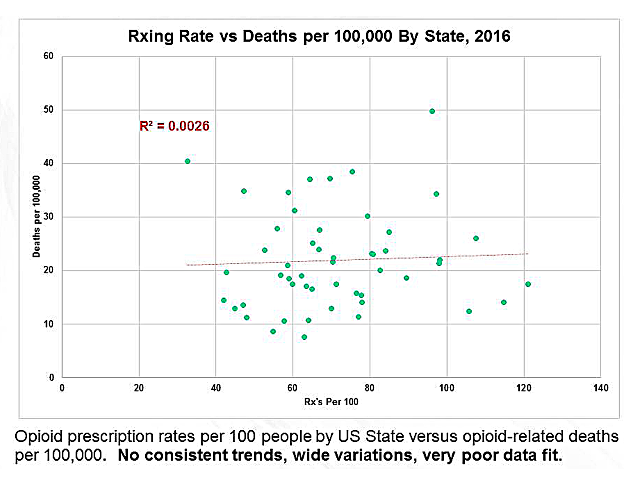
The following graphic compares overdose mortality rates from legal and illegal opioids to rates of opioid prescribing in all 50 states and Washington, DC in 2016.

SOURCE: CDC DATABASE

It might be difficult for a layman to make much sense of this graphic.  And that is precisely the point.  If there was a clear cause and effect relationship between prescribing and overdose deaths, then we would see higher death rates on the right side of the chart, with most data clumped closely around a rising central trend line.  But we don’t see that. 

The contribution of medically prescribed opioids to overdose deaths is so small that it gets lost in the noise of illegal street drugs.  Contrary to the screaming headlines in the media, prescription drugs aren’t killing people in large numbers. Illegal street drugs are.

This is not to say prescription drugs played no role in worsening the opioid crisis.  But in recent years, their role in opioid mortality has become small.  Even when they are found in the bloodstream of an overdose victim, opioid prescriptions are almost never found alone.  In Massachusetts, illicit fentanyl was found last year in 85% of blood toxicology screens of overdose victims, while heroin and/or cocaine were detected in about 45% of them.  Prescription opioids were found in only 15% of overdose victims.

Those numbers obviously don’t add up to 100 percent.  That is because the great majority of overdose victims had taken more than one illegal drug plus alcohol and/or benzodiazepine drugs.  We don’t really know which drug or combination of drugs caused the overdose.   

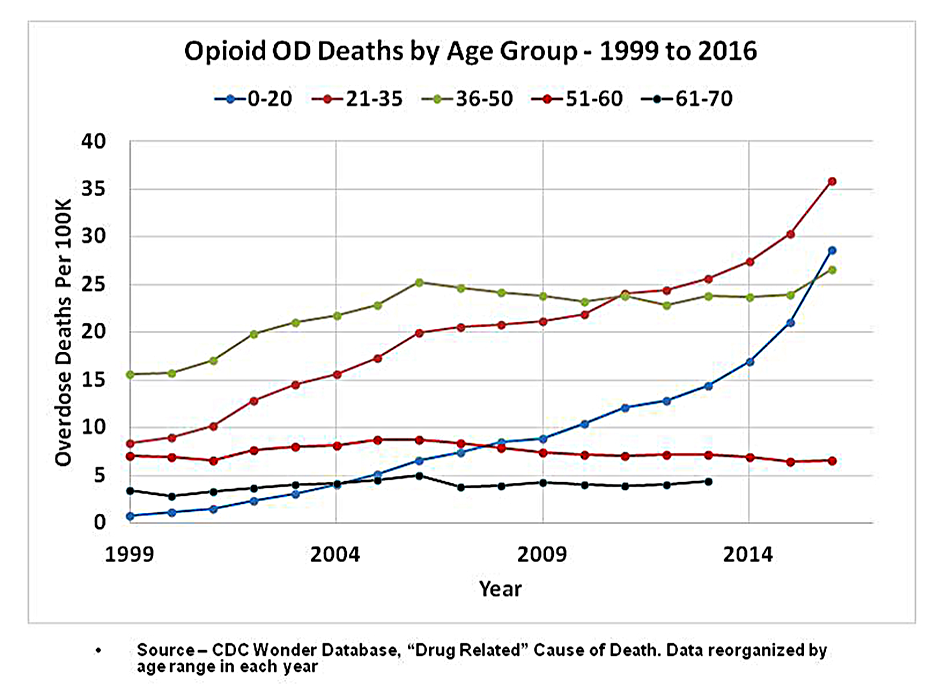
Overdose data also suggest that death is not a predictable outcome of opioid prescribing, nor is it common in groups that use the most opioid prescriptions. 

Basic trends in the chart below stand out.  First, rates of overdose deaths among people over age 50 have been stable for the last 17 years, while death rates among young people have risen sharply. In 2016, they were six times higher than in seniors.

We know that rates of opioid prescribing for seniors are at least 250% higher than for kids under 21. Thus, the group that benefited the most from liberalized prescribing policies of a decade ago – older adults -- has shown no higher risk of overdose deaths, even as kids who receive fewer opioid prescriptions are now dying in record numbers.

The asserted demographics of “over-prescribing” are plainly wrong. They don’t work and never have.  Exposure to medically managed opioids does not cause increased opioid mortality, at least not directly. 

Brief exposure to prescription opioids contributes very little to addiction or long term use. In two recent large-scale studies, opioid abuse and prolonged prescribing of opioids were evaluated for over 650,000 patients given opioids for the first time to control pain after surgery.  Fewer than 0.6% of these patients were diagnosed with opioid abuse 2.5 years later. 

This means that opioid treatment for acute pain is safe, effective and usually free of bad outcomes for over 99% of opioid-naive post-surgical patients.

Do Opioid Medications Relieve Chronic Pain?

Of course they do!

We hear a lot of noise that there is no evidence or proof that opioids work for long periods.  But “no proof” is not the same as “proof of no effect”. 

There are very few double blind clinical trials for opioids longer than 90 days -- and this reality is entirely understandable.  When people with severe pain are given placebos, they lapse into agony and drop out of trials.  Long term studies of any pain treatment can easily rise to the level of being inhumane – which is why so few have been conducted.

It isn’t rocket science, and the writers of the CDC guideline knew it.  Instead of comparing shorter trials of opioid analgesics against behavioral therapies and non-opioid medications, the guideline writers stacked the deck against opioids.  And they got caught at it by their medical peers. 

If trials of all three therapies had been limited to studies of at least a year -- as opioids were but alternative therapies were not -- none of the three could have provided “evidence” of useful effect.

We must also acknowledge that not all patients do well on opioids.  Some develop persistent nausea, sedation, constipation, suppression of sexual libido and depression. Some patients also become drug tolerant, requiring ever-increasing doses of opioids to achieve the same pain-relieving effects.  It has been theorized that a condition called “opioid induced hyperalgesia” may alter the action of opioid receptors in the brain.  But there is no medical consensus on how to measure such an effect in human beings, or even whether hyperalgesia exists. 

Many of the perceived failures of opioid therapy might be laid at the feet of ill-trained physicians.  Some doctors titrate their patients from zero to a therapeutic dose too fast.  Others fail to recognize factors in liver metabolism which make some patients poor metabolizers or hyper-metabolizers of opioids. Variation in metabolism means that there can be no one-size-fits-all pain treatment. Opioid therapy can be safe and effective for a small minority of patients at doses well above 1,000 MME.

Are Safe Substitutes for Opioids Widely Available?

For millions of patients, not yet.

We hear a lot of noise about tapering pain patients out of opioid therapy and into “alternative” or “integrative medicine.”  Indeed, it seems appropriate to first try less powerful medications such as NSAIDs or anticonvulsants before proceeding to opioids.  Exercise and massage therapy are also useful as palliative therapies.  But for millions of people, less powerful medications don’t work well enough -- or at all.  Tylenol or ibuprofen at high doses might also put you in a hospital with liver toxicity or major gastrointestinal problems.

What about “non-pharmacological” and “non-invasive” therapies?  Do they work well enough to be substituted for opioids?  Unfortunately, the answer is no. The state of science for alternatives like cognitive behavioral therapy, acupuncture, chiropractic, or various talk therapies is simply abysmal. 

At most, these alternative treatments are experimental.  They might be useful as supportive therapies in coordination with a well managed program of pain relieving medications.  But pending a more rigorous evaluation, we simply cannot offer such experimental techniques as substitutes for opioids. 

What Are Federal Agencies Doing to Correct Course?

In two words, “nothing apparent.”

The CDC, Food and Drug Administration, Health and Human Services (HHS), and the National Institutes of Health seem to be collectively dragging their feet in a campaign of deliberate inaction, refusing to respond to criticism or examine their own medical evidence of error.

This author and others have been trying for years to get healthcare agencies to reevaluate the relationship between opioid prescribing and overdose mortality. These efforts have included recent testimony to the FDA Opioid Policy Steering Committee and to the HHS Inter Agency Task Force on Best Practice in Pain Management.

In addition, copies of our analysis have been sent to the following authorities.  Most have been silent and none have responded in substance.

  • Dr. Scott Gottlieb, FDA Commissioner and senior analytics staff
  • Dr. Sharon Hertz, Director, Division of Anesthesia, Analgesia, and Addiction Products, FDA
  • Dr. Mary Kremzner, Director, Division of Drug Information, FDA. (Dr. Kremzner responded with a courteous letter referring to a press release from Scott Gottlieb). 
  • Alicia Richmond Scott, Designated Federal Officer, and Dr. Vanilla Singh, Chair of the HHS Inter Agency Task Force on Best Practices in Pain Management  
  • Dr. Nora Volkow, Director of the National Institute on Drug Abuse
  • The Whistleblower gateway of the House Subcommittee on Government Oversight

An inquiry was also filed online with the CDC. A dismissive response was received from the CDC Center for Injury Prevention – which oversaw development of the opioid guideline -- claiming to have read my analysis and asserting their previous positions.  This response was clearly a brush-off adapted from previous form letters.

A request is now in preparation to the HHS Office of the Inspector General, asking for investigation of CDC for malfeasance and possible fraud.

Richard Lawhern, PhD, has for 21 years volunteered as a patient advocate in online pain communities and a subject matter expert on public policy for medical opioids.  He is co-founder and corresponding secretary of the Alliance for the Treatment of Intractable Pain.

Graphics in this article originally published by The Crime Report on January 21, 2018, in "The Phony War Against Opioids - Some Inconvenient Truths."

The information in this column should not be considered as professional medical advice, diagnosis or treatment. It is for informational purposes only and represents the author’s opinions alone. It does not inherently express or reflect the views, opinions and/or positions of Pain News Network.

Positivity Is My Survival Technique

By Mia Maysack, Guest Columnist

As a young girl, swimming and diving were my main passions in life. I spent every day at our neighborhood pool, from the moment they opened it until the second they closed -- even on rainy days.  I figured I was already wet and there was a great group of lifeguards. I didn't have a care in the world.

All of that changed at the age of 10 when I developed “swimmer’s ear” -- an infection of the ear canal that is often brought on by water that remains in the ear after swimming.  The water creates a moist environment that aids bacterial growth.  

After a routine visit for ear drops at a local clinic, I returned home to rest. Within a couple hours, I awoke from a nap feeling stiff from my neck on down. It was as if I were suddenly paralyzed. I was terrified. The next few moments felt like an eternity. If my mother had not come in to check on me, I could have died right there in my childhood bed.  

My mom knew something was wrong with her young and healthy daughter, and it wasn't much longer before we were on our way to the hospital. During the ride, I remember feeling the head pain for the very first time.

I also recall feeling upset with my father, because on the way he had all the windows down and I felt so cold.  He also had his rock music blasting, which angered me considering how much head pain I was feeling. I did not realize it then, but he was only doing his best to keep me awake - as I was slipping into a coma. 

After arriving at the hospital in a wheelchair, I threw up all over my poor dad. After profusely apologizing, I fell into a deep sleep. Days passed without anyone having any idea what was going on. When my desperate mother inquired, she was told, "Every moment Mia survives is a miracle."

Eventually it was discovered my body was fighting a grave infection and emergency surgery was required. The bacteria was harbored within the mastoid bone of my left ear. It should have been a relatively quick fix, but during the procedure the surgeons found the bone so infected that it crumbled into tiny pieces. It required hours of focused and careful work. 

After sewing my head shut, I was left to rest in the intensive care unit. It was then that left side of my face began oddly twitching. My family had been through the ringer at this point, but my mother did not leave my side. She noticed this change and called for immediate attention, fearing I was having a stroke or seizure.

MIA MAYSACK

It turned out there had been bacteria left behind and it was now attacking my facial nerves, which demanded a second emergency surgery. 

This rare experience left me with deafness in my left ear, partial facial paralysis that has turned into permanent facial synkinesis, as well as chronic migraines and daily cluster headaches. Considering the odds I was up against, I often refer to myself as walking miracle. Bacterial meningitis is swift, sometimes deadly and often results in limb removal. So although my entire life had been turned upside down, I knew I was lucky to be alive. 

Although I go through life with a positive and gratitude attitude, my head has been hurting every single day since this happened. We had no way of knowing back then that I would live with the consequences of that experience forever. I am thankful to have learned the concept of mortality at a very young age, as that helped to cultivate core values, morals and choices for myself  -- which kept me out of a lot of unnecessary trouble other kids my age were getting into. 

Upon returning to school, none of my friends wanted anything to do with me. Instead of checking in and asking what happened to me, untrue stories circulated and the teasing began. Children can be downright cruel in middle school and high school, and because I now looked different than everyone else, I was an easy target. I would spend my recess inside the nurse’s office, working with her on facial retraining exercises. I used to glue or tape my eye closed at night, otherwise it would have essentially dried out and I may have suffered vision loss or lost the eye altogether. 

Accepting My Differences

I have come a long way since then with overall acceptance and I embrace my differences because they represent my fight for life, health and well-being. 

Over all these years, I have tried just about every treatment for my pain that anyone could think of. Medications further complicated things, while neglecting to help with the underlying issues.  Diet changes made no difference.  Nor did biofeedback, acupuncture, Botox, dry needling, trigger point injections, herbal remedies, massage, and chiropractic. The list goes on and on. 

I feel a deeply rooted disappointment with our current healthcare system. We have made many powerful discoveries and improvements in medicine, and the breakthroughs are tremendous for many.  I have come across some great personnel within the medical community, however they are few and far between. 

Due to my illness being invisible, I am often either treated as though I am overreacting, flat out lying, drug seeking or being dramatic. At one point I was banned from a pain clinic for missing a few appointments  because I did not feel safe enough to drive myself.

There is a common attitude toward chronically ill patients, that we are not fully taking responsibility for ourselves or our ailments, and a general opinion within society that we should pop an aspirin and shut up already. If only it were that easy or simple. I wouldn't be here writing this if it was. 

Living each day with head pain, among other discomforts, gets in the way of me being able to think straight and living the life I used to envision for myself.  Often overlooked or flat out disregarded is the constant losses the chronically ill are forced to navigate through.

For example, I worked very hard to earn a job at the very same hospital that saved my life, but ultimately had to step down because they were unwilling to accommodate my need to work fewer hours. I've also had to drop out of college multiple times because they are not set up to cater to the needs of those who suffer from debilitating pain. 

Within the past year and a half, my daily pain scale number of 5/6 has escalated to a 7/8, which has been devastating. Due to high demand, getting in to be seen at a pain clinic (if you are fortunate enough to have one in your area) can take months. When you've been stuck in a cluster headache for 90+ days, it's only natural to feel isolated and alone. There are times I have asked myself how or if I am able to go on like this. 

Our health is one of the most important things in life. That truth is what led me to pursue patient advocacy so passionately. I began witnessing other people getting treated the same way that I was, and it sparked a fire to advocate for the sake of them as well. 

I am living proof that we are far more than any diagnosis. Positivity has become a survival technique as well as a coping mechanism for me. It has led me down a path of holistic wellness through mindfulness and the humble reminder that -- although things could definitely be better -- they could have been much worse.  

Mia Maysack lives in Wisconsin. Mia is a proud supporter of the Alliance for Headache Disorders Advocacy and was recently honored by the U.S. Pain Foundation as its “Pain Warrior of the Month.”

Pain News Network invites other readers to share their stories with us. Send them to editor@painnewsnetwork.org.

The information in this column should not be considered as professional medical advice, diagnosis or treatment. It is for informational purposes only and represents the author’s opinions alone. It does not inherently express or reflect the views, opinions and/or positions of Pain News Network.

Trump Administration Proposes More Rx Opioid Cuts

By Pat Anson, Editor

For the third year in a row, the U.S. Drug Enforcement Administration is proposing another round of cuts in the supply of opioid pain medication – a 10% reduction in manufacturing quotas in 2019 for several widely used opioids.  The Trump Administration says the pain relievers are “frequently misused” and reducing their supply will help prevent addiction and abuse.

The DEA proposal involves six opioids classified as Schedule II controlled substances:  oxycodone, hydrocodone, oxymorphone, hydromorphone, morphine, and fentanyl. Some of the medications are already in short supply, forcing some hospitals to use other pain relievers to treat surgery and trauma patients.

“President Trump has set the ambitious goal of reducing opioid prescription rates by one-third in three years. We embrace that goal and are resolutely committed to reaching it,” Attorney General Jeff Sessions said in a statement. “We have already made significant progress in reducing prescription rates over the past year. Cutting opioid production quotas by an average of ten percent next year will help us continue that progress and make it harder to divert these drugs for abuse.”

The DEA has already made substantial cuts in opioid production quotas, reducing them by 25 percent in 2017, followed by another 20 percent cut in 2018.  

The production cuts have had no effect on reducing the nation’s soaring overdose rate. According to a preliminary report released this week by the CDC, over 72,000 Americans died of drug overdoses last year, a 6 percent increase from 2016. The rising death toll is primarily attributed to illicit fentanyl, heroin and cocaine. Overdoses involving prescription opioids appear to have leveled off.

The DEA’s latest round of production cuts is in line with President Trump’s “Safe Prescribing Plan” which seeks to reduce "the over-prescription of opioids” by cutting nationwide opioid prescription fills by one-third within three years.

“We’ve lost too many lives to the opioid epidemic and families and communities suffer tragic consequences every day,” said DEA Acting Administrator Uttam Dhillon. “This significant drop in prescriptions by doctors and DEA’s production quota adjustment will continue to reduce the amount of drugs available for illicit diversion and abuse while ensuring that patients will continue to have access to proper medicine.”

‘Serious Consequences’ for Patients

But legitimate patients are losing access to opioids.  Many hospitals and hospices now face a chronic shortage of three intravenous or injectable opioids --  morphine, hydromorphone and fentanyl -- which are used to treat patients recovering from surgery or trauma. Shortages of these "parenteral" drugs have been primarily blamed on manufacturing problems, although some critics say it has been worsened by the DEA production cuts.

“The shortage has serious consequences for patients and physicians. Parenteral opioids provide fast and reliable analgesia for patients admitted to the hospital with poorly controlled pain, patients who have undergone painful procedures such as major surgery, and those who were previously on oral opioid regimens but are unable to continue treatment by mouth,” Edward Bruera, MD, an oncologist at The University of Texas MD Anderson Cancer Center, wrote in an op/ed published this week in The New England Journal of Medicine.

“Shortages of the three best-known parenteral opioids may increase the risk for medication errors when it becomes necessary to switch a patient to a less familiar drug or to use opioid-sparing drug combinations. Opioids are already among the drugs most frequently involved in medication errors in hospitals. There are also increased risks of delayed time to analgesia and of side effects resulting in unnecessary patient suffering and delayed hospital discharge.”

Although opioid prescribing guidelines are only intended for physicians treating patients with “chronic non-cancer pain,” Bruera says some cancer patients are being affected by opioid shortages and over-zealous enforcement of prescribing guidelines.

“Most hospitalized patients and almost all patients with cancer need opioids, either on a temporary basis after surgery or painful treatments such as stem-cell transplantation, or longer for cancer-related pain or dyspnea,” he wrote. “It is impossible to appropriately treat such a large number of patients unless most physicians are able and willing to prescribe opioids. There were not enough palliative care and pain specialists to meet patient needs before the shortages began, and universal referral of patients who need parenteral opioids will therefore only result in more undertreated pain.”

The rationale behind the DEA’s production cuts defy some of the agency’s own analysis. Less than one percent of legally prescribed opioids are diverted, according to a 2017 DEA report, which also found that admissions for painkiller abuse to publicly funded addiction treatment facilities have declined significantly since 2011, the same year that opioid prescriptions began dropping.

Positive Results for New Osteoarthritis Drug

By Pat Anson, Editor

Two pharmaceutical companies have announced positive results from a Phase 3 study of an experimental non-opioid pain reliever that has a history of safety concerns.

Teva and Regeneron are jointly developing fasinumab as a treatment for chronic pain from osteoarthritis of the knee and hip. The companies say patients treated for 16 weeks with fasinumab injections had significantly less pain and improved function compared to a placebo.

"We are encouraged by these data and look forward to advancing our pivotal Phase 3 fasinumab program in patients with osteoarthritis of the knee or hip, who currently have very limited therapeutic choices to treat their chronic pain, other than with non-steriodal anti-inflammatory drugs or opioids," said George Yancopoulos, MD, President and Chief Scientific Officer of Regeneron.

Fasinumab is a humanized antibody that targets nerve growth factor (NGF), a protein that increases in the body because of injury, inflammation or chronic pain. Fasinumab binds to NGF and inhibits pain signals from muscles, skin and organs from reaching the brain.

Teva and Regeneron say fasinumab was “generally well tolerated” in the Phase 3 study, with similar adverse events (AEs) as in previous trials. Treatment was discontinued due to AEs in 6 percent of the fasinumab patients, about the same as the placebo group. The companies plan to present further details at an upcoming medical conference.

Regeneron recently halted high-dose trials of fasinumab because the risk of harm outweighed the benefits of the drug. There is some concern that NGF antibodies work too well and encourage osteoarthritis patients to become more active, which accelerates joint deterioration. No cases of joint damage were observed in the current study.

Regeneron and Teva are currently enrolling osteoarthritis patients in three additional Phase 3 clinical trials, including one assessing the long-term safety of fasinumab and two trials comparing fasinumab to standard pain therapies.

There is intense competition about drug companies to develop non-opioid pain relievers that don’t have the risk of addiction and overdose. Pfizer and Eli Lilly are jointly developing a similar NGF inhibitor called tanezumab, which was given fast track designation by the FDA in 2017 to speed its development.

Like fasinumab, there are safety concerns about tanezumab. The FDA ordered a partial halt to clinical studies of tanezumab in 2010 after Pfizer said a small number of osteoarthritis patients taking the drug needed joint replacements. Another safety issue arose in 2012 because the drug caused “adverse changes in the sympathetic nervous system of mature animals.”  Most clinical studies of tanezumab did not resume until 2015.

FDA Warns Veterinarians of Pet Owners Abusing Opioids

By Pat Anson, Editor

Doctors and patients aren’t the only ones under scrutiny for prescribing and using opioid pain medication. Pet owners are also coming under suspicion for diverting and abusing opioids intended for their animals.

The Food and Drug Administration today warned veterinarians to be cautious when prescribing opioids and be on the alert for people who may be using their pets to gain access to the drugs.

“We recognize that opioids and other pain medications have a legitimate and important role in treating pain in animals – just as they do for people,” FDA commissioner Scott Gottlieb, MD, said in a statement.

“But just like the opioid medications used in humans, these drugs have potentially serious risks, not just for the animal patients, but also because of their potential to lead to addiction, abuse and overdose in humans who may divert them for their own use.”

Only one opioid is currently approved by the FDA for use in animals, a potent fentanyl medication for post-surgical pain that is sold under the brand name Recuvyra.  

The maker of another fentanyl based product -- carfentanil -- voluntarily surrendered approval for the drug in March because of growing signs it was being diverted. Carfentanil is so potent it was used by veterinarians as an anesthetic on elephants.   

With few options to choose from, some veterinarians are legally prescribing tramadol and others opioids intended for humans to relieve pain in pets. The FDA is recommending veterinarians use alternatives to opioids whenever possible and look for signs of opioid abuse by pet owners and their own employees.

“We’re advising veterinarians to develop a safety plan in the event they encounter a situation involving opioid diversion or clients seeking opioids under the guise of treating their pets; and taking steps to help veterinarians spot the signs of opioid abuse,” Gottlieb said.

Possible warning signs of opioid abuse are suspicious injuries to animals, a pet owner asking for specific medication by name, or asking for refills of lost or stolen medication.

Gottlieb’s statement was released one week after a small study published in the American Journal of Public Health suggested that some pet owners are purposely injuring their animals to gain access to opioids.

"Our results indicate that we should be paying more attention to how opioid abusers are seeking their drugs -- including through veterinary clinics," said Lili Tenney, deputy director of the Center for Health, Work & Environment at the Colorado School of Public Health.

In a survey of 189 Colorado veterinarians, 13 percent reported they had seen a client who they believed had purposefully injured a pet or made them ill. Nearly half the vets said they knew of a pet owner or employee who was abusing opioids; and 12 percent suspected a staff member of diverting opioids or abusing them.

Colorado and Maine require veterinarians to look at a pet owner’s medication history before dispensing opioids or writing a prescription.  Over a dozen states require veterinarians to report when they prescribe opioids to a prescription drug database.

An Open Letter to Attorney General Jeff Sessions

By Fred Brown, Guest Columnist

Dear Honorable Attorney General Jeff Sessions,

Why are there are so many federal agencies, like the CDC, DEA and Justice Department, that want to take away my opioid medication?  I have a right to be treated humanely, don’t I?

I am an American citizen who has dealt with some serious and painful medical issues. Over 20 years ago, I was referred to a board-certified pain management physician.  This was due to two failed cervical surgeries that left me with chronic back pain. I had two additional surgeries to fuse my spine after the first two operations, which only made my pain even more severe. The pain physician recommended I should begin a treatment regimen that included low doses of opioid medication.  

These medications helped me to continue working and have a certain quality of life.  I knew from discussions with my physician that, over time, I would need to increase the dose as my body would become dependent on opioids. This has been necessary and over many years these medications helped me live my life.

I have tried other medical modalities such as physical and occupational therapy, biofeedback, acupuncture, counseling, and other alternative treatments.  Further, before starting on opioids, I tried various non-narcotic medicines which did not work.    

Mr. Attorney General, earlier this year, you gave a talk in Tampa and said, “People need to take some aspirin sometimes and tough it out.” 

Perhaps if someone was experiencing mild discomfort, aspirin will work.  However, when one is living with severe chronic pain, 24-hours a day, seven days a week, they very likely need strong opioids prescribed by their physician.

Opiates help patients like me get relief from severe pain. They do not take away the pain, but they help reduce it and enable us to have some quality of life.  

ATTORNEY GENERAL JEFF SESSIONS

The “pill mills” have hurt many people, and most certainly the DEA should do everything it can to close them down.  But at the same time, certain patients must have high dosages of these medications. Each of us have a different metabolism and what may work for one person at one dose level may not work at all with another patient.  

When a government agency such as the DEA goes after physicians who are trying to help legitimate patients, without any idea of the patients’ history is and why they are on high doses, that is entirely wrong and inhumane!

Why are so many agencies, along with Congress, trying to keep these medications at lower dosages that will cause me to live with increased pain?  Does our nation intend to condemn citizens who have painful and excruciating disabilities to a life of agony?

I am aware the CDC made some serious mistakes when it released the 2016 Opioid Prescribing Guideline.  Some physicians believe the guideline is law and began to lower the doses of patients or even discharge them from their practice. It took CDC researchers years to admit they significantly inflated deaths from opioid prescriptions because they misreported deaths due to illegal fentanyl. 

Opioid prescriptions have been declining since 2011, while overdose deaths and suicides are at an all-time high!  This is not accidental.  CDC, FDA and DEA are chasing the wrong opioid epidemic and needlessly ruining lives of people in pain.

Mr. Attorney General, was our nation founded on the premise that our fellow citizens should live in chronic severe pain? I do not believe our Founding Fathers would want this. 

Fred Brown lives in central Florida. Fred is disabled because of spinal fusion with laminectomy syndrome, cervical radiculitis.  He also has severe arthritis in bilateral knees with a failed knee replacement.  In addition to pain management, Fred uses "diversion of the mind" as a way of dealing with much discomfort. 

Pain News Network invites other readers to share their stories with us. Send them to editor@painnewsnetwork.org.

The information in this column should not be considered as professional medical advice, diagnosis or treatment. It is for informational purposes only and represents the author’s opinions alone. It does not inherently express or reflect the views, opinions and/or positions of Pain News Network.

The New Face of the Opioid Crisis

By Pat Anson, Editor

Caylee Cresta doesn’t have any illusions about being the next Internet star or YouTube sensation. But the 23-minute video she posted on what it’s like to be a chronic pain patient during an age of opioid hysteria has become a hit in the pain community.

“This video should be made to go viral,” one fan said.

“Caylee you did an amazing, persuasive presentation. Maybe you should be a lobbyist!” another one wrote.

“Single best piece of chronic pain patient advocacy I have ever seen. Absolutely brilliant!” wrote Chuck Malinowski.

Caylee’s video is not addressed to the pain community, but to the public at large. The 26-year old Massachusetts woman with fiery red hair looks directly into the camera and earnestly asks people to set aside their misconceptions about pain, addiction and the opioid crisis.

“I do not suffer from addiction and yet stigma will tell you that I do.  And that is a myth that we are going to change,” she says. “Don’t ever brush off the plight of the chronically ill because your lives can change in an instant, just as ours have.

“The fight against opiates is an uneducated one. This is a movement that lacks understanding in its most basic form. Every lawmaker is taking on this fight without ever consulting even a single chronically ill person. What does that mean? That means that the people who depend on these medications aren’t even being considered when taking them away.”

In her video, Caylee spends little time discussing her own experience as a pain patient. While still in high school, Caylee developed a rare and incurable neurological disorder called Stiff-person syndrome, which is characterized by strong muscle spasms and stiffness. The spams are so severe her lungs have collapsed twice.

“I’ll get such strong spasms in my throat and chest cavity that they create so much air that can’t escape (my lungs) that it just made them literally pop,” she told PNN. “My muscle spasms can break my bones, they’ll get that strong.”

Caylee’s symptoms were usually dismissed by doctors and it took years for her to get a proper diagnosis. Last year, a doctor at a pain clinic dropped her as a patient after getting a warning letter from Medicare that she was prescribing too many opioids. Caylee went without opioids for months, which is when her lungs burst.

Living in Fear

Although Massachusetts has a reputation as having some of the best healthcare in the world, Caylee now drives 3 hours one-way to see a neurologist in Connecticut.

“Any other doctor that I’ve seen over the years has literally looked at me and in one way or another and said, ‘Your prognosis is so dim. It’s so rare.’ They’re not even willing to take me on as a patient. My doctor has stuck by me and tried everything there is to try,” she says. 

Caylee has tried stem cells, chemotherapy and many other treatments. The only thing that works is opioid medication. Although she is once again able to get prescriptions for opioids, she often has trouble getting them filled. She and her husband went to 20 pharmacies one day before finding a pharmacist willing to fill her script.

“You live every single day in fear.  Every time you fill your prescription you go, okay, I’m going to have a life for another month. But you live that whole month with such anxiety and wondering what’s going to happen next,” she said. 

Caylee hopes her YouTube video will help educate the public about the daily challenges of being in pain and give some hope to pain sufferers.

“I want to fight for people going through this. I truly want to fight for them. I just want to let people know that they’re not alone. I want them to know that we’re all in this together,” says Caylee.

“What is probably the most humbling is when I get messages like ‘I would do anything for the world to be able to see this’ or ‘I would do anything for this to go viral and for people to understand what we go through.’ When I get messages like that, that let me know that these people feel like somebody is speaking for them, that touches me in a way that I can’t even explain.”

Wallowing in Pain

By David Hanscom, MD, PNN Columnist

One of the most powerful ways to bond with others is by sharing emotional or physically painful experiences.  It is common for people suffering from chronic pain to discuss it with their family, friends and colleagues.

Between searching for a cure and talking about it, a fair amount of their consciousness is focused on pain. But the unconscious brain, which pain is a part of, is much more powerful than the conscious brain. You can’t consciously fix or control it. But you can direct it. Your brain changes every second and will develop wherever you place your attention. The more you focus on your pain, the more you will reinforce it.

Many of us in the medical profession were trained to have our pain patients keep a diary of the pain. But it has now been shown in some studies (here and here) that a pain diary is often associated with a delay in recovery. Focusing on the pain and documenting it may only reinforce pain circuits.

One of the most powerful strategies we have seen in treating pain is when we don’t allow patients to discuss their pain with anyone – expect with medical providers. People can become so wrapped up in their pain that they lose themselves in it. They become their pain.

I had no idea how much time patients spent discussing their pain until I asked them not to. For some, it felt like I had just dumped a bucket of ice water over their head.

They’ll say, “I feel shallow and phony by not sharing what is really going on with me.” That is a sure sign that he or she has become their pain.

We have witnessed several things occur when people successfully stop discussing their pain. The pain may not immediately abate, but they feel lighter.

For starters, do you really think your pain is that interesting to those who aren’t in pain? There is nothing that they can do about it and although they may sympathize, it is incredibly frustrating to repeatedly hear the same story.  Often my patients don’t appreciate the effect their story has on others. People that they enjoyed in the past drift away, furthering their social isolation.

And what about your poor family? They can’t escape as easily. Instead of you being a source of inspiration, peace, love and joy, you bring the whole house down. It isn’t a psychological issue. The effect occurs through mirror neurons, where you are stimulating the negative parts of the brains of those close to you.

Bonding with Pain

Another harmful aspect of repeatedly discussing your pain is that you will bond with those who are also focused on their pain. The bonds are deep and real and stronger than many human connections.

One extreme example of the strength of the need for social interaction involved a patient who we discovered was being violently abused by her boyfriend. We had to call the authorities. But she kept going back to him. One of my staff finally asked her why she put up with being beat up so badly. Her reply was, “It’s the only time that I have his full attention.”

You’ll be almost guaranteed to remain in pain if you are also contributing to another person’s suffering. One of the most basic parts of being human is giving back and that energy is almost impossible to connect to while you are in the abyss of pain. You are taking from those around you and not giving back.

Even deeper though is that the bond forged by pain is so strong that many don’t want to give up their pain. It’s the one greatest obstacle to healing. Being in a victim mode, in any realm, is so powerful that no one willingly wants to let it go. I run across this resistance multiple times per week. It took me many years before I realized that some patients had become addicted to being in pain and were resistant to change. If a patient doesn’t want to even learn the basic concepts behind solving chronic pain, there is nothing that I can do for them.

Our team has attempted to work with several online pain groups, where a lot of energy is spent on complaining about pain, circumstances and medical care. The complaints are generally legitimate, but little time is spent on discussing real alternatives. When we have suggested that there is a viable solution, we are quickly and consistently blocked.

We’ve also asked our patients to never complain or engage in pain behavior, such as groaning, grabbing their back, etc. If you are having a bad day at work or dealing with an unpleasant aspect of your pain, why bring it home? It is supposed to be your haven of safety and relaxation.

Don’t Share Your Pain

We have been surprised how difficult it’s been for some people to quit complaining.  It’s also been surprising how effective this simple strategy has been in moving people forward on their healing journey. At a minimum, their family is happier and everyone’s mood improves. It’s a great start.

Last week I had five different patients become free of pain. All of them had been suffering badly for many years and the change occurred within a couple of months. One person dramatically improved within a couple of weeks. All were beside themselves trying to express how excited and happy they were to be free of pain. Not discussing their pain was a significant step for each of them.

If you are one who feels like that you have to share your pain, then be honest with yourself about not wanting to give it up. It will save you and everyone else a lot of time and money not making the effort to help you heal when you actually don’t want to. Not sharing your pain is a simple beginning and will give you insight on where you are at with regards to healing.

Many people are incensed at the idea that they don’t want to give up their pain. The response is often that the medical profession just isn’t doing its job and fixing them. Whether that is true or not isn’t the point. The key is that you aren’t willing to learn the most recent concepts about overcoming pain. There isn’t any risk and you are already spending a good deal of time searching for an answer.

If you really think you aren’t attached to your suffering, then try this simple test:  Don’t talk about your pain.

Dr. David Hanscom is a spinal surgeon who has helped hundreds of back pain sufferers by teaching them how to calm their central nervous systems without the use of drugs or surgery. In his book Back in ControlHanscom shares the latest developments in neuroscience research and his own personal history with pain.

More information can be found on his website.

The information in this column should not be considered as professional medical advice, diagnosis or treatment. It is for informational purposes only and represents the author’s opinions alone. It does not inherently express or reflect the views, opinions and/or positions of Pain News Network.