Gabapentinoids Involved in a Third of Overdoses in Scotland

By Pat Anson, PNN Editor

A new study in Scotland is shining more light on the risks of overprescribing gabapentin (Neurontin) and pregabalin (Lyrica). The two drugs belong to a class of nerve medication called gabapentinoids, which are increasingly prescribed in Western nations to treat chronic pain.

In 2018, there were 1,187 accidental drug-related deaths (DRDs) in Scotland – the highest overdose rate in the European Union — and gabapentinoids were involved in about a third of them.

According to research published in the British Journal of Anaesthesia, gabapentin was implicated in 15.2% of fatal overdoses in Scotland, while pregabalin was linked to 16.5% of drug deaths. That’s up from 3% and 1% of fatal overdoses, respectively, in 2012.

Researchers say deaths involving gabapentinoids are rising because they are frequently co-prescribed with opioids and other medications that depress the central nervous system and raise the risk of overdose. Drug diversion also plays a role.

“Gabapentinoid prescribing has increased dramatically since 2006, as have dangerous co-prescribing and death. Older people, women, and those living in deprived areas were particularly likely to receive prescriptions. Their contribution to DRDs may be more related to illegal use with diversion of prescribed medication,” wrote lead author Nicola Torrance, PhD, Senior Research Fellow at the School of Nursing & Midwifery, Robert Gordon University, in Aberdeen, Scotland.

From 2006 to 2016, the number of pregabalin prescriptions in Scotland rose by an astounding 1,600 percent, while prescriptions for gabapentin quadrupled. About 60% of the time, gabapentin was co-prescribed with an opioid, benzodiazepines or both.  

Gabapentinoids are also showing up in Scotland’s illicit drug supply. Drug users have found they can heighten the effects of heroin, marijuana, cocaine and other substances. In the Scottish region of Tayside, gabapentinoids were involved in 39% of drug deaths. About three out of four of those overdose victims did not have a prescription for the drug.

In addition to overdoses, gabapentinoids have also been associated with increased risk of suicidal behavior, accidental injuries, traffic accidents and violent crime. UK health officials were so alarmed by misuse of the drugs and the rising number of deaths that gabapentin and pregabalin were reclassified as controlled substances in 2019.

Gabapentin is not currently scheduled as a federally controlled substance in the United States, but pregabalin is classified as a Schedule V controlled substance, meaning it has low potential for addiction and abuse.  

A 2019 clinical review found little evidence that gabapentinoids should be used off-label to treat pain and that prescribing guidelines often exaggerate their effectiveness. The U.S. Food and Drug Administration also recently warned that serious breathing problems can occur in patients who take gabapentin or pregabalin with opioids or other drugs that depress the central nervous system.

You Can Socialize During the Pandemic — Just Do It Carefully

By Bernard J. Wolfson, Kaiser Health News

Cooped up too long, yearning for a day at the beach or a night on the town — and enticed by the easing of restrictions just as the warm weather arrived — many people have bolted from the confines of home. And who can blame them?

But Houston — and San Antonio and Phoenix and Miami and Los Angeles — we have a problem.

COVID-19 is spiking in Texas, Arizona, Florida, California and other states, forcing officials once again to shut down bars, gyms and the indoor-dining sections of restaurants.

But that does not mean we can’t spend time with the important people in our lives. Our mental health is too important to avoid them.

You can expand your social bubble beyond the household — if you heed now-familiar health guidelines and even take extra precautions: Limit the number of people you see at one time, and wear a mask if meeting indoors is the only feasible option or if you can’t stay at least 6 feet from one another outdoors. Disinfect chairs and tables, and wash your hands, before and after the visit. If food and drink are on the agenda, it’s best for all involved to bring their own, since sharing can raise the risk of infection.

Arthur Reingold, a professor of epidemiology at the University of California-Berkeley’s School of Public Health, and his wife, an epidemiologist for the Centers for Disease Control and Prevention, have begun spending time with another couple around their age who have a large patio.

“They have us go around the back; they don’t have us go through the house,” says Reingold, 71. “We sit on chairs that are a good 10 to 12 feet away from each other, and we talk. We bring our food, and they bring their food.”

And they don’t wear masks. “I personally believe the risk from that situation, even without a mask, is pretty minimal,” Reingold says. “But if people wanted to try to do that and wear a mask, I don’t think that would be unreasonable.”

And while we are on the topic of masks, please remember they don’t make you impervious to infection. “Your eyes are part of the respiratory tree. You can get infected through them very easily,” says George Rutherford, a professor of epidemiology at UC-San Francisco. If you are medically vulnerable, or just want to be extra careful, consider wearing a face shield or goggles.

Avoid Big Gatherings

Most of us have wrestled with the question of how big a gathering is too big. It’s impossible to give an exact answer, but the smaller the better. And keep in mind there is no such thing as zero risk.

In the U.S. as a whole, the average infection rate is currently about 1% to 2%, which means one or two people in a group of 100 would typically be infected, says Dr. Yvonne Maldonado, a pediatrician specializing in infectious diseases at Stanford University’s School of Medicine.

In any individual setting, however, these percentages don’t necessarily apply, she says. And a gathering in an area where the COVID-19 rate is surging — or already high — is more dangerous than one of the same size in a place where it’s not. So stay informed about the status of the pandemic in your area.

Be wary even of friends you’ve known and loved a long time. That may sound callous, but you need to know something about the behavior and recent whereabouts of anyone with whom you plan to visit. Don’t be shy about asking where and with whom they have been in recent weeks. If they are a close enough friend for you to want to see them, they should understand why you are asking.

A chart from the Texas Medical Association that generated controversy on Twitter in recent days listed numerous activities, ranked from lowest to highest risk. Among the riskiest behaviors: going to a bar, a movie theater or any other crowded venue — and eating at a buffet. You could ask questions based on that list, or a similar one, to determine if it’s safe to visit with someone.

With regard to play dates for your children, public health experts say you should apply the same safety precautions as for adult get-togethers. “Children can play together, especially if their families have been socially distancing, the activities do not involve physical contact, and they can engage in the activities with sufficient physical spacing,” says Stanford’s Maldonado.

Another question, never far from my mind, is whether it’s risky to let a plumber or electrician or handyman into the house. I’ve put off needed house repairs for several months because of my uncertainty about it.

I put the question to the public health experts I interviewed for this column, and they agreed: As long as you both wear masks and stay a healthy distance apart, the visit should not pose a significant threat. But ask the person what precautions he took on visits to other homes. If he works for a company, check its policies for employees who go from home to home.

Craving Contact

Because I have two large dogs, I have also wondered whether they could be potential virus spreaders — not through their respiratory droplets, but because the virus might land on their fur. When I’m out walking them in the evening and see neighbors with their canines, we usually keep our distance, but once in a while somebody wants to pet one of my dogs, and I’ve been tempted to pet theirs — but have resisted.

My experts say I shouldn’t worry. It is theoretically possible to catch the virus off a dog if somebody just sneezed on it, but that’s an unlikely scenario. The dog’s owner poses a bigger risk.

For those of us who have craved more human contact, it may come as a welcome surprise that some public health experts think it can be safe to hug people (though not dog owners you don’t know) if you follow certain guidelines: Do it outdoors; wear a mask; point your faces in opposite directions; avoid contact between your face and the other person’s body; keep it brief and wash your hands afterward.

Shannon Albers, a 35-year-old resident of Sacramento, says she started hugging people again after reading a story about how to do it safely in The New York Times.

“After 89 days I finally got to hug my mom, and she started crying,” Albers recalls. “We were standing on the driveway, and I said, ‘Do you want a hug?’ She immediately tightened her mask and started coming down the driveway, and I said, ‘Wait, Mom. There’s rules.’”

Chronically ill and elderly people may not want to risk it, says UC-Berkeley’s Reingold. “But if you are out drinking beers with somebody in a crowded room, I’m not sure the hug makes a difference, frankly.”

Kaiser Health News, a nonprofit health newsroom whose stories appear in news outlets nationwide, is an editorially independent part of the Kaiser Family Foundation.

New Imaging Better Identifies Sources of Chronic Pain

By Pat Anson, PNN Editor

A new approach to diagnostic imaging that combines the use of positron emission tomography (PET) and magnetic resonance imaging (MRI) could help identify the causes of chronic pain better than current methods, according to a new study at Stanford University School of Medicine.

PET scans that identify increased glucose metabolism in the body – known as 18F-FDG PET -- are currently used by oncologists to detect where tumors are located. Stanford researchers say the same approach could also be used to more precisely locate inflammation in injured nerves and muscles.

"In the past few decades, we have confirmed that anatomic-based imaging approaches, such as conventional MRI, are unhelpful in identifying chronic pain generators," said Sandip Biswal, MD, an associate professor of radiology at Stanford University School of Medicine.

"We know that 18F-FDG PET has the ability to accurately evaluate increased glucose metabolism that arises from to acute or chronic pain generators. As such, in our study we examined PET/MRI as a potential solution to determine the exact molecular underpinnings of one's pain."

In the study, 65 chronic pain patients underwent 18F-FDG PET and MRI scans from head to toe. The PET/MR images were then evaluated by two radiologists to determine if more glucose uptake occurred in painful areas or in other parts of the body. Increased glucose metabolism was detected in 58 of the 65 patients.

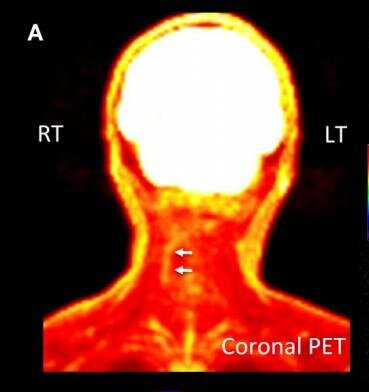
One such patient was an adult male who lived with decades of chronic pain in his neck as a result of an injury experienced at birth. PET/MR scans — such as the image on the right — identified muscles in his right neck near a spinal nerve where there was elevated glucose uptake.

This finding encouraged a surgeon to explore the area. The surgeon found a collection of small arteries wrapped around the nerve. When the arteries were ablated (removed) by the surgeon, it relieved pressure on the nerve and the patient reported tremendous relief.

Cipriano, et al., Stanford University

Cipriano, et al., Stanford University

As a result of PET/MR imaging, 40 patients in the study had their pain management plans modified, including some who had procedures that their doctor had not anticipated, such as surgery to relieve foot pain and the placement of blood patches to treat cerebrospinal fluid leaks.

"The results of this study show that better outcomes are possible for those suffering from chronic pain," said Biswal. "This clinical molecular imaging approach is addressing a tremendous unmet clinical need, and I am hopeful that this work will lay the groundwork for the birth of a new subspecialty in nuclear medicine and radiology.”

Biswal recently presented his findings at the annual meeting of the Society of Nuclear Medicine and Molecular Imaging. They’ve also been published in the Journal of Nuclear Medicine.

New Podcast Discusses Pain and Politics

By Dr. Lynn Webster, PNN Columnist

Not long ago, I was invited to support the Center For Effective Regulatory Policy & Safe Access (CERPSA). The nonprofit was recently founded by Stephen Ziegler, PhD.

CERPSA’s goal is to reduce the suffering that pain patients experience when their access to prescription medication is limited. I felt excited to join CERPSA’s Board of Directors and be a part of the activities the Center would undertake in pursuit of improving the lives of people with pain, including its “Pain Politics” podcast.  

There is probably no topic that has been more politicized and affects more people than pain. Producer and commentator Dr. Ziegler is a man with a mission. Each podcast episode tells stories about how politics informs -- or interferes with -- pain relief.

Dr. Ziegler defines politics as “who gets what, when and how.” Politics are often associated with government actors, but the term can more broadly include how a pharmacy chain implements policies on filling prescriptions, or how an insurance company imposes dose limits of medication for a patient following surgery.

Pain Politics.png

Dr. Ziegler is an advocate for people in pain. A Purdue University professor emeritus, he has also worked as a lawyer, police officer, detective, DEA agent, and humorist. I don't know how he puts these experiences together, but I'm grateful that he is willing and able to leverage all of his skills and knowledge in a remarkable way to produce entertaining and informative podcasts.

There is a large potential audience for the podcast, because pain cuts across all demographics and does not discriminate. The general public will find the podcasts enlightening and timely. The politically charged topics Dr. Ziegler discusses with his guests relate either directly or indirectly to people in pain.

An example of someone who may be interested in Pain Politics would be a stay-at-home mom who suffers from chronic, long-term pain stemming from an automobile accident. She may feel isolated and be struggling with insurance companies and healthcare providers in an effort to find relief.

A veteran who faces stigma for the pain medication he needs to treat injuries received during a tour of duty would be another example, as would an out-of-work school bus driver whose health insurance has disappeared due to the pandemic.

The first Pain Politics episode -- Time for People in Pain to Make Noise -- is an overview of the podcast’s purpose, and how politics play an enormous role in shaping pain treatment, drug policy and human suffering.

In the second episode, Dr. Ziegler tells the Centers for Disease Control and Prevention to "get its head out of its app." This is a theme that will resonate with people who have been struggling with the CDC’s 2016 opioid guideline. Dr. Ziegler pulls no punches as he describes how the CDC has designed a data system that excludes the diagnosis of pain. He believes this, along with other frustrating CDC policies, was politically inspired.

Future episodes of Pain Politics will involve inequality and racism in pain, economics in medicine and pain, universal healthcare, how the DEA and other law enforcement agencies may overstep their roles in prosecuting doctors, the CDC's loss of ethical guardrails, national pain meetings that are politically-driven and not helpful to patients, and the American Medical Association’s recent letter to the CDC asking the agency to rewrite the opioid guideline. Dr. Ziegler will invite guests to appear on his podcasts as he covers these and other areas.

I hope you'll tune in via Apple Podcasts, Google Podcasts, or your favorite way to listen. You'll enjoy Dr. Ziegler's style, and benefit from the information he and his guests provide. I’m pleased to support his efforts.

Lynn R. Webster, MD, is a vice president of scientific affairs for PRA Health Sciences and consults with the pharmaceutical industry. He is author of the award-winning book, “The Painful Truth,” and co-producer of the documentary, “It Hurts Until You Die.” You can find Lynn on Twitter: @LynnRWebsterMD

The CDC, Opioids and Cancer Pain

By Roger Chriss, PNN Columnist

In 2016, the Centers for Disease Control and Prevention issued its controversial opioid prescribing guideline. Insurers, states and other federal agencies soon followed with mandatory policies and regulations to reduce the use of opioid pain medication. All this was supposed to exclude cancer-related pain care, but in practice that’s not what happened.

Dr. Judith Paice, director of the Cancer Pain Program at Northwestern University’s Feinberg School of Medicine, told the National Cancer Institute in 2018 that the opioid crisis “has enhanced fear — fear of addiction in particular” among both patients and doctors.

“Many primary care doctors no longer prescribe opioids. Oncologists are still prescribing these medications, but in many cases they’re somewhat anxious about doing so. That has led some patients to have trouble even obtaining a prescription for pain medication,” Paice said.

In 2019, the Cancer Action Network said there has been “a significant increase in cancer patients and survivors being unable to access their opioid prescriptions.” One out of four said a pharmacy had refused to fill their opioid prescription and nearly a third reported their insurance refused to pay for their opioid medication.

That same year, CDC issued a long-awaited clarification noting the “misapplication” of the guideline to patients it was never intended for, including “patients with pain associated with cancer.”  

Long Term Use of Opioids Uncommon

Cancer pain management in the U.S. has been severely impacted by the CDC guideline, even though rates of long-term or “persistent” opioid use are relatively low and stable:

  • A major review of over 100,000 military veterans who survived cancer found that only 8.3% were persistent opioid users. Less than 3% showed signs of opioid abuse or dependence.

  • A study of older women with breast cancer who were prescribed opioids found that only 2.8% were persistent opioid users.  

  • A study of 276 patients with head or neck cancer found that only 20 used opioids long-term – a rate of 7.2 percent.

  • And a study of nearly 23,500 women with early-stage breast cancer who had a mastectomy or mastectomy found that 18% of them were using opioids 90 to 180 days after surgery, while 9% were still filling opioid prescriptions 181 to 365 days later.

While any sign of opioid abuse or addiction is concerning, these studies show that long-term use of opioid medication is relatively uncommon among cancer survivors. The American Cancer Society says opioids are “often a necessary part of a pain relief plan for cancer patients” and “can be safely prescribed and used” for cancer pain.

Cancer patients and their doctors have been successfully managing opioid risks long before the CDC guideline or associated state laws and regulations. Perhaps it is time for lawmakers, regulators, insurers and pharmacies to learn from the cancer community rather than getting in the way of clinical best practices.

Roger Chriss lives with Ehlers Danlos syndrome and is a proud member of the Ehlers-Danlos Society. Roger is a technical consultant in Washington state, where he specializes in mathematics and research. 

Virtual Reality Therapy Can Reduce Chronic Pain at Home

By Pat Anson, PNN Editor

Therapeutic virtual reality (VR) can reduce chronic pain, improve mood and help people sleep, according to a small study of 74 patients living with fibromyalgia or chronic lower back pain.

The research, published online in JMIR-FR, is one of the first to look at the effectiveness of VR therapy when self-administered at home by chronic pain patients. It was funded by AppliedVR , a Los Angeles based company that is developing therapeutic VR content to help treat pain, depression, anxiety and other conditions.

“People with chronic pain often have limited access to comprehensive pain care that includes skills-based behavioral medicine. We tested whether VR that was self-administered at home would be an effective therapy for chronic pain,” said Beth Darnall, PhD, a pain psychologist who is AppliedVR’s chief scientific advisor.

“We found high engagement and satisfaction, combined with clinically significant reductions in pain and low levels of adverse effects, support the feasibility and acceptability for at-home, skills-based VR for chronic pain.”

Participants in the study were given VR headsets and instructed to have at least one session daily for 21 days. Half of the patients listened to audio-only programming, while the other half watched “virtual” programs in which they could swim with dolphins, play games or immerse themselves in beautiful scenery.

The programs are designed to help patients learn how to manage their pain and other symptoms by using cognitive behavioral therapy (CBT) to distract them and make their pain seem less important.

A sample of what they saw can be seen in this video:  

At the end of the study, 84 percent of the patients reported they were satisfied with VR therapy, which worked significantly better than the audio-only format in reducing five key pain indicators:

  • Pain intensity reduced an average of 30%

  • Physical activity improved 37%

  • Mood improved 50%

  • Sleep improved 40%

  • Stress reduced 49%

Previous VR studies have had similar findings, but have largely focused on patients in hospitals and clinical settings. 

“This study is a fundamental step for advancing a clinically proven, noninvasive and safe digital therapeutic like VR for chronic pain, and demonstrates our platform is both viable and efficacious,” said Josh Sackman, co-founder and president of AppliedVR.

“Living with and managing chronic pain daily can be a debilitating and costly challenge, and many patients suffering from it can feel hopeless and desperate for any relief. So, as we engage in and accelerate more in-depth clinical research, we want them to know that we’re committed to making VR a reimbursable standard of care for pain.”

AppliedVR products are being used in hundreds of hospitals, but are currently only available to healthcare providers. The company recently partnered with University of California at San Francisco to study how VR therapy can improve patient care for underserved populations.

AppliedVR is also conducting two clinical trials to see if VR therapy can reduce the use of opioid medication for acute and chronic pain. The National Institute on Drug Abuse recently awarded nearly $3 million in grants to fund the trials.

The company is currently recruiting patients with chronic lower back pain for an 8-week trial of VR therapy. Headsets and other material will be mailed at no cost to participants at their homes. No in-person visits are required.  

Researchers Developing Safer Version of Acetaminophen

By Pat Anson, PNN Editor

Researchers at Louisiana State University have created a new type of analgesic that is similar to acetaminophen but can relieve pain and reduce fever without the risk of liver or kidney damage.

Acetaminophen -- also known as paracetamol – is the world’s most widely used over-the-counter pain reliever. Over 50 million Americans take acetaminophen each week, many unaware that excessive use can cause liver, kidney, heart and blood pressure problems. Acetaminophen overdoses are involved in about 500 deaths and over 50,000 emergency room visits in the U.S. annually.

Researchers at LSU Health New Orleans created 21 chemical compounds that are structurally similar to acetaminophen, but did not cause liver or kidney toxicity in tests on laboratory rodents. Their findings are published online in the European Journal of Medicinal Chemistry.

"The new chemical entities reduced pain in two in models without the liver and kidney toxicity associated with current over-the-counter analgesics that are commonly used to treat pain -- acetaminophen and NSAIDs. They also reduced fever in a pyretic model,” said senior author Nicolas Bazan, MD, Director of the LSU Health New Orleans Neuroscience Center of Excellence.   

The intellectual property behind the acetaminophen analogs has been licensed to South Rampart Pharma. The company expects to file an investigational new drug application with the Food and Drug Administration in the third quarter 2020, which would pave the way for clinical studies.

"Our primary goal is to develop and commercialize new alternative pain medications that lack abuse potential and have fewer associated safety concerns than current treatment options,” said Bazan. "Given the widespread use of acetaminophen, the risk of hepatotoxicity with overuse, and the ongoing opioid epidemic, these new chemical entities represent novel, non-narcotic analgesics that exclude hepatotoxicity, for which development may lead to safer treatment of acute and chronic pain and fever.”

Bazan said the development of safer pain relievers and fever reducers is particularly important because of the COVID-19 pandemic. Current treatments have led to kidney and liver disease in critically ill SARS-CoV-2 patients.

Acetaminophen is a key ingredient in hundreds of over-the-counter pain relievers and cough, cold and flu medicines – from Excedrin and Tylenol to Theraflu and Alka-Seltzer Plus. It’s also used in opioid pain medications such as Vicodin. Nearly two-thirds of the world’s supply of acetaminophen comes from China.

Healthcare Workers Plead for Americans to Wear Masks

By Anna Almendrala, Kaiser Health News

When an employee told a group of 20-somethings they needed face masks to enter his fast-food restaurant, one woman fired off a stream of expletives. “Isn’t this Orange County?” snapped a man in the group. “We don’t have to wear masks!”

The curses came as a shock, but not really a surprise, to Nilu Patel, a certified registered nurse anesthetist at nearby University of California-Irvine Medical Center, who observed the conflict while waiting for takeout. Health care workers suffer these angry encounters daily as they move between treacherous hospital settings and their communities, where mixed messaging from politicians has muddied common-sense public health precautions.

“Health care workers are scared, but we show up to work every single day,” Patel said. Wearing masks, she said, “is a very small thing to ask.”

Patel administers anesthesia to patients in the operating room, and her husband is also a health care worker. They’ve suffered sleepless nights worrying about how to keep their two young children safe and schooled at home. The small but vocal chorus of people who view face coverings as a violation of their rights makes it all worse, she said.

That resistance to the public health advice didn’t grow in a vacuum. Health care workers blame political leadership at all levels, from President Donald Trump on down, for issuing confusing and contradictory messages.

“Our leaders have not been pushing that this is something really serious,” said Jewell Harris Jordan, a 47-year-old registered nurse at the Kaiser Permanente Oakland Medical Center in Oakland, California. She’s distraught that some Americans see mandates for face coverings as an infringement upon their rights instead of a show of solidarity with health care workers.

“If you come into the hospital and you’re sick, I’m going to take care of you,” Jordan said. “But damn, you would think you would want to try to protect the people that are trying to keep you safe.”

Mixed Messages

In Orange County, where Patel works, mask orders are particularly controversial. The county’s chief health officer, Dr. Nichole Quick, resigned June 8 after being threatened for requiring residents to wear them in public. Three days later, county officials rescinded the requirement. On June 18, a few days after Patel visited the restaurant, Gov. Gavin Newsom issued a statewide mandate.

Meanwhile, cases and hospitalizations continue to rise in Orange County.

The county’s flip-flop illustrates the national conflict over masks. When the coronavirus outbreak emerged in February, officials from the U.S. Centers for Disease Control and Prevention discouraged the public from buying masks, which were needed by health care workers. It wasn’t until April that federal officials began advising most everyone to wear cloth face coverings in public.

One recent study showed that masks can reduce the risk of coronavirus infection, especially in combination with physical distancing. Another study linked policies in 15 states and Washington, D.C., mandating community use of face coverings with a decline in the daily COVID-19 growth rate and estimated that as many as 450,000 cases had been prevented as of May 22.

But the use of masks has become politicized. Trump’s inconsistency and nonchalance about them sowed doubt in the minds of millions who respect him, said Jordan, the Oakland nurse. That has led to “very disheartening and really disrespectful” rejection of masks.

“They truly should have just made masks mandatory throughout the country, period,” said Jordan, 47. Out of fear of infecting her family with the virus, she hasn’t flown to see her mother or two adult children on the East Coast during the pandemic, Jordan said.

But a mandate doesn’t necessarily mean authorities have the ability or will to enforce it. In California, where the governor left enforcement up to local governments, some sheriff’s departments have said it would be inappropriate to penalize mask violations.

This has prompted some health care workers to make personal appeals to the public.

After the Fresno County Sheriff-Coroner’s Office announced it didn’t have the resources to enforce Newsom’s mandate, Amy Arlund, a 45-year-old nurse at the COVID unit at the Kaiser Permanente Fresno Medical Center, took to her Facebook account to plead with friends and family about the need to wear masks.

You better pray that all the nurses aren’t already out sick or dead because people chose not to wear a mask. Please tell me my life is worth a LITTLE of your discomfort?
— Amy Arlund, Nurse

“If I’m wrong, you wore a silly mask and you didn’t like it,” she posted on June 23. “If I’m right and you don’t wear a mask, you better pray that all the nurses aren’t already out sick or dead because people chose not to wear a mask. Please tell me my life is worth a LITTLE of your discomfort?”

To protect her family, Arlund lives in a “zone” of her house that no other member may enter. When she must interact with her 9-year-old daughter to help her with school assignments, they each wear masks and sit 3 feet apart.

Mask Shaming

Every negative interaction about masks stings in the light of her family’s sacrifices, said Arlund. She cites a woman who approached her husband at a local hardware store to say he looked “ridiculous” in the N95 mask he was wearing.

“It’s like mask-shaming, and we’re shaming in the wrong direction,” Arlund said. “He does it to protect you, you cranky hag!”

After seeing a Facebook comment alleging that face masks can cause low oxygen levels, Dr. Megan Hall decided to publish a small experiment. Hall, a pediatrician at the Conway Medical Center in Myrtle Beach, South Carolina, wore different kinds of medical masks for five minutes and then took photos of her oxygen saturation levels, as measured by her pulse oximeter. As she predicted, there was no appreciable difference in oxygen levels. She posted the photo collection on June 22, and it quickly went viral.

“Some of our officials and leaders have not taken the best precautions,” said Hall, who hopes for “a change of heart” about masks among local officials and the public. South Carolina Gov. Henry McMaster has urged residents to wear face coverings in public, but he said a statewide mandate was unenforceable.

In Florida, where Gov. Ron DeSantis has resisted calls for a statewide order on masks despite a massive surge of COVID-19 cases and hospitalizations, Cynthia Butler, 62, recently asked a young man at the register of a pet store why he wasn’t wearing a mask.

“His tone was more like, this whole mask thing is ridiculous,” said Butler, a registered nurse at Fawcett Memorial Hospital in Port Charlotte. She didn’t tell him that she had just recovered from a COVID-19 infection contracted at work. The exchange saddened her, but she hasn’t the time to lecture everyone she encounters without a mask — about three-quarters of her community, Butler estimated.

“They may think you’re stepping on their rights,” she said. “It’s not anything I want to get shot over.”

Kaiser Health News, a nonprofit health newsroom whose stories appear in news outlets nationwide, is an editorially independent part of the Kaiser Family Foundation.

Gabapentinoids Ineffective for Pain Relief After Surgery

By Pat Anson, PNN Editor

Would you want to take Lyrica (pregabalin) or Neurontin (gabapentin) for pain relief after a major surgery? Both drugs belong to a class of nerve medication called gabapentinoids that are increasingly being prescribed to patients perioperatively (after surgery) as an alternative to opioid medication.

But gabapentinoids also have risks and there is little evidence to support their use for postoperative pain relief, according to a large new study by a team of Canadian researchers.  

“No clinically significant analgesic effect for the perioperative use of gabapentinoids was observed. There was also no effect on the prevention of postoperative chronic pain and a greater risk of adverse events. These results do not support the routine use of pregabalin or gabapentin for the management of postoperative pain in adult patients,” wrote lead author Michael Verret, MD, a resident at Laval University in Quebec City.  

Verret and his colleagues conducted a meta-analysis of 281 clinical trials involving nearly 25,000 patients undergoing a wide range of surgeries, including orthopedic, spinal and abdominal operations.

Their findings, recently published in the journal Anesthesiology, indicate that the analgesic benefits of pregabalin and gabapentin after surgery are negligible, regardless of the dose or type of operation. Gabapentinoids were also ineffective in preventing chronic pain from developing after surgery, one of the primary justifications for using the drugs postoperatively.

“Gabapentinoids were also associated with a greater incidence of adverse events, namely dizziness and visual disturbance, while other major adverse events such as respiratory depression and addiction are not reported or are underreported,” said Verret.

The findings contradict guidelines published by the American Pain Society (APS) in 2016,  which advocate “around the clock” use of gabapentin, pregabalin and other nonopioid drugs both before and after surgery.

“The panel recommends use of gabapentin or pregabalin as part of a multimodal regimen in patients who undergo surgery. Both medications are associated with reduced opioid requirements after major or minor surgical procedures, and some studies reported lower postoperative pain scores,” the APS guideline states.

“The panel suggests that clinicians consider a preoperative dose of gabapentin or pregabalin, particularly in patients who undergo major surgery or other surgeries associated with substantial pain, or as part of multimodal therapy for highly opioid-tolerant patients.”

‘Evidence of Harm’

Although opioid addiction is relatively rare after surgery, dozens of U.S. hospitals followed the lead of the APS and other medical guidelines by stopping the use of opioids for certain surgeries.

Cleveland Clinic Akron General Hospital, for example, adopted a policy of only using gabapentin and other non-opioid analgesics for colorectal operations.

It is now clear that over the past two decades, evidence of benefit from routine perioperative administration of gabapentinoids has diminished, while evidence of harm has increased.
— Dr. Evan Kharasch

Critics say gabapentinoids have become a trendy alternative for post-surgical pain relief, even though evidence supporting their use is minimal.

“It is now clear that over the past two decades, evidence of benefit from routine perioperative administration of gabapentinoids has diminished, while evidence of harm has increased. If any potential benefits exist in ‘special populations,’ published reports have yet to identify the benefits or the populations,” lead author Evan Kharasch, MD, Editor-in-Chief of Anesthesiology, wrote in an editorial.

“The good intentions that led to routine gabapentinoid use should be redirected to lead the way out. The French Society of Anesthesia and Intensive Care Medicine now states that gabapentinoids should not be used systematically or in outpatient surgery. Other societies should follow. As the weight of evidence has shifted and the risk–benefit balance tilted away from benefit, evidence-based practice impels revising if not eliminating the routine use of perioperative gabapentinoids in adults.”

It's too late for the APS to change its guideline. The organization filed for bankruptcy in 2019, ironically because of the high cost of legal fees in defending itself against opioid litigation.

While the CDC’s controversial opioid guideline does not advocate using gabapentinoids for post-surgical pain, it does recommend their use in treating chronic pain -- with little to no mention of their side effects.

One of the co-authors of the CDC guideline, Dr. Roger Chou, also played a significant role in drafting the APS guideline. Chou is currently heading much of the research being conducted by the CDC as it prepares to update and possibly expand its 2016 guideline.

VA Studying Laughing Gas as Treatment for Veterans With PTSD

By Pat Anson, PNN Editor

The U.S. Department of Veterans Affairs is sponsoring a small study to see if nitrous oxide – commonly known as laughing gas – could be used as a treatment for veterans suffering from post-traumatic stress disorder (PTSD), pain and depression.

The placebo-controlled Phase 2 study will be held at the VA Palo Alto Health Care System in California this fall. Investigators plan to recruit 104 veterans with PTSD to participate. Half would inhale a gaseous mix of nitrous oxide and oxygen, while the other half would be given a placebo.

Although PTSD is the primary focus of the study, researchers also hope to learn if nitrous oxide could be used to treat pain and other symptoms.

“Specifically, the investigators will first assess whether nitrous oxide treatment improves PTSD symptoms within 1 week. In parallel, the investigators will explore whether the treatment improves co-existing depression and pain,” researchers said. “In addition, the investigators will explore nitrous oxide's effects on a PTSD-associated impairment that is often overlooked - disruption in cognitive control, a core neurobiological process critical for regulating thoughts and for successful daily functioning.”

Military veterans suffering from PTSD often experience pain, anxiety, anger and depression. About one in five veterans who served in the Iraq or Afghanistan wars developed PTSD within a year of coming home.

In a small pilot study funded by the VA, three veterans with PTSD inhaled a single one-hour dose of nitrous oxide through a face mask. Within hours, two of the patients reported a marked improvement in their symptoms. The improvement lasted one week for one patient, while the second patient's symptoms gradually returned over the week. The third patient reported an improvement two hours after his treatment, but his symptoms returned the next day.

"While small in scale, this study shows the early promise of using nitrous oxide to quickly relieve symptoms of PTSD," said anesthesiologist Peter Nagele, MD, chair of the Department of Anesthesia & Critical Care at University of Chicago Medicine and co-author of a study recently published in the Journal of Clinical Psychiatry.

Nitrous oxide is a colorless and odorless gas that is commonly used by dentists to manage pain and anxiety in patients. It was once widely used in American hospitals to relieve labor pain, but fell out of favor as more Caesarean sections were performed and women opted for epidural injections and spinal blocks.

Some hospitals are now reintroducing nitrous oxide as a safer and less invasive option. The gas makes patients less aware of their pain, but does not completely eliminate it.  Recent studies have shown that about 70% of women who receive nitrous oxide during labor wind up using another analgesic due to inadequate pain relief.

"Like many other treatments, nitrous oxide appears to be effective for some patients but not for others," explained Nagele. "Often drugs work only on a subset of patients, while others do not respond. It's our role to determine who may benefit from this treatment, and who won't."

If findings from the VA’s pilot study are replicated in further research, it may be feasible to use nitrous oxide for rapid relief from PTSD, while longer-term treatments like psychotherapy and pharmaceutical drugs are also implemented.

Study Finds Cannabis Effective for Treating Depression

By Pat Anson, PNN Editor

Consuming dried cannabis flowers significantly reduces symptoms of depression and works much faster than pharmaceutical antidepressants, according to a new study of over 1,800 cannabis consumers.

The study findings, published in the Yale Journal of Biology and Medicine, is the latest research derived from the Releaf App, a free mobile software program that collects self-reported, real-time information from people on their use of cannabis and its effect on chronic pain, depression and over two dozen other medical conditions.

This particular study excluded the use of cannabis edibles, lotions and oils, and focused solely on cannabis buds that were smoked or inhaled through a vaporizer.

Over 95% of participants in the study reported a decline in depression within hours of ingesting cannabis, with an average reduction in symptom intensity of nearly 4 points, based on a numerical zero to 10 depression scale.

Relief from depression did not vary by the strain of cannabis consumed, but flowers with high levels of tetrahydrocannabinol (THC) were the strongest predictors of symptom relief. THC is the main psychoactive ingredient in cannabis. Levels of cannabidiol (CBD) were generally unrelated to changes in depression.

“Almost all patients in our sample experienced symptom relief from using Cannabis to treat depression and with minimal evidence of serious side effects in the short run,” researchers reported.

“One of the most clinically relevant findings from this study was the widely experienced relief from depression within 2 hours or less. Because traditional antidepressants have times-to-effect in weeks, short-term Cannabis use might be a solution to these delays in treatment or could be used to treat acute episodes associated with suicidal behavior and other forms of violence.”

Prescription drugs used to treat depression include sedatives such as benzodiazepines and antidepressants such as selective serotonin-reuptake inhibitors and tricyclics, as well as anticonvulsant medicines. Most normally take several weeks or months to cause significant relief and have potential side effects such as sedation and suicidal thoughts. Benzodiazepines have become particularly difficult for many pain patients to obtain if they are also prescribed opioid medication.

Medical marijuana is legal in 33 U.S. states and Washington, DC, but depression is not generally recognized as an approved condition under state-regulated medical marijuana programs.

“With no end to the depression epidemic in site, and given the limitations and potential severe negative side effects of conventional antidepressant medications, there is a real need for people to be able to treat mood disturbances with natural, safe, and effective medications, and cannabis checks off all three boxes,” co-author Jacob Vigil, PhD, a University of New Mexico psychology professor, told Forbes.

An earlier study by Vigil using data from the Releaf App found that cannabis flowers rich in THC reduced pain levels an average of three points on a 0 to 10 pain score. Those who ingested cannabidiol (CBD) did not experience similar pain relief.

Another study derived from ReLeaf App data found that cannabis can provide relief from a wide range of symptoms associated with chronic pain, including insomnia, seizures, anxiety and fatigue.

A significant weakness of these studies is that they rely on cannabis users to subjectively self-report their symptoms outside of a clinical setting. There is also no control group or way to measure the quality or quantity of the cannabis they are ingesting.   

A Painful Privilege: Your Right to Protest

By Mia Maysack, PNN Columnist

I used to think I maintained a pretty solid grasp on the concept of being hurt. But being confronted by prejudice and oppression has broadened my horizons regarding what else pain can and really does mean.  

Recently PNN published a column by Dr. Lynn Webster that highlighted an interesting point regarding pain sufferers and our experiences with prejudice in the healthcare system. Not that the Black Lives Matter movement is about us, but there is much we can learn from it. For example, how protesting in numbers gets the sort of attention that could actually drive real change.  

The fact is pain patients are often mistreated, but the discrimination minority patients face is deeper and far greater.  This isn't intended to lessen or take away from anyone's experience, but to keep things in proper perspective -- which we’re in need of now more than ever.

After attending a Headache on the Hill lobbying event in early February, I self-quarantined for months due to my health and in consideration for the health of others. But when George Floyd died, it was a last straw that drove me out despite the potential for consequences.  

It's understandable that not everyone is able to venture out in the ways that I have, and I'm grateful to have done this work to the extent that my ailments allow. But a simple fact remains at the bottom of any civil rights moverment:  there is always something that can be done. It is simply a matter of following through on doing it.  

Traveling to a place like Washington D.C. to lobby for better migraine care or even just to the state capitol in my own city for a BLM protest takes just about everything I've got out of me. I held my fists up for so long, I still cannot lift my arms. But the work has to be done by somebody.

So instead of complaining and contributing to the very stigma we attempt to escape, why don’t we show up and support each other in ways that we can?  

Being immunocompromised was mentioned at a recent protest I attended. Someone stood up to speak on behalf of another person who couldn't be there. I respected that. It was a way for that person's voice to still be heard regardless of the fact they weren't there to speak. It was a beautiful example of how we're still able to contribute meaningfully despite our limitations. 

The same is true for any cause. There are always options, such as donating to those you can trust your dollars with, contacting your elected representatives, making a call, sending a letter or signing a petition. At the very least, aim to recognize and release any privilege or ego.   

You don't need to have a different shade of skin to ask for justice.  At a recent protest, a black woman spoke so much wisdom. One of the things she said was, “Women are the most oppressed among us all.”

We need to recognize that when any of us is held back or down in any way, it impacts us all. When someone's life or rights are threatened, it's only a matter of time before the same thing could be done to you or someone you care about.  

Mia Maysack lives with chronic migraine, cluster headache and fibromyalgia. Mia is the founder of Keepin’ Our Heads Up, a Facebook advocacy and support group, and Peace & Love, a wellness and life coaching practice for the chronically ill.

Study Finds Microdosing THC Reduces Pain Levels

By Pat Anson, PNN Editor

Very low doses of inhaled THC – the psychoactive ingredient in cannabis – can significantly reduce pain levels in chronic pain patients, according to a small study conducted in Israel.

The concept of “microdosing” cannabis isn’t new, but this was the first clinical study to demonstrate its effectiveness in temporarily relieving pain. The study was sponsored by Syqe Medical, an Israeli medical technology company that makes an inhaler designed to deliver microdoses of cannabis and other drugs.

The study involved 27 patients living with neuropathy, radiculopathy, phantom limb pain or Complex Regional Pain Syndrome (CRPS), who self-reported pain levels of at least 6 on a zero to 10 pain scale. Participants were randomly assigned to three groups that inhaled either a placebo or two different microdoses of THC.  

The most effective dose to relieve pain was just 500 micrograms of THC, inhaled 3-4 times per day. Participants reported a 2 to 3 point reduction in their pain levels for 150 minutes.  

A typical cannabis patient might consume 150,000 micrograms of THC per day – about 75 times more than the highest dose used in the study. Researchers say their findings, published in the European Journal of Pain, suggest that pain patients can benefit from dramatically lower doses.

"We can conclude from the study results that low doses of cannabis may provide desirable effects while avoiding cognitive debilitations, significantly contributing to daily functioning, quality of life, and safety of the patient,” said lead researcher Elon Eisenberg, PhD, Director of the Multidisciplinary Pain Relief Unit at Rambam Health Care Campus in northern Israel.

“The doses given in this study, being so low, mandate very high precision in the treatment modality. This precision is unique to the Syqe drug delivery technology, enabling cannabis dosing at pharmaceutical standards."

There were side effects from inhaling microdoses of THC. About 20% of patients reported feeling “high” or experienced dizziness, sleepiness, nausea, cough or dry mouth. But researchers said there was “no evidence of consistent impairment” in any of the participants.

The risk of impairment from THC is one reason researchers and cannabis companies have largely focused on the medical benefits of cannabidiol (CBD), a compound also found in marijuana. CBD is not psychoactive, while THC can make people impaired – at least in high doses.

"This study is the first to show that human sensitivity to THC is significantly greater than previously assumed, indicating that if we can treat patients with much higher precision, lower quantities of drug will be needed, resulting in fewer side effects and an overall more effective treatment,” said Perry Davidson, CEO of Syqe Medical.

“The Syqe drug delivery technology is also applicable to opioids and other compounds that, while potentially effective, are notoriously associated with dangerous side effects. The introduction of a tool to prescribe medications at such low doses with such high resolution may allow us to achieve treatment outcomes that previously were not possible."

In addition to cannabis, the company is also exploring the use of its inhaler to deliver other drugs for treating pain, sleep, anxiety and cancer. The Syqe inhaler is sold in Israel by Teva Pharmaceuticals. Approval is also being sought to begin sales in Europe, Canada and Australia. Syqe is planning to submit a medical device application to the Food and Drug Administration in the United States.

A Pained Life: The Language Barrier

By Carol Levy, PNN Columnist

Many years ago, I was in Brazil. I only spoke “pigeon” Portuguese. I walked into a diner, looked at a menu and saw something that looked good.

The counterman came over. I thought I said, “I would like the egg sandwich.” But I must have said something bizarre, because he walked away, twirling his finger by his ear and said, “Ella es loco.” She's crazy.

No, no. Yo soy Americano,” I said. I am American.

Suddenly all eleven customers in the diner crowded around me asking, “Voce quiero que?” What do you want?

They figured it out and ordered for me. We continued to “talk” using hand signals and some of my “Portuguese.”

That memory reminds me of an episode of the TV show “Scrubs” in which a doctor asks his patient, “What level is your pain?”

The patient makes a face, mouth turned down, eyes almost crossed, forehead scrunched up. The doctor looks at a pain scale chart, the one that has faces going from “I’m okay” to “My pain is horrid.” The man's expression matches the face that shows he’s really hurting. “Ah. Your pain is severe,” the doctor says.

In both instances, the language gap is breached.

Things would be so much easier for us if this was how it worked between doctors and patients; having a communal experience in understanding our pain.

So many different pain scales are out there, all essentially the same: 0 = no pain and 10 = the worst pain imaginable.

I think adjectives express it better than numbers or faces, but using words like stabbing, aching, pulling and torture may actually harm us. “Torture” to me means horrendous pain, but to a doctor it may sound like exaggeration or hysteria. To me, “twinge” means painful, but to a doctor it may be pain that is not that bad and can be dismissed.

My recent brain implant made my pain much worse. I have never been good about talking about my pain. I rarely mention it, the level or how it feels. My doctors know what it is, they know from my history the effect it has had on my life. They know I am housebound for 80% of the time in an effort not to make the pain worse.

I called my neurosurgeon and used words he has never heard me speak, “I can’t take it anymore. It is almost unbearable. Please, take it out.”

Despite the pandemic and the ban on elective surgery, he scheduled the implant removal surgery within two weeks of our call. He understood me.

Probably no other doctor would have. My pain scale is not 0 to 10. Ten is the lightning, searing, knife-like pain I got from trigeminal neuralgia. Absent that, which thankfully I no longer have, nothing can or will ever reach 10.

My pain doesn’t slide. If I don’t use my eyes, which is what triggers my pain, I can be at 0. But once I start using them, I can go from 0 to 10 in the span of a few minutes. There is no ratcheting up little by little. If I don’t stop using my eyes, I will be in trouble. The pain will be out of control.

In my 42 years of living with this pain, at no time did a doctor ask me to explain how my pain works. They ask, “What kind of pain is it? How does it feel?” and so on, but never, “Can you let me know how you rate your pain so we will be talking the same language?”

How we communicate our levels of pain is often the decisive factor in the treatments and medications offered, dosages and the kind of opioid prescribed.

But if we don’t speak the same language, how can we understand each other? How can the proffered treatments or doses be what we need?

Carol Jay Levy has lived with trigeminal neuralgia, a chronic facial pain disorder, for over 30 years. She is the author of “A Pained Life, A Chronic Pain Journey.”  Carol is the moderator of the Facebook support group “Women in Pain Awareness.”

Playing With Fire: Should I Have Cancer Surgery?

By Cynthia Toussaint, PNN Columnist

As a woman with high impact pain for 38 years, I was stunned last July to receive a triple-negative breast cancer diagnosis. Seriously, God, how much more can I endure? I felt the tumor for a year before being checked because, with Complex Regional Pain Syndrome (CRPS) and 15 co-morbidities, I didn’t think cancer treatment was an option.

It took me half a year before plunging into the impossible – and I started chemotherapy in January. With triple-negative cancer (the worst prognosis), the only prospect of living includes chemo. If I was responsive to the drugs, I believed I had a shot -- if pain didn’t destroy me first.

I’d done my shopping and found an oncologist willing to follow my integrative doctor’s advice for the best outcome with fewest side-effects. That meant lower and slower dosing, no Neulasta (a wicked drug that keeps your immune cells robust at the cost of intense bone pain), infusion breaks, supplements to ward off neuropathy, and acupuncture before each infusion.

I was also diligent about my healthy, cancer-fighting life style choices – a plant-based diet, daily intensive exercise, regular mindfulness meditation, removal of toxic people and excellent sleep hygiene.   

It worked! My oncologist’s dream goal of 18 infusions is one away from being in the books (most people stop at twelve) and I can’t stop smiling as my follow-up imaging is crystal clear.

Despite every western oncologist chiding me along the way for doing my chemo “less effectively” with complementary integrative therapies, I’ve had a clinical complete response. This is the hope of everyone with triple-negative.

Conversely, the only person I’ve met with this rare sub-set of breast cancer relied solely on western medicine – and her cancer has already metastasized to her brain. 

Hardest Decision

CYNTHIA TOUSSAINT

CYNTHIA TOUSSAINT

Now my oncologists insist on doing a “minor” surgery to sample tissue from the “tumor bed” and previously effected lymph nodes. If the tissue confirms a pathological complete response, as everyone expects, I’ll have a 90% plus chance of survival for the next 5-10 years. If they find any leftover cancer cells that will embed and begin to grow, we’ll continue treatment.

I can feel those of you with CRPS grimacing. Yes, of course, I want to avoid surgery at all cost, but this is my life, and the hardest decision I’ve ever had to make.

My track record with CRPS and surgery stinks to high hell. As a young woman, I was given an unnecessary LEEP procedure for cervical dysplasia, which I’ve since learned usually fixes itself. As a result of that minor surgery and cauterization, my CRPS spread, and subsequently I was unable to have a baby – which is one of the great tragedies of my life.

When I was 40, I was diagnosed for the first time with breast cancer and told that without surgery, chemotherapy and radiation, I had just a few months to live. I was terrified, but didn’t trust western medicine anymore.

After researching my diagnosis, ductal carcinoma in situ (DCIS), and learning that these calcifications in the milk duct almost never become invasive, I chose to “watch and wait.” Even when my mom broke down, crying and begging, “Please, Cynthia, I just want them to take the cancer out of you!” -- I didn’t budge for fear of a CRPS blow up. The calcifications never grew and to this day I warn women about the over care of DCIS.

About a decade ago, a physical therapist wanted to try to straighten my CRPS-contracted right arm. The therapy seemed far too risky, and I only relented when she promised to work exclusively on my head, neck and back. But she cheated and yanked, breaking my right arm. I was at a level ten pain again. It took a year to get an x-ray and correct diagnosis because I was labeled a “catastrophizing” patient.

The orthopedic surgeon told me that without elbow surgery I’d never use my right arm again. In the end, I didn’t trust the medical professionals who broke my arm to “fix” it. Instead, I got into my beloved YMCA swimming pool, did mirror therapy and strengthening exercises in the surrounding area – and my arm slowly regained near-full function.

Fortunately, I’ve forever had the gut instinct to pass on multiple recommendations for spinal cord stimulators and intra-thecal pumps, knowing the surgeries would do far more harm than good.

So here I am again, having to decide on surgery or not. But this time the stakes are much higher.

With the exception of one surgeon I know who understands CRPS because he’s triggered it with breast surgeries, every western doctor is consistent. They’re horrified by the prospect of me not doing the standard of care surgery to confirm or rule out a complete response. When the surgeon heard my plight, he responded with, “Cynthia, this surgery could very well destroy your life.” Damn right.

In my research to glean wisdom for this impossible decision, I’ve come upon two recent, small studies. They support the protocol of post-chemo, minimally-invasive biopsy or “watch and wait” as an effective substitute for surgery to confirm a complete response. This may be the future for treating triple-negative cancer. But in 2020, taking this unproven route would leave me with the terrible anxiety of not knowing. Worse yet, I could suffer a quick recurrence.

What fire do I play with this go around? Do I potentially reignite my CRPS or my cancer embers? All I can do is go with my gut and heart, and call in the good karma chips from the universe I’m certainly owed.

Can anyone thread the CRPS-cancer needle? I guess I’m going to find out.                              

Cynthia Toussaint is the founder and spokesperson at For Grace, a non-profit dedicated to bettering the lives of women in pain. She has had Complex Regional Pain Syndrome (CRPS) and 15 co-morbidities for nearly four decades. Cynthia is the author of “Battle for Grace: A Memoir of Pain, Redemption and Impossible Love.”