Advocating for Migraine and Headache Research

By Mia Maysack, PNN Columnist

This week I had the privilege of attending the 12th annual “Headache on the Hill” lobbying event in Washington, DC, which is organized by the Alliance for Headache Disorders Advocacy (AHDA). This was my second time being involved and I plan to attend for as many years as possible.

Headache on the Hill is a two-day engagement that began with a briefing for over 160 advocates who traveled to Washington from around the country. This is when we heard from experts and learned how to strategize, focus on what we want to achieve, and get an opportunity to engage and ask questions.  

Early the next morning we had a headache policy forum breakfast and heard from Rep. Andy Harris, MD (R-Maryland), who lives with cluster headaches and is passionate about our cause.

“If we have to drag the federal government kicking and screaming into a modern age on treatment of pain syndromes, including headache pain syndromes, migraine, cluster headaches - we'll do it and I'll be there with you every step of the way," Harris said.

After breakfast, we all joined together to venture as a group to Congress to meet with our representatives and shares our stories on the struggles we face as migraine and headache sufferers.

ALLIANCE FOR HEADACHE DISORDERS ADVOCACY

Most important is the need of more funding for research on headache disorders. Only through research do we possess a chance at ever understanding all the layers of this complex medical problem.

Headache disorders affect more than 90% of Americans and cost the economy $31 billion every year in lost productivity, yet less than 1% of the budget for the National Institutes of Health (NIH) is spent on headache and migraine research.

We are not attempting to suggest that our cause is more worthwhile than others. We're merely pointing out that we are on severely unequal ground. How is it that so many millions of Americans are enduring migraines and headaches, yet it is the least funded field of medical research? 

We know that chronic migraine is the second leading cause of global disability and cluster headache has the deserved reputation of being "the most severe pain that humans can experience." I have endured both in some form every day for almost 20 years straight.

Is there a logical reason why 59% of Americans impacted by chronic migraine who seek refuge in emergency departments receive opioid medication? Opioids can worsen the severity and frequency of migraines. Meanwhile, we have to fight for other treatments such as oxygen therapy, which has been proven to assist in decreasing cerebral blood flow and lessen the pain of cluster headaches. Oxygen is natural, has no side-effects and is non-habit forming, which are the approaches the NIH should be investing in.

Breath work and mindfulness meditation have also changed the game for me personally and I am grateful to declare that discipline in those practices has led to an overall heightened sense of awareness, which actually helps me with coping.

We've recently been fortunate enough to have several injections introduced as preventative treatments for migraine. That’s a great start -- though many of us are unable to gain proper access to these expensive treatments due to our circumstances.

The bottom line is that by showing up in D.C. and by advocating every chance we get in regular everyday life, we can make progress in raising awareness and funding for more research. Our efforts during Headache on the Hill were well received. Advocates from over 40 states attended, our meetings were empowering and there was empathy for our stories.

I am extraordinarily grateful to the members of Congress that made time to meet with us, the advocates who were alongside me for this adventure, and everyone who has or will participate in Headache of the Hill. 

Mia Maysack lives with chronic migraine, cluster headaches and fibromyalgia. Mia is the founder of Keepin’ Our Heads Up, a Facebook support group, and Peace & Love Enterprises, a wellness coaching practice focused on holistic health.

The information in this column should not be considered as professional medical advice, diagnosis or treatment. It is for informational purposes only and represents the author’s opinions alone. It does not inherently express or reflect the views, opinions and/or positions of Pain News Network.

Health Is the Wealth We Need

By Barby Ingle, PNN Columnist

I recently came across an interesting quote on Instagram about the four types of wealth. The quote goes like this:

“There are 4 types of wealth:

  1. Financial wealth (money)

  2. Social wealth (status)

  3. Time wealth (freedom)

  4. Physical wealth (health)

Be wary of jobs that lure you in with 1 and 2, but rob you of 3 and 4.”

The quote is meant as advice for people looking for employment and the types of jobs they should seek. But I look at it from the health perspective, since that is my biggest challenge in life.  I want health wealth. Financial, social and time wealth are often dependent on our health wealth. Without health we are limited in what we can do.  

People planning to have a child wish for a healthy baby. We also wish for long and healthy lives. We don’t always get to choose our health or even learn how to achieve it. I believe one way to help this would be putting more emphasis on health education in school.

It is hard to have good social wealth when your health is poor. You can’t participate in as many social outings or events, and you may have a poorer attitude about your living situation if you have a chronic pain condition. Belonging to a social group, maintaining friendships, being actively engaged in a positive productive way, and even being married all raise your social wealth.

Maintaining financial wealth is more straightforward. You either have money or you don’t. But even when you have money, you are often working on making, getting or winning more. Most of us would love to be millionaires, but even on relatively modest incomes of $75,000, studies show that people are happier.

Now take the average income of someone disabled by pain. Our households typically bring in less than $30,000 and many single disabled people are living on less than $15,000 a year. It is difficult to climb out of a financial rut with poor health and medical bills needing to be paid.

I know chronic pain patients who work, but due to poor health they are not able to take jobs that are high paying or sustainable long-term. Missing work due to illness, brain fog due to pain, depression, anxiety and painsomnia all affect our ability to be productive in a standard work environment. And it is often more difficult for a company hire you due to extra liability or disability costs made to accommodate you.

Even when your own health is good and you are taking care of someone who is disabled, it affects your finances through the type of jobs you take, health insurance, medical bills and supporting the rest of the family.

My husband has lost multiple jobs because my health care and insurance costs were too high for his employers. They found or invented reasons to let him go, such as missing too much work because he had to take time off to drive me to appointments. One company fired him for entering the parking lot without scanning his badge at the guard gate on the way in, a common practice in the mornings when the line to enter the lot was long.

For all of the reasons above, I believe that health wealth is the most important when it comes to living life to the fullest. It takes the most effort and action of all four types of wealth.

We strive to improve our health wealth so that we can live better lives. We don’t have the luxury of waiting for retirement to enjoy ourselves, so we must find and create moments when we can use our time and social wealth. They are the two most easily obtainable when living with chronic illness and striving for health wealth.

Barby Ingle lives with reflex sympathetic dystrophy (RSD), migralepsy and endometriosis. Barby is a chronic pain educator, patient advocate, and president of the International Pain FoundationShe is also a motivational speaker and best-selling author on pain topics.

More information about Barby can be found at her website. 

The information in this column should not be considered as professional medical advice, diagnosis or treatment. It is for informational purposes only and represents the author’s opinions alone. It does not inherently express or reflect the views, opinions and/or positions of Pain News Network.
‘Mexican Oxy’ Flooding U.S. Black Market

By Pat Anson, PNN Editor

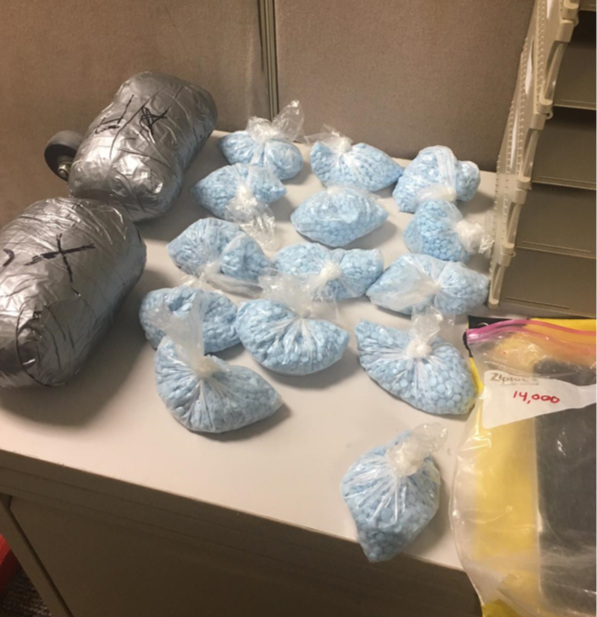
New York City police and DEA agents have announced the seizure of 20,000 counterfeit oxycodone pills made with illicit fentanyl. The pills, which have an estimated street value of $600,000, are blue in color and stamped “M” on one side and “30” on the other, making them virtually indistinguishable from prescription oxycodone.

The fentanyl pills are believed to have originated in Mexico. Known on the street as “Mexican Oxy,” the highly potent counterfeit pills are often cheaper and easier to obtain than pharmaceutical-grade oxycodone. Black market 30 mg oxycodone pills sell on the street for $9 to $30 each and are surfacing around the country.

“If you take prescription pills that did not come directly from a pharmacy, you are risking your life,” said New York City Special Narcotics Prosecutor Bridget Brennan. “Throughout New York City, we have seen a spate of cases involving tens of thousands of potentially lethal fentanyl pills masquerading as oxycodone.

“Just because black market pills have the same color and design as legitimate pills, it does not mean they are safe. The ingredients and potency are all unknown, and minuscule amounts of fentanyl can cause overdose or death. Consuming a counterfeit pill is akin to playing Russian Roulette.”

Overdose deaths in New York City are at record-high levels and fentanyl is involved in over half of them. Fentanyl is a synthetic opioid 50 to 100 times more potent than morphine. A customer accustomed to taking oxycodone would not necessarily have the tolerance to ingest illicit fentanyl without suffering an overdose.

DEA PHOTO

Fentanyl powder is typically produced by illicit labs in China and then smuggled into the U.S. through Mexico. The powder is transformed into tablets by pill presses purchased online and then sold by drug traffickers. Four arrests in New York were made in connection with the latest seizure.

“These arrests highlight a growing trend in illicit street drugs which increases the risk of drug overdose,” said DEA Special Agent in Charge Ray Donovan. “Traffickers are mass producing pseudo-pharmaceutical pills made of heroin, fentanyl and other illicit drugs in makeshift laboratories throughout New York City. These pills attract users because they are more convenient and less conspicuous; but users should beware because they are unregulated and lethal.”

Fentanyl Seizures at Mexican Border

Mexican Oxy is also blamed for a rash of overdoses in Arizona, where fentanyl deaths have tripled in recent years.

“It’s the worst I’ve seen in 30 years, this toll that it’s taken on families,” Doug Coleman, DEA Special Agent in Charge of Arizona told the Associated Press. “The crack (cocaine) crisis was not as bad.”  

Last month, the U.S. Border Patrol announced its biggest fentanyl seizure ever — over 250 pounds were found in a truckload of cucumbers at a border crossing in Nogales, Arizona.

Most of the fentanyl was in powder form and over two pounds were made up of pills. Together, they had the potential to kill millions of people.  

Just because black market pills have the same color and design as legitimate pills, it does not mean they are safe.
— Bridget Brennan, NYC Narcotics Prosecutor

Most of the fentanyl seized by law enforcement is found hidden inside vehicles at official border crossings around Nogales and San Diego, according to the AP. Smaller shipments of fentanyl are sent directly to the U.S. from China through the mail. The Postal Service’s Inspector General recently reported that over 90 percent of illegal online pharmacies use the mail to ship illicit drugs.

The Postal Service is prohibited from opening packages without a search warrant and is obligated to accept inbound international mail. This makes it more difficult for postal inspectors to identify and track packages suspected of containing illicit drugs. By comparison, private carriers are able to open and inspect packages and can track shipments from beginning to end.

The Inspector General recommended that Congress pass legislation that would give postal inspectors authorization to open and inspect domestic packages suspected of carrying illicit drugs.

Study Finds Vagus Nerve Stimulation Delays Pain Signals

By Pat Anson, PNN Editor

Neuromodulation devices that stimulate a key nerve in the neck – the vagus nerve --- have shown potential in treating a variety of chronic pain conditions, including migraines and autoimmune diseases. A new study helps us understand how the devices work.

Researchers studying post-traumatic stress disorder (PTSD) found that vagus nerve stimulation appears to dampen and delay how the brain responds to pain signals.

"It's thought that people with certain differences in how their bodies -- their autonomic and sympathetic nervous systems -- process pain may be more susceptible to PTSD," said Imanuel Lerman, MD, a pain management specialist and associate professor at the University of California San Diego School of Medicine. “And so we wanted to know if we might be able to re-write this 'misfiring' as a means to manage pain, especially for people with PTSD."

UC SAN DIEGO HEALTH

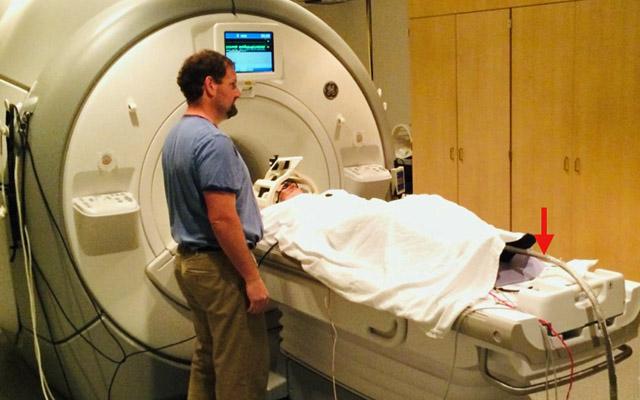
Lerman and his colleagues at Veterans Affairs San Diego Healthcare System used functional magnetic resonance imaging (fMRI) to get a look at the brains of 30 healthy volunteers after a painful heat stimulus was applied to their legs.

Half were treated with vagus nerve stimulation (VNS) for two minutes -- via electrodes placed on the neck – before the heat stimulus. The other half received a mock stimulation.

Researchers found that VNS delayed the response to heat stimulus in several areas of the brain known to be important for sensory and emotional pain processing. These pain-related brain regions were activated ten seconds later than participants who received sham stimulation. Volunteers who received VNS also sweated less in response to the heat.

“Not everyone is the same -- some people may need more vagus nerve stimulation than others to achieve the same outcomes and the necessary frequencies might change over time -- so we'll need to personalize this approach," said Lerman, who reported his findings in the journal PLOS ONE.  "But we are hopeful and looking forward to the next steps in moving this approach toward the clinic."

The next step for researchers is to conduct a clinical study of VNS on military veterans in the San Diego area. They want to determine if at-home vagus nerve stimulation can reduce emotional pain and neural inflammation associated with PTSD. People with PTSD often have intrusive memories, negative thoughts, anxiety and chronic pain. It is usually treated with psychotherapy, anti-depressants and anti-anxiety medications.

The Food and Drug Administration has approved VNS for the treatment of pain caused by cluster headache and migraine. A handheld device – called gammaCore –  is currently available by prescription for $600 to treat those conditions. 

The Feinstein Institute for Medical Research recently reported that VNS significantly reduced pain and fatigue associated with lupus, an autoimmune disease that damages joints, skin and internal organs. In a small pilot study, lupus patients who were treated with VNS for five minutes daily had a significant decrease in pain and fatigue after just five days.

An implanted vagus nerve stimulator is also being tested for the treatment of rheumatoid arthritis.

FDA Warns Drug Distributor

By Pat Anson, PNN Editor

The U.S. Food and Drug Administration has sent a warning letter to a wholesale drug distributor rebuking the company for its handling of several tampering cases involving oxycodone and other medications.

The letter to the CEO of the McKesson Corporation involves incidents in 2016 when pharmacies notified the company about the tampering and theft of medications it had supplied them with.    

In one such case, a Rite Aid pharmacy in Michigan found that the seal to a bottle labeled as containing 100 tablets of oxycodone had been broken. Inside the bottle a pharmacist found 15 tablets of Aleve, a non-steroidal anti-inflammatory pain reliever.  Two other Rite Aid pharmacies also reported to the company that oxycodone bottles had been tampered with. McKesson investigated the reports and determined the tampering and thefts likely occurred while the bottles were in its possession.  

Similar tampering incidents involved drugs used to treat bipolar disorder, high blood pressure and HIV.

According to the FDA, McKesson did little to identify and quarantine other products in its distribution system that also may have been tampered with and failed to warn other pharmacies that illegitimate products were in the supply chain.

"This is simply unacceptable. A distributor’s failure to have systems in place to investigate and quarantine suspect and illegitimate products within their control is a violation of the law," said FDA commissioner Scott Gottlieb, MD, in a statement.

"But this is even more concerning given that we’re in the midst of a widespread opioid crisis. Opioids that leave the legitimate supply chain could end up being sold illegally, or a patient who was appropriately prescribed these drugs to treat pain may not get the treatment they need or may unknowingly take a medication that’s not meant for them."

The FDA did not say why it waited so long to send the warning letter or notify the public about the 2016 tampering incidents. McKesson is the first company to receive a warning letter under the Drug Supply Chain Security Act (DSCSA), which was enacted by Congress in 2013.

McKesson is one of the largest wholesale drug distributors in the country. It is being sued by dozens of states, cities and counties for its role in the opioid crisis. In 2017, McKesson was fined $150 million for failing to report suspicious orders for oxycodone, hydrocodone and other controlled substances. In 2008, the company agreed to pay $13.25 million in penalties for similar violations.

Guideline Paranoia

By Carol Levy, PNN Columnist

I recently posted an article to an online chronic pain support group about the CDC’s opioid prescribing guideline.

“For treating acute pain, the guideline recommends a quantity no greater than what is needed for the expected duration of pain severe enough to require opioids, specifying that three days or less will often be sufficient and more than seven days will rarely be needed,” the guideline states.

It makes sense to me. And I assumed that would be the response my post would get. The recommendation is only for treating acute pain and acute pain shouldn’t need chronic, long term opioid treatment.

Instead, the replies were quick, angry and knee jerk:

“How dare they decide what and how many we need? This will hurt chronic pain patients.”

“They always come after us. These may be for acute pain patients, but you just know more draconian guidelines are just around the corner for chronic pain patients.”

The CDC guideline does not say, “And no one, even if their acute pain continues longer than 3 or 7 days, will be able to get the pain meds they need.” But that was how it was interpreted.

And then the people replying went one step further: “Soon they will be writing guidelines that even those in chronic pain can only have opioids for a specified period of time and a specific dosage, and not one grain more or one day longer.”

I see this common response and reaction as a major issue. When any new guideline is proposed (and people forget these are guidelines, not absolutes), it is a major catastrophe: “They are coming after us.”

Too often we act in a way that appears akin to addictive behavior. We have to have our opioid medications. And any restriction, even when it is not related to chronic pain, is one restriction too many: “They are going to take away my drugs. Then what will I do?”

We seem to have lost the concept of consideration. No time is taken to think through the new suggestions. Instead it is an immediate jump to: “This will hurt me. I won't be able to get the meds I need.”

For many of us, opioid medication is all that is left or the only option. The idea that someone, especially the government, may rip them from us is truly terrifying.

But I wonder. Maybe if we did not take any and all new guidelines as a frontal attack on us, maybe we would not be seen and referenced so often as a major component and cause of the “opioid epidemic.”

Carol Jay Levy has lived with trigeminal neuralgia, a chronic facial pain disorder, for over 30 years. She is the author of “A Pained Life, A Chronic Pain Journey.”  Carol is the moderator of the Facebook support group “Women in Pain Awareness.” Her blog “The Pained Life” can be found here.

The information in this column should not be considered as professional medical advice, diagnosis or treatment. It is for informational purposes only and represent the author’s opinions alone. It does not inherently express or reflect the views, opinions and/or positions of Pain News Network.
Ambroxol: A Potential New Treatment for Chronic Pain

By A Rahman Ford, PNN Columnist

Researchers say a drug long used in cough syrup and cold medicines shows potential for treating some types of neuropathic pain.

A small study recently published in the journal Headache found that topical administration of ambroxol in a cream could significantly decrease pain in patients with trigeminal neuralgia, a chronic facial condition that can make even routine tasks such as brushing one’s teeth excruciatingly painful. 

In their review of the medical records of five trigeminal neuralgia patients, German researchers reported that all five patients experienced pain reduction with ambroxol 20% cream being applied within 30 minutes of a pain flare, with pain relief lasting from 4 to 6 hours.  In one case, pain was eliminated completely in one week.  

The results were similar to those of previous German studies and were so significant that researchers recommended that ambroxol “should be investigated further as a matter of urgency.”

Similarly, a recent study in the journal Pain Management found that application of topical ambroxol reduced spontaneous pain in several patients with complex regional pain syndrome (CRPS), a little understood nerve condition that causes chronic pain after a significant injury or surgery.  Notably, ambroxol therapy improved several other neuropathy-related conditions in CRPS patients, including edema, allodynia, hyperalgesia, skin reddening, motor dysfunction and skin temperature.

An Old Drug with a New Purpose

With a pharmacological history that can be traced back to Indian ayurvedic medicine, ambroxol was initially approved in 1978 as a medication to break down mucus and make it easier to eliminate by coughing.  It is generally administered in tablet or syrup form. 

Ambroxol is also used to treat a sore throat associated with pharyngitis, thus its potential role as a potent local anesthetic.  The drug’s anesthetic properties stem from its ability to block sodium and calcium channels that transmit pain signals.

Although the idea that ambroxol can treat a sore throat is widely accepted, its application to other forms of pain is more recent.  

Previous studies using animal models of neuropathic pain have been promising.  In a 2005 study, researchers effectively reduced – and in some cases eliminated – chronic neuropathic and inflammatory pain in rats. Indian researchers also found ambroxol effective in treating neuropathic pain in rats, attributing its success to its antioxidative and anti-inflammatory properties.  Unfortunately, human studies are few at this point.

Ambroxol and Fibromyalgia

A 2017 Clinical Rheumatology study showed that ambroxol can play a key role in treating chronic pain associated with fibromyalgia.  As reported by Fibromyalgia News Today, researchers from Mexico added ambroxol to the treatment regimens of 25 fibromyalgia patients, three times a day for one month.  At the end of the study, pain scores decreased significantly and there was also noticeable improvement in sleep disturbances, stiffness and autonomic nervous system dysfunction.  No major adverse events were reported. 

Another 2017 study supported these findings, with the authors concluding that “fibromyalgia treatment with ambroxol should be systematically investigated” because the drug “is the only treatment option used thus far that has the potential to address not just individual but all of the aforementioned aspects of pain.”

Although data on its effectiveness in humans are limited, ambroxol shows great potential in treating painful conditions for which there are currently few safe and effective options.  It is particularly attractive because it has few significant side effects, is not addictive and can be administered topically in some instances.

A. Rahman Ford, PhD, is a lawyer and research professional. He is a graduate of Rutgers University and the Howard University School of Law, where he served as Editor-in-Chief of the Howard Law Journal. He earned his PhD at the University of Pennsylvania.

Rahman lives with chronic inflammation in his digestive tract and is unable to eat solid food.

The information in this column should not be considered as professional medical advice, diagnosis or treatment. It is for informational purposes only and represent the author’s opinions alone. It does not inherently express or reflect the views, opinions and/or positions of Pain News Network.

‘Cannabis Tourism’ Linked to More Fatal Accidents

By Pat Anson, PNN Editor

Has marijuana legalization made driving more dangerous?  There have been conflicting claims over the years that states where cannabis is legal have more car crashes. And one recent study found that over half of medical cannabis users drive while impaired.

A new study adds a little more clarity to the issue.

Researchers at Monash University in Australia looked at traffic fatalities in three U.S. states where recreational cannabis was legalized (Colorado, Washington and Oregon), and in eight neighboring states and British Columbia.

They found there was an average of one additional traffic fatality for every million residents. That may not sound like much, but when you consider there were 27 million people in the affected areas, it adds up to 170 additional deaths in the first six months after legalization.

Many of the additional deaths were attributed to “cannabis tourism” in which people in neighboring states and provinces purchased recreational cannabis in legalized states and then drove home while under the influence.

"The results suggest that legalizing the sale of cannabis for recreational use can lead to a temporary increase in traffic fatalities in legalizing states. This spills over into neighboring jurisdictions through cross-border sales, trafficking, or cannabis tourists driving back to their state of residence while impaired,” says lead author Tyler Lane, PhD, a postdoctoral research Fellow at Monash.

"Our findings suggest that policymakers should consult with neighboring jurisdictions when liberalizing cannabis policy to mitigate any deleterious effects."

Because the increase in fatalities was temporary, Lane believes it could be due to an initial “celebratory response to legalization” that contributes to cannabis tourism. His study was published in the journal Addiction.

Fatalities Drop in Medical Cannabis States

While fatalities rose in states with recreational cannabis, Lane notes that previous research has found a decrease in traffic fatalities in states that legalized medical marijuana. That may be because patients may be substituting cannabis for alcohol and other controlled substances used to relieve symptoms.

“There seem to be differences between medicinal and recreational user consumption patterns. Medicinal users have a tendency to substitute, but recreational users are more likely to treat alcohol and cannabis as complements and use them together,” Lane said in an email to PNN. 

“Because marijuana on its own is less impairing than alcohol, and combined used is much more impairing than either in isolation, it suggests that when people substitute alcohol for cannabis (in the medicinal use context), they will still be impaired, but to a much lower degree than if they were still using alcohol.” 

This “harm reduction role” of medical cannabis was noted in a 2016 Canadian study that found patients reduced their use of alcohol, illicit drugs and prescription drugs when cannabis was taken for medical reasons. 

Medical marijuana is currently legal in 33 states and Washington DC, and ten states allow its recreational use.

Are Most Retired NFL Players Really Addicts?

By Lynn Webster, MD, PNN Columnist

Many of us watched the Super Bowl on Sunday. It was a great defensive game, which means there was a lot of hard-hitting contact. Physical trauma can bring about long-term consequences and that is the subject of a recent New York Times column, "For NFL Retirees, Opioids Bring More Pain" by Ken Belson.

Belson suggests that many retired NFL players become addicted to opioid medication. I don’t know how many former players become addicted, but the summation of players he describes as addicted doesn’t quite add up.

The column cites a recent study published in the Clinical Journal of Sport Medicine that found about 26 percent of retired football players used opioid medication during the past 30 days. Belson suggests that percentage is excessive.

Of course, the players were not addicted just because they used an opioid. Moreover, 26 percent does not seem to be an unreasonable number, given that this is a population with a history of tremendous physical trauma. In fact, it seems like a surprisingly low number given that most former football players experienced enormous physical trauma for years.

Whatever the actual data may be, we can probably attribute the use or misuse of opioids to the fact that these retired players were trying to mitigate severe pain.  

What is Misuse?

The accepted definition of opioid "misuse" is taking an opioid contrary to how it was prescribed, even if it is taken to treat pain. For example, let's say a person is told they can use one hydrocodone three times a day. If that person uses one pill six times a day so they can function (and not to get high), that is considered misusing. However, that is not a sign of addiction. It only reflects the person's desire to escape pain and the therapeutic inadequacy of the prescribed medication. 

Misuse of opioids in the general population is relatively rare, according to a large new study published in the journal Pharmacoepidemiology & Drug Safety. Over 31,000 adults were surveyed about their opioid use, and only 4.4% admitted taking a larger dose or a dose more frequently than prescribed.  

The figure below helps explain the relationships of misuse, abuse and addiction. Some retired football players may misuse their medication, but few will abuse them and even fewer will become addicted. All people with addiction abuse their medication. But people who misuse their medication may not be abusing or addicted to it.  

In his column, Belson cites a 2011 survey by researchers at the Washington University School of Medicine that found over half of former NFL players used opioids during their playing careers and 71 percent misused them.

The same study found that many of these retired players who misused opioids were heavy drinkers. But in his column, Belson reported that "players who abused opioids” were likely to be heavy drinkers.  

Belson uses the words “misuse” and “abuse” interchangeably, as if they have the same meaning. They do not. If Belson means that retired players took opioids in excess of what their doctors prescribed due to uncontrolled pain, that would not be abuse. It would be misuse. If the players were using opioids to get high, that would be abuse. 

Belson mentions one retired player using the same amount of pain medicine as a stage 4 cancer patient and suggests that is an excessive amount. However, the player's need for that amount of opioids should not surprise us. Cancer pain is not more painful than non-cancer pain. People with painful diseases and physical injuries may have pain just as debilitating as a patient dying from cancer.

It is unfortunate, but not shocking, that a retired football player would have as much pain as someone dying of cancer. When someone who does not have cancer uses excessive medication to relieve pain, we are more likely to label that as "abuse." We show more compassion to patients with cancer pain than we do toward anyone else who requires treatment for chronic pain.  

Why We Need Clarity About Our Terms 

Belson writes, "Now, a growing number (of players) are saying the easy access to pills turned them into addicts." That is another statement that gravely concerns me. It is misleading and consistent with the common misunderstanding of what causes addiction or even what addiction is.  

Becoming dependent on opioids, becoming tolerant to opioids, requiring more opioids over time to achieve the same level of pain relief, and experiencing withdrawal if the opioids are suddenly stopped are not necessarily signs of addiction, any more than they would be if the same consequences resulted from taking a blood pressure medication or a sleep aid.  

People frequently write and talk about misuse, abuse and addiction, but many of them don't know what the terms mean.  This has troubling implications for the pain and addiction communities. Mislabeling and misdiagnosing people with addiction leads to harmful policies that adversely affect treatment. It even has legal implications that prevent people in pain or with addiction from accessing appropriate clinical care.  

Severe chronic pain and addiction can devastate lives. But we need to know the differences between misuse of, abuse of, and addiction to medications for the appropriate policies to be implemented. 

Lynn R. Webster, MD, is a vice president of scientific affairs for PRA Health Sciences and consults with the pharmaceutical industry. He is a former president of the American Academy of Pain Medicine and the author of “The Painful Truth: What Chronic Pain Is Really Like and Why It Matters to Each of Us.”

You can find Lynn on Twitter: @LynnRWebsterMD. 

The information in this column should not be considered as professional medical advice, diagnosis or treatment. It is for informational purposes only and represents the author’s opinions alone. It does not inherently express or reflect the views, opinions and/or positions of Pain News Network.

Heart Transplants Surge as Overdoses Increase

By Pat Anson, PNN Editor

One of the more ghoulish and yet beneficial aspects of the overdose crisis is that it has led to a surge in organ transplants. In 2000, only about 1 percent of organ donors were overdose victims. By 2017, when over 70,000 Americans died from drug overdoses, over 13 percent of organ donors were overdose victims.

A new study by researchers at Brigham and Women’s Hospital has documented how the number of hearts available for transplant has increased dramatically, particularly in states like Pennsylvania that have been hard hit by the overdose crisis.  

"In the U.S., the drug crisis is clearly not uniform, and neither is the rate of recovered hearts from drug-intoxication-related deaths," said lead author Mandeep Mehra, MD, the medical director of Brigham's Heart and Vascular Center.

Mehra and his colleagues analyzed CDC data on overdose deaths and from the Organ Procurement and Transplantation Network, and reported their findings in The New England Journal of Medicine.

They found major increases in drug-related deaths and organ harvesting in Pennsylvania, New York, Ohio and other Northeast states, and in Florida and Texas. Overall, the team estimated that 6.24 hearts were recovered for every 1,000 lives lost due to drug intoxication.

NEW ENGLAND JOURNAL OF MEDICINE

Among the 37,232 donors whose hearts were transplanted from 1999 through 2017, the percentage of those who died from overdoses rose from 1.5% to 17.6 percent. And as the number of hearts available for transplant grew, the waiting list for donated hearts began shrinking in 2016. According to the United Network for Organ Sharing, there are currently 45 people in the U.S. waiting for a heart transplant.

"This is a very important outcome indicating that people are now adopting organs from drug-intoxication-related deaths as a viable source for lifesaving donor organs," said Mehra. "Although we support organ donation recovery from this source, those of us in the transplant community also strongly support effective efforts to combat the drug overdose crisis. We must pursue ways to target the crisis while simultaneously looking for new ways to increase the availability of viable donor organs."

There has long been a stigma against using donated organs from overdose victims because the organs may be damaged due to reduced oxygen supply and because drug addicts are more likely to be infected with HIV, hepatitis and other communicable diseases. But those risks have been minimized with modern testing.

The United Network for Organ Sharing requires organ recipients to be made aware of the circumstances of higher risk donations, so they can decide whether or not to accept it. There are over 113,000 Americans currently waiting for an organ donation, including many who have been on the waiting list for years.

FDA: Pain Patients Dependent On Opioids Are Not Addicted

By Pat Anson, PNN Editor

The U.S. Food and Drug Administration has released new guidance to drug makers to streamline the development of buprenorphine products to treat opioid addiction. Commonly known by the brand name Suboxone, buprenorphine has long dominated the market for addiction treatment.

Of importance to pain patients is a statement about the guideline by FDA commissioner Scott Gottlieb, MD, that seeks to clarify the difference between opioid addiction and patients who need opioids for pain relief.

Gootlieb said there is still stigma and misunderstanding – even in the medical and addiction fields – about the difference between opioid addiction and dependence.

“Because of the biology of the human body, everyone who uses a meaningful dose of opioids for a modest length of time develops a physical dependence. This means that there are withdrawal symptoms after the use stops,” Gottlieb said. “A physical dependence to an opioid drug is very different than being addicted to such a medication.

“Addiction requires the continued use of opioids despite harmful consequences on someone’s life. Addiction involves a psychological preoccupation to obtain and use opioids above and beyond a physical dependence. But someone who is physically dependent on opioids as a result of the treatment of pain but who is not craving the drugs is not addicted.”

Someone who is physically dependent on opioids as a result of the treatment of pain but who is not craving the drugs is not addicted.
— Dr. Scott Gottlieb, FDA Commissioner

In recent years new and generic formulations of buprenorphine have been released in tablets, sublingual films, injections and implants, and the FDA is trying to promote the development of more of them.

The guidance released by the agency basically tells drug makers they may be able to submit new drug applications for buprenorphine products without conducting the safety and efficacy trials that are usually required for other medications.

“The guidance we’re finalizing today is one of the many steps we’re taking to help advance the development of new treatments for opioid use disorder, and promote novel formulations or delivery mechanisms of existing drugs to better tailor available medicines to individuals’ needs,” Gottlieb said. “Our goal is to advance the development of new and better ways of treating opioid use disorder to help more Americans access successful treatments.”

There are currently only three drugs approved by the FDA for medication-assisted treatment (MAT) – buprenorphine, methadone and naltrexone. Physicians wishing to prescribe buprenorphine to patients must have a special certification from the DEA and are limited in the number of patients they can treat.

Buprenorphine is an opioid that is also used to treat pain. When combined with naloxone, buprenorphine reduces cravings for opioids and lowers the risk of abuse.

Some addicts have discovered that buprenorphine can also be used to get high or to ease their withdrawal pain from heroin and other opioids. Buprenorphine is such a popular street drug that the National Forensic Laboratory Information System ranked buprenorphine as the third most diverted opioid medication in the U.S. in 2014. 

Federal Prosecutors Warn Top Opioid Prescribers in Wisconsin

By Pat Anson, PNN Editor

Wisconsin’s two U.S. Attorneys have sent letters to 180 physicians, physician assistants and nurse practitioners in the state warning them that their opioid prescribing practices could result in prosecution.

None of the prescribers have been charged with a crime and it’s not clear if any are under investigation or have been linked to overdoses. Copies of the letters were not released and the recipients were not identified.

According to a news release, the letters warn doctors that they are prescribing opioids at “relatively high levels” that could lead to addiction and that “prescribing opioids without a legitimate medical purpose could subject them to enforcement action, including criminal prosecution.”

“We know that for many, addiction began with opioids prescribed by a medical professional,” said Matthew Krueger, U.S. Attorney for the Eastern District of Wisconsin. “By sending these letters, we are asking medical professionals to join the fight against addiction and ensure they prescribe no more opioids than are necessary.”

“Opioid addiction has touched the lives of far too many families in our state,” said Scott Blader, U.S. Attorney for the Western District of Wisconsin. “Medical professionals play a pivotal role in stemming the flow of legal opioids into unlawful channels.”

According to a spokeswoman, the 180 recipients of the warning letters were selected based on a review of Medicare prescription drug claims, which found that they prescribed opioids above the CDC’s highest recommended dose of 90 MMEs (morphine milligram equivalent). 

“They were identified through Medicare data for two years,” Myra Longfield, a public information officer in the Western District of Wisconsin, told PNN. “And from that data, practitioners were identified where they prescribed on average 90 MMEs (or more) per patient per day. That’s the threshold where the CDC and the Wisconsin Medical Examining Board say there is no real evidence to suggest that above that amount has any better effect on chronic pain.” 

The 2016 CDC opioid guideline is voluntary and only intended for primary care physicians. Longfield said warning letters were not sent to pain management physicians, oncologists or those working in hospice or palliative care, where higher opioid doses may be needed to control pain. 

Chilling Effect on Prescribers

Federal prosecutors in Georgia and Massachusetts have sent similar warning letters to high prescribers. While the intent is to urge caution, critics say the letters are likely to intimidate other doctors.

“This will have a totally chilling effect. The abuse of statistics is pathetic. It would only be an ignorant person that would take the top prescribers and say that they are endangering lives,” said Mark Ibsen, MD, a Montana doctor who nearly lost his medical license over allegations that he overprescribed opioids.  

“After they lop off the top prescribing doctors, guess what that leaves? More top prescribing doctors. Until there are none. Soon we will be seeing tattoos on physicians, similar to POWs.”

“This is an egregious overreach and will lead to more deaths not fewer,” said Lynn Webster, MD, a pain management expert and past president of the American Academy of Pain Medicine. “Using the CDC guidelines as a goal post is not what even the CDC recommended. Most opioid addictions do not begin with a legal prescription of opioids. It usually starts long before exposure to a prescription opioid. The major problem is with illegal opioids smuggled in from Mexico and China. 

“I am worried for tens of thousands of patients in Wisconsin. Many of them will be at risk of suicide or seek illegal drugs, where the real harm exists. Sad. Very Sad.”

Last year, the American Medical Association adopted resolutions opposing the “misapplication” and “inappropriate use” of the CDC guideline. The resolutions by the AMA House of Delegates warn that “no entity should use MME thresholds as anything more than guidance” and that physicians should not be disciplined or prosecuted for prescribing opioids at levels above those recommended by the CDC. The AMA said some patients “can benefit from taking opioids at greater dosages” and “such care may be medically necessary and appropriate.” 

Most opioid overdoses in the United States are now linked to illicit fentanyl and heroin, not prescription opioids. In Wisconsin, 916 people died of opioid overdoses in 2017. Most of those deaths involved either heroin or fentanyl.

Compounded Pain Creams Ineffective for Chronic Pain

By Pat Anson, PNN Editor

Compounded topical pain creams work no better than placebo creams and should not be used to treat chronic pain, according to a new study published in the Annals of Internal Medicine.

Researchers at the Walter Reed National Military Medical Center enrolled nearly 400 people with chronic neuropathic, joint or muscle pain in the study. Some received pain creams specially compounded to treat their type of pain, while others received a placebo cream.

The compounded pain creams included a blend of FDA-approved drugs such as ketamine, lidocaine and gabapentin, or a combination of muscle relaxants and non-steroidal anti-inflammatory drugs (NSAIDs). The creams were applied to the affected areas three times a day.

One month after treatment began, researchers found no significant differences in the pain scores of patients who used the real pain creams and those who used the placebo ones.

“We found that specially formulated compounded pain creams provided little benefit in our study participants,” said lead author Steven Cohen, MD, Director of Pain Research at Walter Reed.

“Overall, the response rate was lower than that afforded by stand-alone creams shown to be effective for specific conditions, such as NSAIDs and lidocaine. Considering the increased costs of using a non–FDA-approved and regulated compounded cream rather than a single agent, we caution against routine use of compounded creams for chronic pain.”

While some of the medications in pain creams may be effective when taken orally or intravenously, Cohen and his colleagues say they are not absorbed through the skin in sufficient doses to be effective. Another drawback is their cost, which can reach thousands of dollars.

A recent report from the Office of Inspector General for the Department of Health and Human Services found that over 500 pharmacies that billed Medicare for compounded topical creams had suspiciously high costs. One pharmacy in Florida billed Medicare for $1.8 million in pain creams in 2016.

Medicare spending for compounded creams, gels and ointments has skyrocketed, rising from $13 million in 2010 to $323 million in 2016. Price hikes and a growing number of prescriptions for pain creams drove the increase, the Inspector General’s report found.

Medicare paid an average of $751 per tube of compounded lidocaine and $1,506 for a tube of the NSAID diclofenac. Non-compounded tubes of those same drugs averaged $445 and $128, respectively.

Last year the FDA said it would inspect compounding facilities to assess whether drugs that are essentially copies of FDA-approved medications could be sold commercially at less cost.

Diarrhea Drug Involved in Growing Number of Overdoses

By Pat Anson, PNN Editor

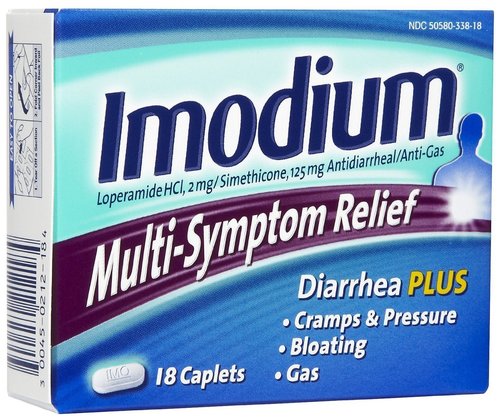
A little over a year ago, the Food and Drug Administration asked Johnson & Johnson and other drug makers to limit the number of anti-diarrhea pills they sell. FDA commissioner Scott Gottlieb, MD, said the “unprecedented and novel action” was needed because Imodium and other over-the-counter formulations of loperamide were being abused by opioid addicts.  

A few of us guffawed at the news as another example of government regulation gone amuck.

But it turns out there is cause for concern.

Researchers at Rutgers University have documented that overdoses of loperamide have been steadily increasing in number and severity, and have even resulted in some deaths.

Their study, published in the journal Clinical Toxicology, found a growing number of people addicted to opioids who are using loperamide to prevent or self-treat withdrawal symptoms. Some are even taking massive doses to get a high similar to heroin, fentanyl or oxycodone.

The New Jersey Poison Control Center has reported several fatalities or near-fatalities from loperamide in the past 12 months.

“When used appropriately, loperamide is a safe and effective treatment for diarrhea – but when misused in large doses, it is more toxic to the heart than other opioids which are classified under federal policy as controlled dangerous substances,” said senior author Diane Calello, MD, executive director of New Jersey Poison Control at Rutgers New Jersey Medical School.

“Overdose deaths occur not because patients stop breathing, as with other opioids, but due to irregular heartbeat and cardiac arrest.”

The researchers reviewed toxicology cases in a national poison control center database from 2011 to 2016, and found a 91 percent increase in loperamide overdoses during that time period.  In 2015 alone, there were 916 cases and two deaths.

Patients who misused loperamide were predominantly young Caucasian men and women. The majority used extremely high doses of loperamide, the equivalent of 50 to 100 two-milligram pills per day.

“Possible ways of restricting loperamide misuse include limiting the daily or monthly amount an individual could purchase, requiring retailers to keep personal information about customers, requiring photo identification for purchase and placing medication behind the counter,” Calello said. "Most importantly, consumers need to understand the very real danger of taking this medication in excessive doses."

Misuse of loperamide is concerning because it is readily available over-the-counter, undetectable in routine drug tests, and can be bought in large quantities online or in retail stores.

In 2017, the FDA added a warning label to loperamide products cautioning consumers not to ingest high doses. Some drug makers are now selling the anti-diarrhea pills in smaller packages and in blister packs that are harder to open.

How Sackler Family Built an OxyContin Fortune

By Christine Willmsen and Martha Bebinger, WBUR

The first nine months of 2013 started off as a banner year for the Sackler family, owners of the pharmaceutical company that produces OxyContin, the addictive opioid pain medication. Purdue Pharma paid the family $400 million from its profits during that time, claims a lawsuit filed by the Massachusetts attorney general.

However, when profits dropped in the fourth quarter, the family allegedly supported the company’s intense push to increase sales representatives’ visits to doctors and other prescribers.

Purdue had hired a consulting firm to help reps target “high-prescribing” doctors, including several in Massachusetts. One physician in a town south of Boston wrote an additional 167 prescriptions for OxyContin after sales representatives increased their visits, according to the latest version of the lawsuit filed in Suffolk County Superior Court in Boston.

The lawsuit claims Purdue paid members of the Sackler family more than $4 billion between 2008 and 2016. Eight members of the family who served on the board or as executives as well as several directors and officers with Purdue are named in the lawsuit.

This is the first lawsuit among hundreds of others that were previously filed across the country to charge the Sacklers with personally profiting from the harm and death of people taking the company’s opioids.

WBUR along with several other media sued Purdue Pharma to force the release of previously redacted information that was filed in the Massachusetts Superior Court case. When a judge ordered the records to be released with few, if any, redactions, Purdue filed two appeals and lost.

The complaint filed by Massachusetts Attorney General Maura Healey says that former Purdue Pharma CEO Richard Sackler allegedly suggested the family sell the company or, if they weren’t able to find a buyer, to milk the drugmaker’s profits and “distribute more free cash flow” to themselves.

That was in 2008, one year after Purdue pleaded guilty to a felony and agreed to stop misrepresenting the addictive potential of its highly profitable painkiller, OxyContin.

At a board meeting in June 2008, the complaint says, the Sacklers voted to pay themselves $250 million. Another payment in September totaled $199 million.

The company continued to receive complaints about OxyContin similar to those that led to the 2007 guilty plea, according to unredacted documents filed in the case.

While the company settled lawsuits in 2009 totaling $2.7 million brought by family members of those who had been harmed by OxyContin throughout the country, the company amped up its marketing of the drug to physicians by spending $121.6 million on sales reps for the coming year. The Sacklers paid themselves $335 million that year.

The lawsuit claims Sackler family members directed efforts to boost sales. An attorney for the family and other board directors is challenging the authority to make that claim in Massachusetts. A motion on jurisdiction in the case hasn’t been heard. That attorney hasn’t responded to a request for comment on the most recent allegations.

Purdue Pharma, in a statement, said the complaint filed by Healey is “part of a continuing effort to single out Purdue, blame it for the entire opioid crisis, and try the case in the court of public opinion rather than the justice system.”

Purdue went on to charge Healey with attempting to “vilify” Purdue in a complaint “riddled with demonstrably inaccurate allegations.” Purdue said it has more than 65 initiatives aimed at reducing the misuse of prescription opioids. The company says Healey fails to acknowledge that most opioid overdose deaths are currently the result of fentanyl.

Purdue fought the release of many sections of the 274-page complaint. Attorneys for the company said at a hearing on Jan. 25 that they had agreed to release much more information in Massachusetts than has been cleared by a judge overseeing hundreds of cases consolidated in Ohio. Purdue filed both state and federal appeals this week to block release of the compensation figures and other information about Purdue’s plan to expand into drugs to treat opioid addiction.

The attorney general’s complaint says that in a ploy to distance themselves from the emerging statistics and studies that showed OxyContin’s addictive characteristics, the Sacklers approved public marketing plans that labeled people hurt by opioids as “junkies” and “criminals.”

Richard Sackler allegedly wrote that Purdue should “hammer” them in every way possible.

Addiction Treatment ‘Attractive Market’

While Purdue Pharma publicly denied its opioids were addictive, internally company officials were acknowledging it and devising a plan to profit off them even more, the complaint states.

Kathe Sackler, a board member, pitched “Project Tango,” a secret plan to grow Purdue beyond providing painkillers by also providing a drug, Suboxone, to treat those addicted.

“Addictive opioids and opioid addiction are ‘naturally linked,'” she allegedly wrote in September 2014.

According to the lawsuit, Purdue staff wrote: “It is an attractive market. Large unmet need for vulnerable, underserved and stigmatized patient population suffering from substance abuse, dependence and addiction.”

They predicted that 40-60 percent of the patients buying Suboxone for the first time would relapse and have to take it again, which meant more revenue.

Purdue never went through with it, but Attorney General Healey contends this and other internal documents show the family’s greed and disregard for the welfare of patients.

This story is part of a reporting partnership between WBUR, NPR and Kaiser Health News

Kaiser Health News (KHN) is a national health policy news service. It is an editorially independent program of the Henry J. Kaiser Family Foundation which is not affiliated with Kaiser Permanente.