I Would Not Be Alive Without Dr. Tennant

(Editor’s note: As PNN has reported, last week the DEA raided the home and offices of Dr. Forest Tennant, a prominent pain physician in California.  The DEA search warrant alleges that Dr. Tennant is part of a “drug trafficking organization” and prescribes excessive amounts of opioid pain medication. Dr. Tennant treats about 120 patients with intractable chronic pain, including many from out-of-state who can’t get effective treatment elsewhere. Kimberley Comfort is one of them.)  

By Kimberley Comfort, Guest Columnist

My Dad searched the country for help for me, as I have spent my life since September 2010 in 24/7 intractable pain. I ended up having two major surgeries trying to help. None helped with the severe intractable pain.

My Dad finally found Dr. Tennant and flew me on three plane seats, while he sat in another row, so I could remain laying down to reach California in January 2014.

Dr. Tennant saw me for over 12 hours in two hour sections in the morning and afternoon. He was essentially a charity. It was 12 hours of full one-on-one attention for $100. He did extensive examinations, blood tests, a genetic test, and trying out different very mild exercises once he diagnosed my adhesive arachnoiditis. He explained some treatments that might help if I ever had my spinal cord stimulator removed.

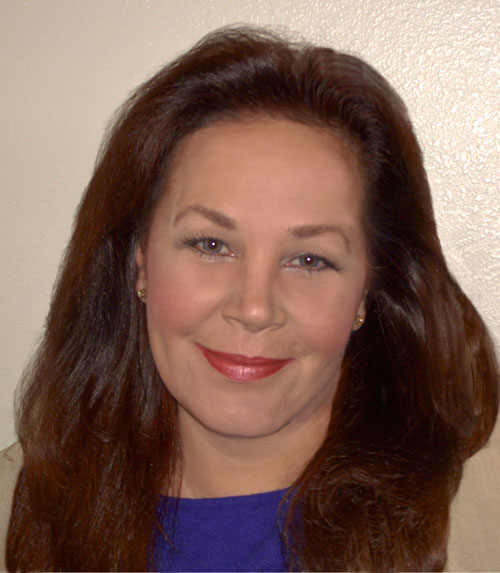
KIMBERLEY COMFORT

Dr. Tennant did prescribe me some additional opioid medication, while awaiting the results from genetic testing, along with vitamins, minerals, anti-inflammatory drugs, and a water reduction pill that mainly concentrated on the spine.

He agreed that I try a drug combination from a doctor in France that my Dad had researched and spoken with. Opioids were Dr. Tennant's last choice and high dose opioids were for those who metabolized the opioids much too fast.

Dr. Tennant thought I should return monthly, but we explained that the flight was just way too much for me to handle. So Dr. Tennant explained that palliative care was all that remained. He wrote letters to my pharmacy in Florida explaining my disease and why I was requiring such high amounts of opioids. He wrote my primary care provider and explained everything to him, offering to help in any way he could.

Dr. Tennant had recommended injectable Dilaudid, but my doctor would not give me that. Instead, it took him another 15 months and 4 different opioids to get me to a point where I was not in intractable pain 24/7.

I would not be alive today if it were not for Dr. Tennant. There is no way I could or would survive the pain I have without my high dosage of opioids. The genetic test showed I was a very fast metabolizer of opioids.

I have suffered with pain since I was a teenager.  Even back then, I was given opioids with Valium. My primary care provider still gives them to me today. If a doctor told me my liver was dying and they needed to cut back on my opioids, my answer would be the same now at age 52, as it was at 16.  I would much prefer a shortened life with manageable pain than to live a long torturous life with intractable pain. Frankly, I believe my heart would give out if I faced intractable pain again 24/7.

The opioid doses that the CDC recommends are far less then I have been on since the day adhesive arachnoiditis hit me like a Mack truck.

As for the money Dr. Tennant received from Insys Therapeutics, it is very little compared to some doctors. Doctors often get paid for speaking, get free lunches for the staff and themselves, and airfare to conferences where they will speak. Dr. Tennant is far from the only doctor to do this.

One can go online to ProPublica’s Dollars for Docs and see how much your internist, orthopedic surgeon, neurologist, etc. got from pharmaceutical and medical device companies. It shows that from 2013 to 2015, Dr. Tennant received $127,000.

Compare that to the highest paid doctor. Dr. Roger Jackson, an orthopedic spine surgeon, was paid $54,100,000 during that same time period.

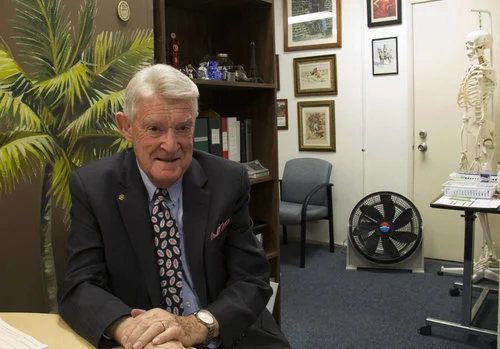
DR. FOREST TENNANT

Dr. Tennant basically works for nothing. You should see how hard and long he works, speaks to educate doctors, and does research to help those of us who would very likely be dead if not for him. To me, Dr. Tennant is a saint!

The DEA should be going to Dr. Tennant, not to raid his offices, but to learn from him. My understanding of U.S. medicine is that a doctor had to be a Doctor of Public Health (DPH), as Dr. Tennant is, to have prescribed pain medication back in the 1960’s. Dr. Tennant was sent the worst of the worst pain patients back then, when “learning to live with it” was impossible for severely injured patients. Pain patients from all walks of life were referred to him for help that the other doctors could not give.

Dr. Tennant is far more educated than most any doctor left today, except perhaps other DPH doctors who have kept up with the times. In my Dad’s research, we found no other doctor specializing in intractable pain. Dr. Tennant has more than 35 years of prescribing pain medication under his belt. He knows what works and what doesn’t. He is the doctor the DEA and the Department of Justice should be calling as an expert witness in the treatment of pain, not going after.

This is nothing more than a smear campaign to try to ruin Dr. Tennant. All these government agencies, Physicians for Responsible Opioid Prescribing (PROP), and the news media have mixed up illicit drug use with needed intractable and chronic pain relief. They are mixing apples with oranges. Pain patients do NOT get a high from opioids. If we are lucky, we get some relief. Some get more relief than others and can go back to living a fairly normal life with opioids.

The crackdown on pain medication isn’t going to stop an addict from looking for that next high. Overdoses will continue even if the DEA, FDA, CDC and DOJ totally eliminate opioid medication. People will find something else to get high with and we will still have overdoses.

The intractable pain patient who has followed the law and their prescription directions will never get high and will, if they’re lucky, be able to have some semblance of a life. Take away their opioid medication and you will murder these people by forcing them to take their own life or waiting until their body fails from the extreme stress of the pain. Our blood will be forever on your hands.

You are trying so hard to take down any doctor who follows the Hippocratic Oath they took to render care to those who need it. You are too ignorant to not recognize the bad science used by the greedy doctors trying to get more money for rehabilitating illicit drug users. You fail to listen to the experts in the treatment of pain and instead only care about the treatment of addicts.

We, the intractable and chronic pain patients, need and depend on the assistance of the few remaining doctors willing to help. Let Dr. Tennant continue to be the highly educated pain doctor he is. Let him continue to help us stay alive and be with our loved ones.

We all are suffering, some worse than others. Without Dr. Tennant and those good doctors you have already tossed to the curb or worse, you will be responsible for our screams of pain and our forced intentional suicides. It will be murder by proxy.

Kimberly Comfort lives in Florida.

Pain News Network invites other readers to share their stories with us.  Send them to:  editor@PainNewsNetwork.org

The information in this column should not be considered as professional medical advice, diagnosis or treatment. It is for informational purposes only and represents the author’s opinions alone. It does not inherently express or reflect the views, opinions and/or positions of Pain News Network.

Dr. Tennant and the Tennant Foundation have given financial support to Pain News Network and are currently sponsoring PNN’s Patient Resources section.  

The FDA Got it Wrong on Stem Cells

By A. Rahman Ford, Columnist

In August, FDA Commissioner Scott Gottlieb, MD, signaled that his agency would move in the direction of enhanced regulation of stem cell therapies.  He said the action was justified because of “unscrupulous actors” who deceive patients with what he described as “dangerously dubious products.” 

Although the FDA referred to its prospective actions benignly as “enforcement” and “protection,” the likely impact seemed obvious – safe and effective therapies that have been healing patients for years would become less available and more expensive. 

Those concerns have now been made real.

This week the FDA released its final guidance on regenerative medicine and stem cell therapy, an approach that relies extensively on more regulation.

“We’re at the beginning of a paradigm change in medicine with the promise of being able to facilitate regeneration of parts of the human body, where cells and tissues can be engineered to grow healthy, functional organs to replace diseased ones; new genes can be introduced into the body to combat disease; and adult stem cells can generate replacements for cells that are lost to injury or disease,” Gottlieb said in a statement.

“We’re adopting a risk-based and science-based approach that builds upon existing regulations to support innovative product development while clarifying the FDA’s authorities and enforcement priorities. This will protect patients from products that pose potential significant risks, while accelerating access to safe and effective new therapies.”

Unfortunately, from both a patient and policy perspective, the FDA’s guidance is distinctly retrograde, drifting backward against a cosmic tide of scientific discovery that should be propelling post-modern medicine forward.  Not only are the FDA’s actions potentially detrimental to the health of Americans who suffer from chronic illnesses that could be treated or even cured by stem cells, they could cripple the entrepreneurship, ingenuity and cost-effectiveness of regenerative medicine. 

For the next 36 months, Gottlieb says FDA will adopt a “risk-based approach” in enforcement of the new rules, “taking into account how products are being administered as well as the diseases and conditions for which they are being used.”  While this grace period seems reasonable, the final guidance makes clear that the FDA will prioritize the oversight of clinics that deliver stem cells via intravenous infusion, in part because “use of these unapproved products may cause users to delay or discontinue medical treatments that have been found safe and effective.”

But intravenous stem cell administration has been safely used to treat patients suffering from painful autoimmune diseases like multiple sclerosis.  I have personally had intravenous stem cell therapy, and found it to be both safe and effective. 

‘Minimal Manipulation’ Test Tough to Pass

While well intended, the FDA’s guidance suffers from unduly restrictive definitions of “minimally manipulated” and “homologous use” -- key standards that will determine the availability of future stem cell therapies. 

Stated simply, stem cells that are “minimally manipulated” will not need to be approved by the FDA via clinical trial.  But that’s a tough test to pass and would seem to rule out mesenchymal stem cells, which help reduce inflammation in orthopedic and autoimmune conditions, conditions that cause unbearable pain for countless Americans.  The FDA’s conception of “minimally manipulated” is simply too limited.

The “homologous use” definition is likewise flawed.  Even if a stem cell product passes the “minimally manipulated” test, the cells used must “perform one or more of the same basic functions in the recipient as the cells or tissues performed in the donor.”  Under this definition, blood stem cells can be transplanted into a person with a disorder affecting their blood system, but cannot be used to repair damaged tissue, as in the case of a child’s cerebral palsy or a wounded veteran’s traumatic brain injury.

However, in a cruel twist, adipose (fatty) tissue used for cosmetic procedures like breast reconstruction and augmentation do satisfy the “homologous use” test and do not require a clinical trial.

Essentially, under these guidelines, the FDA strong-arms the child with cerebral palsy and the war veteran to the back of the medical bus, while giving breast augmentation the VIP treatment and ushering it to the front.  Sorry FDA, big breasts are not more important than curing diseases. 

FDA Should Respect Privacy Rights

Additionally, as I have written about previously, Americans have a constitutionally-protected privacy right in their own cells.  The FDA’s new rules completely ignore this right.  It is a basic right that emanates from established Supreme Court case law and fundamental principles of personal liberty and autonomy, and protections against undue intrusions upon bodily integrity. 

One’s body and one’s health are indeed intimate and personal matters that federal agencies must respect.  Instead of being overly preoccupied with a cell’s “same basic function,” the FDA needs to be concerned with a person’s “fundamental basic right” to use their own cells as they see fit.

In fact, one could easily argue that sufficient government regulation and patient protections already exist in federal and state law, as well as medical ethics boards.  The truth is that additional federal regulations are unnecessary, unduly burdensome, and infringe upon the sanctity of the physician-patient relationship and our right to control our own bodies. 

Commissioner Gottlieb’s declaration that patient safety is of paramount concern is a pleasure to hear.  However, in practice, the FDA’s regulatory efforts will likely serve to retard medical innovation and force Americans to travel abroad for life-saving stem cell therapies. They also preserve a “clinical trial” approach to treatment that, when applied to stem cells, has proven itself to be unduly burdensome, unreasonably slow, and unbelievably expensive.

Ultimately, what is abundantly clear is that the American people have spoken.  Their voices are filled with pain and they must be heard.  Retrograde stem cell policy is inimical to curing disease and is an affront to the elimination of pain. 

A. Rahman Ford, PhD, is a freelance researcher and writer on the issues of politics, policy and health. He is a graduate of Rutgers University and the Howard University School of Law, where he served as Editor in Chief of the Howard Law Journal. He earned his PhD at the University of Pennsylvania.

Rahman lives with chronic inflammation in his digestive tract and is unable to eat solid food. He has received stem cell treatment in China.  

The information in this column should not be considered as professional medical advice, diagnosis or treatment. It is for informational purposes only and represent the author’s opinions alone. It does not inherently express or reflect the views, opinions and/or positions of Pain News Network.

Fed Assault on Pain Patients Continues

By Jane Babin, Guest Columnist

The alphabet soup of federal agencies continues their full-frontal assault on pain patients and the opioid “epidemic.”

On Tuesday, the DEA raided the offices and home of Dr. Forest Tennant, an outspoken critic of federal efforts to regulate opioid prescribing.

Last week the DEA finalized plans for another 20 percent cut in the supply of opioid medication, apparently acting at the behest of 16 U.S. senators.

And this week FDA commissioner Scott Gottlieb declared a public health advisory over the increasing use of the herbal supplement kratom, telling people they should use FDA-approved medications instead. 

Well, Dr. Gottlieb, people don’t have access to the FDA-approved pain medications they need and it’s getting worse each day.  Fewer people might look for alternatives for their pain and/or addiction if they were treated adequately, with the dignity and respect they deserve, and without mistrust, denigration or a pound of flesh.   

I’ve never bought into the narrative that the opioid “epidemic” was caused by prescription drugs or that the inevitable consequence of opioid pain treatment is addiction. 

The problems are far too complex to assign blame to any one factor, person or group, and the simplistic solution of cutting opioid prescriptions flies in the face of not only my own experiences with opioids, but also that of millions of Americans with acute or chronic pain, and scores of respected pain specialists.

I was incredulous when the CDC proposed “voluntary” opioid prescribing guidelines in the dark, with a secret panel of wholly biased “experts,” most never having treated a patient for pain and perhaps never even being in the same room with one.  I was even more outraged when it assembled a new CDC-friendly review committee and utilized a puppet scientific advisory committee to rubber stamp their approval.  

After reports of fentanyl-related deaths appeared in the media, my reaction was two-fold: 

  1. This explains the surprising surge in deaths of regular heroin users who are usually adept at managing their doses to avoid overdosing.
  2. This couldn’t solely be due to the diversion of prescription fentanyl, because it’s not easy to steal large quantities of transdermal patches and redistribute the fentanyl to heroin and pills. 

Then, when carfentanil and other fentanyl analogues emerged, I thought the DEA, CDC and FDA would have to acknowledge that the “epidemic” wasn’t a prescription drug epidemic, because carfentanil isn’t prescribed to humans and is very tightly controlled.  I was wrong.

What is even more concerning is their dogged refusal to consider the complexities of opioid addiction and alternative explanations for many opioid overdoses.  If a person dies with a combination of alcohol, heroin, benzos, meth, and a trace of the Vicodin they took three days ago in their system, does that make it a prescription opioid death? 

Yes, according to CDC analyses.

Seeking Answers

I wanted to know how the CDC's distinguishes between a prescription opioid death and those caused by  incorrect coroner determinations, polypharmacy, counterfeit drugs, history of drug abuse, and even deaths from severe pain. 

So I wrote to Deborah Dowell, MD, co-author of the CDC guideline and lead author of a recent article published in JAMA, which analyzed underlying factors in drug overdose deaths. 

In that paper, Dowell acknowledges that “although increased heroin use and risk taking likely contribute, available data suggest contamination of the heroin supply with illicitly manufactured fentanyl as the overwhelming driver of the recent increases in opioid related overdose deaths.”

Which made me wonder what data was “available” and why they would need to qualify their conclusions.

deborah dowell, md

“There are limited data about the effectiveness of interventions to prevent overdoses related to illicitly manufactured fentanyl,” Dowell explained. “However, interventions that reduce opioid use disorder and opioid overdoses are likely to reduce overdoses related to illicitly manufactured fentanyl. Unnecessary exposure to prescription opioids must be reduced to prevent development of opioid use disorder in the first place.”

Ah ha! So fentanyl is bad and they aren’t sure if they can save people from overdosing on fentanyl, so they want to target prescription opioids instead. Because, of course, all pain patients who take opioids inevitably develop opioid use disorder (at least they do after the American Psychiatric Association rewrote the definition of addiction.  

I emailed Dowell and asked the following questions about her analysis of opioid deaths:

  • How many different drugs did the decedents have in their bodies at death? What was the numerical range and average number? If other drugs were found, what were they?
  • How many had a verifiable diagnosis or history of addiction? How many had a history of receiving opioid prescriptions for pain and for how long?
  • Do prescription records validate a conclusion that the drug causing or contributing to death was a prescribed opioid?  
  • Were all causes of death considered, or was a death concurrent with detection of opioids presumed to be an overdose?
  • In how many cases were police or coroner's findings considered and found consistent with the cause of death reported on the death certificate?

The response I received was astonishing.  Less than 8 hours after emailing Dowell, I received a message from CDC’s Office of General Counsel.  I had struck a nerve! They saw I was a lawyer and thought I was preparing for litigation.

After clearing my questions with CDC’s legal team, Dowell replied a week later.  Her response should send a shiver down the spine of any pain patient who has been denied opioids, titrated down, or dismissed by his or her physician: 

“The reality is that many of the answers to these highly specific and technical questions cannot be answered in a definitive manner based on available data.” 

The bottom line is CDC does not have a grip on what’s really happening. CDC is targeting pain patients who are increasingly tortured by a medical profession scared silly by investigations and law enforcement. Yet they press on, with very little effect, continuing to blame prescription opioids and pain patients as the root cause of the opioid “epidemic” they aren’t responsible for.

The failure of the federal government’s efforts, particularly since the CDC guideline was issued, creates a justification to double down – no opioids for chronic pain and fewer opioids for acute pain -- all because pain never killed anyone and so there is no harm in forcing patients to suck it up.

The reality is that they can’t fix a problem they won’t acknowledge or attempt to understand, and they don’t have the data to understand it.  They can’t manipulate data to support an agenda and then expect solutions based on faulty conclusions to ever reach a desired end. 

Until they acknowledge what the real problems are, they will never solve them.

Jane Babin, PhD, is a molecular biologist and a biotechnology patent attorney in southern California. Jane has worked as a consultant for the American Kratom Association, a pro-kratom consumer group.

The information in this column should not be considered as professional medical advice, diagnosis or treatment. It is for informational purposes only and represents the author’s opinions alone. It does not inherently express or reflect the views, opinions and/or positions of Pain News Network.

DEA Raids Dr. Forest Tennant’s Pain Clinic

By Pat Anson, Editor

Agents with the Drug Enforcement Administration have raided the offices and home of Dr. Forest Tennant, a prominent California pain physician, confiscating patient records, appointment books and financial documents.

In a lengthy search warrant, the DEA alleges that Tennant prescribed such high doses of opioids and other medication that his patients must be selling them.  It also alleges that Tennant took financial kickbacks from Insys Therapeutics, a controversial Arizona drug maker that is under federal investigation.

An affidavit by a DEA investigator makes no mention of a patient overdosing or being harmed in any way while under Tennant's care.

“It’s very lengthy and it goes into things in my past which are totally irrelevant but are obviously designed to smear me and make me look like a bad person. I see what they’re doing,” Tennant told PNN.

dr. forest tennant (courtesy montana public radio)

Tennant, who has not been charged with a crime, believes Tuesday's raid is part of a broader effort to smear not only his reputation, but to discredit and intimidate other doctors who prescribe opioids to pain patients.  

“They’re not just going after me, they’re going after patients," said Tennant. “I think the country better understand what they’re doing here. They’re saying that regulations don’t count, standards don’t count, and they’ll decide who can get drugs and how much.

“I’d be worried about every pain patient right now, not just mine.”

Also named in the search warrant is United Pharmacy of Los Angeles and pharmacist Farid Pourmorady of Beverly Hills, the owner of United. Court documents indicate the DEA's investigation began in 2015 and targets a "drug trafficking organization" (DTO) that includes United and "multiple physicians whose prescriptions are filled at United, focusing in particular on Tennant."

"The crimes perpetrated by the DTO include the sale of powerful prescription narcotics such as oxycodone and fentanyl, along with other dangerous and addictive controlled drugs often sought in combination with narcotics, based on invalid prescriptions issued by practitioners including Tennant," the documents say. "United has been submitting millions of dollars in fraudulent Medicare prescription drug claims, namely, claims for the cost of filling invalid narcotic prescriptions, including those issued by Tennant."

The search warrant identifies about $2 million in prescriptions written by Tennant that were filled at United for just five patients, three of whom live out-of-state. Tennant told PNN in a phone interview that the allegations were bizarre.

"I have no financial relationship with anybody. My clinic is fundamentally almost a charity," he said.

Tennant is a revered figure in the pain community because of his willingness to see patients with intractable chronic pain who are unable to find effective treatment elsewhere or have been abandoned by their doctors. At 76, Tennant could have retired years ago, but regularly sees about 120 patients at his modest pain clinic in West Covina, a Los Angeles suburb. Many patients travel from out-of-state to see him, and some are in palliative care and expected to die within a year.   

Tennant, along with his wife and office manager, Miriam, jokingly refers to their clinic as a “mom and pop” operation, although in actuality he practices on the frontlines of pain management and has developed treatment protocols for difficult and incurable conditions such as adhesive arachnoiditis, Ehlers-Danlos syndrome and Reflex Sympathetic Dystrophy (RSD).

Those treatments sometimes require high doses of opioid pain medication, but they also include hormone replacement, anti-inflammatory drugs and other therapies that help patients reduce their use of opioids.

Tennant says he carefully screens his patients and follows all regulations. He has been an outspoken critic of efforts to limit opioid prescribing and recently appeared on a Las Vegas TV station saying the federal government doesn't care if pain patients suffer and die.

“I understand what (DEA is) after. They figure if they go after the big guy, then no one will prescribe,” Tennant told PNN. “If they’re going to hurt me, no doctor is going to be willing to prescribe or do anything. That’s what they’re attempting to do. They’re attempting to neutralize me if they can. And I think there needs to be an outcry.

"The time has come. Is this country going to treat pain patients or not? Are they going to let people die in pain or are they not?"

Ironically, the raid on Tennant’s offices and home occurred the day after he testified in Montana as a defense witness in the trial of another doctor accused of negligent homicide in the overdoses of two patients. The Tennants arrived home Tuesday night to find the front door to their home had been kicked in by DEA investigators.

“It seems like a coincidence, doesn’t it?” Tennant said.

Insys Payments

Tennant acknowledges getting about $126,000 from Insys Therapeutics, payments that were primarily for speaking at events sponsored by the company.

Insys makes an oral spray called Subsys that contains fentanyl, a potent synthetic opioid. Subsys is only approved for the treatment of cancer pain, but Insys aggressively marketed Subsys to have doctors prescribe it “off label” to treat other pain conditions, allegedly resulting in hundreds of overdose deaths.

Several company officials, including Insys’ billionaire founder, have been indicted on federal charges that they bribed doctors with kickbacks and lucrative speaking fees to get them to promote Subsys.  

Tennant says he stopped taking payments from Insys in 2015 and was dropped from the company’s speaker’s bureau last year.

“What money we did make, we put in the clinic and used it to support the patients,” he said.

Tennant says he can still operate his clinic, but has been informed by the DEA that his charts and patient records will not be returned directly to him. Tennant is asking all of his patients to contact the DEA and request a copy of their medical records so that he can continue treating them. 

The DEA's contention that Tennant's patients are selling their opioid medication is preposterous, according to 64-year old Gary Snook, a Montana man who lives with adhesive arachnoiditis, a painful inflammation in his spinal nerves.

“The last thing I’m going to do is sell my medication,” says Snook, who was on an extremely high dose of opioid medication before he started seeing Tennant. “Dr. Tennant has me on such a low dose that I’m just barely getting through the month anyway. I don’t have any to sell.  

“He’s actually been able to lower my dose by about 80 percent, with his hormone therapy and stuff. I’m afraid these guys are sadly mistaken because he’s been moving patients in the opposite direction than they’re suggesting.”

Snook has a genetic condition that makes him a “high metabolizer” of opioids – meaning he has to take a high dose to get any kind of pain relief. His current daily dose is still about three times more than the highest amount recommended by the CDC.

 “I’m not selling mine. I’m just taking it to survive because it’s the only thing that works for my pain. I’ve tried all the modalities and unfortunately this is the only thing that works,” Snook said.

For the record, Dr. Tennant and the Tennant Foundation have given financial support to Pain News Network and are currently sponsoring PNN’s Patient Resources section.  

The Death of Pain Management

By Janice Reynolds, Columnist

The art and science of pain management is more than just opioids.  It is knowing what pain is and how pain works, the harmful effects of pain, different reasons for pain, how individuals react differently to pain, which medications may work and how they work, what non-pharmacological interventions may be appropriate, the difference between “acute” and “chronic” pain, understanding that guidelines are not written in stone, and the importance of listening to the patient and treating the whole patient.

While many physicians, nurses and pharmacists may not know all of this, they should be willing to research it or ask for help from someone who is knowledgeable.  Above all, it requires compassion, belief and faith in the patient.  It’s complicated, but that is why I call it an art and a science.

There have always been those who are bigoted against people in pain, do not believe pain is all that important, and that people need to gut it out. They’d rather 1,000 people suffer in pain than be fooled by one. They see pain management as a money-making endeavor.

Others take the values of beneficence (doing good), non-maleficence (not doing harm), veracity (truth telling), and equable justice (all are treated fairly) seriously, and don’t try to warp these ethical values to support their own beliefs.

Unfortunately, the tide has turned against pain sufferers and pain management providers, and they are being overwhelmed with falsifications and even hate. Some would cite the so-called “opioid epidemic” as the cause, and while it has certainly acerbated the problem, the seeds were planted long ago.

What this “crisis” has done is escalate the terrorism of the DEA by driving providers out of pain management or punishing those who still treat pain. There has been a lack of due process, with providers found guilty until they can prove themselves innocent, damned by innuendo, and with no thought or care for the collateral damage to their patients.

The media and anti-opioid zealots have also made claims that pain management experts are all tools of the pharmaceutical industry and anyone who advocates for appropriate pain management is spreading lies.

The crisis in pain management can be traced back, in part, to the Joint Commission’s accreditation standards for pain.  Healthcare organizations were first held accountable to them in 2001.  My friend, Dr. June Dahl (a professor of pharmacology) and Dr. Patricia Berry (a nurse) wrote the initial standards.  Our belief was these standards would “make pain visible” and pain would no longer be ignored.

The standards essentially said that healthcare organizations should have a plan to assess the presence of pain, that pain should be treated, and that providers should be educated on pain and pain management. This turned out to be wishful thinking.  Negative comments we heard included variations of “If you ask them about pain they will have it” or “People will only exaggerate their pain.” My favorite one (asked by an emergency room doctor) was “Do you really think this pain thing is all that important?”

Dr. Andrew Kolodny and Physicians for Responsible Opioid Prescribing (PROP) have also had a huge impact on pain management. Seldom mentioned is the fact that PROP is a small group with only a handful of practicing physicians. Many, like Kolodny, have links to addiction treatment centers.

When the FDA wouldn’t go along with a PROP petition to change opioid warning labels, PROP found a home at the Centers for Disease Control and Prevention, where they helped draft the CDC’s opioid prescribing guideline. The guideline has severely damaged pain management by forcing providers to essentially ignore pain and commit malpractice. PROP has done more to murder pain management than any other entity.

Another large contributor to the death of pain management is the use of McCarthyism to spread fear and innuendo.  Doctors are afraid to provide appropriate pain management either because of the CDC guideline or a realistic fear of the DEA.  Providers are abandoning pain management or leaving practices entirely. Nor can they be faulted, as there is little support for them by politicians, the government or the media.  Even professional medical organizations, such as the American Pain Society, American Society of Anesthesiologists and American Academy of Neurology, have abandoned them.

Now we are seeing a bastardization of pain education, as well as a debasing of pain management itself. Education in medical schools and continuing education for providers should center on pain syndromes, pharmaceutical interventions, non-pharmaceutical therapy, and the consequences of poorly managed pain.  It should be evidence based, as well as ethical, and should not include the CDC guideline, which is neither. It should not just focus on addiction or the evils of opioids. 

There are now efforts to standardize pain management through the development of “best practices.”  President Trump’s opioid commission, the VA, Medicare, and other government agencies are creating them with input from addiction treatment advocates and insurance payers, without input from pain management experts or people in pain.

Will the art and science of pain management survive these assaults? I certainly want it to. But it will be difficult to re-educate providers and bring back into practice those who have been persecuted by the DEA and the media.

The narrative needs to change. We need to refocus on the harmful effects of inadequate pain management, the maltreatment of people in pain, and what forces are behind this butchery of adequate pain management.

Pain management, according to the World Health Organization, is a human right.  What kind of world and country do we live in when this right is blatantly ignored and the health of many placed in jeopardy by the death of pain management?  

Janice Reynolds is a retired nurse who specialized in pain management, oncology, and palliative care. She has lectured across the country at medical conferences on pain management, and is co-author of several articles in peer reviewed medical journals. Janice has lived with persistent post craniotomy pain since 2009. 

The information in this column should not be considered as professional medical advice, diagnosis or treatment. It is for informational purposes only and represents the author’s opinions alone. It does not inherently express or reflect the views, opinions and/or positions of Pain News Network.

FDA Issues New Kratom Warning

By Pat Anson, Editor

The Food and Drug Administration has issued a public health advisory about kratom, an herbal supplement used by millions of Americans to self-treat pain, anxiety, depression and addiction.

In a lengthy statement, FDA Commissioner Scott Gottlieb, MD, said the agency has “significant concerns” about the increasing use of kratom and its potential health risks – especially when it is used to treat opioid addiction.

“At a time when we have hit a critical point in the opioid epidemic, the increasing use of kratom as an alternative or adjunct to opioid use is extremely concerning. It’s very troubling to the FDA that patients believe they can use kratom to treat opioid withdrawal symptoms,” Gottlieb wrote.

“There is no reliable evidence to support the use of kratom as a treatment for opioid use disorder. Patients addicted to opioids are using kratom without dependable instructions for use and more importantly, without consultation with a licensed health care provider about the product’s dangers, potential side effects or interactions with other drugs.”

Kratom comes from the leaves of a tree that grows in southeast Asia, where it has been used for centuries for its medicinal properties. The leaves are usually ground up to make tea or turned into powder and used in capsules.

Most kratom users say the herb has a mild analgesic and stimulative effect, similar to coffee.

In his statement, Gottlieb claimed that kratom was addictive and was being used recreationally for its euphoric effects. But he also acknowledged that the herb could have legitimate medical uses.   

“The FDA knows people are using kratom to treat conditions like pain, anxiety and depression, which are serious medical conditions that require proper diagnosis and oversight from a licensed health care provider,” he wrote. “I understand that there’s a lot of interest in the possibility for kratom to be used as a potential therapy for a range of disorders. But the FDA has a science-based obligation that supersedes popular trends and relies on evidence.”

The evidence is lacking, in large part, because kratom and its active ingredients are natural substances that cannot be patented and have less potential for profit. That discourages pharmaceutical companies from investing in research and clinical studies to prove kratom's safety and efficacy.

"To date, no marketer has sought to properly develop a drug that includes kratom," said Gottlieb. "We believe using the FDA’s proven drug review process would provide for a much-needed discussion among all stakeholders. Until then, I want to be clear on one fact: there are currently no FDA-approved therapeutic uses of kratom."

Last year, the Drug Enforcement Administration attempted to list kratom as a Schedule I controlled substance, which would have made it a felony to possess or sell. The DEA suspended its plan after an outcry and lobbying campaign by kratom supporters.

The DEA said at the time that kratom was linked to several deaths, as well as psychosis, seizures and an increased number of calls to poison control centers. Gottlieb renewed those claims today and said the FDA was “aware of reports” of 36 deaths associated with kratom. But he did not go into detail about where or when those deaths occurred.

The American Kratom Association (AKA) – a pro-kratom consumer group – has strongly disputed recent autopsy reports linking kratom to sudden deaths in Florida, Georgia and New York, calling them a "rush to judgement."

The AKA filed a dispute resolution petition challenging the "weak scientific basis" of the FDA advisory and asked that it be withdrawn.

“For years, the FDA has published scientifically inaccurate information on the health effects of consuming kratom, directly influencing regulatory actions by the DEA, states, and various local government entities.  AKA believes the FDA health advisory on kratom will lead to more state and local bans, all based on discredited, incomplete, and mischaracterized scientific claims," the AKA said in a statement.

In a survey of 6,150 kratom consumers by Pain News Network and the AKA, over 90% said the herb was “very effective” in treating their medical condition, whether it was pain, anxiety, depression or addiction. Many predicted that if kratom were classified as a controlled substance and made illegal, it would only increase the use of alcohol, marijuana, prescription opioids and illegal substances like heroin.

Senators Pressed DEA to Cut Rx Opioid Supply

By Pat Anson, Editor

A group of 16 U.S. senators played an influential role in getting the Drug Enforcement Administration to make further cuts in the supply of opioid pain medication, the latest example of how politicians have inserted themselves into the healthcare choices of Americans.

As PNN reported, the DEA published an order last week in the Federal Register that cut the 2018 production quotas for Schedule II opioid painkillers by 20 percent. It’s the second year in a row the DEA has ordered steep reductions in the supply of opioids. The move affects several commonly prescribed medications that millions of pain patients rely on for relief, such as oxycodone, hydrocodone, morphine and codeine.

The DEA acted even after drug makers and patients warned the agency that the cuts were so severe they could lead to shortages of pain medication. Under federal law, the DEA sets production quotas for manufacturers of opioid medication and other controlled substances. This year the agency reduced the amount of almost every Schedule II opioid medication by 25 percent or more.

The 16 senators – 15 Democrats and one independent – have been urging the DEA for months to go even further to reduce the risk of opioid painkillers being abused.

“As the gatekeeper for how many opioids are allowed to be sold legally every year in the United States, we commend DEA on taking initial steps last year to lower production quotas for the first time in a generation,” Democratic Sen. Dick Durbin of Illinois wrote in a letter to DEA Acting Administrator Chuck Rosenberg on July 11.

“However, the 2017 production quota levels for numerous schedule II opioids remain dramatically higher than they were a decade ago.  Further reductions, through DEA’s existing quota-setting authority, are necessary to rein in this epidemic.”

SEN. DICK DURBIN

Durbin’s letter was co-signed by 15 of his Senate colleagues: Sherrod Brown (D-OH), Amy Klobuchar (D-MN), Edward Markey (D-MA), Joe Manchin (D-WV), Dianne Feinstein (D-CA), Claire McCaskill (D-MO), Patrick Leahy (D-VT), Tammy Baldwin (D-WI), Jeanne Shaheen (D-NH), Kirsten Gillibrand (D-NY), Catherine Cortez Masto (D-NV), Maggie Hassan (D-NH), Richard Blumenthal (D-CT), Al Franken (D-MN) and Angus King (I-ME).

Durbin followed up with a personal meeting with Rosenberg at DEA headquarters on August 3. The meeting was also attended by Senators Brown, Shaheen, Manchin, Markey and Hassan.

“I commend Administrator Rosenberg for acknowledging that the DEA can do more to keep dangerous painkillers off our streets,” Durbin said in a statement after the meeting.  “In today’s meeting, I asked him to continue this effort and further lower the opioid quotas for 2018.  Fewer pills on the market means less addiction and, hopefully, fewer deaths.”   

The August 3 meeting is important, because the very next day the DEA announced it would publish a notice in the Federal Register that it was planning a 20% reduction in Schedule II opioids for 2018.

rosenberg (left) meeting with durbin and other senators

The notice opened up a 30-day public comment period on the DEA’s proposal. Over a hundred people wrote in, most of them pain sufferers who warned the DEA it was going too far.

“The quotas for 2017 caused some shortages at pharmacies. I do not understand the reasoning behind more aggressive production quotas for 2018. People I know who are long term chronic pain patients have gone to the pharmacy for their prescription and are told that it will be a week or 10 days to fill the prescription,” wrote Marjorie Zimdars-Orthman. “It is cruel to implement quotas that will cause pharmacy shortages.”

“This is just beyond insane. Far too many people are already suffering and committing suicide due to not being able to get proper pain management,” said Eric Busch. “Even those that find a doctor willing to actually treat the pain humanely and write a prescription, might not be able to fill said prescription if there are artificial quotas and shortages.”

“How can the government ensure that these quotas will not adversely affect pain patients?” asked Brian Teer, whose wife has suffered from chronic pain for nearly 20 years. “I implore you to consider the medical needs of unfortunate patients like my wife, who face the burden of untreated intractable pain. Please do not reduce the production of the very medications that she needs to continue living. Please do not take her life.”

The DEA said three unidentified drug makers also made comments, warning that the 2018 quotas for codeine, fentanyl, hydrocodone, methadone, morphine, oxycodone and oxymorphone “were insufficient to provide for the estimated medical, scientific, research, and industrial needs of the United States.”   

The only comment left in support of the 2018 production quotas included a second letter from Durbin and his colleagues, warning that opioid supplies “remain far too high.”

“Given everything we now know about the threat posed by opioids and DEA’s downstream efforts to tackle this problem, there is no adequate justification for the volume of opioids approved for the market,” the letter said.

In the end, the DEA sided with the 16 senators, ruling that the 2018 opioid quotas were “sufficient” to meet the needs of patients. The agency dismissed the comments from pain sufferers as medical complaints that were “outside of the scope” of its final order.

“These one hundred and six comments did not provide new discrete data for consideration, and do not impact the original analysis involved in establishing the 2018 aggregate production quotas,” wrote Robert Patterson, who became acting head of the DEA after Rosenberg resigned unexpectedly in September.

Opioid Quotas Should ‘Continue to Come Down’

Sen. Durbin and his colleagues are apparently not done yet, and may seek to rein in the supply of opioids even further in 2019.

Durbin recently joined with Sen. Markey in introducing the Opioid QuOTA Act, a bill that seeks more transparency from the DEA in disclosing how it sets opioid production quotas. The legislation would require the agency to list on its website the production quota for each opioid manufacturer, information that the DEA now considers confidential.

“The public deserves the right to know which drug companies are manufacturing these opioids, how many they are producing each year, and their justification for asking the DEA to approve their ever-increasing quota requests,” Durbin said in a statement.

“Our work will not be done until these quotas continue to come down, doctors become more judicious in their prescribing, drug companies stop misleading the public about their products, and we do more to help those who are currently addicted get treatment.”

Along with Durbin and Markey, the legislation is co-sponsored by Senators Manchin, Brown, Shaheen and Hassan – the same group of senators that met with the DEA administrator in August and pressed him to make further cuts in the opioid supply.

Managing Emotions While Living with Chronic Pain

By Barby Ingle, Columnist

Before navigating through the minefield of the healthcare system, we need to get our own lives in order first.

It is important to learn the tools to manage chronic pain in a biological, psychological, social and spiritual approach. This can be quite tricky to do, if you don’t put effort into each area.

The one area most skipped over is the psychological challenge that comes with living in chronic pain. One of the things that negatively affected my healthcare was not having my emotions under control when going into a doctor’s office. I would go in expecting them to fix me and answer in broad sweeping terms that did not help them help me. I would typically cry, because I was in so much pain and trying to get someone else to understand was quite a challenge.

There were five major areas psychologically that I worked on: managing my conditions, avoiding peer pressure, figuring out tools that I was comfortable with, respecting the roles of everyone involved in my care, and setting expectations with my family and friends.

Once I became my own best advocate and learned to present my symptoms in ways that helped them understand, I finally started down the path to a team approach to managing my pain.

The first step was getting my emotions under control and taking responsibility for what happens between appointments. That meant making sure that I was organized, learned about my diseases and treatment options, and understood how my insurance worked. Getting organized really helped me get my emotions under control, let go of anxieties, and focus on maximizing my care and energy.

I also learned each provider has their own way of treating pain, and if that provider was not on board with me, I’d find a new one who was willing and able to help me accomplish my goals.

Avoid Peer Pressure

You may face some peer pressure from others in the pain community to try whatever they are doing. Remember to research and only do what you are ready to do for yourself. If it’s not right for you, then it’s not right for you. The stress of allowing others to pressure you into trying a treatment that you are not comfortable with can create a bad situation for you.

Don’t be misguided by the pressure to fit in with others who have the same disease as you. Be sure to stand up for yourself and the care you deserve.

Take Responsibility

We are taught from childhood that doctors fix sick people. Providers and parents make decisions for us about our medications and treatments. But as we age, it is important to learn that we are responsible for our own care, and to think through and develop our own solutions. This is an essential life skill for everyone, but when you are chronically ill it is even more important to develop.

Respect that pain takes a toll on us physically and emotionally, and that we must devote time, effort and energy to improve our living situation and be as mentally healthy as possible. So many times, I wanted to scream or have a tantrum. Can’t they hear me? Can’t they help me? Can’t they do something for me?

Finding more positive ways to say what I was going through and productive ways to communicate helped me get the best care possible in the worst of situations. No one helped me when I let my negative emotions lead me. I have learned to respect myself and others to get the care I need, know when to walk away, and when to find a better way.

Set Expectations Early

Most of my family understood that I was living with chronic pain and that it was not by choice. But not all of my husband’s family understood, and took the word of a nurse who said that I was acting up, looking for attention and nothing was wrong with me. Over the years most of them have come around, after I learned to be patient and stay consistent in my drive and determination.

I have only had to cut a few people out of my life and most of that happened because I was unable to set expectations. Now it is something I have learned to do at the start of any relationship. There is so much less frustration when I have to say sorry I can’t make it because of a pain flare or seizure. They know I want to be there, there just are times that my body doesn’t allow it.

Having chronic pain will challenge you in ways that you never imagined. Preparing for daily activities and pain flares becomes a must. So does searching for small ways to boost your own self-confidence.

Managing the emotional side of chronic pain can be done -- it just takes understanding, effort, and learning to choose your battles.

Barby Ingle lives with reflex sympathetic dystrophy (RSD), migralepsy and endometriosis. Barby is a chronic pain educator, patient advocate, and president of the International Pain FoundationShe is also a motivational speaker and best-selling author on pain topics.

More information about Barby can be found at her website. 

The information in this column should not be considered as professional medical advice, diagnosis or treatment. It is for informational purposes only and represents the author’s opinions alone. It does not inherently express or reflect the views, opinions and/or positions of Pain News Network.

DEA Cutting Rx Opioid Supply in 2018

By Pat Anson, Editor

The U.S. Drug Enforcement Administration is going ahead with plans to reduce the supply of many opioid painkillers by 20 percent next year. That’s in addition to steep cuts in opioid production quotas the agency imposed in 2017.

In a notice quietly published this week in the Federal Register, the DEA said it would reduce the supply of many commonly prescribed Schedule II opioid painkillers, including oxycodone, hydrocodone, oxymorphone, hydromorphone, morphine, codeine, and fentanyl. The agency said demand for the medications had dropped.

In proceeding with the cuts, which were first proposed in August, the DEA dismissed warnings from three drug makers that the reduced supplies of opioids “were insufficient to provide for the estimated medical, scientific, research and industrial needs of the United States.”

The DEA received over 100 public comments on its proposal, most of them expressing concern that any further reduction in opioids would adversely impact the availability of prescription painkillers.

“I am 75 years old, have metastatic prostate cancer in my bones and have to take high doses of fentanyl patches and morphine tablets for the chronic, intractable pain. Please do not further reduce the supply of my critical medicine,” wrote Bill Daniel.

“Please stop this misguided attempt to save people from themselves. If demand is down, it's because you bullied physicians into prescribing less, not from a genuine market conditions,” wrote one anonymous poster.

“You want to cut my access to the medication I'm legally prescribed by my pain management doctors! Would you consider the same for people deemed disabled due to other illnesses? You are going to cause millions of us to either commit suicide due to unbearable pain or turn to street drugs,” said Christa Rood.

The DEA said comments such as these dealt with medical issues that were “outside of the scope” of its order and did not offer any new data for the agency to consider.

Under federal law, the DEA sets production quotas for all manufacturers of opioid medication and other controlled substances. This year the agency reduced the amount of almost every Schedule II opioid medication by 25 percent or more. The 2017 quota for hydrocodone, which is sold under brand names like Vicodin, Lortab and Lorcet, was reduced by a third.

Those cuts were not sufficient to stop the opioid epidemic, according to two letters sent to the DEA by a group of U.S. senators. The first letter, sent in July, urged that "further reductions... are necessary to rein in this epidemic.”

A second letter, sent in September, said there was "no adequate justification for the volume of opioids approved for the market." The senators asked to DEA to make the 2018 cuts in the opioid supply at least as deep as they were in 2017. 

Opioid prescriptions have actually been in decline for several years.  According to the Centers for Disease Control and Prevention, opioid prescribing in the U.S. has fallen by 18 percent since 2010.  

In recent years, heroin and illicit fentanyl have emerged as the driving forces behind the overdose crisis, which killed an estimated 64,000 Americans in 2016. Despite that, federal efforts to prevent overdose deaths remain largely focused on reducing the use of prescription painkillers.

The CDC, for example, is spending $4.2 million on an Rx Awareness campaign in four states; running ads on billboards, radio, newspapers and online that warn about the risks of prescription painkillers. Although a recent CDC study found fentanyl was involved in over half the overdoses in ten states, the agency says it has no plans to include fentanyl or heroin in its awareness campaign.

“Our aim with this campaign is to prevent prescription opioid overdose deaths, since prescription opioids continue to be involved in more overdose deaths than any other drug. Based on studies of people entering treatment, the majority of people with opioid use disorder (including heroin use disorder) still start with prescription opioids,” CDC spokesperson Courtney Lenard said in an email.

Panic! At the Toilet: Dealing With a Panic Attack

By Crystal Lindell, Columnist

When I read the notes from the paramedics, I couldn’t help but laugh.

“Pt. was sitting on toilet. Began to hyperventilate,” they wrote.

I finally found a title for my future autobiography! Hey, it’s my panic attack. I can make jokes if I want to.

The whole thing happened about a week ago and, as you can tell by the notes from the EMTs, it happened while I was going to the bathroom. There aren’t a lot of good places to have a panic attack, but I can tell you from experience that the toilet is an especially bad one.

Nothing brought it on. I had literally just woken up. And I was in the middle of a text conversation with my best friend about how insanely expensive humidifiers are when it hit.

It’s not as though I was contemplating the meaning of life or freaking out about the idea of being single forever, or even thinking about our current president any more than usual. I was literally just trying to find the best way to wake up without dry sinuses.

For the lucky ones out there who aren’t aware of what happens during a panic attack, let me explain.

The first thing to know is that the whole thing is scary as hell. If you don’t know what’s happening, you might think you’re dying. As in, this is it. This is how it all ends. On the toilet. Like Elvis.

It starts with this weird urge to hyperventilate. For no reason. Literally. No. Reason. That, in turn, causes chaos.

I started screaming. Then, sweat suddenly drenched my entire body. And soon after that, things started to shut down, as my body rushed blood to the most important areas, like my heart, assuming extremities were expendable. So, my feet and then my calves went numb and then they started cramping. My hands curled under and stopped functioning. And eventually my tongue also went numb.  

Saying it’s really effing scary is an understatement. 

Thankfully, my brothers were both home and heard me screaming. When they came to check on me, I mumbled with my non-functioning tongue that I needed them to call 911. I live two doors down from the fire department, so the paramedics got to my house pretty quickly. That was helpful. 

And, I have to say, they were insanely good at dealing with the situation. 

One of them rushed in and knelt down in front of me, grabbed my hands, looked me in the eye and said, “Crystal, what’s happening to you is completely normal. I need you to try to breathe with me.” And then he guided my breaths while another paramedic got some oxygen ready. Once they put that on me, I was able to regain function in my limbs again. My hands slowly started to uncurl and I was able to kind of calm down. 

That’s about when I also regained the wherewithal to really understand exactly what was happening. Three young paramedic guys, in my bathroom, helping me breathe, while I sat on the toilet, in a T-shirt and hot pink underwear wrapped around my ankles. 

I’ve had better moments. 

I declined to go the hospital mostly because I knew that I would be ok after I calmed down. But it’s likely I had such a severe reaction because I was dehydrated, and IV fluids probably wouldn’t have hurt. Instead, I just drank some Gatorade.

Afterward, I was completely drained of energy and ended sleeping the rest of the day. I can tell you that I also have spent every day since genuinely concerned that I would have another panic attack any time I went to the bathroom. So that’s fun. 

And honestly, I have been struggling to process the emotional trauma of losing control of my body. Just writing this column, and remembering everything that happened, has been enough to make my heart race with fear. But I am seeing my psychiatrist in a couple days to talk about future coping strategies, so hopefully that will help.

I know this is the “Pain" News Network, and I struggled with whether I should write about a panic attack in this space. But panic attacks are really painful in lots of ways, and many people living with chronic pain also deal with anxiety. 

And I while I had one 7 years ago, I didn’t actually know that it had been a panic attack until I heard one of favorite YouTuber beauty bloggers describe something similar happening to her. I was like, “Oh, wow. That’s exactly what happened to me!”

And I can tell you that the most important thing to realize during a panic attack is that it is just that: a panic attack. Because a stroke or heart attack seem pretty similar. And thinking you’re going to die doesn’t help calm you down. So maybe this article will help someone else who unexpectedly finds themselves hyperventilating on the toilet someday. If nothing else, it’s a good reason to clean your bathroom. 

Crystal Lindell is a journalist who lives in Illinois. She loves Taco Bell, watching "Burn Notice" episodes on Netflix and Snicker's Bites. She has had intercostal neuralgia since February 2013.

Crystal writes about it on her blog, “The Only Certainty is Bad Grammar.”

The information in this column should not be considered as professional medical advice, diagnosis or treatment. It is for informational purposes only and represent the author’s opinions alone. It does not inherently express or reflect the views, opinions and/or positions of Pain News Network.

A Pained Life: Help Us Help America

By Carol Levy, Columnist

I had a friend who was diagnosed with lung cancer. We were all afraid for her. Not only because we feared for her life, but because of all the horrors we hear surrounding treatment for cancer.

She had surgery and a part of one lung was removed. When I spoke with her after surgery, I hesitantly flirted around the edges of the question: chemotherapy, radiation, how awful will it be for you?

My worries were unwarranted. Her answer was completely unexpected.

"I don't need anything else,” was her reply. “My doctor said, ‘You had cancer. Now you don't.’”

Wow. What strides they have made against this horrendous disease.

There is no question how feared cancer is, how dreadful the disease is and the possible repercussions -- from the cancer itself or as a result of the terrible treatments used against it.

The federal government throws huge amounts of money at cancer research and new treatments. As they must. Cancer scares everyone. It must be eradicated, if at all possible.

Cancer also costs the economy. Treating cancer in the United States cost nearly $125 billion in 2010 and is projected to reach $156 billion in 2020. The government would be accused of malpractice if they ignored this life and money devouring monster. And they don't. That is one reason my friend had it and then she didn't.

 What is the economic impact of pain? Between $261 and $300 billion annually in healthcare costs alone. Add in lost works days and productivity, and the tab reaches $635 billion.

Estimates vary, but according to the American Academy of Pain Medicine, 76.2 million Americans have chronic pain, compared to 20.8 million with diabetes, 18.7 million with coronary heart disease and stroke, and 1.4 million with cancer. In other words, chronic pain affects more Americans than diabetes, heart disease, stroke and cancer combined.

So why is chronic pain ignored? Why do we continually have to fight for the dollars to fund research and development of new treatments? The National Pain Care Act languished in the U.S. Senate for many years with no action taken. Under the Affordable Care Act (Obamacare), it was finally incorporated as an amendment that calls for more pain education of physicians, and more dollars for pain research and the development of new treatments.

So where are the dollars? Where is the research? Where are the new treatments?

So far, they seem nonexistent. Instead, the one option that many pain sufferers have – opioid medication -- is being taken away. We are the whipping boys of the “opioid epidemic.”

Many of us have been helped by opioid medication. Some are less disabled by pain. Some are helped enough to continue working and pay taxes, reducing our drain on the economy.

This should be celebrated and expanded, by giving us access to medications that provably help, at least until other treatments become available. But instead of assisting us in improving our lives, the government is giving us policies and “guidelines” antithetical to helping the chronic pain community. The consequences of these dreadful policies – higher healthcare costs, more disability, lost quality of life, and suicide -- are being ignored.

Is that because it makes for better headlines when politicians scream about the so-called opioid epidemic?

There is no doubt there is a big problem with the overuse, abuse and illegal use of narcotics. But we are not the bogeyman in this fight. Less than one percent of opioid medication that is legally prescribed falls into the wrong hands.

If they truly wanted to help the country, they would look seriously at the consequences of making us the bad guys. Many of us who were doing better as a result of opioids have been forced to reduce our dose or are no longer able to get a prescription. It’s not saving lives and it’s not preventing addiction. Look at how the overdose numbers keep rising. This is a benefit to no one. Not for us as individuals or to the country as a whole.

Our pain is invisible, but so too are cancer, diabetes, heart disease and many other conditions. Insulin is okay. Statins are okay. Chemotherapy is okay. Opioids are the devil.

The devil, as they say, is in the details. And the details are very clear. Opioids help pain patients. They allow us to help the country. We keep looking for a way in, to make our voices heard. Maybe we should make patriotism our rallying cry. When you hurt us, you hurt the country. Help us help America.

Until the government, DEA, CDC and politicians can find other ways to reduce or even eradicate chronic pain, take us off your list of opiate abusers.

Carol Jay Levy has lived with trigeminal neuralgia, a chronic facial pain disorder, for over 30 years. She is the author of “A Pained Life, A Chronic Pain Journey.” 

Carol is the moderator of the Facebook support group “Women in Pain Awareness.” Her blog “The Pained Life” can be found here.

The information in this column should not be considered as professional medical advice, diagnosis or treatment. It is for informational purposes only and represent the author’s opinions alone. It does not inherently express or reflect the views, opinions and/or positions of Pain News Network.

Painkiller Study Conducted at Poorly Rated Hospital

By Pat Anson, Editor

Over-the-counter pain relievers are just as effective as opioid medication in treating short-term acute pain in a hospital emergency room, according to a widely touted study published in the Journal of the American Medical Association (JAMA).

The study was relatively small – only 416 patients participated – and it was conducted at a New York City hospital with a poor history of pain care. Still, it's getting a lot of media coverage. “Milder pill may be best for pain” is the front page headline in the Los Angeles Times. “Drugstore pain pills as effective as opioids” said STAT News. “Opioids Not the Only Answer for Pain Relief” reported HealthDay.  

Researchers said patients with moderate to severe acute pain in their arms or legs got just as much pain relief after being given a combination of acetaminophen and ibuprofen than those who took hydrocodone, oxycodone or codeine. The study only measured pain relief for two hours.

Patients with sickle cell disease, fibromyalgia, neuropathy or any type of pain that lasted more than seven days were excluded from the study because researchers only wanted to focus on short term pain.

"Although this study focused on treatment while in the emergency department, if we can successfully treat acute extremity pain with a non-opioid combination painkiller in there, then we might be able to send these patients home without an opioid prescription," said lead author Andrew Chang, MD, a professor of emergency medicine at Albany Medical Center.

"We know that some patients who are given an opioid prescription will become addicted, so if we can decrease the number of people being sent home with an opioid prescription, then we can prevent people from becoming addicted in the first place."

What Chang, JAMA and the news reports all fail to mention is that the study was conducted at one of the worst hospitals in the nation. In an annual survey of Medicare patients, Montefiore Medical Center in New York City was given only one star (out of five possible), placing it in the bottom 2.44% of hospitals nationwide.

Montefiore was rated poorly on a variety of quality measures, including pain care. Only 64 percent of the patients treated there said their pain was “always” well controlled, compared to the national average of 71 percent.

‘Worst Hospital in the Entire City’

Many of the online reviews of Montefiore’s emergency room are scathing.

“Please do not come to the ER unless you want to die or are used to unsympathetic health professionals,” warned Amanda G. on Yelp.  “I have severe abdominal pain and I'm walking home in tears right now. I came in told the nurse there my symptoms and she couldn't have made it clearer that she couldn't care less.”

“This has to be the worst hospital in the entire city. The nurses in the ER are rude and don't care about your well being. The ER is filthy. People stacked on top of each other,” wrote Robert in a Google review.

MONTEFIORE MEDICAL CENTER PHOTO

“The emergency room sucks. The doctors sit around on the computers gossiping. I even overheard a few doctors saying ‘why aren’t we picking up patients?’ Meanwhile there’s a room full of patients not being taken care of. There’s a patient screaming for help and no one hears him. All the staff members just walk by him,” wrote Zoe D. on Yelp.

“Somebody told me this place was the equivalent of going to a hospital in Manhattan. They lied! I went to the emergency room today for chest pains, I ended up sitting there for four hours never to be seen by a doctor. I ended up walking out and leaving still with my chest pains,” said Phonz R. on Yelp.

“Their ER department is horrible. I went to the ER with my mom via ambulance, we got there (a little) before 1pm. Fast forward 1:58 in the morning she still wasn't put in a room,” wrote J.L. Eaddy on Google. “This was the absolute worst ER I've ever encountered. And I NEVER want to come back again. I wish I had the option to give it negative stars.”

Unfortunately, complaints such as these are not unusual in busy, urban teaching hospitals like Montefiore.  And not all the reviews are poor. U.S. News and World Report gave high rankings to Montefiore in a number of areas, although it didn’t specifically rank its emergency department. Montefiore was recently given a lukewarm “C” rating by the Leapfrog group, a non-profit that grades hospitals on quality and safety.  

Many pain patients have poor experiences in hospitals. In a survey of nearly 1,300 patients by PNN and the International Pain Foundation, over half rated the quality of their pain care in hospitals as either poor or very poor. About two-thirds of the patients said non-opioid pain medications were ineffective.

Most Cannabidiol Oils Sold Online Mislabeled

By Pat Anson, Editor

With opioid medication increasingly harder to obtain and other types of pain relievers often ineffective, many chronic pain sufferers have turned to cannabidiol-based medication for relief.

But a new study published in JAMA has found that nearly 70 percent of all cannabidiol (CBD) products sold online are either over or under-labeled. Researchers say a number of CBD products that are used to treat pain, anxiety, epilepsy and other medical conditions also contain high-levels of tetrahydrocannabinol (THC), the substance in marijuana that makes people high.

“The biggest implication is that many of these patients may not be getting the proper dosage; they’re either not getting enough for it to be effective or they’re getting too much,” said lead author Marcel Bonn-Miller, PhD, an adjunct professor of psychology at the Perelman School of Medicine at the University of Pennsylvania

“This is a medication that is often used for children with epilepsy, so parents could be giving their child THC without even knowing it.”

Like THC, CBD is one of the active ingredients in marijuana, but it is not generally known to produce euphoria or make people high. CBD is currently classified as a Schedule I controlled substance by the federal government, even though it has been legalized for medicinal use in 29 states and the District of Columbia.

DRUG POLICY ALLIANCE

Bonn-Miller says the mislabeling and poor quality control of CBD products is a direct result of inadequate regulation.

“The big problem, with this being something that is not federally legal, is that the needed quality assurance oversight from the Food and Drug Administration is not available. There are currently no standards for producing, testing, or labeling these oils,” Bonn-Miller said. “There is no way to know what is actually in the bottle. It’s crazy to have less oversight and information about a product being widely used for medicinal purposes, especially in very ill children, than a Hershey bar.”

Bonn-Miller and his colleagues searched the Internet and purchased 84 CBD products from 31 different companies. They found that four out of ten products were under-labeled, meaning they contained a higher concentration of CBD than indicated. Another 26 percent of products purchased were over-labeled, meaning they contained a lower concentration of CBD than indicated.

Only 30 percent of CBD products purchased contained an actual CBD content that was within 10% of the amount listed on the product label. THC was detected in 21% of the samples.

“This is a wake up call for the CBD industry to standardize their products,” said co-author Jahan Marcu, PhD, Chief Science Officer for Americans for Safe Access (ASA).

“CBD product manufacturers need to adopt best practices and accept guidance from AHPA (American Herbal Products Association) and other groups to improve consistency and safety for consumers.”

ASA and AHPA supports the Patient Focused Certification (PFC) program, a non-profit, peer reviewed, third party certification program for the medical cannabis industry. Products that carry the PFC label have met their standards and been certified.

“I am constantly contacted for suggestions for a safe company that sells CBD - and it would be helpful to steer people in the right direction,” said Ellen Lenox Smith, a medical marijuana user, advocate and PNN columnist.

“Although less or more CBD won't hurt you, it makes sense to develop a method for people to know they are getting the correct product that is being claimed. If THC is found in the product, then someone out there is not abiding by the law and is using a form of cannabis, thus breaking the law.”

The problem isn’t limited to CBD oils and extracts. In a previous study, Bonn-Miller and his colleagues analyzed cannabinoid dose and label accuracy in edible marijuana products and found similar discrepancies. He hopes this and future studies will call attention to the impact of inconsistent cannabis product labelling.

“Future research should be focused on making sure people are paying attention to this issue and encouraging regulation in this rapidly expanding industry,” Bonn-Miller said.

Doctors Soak Up Profits With Urine Drug Tests

By Fred Schulte and Elizabeth Lucas, Kaiser Health News

The cups of urine travel by express mail to the Comprehensive Pain Specialists lab in an industrial park in Brentwood, Tenn., not far from Nashville. Most days bring more than 700 of the little sealed cups from clinics across 10 states, wrapped in red-tagged waste bags. The network treats about 48,000 people each month, and many will be tested for drugs.

Gloved lab techs keep busy inside the cavernous facility, piping smaller urine samples into tubes. First there are tests to detect opiates that patients have been prescribed by CPS doctors. A second set identifies a wide range of drugs, both legal and illegal, in the urine.

The doctors’ orders are displayed on computer screens and tracked by electronic medical records. Test results go back to the clinics in four to five days. The urine ends up stored for a month inside a massive walk-in refrigerator.

The high-tech testing lab’s raw material has become liquid gold for the doctors who own Comprehensive Pain Specialists. This testing process, driven by the nation’s epidemic of painkiller addiction, generates profits across the doctor-owned network of 54 clinics, the largest pain-treatment practice in the Southeast.

kaiser health news (Heidi de Marco)

Medicare paid the company at least $11 million for urine and related tests in 2014, when five of its professionals stood among the nation’s top billers. One nurse practitioner at the company’s clinic in Cleveland, Tenn., single-handedly generated $1.1 million in Medicare billings for urine tests that year, according to Medicare records.

Dr. Peter Kroll, one of the founders of CPS and its medical director, billed Medicare $1.8 million for these drug tests in 2015. He said the costly tests are medically justified to monitor patients on pain pills against risks of addiction or even selling of pills on the black market.

“I have to know the medicine is safe and you’re taking it,” Kroll, 46, said in an interview. Kroll said that several states in which CPS is active have high rates of opioid use, which requires more urine testing.

$8.5 Billion in Urine Tests

Kaiser Health News, with assistance from researchers at the Mayo Clinic, analyzed available billing data from Medicare and private insurance billing nationwide, and found that spending on urine screens and related genetic tests quadrupled from 2011 to 2014 to an estimated $8.5 billion a year — more than the entire budget of the Environmental Protection Agency. The federal government paid providers more to conduct urine drug tests in 2014 than it spent on the four most recommended cancer screenings combined.

Yet there are virtually no national standards regarding who gets tested, for which drugs and how often. Medicare has spent tens of millions of dollars on tests to detect drugs that presented minimal abuse danger for most patients, according to arguments made by government lawyers in court cases that challenge the standing orders to test patients for drugs. Payments have surged for urine tests for street drugs such as cocaine, PCP and ecstasy, which seldom have been detected in tests done on pain patients. In fact, court records show some of those tests showed up positive just 1 percent of the time.

Urine testing has become particularly lucrative for doctors who operate their own labs. In 2014 and 2015, Medicare paid $1 million or more for drug-related tests billed by health professionals at more than 50 pain management practices across the U.S. At a dozen practices, Medicare billings were twice that high.

Thirty-one pain practitioners received 80 percent or more of their Medicare income just from urine testing, which a federal official called a “red flag” that may signal overuse and could lead to a federal investigation.

“We’re focused on the fact that many physicians are making more money on testing than treating patients,” said Jason Mehta, an assistant U.S. attorney in Jacksonville, Fla. “It is troubling to see providers test everyone for every class of drugs every time they come in.”

 ‘Almost a License to Steal’

As alarm spread about opioid deaths and overdoses in the past decade, doctors who prescribed the pills were looking for ways to prevent abuse and avert liability. Entrepreneurs saw a lucrative business model: persuade doctors that testing would keep them out of trouble with licensing boards or law enforcement and protect their patients from harm. Some companies offered doctors technical help opening up their own labs.

A 2011 whistleblower lawsuit against one of the nation’s top billers for urine tests, a San Diego-based laboratory owned by Millennium Health LLC, underscores the potential for profit.

“Doctor,” one lab representative said during sales calls, according to an affidavit, “drug testing is not about medicine but about making money, and I am going to show you how to make a lot of money.”

Millennium Health, billing records show, took in more than $166 million from Medicare in 2014 despite being the target of at least eight whistleblower cases alleging fraud over the past decade. A Millennium sales manager involved in a 2012 case in Massachusetts reported earning $700,000 in salary and sales commissions in the previous year.

Millennium encouraged doctors to order more tests both as a way to lower patients’ risks and to shield the physicians against possible investigations by law enforcement or medical licensing boards, according to court filings. Millennium denied the allegations in the whistleblower suits and settled all of them with the Justice Department in 2015 by agreeing to pay $256 million; its parent company, Millennium Lab Holdings II, declared bankruptcy.

Tests to detect drugs in urine can be basic and cheap. Doctors have long used testing cups with strips that change color when drugs are present. The cups cost less than $10 each, and a strip can detect 10 types of drugs or more at once and display the results in minutes.

Tests to detect drugs in urine can be basic and cheap. Doctors have long used testing cups with strips that change color when drugs are present. The cups cost less than $10 each, and a strip can detect 10 types of drugs or more at once and display the results in minutes.

After noticing that some labs were levying huge charges for these simple urine screens, the Centers for Medicare & Medicaid Services moved in April 2010 to limit these billings. To circumvent the new rules, some doctors scrapped cup testing in favor of specialized — and much costlier — tests performed on machines they installed in their facilities. These machines had one major advantage over the cups: Each test for each drug could be billed individually under Medicare rules.

“It was almost a license to steal. You had such a lucrative possibility, it was very tempting to sell as many [tests] as you can,” said Charles Root, a longtime lab industry consultant whose company, CodeMap, has tracked the rise of testing labs in doctors’ offices.

Voluminous Drug Tests

The CPS testing lab in Tennessee opened in 2013, not long before a pain specialist named William Wagner moved from New Mexico to open a CPS clinic in Anderson, S.C. He was lured by the promise of $30,000 a month in salary, which would grow as the clinic added patients and revenue, along with other benefits. His contract said he could be on-site for as little as 20 percent of the clinic’s operating hours.

When the company recruited him, Wagner said, he was told the job offered “potential to earn a great deal of money” from bonuses he would receive from services he generated, including a share of collections from lab services for urine tests done at the new Tennessee facility.

That did not happen, according to Wagner. He is suing CPS, saying that it failed to collect bills for services he rendered and then closed the clinic. CPS refutes Wagner’s claims and says it fulfilled its obligations under the contract. In a counterclaim, CPS argues that Wagner owes it $190,000.

pain exhibit (Mark collen)

“All of their money was being made off of urine drug screens. They weren’t doing anything else properly,” Wagner said. The lawsuit is pending in federal court in Nashville.

Former CPS chief executive John Davis, in an interview, described the urine-testing lab as part of a “strategic expansion initiative” in which the company invested $6 million to $10 million in computerized equipment and swiftly acquired new clinics. Kroll, one of the owners of CPS, said the idea was to “take the company to the next level.”

Davis, who led the initiative before leaving the company in June, would not discuss the private company’s finances other than to say CPS is profitable and that lab profits “to a great degree” drove the expansion. “Urine screening isn’t the reason why we decided to grow our company. We wanted to help people in need,” Davis said.

Kroll acknowledged that urine tests are profit-makers, but stressed that verifying that patients aren’t abusing drugs gives him a “whole different level of confidence that I’m doing something right for the patients’ condition.”

He said his doctors try to be “judicious” in ordering urine tests. Kroll said some of his doctors and nurses treat “high-risk” patients who require more frequent testing. The company said that its Medicare billing practices, including urine screens, had withstood a “very in-depth” government audit.  The audit initially called for repayment of $25 million but was settled in 2016 for less than $7,000, according to the company. Medicare officials had no comment.

Kroll’s orthopedic career took a sharp turn more than a decade ago after watching his brother suffer through multiple surgeries for muscular dystrophy, along with bone fractures, stiffness and pain. His brother died at age 25, and Kroll decided to switch to anesthesiology and become a pain specialist.

“It sensitized me to the plight of people with chronic conditions that we have no medical answer for,” Kroll said. His brother “battled for his whole life.”

Kroll’s career change coincided with a national movement to establish pain management as a vital medical specialty, with its own accrediting societies and lobbying and political arm to advance its interests and those of patients.

Joined by three other doctors, he formed Comprehensive Pain Specialists at a storefront in suburban Hendersonville, Tenn. It quickly gained a foothold on referrals from local doctors unsure, or uneasy, about treating unyielding pain with heavy narcotics such as oxycodone, morphine and methadone.

In 2014, when CPS was among Medicare’s major urine-test billers, Tennessee led the nation in Medicare spending on urine drug tests run by doctors with in-house labs, according to federal billing records.

How Much Is Too Much?

There is wide disagreement among legislators, medical trade associations and the state boards that license doctors over the best approach to urine testing. One association of pain specialists argued in 2008 that urine testing could be done as often as weekly, while others have balked at that frequency.

Indiana’s medical board ordered mandatory urine tests for all pain patients in late 2013, only to face a lawsuit from the American Civil Liberties Union, which argued that the policy was unconstitutional and an unlawful search. Officials backed down the next year, and current policy states that testing can be done “at any time the physician determines that it is medically necessary.”

The federal Centers for Disease Control and Prevention, wary of both cost and privacy concerns, declined to set a definitive national standard despite years of debate. In long-awaited guidelines issued in March 2016, the CDC called for testing at the start of opioid therapy and once a year for long-term users. Beyond that, it said, testing should be “left up to the discretion” of the medical professional.

There is likewise little scientific justification for many of these new types of drug testing that have made their way onto doctors’ order sheets and laboratory menus.

Many pain patients on opioids are routinely tested for phencyclidine, an illegal, hallucinogenic drug also known as PCP, or angel dust, Medicare records show. Yet urine tests have rarely detected the drug. Millennium, the San Diego-based company that once topped Medicare billings for urine tests, found PCP in fewer than 1 percent of all patient samples, according to federal court filings.

In a tour of the CPS lab, Chief Operations Officer Jeff Hurst, who has more than two decades of experience working for commercial labs, rattled off a list of drugs ranging from cocaine to heroin and methamphetamine, which he said was “really big in East Tennessee.”

How often urine tests reveal serious drug abuse — or suggest patients might be selling some of their medications instead of taking them — is tough to pin down. Asked during a tour of the laboratory in Tennessee if CPS could provide such data, Hurst said he did not have it; Kroll said he didn’t either.

Hurst said the lab often ends up doing a “long list of tests” because CPS doctors are prescribing dangerous drugs that may be deadly if abused and “need to know what patients are taking.” Prescribed drugs, such as opiates and tranquilizers, are also measured at the CPS lab.

Government officials have criticized the explosive growth in testing for some prescription drugs, notably a class of tranquilizers known as tricyclic antidepressants. Medicare paid more than $45 million in 2014 for more than 200,000 people to be tested for tricyclic drugs, often multiple times. Medicare was billed for 644,495 tests for one tricyclic drug, amitriptyline, up from 6,173 tests five years earlier.

The Department of Justice argued in a 2012 whistleblower case that these tests often couldn’t be justified because of “low abuse potential” of the drugs and a “lack of abuse history for the vast majority of patients.”

Income Breakdown Raises ‘Red Flag’

When told that drug screens accounted for most of the Medicare income for dozens of pain doctors, federal officials said that was troubling.

“Doctors who receive the lion’s share of their Medicare funds from urine drug testing would certainly raise a red flag,” said Donald White, a spokesman for the Department of Health and Human Services’ Office of the Inspector General. “Confirmation of fraud would require federal investigation and a formal judicial proceeding.”

In a report released last fall, the watchdog office said some uptick in testing might be justified by the drug abuse epidemic, but noted that the situation also “could provide cover for labs that might seek to fraudulently bill Medicare for unnecessary drug testing.”

Medicare pays only for services it considers “medically necessary.” While that sometimes can be a judgment call, pain clinics that adopt a “one-size-fits-all” approach to urine testing may find themselves under suspicion, said Mehta, the assistant U.S. attorney in Florida.

Mehta’s office investigated a network of Florida clinics called Coastal Spine & Pain Center for alleged over-testing, including routinely billing for a second round of expensive tests simply to confirm earlier findings. In a press release in August 2016, the government argued that these tests were “medically unnecessary.” The company paid $7.4 million last year to settle the False Claims Act case. Coastal Spine & Pain, which did not admit fault, had no comment.

Four Coastal Spine & Pain doctors were among the top 50 Medicare billers during 2014, when they charged nearly $6 million for drug tests, according to Medicare billing data analyzed by KHN.

Starting in 2016, Medicare began to crack down on urine billings as part of a federal law that is supposed to reset lab fees for the first time in three decades. Now tougher scrutiny of urine testing, and cuts in reimbursements, may be threatening CPS — or at least its profits.

CPS closed nine clinics last year and told its doctors that urine-testing revenue had dropped off 32 percent in the first quarter of the year, according to a letter then-CEO Davis sent its physician partners.

Davis said the company had to “make some changes” because of cuts in Medicare reimbursements for urine tests and other medical services. A company spokeswoman told KHN that the drop in urine revenue worsened through 2016 but has bounced back somewhat this year.

Despite the cuts, privately held CPS plans to open new clinics this year. Urine testing will remain a key service — for keeping patients safe, it said. CPS is just playing by the rules of the game. “Tell us how often to test,” said Hurst, the operations officer, “and we’ll be happy to follow it.”

Kaiser Health News is national health policy news service that is part of the nonpartisan Henry J. Kaiser Family Foundation.

3 Reasons the Opioid Crisis is Getting Worse

By Roger Chriss, Columnist

The opioid crisis is now a public health emergency. The CDC reports increasing rates of fentanyl overdoses.  And The Economist warns the crisis is entering “a new and deadlier phase.”

The strategy to stop the overdose epidemic has largely focused on the supply side: limiting access to prescription opioids. History seems to support this idea. Two hundred years ago, a tincture of opium called laudanum was widely used to treat all kinds of ailments.  The “epidemic of laudanum” didn’t end until 1906, when the federal government got involved and started regulating opium-based medications.

So it seemed natural to curtail opioid prescribing. Washington State issued prescription opioid guidelines in 2010, Oregon in 2012, and the CDC in 2016. Other states followed with laws limiting the number of days opioids could be prescribed for short term, acute pain. Health insurers like Kaiser Permanente and Intermountain Healthcare have also reduced coverage of prescription opioids and drug store chains like CVS will be limiting prescription length and dose. 

In a narrow sense, this is working. Prescription opioid levels peaked in 2010, as a result of lower production quotas mandated by the DEA and reduced prescribing in a variety of clinical settings.

But in a broader sense, the focus on prescription opioid levels is failing. Opioid addiction and overdose rates continue to climb, despite the reduced availability of prescription opioids. There are three reasons for this.

First, the main drivers in the crisis are now heroin and illicit fentanyl. Importantly, heroin is increasingly the first opioid of abuse.

“As the most commonly prescribed opioids - hydrocodone and oxycodone - became less accessible due to supply-side interventions, the use of heroin as an initiating opioid has grown at an alarming rate,” researchers recently reported in the journal of Addictive Behaviors.

Second, according to the National Survey on Drug Use and Health, approximately 75% of all opioid misuse starts with people taking medication that was not prescribed to them. These pills are sourced from friends, stolen from other people’s prescription bottles, or purchased online illegally.

Contrary to common belief, opioid therapy for chronic pain conditions rarely leads to misuse or addiction. Most addictive behaviors start during adolescence, usually with substances like alcohol or tobacco, long before anyone gets their hands on opioid medication.

Third, nearly 10% of drug overdoses are intentional.

"Hidden behind the terrible epidemic of opioid overdose deaths looms the fact that many of these deaths are far from accidental. They are suicides,” wrote Dr. Maria Oquendo, President of the American Psychiatric Association, in a blog for the National Institute on Drug Abuse.

In other words, the crisis may have started with prescription opioids, but it has evolved. We are now facing a crisis driven primarily by heroin, illicit fentanyl, and other street drugs, as well as social and economic conditions that have led to an "epidemic of despair."

Therefore, the current intense focus on prescription opioids -- from the CDC’s Rx Awareness campaign to the recommendations of the President Trump’s opioid commission -- is woefully off target. Reducing access to prescription opioids has not decreased addiction and overdose rates, and may actually be making them worse.

Exactly what will be required to end the crisis is not clear. But an essential step is to understand the nature of the crisis as it stands today so as to end the opioid disconnect.

Roger Chriss lives with Ehlers Danlos syndrome and is a proud member of the Ehlers-Danlos Society.

Roger is a technical consultant in Washington state, where he specializes in mathematics and research.

The information in this column should not be considered as professional medical advice, diagnosis or treatment. It is for informational purposes only and represents the author’s opinions alone. It does not inherently express or reflect the views, opinions and/or positions of Pain News Network.