How to Control Anxiety and Pain Through Meditation

By Dr. David Hanscom, PNN Columnist

Every sense in your body has a threshold that indicates danger – hot, cold, bitter, loud, bright, sharp, pressure, burning, nausea, etc. Without that immediate feedback from your senses, you could not protect yourself from whatever the danger is.   

When any physical threat is sensed, your body secretes chemicals and hormones to increase your chances of survival. They include cortisol, adrenaline and histamines. This chemical bath affects every cell in your body and you are on “high alert.” The feeling generated is anxiety and it is not a psychological reaction. 

Humans have a problem in that mental threats manifested by unpleasant thoughts are processed in similar area of the brain and cause the same hormonal response. But since we can’t escape our thoughts, we are subjected to sustained levels of these chemicals. One of the effects is increasing the speed of nerve conduction. All of our senses are heightened, including various types of pain.  

Environmental Awareness 

Being aware of your senses – known as environmental awareness –-- is a strategy that allows you to switch sensory input from racing thoughts to another sensation. It doesn’t matter which sense you choose.

I practice one that I call “active meditation” or “meditation on the run.” Being aware of your senses has a calming effect on your nervous system. Active meditation enabled me to be a calmer person and more effective in my work.  

As a retired spine surgeon with many years of experience, I was often referred complicated spine problems that required complex surgeries. Sometimes those surgeries resulted in complications for the patient. Although I was committed to having no complications from the first day I walked into the operating room, there was a point a few years ago when I faced up to the fact that I hadn’t been able to eliminate them. My own thoughts were interfering with my work.  

The most common interferences I felt during surgery were frustration, anxiety, distraction, complacency, and, especially, being in a rush to finish. They all detracted from the consistency of my performance. This led me to develop a somewhat defensive mindset. If I could get through the week without a surgical complication, it was a huge relief.  

Learning Active Meditation

Things changed when I decided to enlist the help of a performance coach to help me reduce any mistakes in surgery. That was a major turning point in my professional life. I brought my coach into the operating room and clinic so he could better understand my world. For 18 months, he and I underwent regular debriefings and coaching. I began to use active meditation in the operating room. 

This meditation model is not based on suppressing interference – for instance, if you’re frustrated, you don’t pretend otherwise – rather, you face these frustrations and then detach from them. Using tools and approaches that have been employed for centuries in the practices of meditation and mindfulness, I learned to identify any interference either before or during surgery, and then let go of it.  

This is how it worked: Each surgical morning, I woke up and assessed how I was feeling. Like everyone, my feelings ranged from calm and relaxed to tired and anxious. Then, I immediately started sensing every smell, touch and taste possible. I felt the water on my back in the shower. I smelled the coffee. I also reminded myself that although that day’s surgery is “just another case” for me, it’s one of the most important days of my patient’s life.  

I continued this process in the operating room. I carefully arranged the room, talked to each member of the surgical team, and reviewed the imaging studies. I was focused and immersed in what’s right in front of me, when previously I’d rush into the operating room at the last minute just before making the incision. 

During surgery, awareness allowed me to perform my next move at an optimum level. I felt my grip pressure on each surgical tool; noticed the shape of the contours of the anatomy; felt my shoulder and arm muscles stay relaxed; and just watched the flow of the case.  

If I felt any disruptive emotions intrude into my state of mind, I quickly practiced my environmental awareness techniques in order to re-focus. I learned to be more fully engaged on a higher percent of cases, so I could “program” myself into the “zone.” 

Since I started practicing active meditation, my complication rate in surgery noticeably decreased. For instance, from 1999 until 2003 I had an “acceptable” 9% rate of inadvertently entering the dural sac (a sack of fluid surrounding the brain and spinal cord). After I started using meditation, I made this mistake only two or three times a year, which is less than one percent. 

Surgery became a wonderful experience for me. I eagerly looked forward to Monday instead of Friday. I committed to getting a good night’s sleep before my surgeries.  If I woke up “wired” and uneasy, I slowed down until I felt relaxed, no matter how many things were on my to-do list.  

I continue to practice active meditation daily. Environmental awareness is more difficult outside the operating room, in the less controlled areas of my life, but it is still my go-to active meditation.   

One tool I use to practice awareness is my “to do” list. I remind myself that this list is an expression of my life, and so I practice being aware as I go about each item. For instance, when I have an appointment with a patient, I listen to myself talk to him or her.  I feel the pen on the paper as I jot down notes.  I also practice meditative techniques. such as watching the disruptive thoughts of “need to finish up here, I have other things to do” enter my consciousness and then leave.  

I remember that my goal is to engage and enjoy every second of my “to do” list. It doesn’t always work, but it’s surprising how often it does.

Environmental awareness engages me in the present moment regardless of the circumstances. It is not positive thinking, but just switching the sensory input. With repetition, it has become somewhat automatic. It is a simple strategy that can help the quality of your life, regardless of the level of your pain.  

Dr. David Hanscom is a retired spinal surgeon who has helped hundreds of back pain sufferers by teaching them how to calm their central nervous systems without the use of drugs or surgery.

In his latest book, Do You Need Spine Surgery?, David explains why spinal surgeries are often risky and unnecessary.

This column is for informational purposes only and represents the author’s opinions alone. It does not inherently express or reflect the views, opinions and/or positions of Pain News Network.

Petition Urges DEA to Reschedule Tramadol

By Pat Anson, PNN Editor

In 2014, the U.S. Drug Enforcement Administration reclassified the opioid hydrocodone as a Schedule II controlled substance, citing evidence that the painkiller has a high potential for abuse and addiction. The change made it harder to obtain the drug and led to a sharp decline in hydrocodone prescriptions.

That same year, the opioid tramadol was classified for the first time as a Schedule IV drug – a less restrictive category that means it has low potential for abuse and addiction. Prescriptions for tramadol surged.

Five years later, a consumer watchdog group is saying that was a mistake. Public Citizen has filed a petition with the FDA and DEA asking that tramadol be reclassified as a Schedule II drug, on the same risk level as hydrocodone, oxycodone, morphine and fentanyl. The petition claims there is “overwhelming evidence” that tramadol is a public health risk, particularly for people who rapidly metabolize the drug.

“New evidence has accumulated showing that tramadol is an increasingly overprescribed, addictive, potentially deadly narcotic that should be rescheduled to Schedule II,” the petition states. “Tramadol’s current placement in Schedule IV has generated a false perception of the drug’s safety profile — particularly with respect to its potential for abuse, dependence, and addiction — among both prescribers and patients, which has contributed to the large increase in its prescribing following the DEA’s 2014 rescheduling of hydrocodone.”

Tramadol is considered a “weak” opioid because it does not bind directly to opioid receptors in the brain like hydrocodone and other opioids do. Many patients say tramadol gives them little or no pain relief, but it’s often the only opioid their doctor is willing to prescribe.

Tramadol is the active ingredient in several brand name painkillers such as Ultram, Ultracet, Ryzolt and Rybix. About 32 million prescriptions for tramadol were filled last year in the U.S.

“The failure to designate tramadol as a controlled substance when it was initially approved by the FDA and the subsequent placement of the drug in a less restrictive category has promoted the false belief that the drug must have a much better safety profile than other opioids,” Dr. Michael Carome, director of Public Citizen’s Health Research Group, said in a statement.

“The dangerous misperception of tramadol’s safety has led to reckless overprescribing of the drug during the past several years of the opioid epidemic.”

According to government health surveys, tramadol was misused by about 1.5 million people in 2018 – exceeding the number of people that misused morphine and some other Schedule II opioids.

In 2017, the FDA banned the use of tramadol in children under the age of 12, citing a handful of cases where children died or had serious breathing problems after using the drug.

A recent study by the Mayo Clinic found that patients given tramadol after surgery have a slightly higher risk of prolonged use than those receiving oxycodone or other short acting opioids.

Tramadol was classified as a Schedule 3 drug in the United Kingdom in 2014. It is still an unscheduled drug in Canada, although Health Canada has proposed classifying it as a Schedule I controlled drug.

Tramadol is widely abused in West, Central and North Africa.

CDC Guideline Author Leading New Rx Opioid Study

By Pat Anson, PNN Editor

One of the co-authors of the CDC’s controversial 2016 opioid guideline is leading a new federal study about the effectiveness of opioid medication in treating chronic pain, Pain News Network has learned. 

Dr. Roger Chou is a primary care physician who heads the Pacific Northwest Evidence-based Practice Center at Oregon Health & Science University (OHSU), which was awarded a $500,000 contract to conduct the opioid study by the federal Agency for Healthcare Research and Quality (AHRQ).   

A draft version of the AHRQ report echoes many of the conclusions drawn by the CDC – that there is little evidence to support the use of opioids for chronic pain and that nonopioid pain relievers such as Tylenol are just as effective as Vicodin.

Even when used for short-term acute pain, the draft report found “no differences between opioids versus nonopioid medications in improvement in pain function, mental health status, sleep, or depression.”

The AHRQ has not publicly disclosed the authors of the draft report, and only acknowledged in a statement to PNN that “the OHSU team is comprised of several experts who draw upon diverse experience and expertise in pain management.” Their final report is expected in January 2020.

In addition to his work on the CDC guideline, Chou has authored numerous articles on pain management in peer-reviewed medical journals and has led research efforts for the U.S. Preventive Services Task Force, World Health Organization and the American Pain Society. But Chou’s involvement in the AHRQ study has caused some alarm among patient advocates, who believe he and the agency are biased against prescription opioids.

“The agency is operating under a political agenda that has little to do with medical evidence or truth,” said Richard “Red” Lawhern, PhD, a patient advocate with the Alliance for the Treatment of Intractable Pain. “The report is fatally flawed and must be immediately withdrawn without replacement. AHRQ owes the public and millions of people in pain a public apology for its malfeasance and misdirection.”

PROP Collaboration

Most health researchers keep a low profile and try to avoid controversy, but Chou has publicly collaborated with Physicians for Responsible Opioid Prescribing (PROP), an influential anti-opioid activist group that seeks drastic reductions in the use of opioid medication.

Chou recently co-authored an article with PROP President Dr. Jane Ballantyne and PROP board member Dr. Anna Lembke that encourages doctors to consider tapering “every patient receiving long term opioid therapy.”

Chou and his co-authors thanked PROP Executive Director Dr. Andrew Kolodny and other PROP board members for their help in drafting the article:

“Acknowledgment: The authors thank the Oregon Pain Guidance Working Group (Jane Ballantyne, Roger Chou, Paul Coelho, Ruben Halperin, Andrew Kolodny, Anna Lembke, Jim Shames, Mark Stephens, and David Tauben) for discussions about tapering and for reviewing a draft of this article.”

As PNN has reported, Kolodny, Ballantyne and Lembke have worked as paid consultants to law firms that stand to make billions of dollars from opioid litigation. Their legal work was only recently disclosed in revised conflict of interest statements.

It is not clear if PROP members are involved in the AHRQ study, as they were with the CDC guideline. As a matter of policy, AHRQ does not disclose the names of its consultants and investigators until after reports are completed.

“This policy is aimed at helping the authors maintain their independence by not being subject to lobbying by industry reps or others with conflicts of interest, either financial or intellectual,” AHRQ spokesman Bruce Seeman said in an email.

AHRQ’s failure to disclose Chou as an author of its draft report is troubling, given his prior work with Ballantyne and Lembke, who have admittedly worked on behalf of PROP in the past.
— Dr. Chad Kollas

“AHRQ’s failure to disclose Chou as an author of its draft report is troubling, given his prior work with Ballantyne and Lembke, who have admittedly worked on behalf of PROP in the past. PROP heavily influenced the creation and implementation of the 2016 CDC Guideline, which was systematically misapplied over the last three years by lawmakers, health insurers and pharmacies in a way that became harmful to many patients with chronic pain,” said Dr. Chad Kollas, a palliative care specialist in Florida.

“Failing to disclose authorship of the AHRQ report reduces the agency’s transparency in a way that raises alarms for those familiar with the misapplication of the CDC Guideline and seek to prevent recurrent harm to patients suffering from chronic pain.”

Chou did not respond to requests for comment for this story. He recently served on a state task force that recommended a rigid tapering policy that would have forced many Oregon Medicaid patients off opioids and into withdrawal. The policy was scaled back after a backlash from patients and pain management experts, who said the recommendations were not supported by evidence or compassionate.  

“Compassionate sounds good but it’s a loaded term,” was Chou’s response at the time. “I don’t think there’s anything compassionate about leaving people on drugs that could potentially harm them.”

On a recent podcast, Chou said there was little of evidence to support the use of opioid medication.

DR. ROGER CHOU

“The impact of prescription opioids in terms of mortality and substance use disorder and all the other things that come along with it have really been quite staggering.  We have more evidence that the benefits of opioids are really not as large as we’d like them to be. In most studies, they’re actually quite small and often clinically insignificant,” he said.

Chou also claimed in the May 2019 interview that the opioid hydrocodone was “the number one prescribed drug in the United States and has been for many years.” That statement is false. Since 2011, hydrocodone prescriptions have fallen dramatically – as they have for all opioids -- and it is now the fifth most widely prescribed drug in the U.S., ranking behind cholesterol, thyroid and blood pressure medications.

Public Comment Period Ends

On Tuesday, the AHRQ ended a 30-day public comment period on its draft report. Unlike other federal agencies that routinely seek public comments in the Federal Register, the AHRQ only accepted comments on its website. The agency did little to publicize the draft report outside of a mass email to 100,000 subscribers notifying them the report was available for comment. 

One critic who had a chance to see the AHRQ’s review of over 150 opioid studies said it was filled with errors, biases and cherrypicked research – much like the CDC guideline that Chou co-authored.

“In laymen’s terms, AHRQ and CDC have been caught with their fingers on the balance scales, in a deliberate and unconscionable effort to bias public policy against the use of opioid therapies regardless of the medical evidence,” Lawhern said in a written public comment.  “CDC violated its own research standards by failing to explicitly acknowledge that the medical evidence for alternatives to opioids is no stronger than for opioids. Now AHRQ proposes to compound that lack of public transparency by doubling down on a false narrative.”

Although voluntary, the CDC’s dose recommendations have been widely misapplied by insurers, pharmacies, doctors, and federal and state regulators – who have adopted the guideline as policy or even law — and used it as an excuse to abruptly cutoff or taper patients on opioids.

“We are concerned that the AHRQ review may have similar unintended consequences,” the American Medical Association said in a letter to the agency. The letter points out that most opioid overdose deaths are caused by illicit fentanyl and other street drugs, not prescription opioids.

We would suggest that AHRQ publish the list of all those involved in any aspect of the report... to help remove any perception of potential conflict.
— Dr. James Madara, AMA

“The AMA urges the AHRQ to clarify that the review does not support a conclusion that the epidemic of opioid-related overdose deaths is due to efforts to treat patients with chronic pain or cancer pain, or to manage pain for patients receiving hospice or palliative care,” said Dr. James Madara, the AMA’s Executive Director and CEO. “The AMA further urges the AHRQ to clarify that this review should not be used to justify or support reductions in opioid therapy for patients with acute, chronic, palliative, cancer-related or other pain when clinically indicated by the patient’s physician.”

The AMA’s letter also urged the AHRQ to publicly identity everyone the agency consulted with before its final report is released.

“We would suggest that AHRQ publish the list of all those involved in any aspect of the report during the comment period to help remove any perception of potential conflict,” Madara wrote.

PROP President Discloses Conflicts of Interest

By Pat Anson, PNN Editor

The president of Physicians for Responsible Opioid Prescribing (PROP) – an influential anti-opioid activist group – has worked as a paid consultant for the national law firm of Motley Rice, which stands to make billions of dollars in contingency fees from opioid litigation.

Dr. Jane Ballantyne disclosed her work with Motley Rice in a revised disclosure statement recently made public by the Annals of Internal Medicine, a prominent medical journal. Ballantyne co-authored an op/ed in the journal in September that called for “every patient receiving long-term opioid therapy” to be assessed by doctors for tapering off the drugs.

In her original conflicts of interest statement, Ballantyne did not disclose her work for Motley Rice, her affiliation with PROP or any other conflicts. 

“In a recent Ideas and Opinions commentary, Dr. Ballantyne did not disclose that she has received personal fees for the multidistrict opioid litigation because her consultancy in the litigation was under a confidentiality agreement. Dr. Ballantyne has now updated her disclosure because her role in the multidistrict litigation has since become public knowledge,” the medical journal said in a statement.

Ballantyne did not disclose the amount of compensation she received from Motley Rice.

Dr. Anna Lembke, a Stanford psychiatrist who co-authored the Annals article, said in her initial disclosure statement that she was also a paid expert witness in opioid litigation, but did not reveal what law firm she works for. In a new statement, Lembke discloses that she is a PROP board member.

“In the spirit of full transparency, Drs. Ballantyne and Lembke have decided to disclose their involvement in Physicians for Responsible Opioid Prescribing (PROP) as well. PROP is a 501c3 charitable organization. Their roles are volunteer positions without financial remuneration,” the journal said.

The claim that PROP is a 501c3 non-profit organization is puzzling because PROP is not a registered charity with the Internal Revenue Service. Instead it uses the Steve Rummler Hope Network as its "fiscal sponsor" -- an IRS designation that allows PROP to piggyback onto another organization’s 501c3 status. Because it is not a charity, PROP has never filed a federal or state tax return and is not required to disclose anything about its revenue, donations or spending.

Ballantyne and Lembke are not the first PROP members to revise their financial disclosure statements or to work as paid consultants in opioid litigation. PROP founder and Executive Director Dr. Andrew Kolodny recently revised his conflict of interest statements for the Journal of the American Medical Association (JAMA) to include his work in opioid malpractice lawsuits.  

DR. JANE BALLANTYNE

Ballantyne, a retired anesthesiologist and professor at the University of Washington School of Medicine, is a controversial figure in the pain community because of her role in drafting the CDC’s controversial 2016 opioid prescribing guideline. Many blame the guideline for a surge in suicides by patients who were abandoned by their doctors or forcibly taken off opioids.

Although Ballantyne was known to have strong negative opinions about prescription opioids and worked in the past as a paid consultant for Cohen Milstein Sellers & Toll  -- another law firm involved in opioid litigation – she was still allowed to serve on the “Core Expert Group” that advised the CDC when it drafted the guideline. Several other PROP members also served as advisors to the CDC, which the agency did not disclose until it was threatened with a lawsuit.

Lucrative Sideline

As PNN has reported, working as a paid consultant or expert witness has become a lucrative sideline for Kolodny and other anti-opioid activists. The lawyers that hire them are eager to have them testify in opioid litigation cases that will likely reward their law firms with billions of dollars in contingency fees.  

Kolodny recently testified as the “star witness” for Oklahoma in its opioid negligence lawsuit against Johnson & Johnson. For that, he was paid $725 an hour by Nix Patterson & Roach, one of three law firms hired by Oklahoma to handle the case against J&J. Kolodny, who stands to make up to $500,000 for his testimony in the Oklahoma case, also acknowledged working as a consultant for Cohen Milstein at a rate of $725 an hour.

Cohen Milstein and Motley Rice are lead counsels in a national opioid litigation case in Cleveland that has consolidated about 2,600 lawsuits filed by states, cities and counties against opioid manufacturers and distributors. According to Legal NewsLine, the law firms could take home 40% of any settlements, which are projected to reach about $50 billion.

“The firm that stands to win the most will likely be Motley Rice, which pioneered the strategy of joining forces with government attorneys to sue the tobacco industry in the 1990s. Motley Rice name partner Joe Rice has never revealed his personal take from the $260 billion tobacco deal but private lawyers in total will receive $14 billion from the multi-year agreement,” Legal Newsline reported.   

Ohio Attorney General Dave Yost has complained that legal fees in the opioid litigation case are too high. The judge has also warned attorneys to fly coach and limit their hotel rooms to $450 a night.

Many of the lawyers involved in the case are major political donors. Motley Rice attorneys gave over $700,000 to political candidates in 2018, while the law firm of Simmons Hanly Conroy donated over $1 million, much of it going to Missouri Sen. Claire McCaskill (D) in her failed bid for reelection.

Coincidentally, McCaskill released a report last year that was sharply critical of physician and patient advocacy groups for accepting money from opioid manufacturers. Three organizations cited in the McCaskill report — the American Academy of Pain Medicine, American Geriatric Society, and the American Pain Society — were named as defendants in opioid lawsuits filed by Simmons Hanly.  

‘Injectrode’ Could Revolutionize Neuromodulation Pain Treatment

By Pat Anson, PNN Editor

A team of scientists and engineers has developed a flexible electrode that can be injected into the body to stimulate damaged nerves, relieve chronic pain and treat other conditions.

The so-called “injectrode” could revolutionize neuromodulation therapy by eliminating the need for invasive spinal cord stimulators and other surgically implanted medical devices.

Researchers used a liquid silicone base -- similar to surgical glue – and mixed it with small metal particles to make it electrically conductive.

When injected around a nerve and allowed to cure, the injectrode performs much like a metal wire, but remains flexible.

Current neuromodulation treatments often rely on rigid implanted devices that can cost hundreds of thousands of dollars, require complex surgeries to install, and often fail or need to be replaced.

IMAGE COURTESY OF NEURONOFF

"Typical implants are really stiff, and so as the body moves, they wear and tear and break down. Our liquid cures, and the result is much closer to the normal elasticity of tissue. You can actually stretch it and increase its size 150 percent to 200 percent without losing its conductivity," says co-author Kip Ludwig, PhD, a professor of biomedical engineering and neurological surgery at University of Wisconsin-Madison.

“By virtue of its simplicity, the Injectrode has the potential to be less invasive, more robust, and more cost‐effective than traditional electrode designs, which could increase the adoption of neuromodulation therapies for existing and new indications.”

Ludwig and his colleagues reported their findings in the journal Advanced Healthcare Materials.

The injectrode has been tested on laboratory animals to stimulate their nervous systems. It was used in pigs to induce heart rate changes by stimulating the vagus nerve in the neck, an approach that's shown promise for treating heart failure, hypertension, lupus and cluster headaches.

"We essentially went through the standard repertoire of electrochemical tests to show this acts like a standard wire electrode that could be used to stimulate the nerve," says co-author James Trevathan, PhD, a postdoctoral fellow in Ludwig's lab.

Ludwig co-founded Neuronoff, a company based on the injectrode, with Case Western Reserve University biomedical engineering professor Andrew Shoffstall, PhD, and Neuronoff CEO Manfred Franke, PhD. Neuronoff recently secured a $2.1 million grant from the National Institutes of Health to further develop the injectrode to stimulate spinal nerves as a treatment for chronic back pain.

The researchers are testing a scheme in which they inject the fluid around the nerve, then extrude a thin insulated string of the material back to just underneath the surface of the skin, where they inject more of the composite material. Then they can use a basic transcutaneous electrical nerve stimulation (TENS) unit to stimulate the nerve from the surface of the skin.

"We're making a bypass from the surface of the skin to the location we want to stimulate," says Ludwig, who envisions using a robotic surgical system to install the injectrode in a procedure similar to getting a tattoo.

"As we learn more and more about how to interface with the nervous system, we're not limited to what we've implanted through an invasive surgical procedure. We can actually change how we stimulate, how we talk to the nerve, because we're essentially just routing our connection to this deep nerve back to the surface of the skin."

Spinal cord stimulators have some of the worst safety records among medical devices, according to a 2018 report by investigative journalists. Stimulators are often touted as safer alternatives to opioid pain medication, but a review of FDA data found over 500 deaths and 80,000 injuries involving stimulators since 2008. Patients reported being shocked or burned by the devices and many had them removed.  

Icy Virtual Reality Freezes Out Pain

By Pat Anson, PNN Editor

Everyone knows that an ice pack or cold compress can help sooth aching joints and sore muscles. Cold temperatures slow blood circulation, reducing both pain and inflammation.

Researchers at Imperial College London took that basic first aid measure a step further by using virtual reality (VR) to immerse people in scenes of an icy Arctic landscape. And just like real ice, the VR video reduced pain perception and sensitivity.

Findings from the small study, published in the journal Pain Reports, add to growing evidence that VR technology can not only distract people from their pain, but may also activate the body’s pain-fighting response.

“One of the key features of chronic pain is you get increased sensitivity to painful stimuli. This means patients’ nerves are constantly ‘firing’ and telling their brain they are in a heightened state of pain,” first author Sam Hughes, PhD, said in a press release.

"Our work suggests that VR may be interfering with processes in the brain, brainstem and spinal cord, which are known to be key parts of our inbuilt pain-fighting systems and are instrumental in regulating the spread of increased sensitivity to pain.

In the study, 15 healthy volunteers were given a topical cream on the skin of their legs containing capsaicin – the spicy chemical in chili peppers that makes your mouth burn. The capsaicin sensitized the skin, making it more sensitive to pain from a small electric shock.

Participants were then asked to rate their pain on a scale of 0-100 (from ‘no sensation’ to ‘worst pain imaginable’) while looking at a still image of an Arctic scene on a computer monitor or watching this National Geographic video of Arctic exploration through a VR headset.

Researchers found that pain from the capsaicin cream was reduced following the VR immersion. The volunteers’ skin was also less sensitive to the electric shocks.  The same effect was not seen in people who only looked at still images of the polar environment.

Hughes and his colleagues plan further studies of VR to see what kind of dosing regimen works best for pain – such as 30 minutes of VR, four times a day – and if the pain relieving effects would be cumulative or remain only temporary.

“The aim of this study was to show VR has the ability to change the pathological processing associated with chronic pain,” says Hughes. “Using this approach does seem to reduce the overall intensity of the ongoing pain as well as the response we get on the skin. We think there could be changes in the body’s pain relief system’s which can affect how pain sensitivity is processed in the spinal cord.

“There are still many things to figure out, but one exciting aspect of our study is that the VR design we used is completely passive – meaning patients don’t need to use their arms. Potentially, it could mean that patients who are bed-bound or can't move their limbs, but with chronic pain, could still benefit from this approach.”

Previous studies have found that VR can make small improvements in the pain of hospitalized patients recovering from surgery or suffering from neurological, orthopedic, gastrointestinal or cancer pain.

High Number of Youths Using Rx Opioids

By Pat Anson, PNN Editor

A large new analysis of drug use by teenagers and young adults in the U.S. has found a surprisingly high level of prescription opioid use. In a survey of over 56,000 youths, researchers found that 21% of teens and 32% of young adults said they had used opioid medication in the past year.

"The percentages were higher than we expected," said first author Joel Hudgins, MD, of Boston Children's Hospital's Division of Emergency Medicine. "They really highlight how common use of prescription opioids is in this vulnerable population."

The data from the 2015-2016 National Survey on Drug Use and Health doesn’t necessarily reflect the environment that exists today. Opioid prescriptions have fallen by 43% since their peak and last year alone declined by a record 17 percent. Many pain patients — of all ages — now have trouble getting opioids prescribed and filled.

During the study period, nearly 4% of teens and 8% of young adults reported misusing prescription opioids or having an opioid use disorder.

Misuse was defined as using opioids “in any way that a doctor did not direct you to use them,” while a use disorder was classified as recurrent use that causes significant impairment and failure to meet major responsibilities at home, work or school.

Researchers were surprised by some of the findings, which are published in the online journal PLOS One. Among youths who reported misusing prescription opioids, 57% said they obtained them from friends or relatives and only 25% percent came from healthcare providers.

"In previous studies in adults, opioids were more commonly obtained from a physician," Hudgins says. "Our findings show that the focus of prevention and treatment should include close friends and family members of adolescents and young adults, not simply prescribers."

Youths who misused opioids, particularly the young adults, often reported using other substances, including cocaine (36%), hallucinogens (49%), heroin (9%) and inhalants (30%). At least half had used tobacco, alcohol, or cannabis in the past month.

In a previous study, the same researchers found relatively high rates of opioid prescribing to youths visiting emergency rooms and outpatient clinics. About fifteen percent of youths were given opioids during ER visits from 2005 to 2015.

"Given these rates of opioid use and misuse, strong consideration should be given to screening adolescents and young adults for opioid use when they receive care," says Hudgins.

More recent surveys have found a steady decline in the misuse of prescription opioids by young people. The most recent Monitoring the Future Survey found that only 3.4% of high school seniors misused opioid medication in 2018.

Misuse of Vicodin and OxyContin among 12th graders has fallen dramatically over the past 15 years, from 10.5% in 2003 to 1.7% in 2018 for Vicodin, and from 4.5% in 2003 to 2.3% in 2018 for OxyContin.   

Can Melatonin Put Your Chronic Pain to Sleep?

By A. Rahman Ford, PNN Columnist

Melatonin is popularly known as the sleep hormone. Less known is its potential to alleviate chronic pain and inflammation.

Melatonin is a natural hormone produced by the pineal gland in the brain. During the day the pineal gland is inactive, but at night it begins to produce melatonin and helps us sleep.

As a supplement, melatonin is widely promoted for its efficacy as a sleep aid. However, its role in reducing inflammation – a major contributor to chronic pain – may be much more important. Many chronic pain conditions are a result of underlying inflammation.

In a recent Nature article, melatonin was called a “master regulator” of inflammation. Several studies have shown that melatonin can regulate activation of the immune system, reducing chronic and acute inflammation.

Research shows that melatonin supplements can modulate inflammation by acting as powerful antioxidants and free radical scavengers. Uncontrolled free radicals in the body can lead to oxidative stress, which can cause inflammation and culminate in diseases that cause chronic pain.

There is a large body of evidence that melatonin is a potent antioxidant, even more potent than vitamins C and E.  It’s been successfully used to treat fibromyalgia and irritable bowel syndrome, diseases associated with high levels of oxidative stress.

Melatonin is also a strong antimicrobial, and emerging research shows that some chronic inflammatory conditions may be caused by infections. One study found melatonin effective in treating certain drug-resistant bacteria such as Staphylococcus aureus, Pseudomonas aeruginosa and Acinetobacter baumannii. Similar results were found when testing ten different pathogens, including Escheria coli and Salmonella typhinurium, with melatonin.

Melatonin and Chronic Pain

A therapeutic role for melatonin in the treatment of painful autoimmune conditions has been theorized.  A 2013 study noted that melatonin plays a role in the pathogenesis of conditions such as multiple sclerosis and systemic lupus. In animal models of these diseases, melatonin supplements were found to have protective effects. A 2019 review concurred, concluding that melatonin can serve as a new therapeutic target in treating autoimmune diseases.

A review of the scientific literature on chronic pain syndromes found evidence of melatonin’s efficacy as an analgesic in several conditions including fibromyalgia, irritable bowel syndrome and chronic back pain. Studies also showed melatonin’s effectiveness in treating cluster headaches ad tension headaches.

A small clinical trial of 63 females with fibromyalgia found that melatonin, alone or in combination with the antidepressant amitriptyline, significantly reduced pain when compared to amitriptyline use alone. The authors concluded that the melatonin treatment had a direct effect on the regulation of pain.

There has been some evidence that melatonin supplements can help reduce lower back pain. In a 2015 study, researchers found a significant reduction in pain intensity during movement and at rest in patients with back pain.

Melatonin has also been successful in treating migraines. In an open-labeled clinical trial of 34 patients suffering from migraine, 30 mg of melatonin given 30 minutes before bedtime was found to reduce headache intensity as well as frequency and duration, with significant clinical improvement after one month.

Although the scientific evidence is only slowly emerging, melatonin is a widely-available, inexpensive and safe supplement that may aid you in your fight against chronic pain.

A. Rahman Ford, PhD, is a lawyer and research professional. He is a graduate of Rutgers University and the Howard University School of Law, where he served as Editor-in-Chief of the Howard Law Journal.

Rahman lives with chronic inflammation in his digestive tract and is unable to eat solid food.

The information in this column is for informational purposes only and represent the author’s opinions alone. It does not inherently express or reflect the views, opinions and/or positions of Pain News Network.

Feds Using ‘Cone of Silence’ Again for Rx Opioid Review

By Pat Anson, PNN Editor

Federal health officials are at it once again, releasing a draft report on the risks and benefits of opioid pain medication without seeking substantive input from the public or medical community.

So far they’ve done it with no public hearings, feeble attempts at soliciting public comment, and without disclosing the identities of the experts they consulted with.

If that reminds you of the CDC’s botched rollout of its opioid guideline in a comically secretive webinar that one critic compared to Get Smart’s “Cone of Silence” – you’re not alone.

Or as agent Maxwell Smart said to his boss, You know this thing doesn't work, why do you always insist on using it?”

This time it’s not the CDC, but a little-known research agency in the Department of Health and Human Services called the Agency for Healthcare Research and Quality (AHRQ).

Last month, AHRQ quietly released a 287-page draft report on the effectiveness of opioid medication in treating chronic pain.

Like the CDC, the AHRQ concluded that evidence on the long-term effectiveness of opioids is limited, but there was enough evidence to warn of “increased risk of serious harms” at high doses.  Even when used short-term for acute pain, the report found “no differences between opioids versus nonopioid medications in improvement in pain function, mental health status, sleep, or depression.” In other words, Tylenol is just as effective as Vicodin.

Who is the author of the AHRQ report? What experts were involved in drafting it? Who are the peer reviewers? We don’t know because the AHRQ won’t identify any of the participants until the final report is released.

According to the draft report, “Key Informants” and “Technical Experts” that consulted with AHRQ were required to disclose financial or professional conflicts of interest. But even if they had conflicts, they were not automatically disqualified by AHRQ because “individuals with potential conflicts may be retained” due to their “unique clinical or content expertise.”

‘Identifying Authors Not Essential’

An AHRQ spokesman told PNN that the agency does not identify the researchers and experts it consults with until after a final report is released.

“This policy is aimed at helping the authors maintain their independence by not being subject to lobbying by industry reps or others with conflicts of interest, either financial or intellectual,” Bruce Seeman said in an email. “AHRQ maintains that identifying the authors is not essential to the primary goal of receiving comments on the science of the reports.”

But critics of the policy say the refusal to identify participants only raises doubts and suspicion. It is also eerily similar to what the CDC did in 2015, when it released a draft of its controversial opioid guideline without identifying the “core expert group” it consulted with.

It turned out few of the CDC’s experts had any experience in clinical pain management and several had conflicts, such as being affiliated with Physicians for Responsible Opioid Prescribing (PROP), an anti-opioid activist group. Faced with allegations that it violated federal open meeting laws, the CDC created a new expert panel and delayed releasing the final guideline for several months.

“I would hope that they, the AHRQ, would be able to provide far more notice and transparency as it relates to both substance and process than what was provided by the CDC and its secret Core Expert Group in the development of their ‘Guideline’ for Prescribing Opioids,” said Stephen Ziegler, PhD, a Professor Emeritus at Purdue University. “Governments rarely evaluate their own policies to see if they work or cause unintended harms. That needs to change.”  

“This failure to identify authorship in the draft essentially disqualifies the document. Without knowing who wrote and reviewed this document, we cannot identify their biases or predispositions,” said Richard “Red” Lawhern, PhD, a patient advocate with the Alliance for the Treatment of Intractable Pain (ATIP).

“If anyone among these groups was also among the writers group that supported CDC in 2015-2016, then we have reason for concern that the AHRQ comparative review will be equally biased and unsupported by real research. It should be noted that no less an authority than the American Medical Association has publicly repudiated many of the assumptions and all of the core methodology incorporated into the Guidelines.” 

Lawhern emailed a “flash alert” to ATIP members this morning, urging them to comment on the AHRQ draft report while there is still time. Unlike other federal agencies that routinely seek public comments in the Federal Register, where they would get broader exposure, the AHRQ is seeking comments on its own website. Comments will be accepted until Tuesday, November 12 at noon EDT. 

“We need large numbers of knowledgeable medical professionals, patients and caregivers to file protest at the public gateway,” said Lawhern, who learned of the AHRQ report after being tipped off by a patient. 

The AHRQ sent out no press releases notifying the news media that it was soliciting comments on the draft report. In an online search, this reporter could find no news coverage of the report itself.  

“AHRQ doesn’t issue press releases, publish newsletter articles or pursue other high visibility promotion of draft reports. We normally save those efforts for final products,” said Seeman.

The AHRQ spokesman said the agency did send a mass email on October 17th to about 100,000 subscribers notifying them that the opioid report was available for comment. 

Lawhern says there was not enough transparency or public involvement in the draft process.

“This draft report should be withdrawn immediately and re-published on the regulations.gov website after announcement in the Federal Register.  When re-published, the names and qualifications of all ‘key experts’ and peer reviewers should be disclosed,” said Lawhern.

Limited Evidence

In drafting the report, the AHRQ’s experts reviewed over 150 clinical studies and reviews of pain patients prescribed opioids. Few of the studies were long-term, an evidence gap that exists not only for opioids but for all medications used to treat pain. Long-term studies are lacking because it would be unethical for researchers to knowingly treat someone’s severe pain with a placebo — which would essentially amount to torture.

The old saying that “absence of evidence is not evidence of absence” would seem to apply to the effectiveness of opioid medication, but not in the AHRQ’s draft report. “Limited evidence” is repeatedly cited as a reason not to use opioids, while similar low-quality evidence is cited as proof that opioids are risky. 

“Limited evidence indicated no differences between long- and short-acting opioids in effectiveness, but long-acting opioids were associated with increased risk of overdose,” the report concludes.

“For patients with chronic pain, opioids are associated with small beneficial effects versus placebo but are associated with increased risk of short-term harms and do not appear to be superior to nonopioid therapy. Evidence on intermediate-term and long-term benefits remains very limited and additional evidence confirms an association between opioids and increased risk of serious harms that appears to be dose-dependent.”

Lawhern says the AHRQ is cherry picking the evidence. 

“The draft top level summary reveals a deliberate and scientifically unsupported bias against opioid analgesic therapy that continues and expands on the cherry picked ‘research’ quoted in the 2016 CDC guidelines on prescription of opioids,” he said.

Lawhern is particularly concerned about references in the draft to the Krebs report, a controversial study that found opioids no more effective than acetaminophen in treating back or knee pain. Critics say the Krebs study was small, poorly designed and failed to prove anything.

“The profoundly flawed and biased Krebs report is among the references quoted in the draft report. This inclusion by itself would be grounds for deep alarm,” Lawhern said.

An Open Letter to a Loved One From a Chronic Pain Sufferer

By Mia Maysack, PNN Columnist

The sun is shining and the birds are singing. It’s a beautiful day.

I open the door to let my doggy daughter out and the brightness peers through like a lightning strike straight to the hypothalamus. I'm struck by intense searing pain that feels like a hot poker through my eye -- otherwise known as a cluster headache attack.

I try not to dwell on the inevitable reality of the hearty serving of migraine that's sure to make its encore appearance soon.

The next plan of action is to get my head into an ice bucket, but I first must draw all the blackout curtains in every room.  The day is done, at least for now, and I am at the mercy of these ailments. There's no way of knowing how long they'll last so I focus on breathing, as I attempt to calm my nervous system.

Me writhing in pain is the unfortunate greeting my loved one often receives after his long days of working in the world, while I’ve remained inside this cave, putting in long hours at the hardest job I've ever had -- surviving this. 

When we initially got engaged, I planned the entire wedding in only two weeks because I must take full advantage of the moments when I'm at my most able. At the time, I was still making a nursing salary and able to contribute my fair share to the festivities.

Much like any other couple, we had plans. To begin a family, travel the world and support one another in making our dreams come true.  

As things worsened through the years and pain levels heightened, my condition reached a point where even hugging hurt me. This was a very difficult loss and forced me to reflect on the situation – and what being and having a soul-mate looked like.

There are days it is almost impossible to take care of myself, and as heartbreaking as the realization initially was, the decision not to commit my life to another was made. 

This didn't change the fact that this person is my best friend. We have shared the purest form of intimacy, which is remaining present for one another throughout the worst of times -- when it's not ideal, convenient and downright hard.

Whether in the form of sleepless nights at the ER, helping to brush my hair, holding onto me to help my balance, or slowing his pace so I can keep up -- regardless of an official relationship or title that others understand -- he is and always will be my family.

I appreciate him for many reasons, one being that he accepts there's only so much I can do. He does not consistently attempt to “fix” me, because we've both learned the importance of surrendering to the current moment while always maintaining hope in better ones to come.

By remaining devoted to his presence in my life, he's making a conscious effort to reassure me that I am not alone — never losing patience or becoming resentful no matter how many times I have to postpone plans or cancel commitments.

He sees me as more than just the "Sick Girl." He's complimentary of who I am outside of these illnesses, as well as the warrior I've become as a result of them.  

Perhaps I won't ever have a glorious wedding and maybe this isn't going to be a white picket fence fairy tale. But to have someone who understands what I have to offer and what I don't, respects my need for freedom, and displays selfless acts of sacrifice is one of the greatest gifts in my life. Shouldering these burdens together is the truest testament to love I have ever experienced. 

It's beautiful to have that mutual acceptance, free from judgement or expectation, to simply just be who and what you feel. I thank the universe for this person, as well as the others in my support system.

Mia Maysack lives with chronic migraine, cluster disease, fibromyalgia and arthritis. Mia is a patient advocate, the founder of Keepin’ Our Heads Up, an advocacy and support network, and Peace & Love, a wellness practice for the chronically ill and those otherwise lost or hurting.

The information in this column is for informational purposes only and represent the author’s opinions alone. It does not inherently express or reflect the views, opinions and/or positions of Pain News Network.

1 in 4 Counterfeit Pills Have Lethal Dose of Fentanyl

By Pat Anson, PNN Editor

Illicit drug users who buy prescription pills online or off the street are playing a dangerous game of Russian Roulette, according to a new laboratory analysis by the U.S. Drug Enforcement Administration.

The DEA found that about one of every four counterfeit pills (27%) have a potentially lethal dose of fentanyl, a synthetic opioid that is 80-100 times stronger than morphine.

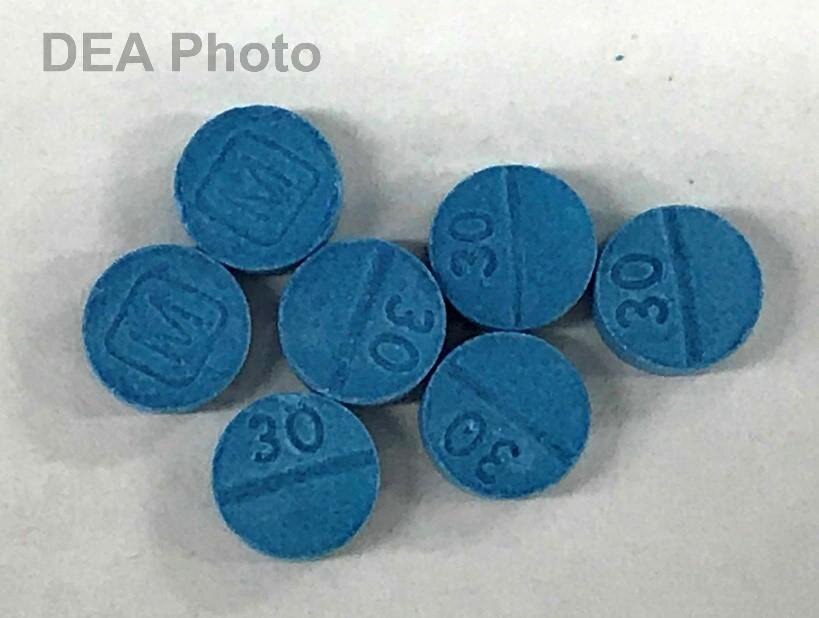
Counterfeit pills laced with illicit fentanyl are appearing across the country and have been linked to thousands of deaths. Many of the overdoses involve blue pills stamped with an “M” and a “30” – distinctive markings for 30mg fake oxycodone tablets known on the street as “Mexican Oxy” or “M30.”

Based on a sampling of 106 tablets seized nationwide between January and March 2019, the DEA found that 29 of the pills contained at least 2 mg of fentanyl, a potential lethal dose. At least one pill seized in California had 4.2 mg of fentanyl — more than twice a lethal amount.

“Capitalizing on the opioid epidemic and prescription drug abuse in the United States, drug trafficking organizations are now sending counterfeit pills made with fentanyl in bulk to the United States for distribution,” said DEA Acting Administrator Uttam Dhillon. “Counterfeit pills that contain fentanyl and fentanyl-laced heroin are responsible for thousands of opioid-related deaths in the United States each year.”

The DEA laboratory analysis found fentanyl in 21% of the heroin samples tested. Fentanyl is often added to illicit drugs to boost their potency.

‘Enough to Kill Entire Population of Ohio’

In recent months, there have been outbreaks of fentanyl-related overdoses around the country. Law enforcement agencies are also seizing larger amounts of fentanyl from drug traffickers.

In September, DEA agents found a pill press and five pounds of pure fentanyl in a San Diego apartment. Prosecutors said that was “enough to kill the city of San Diego” or about 1.5 million people.

That seizure was overshadowed a few weeks later, when 45 pounds of suspected fentanyl were seized in Montgomery County, Ohio. A Homeland Security agent said that was "enough to kill the entire population of Ohio, many times over."  

Public health officials in Seattle recently warned about a spike in fentanyl-related overdoses that killed at least 141 people in King County, including several teenagers. Parents and students are being warned in public service announcements not to consume any pill not directly obtained from a pharmacy or prescriber.

Last week health officials in Virginia predicted the state would have a record number of drug overdoses in 2019. Most of the 1,550 projected overdoses involve illicit fentanyl.

As in other parts of the country, fentanyl related deaths have surged in Virginia, while overdoses involving prescription opioids have remained relatively flat for over a decade.

“In 2015 statewide, the number of illicit opioids deaths surpassed prescription opioid deaths. This trend continued at a greater magnitude in 2016, 2017, and 2018,” the Virginia Department of Health said in its latest quarterly report. “There has not been a significant increase or decrease in fatal prescription opioid overdoses.”

What You Should Know About Neuropathy

By Barby Ingle, PNN Columnist

November is Nerve Pain Awareness Month. Or as we like to call it at iPain, “NERVEmber.”

There are dozens of chronic conditions that involve nerve pain. Neuropathy is a collection of disorders that occur when nerves of the peripheral nervous system are injured or damaged. The peripheral nerves are the ones outside of the brain and spinal cord — in our arms, legs, hands and throughout the body.

There are 3 types of peripheral nerves:  

  • Autonomic nerves regulate biological activities that people do not control consciously such as breathing, digesting food and heartbeat. 

  • Motor nerves control movements of muscles under conscious control such as walking, grasping things and talking.

  • Sensory nerves transmit information about sensory experiences such as feeling a light touch or the pain resulting from a cut.

Some neuropathies affect all three types of nerves, others affect one or two types. Some of the diagnostic terms you might hear are predominately motor neuropathy, predominately sensory neuropathy, sensory-motor neuropathy and autonomic neuropathy.  

Neuropathy often causes pain, tingling or numbness in the hands and feet. Healthcare professionals had a longstanding belief that neuropathy pain is just a symptom of an illness and therefore not a disease. 

We now know that chronic nerve pain is a disease in itself, and the medical community and public are beginning to look at it in this way.

There are approximately 150 known types of neuropathy and the causes of many are not yet known.

Thirty percent of neuropathies are caused by diabetes, 30% are idiopathic or of an unknown cause, and the other 40% are attributed to autoimmune disorders, tumors, genetic, infections, environmental toxins and nutritional imbalances.

A great resource for patients is Dr. Norman Latov’s book, “Peripheral Neuropathy: When the Numbness, Weakness, and Pain Won't Stop.” This book helps us understand the causes of neuropathies in greater detail.

We need to increase awareness, conduct research, provide better clinical training, and better tools for diagnosing and treating neuropathy. Funding for neuropathy research is difficult to obtain because clinical professionals do not fully understand all of the complexities of neuropathy diseases and conditions. Far too often, if a patient does not have a known neuropathic condition, providers will say they could not possibly have a neuropathy.

Nerve Pain Is Not Just a Symptom

But neuropathy is not just a symptom of another disease, it can be a disease in itself.  When medical professionals fail to recognize the disease or causes of neuropathy, it leads to misdiagnosis, failure to diagnose, and delays in getting proper treatment. This can cause further damage to the patient.  

I have had some doctors tell me that neuropathy does not affect the upper body, hands or face, so I could not possibly have neuropathy and it must be something else going on. Know your limitations and your healthcare providers’ limitations. Sometimes it is difficult for them to understand all of our symptoms or the daily problems we face living with neuropathy.

It is important that we increase our communication skills as patients and caregivers. Better communication allows for better care and better answers. Too often our healthcare professionals stop short of proper diagnostic procedures due to assumptions, poor attitudes, and limited treatment options available to them. They also get pressure from insurance companies that limit payments for treatment and testing. Some providers also fail to understand the potential serious impact of these conditions going undiagnosed and undertreated.  

There are times when a doctor might believe that you can do something that you know will increase your symptoms or set off a flare. Communicate these limitations to your doctor and find out their knowledge of your condition.

Here are 5 tips to better access to proper and timely care.  

  1. Seek credible information, keep your mind open to new treatments and provide copies of your research to your doctor when necessary. Remember – our providers see many patients day after day and do not always have the time to do research. You may be the first one to bring new information to them.

  2. With better treatment options, we will be less frustrated as patients and can make greater progress in our goal to improve daily living.

  3. Use a multidisciplinary approach to treatment. Include on your team of providers doctors who specialize in pain management, internal medicine, neuromuscular neurologists, physical therapists and psychologists/psychiatrists. Depending on the type of neuropathy you have, you may want to add doctors of immunology, radiology, oncology, hematology (liver), cardiology, pulmonology, orthopedics, urology, gastroenterology, podiatry, or other medical disciplines. 

  4. When you read books by other patients or hear of new treatments in your social circles, be sure to have your own treating provider consult on those ideas. Patients are not one-size-fits-all. What works for someone else may not work for you.

  5. Work with a healthcare provider who works with neuropathy patients on a regular basis. They tend to be more familiar with the daily challenges we face as patients.

Until research provides better answers and tools for diagnosing neuropathy, good doctor-patient communication is essential to diagnose and treat neuropathy in a timely manner.

Barby Ingle lives with reflex sympathetic dystrophy (RSD), migralepsy and endometriosis. Barby is a chronic pain educator, patient advocate, and president of the International Pain FoundationShe is also a motivational speaker and best-selling author on pain topics. More information about Barby can be found at her website. 

This column is for informational purposes only and represents the author’s opinions alone. It does not inherently express or reflect the views, opinions and/or positions of Pain News Network.  

Survey Repudiates Canada’s Pain Care Policies   

By Dr. Lynn Webster, PNN columnist

A recent survey by the Chronic Pain Association of Canada (CPAC) demonstrates all too well that our Canadian neighbors are sharing in the misfortune of America’s man-made crisis in pain care.

The online survey was distributed to patients via social media during a two-month period in the summer of 2019. CPAC received 740 responses from all 10 provinces and the territory of Nunavut. Key findings add to the growing evidence that people in pain are suffering from policies aimed at reducing access to pain medication.

  • Almost two-thirds of respondents (64%) reported they have not had adequate pain control in the past two years

  • A similar number (66.2%) feel discriminated against and degraded because they require opiate medicines to cope with severe pain

  • A third of patients (33.5%) have either been abandoned by their doctors or their doctors have refused to continue prescribing for them

  • Close to half (47.8%) have been forced against their will to taper their doses

  • Nearly 45% either have deteriorated relations with their medical providers or no longer have a doctor

  • Almost 40% were not adequately treated for pain in emergency rooms

Substitutes for opiates have not helped. About 70% of patients surveyed say they are more disabled, can do less with their lives, and their quality of life has declined.

Desperate Solutions

Almost 40% of patients have considered suicide because of the increased pain, while 5.4% have actually attempted suicide. A third of respondents (33.5%) reported that they know of someone who did commit suicide because of increased pain.

One other “desperate solution” is that nearly 10% of patients have substituted dangerous street drugs for what they previously received as safe prescriptions. Nearly a third of respondents (30.8%) reported they know patients who are purchasing street drugs for this reason.

Based on these findings, CPAC Executive Director Barry Ulmer penned a letter to Canada's Minister of Health.

"I’m writing on the first day of Canada’s National Pain Week, when the country notes the tragedy of chronic pain, the right of all Canadians to have their pain relieved, and government’s obligation to ensure appropriate and timely care,” Ulmer wrote.

“Yet two million Canadians with ongoing pain serious enough to warrant treatment with opioid analgesics still suffer profoundly — and pointlessly — because federal policy dismisses their needs. In today’s opioid-averse regulatory climate, their access to care shrinks precipitously as Canada’s pain specialists vanish from practice, and especially from prescribing."

Ulmer's letter further describes how people in pain feel that they are being erroneously blamed for Canada’s overdose problem. Many are being forced to taper or discontinue their pain medications. 

The CPAC findings mirror the results of a U.S. survey by Pain News Network which was released on the third anniversary of the 2016 publication of the CDC opioid prescribing guideline.  

In a critique of Canada’s 2017 opioid guideline – which was modeled after the CDC’s -- the Canadian Family Physician reports the guideline has left the Canadian health care system unable to manage its high-dose opioid patients:  

“However well-meaning they are, the 2017 Canadian opioid prescribing guidelines were introduced to a health care system ill equipped to care for patients with chronic pain. 

Without a clear and implementable patient-oriented strategy, combined with universal training in safe and effective chronic pain and addiction management for all health care providers, well-meaning documents like the 2017 Canadian guidelines might inadvertently harm the very people they hope to help."

As in the U.S., Canadian doctors are refusing to prescribe the opioids that patients need and alternative treatments are insufficient. The pharmaceutical industry is being villainized and health care professionals who prescribe opioids are under pressure to inappropriately adhere to a one-size-fits-all solution for pain patients.  

It is understandable that politicians want to reduce the harm from inappropriate use of opioids, but it should not be at the expense of people in pain. This is a human rights issue that must not be ignored.   

Lynn R. Webster, MD, is a vice president of scientific affairs for PRA Health Sciences and consults with the pharmaceutical industry. He is author of the award-winning book, The Painful Truth,” and co-producer of the documentary,It Hurts Until You Die.”

You can find Lynn on Twitter: @LynnRWebsterMD.

Opinions expressed here are those of the author alone and do not reflect the views or policy of PRA Health Sciences or Pain News Network.

What We Can Learn from Germany About the Opioid Crisis

By Roger Chriss, PNN Columnist  

Germany doesn’t have an opioid crisis. As NBC News reported, 10 times as many Americans as Germans die from drug overdoses, mostly opiates. And while opioid addiction rates in the U.S. have risen dramatically, in Germany they’re flat.

The story of Germany challenges much of the narrative about the American opioid crisis. If addiction moves in lockstep with opioid prescribing, then Germany should have high addiction rates. If prescription opioids lead to heroin use, then Germany should be seeing rising rates of heroin use. And if overdoses are an inevitable consequence of addiction, then Germany should have high overdose rates.

But this is not what is happening. According to a recent PLOS One study, opioid prescriptions in Germany are rising, but there is no “opioid epidemic.”

“Even though patterns of opioid prescription follow trends observed in other developed countries, there are no signs of an opioid epidemic in Germany. Therefore, this review could currently not find a need for urgent health policy interventions regarding opioid prescription practices,” the study concluded.

A report from the European Monitoring Centre for Drugs and Drug Addiction shows that drug overdoses in Germany are falling. There were 1,926 overdose deaths in Germany in 2006 and 1,272 in 2017. Overdoses peaked in Germany over a decade ago.

Rates of drug use in Germany show that cannabis and MDMA (ecstasy) have been trending upward in recent years, amphetamine use is stable, and cocaine use is falling among young adults. In people seeking drug treatment, addiction to cannabis and cocaine are rapidly rising, but opioid addiction fell sharply in 2016 after a rise in the preceding decade.

Yet Germany has the second-highest prescription opioid rate in the world. And if current downward prescribing trends hold in the United States, Germany will have the highest rate by late 2020.

Easier Access to Rx Opioids

But Germany simply isn’t having an opioid crisis, which one expert attributes to the country’s well-established social security network and full health insurance coverage.

“Many specialist pain treatment centres by now will report cases of chronic pain patients with inappropriate opioid therapy, who then have to be weaned off the medication. However these are only isolated cases and there is no increase in inappropriate use of opioids in Germany in general,” Lukas Radbruch, a palliative care physician at University Hospital Bonn in Germany, explained in the BMJ.

Radbruch belongs to an expert committee that regulates and monitors opioid use in Germany.

“In Germany regulations for opioid prescription have been changed throughout the years to allow easier access to these medicines - for example, extending the maximum amount per prescription or the maximum duration of each prescription,” he wrote. “There is consensus in the committee that there is no indication of anything similar to the opioid crisis in the US, and no indication of an increase in inadequate prescribing of opioids in Germany.”

Rhetoric about prescription opioid risks rarely includes the details of prescribing. But it turns out that if patients are given non-opioid options first, then screened and monitored during opioid therapy as is done in countries like Germany, the risks are far lower. The risks are lower still when problems of misuse and signs of addiction are caught early and addressed medically.

In other words, maybe the U.S. has an opioid crisis as a result of doing virtually everything wrong. From excess pharmaceutical marketing and poor patient management to a lack of multimodal pain treatment and addiction care, we almost couldn’t not have had an opioid crisis.

And once the crisis got started, we failed to respond quickly with best practices, in particular the overdose rescue drug naloxone and harm reduction policies. Instead, we embraced doomed tactics like abstinence programs and forced tapering of medications.

The most recent data from the CDC does show some encouraging news. From March 2018 to March 2019, the overdose death rate fell by 2.2 percent. The provisional counts for 2019 show an overall flattening of overdose deaths, but no sustained downward trend.

Most of this progress is in fewer fatalities linked to prescription opioids. But illicit fentanyl is spreading westward, and from San Diego to Seattle a rise in overdose deaths has been seen throughout 2019, much of it caused by counterfeit medication. So the “gains” of last year may quickly evaporate. Fentanyl is cheap to make, easy to distribute, and getting into the entire drug supply. Meth and cocaine are resurging, too.  

The drug overdose crisis is evolving fast. Most overdoses involve multiple substances, often with inadvertent exposure or as a result of counterfeit or tainted drugs. And some are suicides. Now in the vaping outbreak we are seeing the impact of new technologies and new chemicals used in novel ways.

As the RAND Corporation noted in its September report on fentanyl, we need new options fast. Germany’s preventative healthcare, proactive public health monitoring, and coordinated harm reduction policies may provide sound ideas for a sensible response to the rapidly evolving drug crisis in the U.S.

Roger Chriss lives with Ehlers Danlos syndrome and is a proud member of the Ehlers-Danlos Society. Roger is a technical consultant in Washington state, where he specializes in mathematics and research.

This column is for informational purposes only and represents the author’s opinions alone. It does not inherently express or reflect the views, opinions and/or positions of Pain News Network.

Rare Autoimmune Disease Goes Into Remission After Stem Cell Therapy

By A. Rahman Ford, PNN Columnist

New research at Northwestern University and the Mayo Clinic confirms that we can heal ourselves with our own stem cells. A small study published in the journal Neurology found that treating a person with stem cells derived from their own blood or bone marrow can reverse a rare autoimmune disease called neuromyelitis optica (NMO).

Also known as Devic Disease, NMO is a chronic neurological disorder that causes inflammation in the optic nerve and spinal cord. Common symptoms are eye pain that can rapidly lead to blindness, and pain in the spine, legs or arms that can lead to paralysis. Bladder and bowel control may also be affected.

Neuromyelitis optica is often misdiagnosed as multiple sclerosis (MS). The normal course of treatment is high-dose corticosteroids and immunosuppressants.

In the study, 13 patients with NMO were first given drugs to suppress their immune system, followed by an infusion of hematopoietic stem cells (HSCT).

The results were significant and durable. After 57 months, most patients were in remission and were off all immunosuppressive drugs.

A biological marker in the blood that correlates with NMO disease activity also disappeared.

“There is marked difference between a transplant and the drug,” said lead author Dr. Richard Burt, a professor of medicine and chief of immunotherapy and autoimmune disease at Northwestern University Feinberg School of Medicine. “The transplant improved patients’ neurological disability and quality of life. They got better, and the disease maker disappeared for up to five years after transplant.”

Two of the patients relapsed after the HSCT infusion and had to go back on drug therapy.

According to Northwestern Now, Dr. Burt is a pioneer in the field of using autologous stem cells to treat autoimmune disease. Previous research by Burt has shown that HSCT can reverse relapsing-remitting multiple sclerosis, systemic sclerosis and chronic inflammatory demyelinating polyneuropathy.

When interviewed  by The Daily Northwestern about the implications of Burt’s work, Feinberg Associate Neurology Professor Dr. Roumen Balabanov predicted that chronic autoimmune diseases would be treated through “a single, radical approach” that would allow patients to live normal lives without being dependent on medications to control their symptoms.

“The point of this treatment being radical is that the patients will actually have normal lives,” Balabanov said. “They don’t have to take those lifelong medications.”

Those lifelong drugs can cost up to $500,000 per year. Conversely, the HSCT transplant costs about $100,000.

Dr. Burt is currently on sabbatical to teach his HSCT protocol at stem cell clinics around the country and to write a book. Actress Selma Blair recently had her multiple sclerosis treated by Burt’s clinic. She has been very public about her experience on social media and in interviews.

Recently the Scottish Health Technologies Group recommended HSCT be approved in Scotland to treat relapsing-remitting multiple sclerosis.

A. Rahman Ford, PhD, is a lawyer and research professional. He is a graduate of Rutgers University and the Howard University School of Law, where he served as Editor-in-Chief of the Howard Law Journal.

Rahman lives with chronic inflammation in his digestive tract and is unable to eat solid food. He has received stem cell treatment in China. 

The information in this column is for informational purposes only and represent the author’s opinions alone. It does not inherently express or reflect the views, opinions and/or positions of Pain News Network.